Practical Investment Analysis for the New Energy Economy
Oil Price Outlook 2026 Part 1
Keith Kohl
We are seeing a tale of two oil forecasts playing out once again.
Don’t act too surprised. After all, there has been a battle raging between OPEC+ and the IEA to control the oil narrative for years. At times, this showdown has gotten downright brutal.
Given how crude prices have languished all year as hype over a supply glut was pushed to new levels, it’s clear that the bears have been in the driver’s seat of this market for a long time.
Here’s the catch… that supply glut has yet to materialize in the United States. Perhaps the IEA can take a quick look on this chart of U.S. crude stockpiles and show us where that glut is:
After a 3.4 million-barrel draw reported for last week, U.S. commercial crude oil inventories (excluding the SPR) are currently sitting at 424.2 million barrels — roughly 5% below the 5-year average.
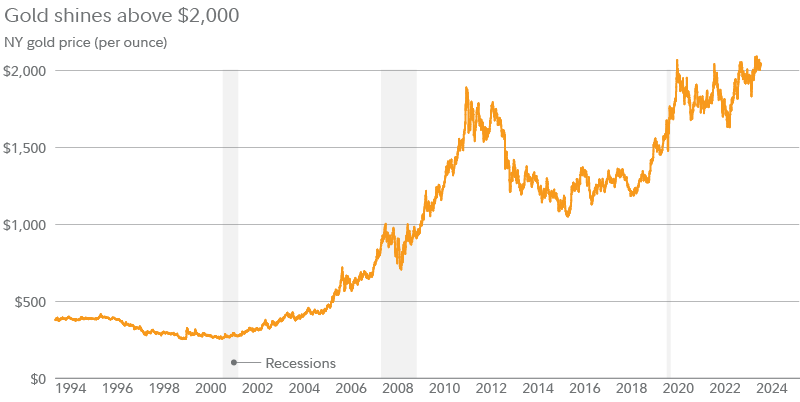
From Trump’s global tariffs blindsiding markets, central banks in a buying frenzy, and sovereign wealth funds hoarding gold, goldis priming itself for its next surge higher.
To put a little perspective on this amount, that’s about 1.4% lower than where it was a year ago, and approximately 5.3% lower than it was two years ago.
Granted, we’re not counting the additions to our strategic reserve due to the fact that the Biden administration halved it in a desperate attempt to lower surging oil prices back in 2022 after Russian tanks rolled into Ukraine.
Keep in mind that U.S. demand for petroleum products hasn’t stalled — it’s still climbing, slow and steady.
Now here’s the interesting part…
You and I both know that crude prices simply cannot sustain themselves below $60 per barrel. Crude this cheap is well below the average breakeven price for drillers in the Permian Basin, which has been the dominant driver for U.S. oil production growth.
So we have healthy demand, dirt-cheap prices that discourage new drilling across the sector — I’ll let you take a guess where this will lead us in 2026.
Looking at the latest Short-Term Energy Outlook out of the EIA, U.S. domestic oil output is expected to remain flat next year at 13.6 million barrels per day. This is on the back of several strong years that saw our crude production grow from 12.9 million barrels per day in 2023 to 13.8 million barrels per day earlier this year.
Current projections from the EIA are that U.S. oil production will average 13.6 million barrels per day in both 2025 and 2026.
Trump's Bold Move to Kill the IRS — $21,307 Payouts Incoming
Trump just launched a$1 trillion National Fundto replace taxes with direct payouts.
Everyday Americans could claim up to $21,307— but only if they act before the first checks go out.
Folks, the cracks that we’ve been waiting for in U.S. supply growth are finally starting to emerge in 2026.
Why is that so important? Well, it’s because major forecasts like the one out of the IEA are relying on U.S. tight oil production to play a significant role in non-OPEC supply growth.
Remember, the IEA just admitted that its previous assertion that global oil demand would peak by 2030 was nothing more than a lie. The permabears at the IEA went even further to state that global oil demand would continue growing to 2050 — and they’re still underestimating things!
Shifting to OPEC’s most recent oil outlook, the group now sees strong global demand growth over the medium-term. Here’s a look at those projections, which have global oil demand rising to 113.3 million barrels per day through 2030:
Is OPEC a bit too bullish in their forecast? Perhaps, but their bullish sentiment feels more realistic than the IEA’s bearish one.
Supply-side shocks are looking far more likely in 2026.
But hey, don’t worry, OPEC and its allies are more than willing to take control of the global supply once again.
The supply/demand picture isn’t the only bullish driver ahead for oil prices, either. Next time, we’re going to dive right into the the other volatile part of the oil equation for 2026.
Until next time,
Keith Kohl
P.S. Trump Just Triggered 70% Gains Overnight
Why PANW is the #1 Searched Cybersecurity Stock
Palo Alto Networks just crossed a milestone no pure cybersecurity company has reached before: a $10 billion revenue run rate.
That achievement explains why PANW dominated our TrackStar data last month. Financial pros searched the stock 9,526 times—edging out even CrowdStrike's 9,225 searches.
The Q4 earnings report that sparked this interest delivered on every metric that matters. RPO jumped 24%, Next-Gen Security ARR surged 32%, and operating margins hit 30% for the first time ever.
But here's the real story: customers are finally buying into CEO Nikesh Arora's platformization vision.
We're talking about deals exceeding $100 million as enterprises abandon the patchwork approach to cybersecurity. PANW added 250 net new platformizations in Q4 alone, bringing the total to 1,400.
These aren't just larger purchases—they represent a fundamental shift in how companies think about security infrastructure.
Palo Alto Networks’ Business
Palo Alto Networks built the world's largest cybersecurity platform serving over 75,000 organizations across 65 countries.
The company pioneered next-generation firewalls 17 years ago and never stopped innovating.
Today they offer integrated AI-powered security solutions spanning network protection, cloud security, and security operations.
What separates PANW from competitors is simple: instead of selling individual tools, they provide platforms that work together seamlessly.
Their customer base reads like a who's who of global enterprise. Airlines, defense contractors, banks, and Fortune 500 companies rely on PANW to protect $4.2 trillion in assets.
The recent Alaska Airlines panel blowout incident highlighted how critical aviation security has become—exactly the type of high-stakes environment where PANW thrives.
Palo Alto Networks segments its business into the following areas:
Network Security (75%+ of bookings) - Next-gen firewalls, SASE, software firewalls, and the Prisma Access Browser
The Q4 results showcase a company hitting its stride. Revenue reached $2.5 billion, up 16% year-over-year.
More telling is what's happening with large customers. Those with over $5 million in ARR grew 51% to 156 customers. The $10+ million ARR segment expanded 80% to 51 customers. PANW signed three deals worth over $30 million each, including a $111 million platformization deal.
Innovation continues accelerating with launches like Prisma AIRS for AI security and PAN-OS 12.1 Orion for quantum-ready protection.
The company's secure browser offering doubled to over 6 million licenses as enterprises prepare for browser-based computing.
These investments position PANW ahead of market transitions before competitors realize what's happening.
Financials
Source: Stock Analysis
The financial transformation is remarkable. Total revenue hit $9.2 billion in fiscal 2025, growing 15% despite the company's massive scale.
Software now represents 56% of product revenue, up from 44% last year. This shift drives better margins and predictable recurring revenue streams. Network Security ARR reached $3.9 billion with 35% growth while over 60% of bookings come from higher-margin software solutions.
Profitability metrics tell the real story. Non-GAAP operating margins expanded 150 basis points to 28.8%, hitting 30%+ in Q4.
This represents nearly 1,000 basis points of expansion since fiscal 2022. Non-GAAP EPS grew 18% to $3.34 while cash generation reached $3.7 billion from operations.
The deferred payment transition now provides remarkable visibility. About 50% of fiscal 2026 free cash flow will come from deals already signed.
This predictability, combined with 38% free cash flow margins, creates a financial foundation that competitors can't match.
Valuation
Source: Seeking Alpha
PANW trades at more reasonable multiples than high-flying cybersecurity peers. The forward P/E of 38x compares favorably to CrowdStrike's (CRWD) 69x and Zscaler's (ZS) 61x.
On a cash flow basis, PANW's 39x multiple looks attractive against CrowdStrike's 76x and Zscaler's 46x.
The discount seems unjustified given superior cash generation and expanding margins. Enterprise value multiples show similar undervaluation at 13x sales versus Cloudflare's 36x multiple.
Growth
Source: Seeking Alpha
Revenue growth sustainability sets PANW apart. The company delivered 15% growth at $9.2 billion scale while maintaining forward growth expectations of 14%.
Next-Gen Security ARR growth of 32% demonstrates platform traction across the customer base.
Large deal momentum accelerated dramatically with $5+ million ARR customers growing 51% and $10+ million customers up 80%. This indicates PANW captures disproportionate enterprise security spending as consolidation accelerates.
Profitability
Source: Seeking Alpha
PANW leads peers in profitability metrics. Gross margins of 73% demonstrate pricing power while operating margins of 29% exceed most software companies.
Levered free cash flow margins of 36% substantially outpace CrowdStrike at 32% and Zscaler at 29%.
Platform customers generate 120% net retention with low-single-digit churn, validating the consolidation strategy's economic benefits.
The robotics revolution is here. And it's set to impact everything from how we manufacture goods to how we drive, deliver packages, and even perform surgeries. According to Forbes, this could unlock a massive $24 trillion opportunity for investors. And I've zeroed in on 6 robotics stocks at the center of it all. I've detailed them across four exclusive research reports, each focused on a major frontier of the robotics boom. Here's how to get access to all 4 reports now[Ad]
Our Opinion 9/10
Palo Alto Networks earns our top rating based on flawless execution and market positioning. The company successfully transformed from hardware vendor to platform leader while competitors remain fragmented.
The metrics validate everything: 32% ARR growth, 30%+ margins, 38% free cash flow margins, and record deals. Customer platformization proves PANW delivers security improvements, not just cost savings.
The CyberArk acquisition adds the missing identity piece while leveraging PANW's superior sales force and platform expertise. Management's acquisition track record provides confidence in successful execution.
Amazon (AMZN): The King of Digital Everything
Amazon (AMZN) dominated financial pro searches with over 30,000 queries last month—nearly three times more than second-place Alibaba (BABA).
The surge tells a story of recognition. After years of massive infrastructure investments that weighed on margins, Amazon is finally harvesting what it planted.
Q2 2025 earnings revealed a company hitting on all cylinders. Revenue jumped 13% to $167.7 billion, crushing expectations by $5.6 billion.
Earnings per share of $1.68 demolished forecasts by $0.36. But the real story lies deeper in Amazon's expanding dominance across cloud computing, where the company now runs at a staggering $123 billion annualized revenue rate.
AWS maintains its commanding 31% market share lead over Microsoft (MSFT) Azure's 20% and Google (GOOGL) Cloud's 11%. As AI drives unprecedented demand for cloud services, Amazon's early infrastructure bets are paying massive dividends.
Financial pros aren't just searching Amazon for its retail prowess anymore. They're recognizing a transformation into the backbone of the digital economy, where every business eventually becomes an Amazon customer in some capacity.
Amazon’s Business
Amazon didn't stumble into dominance—it methodically constructed the most comprehensive digital ecosystem ever built.
What started as Jeff Bezos's online bookstore in 1994 has evolved into three interconnected empires that reinforce each other's growth.
The company operates through a deceptively simple structure that masks incredible complexity. Amazon's retail operations generate massive cash flows and customer data.
That data feeds advertising algorithms that compete with Google and Meta. The cash funds AWS infrastructure that powers competitors and customers alike.
Amazon segments its business into the following areas:
North America (60% of total revenues) - E-commerce, Prime memberships, advertising, and logistics services across the U.S., Canada, and Mexico
International (22% of total revenues) - Online retail operations, Prime services, and advertising across Europe, Asia, and emerging markets
AWS (18% of total revenues) - Cloud computing services including storage, computing power, databases, AI/ML tools, and enterprise software solutions
The magic happens in how these segments amplify each other. Prime members spend more on retail, generating advertising revenue that funds logistics improvements.
Those logistics capabilities attract third-party sellers who pay fees and buy advertising. Meanwhile, AWS profits fund aggressive pricing in retail that maintains market share.
Q2 results showcased this flywheel accelerating. AWS grew 17.5% while advertising revenue surged 22% to $15.7 billion.
Operating income jumped 31% to $19.2 billion as the company demonstrated impressive operational leverage across all divisions.
Amazon's investments in AI are already paying off in tangible ways. The company deployed its millionth robot while launching DeepFleet AI that improves robot efficiency by 10%.
Kiro, Amazon's new AI coding agent, attracted hundreds of thousands of developers within weeks of launch. Alexa+ expanded to millions of customers as the company positions itself at the center of the AI revolution.
Even traditional retail initiatives showed momentum. Nike returned to Amazon after years of direct-to-consumer focus.
Prime Day 2025 delivered record sales while expanding same-day delivery to 4,000+ smaller communities previously underserved by rapid logistics.
Financials
Source: Stock Analysis
Amazon's financial story reads like a masterclass in patient capital allocation finally reaching maturity.
For years, critics hammered the company for sacrificing profits to fund growth. Those investments are now generating the returns Bezos always promised.
Revenue growth accelerated from $147.9 billion in Q2 2024 to $167.7 billion in Q2 2025, a 13% increase that beat expectations across every segment.
More importantly, operating leverage is kicking in as fixed costs spread across larger revenue bases.
Operating cash flow reached $121.1 billion over the trailing twelve months, up from $108.0 billion in the prior year.
However, Amazon's aggressive infrastructure expansion is temporarily pressuring free cash flow, which dropped to $18.2 billion from $53.0 billion.
This decline reflects management's confidence rather than financial stress. The company spent $31.4 billion on property and equipment in Q2 alone—nearly double the prior year.
Most of this capital flows into AWS data centers where Amazon literally cannot build fast enough to meet AI demand.
The balance sheet tells a story of financial strength with $57.7 billion in cash and marketable securities against just $50.7 billion in long-term debt.
Stockholders' equity surged to $333.8 billion from $286.0 billion at year-end 2024, driven by earnings retention and stock-based compensation.
Margin expansion continues across every segment as Amazon's scale advantages compound. North America operating margins hit 7.5% while International margins reached 4.1%.
Even AWS margins of 32.9%, though down from Q1's record 39.5% due to seasonal compensation costs, remain the envy of the software industry.
Valuation
Source: Seeking Alpha
Amazon's valuation reflects a company caught between its retail legacy and cloud computing future.
Wall Street analysts see the transformation clearly, setting a median one-year target of $259.39 that represents 12% upside from current levels around $223.
The stock trades at approximately 34x forward 2025 earnings and 29x 2026 estimates—reasonable multiples for a company growing revenue at double-digit rates.
Compared to e-commerce peers, Amazon commands a premium that reflects its diversified revenue streams and higher-quality earnings mix.
Alibaba trades at just 13.3x earnings but faces significant China-specific regulatory headwinds and slowing domestic growth.
MercadoLibre (MELI) commands 58.1x earnings, justified by Latin American dominance but limited by a smaller addressable market.
Amazon's current price of $222.50 sits well below its 52-week high of $242.52, creating an attractive entry point for patient investors.
The stock has pulled back about 12% from February highs despite fundamentally strong performance, suggesting temporary sentiment weakness rather than business deterioration.
AWS alone justifies much of Amazon's current valuation. With the cloud division maintaining a commanding 31% market share versus Microsoft's 20% and Google's 11%, investors are paying for sustainable competitive advantages.
The cloud leader generates margins that dwarf retail operations while growing at rates that should accelerate as AI adoption increases.
Growth
Source: Seeking Alpha
Amazon's growth story unfolds across multiple vectors that should compound over the coming decade.
The company delivered consistent acceleration across all major segments in Q2. North America sales increased 11% year-over-year while International sales climbed 16%.
AWS maintained its impressive 17.5% growth rate despite operating at massive scale with over $120 billion in annualized revenue.
Amazon's advertising business represents perhaps the most underappreciated growth driver. Q2 advertising revenue hit $15.7 billion, up 22% year-over-year.
This high-margin revenue stream continues stealing share from traditional advertising channels as more commerce moves online.
Management guided Q3 revenue between $174.0-179.5 billion, representing 10-13% growth that suggests continued momentum despite macroeconomic uncertainty.
The wide guidance range reflects potential tariff impacts and foreign exchange volatility rather than fundamental business concerns.
AWS growth should accelerate as AI adoption moves from experimentation to production deployment. Amazon currently has more demand than supply capacity.
Customers increasingly choose Amazon's custom Trainium chips for AI workloads, creating sticky relationships that should persist as capacity constraints ease.
Project Kuiper satellite launches position Amazon for another massive growth opportunity in global broadband connectivity.
The company's investments in robotics, autonomous vehicles, and healthcare create optionality for future revenue streams that aren't reflected in current valuations.
Profitability
Source: Seeking Alpha
Amazon's profitability transformation represents one of the most impressive corporate turnarounds in modern business history.
Operating margins reached 11.4% in Q2, up from 9.9% in the prior year, as management finally harvests returns from years of infrastructure investment.
AWS leads this margin expansion with operating margins of 32.9% that generate $10.2 billion in operating income on $30.9 billion in revenue.
Even the retail segments show dramatic improvement. North America operating margins hit 7.5%, up 190 basis points year-over-year.
International margins reached 4.1%, up 320 basis points, as Amazon's operational excellence and scale advantages compound globally.
These improvements reflect more than just operational leverage. Amazon's data advantages create pricing power in advertising while logistics efficiency drives cost savings.
Free cash flow margin remains pressured by capital investments, but this represents strategic choice rather than structural weakness.
The company generated $121.1 billion in operating cash flow over the trailing twelve months, providing ample resources for growth investments and potential shareholder returns.
Amazon's profitability inflection should continue as AI services command premium pricing while retail operations benefit from automation and improved logistics density.
The robotics revolution is here. And it's set to impact everything from how we manufacture goods to how we drive, deliver packages, and even perform surgeries. According to Forbes, this could unlock a massive $24 trillion opportunity for investors. And I've zeroed in on 6 robotics stocks at the center of it all. I've detailed them across four exclusive research reports, each focused on a major frontier of the robotics boom: Report #1 — The $7 Stock Helping Build Nvidia's Trillion-Dollar Robot Report #2 — Nvidia's "Silent Partners" Report #3 — The Transformer: The One Company to Save American Manufacturing Report #4 — The Titan of Surgical Robotics These are all stocks backed by giants like Nvidia, Amazon, Sequoia, and Fidelity. Here's how to get access to all 4 reports now[Ad]
Our Opinion 9/10
Amazon earns our highest rating as the ultimate digital infrastructure play positioned perfectly for the AI era.
The company's commanding market positions across e-commerce, cloud computing, and digital advertising create multiple avenues for sustained growth.
AWS's 31% cloud market share continues widening its competitive moat while generating cash flows that fund expansion into emerging technologies.
Management's bold investments in AI agents, robotics, and satellite internet demonstrate the strategic vision that has driven Amazon's success for three decades.
The recent stock pullback creates an attractive entry point for investors seeking exposure to the digital transformation of the global economy.
Amazon doesn't just participate in technology trends—it defines them. As businesses accelerate cloud adoption and AI integration, Amazon captures disproportionate value through its infrastructure advantages.
While near-term volatility remains possible given macroeconomic uncertainty, Amazon's diversified revenue streams and market-leading positions make it essential for any technology-focused portfolio seeking long-term wealth creation.
Our TrackStar data reveals PLTR dominated analytics stock searches with 46,446 queries this month—nearly double Microsoft's 25,592.
The obsession makes perfect sense. Palantir just delivered the quarter that transformed skeptics into believers.
For the first time in company history, quarterly revenue crossed the magical $1 billion threshold. Revenue surged 48% year-over-year while profits soared. US commercial revenue nearly doubled with 93% growth.
Yet many investors still don't understand what Palantir actually does or why it's suddenly printing money.
Here's the story behind the searches.
Palantir’s Business
Back in 2003, Peter Thiel and Alex Karp founded Palantir with an audacious vision.
They wanted to build software that could solve the world's most complex data problems. Not just store information, but transform raw data into life-changing insights.
The company started by helping intelligence agencies connect dots that others couldn't see. Palantir's software could take disparate data sources—surveillance reports, financial records, communications—and reveal hidden patterns.
But the real breakthrough came when they realized this same capability could revolutionize every industry.
Palantir segments its business into the following areas:
Government (55% of total revenues) - Intelligence, defense, and civilian agency contracts delivering operational advantages to US, UK, and allied forces
Commercial (45% of total revenues) - Enterprise platforms transforming healthcare diagnostics, financial fraud detection, manufacturing optimization, and energy grid management
The Q2 2025 results showcase this transformation in action. Revenue hit $1.004 billion, growing 48% year-over-year.
More importantly, the growth came from everywhere. US revenue surged 68% to $733 million while commercial revenue exploded 93% to $306 million.
The secret weapon driving this acceleration is Palantir's Artificial Intelligence Platform (AIP).
While competitors rush to bolt AI onto existing products, Palantir built AI integration from the ground up. Their software doesn't just use large language models—it makes them actually useful for real business decisions.
This strategic positioning pays dividends through massive contract wins.
The recent $10 billion US Army deal consolidates 75 separate contracts into one massive agreement. It's not just about the money—it demonstrates how essential Palantir has become to critical operations.
Every quarter brings more proof that customers can't live without these platforms once they experience the competitive advantage.
Financials
Source: Stock Analysis
The numbers tell a story of operational leverage finally paying off.
Revenue acceleration from 27% year-over-year in Q2 2024 to 48% in Q2 2025 shows momentum building rather than slowing. But the real story lies beneath the headline growth figures.
Adjusted operating margins expanded to 46% in Q2 2025, up from 37% in the prior year.
This isn't just about cutting costs—it's about software economics working exactly as promised. Each new customer adds revenue with minimal incremental expense.
Free cash flow margins reached 57%, proving the business model generates real cash rather than accounting profits.
The geographic mix shows why growth feels sustainable. US operations represent 73% of total revenue and grew 68% year-over-year.
This isn't a company dependent on volatile international markets or currency fluctuations.
Operating cash flow jumped from $144 million to $539 million year-over-year. The company maintains $6.0 billion in cash and short-term securities against essentially zero debt.
This financial fortress provides flexibility for aggressive investment while supporting capital returns to shareholders.
Working capital management appears disciplined with receivables growing in line with revenue. Capital requirements remain modest for a software business, leaving more cash available for expansion and shareholder returns.
Valuation
Source: Seeking Alpha
Here's where the story gets complicated.
Palantir trades at astronomical valuation multiples that dwarf every major competitor. The stock commands a forward P/E ratio of 408x compared to Microsoft's (MSFT) 34x, Salesforce's (CRM) 33x, and even Snowflake's (SNOW) more modest levels.
On a trailing twelve-month basis, Palantir's P/E ratio reaches 604x—nearly 16x higher than Microsoft's 38x.
The price-to-sales multiple tells a similar tale of premium pricing. Palantir trades at 123x trailing sales compared to Microsoft's 14x, Salesforce's 6x, Snowflake's 18x, and IBM's (IBM) modest 4x.
Enterprise value to sales ratios show Palantir at 122x versus Microsoft's 14x and Salesforce's 6x.
Price-to-book ratios reveal the extent of growth expectations baked into the stock. Palantir's 73x price-to-book multiple towers over Microsoft's 11x, Salesforce's 4x, and Snowflake's 29x.
Even price-to-cash flow metrics show Palantir trading at 250x compared to Microsoft's 28x and Salesforce's 17x.
These aren't small premiums—they represent unprecedented valuation gaps that assume Palantir will maintain superior growth for years while competitors stagnate.
Growth
Source: Seeking Alpha
The growth metrics justify some of the valuation premium.
Palantir's revenue growth of 39% year-over-year significantly outpaces Microsoft's 15%, Salesforce's 8%, and IBM's 3%. Only Snowflake's 28% comes close among major competitors.
Forward revenue growth expectations of 36% maintain Palantir's leadership position compared to Microsoft's 15% and Salesforce's 9%.
The three-year revenue compound annual growth rate of 25% demonstrates sustained momentum, though Snowflake's exceptional 40% and 64% historical growth rates show what's possible in high-growth software markets.
EBITDA growth tells an even more compelling story. Palantir's 84% year-over-year EBITDA growth destroys Microsoft's 21%, Salesforce's 10%, and IBM's 11%.
Forward EBITDA growth of 59% maintains this leadership while competitors show much more modest expectations.
Earnings per share growth of 78% year-over-year showcases operational leverage working. Microsoft's 16% and Salesforce's 15% EPS growth pale in comparison.
Forward EPS growth expectations of 50% for Palantir versus 15% for both Microsoft and Salesforce highlight the growth premium investors are paying for.
Book value growth of 36% over three years compares favorably to Microsoft's 32% but trails Salesforce's 39%.
The sustainability question remains critical—can Palantir maintain 39% revenue growth as it reaches larger scale, or will growth rates normalize toward industry averages?
Profitability
Source: Seeking Alpha
Palantir's profitability metrics create a mixed picture when compared to established software giants.
Gross profit margins of 80% trail Microsoft's industry-leading 69% but exceed Salesforce's 77%, Snowflake's 67%, and IBM's 58%. This represents solid pricing power in the data analytics space.
However, EBITDA margins tell a different story. Palantir's 17% EBITDA margin significantly lags Microsoft's impressive 56%, Salesforce's 29%, and even IBM's 22%.
Only Snowflake's negative 34% EBITDA margin makes Palantir look efficient by comparison.
Net income margins show similar patterns. Palantir's 22% net margin beats Salesforce's 16% and IBM's 9% but falls well short of Microsoft's dominant 36%.
Snowflake's negative 36% net margin again provides the only worse comparison.
Return metrics reveal operational efficiency gaps. Palantir's 15% return on equity trails Microsoft's 33% and IBM's 23% while matching Salesforce's 10%.
Return on assets of 6% lags Microsoft's 19% and IBM's 5% but beats Salesforce's 7%.
Cash generation provides a brighter picture. Palantir generates $1.73 billion in cash from operations, solid for its size but dwarfed by Microsoft's $136 billion and Salesforce's $13 billion.
Revenue per employee of $728k shows reasonable productivity, though it trails Microsoft's $1.24 million and Salesforce's $496k.
The profitability story suggests Palantir operates efficiently for a high-growth company but hasn't achieved the margin excellence of mature software leaders.
CNBC's Jim Cramer once said: "I learned a long time ago not to be on the other side of a Chaikin trade."
Because his frequent Mad Money guest, Marc Chaikin, is Wall Street's "canary in the coalmine."
Since Chaikin accurately predicted the 2012 Priceline collapse, the 2020 crash, and the 2022 bear market, over 1 million people have chosen to follow his Wall Street warnings.
But today, he's stepping forward with a new warning – one he's never shared with the hedge funds, banks, and brokerages he worked with over 50 years on Wall Street.
"A new dawn is coming to the U.S. stock market," says Chaikin, who's traded through nine bear markets. "It's time to throw out the investment blueprint of the last decade and prepare for a massive shift."
Palantir earns a solid 7/10 rating despite its eye-watering valuation.
The company has executed a remarkable transformation from pure-play government contractor to diversified enterprise AI platform. Recent financial results prove operational leverage working exactly as management promised.
Several factors drive the positive rating. Revenue growth acceleration to 48% year-over-year demonstrates genuine market demand for their platforms.
US commercial growth of 93% proves they can compete beyond protected government markets.
Profitability metrics including 46% adjusted operating margins and 57% free cash flow margins rank among enterprise software's best.
Palantir's competitive moat appears genuinely durable, built on complex data integration capabilities and decade-long government relationships.
The $10 billion Army contract proves platform stickiness while their AI positioning through AIP provides first-mover advantages.
However, the 276x forward P/E creates meaningful downside risk if growth disappoints. Commercial markets face more competition than government contracts, potentially pressuring future margins.
International growth has lagged domestic performance, limiting total addressable market expansion opportunities.
Despite valuation concerns, Palantir's execution, market position, and growth trajectory justify optimism. The company has proven it can scale profitably while maintaining technological leadership.
For investors willing to pay premium prices for superior growth and profitability, Palantir represents a compelling long-term play in the AI revolution.
Visa's Solid Q3 Momentum Meets a Puzzling Pullback: Right Time to Buy?
Visa Inc. V, the global payments technology leader, posted another robust quarterly performance in the third quarter of fiscal 2025, fueled by resilient consumer spending and strong growth in cross-border transactions. The company saw healthy gains in processed transactions, value-added services, and total payment volumes, underscoring the strength of its vast global network and the accelerating adoption of digital payments.
However, since reporting results on July 29, the stock has fallen 5.5%, pulling it away from its 52-week high of $375.51. This raises a key question for investors: Is the stock’s recent dip a sign of weakness or simply a pause in an otherwise strong growth story?
Key Highlights From Visa’s Q3 Earnings
Earnings & Sales Beat: Visa’s EPS of $2.98 beat the Zacks Consensus Estimate by 4.2% and grew 23.1% year over year. Also, the top line of $10.2 billion beat the consensus mark by 3.1% and improved 14.3% from a year ago.
Major Metrics Remain Solid: Processed transactions grew 10% year over year to 65.4 billion and beat our model estimate. On a constant-dollar basis, cross-border volumes surged 12% year over year, as travel activity continued to gain momentum. Also, its payment volumes grew 8% year over year on a constant-dollar basis.
Visa Stays Resilient: Despite macro headwinds, such as inflation, lower household savings, recession concerns and tariff-related volatility, Visa’s transaction-based business model, less dependent on specific spending categories, has kept its performance resilient.
For more insights, read our blog: Visa Q3 Earnings Beat Estimates on Strong Cross-Border Volumes.
Visa’s Network Strength
Visa’s competitive advantage stems from powerful network effects, where increased adoption by consumers and businesses strengthens both scale and profitability. Backed by robust cash flows, the company continues to invest in infrastructure, marketing and innovation, reinforcing its long-term edge. With global digital payment adoption accelerating, Visa’s $626.9 billion market cap and dominant international presence leave it well-positioned for sustained growth.
Visa Continues to Reward Shareholders
Shareholder returns remain a priority. During the quarter, Visa returned $6 billion to investors, including $4.8 billion in share repurchases and $1.2 billion in dividends. As of June 30, 2025, $29.8 billion remained under its buyback authorization. The dividend yield stands at 0.71%, above the industry average of 0.65%, and the company has a consistent record of dividend increases.
Favorable Estimates for Visa
Analyst sentiment is notably positive. The Zacks Consensus Estimate for Visa’s fiscal 2025 and fiscal 2026 EPS implies a 13.6% and 12.4% uptick, respectively, on a year-over-year basis. Similarly, the consensus mark for fiscal 2025 and fiscal 2026 revenues suggests a 10.8% and 10.9% increase, respectively. It has seen multiple upward estimate revisions in the past month.
The company beat earnings estimates in each of the past four quarters, with an average surprise of 3.9%.
Visa Inc. Price, Consensus and EPS Surprise
Visa Inc. price-consensus-eps-surprise-chart | Visa Inc. Quote
Visa’s Diversification & Innovation Efforts
The company’s value-added services, including fraud prevention, analytics and advisory solutions, generated $2.8 billion in fiscal Q3 revenues, up 26% year over year in constant dollars. Visa is advancing in digital wallets and crypto-related payment solutions through partnerships with fintechs and stablecoin settlement trials for cross-border payments.
Recent initiatives include adding support for USD-backed stablecoins Global Dollar (USDG) and PayPal USD (PYUSD) via a Paxos partnership, integrating the euro-backed stablecoin EURC, and expanding blockchain support to Stellar and Avalanche alongside Ethereum and Solana. These steps enable Visa to handle settlements across four stablecoins and four blockchains.
Visa’s Price Performance & Valuation
Year to date, Visa shares are up 5.1%, ahead of the industry’s 1.7% gain but trailing the S&P 500’s 7.7% rise. By comparison, among its peers, Mastercard Incorporated MA has gained 6.6%, while American Express Company AXP has slipped 0.7%.
However, Visa’s premium valuation could temper near-term upside, with the stock trading at 26.28X forward price/earnings versus the industry average of 21.37X.
Meanwhile, Mastercard and American Express are currently trading at 31.57X and 17.82X, respectively.
Visa’s Hurdles
Risks remain. Regulatory challenges loom, including a U.S. Department of Justice antitrust lawsuit and potential legislative changes such as the Credit Card Competition Act. Visa and Mastercard are also facing legal challenges in the U.K. over merchant fees, with London’s Competition Appeal Tribunal recently ruling that their multilateral interchange fees violate European competition law.
Additionally, rising expenses pose a challenge. Adjusted operating expenses increased 13% year over year to $3.3 billion in the fiscal third quarter, driven by higher marketing, professional and personnel costs. Client incentives (which reduce net revenues) increased 12.5% to $3.97 billion.
Final Verdict: Hold Visa Now
Visa’s latest results reaffirm the company’s strong fundamentals, resilient business model, and growth opportunities in digital payments and value-added services. Its robust network effects, expanding innovation initiatives, and consistent shareholder returns provide a solid long-term foundation. However, near-term headwinds — ranging from regulatory scrutiny and rising expenses to a premium valuation — may limit upside potential. With the stock trading above industry averages and recent price performance lagging the broader market, a balanced view is warranted.
Against this backdrop, Visa carries a Zacks Rank #3 (Hold), suggesting that investors may want to maintain positions while awaiting a more attractive entry point or clearer catalysts for the next leg higher. You can see the complete list of today’s Zacks #1 Rank (Strong Buy) stocks here.
This article originally published on Zacks Investment Research (zacks.com).
Zacks Investment Research
Stock News
Taiwan Semiconductor Manufacturing Company (TSM, Financial) reached a record high after Taiwan announced that TSMC would be exempt from a proposed 100% U.S. tariff on semiconductor imports. This exemption is due to TSMC's significant investments in U.S. manufacturing, including a $165 billion commitment to build plants in Arizona. The stock rose nearly 5% to 1180 won, reflecting investor confidence in TSMC's strategic positioning.
Samsung Electronics (SSNLF, Financial) saw its shares rise by 2.5% following Apple's announcement that it would source chips from Samsung's Texas factory. This move aligns with U.S. efforts to localize manufacturing and reduce reliance on foreign imports. Additionally, Samsung and SK hynix were confirmed to be exempt from the U.S. tariffs, further boosting investor sentiment.
Topgolf Callaway Brands Corp. (MODG, Financial) raised its full-year revenue guidance to $3.92 billion, citing strong consumer demand in its golf equipment segment and successful strategic initiatives. The company also reported a 6% traffic growth at Topgolf locations, contributing to a positive outlook despite increased tariff impacts.
Airbnb (ABNB, Financial) set a Q3 revenue target of $4.02 billion to $4.1 billion, driven by strong bookings and strategic partnerships, including a new deal with FIFA. The company reported a 7% year-over-year increase in nights and seats booked, alongside a robust expansion in global markets.
Magnite (MGNI, Financial) reported strong Q2 results with a 14% growth in CTV contributions and new partnerships with major streamers like Roku and Netflix. The company anticipates continued growth in the SMB segment and highlighted the positive impact of a recent Google antitrust ruling on its business model.
Dutch Bros Inc. (BROS, Financial) increased its 2025 revenue and EBITDA guidance, driven by a 28% revenue growth and a 6.1% increase in same-shop sales. The company plans to open 160 new shops this year, expanding its footprint into Indiana, its 19th state.
Energy Transfer LP (ET, Financial) announced a $5.3 billion Desert Southwest pipeline project, enhancing its capacity from the Permian Basin to Phoenix. The company narrowed its 2025 EBITDA guidance, citing challenges in the Bakken region and slower recovery in dry gas areas.
Fastly (FSLY, Financial) raised its 2025 revenue guidance to $594 million-$602 million, with expectations of positive free cash flow. The company reported a 12% year-over-year revenue increase and announced leadership changes to drive future growth.
Marqeta (MQ, Financial) lifted its 2025 revenue growth outlook to 17-18% following a 29% increase in total processing volume. The company completed the acquisition of TransactPay, enhancing its program management services in Europe.
Warner Bros. Discovery (WBD, Financial) gained after reporting a 1% revenue growth to $9.81 billion, driven by strong box office performances and streaming subscriber increases. The company expects continued momentum in its studios segment, projecting $2.4 billion in adjusted EBITDA for the year.
e.l.f. Beauty (ELF, Financial) signaled accelerated international growth and integration of its recent Rhode acquisition. Despite tariff-related margin pressures, the company reported a 9% net sales growth and continued market share gains.
General Motors (GM, Financial) and Hyundai (HYMTF, Financial) unveiled plans for five jointly developed vehicles, targeting sales of over 800,000 units annually. The collaboration focuses on mid-size trucks, compact vehicles, and electric vans, with production set to begin in 2028.
Joby Aviation (JOBY, Financial) outlined a $1 billion aircraft sales opportunity in Saudi Arabia and plans for a 100-aircraft joint venture in Japan. The company is advancing its certification process, with significant progress reported in its manufacturing and commercialization efforts.
Jack in the Box (JACK, Financial) announced a $100 million real estate sales plan and a 1,000-store remodel initiative as part of its long-term brand revival strategy. Despite recent challenges, the company is focusing on service quality and high-value offerings to drive growth.
Sana Biotechnology (SANA, Financial) saw its stock drop 13% following the pricing of a $75 million stock issuance at $3.35 per share. The offering includes pre-funded warrants and is expected to close on August 8, 2025.
Freeport's Q2 Volumes Rise: Tepid Outlook Points to Challenges Ahead
Freeport-McMoRan Inc.’s FCX second-quarter 2025 results show increases in sales volumes. Its copper sales volumes increased around 9% year over year, reaching 1,016 million pounds, primarily driven by shipment timing. The company sold 522,000 ounces of gold, reflecting around 45% year-over-year growth. FCX also sold 22 million pounds of molybdenum, up about 4.8% from the year-ago quarter.
Freeport has provided a tepid copper sales volume outlook for the third quarter, which suggests flat to modestly lower volumes on a sequential basis. FCX expects copper sales volumes of 990 million pounds, indicating a 4% year-over-year decline. It has also provided a weaker gold and molybdenum sales volumes guidance of 350,000 ounces and 18 million pounds, respectively, reflecting sequential and year-over-year declines. The lack of growth in volumes may impact the company’s performance.
Sales volume growth underpins Freeport’s ability to leverage higher copper and gold prices, maintain margin expansion and deliver on targets for 2025. Despite gains in realized prices, volume growth would be critical to sustain revenues and margins in the coming quarters.
Among FCX’s peers, Southern Copper Corporation SCCO logged lower copper sales volumes in the second quarter, which weighed on its top line. Southern Copper sold 224,063 tons of copper in the quarter, declining 3% year over year. Southern Copper, however, saw higher molybdenum sales volumes, which rose 2.7% year over year.
BHP Group Limited BHP saw higher year-over-year copper sales in the fourth quarter of fiscal 2025 (ended June 30, 2025). BHP Group’s copper sales for the quarter rose roughly 1% to 526 kt. This led BHP Group’s total copper sales to 2,053.3 kt for fiscal 2025, which marks a 14% year-over-year growth.
The Zacks Rundown for FCX
Shares of Freeport-McMoRan are up 4.7% year to date against the Zacks Mining - Non Ferrous industry’s decline of 1.1%.
From a valuation standpoint, FCX is currently trading at a forward 12-month earnings multiple of 18.9, a modest 1% premium to the industry average of 18.69X. It carries a Value Score of A.
The Zacks Consensus Estimate for FCX’s 2025 and 2026 earnings implies a year-over-year rise of 20.3% and 31.9%, respectively. The EPS estimates for 2025 and 2026 have been trending higher over the past 60 days.
FCX stock currently carries a Zacks Rank #3 (Hold).
You can see the complete list of today’s Zacks #1 Rank (Strong Buy) stocks here.
This article originally published on Zacks Investment Research (zacks.com).
Zacks Investment Research
MasterBrand, American Woodmark Will Combine to Form $3.6B Cabinet Company
MasterBrand and American Woodmark said they will combine in an all-stock merger, creating a $3.6 billion cabinet company, including debt.
Under the terms of the agreement, American Woodmark shareholders will receive 5.15 shares of MasterBrand common stock for each share of American Woodmark they own, the companies said Wednesday.
Upon closing early next year, MasterBrand shareholders will own approximately 63% of the combined company, and American Woodmark shareholders will own approximately 37%. American Woodmark will become a wholly owned subsidiary of MasterBrand, whose board will be expanded to include three directors from American Woodmark.
The combined company, which will be called MasterBrand, will have an expansive portfolio of cabinet brands, providing products across a broad price spectrum. MasterBrand and American Woodmark will maintain a commitment to growing each company's legacy brands, made possible by broadening channel partnerships, delivering run-rate cost savings and fortifying the companies' financial performance, they said.
The tie-up is expected to deliver run-rate cost synergies of approximately $90 million by the end of its third year, as well as begin to boost adjusted earnings in year two.
MasterBrand's chief executive, Dave Banyard, will serve as CEO of the combined company. He said the deal will allow the companies to serve the evolving needs of their customers, while also providing them with more choice and access.
"MasterBrand and American Woodmark bring unique but complementary strengths--strong and broad portfolios and streamlined low-cost manufacturing profiles--and in leveraging them, the combination will help us accelerate our strategies and create enhanced value for both companies' shareholders," Banyard said.
Separately, MasterBrands on Wednesday posted higher sales in the second quarter, boosted by a recent acquisition, higher prices and market share gains. Increased expenses pressured earnings, which fell year over year.
The company also reaffirmed its full-year outlook for net sales to fall in the low single-digit percent range from last year.
Eikon search string for individual stock moves:STXBZ
Wall Street's main indexes bounced back on Monday after a sharp pullback in the previous session, buoyed by growing expectations of deeper Federal Reserve interest rate cuts following an unexpectedly weak jobs report.
At 13:30 EDT, the Dow Jones Industrial Average DJI was up 1.26% at 44,137.45.The S&P 500 SPX was up 1.36% at 6,322.54, and the Nasdaq Composite IXIC was up 1.83% at 21,027.64.
BUZZ - Surges after Trump praises Sydney Sweeney's ad
** Kodiak Gas Services Inc <KGS.N>:
BUZZ - Jumps on S&P SmallCap inclusion
** Tesla Inc <TSLA.O>:
BUZZ - Rises on 96 million share award to CEO Musk
** Spotify Inc <SPOT.N>:
BUZZ - Rises after announcing subscription price increase for select markets
** Chemours Co <CC.N>:
BUZZ - Gains after decision to resolve environmental claims with New Jersey
** TMC The Metals Company Inc <TMC.O>:
BUZZ - Gains on revised sponsorship agreement with Tonga
** Axsome Therapeutics Inc <AXSM.O>:
BUZZ - Rises after Q2 revenue beat
** BioCryst Pharmaceuticals Inc <BCRX.O>:
BUZZ - Rises after bigger quarterly sales
** Rio Tinto PLC <RIO.N>:
** BHP Group Ltd <BHP.N>:
** Southern Copper Corp <SCCO.N>:
** Freeport-McMoRan Inc <FCX.N>:
BUZZ - Copper miners up as red metal prices edge higher on supply disruptions
** Wayfair Inc <W.N>:
BUZZ - Jumps after quarterly earnings beat
** IDEXX Laboratories Inc <IDXX.O>:
BUZZ - Hits over 3-year high after upbeat 2025 forecast
** Exxon Mobil Corp <XOM.N>:
** Chevron Corp <CVX.N>:
** Vital Energy Inc <VTLE.N>:
** Occidental Petroleum Corp <OXY.N>:
BUZZ - Energy companies slide as OPEC+ proceeds with September output increase
** Joby Aviation Inc <JOBY.N>:
BUZZ - Jumps to record high on Blade Air passenger business deal; BLDE shares soar
** INmune Bio Inc <INMB.O>:
BUZZ - Rises as prostate cancer therapy meets trial goals
** Tyson Foods Inc <TSN.N>:
BUZZ - Rises after FY revenue growth forecast raise
** BioNTech SE <BNTX.O>:
BUZZ - Rises on higher COVID vaccine sales
** Newmont Corp <NEM.N>:
** Gold Fields Ltd <GFI.N>:
** AngloGold Ashanti PLC <AU.N>:
** Harmony Gold Mining Co Ltd <HMY.N>:
BUZZ - Gold miners gain as bullion inches up on US rate cut expectations
** Figma Inc <FIG.N>:
BUZZ - Falls on day three after blowout IPO
** Bruker Corp <BRKR.O>:
BUZZ - Falls after trimming annual forecast
** Walmart Inc <WMT.N>:
BUZZ - Market value sheds $1.5 bln after retail giant's CEO resigns
Market Activity Overview
Market showed volatility amidst some disappointing economic data.
President Trump acknowledged challenges in negotiating with President Xi, affecting U.S.-China relations.
The session was marked by lackluster trading, but mega-cap stocks like Meta Platforms (META), Amazon.com (AMZN), and NVIDIA (NVDA) showed relative strength.
CrowdStrike (CRWD, Financial) and Apple (AAPL) faced declines due to an earnings report and a stock downgrade, respectively.
The Philadelphia Semiconductor Index rose by 1.4%, standing out in a cautious market.
Economic Data Highlights
ADP Employment Change Report indicated a modest increase of 37,000 private-sector jobs, below expectations of 115,000.
ISM Services PMI registered 49.9%, signaling contraction in the services sector for the first time in four months.
Both reports contributed to a decline in Treasury yields; 2-yr and 10-yr note yields fell by 8 and 10 basis points, respectively.
The dollar weakened alongside decreasing yields, with the market taking a pause in a consolidation phase.
Sector Performance
Communication services sector led with a 1.4% increase.
Materials and real estate sectors followed, each gaining 0.3%.
Energy and utilities sectors experienced the largest losses, down by 1.9% and 1.7%, respectively.
Market Indices Year-to-Date
S&P 500: +1.5%
Nasdaq: +0.8%
DJIA: -0.3%
S&P 400: -3.1%
Russell 2000: -5.9%
Additional Economic Indicators
S&P Global US Services PMI improved to 53.7 from the previous 50.8.
MBA's Mortgage Applications Index fell by 3.9% for the week.
● Chart Industries (GTLS, Financial) and Flowserve (FLS, Financial) announced a $19 billion all-stock merger, creating a leader in industrial process technologies. The merger will see Chart shareholders owning 53.5% of the new entity, with Flowserve's CEO taking the helm. The companies anticipate $300 million in annual cost synergies within three years. Despite the strategic benefits, both stocks saw declines in pre-market trading, with Chart down 2.8% and Flowserve down 2.5%.
● Tesla (TSLA, Financial) reported a 15% year-over-year drop in China-made electric vehicle sales for May, totaling 61,662 units. This marks the eighth consecutive month of declining sales in China, the world's largest auto market. The company faces stiff competition from local manufacturers like BYD, which saw a 14.1% increase in sales. Tesla's challenges in China are compounded by aggressive price wars and increased competition.
● CrowdStrike (CRWD, Financial) outlined a path to $10 billion in annual recurring revenue (ARR) and announced a $1 billion share repurchase program. The company reported strong adoption of its Falcon Flex platform, with significant customer wins, including a $100 million contract with a Fortune 100 firm. CrowdStrike's focus on AI and cybersecurity positions it as a leader in the sector.
● Orange County Bancorp (OBT, Financial) saw its stock drop 6% after pricing a $40 million stock offering. The company plans to use the proceeds for general corporate purposes, including potential strategic acquisitions. The offering is expected to close on June 5, 2025.
● Merus N.V. (MRUS, Financial) priced a $300 million stock offering at $57 per share, leading to a 6.7% decline in its stock price. The proceeds will support the clinical development of its product candidates and other corporate purposes. The offering is set to close on June 5, 2025.
● International Resources is set to acquire a 56% stake in Alphamin Resources (TSXV:AFM:CA, Financial) for approximately C$503 million. This acquisition strengthens International Resources' position in the industrial metals sector, particularly in tin production.
● Warner Bros. Discovery (WBD, Financial) shareholders voted against the CEO's pay package, marking a significant rebuke. Despite this, the stock traded slightly higher, up 0.65%. The company continues to face challenges from declining cable TV revenues and restructuring efforts.
● Couchbase (BASE, Financial) raised its full-year revenue and ARR outlook, citing strong adoption of its Capella platform. The company reported a 21% year-over-year increase in ARR, driven by strategic account growth and new product launches.
● Hewlett Packard Enterprise (HPE, Financial) narrowed its FY25 outlook, projecting 7%-9% revenue growth and raising its EPS guidance. The company highlighted strong AI pipeline performance and improvements in its Server segment.
● Guidewire Software (GWRE, Financial) lifted its 2025 ARR target above $1 billion, driven by accelerating cloud sales and significant Tier 1 insurer wins. The company reported strong sales activity and international expansion efforts.
● Asana (ASAN, Financial) outlined a 7%-9% full-year revenue growth outlook, supported by the expansion of its AI Studio and a $100 million enterprise renewal. The company achieved non-GAAP profitability for the first time, with strong international growth.
● Mama's Creations (MAMA, Financial) reported record revenue of $35.3 million for Q1 2026, driven by market share gains and new product introductions. The company emphasized operational investments and margin expansion strategies.
● HealthEquity (HQY, Financial) raised its FY26 outlook, with revenue guidance up to $1.305 billion. The company reported a decline in fraud costs and progress in HSA legislative expansion, contributing to strong financial performance.
● Dollar Tree (DLTR, Financial) reported Q1 non-GAAP EPS of $1.26, beating estimates, but revenue missed expectations at $3.31 billion. The company reiterated its full-year sales outlook and updated its EPS guidance.
● Thor Industries (THO, Financial) posted Q3 GAAP EPS of $2.53, surpassing expectations, with revenue of $2.89 billion. The company reaffirmed its full-year financial guidance, highlighting strong sales performance.
● Kosmos Energy (KOS, Financial) and Tullow Oil (TUWLF, Financial) signed a memorandum of understanding to extend Ghana production licenses to 2040. The agreement includes plans for additional drilling and increased gas output, representing significant investment in the region.
● Bayer (BAYZF, Financial) received FDA approval for Nubeqa in treating advanced prostate cancer. The approval follows successful trial results, enhancing Bayer's oncology portfolio and market presence.
● ASSA ABLOY (ASAZY, Financial) announced the acquisition of Kingspan Door Components in Belgium. The acquisition is expected to be initially dilutive to EPS but strengthens ASSA ABLOY's position in the door components market.
● MINISO Group (MNSO, Financial) hired JPMorgan Chase and UBS for the planned IPO of its Top Toy unit in Hong Kong. The move aims to attract fresh investment and expand MINISO's global footprint.
● Sagimet Biosciences (SGMT, Financial) saw a 38% pre-market rise after its acne therapy met primary goals in a late-stage trial in China. The positive trial results support the development of Sagimet's FASN inhibitor for acne treatment.
CNBC's Jim Cramer once said: "I learned a long time ago not to be on the other side of a Chaikin trade."
Because his frequent Mad Money guest, Marc Chaikin, is Wall Street's "canary in the coalmine."
Since Chaikin accurately predicted the 2012 Priceline collapse, the 2020 crash, and the 2022 bear market, over 1 million people have chosen to follow his Wall Street warnings.
But today, he's stepping forward with a new warning – one he's never shared with the hedge funds, banks, and brokerages he worked with over 50 years on Wall Street.
"A new dawn is coming to the U.S. stock market," says Chaikin, who's traded through nine bear markets. "It's time to throw out the investment blueprint of the last decade and prepare for a massive shift."
"If you've lost money over the past two years, this changes everything," he explains.
Dollar General (DG) just delivered the kind of quarter that makes retail giants nervous.
The discount retailer crushed expectations with $1.78 EPS versus $1.48 expected and revenue of $10.4 billion beating forecasts by $130 million.
What's more telling is how CEO Todd Vasos described their customer base expansion.
The company gained "customers across multiple income bands seeking value" as middle and higher-income shoppers visited more frequently and spent more per visit.
Our TrackStar data shows Dollar General ranked fourth among discount retailers searched by financial pros, with 1,449 searches trailing only Walmart (WMT), Costco (COST), and Target (TGT).
The earnings beat sent shares surging over 10% as the company raised its full-year outlook.
While competitors struggle with tariff headwinds, Dollar General is positioning itself as the beneficiary of consumer belt-tightening. Here's what makes this story compelling.
Dollar General’s Business
Dollar General operates America's largest discount retail chain with 20,582 stores across 48 states and Mexico.
The company serves price-conscious consumers in rural and suburban markets where large retailers often can't economically operate.
Founded in 1939, Dollar General provides everyday essentials including food, health and wellness products, cleaning supplies, and seasonal items from both private brands and trusted national brands like Coca-Cola, PepsiCo, and Procter & Gamble.
The retailer focuses on convenience and value, with most items priced at $10 or less.
Dollar General segments its business into the following areas:
Consumables (83% of total revenues) - Food, paper products, cleaning supplies, health and beauty items, and pet supplies
Seasonal (10% of total revenues) - Holiday decorations, lawn and garden items, and weather-related merchandise
Home products (5% of total revenues) - Kitchen items, storage solutions, and basic home décor
Apparel (2% of total revenues) - Basic clothing items and accessories
In Q1 2025, Dollar General reported net income of $391.9 million, up 7.9% from the prior year, while same-store sales climbed 2.4% driven by a 2.7% increase in average transaction amounts. The results stood out in a retail environment where many chains are struggling with tariff pressures.
CEO Vasos highlighted the company's efforts to reduce China exposure, noting direct imports make up mid to high single-digit percentages of purchases while indirect imports are about double that.
The company has worked with vendors to cut costs, moved manufacturing to other countries, and swapped out products to minimize tariff impact.
Dollar General has expanded its delivery offerings, now available at over 3,000 stores, with DoorDash sales up more than 50% year-over-year.
The company also reduced employee turnover and removed about 1,000 individual items from shelves to keep top-selling products in stock.
Financials
Source: Stock Analysis
Dollar General's financial performance shows how it is successfully executing its value proposition.
Revenue has grown from $25.6 billion in 2019 to $41.1 billion in the trailing twelve months, representing a compound annual growth rate of 9.9%. This growth has been consistent, with the company posting positive revenue increases in each of the past five years.
Gross margins have remained remarkably stable, hovering around 30% despite inflationary pressures.
The company's Q1 gross margin of 31.0% represented a 78-basis-point improvement year-over-year, driven primarily by lower shrink rates and higher inventory markups.
Operating margins of 4.8% are healthy for a discount retailer, though down from the 8.0% achieved in 2022.
The company generates substantial cash flow, with $3.0 billion in cash from operations over the trailing twelve months. This easily covers their $1.3 billion in planned capital expenditures for 2025.
Dollar General maintains a reasonable debt load with $5.7 billion in long-term debt against $850 million in cash, though the company recently repaid $500 million in senior notes ahead of schedule.
Valuation
Source: Seeking Alpha
At current levels, Dollar General trades at 19.0x forward earnings, representing a significant discount to Costco's 60.4x but a premium to Walmart's 38.7x. The stock's 7.1x price-to-cash flow ratio appears attractive compared to Walmart's 21.2x and Costco's 37.7x.
Target offers better value on earnings at 11.5x forward P/E, though Target faces unique challenges in its core demographic.
Dollar Tree (DLTR) trades at similar earnings multiples but lacks Dollar General's execution track record and market positioning.
The enterprise value-to-sales ratio of 0.9x for Dollar General compares favorably to Costco's 1.7x, reflecting the market's recognition of Dollar General's efficient operating model and cash generation capabilities.
Growth
Source: Seeking Alpha
Dollar General's revenue growth of 4.96% year-over-year outpaces Walmart's 4.2% and significantly exceeds Target's declining revenues. The company's three-year revenue compound annual growth rate of 5.9% demonstrates consistent execution despite challenging retail conditions.
More importantly, Dollar General's forward revenue growth expectations of 4.3% suggest continued momentum, while Target faces declining forward estimates. The company's store expansion strategy supports this growth, with plans to open 575 new stores in 2025 alongside extensive remodeling programs.
Free cash flow growth has been more volatile, reflecting inventory investments and capital expenditure timing, but the underlying cash generation remains strong with positive trends in operational efficiency improvements.
Profitability
Source: Seeking Alpha
Dollar General's gross margin of 29.6% falls between Walmart's 24.9% and Target's 28.1%, while significantly trailing Costco's membership-driven model. However, the company's EBIT margin of 4.8% is competitive within the discount retail space.
The company's return on equity of 15.9% demonstrates efficient capital allocation, though it trails Walmart's 21.8% and Costco's 32.1%.
Dollar General's asset turnover of 1.3x shows room for improvement compared to Walmart's 2.7x, reflecting the company's smaller store format and different inventory dynamics.
Free cash flow margins of 4.7% provide a sufficient cushion for dividends, share repurchases, and growth investments while maintaining financial flexibility in varying economic conditions.
Michael Robinson is a Silicon Valley legend … A visionary with a history of spotting big tech trends far ahead of time. Like AI giant Nvidia … In fact, between 2011-2022, when sharing his stock market recommendations … Michael’s picks beat the S&P 500 hands down … by more than 2-to-1. But now, he’s uncovered an even bigger story than AI … A mysterious investment known to very few people. That could be the savior of the tech industry. Find out more about Michael Robinson’s next big prediction[Ad]
Our Opinion 8/10
Dollar General earns a strong rating based on its defensive business model and execution track record.
The company's ability to attract higher-income customers while maintaining its core value proposition demonstrates the strength of its market position.
Management's proactive approach to tariff mitigation and operational improvements provides confidence in near-term performance.
While growth rates may moderate as the company matures, the combination of store expansion, market share gains, and cash generation supports long-term value creation for shareholders.
Stock News
● CrowdStrike (CRWD, Financial) outlined a strategic path to achieve $10 billion in annual recurring revenue (ARR) and announced a $1 billion share repurchase program. The company reported strong Q1 results with net new ARR of $194 million and ending ARR surpassing $4.4 billion. CEO George Kurtz highlighted the rapid adoption of Falcon Flex, contributing significantly to the company's growth, and emphasized partnerships with tech giants like Microsoft and NVIDIA.
● Chart Industries (GTLS, Financial) and Flowserve (FLS, Financial) announced a $19 billion all-stock merger, creating a leader in industrial process technologies. The combined entity is expected to generate $8.8 billion in net revenue, with anticipated cost synergies of $300 million annually. The merger will see Chart shareholders owning 53.5% of the new company, with Flowserve's CEO Scott Rowe leading the combined entity.
● Tesla (TSLA, Financial) reported a 15% year-over-year decline in China-made electric vehicle sales for May, totaling 61,662 units. Despite a 5.5% increase from the previous month, Tesla faces stiff competition from local manufacturers like BYD, which saw a 14.1% increase in sales. The Chinese EV market is experiencing aggressive price wars, impacting Tesla's market share.
● Orange County Bancorp (OBT, Financial) saw its stock drop 6% following the pricing of a $40 million stock offering. The company plans to use the proceeds for general corporate purposes, including potential strategic acquisitions. The offering is expected to close on June 5, 2025.
● Merus N.V. (MRUS, Financial) experienced a 7% decline in stock price after pricing a $300 million public offering at $57 per share. The proceeds will support the clinical development of its product candidates and other corporate purposes. The offering is set to close on June 5, 2025.
● Couchbase (BASE, Financial) raised its full-year revenue and ARR outlook, projecting 10% and 18% growth, respectively. The company reported strong Q1 results, with total ARR reaching $252.1 million, driven by Capella adoption and strategic wins across industries.
● Hewlett Packard Enterprise (HPE, Financial) narrowed its FY25 outlook, projecting 7%-9% revenue growth and raising EPS guidance. The company reported Q2 revenue of $7.6 billion, driven by strong AI pipeline and product innovation in cloud services.
● Guidewire Software (GWRE, Financial) lifted its 2025 ARR target above $1 billion, citing accelerated cloud sales and global Tier 1 wins. The company reported a record Q3 in sales activity, closing 17 cloud deals and expanding its international presence.
● HealthEquity (HQY, Financial) raised its FY26 outlook, with revenue guidance up to $1.305 billion. The company reported a strong start to fiscal 2026, with revenue up 15% and significant progress in digital and AI initiatives.
● Asana (ASAN, Financial) outlined a 7%-9% full-year revenue growth outlook, driven by AI Studio expansion and a $100 million enterprise renewal. The company achieved non-GAAP profitability for the first time and reported Q1 revenues of $187.3 million.
● Mama's Creations (MAMA, Financial) reported record Q1 revenue of $35.3 million, driven by double-digit growth and margin expansion. The company highlighted operational investments and new distribution wins as key drivers of its performance.
● Thor Industries (THO, Financial) reported Q3 GAAP EPS of $2.53, beating estimates by $0.73, and revenue of $2.89 billion, exceeding expectations by $280 million. The company reaffirmed its full-year fiscal 2025 guidance, projecting net sales between $9.0 billion and $9.5 billion.
● Dollar Tree (DLTR, Financial) reported Q1 Non-GAAP EPS of $1.26, beating estimates by $0.05, but revenue of $3.31 billion missed expectations by $1.22 billion. The company reiterated its full-year fiscal 2025 net sales outlook and updated its EPS guidance.
● Warner Bros. Discovery (WBD, Financial) shareholders voted against the CEO's pay package, marking a symbolic rebuke of executive compensation. Despite challenges from declining cable TV revenues, the company reaffirmed a strong outlook for its streaming segment.
● Alphamin Resources (TSXV:AFM, Financial) will see a 56% stake acquired by Abu Dhabi-based International Resources for approximately C$503 million. The acquisition strengthens IRH's position in the global industrial metals sector.
● Philips (PHG, Financial) announced a share repurchase program of up to 6 million shares, valued at approximately €125 million. The buyback aims to cover obligations from long-term incentive plans and will be executed through forward transactions.
● ASSA ABLOY (ASAZY, Financial) acquired Kingspan Door Components in Belgium, expanding its sectional doors and components unit. The acquisition is expected to be initially dilutive to EPS but strengthens the company's industrial segment.
● MINISO Group (MNSO, Financial) hired JPMorgan Chase (JPM, Financial) and UBS Group (UBS, Financial) to manage the planned IPO of its unit, Top Toy, in Hong Kong. The move aims to attract fresh investment and expand the company's global footprint.
● Yext (YEXT, Financial) reported strong Q1 performance, driven by accelerating innovation and the rollout of Yext Scout amid AI-driven search fragmentation. The company maintained a conservative outlook due to macroeconomic uncertainty.
● Nokia (NOK, Financial) will lead the PROACTIF project, a multimillion-euro initiative funded by the EU to enhance Europe's technology resilience. The project aims to generate significant revenue and new industry patents by 2035.
The stock market gained momentum today, maintaining its upward trend despite Elon Musk's criticism of a budget bill, which he claims will significantly increase the deficit.
Small-cap, mega-cap, and semiconductor stocks drove the gains, supported by growth optimism and momentum buyers.
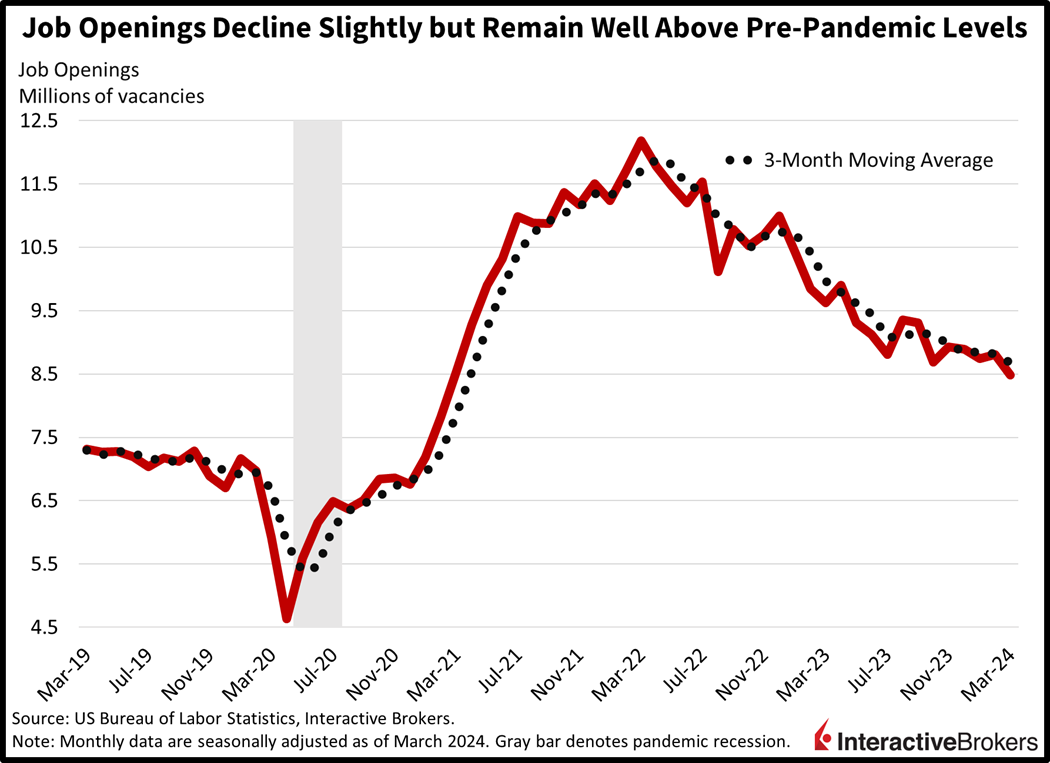
Initial sluggish trading gave way to gains around 10:00 a.m. ET following the April JOLTS - Job Openings Report showing increased job openings.
The report was taken positively for the labor market despite the OECD's reduced 2025 GDP growth forecasts for global, U.S., and China's sluggish PMI.
Sector Performances
The information technology sector was the top performer (+1.5%), led by NVIDIA (NVDA) and semiconductor stocks.
Energy (+1.1%), materials (+1.0%), and industrials (+0.8%) sectors followed, reflecting a pro-cyclical market stance.
The Russell 2000 rose by 1.6%, driven by its banking and energy stocks.
Advancers outnumbered decliners by more than 2-to-1 on NYSE and Nasdaq, though trading volumes remained below average.
Treasury and Indices
Treasury yields saw minor intraday movements, with the 10-year note holding at 4.46% and the 30-year bond at 4.98%, down two basis points.
Year-to-date, S&P 500 is up 1.5%, Nasdaq +0.5%, DJIA -0.05%, S&P 400 -2.8%, and Russell 2000 -5.7%.
Economic and Global Insights
U.S. factory orders dropped 3.7% in April, with business spending indicating weakness for the month.
The April JOLTS report showed 7.391 million job openings, up from March's revised 7.200 million.
Global indices: DAX +0.6%, FTSE +0.2%, CAC +0.3%, Nikkei -0.1%, Hang Seng +1.5%, Shanghai +0.4%.
Commodities: Crude Oil +0.84 to $63.41, Nat Gas +0.02 to $3.72, Gold -19.70 to $3377.60, Silver -0.05 to $34.63, Copper -0.03 to $4.83.
NVDA
Stock News
● BASF (OTCQX:BASFY) has initiated the sale of its coatings business, valued at approximately $6.8 billion. The sale process, managed by Bank of America and J.P. Morgan, has attracted interest from major private equity firms, including Carlyle Group (CG, Financial) and Blackstone (BX, Financial). The coatings division, which generated €4.3 billion in revenue in 2024, could become one of the largest European industrial buyouts this year.
● Taiwan Semiconductor Manufacturing Company (TSMC) (TSM, Financial) reported that demand for its AI chips continues to outpace supply, despite potential impacts from U.S. tariffs. TSMC's CEO, Dr. C.C. Wei, emphasized that AI demand remains robust, overshadowing any tariff-related concerns. The company expects its AI-related revenue to double in 2025, maintaining a positive outlook despite geopolitical challenges.
● Elon Musk's xAI Corp. is seeking $5 billion in debt financing to support its AI infrastructure expansion. Morgan Stanley (MS, Financial) is handling the debt issuance, which includes a mix of floating-rate and fixed-rate loans. This move is part of Musk's broader strategy to focus on his business ventures, following a period of political involvement that coincided with a 20% drop in Tesla (TSLA, Financial) shares.
● Constellation Energy (CEG, Financial) surged 13.9% pre-market after announcing a 20-year agreement to supply nuclear power to Meta Platforms (META, Financial). The deal supports the continued operation of Constellation's Clinton nuclear facility in Illinois, expanding its clean energy output by 30 MW. This agreement marks a significant step in meeting the rising power demands driven by artificial intelligence.
● Viper Energy (VNOM, Financial) announced a $4.1 billion all-stock acquisition of Sitio Royalties (STR, Financial), enhancing its production profile and free cash flow growth. The deal, which includes a 10% dividend increase, is expected to be accretive to cash available for distribution immediately after closing. Diamondback Energy (FANG, Financial) will hold a 41% stake in the new entity.
● Credo Technology Group (CRDO, Financial) projects over 85% revenue growth for fiscal 2026, driven by new hyperscaler ramps. The company reported a 180% year-over-year revenue increase in Q4 2025, with significant wins in the DSP market. Credo's expansion into hyperscaler partnerships is expected to sustain its growth trajectory.
● Toyota Motor (TM, Financial) announced a $26 billion take-private offer for Toyota Industries, marking a strategic shift for Japan's largest corporation. The deal involves a tender offer by Toyota Fudosan and includes plans for share repurchases. This move is part of Toyota's broader strategy to consolidate its group companies.
● Microsoft (MSFT, Financial) laid off over 300 employees, following a recent announcement of a 6,000-headcount reduction. The layoffs are part of Microsoft's ongoing organizational changes to adapt to a dynamic market environment. The tech sector has seen significant workforce reductions in 2025, with Microsoft and Intel (INTC, Financial) leading the trend.
● Coinbase (COIN, Financial) is dealing with a data breach linked to an outsourcing firm in India, potentially costing up to $400 million. The breach involved unauthorized access to customer data, leading to the termination of over 200 employees at TaskUs (TASK, Financial). Coinbase has been addressing the security lapse, which affected nearly 70,000 users.
● Pinterest (PINS, Financial) shares rose nearly 5% after J.P. Morgan upgraded its rating to "overweight." The upgrade reflects Pinterest's progress in user growth, monetization, and ad spending capture. J.P. Morgan raised the price target to $40, citing favorable risk/reward dynamics.
● Ferguson Enterprises (FERG, Financial) reported Q3 earnings with a Non-GAAP EPS of $2.50, beating estimates by $0.48. Revenue reached $7.62 billion, exceeding expectations by $190 million. The company updated its 2025 guidance, projecting low to mid-single-digit net sales growth.
● Dollar General (DG, Financial) posted Q1 GAAP EPS of $1.78, surpassing estimates by $0.29, with revenue of $10.44 billion. The retailer's performance was driven by new store openings and same-store sales growth. Dollar General revised its fiscal 2025 guidance, anticipating higher net sales and EPS growth.
● Paramount Global (PARA, Financial) nominated three new directors amid its pending $8.4 billion merger with Skydance Media. The nominations aim to strengthen board governance as the merger faces regulatory reviews and legal challenges. Paramount is also dealing with a lawsuit involving CBS News and former President Donald Trump.
● Sandvik (SDVKY, Financial) completed the acquisition of Verisurf Software, a U.S.-based 3D metrology software provider. The acquisition is expected to have a limited impact on Sandvik's EBITA margin and earnings per share, as it integrates Verisurf into its Machining and Intelligent Manufacturing division.
● Accenture (ACN, Financial) agreed to acquire SIPAL's Integrated Product Support business in Italy, enhancing its engineering services for aerospace and defense clients. The acquisition will add approximately 250 engineering professionals to Accenture's Industry X division, supporting its digital engineering and manufacturing capabilities.
● Hims & Hers Health (HIMS, Financial) announced the acquisition of European digital health platform ZAVA, expanding its presence in the U.K., Germany, France, and Ireland. The acquisition, funded entirely in cash, is expected to be accretive by 2026 and supports Hims & Hers' global expansion strategy.
● FactSet (FDS, Financial) appointed Sanoke Viswanathan as CEO, effective September 2025. Viswanathan, a JPMorgan Chase veteran, will succeed Phil Snow, who will retire but remain as a senior advisor until the end of the year. The leadership transition aims to continue FactSet's growth trajectory.
● Network Media Group (TSXV:NTE:CA) announced the resignation of CFO Darren Battersby, who served since 2014. The company is actively seeking a replacement to fill the CFO position, as it navigates its financial and strategic objectives.
● Semilux International (SELX, Financial) received a Nasdaq non-compliance notice for failing to file its annual report on time. The company has 60 days to submit a compliance plan to Nasdaq, addressing the deficiency and ensuring adherence to listing requirements.
● Bruker Corporation (BRKR, Financial) acquired biocrates life sciences, an Austrian company specializing in metabolomics solutions. The acquisition enhances Bruker's multiomics capabilities, supporting its expansion into instruments, reagents, software, and research services.
Campbell's (CPB)just delivered Q3 earnings that exceeded expectations, yet the stock barely moved.
The iconic soup maker posted solid results in its Meals & Beverages division while its Snacks business continued to struggle against fierce competition and weakening consumer demand.
Financial pros searched for the stock following its earnings announcement, ranking it fifth among packaged goods companies, according to our TrackStar data.
With consumers cooking at home more than any time since early 2020, Campbell's should be thriving. Yet management just guided adjusted earnings to the low end of their range due to persistent weakness in Snacks.
The company faces a tale of two businesses heading in opposite directions.
Campbell’sBusiness
Campbell's has ladled out soup and snacks for 155 years, building a $9.6 billion revenue empire around comfort food staples. The Camden-based company operates across two distinct divisions that serve very different consumer needs.
Campbell's manufactures and markets branded food products across North America, from its iconic red-and-white soup cans to Goldfish crackers that dominate lunchboxes nationwide. The company's 16 leadership brands generate roughly 90% of total sales and include household names like Pepperidge Farm, Rao's, and V8.
Campbell's segments its business into the following areas:
Meals & Beverages (61% of total revenues) - Includes Campbell's soups, Swanson broth, Pacific Foods, Prego and Rao's pasta sauces, V8 beverages, and SpaghettiOs
Snacks (39% of total revenues) - Features Pepperidge Farm cookies and bakery items, Goldfish crackers, Snyder's of Hanover pretzels, Kettle Brand chips, and Lance sandwich crackers
Campbell's just reported Q3 results that topped expectations despite mixed performance across its portfolio. Net sales climbed 4% to $2.5 billion, driven by the Sovos Brands acquisition completed in March 2024, which brought premium Rao's pasta sauce into the fold.
The Meals & Beverages division capitalized on increased home cooking trends, posting 15% sales growth and 8% higher operating earnings. However, the Snacks division declined 8% in sales and 13% in operating earnings as consumers pulled back on discretionary snack purchases.
Campbell's recently completed a $250 million cost savings program and expects to generate $130 million in savings this fiscal year. The company also finished integrating Sovos Brands into its ERP system, unlocking additional back-office efficiencies.
Management is reshaping the portfolio through strategic divestitures, recently selling its Pop Secret popcorn and noosa yogurt businesses to focus resources on core growth opportunities.
Financials
Source: Stock Analysis
Campbell's revenue speaks to growth through acquisitions rather than organic expansion.
Sales jumped from $8.1 billion in 2018 to $9.6 billion in 2024, largely driven by the Sovos Brands deal.
The company generates solid cash flows, producing $1.2 billion from operations over the trailing twelve months.
This easily covers its $296 million in capital expenditures and supports both a 1.5% dividend yield and share repurchases worth another 1.5% annually.
Campbell's maintains a reasonable debt load with $6.9 billion in total debt against $143 million in cash.
The company's net debt-to-EBITDA ratio sits at 3.6x, slightly elevated but manageable as management targets 3.0x leverage.
Gross margins have compressed from 37% in 2018 to 31% today, reflecting inflationary pressures and competitive dynamics that have squeezed profitability across the packaged food industry.
Valuation
Source: Seeking Alpha
Campbell's trades at 11.3x forward earnings, offering a discount to peers like Kraft Heinz (KHC) at 8.9x and a premium to ConAgra (CAG) at 9.7x. At 8.2x trailing cash flow, Campbell's appears reasonably valued relative to Mondelez (MDLZ) at 18.7x but higher than Kraft Heinz at 7.7x.
The stock's enterprise value-to-sales ratio of 1.7x sits in the middle of its peer group, suggesting neither compelling value nor excessive premium.
Growth
Source: Seeking Alpha
Campbell's revenue growth of 9.2% over the past year outpaces most competitors, though this reflects acquisition activity rather than organic expansion.
Looking forward, analysts expect just 2.7% revenue growth, trailing Smucker's (SJM) projected 1.5% but ahead of ConAgra's declining outlook.
The company's EBITDA growth of 7.2% year-over-year ranks second among peers, demonstrating management's ability to expand margins despite challenging conditions.
Profitability
Source: Seeking Alpha
Campbell's gross margin of 31.1% trails Smucker's industry-leading 39.7% but exceeds ConAgra's 26.7%. Operating margins of 14.4% place Campbell's in the middle of its peer group.
The company's 13.4% return on equity outperforms most competitors except Mondelez, indicating efficient capital allocation despite recent acquisition activity.
DeepSeek's revelation in January hammered AI stocks … But that's not AI's biggest problem. You see, despite getting slammed by DeepSeek's stunning worldwide intro … AI has more pressing concerns. Now, two companies have emerged in what could be this decade's greatest tech opportunity. They could be poised to help solve this potential AI catastrophe … And lead the next wave of tech superstars this year. DeepSeek hasn't killed AI … But if these companies don't solve AI's massive dilemma. Giants like Amazon, Google, Microsoft and countless more could see profits drop drastically. Learn all about why these two firms could be pivotal to AI 2.0[Ad]
Our Opinion 6/10
Campbell's deserves credit for successfully integrating Rao's and capitalizing on home cooking trends in its Meals & Beverages division. The company generates solid cash flows and maintains reasonable debt levels.
However, persistent weakness in Snacks and compressed margins limit upside potential.
While the stock trades at reasonable valuations, investors face the challenge of a company caught between a thriving soup business and struggling snack portfolio in an increasingly competitive environment.
Stock News
● BASF (OTCQX:BASFY) has initiated the sale of its coatings business, valued at approximately $6.8 billion. The sale process, managed by Bank of America and J.P. Morgan, has attracted interest from major private equity firms like Carlyle Group (CG, Financial) and Blackstone (BX, Financial). This move could mark one of the largest European industrial buyouts of the year, with BASF's coatings business generating €4.3 billion in revenue in 2024.
● Taiwan Semiconductor Manufacturing Company (TSMC) (NYSE:TSM) reported that AI chip demand continues to outpace supply, despite U.S. tariffs. TSMC's CEO, Dr. C.C. Wei, emphasized that tariffs have not significantly altered customer behavior, and the company expects AI-related revenue to double in 2025.
● Elon Musk's xAI Corp. is seeking $5 billion in debt financing to expand its AI infrastructure. Morgan Stanley (MS, Financial) is handling the debt issuance, which includes a floating-rate term loan and senior secured notes. This financing is part of Musk's broader strategy to bolster his business ventures, including Tesla (TSLA, Financial) and Neuralink.
● Constellation Energy (NASDAQ:CEG) surged 13.9% pre-market after announcing a 20-year deal to supply nuclear power to Meta Platforms (NASDAQ:META). This agreement supports the continued operation of Constellation's Clinton nuclear facility in Illinois, expanding its clean energy output by 30 MW.
● Credo Technology Group (CRDO, Financial) expects over 85% revenue growth for fiscal 2026, driven by new hyperscaler ramps. The company reported a 180% year-over-year revenue increase in Q4 2025, with significant wins in the DSP market and strong customer forecasts.
● Coinbase (NASDAQ:COIN) is dealing with a data breach linked to an outsourcing firm in India, potentially costing up to $400 million. The breach involved unauthorized access to customer data, leading to the dismissal of over 200 employees at TaskUs (NASDAQ:TASK), the outsourcing partner.
● Microsoft (NASDAQ:MSFT) has laid off over 300 employees, following a previous announcement of a 6,000 headcount reduction. The company continues to adjust its workforce to align with strategic goals amid a dynamic market environment.
● KKR & Co. (NYSE:KKR) has withdrawn from Thames Water's equity raising process, impacting the utility's recapitalization efforts. Thames Water is now focusing on discussions with senior creditors and regulatory authorities to address its financial challenges.
● Airbus (EASDY, Financial) reported a 4% decline in aircraft deliveries in May, with ongoing supply chain issues affecting performance. The company delivered 51 airplanes in May and expects conditions to stabilize in the coming months.
● Toyota Motor (NYSE:TM) announced a $26 billion take-private offer for Toyota Industries, marking a strategic shift. The move involves a tender offer by Toyota Fudosan and aims to strengthen collaboration within the Toyota Group.
● Sandvik (OTCPK:SDVKY) has acquired Verisurf Software, a U.S.-based 3D metrology software provider. The acquisition is expected to have a limited impact on Sandvik's earnings but will enhance its machining and manufacturing capabilities.
● Accenture (NYSE:ACN) plans to acquire SIPAL's Integrated Product Support business in Italy to bolster its aerospace and defense engineering services. The acquisition will add 250 engineering professionals to Accenture's Industry X division.
● Hims & Hers Health (NYSE:HIMS) is acquiring European digital health platform ZAVA to expand its presence in the U.K. and other European markets. The acquisition is part of the company's global expansion strategy and is expected to be accretive by 2026.
● Paramount Global (NASDAQ:PARA) has nominated three new directors as it awaits regulatory approval for its merger with Skydance Media. The nominations aim to strengthen board governance amid ongoing merger challenges.
● Ferguson Enterprises (NYSE:FERG) reported Q3 earnings with a Non-GAAP EPS of $2.50, beating estimates by $0.48. Revenue reached $7.62 billion, driven by growth in HVAC and waterworks segments.
● Dollar General (NYSE:DG) posted Q1 GAAP EPS of $1.78, surpassing expectations by $0.29. Revenue increased to $10.44 billion, supported by new store openings and same-store sales growth.
● Signet (NYSE:SIG) reported Q1 Non-GAAP EPS of $1.18, beating estimates by $0.14. Revenue rose to $1.54 billion, with same-store sales up 2.5% year-over-year, driven by increased merchandise average unit retail.
● Network Media Group (TSXV:NTE:CA) announced the resignation of CFO Darren Battersby. The company is actively seeking a replacement to fill the position.
● Semilux International (NASDAQ:SELX) received a Nasdaq non-compliance notice for failing to file its annual report on time. The company has 60 days to submit a compliance plan.
● Huawei is set to launch its Pura 80 series smartphones on June 11, continuing its comeback in the smartphone market. The launch follows the success of its Mate 60 Pro and aims to challenge competitors like Apple (NASDAQ:AAPL) and Samsung (OTCPK:SSNLF).
NVIDIA (NVDA): AI Powerhouse or Geopolitical Victim?
NVIDIA (NVDA) dominated financial professional searches in the past month with over 25,000 queries - more than double its nearest competitor.
The surge came after the chip giant reported first quarter fiscal 2026 results that showed both the promise and peril of its AI dominance.
Revenue jumped 69% year-over-year to $44.1 billion, but the company took a staggering $4.5 billion charge related to Chinese export restrictions on its H20 chips.
According to our TrackStar data, the earnings announcement triggered the highest search volume we've seen for any semiconductor stock this year.
The question now facing investors is whether NVIDIA's AI leadership can overcome mounting geopolitical headwinds.
Nvidia’s Business
NVIDIA pioneered accelerated computing and has become the backbone of the artificial intelligence revolution. The Santa Clara-based company designs graphics processing units that power everything from gaming PCs to massive AI data centers training the world's most sophisticated models.
From its origins in PC graphics, NVIDIA expanded into scientific computing, AI, data science, autonomous vehicles, robotics, and digital twin applications. The company serves cloud service providers, enterprises, researchers, gamers, and government agencies across 70 countries with its comprehensive computing platform.
NVIDIA segments its business into the following areas:
Compute & Networking (90% of total revenues) - Data Center accelerated computing platforms, AI solutions, networking equipment, automotive self-driving platforms, and robotics systems
Graphics (10% of total revenues) - GeForce gaming GPUs, professional workstation graphics, game streaming services, and Omniverse enterprise software
The first quarter brought both triumph and turbulence. Revenue soared 69% year-over-year, driven by insatiable demand for AI infrastructure. However, new U.S. export controls on H20 chips designed for China forced a $4.5 billion inventory write-down as demand evaporated overnight.
CEO Jensen Huang emphasized the company's focus on onshore manufacturing, announcing partnerships to build AI supercomputers in America. TSMC is constructing six fabs in Arizona for NVIDIA chips, while Foxconn builds a 1 million square foot factory in Houston for AI systems.
The transition from generative to agentic AI represents NVIDIA's next growth wave. These reasoning models require hundreds to thousands of times more compute than traditional inference, creating exponential demand for the company's Blackwell architecture.
Financials
Source: Stock Analysis
NVIDIA's financial performance tells a story of explosive growth shadowed by geopolitical complexity.
Revenue climbed from $26.0 billion a year ago to $44.1 billion this quarter, showcasing the company's ability to capitalize on AI demand.
Data center revenue alone reached $39.1 billion, up 73% year-over-year.
The H20 export restrictions revealed both vulnerability and resilience. While the $4.5 billion charge hammered gross margins down to 60.5%, excluding this one-time hit would have delivered 71.3% margins - demonstrating underlying business strength.
The company had sold $4.6 billion of H20 products before the restrictions hit and was unable to ship an additional $2.5 billion.
Operating cash flow surged to $27.4 billion from $15.3 billion a year ago, proving the business generates substantial cash despite capital intensity. NVIDIA's balance sheet remains fortress-like with $53.7 billion in cash and marketable securities against just $8.5 billion in long-term debt.
The company returned a record $14.3 billion to shareholders through repurchases and dividends, signaling management's confidence in sustained cash generation.
Valuation
Source: Seeking Alpha
NVIDIA's premium valuation reflects its AI market dominance but leaves little margin for error. The stock trades at 42.3x non-GAAP trailing earnings compared to Advanced Micro Devices’ (AMD) 30.8x and Broadcom's (AVGO) 44.7x.
While expensive, NVIDIA's forward P/E of 32.7x appears more reasonable than AMD's 58.8x, suggesting the market expects continued execution.
Price-to-sales metrics tell a similar story. NVIDIA commands 25.4x trailing sales compared to AMD's 6.6x and Broadcom's 20.5x.
The premium stems from superior growth and margins, though it creates vulnerability if AI demand falters or competition intensifies.
Growth
Source: Seeking Alpha
NVIDIA's growth trajectory dwarfs semiconductor peers and most technology companies. The 114.2% year-over-year revenue growth far exceeds AMD's 21.7% and Broadcom's 40.3%. Looking ahead, analysts expect 59.5% forward revenue growth for NVIDIA versus 18.0% for AMD.
Three-year compound annual growth rates underscore NVIDIA's sustained momentum. Revenue has grown at 69.3% annually compared to AMD's 13.7%. Earnings growth follows suit with 147.1% year-over-year increases, demonstrating the company's ability to scale profitably.
Profitability
Source: Seeking Alpha
NVIDIA's profitability metrics showcase operational excellence despite recent pressure. Gross margins of 75.0% (excluding the H20 charge) rival Broadcom's industry-leading 76.3%. Operating margins of 58.0% reflect pricing power and efficient operations, while net margins of 55.9% demonstrate strong bottom-line conversion.
Return on equity of 119.2% and return on assets of 76.3% highlight exceptional capital efficiency.
Free cash flow margins of 48.5% prove the business generates substantial cash relative to sales, supporting both growth investments and shareholder returns.
Jensen Huang recently gave the keynote speech at the Consumer Electronics Show in Las Vegas. When the Nvidia CEO walked on stage, you could've heard a pin drop. Robots — built by Nvidia. Forbes says this could be " a $24 trillion opportunity for investors." Huang said, "The ChatGPT moment for robotics is right around the corner." In fact, I believe these robots could impact 65 million Americans lives — this year. And one stock — currently priced around $7 — could be the biggest winner. To see a live demonstration with one of these robots, simply click here.[Ad]
Our Opinion 8/10
NVIDIA earns a strong rating despite geopolitical headwinds due to its unmatched position in AI infrastructure.
The transition from training to inference workloads creates massive new demand, while enterprise and sovereign AI markets offer expansion opportunities.
Management's focus on onshore manufacturing should reduce regulatory risks over time.
However, the China export restrictions present meaningful revenue headwinds and execution challenges that prevent a perfect score.
For long-term investors, NVIDIA remains the best way to play the AI revolution.
Stock News
● Sanofi (SNY, Financial) announced its acquisition of Blueprint Medicines for approximately $9.1 billion, or $129.00 per share in cash. The deal, expected to close in Q3, includes contingent value rights for potential milestone payments, bringing the total equity value to around $9.5 billion. This acquisition is anticipated to enhance Sanofi's gross margin and earnings per share post-2026.
● Samsung Electronics (OTCPK:SSNLF) is reportedly close to a deal with Perplexity AI to integrate its search technology into Samsung devices. This partnership aims to preload Perplexity’s app on Samsung devices and integrate it into the Bixby assistant, potentially boosting Samsung's AI capabilities and market competitiveness.
● Intel (INTC, Financial) and SoftBank (OTCPK:SFTBY) are forming a new AI-focused memory company, Saimemory, to develop energy-efficient memory chips for AI applications. This venture could challenge existing players like Micron (MU, Financial), whose shares dipped 0.7% in premarket trading.
● HSBC (HSBC, Financial) announced a $4 billion investment into its private credit funds, aiming to capture a larger share of the global private credit market. The bank plans to build a $50 billion credit fund over five years, focusing initially on direct lending in the UK and Asia.
● Meta Platforms (META, Financial) plans to fully automate ad creation using AI by the end of next year. This initiative will allow brands to generate and target ads on Facebook and Instagram, potentially revolutionizing digital advertising but raising concerns about AI-generated content quality.
● Plus Therapeutics (PSTV, Financial) reported a Q1 GAAP EPS of -$1.19, missing estimates by $0.97, with revenue of $1.06 million, down 36.9% year-over-year. The company's cash balance improved to $9.9 million as of March 31, 2025.
● China Liberal Education (CLEU, Financial) received a Nasdaq suspension notice due to delinquency in filing its annual report. The company is exploring options to comply with SEC and Nasdaq requirements to resume trading.
● Indivior (INDV, Financial) announced its decision to delist from the London Stock Exchange, maintaining its primary listing on Nasdaq. This move aligns with its strategic focus on the U.S. market, where it generates over 80% of its revenue.
● Citigroup (C, Financial) appointed Wenjie Zhang as its new China head, following his tenure at Bank of America (BAC, Financial). Zhang will lead Citi's operations in China, focusing on regulatory relationships and risk management.
● ConocoPhillips (COP, Financial) is in focus as the Trump administration seeks to roll back restrictions on Arctic oil drilling, potentially opening new opportunities for oil and gas development in Alaska's petroleum reserve.
● Zeekr Group (ZK, Financial) reported a 15.2% year-over-year growth in May vehicle deliveries, totaling 46,538 units. The increase reflects strong demand for its Zeekr and Lynk & Co brands.
● KKR (KKR, Financial) announced a $600 million financing deal with India's Manipal Group, supporting its expansion and growth objectives. This investment underscores KKR's commitment to strategic partnerships in emerging markets.
● Atos (OTCPK:AEXAF) received a €410 million offer from the French state to acquire part of its Advanced Computing unit. The transaction excludes Vision AI activities and is expected to generate significant revenue in 2025.
● CareTrust REIT (CTRE, Financial) completed a $146 million acquisition of a skilled nursing facilities portfolio in the Pacific Northwest. The investment is expected to yield a 9.0% return and enhance CareTrust's healthcare real estate portfolio.
● Rio Tinto (RIO, Financial) signed a co-management agreement with the PKKP Aboriginal Corporation, formalizing a partnership to preserve heritage and manage social impacts in its iron ore operations in PKKP Country.
● Panther Minerals (OTCPK:GLIOF) announced a CEO transition, with Robert Birmingham stepping down and joining the board as an independent director. The company is focusing on strategic leadership changes.
● Pony AI (PONY, Financial) partnered with Shenzhen Xihu Corporation to deploy over 1,000 Robotaxis in Shenzhen. This collaboration aims to integrate autonomous driving technology into local mobility networks.
● Cenovus Energy (CVE, Financial) announced the redemption of its Series 7 Preferred Shares, totaling $150 million. The company will pay a final dividend on these shares, aligning with its capital management strategy.
● Cango (CANG, Financial) co-founders plan to sell 10 million Class B shares to Enduring Wealth Capital Limited for $70 million. The transaction includes conditions that could affect Cango's ownership structure.
● Eat & Beyond Global (OTCPK:EATBF) proposed a name change to Digital Asset Technologies, reflecting its focus on digital and blockchain technologies. The company aims to align its brand with emerging market trends.
But the real story isn’t just the explosive growth. It’s the company’s bold prediction that it can reach $6.5 billion in revenue and $1.3 billion in adjusted EBITDA by 2030. Financial pros have been all over this stock, with search volume absolutely dwarfing competitors like Labcorp (LH) and Quest...Read More
Have you seen this yet? Almost nobody else is talking about what I'm calling the biggest economic and financial story regarding America's future. Amazon, Google, and Tesla are quietly investing billions of dollars in this idea, which is already popping up in places like Shreveport, Louisiana, San Francisco, and Texas. This story is showing up in Amazon's warehouses... at restaurants across the country... and even in the operating room. If I'm right, this will reshape our entire society – how we eat, sleep, work, travel, and spend our time.....Click here for the full details... you may even want to pass along to a friend or family member.
Revenue climbed 12.4% to $12.0 billion, with the AI business alone reaching $800 million, up over 30% year-over-year. Yet the Trump administration’s efficiency drive is reshaping the landscape. Civil contracts face scrutiny while defense and intelligence spending accelerate. CEO Horacio Rozanski...Read More
My absolute favorite stock just hit a critical "buy now" trigger price.This opportunity is killer. The smart money is already buying up shares in this company keeping the AI boom alive. Billionaire David Tepper bought 24 million shares... Billionaire Seth Klarman bought 12 million shares... Blackstone, Goldman Sachs, and Morgan Stanley are all major investors. Tech will not survive without this company. As a 30 year Wall Street Veteran, I'm telling you -- this is the future....Get the details here...
The public spat highlighted the economic reality that consumers—not China—ultimately pay for tariffs. Yet amid this controversy, Walmart quietly announced something remarkable: for the first time ever, its e-commerce operations turned profitable. Financial pros have taken notice, with Walmart searches...Read More
A new coin is emerging in the crypto world. And investing in it now could end up like Bitcoin or Ethereum during their first bull runs. My name is Juan Villaverde. I've accurately called every crypto bull and bear market since 2012. And I recently said Bitcoin would take off starting on Nov. 5. I even said it would hit $100,000 before the new year. I was exactly right … Which is why I suggest you pay close attention to what I have to say now..... Watch my full interview to find out more.
Financial Pros Are Hunting This $1.1B Cybersecurity Play
Cybersecurity spending could surge from $162 billion in 2023 to more than $435 billion by 2030, yet most investors struggle to find pure exposure to this booming sector.
While competitors dilute their portfolios with adjacent tech sectors, BUG demands its holdings derive at least 50% of revenue from cybersecurity products and services.
Our TrackStar data shows BUG leading financial professional searches among the Global X niche tech ETFs over the past month.
The reason becomes clear when examining its concentrated portfolio of just 23 holdings versus the broader approach of larger competitors.
Recent ransomware attacks and escalating geopolitical tensions have made cybersecurity a necessity rather than an option.
Let's examine why this focused strategy might be the key to capturing the sector's explosive growth.
Key Facts About BUG
Net assets: $1.1 billion
12-month trailing yield: 0.15%
Inception: October 25, 2019
Expense ratio: 0.51%
Number of holdings: 23
BUG seeks to provide investment results that correspond generally to the price and yield performance of the Indxx Cybersecurity Index.
The fund employs a straightforward but strict methodology that sets it apart from broader technology ETFs.
The selection process begins with companies worldwide that generate at least 50% of their revenue from cybersecurity activities.
This revenue threshold eliminates tech giants that offer cybersecurity as a side business, creating a portfolio of pure-play specialists.
The fund then weights these companies by market capitalization and caps the portfolio at the top 40 names.
Most car factories like Ford or Tesla reportedly build one car per minute. Isn’t it time we do that for houses?
BOXABL believes they have the potential to disrupt a massive and outdated trillion dollar building construction market by bringing assembly line automation to the home industry. Since securing their initial prototype order from SpaceX and a subsequent project order of 156 homes from the Department of Defense, BOXABL has made substantial strides in streamlining their manufacturing and order process. BOXABL is now delivering to developers and consumers. And they just reserved the ticker symbol BXBL on Nasdaq* BOXABL has raised over $170M from over 40,000 investors since 2020. They recently achieved a significant milestone: raising over 50% of their Reg A+ funding limit! BOXABL is now only accepting investment on their website until the Reg A+ is full.
This is a paid advertisement for BOXABL’s Regulation A offering. Please read the offering circular here. This is a message from BOXABL
*Reserving a Nasdaq ticker does not guarantee a future listing on Nasdaq or indicate that BOXABL meets any of Nasdaq's listing criteria to do so.
Continued...
The top holdings reflect the industry's leading players: Zscaler leads at 6.3%, followed by Okta at 6.2%, CrowdStrike at 6.0%, Check Point Software at 5.9%, and Palo Alto Networks at 5.6%.
Each company represents a different approach to cybersecurity, from cloud security to identity management to endpoint protection.
This concentrated approach creates both opportunity and risk. The fund's weighted average market cap sits at $28.1 billion, indicating exposure to mid-cap growth companies rather than massive tech conglomerates.
These companies often grow faster than established giants but face greater volatility during market downturns.
Source: Global X
The geographic breakdown shows 64.6% exposure to U.S. companies, with significant allocations to Israel at 16.0%, Japan at 15.0%, and South Korea at 4.4%.
This international diversification captures cybersecurity innovation happening globally, particularly in Israel's renowned tech sector.
The strategy supports growth by focusing on companies positioned to benefit from increasing cybersecurity adoption.
Unlike diversified tech funds that might hold hardware manufacturers or consumer software companies, BUG maintains laser focus on businesses solving security challenges that grow more complex each year.
Performance
The fund's performance demonstrates both the promise and volatility of concentrated cybersecurity investing.
Since inception, BUG has delivered a 15.4% annualized return, significantly outpacing broader technology indices.
Source: Global X
The one-year return of 8.4% reflects recent challenges facing growth-oriented technology stocks. However, the five-year annualized return of 17.4% shows the strategy's long-term effectiveness.
The three-year annualized return of 1.4% illustrates how cybersecurity stocks suffered during the 2022 growth stock correction but have since recovered.
Current valuation metrics show the portfolio trading at 30.7x forward earnings and 5.2x price-to-book value.
These elevated multiples reflect investor optimism about cybersecurity growth prospects but also suggest limited margin for disappointment.
The fund's beta of 0.82 versus the S&P 500 indicates slightly lower volatility than the broader market, though individual cybersecurity stocks can experience dramatic swings.
The standard deviation of 22.8% confirms this sector requires tolerance for significant price movements.
Recent fund flows tell an interesting story. The ETF attracted $143.8 million in net inflows over the past year, with particularly strong momentum showing $122.8 million in net inflows over just the past month.
This suggests institutional investors are positioning for cybersecurity growth despite current market uncertainty.
Competition
Our TrackStar data reveals the other niche tech ETFs capturing financial professional attention alongside BUG.
Global X E-commerce ETF (EBIZ): Focuses on e-commerce infrastructure with $70.6 million in assets and 40 holdings. EBIZ's 0.50% expense ratio matches BUG but targets online retail platforms and payment processors rather than security. Its broader consumer discretionary mandate creates different risk exposure.
Global X Cloud Computing ETF (CLOU): Targets cloud infrastructure companies with $341.4 million in assets and 36 holdings. CLOU's 0.68% expense ratio runs higher than BUG while focusing on software-as-a-service and cloud storage providers that often overlap with cybersecurity names.
Global X Social Media ETF (SOCL): Concentrates on social media platforms with $121.5 million in assets and 49 holdings. SOCL's 0.65% expense ratio reflects its niche focus, but social media companies face different regulatory and growth challenges than cybersecurity specialists.
Global X Information Technology Covered Call & Growth ETF (TYLG): Uses covered call strategies on tech holdings with $10.4 million in assets and 72 holdings. TYLG's 0.60% expense ratio generates 8.18% yield through options but sacrifices pure growth exposure for income generation.
Among these niche tech plays, BUG stands out for its pure cybersecurity focus and strong secular growth tailwinds, while others face platform-specific or strategy-related limitations.
My absolute favorite stock just hit a critical "buy now" trigger price.This opportunity is killer. The smart money is already buying up shares in this company keeping the AI boom alive. Billionaire David Tepper bought 24 million shares... Billionaire Seth Klarman bought 12 million shares... Blackstone, Goldman Sachs, and Morgan Stanley are all major investors. Tech will not survive without this company. As a 30 year Wall Street Veteran, I'm telling you -- this is the future. I've been waiting months for this stock to enter my buy zone and it just triggered. This could be the easiest (and safest) money you ever make. Get the details here...[Ad]
Our Opinion 7/10
BUG offers the purest exposure to cybersecurity growth among major ETFs, but this focus comes with increased concentration risk.
The fund's 50% revenue threshold eliminates companies that treat cybersecurity as a secondary business, creating a portfolio of specialists positioned to benefit from sector expansion. With cybersecurity spending projected to nearly triple by 2030, these pure-play companies should capture disproportionate value creation.
However, the 25-holding portfolio and mid-cap focus create volatility that income-focused or conservative investors should avoid.
The current 30.7x forward P/E ratio suggests limited room for execution disappointments.
The 0.5% expense ratio represents fair value for active sector selection, though passive alternatives exist at lower costs.
Strong recent fund flows indicate institutional confidence, but the strategy requires patience during market corrections.
Best suited for growth-oriented investors seeking concentrated cybersecurity exposure who can tolerate significant volatility for potentially superior long-term returns.
This ETF works as a satellite holding representing 5-10% of a diversified technology allocation rather than a core position.
Weekly Market Summary
This week marked a short trading period due to the Memorial Day holiday on Monday.
The S&P 500 began with a strong rise, surging 2.1% on Tuesday, and ended the week with a 1.9% gain overall.
Key events included President Trump's deferral of a proposed 50% EU tariff until July 9, sparking initial market enthusiasm.
NVIDIA (NVDA, Financial) impressed with a positive earnings report midweek, influencing upward market movement.
Despite midweek fluctuations caused by legal battles over tariffs and concerns about growth, market optimism held strong.
Major Developments
NVIDIA's (NVDA) earnings and guidance were well received, boosting the information technology sector.
U.S. Courts issued conflicting rulings on tariff enforcement, creating some market uncertainty.
The 10-year Treasury note yield decreased by eight basis points to 4.42%.
Consumer confidence increased, with an index jump to 98.0 in May.
Personal income and spending data indicated robust economic fundamentals.
Market Data
S&P 500 closed with a 1.9% weekly gain.
Nasdaq Composite had a significant monthly rise of 9.6%.
The month marked the best performance for the S&P 500 since 2023, up by 6.2%.
NVDA,BBY,CRM,ULTA,COST,ANF,FICO...
Stock News
● EOG Resources (EOG, Financial) announced a $5.6 billion acquisition of Encino Acquisition Partners from the Canada Pension Plan Investment Board. This strategic move significantly enhances EOG's holdings in the Utica shale, increasing its net core acres to 1.1 million and boosting production to 275,000 boe/day. The acquisition is expected to be accretive to EOG's EBITDA by 10% and cash flow by 9% in 2025.
● Strathcona Resources (OTCPK:STHRF, Financial) has formally bid to acquire MEG Energy (OTCPK:MEGEF, Financial) in a deal valued at approximately C$5.9 billion. The offer includes cash and stock, with Strathcona already owning 9.2% of MEG. The acquisition is expected to consolidate Strathcona's position in the energy sector, with significant equity commitments from Waterous Energy Fund.
● Synopsys (SNPS, Financial) has suspended sales in China to comply with new U.S. export curbs. The restrictions affect the sale of design software and semiconductor chemicals, impacting Synopsys' guidance for fiscal 2025. The company is assessing the potential impact on its business and financial condition.
● Nvidia (NVDA, Financial) and Dell Technologies (DELL, Financial) are set to provide technology for the U.S. Department of Energy's new supercomputer, Doudna. Scheduled for deployment in 2026, the system will enhance high-performance computing capabilities for scientific research, powered by Nvidia's next-generation platform.
● Zscaler (ZS, Financial) targets a $3 billion ARR milestone, driven by strong Q3 performance and the launch of the Z-Flex program. The company reported $678 million in revenue, up 23% year-over-year, and continues to innovate with its Zero Trust and Data Security platforms.
● Costco (COST, Financial) plans to open 27 new warehouses in 2025, focusing on price investment and digital initiatives. The company reported a 13% increase in net income for Q3, driven by competitive pricing and expanded gas station hours.
● NetApp (NTAP, Financial) outlined a $6.75 billion revenue midpoint for FY26, with growth driven by AI and all-flash storage solutions. The company reported record revenue and significant market share gains in the all-flash segment.
● UiPath (PATH, Financial) set a FY26 revenue target of $1.549 billion to $1.554 billion, highlighting the success of its Agentic Automation platform. The company reported strong Q1 financial performance, with significant customer engagement and partnerships.
● TransDigm (TDG, Financial) raised its offer price for Servotronics (SVT, Financial) to $47 per share, following an unsolicited proposal from a third party. The merger agreement, valued at approximately $110 million, aims to strengthen TransDigm's position in aerospace and defense components.
● Palantir Technologies (PLTR, Financial) shares rose 4% as the company secured new government contracts and expanded commercial activities. Palantir reported a 70% year-over-year increase in commercial revenue, with significant partnerships in healthcare and fraud detection.
● Summit Therapeutics (SMMT, Financial) saw its shares rise after its lung cancer therapy, developed with Akeso (OTCPK:AKESF, Financial), met the main goal in a late-stage trial. The therapy showed significant improvement in progression-free survival, with plans to seek FDA approval.
● American Eagle Outfitters (AEO, Financial) announced a $275 million capital expenditure plan, focusing on inventory management amid a Q1 loss. The company paused annual guidance but initiated a share repurchase program to enhance shareholder value.
● The Cooper Companies (COO, Financial) projected 10%-11.5% EPS growth for 2025, driven by its Myopia management portfolio and operational improvements. The company reported a 7% increase in consolidated organic revenue for Q2.
● Modine (MOD, Financial) plans to acquire L.B. White for approximately $112 million, aiming to integrate it into its HVAC Technologies group. The acquisition is expected to be immediately accretive to earnings and generate future cost savings.
● El Pollo Loco (LOCO, Financial) is under scrutiny from activist investor CapitalSpring, which holds a 5.2% stake. The investor plans to discuss strategic directions and potential transactions with the company's management and board.
● PepsiCo (PEP, Financial) successfully defended against a lawsuit over the invention of Flamin' Hot Cheetos. The court dismissed claims of fraud and defamation by a former executive, maintaining PepsiCo's narrative of the product's creation.
● Tian Ruixiang (TIRX, Financial) announced plans to acquire Ucare in a $150 million all-share deal. The acquisition aims to expand Tian Ruixiang's market presence and enhance its financial performance.
● EssilorLuxottica (OTCPK:ESLOY, Financial) agreed to acquire Optegra, expanding its med-tech strategy into advanced eyecare and surgical solutions. The acquisition strengthens its presence in the UK and several European countries.
● Nvidia (NVDA, Financial) and Dell Technologies (DELL, Financial) have secured a contract with the U.S. Department of Energy to develop a new supercomputer named Doudna. This system will utilize Nvidia's next-generation Vera Rubin platform, enhancing capabilities in high-performance computing and AI. The announcement has positively impacted both companies' stock prices, reflecting investor confidence in their technological advancements.
● Binance (BNB-USD, Financial) saw a positive market reaction after the SEC dropped its lawsuit against the cryptocurrency exchange and its founder, Changpeng Zhao. The dismissal marks a significant victory for Binance, potentially easing regulatory pressures and fostering a more favorable environment for crypto innovation in the U.S.
● Synopsys (SNPS, Financial) has halted sales in China to comply with new U.S. export restrictions. The move affects the company's semiconductor design software and chemicals, leading to a suspension of its financial guidance for the current quarter and fiscal year 2025. This development underscores the ongoing geopolitical tensions impacting tech companies.
● Zscaler (ZS, Financial) reported strong Q3 results, with a 23% year-over-year growth in annual recurring revenue, reaching $2.9 billion. The company aims to hit a $3 billion ARR milestone by the end of the quarter, driven by its new Z-Flex program and innovations in cloud security.
● Costco (COST, Financial) plans to open 27 new warehouses in 2025, emphasizing its commitment to expansion and competitive pricing. The company reported a 13% increase in net income for Q3, driven by strategic pricing and digital initiatives, including a new Buy Now Pay Later program.
● Exxon Mobil (XOM, Financial) is optimistic about winning its arbitration case against Chevron (CVX, Financial) over the acquisition of Hess (HES, Financial). The dispute centers on Exxon's right-of-first-refusal for Hess' stake in a Guyana oil venture, with a decision expected in the coming months.
● Sanofi (SNY, Financial) and Regeneron (REGN, Financial) experienced a decline in stock prices following mixed results from their Phase 3 COPD therapy trials. While one study met its primary endpoint, the other did not, prompting the companies to review the data before engaging with regulators.
● Summit Therapeutics (SMMT, Financial) shares rose after its lung cancer therapy, developed with Akeso (OTCPK:AKESF), achieved the primary endpoint in a Phase 3 trial. The positive results bolster Summit's plans to seek FDA approval for the treatment.
● TransDigm (TDG, Financial) increased its offer for Servotronics (SVT, Financial) to $47 per share, following a competing bid from a third party. The revised offer reflects TransDigm's strategic interest in acquiring Servotronics' advanced technology components for aerospace and defense.
● UiPath (PATH, Financial) set a revenue target of $1.549 billion to $1.554 billion for FY26, driven by the success of its Agentic Automation platform. The company reported strong Q1 financial performance, with significant customer engagement and strategic partnerships.
● NetApp (NTAP, Financial) reported record revenue for FY25, driven by growth in all-flash storage and AI business. The company projects FY26 revenue to reach $6.75 billion, reflecting continued strength in its hybrid cloud and AI segments.
● Cooper Companies (COO, Financial) outlined a 10%-11.5% EPS growth for 2025, supported by strong performance in its Myopia management portfolio and operational improvements. The company adjusted its revenue guidance amid market challenges in contact lenses and fertility.
● American Eagle Outfitters (AEO, Financial) reported a Q1 loss due to inventory write-downs and higher costs. The company paused its annual guidance but initiated a share repurchase program, signaling confidence in its long-term strategy.
● Marvell Technology (MRVL, Financial) reported a 76.5% increase in data center revenue for Q1, driven by AI demand. Despite strong results, the stock slipped, reflecting cautious investor sentiment amid broader market volatility.
● Ulta Beauty (ULTA, Financial) updated its 2025 outlook with net sales guidance of $11.5 billion to $11.7 billion, following strong Q1 execution and new brand launches. The company continues to expand its store footprint and enhance its product offerings.
● PepsiCo (PEP, Financial) successfully defended against a lawsuit over the invention of Flamin' Hot Cheetos. The dismissal of the case removes a potential legal overhang, allowing PepsiCo to focus on its growth initiatives.
● Tian Ruixiang (TIRX, Financial) announced plans to acquire Ucare in a $150 million all-share deal. The acquisition is expected to enhance Tian Ruixiang's service offerings and expand its market presence.
● Modine (MOD, Financial) is set to acquire L.B. White for $112 million, with the transaction expected to close by May 31, 2025. The acquisition is anticipated to be immediately accretive to earnings and aligns with Modine's growth strategy in HVAC technologies.
● El Pollo Loco (LOCO, Financial) is under scrutiny from activist investor CapitalSpring, which holds a 5.2% stake. The firm plans to engage with management on strategic direction and potential transactions, reflecting investor interest in unlocking value.
GuruFocus Stock Analysis
Nvidia (NVDA, Financial) Faces China Setback, Leans on Cloud and AI Demand by Faizan Farooque
NVIDIA (NVDA, Financial) gained attention through strong quarterly results and positive guidance, pushing its stock up by 3.2%.
Market focus shifted due to legal rulings on tariffs and disappointing economic data, raising growth concerns.
Legal and Economic Developments
The U.S. Court of International Trade ruled that President Trump lacked legal authority for certain tariffs, a decision appealed and temporarily overturned by the U.S. Court of Appeals.
GDP and jobless claims data were weaker than expected, contributing to market uncertainty.
U.S. Treasury yields experienced a sharp reversal, with 10-yr and 30-yr notes yielding 4.53% and 5.03% at their peak. The 10-yr note settled at 4.43% and the 30-yr bond at 4.93% following strong auction demand.
The U.S. Dollar Index fell by 0.5% to 99.39.
Company Impacts and Sector Performance
Best Buy (BBY) reduced its fiscal guidance, impacting its stock negatively.
Salesforce (CRM, Financial) showed a slowdown in growth in core areas, affecting its shares.
Despite market volatility, the AI optimism linked to NVIDIA supported broader market sentiment.
The S&P 500 saw modest gains, closing above 5,900, with real estate and technology sectors performing well. Communication services declined marginally.
Market breadth was positive with advancers leading decliners significantly at both NYSE and Nasdaq.
Key Indices Year-to-Date
S&P 500: +0.5%
Nasdaq: -0.7%
DJIA: -0.8%
S&P 400: -3.5%
Russell 2000: -7.0%
Economic Data Highlights
Initial jobless claims increased to 240,000; continuing claims reached 1.919 million, highest since November 2021.
The Q1 GDP second estimate showed a 0.2% decline, with consumer spending revised downward.
April pending home sales dropped by 6.3%, reflecting weaker economic conditions.
Global Markets and Commodities
European markets were slightly down, while Asian markets showed gains.
Commodities saw mixed results: crude oil and natural gas declined, while gold and silver increased.
NVDA,BBY,CRM
Stock News
● Nvidia (NVDA, Financial) reported a remarkable Q1 2026 performance with revenue reaching $44 billion, a 69% increase year-over-year. The company's data center revenue surged 73% to $39 billion, driven by AI infrastructure demand. Despite challenges from U.S. export controls to China, Nvidia's shares rose 6% in premarket trading, reflecting Wall Street's optimism about its future growth, potentially reaching a $5 trillion market cap.
● Salesforce (CRM, Financial) announced its acquisition of Informatica for $8 billion, aiming to enhance its AI capabilities. The company raised its FY26 revenue guidance to $41.3 billion, reflecting strong growth in its small and medium business segments. Salesforce's strategic move is expected to be accretive to its non-GAAP operating margin and EPS by the second year post-acquisition.
● Synopsys (SNPS, Financial) and ANSYS (ANSS, Financial) received FTC approval for their $35 billion merger, contingent on divestitures to maintain competition in software tool markets. The companies will sell certain assets to Keysight Technologies (KEYS, Financial), with Synopsys targeting $6.8 billion in revenue for 2025. Shares of both companies rose over 3% post-market.
● Tesla (TSLA, Financial) plans to launch its robotaxi service in Austin on June 12, starting with a fleet of 10-20 Model Y vehicles. The service will initially operate in select areas, with plans to expand rapidly. Tesla's shares increased by 2.2% in postmarket trading, as investors anticipate the potential earnings boost from this new venture.
● Intellia Therapeutics (NTLA, Financial) shares fell after disclosing safety concerns in a trial for its gene editing therapy partnered with Regeneron (REGN, Financial). A patient experienced Grade 4 liver enzyme elevations, raising concerns about the therapy's safety profile. The company continues to monitor the trial, which has dosed over 200 patients.
● Eos Energy Enterprises (EOSE, Financial) saw its shares plunge 21.6% pre-market after announcing a $75 million stock offering. The company plans to use the proceeds to repurchase outstanding notes and for general corporate purposes. The offering includes an option for underwriters to purchase additional shares.
● Foot Locker (FL, Financial) reported a Q1 revenue of $1.79 billion, missing estimates by $90 million. The company posted a non-GAAP EPS of -$0.07, with comparable sales declining 2.6%. The North American region saw a slight decrease, while international sales dropped significantly, particularly in Europe.
● HP Inc. (HPQ, Financial) aims for $2 billion in cost savings by 2025 as it reshapes its supply chain due to tariff impacts. The company reported a 5% revenue growth year-over-year, driven by strong demand in its Personal Systems segment. HP plans to expand manufacturing outside China to mitigate tariff costs.
● C3.ai (AI, Financial) targets up to $484.5 million in fiscal 2026 revenue, driven by growing demand for AI applications and partnerships. The company reported a 26% revenue increase in Q4 2025, with strategic alliances contributing to market expansion. C3.ai's focus on non-oil and gas verticals is expected to drive future growth.
● Nutanix (NTNX, Financial) raised its FY25 revenue guidance to $2.53 billion, citing robust new logo growth and expanded partnerships. The company reported a 22% year-over-year revenue increase in Q3 2025, with strong demand for its cloud platform. Nutanix's strategic partnerships and product innovations are key growth drivers.
● BYD (OTCPK:BYDDF, Financial) faced challenges as a major dealership in Eastern China shut down amid market pressures. The closure affected over 1,000 consumers, highlighting the competitive strain in China's auto market. BYD's adjustments to its dealer policy were cited as a factor in the dealership's financial difficulties.
● Li Auto (LI, Financial) exceeded Q1 expectations with revenue of $3.57 billion and a 15.5% increase in vehicle deliveries. The company projects Q2 deliveries between 123,000 and 128,000 vehicles, reflecting continued growth. Li Auto's expansion of retail and service centers supports its positive outlook.
● Starbucks (SBUX, Financial) was downgraded by TD Cowen due to profit concerns. The firm cited potential delays in same-store sales growth and increased competition as risks. Starbucks' shares slipped 0.8% in premarket trading, with a revised price target of $90.
● HCA Healthcare (HCA, Financial) and Tenet Healthcare (THC, Financial) received upgrades from Wells Fargo as policy risks for hospitals recede. The House's budget reconciliation legislation suggests healthcare spending cuts may moderate, benefiting these companies. HCA's price target was raised to $385, while Tenet's was increased to $195.
● Energy Transfer (ET, Financial) signed a 20-year deal to sell LNG to Japan's Kyushu Electric (OTCPK:KYSEY, Financial). The agreement marks Kyushu's first long-term LNG procurement from the U.S., enhancing its supply stability. Energy Transfer's Lake Charles LNG project continues to secure international contracts.
● Royal Bank of Canada (RY, Financial) announced plans to repurchase up to 35 million common shares, commencing June 12, 2025. The buyback reflects the bank's confidence in its financial position and commitment to returning value to shareholders.
● Wolters Kluwer (OTCPK:WTKWY, Financial) agreed to acquire Brightflag for €425 million, strengthening its legal software offerings. The acquisition is expected to enhance Wolters Kluwer's presence in the U.S. and Europe, with a focus on mid-size corporations. The deal is set to close in June 2025.
● Futu Holdings (FUTU, Financial) reported strong Q1 results with a GAAP EPADS of $1.96 and revenue of $603.4 million, both beating estimates. The company saw significant growth in funded accounts and trading volume, driven by increased client assets and market activity.
● Build-A-Bear Workshop (BBW, Financial) posted a Q1 GAAP EPS of $1.17, surpassing expectations by $0.31. Revenue increased by 11.9% to $128.4 million, with strong retail and franchise sales. The company reiterated its 2025 revenue guidance, highlighting its growth strategy amid tariff challenges.
Revenue more than doubled to $586 million while adjusted EBITDA nearly tripled year-over-year.
But the real story isn't just the explosive growth. It's the company's bold prediction that it can reach $6.5 billion in revenue and $1.3 billion in adjusted EBITDA by 2030.
Financial pros have been all over this stock, with search volume absolutely dwarfing competitors like Labcorp (LH) and Quest Diagnostics (DGX) in our TrackStar data. The attention makes sense when you consider the company just announced a major partnership with Novo Nordisk to offer Wegovy on its platform.
Yet beneath the headlines lies a fundamental transformation in how Americans access healthcare. Hims & Hers isn't just selling products. It's building a personalized healthcare ecosystem that could reshape an entire industry.
Him & Hers’s Business
Hims & Hers operates as a consumer-first healthcare platform that transforms how customers fulfill their health and wellness needs.
The company connects patients to licensed healthcare professionals through telehealth consultations and provides access to prescription medications via its affiliated pharmacies.
The platform serves nearly 2.4 million subscribers across the U.S., offering treatments for sexual health, mental health, dermatology, and weight loss conditions.
Over 60% of subscribers now use personalized solutions, demonstrating strong consumer appetite for precision medicine.
Hims & Hers segments its business into the following areas:
Online Revenue (98% of total revenues) - Direct-to-consumer sales through websites and mobile applications, primarily subscription-based
Wholesale Revenue (2% of total revenues) - Non-prescription product sales to retailers and third-party platforms
The company delivered record Q1 results with revenue jumping 111% year-over-year, driven largely by its weight loss specialty launching GLP-1 offerings.
The FDA's February resolution of the semaglutide shortage created some complexity, but management expects most commercial dosage transitions to complete by Q2.
Hims & Hers recently acquired peptide manufacturing capabilities and lab testing services to expand into hormone-driven conditions like low testosterone and menopause.
The company plans to launch both specialties before year-end, targeting over 50 million Americans with related symptoms.
The Novo Nordisk collaboration represents a pivotal milestone, combining Hims & Hers' customer-centric platform with proven obesity medications.
This partnership validates the company's model and sets a blueprint for future pharmaceutical collaborations.
Financials
Source: Stock Analysis
Hims & Hers demonstrates the financial power of a scalable healthcare platform.
Revenue has exploded from $83 million in 2019 to $1.8 billion over the trailing twelve months, representing compound annual growth of 86%.
The company maintains impressive gross margins at 77%, though these declined slightly from 82% in Q1 2024 due to the product mix shift toward GLP-1 offerings.
Management expects gross margins to recover in Q2 as economies of scale kick in and the company benefits from increased internal fulfillment capabilities.
Operating cash flow reached $334 million over the past year, a dramatic improvement from negative territory just three years ago.
Free cash flow of $237 million provides ample resources for expansion while supporting a clean balance sheet with $323 million in cash and no debt.
The company generates substantial returns on capital with a 37% return on equity and 12% return on assets.
These metrics reflect the asset-light nature of the platform business model and efficient capital deployment across growth initiatives.
Valuation
Source: Seeking Alpha
Hims & Hers trades at premium valuations that reflect its exceptional growth profile.
At 80x trailing earnings and 79x forward earnings, the stock commands significantly higher multiples than healthcare peers like Labcorp at 28x and Quest Diagnostics at 22x.
The enterprise value ratios tell a similar story, with HIMS trading at 87x trailing EBITDA compared to 15x for Labcorp and 13x for Quest. On a price-to-sales basis, HIMS trades at 6.7x compared to 1.5x-2.0x for traditional lab companies.
However, these comparisons may miss the point entirely.
Hims & Hers operates as a technology-enabled healthcare platform rather than a traditional service provider, justifying premium valuations similar to other high-growth subscription businesses.
Growth
Source: Seeking Alpha
The growth differential between Hims & Hers and traditional healthcare companies is staggering.
HIMS delivered 86% trailing revenue growth compared to single-digit growth for established players like Labcorp and Quest Diagnostics.
Forward revenue growth of 48% suggests the company can maintain exceptional expansion even as it scales.
EBITDA growth of 2,546% year-over-year demonstrates the operating leverage inherent in the platform model.
Three-year revenue compound annual growth of 77% positions HIMS among the fastest-growing healthcare companies.
The breadth of expansion opportunities from new specialties to global markets suggests this trajectory can continue.
Profitability
Source: Seeking Alpha
Hims & Hers has achieved profitability metrics that dwarf traditional healthcare competitors.
Net income margin of 9.2% compares favorably to Labcorp's 5.6% and significantly outpaces Quest's negative margins.
Return on equity of 37% reflects exceptional capital efficiency compared to single-digit returns for most healthcare service providers.
These profitability advantages stem from the platform's scalable technology infrastructure and subscription-based revenue model, which generates recurring cash flows with minimal incremental costs.
Hims & Hers represents a compelling investment in the future of healthcare delivery.
The company combines explosive growth with improving profitability while building competitive advantages through personalization and strategic partnerships.
The $6.5 billion revenue target by 2030 appears achievable given current momentum and expansion opportunities into new specialties.
While valuation multiples seem high, the exceptional growth profile and platform scalability justify premium pricing for investors with longer time horizons.
Stock News
● Nvidia (NVDA, Financial) reported a robust Q1 2026 with revenue of $44 billion, a 69% increase year-over-year, driven by strong demand in AI and data center sectors. Despite challenges from U.S. export controls affecting the China market, Nvidia's data center revenue surged 73% to $39 billion. The company anticipates a $45 billion revenue outlook for Q2, although potential losses in the China AI accelerator market could impact future growth.
● Synopsys (SNPS, Financial) and ANSYS (ANSS, Financial) received approval from the FTC for their $35 billion merger, contingent on divestitures to maintain competition in software tool markets. Synopsys will divest optical and photonic software tools, while ANSYS will sell PowerArtist to Keysight Technologies (KEYS, Financial). Both companies saw their shares rise over 3% post-announcement.
● Tesla (TSLA, Financial) plans to launch its robotaxi service in Austin on June 12, starting with a fleet of 10-20 Model Y vehicles. The service will initially operate in select areas, with plans to expand rapidly. This development comes as Tesla aims to offset expected sluggish Q2 deliveries, with shares rising 2.2% in post-market trading.
● HP Inc. (HPQ, Financial) announced a $2 billion cost-saving target for 2025, driven by supply chain shifts due to tariffs. The company is moving manufacturing out of China to countries like Vietnam and Mexico. Despite a 5% revenue growth, additional tariff costs impacted non-GAAP EPS by $0.12.
● Salesforce (CRM, Financial) outlined a $41.3 billion revenue target for FY26, bolstered by its $8 billion acquisition of Informatica. The acquisition aims to enhance Salesforce's AI and data management capabilities. Q1 revenue grew 8% year-over-year to $9.83 billion, with strong performance in small and medium markets.
● BYD (OTCPK:BYDDF, Financial) faced setbacks as a major dealership in Shandong province closed, affecting over 1,000 consumers. The closure highlights pressures in China's competitive auto market, with BYD's dealer policy adjustments cited as a contributing factor.
● Energy Transfer (ET, Financial) signed a 20-year deal to supply LNG to Japan's Kyushu Electric, contingent on a positive investment decision for its Lake Charles LNG project. This marks Kyushu's first long-term U.S. LNG contract, diversifying its procurement sources.
● Li Auto (LI, Financial) exceeded Q1 expectations with $3.57 billion in revenue and a 15.5% increase in vehicle deliveries. The company projects Q2 deliveries between 123,000 and 128,000 vehicles, representing up to 17.9% year-over-year growth.
● Royal Bank of Canada (RY, Financial) announced plans to repurchase up to 35 million common shares, commencing June 12, 2025. This move is part of the bank's strategy to enhance shareholder value.
● Nutanix (NTNX, Financial) raised its FY25 revenue guidance to $2.53 billion, driven by strong new logo growth and expanded partnerships. Q3 revenue reached $639 million, a 22% year-over-year increase, with a non-GAAP operating margin of 21.5%.
● e.l.f. Beauty (ELF, Financial) announced no fiscal 2026 guidance due to tariff uncertainties and its $1 billion acquisition of rhode. Despite tariff impacts, Q4 net sales grew 4% year-over-year, with a 71% gross margin.
● C3.ai (AI, Financial) targets up to $484.5 million in fiscal 2026 revenue, supported by a strong partner ecosystem and AI application demand. Q4 revenue increased 26% year-over-year to $108.7 million, with strategic partnerships driving growth.
● SentinelOne (S, Financial) reported a 23% revenue growth in Q1 2026, with a record free cash flow margin of 20%. The company's Singularity platform continues to gain traction, particularly in the federal sector.
● nCino (NCNO, Financial) outlined $24 million in cost savings and raised FY26 guidance amid AI-driven efficiency. Q1 revenue rose 13% year-over-year to $144.1 million, with strong subscription revenue growth.
● Veeva Systems (VEEV, Financial) targets 200 Vault CRM customers by next year, driven by AI and Crossix momentum. Q1 revenue reached $759 million, with a non-GAAP operating margin of 46%.
● Wolters Kluwer (OTCPK:WTKWY, Financial) agreed to acquire Brightflag for €425 million, enhancing its legal spend management capabilities. The acquisition is expected to close in June 2025.
● Futu Holdings (FUTU, Financial) reported Q1 revenue of $603.4 million, an 81.1% year-over-year increase. The company saw significant growth in funded accounts and trading volume, particularly in U.S. stocks.
● Build-A-Bear Workshop (BBW, Financial) exceeded Q1 expectations with $128.4 million in revenue, an 11.9% year-over-year increase. The company continues to project mid-single-digit revenue growth for 2025.
● Foot Locker (FL, Financial) reported a Q1 revenue miss, with a 4.6% year-over-year decline to $1.79 billion. Comparable sales decreased 2.6%, with international markets showing significant weakness.
● Houston American Energy (HUSA, Financial) announced a 1-for-10 reverse stock split, effective June 6, 2025. The split aims to increase the market price per share and meet NYSE American's listing requirements.
GuruFocus Stock Analysis
Nvidia (NVDA, Financial) Faces Rare 'Sell' Rating as Analyst Warns of Plateau and Policy Risk by Faizan Farooque
Booz Allen Hamilton (BAH): Government's AI Partner of Choice
Booz Allen Hamilton (BAH) commanded the most attention from financial pros among consulting services stocks last month, generating 471 searches according to our TrackStar data.
The surge coincided with the company's fiscal 2025 earnings report, where management delivered strong results while navigating a challenging government contracting environment.
Revenue climbed 12.4% to $12.0 billion, with the AI business alone reaching $800 million, up over 30% year-over-year.
Yet the Trump administration's efficiency drive is reshaping the landscape.
Civil contracts face scrutiny while defense and intelligence spending accelerate.
CEO Horacio Rozanski described it as "short-term disruption followed by opportunity" during the earnings call.
With a fortress balance sheet and leading AI capabilities, Booz Allen appears positioned to capitalize on the government's technology transformation.
Booz Allen Hamilton’s Business
Booz Allen Hamilton operates as an advanced technology company delivering outcomes for America's most critical defense, civil, and national security priorities.
Founded in 1914, the company has evolved from a traditional consultancy into a technology powerhouse that builds AI, cyber, and cutting-edge solutions.
The McLean, Virginia-based firm employs approximately 35,800 people globally and serves nearly all U.S. cabinet-level departments.
Booz Allen's work spans protecting soldiers in combat, securing national infrastructure, enabling enhanced digital services, and improving government efficiency through technology integration.
Booz Allen segments its business into the following areas:
Defense Customers (49% of total revenues) - Advanced technologies for Department of Defense, including AI/machine learning, software infrastructure, and engineering solutions
Intelligence Customers (16% of total revenues) - Innovative capabilities for the Intelligence Community and national cyber mission providers
Civil Customers (35% of total revenues) - Federal missions including healthcare, homeland security, financial services, justice, and transportation modernization
The company reported strong fiscal 2025 results with 12.4% revenue growth, though civil business faces headwinds from the new administration's cost-cutting initiatives.
Management announced targeted restructuring in civil operations while doubling down on defense and intelligence growth opportunities.
President Trump's inner circle has a plan that could radically change how Social Security works.
It could be implemented as soon as July 22, thanks to a plan the president and his allies have been working on since January.
In fact, just days after taking office, President Trump signed Executive Order 14179 – giving his team new powers to permanently reset how many key federal agencies work.
That reset is now ready to begin – and it's critical you start preparing your money immediately.
Please understand... this has nothing to do with cutting budgets or firing staff.
It's much further-reaching than that. It could have a major impact on how you collect Social Security, pay your taxes, or collect other government benefits.
Which is why it's time to move your money before the White House makes its move by July 22.
This isn't the first time I've issued a huge warning like this. Many of the biggest names on Wall Street – including Goldman Sachs, JPMorgan, and BlackRock – all follow my Boston-based financial think tank's research. We predicted the 2008 and 2020 market crashes.
But what the White House is planning now could have a much more widespread impact than anything we've predicted so far.
It'll affect you, because it'll impact everyone who pays taxes or plans to retire in America.
Booz Allen continues investing heavily in AI partnerships, recently announcing collaborations with NVIDIA for edge applications and making strategic investments through Booz Allen Ventures.
The company's AI business reached $800 million in fiscal 2025, representing over 30% growth as agencies move toward enterprise-scale implementation.
Financials
Source: Stock Analysis
Booz Allen's financial performance reflects both operational excellence and market positioning strength.
Revenue grew from $10.7 billion in fiscal 2024 to $12.0 billion in fiscal 2025, driven primarily by organic growth and increased headcount to meet customer demand.
Operating margins held steady at 11.4%, demonstrating the company's ability to scale efficiently while investing in growth initiatives.
Net income surged 54.3% to $935 million, benefiting from revenue growth and cost management discipline.
The company generates substantial cash flow with $1.0 billion from operations and $911 million in free cash flow for fiscal 2025.
This represents a dramatic improvement from $192 million in free cash flow the previous year, providing ample resources for capital deployment.
Booz Allen maintains a clean balance sheet with $885 million in cash against $4.0 billion in total debt, resulting in a net leverage ratio of 2.4x adjusted EBITDA.
The company returned $1.2 billion to shareholders through dividends and share repurchases while funding strategic investments.
Valuation
Source: Seeking Alpha
Booz Allen trades at reasonable valuations compared to consulting peers.
Price-to-cash flow metrics show similar positioning at 13.3x compared to VRSK's expensive 36.1x multiple.
Booz Allen's enterprise value-to-EBITDA ratio of 11.8x appears attractive relative to VRSK's 33.3x, suggesting the market undervalues the company's consistent cash generation.
Growth
Source: Seeking Alpha
Revenue growth leadership distinguishes Booz Allen from competitors.
The company's 12.4% year-over-year growth significantly outpaces VRSK's 7.2%, EFX's 7.1%, and HURN's 9.0%.
Three-year compound annual growth of 12.7% demonstrates sustained momentum.
EBITDA growth of 17.8% year-over-year reflects operational leverage, while three-year EBITDA compound growth of 19.6% shows consistent profit expansion.
Forward revenue guidance of 0-4% reflects near-term civil market headwinds despite continued defense and intelligence strength
Profitability
Source: Seeking Alpha
Profitability metrics place Booz Allen in the middle tier among consulting peers.
Gross margins of 23.2% trail VRSK's exceptional 69.2% but exceed most traditional consulting firms.
EBITDA margins of 11.8% lag VRSK's software-like 47.9% but remain competitive.
Return on equity of 91.2% appears strong, though VRSK's 468.2% reflects different business model dynamics.
Net income margins of 7.8% demonstrate solid conversion from revenue to bottom-line profits, supported by disciplined cost management and operational scale.
Booz Allen Hamilton deserves strong consideration despite near-term uncertainty. The company dominates government AI implementation with $800 million in AI revenue growing over 30% annually. Management's proactive restructuring in civil business positions the firm for accelerated growth once procurement normalizes.
The Trump administration's focus on government efficiency and advanced technology adoption aligns perfectly with Booz Allen's capabilities. Defense and intelligence spending strength offsets civil headwinds, while outcome-based contracting trends favor the company's technical expertise.
At current valuations and with fortress balance sheet capacity, Booz Allen offers compelling risk-adjusted returns for patient investors.
Stock News
● Azul (AZUL, Financial) has filed for Chapter 11 bankruptcy as part of a restructuring deal with key stakeholders, including United Airlines (UAL, Financial) and American Airlines (AAL, Financial). The agreement involves $1.6 billion in committed financing and the elimination of over $2 billion in debt. This move aims to strengthen Azul's financial position, with potential equity financing of up to $950 million upon emergence.
● Spero Therapeutics (SPRO, Financial) saw its shares surge by approximately 255% in premarket trading after announcing successful results from a Phase 3 trial of its UTI treatment, tebipenem HBr, developed in partnership with GSK (GSK, Financial). The drug demonstrated non-inferiority to existing treatments, prompting plans for an early study termination and a forthcoming FDA submission.
● Nissan Motor (NSANY, Financial) is reportedly planning to raise over ¥1 trillion (~$7 billion) through debt issuance and asset sales, including a UK government-backed loan. This financial maneuver aims to address upcoming loan repayments and stabilize Nissan's financial position amid declining cash reserves.
● Okta (OKTA, Financial) has outlined a revenue growth target of 9%-10% for FY 2026, driven by product innovation and market specialization. The company reported strong Q1 results, with significant contributions from new products and a focus on non-human identity security.
● Semtech Corporation (SMTC, Financial) announced a Q2 sales outlook of $256 million, supported by robust demand in AI connectivity and data centers. The company highlighted record sales in its data center segment and significant growth in LoRa-enabled solutions.
● DoorDash (DASH, Financial) has upsized its convertible senior notes offering to $2.5 billion, with an initial conversion price reflecting a 42.50% premium over the last reported sale price. The proceeds are expected to support the company's growth initiatives.
● KULR Technology Group (KULR, Financial) is set to join the Russell 3000 Index, effective June 30, 2025. This inclusion reflects KULR's growing market capitalization and potential for increased investor interest.
● General Motors (GM, Financial) announced an $888 million investment in its New York facility to produce sixth-generation small-block V-8 engines. This investment underscores GM's commitment to American manufacturing and innovation in engine efficiency.
● PG&E (PCG, Financial) reported a 40% increase in data center power supply requests, driven by growing demand for AI data centers in California. Despite high costs, PG&E sees significant growth potential in this sector.
● Honeywell International (HON, Financial) is adding Marc Steinberg from Elliott Investment Management to its board as it prepares to split into three entities. This strategic move aims to unlock shareholder value and enhance operational focus.
● CenterPoint Energy (CNP, Financial) priced a stock offering at $37 per share, with proceeds intended for general corporate purposes. The stock traded 1.90% lower in after-market hours following the announcement.
● GDS Holdings (GDS, Financial) priced its $500 million convertible senior notes offering, with proceeds earmarked for working capital and debt refinancing. The offering size was increased from the initial $450 million.
● Elbit Systems (ESLT, Financial) announced a public offering of approximately 1.37 million shares, with proceeds to be used for general corporate purposes. The offering is expected to close soon, with shares listed on the Nasdaq Global Select Market.
● Box (BOX, Financial) reported Q1 Non-GAAP EPS of $0.30, beating estimates by $0.04, with revenue of $276.27 million. The company provided positive guidance for Q2, expecting revenue growth and improved operating margins.
● Macy's (M, Financial) posted Q1 Non-GAAP EPS of $0.16, surpassing expectations, with revenue of $4.6 billion. Despite a year-over-year decline, the company exceeded its prior guidance, benefiting from strong performance across its nameplates.
● Capri Holdings (CPRI, Financial) reported a Q4 Non-GAAP EPS loss of $4.90, with revenue of $1.04 billion. The company provided a cautious outlook for FY 2026, citing challenges in its Michael Kors segment.
● Dick's Sporting Goods (DKS, Financial) reaffirmed its full-year guidance despite missing Q1 earnings estimates. The company highlighted strong same-store sales growth and the strategic acquisition of Foot Locker (FL).
● Surf Air Mobility (SRFM, Financial) announced that co-founder Sudhin Shahani purchased $1 million worth of stock, signaling confidence in the company's transformation plan and future growth prospects.
● Vertiv (VRT, Financial) announced the retirement of CFO David Fallon and reaffirmed its guidance for Q2 and full-year 2025. The company is conducting a search for a successor while maintaining its strategic focus.
● Stellantis (STLA, Financial) appointed Antonio Filosa as CEO, effective June 23, 2025. Filosa's leadership is expected to drive the company's recovery in the U.S. market and strengthen its global operations.
The stock market closed with gains, driven by bullish sentiment and supportive developments.
Indices ended near daily highs, spurred by fear of missing out among sideline investors.
Major catalysts included a delay in U.S. tariff implementation for the EU, falling Treasury yields, and improved consumer confidence.
Significant Economic and Corporate News
President Trump postponed a 50% EU tariff until July 9, following talks with European Commission President von der Leyen.
Treasury yields decreased as Japan considered reducing ultra-long bond issuance, with the 10-yr yield down to 4.43% and the 30-yr yield to 4.94%.
The Consumer Confidence Index rose to 98.0 in May from 85.7 in April, alongside declining inflation expectations from 7.0% to 6.5%.
S&P 500 Sector and Stock Analysis
Consumer discretionary, information technology, and communication services sectors led market gains.
All 11 S&P 500 sectors increased, with utilities and energy sectors seeing the smallest gains at 0.8% each.
The CBOE Volatility Index fell 13.6% to 19.25 as hedging efforts reduced.
Economic Data and Market Reactions
Durable goods orders fell 6.3% in April after a 7.6% increase in March, impacted by a 17.1% drop in transportation equipment.
Excluding transportation, durable goods orders rose 0.2% month-over-month.
March FHFA Home Price Index declined by 0.1%, while the S&P Case-Shiller Index rose 4.1% annually.
Global Markets and Commodities Overview
European markets saw mixed results with DAX (+1.0%) and FTSE (+0.7%) up, while CAC remained flat.
Asian markets ended with Nikkei (+0.5%) and Hang Seng (+0.4%) gaining, whereas Shanghai dropped 0.2%.
Commodities reported varied results with crude oil at 60.91, natural gas slightly up, and gold down to 3300.60.
AAPL, AMZN, WMT, TSLA, GOOGL, MSFT, FB, NVDA, NFLX, BABA
Stock News
● Tesla (TSLA, Financial) experienced a significant decline in its European market presence, with sales plummeting 49% year-over-year in April. The drop to 7,261 vehicles sold contrasts sharply with the broader EV market's 34.1% growth. This downturn is attributed to increased competition and reputational challenges linked to CEO Elon Musk's political activities.
● PDD Holdings (PDD, Financial) reported disappointing Q1 results, with Non-GAAP EPADS of $1.56 missing estimates by $1.08 and revenue of $13.18 billion falling short by $1.17 billion. Despite a 10% year-over-year revenue increase, the company faces challenges in navigating domestic and global market shifts.
● Hesai Group (HSAI, Financial) projected robust Q2 revenue growth of 48%-57%, maintaining its shipment target of 1.2M-1.5M units as global lidar demand accelerates. The company reported a 46% year-over-year revenue increase in Q1, driven by a significant rise in lidar shipments.
● Motorola Solutions (MSI, Financial) announced its acquisition of Silvus Technologies for $4.4 billion, aiming to enhance its defense market position. The deal includes cash and restricted stock, with potential earnouts based on performance, and is expected to close by late 2025.
● Rocket Pharmaceuticals (RCKT, Financial) saw its shares plunge by 62% after the FDA placed a clinical hold on its Phase 2 trial for RP-A501 due to a serious adverse event. The trial pause follows a patient's death, raising concerns about the therapy's safety profile.
● Bank of Nova Scotia (BNS, Financial) increased its quarterly dividend by 4% to C$1.10 and announced a 1.6% share buyback. The bank reported a Q2 Non-GAAP EPS of C$1.52 and revenue of C$9.08 billion, reflecting an 8.7% year-over-year increase.
● Nidec (NJDCY, Financial) authorized a share buyback program, allowing the repurchase of up to 13 million shares, totaling 35 billion yen. The buyback period extends from May 28, 2025, to May 27, 2026, as part of the company's capital management strategy.
● Franco-Nevada (FNV, Financial) secured a $1 billion royalty on Ontario's Côté gold mine, enhancing its gold revenue stream. The royalty covers significant mineral reserves and resources, with the mine operated by a joint venture between Iamgold and Sumitomo Metal Mining.
● Harmony Gold (HMY, Financial) agreed to acquire MAC Copper for $1.03 billion, marking a strategic expansion into copper production. The deal includes a 20.7% premium on MAC Copper's share price, with Harmony aiming to diversify its metal portfolio.
● Eli Lilly (LLY, Financial) is set to acquire SiteOne Therapeutics for up to $1 billion, bolstering its pain treatment pipeline. The acquisition includes SiteOne's Nav1.8 inhibitor, a potential non-opioid treatment for chronic pain, with milestone-based payments.
● Taiwan Semiconductor (TSM, Financial) plans to open a chip design center in Munich, Germany, by Q3 2025. This move supports European customers in developing high-performance chips, aligning with TSMC's broader European expansion strategy.
● AstraZeneca (AZN, Financial) received EU backing for its immunotherapy Imfinzi in treating bladder cancer. The EMA's positive opinion supports Imfinzi's use in combination regimens, based on successful Phase 3 trial results.
● Hesai Group (HSAI, Financial) reported mixed Q1 results, with EPS beating estimates but revenue missing targets. The company anticipates strong Q2 revenue growth, driven by increased lidar shipments and strategic partnerships.
● JOYY (JOYY, Financial) posted a Q1 revenue decline of 12.4% year-over-year, with non-livestreaming revenue growing by 25.3%. The company maintained strong cash flow, despite a decrease in global mobile MAUs.
● Vienna Insurance Group (VNRFY, Financial) reported an 8.3% increase in Q1 gross written premiums, reaffirming its FY25 guidance. The group's solvency ratio remains robust at 271%, supporting its financial stability and growth ambitions.
● Kuaishou Technology (KUASF, Financial) achieved a 10.9% increase in Q1 revenue, driven by growth in daily and monthly active users. The company's e-commerce GMV rose by 15.4%, reflecting strong consumer engagement and market presence.
● Visa (V, Financial) appointed Antony Cahill as CEO of its European operations, succeeding Charlotte Hogg. Cahill, a seasoned executive, will lead Visa's strategic initiatives in Europe, enhancing its payment solutions and market reach.
● Premier Health of America (PHA:CA, Financial) named Frédéric St-Cyr as interim CFO, following Guy Daoust's transition to interim CEO. The company is restructuring its financial leadership to support its strategic objectives.
● Organigram Global (OGI, Financial) announced CEO Beena Goldenberg's retirement at the end of the fiscal year. The board is initiating a search for a new CEO to lead the cannabis firm's continued growth and expansion.
GuruFocus Stock Analysis
Tesla (TSLA, Financial) Sales Sink 49% in Europe Amid Rising Competition, Brand Woes by Faizan Farooque
Walmart's (WMT) "First" Will Change Everything About Retail
Walmart (WMT) just achieved a retail milestone that even Donald Trump's tariff tirade couldn't overshadow.
After CEO Doug McMillon warned that "higher tariffs will result in higher prices," Trump erupted on social media, demanding Walmart "EAT THE TARIFFS" rather than raise prices on customers.
The public spat highlighted the economic reality that consumers—not China—ultimately pay for tariffs.
Yet amid this controversy, Walmart quietly announced something remarkable: for the first time ever, its e-commerce operations turned profitable.
Financial pros have taken notice, with Walmart searches dominating our TrackStar data at nearly 4,800 lookups—far outpacing Costco's (COST) 4,522 and Target's (TGT) 2,870.
The interest makes sense: Walmart just achieved what many thought impossible—making online retail profitable while simultaneously growing it at 22%.
Walmart’s Business
Walmart operates over 10,700 stores across 19 countries, employing 2.1 million associates and generating $685 billion in annual revenue.
The retail giant leverages its massive scale to pressure suppliers for low prices while its dense store network doubles as fulfillment infrastructure, allowing 95% of the U.S. population to access delivery options of three hours or less—a key competitive advantage in the digital age.
Walmart segments its business into the following areas:
Walmart U.S. (41% of total revenues) - Supercenters, Discount Stores, Neighborhood Markets and e-commerce operations
Sam's Club U.S. (13% of total revenues) - Membership warehouse clubs offering bulk items at discount prices
Walmart International (17% of total revenues) - Operations across 18 countries outside the U.S.
Digital & Advertising (29% of total revenues) - E-commerce, marketplace, Walmart Connect advertising, and VIZIO
Walmart's latest quarter showed 4.5% comparable sales growth in the U.S., with e-commerce growing 22% globally and sub-three-hour deliveries jumping 91%.
If you're looking for the perfect retirement stock... Your search is over - we've found it. It's a tiny company which provides the backbone for the entire $15.7 trillion AI industry... It's used by EVERY single AI company on the planet... AMD, NVIDIA, META... none of these companies could exist without this firm. In fact, it's so crucial - OpenAI founder Sam Altman admits the future of AI "depends" on this firm's work. Best of all... It pays out "AI Royalties" which are 270X more lucrative than NVIDIA's dividends. Most people haven't caught on to this stock yet - it's still trading for only $20. But that won't last long.
The company has successfully diversified beyond traditional retail margins, with advertising revenue surging 50% (including VIZIO) and membership income growing 14.8% across the enterprise.
While tariffs remain a challenge, management emphasized their strategic sourcing flexibility and commitment to keeping prices as low as possible.
The VIZIO acquisition will accelerate advertising capabilities by adding connected TV to Walmart's ecosystem, creating new monetization opportunities.
Financials
Source: Stock Analysis
Walmart's revenue growth remains steady at 4.2% over the past year with a 6.0% 3-year CAGR, despite significant economic headwinds.
Gross profit margins have improved to 24.9%, up from 24.1% last year, reflecting better inventory management and improved business mix from higher-margin services.
The company generates substantial cash flow—$37.6 billion from operations over the trailing twelve months—providing flexibility to invest in growth initiatives while returning capital to shareholders. In Q1 alone, Walmart repurchased $4.6 billion in stock, matching its total buybacks for all of fiscal 2025.
Inventory levels are up just 3.8% year-over-year, showing disciplined management heading into a potential tariff-impacted period.
With $9.3 billion in cash against $52.9 billion in total debt, the balance sheet remains healthy and positioned to weather economic uncertainty.
Valuation
Source: Seeking Alpha
Walmart trades at a forward P/E of 37.9x, considerably higher than Target's 11.4x but below Costco's 57.2x multiple. On a price-to-sales basis, Walmart trades at 1.2x trailing revenue, less than Costco's 1.7x but higher than Target's 0.6x.
While these metrics appear expensive relative to traditional retail benchmarks, they reflect Walmart's transformation into a technology-powered omnichannel retailer with multiple high-margin growth engines beyond its core retail business.
Growth
Source: Seeking Alpha
Walmart's 4.2% revenue growth outpaces Target's slight decline but trails Costco's 6.1% gain. More impressively, the company's EPS has grown at a 14.7% 3-year CAGR, outperforming Costco's 11.3% and exceeding Target's 14.4% decline.
The 22% e-commerce growth demonstrates Walmart's digital transformation is accelerating while now contributing positively to the bottom line—something that once seemed impossible in retail.
Profitability
Source: Seeking Alpha
Walmart's 4.2% revenue growth outpaces Target's slight decline but trails Costco's 6.1% gain. More impressively, the company's EPS has grown at a 14.7% 3-year CAGR, outperforming Costco's 11.3% and exceeding Target's 14.4% decline.
The 22% e-commerce growth demonstrates Walmart's digital transformation is accelerating while now contributing positively to the bottom line—something that once seemed impossible in retail.
Walmart earns a 9/10 rating as it successfully threads the needle between reinvention and consistency.
The achievement of e-commerce profitability validates years of heavy investment and places Walmart in an elite company with Amazon. The company's diversification into high-margin services—particularly advertising and membership—creates a powerful flywheel effect that improves core retail economics through better data and customer loyalty.
Walmart's scale and operational excellence position it well to navigate tariff uncertainties. Its dominance in grocery creates traffic that can be monetized across higher-margin categories and services.
The only factor preventing a perfect score is the premium valuation, which leaves little room for execution missteps.
However, Walmart's consistent performance and accelerating momentum in digital, advertising, and membership suggest this premium is increasingly justified as the company demonstrates its ability to grow profit faster than sales even in challenging economic environments.
Stock News
● Tesla (TSLA, Financial) experienced a significant decline in its European market share, with sales plummeting 49% year-over-year in April. The drop to 7,261 vehicles sold contrasts sharply with the broader EV market's 34.1% growth. This downturn is attributed to increased competition and reputational challenges linked to CEO Elon Musk's political activities.
● Rocket Pharmaceuticals (RCKT, Financial) saw its shares plunge by approximately 62% in premarket trading following the FDA's clinical hold on its Phase 2 trial for RP-A501. The hold was due to a serious adverse event, resulting in a patient's death. Despite the setback, Rocket Pharmaceuticals maintains a cash reserve sufficient to support operations until 2027.
● Hesai Group (HSAI, Financial) projected a robust Q2 revenue growth of 48% to 57%, driven by a surge in global lidar demand. The company reported a 46% year-over-year revenue increase in Q1, with shipments tripling to nearly 200,000 units. Hesai continues to lead the automotive lidar market, securing significant orders and partnerships.
● Franco-Nevada (FNV, Financial) secured a $1 billion royalty deal on Ontario's Côté gold mine, enhancing its revenue stream from one of Canada's most modern gold mines. The acquisition covers nearly all mineral resources at the site, operated by a joint venture between Iamgold and Sumitomo Metal Mining.
● Harmony Gold (HMY, Financial) announced a $1.03 billion acquisition of MAC Copper, aiming to expand its copper production capabilities. The deal, offering a 20.7% premium on MAC Copper's share price, marks Harmony's strategic shift towards becoming a global gold and copper producer.
● Visa (V, Financial) appointed Antony Cahill as CEO of its European operations, succeeding Charlotte Hogg. Cahill, a seasoned executive, will assume his role in June, bringing extensive experience from his tenure at National Australia Bank.
● Nidec (OTCPK:NJDCY) authorized a share buyback program, allowing the repurchase of up to 13 million shares, valued at 35 billion yen. The buyback period extends from May 28, 2025, to May 27, 2026, reflecting Nidec's confidence in its financial stability.
● Bank of Nova Scotia (BNS, Financial) increased its quarterly dividend by 4% to C$1.10 and announced a 1.6% share buyback. The bank reported a Q2 revenue increase of 8.7% year-over-year, with a strong capital ratio of 13.2%.
● Pony.ai (PONY, Financial) partnered with Dubai's RTA to launch a robotaxi service, aligning with the city's autonomous transport goals. The service will begin trials in 2025, with full operations expected by 2026, marking a significant expansion in the Middle East.
● WeRide (WRD, Financial) expanded its robotaxi operations into Saudi Arabia, with trials set to commence in Riyadh and AlUla. This move strengthens WeRide's presence in the Middle East, following successful deployments in Abu Dhabi.
● Diginex (DGNX, Financial) acquired Matter DK, a Denmark-based ESG data firm, for $13 million in shares. This acquisition enhances Diginex's capabilities in sustainability data, reinforcing its position in the ESG sector.
● PDD Holdings (PDD, Financial) reported Q1 revenue of $13.18 billion, missing estimates by $1.17 billion. Despite a 10% year-over-year increase, the results fell short of expectations, impacting investor sentiment.
● JOYY (JOYY, Financial) announced Q1 revenue of $494.4 million, a 12.4% decline year-over-year. The company saw growth in non-livestreaming revenue, but overall user engagement metrics showed a decrease compared to the previous year.
● Kuaishou Technology (OTCPK:KUASF) reported a 10.9% increase in Q1 revenue to RMB32.6 billion. The company saw growth in daily and monthly active users, alongside a rise in e-commerce GMV, indicating strong market performance.
● Vienna Insurance Group (OTCPK:VNRFY) reaffirmed its FY25 guidance after reporting an 8.3% increase in Q1 gross written premiums. The group's solvency ratio remains robust at 271%, supporting its financial stability.
● Premier Health of America (TSXV:PHA:CA) appointed Frédéric St-Cyr as interim CFO, following Guy Daoust's transition to interim CEO. This leadership change is part of the company's strategic restructuring efforts.
● Organigram Global (OGI, Financial) announced the upcoming retirement of CEO Beena Goldenberg at the end of the fiscal year. The company is initiating a search for a new CEO to lead its continued growth in the cannabis sector.
● KULR Technology (KULR, Financial) filed a prospectus for a $300 million mixed securities shelf offering. This move aims to bolster the company's financial resources for future growth initiatives.
Our TrackStar data reveals an unusual surge in searches for iShares MSCI India ETF (INDA), the most liquid vehicle for US investors seeking broad Indian market exposure. The timing isn’t coincidental – US Treasury Secretary Scott Bessent recently declared India would likely be “one of the first...Read More
Comp sales slipped 0.3%, while earnings missed estimates by $0.14 per share—a rare occurrence for this home improvement leader. Financial pros flooded to the stock in record numbers, with search volume more than doubling that of competitor Lowe’s (LOW), according to our TrackStar data. The interest...Read More
Musk's AI empire is just beginning - and one overlooked company could be at the center of it all. We reveal everything in this exclusive Memorial Day webinar.....Reserve your spot before it's gone >>>
This sixth-generation quantum computer supposedly solves problems beyond the reach of even the world’s most powerful classical supercomputers. This milestone comes on the heels of D-Wave’s impressive Q1 results, which showed a 509% revenue surge to $15 million, largely driven by its first Advantage... Read More
CEO Satya Nadella emphasized AI’s critical importance, noting, “Cloud and AI are the essential inputs for every business to expand output, reduce costs, and accelerate growth.” Microsoft’s standout 33% Azure growth included 16 percentage points from AI services alone – confirming the company’s... Read More
Market Reacts to Tariff Concerns and Economic Data
Capital markets experienced volatility following President Trump's posts about potential tariffs, creating uncertainty just before the holiday weekend.
Apple (AAPL, Financial) warned of a 25% tariff on iPhones not made in the U.S.
President suggested a 50% tariff on the EU, effective June 1.
Flight-to-safety led to a drop in Treasury yields; 10-yr note fell to 4.45%.
CBOE Volatility Index surged to 25.53, indicating increased market anxiety.
Major indices fell: Dow (-1.2%), Nasdaq (-1.7%), S&P 500 (-1.3%), Russell 2000 (-1.7%).
Disappointing guidance from Deckers Outdoor (DECK, Financial) and Ross Stores (ROST, Financial) added pressure.
Calm returned after White House clarified remarks as negotiating tactics.
Treasury Secretary Bessent not concerned about rising yields, attributing them to stronger growth expectations.
10-yr note yield settled at 4.51%, 30-yr bond at 5.04%, with VIX easing to 21.92.
Apple and mega-cap stocks led declines in information technology, communication services, and consumer discretionary sectors.
Utilities sector (+1.2%) was the only sector with significant gains.
Decliners outpaced advancers on both NYSE and Nasdaq.
U.S. markets will remain closed on Monday for Memorial Day.
Year-to-date performance:
DJIA: -2.2%
S&P 500: -1.3%
Nasdaq: -3.0%
S&P 400: -4.6%
Russell 2000: -8.5%
Economic data showed a 10.9% surge in new home sales in April, reaching an annual rate of 743,000 units. This increase was supported by a decline in median sales prices, though tempered by a downward revision of March sales figures.
● Microsoft (MSFT, Financial) saw a significant regulatory hurdle removed as the Federal Trade Commission (FTC) withdrew its lawsuit against the company's $68.7 billion acquisition of Activision Blizzard. This decision marks the end of a prolonged legal battle, allowing Microsoft to proceed with the deal, which is expected to enhance its gaming portfolio significantly.
● Informatica (INFA, Financial) shares surged over 25% following reports that Salesforce (CRM, Financial) is in talks to acquire the company. The potential acquisition, which could be announced next week, has caused Salesforce shares to dip by 3%, reflecting investor concerns over the financial implications of the deal.
● Douglas Elliman (DOUG, Financial) experienced a 33% stock surge after reports of a takeover bid from Anywhere Real Estate (HOUS, Financial). The offer values Douglas Elliman at more than $4 per share, nearly double its previous closing price, although the company is likely to reject the current proposal.
● Intuit (INTU, Financial) raised its fiscal 2025 revenue growth guidance to 15%, driven by strong performance in its TurboTax Live and mid-market segments. The company reported a 15% increase in revenue to $7.8 billion for the third quarter, highlighting the impact of its AI-driven platform on customer engagement and operational efficiency.
● Autodesk (ADSK, Financial) outlined a revenue target of $6.925 billion to $6.995 billion for fiscal 2026, emphasizing its strategic focus on cloud and AI technologies. The company reported a 15% revenue growth in the first quarter, with significant contributions from its new transaction model.
● Deckers Outdoor Corporation (DECK, Financial) announced a $150 million tariff headwind for fiscal 2026, which is expected to impact its gross margins. Despite this, the company reported a 16% revenue growth for fiscal 2025, driven by strong performances from its HOKA and UGG brands.
● Rio Tinto (RIO, Financial) was selected for a second major lithium project in Chile, partnering with Empresa Nacional de Minería for the Altoandinos project. This follows a similar selection earlier in the week, reinforcing Rio Tinto's strategic focus on expanding its lithium portfolio.
● Gilead Sciences (GILD, Financial) announced successful results from a late-stage trial of its breast cancer therapy, Trodelvy. The drug met its primary endpoint in a Phase 3 trial, showing significant efficacy as a first-line treatment for triple-negative breast cancer, potentially expanding its market reach.
● Palantir Technologies (PLTR, Financial) received a bullish outlook from Wedbush following a $795 million U.S. Army contract modification. The deal, part of the Department of Defense's AI initiative, positions Palantir as a key player in federal AI projects, with potential for further growth.
● Merus N.V. (MRUS, Financial) shares rose 16% after interim data from a mid-stage trial showed promising results for its lead cancer therapy. The combination treatment demonstrated a 63% response rate in head and neck cancer patients, suggesting potential as a new standard of care.
● Gyre Therapeutics (GYRE, Financial) saw its stock decline by 16% following the pricing of a $20 million stock offering. The proceeds will fund clinical trials and operational expenses, but the dilution impact weighed on investor sentiment.
● Vermilion Energy (VET, Financial) announced the sale of its Saskatchewan and Manitoba assets for C$415 million, with plans to use the proceeds for debt reduction. The sale aligns with Vermilion's strategy to focus on long-duration, high-return assets.
● Foxconn Technology (FXCOF, Financial) emerged as a potential bidder for UTAC Holdings in a deal valued at approximately $3 billion. The acquisition would expand Foxconn's semiconductor capabilities amid ongoing U.S.-China trade tensions.
● Phillips 66 (PSX, Financial) plans to lay off most workers at its Los Angeles refinery in December, following a decision to close the facility. The closure, along with Valero's Benicia refinery, will impact 20% of California's gasoline supply.
● International Paper (IP, Financial) announced the closure of five UK sites, resulting in 300 job losses. The move follows its acquisition of DS Smith and aims to streamline operations amid challenging market conditions.
● Shell (SHEL, Financial) is transferring its Indonesian gas station operations to a joint venture between Citadel Pacific and Sefas Group. The deal includes a brand licensing agreement, allowing Shell to maintain its presence in the region.
● Apple (AAPL, Financial) is offering trade-in discounts for new iPhones in China to counter competition from local brands like Huawei. The promotion aims to boost sales amid a challenging market environment, as Apple's stock continues to face downward pressure.
● Wix.com (WIX, Financial) acquired Hour One to enhance its generative AI capabilities. The acquisition is expected to improve Wix's web and visual design offerings, although the company's stock saw a slight decline following the announcement.
● Wolfspeed (WOLF, Financial) appointed David Emerson as COO, responsible for operations, supply chain, and quality divisions. The leadership change comes as Wolfspeed navigates financial challenges and strategic shifts.
● Disney (DIS, Financial) is attempting to block YouTube from hiring its former executive, Justin Connolly, for a sports role. The legal action underscores Disney's efforts to protect its contractual agreements and competitive position in the media landscape.
Market Reacts to Tariff Concerns and Economic Data
Capital markets experienced volatility following President Trump's posts about potential tariffs, creating uncertainty just before the holiday weekend.
Apple (AAPL, Financial) warned of a 25% tariff on iPhones not made in the U.S.
President suggested a 50% tariff on the EU, effective June 1.
Flight-to-safety led to a drop in Treasury yields; 10-yr note fell to 4.45%.
CBOE Volatility Index surged to 25.53, indicating increased market anxiety.
Major indices fell: Dow (-1.2%), Nasdaq (-1.7%), S&P 500 (-1.3%), Russell 2000 (-1.7%).
Disappointing guidance from Deckers Outdoor (DECK, Financial) and Ross Stores (ROST, Financial) added pressure.
Calm returned after White House clarified remarks as negotiating tactics.
Treasury Secretary Bessent not concerned about rising yields, attributing them to stronger growth expectations.
10-yr note yield settled at 4.51%, 30-yr bond at 5.04%, with VIX easing to 21.92.
Apple and mega-cap stocks led declines in information technology, communication services, and consumer discretionary sectors.
Utilities sector (+1.2%) was the only sector with significant gains.
Decliners outpaced advancers on both NYSE and Nasdaq.
U.S. markets will remain closed on Monday for Memorial Day.
Year-to-date performance:
DJIA: -2.2%
S&P 500: -1.3%
Nasdaq: -3.0%
S&P 400: -4.6%
Russell 2000: -8.5%
Economic data showed a 10.9% surge in new home sales in April, reaching an annual rate of 743,000 units. This increase was supported by a decline in median sales prices, though tempered by a downward revision of March sales figures.
● Microsoft (MSFT, Financial) saw a significant regulatory hurdle removed as the Federal Trade Commission (FTC) withdrew its lawsuit against the company's $68.7 billion acquisition of Activision Blizzard. This decision marks the end of a prolonged legal battle, allowing Microsoft to proceed with the deal, which is expected to enhance its gaming portfolio significantly.
● Informatica (INFA, Financial) shares surged over 25% following reports that Salesforce (CRM, Financial) is in talks to acquire the company. The potential acquisition, which could be announced next week, has caused Salesforce shares to dip by 3%, reflecting investor concerns over the financial implications of the deal.
● Douglas Elliman (DOUG, Financial) experienced a 33% stock surge after reports of a takeover bid from Anywhere Real Estate (HOUS, Financial). The offer values Douglas Elliman at more than $4 per share, nearly double its previous closing price, although the company is likely to reject the current proposal.
● Intuit (INTU, Financial) raised its fiscal 2025 revenue growth guidance to 15%, driven by strong performance in its TurboTax Live and mid-market segments. The company reported a 15% increase in revenue to $7.8 billion for the third quarter, highlighting the impact of its AI-driven platform on customer engagement and operational efficiency.
● Autodesk (ADSK, Financial) outlined a revenue target of $6.925 billion to $6.995 billion for fiscal 2026, emphasizing its strategic focus on cloud and AI technologies. The company reported a 15% revenue growth in the first quarter, with significant contributions from its new transaction model.
● Deckers Outdoor Corporation (DECK, Financial) announced a $150 million tariff headwind for fiscal 2026, which is expected to impact its gross margins. Despite this, the company reported a 16% revenue growth for fiscal 2025, driven by strong performances from its HOKA and UGG brands.
● Rio Tinto (RIO, Financial) was selected for a second major lithium project in Chile, partnering with Empresa Nacional de Minería for the Altoandinos project. This follows a similar selection earlier in the week, reinforcing Rio Tinto's strategic focus on expanding its lithium portfolio.
● Gilead Sciences (GILD, Financial) announced successful results from a late-stage trial of its breast cancer therapy, Trodelvy. The drug met its primary endpoint in a Phase 3 trial, showing significant efficacy as a first-line treatment for triple-negative breast cancer, potentially expanding its market reach.
● Palantir Technologies (PLTR, Financial) received a bullish outlook from Wedbush following a $795 million U.S. Army contract modification. The deal, part of the Department of Defense's AI initiative, positions Palantir as a key player in federal AI projects, with potential for further growth.
● Merus N.V. (MRUS, Financial) shares rose 16% after interim data from a mid-stage trial showed promising results for its lead cancer therapy. The combination treatment demonstrated a 63% response rate in head and neck cancer patients, suggesting potential as a new standard of care.
● Gyre Therapeutics (GYRE, Financial) saw its stock decline by 16% following the pricing of a $20 million stock offering. The proceeds will fund clinical trials and operational expenses, but the dilution impact weighed on investor sentiment.
● Vermilion Energy (VET, Financial) announced the sale of its Saskatchewan and Manitoba assets for C$415 million, with plans to use the proceeds for debt reduction. The sale aligns with Vermilion's strategy to focus on long-duration, high-return assets.
● Foxconn Technology (FXCOF, Financial) emerged as a potential bidder for UTAC Holdings in a deal valued at approximately $3 billion. The acquisition would expand Foxconn's semiconductor capabilities amid ongoing U.S.-China trade tensions.
● Phillips 66 (PSX, Financial) plans to lay off most workers at its Los Angeles refinery in December, following a decision to close the facility. The closure, along with Valero's Benicia refinery, will impact 20% of California's gasoline supply.
● International Paper (IP, Financial) announced the closure of five UK sites, resulting in 300 job losses. The move follows its acquisition of DS Smith and aims to streamline operations amid challenging market conditions.
● Shell (SHEL, Financial) is transferring its Indonesian gas station operations to a joint venture between Citadel Pacific and Sefas Group. The deal includes a brand licensing agreement, allowing Shell to maintain its presence in the region.
● Apple (AAPL, Financial) is offering trade-in discounts for new iPhones in China to counter competition from local brands like Huawei. The promotion aims to boost sales amid a challenging market environment, as Apple's stock continues to face downward pressure.
● Wix.com (WIX, Financial) acquired Hour One to enhance its generative AI capabilities. The acquisition is expected to improve Wix's web and visual design offerings, although the company's stock saw a slight decline following the announcement.
● Wolfspeed (WOLF, Financial) appointed David Emerson as COO, responsible for operations, supply chain, and quality divisions. The leadership change comes as Wolfspeed navigates financial challenges and strategic shifts.
● Disney (DIS, Financial) is attempting to block YouTube from hiring its former executive, Justin Connolly, for a sports role. The legal action underscores Disney's efforts to protect its contractual agreements and competitive position in the media landscape.
India's $500 Billion Trade Deal Could Supercharge This ETF
India just scored a massive trade deal with the UK, but Wall Street's eyes are fixed on an even bigger prize – a potential US-India agreement that could reshape global trade flows.
With negotiations accelerating toward a July deadline, financial professionals are frantically searching for exposure to the world's fastest-growing major economy.
Our TrackStar data reveals an unusual surge in searches for iShares MSCI India ETF (INDA), the most liquid vehicle for US investors seeking broad Indian market exposure.
The timing isn't coincidental – US Treasury Secretary Scott Bessent recently declared India would likely be "one of the first trade deals we would sign," possibly within weeks.
The stakes couldn't be higher. India needs to avoid Trump's looming 26% reciprocal tariffs, while the US covets greater access to a market of 1.4 billion consumers.
Negotiations are targeting 19 categories including agriculture, e-commerce, and critical minerals – precisely the sectors that dominate INDA's holdings.
Financial advisors aren't waiting for the official announcement. They're positioning now for what could be a transformative catalyst for Indian equities.
Key Facts About INDA
Net assets: $9.1 billion
12-month trailing yield: 0.7%
Inception: February 2, 2012
Expense ratio: 0.6%
Number of holdings: 156
The iShares MSCI India ETF provides investors with diversified exposure to the Indian equity market by tracking the MSCI India Index.
This index represents approximately 85% of the free float-adjusted market capitalization in India, capturing large and mid-cap representation across various sectors.
INDA employs a passive investment strategy, aiming to replicate the holdings and performance of its underlying index.
The fund uses a full replication approach where possible, holding each component stock in approximately the same proportion as its weight in the index.
The strategy offers investors growth potential through exposure to India's expanding economy, which continues to benefit from favorable demographics, increasing domestic consumption, and ongoing economic reforms.
Source: iShares
The ETF maintains diversification across sectors, helping mitigate country-specific risks while providing resilience against sector downturns.
Top holdings reflect India's financial sector dominance, with leading banks and energy giants comprising the largest positions.
Source: iShares
These holdings showcase India's economic structure, with financial services powering credit growth, energy supporting infrastructure development, and technology firms driving digital transformation – all key components of India's ambitious growth trajectory.
Performance
INDA has delivered respectable returns despite recent global market volatility.
The fund has generated a one-year return of 3.4%, outperforming many emerging market peers during a challenging period for global equities.
Over the medium term, its three-year return of 7.4% reflects India's economic resilience, while the impressive five-year return of 15.5% demonstrates the country's structural growth story.
When measured against benchmarks, INDA has slightly underperformed its target benchmark by about 0.8% over the past year.
This performance gap primarily stems from expenses and tracking differences rather than fundamental issues.
Notably, INDA has outpaced broader emerging market indices, which have struggled with weakness in China and other major developing economies.
The fund's post-tax performance highlights the importance of considering tax implications, with after-tax returns approximately 0.7% lower than pre-tax figures.
Source: iShares
Since inception, INDA has delivered a 6.9% annualized return, showcasing India's emergence as a stable long-term investment destination.
Through various market cycles, including the COVID-19 pandemic, Indian equities have demonstrated remarkable recovery capabilities, albeit with periodic volatility typical of emerging markets.
Competition
Several alternatives offer different approaches to international exposure, each with distinct risk-reward profiles.
While INDA focuses specifically on India's growth story, these competitors provide varying geographic exposures and investment theses.
KraneShares CSI China Internet ETF (KWEB): Targets Chinese internet companies with a 3.2% yield but carries a dismal -26.6% five-year return. Regulatory crackdowns and geopolitical tensions have punished investors despite China's market potential. At a 0.7% expense ratio, KWEB offers focused exposure but with substantially higher concentration risk than INDA.
iShares MSCI EAFE ETF (EFA): Provides developed market exposure with 698 holdings and a 2.9% yield. Its lower 0.3% expense ratio is attractive, but the 80.5% five-year return trails India's growth. EFA offers stability through mature economies but lacks the demographic advantages and economic acceleration driving INDA's performance.
iShares China Large-Cap ETF (FXI): Holds China's 50 largest companies with a 1.6% yield and underwhelming 3.9% five-year return. With the same 0.7% expense ratio as INDA, FXI has struggled amid China's economic slowdown and regulatory challenges. Despite China's larger economy, INDA has delivered superior risk-adjusted returns in recent years.
iShares MSCI Emerging Markets ETF (EEM): Offers broad emerging market access with 1,222 holdings and a 2.3% yield. Its 0.7% expense ratio matches INDA's, but its 39% five-year return significantly underperforms. This highlights the advantage of INDA's country-specific focus during India's current growth acceleration.
A major market shift could hit in days. Soaring stocks may crash, while overlooked ones surge. A secret signal—accurate since the Great Depression—is flashing again. If you're retired or planning too … You need to act before it's too late .. Click to learn more and for a limited-time offer[Ad]
Our Opinion 8/10
INDA provides the most efficient access to India's economic growth story without the complexity of direct market access.
The fund's sector allocation heavily favors financials and consumer discretionary – precisely the areas poised to benefit most from increased trade and domestic consumption.
With India negotiating a potential US trade deal by July, INDA offers timely exposure to what could be a significant market catalyst. The ETF's respectable expense ratio and ample liquidity make it suitable for both tactical and strategic allocations.
Best suited for growth-oriented investors seeking emerging market exposure with less direct China risk, INDA deserves core portfolio consideration.
While India's market can experience periods of pronounced volatility, the country's structural advantages – including favorable demographics, increasing urbanization, and expanding middle class – support a compelling long-term investment case that this ETF effectively captures.
Stock News
● Microsoft (MSFT, Financial) has successfully concluded its legal battle with the Federal Trade Commission (FTC) over its $68.7 billion acquisition of Activision Blizzard. The FTC withdrew its lawsuit after losing an appeal, marking the end of a two-year regulatory challenge. Microsoft President Brad Smith hailed the decision as a victory for gamers and common sense, potentially paving the way for further consolidation in the gaming industry.
● Intuit (INTU, Financial) raised its fiscal 2025 revenue growth guidance to 15%, driven by strong performance in TurboTax Live and mid-market segments. CEO Sasan Goodarzi highlighted the impact of AI-driven platforms in enhancing customer experience and operational efficiency. The company reported a 15% increase in Q3 revenue to $7.8 billion, with significant growth in operating income and earnings per share.
● Deckers Outdoor Corporation (DECK, Financial) reported a 16% increase in full-year revenue, driven by strong global growth in its HOKA and UGG brands. Despite a $150 million tariff headwind anticipated for fiscal 2026, the company remains optimistic about continued double-digit growth. Deckers is not providing formal guidance due to macroeconomic uncertainties but expects robust performance from its key brands.
● Autodesk (ADSK, Financial) outlined a revenue target of $6.925 billion to $6.995 billion for fiscal 2026, emphasizing growth in cloud and AI strategies. The company reported a 15% increase in Q1 revenue, with strong performance in billings and free cash flow. Autodesk's new transaction model and strategic investments are expected to drive future growth and margin improvements.
● Rio Tinto (RIO, Financial) has been selected for a second major lithium project in Chile, partnering with state-run Empresa Nacional de Minería for the Altoandinos project. The project involves a $425 million investment from Rio Tinto, contributing to a total investment of $3 billion. This selection strengthens Rio Tinto's position in the global lithium market, following its recent acquisition of Arcadium Lithium.
● Phillips 66 (PSX, Financial) plans to lay off most workers at its Los Angeles refinery in December, following a decision to close the facility. The refinery, along with Valero Energy's Benicia refinery, accounts for about 20% of California's gasoline supply. The closures reflect challenges in the state's refining business, impacting local fuel supply and employment.
● Vermilion Energy (VET, Financial) announced the sale of its Saskatchewan and Manitoba assets for C$415 million, with proceeds directed towards debt repayment. The assets produce 10,500 boe/day and are expected to generate $110 million in annual net operating income. This sale is part of Vermilion's strategy to focus on long-duration, scalable assets with high returns.
● Shell (SHEL, Financial) is transferring its gas station operations in Indonesia to a joint venture between Citadel Pacific and Sefas Group. The transfer is expected to complete next year, with Shell maintaining its brand presence through a licensing agreement. Indonesia remains a key market for Shell's lubricants business, with ongoing investments in production capacity.
● Gyre Therapeutics (GYRE, Financial) saw its stock price decline 16% after pricing a $20 million stock offering. The proceeds will fund a Phase 2 clinical trial and other corporate purposes. The offering reflects the company's need for capital to advance its pipeline amid challenging market conditions.
● Outlook Therapeutics (OTLK, Financial) experienced a 17% drop in stock price following the pricing of a $13 million stock offering. The funds will support working capital and general corporate purposes. The offering highlights the company's efforts to secure funding in a competitive biopharmaceutical landscape.
● International Paper (IP, Financial) plans to close five UK packaging sites, resulting in 300 job losses. This decision follows its $7.2 billion acquisition of DS Smith and aims to streamline operations amid challenging market conditions. The closures are part of a strategic review to optimize efficiency and adapt to economic pressures.
● Apple (AAPL, Financial) is offering trade-in discounts for new iPhones in China to counter competition from local brands like Huawei. The promotion runs until June 18, 2025, and aims to boost sales amid declining stock performance. Apple has faced a 20% stock decline this year, reflecting broader market challenges.
● Foxconn Technology (FXCOF, Financial) is reportedly among potential bidders for UTAC Holdings, a semiconductor assembly company valued at $3 billion. The sale process, managed by Jefferies, highlights Foxconn's strategic expansion into semiconductors amid global trade tensions. The deal could attract interest from non-U.S. bidders due to UTAC's presence in China.
● Luminar Technologies (LAZR, Financial) repurchased $50 million in convertible senior notes, funded by proceeds from a recent preferred stock issuance. The buyback reduces outstanding debt and reflects Luminar's efforts to manage its capital structure amid market volatility.
● Guardian Pharmacy Services (GRDN, Financial) priced its stock offering at $21 per share, raising funds through a non-dilutive transaction. The offering includes shares sold by existing stockholders and new shares issued by Guardian. The proceeds will support the company's growth and operational initiatives.
● Walt Disney (DIS, Financial) is seeking to block YouTube from hiring former executive Justin Connolly for a sports role, citing breach of contract. Disney filed a lawsuit to prevent the appointment, reflecting competitive tensions in the media and sports streaming sectors. The legal action underscores Disney's strategic focus on its ESPN streaming service.
● MINISO Group Holding (MNSO, Financial) reported Q1 revenue of $610.1 million, an 18.9% year-over-year increase. The company achieved a gross margin of 44.2% and significant same-store sales improvement in China. MINISO's growth strategy includes expanding its global footprint and leveraging intellectual property.
● Buckle (BKE, Financial) announced Q1 GAAP EPS of $0.70 with revenue of $272.12 million, marking a 3.7% year-over-year increase. The apparel retailer's performance reflects its ability to navigate market challenges and maintain profitability.
● Tuniu (TOUR, Financial) received a non-compliance notice from Nasdaq for failing to meet the minimum bid price rule. The company has until November 17 to regain compliance, highlighting the challenges faced by smaller firms in maintaining market standards.
● Eason Technology (DXF, Financial) received a non-compliance notice from the NYSE for failing to file its Form 20-F on time. The notice underscores the importance of regulatory compliance for maintaining exchange listings and investor confidence.
The House passed a reconciliation bill with a vote of 215-214, raising the SALT deduction cap to $40,000 and increasing the debt ceiling by $4 trillion.
The Tax Foundation projects a GDP increase of 0.6% and a $3.3 trillion rise in deficits over the next decade due to the bill.
Initial knee-jerk selling in the Treasury market increased the 10-yr note yield to 4.63% and the 30-yr bond yield to 5.15%.
Economic Reports
Continuing jobless claims rose by 36,000 to 1.903 million, while initial claims decreased by 2,000 to 227,000, indicating steady labor market conditions.
April's Existing Home Sales fell 0.5% to an annual rate of 4.00 million, the slowest pace since 2009, amid rising home prices.
Market Reaction
The stock market initially weakened but recovered due to mega-cap and growth stocks leading gains.
Key performers included Alphabet (GOOG), NVIDIA (NVDA), and Snowflake (SNOW, Financial), which benefited from favorable earnings reports.
Consumer discretionary, communication services, and information technology sectors closed in positive territory, while other sectors saw declines.
Major European indices like DAX, FTSE, and CAC fell, as did Asian markets including Nikkei and Hang Seng.
GOOG,NVDA,SNOW
Stock News
● Sanofi (SNY, Financial) announced its acquisition of Vigil Neuroscience (VIGL, Financial) for $470 million, with potential milestone payments increasing the total to $600 million. This strategic move aims to bolster Sanofi's neurology pipeline, particularly with Vigil's investigational Alzheimer's treatment. The acquisition follows a previous $40 million investment in Vigil, highlighting Sanofi's commitment to expanding its early-stage pipeline.
● Zoom (ZM, Financial) raised its full-year EPS outlook to $5.56-$5.59, driven by accelerated adoption of its AI Companion. The company reported a 40% increase in monthly active users for the AI feature, alongside significant enterprise deals, including a $1 million ARR contract with a financial institution. Zoom's revenue grew 3% year-over-year to $1.175 billion, surpassing guidance by $8 million.
● Snowflake (SNOW, Financial) increased its FY26 revenue outlook to $4.325 billion, reflecting a 25% year-over-year growth, as AI adoption and product innovation accelerate. The company reported Q1 product revenue of $997 million, up 26% year-over-year, and highlighted new product capabilities and strategic wins in various sectors.
● Walmart (WMT, Financial) plans to cut approximately 1,500 corporate jobs as part of a restructuring effort to simplify operations. The layoffs will affect divisions such as global technology and e-commerce fulfillment. Despite these cuts, Walmart aims to create new roles aligned with future business priorities, amid rising supply chain costs and planned price increases on select products.
● Rio Tinto (RIO, Financial) announced that CEO Jakob Stausholm will step down later in 2025. Stausholm, who joined the company in 2018, is credited with aligning Rio Tinto's strategy with global energy transition opportunities. The search for a successor is underway, with Stausholm remaining in his role until a new CEO is appointed.
● Honeywell (HON, Financial) will acquire Johnson Matthey's catalyst business for £1.8 billion in cash. The acquisition is expected to enhance Honeywell's Energy and Sustainability Solutions segment, adding high-growth vectors and cost synergies. This strategic move aligns with Honeywell's focus on expanding its portfolio in sustainable technologies.
● Nike (NKE, Financial) plans to resume selling its products on Amazon (AMZN, Financial) for the first time since 2019. This decision is part of Nike's turnaround strategy to regain market share from competitors. The move will involve banning independent merchants from selling certain Nike products on Amazon, with price increases expected on some items due to tariffs.
● Amazon (AMZN, Financial) shares rose 1.6% after Pershing Square Holdings disclosed a new stake in the company. The investment firm highlighted Amazon's dual business model, particularly the growth potential of AWS. Amazon's stock has gained nearly 20% over the past six weeks, reflecting investor confidence in its strategic direction.
● Eli Lilly (LLY, Financial) received approval to market its Alzheimer's drug Kisunla in Australia, marking the first amyloid-targeting treatment available in the country. This approval gives Eli Lilly a first-mover advantage over Biogen (BIIB, Financial), whose rival drug was not approved. The decision is based on positive trial data, positioning Eli Lilly strongly in the Alzheimer's treatment market.
● Seagate Technology (STX, Financial) announced a new $5 billion share buyback program, boosting its stock by 0.8% in premarket trading. The buyback aligns with Seagate's financial targets through 2028, as the company continues to capitalize on rising demand and strong pricing in the data storage market.
● Ralph Lauren (RL, Financial) exceeded earnings expectations in its fiscal fourth quarter, leading to a 10% dividend increase. The company's revenue grew 8.3% to $1.7 billion, driven by direct-to-consumer sales and strong performance across major regions. Ralph Lauren's strategic execution and resilient supply chain contributed to its robust financial results.
● IonQ (IONQ, Financial) shares surged over 14% after CEO Niccolo de Masi expressed ambitions to become the "Nvidia of quantum computing." The company's competitive positioning and ecosystem development efforts have attracted investor interest, with IonQ's stock up 344% over the past year.
● Urban Outfitters (URBN, Financial) reported a 21% rally in shares following strong Q1 results and an upgrade from J.P. Morgan. The company achieved comparable sales growth across all banners for the first time in three years, with strategic price adjustments planned to mitigate tariff impacts.
● Instil Bio (TIL, Financial) shares rose significantly after announcing updates on its cancer trials. The company plans to launch a Phase 1b/2 trial in the U.S. by the end of 2025, focusing on dose optimization for its bispecific antibody. Early data from trials in China showed promising response rates, boosting investor confidence.
● Luminar Technologies (LAZR, Financial) secured a $200 million capital commitment, enhancing its financial flexibility. The agreement involves issuing convertible preferred stock, with proceeds used for corporate purposes and debt retirement. Recent leadership changes, including a new CEO, aim to strengthen Luminar's strategic direction.
● MercadoLibre (MELI, Financial) announced a CEO transition plan, with Marcos Galperin moving to Executive Chairman in 2026. Ariel Szarfsztejn will assume the CEO role, continuing the company's strategic growth. MercadoLibre's stock remains strong, up 53% year-to-date, reflecting investor confidence in its leadership and market position.
● Xiaomi (OTCPK:XIACF) plans to launch its new electric SUV, the YU7, in July 2025. This follows the successful release of its SU7 sedan, with Xiaomi aiming to challenge Tesla's Model Y in the Chinese market. The company's strategic expansion into the EV segment supports its ambitious vehicle delivery targets.
● Cigna (CI, Financial) introduced a pharmacy benefit program through its Evernorth unit, capping weight-loss drug copays at $200 per month. This initiative aims to make GLP-1 weight loss medications more affordable, potentially saving patients up to $3,600 annually. The program reflects Cigna's commitment to accessible healthcare solutions.
● Microsoft (MSFT, Financial) filed legal action against the Lumma Stealer malware, disrupting its infrastructure and marketplaces. The company's Digital Crimes Unit seized malicious domains and collaborated with international agencies to combat cybercrime. Microsoft's proactive measures underscore the importance of cybersecurity in protecting critical services.
GuruFocus Stock Analysis
IonQ (IONQ, Financial) Skyrockets 27% After CEO Calls Company the 'Nvidia of Quantum Computing' by Faizan Farooque
The market initially sent Home Depot (HD) shares soaring after the retail giant beat revenue expectations by $609 million in Q1.
Yet beneath the surface, cracks began to show.
Comp sales slipped 0.3%, while earnings missed estimates by $0.14 per share—a rare occurrence for this home improvement leader.
Financial pros flooded to the stock in record numbers, with search volume more than doubling that of competitor Lowe's (LOW), according to our TrackStar data.
The interest makes sense.
Though stuck in a holding pattern due to the high interest rate environment, customers are still engaging in smaller home improvement projects—just not tackling the big remodels yet.
At the heart of CEO Ted Decker's message: $50 billion of home improvement spending sits on the sidelines, waiting for interest rates to drop.
Meanwhile, Home Depot continues building out its Pro ecosystem while fending off tariff pressures through strategic global sourcing.
Here's why this matters for your portfolio.
Home Depot’s Business
Home Depot occupies the enviable position as the world's largest home improvement retailer with over $163 billion in annual revenue.
The company serves both DIY homeowners and professional contractors through its network of 2,350 stores across North America, offering everything from lumber and building materials to appliances and décor—all supported by robust online capabilities and logistics.
Home Depot segments its business into the following areas:
Building Materials & Lumber (25% of total revenues) - Encompasses framing lumber, panels, doors, windows, roofing, and concrete
Plumbing & Electrical (16% of total revenues) - Includes water heaters, pipes, lighting fixtures, and electrical supplies
Hardware & Tools (13% of total revenues) - Features power and hand tools, fasteners, storage, and security products
Kitchen & Bath (12% of total revenues) - Covers cabinets, countertops, appliances, and shower fixtures
Paint & Flooring (10% of total revenues) - Includes interior and exterior paint, caulks, sealants, carpeting, and tile
Outdoor Living & Garden (14% of total revenues) - Offers plants, outdoor power equipment, patio furniture, and grills
Décor & Storage (10% of total revenues) - Houses storage solutions, furniture, home décor, and wall coverings
Home Depot's latest quarterly performance showed revenue of $39.9 billion, up 9.4% year-over-year, but comparable sales declined slightly at 0.3%, highlighting the challenging environment despite healthy top-line growth.
The company's management expressed optimism despite persistent headwinds in the housing market, with CEO Ted Decker noting that "our customers engaged across smaller projects and in our spring events" even as larger remodeling projects remained sidelined by high interest rates.
Home Depot continues to innovate within its online ecosystem, introducing "Magic Apron," a generative AI tool helping customers find answers to home improvement questions, driving higher conversion rates and engagement across digital platforms.
The retailer also secured an exclusive partnership with BEHR to offer KILZ branded primer products, strengthening its position with professional contractors who represent a critical growth segment for the business.
Financials
Source: Stock Analysis
Home Depot's financial picture reveals a company navigating shifting consumer behavior with remarkable resilience.
Revenue has grown steadily from $108.2 billion in FY 2019 to $163 billion in the trailing twelve months—representing 7.3% growth over the past year.
Gross margins have remained remarkably stable, holding at 33.4% despite inflationary pressures and supply chain disruptions that have plagued retailers.
Operating margin, however, has contracted from 15.3% in FY 2022 to 13.2% currently, reflecting increased operating expenses and the impact of SRS Distribution, which the company acquired last year.
The retailer generates tremendous cash from operations, with $18.6 billion flowing in over the trailing twelve months—enabling substantial shareholder returns through both dividends and repurchases.
The current dividend yield stands at around 2.3%, with the company returning approximately $2.3 billion to shareholders in dividends during the most recent quarter alone.
Home Depot's balance sheet carries $11.3 billion in long-term debt against $6.1 billion in cash, a manageable position given its strong cash generation.
Free cash flow remains robust at $15.2 billion annually, demonstrating the company's ability to fund growth initiatives while maintaining shareholder returns.
However, the acquisition of SRS Distribution has pressured margins by approximately 40 basis points on an annualized basis, and the company expects operating margin to contract to 13% for the full fiscal year 2025, down from 13.8% in fiscal 2024.
Valuation
Source: Seeking Alpha
Home Depot commands premium valuations relative to peers across nearly every metric, trading at 25.6x trailing earnings compared to 19.3x for Lowe's and just 11x for Builders FirstSource (BLDR).
On a price-to-sales basis, Home Depot trades at 2.3x, well above Lowe's at 1.6x and significantly higher than BLDR's 0.8x. This premium extends to EV/EBITDA, where Home Depot's 17x multiple exceeds most competitors.
Despite these elevated multiples, Home Depot's price-to-free cash flow ratio of 20.1x appears more reasonable compared to peers, reflecting the company's cash-generating capability.
Floor & Decor (FND) trades at a much higher premium on most metrics, including a 41.9x P/E ratio, demonstrating investor expectations for higher growth from this smaller competitor.
Home Depot's exceptional return on equity of nearly 300% partially justifies these premium valuations, as does its return on assets of 17.8%—metrics that far outpace most of its competition.
Growth
Source: Seeking Alpha
Home Depot's growth story shows significant deceleration from pandemic-era highs. Revenue growth has slowed to 7.3% year-over-year, while EPS has declined by 1.3% over the same period.
Looking forward, the company projects modest sales growth of approximately 2.8% for fiscal 2025, with comparable store sales increasing about 1%. This conservative outlook reflects ongoing caution about consumer spending on larger discretionary projects.
Compared to peers, Home Depot's projected growth rate of 3.8% exceeds Lowe's 0.3% and Builders FirstSource's 0.1%, but falls short of Floor & Decor's anticipated 5.7% expansion.
The 3-year compound annual growth rate for revenue stands at just 2.2%, significantly below the company's 5-year CAGR of 7.8%.
Perhaps more concerning is the negative 3-year CAGR for EBITDA (-0.7%), EBIT (-2.4%), and net income (-4%), highlighting margin compression as growth has normalized post-pandemic. This contrasts sharply with Advanced Drainage Systems (WMS), which has delivered impressive growth across all profitability metrics.
Profitability
Source: Seeking Alpha
Home Depot's profitability metrics remain industry-leading despite recent pressure. The gross profit margin of 33.3% slightly edges out Lowe's 33.2% but falls short of specialty retailers like Floor & Decor (44.2%) and Advanced Drainage Systems (37.8%).
EBIT margin sits at 13.2%, outpacing Lowe's 12.7% and significantly ahead of Builders FirstSource's 8.7%. Net income margin of 9% similarly exceeds most competitors, with only Advanced Drainage Systems delivering substantially higher figures at 15.5%.
Free cash flow margin remains strong at 9.3%, though it has declined from the 11.8% level achieved in fiscal 2024. Return on equity continues to impress at nearly 300%, vastly outperforming all peers, while return on assets of 17.8% narrowly edges out Lowe's 17.5%.
Apple just secretly added Starlink satellite support to iPhones. One of the biggest potential winners? Mode Mobile. Mode’s EarnPhone already reaches +45M users that have earned over $325M, and that’s before global satellite coverage. With SpaceX eliminating "dead zones" globally, Mode's earning technology can now reach billions more.
Disclaimer: Mode Mobile recently received their ticker reservation with Nasdaq ($MODE), indicating an intent to IPO in the next 24 months. An intent to IPO is no guarantee that an actual IPO will occur. The Deloitte rankings are based on submitted applications and public company database research, with winners selected based on their fiscal-year revenue growth percentage over a three-year period. A minimum investment of $1,950 is required to receive bonus shares. 100% bonus shares are offered on investments of $9,950+. Please read the offering circular at invest.modemobile.com. This is a paid advertisement for Mode Mobile’s Regulation A Offering.[Ad]
Our Opinion 8/10
We view Home Depot as an 8/10 investment opportunity despite near-term challenges.
The company maintains dominant market share in a highly fragmented $1 trillion market, with unmatched scale and operating efficiency. Management's strategic initiatives, including the expansion of its Pro ecosystem and investments in technology like Magic Apron, position it well for long-term growth.
While the housing market remains constrained by high interest rates, Home Depot sits poised to capture significant pent-up demand once conditions improve. CEO Ted Decker's estimate of $50 billion in deferred home improvement spending represents substantial upside potential.
The company's diversified global sourcing strategy mitigates tariff risks, with plans ensuring no single country outside the U.S. will represent more than 10% of purchases within 12 months.
Investors should view current margin compression as temporary, with multiple catalysts—including interest rate cuts, housing market normalization, and Pro ecosystem expansion—capable of driving both revenue growth and margin recovery over the next 12-24 months.
Home Depot deserves a core position in any long-term portfolio, offering the ideal blend of defensive characteristics, reliable income, and meaningful growth potential.
Stock News
● Sanofi (SNY, Financial) announced its acquisition of Vigil Neuroscience (VIGL, Financial) for $470 million in cash, with potential milestone payments bringing the total to $600 million. This strategic move aims to bolster Sanofi's neurology pipeline, particularly with Vigil's investigational Alzheimer's treatment. The acquisition follows a $40 million investment by Sanofi in Vigil last year, highlighting its commitment to expanding its early-stage pipeline.
● Walmart (WMT, Financial) is set to cut approximately 1,500 corporate jobs as part of a restructuring effort to streamline operations. The layoffs will affect divisions such as global technology and e-commerce fulfillment. Despite the job cuts, Walmart plans to create new roles aligned with future business priorities, as it faces increased supply chain costs and plans price hikes on select products.
● Honeywell (HON, Financial) will acquire Johnson Matthey's catalyst technologies business for £1.8 billion. This acquisition is expected to enhance Honeywell's Energy and Sustainability Solutions segment, adding high-growth vectors and cost synergies. The deal underscores Honeywell's strategy to expand its portfolio in sustainable technologies.
● Zoom (ZM, Financial) raised its full-year EPS outlook to $5.56-$5.59, driven by the accelerated adoption of its AI Companion. The company reported a 40% increase in monthly active users for the AI feature, alongside significant enterprise deals. Zoom's revenue grew 3% year-over-year to $1.175 billion, exceeding guidance by $8 million.
● Snowflake (SNOW, Financial) increased its FY26 revenue outlook to $4.325 billion, citing strong AI adoption and product innovation. The company reported a 26% year-over-year growth in product revenue for Q1, with a stable growth rate quarter-over-quarter. Snowflake's strategic initiatives include expanding connectivity and securing government contracts.
● Nike (NKE, Financial) plans to resume selling its products on Amazon (AMZN, Financial) for the first time since 2019. This move is part of Nike's turnaround strategy to regain market share. The company will also implement price increases on certain products due to tariffs, with footwear prices rising by up to $10.
● Rio Tinto (RIO, Financial) announced that CEO Jakob Stausholm will step down later this year. Stausholm, who joined Rio Tinto in 2018, has been credited with aligning the company's strategy with global energy transition opportunities. The search for a successor is underway.
● CEL-SCI (CVM, Financial) saw its stock plummet 44% after pricing a $5 million stock offering. The offering involves 2 million shares at $2.50 each, with proceeds intended for the development of its Multikine cancer treatment. The stock's decline reflects investor concerns over dilution and financial stability.
● Luminar Technologies (LAZR, Financial) secured a $200 million capital commitment to strengthen its balance sheet. The agreement involves issuing convertible preferred stock, with proceeds used for corporate purposes and debt retirement. The announcement follows recent leadership changes, including the appointment of a new CEO.
● Advance Auto Parts (AAP, Financial) shares surged 14.9% after reporting better-than-expected Q1 earnings. Despite a 6.9% year-over-year revenue decline, the company beat EPS estimates and reaffirmed its FY25 guidance. The retailer continues to focus on strategic initiatives amid a challenging economic environment.
● Analog Devices (ADI, Financial) reported Q2 non-GAAP EPS of $1.85, beating estimates by $0.15, with revenue of $2.64 billion surpassing expectations by $130 million. The company forecasts Q3 revenue of $2.75 billion, with a strong operating margin outlook, reflecting robust demand across its product lines.
● BJ’s Wholesale Club (BJ, Financial) posted Q1 non-GAAP EPS of $1.14, exceeding estimates by $0.23, though revenue missed by $160 million. The company reported a 1.6% increase in comparable club sales, driven by traffic growth and digital sales. BJ's continues to focus on membership growth and strategic investments.
● TAT Technologies (TATT, Financial) expanded its MRO services agreement with a global cargo airline, covering APU support for Boeing and Airbus fleets. The five-year contract extension is valued at $40-$55 million, highlighting TAT's growth in the aviation maintenance sector.
● Xiaomi (OTCPK:XIACF) announced the launch of its new electric SUV, the YU7, set to hit the market in July. The YU7 aims to compete with Tesla's (TSLA, Financial) Model Y, following the success of Xiaomi's SU7 sedan. The company has raised its vehicle delivery target to 350,000 units for FY 2025.
● Elbit Systems (ESLT, Financial) announced a public offering of approximately 1.37 million shares. The proceeds will be used for general corporate purposes, with the shares expected to be listed on the Nasdaq Global Select Market. The offering aims to support Elbit's growth and operational initiatives.
● Lenovo Group (OTCPK:LNVGY) reported FY results with GAAP EPS of $11.30 and revenue of $69.08 million, up 21.5% year-over-year. The company increased R&D expenses by 13% to $2.3 billion, focusing on AI innovation. Lenovo declared a final dividend, reflecting strong financial performance amid macroeconomic challenges.
● LexinFintech (LX, Financial) reported Q1 adjusted net income of RMB472 million, more than doubling from the previous year. Despite a 4.3% decline in operating revenue, the company saw growth in registered users and active loan product users. LexinFintech continues to expand its financial services platform.
● Cigna (CI, Financial) announced that its Evernorth division will cap copays for weight-loss drugs Wegovy and Zepbound at $200 per month. This initiative aims to make these medications more affordable, potentially saving patients up to $3,600 annually. The program results from direct negotiations with drug manufacturers.
The stock market faced significant pressure today, with a limited impact from Target's (TGT) earnings report.
Treasury yields rose sharply, with the 10-yr note yield at 4.60% and the 30-yr bond yield at 5.09%, driven by inflation concerns linked to UK's hot CPI data and budget deficit worries.
A $16 billion 20-yr bond auction showed weak demand, further increasing yields to 5.047%.
Sector and Index Movements
The major indices experienced declines, especially small-cap Russell 2000 (-2.8%).
Ten out of eleven S&P 500 sectors fell, with real estate, health care, financials, consumer discretionary, and utilities seeing significant losses.
Communication services was the only sector to rise (+0.7%), helped by Alphabet's (GOOG) gains.
Stock Highlights
UnitedHealth Group (UNH, Financial) dropped 5.8% following an HSBC downgrade and a report about nursing home practices, which the company disputed.
The broader market decline was reflected in a near 9-to-1 ratio of decliners to advancers at the NYSE and a 4-to-1 margin at Nasdaq.
Economic Indicators
The MBA Mortgage Applications Index decreased by 5.1% as both refinance and purchase applications fell due to rising mortgage rates.
● Marks & Spencer (OTCQX:MAKSF) (OTCQX:MAKSY) warned of a significant financial hit due to a sophisticated cyberattack, estimating a loss of £300 million ($403 million) in operating profit. The attack has disrupted online sales and trading profits, particularly in the fashion, home, and beauty segments, and is expected to continue affecting operations into July. This incident has led to a substantial drop in the company's market value, highlighting vulnerabilities in retail cybersecurity.
● SoftBank Group (OTCPK:SFTBY) (OTCPK:SFTBF) is securing a $15 billion loan from a consortium of banks, including Mizuho, SMBC, and JPMorgan, to fund its AI investments. This financing move supports SoftBank's ambitious $500 billion AI infrastructure project in the U.S., underscoring the company's strategic pivot towards AI and technology sectors.
● Palo Alto Networks (PANW, Financial) announced its goal to achieve $15 billion in annual recurring revenue by fiscal year 2030, driven by its AI-powered platformization strategy. The company reported a 34% year-over-year increase in next-generation security ARR, with significant contributions from AI-driven products like XSIAM and SASE. This strategic focus on AI and platformization positions Palo Alto Networks as a leader in cybersecurity innovation.
● Rio Tinto (RIO, Financial) received approval for its $2.5 billion Rincon lithium project in Argentina, marking the first mining project under the country's new investment incentive plan. This development is expected to enhance Argentina's position in the global lithium market, crucial for the growing demand in electric vehicle production.
● CFSB Bancorp saw its stock surge 68% following the announcement of its acquisition by Hometown Financial Group for approximately $44 million. The merger will create a $3.3 billion bank, expanding its footprint across Massachusetts and New Hampshire, reflecting ongoing consolidation trends in the banking sector.
● Viasat (VSAT, Financial) reported a Q4 non-GAAP EPS of -$0.02, missing estimates by $0.06, while revenue of $1.15 billion exceeded expectations by $20 million. Despite record revenue and adjusted EBITDA, shares fell 1.5% as the company projected flat revenue growth for FY2026, with expectations of positive free cash flow in the latter half of the fiscal year.
● Johnson & Johnson (JNJ, Financial) and Genmab (GMAB, Financial) received FDA advisory committee backing for their multiple myeloma therapy, Darzalex Faspro. The committee's favorable vote supports the therapy's risk-benefit profile, potentially paving the way for FDA approval and expanding treatment options for high-risk smoldering multiple myeloma patients.
● Moderna (MRNA, Financial) withdrew its marketing application for its flu/COVID combination vaccine, mRNA-1083, citing the need for additional efficacy data. The company plans to resubmit the application by the end of 2025, impacting its stock performance as investors reassess the timeline for new product approvals.
● SigmaTron International (SGMA, Financial) announced a take-private deal by Transom Capital for $3.02 per share, valuing the company at approximately $83 million. The acquisition represents a 134% premium over its previous closing price, leading to a 129% surge in its stock, highlighting investor interest in strategic buyouts.
● Pitney Bowes (PBI, Financial) is set to appoint Kurt Wolf from Hestia Capital as its new CEO, following a strategic review of its business operations. The leadership change aims to explore potential acquisitions or divestitures, reflecting activist investor influence in corporate governance.
● Quipt Home Medical (QIPT, Financial) confirmed receipt of an unsolicited acquisition proposal from Forager Capital Management at $3.10 per share. The announcement follows public disclosure by Forager, indicating potential strategic interest in the healthcare services sector.
● Motorola Solutions (MSI, Financial) is in advanced talks to acquire Silvus Technologies for approximately $4.5 billion. The potential acquisition aligns with Motorola's strategy to expand its wireless communication capabilities, although no final agreement has been reached.
● Micron Technology (MIR, Financial) priced an upsized $350 million offering of convertible senior notes due 2030. The increased offering size reflects strong investor demand, supporting Micron's financial strategy amid ongoing market volatility.
● Medtronic (MDT, Financial) plans to spin off its diabetes business into a standalone company, aiming to focus on its core segments. The spin-off is expected to enhance growth prospects for the diabetes unit, which generated $2.5 billion in sales last fiscal year.
● Uber Technologies (UBER, Financial) unveiled a scaled AI logistics network for its freight business, with Colgate-Palmolive as an early adopter. The AI-driven platform aims to optimize logistics operations, showcasing Uber's commitment to integrating advanced technologies in its services.
● Ford Motor (F, Financial) will allow Nissan to use part of its EV battery plant in Kentucky, reflecting strategic adjustments in its electric vehicle plans. This collaboration could help Nissan mitigate U.S. tariffs, while Ford continues to refine its EV strategy amid financial challenges.
● UnitedHealth Group (UNH, Financial) shares declined following a report alleging secret payments to nursing homes for Medicare enrollee management. The company denied the allegations, emphasizing its partnerships aim to improve health outcomes, but the report has raised concerns about its operational practices.
● Phillips 66 (PSX, Financial) experienced a boardroom split with Elliott Investment Management, which secured two board seats. The activist investor's influence may drive strategic changes, including potential asset sales, as Phillips 66 navigates shareholder demands for restructuring.
● AutoZone (AZO, Financial) received an upgrade to a Buy rating from Bank of America, citing expected top-line strength and EPS growth. The auto retailer is poised to benefit from industry inflation and favorable used car dynamics, with a revised price target of $4,800.
● FinVolution Group (FINV, Financial) reported Q1 revenue of $479.7 million, a 9.4% year-over-year increase, with GAAP EPADS of $0.39. The financial technology company continues to demonstrate growth potential, supported by strong revenue guidance and market positioning.
The company announced the general availability of its Advantage2 quantum computing system today, sending shares higher in morning trading.
This sixth-generation quantum computer supposedly solves problems beyond the reach of even the world's most powerful classical supercomputers.
This milestone comes on the heels of D-Wave's impressive Q1 results, which showed a 509% revenue surge to $15 million, largely driven by its first Advantage system sale to the Jülich Supercomputing Centre.
Search activity for QBTS has exploded among financial professionals, outpacing all other quantum computing stocks by a significant margin, according to our TrackStar data.
While most quantum plays remain theoretical, D-Wave has delivered actual revenue and commercial applications.
But can the company's operational progress overcome its persistent cash burn?
Here's what we've uncovered.
D-Wave's Business
D-Wave leads the commercial quantum computing market as the first and only company to demonstrate quantum supremacy on real-world problems.
The company provides customers access to its quantum computer systems through cloud-based services, professional services, and direct sales of quantum computers.
Its 5,000+ qubit Advantage system, now superseded by the Advantage2, represents the world's largest quantum computer with applications spanning optimization, materials simulation, and artificial intelligence.
D-Wave segments its business into the following areas:
System Sales (84% of Q1 2025 revenue) - Direct sales of quantum computer systems to research institutions and commercial customers
Quantum Computing as a Service (QCaaS) (10% of Q1 2025 revenue) - Cloud-based access to D-Wave's quantum computers through its Leap service
Professional Services (5% of Q1 2025 revenue) - Consulting and development services to help customers identify and implement quantum applications
Other (1% of Q1 2025 revenue) - Support, maintenance, and printed circuit board sales
The company's recent Q1 performance shattered expectations with record revenue of $15 million, an astonishing 509% increase year-over-year, primarily driven by its first Advantage system sale.
Jensen Huang recently gave the keynote speech at the Consumer Electronics Show in Las Vegas. When the Nvidia CEO walked on stage, you could've heard a pin drop. Robots — built by Nvidia. Forbes says this could be " a $24 trillion opportunity for investors." Huang said, "The ChatGPT moment for robotics is right around the corner." In fact, I believe these robots could impact 65 million Americans lives — this year. And one stock — currently priced around $7 — could be the biggest winner.
D-Wave achieved another major milestone with the general availability of its Advantage2 quantum computing system announced today.
This sixth-generation system features increased qubit connectivity, higher energy scale, lower noise, and greater coherence – enabling it to tackle problems beyond the capabilities of classical computers.
The company is aggressively expanding its market reach with real production deployments.
Ford Otosan recently implemented a hybrid-quantum application that reduced vehicle scheduling time from 30 minutes to less than five minutes, while Japan Tobacco successfully used D-Wave's technology combined with AI for drug discovery applications.
Financials
Source: Stock Analysis
D-Wave's financial picture shows promise mixed with caution.
Q1 2025 showed explosive revenue growth to $15 million, though this spike came primarily from a single high-margin system sale rather than recurring revenue streams.
Gross margins reached an impressive 92.5% in Q1, up from 67.3% a year earlier, reflecting the profitability of system sales.
Operating expenses increased 31% to $25.2 million as the company invested in research and marketing to capitalize on its technological edge.
The company still generates significant losses with a Q1 net loss of $5.4 million, though this marks substantial improvement from the $17.3 million loss a year earlier.
Cash burn remains concerning with negative operating cash flow of $19.3 million for the quarter.
D-Wave's balance sheet has transformed dramatically, with cash reaching $304.3 million as of March 31, 2025, up from just $27.3 million a year earlier.
This war chest came from successful capital raises, including $146.1 million through at-the-market offerings in Q1 alone.
Valuation
Source: Seeking Alpha
D-Wave trades at 137.5x trailing twelve-month sales, lower than Rigetti's (RGTI) 285.1x but comparable to IonQ's (IONQ) 177.8x. These lofty multiples reflect the massive potential market for quantum computing rather than current financial performance.
The company's price-to-book ratio of 18.5x exceeds peers like IonQ (11.2x) and Quantum Computing (QUBT) (7.4x), suggesting investors place higher value on D-Wave's technological assets despite its negative earnings.
Growth
Source: Seeking Alpha
Revenue growth tells the most compelling part of D-Wave's story. The company boasts 121.6% year-over-year growth, dramatically outperforming Rigetti's -28.4% decline and even outpacing IonQ's respectable 69.9% increase.
Forward projections of 63.2% continued revenue growth maintain this momentum, though slightly trailing IonQ's 95.9% projected growth. Over three years, D-Wave has sustained a 48.1% compound annual growth rate, establishing consistent progress in a nascent industry.
Asset growth remains impressive at 99.9% over three years, though behind Quantum Computing's 163.2% pace during the same period.
Profitability
Source: Seeking Alpha
Profitability remains elusive across quantum computing. D-Wave's 83.2% gross profit margin leads all competitors, significantly ahead of Rigetti's 50.4% and IonQ's 50.7%.
Yet operating metrics reveal the industry's immaturity with negative figures across income margins, return on equity, and cash from operations. D-Wave's operating cash burn of $49.8 million matches Rigetti's $51.1 million and betters IonQ's $118.2 million, suggesting similar development trajectories across the industry.
D-Wave stands apart as the most commercially advanced quantum computing investment available today.
The company's real-world deployments at Ford Otosan and Japan Tobacco demonstrate practical quantum applications beyond research labs.
While continued losses and cash burn deserve caution, D-Wave's technological leadership, growing customer base, and strengthened balance sheet position it uniquely within the quantum sector.
The successful launch of Advantage2 proves D-Wave's continued innovation leadership.
With sufficient capital now in place and a clear path to commercialization, D-Wave offers investors the most direct exposure to near-term quantum computing adoption.
For investors willing to tolerate volatility in an emerging technology sector, D-Wave represents the clearest path to quantum reality.
Stock News
● Marks & Spencer (OTCQX:MAKSF) (OTCQX:MAKSY) warned of a significant financial hit due to a sophisticated cyberattack, estimating a $403 million impact on operating profit. The attack has disrupted online sales, particularly affecting the fashion, home, and beauty segments, and is expected to continue affecting operations into July. The incident has also led to a substantial drop in the company's market value, highlighting vulnerabilities in retail cybersecurity.
● SoftBank Group (OTCPK:SFTBY) (OTCPK:SFTBF) is securing a $15 billion loan from major banks including Mizuho, SMBC, and JPMorgan to fund its AI investments. This financing move supports SoftBank's ambitious $500 billion AI infrastructure project in the U.S., underscoring its strategic pivot towards AI and technology sectors.
● Target (NYSE:TGT) reported a Q1 earnings miss with Non-GAAP EPS of $1.30, falling short by $0.35, and revenue of $23.8 billion, missing expectations by $550 million. Despite a decline in merchandise sales, digital sales saw a 4.7% increase, driven by same-day delivery services. The company anticipates a low-single-digit decline in sales for fiscal 2025.
● Palo Alto Networks (NYSE:PANW) aims to reach $15 billion in annual recurring revenue by FY30, driven by its AI-powered platformization strategy. The company reported a 34% year-over-year increase in next-generation security ARR, with significant contributions from AI-driven products like XSIAM and SASE.
● Rio Tinto (NYSE:RIO) received approval for its $2.5 billion Rincon lithium project in Argentina, marking a significant step in the country's mining sector under the new investment incentive plan. This project is expected to enhance Argentina's position in the global lithium market.
● CFSB Bancorp (CFSB, Financial) saw its stock jump 68% following the announcement of its acquisition by Hometown Financial Group. The merger, valued at approximately $44 million, will create a $3.3 billion bank with expanded retail locations across Massachusetts and New Hampshire.
● Ford (NYSE:F) will allow Nissan (OTCPK:NSANY) to use part of its EV battery plant in Kentucky, reflecting Ford's strategic adjustments in its EV plans. This collaboration could help Nissan mitigate U.S. tariffs on imported cars and parts, while Ford continues to navigate challenges in the EV market.
● Medtronic (NYSE:MDT) plans to spin off its diabetes business into a standalone company, aiming to focus on more profitable segments. The new entity, expected to employ 8,000 people, will be headquartered in California and is anticipated to enhance growth following past regulatory challenges.
● Uber Technologies (NYSE:UBER) launched an AI-driven logistics network for its freight business, aiming to revolutionize transportation management. Colgate-Palmolive (CL, Financial) is an early adopter, leveraging AI to optimize logistics operations, highlighting the transformative potential of AI in supply chain management.
● Viasat (NASDAQ:VSAT) reported a Q4 Non-GAAP EPS loss of $0.02, missing estimates by $0.06, but achieved a revenue beat with $1.15 billion. The company anticipates modest revenue growth in FY2026, driven by advancements in its defense and advanced technologies segments.
● Baidu (NASDAQ:BIDU) exceeded expectations with Q1 Non-GAAP EPADS of $2.55 and revenue of $4.47 billion, driven by a 40% increase in non-online marketing revenue, particularly from its AI Cloud business. The company continues to focus on AI and cloud services as key growth drivers.
● Micron Technology (NYSE:MIR) announced an upsized $350 million convertible senior notes offering, reflecting strong investor interest. The proceeds will support the company's strategic initiatives and financial flexibility.
● FinVolution Group (NYSE:FINV) reported Q1 GAAP EPADS of $0.39 with a 9.4% year-over-year revenue increase to $479.7 million. The company continues to capitalize on growth opportunities in the Chinese fintech sector.
● Wix.com (NASDAQ:WIX) delivered strong Q1 results with Non-GAAP EPS of $1.69 and revenue of $437.7 million, driven by an 11% increase in creative subscriptions. The company maintains a positive outlook despite macroeconomic uncertainties.
● Weibo (NASDAQ:WB) reported Q1 Non-GAAP EPS of $0.45, beating estimates by $0.07, with revenue of $396.9 million. The platform's user base remains robust, with 591 million monthly active users, as it focuses on AI integration and content ecosystem expansion.
● WeRide (NASDAQ:WRD) announced a $100 million share buyback program and expanded its partnership with Uber to enhance its robotaxi services. The company is increasing its fleet size and expanding operations to additional cities, reflecting growth in the autonomous vehicle sector.
● Volvo Cars (OTCPK:VOLAF) and Google (NASDAQ:GOOG) expanded their partnership to advance Android automotive software, positioning Volvo as a lead development partner. This collaboration aims to accelerate the introduction of new in-car features and enhance customer experiences.
● Apple (NASDAQ:AAPL) welcomed back Fortnite to its App Store after a nearly five-year absence, following a legal battle with Epic Games. This development could reshape iOS economics and app store dynamics in the coming months.
● Johnson & Johnson (NYSE:JNJ) and Genmab (GMAB, Financial) received FDA advisory committee backing for their multiple myeloma therapy, Darzalex Faspro. The positive vote supports the therapy's risk-benefit profile, potentially leading to expanded approval for high-risk patients.
The S&P 500 had its winning streak halted after six sessions, settling into consolidation mode following a strong run from the April 7 low.
The Dow and Nasdaq also posted slight losses, while the Russell 2000 was unchanged.
Today's market lacked significant economic data and had limited corporate news.
Eight out of eleven S&P 500 sectors ended in the red, with energy (-1.0%) being the biggest loser.
Sectors gaining ground were utilities, health care, and consumer staples, each reflecting defensive trading.
Market breadth was negative: decliners outnumbered advancers 8-to-5 at the NYSE and about 11-to-10 at the Nasdaq.
Political Influence
President Trump’s Capitol Hill visit focused on the reconciliation bill discussion with House GOP members.
He advised against Medicaid cuts and discouraged raising the SALT deduction limit beyond $30,000.
There remains uncertainty as neither side seemed fully influenced by the president’s appeals.
Stock Highlights
Home Depot (HD) declined 0.6% following a mixed Q1 report, featuring an EPS miss but revenue beat; the company plans no price hikes due to tariffs.
Alphabet (GOOG, Financial) fell 1.5% post its I/O event.
Tesla (TSLA, Financial) rose 0.5% but closed below its session peak.
Despite a generally softer day for mega-cap stocks, late trading saw indices recover some ground.
The Vanguard Mega-Cap Growth ETF (MGK) dropped 0.5%, having been down as much as 1.2% earlier.
Global Markets and Commodities
In Europe, indices were positive with DAX up 0.3%, FTSE up 0.9%, and CAC up 0.8%.
Asian markets saw Nikkei rise by 0.1%, Hang Seng by 1.5%, and Shanghai by 0.4%.
Commodities showed mixed results: Crude Oil modestly up, Natural Gas down, while Gold surged and Silver rose.
HD,GOOG,TSLA
Stock News
● Exxon Mobil (XOM, Financial) is collaborating with Abu Dhabi National Oil Company and Japan's Inpex to expand the Upper Zakum oilfield, the world's second-largest offshore oilfield. This initiative is part of ADNOC's P5 program, aiming to increase oil production capacity to 5 million barrels per day by 2027. The project will incorporate AI-enabled operations and utilize clean energy to reduce emissions.
● CATL, a major battery supplier for electric vehicles, saw its shares rise by 13% on its Hong Kong debut following a record $4.6 billion IPO. The company supplies batteries to automakers like Tesla (TSLA, Financial) and Volkswagen, and is expanding its manufacturing footprint globally, including a joint venture with Stellantis in Spain.
● Foxconn (OTCPK:FXCOF) has committed $1.5 billion to its India unit as Apple (AAPL, Financial) seeks to diversify production away from China. This investment is part of a broader strategy to mitigate risks from potential tariffs and expand manufacturing capabilities in India.
● Nike (NKE, Financial) plans to lay off employees in its technology division as part of a strategic realignment under new CEO Elliott Hill. The company is shifting some tech operations to third-party vendors while restructuring its leadership team to drive a broader turnaround strategy.
● Alphabet's Waymo (GOOG, GOOGL) received approval to expand its robotaxi service in the San Francisco Bay Area. The service, Waymo One, is set to launch in Miami and Washington, D.C. by 2026, with ongoing partnerships, including one with Uber (UBER, Financial), to enhance its autonomous ride-hailing offerings.
● Pfizer (PFE, Financial) has entered a $1.25 billion licensing deal with China's 3SBio for a cancer drug candidate, SSGJ-707. The agreement includes global development rights, excluding China, and potential milestone payments up to $4.8 billion, with Pfizer planning to manufacture the drug in the U.S.
● Vertex Pharmaceuticals (VRTX, Financial) announced a new $4 billion share buyback program, extending its previous repurchase initiative. This move comes as the company continues to focus on its cystic fibrosis treatments and aims to enhance shareholder value.
● Sasol (SSL, Financial) shares surged over 10% after the company provided an optimistic earnings outlook and revised its dividend policy. Sasol aims to achieve a net debt threshold sustainably below $3 billion and targets significant EBITDA growth by 2028.
● Warby Parker (WRBY, Financial) saw its stock jump 17.4% following a partnership with Google (GOOG, GOOGL) to develop AI-powered glasses. Google has committed up to $150 million for product development and commercialization, with the first products expected post-2025.
● Intel (INTC) is considering selling its networking and edge unit as part of a strategic refocus under CEO Lip-Bu Tan. The potential divestiture aligns with Intel's emphasis on its core PC and data center chip businesses.
● DBV Technologies (DBVT, Financial) filed to sell 289 million ordinary shares, continuing its efforts to advance its Viaskin Peanut program, which aims to treat peanut allergies.
● Pioneer Power Solutions (PPSI, Financial) reaffirmed its 2025 revenue guidance of $27 million to $29 million, driven by strong demand for its e-Boost mobile EV charging systems. The company reported a record backlog and plans to launch new products later this year.
● 8x8, Inc. (EGHT, Financial) outlined a path to high single-digit revenue growth by 2028 as it nears the completion of its transition from Fuze. The company is focusing on platform innovation and expanding its customer base with new AI capabilities.
● Paramount Group (PGRE, Financial) was upgraded to Outperform by Evercore following the announcement of a strategic review. The office REIT's stock rose on speculation of a potential sale, with analysts noting significant upside potential.
● Hewlett Packard Enterprise (HPE, Financial) received an upgrade to Outperform from Evercore, with a new price target of $22. Analysts see multiple pathways for growth, including potential synergies from the Juniper Networks acquisition.
● Merit Medical Systems (MMSI, Financial) acquired Biolife Delaware for $120 million, expecting the deal to add $18 million in annual revenue by 2026. The acquisition aligns with Merit's strategy for sustainable growth and profitability.
● Magnite (MGNI, Financial) shares rose over 7% after expanding its streaming TV partnership with Amazon Publisher Services (AMZN). The collaboration enhances Magnite's access to streaming TV inventory on Amazon devices.
● Levi Strauss (LEVI, Financial) agreed to sell its Dockers brand to Authentic Brands Group for up to $391 million, contingent on performance-based earnouts. The sale is part of Levi's strategy to focus on its core denim business.
● Ryan Specialty (RYAN, Financial) acquired 360° Underwriting, expanding its presence in the commercial construction insurance market. The acquisition supports Ryan Specialty's growth strategy through mergers and acquisitions.
● Schrödinger (SDGR, Financial) announced the departure of CFO Geoffrey Porges, with Richie Jain stepping in as his successor. The company reaffirmed its financial guidance for 2025, focusing on strong revenue growth in drug discovery.
While Palantir (PLTR) tops our search charts this month, Microsoft's (MSFT) third-quarter earnings release sparked renewed investor interest, driving searches up significantly among financial professionals.
The Redmond giant reported $70.1 billion in revenue, a 13% year-over-year increase, with Microsoft Cloud revenue growing an impressive 20% to $42.4 billion.
CEO Satya Nadella emphasized AI's critical importance, noting, "Cloud and AI are the essential inputs for every business to expand output, reduce costs, and accelerate growth."
Microsoft's standout 33% Azure growth included 16 percentage points from AI services alone – confirming the company's lead in monetizing the AI revolution.
With the stock near all-time highs, investors wonder: Is Microsoft still worth adding to portfolios? After reviewing the data, we believe the answer is clear.
Microsoft’s Business
Microsoft creates platforms and tools powered by AI that deliver innovative solutions for evolving customer needs across personal computing, cloud services, and productivity software.
The $70 billion quarterly revenue generator operates in over 190 countries, serving individuals, small and medium businesses, large corporations, and government entities. Its product lineup spans from Windows and Office to Azure cloud services, Xbox gaming, and LinkedIn professional networking.
Microsoft segments its business into the following areas:
Productivity and Business Processes (43% of total revenues) - Includes Microsoft 365 Commercial products and cloud services, LinkedIn, and Dynamics 365
Intelligent Cloud (38% of total revenues) - Features Azure and other cloud services, server products, and enterprise services
More Personal Computing (19% of total revenues) - Comprises Windows, Devices, Gaming, and Search advertising
My absolute favorite stock just hit a critical "buy now" trigger price.This opportunity is killer. The smart money is already buying up shares in this company keeping the AI boom alive. Billionaire David Tepper bought 24 million shares... Billionaire Seth Klarman bought 12 million shares... Blackstone, Goldman Sachs, and Morgan Stanley are all major investors. Tech will not survive without this company. As a 30 year Wall Street Veteran, I'm telling you -- this is the future. I've been waiting months for this stock to enter my buy zone and it just triggered. This could be the easiest (and safest) money you ever make.
Microsoft's Q3 2025 results showed exceptional cloud strength with 20% growth in Microsoft Cloud revenue. The company's AI services significantly contributed to Azure's 33% growth, demonstrating successful AI monetization.
Strategic investments in AI infrastructure continue to accelerate growth across Microsoft's product portfolio. The company's Microsoft 365 Copilot saw increased adoption, while Microsoft 365 Consumer products grew 10% year-over-year.
In the gaming segment, Xbox content and services revenue increased 8%, driven by growth in Xbox Game Pass, Call of Duty, and Minecraft. The successful integration of Activision Blizzard continues to strengthen Microsoft's position in the gaming industry.
Financials
Source: Stock Analysis
Microsoft's financial performance remains stellar with consistent revenue growth and expanding margins.
Annual revenue increased from $110.4 billion in 2017 to a projected $270 billion for the trailing twelve months, representing a 14.3% year-over-year increase.
Gross margins have steadily improved from 64.5% in 2017 to 69.1% currently, reflecting the company's shift toward higher-margin cloud services.
Operating margins follow the same upward trajectory, expanding from 30.1% to 45.2% over the same period.
Free cash flow generation remains robust at $69.4 billion for the trailing twelve months, representing a 25.7% free cash flow margin.
This provides ample resources for Microsoft's dividend program, share repurchases, and strategic investments in AI infrastructure.
The company maintains a healthy balance sheet with $79.6 billion in cash and short-term investments against total debt of $42.9 billion.
Microsoft returned $9.7 billion to shareholders through dividends and share repurchases in Q3 alone, highlighting its commitment to shareholder returns while funding future growth initiatives.
Valuation
Source: Seeking Alpha
At 35.1x trailing earnings, Microsoft trades at a premium to most technology giants except for high-growth companies like Palantir (561.8x) and CrowdStrike (CRWD) (111.8x). Even Adobe (ADBE) trades at a more modest 27.5x earnings.
However, Microsoft's price-to-sales ratio of 12.5x sits below Palantir's eye-watering 96.5x and CrowdStrike's 26.8x.
When compared to legacy software companies like Oracle (ORCL) (9.7x EV/Sales), Microsoft commands a premium that reflects its superior growth prospects and cloud leadership.
The company's price-to-cash-flow ratio of 25.8x appears reasonable for a business with Microsoft's growth profile and profitability. While not cheap by historical standards, Microsoft's valuation seems justified given its cloud momentum and AI leadership position.
Growth
Source: Seeking Alpha
Microsoft's revenue growth of 14.1% outpaces Oracle (6.2%) and Adobe (10.5%) but lags behind Palantir (33.5%) and CrowdStrike (29.4%). The key difference lies in scale – Microsoft achieves this growth rate with $270 billion in annual revenue, far exceeding its peers.
The company's 5-year revenue CAGR of 14.3% demonstrates consistent performance through economic cycles. Forward revenue growth estimates of 14.3% indicate Microsoft's expansion shows no signs of slowing, despite its massive size.
Microsoft's EBITDA growth of 19.2% year-over-year and projected 19.9% forward growth highlight improving profitability alongside revenue expansion. EPS growth of 15.4% forward looks impressive considering the substantial investments in AI infrastructure currently pressuring margins.
Profitability
Source: Seeking Alpha
Microsoft's profitability metrics rank among the industry's best. Its 69.1% gross margin trails only Adobe (89.2%) and Palantir (80%), both of which operate at much smaller scales.
The company's 45.2% EBIT margin exceeds all competitors except Adobe (36.6%) and demonstrates superior operational efficiency. Net income margin of 35.8% similarly outperforms its peers, with only Adobe (30.6%) coming close.
Microsoft generates a staggering $130.7 billion in operating cash flow, dwarfing the competition. The company's return on equity (33.6%) and return on assets (18.7%) reflect efficient capital allocation and operational excellence.
President Trump's inner circle has a plan that could radically change how Social Security works. It could be implemented as soon as July 22, thanks to a plan the president and his allies have been working on since January. In fact, just days after taking office, President Trump signed Executive Order 14179 – giving his team new powers to permanently reset how many key federal agencies work. That reset is now ready to begin – and it's critical you start preparing your money immediately. Please understand... this has nothing to do with cutting budgets or firing staff. Everything you need to know is right here[Ad]
Our Opinion 9/10
Microsoft deserves a 9/10 rating as an investment opportunity despite trading near all-time highs.
The company stands at the forefront of the AI revolution with Azure's growth and increasing AI service adoption. Microsoft's diverse revenue streams across cloud, productivity software, and gaming provide both stability and multiple growth vectors.
Management continues to execute at a high level, successfully monetizing AI investments while maintaining industry-leading margins. The company's fortress balance sheet and robust cash flow generation support both ongoing investments and substantial shareholder returns.
The only factor preventing a perfect 10 rating is Microsoft's premium valuation, which already reflects much of the company's exceptional growth potential.
However, for long-term investors, Microsoft represents a core holding that combines stability, growth, and innovation in a single investment.
Today's News
Disney (DIS,Financial) is set to expand its global reach by partnering with Formula 1, creating new experiences, content, and merchandise. This collaboration, beginning in 2026, aims to merge Disney's entertainment prowess with F1's racing appeal, potentially attracting a broader audience beyond traditional sports fans. The financial details of the partnership remain undisclosed.
Nebius Group (NBIS,Financial) reported a Q1 adjusted net loss of $92.5 million, with revenue soaring by 385.1% year-over-year to $55.3 million. Despite the loss, Nebius is optimistic, forecasting an annual recurring revenue (ARR) between $750 million and $1 billion by December 2025, driven by expanded AI infrastructure.
Home Depot (HD,Financial) announced a 9.5% increase in Q1 revenue to $39.9 billion. However, comparable sales dipped slightly by 0.3%, missing expectations. U.S. sales saw a marginal increase, and CEO Ted Decker expressed confidence in continued customer engagement, particularly in smaller projects and seasonal events.
Pfizer (PFE,Financial) has secured an exclusive global licensing deal with China's 3SBio for SSGJ-707, a cancer drug candidate. The agreement, excluding China, allows Pfizer to develop and commercialize the drug worldwide, with 3SBio receiving an upfront payment of $1.25 billion and potential milestone payments up to $4.8 billion.
Victoria's Secret (VSCO,Financial) adopted a shareholder rights plan after BBRC International increased its stake to 13%. The "poison pill" strategy is designed to prevent any single entity from gaining control, safeguarding shareholder interests as BBRC seeks to expand its influence.
Alphabet's (GOOGL,Financial) Waymo received approval to expand its robotaxi service in the San Francisco Bay Area. This expansion, including San Jose, aligns with Waymo's broader strategy to increase its autonomous ride-hailing footprint, with services already operational in several major U.S. cities.
JPMorgan Chase (JPM,Financial) plans to expand its Middle East operations, aiming to add over 100 employees in the coming years. This move reflects the bank's commitment to growing its presence in the region amid shifting economic landscapes and reduced reliance on petroleum.
Sasol (SSL,Financial) revised its dividend policy to align with economic volatility, targeting a net debt threshold below $3 billion. The company anticipates improved EBITDA growth, with a focus on maintaining a resilient balance sheet.
European wind companies saw a boost as the U.S. reversed a halt on a $5 billion wind project off New York's coast. Equinor (EQNR,Financial) resumed construction on the Empire Wind project, signaling positive momentum for the wind energy sector.
Coinbase (COIN) Pays $2.9B to Rule Crypto Derivatives
Last Monday’s S&P 500 inclusion announcement sent Coinbase (COIN) shares surging 25% and drove a five-fold spike in search volume among financial pros.
But while everyone focused on the index news, they missed the $2.9 billion elephant in the room.
Coinbase's acquisition of Deribit positions the company to dominate crypto derivatives trading globally, adding $30 billion in open interest and over $1 trillion in trading volume to its platform.
Our TrackStar data shows COIN generated 4x more searches than the Chicago Mercantile Exchange (CME), the world's largest derivatives exchange, suggesting traders see something here that others don't.
The timing couldn't be better. Crypto regulations are clearing up, institutional adoption is accelerating, and Coinbase just became the first crypto-native company to join the S&P 500.
Here's what you need to know about what could be the most important financial infrastructure play of the decade.
Coinbase’s Business
Coinbase operates the largest regulated crypto exchange in the United States with $328 billion in assets on platform, serving 9.7 million monthly users across 100+ countries.
Founded in 2012, the company provides a trusted infrastructure layer connecting traditional finance with the crypto economy, offering everything from simple Bitcoin purchases to complex institutional derivatives trading.
Their platform processes over $393 billion in quarterly trading volume while maintaining a fortress balance sheet and regulatory compliance that sets them apart in the crypto space.
Coinbase segments its business into the following areas:
Transaction Revenue (64% of net revenue) - Trading fees from spot and derivatives markets across retail and institutional customers
Subscription and Services Revenue (36% of net revenue) - Includes stablecoin revenue from USDC, blockchain staking rewards, and custody fees
Other Revenue (4% of total revenue) - Corporate interest income and miscellaneous revenue streams
The company's Q1 2025 results showed resilience despite market volatility, generating $2.0 billion in total revenue and $930 million in Adjusted EBITDA.
While transaction revenue declined 19% quarter-over-quarter to $1.3 billion, subscription services hit an all-time high of $698 million, driven by a 32% increase in stablecoin revenue as USDC market cap reached $60 billion.
No, it's not Nvidia… It's Mode Mobile, 2023’s fastest-growing software company according to Deloitte.
Their disruptive tech has helped usersearn and save over $325M, driving $75M+ in revenue and a 45M+ users.
Like Uber turned vehicles into income-generating assets, Mode is turning smartphones into an earning source. You now have a chance to invest early in Mode’s pre-IPO offering at just $0.30/share.
They’ve just been granted the stock ticker $MODE by the Nasdaq and the time to invest at their current share price is running out.
Mode Mobile recently received their ticker reservation with Nasdaq ($MODE), indicating an intent to IPO in the next 24 months. An intent to IPO is no guarantee that an actual IPO will occur.
The rankings are based on submitted applications and public company database research, with winners selected based on their fiscal-year revenue growth percentage over a three-year period.
A minimum investment of $1,950 is required to receive bonus shares. 100% bonus shares are offered on investments of $9,950+.
Continued...
Coinbase is executing a multi-pronged growth strategy focused on three pillars: expanding trading capabilities through acquisitions like Deribit, driving crypto utility through payments and lending products, and building foundational infrastructure with their Base L2 blockchain.
The upcoming Deribit acquisition transforms Coinbase into the global leader in crypto derivatives with 75% market share in options trading, creating a comprehensive platform offering spot, futures, and options under one roof.
The company has also secured critical international licenses in Argentina and India while deepening USDC integration across products, seeing average balances grow 49% quarter-over-quarter to $12.3 billion.
Financials
Source: Stock Analysis
Coinbase generates exceptional gross margins of 85.3%, far exceeding traditional exchanges like CME at 100% and NASDAQ at 61.0%.
However, the company's path to consistent profitability remains uneven, with net income swinging from $1.5 billion in Q1 2024 to just $66 million in Q1 2025.
Revenue growth has been volatile but impressive over the long term, with a 5-year CAGR of 63.2% despite recent headwinds.
The company generated $2.0 billion in Q1 2025 revenue, down 10% quarter-over-quarter but still representing 76.5% year-over-year growth.
Operating cash flow remains strong at $2.0 billion annually, though the company reported negative $183 million in Q1 2025 due to working capital changes and USDC purchases.
The balance sheet is rock solid with $9.9 billion in cash and equivalents and just $4.3 billion in long-term debt.
Subscription revenue is becoming an increasingly important driver, growing from 26% to 36% of net revenue, providing more stable income streams compared to volatile trading fees.
Valuation
Source: Seeking Alpha
Coinbase trades at a significant premium to traditional exchanges, with a P/E ratio of 47.7x compared to CME at 27.0x and NASDAQ (NDAQ) at 36.9x. This 75% premium reflects both the growth potential in crypto markets and the inherent volatility risk.
On a price-to-sales basis, Coinbase's 9.6x multiple dwarfs traditional exchanges like CME at 15.8x, though this gap narrows considerably when looking at EV/Sales ratios.
The price-to-cash flow multiple of 33.3x suggests investors are paying heavily for future growth expectations.
Growth
Source: Seeking Alpha
Despite recent quarterly volatility, Coinbase's long-term growth metrics crush traditional exchanges. The company's 5-year revenue CAGR of 63.2% compares to just 3.8% for CME and 11.3% for NASDAQ.
Looking forward, analyst estimates project continued strong growth with forward revenue growth of 37.2% compared to 7.1% for CME.
The Deribit acquisition should accelerate international expansion and derivatives revenue, though integration risks remain.
Profitability
Source: Seeking Alpha
While Coinbase's 85.3% gross margin leads the pack, other profitability metrics lag traditional exchanges.
The company's 23.8% operating margin trails CME's 46.0% and NASDAQ's 32.4%, reflecting higher customer acquisition costs and infrastructure investments.
Return on equity of 15.8% sits middle-of-the-pack, but the 4.6% free cash flow margin significantly underperforms peers, highlighting the capital-intensive nature of building crypto infrastructure and regulatory compliance.
CNBC's Jim Cramer once said: "I learned a long time ago not to be on the other side of a Chaikin trade." Because his frequent Mad Money guest, Marc Chaikin, is Wall Street's "canary in the coalmine." Since Chaikin accurately predicted the 2012 Priceline collapse, the 2020 crash, and the 2022 bear market, over 1 million people have chosen to follow his Wall Street warnings. But today, he's stepping forward with a new warning – one he's never shared with the hedge funds, banks, and brokerages he worked with over 50 years on Wall Street. Click here to access his new warning, and #1 stock recommendation.[Ad]
Our Opinion 8/10
We rate Coinbase an 8 out of 10 despite the premium valuation and profitability challenges.
The S&P 500 inclusion validates the business model while the Deribit acquisition creates a moat in crypto derivatives that will be difficult for competitors to breach.
The company trades at twice the valuation of traditional exchanges, but that premium seems justified given 10x faster growth rates and dominant market position in an emerging $2.7 trillion asset class.
With regulatory clarity improving and institutional adoption accelerating, Coinbase is positioned to capture an outsized share of financial services moving on chain.
The key risks center on crypto market volatility and competition from both traditional finance and unregulated offshore exchanges.
However, with $9.9 billion in cash and the only truly compliant global platform, Coinbase has both the resources and regulatory advantage to weather any storms while building the financial infrastructure of the future.
Today's News
The U.S. credit rating downgrade by Moody's from Aaa to Aa1 has sparked significant concern over the country's fiscal health. This marks the last of the major rating agencies to lower the U.S.'s top-tier status, following Fitch and S&P's earlier downgrades. Moody's cited persistent budget deficits and lack of fiscal restraint as key reasons for the downgrade. The move has reignited fears about America's rising debt burden and fiscal trajectory, impacting investor sentiment and financial markets.
The U.S. dollar (DXY) experienced a decline following Moody's downgrade, as investors grew wary of the short-term outlook for the greenback. The downgrade has raised concerns about the U.S. dollar's status as the dominant global reserve currency. Moody's highlighted that successive U.S. administrations have failed to address the trend of increasing fiscal deficits and rising interest costs, further impacting market confidence.
Nvidia (NVDA, Financial) CEO Jensen Huang made significant announcements at the Computex 2025 conference, including the introduction of NVLink Fusion. This system allows data centers to integrate Nvidia GPUs with third-party CPUs or their own AI accelerators, expanding Nvidia's market reach. Bank of America has noted the importance of this development, reiterating a Buy rating for Nvidia. The company continues to solidify its dominance in the AI computing space with these strategic advancements.
J.P. Morgan has downgraded Netflix (NFLX, Financial) to "neutral" from "overweight," citing a balanced risk/reward scenario after significant stock price appreciation. Despite its defensive nature against macro concerns, the firm expects investment dollars to rotate from defensive to more vulnerable stocks if macro pressures ease. Netflix's shares are currently at an all-time high, trading at 39x 2026E GAAP earnings per share.
Strategy (MSTR, Financial) announced the acquisition of 7,390 bitcoins for $764.9M, adding to its significant cryptocurrency holdings. The company continues to invest heavily in bitcoin, using proceeds from stock offerings. This move is part of Strategy's broader strategy to leverage its financial position in the volatile cryptocurrency market.
AMD (AMD, Financial) plans to sell its data center infrastructure manufacturing business to Sanmina (SANM, Financial) for $3 billion in cash and stock. Sanmina will become a preferred manufacturing partner for AMD's cloud and AI solutions. This strategic move is expected to close by the end of 2025, allowing AMD to focus on its core competencies while leveraging Sanmina's manufacturing capabilities.
Qualcomm (QCOM, Financial) is set to launch custom CPUs for data centers, designed to connect with Nvidia's (NVDA, Financial) AI chips. This marks Qualcomm's re-entry into the data center CPU market, aiming to enhance high-performance AI workloads. The CPUs will incorporate Nvidia's NVLink Fusion technology, enabling direct, high-speed connections to Nvidia GPUs.
While SPDR Gold Shares (GLD) dominates headlines with $98 billion in assets, GLDM offers the same metal for 75% less in fees. Our TrackStar data shows financial pros increasingly seeking cost-efficient gold exposure, with GLDM searches rising steadily. At just 0.10% expense ratio, this fund strips away...Read More
Most car factories like Ford or Tesla reportedly build one car per minute. Isn’t it time we do that for houses? BOXABL believes they have the potential to disrupt a massive and outdated trillion dollar building construction market by bringing assembly line automation to the home industry. Since securing their initial prototype order from SpaceX and a subsequent project order of 156 homes from the Department of Defense, BOXABL has made substantial strides in streamlining their manufacturing and order process. BOXABL is now delivering to developers and consumers. And they just reserved the ticker symbol BXBL on Nasdaq.* Invest now before it’s too late
Disclaimer: This is a paid advertisement for BOXABL’s Regulation A offering. Please read the offering circular here. This is a message from BOXABL *Reserving a Nasdaq ticker does not guarantee a future listing on Nasdaq or indicate that BOXABL meets any of Nasdaq's listing criteria to do so
The timing isn’t coincidental. Under Armour just reported Q4 2025 earnings that exceeded expectations while laying out an ambitious turnaround plan. Revenue fell 11% to $1.2 billion, but the company beat guidance across every metric. More importantly, gross margins expanded 170 basis points to 46.7%....Read More
President Trump's inner circle has a plan that could radically change how Social Security works. It could be implemented as soon as July 22, thanks to a plan the president and his allies have been working on since January. In fact, just days after taking office, President Trump signed Executive Order 14179 – giving his team new powers to permanently reset how many key federal agencies work. That reset is now ready to begin – and it's critical you start preparing your money immediately. Please understand... this has nothing to do with cutting budgets or firing staff.....Everything you need to know is right here
The disparity highlights AMD’s challenge: proven execution isn’t enough when you’re chasing an AI juggernaut. AMD delivered stellar Q1 results. Revenue jumped 36% to $7.4 billion. Both server CPUs and AI accelerators gained serious traction. Even the client business surprised with 68% growth. Yet,...Read More
Yet, while everyone chased the high-flying names, Fortinet (FTNT) quietly delivered something far more valuable: profits and cash. Financial pros increased searches for Fortinet by 33% this past month, according to our TrackStar data. The surge makes sense after the company’s Q1 earnings crushed...Read More
The company just crushed Q1 expectations with 89% year-over-year growth in loan originations despite seasonal headwinds. Revenue surged 67% while Adjusted EBITDA margins hit 20% – the highest in three years. Financial pros have taken notice. According to our TrackStar data, Upstart ranked fifth among... Read More
Under Armour's (UAA) Comeback Playbook
Kevin Plank is back in the CEO chair at Under Armour (UAA), and Wall Street is paying attention.
Search volume by financial pros jumped to 290 searches last month, making it the second-most searched apparel stock behind V.F. Corp (VFC), according to our TrackStar data.
The timing isn't coincidental. Under Armour just reported Q4 2025 earnings that exceeded expectations while laying out an ambitious turnaround plan.
Revenue fell 11% to $1.2 billion, but the company beat guidance across every metric. More importantly, gross margins expanded 170 basis points to 46.7%.
Plank's return marks a critical juncture for a brand that lost its way chasing discounts instead of athletes.
Here's what we found.
Under Armour’s Business
Under Armour burst onto the athletic apparel scene in 1996 with moisture-wicking shirts that kept athletes dry.
The company built its reputation on innovation, creating gear that helped athletes perform better.
The Baltimore-based company designs, develops, and distributes athletic performance apparel, footwear, and accessories.
Under Armour serves everyone from professional athletes to weekend warriors, competing directly with Nike and Adidas in the global sports apparel market.
The brand maintains a strong presence in North America while expanding internationally.
Under Armour segments its business into the following areas:
Apparel (67% of total revenues) - Performance shirts, shorts, and outerwear featuring proprietary fabrics like HeatGear and ColdGear
Footwear (23% of total revenues) - Running, training, and basketball shoes including Stephen Curry's signature line
Accessories (9% of total revenues) - Bags, hats, gloves, and sports equipment
Licensing (2% of total revenues) - Revenue from third-party manufacturers using the UA brand
The company's latest quarter showed signs of life despite declining sales.
While revenue dropped across most regions, gross margins expanded significantly as Under Armour reduced promotions and improved its product mix. The North American reset is proving painful but necessary.
CNBC's Jim Cramer once said: "I learned a long time ago not to be on the other side of a Chaikin trade."
Because his frequent Mad Money guest, Marc Chaikin, is Wall Street's "canary in the coalmine."
Since Chaikin accurately predicted the 2012 Priceline collapse, the 2020 crash, and the 2022 bear market, over 1 million people have chosen to follow his Wall Street warnings.
But today, he's stepping forward with a new warning – one he's never shared with the hedge funds, banks, and brokerages he worked with over 50 years on Wall Street.
"A new dawn is coming to the U.S. stock market," says Chaikin, who's traded through nine bear markets. "It's time to throw out the investment blueprint of the last decade and prepare for a massive shift."
"If you've lost money over the past two years, this changes everything," he explains.
Under Armour is executing a comprehensive restructuring plan that includes cutting 10% of its workforce and exiting unprofitable activities.
The company expects to save $75 million annually by the end of fiscal 2026 through these initiatives.
Plank is also reshaping the product portfolio with a focus on premium offerings. The upcoming UA Halo collection represents a shift toward higher-margin performance sportswear.
Meanwhile, the company is reducing SKUs by 25% to create a more focused product lineup.
Marketing spend remains around $500 million annually, but the company is reallocating resources toward digital channels and influencer partnerships to reach younger athletes more effectively.
Financials
Source: Stock Analysis
Revenue declined 9% to $5.2 billion in fiscal 2025, continuing a multi-year trend of contracting sales. Yet the company's focus on pricing power is working - gross margins expanded 180 basis points to 47.9% for the full year.
The margin improvement came from reducing promotional activity and lowering freight costs. Direct-to-consumer sales fell 11%, but the channel became more profitable as e-commerce promotions dropped significantly.
Operating cash flow turned negative at $59 million, a sharp reversal from $354 million in positive cash flow the prior year. The company burned cash while managing inventory and restructuring operations.
Under Armour carries $595 million in long-term debt against $501 million in cash. The balance sheet remains manageable, though the company needs to return to positive cash generation soon.
Management suspended full-year guidance due to tariff uncertainty but expects Q1 fiscal 2026 revenue to decline 4-5%. The company is maintaining its dividend and bought back $90 million in shares during fiscal 2025.
Valuation
Source: Seeking Alpha
Despite its challenges, Under Armour trades at a significant discount to peers.
The stock trades at just 17.8x forward earnings compared to Ralph Lauren (RL)at 23.0x and Canada Goose (GOOS) at 13.7x. V.F. Corp doesn't have meaningful earnings to compare.
On a price-to-sales basis, Under Armour trades at 0.5x sales versus Ralph Lauren at 2.5x and Canada Goose at 1.0x. This discount reflects investor skepticism about the turnaround.
Growth
Source: Seeking Alpha
Under Armour's growth metrics paint a challenging picture.
Revenue declined 9.4% year-over-year, worse than Ralph Lauren's 5.2% growth and Canada Goose's 4.2% increase. Only V.F. Corp performed worse with a 2.5% decline.
Looking at three-year revenue CAGR, Under Armour contracted 0.3% annually while Ralph Lauren grew 5.1% and Canada Goose expanded 6.8%.
The company's forward revenue estimates suggest continued pressure, with analysts expecting a 2.5% decline versus Ralph Lauren's projected 4.3% growth.
Profitability
Source: Seeking Alpha
Under Armour's profitability lags most competitors but shows improvement potential.
Gross margins of 47.9% trail Ralph Lauren's 68.1% and Canada Goose's 68.2% but exceed V.F. Corp's 52.6%. The gap reflects Under Armour's historical reliance on promotions.
The company posted negative 3.9% net margins, though this included significant restructuring charges. Ralph Lauren achieved 10.1% net margins while Canada Goose reached 5.5%.
Operating cash flow of just $20 million compares poorly to Ralph Lauren's $1.2 billion and V.F. Corp's $545 million, highlighting Under Armour's operational challenges.
We're cautiously optimistic about Under Armour's turnaround but see significant execution risk ahead.
Kevin Plank's return brings needed focus to product innovation and brand positioning. The margin expansion strategy is working, and the restructuring should improve profitability.
However, revenue continues to decline while competitors gain share. The company must prove it can grow sales while maintaining pricing discipline.
The stock trades at an attractive valuation, but cheap can get cheaper if the turnaround stalls. Under Armour needs to demonstrate sustainable growth before we'd consider it investment-grade.
For now, it's a "show me" story worth monitoring but not owning.
Weekly Market Recap
Stocks had a winning week with the S&P 500 and Dow Jones Industrial Average turning positive for the year, up by 1.3% and 0.3% respectively in 2025.
The easing of trade tensions between the U.S. and China sparked market enthusiasm; both countries agreed to a 90-day tariff reduction, reducing U.S. tariffs on China from 145% to 30% and China’s tariffs on the U.S. from 125% to 10%.
These tariff reductions were more significant than anticipated but are set to expire in 90 days unless a more permanent agreement is reached.
Positive momentum was driven by short-covering and fear of missing out on gains, even though some expected a consolidation phase after the market rally from April lows.
Equity and Economic Highlights
Vanguard Mega Cap Growth ETF (MGK) surged 7.2% this week, supported by gains in tech stocks like NVIDIA (NVDA, Financial) and Apple (AAPL), which were up 16% and 6.4% respectively.
UnitedHealth (UNH) saw a 23.3% drop, significantly impacting the Dow Jones Industrial Average, as the company faced leadership changes and medical cost challenges.
The market digested various economic reports, including a steady April Consumer Price Index and a softer Producer Price Index. Reports on retail sales, industrial production, and jobless claims were mixed compared to expectations.
Treasury yields rose, with the 10-year yield peaking at 4.50% before settling at 4.44%, up from the previous week’s 4.38%, while the 2-year yield increased to 3.98%.
Stock Movement and Economic Data
The S&P 500 ended the week 23.2% higher than its April low but still 3.2% below its all-time high.
Major indices rallied midweek, with the Nasdaq Composite outperforming due to tech and growth stock interests.
Initial jobless claims held steady, suggesting resilience in the labor market despite higher inflation expectations.
Housing data indicated a slowdown in single-unit permits due to cost concerns.
AAPL, NVDA, UNH, MGK
Stock News
● Bayer (OTCPK:BAYRY) is exploring a bankruptcy filing for its Monsanto unit as it seeks to resolve lawsuits linking Roundup to cancer. The company has faced significant legal challenges since acquiring Monsanto in 2018, with litigation costs reaching approximately $10 billion. Bayer's strategic move aims to manage the remaining 67,000 pending cases more effectively.
● Charter Communications (CHTR, Financial) saw its stock rise over 5% following the announcement of a merger with Cox Communications. The $34.5 billion cash-and-stock deal will see Charter acquire Cox's commercial fiber and managed IT businesses, while Cox Enterprises will hold a 23% stake in the combined entity. This merger is expected to enhance Charter's market position significantly.
● Boeing (BA, Financial) and GE Aerospace (GE, Financial) secured a $14.5 billion deal with Etihad Airways for 28 Boeing aircraft powered by GE engines. This agreement is part of a broader $200 billion U.S.-UAE trade deal announced by President Trump, highlighting the strengthening commercial ties between the two nations.
● Strathcona Resources (OTCPK:STHRF) has made a C$5.9 billion takeover offer for MEG Energy (OTCPK:MEGEF), aiming to create Canada's fifth-largest oil producer. Despite MEG's initial rejection, Strathcona believes the merger offers significant benefits for shareholders.
● Nvidia (NVDA, Financial) plans to establish a new R&D center in Shanghai to bolster its presence in China. This move comes amid U.S. export restrictions, with Nvidia aiming to meet local market needs while maintaining compliance with international regulations. China accounted for 14% of Nvidia's revenue in 2024.
● GlobalWafers (GFS, Financial) announced plans to increase its U.S. investment to $7.5 billion, driven by soaring demand for semiconductor wafers. The expansion includes a new $3.5 billion facility in Texas, supported by $406 million in federal grants under the CHIPS for America program.
● Regeneron (REGN, Financial) won a $400 million jury award after Amgen (AMGN, Financial) was found liable for antitrust violations. The case involved Amgen's bundling practices that favored its cholesterol drug Repatha over Regeneron's Praluent, impacting market competition.
● Verizon (VZ, Financial) received FCC approval for its $20 billion acquisition of Frontier Communications (FYBR, Financial), following the telecom giant's agreement to end its diversity, equity, and inclusion policies. This acquisition is expected to enhance Verizon's service offerings and market reach.
● Novo Nordisk (NVO, Financial) announced the resignation of CEO Lars Fruergaard Jørgensen amid market challenges. The company is seeking a successor to navigate its strategic direction as it continues to face competitive pressures in the pharmaceutical industry.
● Doximity (DOCS, Financial) outlined a 10% revenue growth target for fiscal 2026, driven by accelerated AI investments. The company reported strong financial performance with a 20% year-on-year revenue increase, highlighting its strategic focus on AI tools and client engagement.
● Walmart (WMT, Financial) expressed confidence in managing tariff headwinds while targeting a 4% full-year sales growth. The retail giant reported a 22% increase in eCommerce sales and achieved profitability in this segment for the first time, underscoring its robust omni-channel strategy.
● Chubb (CB, Financial) announced a new $5 billion stock buyback program, effective July 1. The insurer's decision reflects its strong financial position and commitment to returning value to shareholders amid ongoing market volatility.
● BioMarin Pharmaceutical (BMRN, Financial) agreed to acquire Inozyme Pharma (INZY, Financial) for $270 million in an all-cash deal. The acquisition will add Inozyme's late-stage enzyme therapy to BioMarin's portfolio, with potential approval expected in 2027.
● Omeros Corporation (OMER, Financial) announced a significant debt reduction of over $100 million and is prioritizing the launch of narsoplimab following FDA acceptance. The company is focusing on securing additional capital to support its strategic initiatives.
● Kohl’s (KSS, Financial) announced the pricing of a $360 million private offering of senior secured notes. The proceeds will be used to repay existing debt, reflecting Kohl's efforts to strengthen its financial position amid challenging retail conditions.
● EOG Resources (EOG, Financial) secured an oil exploration concession in the UAE, marking the first award of its kind to a U.S. company. The agreement underscores Abu Dhabi's attractiveness as an investment destination and EOG's strategic expansion in the region.
● Acadia Pharmaceuticals (ACAD, Financial) saw its shares jump 20% after winning a patent suit over its drug Nuplazid. The court ruling strengthens Acadia's market position and protects its intellectual property rights.
● Carnival Corporation (CCL, Financial) received an upgrade from HSBC, with a 71% increase in its price target. The cruise operator's resilient booking levels and strong pricing trends have positioned it well for continued recovery in the travel sector.
● Tesla (TSLA, Financial) appointed Jack Hartung, a veteran from Chipotle and McDonald's, to its board. Hartung's extensive experience in the restaurant industry is expected to bring valuable insights to Tesla's strategic direction.
● Abeona Therapeutics (ABEO, Financial) announced plans to treat 10-14 patients with its newly approved gene therapy ZEVASKYN in 2025. The company secured a $155 million PRV sale to extend its financial runway, supporting its transition to a commercial-stage entity.
The S&P 500 futures are up by 20 points, showing a 0.4% gain. The Nasdaq 100 futures have increased by 75 points, also reflecting a 0.4% rise. Meanwhile, the Dow Jones Industrial Average futures have climbed 167 points, with a 0.4% improvement.
Early trading is looking positive with ongoing momentum, but things could change after this morning's economic reports. The April Housing Starts and Building Permits data will be released at 8:30 ET, followed by the preliminary May University of Michigan Consumer Sentiment survey at 10:00 ET.
Treasury yields are falling, which is supporting the rise in stock prices. The 10-year yield has decreased to 4.40%, down by six basis points, while the 2-year yield is now at 3.94%, down by three basis points.
President Trump mentioned that his team will soon be sending letters to various trade partners about setting tariff rates.
Key updates on individual stocks:
Today's News
Constellation Brands (STZ, Financial) saw a significant boost in its stock as Berkshire Hathaway (BRK.A, BRK.B) increased its stake to 12 million shares, reflecting a 6.6% ownership. This move aligns with Warren Buffett (Trades, Portfolio)'s investment philosophy of focusing on companies with strong brands and consistent earnings growth. Despite challenges like potential tariffs on Mexican beer imports, analysts view this investment as a vote of confidence in the company's long-term prospects.
Wistron, a Taiwanese electronics manufacturer, announced that its U.S. plants for producing Nvidia's (NVDA, Financial) AI servers will be ready by 2026. Nvidia has partnered with Wistron and Foxconn to manufacture and test chips in Texas and Arizona, commissioning over a million square feet of manufacturing space. This development is in line with Nvidia's strategic expansion in AI technology.
In a major development, Boeing (BA, Financial) and GE Aerospace (GE, Financial) secured a $14.5 billion commitment from Etihad Airways for 28 Boeing aircraft powered by GE engines. This deal is part of a broader $200 billion agreement between the U.S. and the UAE, emphasizing the strong commercial aviation partnership and boosting American manufacturing and exports.
Novo Nordisk (NVO, Financial) announced the resignation of its CEO, Lars Fruergaard Jørgensen, amid market challenges and stock performance concerns. Jørgensen will serve as interim CEO until a successor is found, with Lars Rebien Sørensen joining the board. Under Jørgensen's leadership, the company's sales, profits, and share price have nearly tripled.
Apple (AAPL, Financial) is expected to maintain its iPhone production hubs in India and China despite pressure from the U.S. administration. Analysts believe Apple's strategic move towards India production is wise, given the uncertain tariff environment in China. The company has announced significant investments in the U.S., primarily in AI initiatives.
In the world of gene editing, CRISPR Therapeutics (CRSP, Financial) made headlines with a custom-designed treatment for a rare genetic disorder. The therapy, developed for an infant, represents a breakthrough in using CRISPR technology to address conditions that conventional methods only partially treat.
Microsoft (MSFT, Financial) is under the European Commission's scrutiny over antitrust concerns related to its Teams software. The tech giant proposed commitments to offer versions of its suites without Teams and improve interoperability with competitors. These commitments aim to address the Commission's concerns and will remain in effect for several years.
Jack Hartung, known for his transformative role at Chipotle (CMG), will join Tesla's (TSLA, Financial) board of directors. Hartung brings extensive experience from his time at Chipotle and McDonald's (MCD), and his appointment is expected to support Tesla's growth and strategic initiatives.
American Tower (AMT, Financial) declared a quarterly dividend of $1.70 per share, maintaining its forward yield of 3.21%. The company continues to focus on data center ambitions and organic tenant billings growth, signaling confidence in its future performance.
The S&P 500 futures are down 26 points, the Nasdaq 100 futures are down 120 points, and the Dow Jones Industrial Average futures are down 144 points, reflecting a negative trend in early trading. Investors are taking a break after recent gains, feeling that stocks may be too high in the short term.
Trade news is making headlines as President Trump mentioned that India has offered to remove all tariffs on U.S. goods.
A busy morning for economic data awaits: the Producer Price Index (PPI) and Retail Sales report for April, as well as weekly jobless claims, the May Empire State Manufacturing Survey, and the May Philadelphia Fed Index, will be released at 8:30 ET. Later, April's Industrial Production and Capacity Utilization figures will come out at 9:15 ET, followed by March Business Inventories and the May NAHB Housing Market Index at 10:00 ET.
The 10-year yield has decreased by two basis points to 4.51%, and the 2-year yield has also dropped two basis points to 4.03%.
Today's News
Nvidia (NVDA, Financial) is poised to expand its reach in the AI chip market through a preliminary agreement with the United Arab Emirates. The deal, which could last until 2027 or even 2030, allows the UAE to import 500,000 advanced AI chips annually. A portion of these chips is earmarked for UAE's AI startup G42, with the rest intended for U.S. tech giants like Microsoft (MSFT, Financial) and Oracle (ORCL, Financial), who might also establish data centers in the UAE.
UnitedHealth Group (UNH, Financial) finds itself under scrutiny as the Department of Justice investigates potential Medicare fraud within its Medicare Advantage business. The probe, led by the healthcare-fraud unit, has already impacted UnitedHealth's stock, which saw a significant drop in after-hours trading. This investigation adds to the company's recent challenges, including an unexpected CEO change and a shareholder lawsuit.
Walmart (WMT, Financial) has issued a warning about potential price increases for U.S. consumers due to tariffs. CFO John David Rainey expressed concerns that the magnitude of these tariffs is beyond what retailers and suppliers can absorb, suggesting that consumers will likely start seeing higher prices by the end of the month. Despite efforts to maintain low prices, the company acknowledges the challenges posed by narrow retail margins.
Alibaba (BABA, Financial) reported a decline in its fiscal fourth-quarter results, missing Wall Street's expectations. Although the company saw a significant increase in net income and adjusted EBITDA, the challenging economic environment and increased competition have taken a toll. Despite these hurdles, Alibaba's Cloud Intelligence Group experienced strong revenue growth driven by AI demand.
Cybersecurity firms CrowdStrike (CRWD, Financial) and Rubrik (RBRK, Financial) faced downgrades from Mizuho, resulting in a decline in their stock prices. Analysts noted that CrowdStrike's performance was below expectations, leading to a neutral rating. Meanwhile, Rubrik's demand remains healthy, but its stock is trading at all-time highs, prompting a cautious stance from analysts.
CoreWeave (CRWV, Financial) reported impressive first-quarter revenue, surpassing estimates, but its stock fell amid concerns over substantial investment in AI infrastructure. Analysts raised their price targets, acknowledging the near-term benefits of AI demand but expressing uncertainty about the long-term AI landscape.
Warren Buffett (Trades, Portfolio) announced his decision to step down as CEO of Berkshire Hathaway (BRK.B) at the end of the year, handing over the reins to Greg Abel. Buffett, who will remain chairman, surprised many with the timing of his decision, having previously indicated he would stay on as CEO as long as he felt useful.
DICK'S Sporting Goods (DKS) is set to acquire Foot Locker (FL, Financial) in a deal valued at approximately $2.4 billion. Foot Locker shareholders have the option to receive cash or shares of DICK'S common stock. The acquisition is expected to enhance DICK'S strategic position by expanding its consumer reach through Foot Locker's locations.
Robyn Denholm, chairwoman of Tesla (TSLA, Financial), has sold approximately $198 million worth of Tesla stock over the past six months. These sales were part of a prearranged trading plan, with the proceeds significantly exceeding the compensation of board members at other major U.S. companies. Tesla's stock compensation aligns with shareholder interests, according to company representatives.
President Trump's inner circle has a plan that could radically change how Social Security works.
It could be implemented as soon as July 22, thanks to a plan the president and his allies have been working on since January.
In fact, just days after taking office, President Trump signed Executive Order 14179 – giving his team new powers to permanently reset how many key federal agencies work.
That reset is now ready to begin – and it's critical you start preparing your money immediately.
Please understand... this has nothing to do with cutting budgets or firing staff.
It's much further-reaching than that. It could have a major impact on how you collect Social Security, pay your taxes, or collect other government benefits.
Which is why it's time to move your money before the White House makes its move by July 22.
This isn't the first time I've issued a huge warning like this. Many of the biggest names on Wall Street – including Goldman Sachs, JPMorgan, and BlackRock – all follow my Boston-based financial think tank's research. We predicted the 2008 and 2020 market crashes.
But what the White House is planning now could have a much more widespread impact than anything we've predicted so far.
It'll affect you, because it'll impact everyone who pays taxes or plans to retire in America.
AMD is racing to diversify its AI portfolio. The MI350 series launches mid-2025 with 35x performance improvements. Oracle already committed to a multi-billion dollar deployment. The company also acquired ZT Systems for $4.95 billion to build full rack-scale AI solutions. AMD is actively seeking a buyer for ZT's manufacturing operations.
On the CPU front, the latest EPYC Turin processors are gaining enterprise traction. Over 150 new platforms launch this year from Dell, HP, and others. AMD now supplies all top 10 telecom and aerospace companies.
The client business continues its renaissance. New Ryzen 9000X3D processors extend AMD's gaming dominance. AI-enabled laptops featuring Ryzen AI processors grew sales 50% quarter-over-quarter.
Financials
Source: Stock Analysis
AMD's financial evolution tells a story of transformation. Revenue grew from $5.9 billion in 2019 to $23.6 billion in 2023. The data center business now generates nearly half of total sales compared to just 15% five years ago.
First quarter 2025 continued this trajectory. Sales hit $7.4 billion with 54% gross margins. Operating income reached $1.8 billion. Net income of $709 million translated to $0.96 per share.
Cash generation remains robust. AMD produced $939 million from operations and $727 million in free cash flow. That's after investing $212 million in capital expenditures.
The balance sheet strengthened despite recent acquisitions. AMD holds $7.3 billion in cash and investments against $4.2 billion in debt. The company raised $1.5 billion in notes and $950 million in commercial paper to fund the ZT Systems deal.
Inventory jumped to $6.4 billion from $5.7 billion sequentially. Management attributes this to building stock for anticipated data center GPU launches. Lead times for advanced chips stretch over several quarters.
AMD returns capital through share buybacks rather than dividends. The company repurchased $749 million in stock during Q1. Another $4 billion remains authorized.
Valuation
Source: Seeking Alpha
AMD trades at 40x forward earnings. That's rich compared to Intel's 23x but reasonable against Nvidia's 45x multiple.
The premium reflects AMD's growth trajectory. Revenue expanded 36% last quarter versus Intel's flat performance. EPYC server chips continue stealing market share while Ryzen dominates high-end desktop sales.
Price to free cash flow sits at 56x. Again, that's between Intel at 32x and Nvidia at 73x. AMD generates less cash per dollar of revenue than Intel but grows significantly faster.
Enterprise value to sales of 8.1x splits the difference. Intel trades at 2.4x while Nvidia commands 27x. The market values AMD's revenue somewhere between a legacy semiconductor company and an AI pure-play.
Growth
Source: Seeking Alpha
AMD's growth metrics outshine traditional semiconductor peers. Revenue climbed 36% year-over-year compared to Intel's decline and Micron's 93% surge from cyclical recovery.
Data center sales grew 57% annually. That's slower than Nvidia's triple-digit AI-driven gains but far exceeds Intel's modest expansion. AMD gained 5 percentage points of server market share over the past year.
Client revenue jumped 68% year-over-year. Intel's comparable business declined 8%. AMD now claims over 25% of desktop processor sales, up from 18% two years ago.
Free cash flow growth presents mixed signals. The $727 million generated in Q1 represents just 10% of revenue. That's below Intel's 15% and trails Nvidia's 45% conversion rate significantly.
Looking forward, management expects data center GPU revenue to grow strong double-digits despite China headwinds. The MI350 launch should accelerate adoption in the second half.
Profitability
Source: Seeking Alpha
AMD's profitability metrics reflect its transitional position. Operating margins reached 24%, below Intel's 36% but approaching Nvidia's 62%.
Gross margins hit 54% in Q1. That's up from 47% a year ago as data center products take a larger revenue share. Management expects slight improvement through 2025.
Net margins of 21% trail both major competitors. Intel achieves 27% while Nvidia posts an exceptional 53%. The gap reflects AMD's investments in R&D and go-to-market expansion.
Return on equity stands at 3%, constrained by the massive Xilinx acquisition. Intel manages 15% while Nvidia generates 117% returns on shareholder capital.
Free cash flow margin of 10% lags the industry. This metric should improve as AMD scales manufacturing and optimizes its supply chain.
AMD deserves credit for exceptional execution in a challenging environment. The company gained significant market share across all segments while navigating complex geopolitical restrictions.
The data center transformation impresses most. EPYC processors now power the world's largest cloud providers. AI accelerator revenue should inflect higher with the MI350 launch.
Yet Nvidia's dominance in AI training creates an existential challenge. AMD's Instinct GPUs excel at inference but struggle to match Nvidia's ecosystem advantages. Software remains AMD's Achilles heel despite ROCm improvements.
China restrictions present near-term headwinds. Losing $1.5 billion in high-margin AI revenue hurts profitability. The regulatory landscape remains fluid with new diffusion rules pending.
Valuation looks stretched at 40x earnings. AMD trades at a premium while still playing catch-up in critical AI markets. Patient investors might wait for a better entry point.
Long-term prospects remain compelling. AMD should continue gaining CPU share from Intel. The client business shows surprising strength. Embedded markets will eventually recover.
The MI400 series in 2026 could change the AI competitive dynamics. Rack-scale solutions might finally challenge Nvidia's system-level advantages. But that's still speculation today.
The S&P 500 futures are up by 12 points, Nasdaq 100 futures increased by 80 points, and Dow Jones Industrial Average futures rose by 37 points. This positive trend is due to the momentum from the earlier part of the week.
Today lacks major market-moving news, but several significant earnings reports and economic data are scheduled for this week. Cisco (CSCO) will release its quarterly earnings after the market closes. Tomorrow, Walmart (WMT) and Deere (DE) will report their earnings, while Applied Materials (AMAT) will do so on Thursday afternoon.
Market participants are expecting key economic indicators, including the April Producer Price Index, Retail Sales report, and weekly jobless claims tomorrow at 8:30 ET. Additionally, the preliminary May University of Michigan Consumer Sentiment survey will be released on Friday at 10:00 ET.
The yield on the 10-year Treasury note has decreased to 4.47%, down by three basis points, while the 2-year yield has dropped by one basis point to 4.01%.
Here's a quick look at some stock movements:
Today's News
Nvidia (NVDA, Financial) and AMD (AMD, Financial) are set to benefit significantly from recent artificial intelligence deals with Saudi Arabia, according to Bank of America. The tech giants are involved in separate projects, each boasting a projected AI compute capacity of 500 Megawatts. This development is seen as a crucial win, with price targets for Nvidia and AMD raised to $160 and $130, respectively. Broadcom (AVGO, Financial) and Marvell (MRVL, Financial) are also expected to gain from complementary networking benefits.
UnitedHealth Group (UNH, Financial) has appointed Stephen Hemsley as its new CEO following the sudden departure of Andrew Witty. Hemsley's annual base salary is set at $1M, and he steps into the role amid a challenging period for the company, which recently withdrew its 2025 outlook due to increased medical activity. This leadership change has led to a downgrade from Bank of America, which anticipates a significant cut to UnitedHealth's earnings outlook.
Super Micro Computer (SMCI, Financial) saw its shares rise after announcing a $20B multi-year partnership with a Saudi data center company. The deal aims to expedite the delivery of advanced AI infrastructure, aligning with Saudi Arabia's vision of becoming a global technology hub. This partnership is expected to enhance Super Micro's manufacturing footprint in the U.S. and support its growth in the AI sector.
Starbucks (SBUX, Financial) faces intensified labor actions as baristas protest over new dress code policies, which they argue impose an unfair financial burden. The union representing Starbucks workers has organized walkouts across more than 50 U.S. stores, highlighting the ongoing disputes over contract negotiations and workplace policies.
Nvidia's (NVDA, Financial) CEO Jensen Huang received a 46% increase in total compensation, reaching nearly $50M, as the company capitalized on the AI boom. Despite a slight dip in stock price due to trade concerns, Nvidia's revenue has more than doubled, and its growth trajectory remains robust with projected sales increases.
Septerna (SEPN, Financial) surged in premarket trading following a $2.2B deal with Novo Nordisk to develop oral drugs for obesity and cardiometabolic diseases. Septerna will receive over $200M in upfront payments, with potential earnings from royalties on global sales of marketed products.
Nucor (NUE, Financial) reported a cybersecurity incident that led to the temporary shutdown of some production facilities. The company is working with external experts to investigate and mitigate the breach, having notified federal authorities and taken precautionary measures to contain the situation.
Rocket Lab (RKLB, Financial) announced the successful turnaround of two Earth return missions, showcasing its spacecraft's rapid re-entry capability. The missions involved delivering Varda's hypersonic re-entry capsule back to Earth, emphasizing Rocket Lab's commitment to advancing space technology.
Foxconn (FXCOF, Financial) reported a 91% increase in first-quarter profit, driven by demand for AI servers. However, the outlook remains cautious due to potential challenges from U.S. tariffs. The company has adjusted its 2025 outlook to significant growth, citing foreign exchange factors.
Databricks announced its acquisition of database startup Neon for approximately $1B, aiming to enhance its AI capabilities. This deal positions Databricks to further penetrate the $100B database market by deploying AI agents more rapidly, leveraging Neon's serverless Postgres platform.
- The S&P 500 climbed 0.7% while the Nasdaq Composite rose 1.6%, building on the week's earlier successes. - A notable surge in large-cap stocks and semiconductor firms pushed the S&P 500 to recover from its losses in 2025, positioning the index in slight positive territory for the year. - NVIDIA (NVDA, Financial) played a crucial role, boosting tech stocks in the S&P 500 by 2.3% as its shares gained 5.6%.
Notable Movements
- The Dow Jones Industrial Average didn't participate in the rally, primarily due to UnitedHealth's (UNH, Financial) steep decline of 17.8%. - The company's stock dipped significantly after CEO Andrew Witty announced his resignation for personal reasons, and the firm suspended its 2025 guidance, citing unexpected increases in medical expenses. - Despite uncertainties highlighted by UnitedHealth's decision, it did not trigger widespread selling across the market.
Contributing Factors
- Increased investor momentum and fear of missing out on potential gains propelled the market upward. - The de-escalating trade tensions with China and a favorable April Consumer Price Index, which showed no alarming tariff-related inflation, further buoyed investor sentiment. - Additionally, Saudi Arabia unveiled a $600 billion U.S. investment plan aligned with President Trump's visit, spurring optimism.
Interest Rates and Economic Indicators
- The yield on the 10-year Treasury settled at 4.50%, up 13 basis points from last Friday and 32 basis points since the announcement of extensive tariffs by President Trump. - Year-to-date performance was mixed: - S&P 500 increased by 0.1% - Dow Jones Industrial Average decreased by 1.0% - Nasdaq Composite fell by 1.5% - S&P Midcap 400 declined by 2.0% - Russell 2000 dropped by 5.7%
Economic Data and Overseas Markets
- April's NFIB Small Business Optimism Index was reported at 95.8, slightly lower than the previous mark of 97.4. - The April CPI showed a 0.2% increase, missing the 0.3% consensus, with Core CPI also at 0.2%. The absence of any significant tariff impact on consumer prices, including food and gasoline, was significant. - Looking to Wednesday, pivotal data releases include the Weekly MBA Mortgage Index and crude oil inventories.
International and Commodity Markets
- European indices showed varied performances: DAX increased by 0.2%, FTSE remained unchanged, and CAC gained 0.3%. - Asian stocks were mixed, with the Nikkei up 1.4%, Hang Seng down 1.9%, and Shanghai up 0.2%. - Commodities saw mixed results: Crude oil rose to $63.73, gold gained $19.90 to $3248.80, while natural gas, silver, and copper experienced slight shifts.
Nvidia (NVDA, Financial) shares surged over 6% after announcing a partnership with Saudi Arabia to develop a major AI data center. This initiative will utilize Nvidia's advanced GPUs, marking a significant step in transforming the Middle East into an AI powerhouse. The collaboration with Saudi Arabian AI company Humain aims to deploy 500 megawatts of AI compute capacity, further solidifying Nvidia's leadership in the AI sector.
UnitedHealth Group (UNH, Financial) experienced a sharp decline of nearly 18% following the unexpected resignation of CEO Andrew Witty. The managed care giant also withdrew its 2025 guidance due to rising medical costs. This move has intensified investor concerns, especially after the company's recent challenges, including regulatory issues and the tragic loss of its insurance unit CEO last year.
Advanced Micro Devices (AMD, Financial) also saw gains, climbing nearly 4% after announcing a $10 billion investment partnership with Saudi Arabia's HUMAIN. This collaboration will enhance AI infrastructure in the region, with plans to deploy significant compute capacity over the next five years, showcasing AMD's commitment to expanding its global AI footprint.
First Solar (FSLR, Financial) led the S&P 500 with a nearly 20% increase, driven by an upgrade from Wolfe Research. The research firm cited improved clarity on tax credits and strong bipartisan support for the Inflation Reduction Act, which could secure substantial earnings for First Solar from these credits.
YouTube (GOOGL, Financial) secured exclusive streaming rights for an NFL game, marking its first foray as a live NFL broadcaster. The platform will stream the 2025 season's Friday night Week 1 game globally, excluding certain regions. This move signifies YouTube's strategic expansion into live sports broadcasting.
OpenAI, backed by Microsoft (MSFT, Financial) and SoftBank, is considering expanding its data center capacity in the UAE, contingent on eased U.S. export restrictions on Nvidia chips. This expansion is part of a broader initiative to bolster OpenAI's presence in the Middle East, with support from local and international partners.
Archer Aviation (ACHR, Financial) shares soared over 25% after reporting a 20% reduction in first-quarter net losses. The company remains focused on scaling production of its Midnight aircraft, supported by a strong cash position and additional funding commitments.
Wall Street's obsession with AI-powered cybersecurity reached fever pitch this year.
Yet, while everyone chased the high-flying names, Fortinet (FTNT) quietly delivered something far more valuable: profits and cash.
Financial pros increased searches for Fortinet by 33% this past month, according to our TrackStar data.
The surge makes sense after the company's Q1 earnings crushed expectations.
Record margins, strong cash flow, and double-digit growth caught investors off-guard.
Total revenue grew 14% to $1.54 billion during the three months ended March 31, 2025, while operating margin hit a record first quarter 34%.
But here's what really matters: while CrowdStrike (CRWD) and Palo Alto (PANW) trade at nosebleed valuations, Fortinet offers similar growth at half the price.
Fortinet’s Business
Fortinet secures networks for over 100 countries through integrated cybersecurity solutions.
Their unified platform, the Fortinet Security Fabric, combines secure networking, unified SASE, and AI-driven security operations.
From Fortune 100 companies to government agencies, approximately 80% of the Fortune 100 and 72% of the Global 2000 trust Fortinet's technology.
The company leverages proprietary ASIC chips and its FortiOS operating system to deliver 5-10x performance advantages over competitors.
Fortinet segments its business into the following areas:
Product Revenue (30% of total revenues) - Hardware products and software licenses, including secure networking hardware products and term licenses
Service Revenue (70% of total revenues) - Security subscription revenue and technical support services delivered to on-premise and cloud-based environments
During Q1 2025, Fortinet reported robust net income of $12.9 billion with investment banking fees growing 31% year-over-year.
The company's Unified SASE ARR hit $1.15 billion, up 26%, while Security Operations ARR jumped 30% to $434.5 million.
Fortinet recently launched the FortiGate 700G series powered by seventh-generation ASIC technology.
CEO Ken Xie highlighted the company's position as the only vendor with organically developed SASE capabilities within a single operating system.
The platform includes next-gen firewall, SD-WAN, secure web gateway, CASB, and DLP technologies.
Have you seen this yet? Almost nobody else is talking about what I'm calling the biggest economic and financial story regarding America's future. Amazon, Google, and Tesla are quietly investing billions of dollars in this idea, which is already popping up in places like Shreveport, Louisiana, San Francisco, and Texas. This story is showing up in Amazon's warehouses... at restaurants across the country... and even in the operating room. If I'm right, this will reshape our entire society – how we eat, sleep, work, travel, and spend our time. (Goldman Sachs has already warned it could cost 300 million people their jobs.). I believe this story is about to go viral, as soon as May 31. And when it does, it will be too late.
The company introduced sovereign SASE for enterprises requiring full on-premise control of their data.
This solution lets customers deploy FortiSASE within their own data centers, ensuring data processing through customer-owned locations to meet compliance requirements.
Financials
Source: Stock Analysis
Cash flows from operating activities reached $863.3 million during Q1 2025.
Free cash flow hit a record $783 million, which includes $14.0 million of proceeds from an IP matter, representing a 51% margin.
Product revenue increased 12% driven by FortiGate hardware revenue growth in the mid-teens.
Service revenue grew 14% with security subscriptions revenue jumping 16%.
The balance sheet remains fortress-like with $6.42 billion in deferred revenue as of March 31, 2025.
Even better, current RPO grew over 15% to $3.4 billion.
Fortinet pays a small 0.53% dividend but complements this with share buybacks worth 1.5% annually.
The company manages its capital intelligently, investing in growth while returning cash to shareholders.
Valuation
Source: Seeking Alpha
Fortinet trades at 39x forward earnings compared to CrowdStrike's 104x and Palo Alto's 62x.
And at 33x cash flow, Fortinet looks downright cheap against CrowdStrike's 74x.
The disconnect makes little sense given Fortinet's superior profitability metrics. The market seems to penalize profitable growth in favor of story stocks.
Growth
Source: Seeking Alpha
Revenue grew 14% year-over-year, matching Palo Alto and trailing only CrowdStrike's unsustainable 29%. But Fortinet's 3-year revenue CAGR of 20% proves this isn't a one-quarter wonder.
EPS growth tells an even better story. Fortinet's 58% year-over-year EPS growth demolished every competitor while maintaining positive margins.
Profitability
Source: Seeking Alpha
Fortinet's 81% gross margin leads the pack. More importantly, their 31% EBITDA margin crushes CrowdStrike's -1.5% and towers over Palo Alto's 13%.
Operating margin increased 570 basis points to a first quarter record of 34.2%, proving Fortinet can grow rapidly while expanding profitability.
The company generates $2.29 billion in operating cash flow, dwarfing CrowdStrike's $1.38 billion despite similar revenue levels.
Economic pressure is rising, and doing more with less has become the new reality. But surviving a downturn isn’t about stretching yourself thinner; it’s about protecting what matters most. BELAY matches leaders with fractional, cost-effective support — exceptional Executive Assistants, Accounting Professionals, and Marketing Assistants — tailored to your unique needs. When you're buried in low-level tasks, you lose the focus, energy, and strategy it takes to lead through challenging times. BELAY helps you stay ready for whatever comes next. Download The Smart Leader’s Recession Survival Guide and discover how to lead smarter through uncertainty.[Ad]
Our Opinion 9/10
Fortinet represents the best risk/reward in cybersecurity today. The company combines rapid growth with industry-leading profitability at a reasonable valuation.
While others chase AI hype, Fortinet quietly dominates secure networking with 73% of large enterprise customers adopting their SD-WAN solution. Their unified SASE offering grows triple-digits as enterprises consolidate vendors.
The only knock?
Fortinet lacks the AI sizzle that drives meme-stock valuations.
But for investors seeking sustainable growth and actual profits, that's a feature, not a bug.
The S&P 500 futures are down by 10 points, the Nasdaq 100 futures have dropped 10 points, and the Dow Jones Industrial Average futures have fallen 267 points. This comes after a significant rally yesterday, but only slight losses are expected at the start of trading today, showing market strength.
Attention is on the latest inflation data with the April Consumer Price Index (CPI) and core-CPI figures expected at 8:30 ET. Additionally, the NFIB Small Business Optimism Survey for April decreased to 95.8 from 97.4.
The 10-year yield is down by one basis point to 4.45%, and the 2-year yield has decreased by two basis points to 3.98%.
UNH (UnitedHealth) shares are at 336.00, down 42.75, a decrease of 11.3%, after announcing a leadership change and suspending its 2025 outlook with growth expected in 2026.
FDX (FedEx) is up by 1.25 to 234.20, reflecting a 0.5% increase, due to reports about a possible deal with Amazon.
LSEA (Landsea Homes) is up 4.21 to 11.22, a significant jump of 59.9%, following the announcement of its acquisition by an Apollo portfolio company.
COIN (Coinbase) is set to replace DFS (Discover Financial Services) in the S&P 500 before trading opens on Monday, May 19, with its price up 19.58 to 226.80, a rise of 9.5%.
COF (Capital One) is increasing by 1.04 to 200.99, up 0.5%, as it plans to acquire Discover Financial Services, pending final closing conditions.
Today's News
UnitedHealth Group (UNH, Financial) saw its shares decline in premarket trading after announcing the resignation of CEO Andrew Witty due to personal reasons. The company also suspended its 2025 outlook, citing increased medical care activity and higher-than-expected costs for Medicare Advantage members. Stephen Hemsley, the chairman of the board, will step in as the new CEO, bringing his extensive experience with the company.
Tesla (TSLA, Financial) could play a pivotal role in improving U.S.-China relations, according to Morgan Stanley. Analyst Adam Jonas highlighted the potential for cooperation between U.S. and Chinese manufacturing firms, with Tesla uniquely positioned to benefit from such partnerships. This collaboration could help navigate the challenges posed by tariffs and enhance competitive rivalry as a catalyst for AI development.
The U.S. airline sector experienced a boost after the U.S. and China agreed to a temporary suspension of most tariffs, easing trade tensions. Additionally, the U.S. government announced plans to invest "tens of billions" to upgrade the air traffic control system following high-profile incidents, further supporting the airline industry.
Goldman Sachs reduced its recession forecast for the U.S. to 35% from 45% after the U.S.-China tariff truce. The brokerage noted that while the trade policy shift reduces recession risks, the economic impact of higher tariffs and ongoing uncertainties remain challenges for investors and corporate managements.
Nvidia (NVDA, Financial) and other semiconductor companies are in focus as the Trump administration moves closer to securing deals with Middle Eastern companies for AI chips. These agreements could come during President Trump's trip to the region, providing access to AI technology for companies like UAE-based G42 and Saudi Arabia's Humain.
Apple (AAPL, Financial) is working on technology to allow humans to control their iPhones using neural signals, collaborating with Synchron on implantable neural interface solutions. This innovation aims to assist individuals with limited mobility due to paralysis or diseases like ALS, expanding Apple's accessibility offerings.
Samsung (SSNLF, Financial) launched the ultra-thin Galaxy S25 Edge, adding to its flagship lineup. The device's release comes shortly after the main S25 series, reflecting Samsung's strategy to maintain competitive momentum. Meanwhile, Apple is rumored to launch the iPhone 17 Air, potentially the thinnest iPhone yet, later this year.
Petrobras (PBR, Financial) reported a significant increase in Q1 net profit, driven by non-recurring events, and declared $2.1B in dividends. Despite the profit rise, Petrobras' adjusted EBITDA was slightly below analyst expectations, and the company plans increased capital spending for the year.
On Holdings (ONON, Financial) saw a 43% sales spike in Q1, driven by the popularity of its running shoes and apparel. The company's multichannel strategy and strong brand momentum contributed to record sales, with direct-to-consumer sales accounting for a significant portion of revenue.
CyberArk Software (CYBR, Financial) experienced a slight dip in shares despite beating Q1 estimates and raising its full-year revenue outlook. The identity security provider reported strong subscription revenue growth, highlighting the demand for its platform amid a resilient market environment.
The S&P 500 futures are up 163 points, Nasdaq 100 futures have gained 774 points, and Dow Jones Industrial Average futures are up 999 points. This suggests a strong start for the stock market, driven by a significant development in the trade discussions with China. The U.S. has decided to lower tariffs on Chinese goods to 30% from 145% for 90 days, while China will reduce its retaliatory tariffs on U.S. products to 10% from 125% for the same period.
President Trump is set to sign an executive order to implement a "most favored nation" pricing model for prescription drugs, ensuring that the U.S. pays the same as the lowest price available globally.
In early trading, there's a risk-on mood, with large-cap tech stocks leading the premarket gains. Treasury yields are also seeing movement, with the 10-year yield rising to 4.44%, and the 2-year yield increasing to 3.98%.
In stock news:
Today's News
In a significant breakthrough, the U.S. and China have agreed to reduce tariffs on each other's goods for a 90-day trial period, a move that has generated widespread optimism across global markets. The U.S. will cut tariffs on Chinese imports from 145% to 30%, while China will lower tariffs on U.S. goods from 125% to 10%. This development is expected to benefit sectors such as shipping, semiconductors, and logistics, with stocks in these industries showing positive premarket movements.
Wedbush Securities highlighted the tariff reductions as a "dream scenario" for tech stocks, suggesting that the agreement could propel tech stocks to new highs this year. Companies like Nvidia (NVDA, Financial) have faced challenges due to chip restrictions, but the easing of tariffs is seen as a bullish signal for the tech sector.
Alphabet (GOOGL, Financial) was removed from Wedbush's Best Ideas List despite a 2.9% premarket rise, due to uncertainties surrounding the impact of AI on its business model. Analysts remain confident in Alphabet's long-term prospects but acknowledge potential volatility.
Pharmaceutical stocks, including Eli Lilly (LLY, Financial), Amgen (AMGN, Financial), and Merck (MRK), faced declines after President Trump announced plans to significantly reduce U.S. prescription drug prices. This move has raised concerns among investors about the potential impact on these companies' revenues.
monday.com (MNDY, Financial) experienced a 5% premarket surge following strong first-quarter results that surpassed analyst expectations. The company reported a 30% year-over-year revenue increase and raised its full-year revenue outlook, indicating robust growth prospects.
Shares of Tesla (TSLA, Financial) and other tech giants like Amazon (AMZN, Financial) and Apple (AAPL, Financial) saw gains after the U.S.-China tariff agreement, with Tesla leading the charge with a 7.5% increase. The reduction in tariffs is expected to benefit these companies by lowering costs and improving market sentiment.
The tariff agreement also had a positive impact on shipping and logistics stocks, with companies like Maersk and Hapag-Lloyd seeing significant gains. The reduction in trade tensions is anticipated to boost cross-border commerce and ease supply chain pressures.
In the consumer sector, Jefferies recommended buying shares of companies like Five Below (FIVE, Financial) and Nike (NKE, Financial), citing their ability to mitigate tariff-related headwinds. These stocks saw notable premarket gains following the U.S.-China agreement.
Our TrackStar data shows financial pros searching for PLTR more than Microsoft (MSFT), CrowdStrike (CRWD), Adobe (ADBE), and Palo Alto Networks (PANW) combined. This newfound obsession stems from one simple reality: Palantir has positioned itself at the heart of enterprise AI adoption. CEO Alex Karp...Read More
The U.S. markets could see a massive reset, beginning days from now. But the “reset” isn’t what you might expect. In short, you have days to prepare for a sudden change in the market that could open the year’s biggest investment opportunity — which would have already shown an 11,340% gain in 46 days in backtests.....Click here to learn more
Financial pros can’t take their eyes off Amazon, with search volume towering over competitors like Alibaba and MercadoLibre, according to our TrackStar data. The interest makes sense – Amazon isn’t just surviving potential economic headwinds; it’s thriving. CEO Andy Jassy practically shrugged...Read More
Financial pros have taken notice. Our TrackStar data shows META searches overwhelmingly dominating the internet content space, more than doubling those of Google parent Alphabet (GOOG). The question on everyone’s mind: Can Meta’s massive AI gamble sustain this momentum? Meta’s Business From...Read More
Apple’s latest earnings report tells a story of remarkable resilience amid economic uncertainty. Revenue climbed 5% to $95.4 billion while earnings per share jumped 8% to $1.65, both exceeding analyst expectations. But beneath these headline figures lies a more nuanced narrative about Apple’s... Read More
The stock market experienced a positive day with all major indices closing higher. Gains ranged between 0.6% and 1.1%, driven by encouraging trade developments and President Trump's endorsement to invest in stocks.
The announcement of a trade agreement with the UK by the Trump administration has sparked hopes for similar agreements with other nations, potentially reducing the feared impact of tariffs on the global economy. Commerce Secretary Howard Lutnick confirmed that the 10% baseline tariff would remain, while the UK committed to purchasing $10 billion worth of Boeing (BA, Financial) aircraft.
President Trump, during a media interaction, mentioned that the US is on the brink of securing further deals with other countries. He hinted at the possibility of reducing tariffs on China if the upcoming weekend meeting is successful, and indicated a potential conversation with President Xi thereafter.
Later in the day, reports suggested that the US might reduce tariffs on China by 50% next week to set the stage for comprehensive trade discussions.
In the bond market, Treasuries faced selling pressure, causing the 10-year yield to rise by ten basis points to 4.37%, and the 2-year yield to increase by the same margin to 3.89%. This movement was influenced by a disappointing Q1 Productivity report, which showed a larger-than-expected decline in productivity and a significant rise in Unit Labor Costs.
The New York Federal Reserve's April Survey of Consumer Expectations revealed that the one-year inflation outlook remained steady at 3.6%, while the three-year outlook rose to 3.2% from 3.0%. Conversely, the five-year outlook declined to 2.7% from 2.9%. Additionally, the U.S. Treasury's sale of $25 billion in 30-year bonds attracted weak demand.
Year-to-date performance of major indices:
Dow Jones Industrial Average: -2.8%
S&P 500: -3.7%
S&P Midcap 400: -5.5%
Nasdaq Composite: -7.2%
Russell 2000: -9.1%
Key economic data reviewed today included:
Weekly Initial Claims: 228K (below consensus of 238K); prior revised to 241K
The decline in initial jobless claims suggests a robust labor market, far from recessionary conditions.
Q1 Productivity Preliminary: -0.8% (worse than consensus of -0.4%); prior revised to 1.7%
The rise in unit labor costs, due to weak productivity, hasn't yet significantly pressured profit margins in Q1 earnings reports.
March Wholesale Inventories: 0.4% (slightly below consensus of 0.5%); prior was 0.3%
No U.S. economic data is scheduled for release on Friday.
Today's News
Lyft (LYFT, Financial) has reported a 14% increase in net revenue, reaching $1.45 billion in the first quarter, driven by record gross bookings and an all-time high in driver hours. The company is also expanding its share repurchase program to $750 million, with $500 million to be deployed in the next twelve months, which represents 13% to 14% of its market cap. This strategic move is expected to enhance shareholder value and support the company's growth trajectory.
The Trade Desk (TTD, Financial) exceeded expectations with a Q1 Non-GAAP EPS of $0.33, beating estimates by $0.08, and revenue of $616 million, surpassing forecasts by $40.72 million. The company maintained a customer retention rate of over 95% for the eleventh consecutive year. Shares surged by 13% following the announcement, reflecting investor confidence in its continued performance.
Meta Platforms (META, Financial) has appointed Robert Fergus to lead its Facebook AI Research lab, FAIR. Fergus, who co-founded FAIR in 2014, returns to Meta after a stint at Google DeepMind. This leadership change comes as Meta aims to advance its AI capabilities, particularly in memory and personalization through the Llama models.
Coinbase (COIN, Financial) reported a Q1 Non-GAAP EPS of $1.94, which slightly missed estimates by $0.04, with revenue reaching $2.03 billion. Despite a 19% quarter-over-quarter decline in transaction revenue, the company outperformed the broader global spot market. Coinbase is also making strategic moves with its acquisition of crypto options giant Deribit for $2.9 billion.
British Airways' parent company, IAG, is reportedly finalizing an order for approximately 30 Boeing (BA, Financial) 787 Dreamliner jets. This potential deal, valued at around $10 billion, would be a significant win for Boeing amidst a new trade agreement between the U.S. and the UK, boosting its competitive position against Airbus.
Meta Platforms (META, Financial) is in preliminary discussions with crypto companies to introduce stablecoins for managing payouts. This initiative aims to leverage stablecoins' ability to facilitate cross-border payments with lower fees compared to traditional methods. Meta's exploration into stablecoins is part of its broader strategy to integrate fintech and payments into its platforms.
CloudFlare (NET, Financial) reported Q1 revenue of $479.09 million, a 26.5% year-over-year increase, beating expectations by $9.39 million. However, shares fell by 3.87% as the company projects a cautious outlook for the second quarter, with expected revenue of $500 million to $501 million and non-GAAP income from operations between $62.5 million and $63.5 million.
Nvidia (NVDA, Financial) expressed support for the revocation of the AI Diffusion Rule by the Trump administration, viewing it as an opportunity for the U.S. to lead the next industrial revolution. This policy change is anticipated to create high-paying jobs and boost U.S. infrastructure, though analysts caution that uncertainty remains regarding its full implementation.
The stock market experienced a lackluster day as investors held their breath in anticipation of the upcoming trade discussions between U.S. and Chinese officials in Switzerland. The outcome of this meeting could significantly influence market sentiment, with potential for either positive or negative developments depending on the negotiations.
Expectations are that the meeting will result in some reduction of the current steep tariff rates, which stand at 145% for the U.S. and 125% for China. Any failure to achieve a de-escalation could lead to disappointment. Reports suggest the U.S. might propose a tariff rate of 60% or lower, although President Trump hinted at an 80% rate in a recent Truth Social post, leaving the final decision to Treasury Secretary Scott Bessent and U.S. Trade Representative Jamieson Greer, who will meet with China's Vice Premier He Lifeng.
Investor caution ahead of the talks overshadowed recent earnings reports from several major companies, including:
Expedia (EXPE): $156.66, down 7.3%
Coinbase (COIN): $199.32, down 3.5%
Akamai Technologies (AKAM): $76.25, down 10.8%
Cloudflare (NET): $132.51, up 6.6%
Microchip Technology (MCHP): $55.33, up 12.6%
Lyft (LYFT): $16.65, up 28.1%
The mixed reactions to these earnings reports did little to sway the major indices, which remained focused on the upcoming trade discussions. Seven sectors within the S&P 500 ended the day with gains ranging from 0.04% to 1.1%, led by the energy sector. Conversely, three sectors recorded losses between 0.6% and 1.1%, with health care being the biggest loser. The information technology sector remained unchanged.
Market breadth was mixed, with advancers outnumbering decliners by a 5-to-3 ratio on the NYSE, while decliners slightly edged out advancers on the Nasdaq by an 11-to-10 margin. No significant U.S. economic data was released today.
Year-to-date performance for major indices is as follows:
Shares of Trade Desk (TTD, Financial) soared by as much as 26.5% after the company reported impressive first-quarter earnings, surpassing expectations. The adtech firm's AI-powered platform, Kokai, has gained significant traction, being adopted by two-thirds of its clients, with full adoption expected by the end of the year. CEO Jeff Green highlighted the platform's capability to reduce costs and enhance business differentiation, driving growth amid macroeconomic volatility.
Iovance Biotherapeutics (IOVA, Financial) saw its shares plummet by 41% following a disappointing first-quarter revenue report, which fell short of estimates. The biotech company also revised its full-year forecast downward, citing production capacity issues at its Iovance Cell Therapy Center. Despite resuming full production, the company adjusted its product revenue outlook for 2025 significantly lower than previously projected.
Realty Income (O, Financial) rebounded slightly after snapping a six-session losing streak, closing up 0.78% at $56.69. The real estate firm has experienced a mixed year, with shares gaining 5.5% year-to-date despite recent losses. Analysts have issued a Buy rating for the stock, highlighting its growth and profitability, although concerns remain regarding its valuation.
Snowflake (SNOW, Financial) continued its upward trend, marking a seventh consecutive session of gains. The company's proactive customer engagement initiatives have bolstered its net retention rate, with its largest customers showing stable fundamentals. Despite competition, Snowflake's leadership in data warehousing and efficient gross profit generation have led to a Hold rating by analysts.
Disney (DIS, Financial) is preparing to launch its flagship sports streaming app, simply named "ESPN," with a subscription cost expected to be between $25 and $30 per month. This new service will offer comprehensive access to ESPN's content, differentiating it from the existing ESPN+ offering. The app aims to consolidate ESPN's sports programming and betting tie-ins under one subscription.
Enbridge (ENB, Financial) reported strong first-quarter earnings, driven by increased utilization of its Mainline crude pipeline system. The company's net profit and distributed cash flow saw significant increases, positioning Enbridge to potentially exceed its financial guidance for the year. The Mainline system's full capacity utilization contributed to a record delivery of 3.2 million barrels per day.
Acadia Pharmaceuticals (ACAD, Financial) filed a prospectus for the sale of 43.6 million shares of common stock by selling stockholders. The company reported strong first-quarter results, with revenue exceeding expectations, driven by growth in its DAYBUE and NUPLAZID products.
Wheaton Precious Metals (WPM, Financial) reported record quarterly revenue and adjusted net earnings, supported by a 36% increase in realized commodity prices. The company's focus on de-risking development projects and successful commercial production at the Blackwater Mine contributed to its strong performance.
US Steel (X, Financial) saw a 2.9% rise in its stock amid reports of upcoming meetings between Nippon Steel officials and Trump administration representatives. The discussions are part of ongoing negotiations related to the potential sale of US Steel, previously delayed due to national security concerns.
CrowdStrike (CRWD, Financial) faced a 3% drop in shares following reports of an investigation by U.S. prosecutors and regulators into a $32 million deal with Carahsoft. The scrutiny centers on the transaction's accounting and what senior executives knew about the deal, which involved providing cybersecurity services for the IRS.
Omega Healthcare Investors (OHI, Financial) ended a six-session losing streak, closing 0.84% higher. Despite recent challenges in the nursing home sector, analysts remain bullish on the stock due to its diversified portfolio and strategic acquisitions.
Akamai Technologies (AKAM) shares fell about 7% after reporting first-quarter results and outlook that disappointed investors. Despite this, Piper Sandler raised its price target on the stock, indicating a long-term positive outlook.
Is America's Premier ETF Poised to Rebound in 2025?
Wall Street is sending us clear signals through our TrackStar data: financial professionals are flocking to trusted territory.
With nearly 50,000 searches for the SPDR S&P 500 ETF (SPY) in the past month—more than double its nearest competitor—the market's oldest and most liquid ETF remains the vehicle of choice for navigating uncertainty.
Why the sudden surge in interest?
President Trump's proposed tariff policies have introduced fresh volatility into markets that had enjoyed a remarkable run.
After hitting an all-time high of 611.09 in February, SPY has experienced a pullback amid concerns about how aggressive trade policies might impact corporate profits.
The recent price action shows resilience, however, with SPY trading around $561, up over 6% in the past two weeks despite day-to-day volatility.
Fed Chair Powell has voiced concerns that tariffs could push both unemployment and inflation higher—the dreaded stagflation scenario that markets typically despise.
Our TrackStar data reveals a telling pattern: alongside SPY, we're seeing surging interest in gold (GLD) and long-term Treasuries (TLT)—the classic "fear trade" combination. With financial pros positioning for potential turbulence ahead, let's examine why SPY remains Wall Street's preferred vehicle for navigating these uncertain waters.
Key Facts About SPY
Net assets: $577.4 billion
12-month trailing yield: 1.28%
Inception: January 22, 1993
Expense ratio: 0.09%
Number of holdings: 503
SPY's investment approach is refreshingly straightforward in a world of increasingly complex products.
It holds all S&P 500 companies in proportion to their market caps, giving investors immediate exposure to roughly 80% of America's publicly traded equity value through a single ticker.
Seeking Alpha Premium offers unparalleled analysis and opinions, covering a wide range of investments beyond just the trending tickers. For a limited time, get $30 off Seeking Alpha Premium and unlock your next Alpha Pick stock for free!
Think of SPY as America's economic barometer in investment form. Its sector weightings tell the story of our evolving economy: technology dominates at 30.8%, followed by financials at 14.5%, with consumer discretionary and staples combining for 16.7%. Healthcare rounds out the top four at 10.3%. This isn't your grandfather's market—manufacturing and energy now account for just 5.1% combined.
Source: State Street
The ETF's top holdings read like a who's who of corporate America, with Microsoft (6.7%), Apple (6.2%), and Nvidia (6.0%) commanding the lead positions. Amazon (3.7%) and Meta (2.7%) further cement big tech's dominance.
Interestingly, Alphabet appears three times in the top 10 through its various share classes, highlighting how concentrated market performance has become in just a handful of tech giants.
Source: State Street
Performance
SPY's performance story remains compelling despite recent volatility. While it has retreated from its February peak of $611.09, it has demonstrated impressive resilience.
The fund is currently trading around $561, representing an 11.8% gain over the past year despite persistent inflation concerns and rising interest rate fears.
Source: State Street
Wall Street strategists remain cautiously optimistic for the remainder of 2025. Morgan Stanley has set a 12-month price target of 6,500 for the S&P 500, suggesting about 16% upside from current levels. While not matching the exceptional 20%+ annual returns of the past two years, this would still represent a healthy gain for patient investors.
Competition
Let's see how SPY stacks up against its closest competitors in our TrackStar data:
Invesco QQQ Trust (QQQ): The tech-heavy alternative with 101 holdings and $300.2 billion in assets. Despite a higher 0.20% expense ratio, QQQ has outperformed with a 133.7% five-year return versus SPY's 112.3%. Its 0.61% yield reflects its growth orientation, while 48 million daily volume ensures ample liquidity.
SPDR Gold Shares (GLD): The premier gold ETF with $16.5 billion in assets and zero yield. Created in 2004 as a pure inflation hedge, GLD provides direct precious metal exposure with neutral five-year performance. With 6.9 million shares traded daily, it serves as portfolio insurance during uncertain times.
iShares Russell 2000 ETF (IWM): The small-cap universe with 1,940 holdings and $58.85 billion in assets. Despite its 0.19% expense ratio and 1.25% yield, IWM's five-year return of 67.3% has trailed SPY significantly. Its 38.3 million daily volume provides ample liquidity for small-cap exposure.
iShares 20 plus Year Treasury Bond ETF (TLT): The bond counterweight with 47 holdings and a hefty 4.32% yield. TLT's negative 40.4% five-year return reflects recent interest rate risk, but its 40.1 million daily volume makes it the go-to vehicle for duration exposure and equity hedging.
Michael Robinson is a Silicon Valley legend … A visionary with a history of spotting big tech trends far ahead of time. Like AI giant Nvidia … In fact, between 2011-2022, when sharing his stock market recommendations … Michael’s picks beat the S&P 500 hands down … by more than 2-to-1. But now, he’s uncovered an even bigger story than AI … A mysterious investment known to very few people. That could be the savior of the tech industry. Find out more about Michael Robinson’s next big prediction[Ad]
Our Opinion 10/10
SPY deserves a perfect score as the quintessential core holding for any serious investment portfolio.
Its unprecedented liquidity, tight spreads, and robust options market make it suitable for every investor type—from day traders to multi-decade retirement savers.
While competitors may offer marginal cost advantages, none can match SPY's flexibility, versatility, and established track record over three decades.
The recent price action offers an attractive entry point for long-term investors. At approximately 8% below its all-time high, SPY provides a reasonable valuation given strong corporate earnings and continued economic growth, despite tariff uncertainties.
Our TrackStar data confirms that professionals are using the recent volatility to establish or reinforce positions.
For anyone seeking broad U.S. equity exposure, SPY remains the gold standard—combining reliability, liquidity, and accessibility in a single ticker that has stood the test of time through multiple market cycles, including the dot-com crash, the 2008 financial crisis, and the pandemic turmoil.
When uncertainty rises, investors consistently return to this trusted vehicle.
Today's News
BP (BP, Financial) is experiencing a surge in pre-market trading following reports that rival oil producers are considering acquiring the company at a discount. Companies such as Shell (SHEL, Financial), Chevron (CVX, Financial), Exxon Mobil (XOM, Financial), and TotalEnergies (TTE, Financial) have reportedly analyzed a potential deal. BP's shares have underperformed, dropping 27% over the past year, making it a target for acquisition. Activist investor Elliott Management, which holds a stake in BP, believes the company's undervalued assets make it open to a takeover.
Alphabet's (GOOGL, Financial) Google is facing a lawsuit from Italy's Moltiply Group, which is seeking €2.97B in damages for alleged abuse of its dominant market position. The claim follows a European Court of Justice ruling that Google favored its own services between 2010 and 2017. Google is reviewing the claim, noting that changes made in 2017 were intended to address the issues raised by the European Commission.
The American Automotive Policy Council has criticized the Trump administration's trade deal with the UK, arguing it will negatively impact U.S. automakers like Ford (F), General Motors (GM), and Stellantis (STLA). The council contends that the deal makes it cheaper to import UK vehicles, which could harm American auto workers and suppliers. They urge the administration to reconsider prioritizing the UK over North American partners.
IAG, the parent company of British Airways, has announced orders for 53 new Boeing (BA) and Airbus (EADSF) planes for its long-haul fleet. The orders include 32 Boeing 787-10 aircraft and 21 Airbus A330-900neo planes, with delivery expected between 2028 and 2033. These new aircraft will help IAG's airlines update their fleets with modern, fuel-efficient planes, following a recent U.S.-UK trade agreement.
Cloudflare (FLWS, Financial) shares have soared 11% premarket after delivering strong first-quarter results. The company reported $479M in revenue, surpassing expectations, driven by large deals in cybersecurity and AI. Despite a slight miss on operating margin, Cloudflare's increased investment in go-to-market strategies highlights its commitment to capitalizing on growth opportunities.
Microsoft (MSFT, Financial), Amazon (AMZN, Financial), and Google (GOOGL, Financial) are leading in the software sector as AI and cloud services continue to drive growth. Analysts at Wedbush Securities highlight the integration of AI into cloud products as a key factor for these companies' success. The hyperscalers are projected to significantly increase their capital expenditure in the coming years, emphasizing the importance of AI-driven projects.
Adobe (ADBE, Financial) has reached an agreement with the U.S. General Services Administration to reduce the price of its software by 70% as part of a digital transformation initiative. This deal reflects the government's focus on strategic procurement and the adoption of commercial products to improve efficiency across federal agencies.
WeightWatchers (WW, Financial) has filed for Chapter 11 bankruptcy, citing financial challenges from the rise of GLP-1 drugs and DIY weight-loss trends. The company plans to restructure its $1.15B debt and exit bankruptcy by late June. WeightWatchers attributes its struggles to shifting consumer preferences towards holistic health and flexible weight-loss solutions.
The data analytics company just delivered a quarter that left analysts scrambling to raise price targets as US commercial revenue surged an eye-popping 71%.
Our TrackStar data shows financial pros searching for PLTR more than Microsoft (MSFT), CrowdStrike (CRWD), Adobe (ADBE), and Palo Alto Networks (PANW) combined. This newfound obsession stems from one simple reality: Palantir has positioned itself at the heart of enterprise AI adoption.
CEO Alex Karp didn't hold back on the earnings call, declaring the company "on fire" with results that showcase two decades of investment paying off at precisely the right moment.
Palantir’s Business
Once a secretive government contractor, Palantir has evolved into the operating system for AI-powered organizations.
The company's software platforms – Gotham, Foundry, Apollo, and Artificial Intelligence Platform (AIP) – integrate massive data stores and deploy AI across organizations where traditional solutions falter.
Their technology powers everything from Pentagon operations to healthcare logistics and manufacturing optimization.
Palantir segments its business into the following areas:
Government (55% of total revenues) - Serves defense agencies, intelligence communities, and public sector clients requiring secure data integration
Commercial (45% of total revenues) - Provides enterprise data platforms to businesses across healthcare, manufacturing, financial services, and energy
Q1 results revealed stunning momentum, with revenue jumping 39% to $884 million. Beyond headline numbers, Palantir doubled the number of large commercial deals compared to last year and booked $810 million in US commercial total contract value – up 183% year-over-year.
The company's newest offering, AIP, has emerged as the growth engine. Rather than merely connecting large language models to databases, AIP allows enterprises to deploy AI agents that automate complex operations.
CTO Shyam Sankar described these as AI systems that make workers "50 times more productive, not 50% more productive," helping customers from AIG to Citibank transform their operations.
Financials
Source: Stock Analysis
Palantir's financial transformation mirrors its business evolution.
A company once criticized for burning cash now generates $370 million in quarterly free cash flow with a 42% margin.
Revenue growth has accelerated for seven consecutive quarters, reaching 39% in Q1 2025 – a dramatic improvement from 21% a year ago.
Even more impressive, adjusted operating margin expanded to 44% from 36% last year, creating a "Rule of 40" score of 83 (combining growth rate and margin).
This cash generation machine now holds $5.4 billion with zero debt, providing enormous flexibility to invest in growth while continuing share repurchases.
Palantir's $214 million in quarterly net income (24% margin) represents a company that has found the sweet spot between growth and profitability.
Valuation
Source: Seeking Alpha
Palantir's premium valuation reflects its unique position in AI infrastructure.
The stock trades at nearly 80x sales and 472x trailing earnings – multiples that dwarf competitors like Microsoft (12x sales) and Adobe (7.7x sales).
However, traditional metrics struggle to capture Palantir's accelerating growth trajectory.
The stock's nearly 200x price-to-cash-flow ratio appears extreme until considering the 89% year-over-year growth in EBITDA and management's increased full-year guidance.
Growth
Source: Seeking Alpha
Few large software companies can match Palantir's current growth profile. Its 33.5% revenue growth outpaces Microsoft (14.1%), Adobe (10.5%), and Palo Alto Networks (13.9%), with only CrowdStrike (29.4%) coming close.
The company maintains remarkable consistency, with a five-year revenue CAGR of 30.9% demonstrating sustained long-term execution.
Management's raised guidance for 2025 suggests the current acceleration isn't temporary but rather the beginning of an AI-fueled expansion phase.
Profitability
Source: Seeking Alpha
Beyond growth, Palantir's profitability metrics increasingly resemble those of established software giants.
Its 80% gross margin demonstrates the scalability of its platforms, while rapidly improving operating margins showcase disciplined expansion.
Free cash flow has become Palantir's financial superpower. Its leveraged free cash flow margin of 29.9% now exceeds Microsoft's 20.3%, providing ammunition for continued innovation while building its fortress balance sheet.
The Biggest AI firms in the world... Tesla... Microsoft... NVIDIA... Are all relying on a little-known supplier, which provides a crucial building block for AI. Most Americans have never heard of this company. But without it, NVIDIA couldn't produce a single AI chip... Tesla would have to stop building EVs... And Microsoft would have to shutter their operations. Even OpenAI founder Sam Altman admits, the future of AI "depends" on this firm's work. Right now, it's trading for only $20. But I doubt it will fly under the radar for much longer. Click here for the ticker >>>[Ad]
Our Opinion 9/10
Palantir earns a 9/10 as the quintessential AI infrastructure play.
After years of skepticism, the market finally recognizes what government agencies already knew – Palantir's technology enables organizations to operationalize AI in ways competitors can't match.
The most compelling evidence comes from customer behavior.
Bookings doubled, deal sizes expanded, and US commercial remaining deal value surged 127% year-over-year. These aren't metrics of a company selling AI hype but rather one delivering measurable outcomes.
Our only reservation concerns international growth, as non-US commercial revenue declined 5%.
Management attributes this to European hesitancy around AI adoption, but this regional disparity bears watching.
Nevertheless, with cash pouring in, no debt, and 42% free cash flow margins, Palantir has transformed from controversial government contractor to essential enterprise AI infrastructure.
For investors seeking exposure to the practical application of AI rather than speculative promises, Palantir offers a compelling, albeit expensive, opportunity.
The S&P 500 futures are up 50 points, showing a 0.9% increase. Nasdaq 100 futures are up 240 points, marking a 1.2% rise, while the Dow Jones Industrial Average futures gain 302 points, a 0.7% increase.
The futures for the S&P 500, Nasdaq 100, and Dow industrials are all on the rise. The market is focused on trade news, with expectations that President Trump will announce a trade deal framework with the U.K. today, which is boosting optimism regarding global trade tensions.
The Bank of England cut its bank rate by 25 basis points to 4.25%, as anticipated.
U.S. Treasury yields are up, with the 10-year yield increasing by three basis points to 4.31% and the 2-year yield also up three basis points to 3.82%.
Today's News
Quantum computing stocks experienced a notable surge after D-Wave Quantum (QBTS, Financial) reported exceptional quarterly results, with a revenue increase of over 500% year-over-year. D-Wave's shares soared more than 20%, while other industry players like IonQ (IONQ, Financial), Quantum Computing (QUBT, Financial), Arqit Quantum (ARQQ, Financial), and Rigetti Computing (RGTI, Financial) saw gains of over 4.5%. The CEO highlighted significant milestones, including a landmark system sale and demonstrating quantum supremacy over classical computing.
Google (GOOGL, Financial) countered claims by Apple (AAPL, Financial) executive Eddy Cue regarding a decline in search queries, asserting that overall search activity continues to grow. Google's shares rose 1.7%, recovering from previous losses linked to Cue's comments. The company emphasized the growing use of its search services across various platforms and its commitment to innovation, promising further updates at Google I/O.
Uber Technologies (UBER, Financial) faced a downgrade from Wedbush Securities to Neutral from Outperform, following the stock's substantial price appreciation. The downgrade reflects concerns over limited near-term catalysts and a more balanced risk/reward profile. Despite Uber management's successful execution of growth initiatives, analysts noted the lack of clear drivers for further upside.
Hims & Hers Health (HIMS, Financial) announced plans to issue $450 million in convertible senior notes due 2030, with proceeds aimed at supporting corporate growth and strategic acquisitions. The announcement led to a 3.95% drop in premarket trading. The interest rate and other terms of the notes will be determined upon pricing.
Applovin (APP, Financial) experienced a 15% premarket jump after exceeding first-quarter estimates, prompting Jefferies to raise its price target on the stock. The company's impressive ad revenue growth and potential for further expansion through self-serve tools were highlighted as key drivers of future performance.
Arm Holdings (ARM, Financial) saw its shares decline over 8% following a weaker-than-expected fiscal 2026 outlook. Analysts defended the company, citing strong fourth-quarter results and potential future demand. Despite higher operating expenses, Arm's strategic focus on expanding its engineering base is seen as preparing for upcoming opportunities.
Krispy Kreme (DNUT, Financial) neared an all-time low after disappointing Q1 results, with revenue declines and suspended dividend payments. The company is focusing on paying down debt and pursuing profitable U.S. expansion and international franchise growth amidst challenging market conditions.
Fortinet (FTNT) shares fell 7% after issuing guidance that disappointed investors. While Q1 results met expectations, uncertainty around future performance and valuation concerns overshadowed the company's strong growth in security operations and services.
Warner Bros. Discovery (WBD) reported a miss in its first-quarter earnings but showed strength in its streaming segment, adding 5.3 million subscribers. Despite the overall earnings miss, the company remains optimistic about reaching 150 million global subscribers by 2026.
Cleveland-Cliffs (CLF) reported a larger-than-expected Q1 loss and announced plans to idle six steel plants to achieve significant cost savings. The company aims to improve its financial performance by cutting operational expenses and enhancing productivity at other locations.
Canadian Natural Resources (CNQ) posted strong Q1 earnings, driven by record production levels in liquids, natural gas, and oil sands mining. The company's acquisition of Chevron's interest in the Athabasca oil sands project contributed to its impressive performance and production growth.
The stock market experienced a mixed session, with major indices initially stagnant as investors anticipated the Federal Open Market Committee's (FOMC) policy announcement. The decision, as expected, was to keep the federal funds rate steady at 4.25-4.50%. Fed Chair Powell emphasized that the current policy provides flexibility to assess further economic data before making any rate adjustments.
Despite initial volatility, the major indices closed on a positive note. The Dow Jones Industrial Average increased by 0.7%, the S&P 500 climbed 0.4%, and the Nasdaq Composite rose by 0.3%.
Equity markets showed resilience despite notable declines in Alphabet (GOOG,Financial) and Apple (AAPL,Financial). Alphabet's shares dropped 7.5% to $152.80, and Apple's shares fell 1.1% to $196.25 following a report that Apple might introduce an AI search feature, potentially affecting Google's market share.
Overall, advancing stocks outnumbered decliners, with a 3-to-2 advantage on the NYSE and an 11-to-10 margin on the Nasdaq. The positive sentiment was partly fueled by the People's Bank of China's policy easing and optimism surrounding upcoming trade discussions between the U.S. and China in Switzerland on May 8.
However, some caution remained after President Trump stated he wouldn't reduce the 145% tariff on Chinese imports during negotiations. Moreover, reports of the Trump administration considering lifting AI chip export restrictions spurred buying interest in chipmakers, pushing the PHLX Semiconductor Index (SOX) up by 1.7%.
This chipmaker rally supported the S&P 500 technology sector, which gained 0.9% despite Apple's decline. The consumer discretionary and health care sectors also performed well, each rising by 1.0% and 0.8%, respectively. Conversely, the communication services sector lagged due to Alphabet's downturn.
Year-to-date performance of major indices:
Dow Jones Industrial Average: -3.4%
S&P 500: -4.3%
S&P Midcap 400: -6.7%
Nasdaq Composite: -8.1%
Russell 2000: -10.8%
Key economic data from today included a significant rise in the Weekly MBA Mortgage Applications Index, which increased by 11.0% compared to a previous decline of 4.2%.
Arm Holdings (ARM,Financial) shares plummeted 8% in after-hours trading following disappointing guidance for the upcoming fiscal first quarter. The British chip design firm projected adjusted earnings per share between $0.30 and $0.38, falling short of the $0.42 expected by analysts. Additionally, Arm's revenue forecast of $1B to $1.1B, with a midpoint of $1.05B, was below the $1.1B consensus estimate. Despite these projections, Arm reported a robust fourth quarter, with revenue climbing 33.6% year-over-year to $1.24B.
Alphabet (GOOG, GOOGL) shares saw a significant decline of over 8% after Apple executive Eddy Cue raised concerns about search traffic during an antitrust trial. Cue mentioned a reduction in searches within Apple's Safari browser for the first time in two decades and speculated about the potential obsolescence of the iPhone due to artificial intelligence advancements. Apple is exploring AI search options, with discussions underway with Perplexity AI and Anthropic.
In the tech sector, Nvidia (NVDA,Financial), AMD (AMD,Financial), Broadcom (AVGO,Financial), and Intel (INTC,Financial) experienced stock gains following reports that the Trump administration plans to rescind the AI Diffusion rule. This rule, implemented during the Biden administration, aimed to limit the spread of advanced AI technology outside the U.S. The potential repeal could positively impact semiconductor companies by easing trade restrictions.
AppLovin (APP,Financial) reported impressive first-quarter results, with GAAP EPS of $1.67 surpassing estimates by $0.23, and revenue of $1.48B exceeding expectations by $100M. The company's financial guidance for the second quarter anticipates continued strong performance, with total advertising revenue projected between $1.195B and $1.215B.
MercadoLibre (MELI,Financial) posted strong first-quarter earnings, with GAAP EPS of $9.74 beating estimates by $1.47. The Latin American e-commerce giant reported revenue of $5.94B, a 37.2% year-over-year increase, surpassing expectations by $420M. The company remains optimistic about growth opportunities in the region.
Marvell Technology (MRVL,Financial) shares dropped more than 10% after announcing the postponement of its investor day due to the "dynamic macroeconomic environment." The company also narrowed its revenue guidance for the first quarter of fiscal 2026, prompting a downgrade from Cantor Fitzgerald.
Dutch Bros (BROS,Financial) saw a postmarket rise in shares following a strong first quarter, with revenue up 29.1% year-over-year. The company reported a 4.7% increase in system same shop sales and a 6.9% rise in company-operated same shop sales. Adjusted EPS of $0.14 exceeded the consensus estimate of $0.10.
The Department of Justice and the Federal Trade Commission are launching a public investigation into anticompetitive practices in the live concert and entertainment industry, following an executive order by President Donald Trump. The agencies are seeking input from various stakeholders, including consumers and artists, to ensure fair competition in the industry.
Rivian Automotive (RIVN) highlighted its focus on autonomous driving initiatives during its earnings call. The company introduced the Rivian Autonomy Platform on Gen 2 R1 vehicles and a hands-free autonomy feature, expecting these advancements to influence consumer purchasing decisions in the future.
AMC Entertainment (AMC) reported a first-quarter Non-GAAP EPS of -$0.58, beating expectations by $0.03, with revenue of $862.5M surpassing estimates by $25.45M. However, attendance figures showed a decline compared to the previous quarter, reflecting ongoing challenges in the cinema industry.
A federal judge upheld the FDA's determination that the shortage of Eli Lilly's (LLY) weight loss drug Zepbound was over, marking a legal victory for the company. The ruling prevents compounding pharmacies from producing copycat versions of the drug, supporting Eli Lilly's market position.
Is Amazon's (AMZN) Empire Even Stronger Than We Think?
The e-commerce behemoth just proved why it remains king of the digital jungle.
Amazon (AMZN) delivered another knockout quarter with 9% revenue growth and 20% operating income expansion year-over-year, despite swirling tariff concerns.
Financial pros can't take their eyes off Amazon, with search volume towering over competitors like Alibaba and MercadoLibre, according to our TrackStar data.
The interest makes sense - Amazon isn't just surviving potential economic headwinds; it's thriving.
CEO Andy Jassy practically shrugged off tariff worries during the earnings call, reminding investors that uncertain environments typically drive consumers toward trusted names.
With AWS growing 17% and advertising surging 19%, Amazon's empire looks increasingly impenetrable.
Amazon’s Business
Amazon dominates across e-commerce and cloud computing with a staggering $650 billion in trailing twelve-month revenue.
The company serves hundreds of millions of customers worldwide through its vast ecosystem spanning retail, cloud, advertising, entertainment, and devices.
Prime membership—now reaching over 275 million ad-supported users in the U.S. alone—continues to strengthen customer loyalty through fast shipping, content, and the new AI-powered Alexa+.
Amazon segments its business into the following areas:
North America (60% of total revenues) - Online and physical retail, third-party sellers, subscriptions, and advertising across the U.S., Canada, and Mexico
International (21% of total revenues) - Similar services across global markets outside North America
AWS (19% of total revenues) - Cloud computing and infrastructure services worldwide
Q1 results beat expectations with $155.7 billion in revenue and $18.4 billion in operating income.
Michael Robinson is a Silicon Valley legend …He called Nvidia at a split-adjusted 80 cents back in 2016. He recommended Bitcoin at $300 in 2013 … It recently broke $100,000 for the first time. That means it's up as much as 33,645% since he first spotted it.The stock is up 18,510% since his recommendation.And for the past 13 years, Michael's picks have beaten the S&P 500 on average, including all his winners and losers. Events like DeepSeek, which stun the market, are nothing new for him. That's why he's just uncovered what could be an even bigger story than AI … Bigger than DeepSeek … In fact, it could be the greatest tech investment opportunity this year. With DeepSeek and its impact on AI front-page news right now … Michael wants you to get a head start on this year's portfolio. This is the next frontier of tech investing …
The company did acknowledge one-time charges related to inventory pulled forward ahead of potential tariffs, showing proactive management of supply chain concerns.
Amazon's AI investments continue at breakneck pace, with its AI business already generating "multi-billion" annual revenues and growing at triple-digit rates.
The company recently launched Alexa+, a next-generation AI assistant capable of handling complex tasks, while its custom AI chip Trainium 2 offers substantial cost advantages over competitors.
Financials
Source: Stock Analysis
Amazon's growth story goes beyond just revenue.
Operating income surged to $71.7 billion, up 51% from a year ago, while operating margins expanded to 11% from 8%.
This profitability improvement stems from fulfillment network efficiencies and growth in high-margin businesses like AWS and advertising.
AWS stands out with 39.5% operating margins while maintaining 17% growth on a massive $117 billion annualized revenue base.
Meanwhile, advertising revenues jumped 19% to $13.9 billion, creating another high-margin profit center.
Despite generating $113.9 billion in operating cash flow, free cash flow decreased to $25.9 billion as Amazon ramped up investments in AI infrastructure, fulfillment centers, and Project Kuiper.
These investments position the company for future growth while maintaining balance sheet strength with $94.6 billion in cash and marketable securities.
Valuation
Source: Seeking Alpha
Amazon trades at 30.4x trailing earnings – pricier than Alibaba (BABA) (18.7x) and eBay (EBAY) (16.9x), but cheaper than MercadoLibre (MELI) (59.6x). This premium reflects Amazon's unmatched ecosystem integration and expanding high-margin businesses.
The price-to-sales ratio of 3.0x appears reasonable given Amazon's scale, diversification, and growing profitability.
While not cheap, the valuation seems justified considering Amazon's competitive advantages across multiple high-growth markets.
Growth
Source: Seeking Alpha
What makes Amazon remarkable isn't its 10.1% revenue growth rate – it's achieving this scale while adding over $75 billion in annual revenue. That's more than MercadoLibre's entire business.
Growth drivers now extend well beyond retail. AWS accelerated to 17% growth, advertising surged 19%, and the AI business is growing triple digits.
The company's profit growth substantially outpaces revenue growth, with three-year EBIT growth of 53.4%, demonstrating powerful operating leverage.
Amazon's early AI positioning creates yet another massive growth opportunity as organizations increasingly adopt these technologies through AWS.
AWS contributes disproportionately with 39.5% operating margins, while retail operations have become increasingly efficient through automation and regionalization.
Return on equity has improved to 25.2%, significantly higher than Alibaba's 10.3%, showcasing Amazon's superior capital efficiency.
This balanced approach to profitability and investment suggests Amazon can maintain or expand margins even while pursuing ambitious new initiatives.
33-year Wall Street veteran Dylan Jovine predicted the 2008 crisis over a year in advance... At the height of the 2020 Covid crash he called for a market reversal - eleven days before the S&P 500 bottomed out... Now, he's warning about a historic $35 trillion crisis which is about to hit America. The most disturbing part? If history repeats itself... millions of Americans will be left behind. In fact, Jovine says this crisis could cause more devastation than the Dot Com bust... the Great Financial Crisis of 2008... and the 2022 tech meltdown. That's why he's revealing four simple steps you can take today to prepare for what's coming. And you don't want to put this off. The steps you take within the next 90 days could make or break your retirement. Click here for the full story >>>[Ad]
Our Opinion 9/10
Few companies can maintain double-digit growth at Amazon's scale while expanding margins and investing heavily in future technologies.
The company's dominant position across e-commerce, cloud computing, advertising, and emerging AI applications creates a powerful growth engine with multiple cylinders.
Potential tariff headwinds exist, but Amazon appears exceptionally positioned to navigate these uncertainties through its unmatched selection, advanced logistics, and loyal customer base. The stock's premium valuation reflects this resilience and growth potential.
For investors seeking exposure to multiple secular growth trends through a single fortress-like business, Amazon remains the ultimate retail tech juggernaut.
The stock market is set to open higher today after two days of losses. This positive sentiment comes as news emerges that China and the U.S. will meet in Switzerland over the weekend to talk about trade.
Treasury Secretary Bessent mentioned that the meeting will focus more on easing tensions rather than reaching a major trade deal. Meanwhile, analysts at Morgan Stanley highlighted that a lasting resolution might still be out of reach.
Investors expect the Federal Open Market Committee (FOMC) to keep the fed funds rate steady at 4.25-4.5% during today's policy announcement at 2:00 ET. They will be keen to hear any comments on inflation and the economic risks related to tariffs and how these might influence future rate changes.
Treasury yields are up slightly, with the 10-year yield rising two basis points to 4.33% and the 2-year yield climbing three basis points to 3.82%.
Key corporate highlights include:
Today's News
Marvell Technology (MRVL, Financial) experienced a significant drop in its stock, falling more than 8% in premarket trading after announcing the postponement of its investor day due to the current macroeconomic environment. The company also narrowed its revenue guidance for the first quarter of fiscal 2026. Following this news, Cantor Fitzgerald downgraded Marvell to Neutral, citing concerns over losses in application-specific integrated circuits at Amazon (AMZN, Financial) and Microsoft (MSFT), with the possibility of Microsoft transitioning to Broadcom (AVGO) processors by 2027.
AMD (AMD, Financial) impressed Wall Street firms with its quarterly results and guidance, despite new export control curbs related to China. Shares rose 1.9% in premarket trading. The company's guidance accounted for a $700 million revenue loss due to export controls, with total losses expected to be around $1.5 billion in fiscal 2025. Analysts praised AMD's performance in AI and traditional server sectors, though some gains were later retracted.
Palantir (PLTR, Financial) is facing potential headwinds in May following recent momentum gains. BTIG Chief Market Technician Jonathan Krinsky highlighted that Palantir appears to be forming a 'double top' after a strong rally. This pattern, along with a high correlation between retail favorites and high beta momentum stocks, suggests that Palantir and similar stocks might encounter resistance soon.
In geopolitical news, India's recent airstrikes on sites in Pakistan and Pakistan-administered Kashmir led to a drop in Pakistan's Karachi 100 index, which fell 5.5% before recovering slightly. India's stock indices experienced volatility but ended slightly higher. The tensions have resulted in casualties on both sides, and Pakistan has vowed to respond at a time of its choosing.
Novo Nordisk (NVO, Financial) reported a decline in its full-year outlook, but its shares climbed as the company projected a sales recovery for its weight loss drug Wegovy. Despite a quarterly revenue decline, the company expects a rebound in Wegovy sales, even as competition from Eli Lilly's (LLY) Zepbound grows and cheaper alternatives emerge.
Super Micro Computer (SMCI, Financial) saw its shares fall 5.5% after reporting mixed fiscal third-quarter results and lowering its revenue guidance for fiscal 2025. Analysts expressed concerns over ongoing customer deployment delays and inventory issues impacting gross margins. The company emphasized its progress in next-gen technology, like liquid cooling, but challenges remain.
Uber Technologies (UBER, Financial) traded lower after missing revenue and gross bookings expectations for Q1. Despite a rise in adjusted EBITDA, revenue fell short by $90 million. Mobility and delivery revenue showed growth, but freight revenue declined. The company saw significant growth in trips and free cash flow, yet the market reacted negatively to the revenue miss.
CrowdStrike (CRWD, Financial) announced plans to cut 500 jobs, around 5% of its workforce, in a move to enhance operational efficiency. The company aims to focus on strategic areas to meet its goal of $10 billion in annual recurring revenue. Despite the layoffs, CrowdStrike reaffirmed its guidance for fiscal 2026, with expectations to meet or exceed previous forecasts.
Electronic Arts (EA, Financial) shares rose 6% after surpassing Q4 expectations and providing a strong net bookings outlook for FY2026. The company projects significant growth driven by popular franchises and upcoming game launches, although some softness is expected in catalog titles and Apex Legends.
Wynn Resorts (WYNN, Financial) maintained its quarterly dividend, providing a forward yield of 1.2%. The company continues to focus on its Macau expansion plans and managing CapEx delays, despite reporting revenue declines across its segments.
Harley-Davidson (HOG, Financial) is facing a boardroom battle with activist shareholder H Partners ahead of its annual meeting. H Partners is pushing for changes in leadership, criticizing the current board for poor performance and strategy execution. Proxy advisory firms are divided on the issue, with some supporting the current board and others aligning with H Partners.
CNBC's Jim Cramer once said: "I learned a long time ago not to be on the other side of a Chaikin trade."
Because his frequent Mad Money guest, Marc Chaikin, is Wall Street's "canary in the coalmine."
Since Chaikin accurately predicted the 2012 Priceline collapse, the 2020 crash, and the 2022 bear market, over 1 million people have chosen to follow his Wall Street warnings.
But today, he's stepping forward with a new warning– one he's never shared with the hedge funds, banks, and brokerages he worked with over 50 years on Wall Street.
"A new dawn is coming to the U.S. stock market," says Chaikin, who's traded through nine bear markets. "It's time to throw out the investment blueprint of the last decade and prepare for a massive shift."
"If you've lost money over the past two years, this changes everything," he explains.
Chaikin, who was hired to create three new indices for the Nasdaq, says that this shift could send dozens of specific stocks soaring sky-high in 2024.
Yes, even if the S&P 500 begins to fall.
"Wall Street always knows how to make money when stocks drop," Chaikin says. "Consider that Wall Street employees were awarded the biggest bonuses in a decade in 2022 – during the worst year for stocks since 2008."
"But this is an extreme setup I haven't seen in years – since before the 2020 crash. The last time this happened, you could have more than tripled your money by just owning ONE stock."
His work is featured on every Bloomberg and Reuter's terminal on the planet, which cost over $24,000 a year to access.
Pete Carmasino Chief Market Strategist, Chaikin Analytics
This ad is sent on behalf of Chaikin Analytics, 201 King Of Prussia Rd., Suite 650, Radnor, PA 19087.
Stock Market Summary
The stock market experienced another day of declines, as major indices faced selling pressure. The S&P 500 decreased by 0.8% while the Nasdaq Composite saw a 0.9% dip, primarily attributed to consolidation activities. Contributing to the downturn were renewed concerns about tariffs and cautious corporate forecasts. Ford (F, Financial) and Mattel (MAT), despite surpassing Q1 earnings forecasts, refrained from providing comprehensive annual guidance. Ford cautioned about a potential $1.5 billion reduction in profits due to tariffs, whereas Mattel pointed out the unstable macroeconomic conditions and indicated plans for toy price hikes.
President Trump announced plans to introduce upcoming pharmaceutical tariffs, expected to be revealed in approximately two weeks. This announcement comes on the heels of a U.S. trade deficit in March that reached $140.5 billion, spurred by a surge in imports, notably including a $20.9 billion rise in pharmaceutical imports. Treasury Secretary Bessent mentioned during an oversight hearing on Capitol Hill that several trade agreements might be disclosed as soon as this week, and completion of up to 90% of these deals could occur by year-end. However, the market hardly reacted to these remarks.
Economic Data Insights
The U.S. trade deficit expanded to a record-setting $140.5 billion in March, exceeding the anticipated $127.5 billion, and surpassing the revised February deficit of $123.2 billion. This increase was primarily due to March exports surpassing those of February by $0.5 billion, alongside a $17.8 billion rise in imports.
Significant was the surge in consumer goods imports, which increased by $22.5 billion, with pharmaceutical preparations leading the charge with a $20.9 billion uplift.
Meanwhile, Treasuries benefited from gains, with the 10-year yield declining by four basis points to 4.31%, and the 2-year yield dropping five basis points to 3.79%.
Global Market Overview
In Europe, the DAX and CAC dipped by 0.4%, while the FTSE remained unchanged.
In Asia, the Hang Seng rose by 0.7% and the Shanghai gained 1.1%, although the Nikkei was closed for a holiday.
Commodities Market
Crude Oil increased by 1.93, settling at 59.09.
Natural Gas fell by 0.06 to 3.82.
Gold surged by 101.10, reaching 3424.80.
Silver climbed by 0.89 to 33.38.
Copper advanced by 0.09, reaching 4.78.
In anticipation of Wednesday's market events, participants expect the following updates:
Today's News
Advanced Micro Devices (AMD, Financial) reported impressive first-quarter results, with a Non-GAAP EPS of $0.96, surpassing expectations by $0.03. The semiconductor company achieved a 36% year-over-year revenue increase to $7.44 billion, beating forecasts by $320 million. AMD's data center segment was a significant contributor, with revenue jumping 57% year-over-year. The company anticipates second-quarter revenue of approximately $7.4 billion, plus or minus $300 million. Shares of AMD rose 6% following the announcement.
Ford (F, Financial) shares initially rose despite a challenging report on U.S. trade policy and a decline in Ford Pro sales, traditionally a strong segment for the company. Ford reported a 5% drop in Q1 revenue and a 35% decrease in profitability, with Ford Pro revenue down 16%. The results, however, beat expectations, but the company withdrew its full-year guidance due to uncertainties surrounding U.S. import tariffs.
Super Micro Computer (SMCI, Financial) posted a Q3 Non-GAAP EPS of $0.31, beating estimates by $0.01, but its revenue of $4.6 billion missed by $450 million. The company revised its fiscal 2025 revenue guidance to a range of $21.8 billion to $22.6 billion, down from the previous range of $23.5 billion to $25.0 billion. Despite the revenue miss, the company remains optimistic about future growth opportunities.
Energy Transfer (ET, Financial) reported Q1 GAAP EPS of $0.36, in line with expectations, but its revenue of $21.02 billion fell short by $520 million. The company's adjusted EBITDA increased to $4.10 billion from $3.88 billion a year ago. Shares gained 1.52% as investors remained optimistic about the company's growth prospects.
Arista Networks (ANET, Financial) saw shares rise 3.4% after reporting first-quarter results exceeding expectations. The company earned an adjusted $0.65 per share, with revenue growing 27.4% year-over-year to $2 billion, driven by strong demand in AI-related spending. Arista expects second-quarter revenue to be approximately $2.1 billion, surpassing analyst estimates.
ThredUp (TDUP, Financial) experienced a significant share price increase of over 40% after delivering a strong first quarter that exceeded Wall Street expectations. The online clothing reseller highlighted its strategic advantage over competitors like SHEIN and Temu, emphasizing its resilience to trade tariffs and the potential benefits from changes in trade policy.
Lucid (LCID, Financial) reported a Q1 Non-GAAP EPS of -$0.20, which beat expectations by $0.03. However, its revenue of $235.05 million missed by $11.11 million. Despite the revenue miss, the company remains focused on potential growth opportunities and strategic partnerships.
Astera Labs (ALAB) shares rose 3.4% after announcing first-quarter results that surpassed expectations. The semiconductor company reported adjusted earnings of $0.33 per share, with revenue up 144% year-over-year to $159.4 million. The company expects continued growth with projected revenue between $170 million and $175 million in the next quarter.
Rivian (RIVN, Financial) posted a Q1 GAAP EPS of -$0.48, beating expectations by $0.44, with revenue of $1.24 billion surpassing estimates by $220 million. Despite the positive earnings surprise, shares dipped slightly by 1.04% as the company continues to face challenges in scaling production and expanding its market presence.
Meta's (META) Q1 earnings didn't just beat expectations—they shattered them.
Zuckerberg and team delivered EPS of $6.43, obliterating analyst estimates by $1.22 while revenue surged 16% to $42.31 billion.
Financial pros have taken notice.
Our TrackStar data shows META searches overwhelmingly dominating the internet content space, more than doubling those of Google parent Alphabet (GOOG).
The question on everyone's mind: Can Meta's massive AI gamble sustain this momentum?
Meta’s Business
From connecting friends on Facebook to viral Reels on Instagram, Meta has built an empire of digital connectivity that spans the globe.
The company's four main platforms reach over 3.4 billion daily active users, creating a digital ecosystem unmatched in scale and engagement.
Once just a social media company, Meta has transformed into an AI powerhouse with ambitions spanning advertising, entertainment, and next-generation computing.
Meta segments its business into the following areas:
Family of Apps (99% of total revenues) - Advertising revenue from Facebook and Instagram, plus WhatsApp Business Platform, Meta Verified subscriptions, and payment services
Reality Labs (1% of total revenues) - Virtual and augmented reality products including Meta Quest headsets and Ray-Ban Meta AI glasses
Q1 results reveal Meta's AI investments already paying dividends. Improved recommendation systems boosted time spent on Facebook by 7%, Instagram by 6%, and Threads by 35% in just six months.
The new Generative Ads Recommendation Model lifted ad conversion rates by 5%.
Zuckerberg remains laser-focused on five AI opportunities: advanced advertising, engaging content experiences, business messaging, Meta AI, and AI-enabled devices.
Nearly a billion people now use Meta AI monthly, while Ray-Ban Meta AI glasses sales have quadrupled year-over-year.
Financials
Source: Stock Analysis
Meta's financial engine roared in Q1. Revenue growth accelerated to 16% year-over-year (19% currency-neutral), driven by improved ad targeting and increased engagement.
The online commerce vertical led this expansion as AI-powered advertising tools delivered better performance.
Operating income jumped 27% to $17.6 billion, expanding margins to 41% from 38% a year ago.
The Family of Apps segment achieved an impressive 52% operating margin, more than offsetting Reality Labs' continued $4.2 billion quarterly loss.
Cash generation remains robust with $24 billion in operating cash flow and $10.3 billion in free cash flow after $13.7 billion in capital investments.
This supported $13.4 billion in share repurchases and $1.3 billion in dividends while maintaining $70.2 billion in cash against $28.8 billion in debt.
The one potential warning flag: Meta's capital expenditure guidance jumped to $64-72 billion for 2025, up from $60-65 billion previously.
Zuckerberg is doubling down on AI infrastructure investments, betting they'll pay off through enhanced products and services.
Valuation
Source: Seeking Alpha
Meta trades at 23.3x forward earnings—higher than Alphabet's 17.3x but far below Reddit's (RDDT) 93.3x. This premium seems justified given Meta's superior growth trajectory and industry-leading margins.
The company's PEG ratio of 1.3 indicates investors are getting reasonable growth for their investment dollar, especially compared to peers.
Meta's price-to-book ratio of 8.1x exceeds Alphabet's 5.8x but remains well below Spotify's (SPOT) 19.5x, suggesting a balanced valuation given its financial performance.
Growth
Source: Seeking Alpha
Few companies Meta's size can match its growth trajectory. Revenue expanded 19.4% year-over-year, outpacing Alphabet (13.1%), Spotify (17.2%), and Snap (SNAP) (14.9%). Only Reddit grew faster at 64.4%, albeit from a much smaller base.
More impressive is Meta's profit growth. Net income's three-year CAGR of 21.3% dwarfs Alphabet's 14.2%, while EPS grew a staggering 47.5% year-over-year. This demonstrates Meta's ability to fund ambitious AI initiatives while still delivering bottom-line improvement.
Profitability
Source: Seeking Alpha
Meta's profitability stands head and shoulders above peers. Its 81.8% gross margin ranks second only to Reddit's 90.8%, while its 42.2% EBIT margin significantly outpaces Alphabet's 33.2%.
The company's 39.1% net income margin leads all major competitors, generating $867,259 in net income per employee—far exceeding any peer. This exceptional efficiency allows Meta to fund ambitious AI initiatives while maintaining industry-leading returns on equity (39.8%) and assets (24.9%).
The Biggest AI firms in the world... Tesla... Microsoft... NVIDIA... Are all relying on a little-known supplier, which provides a crucial building block for AI. Most Americans have never heard of this company. But without it, NVIDIA couldn't produce a single AI chip... Tesla would have to stop building EVs... And Microsoft would have to shutter their operations. Even OpenAI founder Sam Altman admits, the future of AI ""depends"" on this firm's work. Right now, it's trading for only $20. But I doubt it will fly under the radar for much longer. Click here for the ticker >>>[Ad]
Our Opinion 9/10
Meta's exceptional execution and strategic AI investments earn it a strong 9/10 rating.
The company brilliantly balances industry-leading profitability with substantial growth investments. Its social platforms continue gaining engagement while AI capabilities enhance both advertising performance and user experience.
The primary risk lies in the massive scale of Meta's AI investments alongside regulatory headwinds, particularly in Europe where DMA compliance issues could impact revenue as early as Q3. These factors prevent a perfect score but don't diminish Meta's position as both a social media leader and AI innovator.
For investors seeking exposure to both spaces with proven execution, Meta offers a compelling case for portfolio inclusion.
The stock market is showing a negative trend this morning. The S&P 500 futures have dropped 40 points, a decrease of 0.8%. The Nasdaq 100 futures have fallen by 210 points, down by 1.1%. Meanwhile, the Dow Jones Industrial Average futures are down 263 points, dropping by 0.6%.
This decline is influenced by ongoing consolidation efforts and increased uncertainty about tariffs. President Trump announced plans to reveal tariffs specifically on the pharmaceutical sector in the next two weeks.
Recent earnings reports have also contributed to market pressure. Companies like Ford (F, Financial), Clorox (CLX, Financial), Mattel (MAT, Financial), and Palantir (PLTR, Financial) have experienced notable reactions in this context.
The 10-year yield has decreased to 4.33%, dropping by one basis point, while the 2-year yield has declined to 3.80%, a decrease of four basis points.
Today's News
Palantir Technologies (PLTR, Financial) received significant praise from Wall Street analysts after its latest quarterly results and guidance. Despite a 7.5% drop in premarket trading, analysts at Wedbush Securities increased their price target to $140, citing confidence in Palantir's growth story and its potential to become a trillion-dollar market cap company within three years. The company is seen as a key player in the AI Revolution, with strong free cash flow and operating profit guidance suggesting significant operating leverage.
OpenAI, backed by Microsoft (MSFT, Financial), has agreed to acquire the AI-assisted coding tool Windsurf for $3 billion, marking its largest acquisition to date. This move is expected to enhance OpenAI's capabilities against competitors like Anthropic and GitHub. The acquisition comes as OpenAI recently closed a funding round valuing it at $300 billion, and plans to transition to a for-profit entity while retaining control over its operations.
ON Semiconductor (ON, Financial) reported first-quarter revenue of $1.45 billion and non-GAAP EPS of $0.55, exceeding midpoint guidance. The company is focusing on its "Fab Right" initiative to reduce manufacturing capacity and expand gross margins. While automotive revenue declined 26% sequentially, the AI data center segment showed significant growth, and ON's silicon carbide solutions are gaining traction in the electric vehicle market.
Main Street Capital (MAIN, Financial) announced a 2% increase in its monthly dividend to $0.255 per share, with a forward yield of 5.76%. Additionally, the company declared a supplemental cash dividend of $0.30 per share for the second quarter of 2025. This move underscores Main Street Capital's commitment to providing consistent returns to its shareholders.
Celsius Holdings (CELH, Financial) experienced a 10% drop in North American first-quarter sales, contributing to a 7.4% decline in total sales to $329.3 million, missing consensus estimates. Despite the challenges, the company achieved a 41% increase in international sales, driven by growth in EMEA and newly launched markets. Gross margin improved by 110 basis points to 52.3%, thanks to sourcing efficiencies.
Datadog (DDOG, Financial) saw a 2% rise in premarket trading after its first-quarter results and revenue outlook exceeded estimates. The company raised its full-year 2025 revenue outlook, reflecting confidence in its security platform for cloud applications. Datadog's strong performance is attributed to its robust growth in the cloud security market.
Brookfield Asset Management (BAM, Financial) reported first-quarter earnings and revenue that fell short of expectations, leading to a 2.6% decline in premarket trading. Despite the miss, fee-related earnings grew 26% year-over-year. The company raised $25 billion in capital during the quarter, indicating strong investor confidence in its long-term strategy.
Google (GOOG, GOOGL) has quietly launched a new film and TV production initiative called 100 Zeros, in partnership with Range Media Partners. This initiative aims to support both scripted and unscripted projects, reflecting Google's interest in expanding its presence in the entertainment industry. The partnership also includes a program to explore the relationship between humanity and AI through short films.
Apple (AAPL, Financial) priced $4.5 billion worth of bonds, its first offering in two years, to fund stock buybacks, dividends, and other corporate activities. The offering was well-received, with order books exceeding the amount sought. This strategic move allows Apple to take advantage of favorable market conditions to manage its debt and capital structure effectively.
IonQ (IONQ, Financial) completed its acquisition of ID Quantique, enhancing its quantum networking capabilities. The acquisition adds IDQ's quantum key distribution systems and other technologies to IonQ's portfolio, positioning the company as a leader in secure quantum communications. This strategic move bolsters IonQ's position in the emerging quantum internet market.
GlobalFoundries (GFS, Financial) reported first-quarter results that surpassed estimates, with revenue rising 2% year-over-year to $1.59 billion. The company's strong performance is attributed to growth in its automotive, communications infrastructure, and industrial IoT segments. GlobalFoundries continues to demonstrate solid execution and operational excellence.
The stock market concluded the day in the red, with the S&P 500 snapping its nine-session winning streak, closing 0.6% lower. Despite an attempt to move into positive territory, the index fell as much as 0.9% during the session.
This decline is seen as a natural pullback following a robust rally from April lows. The S&P 500 recently emerged from correction territory and managed to stay above its 50-day moving average, with today's losses being relatively modest compared to recent gains.
Investor sentiment was bolstered by a stronger-than-expected ISM Services PMI for April, which eased fears of a looming recession. Additionally, Treasury Secretary Bessent expressed optimism about nearing trade agreements, providing further support to the market.
However, significant losses in mega-cap stocks heavily influenced the index's performance. The Vanguard Mega Cap Growth ETF (MGK, Financial) fell by 0.7%, while the Invesco S&P 500 Equal Weight ETF (RSP, Financial) saw a 0.3% decline.
The consumer discretionary (-1.3%) and technology (-0.9%) sectors, home to many mega-cap stocks, were among the hardest hit, alongside the energy sector (-2.0%). The energy sector was particularly affected by a drop in oil prices to $57.16 per barrel, down 2.1%, following OPEC+'s announcement of a 411,000 barrels per day production increase starting in June.
In the bond market, the 10-year Treasury note yield rose by two basis points to 4.34%. Meanwhile, a $58 billion auction of 3-year notes attracted decent interest.
Economic data highlights include:
April ISM Services Index at 51.6%, surpassing expectations of 50.2% and previous 50.8%. The report indicates an acceleration in services sector growth, although inflation concerns were raised due to the prices paid index reaching its highest level since January 2023.
April S&P Global US Services PMI - Final at 50.8, down from 51.4 previously.
Looking ahead, market participants will be watching for Tuesday's economic data, including the March Trade Balance, expected at -$127.5 billion, compared to the prior -$122.7 billion.
Today's News
Shares of Palantir Technologies (PLTR) dropped 3% in after-hours trading despite surpassing first-quarter expectations and raising its full-year guidance. The company now forecasts full-year revenue between $3.89 billion and $3.9 billion, exceeding the prior estimate of $3.75 billion. Palantir also increased its adjusted operating profit and free cash flow outlooks, projecting a strong upcoming quarter with revenue and profit expectations above analyst estimates.
Hims & Hers Health (HIMS, Financial) reported a significant year-over-year revenue increase of 110.6% for the first quarter, with a GAAP EPS of $0.20, beating expectations by $0.08. Subscriber growth reached 2.4 million, up 38% from the previous year. However, the company's shares fell by 2% as its second-quarter revenue guidance fell short of consensus estimates, projecting between $530 million and $550 million.
Bill Ackman (Trades, Portfolio)'s Pershing Square Capital Management announced plans to increase its stake in Howard Hughes Corp. (HHH, Financial) to 48%, aiming to transform it into a modern-day Berkshire Hathaway. Ackman will assume the role of chairman, with ambitions to potentially establish an insurance company within Howard Hughes, leveraging expertise to invest in both public and private entities.
The Schwab Trading Activity Index (STAX) reported a decline to 41.18 in April, marking the lowest level in two years. Charles Schwab (SCHW, Financial) noted that retail investors showed risk aversion, reducing exposure to most S&P 500 sectors, except energy, amid market volatility spurred by tariff announcements from President Trump.
Realty Income (O, Financial) posted a Q1 FFO of $1.05, slightly missing estimates, while revenue of $1.38 billion exceeded expectations. The company achieved a rent recapture rate of 103.9% on re-leased properties and invested $1.4 billion at a 7.5% average cash yield. Shares fell by 0.56% following the report.
Ford (F, Financial) exceeded first-quarter expectations with a non-GAAP EPS of $0.14 and revenue of $40.66 billion. However, the company suspended its full-year financial guidance due to tariff-related uncertainties, which are expected to have a $1.5 billion adverse impact on adjusted EBIT for 2025.
ON Semiconductor (ON, Financial) saw an 8% decline in shares despite surpassing first-quarter estimates. Revenue fell 22.3% year-over-year, while non-GAAP EPS dropped 49% to $0.55. The company highlighted a disciplined approach to managing costs and maintaining cash flow during the downturn.
TG Therapeutics (TGTX, Financial) shares fell 13.4% after reporting first-quarter earnings below expectations, despite raising full-year revenue guidance. The company posted a profit of $0.03 per share, missing consensus estimates, but reported higher-than-expected revenue of $120.86 million.
Tyson Foods (TSN, Financial) reported a 27% increase in adjusted operating income for Q2 2025, driven by operational improvements and margin expansion. The company plans to transition to larger automated facilities, aiming for $200 million in annual savings by 2030, while maintaining a strong financial position.
Berkshire Hathaway (BRK.B) shares fell 4.1% following Warren Buffett (Trades, Portfolio)'s announcement of stepping down as CEO at the end of the year, with Greg Abel set to take over. The timing of the announcement surprised investors, leading to uncertainty and weighing on the stock.
Apple's Services Hit All-Time High While Tariff Threats Loom
The Nvidia (NVDA) frenzy continues to dominate financial headlines, but Apple (AAPL) quietly delivered impressive results that caught the attention of seasoned investors.
Our TrackStar data shows Apple ranking third in search volume among financial pros, trailing only Nvidia and Tesla (TSLA) but ahead of Amazon (AMZN) and Palantir (PLTR).
Apple's latest earnings report tells a story of remarkable resilience amid economic uncertainty.
Revenue climbed 5% to $95.4 billion while earnings per share jumped 8% to $1.65, both exceeding analyst expectations.
But beneath these headline figures lies a more nuanced narrative about Apple's evolving business model.
Apple’s Business
Apple has transformed itself from a hardware manufacturer into an ecosystem powerhouse that seamlessly blends devices, software, and services. This integrated approach has built an unmatched moat around its business.
The company's product lineup spans the iconic iPhone, Mac computers, iPad tablets, wearables like Apple Watch, and home devices, all complemented by a growing suite of services. These products serve over 1.5 billion active devices globally, creating a captive audience for Apple's high-margin services.
Apple segments its business into the following areas:
iPhone (49% of total revenues) - Flagship smartphone product line including the new iPhone 16e with Apple's first in-house modem
Mac (8% of total revenues) - Personal computers powered by Apple Silicon including the recently refreshed MacBook Air
iPad (7% of total revenues) - Tablet computers ranging from consumer to professional models
Wearables, Home and Accessories (8% of total revenues) - Includes Apple Watch, AirPods, and Apple Vision Pro
Services (28% of total revenues) - Fast-growing segment including App Store, Apple TV+, Apple Music, and advertising
The Services division stole the spotlight this quarter, hitting an all-time revenue record of $26.6 billion, up 12% year-over-year. This shift toward recurring, high-margin revenue streams represents Apple's most compelling growth story.
Meanwhile, geopolitical tensions cast shadows on the horizon. Tim Cook revealed that recently announced tariffs could add $900 million to costs in the June quarter alone. Apple has responded by diversifying production beyond China, with most U.S.-bound iPhones now manufactured in India.
My absolute favorite stock just hit a critical "buy now" trigger price.This opportunity is killer. The smart money is already buying up shares in this company keeping the AI boom alive. Billionaire David Tepper bought 24 million shares... Billionaire Seth Klarman bought 12 million shares... Blackstone, Goldman Sachs, and Morgan Stanley are all major investors. Tech will not survive without this company. As a 30 year Wall Street Veteran, I'm telling you -- this is the future. I've been waiting months for this stock to enter my buy zone and it just triggered. This could be the easiest (and safest) money you ever make.
AI remains another key focus, with "Apple Intelligence" features rolling out across devices. While some Siri enhancements have been delayed, the company continues expanding language support and promises more announcements at its upcoming developer conference.
Financials
Source: Stock Analysis
Apple's balance sheet remains fortress-like with $133 billion in cash against $98 billion in debt. This financial strength enabled Apple to announce a $100 billion share repurchase program alongside a 4% dividend increase to $0.26 per share.
Services now deliver a staggering 75.7% gross margin compared to Products at 35.9%, highlighting why this business shift matters so much to Apple's bottom line. The company generated nearly $100 billion in free cash flow over the past year, funding both shareholder returns and R&D investments that grew to $32.6 billion annually.
Valuation
Source: Seeking Alpha
Apple's premium pricing extends to its stock, which trades at 28.6x forward earnings. This valuation significantly exceeds its historical average but reflects the company's increased services mix and recurring revenue potential.
While Apple commands a higher multiple than Amazon, it looks reasonably priced compared to other tech giants like Tesla (177.6x) or Palantir (406.3x). The stock's price-to-cash-flow ratio of 28x properly recognizes Apple's cash generation prowess but leaves limited room for execution missteps.
Growth
Source: Seeking Alpha
Revenue growth of 4.9% year-over-year appears modest compared to NVIDIA's blistering 114.2% pace. Apple's massive revenue base makes dramatic growth percentage increases challenging, but the company still added nearly $19 billion in annual revenue – equivalent to creating an entire Fortune 500 company.
Services growth continues outpacing hardware, with the segment expanding 12% year-over-year despite foreign exchange headwinds. This high-margin business provides a clear path to earnings growth even if device sales plateau.
Profitability
Source: Seeking Alpha
Apple's profitability metrics tell a compelling story of operational excellence. Its 46.6% gross margin and 31.8% operating margin demonstrate pricing power and efficiency at scale. The company's 138% return on equity leads the tech majors, though this figure is partially elevated by aggressive share repurchases.
Cash flow generation remains Apple's defining strength, with over $109 billion in operating cash flow funding both growth investments and generous shareholder returns.
Michael Robinson is a Silicon Valley Legend … He called Nvidia at 80 cents in 2016. It's since exploded 17,062%. Now, he's uncovered an even bigger story than AI … And, he's talking all about the companies he believes will be the superstars in 2025. Find out more right away.[Ad]
Our Opinion 8/10
Apple combines stability, quality, and financial strength in a way few companies can match. While growth has slowed compared to AI-focused peers, the services expansion and ecosystem lock-in create tremendous durability.
Tariff concerns warrant monitoring, but Apple's supply chain flexibility provides significant protection. The valuation appears reasonable given the company's quality and financial might, while the massive buyback program should support shares even during market volatility.
For long-term investors, Apple represents a core holding that balances growth potential with defensive characteristics – a rare combination in today's market.
The stock market is off to a lower start this morning. The S&P 500 futures are down 49 points, showing a 0.9% dip. Nasdaq 100 futures are down by 210 points, reflecting a 1.1% drop. Dow Jones Industrial Average futures also show a decline, down 271 points or 0.7%. These drops follow significant gains in major equity indices over the past month.
Some investors are choosing to sell after recent strengths, particularly in large-cap stocks. Oil prices have also taken a hit, dropping 1.6%, with current prices at $57.36.
OPEC+ has decided to increase production by 411,000 barrels per day starting in June 2025.
Today's News
Anduril Industries has announced its acquisition of Klas, an Irish tactical communications hardware manufacturer. This move aims to enhance Anduril's suite of autonomous military systems by integrating Klas's portable computing and networking equipment into its Lattice software platform. This acquisition positions Anduril, alongside Palantir Technologies (PLTR, Financial) and SpaceX, as a key player in the U.S. missile defense initiative, "Golden Dome."
In a significant development in the oil industry, BP (BP, Financial) shares rose by 2% following reports that Shell (SHEL, Financial) is considering acquiring BP. Shell is assessing BP's declining market value and whether current conditions make a merger attractive. Although no formal move has been made, Shell is consulting advisers on the feasibility of such a deal, which could become one of the largest in the industry's history.
Berkshire Hathaway (BRK.A) has announced Greg Abel as the next CEO, effective January 1, 2026. Warren Buffett (Trades, Portfolio) will continue as chairman of the board. This leadership transition comes as Berkshire Hathaway's shares fell after reporting quarterly earnings that missed analyst expectations.
Sunoco (SUN, Financial) has agreed to acquire Parkland (PKIUF, Financial) for approximately $9.1 billion in cash and stock. The deal includes a 25% premium for Parkland shareholders and is expected to be immediately accretive, enhancing Sunoco's distributable cash flow and diversifying its portfolio.
Palantir Technologies (PLTR, Financial) is poised to benefit from the new federal spending environment, according to Wedbush Securities. The firm highlights Palantir's strong position in the AI sector, particularly with its AIP product, and suggests that federal budget cuts may act as a growth catalyst for the company.
President Donald Trump has announced a 100% tariff on foreign-produced movies to protect the U.S. film industry. Trump claims foreign incentives are drawing filmmakers away from Hollywood, posing a national security threat. The tariff aims to support the domestic industry against this perceived coordinated effort.
Efforts are underway to provide Ukraine with more U.S.-made Patriot air defense systems, with RTX (RTX, Financial) as the primary contractor. The U.S. and Greece are considering supplying these systems, which are crucial for intercepting Russian ballistic missiles, ahead of a potential agreement before the NATO summit.
Strategy (MSTR, Financial) has acquired 1,895 bitcoins, totaling $180.3 million, increasing its holdings to 555,450 bitcoins. The company continues to issue stock to fund its bitcoin purchases, impacting its stock performance.
U.S. Representative Bill Foster plans to introduce legislation to verify the location of AI chips, such as those made by Nvidia (NVDA, Financial), after they are sold. This initiative aims to address concerns about chip smuggling into China, with Foster suggesting that tracking technology is already embedded in these chips.
GuruFocus Stock Analysis
Nvidia (NVDA, Financial) May Benefit as U.S. Weighs Easing Chip Curbs on UAE by Faizan Farooque
This week concluded with a triumphant note for the stock markets. The S&P 500 index rose by 2.9% in comparison to last week's closing, reaching a victorious streak of nine consecutive weeks. The Nasdaq Composite and Dow Jones Industrial Average also experienced significant upticks, with increases of 3.4% and 3.0%, respectively.
Several elements propelled the markets upwards:
Improvement in trade relations, as China indicated potential openness to negotiations with the U.S.
Strong earnings results from notable companies, with Microsoft (MSFT) surging 11.1% and Meta Platforms (META) by 9.1% since last week.
The S&P 500 surpassing its 50-day moving average.
Favorable economic data, like the 0.7% rise in personal spending and steady PCE Price Indexes, as well as employment growth with 177,000 new nonfarm payroll jobs and a stable unemployment rate of 4.2%.
However, not all stocks enjoyed the ascent. Apple (AAPL, Financial) declined 1.9% post-earnings, while Amazon (AMZN, Financial) only slightly rose by 0.5% compared to last Friday.
Sectors Performance and Economic Challenges
Out of the eleven sectors in the S&P 500, ten recorded gains. Particularly, technology increased by 4.0%, communication services by 4.2%, and industrials saw a 4.3% boost. Energy was the sole sector in the red, declining by 0.7%.
Despite the robust performance, economic concerns lingered. April's Consumer Confidence Index fell to 86.0 from a previous 93.9, primarily affected by the lowest Expectations Index since October 2011. Inflation expectations rose to 7.0%, the highest since November 2022.
Additional economic data included weaker initial jobless claims, a contraction in the ISM Manufacturing Index below 50%, and a concerning Q1 GDP report reflecting a 0.3% decline in real GDP alongside a 3.7% rise in the GDP Price Deflator.
Market Movement and Economic Indicators
The week also saw various market activities and data releases:
Apple (AAPL, Financial) is reportedly collaborating with Anthropic to develop an AI-powered platform aimed at assisting developers in coding tasks. This new software will incorporate Anthropic's Claude Sonnet large language model and is initially intended for internal use at Apple. The move follows Apple's previous attempt with Swift Assist, which faced challenges and was not released to developers. Anthropic has already partnered with Amazon (AMZN, Financial), integrating its AI models into Amazon's ecosystem.
Novo Nordisk (NVO, Financial) announced that the FDA has accepted its marketing application for an oral version of its weight loss drug, Wegovy (semaglutide). If approved, this would be the first oral GLP-1 drug indicated for weight loss. The application also seeks approval for reducing major adverse cardiovascular events in overweight or obese adults with cardiovascular disease. A decision from the FDA is expected in Q4 2025.
Abbott Laboratories (ABT, Financial) saw a 1.4% rise in its stock after a judge ruled in favor of the company in a trial concerning its baby formula. The ruling granted Abbott's request for summary judgment, affecting the multidistrict litigation related to the case. However, the court's decision does not resolve all potential claims against Abbott, particularly concerning causation experts' ability to prove a connection between the formula and health issues.
Nvidia (NVDA, Financial) is adjusting its AI chip designs to comply with U.S. export restrictions while maintaining availability for Chinese clients, including ByteDance, Alibaba (BABA, Financial), and Tencent (TCEHY). This follows the U.S. government's expansion of the list of AI chips requiring approval for sale to China. Nvidia expects to incur a $5.5 billion charge due to these changes, affecting its upcoming financial results.
Block (SQ, Financial) experienced a 20% drop in its stock after reporting disappointing Q1 2025 earnings and issuing cautious guidance. The company's earnings fell short due to weaker-than-expected Cash App Card spending, prompting a downgrade from Piper Sandler. Despite the challenges, Block remains optimistic about accelerating profit growth in the latter half of 2025.
Chevron (CVX, Financial) expressed interest in acquiring Phillips 66's (PSX, Financial) stake in their chemicals joint venture, aiming to increase its exposure to petrochemicals. This comes amid pressure from activist investor Elliott Investment Management, which values Phillips 66's stake at approximately $13 billion. Chevron's Q1 earnings narrowly beat estimates, and the company plans to slow its stock buyback pace in Q2.
Airbnb (ABNB, Financial) provided a mild forecast for the current quarter despite a slight beat on core metrics in Q1. The company expects growth in nights and experiences to moderate, with average daily rates remaining flat. Airbnb plans to invest significantly in launching new businesses in 2025, with further details to be disclosed soon.
Twilio (TWLO, Financial) received positive analyst sentiment after surpassing first-quarter expectations and raising its guidance. Despite macroeconomic uncertainties, Twilio's demand remained strong, leading to an increase in its FY25 topline revenue growth forecast. Analysts raised the price target for Twilio, although they maintained a cautious outlook.
Take-Two Interactive (TTWO, Financial) announced a delay in the release of Grand Theft Auto VI to May 2026, causing an initial drop in its stock. However, the market had anticipated the delay, leading to a recovery in share price. The delay is seen as an opportunity to enhance the game's quality and avoid negative feedback.
Traders wanted ways to take advantage of volatility without paying high option premiums.
But are leveraged ETFs the best choice?
After all, their value erodes over time, all things being equal.
And if you’re not careful, these power tickers can turn small losses into big ones, just as they can amplify gains.
So, let’s dive into the world of leveraged ETFs and see whether it’s right for you.
Key Facts About TQQQ
Net assets: $19.6 billion
12-month trailing yield: 1.7%
Inception: February 9, 2010
Expense ratio: 0.8%
Number of holdings: 114
TQQQ weaponizes derivatives and debt to triple Nasdaq-100 performance daily.
Every 1% index move becomes a 3% TQQQ swing.
But, daily rebalancing creates a compounding nightmare during volatile markets, mathematically guaranteeing long-term holders face worse-than-expected returns.
This isn't investing – it's financial nitroglycerine.
TQQQ's engineering involves swap agreements, futures contracts, and margin borrowing that would make most risk managers break into a cold sweat.
Yet its accessibility through any brokerage account means inexperienced traders can detonate their portfolios without understanding the technical mechanisms behind the explosion.
Tech heavyweights rule TQQQ's destiny.
Apple commands 6.6% of assets, with Microsoft (6.0%) and Nvidia (5.4%) close behind.
Amazon and Broadcom complete the power lineup. These giants don't just influence TQQQ's direction – they determine whether traders celebrate triple-sized victories or nurse devastating losses each session.
Source: ProShares
Information technology dominates at 49.4% of the underlying index, meaning TQQQ essentially triples down on tech's fortunes.
Michael Robinson is a Silicon Valley legend …He called Nvidia at a split-adjusted 80 cents back in 2016. He recommended Bitcoin at $300 in 2013 … It recently broke $100,000 for the first time. That means it's up as much as 33,645% since he first spotted it.The stock is up 18,510% since his recommendation.And for the past 13 years, Michael's picks have beaten the S&P 500 on average, including all his winners and losers. Events like DeepSeek, which stun the market, are nothing new for him. That's why he's just uncovered what could be an even bigger story than AI … Bigger than DeepSeek … In fact, it could be the greatest tech investment opportunity this year. With DeepSeek and its impact on AI front-page news right now … Michael wants you to get a head start on this year's portfolio. This is the next frontier of tech investing.
When AI and innovation stories captivate investors, TQQQ delivers spectacular outperformance.
When semiconductor restrictions and policy threats materialize, the destruction becomes breathtaking.
Source: ProShares
Performance
Recent numbers tell a horror story.
Despite this week's rally, TQQQ remains deep underwater. The fund has collapsed 42.9% year-to-datewith a 52-week range showing both the potential and peril – swinging from $35.00 to $93.79.
That's the difference between turning $10,000 into either $3,730 or $26,797.
The longer-term picture seduces unsuspecting victims.
Past years show jaw-dropping returns when markets cooperate, of +198.3% in 2023, +110.1% in 2020, and +133.8% in 2019.
However, the damage during downturns proves equally spectacular, with -79.1% in 2022devastating most positions.
These figures mask a brutal reality: virtually nobody realizes these theoretical returns.
The path includes gut-wrenching 50%+ drawdowns that shake out all but the most iron-willed traders. Daily compounding works relentlessly against investors during choppy markets, creating a mathematical certainty of underperformance compared to simple 3x multiples.
The current price action exemplifies this trap. With daily swings regularly exceeding 5-8%, TQQQ magnifies market uncertainty into casino-level gambling.
Recovery requires far more than reaching previous index highs – a mathematical reality that repeatedly ambushes traders seduced by leveraged ETF performance charts.
Source: ProShares
Competition
The leveraged ETF landscape reveals what's captivating professional traders in today's volatile markets:
Direxion Daily Semiconductor Bull 3X Shares (SOXL): Supercharges semiconductor stocks with triple leverage, offering a 3.8% yield but demonstrating how sector concentration amplifies both opportunity and risk with its meager 11.7% five-year return.
ProShares UltraPro Short QQQ (SQQQ): Delivers the inverse of TQQQ, profiting when tech bleeds. Its massive 16.3% yield comes with a catastrophic -96.8% five-year return, proving inverse leverage eventually destroys all capital.
ProShares Ultra VIX Short-Term Futures ETF (UVXY): Amplifies VIX futures, promising portfolio protection during crashes. Its mind-boggling -99.9% five-year return hasn't deterred crisis insurance buyers still clinging to volatility plays.
Direxion Daily Small Cap Bull 3X Shares (TNA): Applies triple leverage to small caps through just two holdings, delivering a 20.4% five-year return that significantly trails TQQQ, demonstrating tech's market dominance over traditional small-cap exposure.
Michael Robinson is a Silicon Valley legend … A visionary with a history of spotting big tech trends far ahead of time. Like AI giant Nvidia … In fact, between 2011-2022, when sharing his stock market recommendations … Michael’s picks beat the S&P 500 hands down … by more than 2-to-1. But now, he’s uncovered an even bigger story than AI … A mysterious investment known to very few people. That could be the savior of the tech industry. Find out more about Michael Robinson’s next big prediction[Ad]
Our Opinion 3/10
TQQQ exemplifies financial engineering's double-edged sword – capable of delivering 20%+ gains or losses in weeks, days, or even hours.
Triple leverage creates a seductive illusion of wealth-building potential, but mathematics works relentlessly against long-term holders. Daily rebalancing ensures TQQQ underperforms a simple 3x multiple during volatile markets, while compounding decay mercilessly erodes capital over time.
Today's environment creates a perfect storm for TQQQ: elevated tech valuations, policy uncertainty, and interest rate questions hammering growth stocks. This toxic combination makes leveraged tech exposure particularly dangerous.
TQQQ demands respect as a sophisticated trading instrument but warrants extreme caution as an investment. For disciplined professionals with strict risk protocols, it offers unmatched tactical efficiency. For everyone else, it's financial dynamite – spectacular when harnessed properly, devastating when mishandled.
The morning stock market is showing a positive trend, with S&P 500 futures up 20 points, Nasdaq 100 futures up 50 points, and Dow Jones Industrial Average futures up 174 points. Despite negative reactions to earnings from Apple (AAPL, Financial) and Amazon (AMZN, Financial), the overall sentiment is optimistic.
This upbeat mood is partly due to growing optimism around the trade discussions between the U.S. and China. China's Commerce Ministry noted that the U.S. is eager to start talks, and China is considering this offer.
Investors are also awaiting the upcoming April Employment Situation Report, which might influence market sentiment after its release at 8:30 ET.
Treasury yields have seen minimal changes. The 10-year yield decreased by one basis point to 4.22%, while the 2-year yield increased by one basis point to 3.71%.
Today's News
Apple Inc. (AAPL, Financial) reported a robust second quarter, with revenue reaching $95.4 billion, marking a 5% year-over-year increase. This growth was driven by record services performance and strong product sales, including the launch of the iPhone 16e. CEO Tim Cook announced a significant investment plan of $500 billion over the next four years in the U.S., which includes expanding facilities and establishing a new factory in Texas. The company's gross margin was notably high at 47.1%, contributing to a net income of $24.8 billion. Apple anticipates continued revenue growth in the upcoming quarter.
Amazon (AMZN, Financial) experienced a decline in early trading despite exceeding Q1 expectations for revenue, EPS, and operating income. The company issued cautious guidance for the current quarter, although analysts remain optimistic about Amazon's strategies, including inventory management and market share gains. J.P. Morgan maintained an Overweight rating on Amazon, setting a price target of $225, while Morgan Stanley highlighted the company's focus on building a leading platform.
Nvidia's (NVDA, Financial) CEO Jensen Huang engaged with U.S. lawmakers to discuss concerns over Huawei Technologies' advancements in AI. The discussions focused on the competitive threat posed by Huawei's AI chips, especially in light of U.S. restrictions on Nvidia's products in China. Huang emphasized the need for U.S. leadership in AI, suggesting that innovation will continue globally, with or without U.S. tech dominance.
Exxon Mobil (XOM, Financial) reported better-than-expected Q1 earnings, driven by increased production in Guyana and the Permian Basin. Despite flat revenues compared to the previous year, Exxon saw a rise in upstream earnings due to strategic asset utilization. However, refining profits declined due to lower margins and higher expenses. The company declared a quarterly dividend of $0.99 per share.
Atlassian (TEAM, Financial) saw a significant drop in its share price following its Q3 results and cautious Q4 outlook. Despite the mixed performance, analysts remain positive about the company's product traction and competitive positioning. Jefferies maintained a Buy rating, citing strong gross margins and a positive cash flow outlook as key strengths.
Take-Two Interactive (TTWO, Financial) shares fell sharply after announcing a delay in the release of Grand Theft Auto VI. The game, now scheduled for May 2026, has generated significant interest and anticipation. The company expressed its commitment to meeting high expectations, despite the extended timeline for the game's completion.
Chevron (CVX, Financial) declared a quarterly dividend of $1.71 per share, maintaining its forward yield. The company's recent earnings cycle showed a slight beat in EPS but missed revenue expectations. Chevron continues to focus on strategic growth, with upcoming hearings related to its deal with Hess.
The U.S. labor market showed stronger-than-expected performance in April, with nonfarm payrolls increasing by 177K, surpassing the consensus estimate. The unemployment rate remained steady at 4.2%. These figures contributed to positive sentiment in stock index futures, which rose significantly on Friday.
GuruFocus Stock Analysis
Nvidia (NVDA, Financial) Hit With Rare Sell Call as AI Buzz Looks Priced In by Faizan Farooque
The coffee giant's Q2 earnings left a bitter aftertaste with investors as revenue grew just 2% to $8.8 billion while global comparable store sales declined 1%. Even more troubling, U.S. comps fell 2% with transactions down 4%.
New CEO Brian Niccol, fresh from his successful stint at Chipotle, isn't panicking.
He's methodically implementing his "Back to Starbucks" strategy, believing the company has strayed from its coffeehouse roots.
Financial pros are watching closely – our TrackStar data shows SBUX ranking third among restaurant stock searches as investors weigh whether this caffeinated turnaround will succeed.
Starbucks’ Business
Starbucks transformed coffee culture with its vision of creating a "third place" between home and work. Today, it operates over 40,700 locations across 88 markets worldwide.
Beyond serving handcrafted beverages and food, Starbucks has expanded into consumer packaged goods through its Global Coffee Alliance with Nestlé, extending the brand's reach into grocery stores and homes.
Starbucks segments its business into the following areas:
North America (74% of total revenues) - Company-operated and licensed stores across the U.S. and Canada
International (21% of total revenues) - Operations across China, Japan, Asia Pacific, Europe, Middle East, Africa, and Latin America
Channel Development (5% of total revenues) - Consumer packaged goods and ready-to-drink beverages through partnerships
Q2 presented serious challenges. U.S. comparable store sales dropped 2%, while traffic fell 4%. The silver lining? Average ticket increased 3% due to higher pricing and fewer discounts – suggesting loyal customers are still willing to pay premium prices.
33-year Wall Street veteran Dylan Jovine predicted the 2008 crisis over a year in advance... At the height of the 2020 Covid crash he called for a market reversal - eleven days before the S&P 500 bottomed out... Now, he's warning about a historic $35 trillion crisis which is about to hit America. The most disturbing part? If history repeats itself... millions of Americans will be left behind. In fact, Jovine says this crisis could cause more devastation than the Dot Com bust... the Great Financial Crisis of 2008... and the 2022 tech meltdown. That's why he's revealing four simple steps you can take today to prepare for what's coming. And you don't want to put this off. The steps you take within the next 90 days could make or break your retirement.
Niccol's "Back to Starbucks" plan tackles four key areas: supporting baristas, improving store environments, enhancing service, and revamping marketing and menu offerings.
Rather than equipment-heavy solutions, he's emphasizing increased labor, better deployment, and a new algorithm for order sequencing to improve both speed and customer connection.
Financials
Source: Stock Analysis
Starbucks' once-reliable growth engine has stalled.
Revenue increased a meager 0.6% in FY 2024, dramatically slower than the 11.5% growth in FY 2023.
Operating margin contracted to 6.9% in Q2, down 590 basis points year-over-year, largely due to increased labor investments and sales deleverage.
Cash generation remains sufficient but weakening. Operating cash flow hit $2.4 billion in the first half of FY 2025, down from $2.9 billion in the comparable period.
The $2.8 billion in trailing twelve-month free cash flow still covers the $2.4 billion annual dividend, but leaves little room for aggressive share repurchases.
Valuation
Source: Seeking Alpha
The market has punished Starbucks for its performance issues.
This valuation gap reflects legitimate concerns about Starbucks' near-term prospects. Investors are taking a wait-and-see approach toward Niccol's turnaround strategy, unwilling to pay growth-stock multiples until sales and traffic trends improve.
Growth
Source: Seeking Alpha
The growth picture is troubling. While competitors thrive – Chipotle projects 12.2% forward revenue growth and CAVA anticipates 25.3% – Starbucks forecasts just 3.4% growth.
More concerning are the negative growth rates in key metrics: -0.2% EBITDA 3-year CAGR, -5.7% EPS 3-year CAGR, and an alarming -21.4% 3-year CAGR for leveraged free cash flow. Without transaction growth, Starbucks can't reclaim its premium growth stock status.
Profitability
Source: Seeking Alpha
Despite recent pressure, Starbucks maintains respectable profitability. Its 26.1% gross margin lags industry leaders but remains healthy. Similarly, its 17.8% EBITDA margin and 9.7% net income margin position it firmly in the middle of its competitive set.
Return metrics tell a better story. Starbucks' 11.8% return on assets and 17.4% return on total capital demonstrate effective capital utilization despite operational challenges. This underlying efficiency provides a foundation for recovery if Niccol can rekindle traffic growth.
I picked up on the AI trend early in 2018... back before ChatGPT turned AI mainstream... Back when everyone was on the "hot stocks" like seedy marajuana companies. And while investors who followed the "experts" saw many of their investments fall as much as 99% from their peak! I call it "The Last Retirement Stock You'll Ever Need." Warren Buffett himself owns $40 billion of stock in this sector.J.P. Morgan even warned of a "global depression" without it! It's an investment that impacts over $85 trillion in global activity... And this one little-known stock is set to completely dominate this industry... And the best part? The stock is still less than $20 a share! Click Here to Get All the Details >>>[Ad]
Our Opinion 6/10
Starbucks earns a 6/10 rating – reflecting both significant challenges and genuine recovery potential. The "Back to Starbucks" strategy addresses legitimate issues around store experience and operational execution. Early signs of transaction improvement in certain markets offer hope.
Yet substantial uncertainties remain about recovery timing and magnitude. The company's dominant brand and extensive store network provide inherent value, while current valuations offer a reasonable entry point for patient investors.
For now, Starbucks needs to brew stronger results before we can recommend a higher rating. The turnaround will take time, but if successful, could eventually restore this coffee giant to its former glory.
Tech giants Microsoft (MSFT) and Meta Platforms (META) reported impressive quarterly results, significantly boosting market sentiment. Microsoft surged 8.8%, while Meta rose 5.4% as both companies delivered strong earnings and provided guidance that eased economic concerns. Additionally, Nvidia (NVDA) also contributed to the tech sector's rally, gaining 3.7% amid discussions about easing export controls on its products.
Amazon (AMZN) experienced a decline in postmarket trading despite reporting Q1 revenue, EPS, and operating income above expectations. The e-commerce giant's cautious guidance for the current quarter seemed to overshadow its solid performance. Notably, Amazon's AWS revenue increased by 17%, although it slightly missed consensus expectations.
The World Health Organization is set to endorse GLP-1 weight loss medications, including Eli Lilly's (LLY) Zepbound and Novo Nordisk's (NVO) Wegovy, marking a significant step in obesity treatment. The WHO aims to improve access to these drugs in low- and middle-income countries, where the majority of obese individuals reside.
Block (XYZ) reported disappointing Q1 results with a 10% drop in shares. The company's revenue and EPS missed expectations, and its guidance for future growth remained cautious. Block plans to accelerate growth in the second half of the year by expanding its Cash App offerings.
In geopolitical news, the Trump administration is considering easing restrictions on Nvidia's (NVDA) AI processor exports to the UAE. This potential bilateral chip deal could be announced during President Trump's upcoming Middle East visit, highlighting the strategic importance of AI technology.
Organon & Co. (OGN) met Q1 expectations with strong growth in Nexplanon and a successful Vtama launch. The company announced restructuring efforts to achieve significant savings and plans to redirect funds towards debt reduction.
Twilio (TWLO) exceeded Q1 earnings expectations with a notable increase in revenue. The company's guidance for Q2 remains optimistic, reflecting continued growth and profitability in its operations.
McDonald's (MCD) faced challenges in Q1 due to macroeconomic uncertainties affecting consumer sentiment. The company launched the McValue platform to enhance its value proposition and reported a positive response to new marketing campaigns.
The stock market is showing a positive trend in early trading. Futures for the S&P 500 are up by 69 points, the Nasdaq 100 futures have increased by 352 points, and the Dow Jones Industrial Average futures are up by 333 points.
This upbeat movement follows strong earnings from Microsoft (MSFT, Financial) and Meta Platforms (META, Financial), which have exceeded expectations. Other large-cap stocks are also rising before the market opens.
Investors are looking forward to several economic reports today, including the weekly jobless claims at 8:30 AM ET, the April ISM Manufacturing Index at 10:00 AM ET, the April S&P Global US Manufacturing PMI at 9:45 AM ET, the March Construction Spending at 10:00 AM ET, and the weekly EIA Natural Gas Inventories at 10:30 AM ET.
In the bond market, the yield on the 10-year Treasury note has decreased by four points to 4.14%, while the yield on the 2-year note is down by three points to 3.59%.
Today's News
Shares of Organon (OGN, Financial) plunged approximately 13% in premarket trading after the company announced a significant cut in its quarterly dividend to $0.02 per share from $0.28. This decision comes as the Merck spinoff, focused on women's health and biosimilars, aims to revise its capital allocation goals to reduce debt. Organon plans to achieve a net leverage ratio below 4.0x by the end of the year. This announcement coincided with its Q1 2025 results, which exceeded earnings expectations but met revenue forecasts, reporting $1.7 billion in revenue.
In a surprising turn, Microsoft (MSFT, Financial) and Meta (META, Financial) both reported strong earnings, boosting investor sentiment. Microsoft's Azure revenue growth surpassed expectations, leading to an 8.2% increase in premarket trade. Meanwhile, Meta's profits jumped 35%, with shares rising 6.2% as the company expanded its operating margin. Both companies' earnings contributed to a positive outlook for tech stocks.
Qualcomm (QCOM, Financial) experienced a sell-off, with shares dropping 5.5% in premarket trading, despite reporting fiscal second-quarter results and guidance that aligned with estimates. Analysts noted that while the company's handset and automotive segments performed well, the stock's downturn was unexpected. Qualcomm remains a competitively priced stock, but challenges in optimizing earnings persist.
Eli Lilly (LLY, Financial) shares trended lower after the company lowered its full-year non-GAAP earnings outlook despite a surge in sales for its weight loss drugs. Revenue for the quarter was $12.7 billion, driven by significant growth in its diabetes/weight loss drug Mounjaro. However, the company adjusted its earnings outlook to reflect charges related to acquired In-Process Research and Development.
Apple (AAPL, Financial) has been ordered by the London Court of Appeal to pay $502 million to Optis over a patent dispute related to 4G technology. This ruling follows an earlier decision where Apple was required to pay $56.4 million. The news contributed to a 1.5% drop in Apple's shares during premarket trading.
CVS Health (CVS, Financial) announced plans to exit the individual health insurance market next year, which includes its operations related to Obamacare. The decision was revealed alongside its Q1 2025 financial results, which exceeded expectations, boosting shares by 7%. CVS also announced a partnership with Novo Nordisk to enhance access to the weight loss drug Wegovy.
ServiceNow (NOW, Financial) received an upgrade from Truist Securities, boosting its shares by 2.7% in premarket trading. The upgrade was based on the company's platform advantage, which is expected to drive growth through AI and macroeconomic uncertainties. The price target for ServiceNow was raised to $1,200, reflecting confidence in its ability to consolidate the enterprise IT stack.
Coca-Cola (KO) just posted Q1 results that defied market expectations amid global geopolitical tensions.
While PepsiCo (PEP) retained the top spot in our TrackStar data, Coca-Cola wasn't far behind, claiming the second position among beverage stocks that financial professionals researched this month.
The interest makes sense. Despite economic challenges affecting consumer sentiment in developed markets, Coca-Cola delivered 2% volume growth and 6% organic revenue growth in Q1. Even more impressive was the 33.8% comparable operating margin – a 130 basis point improvement from last year.
CEO James Quincey described their strategy as "all-weather" for good reason. As tariff tensions rise and consumer behavior shifts, Coca-Cola's global yet intensely local approach shows remarkable durability.
Coca-Cola’s Business
Coca-Cola reigns as the world's foremost non-alcoholic beverage company with a portfolio of 30 billion-dollar brands that reach consumers in more than 200 countries.
The company primarily operates as a concentrate business, selling beverage bases to bottling partners who produce, package, and distribute the finished products.
This franchise model enables Coca-Cola to leverage global scale while maintaining local relevance – a critical advantage in the current geopolitical climate.
Coca-Cola segments its business into the following areas:
Europe, Middle East & Africa (26% of total revenues) - Encompasses operations across diverse markets from Western Europe to Africa and the Middle East
Latin America (37% of total revenues) - Includes concentrate sales and marketing initiatives throughout Central and South America
North America (10% of total revenues) - Covers the company's home market with both concentrate sales and finished product operations
Asia Pacific (10% of total revenues) - Represents the fastest-growing region with significant long-term expansion potential
Bottling Investments (17% of total revenues) - Includes company-owned or controlled bottling operations
Coca-Cola's Q1 2025 earnings revealed uneven market performance. While North America experienced a 3% volume decline amid weakening consumer sentiment, emerging markets like India delivered robust growth.
Even China, which has faced economic challenges, showed improvement with strong Lunar New Year activations.
The company's "all-weather strategy" emphasizes agility and local execution. When geopolitical tensions arose in Mexico, management swiftly implemented a "Hecho en Mexico" campaign to reinforce the local nature of their business.
Similar "Made in, Made by" initiatives have proven effective in Türkiye and other markets facing economic uncertainty.
The Biggest AI firms in the world... Tesla... Microsoft... NVIDIA...
Are all relying on a little-known supplier, which provides a crucial building block for AI. Most Americans have never heard of this company. But without it, NVIDIA couldn't produce a single AI chip... Tesla would have to stop building EVs... And Microsoft would have to shutter their operations. Even OpenAI founder Sam Altman admits, the future of AI "depends" on this firm's work. Right now, it's trading for only $20. But I doubt it will fly under the radar for much longer.
Coca-Cola continues to reshape its portfolio through innovation. Recent launches like Simply Pop (their first prebiotic soda) in the US, expansion of Fuze Tea into new markets, and the return of the iconic "Share a Coke" campaign demonstrate the company's focus on meeting evolving consumer preferences.
Financials
Source: Stock Analysis
Coca-Cola delivered stable financial results in a challenging environment. The company reported a 6% increase in organic revenue despite a 2% decline in reported revenue due to currency headwinds and refranchising of bottling operations.
Gross margins expanded slightly to 62.6%, up 30 basis points from the same period last year. More impressive was the operating margin, which reached 32.9% compared to 18.9% in Q1 2024, though much of this improvement resulted from comparison to prior-year impairment charges.
On a comparable basis, operating margin still improved by 130 basis points to 33.8%, driven by organic revenue growth, effective cost management, and the timing of marketing investments.
The balance sheet remains solid with a 2.1x net debt to EBITDA ratio, at the low end of the company's target range. Free cash flow saw a significant decline due to the $6.1 billion payment for the fairlife acquisition, but excluding this one-time item, free cash flow improved to $558 million.
Looking forward, management affirmed their full-year guidance of 5-6% organic revenue growth despite increasing global trade tensions. They did, however, narrow their comparable currency-neutral EPS growth forecast to 7-9%, citing macroeconomic headwinds.
Valuation
Source: Seeking Alpha
Coca-Cola currently trades at a premium relative to its beverage peers. Its forward P/E ratio of 25.1x exceeds PepsiCo (17.7x), Keurig Dr Pepper (KDP) (18.0x), and Monster Beverage (MNST) (31.6x). Similarly, its price-to-cash flow multiple of 45.4x stands well above the industry average.
This valuation premium reflects Coca-Cola's best-in-class margins and consistent performance. While PepsiCo generates more revenue, Coca-Cola maintains significantly higher profitability metrics. The company's 61.1% gross margin and 30.4% EBIT margin dwarf PepsiCo's 55.1% and 15.6% respectively.
Investors clearly value Coca-Cola's resilience and stability amid market volatility. The premium valuation also acknowledges the company's powerful global distribution network, formidable brand equity, and ability to navigate complex global markets.
Growth
Source: Seeking Alpha
Coca-Cola's growth trajectory appears modest but reliable compared to more volatile competitors. The company's 2.9% year-over-year revenue growth trails Monster Beverage's 4.9% but exceeds PepsiCo's slight decline of 0.4%.
Looking at three-year CAGR, Coca-Cola has grown revenues at 6.8%, surpassing PepsiCo's 4.2% but well behind Celsius's explosive 62.8% growth from a much smaller base. The company's forward revenue growth of 3.3% reflects management's cautious outlook amid macroeconomic uncertainties.
Where Coca-Cola distinguishes itself is in consistent EBITDA growth. The 7.0% year-over-year EBITDA growth demonstrates the company's pricing power and operational efficiency. Moreover, its three-year free cash flow CAGR of 21.4% substantially outpaces PepsiCo's 3.1%, highlighting Coca-Cola's superior cash generation capabilities.
Profitability
Source: Seeking Alpha
Profitability remains Coca-Cola's standout strength. The company boasts best-in-class margins across virtually every metric compared to major competitors. Its 61.1% gross margin and 32.7% EBITDA margin set the gold standard in the beverage industry.
These margins reflect Coca-Cola's asset-light business model, with most capital-intensive bottling and distribution handled by partners. This approach enables the company to generate exceptional returns on capital while maintaining pricing power across markets.
The 31.8% leveraged free cash flow margin particularly impresses, dwarfing PepsiCo's 8.3% and Monster's 17.6%. This cash generation supports both the company's 1.8% dividend yield and consistent share repurchases, providing shareholder returns even during challenging periods.
"America Faces A Debt Death Spiral"... A warning that's sent America's wealthiest investors scrambling... Including Warren Buffett, who's doubled down on his $143 billion spending spree. And for good reason... Because when you add in to our government's unfunded liabilities like Social Security and Medicare... America is actually sitting on a $109 TRILLION debt bomb. In fact, after reviewing Dalio's first-of-its-kind research... Tucker Carlson grimly concluded we're now "obviously at a pivot point" of what Dalio calls the "Big Debt Cycle".... Fortunately... Trump's IRS is allowing IRA and 401(k) investors to diversify and protect their wealth with gold 100% TAX-FREE and PENALTY-FREE. Grab Your FREE copy of this 2025 Gold Guide for all the free step-by-step details...[Ad]
Our Opinion 8/10
Coca-Cola's combination of defensive characteristics, superior profitability, and global reach earns an 8/10 rating in the current environment.
The company's ability to navigate geopolitical tensions through local market expertise provides protection against rising nationalism and trade disputes. Its franchise model balances global scale with local relevance, creating a business that feels home-grown even in markets far from Atlanta.
While growth may appear modest compared to emerging brands like Celsius, Coca-Cola's proven ability to maintain margins and expand operating profits demonstrates superior execution. The premium valuation reflects these strengths, though it does limit near-term upside potential.
For investors seeking stability amid global uncertainty, Coca-Cola's consistent performance, strong cash generation, and geographic diversification make it a core holding. The "all-weather" strategy looks increasingly valuable as storm clouds gather over global markets.
Market Overview
On a volatile trading day, the stock market concluded positively with the Dow Jones Industrial Average climbing 300 points above Monday's closing. The S&P 500 and Nasdaq Composite both achieved a 0.6% increase compared to the start of the week. This upward trend is attributed to ongoing momentum from previous gains, bringing the S&P 500 closer to its 50-day moving average, now less than 1% away.
Trade and Economic Updates
Investors faced initial caution due to uncertainties surrounding tariffs, especially after Treasury Secretary Bessent mentioned upcoming discussions with 17 key trade partners, excluding China, which is not currently engaged in tariff talks with the U.S. An executive order from President Trump aimed at preventing duplicate tariffs on specific imports, such as vehicles and parts, provided relief, especially after consumer confidence data indicated a decline.The April Consumer Confidence Index dropped to 86.0, below expectations of 88.3, influenced by the lowest Expectations Index since October 2011. Meanwhile, 12-month inflation expectations surged to 7.0%, the highest since November 2022.
Sector and Earnings Highlights
In the S&P 500, all sectors but energy ended the day positively. The financial, materials, and consumer staples sectors led with gains of 1.0%, 0.9%, and 0.8% respectively. Conversely, the energy sector fell due to declining oil prices, closing at $60.42 per barrel, a 2.7% drop.Earnings reports were mixed, with General Motors (GM) slipping by 0.6% after announcing results that did not factor in tariff effects. On the brighter side, Honeywell (HON, Financial) soared 5.4% and Sherwin-Williams (SHW, Financial) rose 4.8%, reflecting strong earnings.
Economic Data Review
Recent economic data displayed the following: - March's Advanced International Trade showed a deficit of $162.0 billion. - Retail inventories slightly decreased by 0.1%. - Wholesale inventories increased by 0.5%. - The FHFA Housing Price Index saw a minor rise of 0.1%. - The S&P Case-Shiller Home Price Index for February reported a 4.5% increase. - Job openings for March dropped to 7.192 million, after a revised prior figure of 7.480 million.
Upcoming Economic Indicators
Looking forward to upcoming reports, market participants should keep an eye on: - Weekly MBA Mortgage Index - April ADP Employment Change - Q1 Employment Cost Index - Advance Q1 GDP and GDP Deflator - April Chicago PMI - March Pending Home Sales along with various personal income and spending data - Weekly crude oil inventories
Global and Commodity Markets
European markets showed gains with the DAX and FTSE increasing by 0.7% and 0.6% respectively, while the CAC dipped by 0.2%. In Asia, trading was relatively flat with the Nikkei on holiday, Hang Seng gaining 0.2%, and the Shanghai Composite down 0.1%.Commodities experienced mixed movements: - Crude Oil decreased by $1.65, priced at $60.42 - Natural Gas gained $0.48 at $3.18 - Gold dropped $13.20 to $3335.10 - Silver increased by $0.57, reaching $33.57 - Copper slightly decreased by $0.01, at $4.87
Honeywell (HON, Financial) experienced a significant boost, with shares rising 5.4% following its quarterly earnings report. The industrial conglomerate reported an 8% year-over-year increase in sales, reaching $9.8 billion, surpassing Wall Street estimates. Notably, Honeywell raised its full-year profit forecast despite potential tariff impacts of up to $500 million, driven by strong demand in Building Automation and other segments.
Sherwin-Williams (SHW, Financial) also saw a post-earnings surge of 4.8%. Despite a revenue decline, the company surpassed bottom-line expectations, showcasing resilience in its paint and coatings sector. These results contributed to the Dow's outperformance among major indices.
Visa (V, Financial) reported a strong fiscal second quarter, with Non-GAAP EPS of $2.76, beating estimates by $0.08. Revenue increased by 9.1% year-over-year to $9.6 billion, driven by growth in payments volume and cross-border transactions. The company's consistent performance underscores its robust position in the payments industry.
Amazon (AMZN, Financial) faces a strategic dilemma as tariff costs rise, threatening its retail margins. Mark Mahaney of Evercore ISI highlighted that Amazon must choose between absorbing these costs or risking market share. The e-commerce giant is expected to prioritize maintaining its market position, even if it means reversing recent margin gains.
United Parcel Service (UPS, Financial) reported Q1 2025 results with consolidated revenue of $21.5 billion, a slight decrease year-over-year. However, operating profit increased, and the company is aggressively reducing Amazon-related volume by over 50% by June 2026 as part of a strategic shift toward higher-margin business.
Regeneron Pharmaceuticals (REGN, Financial) faced mixed results, with a 39% drop in U.S. net sales of EYLEA due to increased off-label competition. However, Dupixent global sales grew by 20% year-over-year, reaching $3.7 billion, demonstrating strength across its portfolio.
Booking Holdings (BKNG, Financial) reported impressive Q1 results, with Non-GAAP EPS of $24.81, significantly exceeding expectations. Revenue grew 7.7% year-over-year to $4.76 billion, driven by a 7% increase in room nights. Despite strong financials, shares fell 5.08%, reflecting market volatility.
Starbucks (SBUX, Financial) reported incremental sales progress under CEO Brian Niccol, though it fell short of consensus expectations. Global comparable store sales declined by 1%, with a notable 2% decline in U.S. comparable transactions. The company continues to adapt its strategies to navigate challenging consumer dynamics.
Snap Inc. (SNAP, Financial) delivered a Q1 GAAP EPS of -$0.08, beating expectations by $0.05. Revenue increased by 14.3% year-over-year to $1.36 billion, driven by a 9% increase in Daily Active Users. Despite positive user growth, shares declined by 2% amid broader market pressures.
The S&P 500 futures are down 4 points, Nasdaq 100 futures are down 26 points, and the Dow Jones Industrial Average futures are up 152 points. While the S&P 500 and Nasdaq futures are mostly steady, Dow futures are seeing a boost. Investors are processing a wide range of earnings reports.
Some stocks making gains before the market opens include UPS (UPS, Financial), Coca-Cola (KO, Financial), Sherwin-Williams (SHW), and Honeywell (HON, Financial) following their earnings reports. Meanwhile, NXP Semi (NXPI, Financial), Kraft Heinz (KHC, Financial), General Motors (GM, Financial), and BP (BP, Financial) are experiencing declines after their results.
This week, investors are anticipating significant earnings announcements from major companies like Microsoft (MSFT, Financial), Apple (AAPL, Financial), Meta Platforms (META, Financial), and Amazon.com (AMZN, Financial).
On today's agenda, the April Consumer Confidence report and March Job Openings will be released at 10:00 AM ET.
Treasury yields have slightly increased, with the 10-year yield rising 2 basis points to 4.24% and the 2-year yield up 3 basis points to 3.71%.
Today's News
SoFi Technologies (SOFI, Financial) saw a notable 4.3% rise in premarket trading following an impressive Q1 earnings report that exceeded Wall Street expectations. The company attributed its success to membership growth and new product launches, prompting an upward revision in its 2025 financial guidance. CEO Anthony Noto highlighted record highs in revenue, members, and products, forecasting a GAAP EPS of $0.27-$0.28 and adjusted revenue of $3.235B-$3.310B for 2025.
Hims & Hers Health (HIMS, Financial) experienced a significant jump of approximately 30% in premarket trading as it announced a strategic partnership with Novo Nordisk (NVO, Financial) to distribute the weight loss therapy Wegovy. This collaboration, facilitated through the Hims & Hers platform, marks a pivotal moment for the company, which has been under pressure since the FDA ended the Wegovy shortage.
Boeing (BA, Financial) received a boost as S&P Global Ratings decided not to downgrade its credit rating to junk status. This decision reflects Boeing's robust $24 billion cash reserve and recent operational improvements, including a successful equity raise and resolution of labor disputes. These developments have strengthened Boeing’s position, paving the way for increased aircraft production and financial recovery.
Joby Aviation (JOBY, Financial) announced a breakthrough in its electric air taxi program, successfully completing piloted flights that transition from vertical takeoff to horizontal cruise and back. This achievement underscores Joby's advancement in urban air mobility, marking a significant milestone in the company’s testing and development efforts.
Altria (MO, Financial) updated its full-year profit forecast, despite a mixed Q1 earnings report where it beat earnings expectations but missed on revenue. The tobacco giant cited lower shipment volumes and competition from illicit products as factors affecting its performance, though higher pricing provided some relief.
Honeywell International (HON, Financial) reported strong Q1 earnings, surpassing expectations and raising its full-year profit forecast. The company attributed its success to increased sales in its Building Automation and Energy segments, alongside a growing backlog, positioning it well to navigate tariff challenges.
Pfizer (PFE, Financial) plans to bolster its cardiometabolic pipeline following the discontinuation of its weight loss therapy, danuglipron, due to safety concerns. CEO Albert Bourla emphasized the company's commitment to advancing internal programs and exploring external opportunities to enhance its portfolio.
Spotify (SPOT, Financial) reported a 15% year-over-year increase in revenue for Q1, with subscriber growth of 12%. However, shares fell 6% in premarket trading due to concerns over potential price hikes and market dynamics affecting profitability.
Cadence Design Systems (CDNS, Financial) demonstrated resilience in its latest results, as the company highlighted continued investments in next-generation designs, unaffected by tariff threats. This stability is supported by a strong backlog and recurring revenues, providing visibility through uncertain times.
Ares Capital (ARCC, Financial) posted mixed Q1 results, with net investment income beating expectations despite a decline in interest income from investments. The company's financial flexibility and stable credit quality underpin its performance amid challenging market conditions.
Brinker International (EAT, Financial) reported robust FQ3 results, driven by strong sales at Chili's. Despite this, shares fell 8.5% in premarket trading, as investors weighed the impact of broader market uncertainties on future performance.
Alphabet (GOOGL) Dominates Search, Cloud, and Now AI
In spite of analyst concerns,Alphabet (GOOGL) crushed Q1 expectations with a blowout performance that sent shares higher.
The tech giant delivered robust revenue growth of 12%, but the real story was its surging operating income, up 20% year-over-year.
The company's AI initiatives are clearly paying off, with "AI Overviews" now reaching a staggering 1.5 billion monthly users.
Meanwhile, Google Cloud's 28% revenue growth showcased its fastest-growing segment.
These developments caught financial pros' attention, as GOOGL ranked second in search volume according to our TrackStar data, trailing only Meta (META).
With AI now integrated across its product suite and new model releases showing promising results, investors are asking: is Alphabet just getting started?
Alphabet’s Business
Google's parent company (Alphabet) is more than just search. It’s cloud computing, driverless cars, and now AI innovation.
But yes, Alphabet controls the world's dominant search engine, video platform (YouTube), mobile operating system (Android), and one of the top cloud providers.
The company serves billions of daily users and millions of advertisers through its ecosystem of products, with recent emphasis on expanding its AI capabilities.
Google's search engine processes over 5 trillion searches annually, while YouTube sees 20 million new videos uploaded each day.
Alphabet segments its business into the following areas:
Google Services (85% of total revenues) - Encompasses Google Search & other, YouTube ads, Google Network, and subscription platforms and devices
Google Cloud (14% of total revenues) - Provides cloud infrastructure, platform services, and enterprise applications
Other Bets (1% of total revenues) - Includes Waymo autonomous vehicles and other moonshot projects
Alphabet's Q1 2025 earnings revealed impressive growth across most segments.
The company reported $90.2 billion in revenue, a 12% increase year-over-year, while operating income jumped 20% to $30.6 billion.
The standout performer was Google Cloud with 28% revenue growth, reaching $12.3 billion for the quarter.
Most people have never heard of Jim Fink. But behind his humble demeanor and insistence on personal privacy...is a big secret. A maverick options trading strategy that has not taken a single loss in over 12 months.
CEO Sundar Pichai highlighted the company's "full stack approach to AI" as a key growth driver.
The launch of Gemini 2.5, described as their "most intelligent AI model," achieved breakthrough performance metrics. This technology now powers AI Overviews in Search, which has reached 1.5 billion monthly users.
Google's strategic focus on AI extends across product lines.
The company continues integrating AI capabilities into its core products, with all 15 Google products that have more than 500 million users now using Gemini models.
The latest quarterly results suggest this strategy is already translating to tangible financial benefits.
Financials
Source: Stock Analysis
Alphabet's financial performance shows remarkable consistency and strength.
Revenue reached $90.2 billion in Q1 2025, up 12% year-over-year, with sustained growth across most business segments.
The company has maintained an impressive revenue growth rate between 9% to 17% over the past five years.
Operating margin expanded to 34%, up from 32% a year ago, despite ongoing heavy investments in AI infrastructure.
This expansion came from a favorable revenue mix shift toward Search and YouTube, along with moderated compensation growth.
Net income surged 46% to $34.5 billion, though this includes a one-time $8 billion unrealized gain on a private company investment.
The company produced $36.2 billion in operating cash flow for Q1 and $74.9 billion in free cash flow over the trailing twelve months.
Capital expenditures grew to $17.2 billion, up 43% year-over-year, reflecting ongoing investments in AI technical infrastructure.
The balance sheet stays rock-solid with $95.3 billion in cash and marketable securities.
Alphabet continues returning capital to shareholders through a newly increased quarterly dividend of $0.21 per share (up 5%) and a fresh $70 billion share repurchase authorization.
Valuation
Source: Seeking Alpha
At around 18x forward earnings, Alphabet trades at a discount to Meta's 22x multiple, despite similar financial metrics.
This pricing gap persists across most valuation measures — Alphabet's price-to-sales ratio of 5.5x falls well below Meta's 8.4x, while its EV/EBITDA of 11.1x compares favorably to Meta's 12.2x.
When considering growth-adjusted valuation, Alphabet's forward PEG ratio of 1.08 suggests a fair price relative to expected growth. This positions GOOGL as reasonably valued compared to peers, especially given its consistent revenue growth and expanding margins.
Growth
Source: Seeking Alpha
Alphabet's 12% revenue growth rate stands as solid but not spectacular among its peer group.
Meta leads with 22% year-over-year growth, while Reddit tops the list at 62%.
However, Alphabet delivers impressive consistency, maintaining a 10% three-year CAGR despite its massive revenue base.
The growth outlook appears promising across key segments. Google Cloud maintains robust 28% growth, while YouTube ads and Search both grew 10% year-over-year. Subscription platforms and devices accelerated to 19% growth, suggesting diversification beyond the core advertising business.
Profitability
Source: Seeking Alpha
With an operating margin of 33.2% and net income margin of 30.9%, only Meta demonstrates stronger results among major tech platforms.
Google Cloud's profitability improvement stands out, with operating margin expanding dramatically from 9.4% to 17.8% year-over-year.
Return on equity of 34.8% and return on assets of 22.2% further highlight Alphabet's efficient capital allocation, placing it second only to Meta among its peers.
The company generates $1.91 million in revenue per employee, demonstrating strong operational efficiency.
33-year Wall Street veteran Dylan Jovine predicted the 2008 crisis over a year in advance... At the height of the 2020 Covid crash he called for a market reversal - eleven days before the S&P 500 bottomed out... Now, he's warning about a historic $35 trillion crisis which is about to hit America. The most disturbing part? If history repeats itself... millions of Americans will be left behind. In fact, Jovine says this crisis could cause more devastation than the Dot Com bust... the Great Financial Crisis of 2008... and the 2022 tech meltdown. That's why he's revealing four simple steps you can take today to prepare for what's coming. And you don't want to put this off. The steps you take within the next 90 days could make or break your retirement. Click here for the full story >>>[Ad]
Our Opinion 9/10
Alphabet's continued dominance in search, cloud, and now AI infrastructure earns it a near-perfect rating.
The company demonstrates exceptional financial discipline while investing heavily in future technologies. Margins are expanding despite massive capital expenditures, and the integration of AI across products creates a sustainable competitive advantage.
We're particularly impressed by Google Cloud's acceleration and margin expansion, along with the early success of AI Overviews. The only reason we don't give a perfect score is the intensifying competitive landscape in AI, where Alphabet faces formidable rivals despite its current technological edge.
The stock market experienced a volatile session, with indices starting and ending the day on a positive note, despite mid-day fluctuations. The Nasdaq Composite struggled to maintain gains due to pressure on major tech stocks, while the S&P 500 edged slightly higher than its previous close. The Dow Jones Industrial Average saw an increase of over 100 points.
The day's mixed trading activity reflected investor caution ahead of a busy week, with over 160 S&P 500 companies set to report earnings. Key companies such as Microsoft (MSFT, Financial), Meta Platforms (META, Financial), Apple (AAPL), and Amazon.com (AMZN) are among those slated to release their financial results.
In addition to earnings, several significant economic reports are on the horizon, including the Advance Q1 GDP Report, March's Personal Income and Spending Report, the April ISM Manufacturing Index, and the April Employment Situation Report.
Market movements were largely subdued, with no S&P 500 sector experiencing a move greater than 0.7%. The utilities and real estate sectors, both sensitive to interest rates, led the gains with increases of 0.7% each. Conversely, the technology sector lagged, posting a 0.3% decline.
In the bond market, the 10-year Treasury yield decreased by five basis points, settling at 4.22%, while the 2-year yield fell by eight basis points to 3.68%.
No significant U.S. economic data was released today.
Year-to-date performance for major indices is as follows:
Dow Jones Industrial Average: -5.5%
S&P 500: -6.0%
S&P Midcap 400: -8.9%
Nasdaq Composite: -10.1%
Russell 2000: -11.9%
Looking ahead to Tuesday, investors will be keeping an eye on several key data releases:
United Parcel Service (UPS, Financial) is reportedly in talks with Figure AI Inc. to potentially incorporate humanoid robots into its operations. These discussions, which began last year, have resumed recently. UPS, alongside FedEx (FDX, Financial), already employs robots but not humanoid ones. Figure AI, a company founded in 2022, aims to create autonomous bipedal robots to address labor shortages. This move could significantly impact UPS's logistics and efficiency strategies.
Nvidia (NVDA, Financial) saw its stock decline as Huawei Technologies plans to test its powerful AI processor, potentially challenging Nvidia's high-end offerings. The announcement affected other chipmakers, including Advanced Micro Devices (AMD, Financial), Broadcom (AVGO, Financial), and Qualcomm (QCOM, Financial), with each experiencing a stock dip. This development is part of Huawei's broader strategy to mass-produce its advanced AI chips for Chinese customers.
Domino's Pizza (DPZ, Financial) CEO Russell Weiner emphasized the success of their "Hungry for MORE" strategy during their Q1 earnings call. The launch of their Parmesan Stuffed Crust pizza, a significant new menu item, is expected to enhance market share. Domino's also announced a partnership with DoorDash to boost delivery orders, aiming for a national rollout by Q2 2025.
Cadence Design Systems (CDNS, Financial) reported strong Q1 performance, with a 23% revenue increase year-over-year, driven by robust demand for its technologies. The company raised its fiscal 2025 guidance, attributing growth to its resilient software business model and AI-driven innovations, which continue to attract customer investments in R&D.
AppLovin (APP, Financial) is set to report its Q1 results soon, with Piper Sandler highlighting potential bullish factors. The focus will be on app-app non-gaming conversions and a connected TV strategy. AppLovin's expansion into non-gaming markets is crucial, given their larger market size compared to gaming, where the company already holds a significant share.
Meta Platforms (META, Financial) is preparing for its first AI-focused LlamaCon conference, emphasizing its leadership in AI. The event is expected to showcase Llama 4 and discuss potential collaborations with Microsoft (MSFT, Financial), which could influence both companies' stocks positively. Meta's mid-term GPU capex plans with Nvidia (NVDA, Financial) and AMD (AMD, Financial) will also be of interest to investors.
Pfizer (PFE, Financial) is set to release its Q1 earnings, with analysts focusing on challenges like patent expiries and drug pricing controls. Despite these hurdles, some recent positive developments suggest potential for recovery. Investors will be keen on management's strategies to navigate these issues.
S&P 500 futures are down by 5 points, Nasdaq 100 futures have dropped 16 points, and Dow Jones Industrial Average futures have decreased by 21 points. These futures are mostly stable, with minor changes.
This is a busy week for earnings. Meta Platforms (META, Financial) and Microsoft (MSFT, Financial) will announce their results on Wednesday, while Apple (AAPL, Financial) and Amazon.com (AMZN, Financial) will report on Thursday.
There's no significant US economic data being released today.
Today's News
Palo Alto Networks (PANW, Financial) has announced a strategic move to acquire Protect AI, a cybersecurity startup, enhancing its AI security capabilities. This acquisition aims to bolster the company's offerings in securing AI applications, which are increasingly integral to businesses. The deal is expected to close by the end of Palo Alto's first fiscal quarter of 2026, with Protect AI's team, including CEO Ian Swanson, joining Palo Alto Networks.
Spain and Portugal experienced a significant power outage affecting millions, with Spanish grid operator Red Eléctrica and electric companies like Iberdrola (IBDRY, Financial) and Endesa working to restore power. The blackout, linked to a European power grid issue, disrupted several regions including Madrid and Lisbon. Investigations are ongoing to determine the root cause of the outage.
Opera Limited (OPRA, Financial) reported impressive financial results for Q1, with a Non-GAAP EPS of $0.27 and a revenue increase of 40.1% year-over-year to $142.72 million. The company's advertising revenue surged by 63%, contributing significantly to its financial performance. Opera's positive outlook for the upcoming quarters has been well-received by investors.
Domino's Pizza (DPZ, Financial) faced a challenging first quarter with domestic comparable store sales declining by 0.5%, missing expectations. However, international sales showed strength with a 3.7% increase. The company's revenue grew by 2.5% year-over-year, driven by higher U.S. franchise advertising and supply chain revenues, despite the tough economic environment.
MicroStrategy (MSTR, Financial) continued its aggressive bitcoin acquisition strategy, purchasing 15,355 bitcoins for $1.42 billion in late April. This purchase raises its total holdings to 553,555 bitcoins, acquired at an average price of $68,459 each. The company remains committed to expanding its bitcoin portfolio.
Amplify Energy (AMPY) saw a significant stock surge after terminating its merger agreement with Juniper Capital Advisors due to market volatility. The company plans to explore strategic alternatives to maximize shareholder value, following the cancellation of the deal which involved acquiring upstream assets.
Boeing (BA, Financial) may find a new customer in Riyadh Air for jets originally intended for Chinese carriers, amid ongoing trade tensions. Riyadh Air expressed interest in purchasing these aircraft if they become available, highlighting Boeing's efforts to navigate geopolitical challenges affecting its sales.
Arm Holdings (ARM, Financial) is under scrutiny as Wells Fargo expressed caution ahead of its fiscal Q4 results, citing tariff-related risks. The firm lowered its price target for Arm, noting the potential impact of tariff uncertainties on demand, particularly in the consumer electronics sector.
Coinbase Global (COIN, Financial) is launching the Coinbase Bitcoin Yield Fund (CBYF), targeting institutional investors with a conservative approach to bitcoin yield. The fund aims for a 4%-8% net return annually, using third-party custody integrations to mitigate risks associated with traditional bitcoin yield strategies.
Microsoft (MSFT, Financial) is set to report its fiscal third-quarter results with analysts expecting steady growth despite macroeconomic challenges. The company is anticipated to benefit from foreign exchange tailwinds and a strong product portfolio, maintaining a bullish outlook from investment firms.
The stock market performed strongly this week. The S&P 500 rose by 4.6%, exiting correction territory, and increased by 10.9% from its April 8 low of 4,982.77. The Nasdaq Composite saw a 6.7% jump, while the Dow Jones Industrial Average gained 2.5%.
Market Dynamics
Early in the week, stocks fell due to concerns over President Trump's potential removal of Fed Chair Powell, raising worries about the Fed's independence.
China warned of retaliation against countries limiting trade due to U.S. pressures, adding to trade tensions.
Later, President Trump assured no intention of firing Powell and signaled a softer stance in trade negotiations with China, boosting market sentiment.
Sector Performance
Mega cap stocks significantly contributed to the overall market performance, with the Vanguard Mega Cap Growth ETF (MGK,Financial) increasing by 7.4%.
The technology sector rose by 7.9%, consumer discretionary surged by 7.4%, and communication services increased by 6.4%.
Earnings Highlights
Tesla (TSLA,Financial) surged 18.1% despite a weak Q1 earnings report, as Elon Musk announced a reduction in his DOGE work.
Alphabet (GOOG,Financial) saw a 6.8% rise after reporting its earnings.
Treasury Market Support
The Treasury market provided additional support to equities, with the 10-year yield decreasing by six basis points to 4.27% and the 2-year yield dropping by four basis points to 3.76%.
Monday
The stock market started the week with a decline. The Dow Jones Industrial Average fell by 970 points, the Nasdaq Composite by 2.6%, and the S&P 500 by 2.4% due to trade policy concerns and political pressure on the Federal Reserve.
Tuesday
The market rebounded, recovering Monday's losses. A report by Bloomberg suggested a de-escalation in the China tariff situation, boosting investor sentiment. The U.S. Dollar Index rose by 0.7% to 98.97, and the 10-year note yield fell by two basis points to 4.39%.
Wednesday
The stock market continued to gain, with major indices closing higher. Positive earnings reports from Tesla (TSLA,Financial) and Boeing (BA,Financial) supported the market. Economic data showed a decline in weekly MBA mortgage applications and an increase in new home sales.
Thursday
The market rallied for a third consecutive session. The Dow Jones Industrial Average rose nearly 500 points, the S&P 500 gained 2.0%, and the Nasdaq Composite increased by 2.7%. The PHLX Semiconductor Index (SOX) surged by 5.6%.
Friday
The stock market ended the week on a positive note. The S&P 500 rose by 0.7%, and the Nasdaq Composite by 1.3%. Mega cap stocks, including Alphabet (GOOG,Financial) and Tesla (TSLA,Financial), contributed to the gains. The University of Michigan Index of Consumer Sentiment increased to 52.2.
Alphabet (GOOG,Financial)(GOOGL,Financial) significantly bolstered the technology sector with its shares rising nearly 2% following a report of double-digit revenue growth, driven by its services and cloud businesses. This performance contributed to a positive sentiment in the tech sector, highlighting Alphabet's resilience amid competitive pressures and strategic investments in AI and infrastructure.
In contrast, Summit Therapeutics (SMMT,Financial) faced a steep decline, with shares dropping about 35% after a trading halt. This followed the FDA's approval of its partner Akeso’s first internally developed medicine, which did not meet market expectations. The selloff marked the largest one-day decline for Summit in over three years, despite the promising trial results of its PD-1/VEGF bispecific antibody.
Roundhill Investments introduced a new financial product, the Roundhill Magnificent Seven Covered Call ETF (MAGY), targeting mega-cap tech stocks like Alphabet, Apple (AAPL,Financial), and Nvidia (NVDA,Financial). This ETF seeks to offer enhanced income through a covered call strategy, appealing to investors looking for exposure to leading tech companies without directly managing options.
Nvidia (NVDA,Financial) received a boost from Morgan Stanley, which raised its 2026 estimates for the company, citing increased demand for GPUs amid a shortage in inference chips. This comes as Nvidia continues to navigate macroeconomic challenges and supply chain risks, with a focus on the burgeoning AI market.
Unity Software (U,Financial) maintained its upward trajectory, closing higher for eight consecutive sessions. The stock's recent rally is attributed to optimism surrounding its upcoming Vector ad platforms, which are expected to capture a significant share of the mobile gaming advertising market.
SLB (SLB,Financial) experienced a downturn after missing Q1 earnings estimates and issuing a cautionary outlook due to economic slowdowns and tariff policies affecting demand for its oil drilling equipment. This follows similar warnings from peers Halliburton and Baker Hughes about weaker demand and increased costs.
In the biotech sector, Merck (MRK,Financial) saw slight gains as Summit Therapeutics announced interim data from a trial of its lung cancer therapy developed with Akeso. The data showed promising results compared to Merck’s Keytruda, although Summit's shares fell sharply following the announcement.
IonQ (IONQ) announced plans to establish a $22M quantum computing hub in Chattanooga, Tennessee, marking a significant step in expanding its quantum computing capabilities. This facility will be the first of its kind in the U.S., aiming to accelerate the development of quantum technology applications.
Boeing (BA) just delivered its best quarterly performance in years.
Yet instead of celebrating, CEO Kelly Ortberg finds himself scrambling to reroute dozens of aircraft destined for Chinese customers who've suddenly refused deliveries.
This twist in Boeing's recovery saga captivated financial pros, with search volume for BA quadrupling that of defense behemoth Lockheed Martin (LMT) in our TrackStar data.
The market's fascination makes sense – Boeing's delicate turnaround now faces headwinds from an escalating U.S.-China trade war that threatens to derail its progress.
Despite these challenges, Boeing beat earnings expectations and announced a $10.55 billion sale of its digital aviation business.
The question remains: can Ortberg keep the recovery on track with China's market suddenly closed?
Boeing’s Business
Boeing's journey began in 1916 with a single wooden seaplane, evolving into a global aerospace giant spanning commercial aviation, defense, and space.
From the 737 MAX to military platforms like the newly awarded F-47 fighter jet, Boeing's products connect, protect, and explore across 150 countries worldwide.
Boeing segments its business into the following areas:
Commercial Airplanes (42% of total revenues) - Designs and manufactures commercial jets including the 737, 767, 777, and 787 families
Defense, Space & Security (32% of total revenues) - Develops military aircraft, satellites, missiles, and space systems
Global Services (26% of total revenues) - Provides maintenance and logistics support for both commercial and military platforms
First quarter results showed promising signs of recovery, with revenue jumping 18% to $19.5 billion and 130 commercial deliveries – a 57% increase from the prior year.
Ortberg's four-point recovery plan appears to be gaining traction since he took the helm last August.
The S&P 500 is dropping, hedge funds are losing gains, and recession fears look like they are back. But players like Jeff Bezos and BlackRock’s Larry Fink? They’ve long diversified beyond U.S. equities—partly into historically uncorrelated asset classes including blue-chip contemporary art. In 2022, Fink called property and art “the new gold,” while Bezos recently joined him as a top 200 collector.
Masterworks allows everyday investors to do the same—by investing in shares of multimillion-dollar artwork offerings, featuring iconic artists like Picasso and Banksy. With 23 exits and all of them profitable, it’s no wonder 68,000+ investors have signed up, with Masterworks passing $1.2 billion in invested capital across their 450+ art offerings.
Boeing has reduced traveled work by 50% on the 737 line while cutting rework hours by 25% – crucial improvements following years of quality issues.
The tariff dispute adds complexity to an already challenging situation. China represents approximately 10% of Boeing's commercial backlog, and customers there have refused approximately 50 aircraft scheduled for 2025 delivery.
Management is actively working to remarket these planes to other eager buyers, hoping to minimize production disruptions.
Meanwhile, the F-47 fighter contract represents a bright spot, securing Boeing's military fighter franchise for decades to come.
Financials
Source: Stock Analysis
Boeing's financial trajectory shows improvement but remains troubled. While revenue grew 18% year-over-year to $19.5 billion, the company still posted a core loss per share of $0.49.
Cash burn slowed considerably, with free cash flow usage of $2.3 billion compared to $3.9 billion in the same period last year. Management expects to generate positive cash flow in the second half as production rates increase.
The balance sheet carries $53.6 billion of debt against $23.7 billion in cash and investments. Interest expenses devoured $708 million in the quarter, hampering profitability.
Commercial Airplanes revenue surged 75% to $8.1 billion though still operated at a negative 6.6% margin. Defense revenue declined 9% to $6.3 billion with a slim 2.5% margin. Global Services remained the profit engine with an 18.6% margin on $5.1 billion in revenue.
Valuation
Source: Seeking Alpha
Traditional valuation metrics prove challenging given Boeing's lack of profitability. The company trades at 1.68x trailing sales, comparable to Lockheed Martin's 1.53x but below General Electric's (GE) 5.27x.
Without meaningful earnings, investors are betting on Boeing's recovery potential rather than current performance. The market clearly believes in the turnaround, despite its precarious state.
Growth
Source: Seeking Alpha
Boeing's recovery relies on increasing production rates. The 737 MAX line currently builds in the low 30s per month with plans to reach 38 by mid-year. The 787 program aims to jump from five to seven per month in the coming months.
The company's massive $544 billion backlog, including over 5,600 commercial aircraft, provides a strong foundation for growth if production issues can be resolved. The F-47 fighter program, though not yet in backlog, represents another substantial growth vector.
Profitability
Source: Seeking Alpha
Boeing's profitability metrics lag significantly behind peers like Lockheed Martin and GE. The company posted negative margins across all key metrics, including a -13.5% operating margin.
Commercial Airplanes improved dramatically but still operated at a -6.6% margin versus -24.6% a year ago. Defense's 2.5% margin remains well below its historical high-single-digit performance.
The company needs to increase deliveries, stabilize production, and eliminate inefficiencies to return to profitability. Despite recent improvements, this remains a multi-year journey.
Don’t overpay for solar. Compare 5+ custom solar quotes and save up to 20% or more when our network of top, pre-screened installers compete for your business. With EnergySage, you get transparent pricing , expert guidance, and the power to choose the best option for your home —all in one easy-to-use platform. Start by entering your zip code, then answer a few questions about your electricity usage, roof condition, and timeline, and confirm the property to get your quote. Get personalized solar quotes[Ad]
Our Opinion 6/10
Boeing's operational improvements warrant cautious optimism, but significant challenges remain.
The turnaround shows genuine progress in quality metrics, traveled work reduction, and production stability. The digital aviation business sale strengthens the balance sheet, while the F-47 contract secures long-term revenue.
However, the China situation creates unwelcome complexity. While management believes they can remarket affected aircraft, the logistics won't be trivial. Heavy debt continues draining cash, and profitability remains distant.
For patient investors, Boeing offers recovery potential at a reasonable valuation, but expects turbulence as the company navigates geopolitical tensions while rebuilding its operational foundation.
The S&P 500 futures have fallen by 12 points, Nasdaq 100 futures are down by 63 points, and Dow Jones Industrial Average futures have dropped by 179 points. These declines come after a strong performance in the stock market earlier this week.
There is a hopeful sign in the ongoing trade discussions with China. China is considering tariff exemptions on medical equipment and certain industrial chemicals, which is similar to measures taken during President Trump's first term.
The 10-year Treasury yield has decreased by three basis points to 4.28%, while the 2-year Treasury yield remains steady at 3.79%.
Today's News
Alphabet (GOOGL, Financial) is exploring the potential for personal ownership of its Waymo robotaxis, as CEO Sundar Pichai revealed during an earnings call. Waymo is currently the only paid robotaxi service and has expanded its operations significantly, now offering over 250,000 paid passenger trips weekly. The company plans further expansion into Washington, DC, and Miami by 2026, with current partnerships in Austin and Atlanta. This development signifies Alphabet's growing footprint in autonomous vehicle technology.
AbbVie (ABBV, Financial) saw a rise in shares after raising its full-year profit outlook, driven by strong Q1 results that surpassed Wall Street expectations. Despite a significant drop in Humira sales due to market competition, AbbVie reported a net revenue of $13.3 billion, with significant contributions from its newer immunology drugs, Skyrizi and Rinvoq. The company's performance indicates robust growth in its immunology portfolio.
Nvidia (NVDA, Financial) received a positive outlook from Morgan Stanley, which increased its estimates for 2026, citing a surge in demand for GPUs amid a shortage of inference chips. The semiconductor company is experiencing increased investment to manage growing workloads, reflecting a shift in focus within Silicon Valley towards AI technology.
Intel (INTC, Financial) faces challenges as it attempts a turnaround under new CEO Lip-Bu Tan. The semiconductor giant's shares fell as analysts noted the company requires time to address historical inadequacies. Efforts are being made to enhance execution, refocus on core products, and rebuild trust with foundry customers.
Tractor Supply Company (TSCO, Financial) is under scrutiny due to a Dividend Safety Score of F, indicating potential for dividend cuts. While this score suggests caution for income reliance, investors are advised to consider alternative dividend stocks with stronger ratings.
Pfizer (PFE, Financial) and Cigna (CI) announced dividend declarations, with MetLife (MET, Financial) and Phillips 66 (PSX, Financial) increasing their payouts. Synchrony Financial (SYF, Financial) also reported a significant 20% dividend increase. These activities highlight ongoing dividend adjustments among major corporations.
Exxon Mobil (XOM, Financial) is planning to exit Singapore's retail fuel sector, with Aster Chemicals and Energy expressing interest in acquiring its gasoline stations. The move aligns with Singapore's strategy to reduce emissions through electric vehicle adoption.
Waymo's partnership with Uber (UBER, Financial) in Austin and upcoming launch in Atlanta further exemplify its strategic expansion efforts, positioning it as a leader in the autonomous vehicle industry.
In the pharmaceutical sector, Novo Nordisk (NVO, Financial) faced a legal decision affecting its weight loss drugs, Ozempic and Wegovy. A U.S. judge denied an injunction to continue producing cheaper versions, impacting companies like Hims & Hers (HIMS).
Lastly, Toyota Motor Corp. (TM) is considering a buyout of supplier Toyota Industries Corp., valued at $42 billion. This potential acquisition underscores Toyota's strategic efforts to consolidate its supply chain and enhance operational efficiency.
This twist in Boeing’s recovery saga captivated financial pros, with search volume for BA quadrupling that of defense behemoth Lockheed Martin (LMT) in our TrackStar data. The market’s fascination makes sense – Boeing’s delicate turnaround now faces headwinds from an escalating U.S.-China trade...Read More
"America Faces A Debt Death Spiral"... A warning that's sent America's wealthiest investors scrambling... Including Warren Buffett, who's doubled down on his $143 billion spending spree. And for good reason... Because when you add in to our government's unfunded liabilities like Social Security and Medicare... America is actually sitting on a $109 TRILLION debt bomb. In fact, after reviewing Dalio's first-of-its-kind research... Tucker Carlson grimly concluded we're now "obviously at a pivot point" of what Dalio calls the "Big Debt Cycle".... Fortunately... Trump's IRS is allowing IRA and 401(k) investors to diversify and protect their wealth with gold 100% TAX-FREE and PENALTY-FREE....."Grab Your FREE copy of this 2025 Gold Guide for all the free step-by-step details... "
Our TrackStar data shows TSLA generated 36,232 searches last month—ten times more than Ford (F). In fact, it was the second highest stock search by financial advisors and retail investors, save for Nvidia. The stock whipsawed on disappointing earnings but soared on promises of Austin robotaxis by June. ...Read More
Wall Street & D.C. are cashing in on money printing-while your savings shrink because of the Inflation it brings. But smart Americans are using an IRS loophole to fight back. Protect your IRA & 401(k) before it's too late.....Claim your free guide now >>
That piqued the curiosity of Financial pros who searched out Verizon’s stock more than any other telecom stock last month according to our TrackStar data, trailing only AT&T. The stock has languished for years, but CEO Hans Vestberg’s three-year transformation strategy might finally be bearing fruit. ...Read More
Our TrackStar data reveals financial pros can’t get enough of NFLX, with search volume more than double that of Disney. This intense interest coincides with Netflix’s stellar Q1 performance just as competitors wrestle with profitability concerns. While streaming wars casualties mount, Netflix stands...Read More
Yet these stellar numbers arrived just as a 25% tariff hammer fell on Canadian aluminum imports to the U.S., directly threatening Alcoa’s cross-border supply chain. No wonder financial pros rushed to understand the implications. Our TrackStar data showed AA dominating aluminum producer searches last... Read More
The S&P 500 futures have risen by 124 points, marking a 2.4% increase. Nasdaq 100 futures are up 504 points, a 2.8% increase. Meanwhile, Dow Jones Industrial Average futures have gained 681 points, a 1.7% rise.
There is a strong positive trend in early trading. The market is set to continue Tuesday's rally after President Trump assured he won't remove Fed Chair Powell. He also mentioned that trade negotiations with China are progressing, which could lead to significant tariff reductions if a deal is reached.
Mega caps and tech stocks are leading the gains before the market opens. Tesla (TSLA, Financial) is performing well despite missing earnings and revenue expectations for Q1. CEO Elon Musk plans to spend less time on government issues.
Treasury yields have dropped sharply, influenced by President Trump's comments. The 10-year yield has decreased by nine basis points to 4.30%.
The weekly Mortgage Applications Index fell 12.7% following an 8.5% drop the previous week.
Today's News
Tesla (TSLA, Financial) saw its stock rise despite a disappointing Q1 report, as CEO Elon Musk reassured investors about the company's focus on autonomous and AI initiatives. Musk's commitment to reduce his governmental duties also buoyed investor sentiment, leading Wedbush Securities to raise its price target for Tesla to $350. This comes amid Tesla's strategic vision to navigate rapidly changing trade policies and political landscapes.
ASML Holding (ASML, Financial) announced a significant share buyback program, aiming to repurchase up to 10% of its issued share capital by October 2026. This move, alongside a proposed final dividend payment and plans for strategic alliances, boosted ASML's shares by 3.81% in pre-market trading. The buyback is contingent on supervisory board approval, reflecting confidence in the company's long-term growth potential.
Amazon (AMZN, Financial) is facing hurdles with its Project Kuiper satellite production, with delays pushing initial production to late 2024. The project, aimed at competing with SpaceX's Starlink, is crucial for expanding broadband connectivity. Production delays, coupled with potential regulatory extensions, highlight challenges in meeting ambitious timelines.
Salesforce (CRM, Financial) and Microsoft (MSFT, Financial) were highlighted by BofA Securities as resilient picks in both risk-on and risk-off environments. These companies, alongside others like Intuit (INTU, Financial) and Oracle (ORCL, Financial), are preferred for their strong business models and free cash flow generation. The focus remains on stocks with robust enterprise and SMB market exposure.
European software giant SAP (SAP, Financial) experienced an 8% pre-market surge following strong Q1 results and analyst endorsements. Jefferies maintained a Buy rating, emphasizing SAP's durable cloud and software growth. The company's consistent performance amidst an uncertain macro environment reassures investors of its strategic direction.
Vertiv (VRT, Financial) reported impressive Q1 results, with a significant swing to profitability and a 24% revenue increase. The company's strong performance, driven by AI deployment scaling and robust demand in the data center market, led to an 18.2% pre-market stock rise. Vertiv also revised its full-year revenue forecast upwards, reflecting ongoing market strength.
Adobe (ADBE, Financial) expanded its partnership with the NFL, integrating AI-powered fan experiences ahead of the 2025 NFL Draft. This collaboration aims to enhance personalized fan interactions across NFL channels, utilizing Adobe's technological capabilities to create engaging content for sports enthusiasts.
Intel (INTC, Financial) is reportedly set to cut over 20% of its workforce to streamline operations and revive its competitive edge. Under new CEO Lip-Bu Tan, this restructuring marks Intel's latest effort to regain market leadership and enhance its engineering-driven culture amid industry challenges.
Apple (AAPL, Financial) and Meta Platforms (META) faced significant fines from the European Commission for breaching the Digital Markets Act. The penalties highlight ongoing regulatory scrutiny and the challenges U.S. tech giants face in navigating complex international compliance landscapes.
The stock market made a strong rebound today, recovering all of yesterday's losses and more. The initial gains had no specific news catalyst, but the situation changed in the early afternoon. Bloomberg reported that Treasury Secretary Bessent expects a de-escalation in the China tariff situation, sparking hope for a resolution to the U.S.-China trade impasse. However, it's important to note that negotiations have not yet started, and today's comments lacked substance. The market was already on an upward trajectory before the Bessent report, driven by short-covering and contrarian buying due to a prevailing bearish sentiment.
Investor Sentiment
The level of bearish sentiment among individual investors has been over 50% for eight consecutive weeks, the longest streak since 1987, according to the American Association of Individual Investors. The rebound was further supported by a rally in the U.S. Dollar Index (+0.7% to 98.97) and a two-basis-point drop in the 10-year note yield to 4.39%, despite a weak 2-year note auction. These moves eased the "sell America" trend that affected the market on Monday, when the Dow, Nasdaq, and S&P 500 fell by 971, 415, and 124 points, respectively.
Market Drivers
Mega-cap stocks played a crucial role in today's market performance, led by Tesla (TSLA 237.97, +10.47, +4.6%) ahead of its earnings report. Advancers significantly outnumbered decliners, with a nearly 9-to-1 margin at the NYSE and a better than 4-to-1 margin at the Nasdaq. Both the market cap-weighted and equal-weighted S&P 500 indices rose by 2.5%. All 11 S&P 500 sectors posted solid gains, with eight sectors increasing by at least 2.1%.
Tesla (TSLA, Financial) shares experienced a slight decline in after-hours trading following the company's announcement of missed earnings expectations for the first quarter. The electric vehicle giant reported a profit of $0.27 per share, falling short of the consensus estimate of $0.42. Additionally, the company withdrew its full-year guidance but reassured investors of its commitment to producing more affordable models and the Cybertruck. Tesla's total revenue decreased by 9% to $19.34 billion, with automotive revenue down 20% to $13.97 billion. However, energy generation and storage revenue saw a significant increase of 67%.
Intuitive Surgical (ISRG, Financial) reported strong first-quarter results, with non-GAAP EPS of $1.81, surpassing expectations by $0.08. The company's revenue increased by 19% year-over-year to $2.25 billion, exceeding estimates by $60 million. Intuitive Surgical provided a positive outlook for 2025, projecting worldwide da Vinci procedure growth of 15% to 17% and a gross profit margin of 65% to 66.5%, despite the impact of tariffs.
RTX (RTX, Financial) shares dropped by 11% after the company announced disappointing sales guidance for the year. The aerospace and defense company projected adjusted sales between $83 billion and $84 billion, lower than Wall Street's average estimate of $84.2 billion. RTX also highlighted potential impacts from newly enacted tariffs, which could result in an $850 million reduction in pretax operating profit.
Hims & Hers Health (HIMS, Financial) was affected by the U.S. FDA's warning regarding compounded versions of the drug finasteride in topical form. The FDA emphasized the lack of an approved topical version of finasteride, which is marketed by some telemedicine platforms, including Hims & Hers, for treating hair loss. The warning may impact the company's product offerings and market strategy.
YouTube, part of Alphabet (GOOGL, Financial) (GOOG, Financial), captured 12% of overall TV viewing in March, according to Nielsen's "Media Distributor Gauge" report. Warner Bros. Discovery (WBD, Financial) also saw a significant increase in viewership, driven by shows like "The White Lotus" and "The Pitt." Disney (DIS, Financial) benefited from events like The Oscars, which contributed to its 10.5% share of TV watch time.
Warner Bros. Discovery (WBD, Financial) introduced a new member add-on feature for its Max platform, allowing users to add an extra member for $7.99 per month. This move is aimed at curbing password sharing and mirrors similar strategies by Netflix (NFLX, Financial) and Disney (DIS, Financial). The feature is available to direct Max subscribers and provides added flexibility for account management.
Northrop Grumman (NOC, Financial) reported a record backlog of $92.8 billion, despite delays in certain awards impacting its Q1 sales ramp. The company recorded a $477 million pre-tax loss related to the B-21 program due to higher manufacturing costs. However, Northrop Grumman anticipates improvements throughout the year and reaffirmed its full-year sales guidance of $42 billion to $42.5 billion.
Enphase Energy (ENPH, Financial) missed earnings expectations for Q1, with non-GAAP EPS of $0.68, short of estimates by $0.04. Revenue increased by 35.2% year-over-year to $356.08 million but fell short by $4.56 million. The company provided a mixed outlook for Q2, with expected revenue between $340.0 million to $380.0 million and gross margins impacted by new tariffs.
Lockheed Martin (LMT) reported a 4% year-over-year sales increase in Q1 2025, driven by strong contract wins, including missile programs valued at up to $10 billion. The company highlighted robust cash generation, enabling significant R&D and capital expenditures. Lockheed Martin reaffirmed its full-year guidance, expecting mid-single-digit sales growth and double-digit free cash flow growth per share.
SAP SE (SAP) shares rose 5% after reporting Q1 results that exceeded expectations, with revenue up 12% year-over-year to €9.01 billion. Cloud revenue grew by 27% to €4.99 billion, contributing to the company's strong performance. SAP maintained its positive outlook for the 2025 fiscal year, despite uncertainties from the ongoing trade war.
Halliburton (HAL) shares fell by 5.5% following a nearly 10% drop after Q1 results revealed a 6.6% year-over-year revenue decline. The company's North American revenues fell 12%, and it warned of potential earnings impacts from tariffs and reduced oilfield activity. CEO Jeff Miller noted that customer evaluations of activity scenarios could lead to higher-than-normal gaps in equipment scheduling.
Last Thursday, Netflix (NFLX) delivered another knockout quarter with revenue jumping 13% and operating income surging 27% year-over-year.
The streaming giant keeps breaking records as shows like "Adolescence" and films like "Back in Action" climb their all-time popularity charts.
Our TrackStar data reveals financial pros can't get enough of NFLX, with search volume more than double that of Disney. This intense interest coincides with Netflix's stellar Q1 performance just as competitors wrestle with profitability concerns.
While streaming wars casualties mount, Netflix stands victorious on the entertainment battlefield. Let's explore why this streaming powerhouse continues to dominate.
Netflix’s Business
What began as a DVD-by-mail service has transformed into an entertainment colossus serving 247 million paid memberships across 190+ countries.
Netflix's secret weapon isn't just content — it's personalization. The company's recommendation algorithms create tailored experiences that keep subscribers glued to screens far longer than traditional television ever could. This engagement drives loyalty despite periodic price increases that would sink lesser platforms.
Netflix segments its business into the following areas:
UCAN - United States and Canada (44% of total revenues) - Mature market with 83+ million memberships and steady revenue growth
EMEA - Europe, Middle East, and Africa (32% of total revenues) - Fast-growing region with substantial expansion runway
LATAM - Latin America (12% of total revenues) - Growing market despite currency headwinds and economic challenges
APAC - Asia-Pacific (12% of total revenues) - Highest growth potential with significant cultural and linguistic diversity
Q1 earnings revealed Netflix's evolution is far from complete. With $10.5 billion in revenue and $3.3 billion in operating income, the company handily beat its own guidance.
Netflix has quietly revolutionized its business model again with two strategic expansions: advertising and live events. The April 1st launch of their in-house ad tech platform creates a new revenue stream while offering budget-friendly subscription options.
Wall Street & D.C. are cashing in on money printing-while your savings shrink because of the Inflation it brings. But smart Americans are using an IRS loophole to fight back. Protect your IRA & 401(k) before it's too late.
Meanwhile, their foray into live programming — from WWE's weekly matches to record-breaking women's boxing — opens entirely new entertainment categories.
The upcoming Squid Game finale in June highlights Netflix's unique ability to create global cultural phenomena that transcend borders, languages, and platforms.
No other entertainment company connects so many diverse audiences with such precision.
Financials
Source: Stock Analysis
Netflix's financial transformation reads like a Hollywood redemption arc. Six years ago, it burned through $2.9 billion in cash annually. Today, it generates $7.4 billion in free cash flow.
Revenue soared from $15.8 billion in 2018 to $40.2 billion in the last twelve months — a 155% increase.
Even more impressive, operating margins expanded from 10.2% to 27.7% during the same period.
This margin expansion demonstrates the beautiful scalability of Netflix's business model, where each additional subscriber costs virtually nothing to service.
The balance sheet reflects this strength with $7.2 billion in cash against $15.0 billion in debt.
This modest leverage provides ample flexibility for content investments and shareholder returns, evidenced by $3.5 billion in share repurchases last quarter alone.
Netflix forecasts 15% revenue growth with 33% margins for Q2, suggesting its momentum remains unbroken even as competition intensifies.
Valuation
Source: Seeking Alpha
Netflix's premium valuation reflects its dominance. At 46x trailing earnings, it commands roughly triple Disney's 15.4x multiple and quadruple Fox's 10.3x.
This premium extends across metrics with price-to-sales at 10.4x versus Disney's 1.7x and Warner Bros. Discovery's 0.5x. Netflix's EV/EBITDA of 37x similarly dwarfs Disney's 10.7x and Paramount's 7.4x.
Investors have historically justified these premiums through Netflix's superior growth trajectory and expanding margins. The question remains whether this premium can persist as the streaming market matures.
Growth
Source: Seeking Alpha
While traditional media companies struggle with flat or declining revenues, Netflix continues its upward march with 15% year-over-year growth. This outpaces Disney's 4% increase and stands in stark contrast to Warner Bros. Discovery's 4.8% decline.
Netflix's EBITDA growth tells an even more compelling story, surging 39.2% versus Disney's 18.3%. Its EPS growth has accelerated to 46.8% year-over-year with 36.5% forward growth expectations.
This consistent expansion across multiple timeframes demonstrates Netflix's unique ability to grow both top and bottom lines simultaneously — a feat its competitors have failed to replicate.
Profitability
Source: Seeking Alpha
Netflix's profit margins outshine competitors across every category. Its 46.9% gross margin exceeds Disney's 36.7% and Fox's 36.6%, reflecting its asset-light digital model.
The operating margin gap proves even more dramatic with Netflix's 27.7% nearly doubling Disney's 14.5%. At the bottom line, Netflix's 23.1% net income margin towers over Disney's 6.1%.
Most impressively, Netflix converts 54.2% of revenue into leveraged free cash flow compared to Disney's 11.7%. This cash generation machine fuels both shareholder returns and future growth investments.
No complicated strategies. No risky, swing-for-the-fences bets. No gimmicks. This is a proven, time-tested fund run by one of the best managers in the business - delivering a rock-solid 11% monthly dividend, as certain as sunrise. Get the details now.[Ad]
Our Opinion 8/10
Netflix has earned its crown through relentless execution and innovation.
The company successfully pivoted from a speculative growth story to a cash-generating powerhouse while maintaining industry-leading growth rates.
Its expansion into advertising and live events opens new revenue streams while strengthening its value proposition.
While the stock carries a premium valuation, Netflix's dominant market position, expanding margins, and consistent growth trajectory justify the price.
The only reason we don't award a perfect score is the inevitable growth deceleration as the streaming market matures.
For investors seeking exposure to entertainment's digital future, Netflix remains the gold standard.
Today's News
Pharmaceutical companies are on alert as the Trump administration considers a policy to link U.S. medicine prices to those in other developed countries. This international reference pricing could significantly impact the industry, with expectations that it will be executed through the Centers for Medicare & Medicaid Services (CMS). The potential policy is viewed as a more critical concern than pharmaceutical tariffs, given that U.S. drug prices are currently three times higher than in other developed nations.
Investors are keenly awaiting earnings reports from the "Magnificent 7" stocks, with Tesla (TSLA, Financial) set to announce its results soon. The market anticipates Tesla to report an EPS of $0.42 on revenue of $21.54 billion, despite a predicted 6.7% year-over-year decline in profitability due to reduced vehicle deliveries. Meanwhile, Nvidia's (NVDA, Financial) warning about export restrictions affecting AI growth remains a focal point for the group.
Amazon (AMZN, Financial) shares dropped over 3.5% following Wells Fargo's report that AWS paused some data center leases, particularly internationally. The move is seen as part of routine capacity management rather than a shift in expansion plans, with AWS executive Kevin Miller confirming no fundamental changes.
Apple (AAPL, Financial) is experiencing stronger-than-expected consumer perception for its Apple Intelligence, according to Morgan Stanley. Despite tariff uncertainties, the investment firm highlights high U.S. iPhone upgrade rates and interest in new iPhone models, supporting an Overweight rating for Apple.
Standard Lithium (SLI, Financial) saw a 19.3% pre-market surge after its South West Arkansas project was designated as a transparency project by the Trump administration. This status provides increased federal support, positioning the project well for delivering a sustainable domestic lithium source.
Northrop Grumman (NOC, Financial) shares fell 10% pre-market after reporting a sharp decline in Q1 profit and revenue, with a significant charge related to its B-21 bomber program. The company also lowered its full-year earnings outlook amid production changes and the winding down of space programs.
3M (MMM, Financial) shares rose 1.9% pre-market after reporting better-than-expected Q1 results, despite a warning about potential tariff impacts. The company maintained its full-year guidance, factoring in tariff effects while noting challenges in financial forecasts due to ongoing trade negotiations.
Lockheed Martin's (LMT, Financial) stock rose 3.5% pre-market following strong quarterly results and reaffirmation of its full-year guidance. The defense contractor reported a 4% increase in sales and a rise in net earnings, maintaining momentum from the previous year.
Verizon (VZ, Financial) reported Q1 results that exceeded expectations, with a 1.5% revenue increase and a beat on EPS. The company continues to project growth in wireless service revenue and adjusted EBITDA, despite a rise in postpaid phone net losses.
The stock market experienced a significant decline as the new week began. Major equity indices saw consistent downturns throughout the session. The Dow Jones Industrial Average fell by 970 points, the Nasdaq Composite decreased by 2.6% compared to Thursday, and the S&P 500 recorded a 2.4% drop.
Factors Driving the Decline
- Trade Policy Concerns: Ongoing worries about trade policies intensified, particularly after China advised against engaging in U.S. trade deals that might disadvantage Beijing. - Federal Reserve Uncertainty: Speculation arose that President Trump's team is considering the legality of removing Federal Reserve Chair Jerome Powell, raising concerns about the central bank's independence.
Sector Performance
The market's broad retreat exhibited a risk-off bias, with significant declines led by big tech and other mega-cap stocks. Key movers included: - NVIDIA (NVDA): $96.91, down $4.58 (4.5%) - Microsoft (MSFT, Financial): $359.12, down $8.66 (2.4%) - Apple (AAPL): $193.16, down $3.82 (1.9%) - Tesla (TSLA): $227.50, down $13.87 (5.8%)
Currency and Bond Market
The U.S. dollar weakened, while longer tenors saw gains in the bond market. The 10-year Treasury yield increased by seven basis points to 4.41%, and the U.S. Dollar Index fell by 1.1% to 98.29.
- March Leading Indicators: Decreased by 0.7% (consensus was -0.4%); the prior figure was revised to -0.2% from -0.3%. - No notable U.S. economic data is expected tomorrow.
Upcoming Events
- Tuesday will feature the results of the $69 billion 2-year Treasury note auction at 1:00 p.m. ET.
International Markets
- Europe: DAX, FTSE, and CAC markets were closed. - Asia: Nikkei decreased by 1.3%, Hang Seng was closed, and Shanghai increased by 0.5%.
Commodities
- Crude Oil: $62.45, down $1.51 - Natural Gas: $3.02, down $0.22 - Gold: $3426.90, up $99.10 - Silver: $32.45, down $0.46 - Copper: $4.72, up $0.02
Uber (UBER, Financial) is facing a lawsuit from the U.S. Federal Trade Commission for allegedly deceptive practices related to its Uber One subscription service. The FTC claims Uber charged consumers without consent and made it difficult to cancel the service. The allegations suggest violations of the FTC Act and the Restore Online Shoppers’ Confidence Act. Uber is accused of misleading customers about subscription savings and cancellation policies.
Amazon (AMZN, Financial) shares fell over 3.5% after Wells Fargo reported that the company paused some data center leases, particularly international ones. This move aligns with similar actions by Microsoft (MSFT, Financial), as both companies reassess their leasing strategies. Despite the pause, other tech giants like Google (GOOG, Financial) and Meta (META, Financial) remain active in the data center space.
AGNC Investment (AGNC, Financial) reported better-than-expected Q1 earnings, with net spread and dollar roll income per share rising to $0.44, surpassing analyst expectations of $0.41. The stock saw a slight increase in after-hours trading. The company noted a decrease in tangible net book value but an improved economic return on tangible common equity.
Alphabet (GOOG, Financial) received an analyst upgrade from sell to hold, following a 26% price decline. The upgrade reflects a reassessment of Google's valuation and capital expenditure surge, despite a misleading P/E ratio. Similarly, Advanced Micro Devices (AMD, Financial) was upgraded to hold due to improved momentum indicators, though supply chain concerns persist.
Salesforce (CRM, Financial) shares dropped 5% as Bank of America Securities adjusted growth expectations for its Agentforce offering. The macroeconomic environment has delayed significant growth from the product to fiscal 2027. Despite the delay, Agentforce is expected to enhance productivity through autonomous AI agents.
Capital Southwest (CSWC, Financial) announced receiving a second SBA license, increasing its borrowing capacity to $350 million. This license allows Capital Southwest to issue SBA-guaranteed debentures, enhancing its investment capabilities in small businesses.
GameStop (GME, Financial) CEO Ryan Cohen faces a lawsuit from Bed Bath & Beyond over alleged insider trading. The retailer seeks to recover profits from Cohen's stock trading activities before it declared bankruptcy. The court ruling requires Cohen to defend against claims related to his investment stake.
Chevron (CVX, Financial) and other multinational oil companies exited their Red Sea concessions after unsuccessful explorations. Chevron confirmed relinquishing its stake but remains committed to exploring opportunities in Egypt's energy sector, particularly in the Mediterranean.
MP Materials (MP, Financial) shares dropped significantly after halting rare earth concentrate shipments to China due to retaliatory tariffs. The company is focusing on ramping up domestic production and fast-tracking heavy rare earth separation to become a leading Western producer.
Gene therapy companies saw a boost following positive comments from FDA Commissioner Martin Makary about new pathways for rare disease treatments. This optimism reflects growing confidence in the sector's potential to address rare diseases effectively.
Metal clashed against policy as Alcoa Corporation (AA) delivered jaw-dropping first quarter results despite facing a direct hit from the Trump administration's expanded tariffs.
The aluminum giant saw its profits more than double sequentially to $548 million while adjusted earnings soared to $2.15 per share, crushing analyst expectations by $0.74.
Yet these stellar numbers arrived just as a 25% tariff hammer fell on Canadian aluminum imports to the U.S., directly threatening Alcoa's cross-border supply chain.
No wonder financial pros rushed to understand the implications.
Our TrackStar data showed AA dominating aluminum producer searches last month, with over 600 searches – more than all other producers combined.
Investors wanted answers: could Alcoa maintain its momentum with a potential $400 million annual tariff headwind?
Alcoa’s Business
Alcoa orchestrates a global aluminum empire spanning the entire value chain from bauxite mining to finished aluminum products, serving markets from aerospace to packaging across more than 60 countries.
Their vertically integrated operations allow them to control costs at every production stage, providing stability in volatile commodity markets and security of supply for major customers. This has proven particularly valuable as global trade tensions escalate.
Alcoa segments its business into the following areas:
Alumina (39% of total revenues) - Refining bauxite into alumina, the precursor to aluminum manufacturing
Aluminum (57% of total revenues) - Smelting operations producing primary aluminum and value-added products
Bauxite (4% of total revenues) - Mining operations extracting the essential raw material for aluminum production
The company's Q1 performance stunned analysts with a 106% sequential increase in adjusted net income to $568 million ($2.15 per share), suggesting operational resilience despite mounting headwinds.
To strengthen its financial footing, Alcoa completed a $1 billion debt offering in Australia, primarily used to repay existing debt and extend maturities at lower after-tax interest expenses. This strategic move gives the company greater flexibility to weather potential tariff impacts.
Most people have never heard of Jim Fink. But behind his humble demeanor and insistence on personal privacy...is a big secret. A maverick options trading strategy that has not taken a single loss in over 12 months.
Simultaneously, Alcoa formed a joint venture with IGNIS Equity Holdings for its San Ciprián operations in Spain, retaining 75% ownership while resuming production at the previously curtailed smelter. This move diversifies production away from North America, potentially reducing exposure to U.S.-Canada tariff complications.
CEO William Oplinger didn't mince words on the earnings call:
"This is the most material impact to Alcoa as approximately 70% of our aluminum produced in Canada is destined for U.S. customers and is now subject to 25% tariff cost."
The tariffs, which took effect March 12, 2025, apply a flat 25% duty on all steel and aluminum imports with no country exemptions or exclusions.
Financials
Source: Stock Analysis
Alcoa's financial renaissance continued with revenue growing 29.6% year-over-year to $3.37 billion, though it dipped slightly from the previous quarter. The adjusted EBITDA of $855 million represented a 26% sequential increase, driven by higher aluminum prices that more than offset lower alumina prices.
Cash flow generation remained positive with $75 million from operations despite typical first-quarter working capital increases.
The company ended the quarter with a $1.2 billion cash cushion, maintaining flexibility as trade uncertainties loom.
Balance sheet strengthening continues as a priority, with adjusted net debt at $2.1 billion against a target range of $1.0-1.5 billion. The company's debt repositioning extended maturities while reducing interest expenses, creating additional breathing room.
The $400 million estimated annual tariff impact represents a significant challenge, but management noted the net effect would be closer to $100 million after accounting for higher prices on U.S. production.
Valuation
Source: Seeking Alpha
Alcoa trades at attractive multiples relative to peers, with a forward P/E of 7.9x versus Century Aluminum's (CENX) 5.1x and Constellium's (CSTM) 8.0x. On an EV/EBITDA basis, the company looks compelling at 5.1x TTM, significantly below Century Aluminum's 9.6x.
The price-to-book ratio of 1.26x offers additional upside potential compared to competitors like Century Aluminum at 2.12x, suggesting investors haven't fully priced in Alcoa's operational improvements and strategic positioning.
Growth
Source: Seeking Alpha
Alcoa's 12.7% year-over-year revenue growth outpaces Century Aluminum's modest 1.6% increase, while EBITDA growth tells an even more compelling story with a 181.5% year-over-year surge versus CENX's 88.3%.
Forward projections remain robust with 5.8% revenue growth and 56.6% EBITDA growth anticipated, positioning Alcoa to capitalize on aluminum demand even as it navigates tariff headwinds.
Profitability
Source: Seeking Alpha
Alcoa's profitability metrics shine across the board, with a 16.1% gross margin exceeding Century Aluminum's 8.3% and Constellium's 12.8%. Similarly, its 13.2% EBITDA margin tops CENX's 9.2% and CSTM's 7.9%.
These superior margins provide crucial buffer space against tariff impacts and demonstrate operational excellence across Alcoa's asset portfolio. The company's ability to maintain such margins despite rising input costs speaks to management effectiveness.
Apple has shown consistent movement on certain dates over the years—do you know when? Stock Hotsheets reveal historically significant patterns for top stocks like Walmart and LULU. Find out more today. Claim your FREE copy today (Just Pay Shipping)![Ad]
Our Opinion 6/10
Alcoa merits a 6/10 rating based on its operational excellence and strategic positioning, though tariff uncertainties prevent a higher score.
The company's vertically integrated model and global footprint offer resilience against policy shocks, while management's proactive approach to debt management provides additional flexibility.
The $400 million tariff headwind presents a significant challenge, but Alcoa's diversified production base and cost leadership position it better than most competitors to weather this storm.
For investors with tolerance for trade policy volatility, Alcoa offers an attractive combination of growth potential and relative stability in a historically cyclical sector.
The S&P 500 futures are down 72 points, dropping 1.4%. Nasdaq 100 futures are down 292 points, a 1.6% decrease, and Dow Jones Industrial Average futures are down 462 points, a 1.2% decline.
Futures linked to the major indices are lower following another week of losses in the stock market.
There is market reaction to news that President Trump is considering whether he can fire Fed Chairman Jerome Powell, as mentioned by White House economic adviser Kevin Hassett.
The 10-year yield has risen eight basis points to 4.41%, while the 2-year yield has decreased by one basis point to 3.79%.
Today's economic schedule includes:
10:00 ET: March Leading Indicators (consensus -0.4%; prior -0.3%)
In company updates:
Today's News
Huawei Technologies is set to begin mass shipments of its new Ascend 910C AI chip to Chinese customers next month, as reported by sources. This development follows recent U.S. restrictions requiring Nvidia (NVDA, Financial) to obtain a license to export its H20 chips to China, potentially impacting Nvidia's revenue by $5.5 billion. Huawei's chip is reportedly comparable to Nvidia's H100, which is not directly available in China.
Boeing (BA, Financial) is experiencing potential trade tensions as a second 737 MAX jet, initially destined for a Chinese airline, returned to the United States. This move might signal increasing trade frictions between Washington and Beijing. The aircraft's return journey included a stop in Guam, a standard refueling point, before heading back to Boeing's Seattle base.
MicroStrategy, now rebranded as Strategy (MSTR, Financial), acquired 6,556 bitcoins for $555.8 million, raising funds through share sales. The average purchase price was $84.8K per bitcoin. The company's total bitcoin holdings now stand at 538,200, with an average purchase price of $67.8K. Strategy's stock rose 2.5% in premarket trading, while Bitcoin saw a 3.6% increase to approximately $87.4K.
Chipotle Mexican Grill (CMG, Financial) announced its expansion into Mexico through a partnership with Alsea, S.A.B. de C.V., marking its first venture into the country. Chipotle aims to establish its presence by early 2026, leveraging Mexico's familiarity with its ingredients and preference for fresh food to drive growth.
Airbus (OTCPK:EADSF) has delayed its zero-emission hydrogen-powered aircraft project due to technical challenges and slow adoption rates. The project, initially set for a 2035 launch, has seen budget cuts and reallocation of resources. Challenges include adapting engines for hydrogen and establishing a new supply chain.
Malaysia Aviation Group is in discussions with Boeing (BA, Financial) to acquire 737 MAX aircraft that Chinese airlines may release due to trade tensions. This opportunity could allow Malaysia Aviation to expedite its fleet expansion, but competition for these aircraft slots remains high.
China's state-backed funds have ceased new investments in U.S. private equity, signaling a strategic financial decoupling amid ongoing trade tensions. The China Investment Corporation, among others, has shifted focus away from U.S. investments, while Chinese stakes in FTSE 100 companies have increased, particularly in critical sectors.
Despite looming tariff concerns, CEO Christophe Fouquet maintained the company’s ambitious €30-35 billion full-year outlook. Financial pros can’t look away – ASML searches outpaced nearest competitor Applied Materials by over 30% last month according to our TrackStar data. This fascination...Read More
Have you seen this yet? Almost nobody else is talking about what I'm calling the biggest economic and financial story regarding America's future. Amazon, Google, and Tesla are quietly investing billions of dollars in this idea, which is already popping up in places like Shreveport, Louisiana, San Francisco, and Texas. This story is showing up in Amazon's warehouses... at restaurants across the country... and even in the operating room. If I'm right, this will reshape our entire society – how we eat, sleep, work, travel, and spend our time. (Goldman Sachs has already warned it could cost 300 million people their jobs.). I believe this story is about to go viral, as soon as May 31. And when it does, it will be too late.....Click here for the full details... you may even want to pass along to a friend or family member.
Financial pros took notice. JNJ ranked third in healthcare search volume according to our TrackStar data, trailing only industry darlings Eli Lilly (LLY) and Novo Nordisk (NVO). With $7 billion in Talc litigation reserves reversed and a 63rd consecutive year of dividend increases announced, JNJ appears...Read More
Wall Street & D.C. are cashing in on money printing-while your savings shrink because of the Inflation it brings. But smart Americans are using an IRS loophole to fight back. Protect your IRA & 401(k) before it's too late.....Claim your free guide now >>
With Dimon declaring the bank has “plenty of capital and plenty of liquidity to get through whatever the stormy seas are,” investors are wondering if JPM remains the ultimate financial sector safe haven. JP Morgan’s Business JPMorgan Chase commands an impressive $4.4 trillion in assets, making...Read More
When Levi reported earnings last week, a curious thing happened. Despite acknowledging that new tariffs would have a “material impact” on 2025 results, management maintained its full-year guidance. The market initially rewarded this confidence with a 5% after-hours jump before second thoughts... Read More
Market Overview
The stock market experienced some fluctuations at the index level due to mixed news and corporate updates. The S&P 500 rose by 0.1%, while the Nasdaq Composite dipped by 0.1%, both moving around their previous closing levels. Meanwhile, the Dow Jones Industrial Average dropped by 1.3%, primarily because of a substantial earnings-related decline in UnitedHealth (UNH, Financial), which is a significant component of the price-weighted average.
Market Performance
- The equal-weighted S&P 500 increased by 0.7%. - The Russell 2000 gained 0.9%. - The S&P Mid Cap 400 rose by 0.8%.Market breadth was positive, with advancing issues surpassing declining ones by a 3-to-1 ratio at the NYSE and a 2-to-1 ratio at the Nasdaq.
Significant Stock Movements
- Eli Lilly (LLY, Financial): The stock surged by 14.3% following positive trial results for its weight-loss drug. - Alphabet (GOOG, Financial): Shares fell by 1.4% after a Reuters report revealed a federal judge's ruling on its illegal monopoly in online advertising technology.
Treasury and Yield
Treasuries ended with losses. The 10-year yield increased by five basis points today, settling at 4.33%, and decreased by 16 basis points over the week.
- March Housing Starts: 1.324 million (consensus 1.418 million); prior revised to 1.494 million. - March Building Permits: 1.482 million (consensus 1.455 million); prior revised to 1.459 million.The report highlights a decline in single-unit starts (-14.2%) and permits (-2.0%), likely due to affordability issues from higher mortgage rates and building costs.- April Philadelphia Fed Index: -26.4 (consensus 10.0); prior 12.5The index for new orders dropped sharply to -34.2 from 8.7, indicating a significant decrease in demand. The prices paid index rose to 51.0 from 48.3.- Weekly Initial Claims: 215K (consensus 225K); prior revised to 224K. - Weekly Continuing Claims: 1.885 million; prior revised to 1.844 million.The low level of initial jobless claims suggests the labor market remains robust, which may positively influence April nonfarm payroll forecasts.
Upcoming Economic Data
- March Leading Indicators (prior -0.3%) at 10:00 ET
International Markets
- Europe: DAX -0.5%, FTSE 0.0%, CAC -0.6% - Asia: Nikkei +1.4%, Hang Seng +1.6%, Shanghai +0.1%
Netflix (NFLX, Financial) saw a 4% rise in its stock price after hours, following its first-quarter earnings announcement. The company exceeded expectations with a revenue of $10.54 billion and a diluted earnings per share of $6.61. Despite not reporting quarterly subscriber additions, Netflix highlighted a 13% year-over-year revenue increase and a 27% rise in operating income, attributed to subscription and advertising revenue growth. The operating margin improved to 31.7%, and the company anticipates further gains in the next quarter.
UnitedHealth (UNH, Financial) experienced a significant 22.4% drop in its stock price after posting a rare quarterly earnings miss due to high medical care costs. This led to a downward revision of its full-year profit outlook, affecting the broader health insurance sector, including Humana (HUM, Financial) and Molina Healthcare (MOH, Financial), which also saw declines in their stock prices.
In the tech sector, Google (GOOG, Financial) faced legal challenges as a judge ruled that the company held a monopoly in online advertising technology markets. This decision was based on Google's dominance in publisher ad servers and ad exchanges, violating antitrust laws under the Sherman Act.
Obesity drug developers Structure Therapeutics (GPCR, Financial) and Metsera (MTSR, Financial) recorded sharp gains, buoyed by positive Phase 3 data from Eli Lilly's (LLY, Financial) oral GLP-1 agonist orforglipron. The drug showed promising results in key diabetes markers and weight loss, drawing investor interest in similar therapies under development.
LendingClub (LC, Financial) announced the acquisition of a San Francisco property for $74.5 million, which will serve as its new headquarters starting in Spring 2026. The purchase was fully funded through the company's balance sheet and is not expected to significantly impact its financial performance.
SoFi Technologies (SOFI, Financial) expanded its loan platform business by securing $3.2 billion in new commitments from Fortress Investment Group and Edge Focus. This move aims to meet growing borrower demand for personal loans and shift towards more fee-based revenue sources.
American Express (AXP, Financial) was also under the spotlight, with investors closely monitoring its performance following the release of Netflix's results. The financial services company remains a key component of the Dow 30, contributing to market dynamics.
AI's insatiable appetite for computing power just handed ASML (ASML) another blockbuster quarter.
The Dutch semiconductor equipment maker posted €7.7 billion in Q1 sales with a surprisingly robust 54% gross margin that sent waves through the chip equipment sector.
Despite looming tariff concerns, CEO Christophe Fouquet maintained the company's ambitious €30-35 billion full-year outlook.
Financial pros can't look away – ASML searches outpaced nearest competitor Applied Materials by over 30% last month according to our TrackStar data.
This fascination makes perfect sense.
In a world where advanced chips power everything from iPhones to data centers, ASML holds the keys to the kingdom through its monopoly on EUV lithography machines.
Let's dive into why this matters for your portfolio.
ASML’s Business
ASML's extreme ultraviolet (EUV) lithography systems are modern marvels – the only machines capable of etching transistors just a few nanometers wide onto silicon chips.
Each system costs upwards of €200 million and takes months to build, ship, and install.
Yet chipmakers like TSMC, Samsung, and Intel can't build their most advanced chips without them, making ASML the ultimate bottleneck in the semiconductor supply chain.
ASML segments its business into the following areas:
Net System Sales (74% of total revenues) - Advanced lithography systems including both EUV and DUV machines
Installed Base Management (26% of total revenues) - Service, maintenance, and upgrades for existing systems
The company reported €7.7 billion in Q1 2025 net sales and €2.4 billion in net income, showcasing resilience despite the uncertain global trade environment.
I picked up on the AI trend early in 2018... back before ChatGPT turned AI mainstream...
Back when everyone was on the "hot stocks" like seedy marajuana companies.
And while investors who followed the "experts" saw many of their investments fall as much as 99% from their peak! I call it "The Last Retirement Stock You'll Ever Need."
Warren Buffett himself owns $40 billion of stock in this sector.J.P. Morgan even warned of a "global depression" without it!
It's an investment that impacts over $85 trillion in global activity...
And this one little-known stock is set to completely dominate this industry...
And the best part? The stock is still less than $20 a share!
Technologically, ASML hit key milestones on both fronts – upgrading existing "Low NA" EUV systems to 220 wafers per hour while deploying next-generation "High NA" EUV platforms. Intel reported exposing over 30,000 wafers on their High NA system, demonstrating the technology's maturity.
The company's strategic vision extends to 2030, with a revenue target between €44-60 billion and gross margins of 56-60%, nearly double today's numbers.
Financials
Source: Stock Analysis
ASML's financial trajectory tells the story of a winner capitalizing on its unique market position.
Revenue has surged from €10.9 billion in 2018 to €30.7 billion over the trailing twelve months – a remarkable 19% compound annual growth rate.
Few companies maintain ASML's pristine margins – 52% gross, 32% operating, and 27% net profit. These stellar margins generate €9.3 billion in annual free cash flow, enabling both aggressive R&D investment (€4.4 billion annually) and generous shareholder returns.
In Q1 alone, ASML returned over €3 billion to shareholders – €597 million in dividends and €2.6 billion in share buybacks. All while maintaining a fortress balance sheet with €9.1 billion in cash against just €3.7 billion in debt.
Valuation
Source: Seeking Alpha
ASML's premium valuation reflects its unmatched market position – 25.6x forward earnings and 9.2x sales, substantially higher than Applied Materials (AMAT) (17.6x, 4.3x) and Lam Research (LRCX) (18.3x, 5.5x).
Yet this premium seems justified when examining ASML's projected 10.7% revenue growth next year, more than double LRCX's 1.9% and well above AMAT's 4.9%.
Growth
Source: Seeking Alpha
ASML's five-year revenue CAGR of 19.1% towers over competitors, as does its projected growth.
Even more impressive is its tangible book value growth – a 42.0% three-year CAGR that dwarfs AMAT's 20.7% and LRCX's 13.1%.
While Q1 revenue declined sequentially from Q4's €9.3 billion to €7.7 billion due to normal seasonality, management confidently projects 2025 and 2026 as growth years.
Profitability
Source: Seeking Alpha
ASML's profitability metrics outshine most peers with an industry-leading 31.9% EBIT margin and 26.8% net income margin.
These translate into a stellar 47.4% return on equity and a free cash flow margin of 23.8% – metrics that demonstrate the company's operational excellence.
the AI market is down right now. But don't expect that to last forever. Especially if Elon Musk gets his way … Musk and his Department of Government Efficiency (DOGE) are on the verge of a major announcement … It involves a new kind of AI … That could replace hundreds of wasteful bureaucrats … And save the government billions of dollars. When this announcement happens, I expect the market to react positively … And I believe six specific stocks could soar. Click here to find out when Elon Musk and DOGE will make this big announcement.[Ad]
Our Opinion 9/10
ASML earns a 9/10 rating based on its unassailable competitive position, superior growth trajectory, and rock-solid financials.
No competitor can match ASML's EUV technology, which remains essential for manufacturing chips at 5nm and below.
The AI boom guarantees strong demand for cutting-edge chips, each requiring more advanced lithography tools.
Potential headwinds include geopolitical tensions around export controls and tariffs, which management acknowledges create uncertainty.
There's also execution risk around the High NA EUV rollout, though early customer feedback appears positive.
Despite trading at premium multiples, ASML's monopolistic position and growth trajectory justify the valuation.
For investors seeking exposure to the semiconductor revolution, ASML offers the highest-quality option with the strongest long-term outlook in the sector.
S&P 500 futures are up 21 points, Nasdaq 100 futures have increased by 123 points, while Dow Jones Industrial Average futures have dropped by 583 points.
Futures for the S&P 500 and Nasdaq 100 are trending higher following a tech-related dip. However, Dow futures are down due to UnitedHealth (UNH, Financial) reporting disappointing earnings. UNH shares are 20% lower before the market opens after missing earnings and revenue estimates and providing less optimistic guidance than expected.
President Trump announced "big progress" in trade discussions with Japan, which helped improve the market mood.
Investors are waiting for key data today, including March Housing Starts, Building Permits, and weekly jobless claims, all expected at 8:30 ET.
The 10-year yield has risen to 4.30%, up two basis points, and the 2-year yield increased to 3.80%, up one basis point.
In terms of company performance:
Today's News
Eli Lilly (LLY, Financial) experienced a significant boost, with shares climbing approximately 14% in premarket trading. This surge followed the announcement that its oral GLP-1 receptor agonist, orforglipron, met its primary goal in a Phase 3 trial for type 2 diabetes. The drug showed an average weight reduction of 8% at the highest dose, sparking a decline in shares of competitors like Novo Nordisk (NVO, Financial) and Viking Therapeutics (VKTX, Financial).
In a political clash, former President Donald Trump criticized Federal Reserve Chair Jerome Powell for not lowering interest rates, arguing the U.S. benefits from tariffs. Powell's recent comments on tariffs potentially impacting the Fed's dual mandate led to market concerns, contributing to a market downturn.
UnitedHealth Group (UNH, Financial) shares fell around 20% after the company reduced its full-year profit outlook due to disappointing Q1 results. This decline affected other managed care companies like Humana (HUM, Financial) and CVS Health (CVS, Financial).
Nvidia (NVDA, Financial) CEO Jensen Huang's visit to China comes amid new U.S. export restrictions on its H20 chips, which could lead to a $5.5 billion loss. Huang discussed new chip designs with Chinese clients, emphasizing the importance of the Chinese market for Nvidia.
Pfizer (PFE, Financial) and GSK (GSK, Financial) are set to benefit from the CDC's expanded use of RSV vaccines for adults aged 50-59 at increased risk, following a unanimous advisory committee vote. Moderna (MRNA, Financial) is also seeking U.S. approval to expand its RSV vaccine's label.
American Express (AXP) reported Q1 earnings that exceeded analyst estimates, driven by higher net interest income and card fee revenue. Despite a decline in network volume, the company maintained its 2025 guidance, leading to a slight dip in stock price.
Taiwan Semiconductor (TSM, Financial) shares rose about 5% after reporting strong Q1 results, although revenues fell short of expectations. The company remains optimistic about future growth, driven by AI-related demand.
Blackstone (BX) reported Q1 earnings that beat expectations, with record inflows amid market volatility. The firm's assets under management grew to $1.17 trillion, showcasing resilience and strong investment performance across its strategies.
Apple (AAPL, Financial) received an Outperform rating from Evercore, with analysts highlighting the company's supply chain diversity amid U.S.-China trade tensions. Apple's efforts to mitigate tariff impacts are expected to help maintain stability.
Stocks faced significant selling pressure, resulting in sharp declines across major indices. The S&P 500 decreased by 2.2%, the Nasdaq Composite fell 3.1%, and the Dow Jones Industrial Average dropped 1.7%.
Impact of NVIDIA and AMD Announcements
NVIDIA (NVDA, Financial) announced it expects first-quarter results to include up to $5.5 billion in charges related to H20 products due to export restrictions to China. AMD (AMD, Financial) also projected an $800 million impact. These announcements contributed to the negative market sentiment.
Federal Reserve Remarks
Fed Chair Powell's comments in Chicago exacerbated selling, as he indicated no expected progress on the Fed's dual mandate goals this year and dismissed the idea of a "Fed put."
Economic Data and Retail Sales
Total retail sales increased by 1.4% month-over-month in March, slightly above the consensus of 1.3%. February's increase was 0.2%.
Excluding autos, retail sales rose by 0.5% month-over-month, surpassing the consensus of 0.2%, with February's figure revised up to 0.7% from 0.3%.
Despite strong headline numbers, concerns arose that March's data might have been inflated by pre-tariff buying activity, potentially leading to future declines.
Sector Performance
Mega caps and semiconductor stocks led declines amid tariff-related uncertainties and growth concerns. The Vanguard Mega Cap Growth ETF (MGK) fell 3.3%, and the PHLX Semiconductor Index (SOX) dropped 4.1%. The technology sector saw the largest decline, down 3.9%, followed by consumer discretionary (-2.7%) and communication services (-2.5%).
Year-to-Date Index Performance
Dow Jones Industrial Average: -6.8%
S&P 500: -10.3%
S&P Midcap 400: -12.8%
Nasdaq Composite: -15.6%
Russell 2000: -16.4%
Review of Economic Data
Weekly MBA Mortgage Applications Index: -8.5%; Prior: 20.0%
March Industrial Production: -0.3% (consensus: -0.3%); Prior revised to 0.8% from 0.7%
March Capacity Utilization: 77.8% (consensus: 77.9%); Prior: 78.2%
February Business Inventories: 0.2% (consensus: 0.3%); Prior: 0.3%
April NAHB Housing Market Index: 40 (consensus: 39); Prior: 39
The decline in industrial production was primarily due to a significant drop in utilities output, overshadowing gains in manufacturing and mining.
Federal Reserve Chair Jerome Powell's recent remarks have heightened worries about the economic impact of tariffs, suggesting they could lead to a temporary rise in inflation. Powell noted that tariffs might strain the Fed's dual mandate of stable prices and strong employment, potentially leading to stagflation. His comments have added pressure on the already struggling market, especially impacting technology and semiconductor stocks.
Nvidia (NVDA, Financial) and Advanced Micro Devices (AMD, Financial) faced significant setbacks as the U.S. government imposed new export licensing requirements on their AI chips, part of a broader strategy to curb China's AI ambitions. Both companies saw their shares fall by 7% amid these developments, with Nvidia warning of a $5.5 billion hit to its quarterly results and AMD anticipating an $800 million impact.
The technology sector further suffered as the Nasdaq-100 index (NDX) plunged 4.1%, driven by the downturn in semiconductor stocks and Powell's hawkish comments. Nvidia's disclosure regarding the need for special licenses to export its GPUs to China contributed to the negative sentiment, causing the Philadelphia Semiconductor Index (SOX) to drop by 6.9%.
Costco (COST, Financial) announced a 12.1% increase in its quarterly dividend to $1.30 per share, payable on May 16. This move comes amid ongoing tariff risks, which have been a concern for retailers. Despite the challenges, Costco continues to show strong financial performance.
Ford (F, Financial) indicated that it might need to increase vehicle prices next month due to rising costs from tariffs on non-USMCA parts and vehicles. Although Ford has a lower exposure to U.S. trade policy compared to its Detroit counterparts, potential changes in "U.S. content" definitions could impact its pricing strategy significantly.
Meta Platforms (META, Financial) is currently engaged in a legal battle with the FTC over its acquisitions of Instagram and WhatsApp. The outcome could force Meta to divest one or both platforms, though analysts suggest the company could survive without them, focusing more on new initiatives.
Palantir Technologies (PLTR, Financial) saw its stock fall over 6.5% following Powell's warnings about tariffs. The company also announced a partnership with Citigroup (C) to enhance data utilization, aiming to improve client experiences and operational processes.
In the MedTech space, Abbott (ABT, Financial) and Baxter (BAX, Financial) are expected to be less affected by new tariffs compared to Johnson & Johnson (JNJ, Financial) and Medtronic (MDT, Financial), which face higher exposure due to their reliance on overseas manufacturing.
Progressive (PGR, Financial) reported an 18% year-over-year increase in policies in force, surpassing expectations. The company's Q1 GAAP EPS rose to $4.37, driven by a significant rise in net premiums written and earned.
Affected by Powell's comments, enterprise software stocks like Microsoft (MSFT), Oracle (ORCL), and Adobe (ADBE) also saw declines. These stocks, along with cybersecurity firms like Fortinet (FTNT) and CrowdStrike (CRWD), faced downward pressure amid the broader market volatility.
Johnson & Johnson (JNJ) Grows Despite Biosimilar Battle
The healthcare sector rarely produces a surprise like this.
Johnson & Johnson (JNJ) delivered 4.2% operational sales growth in Q1 despite an 810-basis point headwind from STELARA's biosimilar competition. That's like growing while carrying an anchor.
Financial pros took notice.
JNJ ranked third in healthcare search volume according to our TrackStar data, trailing only industry darlings Eli Lilly (LLY) and Novo Nordisk (NVO).
With $7 billion in Talc litigation reserves reversed and a 63rd consecutive year of dividend increases announced, JNJ appears ready to weather this transitional year.
But questions remain about upcoming tariffs, the impact of the STELARA patent cliff, and whether their growth engines can truly compensate for this massive revenue loss.
Johnson & Johnson’s Business
Johnson & Johnson is considered one of the world's largest and most diversified healthcare companies.
It operates through its Innovative Medicine and MedTech segments after spinning off its consumer health business in 2023.
The company develops, manufactures, and sells pharmaceuticals and medical devices across over 175 countries.
The portfolio spans treatments for immunology, oncology, neuroscience, and cardiovascular conditions, alongside medical technologies for surgery, orthopedics, vision care, and cardiovascular interventions.
Johnson & Johnson segments its business into the following areas:
Innovative Medicine (63% of total revenues) - Encompasses pharmaceutical products including DARZALEX, TREMFYA, ERLEADA, and CARVYKTI, with significant contributions from oncology and immunology franchises
MedTech (37% of total revenues) - Includes surgical instruments, orthopedic implants, contact lenses, cardiovascular devices, and robotic surgery technologies.
BMAX gives investors access to convertible bonds used by companies to acquire Bitcoin. A first-of-its-kind ETF, BMAX lets you tap into this strategy—without the complexity of direct Bitcoin ownership.
In Q1 2025, Johnson & Johnson reported operational sales growth of 4.2% to $21.9 billion, with adjusted earnings per share of $2.77, up 2.2% from the previous year.
The company showed strong performance despite facing an approximate 810 basis point headwind from the STELARA patent cliff and Medicare Part D redesign.
The company is actively fortifying its leadership position through strategic acquisitions.
It recently completed the acquisition of Intra-Cellular Therapies, adding CAPLYTA to its neuroscience portfolio, a product with projected peak sales potential exceeding $5 billion annually.
Johnson & Johnson announced plans to invest more than $55 billion in the US over the next four years in manufacturing, R&D, and technology - a 25% increase compared to the previous four-year period.
This investment includes four planned new manufacturing facilities, with the first breaking ground in North Carolina last month.
Financials
Source: Stock Analysis
Johnson & Johnson's financial situation reveals both resilience and challenges.
The company delivered 4.2% operational revenue growth despite significant headwinds, with Innovative Medicine growing 4.2% and MedTech up 4.1% operationally.
While STELARA sales declined 32.3% due to biosimilar competition, other brands compensated admirably, with 11 key brands achieving double-digit growth.
DARZALEX continued its impressive trajectory with 22.5% growth, while newer products like CARVYKTI more than doubled sales year-over-year.
Gross margins faced pressure in Q1, declining from 69.6% to 66.4% year-over-year, primarily due to unfavorable product mix from STELARA's decline and transactional currency headwinds.
Management expects about half of the 300 basis point operating margin improvement forecasted for 2025 to come from gross margin recovery.
Free cash flow remains robust at approximately $3.4 billion for the quarter.
The company's balance sheet shows $38.8 billion in cash and marketable securities against $52.3 billion in debt.
However, $14 billion of this cash was held for the Intra-Cellular Therapies acquisition, which closed in early April. The adjusted net debt position is approximately $27.5 billion.
Johnson & Johnson increased its dividend for the 63rd consecutive year, announcing a 4.8% raise. This exemplifies the company's commitment to shareholder returns despite navigating significant transitions
Valuation
Source: Seeking Alpha
Johnson & Johnson trades at a significant discount to pharmaceutical peers. With a forward P/E of 18.2x, JNJ sits well below the premium multiples commanded by Eli Lilly (33.3x) and Novo Nordisk (16.6x). Only Merck (MRK) trades cheaper at 9.8x among major pharmaceutical companies.
The company's price-to-cash flow ratio of 15.3x likewise shows a substantial discount to peers like Lilly (76.8x) and Novo Nordisk (17.5x). While these valuation metrics appear attractive, they reflect market concerns about the company's near-term growth trajectory amid STELARA's revenue decline.
On an enterprise value-to-sales basis, JNJ trades at 4.3x forward estimates, again trailing Lilly (11.9x) and Novo Nordisk (5.8x). This discount persists despite JNJ's diversified business model, which theoretically should provide more stability than pure pharmaceutical plays.
Growth
Source: Seeking Alpha
Johnson & Johnson's growth metrics lag significantly behind industry leaders.
The company's 4.3% year-over-year revenue growth pales in comparison to Eli Lilly's 32.0% and Novo Nordisk's 25.0%, reflecting the impact of STELARA's patent expiration.
Forward revenue growth projections of 3.4% similarly trail Lilly (27.8%) and Novo Nordisk (22.5%).
This growth gap explains much of the valuation discount investors apply to JNJ shares.
The three-year revenue CAGR of 4.1% demonstrates JNJ's consistent if unspectacular performance. However, EPS growth rates show more significant divergence, with JNJ's diluted EPS three-year CAGR at -9.5% compared to Lilly's robust 24.2% and Novo's 29.7%. This decline reflects both STELARA's impact and legal settlements affecting earnings.
Management maintains optimism about future growth. They project that key pipeline assets including TREMFYA, SPRAVATO, and RYBREVANT will significantly outperform current Street estimates in 2027-2028, potentially delivering growth acceleration beyond the current planning horizon.
Profitability
Source: Seeking Alpha
Johnson & Johnson maintains solid profitability metrics despite recent challenges. Its 69.6% gross margin ranks in the middle of pharmaceutical peers, trailing Novo Nordisk (85.0%) and Eli Lilly (81.3%) but exceeding AbbVie (70.4%) and Merck (77.1%).
EBIT and EBITDA margins tell a similar story. JNJ's 25.5% EBIT margin and 33.7% EBITDA margin trail significantly behind Novo Nordisk (48.2% and 50.5%, respectively) and Eli Lilly (38.9% and 42.8%).
This margin differential partly explains the valuation premium assigned to these growth leaders.
Johnson & Johnson generates substantial cash from operations at $24.3 billion annually, higher than peers except Merck.
This superior cash generation provides flexibility for continued dividend increases, share repurchases, and strategic acquisitions despite near-term challenges.
33-year Wall Street veteran Dylan Jovine predicted the 2008 crisis over a year in advance... At the height of the 2020 Covid crash he called for a market reversal - eleven days before the S&P 500 bottomed out... Now, he's warning about a historic $35 trillion crisis which is about to hit America. The most disturbing part? If history repeats itself... millions of Americans will be left behind. In fact, Jovine says this crisis could cause more devastation than the Dot Com bust... the Great Financial Crisis of 2008... and the 2022 tech meltdown. That's why he's revealing four simple steps you can take today to prepare for what's coming. And you don't want to put this off. The steps you take within the next 90 days could make or break your retirement. Click here for the full story >>>[Ad]
Our Opinion 7/10
Johnson & Johnson earns a solid 7/10 rating. The company deserves credit for growing through the STELARA biosimilar challenge, something few pharmaceutical companies have managed during major patent cliffs.
JNJ's diversified business model provides stability many pure-play pharmaceutical companies lack.
The company's long-term focus, demonstrated by significant US manufacturing investments and a 63-year dividend growth streak, creates shareholder value through multiple economic cycles.
However, growth rates significantly lag industry leaders, and the company's profitability, while solid, doesn't match the sector's top performers.
Upcoming challenges including tariff impacts ($400 million expected) and continued STELARA erosion will pressure results.
For long-term investors, JNJ offers reasonable value with its current multiple and 3% dividend yield.
The company's pipeline assets, particularly in oncology and immunology, provide potential upside beyond current expectations, as management emphasized with their 2027-2028 growth projections exceeding Street estimates.
GuruFocus users were alerted before the market caught on. Want in? Join GuruFocus today and get 15% off-all plans, all tools, all access. Offer ends soon.
The stock market opened higher but closed with modest declines at the index level. The S&P 500 fell by 0.2%, the Nasdaq Composite decreased by 0.1%, and the Dow Jones Industrial Average ended 0.4% lower. Movements in either direction were limited as investors assessed the potential impact of tariffs following various trade-related headlines.
Trade Developments
President Trump hinted at possible tariff changes for the auto sector.
A Bloomberg report indicated minimal progress in trade talks between the EU and US.
The Department of Commerce initiated Section 232 investigations into imports of semiconductors, semiconductor manufacturing equipment, pharmaceuticals, and pharmaceutical ingredients, raising concerns about potential tariff increases.
Earnings News
Positive earnings reports from Bank of America (BAC, Financial) and Citigroup (C, Financial) were well-received, boosting the overall equity market. Despite the major indices finishing slightly negative, market breadth was positive, with advancers outnumbering decliners by a 3-to-2 margin at the NYSE and a 4-to-3 margin at the Nasdaq.
Sector Performance
The technology sector led the gains, closing 0.3% higher.
The consumer discretionary sector lagged, closing 0.8% lower.
Treasury Yields
Treasuries settled higher, extending the previous day's gains. The 10-year yield dropped four basis points to 4.32%, while the 2-year yield remained unchanged at 3.83%.
Today's News
CoreWeave (CRWV, Financial) has become the first cloud provider to offer Nvidia's (NVDA, Financial) new Grace Blackwell GPUs at scale. Despite this milestone, CoreWeave's stock fell 7% on Tuesday, while Nvidia saw a 1.4% rise. Companies like Cohere and IBM (IBM) are already leveraging these GPUs for enhanced AI performance, with Cohere noting significant improvements in training large language models.
In a significant leadership change, Mark Rogers, Apple's (AAPL, Financial) executive in charge of enterprise sales and Western Europe, announced his departure after 27 years. This move comes as Apple navigates ongoing challenges, including tariff impacts. Apple's shares ended the day with a slight loss.
Bank of America (BAC, Financial) reported strong first-quarter results, with a 6% revenue growth driven by net interest income and wealth management. The bank's CEO, Brian Moynihan, emphasized the resilience of consumer spending and credit quality, contributing to a $7.4 billion net income.
Citigroup (C, Financial) also posted positive earnings, with CEO Jane Fraser highlighting a $4.1 billion net income and a 9.1% return on tangible common equity. The bank saw significant growth in markets revenue and wealth management, while returning $2.8 billion to shareholders.
Meta's (META, Financial) CEO Mark Zuckerberg considered spinning off Instagram in 2018 due to potential antitrust concerns, as revealed during an FTC trial. This strategic contemplation reflects ongoing scrutiny over big tech companies and their market dominance.
Interactive Brokers Group (IBKR, Financial) announced a mixed Q1 2025 earnings report, with earnings slightly below analyst estimates but revenue surpassing expectations. The company also declared a four-for-one stock split to increase accessibility for investors.
Johnson & Johnson (JNJ, Financial) projected a $400 million impact from tariffs in 2025, primarily affecting its MedTech division. Despite these challenges, the company reaffirmed its full-year earnings outlook and slightly increased its sales guidance.
AST SpaceMobile (ASTS, Financial) saw positive movement amid speculation of a potential takeover by a major tech firm and the possibility of winning a significant contract. The company's market cap stands at $7.45 billion, attracting attention from investors.
RadNet (RDNT, Financial) announced a merger agreement to acquire iCAD (ICAD, Financial) in an all-stock transaction valued at approximately $103 million. This acquisition is expected to enhance RadNet's AI-powered breast health solutions and expand its global reach.
MercadoLibre (MELI, Financial) received a "Buy" rating from analysts at Benchmark, citing its strong position in the Latin American e-commerce and fintech markets. The company is poised for significant growth, leveraging its substantial market share in the region.
The S&P 500 futures are down 11 points, the Nasdaq 100 futures decrease by 35 points, and the Dow Jones Industrial Average futures drop by 98 points, with each trading 0.2% lower.
There is minimal movement in the futures for the S&P 500, Nasdaq 100, and Dow industrials as investors consider the mixed earnings results.
Bank of America (BAC, Financial) and PNC (PNC) shares are rising before the market opens after reporting earnings higher than expected. Johnson & Johnson (JNJ, Financial) stock is dipping in pre-market trading despite exceeding earnings estimates and increasing its dividend from $1.24 per share to $1.30 per share.
The yield on the 10-year Treasury note is up by two basis points to 4.38%, while the 2-year yield rises by one basis point to 3.84%.
Today's economic reports include Import and Export Prices for March and the Empire State Manufacturing Index for April, both set for release at 8:30 ET.
Today's News
Apple (AAPL, Financial) is set to exclusively utilize OLED panels from Samsung Display for its first foldable iPhone, anticipated to launch in the latter half of next year. This strategic decision highlights Samsung Electronics' (SSNLF, Financial) technological superiority in minimizing screen creases, a critical aspect of foldable phone design. The foldable iPhone is expected to feature a premium OLED panel akin to the 7.8-inch iPad Mini, with an external display anticipated to be a 5.5-inch OLED, possibly priced at around $2,000.
Goldman Sachs has issued a positive outlook on GSK's (GSK, Financial) RSV vaccine Arexvy ahead of a significant CDC meeting. The CDC's Advisory Committee on Immunization Practices is set to review U.S. immunization guidelines, including updates on measles, COVID-19, RSV, and Mpox vaccines. GSK's Arexvy, along with Pfizer's (PFE, Financial) Abrysvo, will be under scrutiny during this review.
Bank of America (BAC, Financial) saw a 2.1% rise in premarket trading following better-than-expected earnings. The bank reported an 18% year-over-year increase in GAAP EPS, attributed to growth in net interest income and fee income. The Global Markets division's sales and trading revenue growth marked its 12th consecutive quarter of year-over-year revenue growth, boosting investor confidence.
Johnson & Johnson (JNJ, Financial) posted strong Q1 results, exceeding Wall Street expectations and raising its full-year sales outlook. The pharmaceutical segment's performance offset the MedTech segment's weakness, with adjusted earnings per share reaching $2.77, surpassing consensus by $0.19 on $21.9 billion in revenue.
PepsiCo (PEP, Financial) received a downgrade from Bank of America, lowering its rating to Neutral from Buy. Despite international segments contributing significantly to sales and profit growth, concerns were raised about the slower growth at Frito-Lay North America. BofA sees limited potential for PepsiCo's topline outperformance or significant EPS growth in the coming years.
Applied Digital (APLD, Financial) shares fell over 11% in premarket trading after reporting third-quarter revenue that missed market expectations. The digital infrastructure company reported an adjusted loss per share of -$0.08 on $52.9 million in revenue. The company plans to explore strategic options for its cloud services business to capitalize on favorable market conditions.
The Trump administration is investigating the impact of pharmaceutical and semiconductor imports on national security, potentially setting the stage for tariffs on these sectors. The probes will assess demand and domestic production capabilities, as well as the potential for export restrictions, under Section 232 of the Trade Expansion Act of 1962.
The stock market started the week with gains. The S&P 500 experienced an early surge, trading up as much as 1.8%. However, it settled 0.8% higher than Friday's close after briefly turning negative and rebounding from its session low around midday.
Tariff Exemptions and Market Reactions
Buying interest was fueled by relief that smartphones, laptops, semiconductors, solar cells, and other electronic items will be exempt from the 10% global tariffs and the 125% tariff rate on imports from China.
The market's earlier gains were partly offset by concerns that imports from China are still subject to the 20% fentanyl-related tariff.
Commerce Secretary Lutnick clarified that the exemptions are temporary, and President Trump announced plans to set a tariff rate for semiconductors soon.
Equities Movement
The stock market's fluctuations were also influenced by volatile trading in mega-cap stocks. NVIDIA (NVDA) was a key player, trading up as much as 3.0% at its high and down as much as 1.7% at its low.
S&P 500 Sector Performance
Ten of the 11 S&P 500 sectors closed in the green.
Seven sectors finished more than 1.0% higher, including the financial sector, which benefited from Goldman Sachs (GS) reporting above-consensus quarterly results.
Rate-sensitive sectors like real estate (+2.2%) and utilities (+1.8%) led the gains as market rates declined.
Interest Rates
The 10-year yield dropped 13 basis points to 4.36%.
The 2-year yield decreased by 12 basis points to 3.83%.
Upcoming Economic Data
No significant U.S. economic data was released today. However, the week will feature:
March Retail Sales on Wednesday.
March Housing Permits and Building Permits on Thursday.
An ECB meeting on Thursday, where a 25-basis point rate cut is anticipated.
Year-to-Date Index Performance
Dow Jones Industrial Average: -4.8% YTD
S&P 500: -8.1% YTD
S&P Midcap 400: -11.7% YTD
Nasdaq Composite: -12.8% YTD
Russell 2000: -15.7% YTD
Looking Ahead
On Tuesday, market participants will receive the following data:
Lowe's Companies (LOW, Financial) has announced a significant acquisition, agreeing to purchase Artisan Design Group for $1.325 billion. This deal, set to close in the second quarter of 2025, will be financed with cash on hand. Artisan Design Group, a leading provider of interior surface finishes, is expected to expand Lowe's Pro offering within a fragmented $50 billion market. This strategic move aims to enhance Lowe's market presence and diversify its distribution channels.
Apple (AAPL, Financial) has made strides in artificial intelligence by deciding to analyze user data stored on devices to train its AI models. This decision led to a 3.5% rise in Apple shares. The company plans to use this data, while ensuring privacy, to improve its AI capabilities and compete with other tech giants like OpenAI. This development marks a significant step in Apple's AI strategy and could potentially enhance its service offerings.
A group of Republican senators has urged the Trump administration to remove the "AI Diffusion Rule" implemented by the Biden administration. They argue that this rule could hinder the U.S.'s leadership in AI. The senators emphasize the importance of maintaining American dominance in technology sectors such as semiconductor design and AI, urging immediate action to prevent potential damage to innovation and competitiveness.
Applied Digital (APLD, Financial) reported a Q3 Non-GAAP EPS of -$0.08, beating expectations by $0.02, while revenue of $52.92M missed by $9.99M. Despite the earnings beat, the company's shares traded lower due to widened losses. Applied Digital continues to face challenges, including delays in signing customers, which have impacted its financial performance.
Howard Hughes Holdings (HHH, Financial) has extended its standstill agreement with Pershing Square Capital Management, led by Bill Ackman (Trades, Portfolio). This extension aims to facilitate ongoing discussions about potential strategic alternatives. While the outcome of these talks remains uncertain, the extension indicates continued interest in exploring new opportunities for Howard Hughes.
Philip Morris International (PM, Financial) has been a standout performer in the tobacco sector, with a 30% year-to-date rally. Bank of America has raised its price target for Philip Morris to $175, citing the company's strong operational performance and positive growth outlook. Despite market volatility, Philip Morris remains an attractive defensive stock with growth potential.
GSK (GSK, Financial) is poised for a potential positive surprise as the CDC Advisory Committee considers expanding the recommendation for its RSV vaccine, Arexvy. The committee's decision could broaden the vaccine's use, potentially boosting GSK's market position. Analysts anticipate a favorable outcome, which could enhance GSK's revenue prospects.
Webull Corp. (BULL, Financial) shares soared 393% after its public debut through a SPAC merger. The online brokerage platform's stock surged as investors responded positively to its market entry. The company has secured non-redemption agreements with investors, providing additional shares as incentives, which has contributed to the stock's impressive performance.
Pfizer (PFE, Financial) announced the discontinuation of its oral obesity drug, danuglipron, due to potential liver injury concerns. This decision has positively impacted other weight loss drug developers like Viking Therapeutics (VKTX, Financial) and Structure Therapeutics (GPCR, Financial), as they now have an opportunity to capture market share in the oral obesity drug segment.
Palantir Technologies (PLTR, Financial) has secured a significant deal with NATO for its AI-powered military system, Maven Smart System. This contract highlights Palantir's growing influence in the defense sector and positions the company for future government contracts. Palantir's shares rose 6% in response to this development, reflecting investor confidence in its strategic direction.
When Levi reported earnings last week, a curious thing happened.
Despite acknowledging that new tariffs would have a "material impact" on 2025 results, management maintained its full-year guidance.
The market initially rewarded this confidence with a 5% after-hours jump before second thoughts set in.
What makes Levi's situation so compelling isn't just their surprising quarterly beat, but how they're positioned to withstand the gathering trade storm that's about to batter the apparel industry.
Levi Strauss’s Business
From its Gold Rush origins in 1853 to today's global fashion empire, Levi Strauss has reinvented itself countless times while maintaining its iconic status.
The company sells jeans, casual wear, and accessories across 120 countries through 1,169 company-operated stores and thousands of wholesale partners.
What once was simply a men's workwear brand has evolved into a lifestyle giant where women's products now constitute 38% of revenues and growing.
Levi segments its business into the following areas:
Americas (51% of total revenues) - Core market with strong wholesale and DTC growth
Europe (26% of total revenues) - Premium-focused region with expanding DTC presence
Asia (20% of total revenues) - Developing markets with significant growth potential
Beyond Yoga (3% of total revenues) - Premium activewear acquired in 2021
The first quarter of 2025 marked a turning point, with CEO Michelle Gass proudly announcing that direct-to-consumer sales now account for 52% of total revenues.
This strategic pivot has been accompanied by record gross margins of 62.1%, far outpacing the company's historical performance.
Adding to the complexity, Levi has reclassified its struggling Dockers brand as "discontinued operations" and launched a formal sale process, signaling Gass's determination to focus on high-growth opportunities.
Financials
Source: Stock Analysis
Levi's transformation is evident in the numbers.
Revenue grew 3.1% on a reported basis (8.6% organic) while operating margins exploded to 12.5% from a paltry 0.04% last year.
The company's adjusted EBIT margin expanded an impressive 400 basis points to 13.4%.
The balance sheet remains solid with $574 million in cash against $987 million in long-term debt.
The company continues rewarding shareholders with dividends ($51.4 million) and share repurchases ($30 million) despite uncertain trade conditions.
When trade wars erupt, sourcing diversity becomes crucial. Unlike competitors heavily dependent on China, Levi imports just 1% of its U.S. merchandise from there.
With manufacturing spread across 20 countries, the company has options that many peers simply don't possess.
Valuation
Source: Seeking Alpha
At 12.1x forward earnings, Levi trades at a discount to both the industry average and specific competitors like V.F. Corporation (16.9x). This valuation gap appears particularly attractive given Levi's superior operational momentum and healthier balance sheet.
The market seems to be pricing in significant tariff disruption while ignoring the company's demonstrated pricing power.
JPMorgan recently acknowledged this disconnect by upgrading Levi to "overweight" while trimming its price target to $17, suggesting approximately 20% upside from current levels.
Growth
Source: Seeking Alpha
While many apparel companies struggle with declining sales, Levi posted impressive 8.6% organic growth that outpaces nearly all competitors.
The direct-to-consumer business surged 12.5%, e-commerce jumped 16%, and the women's segment delivered double-digit growth for the fourth consecutive quarter.
This multi-dimensional growth story suggests Levi's expansion isn't dependent on a single channel or demographic. The company continues diversifying beyond denim bottoms (now 35% of revenues) while maintaining its core category leadership.
Profitability
Source: Seeking Alpha
Profitability metrics tell the most compelling story.
Levi's 18% return on equity and 10.4% return on assets dramatically outshine struggling competitors like V.F. Corporation (-7.5% ROE).
Regional operating margins remain robust with Europe at 25.6%, Americas at 21.7%, and Asia at 18.8%.
The direct-to-consumer focus has yielded tangible results, with DTC EBIT margins expanding 500 basis points in Q1 alone.
This channel shift explains how Levi can contemplate weathering tariff storms that would sink less adaptable competitors.
Our Opinion 7/10
While tariff uncertainties prevent a more enthusiastic rating, Levi's strong operational momentum, diverse sourcing, and direct-to-consumer transformation earn it a solid 7/10.
The company has positioned itself better than most apparel players to navigate trade turbulence, with pricing power and geographical diversity providing crucial advantages.
For investors seeking exposure to consumer discretionary names, Levi offers an appealing combination of value, growth, and resilience in an increasingly uncertain trade environment.
Sometimes the best investments aren't the most searched stocks, but those best positioned to weather the coming storm.
The S&P 500 futures are up by 75 points, marking a 1.4% rise. Nasdaq 100 futures have increased by 299 points, reflecting a 1.6% rise, while Dow Jones Industrial Average futures are up by 361 points, registering a 0.9% rise.
There's a positive trend in early trading, with futures for the S&P 500, Nasdaq 100, and Dow Jones Industrial Average seeing strong gains.
Tech stocks are leading the charge after reports that President Trump exempted items like smartphones, semiconductors, and other electronics from tariffs. Commerce Secretary Lutnick mentioned these exemptions are temporary, while President Trump is set to announce a tariff rate for semiconductors soon.
Treasury yields are dropping, with the 10-year yield down to 4.43% and the 2-year yield at 3.91%.
Today's News
The Trump administration's temporary exemption of smartphones, computers, and other electronics from reciprocal tariffs has provided a significant boost to American tech stocks. This move, announced late Friday, helped tech giants like Apple (AAPL, Financial), Nvidia (NVDA, Financial), and Dell Technologies (DELL, Financial) see premarket gains, with Apple shares jumping over 6%. The exemptions, however, are not guaranteed to be permanent, as warned by President Trump and Commerce Secretary Howard Lutnick.
Palantir (PLTR, Financial) has finalized an acquisition deal with NATO Communications and Information Agency to deploy its Maven Smart System into NATO's Allied Command Operations. This strategic move aims to enhance battle capabilities through AI applications, resulting in a 6% rise in Palantir shares during premarket trading. The deployment is expected within the next 30 days, showcasing the rapid adoption of advanced technologies in defense operations.
Goldman Sachs (GS, Financial) reported Q1 earnings and revenue that surpassed Wall Street expectations, driven by strong performance in fixed income, currency, and commodities revenue. The bank's stock saw a 0.9% increase in premarket trading. Despite missing net interest income estimates, Goldman managed to reduce its provision for credit losses, contributing to its financial success.
Strategy, formerly known as MicroStrategy (MSTR, Financial), disclosed a significant Bitcoin acquisition worth $285.8 million, adding 3,459 bitcoins to its holdings. This purchase was funded through proceeds from a common stock offering, leading to a 3.67% increase in MSTR shares during premarket trading.
Pfizer (PFE, Financial) shares fell in premarket trading after the company announced it would cease the development of its oral weight loss therapy, danuglipron, due to a liver injury observed in a study participant. This decision follows a previous discontinuation of another obesity candidate, lotiglipron, due to similar concerns.
KeyBanc Capital Markets upgraded Apple (AAPL, Financial) to Sector Weight following the tariff exemptions, while Wedbush maintained its Outperform rating. Analysts view the tariff reprieve as a significant relief for Apple, although concerns remain regarding growth expectations and potential consumer spending pullbacks.
In a strategic move, President Trump is reportedly drafting an executive order to enable the stockpiling of critical metals from the Pacific Ocean seabed. This initiative aims to counter China's dominance in battery minerals and rare earth supply chains, driving up shares of MP Materials (MP, Financial) and TMC the Metals Company (TMC, Financial) in premarket trading.
Longevity Health (XAGE, Financial) announced a merger with 20/20 BioLabs in an all-stock transaction, expected to significantly boost its revenue. The combined company aims to leverage synergies in diagnostics and bio-aesthetics, enhancing its market position and operational efficiency.
This fascinating fund tracks an index constructed from the "Very Important Positions" that appear most frequently in top hedge funds' portfolios.
The ETF screens publicly-available data from fundamentally-driven hedge fund managers and identifies stocks that appear most often in their top 10 holdings. ETF Database
Our TrackStar data shows financial professionals increasingly searching for ways to mirror elite managers' strategies without the high costs.
With GVIP recently posting impressive gains, this "copycat" approach deserves a closer look.
Key Facts About GVIP
Net assets: $0.26 billion
12-month trailing yield: 0.34%
Inception: November 1, 2016
Expense ratio: 0.45%
Number of holdings: 49
GVIP employs a straightforward yet effective strategy: it tracks the GS Hedge Fund VIP Index, which consists of fundamentally driven hedge fund managers' "Very-Important-Positions" that appear most frequently among their top 10 long equity holdings.
This creates a focused portfolio of approximately 50 U.S.-listed stocks that represent hedge funds' highest-conviction ideas.
The methodology limits its universe to hedge funds managing at least $100 million in U.S. equities and holding between 10 and 200 distinct positions.
The ETF rebalances quarterly to maintain alignment with the latest hedge fund filings, though these disclosures come with a 45-day lag.
The US markets could see a massive reset, beginning days from now. But the "reset" isn't what you might expect. In short, you have days to prepare for a sudden change in the market that could open the year's biggest investment opportunity. Learn more.
Top holdings showcase a diverse mix including Berkshire Hathaway (2.74%), Kellanova (2.66%), and Arthur J. Gallagher & Co (2.59%).
Energy companies like Expand Energy (2.54%) and Hess Corp (2.39%) also feature prominently.
Other notable positions include AerCap Holdings, Pfizer, EQT Corp, Visa, and Microsoft, reflecting hedge funds' current focus on both value and growth opportunities.
Source: Goldman Sachs
With a P/E ratio of 22.12 and P/B ratio of 3.22, GVIP trades at a premium to broader market indices, suggesting investors are paying up for growth potential rather than value.
The weighted average market cap of its holdings is a substantial $403.15 billion, indicating a tilt toward larger companies despite not exclusively focusing on mega-caps.
Source: Goldman Sachs
Performance
GVIP has delivered impressive results, with a five-year total return of 104.9%, significantly outpacing many competitors.
Its year-to-date performance stands at 6.55%, compared to the S&P 500's 2.55%.
Recent years show considerable volatility—posting a 44.11% gain in 2020 followed by a brutal 31.95% decline in 2022, then rebounding 39.14% in 2023 and 29.82% in 2024.
This volatility reflects hedge funds' concentrated bets and GVIP's relatively undiversified approach.
Source: Goldman Sachs
Competition
The ETF landscape offers several alternatives to GVIP's hedge fund replication approach, each with distinct strategies and risk profiles.
Let's examine how these competitors stack up against GVIP's focus on hedge fund favorites.
Did you know that there's an investment that will give you the opportunity to collect "royalties" every time Nvidia makes a chip? Ex-Wall Street CEO Dylan Jovine calls this "the easiest windfall from the AI revolution." JP Morgan Chase warns of a "global depression" without this investment. Even ChatGPT founder Sam Altman says AI depends on this company's work... Click Here to learn how to get in now >>>[Ad]
Our Opinion 7/10
GVIP offers a compelling way to access the collective wisdom of hedge fund managers without their prohibitive fee structures.
Its performance numbers speak volumes about the potential effectiveness of this approach, particularly in bull markets.
However, the strategy comes with notable drawbacks.
The 45-day reporting lag means GVIP isn't truly capturing hedge funds' current positions.
Additionally, it only reflects long holdings, missing the short positions that represent hedge funds' negative convictions.
Best suited for growth-oriented investors comfortable with above-average volatility, GVIP works well as a satellite position rather than a core holding.
For those intrigued by Wall Street's elite but unwilling to pay their fees, this ETF provides a fascinating alternative to capture their best ideas.
Proprietary Data Insights
Financial Pros’ Top Hedged Equity ETF Searches in the Last Month
Market participants were concerned about the ongoing dollar weakness, rising Treasury yields, and a consumer sentiment drop in April, with inflation expectations reaching 6.7%, the highest since November 1981. Additionally, China responded to the U.S.'s 145% tariff rate with a 125% tariff rate on U.S. imports, stating it will ignore further U.S. tariff actions.
By mid-morning, stocks began to recover as the 10-year note yield decreased from 4.58% to 4.45%, closing the session at 4.49%, up 10 basis points. Mega-cap stocks led the charge, supported by the White House's reiteration of a potential deal with China and a report suggesting the Fed's readiness to stabilize financial markets if needed.
The major indices ended near their session highs. The Russell 2000 rebounded from a 1.6% decline to a 1.6% gain, trailing the S&P 500's 1.8% increase but slightly ahead of the equal-weighted S&P 500's 1.5% gain.
All 11 S&P 500 sectors posted gains of at least 1.1%, with materials (+3.0%), information technology (+2.6%), and energy (+2.5%) leading the way. Market breadth was positive, with advancers outnumbering decliners more than 2-to-1 at both the NYSE and Nasdaq.
Advanced Micro Devices (AMD, Financial) and Nvidia (NVDA, Financial) stocks rose significantly after news emerged that U.S. semiconductor companies outsourcing manufacturing are exempt from China's tariffs. This exemption, which includes firms like Qualcomm (QCOM, Financial) and AMD, has been a catalyst for their stock price increases, with AMD jumping around 5% and NVDA rising about 3%. Meanwhile, Taiwan Semiconductor Manufacturing (TSM, Financial) saw its shares climb by approximately 3% as well. However, companies such as Texas Instruments (TXN, Financial) and Intel (INTC, Financial), which operate their own U.S.-based fabs, faced declines of around 6% and 4%, respectively.
Bill Ackman (Trades, Portfolio), a prominent investor, raised concerns about the societal and economic contributions of highly leveraged ETFs and zero-day stock options. He questioned their benefits, pointing out the significant inflows into the ProShares UltraPro QQQ ETF (TQQQ), which saw record inflows this week. This highlights ongoing debates about the role of leveraged financial products in market volatility.
In the autonomous driving sector, Waymo, a division of Alphabet (GOOGL, Financial), made notable progress in Austin with its robotaxi service. The service captured 20% of the rides compared to Uber (UBER, Financial) in the area, indicating a growing acceptance of autonomous vehicles among consumers. This development shows that Waymo is gaining traction in the market, surpassing its initial launch metrics in San Francisco.
The FDA's new initiative to reduce animal testing in favor of AI-driven methods has led to a rally in AI-driven drug discovery firms. Companies such as Simulations Plus (SLP, Financial), Recursion Pharma (RXRX, Financial), and Schrödinger (SDGR, Financial) experienced significant stock price increases. This shift represents a paradigm change in drug evaluation, potentially accelerating the development of new therapies.
JPMorgan Chase (JPM, Financial) saw its stock rise by 3.5% after reaffirming its 2025 guidance for net interest income and reporting better-than-expected earnings. The bank's strong capitalization and ability to weather potential economic downturns have made it a standout in the financial sector, with a solid common equity tier 1 ratio of 15.4%.
Newmont (NEM, Financial) surged 8.2%, reaching its highest level in nearly six months, as gold prices hit record highs. UBS upgraded Newmont to a Buy rating, raising the price target to $60, citing positive operational momentum and potential for increased cash returns in a strong gold price environment.
Five Below (FIVE, Financial) halted shipments from China amid escalating U.S.-China trade tensions. With a significant portion of its merchandise sourced from China, the company faces increased costs due to tariffs, which could significantly impact its pricing strategy and profitability.
The bond market's volatility this week has been a major concern for investors, with Barclays highlighting the unusual swings as a key issue. The uncertainty in the bond market is seen as a challenge for risk assets, with various theories being discussed regarding the causes of the selloff.
JPMorgan Chase (JPM, Financial) saw a 2.6% rise in its stock during Friday premarket trading, thanks to robust Q1 2025 earnings that exceeded expectations. The bank reaffirmed its guidance for 2025 net interest income, excluding markets, at approximately $90 billion. Additionally, its provision for credit losses was reported at $3.3 billion, reflecting a strong financial position despite market fluctuations.
BlackRock (BLK, Financial) experienced a 1.3% premarket stock increase after delivering better-than-expected Q1 earnings. The asset manager achieved a 6% organic base fee growth, marking its best start to a year since 2021. This growth was driven by private markets, ETFs, and systematic active strategies, indicating resilience in a complex market environment.
The ongoing U.S.-China trade tensions escalated as China announced a tariff increase on U.S. goods to 125%, effective April 12. This move is a response to the U.S. raising tariffs on Chinese goods, with the White House stating a total tariff of 145%. The trade war has significant implications for companies like Tesla (TSLA, Financial), which suspended new orders for Model S and Model X vehicles in China.
Eli Lilly (LLY, Financial) is in a legal battle with compounders over its GLP-1 weight loss drug, tirzepatide. Despite receiving cease-and-desist letters, companies like OrderlyMeds continue operations, highlighting the ongoing conflict in the pharmaceutical industry.
UBS has raised its gold forecast to $3,500/oz amid global trade tensions, benefiting miners such as Newmont (NEM, Financial) and Barrick (GOLD, Financial). This surge in gold prices is attributed to increased demand from central banks and investors seeking safe-haven assets.
CarMax (KMX, Financial) reported strong Q4 2025 results, with a significant increase in unit volumes and gross profit. The company's focus on omni-channel capabilities has driven retail sales, contributing to a successful quarter.
Wells Fargo (WFC, Financial) reported Q1 earnings that surpassed Wall Street estimates, bolstered by its Corporate and Investment Banking and Wealth and Investment Management sectors. The bank maintained its 2025 net interest income guidance, demonstrating stability in a volatile market.
Amid tariff uncertainties, Nvidia (NVDA, Financial) and Marvell Technology (MRVL, Financial) faced lowered estimates from Citi, impacting their stock outlooks. This reflects the broader impact of trade tensions on tech companies.
Alphabet's (GOOG, Financial) Google laid off hundreds of employees from its Platforms and Devices division as part of restructuring efforts. This move aims to streamline operations and improve efficiency within the company.
Wednesday's impressive rally, sparked by President Trump's announcement of a 90-day pause on reciprocal tariffs for most countries, failed to sustain momentum today. Major indices opened lower and remained in negative territory, though they managed to pare some losses by the afternoon. At their lowest, the Dow, Nasdaq, S&P 500, S&P 400, and Russell 2000 were down 5.4%, 7.2%, 6.3%, 6.5%, and 6.5%, respectively. They closed down 2.5%, 4.3%, 3.5%, 4.1%, and 4.3%, respectively.
Factors Influencing Market Pullback
Realization that the U.S. economy is still vulnerable, with only a "pause" on reciprocal tariffs and a baseline 10% tariff rate still in effect.
White House clarification of a 145% tariff rate for China, including a 125% reciprocal tariff and an existing 20% tariff related to fentanyl.
Renewed selling by cautious investors using the previous day's rally to sell at higher prices.
Comments from Federal Reserve officials expressing concern over tariffs driving inflation and reluctance to cut rates soon.
Disappointing earnings from CarMax (KMX), which fell 19.5% to $66.43.
Concerns about the budget deficit following the House's passage of a reconciliation resolution that includes tax cuts without sufficient spending cuts.
Sharp declines in the dollar against other major currencies due to concerns about U.S. growth, budget deficit, and policy volatility, with the U.S. Dollar Index falling 1.9% to 100.98.
Sector Performance
The March CPI report brought positive inflation news, but market sentiment remained unaffected as participants anticipate higher prices due to tariff impacts on supply chains. Ten of the 11 S&P 500 sectors finished lower, with consumer staples as the sole gainer (+0.2%). The energy sector was the biggest loser (-6.4%), followed by information technology (-4.6%), consumer discretionary (-4.1%), communication services (-4.1%), and materials (-3.0%). The Philadelphia Semiconductor Index, which rose 18.7% the previous day, fell 8.0% today. The Vanguard Mega-Cap Growth ETF (MGK) declined 4.1% after a 12.2% increase the previous day.
Market Breadth
Decliners outpaced advancers by more than an 8-to-1 margin at the NYSE and more than a 4-to-1 margin at the Nasdaq. Year-to-date performance shows the Dow Jones Industrial Average down 7.1%, the S&P 500 down 10.4%, the S&P Midcap 400 down 14.0%, the Nasdaq Composite down 15.1%, and the Russell 2000 down 17.9%.
Today's News
Semiconductor stocks experienced a significant decline as Broadcom (AVGO, Financial) and Nvidia (NVDA, Financial) led the downturn, with Broadcom dropping 7% and Nvidia over 5%. This comes a day after both stocks surged over 10% following President Trump's announcement of a 90-day tariff suspension. Other semiconductor companies, including AMD (AMD, Financial), Intel (INTC, Financial), and Marvell (MRVL, Financial), also saw substantial losses, reflecting ongoing market volatility and trade concerns.
In a notable development, Indian AI startup Ziroh Labs, in collaboration with IIT Madras, introduced a cost-effective AI system that operates on standard CPUs, bypassing the need for expensive Nvidia (NVDA, Financial) GPUs. This innovation, known as Kompact AI, could potentially disrupt the AI hardware market by reducing reliance on high-cost graphics processing units.
The Cboe Volatility Index (VIX), regarded as the market's "fear gauge," surged above 50, indicating heightened market anxiety. This spike highlights the rapid shifts in investor sentiment, following a historic rally driven by President Trump's tariff suspension announcement. The bond market remains under pressure, underscoring the persistent economic uncertainties.
Health Secretary Robert F. Kennedy Jr. announced a significant research initiative to address the rising prevalence of autism in the U.S. The effort, involving hundreds of scientists, aims to identify causes by September. This announcement came during a Cabinet meeting with President Trump, who highlighted the alarming increase in autism rates.
JetBlue Airways (JBLU, Financial) and Chubb (CB, Financial) faced downgrades as analysts expressed concerns over potential earnings impacts. JetBlue's downgrade reflects challenges in improving business performance amid a possible recession, while Chubb's downgrade considers indirect risks from its significant China presence.
Morgan Stanley analysts anticipate banks to lower revenue guidance for FY2025 amid economic uncertainty. The firm predicts a "meet and keep" quarter for large-cap banks, with tempered expectations for investment banking and wealth fees due to recent market volatility.
Taiwan Semiconductor Manufacturing (TSM, Financial) reported a 42% surge in Q1 revenue, driven by strong demand for AI servers and smartphones. The company exceeded analyst expectations, marking its fastest growth pace since 2022, amid concerns that tariffs could impact electronics demand.
Amazon (AMZN, Financial) faces challenges as Chinese sellers on its platform consider price hikes or market exits due to increased tariffs. The Shenzhen Cross-Border E-Commerce Association warns that the new tariff structure could overwhelm costs, threatening seller viability in the U.S. market.
Charles Schwab (SCHW, Financial) launched a new alternative investments platform for clients with over $5M in assets, expanding its wealth management capabilities. This move comes as the company navigates market volatility and seeks to enhance its service offerings for high-net-worth clients.
After years of Medicare funding squeezes that threatened to strangle profit margins, UnitedHealth Group (UNH) investors finally have something to celebrate.
Healthcare stocks jumped Tuesday when CMS announced a surprisingly generous 5% rate increase for Medicare Advantage plans in 2026.
This decision sent UnitedHealth shares up 5%, while rivals Humana and CVS Health (CVS) surged 10% and 8%, respectively.
The increase more than doubles the 2.23% initially proposed in January. For UnitedHealth, which controls nearly 30% of the Medicare Advantage market, this windfall comes at the perfect moment.
Financial pros immediately took notice, with UNH searches spiking in our TrackStar data following the announcement.
The timing couldn't be better for a company that just weathered a massive cyberattack and challenging Medicare headwinds.
UnitedHealth Group’s Business
When it comes to healthcare heavyweights, no company casts a longer shadow than UnitedHealth Group.
What makes UnitedHealth unique is its two-pronged strategy – providing health insurance through UnitedHealthcare while delivering healthcare services via Optum. This model creates a virtuous cycle where each business strengthens the other.
UnitedHealth segments its business into the following areas:
UnitedHealthcare (74% of total revenues) - Provides health benefits through employer-sponsored, individual, Medicare, and Medicaid plans
Optum Health (26% of total revenues) - Delivers care through physical clinics, virtual visits, and in-home care
Optum Insight (5% of total revenues) - Offers data analytics and technology solutions to healthcare organizations
Optum Rx (33% of total revenues) - Provides pharmacy services including specialty medications
No complicated strategies. No risky, swing-for-the-fences bets. No gimmicks. This is a proven, time-tested fund run by one of the best managers in the business - delivering a rock-solid 11% monthly dividend, as certain as sunrise.
UnitedHealth just posted $400.3 billion in revenue for 2024, an 8% increase over 2023. The company added 2.1 million domestic customers while spending approximately $2.2 billion addressing the Change Healthcare cyberattack.
For 2025, UnitedHealth is betting big on value-based care, aiming to add 650,000 new patients to these arrangements. They're also expecting to add 800,000 Medicare Advantage members and grow their Medicaid business with new state contracts in Michigan, Idaho, Nevada, and Georgia.
Financials
Source: Stock Analysis
Despite significant headwinds, UnitedHealth's financial engine continues to hum along.
Revenue grew 8% to $400.3 billion in 2024, though net earnings dipped to $14.4 billion from $22.4 billion, primarily due to one-time charges.
The company's medical care ratio increased to 85.5% from 83.2%, reflecting Medicare funding cuts and increased hospital expenses.
Cash flow remains robust at $24.2 billion, funding over $16 billion in shareholder returns.
With a strong balance sheet and 15.9% return on equity, UnitedHealth confidently projects $450-455 billion in 2025 revenue and adjusted earnings of $29.50-$30.00 per share.
Valuation
Source: Seeking Alpha
UnitedHealth trades at 19x forward earnings, commanding a premium to CVS Health's 14x multiple.
This premium reflects the market's confidence in UnitedHealth's diversified model and consistent performance.
The stock's valuation sits below its 5-year average, suggesting potential upside as the Medicare rate increase takes pressure off margins.
UnitedHealth's price-to-cash-flow ratio of 19.8x exceeds competitors but rewards the company's predictable cash generation even in challenging environments.
Growth
Source: Seeking Alpha
UnitedHealth's 7.7% annual revenue growth outpaces CVS (3.9%) while trailing Humana (10.7%).
However, UnitedHealth's long-term growth has been more consistent, with a 3-year compound annual growth rate of 11.7%.
For 2025, UnitedHealth projects approximately 12.5% revenue growth, driven by Medicare Advantage expansion and value-based care development.
The new Medicare rate increase for 2026 provides a clear runway for continued growth in its largest government program.
Profitability
Source: Seeking Alpha
UnitedHealth's profitability metrics lead the industry despite recent pressures.
Its gross profit margin of 22.3% towering over CVS (13.3%) and Humana (HUM) (14.5%).
The company's efficiency improvements shine through in its operating cost ratio, which declined to 13.2% from 14.7% last year.
These gains have helped offset rising medical costs and position UnitedHealth for margin expansion as the Medicare environment improves.
A library of expert stock recommendations are only a few clicks away. Join over half a million investors, who like you, are on their investment journey with us. Act now.[Ad]
Our Opinion 9/10
UnitedHealth has proven itself resilient during one of the most challenging periods in recent healthcare history.
The Change Healthcare cyberattack could have crippled a lesser company, but UnitedHealth absorbed the $3 billion combined hit while maintaining its growth trajectory.
Medicare Advantage rate pressures threatened margins, but management adapted and now will benefit from the surprising 2026 rate boost.
The company's diversified business model provides natural hedges against industry volatility, while its scale creates efficiencies competitors struggle to match.
UnitedHealth's value-based care push aligns with industry trends and government priorities, positioning the company for sustainable growth.
With its proven leadership, financial strength, and the newly favorable Medicare environment, UnitedHealth offers investors an attractive combination of growth potential and relative stability in an increasingly complex healthcare landscape.
The stock market is seeing a downturn this morning. S&P 500 futures are down 90 points, Nasdaq 100 futures have dropped 367 points, and Dow Jones Industrial Average futures are down 502 points. This drop is partly due to losses in large-cap stocks before the market opens.
Concerns about trade policies and their potential impact on global growth continue to weigh on investors. Currently, a 125% tariff on imports from China is still in place, with higher rates expected to start on July 9 unless there's a deal with the U.S. Kevin Hassett from the National Economic Council mentioned that the existing 10% global tariff is the baseline and will only be lowered if there is an extraordinary deal.
Investors are also keeping an eye on the upcoming release of the March Consumer Price Index at 8:30 ET.
Treasury yields have decreased following a recent rise. The 10-year yield is down to 4.30%, and the 2-year yield is down to 3.86%.
Here are some notable mentions in the corporate world:
Today's News
The U.S. President's announcement of a 90-day pause on reciprocal tariffs, except for China, created ripples across various sectors. The European Union decided to halt its countermeasures, providing a temporary relief to markets. The pause comes as the EU had prepared to impose 25% counter-tariffs on U.S. goods. This move aims to facilitate negotiations, although the EU is ready to reactivate its countermeasures if talks do not yield satisfactory results.
In the tech sector, Alphabet (GOOG, Financial) reaffirmed its commitment to invest $75 billion in data center infrastructure amid concerns over the impact of new U.S. tariffs. This investment is expected to enhance Google's AI and cloud capabilities, offering significant benefits to its global customer base. Alphabet's focus on expanding its global private network aims to optimize application performance and reduce costs for enterprises.
Meanwhile, Indian AI startup Ziroh Labs, in collaboration with the Indian Institute of Technology, Madras, has developed a platform that allows AI models to run on common CPUs instead of expensive GPUs from companies like Nvidia (NVDA, Financial). This innovation could significantly reduce costs and expand AI accessibility, marking a pivotal shift in AI technology deployment.
In the semiconductor industry, Taiwan Semiconductor Manufacturing (TSM, Financial) reported a 42% surge in Q1 revenue, driven by strong demand for AI servers and smartphones. The company is preparing for potential trade disruptions due to U.S. tariffs by building up inventories in U.S. warehouses. This growth comes amid rising concerns that tariffs could affect electronics demand.
Microsoft (MSFT, Financial) faced challenges as tariff-related uncertainties impacted corporate spending. Wedbush Securities noted that the tariff "game of poker" has introduced significant near-term uncertainty, affecting companies with supply chains linked to China. As a result, Microsoft saw a decrease in its share price and a revision of its financial estimates.
Chinese companies selling on Amazon (AMZN, Financial) are considering price hikes or exiting the U.S. market due to increased tariffs. The Shenzhen Cross-Border E-Commerce Association highlighted the overwhelming cost structure changes and potential customs delays as significant challenges for sellers.
Citi maintained its Buy rating on Alphabet (GOOGL, Financial) but reduced the price target due to limited visibility in the online advertising landscape, partly attributed to tariffs. Despite the challenges, the Google Cloud Platform continues to show progress, especially in AI tool development and infrastructure upgrades.
CarMax (KMX, Financial) experienced a drop in premarket trading despite reporting an 81% profit increase, which fell short of Wall Street expectations. The company's robust EPS growth was overshadowed by a profit miss, despite improvements in sales and retail performance.
It was a significant day for the stock market, with major indices experiencing substantial gains. The Nasdaq Composite surged nearly 12%, the S&P 500 rose by 9.3%, and the Dow Jones Industrial Average increased by almost 3,000 points. This rally was sparked by President Trump's announcement of a 90-day suspension on recently imposed tariffs, reducing them to 10% for countries that have not retaliated against the U.S. However, tariffs on imports from China increased to 125% from 104%.
Stock Performance
The market's upward momentum was driven by short-covering activity and a surge in the mega-cap space. Many influential stocks recorded double-digit percentage gains, including:
NVIDIA (NVDA, Financial) closed at 114.33, up 18.03 (+18.7%)
Apple (AAPL, Financial) closed at 198.85, up 26.43 (+15.3%)
Tesla (TSLA, Financial) closed at 272.10, up 50.24 (+22.6%)
Microsoft (MSFT) closed at 390.49, up 35.93 (+10.1%)
Amazon.com (AMZN, Financial) closed at 191.10, up 20.44 (+12.0%)
Sector Performance
All 11 S&P 500 sectors closed at least 3.9% higher. The technology sector led the charge with a 14.2% gain, followed by consumer discretionary at 11.4% and communication services at 10.0%.
Bond Market and Economic Data
The rally was also supported by strong demand for the $39 billion 10-year note auction, particularly from foreign buyers. The 10-year yield reached 4.50% before settling at 4.40%, which is 14 basis points higher than the previous day. Additionally, participants were analyzing the FOMC's March meeting minutes, which indicated increased downside risks to employment and economic growth and upside risks to inflation, amidst high uncertainty in economic outlooks. The minutes prompted a muted market response.
Year-to-Date Performance
Dow Jones Industrial Average: -4.6% YTD
S&P 500: -7.2% YTD
S&P Midcap 400: -10.3% YTD
Nasdaq Composite: -11.3% YTD
Russell 2000: -14.2% YTD
Economic Data Review
Today's economic data included:
Weekly MBA Mortgage Applications Index increased by 20.0% (prior -1.6%)
February Wholesale Inventories rose by 0.3% (consensus 0.3%, prior 0.8%)
In a significant move, President Donald Trump announced a 90-day pause on reciprocal tariffs for over 75 countries, excluding China. This decision led to the best day for Wall Street since the 2008 financial crisis. The S&P 500 soared by 9.52%, while the Nasdaq Composite and Dow Jones Industrial Average also saw substantial gains. However, China faced increased tariffs, now set at 125%, as a response to what Trump described as a lack of respect for global markets.
Tesla (TSLA, Financial) saw a significant surge, leading the electric vehicle sector higher after the announcement of reduced tariffs for most U.S. trade partners. Despite the immediate increase in tariffs on Chinese imports, investors are optimistic about potential negotiations between the U.S. and China, which could impact the EV industry's reliance on Chinese components.
Nvidia (NVDA, Financial) experienced a boost as the Trump administration paused an export ban on its H20 graphic processing units to China. This decision came as a relief to Chinese tech companies like Alibaba (BABA, Financial) and Tencent, which had placed significant orders for these chips, anticipating a ban.
Amazon (AMZN, Financial) reacted by canceling orders from China and Southeast Asia, aiming to reduce exposure to U.S. tariffs. This move is part of a broader strategy to mitigate the impact of trade policies on its supply chain, as highlighted in its annual report.
The retail sector saw a notable upswing, with companies like Wayfair (W, Financial) and Urban Outfitters (URBN, Financial) posting gains. The pause on tariffs, except for those on China, provided a positive outlook for retailers dependent on international supply chains.
Apple (AAPL, Financial) shares rose sharply after discussions about potentially manufacturing iPhones in the U.S. surfaced. However, analysts warned this could significantly increase production costs, potentially impacting the final price of iPhones.
Stellantis (STLA, Financial) faced challenges as the 25% auto tariff remained unchanged. The company, which recently shut down production in North America, could still be affected by a 10% universal tariff on all foreign goods, adding uncertainty to its operations.
In the tech sector, memory stocks like Micron Technology (MU, Financial) gained traction following Google's announcement of a new AI hypercomputer using advanced memory technology. This development highlights the ongoing demand for high-performance memory solutions.
Goldman Sachs quickly retracted its recession forecast after Trump's tariff pause, reverting to a non-recession baseline with a 45% probability. This shift reflects the potential positive impact of the tariff suspension on economic growth.
Bank stocks also benefited from the broader market rally, with major banks like Citigroup (C, Financial) and JPMorgan Chase (JPM, Financial) posting significant gains. The financial sector's performance underscores investor confidence in the economic outlook following the tariff pause.
President Trump's recent 25% tariff bombshell on Canadian and Mexican imports threatens to slice through Ford's intricate supply chains just as the automaker shows signs of progress in its transformation.
Despite a temporary one-month reprieve for USMCA-compliant vehicles, the damage could be severe.
These tariffs would add thousands of dollars to vehicle costs and potentially disrupt production for a company that depends on seamless cross-border operations.
Investors haven't missed the warning signs.
Ford surged to the second most searched automotive stock in our TrackStar data, trailing only Tesla.
With multiple vehicle models assembled in Mexico and countless parts crossing borders daily, Ford faces a perfect storm of cost pressures and supply disruptions that could erase its hard-won $10.2 billion in 2024 earnings.
Ford’s Business
Ford is at a pivotal moment in its 120-year history, balancing tradition with technological evolution across its $185 billion revenue enterprise.
The company crafts everything from bestselling F-150 pickups to electric Mustang Mach-Es, serving both commercial clients and everyday drivers with increasingly software-enabled products.
Its digital ambitions have expanded far beyond manufacturing into subscription services that promise more stable revenue streams.
Ford segments its business into the following areas:
Ford Blue (55% of total revenues) - Traditional gas-powered and hybrid vehicles including the F-150, Bronco, and Mustang
Ford Model e (2% of total revenues) - Electric vehicle development and sales like the Mustang Mach-E and F-150 Lightning
Ford Pro (36% of total revenues) - Commercial vehicles and services for fleet customers
Ford Credit (7% of total revenues) - Financing operations for vehicle purchases
Ford's Q4 2024 earnings showed a contradiction – revenue climbed 5% to $48.2 billion while adjusted EBIT doubled to $2.1 billion.
Yet the company's electric division hemorrhaged $5.1 billion for the year, offset by Ford Pro's impressive $9 billion EBIT at 13.5% margins.
Apple has shown consistent movement on certain dates over the years—do you know when? Stock Hotsheets reveal historically significant patterns for top stocks like Walmart and LULU. Find out more today.
CEO Jim Farley made his concerns clear in February, noting that while Trump wants to strengthen American manufacturing, the current tariff uncertainty complicates Ford's investment planning.
The company needs clear policy signals before committing billions to reshoring production – exactly what the tariff situation has muddied.
Financials
Source: Stock Analysis
Ford's financial engine revved to record $185 billion revenue in 2024, up 5% from the previous year.
Yet the company's profit gauges showed mixed readings – gross margin expanded impressively from 9.2% to 14.4%, while operating margin contracted slightly to 2.8%.
Cash generation remains a bright spot with $15.4 billion from operations providing ample coverage for $8.6 billion in capital spending.
This healthy cash flow funded $3.5 billion in shareholder returns while maintaining $28.5 billion in cash reserves against $20.7 billion in debt.
The company's financial architecture reveals striking contrasts between segments.
Ford Pro delivers Ferrari-like 13.5% margins while Ford Blue contributes steady 5.2% returns.
Meanwhile, the Model e division burns through billions on its electric journey, losing $5.1 billion in 2024 alone.
Ford Credit quietly added $1.7 billion to the bottom line, proving its value as a profit stabilizer during turbulent times.
Valuation
Source: Seeking Alpha
Ford shares trade at bargain-basement multiples – just 5x trailing earnings and 7.4x forward earnings.
Similarly, Ford's price-to-sales ratio sits at a mere 0.2x compared to Tesla's astronomical 7.6x.
The price-to-cash-flow tells the same story at 2.4x versus Tesla's 50.3x.
These metrics suggest investors have already priced in significant headwinds, including tariff impacts that Wells Fargo estimates could collectively cost Detroit automakers up to $56 billion.
The 5% revenue growth in 2024 trails GM's 9.1% and falls far short of pure EV players' double-digit gains.
More concerning is Ford's declining EBITDA (-7.1%) and negative three-year EBIT trend (-8.2%), highlighting challenges in converting sales growth to profit growth.
Tariffs threaten to further stall this growth engine. S&P Global Mobility reports that automakers produce nearly 64,000 vehicles daily in North America, with Ford's production spanning all three countries.
The complex supply web means even U.S.-assembled vehicles contain substantial imported content vulnerable to tariff costs.
Profitability
Source: Seeking Alpha
Ford occupies the middle lane in profitability metrics.
Its 8.4% gross margin exceeds NIO's but trails Tesla's 17.9% and GM's 12.4%. Return on equity stands out at 13.5%, surpassing both Tesla and GM, but other efficiency metrics show Ford lagging competitors.
The company's 0.5% leveraged free cash flow margin reveals adequate but unimpressive cash generation. More worrying is Ford's vulnerability to supply chain disruptions.
The typical vehicle contains about 20,000 parts from dozens of countries, with components often crossing borders multiple times during assembly – precisely the movements targeted by tariffs.
Stay alert for Elon Musk and the Department of Government Efficiency's next move … Expect an announcement from Elon any day now … Thousands of government jobs could be replaced … By a new form of AI. Recently perfected by Musk and his team at xAI. This one move could save American taxpayers billions of dollars. But even more important to you as an investor … It could light a fire under the AI market. And I believe six specific stocks could soar as a result. Click here to find out what DOGE's next move is.[Ad]
Our Opinion 6/10
Ford earns a 6/10 rating – acknowledging its strengths but recognizing significant headwinds ahead.
The company excels in trucks and commercial vehicles, builds growing software subscription revenues, and maintains solid cash generation.
However, mounting EV losses and tariff uncertainties create substantial risk.
Parts crossing borders multiple times make Ford especially vulnerable to trade disruptions, with some vehicle components potentially facing compounded tariff costs.
For investors, Ford represents a value play with a dependable 2.3% dividend yield.
The attractive valuation suggests much of the tariff risk is already reflected in the share price.
But patience will be required as Ford navigates what promises to be a bumpy road through America's new trade landscape.
The S&P 500 futures dropped 87 points, a change of 1.8%. Nasdaq 100 futures fell by 255 points, showing a 1.5% decline. Dow Jones Industrial Average futures are down 632 points, representing a 1.7% decrease.
The stock market faces more fallout due to tariffs after China's announcement of an 84% tariff on U.S. imports, in response to a 104% levy from the U.S. on Chinese imports.
The Treasury market selloff is also affecting early equity trading negatively. Rising yields over past sessions are causing concerns about ongoing inflation pressures and a potential global slowdown from trade policies.
The 10-year yield increased by 18 basis points to 4.89%, while the 2-year yield rose five basis points to 3.79%. Longer-term yields are seeing more selling ahead of today's $39 billion 10-year note auction at 1:00 p.m. ET.
FOMC Minutes from the March 18-19 meeting will be released at 2:00 p.m. ET, with no major surprises expected.
Today's News
JPMorgan Chase's (JPM, Financial) CEO, Jamie Dimon, addressed the current market turmoil, suggesting that the ongoing tariff issues are not comparable to the 2008 financial crisis. He emphasized the need for progress in trade deals to stabilize the market, acknowledging that such agreements take time. Dimon highlighted the importance of strengthening trade relationships with Europe to counteract China's and Russia's influence, noting that slower economic growth is expected, though defaults have not yet increased significantly.
In a significant escalation of trade tensions, China announced a tariff increase to 84% on U.S. goods in response to the U.S.'s 104% tariffs on Chinese imports. This move, effective April 10, has been criticized by China as a violation of its rights and a threat to global economic stability. The increased tariffs have led to volatility in stock index futures, reflecting the market's reaction to the escalating trade war.
Google (GOOGL) introduced its latest AI chip, the Ironwood TPU, designed to enhance inference capabilities. Available in two configurations, the chip aims to boost AI model processing in data centers, aligning with the growing demand for AI infrastructure. Google's focus on custom chips highlights its commitment to advancing AI technology and meeting the needs of cloud customers.
The Trump administration revoked special licenses for BP (BP, Financial) and Shell (SHEL, Financial) concerning natural gas projects in Venezuela, impacting Trinidad and Tobago's economy. This decision aligns with U.S. efforts to isolate Venezuela and follows similar actions against other companies. The revocation affects projects critical to Trinidad's LNG exports, valued at $3.6 billion.
Peabody Energy (BTU, Financial) is reconsidering its agreement to acquire Anglo American's coal operations after a fire at an Australian mine. The incident has prompted Peabody to review its options while maintaining discussions with Anglo American to assess the impact. The deal, involving a substantial upfront payment and potential additional considerations, remains under negotiation.
A federal judge dismissed a class action against Bristol Myers Squibb (BMY, Financial), which accused the company of maintaining a monopoly over its multiple myeloma treatment, Pomalyst. The court ruled that the plaintiffs failed to prove violations of antitrust laws, allowing Bristol Myers to continue its operations without legal hindrance.
President Trump announced plans for a significant tariff on pharmaceutical imports, aiming to encourage drug manufacturing within the U.S. This announcement has affected major European drugmakers' shares, with companies like AstraZeneca (AZN, Financial) and Sanofi (SNY, Financial) experiencing declines. The move is part of broader trade policies reshaping the pharmaceutical landscape.
Apple (AAPL, Financial) shares continued to decline as China increased tariffs on U.S. goods. The tech giant's reliance on Chinese manufacturing has made it vulnerable to the ongoing trade conflict, contributing to its recent market struggles. Apple's position as the most valuable company was overtaken by Microsoft (MSFT, Financial), which remains more insulated from these macroeconomic pressures.
Walmart (WMT, Financial) maintained its sales growth guidance despite the tariff-related uncertainties. The company plans to navigate the challenging environment by focusing on strategic investments and maintaining operational flexibility. Walmart's leadership emphasized its history of emerging stronger from economic uncertainties, aiming to continue creating shareholder value.
The stock market experienced another volatile session. Initially, there was a strong rally, with the S&P 500 and Nasdaq Composite increasing by as much as 4.1% and 4.6%, respectively. The Dow Jones Industrial Average rose more than 1,400 points at its peak.
Indices Performance
Despite the strong start, the major indices ended the day in negative territory. The S&P 500 closed down by 1.6% and fell below the 5,000 mark. The decline was attributed to several factors:
Confirmation from the White House regarding 104% tariffs on Chinese imports, effective at midnight.
Weak demand for the $58 billion 3-year note auction.
These factors compounded the market's slow decline, suggesting early strength was sold into. Increased selling in mega caps and chipmakers also contributed to the downturn.
Sector and Stock Performance
Every S&P 500 sector initially rose but eventually declined. The materials sector fell by 3.0%, and consumer discretionary dropped by 2.5%. The financial sector experienced the smallest loss, down 0.4%.
Significant losses were seen in major stocks, including Apple (AAPL, Financial), which dropped 5.0%, and NVIDIA (NVDA), which declined by 1.4% after their initial gains.
Treasury Market
The Treasury market also saw a notable reversal. The 10-year yield ended 11 basis points higher at 4.26%, having dipped to as low as 4.17% earlier in the day.
Economic Calendar
The economic calendar was limited, featuring the NFIB Small Business Optimism Survey, which fell to 97.4 in March from 100.7.
Apple (AAPL, Financial) shares faced a significant drop of 6.5% as the prospect of tariffs on iPhones built outside the U.S. loomed. The White House confirmed no exemptions would be granted, potentially disrupting Apple's supply chain and inflating iPhone prices significantly.
Procter & Gamble (PG, Financial) announced a 5% increase in its quarterly dividend to $1.0568 per share, reflecting confidence in its long-term strategy despite concerns about inflation and valuation pressures.
Nike (NKE, Financial) hit a new five-year low, falling 4.3%, as the company braces for the impact of new tariffs on imports from Vietnam, Indonesia, and China. This move is expected to increase costs for U.S. consumers and put pressure on Nike's pricing strategy.
Applied Materials (AMAT, Financial) saw a positive move as CEO Gary Dickerson purchased shares worth approximately $6.87 million, signaling confidence in the company's future prospects amid market volatility.
Bristol Myers Squibb (BMY, Financial) received FDA approval for Opdivo plus Yervoy as a treatment for certain colorectal cancers, ahead of the expected date, highlighting advancements in their oncology pipeline.
Managed care stocks like UnitedHealth (UNH, Financial), Humana (HUM, Financial), and CVS Health (CVS, Financial) gained after CMS announced a favorable rate decision for Medicare Advantage plans, providing a boost to their future revenue outlook.
Palo Alto Networks (PANW, Financial) achieved over $1.5 billion in sales through Google Cloud Marketplace, marking a milestone in its cloud strategy and earning several Google Cloud Partner of the Year awards.
Goldman Sachs made notable changes in its biopharma ratings, upgrading Eli Lilly (LLY, Financial) and Johnson & Johnson (JNJ, Financial) while downgrading others like Bristol Myers (BMY, Financial) and Pfizer (PFE, Financial), reflecting shifting dynamics in the pharmaceutical sector.
Our TrackStar data shows AVGO ranking third in semiconductor stock searches last month, surpassed only by the obvious AI darlings NVIDIA and AMD.
The reason?
Broadcom's Q1 fiscal 2025 earnings revealed extraordinary AI revenue growth of 77% year-over-year, reaching $4.1 billion - better than their own guidance of $3.8 billion. And this momentum shows no signs of slowing down.
The company isn't just riding the AI wave - it's creating it, with four new AI accelerator partnerships announced beyond their three existing hyperscale customers.
Tariffs announced by the Trump administration exempt semiconductors. Yet, that could quickly change should a trade war spiral out of control.
That said, Broadcom might be the most underappreciated AI infrastructure play in the market.
Broadcom’s Business
Broadcom dominates critical semiconductor and infrastructure software technologies that power everything from data centers and networking to broadband and smartphones.
The $54.5 billion revenue technology leader has transformed through strategic acquisitions, most recently adding VMware's virtualization and cloud capabilities to its portfolio.
This positions Broadcom perfectly at the intersection of AI hardware and enterprise software infrastructures.
Broadcom segments its business into the following areas:
Semiconductor Solutions (55% of total revenues) - Includes networking, broadband, wireless, and storage connectivity semiconductors with growing AI accelerator business
Infrastructure Software (45% of total revenues) - Enterprise software offerings including VMware Cloud Foundation, cybersecurity, and mainframe solutions
In its latest quarter, Broadcom reported revenue of $14.9 billion, up 25% year-over-year, with semiconductor revenue growing 11% to $8.2 billion.
This growth was primarily driven by their exploding AI business, which reached $4.1 billion - a 77% increase from the previous year.
CEO Hock Tan highlighted the company's R&D push into next-generation AI accelerators, including the industry's first 2-nanometer AI XPU with 3.5D packaging technology.
The company aims to develop accelerators capable of 10,000 teraflops and networking solutions that can scale clusters to 1 million XPUs.
Beyond their current three hyperscale XPU customers, Broadcom announced four additional hyperscalers have selected them to develop custom AI accelerators.
This accelerating adoption underscores the company's crucial position in the AI infrastructure ecosystem.
Financials
Source: Stock Analysis
Broadcom's financial performance shows exceptional strength and momentum.
Revenue jumped 40.3% year-over-year, reaching $54.5 billion in the trailing twelve months. Gross margins remain robust at 65.3%, demonstrating strong pricing power and value creation.
Operating margins improved significantly to 33% compared to 26.1% a year earlier, reflecting the successful integration of VMware and higher-margin AI revenues.
Net income reached $10.1 billion with an 18.5% profit margin, despite substantial R&D investments in next-generation AI technologies.
Cash flow generation remains a core strength, with $21.3 billion in operating cash flow over the past twelve months.
This provides ample resources for Broadcom's ongoing R&D investments, debt reduction, and shareholder returns.
The company pays a modest 0.6% dividend yield but supplements this with significant share repurchases.
Debt levels remain manageable despite the VMware acquisition, with the company actively refinancing higher-interest debt.
During Q1, Broadcom reduced net debt by $1.1 billion through a combination of new senior notes, commercial paper, and cash on hand.
Valuation
Source: Seeking Alpha
Broadcom trades at 27.3x trailing non-GAAP earnings, slightly below NVIDIA's 31.5x and above AMD's (AMD) 25.8x.
On a forward basis, the company's P/E expands to 33.1x, reflecting high growth expectations but still representing better value than NVIDIA or AMD on a PEG basis.
The company's price-to-sales ratio of 12.5x significantly exceeds Intel's 1.6x and Micron's (MU) 2.3x, but remains more reasonable than NVIDIA's 17.8x.
This premium valuation recognizes Broadcom's stronger growth profile and healthier margins compared to traditional semiconductor peers.
Enterprise value to EBITDA ratios tell a similar story, with Broadcom's 25.8x positioned between NVIDIA's 27.2x and AMD's 26.4x.
This suggests the market appropriately values Broadcom's earnings quality and growth potential similarly to its primary AI semiconductor competitors.
Growth
Source: Seeking Alpha
Broadcom's 40.3% year-over-year revenue growth illustrates exceptional execution, especially for a company of its size.
While trailing NVIDIA's blistering 114.2% growth, Broadcom significantly outpaces AMD's 13.7% and Intel's decline of 2.1%.
Looking forward, Broadcom's expected 26.5% revenue growth remains robust, supported by expanding AI business and successful VMware integration.
The company's three-year revenue CAGR of 24.1% showcases consistent long-term performance, especially compared to Intel's 12.4% decline over the same period.
EBITDA growth has been equally impressive at 42.9% year-over-year, with forward growth projected at 28.1%.
This translates to expanding margins and increasing cash flow generation, positioning Broadcom for continued investments in AI innovation.
Profitability
Source: Seeking Alpha
Broadcom's profitability metrics rival the best in the industry.
Its 76.3% gross margin exceeds NVIDIA's 75%, while its 46.7% EBITDA margin outperforms AMD's 20% and Intel's 14.2%.
Return metrics further highlight Broadcom's operational excellence. The company's 46.3% levered free cash flow margin leads the pack, substantially ahead of NVIDIA's 33.9% and AMD's 13.6%. This cash generation provides significant reinvestment capability for future growth initiatives.
Return on equity of 14.9% and return on assets of 7.6% demonstrate efficient capital deployment, though they trail NVIDIA's extraordinary 119.2% and 76.3% figures, respectively.
Still, these returns significantly exceed AMD, Intel, and Micron, positioning Broadcom as a profitability leader within the broader semiconductor landscape.
If you are looking for the perfect retirement stock... Your search is over. AMD, NVIDIA, META... none of these companies could exist without this firm. And it could be yours for only about $20 a share. Click here for the ticker >>>[Ad]
Our Opinion 9/10
Broadcom represents an exceptional investment opportunity with a unique position at the intersection of AI hardware and enterprise software infrastructure.
Tariffs don’t currently target semiconductors. But that could quickly change.
The company's expanding hyperscale partnerships and deepening AI accelerator business create multiple growth vectors beyond what's reflected in current analyst expectations.
Broadcom's technology leadership in both AI computation and networking positions it perfectly to benefit from the industry's push toward million-XPU clusters and increasingly complex AI models.
While not as pure an AI play as NVIDIA, Broadcom offers superior diversification, robust cash flows, and a more reasonable valuation.
The company's VMware acquisition further strengthens its enterprise presence and creates opportunities for private AI deployments as organizations increasingly prioritize data sovereignty.
The S&P 500 futures are up 138 points (2.7%), Nasdaq 100 futures are up 449 points (2.6%), and Dow Jones Industrial Average futures are up 1,151 points (2.9%).
Futures linked to the S&P 500, Nasdaq 100, and Dow industrials are significantly higher. Major equity indices bounced back from session lows yesterday, with continued upward momentum as investors buy the dip.
Optimism around trade policy is growing, adding to the positive mood. Treasury Secretary Scott Bessent mentioned in an interview that if countries provide solid proposals, the U.S. could secure beneficial deals, although some tariffs might remain.
Treasury yields have increased, supporting stocks as safe-haven purchases decrease. The 10-year yield is up to 4.22%, and the 2-year yield has risen to 3.80%.
The NFIB Small Business Optimism Survey fell to 97.4 in March from 100.7.
Today's News
Eli Lilly (LLY, Financial) shares rose as Goldman Sachs upgraded the pharmaceutical giant, highlighting the company's leadership in the growing anti-obesity drug market. Analyst Asad Haider upgraded LLY to Buy, citing a compelling entry point into the sector's premier topline grower. Goldman projects Eli Lilly's weight loss drug franchise to outperform consensus expectations, with the market expected to triple in size by 2030.
In the semiconductor sector, KeyBanc Capital Markets highlighted the impact of tariffs and China's resilience as factors influencing the industry. While AI demand remains strong, the sector faces mixed signals across different markets. Analysts noted that tariff-related pull-ins could provide a short-term boost, although North America and Europe show weakness.
Morgan Stanley upgraded CME Group (CME, Financial), Cboe Global Markets (CBOE, Financial), and MarketAxess Holdings (MKTX, Financial) to Overweight, citing the need for hedging and risk management amid market volatility. The bank sees exchanges as a defensive play in uncertain times, with potential for increased trading volumes.
Tesla CEO Elon Musk's appeals to President Trump to reverse new tariffs have not been successful. Trump's tariff strategy, including a potential 50% duty on Chinese goods, has raised concerns about inflation and recession risks. Musk criticized the tariffs on social media, emphasizing the benefits of international trade cooperation.
Tilray Brands (TLRY, Financial) saw its shares decline after missing revenue forecasts for the third consecutive quarter. The cannabis company revised its full-year revenue outlook downward, despite exceeding expectations with its bottom line. The company's cannabis segment experienced a decline, while its beverage alcohol and distribution segments showed growth.
Apple (AAPL, Financial) stores experienced a surge in "panic buying" of iPhones as customers feared price increases due to tariffs. Despite efforts to diversify its supply chain, Apple remains reliant on China for manufacturing. Analysts warn that a trade war could significantly impact Apple's earnings unless exemptions are granted.
Wells Fargo (WFC, Financial) stock rose after Piper Sandler upgraded it to Overweight, noting the bank's shift from defense to offense. The bank's regulatory improvements and deregulatory agenda under the Trump administration were cited as positive factors. The potential removal of an asset cap also offers growth opportunities.
Generac (GNRC, Financial) announced the launch of new high-capacity generators for the data center market, expanding its product lineup to support high-capacity applications. The new generators aim to enhance Generac's ability to serve mission-critical businesses, including telecom operators and hospitals.
Alibaba (BABA, Financial) is upgrading its AI services abroad, introducing new models and infrastructure upgrades at its Spring Launch 2025 event. The company aims to meet the growing demand for digital transformation with new AI tools and services for international customers.
The stock market experienced significant volatility during the first session of the week, with trading occurring on above-average volume. The S&P 500 index () ended the day down by 0.2%, having fluctuated more than 400 points between its intraday high and low. Initially, the index was down 4.7% shortly after the market opened but later surged to a high of 3.4%.
Nasdaq Composite Performance
The Nasdaq Composite, which was down more than 800 points at its lowest, managed to close 0.1% higher. This recovery was driven by a rebound in mega-cap stocks and chipmakers.
Tariff News and Market Reaction
The initial recovery from session lows was sparked by a false report suggesting that NEC Director Kevin Hassett mentioned President Trump was considering a 90-day pause on tariffs, excluding China. The White House labeled this report as fake news. Subsequently, President Trump announced plans to impose an additional 50% tariff on Chinese imports starting Wednesday if China does not revoke its 34% tariff on U.S. imports. This announcement led to increased selling, but major indices remained above their worst levels of the session.
Treasury Market Reversal
One factor that helped keep equity indices above session lows was a reversal in the Treasury market. Recently, market rates have been declining due to safe-haven interest, but today saw a jump in yields. The 10-year yield increased by 17 basis points to 4.16%, and the 2-year yield rose by six basis points to 3.73%.
Year-to-Date Performance
Dow Jones Industrial Average: -10.8% YTD
S&P 500: -13.9% YTD
S&P Midcap 400: -16.1% YTD
Russell 2000: -18.8% YTD
Nasdaq Composite: -19.2% YTD
Economic Data
Today's economic data was limited to consumer credit, which saw a decrease of $0.8 billion in February, contrary to the consensus expectation of a $15.1 billion increase. This follows a downwardly revised increase of $8.9 billion in January, initially reported at $18.1 billion. The key takeaway is that February marked the third contraction in consumer credit over the last four months.
Today's News
Nvidia (NVDA, Financial) has finalized its acquisition of artificial intelligence startup Lepton AI, a move valued at hundreds of millions of dollars. Lepton AI, known for reselling Nvidia's graphics processing units as a cloud service, will see its co-founders remain with Nvidia post-acquisition. This strategic move positions Nvidia strongly against competitors like Together AI, which has also been active in the GPU rental space.
BlackRock CEO Larry Fink highlighted the potential for further market declines due to tariff-related recession fears but emphasized the opportunity to acquire undervalued stocks. Fink's comments came amid a volatile market session that saw major indices initially drop sharply before recovering some losses.
Tilray (TLRY, Financial) is set to report its Q3 earnings, with expectations of a slight loss per share but an increase in revenue. The company's diversification into the alcohol sector has helped revenue growth, though challenges remain, including potential NASDAQ delisting and integration issues from recent acquisitions.
Charles Schwab's Trading Activity Index ("STAX") showed a decline as clients moved away from equities in March, opting instead for fixed income and ETFs. This shift occurred amid policy uncertainties and disappointing economic data, contributing to a broader market slump.
Apple (AAPL, Financial) is increasing its shipment of iPhones from India to the U.S. as a temporary measure to mitigate the impact of high tariffs on Chinese goods. This move comes amid ongoing trade tensions and Apple's efforts to secure tariff exemptions.
Walgreens Boots Alliance (WBA, Financial) will announce its Q2 earnings, with investor attention focused on its $10 billion privatization deal with Sycamore Partners. The deal, expected to close later this year, could see shareholders receiving additional proceeds from asset sales.
US Steel (X, Financial) saw a significant stock jump after President Trump ordered a national security review of its planned sale to Nippon Steel. This review could lead to potential approval of the sale, previously blocked under the Biden administration.
The Magnificent Seven companies are feeling the impact of global economic slowdowns and trade tensions, with nearly half of their earnings derived from international markets. Apollo Asset Management noted these firms' vulnerability due to their significant overseas revenue streams.
Small-cap stocks have entered a bear market amid tariff-induced market turmoil. However, Morgan Stanley sees potential opportunities within this sector, particularly for companies with strong return on equity and momentum.
LyondellBasell Industries (LYB, Financial) faced a downgrade from UBS to Sell, citing a challenging outlook for chemical demand and ongoing global overcapacity. The firm's cost advantage has narrowed, impacting its earnings potential.
Palantir Technologies (PLTR, Financial) rebounded slightly, leading gains among enterprise software stocks. Despite a recent decline, the company's rapid revenue and cash flow scaling present a promising investment opportunity.
RH (RH) (formerly Restoration Hardware) shares took a dramatic nosedive yesterday, plunging 40% after President Trump's administration announced sweeping tariffs across Asian manufacturing hubs.
According to our TrackStar data, financial pros have been closely monitoring the stock, generating nearly twice the search volume of runner-up Williams-Sonoma.
The tariff announcement couldn't have come at a worse time for RH, which had just reported fourth quarter earnings that missed analyst expectations.
CEO Gary Friedman's normally confident tone turned unusually reflective during the earnings call as he addressed the tariff bombshell in real-time, noting "inventory is your friend" in this new economic landscape.
Let's examine whether this luxury retailer's bold strategy can overcome what might be its greatest challenge yet.
RH’s Business
RH doesn't sell furniture—it curates luxury lifestyles at jaw-dropping prices. A single sofa can fetch $10,000, with dining tables reaching $30,000 and beyond.
The company operates an integrated platform of 69 retail galleries, including five in Europe, 40 outlet stores, a Guesthouse in New York, and 14 Waterworks showrooms.
Its innovative approach blurs the lines between residential and retail spaces, featuring garden courtyards, rooftop restaurants, and wine bars that activate all senses in ways competitors cannot replicate.
RH segments its business into the following areas:
Safety and Industrial (44% of revenues) - Powers manufacturing and construction with adhesives, abrasives, and safety equipment
Transportation and Electronics (34% of revenues) - Supplies critical components for cars, planes, and electronic devices
Consumer (22% of revenues) - Delivers household products like furniture, lighting, textiles, and decor
RH's fourth-quarter earnings reflected a business showing signs of revival despite broader market challenges.
Revenue grew 10% to $812 million, though missing analyst expectations. More impressive was demand growth, with RH brand demand increasing 21% year-over-year on a comparable 13-week basis.
The company recently launched its most ambitious product transformation in history, introducing 42 new collections across furniture, upholstery, lighting, rugs and textiles in its Interiors Sourcebook, plus 15 new collections on RH.com.
For 2025, RH plans to open seven new Design Galleries, two Outdoor Galleries, and two New Concept Galleries, including its first in Europe with RH Paris opening on the Champs-Élysées.
This global expansion represents a multi-billion-dollar opportunity, with London and Milan locations planned for 2026.
The recent tariff announcements represent a potential catastrophe for RH's supply chain.
Join tastytrade and get the tools that can keep up with your trading smarts.
Plot your moves with advanced charting. Trade equity options with capped commissions. Call a trade desk that gives you support, not upsells. Build your portfolio your way with stocks, options, futures, and more –in one account.
According to their SEC filings, 72% of RH's products come from Asia, with 35% from Vietnam and 23% from China—precisely the regions targeted by new tariffs ranging from 25% to 50%.
While the company produces 48% of its upholstered furniture in the U.S., the vast majority of its case goods remain exposed to these tariffs, threatening both margins and pricing power at precisely the wrong moment.
Financials
Source: Stock Analysis
RH generated $3.18 billion in revenue for fiscal 2024, a 5% increase over the previous year but still below its peak of $3.59 billion in 2023.
The company's income statement reveals significant margin compression, with operating margin falling from 12.1% to 10.1% year-over-year.
Net income plummeted from $128 million to $72 million, reflecting a mixture of higher costs and interest expenses.
The cash flow situation appears concerning.
RH burned through $214 million in free cash flow for fiscal 2024, compared to a $67 million cash burn the previous year.
Operating cash flows barely reached positive territory at $17 million, down drastically from $202 million in 2023.
This cash crunch helps explain Friedman's announcement that the company holds excess inventory of $200-300 million that it plans to convert to cash.
Balance sheet pressure continues to mount, with the company drawing $200 million from its asset-based credit facility during the year.
RH now carries approximately $2.6 billion in total debt, with cash reserves dwindling to just $30 million.
Interest expenses consumed $231 million in fiscal 2024, up from $198 million the previous year, creating a substantial drag on profitability.
Despite these challenges, management provided surprisingly optimistic guidance for fiscal 2025, projecting revenue growth of 10-13% and adjusted operating margins of 14-15%.
Valuation
Source: Seeking Alpha
RH's forward P/E ratio of 21.6x appears reasonable given its projected growth, though it trades at a premium compared to Williams-Sonoma's (WSM) 19.4x. However, RH's PEG ratio of 0.61 suggests it may be undervalued relative to growth expectations.
On EV/EBITDA, RH trades at 11x forward estimates, slightly below Williams-Sonoma's 12.9x and significantly below Floor & Decor's (FND)18.7x.
This metric indicates RH might be attractively valued despite its hefty debt burden. Price-to-sales tells a similar story, with RH's 1.5x trailing multiple sitting below Williams-Sonoma's 2.7x and Floor & Decor's 2x.
Growth
Source: Seeking Alpha
RH's forward revenue growth of 10.5% outpaces all peers, with Floor & Decor being the closest competitor at 7.1%.
Similarly, projected EBITDA growth of 18.4% and EPS growth of 40% for fiscal 2025 top the competitive set.
The historical picture isn't as pretty.
RH's 3-year revenue CAGR of -5.4% reflects the boom-bust cycle the company experienced during and after the pandemic.
More concerning is the 3-year CAGR for EBITDA (-23.2%), EBIT (-29%), and net income (-53%), demonstrating the company's struggle to maintain profitability as sales declined from peak levels.
Profitability
Source: Seeking Alpha
RH's gross margin of 44.2% remains impressive, though it trails Williams-Sonoma's 46.5% and Arhaus's (ARHS) 46.1%. This metric has proven relatively resilient despite recent challenges, only declining 1.4 percentage points year-over-year.
Operating margins tell a different story. At 10.6%, RH's EBIT margin falls well short of Williams-Sonoma's 18.6%, highlighting operational inefficiencies or higher corporate costs.
Similarly, EBITDA margin of 14.8% versus Williams-Sonoma's 21.6% reveals RH's profitability gap against best-in-class operators.
The most striking profitability contrast is in net income margin, where RH's 2.3% pales against Williams-Sonoma's 14.6%.
This dramatic difference stems primarily from RH's massive interest burden, which consumed 7.2% of revenues in fiscal 2024.
RH faces significant headwinds that overshadow its compelling long-term vision.
The combination of a weak housing market, new tariff pressures, and substantial financial leverage creates a perfect storm that will test even Friedman's legendary crisis management skills.
While we admire the company's premium positioning and innovative retail concepts, the debt-heavy balance sheet leaves minimal room for error.
The sudden tariff shock threatens both margins and growth plans, particularly given RH's reliance on Asian manufacturing.
Management's track record justifies some confidence, but investors should wait for clarity on the tariff situation and evidence of improved cash generation before establishing new positions.
he S&P 500 futures are down 122 points, the Nasdaq 100 futures are down 441 points, and the Dow Jones Industrial Average futures are down 786 points. This significant decrease in futures indicates a continued global selloff due to tariffs. If these declines continue, the S&P 500 may enter bear market territory, reflecting a 20% drop from its recent peak. Meanwhile, Treasury yields and oil prices are also decreasing, signaling growing concerns about a potential economic slowdown.
The 2-year Treasury yield has decreased by nine basis points to 3.58%, and the 10-year yield is down one basis point to 3.98%. WTI crude oil futures are down 2.6% to $60.39 per barrel.
The Trump administration has officially implemented a 10% baseline tariff on global imports, with more specific tariffs for certain countries starting on Wednesday. President Trump stated that tariffs will not be adjusted unless trade deficits improve to at least a break-even point or a surplus.
Today's News
Tesla (TSLA, Financial) saw a significant drop of 9% in early Monday trading, leading a decline among major tech companies amid escalating trade tensions under the Trump administration. This downturn in Tesla's shares reflects broader market concerns, with other tech giants like Nvidia (NVDA, Financial), Amazon (AMZN, Financial), Meta (META, Financial), Apple (AAPL, Financial), Microsoft (MSFT, Financial), and Alphabet (GOOGL, Financial) also experiencing notable declines.
General Motors (GM, Financial) faces potential earnings challenges as tariffs threaten to cut its free cash flow by 20% and reduce its FY26 adjusted EPS by 50%. Analyst Daniel Roeska downgraded GM to Underperform, citing the impact of tariffs and softening consumer sentiment as key factors affecting the company's outlook.
MicroStrategy (MSTR, Financial) reported a $5.91 billion unrealized loss on its digital assets for Q1 2025, primarily due to a significant drop in Bitcoin (BTC-USD) prices. This loss is expected to result in a net loss for the quarter, with the company's stock falling 8.5% in premarket trading.
Bill Ackman (Trades, Portfolio) issued a warning about the potential economic fallout from President Trump's tariff strategy, describing it as an "economic nuclear winter". The reciprocal tariffs have already led to a significant selloff in U.S. stocks, with the S&P 500 entering correction territory.
Cybersecurity stocks like Palo Alto Networks (PANW, Financial) and CrowdStrike (CRWD, Financial) are being viewed as potential defensive plays for tech investors amid tariff uncertainties. Analysts suggest that these companies may outperform other tech sectors as investors seek safer options.
Mesa Air Group (MESA, Financial) announced a merger with Republic Airways to create a leading regional airline company. The all-stock transaction aims to enhance the scale and financial performance of the combined entity, with expected revenues of approximately $1.9 billion.
Bitcoin (BTC-USD) fell below the $75,000 mark, continuing its decline amid bearish sentiment in the crypto market and the impact of Trump's tariff policies. The total market capitalization of cryptocurrencies dropped significantly, with other digital assets like Ripple (XRP-USD) and Solana (SOL-USD) also seeing substantial losses.
Microsoft's (MSFT, Financial) joint venture Wicresoft is set to cease operations in China, resulting in the layoff of about 2,000 employees. This move is part of Microsoft's strategy to discontinue outsourcing after-sales services in China amidst rising geopolitical tensions.
This surge in interest coincides with Robert F. Kennedy Jr.’s recent confirmation as Secretary of Health and Human Services. Kennedy’s controversial stance on vaccines and pharmaceutical companies has sent tremors through biotech circles. During his confirmation hearings, vaccine stocks tumbled,...Read More
Marc Chaikin spent roughly 50 years on Wall Street, helping to design stock ratings systems... and his work is now found on every Bloomberg and Reuter's terminal around the globe. But today he simply want to share three important data points that almost no one is talking about right now: The exact day the next stock crash is most likely to begin What to own now to potentially see the biggest gains with the least risk (click here for the ticker of one of my favorite stocks) When to start taking profits--and where to put your money next We are covering all three topics in his most research presentation, which you can access for free on my website.....Just click here to view.
While financial pros have turned their attention to other food stocks like Kraft Heinz (KHC) and J.M. Smucker (SJM), our TrackStar data shows McCormick remains on their radar, albeit with less intensity than its competitors. The company’s recent quarter delivered modest organic sales growth of 2%,...Read More
Michael Robinson is a Silicon Valley legend … A visionary with a history of spotting big tech trends far ahead of time. Like AI giant Nvidia … In fact, between 2011-2022, when sharing his stock market recommendations … Michael’s picks beat the S&P 500 hands down … by more than 2-to-1. But now, he’s uncovered an even bigger story than AI … A mysterious investment known to very few people. That could be the savior of the tech industry.....Find out more about Michael Robinson’s next big prediction
CEO Mike Dastoor highlighted Jabil’s unique position as a U.S.-based manufacturer with a significant domestic footprint—a critical advantage as companies reassess global dependencies amid rising tariff threats. Financial professionals have taken notice, with JBL ranking fourth in search volume among...Read More
Warren Buffett has sold a staggering $97 billion worth of stocks this year... And parked nearly half of Berkshire Hathaway's funds in ultra-safe T-bills. But why? Our research indicates the Oracle of Omaha is quietly preparing for a historic market crash. His most reliable crash indicator - the "Buffett indicator" - just flashed red for the first time in 25 years. The last time this happened was in 1999... The stock market collapsed and didn't recover for nearly a decade. And what we're facing today could be even worse. That's why the actions you take in the next 90 days could be crucial for your financial future.....Take these 4 steps today to protect your retirement NOW >>>
Once the darling of retail investors, LULU shares have retreated 30% from their peak as sales growth slows in its core U.S. market. What’s changed? According to CEO Calvin McDonald, America’s shoppers have become “more cautious” amid inflation concerns and broader economic uncertainty. This...Read More
The numbers tell a remarkable story. Diluted EPS soared 911% in fiscal 2025, with another 102% growth projected next year. This transformation from persistent losses to meaningful profits has investors wondering if their patience might finally be rewarded after watching the stock decline over 65% from... Read More
Market Overview
This week witnessed a significant downturn in U.S. equity markets, primarily driven by escalating trade tensions and recession fears. President Donald Trump's announcement of "Liberation Day" tariffs on imports triggered the worst single-day selloff since early 2020. These tariffs range from 10% to 54%, depending on reciprocal duties and nonmonetary measures imposed by other nations, sparking fears of stagflation—a mix of stagnant growth and persistent inflation—as global trade disruptions loom large. China retaliated with matching tariffs of 34% on all U.S. imports.
Market Performance
The Dow Jones Industrial Average dropped over 3,200 points this week (-7.9%), entering correction territory.
The Nasdaq Composite plunged 10.0%, entering bear market territory.
The S&P 500 fell 9.1% from last Friday.
Sector and Stock Impact
Tech stocks were hit hardest, with companies like Apple (AAPL, Financial), NVIDIA (NVDA), and Meta Platforms (META) experiencing double-digit percentage drops since last Friday. The S&P 500 information technology sector declined by 11.4%, while the energy sector fell by 15.0% and the financial sector by 11.4%.
Oil Prices and Treasury Yields
Slowdown fears also manifested in dropping oil prices, which fell to $62.02 per barrel (-10.6%), and declining market rates. The 10-year yield dropped 27 basis points to 3.99%, and the 2-year yield fell 24 basis points to 3.67%. The CBOE Volatility Index (VIX), known as the "fear gauge," peaked above 45.0 as investors prepared for more volatility.
Monday
The S&P 500 (+0.6%) and Dow Jones Industrial Average (+1.0%) closed at or near highs after rebounding from early session lows. The Nasdaq Composite (-0.1%) also staged a rebound but settled slightly below Friday's close. Initial declines were due to hesitation about Wednesday's reciprocal tariffs. Weekend headlines impacted investor sentiment, with reports of potential broader tariffs, including a 20% universal tariff on all imports from all countries.
March Chicago PMI: 47.6 vs. 45.3 consensus; prior revised to 45.0 from 45.5
Tuesday
The stock market had a choppy start to April and Q2, with major equity indices trading above and below prior closing levels. The market moved lower initially, with increased selling in response to the release of the ISM Manufacturing PMI, which showed contraction in manufacturing activity.
March S&P Global US Manufacturing PMI - Final: 50.2; Prior: 49.8
March ISM Manufacturing Index: 49.0% (consensus 49.8%); Prior: 50.3%
The key takeaway is a mix of decelerating activity, rising prices, and weakening employment, stirring talk of stagflation. February JOLTS - Job Openings stood at 7.568 million, with February Construction Spending at 0.7% (consensus 0.4%).
Wednesday
The stock market closed with gains across the board. The Dow Jones Industrial Average (+0.6%) jumped over 200 points, while the S&P 500 and Nasdaq Composite gained 0.7% and 0.9%, respectively. Volatility continued as participants awaited President Trump's tariff announcement. Optimism grew as a 20% universal tariff seemed unlikely, and tariffs appeared to be used as a bargaining tool.
Weekly MBA Mortgage Applications Index: -1.6%; Prior: -2.0%
March ADP Employment Change: 155K (consensus 120K); Prior revised to 84K from 77K
February Factory Orders: 0.6% (consensus 0.4%); Prior revised to 1.8% from 1.7%
Thursday
The stock market experienced a sharp selloff following Trump's announcement of sweeping tariffs on nearly all U.S. trading partners. The Dow Jones Industrial Average plunged over 1,500 points, the Nasdaq Composite slumped 6.0%, and the S&P 500 fell 4.8%. The administration imposed 10% tariffs on global imports, with higher rates on specific countries. This move escalated fears of an economic slowdown.
Weekly Initial Claims: 219K (consensus 224K); Prior revised to 225K from 224K
Weekly Continuing Claims: 1.903 million; Prior revised to 1.847 million from 1.856 million
February Trade Balance: -$122.7 billion (consensus -$121.0 billion); Prior revised to -$130.7 billion
Friday
The major equity indices registered significant declines for the second consecutive session on above-average volume. The Nasdaq Composite (-5.8%) entered a bear market, with the S&P 500 falling 6.0% and the Dow Jones Industrial Average dropping over 2,000 points. China's 34% duty on imports heightened the trade war, and global slowdown worries intensified.
Amid significant market fluctuations, Google (GOOG) and Amazon (AMZN, Financial) are positioning themselves to capture a larger share of federal contracts. The creation of the Department of Government Efficiency could facilitate this transition, which might impact Microsoft's (MSFT, Financial) stronghold in government software. Additionally, Amazon Web Services, Google, and Oracle (ORCL, Financial) are expected to expand their roles in federal cloud computing solutions.
In the semiconductor sector, despite being exempt from new tariffs, companies like Marvell Technology (MRVL, Financial) and ON Semiconductor (ON, Financial) have faced substantial declines. The Philadelphia Semiconductor Index saw a significant drop, reflecting broader market concerns about economic uncertainty and global trade tensions.
SpaceX (SPACE) and United Launch Alliance, a joint venture of Boeing (BA, Financial) and Lockheed Martin (LMT, Financial), are anticipated to secure lucrative contracts from the U.S. Space Force for launching crucial satellites. This development highlights the strategic importance of space technology in national defense.
Rapidus, a Japanese semiconductor firm, is in talks with major tech companies including Apple (AAPL, Financial) and Google (GOOGL) to produce processors, indicating a shift towards diversifying supply chains amid U.S.-China tensions. The firm is engaging with multiple potential clients, suggesting a growing demand for alternative semiconductor sources.
In the retail sector, companies like Nike (NKE, Financial) and Lululemon (LULU, Financial) experienced a rebound following positive tariff discussions between U.S. and Southeast Asian leaders. This potential reduction in tariffs could benefit companies with significant manufacturing operations in Vietnam.
The petrochemical industry faces challenges as Dow (DOW, Financial) and LyondellBasell (LYB, Financial) were downgraded by J.P. Morgan due to faltering demand and rising raw material costs. This sector's performance is closely tied to global economic conditions, which are currently under strain.
Meta Platforms (META) is reportedly investing nearly $1 billion in a new data center project in Wisconsin. This move is part of a broader trend of tech companies expanding infrastructure to support growing data needs.
Federal Trade Commission Chairman Andrew Ferguson has decided to resume a lawsuit against leading pharmacy benefit managers, including UnitedHealth’s (UNH) Optum and CVS Health’s (CVS) CVS Caremark, over alleged schemes that raised insulin prices. This legal action underscores ongoing scrutiny of healthcare pricing practices.
Bill Gross, co-founder of PIMCO, advised investors against buying the dip amidst current market turmoil, likening the situation to significant economic shifts of the past. He emphasized caution as the market grapples with new tariffs and economic policies.
Microsoft (MSFT, Financial) celebrated its 50th anniversary by unveiling new AI features at a special event, highlighting the company's ongoing innovation and adaptation in the tech landscape. The event also served as a reflection on Microsoft's historical impact on the technology industry.
Why Biotech Searches Surged After RFK Jr.'s Confirmation
Financial pros can't stop searching for biotech exposure.
The SPDR S&P Biotech ETF (XBI) topped our TrackStar data with an impressive 1,164 searches, outpacing its closest rival by over 200 queries.
This surge in interest coincides with Robert F. Kennedy Jr.'s recent confirmation as Secretary of Health and Human Services.
Kennedy's controversial stance on vaccines and pharmaceutical companies has sent tremors through biotech circles.
During his confirmation hearings, vaccine stocks tumbled, with Moderna falling over 4% and BioNTech dropping 3% in a single day. Yet smart money seems to be hunting for opportunities amidst this uncertainty.
Our data reveals financial professionals aren't fleeing biotech – they're strategically positioning for what could be the most consequential regulatory shift in decades.
Let's examine why XBI is attracting such attention and whether this ETF offers the right exposure in this changing landscape.
Key Facts About XBI
Net assets: $5.3 billion
12-month trailing yield: 0.16%
Inception: January 31, 2006
Expense ratio: 0.35%
Number of holdings: 127
XBI employs an equal-weighted strategy that provides broad exposure across the biotech sector, from emerging gene therapy startups to established pharmaceutical companies.
This approach prevents any single company from dominating performance, giving investors true diversification across the innovation spectrum.
The fund rebalances quarterly to maintain its equal-weight methodology, systematically trimming positions that have appreciated and adding to those that have fallen.
This disciplined approach creates a natural "buy low, sell high" mechanism that can enhance returns over time.
The fund caps single-position exposure near 3%, providing broad sector representation without concentration risk.
BMAX gives investors access to convertible bonds used by companies to acquire Bitcoin. A first-of-its-kind ETF, BMAX lets you tap into this strategy—without the complexity of direct Bitcoin ownership.
Top holdings include a mix of established and emerging biotech firms. Alnylam Pharmaceuticals leads at 2.88%, developing RNA interference therapeutics. Insmed (2.67%) focuses on rare diseases, while Neurocrine Biosciences (2.62%) specializes in neurological treatments.
United Therapeutics (2.60%) and industry giant Amgen (2.58%) round out the top five.
Source: State Street
These holdings represent different segments of biotech innovation – from targeted therapies to orphan disease treatments – positioning XBI to capture breakthroughs across multiple therapeutic areas and development stages.
Performance
XBI's performance reveals the harsh reality of biotech investing.
The fund has continued its downward trajectory, falling 4.25% over the past month and -1.53% year-to-date through February 2025.
The past year looks even worse with a 9.71% decline, continuing a pattern of disappointing returns.
The long-term picture offers little comfort.
Since inception in 2006, XBI has returned just 9.5% cumulatively – translating to a mere 0.5% annualized return when accounting for compound growth.
The 10-year figure of 2.36% dramatically underperforms broader market indices.
Even more concerning, the 5-year performance shows the fund has essentially gone nowhere, with a -0.04% return.
Source: State Street
This lackluster performance comes despite numerous scientific breakthroughs and FDA approvals within the sector.
The disconnect between innovation and financial returns highlights biotech's fundamental challenge – transforming scientific progress into sustainable profits.
While individual companies occasionally deliver spectacular gains, the sector as a whole has failed to reward patient investors.
Competition
Investors seeking healthcare exposure have several alternatives to XBI, each with distinct approaches to capturing innovation and managing risk in this volatile sector.
iShares Nasdaq Biotechnology ETF (IBB): Offers broader sector coverage with 258 holdings and $5.9 billion in assets. Market-cap weighting favors established players, reducing volatility but limiting exposure to emerging innovators. Higher 0.45% expense ratio delivers 0.40% yield and superior 19.1% five-year performance compared to XBI.
iShares U.S. Medical Devices ETF (IHI): Focuses on equipment rather than drugs, sidestepping many clinical trial and FDA approval risks. Concentrated in 50 holdings with $4.6 billion in assets and 0.40% expense ratio. Its 62.1% five-year return demonstrates the benefits of this adjacent healthcare segment.
SPDR S&P Pharmaceuticals ETF (XPH): Targets established drug manufacturers with 44 holdings. Modest $160 million asset base matched with 0.35% expense ratio and attractive 1.56% yield. Five-year return of 28.7% outperforms biotech significantly.
VanEck Vectors Pharmaceutical ETF (PPH): Highly concentrated pharmaceutical play with just 26 holdings and $660 million in assets. Offers sector-leading 1.88% yield with minimal 0.36% expense ratio. Stellar 80.4% five-year return proves the value of selectivity over diversification in pharma.
We were surprised at the poor overall performance across the board amongst the ETFs, given the high risk/reward payoffs associated with biotech.
Michael Robinson is a Silicon Valley legend … A visionary with a history of spotting big tech trends far ahead of time. Like AI giant Nvidia … In fact, between 2011-2022, when sharing his stock market recommendations … Michael’s picks beat the S&P 500 hands down … by more than 2-to-1. But now, he’s uncovered an even bigger story than AI … A mysterious investment known to very few people. That could be the savior of the tech industry. Find out more about Michael Robinson’s next big prediction[Ad]
Our Opinion 7/10
XBI offers an efficient vehicle for broad biotech exposure with its equal-weighted methodology ensuring diversification across companies of all sizes.
The ETF's reasonable 0.35% expense ratio and disciplined rebalancing approach provide a compelling option for investors seeking pure biotech exposure.
However, the Kennedy-led HHS creates significant regulatory uncertainty. His vocal criticism of pharmaceutical practices and vaccine skepticism could create headwinds for certain holdings.
At the same time, his focus on alternative treatments and reduced regulatory burden might benefit smaller innovators – exactly the companies that receive greater representation in XBI's equal-weighted approach compared to market-cap weighted alternatives.
The S&P 500 futures are down 154 points, the Nasdaq 100 futures are down 730 points, and the Dow Jones Industrial Average futures are down 1,182 points.
The stock market is expected to open much lower today. This comes after the U.S. announced new tariffs, and China responded with its own 34% duty on imports. The ongoing trade war is causing worries about global economic growth.
The 10-year Treasury yield has fallen to 3.91%.
The Employment Situation report for March will be released at 8:30 ET.
Today's News
In a significant escalation of trade tensions, China announced a 34% tariff on all U.S. imports, effective April 10, in retaliation to President Donald Trump's sweeping tariffs. This move has heightened fears of a global trade war, with Wall Street bracing for continued volatility. The tariffs come amidst a backdrop of an unexpected rise in nonfarm payrolls in March, while the unemployment rate inched up to 4.2%, according to the U.S. Department of Labor.
Bill Gross, co-founder of PIMCO, cautioned investors against buying the dip during the current market turmoil, likening the situation to the economic upheaval of 1971. Gross emphasized the deep market event triggered by Trump's tariff announcements, suggesting opportunities may only exist in domestic stocks with safe dividends.
Wedbush Securities analysts described the tariff situation as a "tariff economic Armageddon," criticizing the Trump Administration's approach as a convoluted plan reminiscent of outdated manufacturing policies. The tariffs have notably affected the tech sector, with analysts expressing concern over the long-term impact on the industry.
Amidst the market chaos, Tesla (TSLA, Financial) faced additional pressure as J.P. Morgan slashed its earnings estimates for the company, citing a worse-than-expected trend in sales and significant brand damage. The firm maintained an Underweight rating on Tesla, forecasting further downside to its price target.
In a surprising twist, President Trump indicated a willingness to negotiate with other countries for "phenomenal" trade offers, contradicting previous White House statements that the tariffs were non-negotiable. This has led to speculation about potential concessions and the possibility of resolving the tariff dispute within months.
DuPont (DD, Financial) saw its shares fall as China initiated an anti-monopoly investigation into the company, further complicating its business landscape amidst the trade tensions. The investigation adds to the challenges DuPont faces in navigating the current global trade environment.
In the healthcare sector, Johnson & Johnson (JNJ, Financial) announced positive results from a Phase 3 trial of its anti-inflammatory therapy Tremfya, highlighting its efficacy for patients with psoriatic arthritis. The trial results bolster JNJ's position in the competitive pharmaceutical market.
Meanwhile, Ford (F, Financial) launched a new initiative offering employee pricing to all U.S. customers, aiming to counteract expected price hikes in the auto industry due to tariffs. This move could provide consumers with significant savings on a wide range of Ford vehicles.
The stock market experienced a sharp selloff today following President Donald Trump's announcement of sweeping tariffs on nearly all U.S. trading partners. The Dow Jones Industrial Average plunged more than 1,500 points, the Nasdaq Composite slumped 6.0%, and the S&P 500 fell 4.8%.
Tariff Details
- A 10% tariff was imposed on global imports, effective April 5. - Higher rates were imposed on specific countries, effective April 9: - China: Additional 34% on top of the existing 20% - Japan: 24% - Vietnam: 46% - India: 26% - EU: 20%
Market Impact
- Small-cap Russell 2000 sank 6.6%. - Large-cap tech and many discretionary-related industries faced heavy selling pressure. - Apple (AAPL, Financial) dropped 9.3%, and NVIDIA (NVDA, Financial) fell 7.8%, dragging down semiconductor shares. - Oil prices decreased due to demand concerns, with WTI crude falling to $67/bbl. The energy sector declined by 7.5%, technology by 6.9%, and discretionary by 6.5%.
Bond Market Reaction
As stocks slid, Treasuries surged, leading to sharply lower rates: - The 10-year yield dropped 14 basis points to 4.06%. - The 2-year yield dropped 18 basis points to 3.72%.
Economic Data Review
- Weekly Initial Claims: 219K (consensus 224K); revised prior 225K. - Weekly Continuing Claims: 1.903 million; revised prior 1.847 million. - Initial claims remained low, but continuing claims increased to their highest level since November 2021, indicating difficulty in returning to work. - February Trade Balance: -$122.7 billion (consensus -$121.0 billion); revised prior -$130.7 billion. - The trade deficit narrowed slightly but remained at record levels due to pre-tariff purchases.- March S&P Global US Services PMI: Final 54.4; prior 54.3. - March ISM Services: 50.8% (consensus 53.2%); prior 53.5%. - Growth in the services sector slowed notably in March, with employment contracting for the first time since September.
Upcoming Economic Data
Market participants are anticipating the March Employment Situation report, which will be released at 8:30 ET tomorrow.
President Trump's recent announcement of sweeping tariffs has sent shockwaves through global financial markets, significantly impacting U.S. stocks. The tariffs, which include a minimum baseline rate of 10%, have raised fears of a global trade war, leading to a dramatic selloff. Major indices, including the S&P 500, Nasdaq Composite, and Dow Jones, experienced substantial declines, with the S&P 500 erasing approximately $1.7 trillion in market capitalization. Investors sought refuge in U.S. debt, pushing prices higher.
Nvidia (NVDA, Financial) has announced that its custom processor will power the newly unveiled Nintendo Switch 2, which promises enhanced gaming experiences with up to 4K resolution and 120 FPS at 1080p. The console, featuring AI-driven enhancements and improved graphics, is set to launch in the U.S. on June 5. Nvidia's involvement highlights the company's continued innovation in gaming technology.
The apparel sector is facing significant challenges as new tariffs on Southeast Asian imports, ranging from 30% to 49%, threaten to increase costs for U.S. companies. These tariffs come as many companies had previously shifted production to these regions to avoid higher costs from China. The increased tariffs may force companies to pass on costs to consumers, potentially impacting demand.
HP (HPQ, Financial) and Dell Technologies (DELL, Financial) have been hit hard by the tariff announcements, with shares falling 13% and nearly 15%, respectively. The hardware sector is under pressure due to policy uncertainty and a slowdown in enterprise spending, compounded by the tariffs on diversified manufacturing away from China.
The leveraged ETF market faced a downturn as these funds, which amplify returns through leverage, struggled amid heightened volatility. The selloff in major indices has further exacerbated losses for these ETFs, intensifying negative momentum in the trading environment.
The Magnificent Seven stocks, including Apple (AAPL, Financial), Amazon (AMZN, Financial), and Microsoft (MSFT, Financial), are closely tied to the fluctuations of the U.S. dollar and Euro. A potential relief rally in these stocks could lead to a similar rally in the U.S. dollar, impacting gold prices, which have seen a year-to-date increase.
Intel (INTC, Financial) and Taiwan Semiconductor Manufacturing (TSM, Financial) are reportedly in talks for a joint venture involving Intel's foundry facilities. This collaboration could leverage TSMC's expertise in chipmaking, although no final agreement has been reached yet.
RH (RH, Financial) experienced a significant drop in stock value due to disappointing earnings and exposure to import tariffs from Southeast Asian suppliers. The company faces challenges from inventory sourcing and potential demand destruction, impacting its revenue and EBITDA guidance.
The French aerospace sector, led by Airbus (EADSF), has urged the European Commission to respond to U.S. tariffs that threaten their export industry. The sector seeks carefully designed counteractions to minimize unintended consequences for European firms reliant on U.S. imports.
Is McCormick (MKC) the Best Defensive Play in Food?
Inflation fears continue to simmer, but consumers haven't abandoned their spice racks.
Despite economic headwinds, McCormick's (MKC) Q1 earnings reveal a crucial trend - volume growth across all regions.
While financial pros have turned their attention to other food stocks like Kraft Heinz (KHC) and J.M. Smucker (SJM), our TrackStar data shows McCormick remains on their radar, albeit with less intensity than its competitors.
The company's recent quarter delivered modest organic sales growth of 2%, primarily driven by volume increases.
Though the headline numbers didn't sparkle, beneath the surface, McCormick demonstrates resilience that might make it the perfect defensive play in today's uncertain market
McCormick’s Business
McCormick & Company is the “global flavor authority” with over $6.7 billion in annual sales across 150 countries.
The Maryland-based spice giant manufactures and distributes herbs, spices, seasonings, condiments and other flavorful products to retailers, food manufacturers, and foodservice businesses worldwide.
Its portfolio includes iconic brands like McCormick, French's, Frank's RedHot, Old Bay, and Cholula Hot Sauce.
McCormick segments its business into the following areas:
Consumer segment (57% of total revenues) - Products sold through retail channels including grocery stores, mass merchandisers, warehouse clubs, discount stores, and e-commerce platforms
Flavor Solutions segment (43% of total revenues) - Products sold to food manufacturers and the foodservice industry, including restaurants, food distributors, and institutional customers
McCormick's latest quarter ended February 28, 2025, delivered flat sales growth of 0.2% year-over-year but showed encouraging 2.2% volume growth offset by slightly negative pricing.
Operating income decreased 3.6% to $225.2 million compared to the year-ago period.
CEO Brendan Foley emphasized the company's prioritized investments in areas driving the greatest value, highlighting volume gains in core categories across key markets and strength in both segments.
He noted that long-term trends fueling McCormick's categories remain robust, with consumer interest in healthy, flavorful cooking, heat, and flavor exploration continuing to grow.
The company faces challenges from potential U.S. import tariffs on China, but plans to offset these costs through savings from its Comprehensive Continuous Improvement (CCI) program and targeted price adjustments.
Financials
Source: Stock Analysis
McCormick's financial performance has shown remarkable consistency over the years, even during challenging times.
Revenue has grown from $5.3 billion in 2018 to $6.7 billion in the trailing twelve months, representing a 4.8% five-year compound annual growth rate.
However, growth has slowed recently, with just 0.4% revenue growth year-over-year.
Gross profit margins have remained steady around 38.5%, slightly down from the 40%+ margins seen in 2019-2020.
Operating income stands at approximately $1.05 billion, with operating margins of 15.6%, which have contracted from the 17-18% range of previous years.
McCormick generates nearly $900 million in cash from operations annually, allowing it to fund both its dividend (current yield of about 2.3%) and share repurchases while maintaining a reasonable debt level.
The first quarter of 2025 showed a slight earnings miss at $0.60 per share, with both segments showing different trajectories.
Consumer segment operating income declined 16.8%, while Flavor Solutions operating income improved 27.9%.
This divergence highlights McCormick's ability to pivot resources between segments as market conditions fluctuate.
Valuation
Source: Seeking Alpha
McCormick commands a premium valuation compared to its peers in the packaged food space.
The company trades at a forward P/E of 26.7x, significantly higher than Kraft Heinz at 11.1x, J.M. Smucker at 11.1x, and Conagra (CAG) at 10.1x.
On a price-to-sales basis, McCormick's 3.3x multiple also exceeds competitors, with most peers trading between 1.0x and 1.5x. The EV/EBITDA ratio tells a similar story, with McCormick at 19.6x forward versus peers in the 9-13x range.
This premium valuation reflects investors' willingness to pay up for McCormick's category leadership, brand strength, and consistent performance.
However, it also creates higher expectations for growth and execution, leaving little room for disappointment.
Growth
Source: Seeking Alpha
McCormick's growth profile, while modest, compares favorably to most competitors in the packaged food space.
The company's revenue grew 0.4% year-over-year, outpacing Kraft Heinz (-3.0%), Conagra (-2.0%), and Hormel (HRL) (-1.8%). Only J.M. Smucker showed stronger growth at 7.1%.
Looking forward, analysts expect McCormick to grow revenue by 2.0% in the coming year, again outpacing most competitors except J.M. Smucker.
The company's three-year revenue CAGR of 1.9% demonstrates steady if unspectacular expansion in a challenging environment.
EBITDA growth shows a similar pattern, with McCormick's 3.1% year-over-year growth outpacing all but J.M. Smucker.
The company's EPS growth of 10.7% year-over-year stands out positively against peers who mostly showed declines.
Profitability
Source: Seeking Alpha
McCormick's profitability metrics reveal a well-managed operation that extracts significant value from its category leadership.
The company's gross margin of 38.6% ranks second among peers, trailing only J.M. Smucker's 39.7%.
Operating margins tell a more nuanced story, with McCormick's 15.8% margin trailing Kraft Heinz's 21.4% but slightly outpacing J.M. Smucker's 19.4%.
Where McCormick truly shines is net income margin at 11.7%, second only to Kraft Heinz among profitable competitors.
Return on equity stands at a healthy 14.7%, significantly outpacing peers.
Cash flow generation remains strong, though leveraged free cash flow margin at 8.0% falls below some competitors, potentially reflecting higher capital expenditure requirements or working capital needs.
A rare pattern has just repeated for the third time in U.S. history. The last two times this happened, the market crashed 78% (the dot-com bust) and 89% (the Great Depression). Today, according to one of America's leading experts (who has predicted nearly every financial crisis of the last 25 years), what's coming next could soon crash the market by 50% or more, and keep it down for 10, 20, or even 30 years. To learn more... Click here for all the details.[Ad]
Our Opinion 7/10
McCormick deserves credit for maintaining volume growth in a challenging consumer environment.
The company's brand strength, category leadership, and strategic investments position it well for the future.
However, the premium valuation leaves little room for execution missteps.
Recent margin pressures in the Consumer segment raise questions about the sustainability of growth without sacrificing profitability.
McCormick's defensive characteristics - strong brands in categories with inelastic demand - make it an attractive holding for uncertain economic times.
Yet, investors need to weigh this against the premium price they're paying.
The S&P 500 futures are down 190 points, Nasdaq 100 futures are down 730 points, and Dow Jones Industrial Average futures are down 1,216 points. This drop follows President Trump's announcement of new tariffs.
The U.S. administration has imposed a 10% baseline tariff on imports worldwide, with higher rates for specific countries: China at 34%, the EU at 20%, and India at 26%. The 10% tariffs start on April 5, with the higher rates beginning April 9.
Large-cap tech stocks are declining sharply before the market opens, reacting to the tariff news.
Treasury yields are also down as investors seek safe-haven assets. The 10-year yield has decreased by 13 basis points to 4.07%, and the 2-year yield by 11 basis points to 3.79%.
Today's News
The U.S. dollar index (DXY) took a hit as investors sought refuge in other safe-haven assets like the yen and Swiss franc following President Trump's new tariffs. Deutsche Bank noted concerns about a potential crisis in confidence surrounding the dollar, which saw its index drop to its lowest point since early October. The euro, a significant component of this index, strengthened as a result.
UBS expressed concerns over the economic impact of the proposed tariffs by the U.S. administration, warning of potential headwinds to growth and inflation. They highlighted that if these tariffs are implemented long-term, inflation could rise significantly, potentially reaching 5%.
Stock index futures experienced a downturn as Trump's tariffs fueled fears of a global trade war. The S&P 500, Nasdaq 100, and Dow futures all saw significant declines. Treasury yields also fell, reflecting the market's risk-off sentiment.
Initial jobless claims showed a slight decline, with continuing claims surpassing expectations. Despite a decrease in the four-week moving average, the insured unemployment rate saw a slight increase, indicating mixed signals in the labor market.
The U.S. international trade deficit narrowed in February, as exports rose and imports slightly decreased. However, the goods deficit and services surplus both saw reductions, reflecting ongoing trade challenges.
Market traders increased bets on a potential rate cut by the Federal Reserve in response to Trump's tariffs, which heightened fears of a recession. The odds of a rate reduction at the upcoming May meeting rose significantly.
Apple (AAPL, Financial) shares dropped premarket following the tariff announcement, with BofA Securities adjusting their price target due to increased risks from China. They expect Apple to navigate supply chain challenges but noted potential impacts on earnings if tariffs persist.
Google Cloud (GOOG, Financial) announced an expanded partnership with Papa Johns (PZZA, Financial) to enhance their ordering and delivery systems using AI. This collaboration aims to improve customer experience through advanced data analytics and machine learning.
Retail giants like Walmart (WMT, Financial), Amazon (AMZN, Financial), and Target (TGT, Financial) faced selling pressure after the tariff announcement. The new tariffs are expected to impact prices and competition, raising concerns about inflation and recession risks.
Element Solutions (ESI, Financial) received an Overweight rating from KeyBanc Capital Markets, driven by growth prospects in semiconductor packaging. The firm is poised to benefit from advancements in electronics and high-performance computing technologies.
Gold prices saw a decline as investors took profits amid broader market negativity. Despite this, analysts remain optimistic about gold's long-term prospects, driven by geopolitical uncertainties and market turmoil.
Microsoft (MSFT, Financial) has paused several data center projects globally, raising questions about demand and construction challenges. This move comes amid broader market concerns and shifting investment strategies.
Shopify (SHOP, Financial) faces increased tariff exposure following the U.S. administration's decision to end the de minimis exemption for China and Hong Kong. This change poses challenges for e-commerce vendors reliant on international shipping.
Micron Technology (MU, Financial), On Semiconductor (ON, Financial), and Broadcom (AVGO, Financial) were identified as vulnerable to the new tariffs, according to Citi. These companies face potential margin volatility and market pressures due to the tariffs.
The stock market closed with gains across the board. The Dow Jones Industrial Average increased by 0.6%, jumping more than 200 points. The S&P 500 and Nasdaq Composite gained 0.7% and 0.9%, respectively. Despite continued volatility today, optimism surrounding President Trump's tariff announcement contributed to the market's positive finish.
Tariff News Impact
There is optimism that the tariffs will be less severe than initially feared. CNBC reported that a 20% universal tariff is unlikely, and there is hope that tariffs are being used as a negotiating tool to bring other countries to the table.
Sector and Stock Performance
The positive momentum in the market was driven by gains in mega-cap stocks and recent rebound actions. Notable performers included Tesla (TSLA 282.70, +14.24, +5.3%), NVIDIA (NVDA 110.42, +0.27, +0.3%), Apple (AAPL 223.89, +0.70, +0.3%), and Amazon.com (AMZN 196.01, +3.84, +2.0%).
Consumer Discretionary: +2.0%
Industrial: +0.9%
Financial: +0.9%
Nine out of the 11 S&P 500 sectors registered gains, contributing to the overall market uplift.
Treasury and Yield Information
Treasuries saw an unwinding of safe-haven trading, adding to the positive bias in equities. The 10-year yield rose four basis points to 4.20%, and the 2-year yield rose four basis points to 3.90%.
Year-to-Date Performance
Dow Jones Industrial Average: -0.8% YTD
S&P 500: -3.6% YTD
S&P Midcap 400: -4.5% YTD
Russell 2000: -8.3% YTD
Nasdaq Composite: -8.9% YTD
Economic Data Review
Weekly MBA Mortgage Applications Index: -1.6% (Prior: -2.0%)
March ADP Employment Change: 155K (Consensus: 120K; Prior revised to 84K from 77K)
February Factory Orders: 0.6% (Consensus: 0.4%; Prior revised to 1.8% from 1.7%)
The key takeaway is that new orders for nondefense capital goods excluding aircraft decreased by 0.2%, despite the headline beat.
President Donald Trump has announced the implementation of reciprocal tariffs, marking a significant shift in trade policy. A 25% tariff will be imposed on all foreign-made automobiles starting tonight. Trump argues that these measures will boost competition, reduce prices, and help pay down the national debt. The tariffs are expected to have wide-ranging impacts on international trade and domestic manufacturing.
Neuralink, co-founded by Elon Musk, has expanded its patient registry globally. This move is part of the company's efforts to advance its brain-computer interface technology, which aims to assist patients with neurological conditions. Musk, also the CEO of Tesla (TSLA, Financial), has indicated that the first human implantation of their brain chip could occur by late 2025, signaling a significant milestone for the company.
Amazon (AMZN, Financial) is preparing to launch its initial batch of satellites for Project Kuiper on April 9. This project aims to provide high-speed internet globally through a network of over 3,200 low Earth orbit satellites. The first launch will deploy 27 satellites, with service expected to roll out later this year. This initiative positions Amazon as a significant player in global internet connectivity.
Tesla (TSLA, Financial) reported its lowest quarterly deliveries since 2022, with only 336,681 vehicles delivered, falling short of the consensus estimate. The disappointing numbers have raised concerns among analysts, with some suggesting that the weak performance was anticipated due to production changes. Tesla's stock has been volatile, reflecting investor reactions to these developments.
AppLovin (APP, Financial) is reportedly in talks with the Trump administration regarding a potential bid for TikTok. This development adds another contender to the list of companies interested in acquiring the popular social media platform. The outcome of these negotiations could significantly impact AppLovin's market position and strategy.
BlackBerry (BB, Financial) shares have continued to decline, falling for seven consecutive sessions due to a disappointing fiscal outlook. The company's guidance for the upcoming quarter fell short of expectations, contributing to a 9.5% drop in stock price. Despite previous gains, BlackBerry has struggled to maintain investor confidence amid these challenges.
President Trump's tariffs will also affect the beer import market, with a 25% tariff on imported beer and aluminum cans set to take effect. This policy is expected to impact major beer importers like Constellation Brands (STZ, Financial), potentially leading to price increases for consumers.
Starbucks (SBUX, Financial) has declared a quarterly dividend of $0.61 per share, maintaining its previous payout. The company's forward yield stands at 2.45%, with the dividend payable on May 30. This announcement aligns with Starbucks' strategy of providing consistent returns to shareholders.
Google (GOOGL, Financial) is nearing a deal with CoreWeave (CRWV, Financial) to rent data center servers using Nvidia's (NVDA, Financial) GPUs. This partnership would enhance Google's access to advanced processing capabilities, supporting its data-intensive operations. The agreement highlights ongoing efforts to secure technological resources amid growing demand.
While semiconductor giants capture the AI spotlight, manufacturing powerhouse Jabil (JBL) continues to silently power the AI revolution.
The company recently beat Q2 earnings expectations despite ongoing geopolitical tensions and supply chain disruptions.
CEO Mike Dastoor highlighted Jabil's unique position as a U.S.-based manufacturer with a significant domestic footprint—a critical advantage as companies reassess global dependencies amid rising tariff threats.
Financial professionals have taken notice, with JBL ranking fourth in search volume among electronic manufacturing services companies according to our TrackStar data.
Yet the stock remains underappreciated compared to competitors like Celestica (CLS) despite Jabil's pivotal role in AI infrastructure deployment.
Jabil’s Business
Jabil serves as the engineering and manufacturing backbone for the world's top brands, offering comprehensive solutions across multiple industries.
When major brands need someone to manufacture their electronics, medical devices, or industrial equipment, they turn to Jabil.
Think of them as the hidden factory behind products from companies like Apple, Amazon, and Johnson & Johnson – they don't create their own branded products, but instead handle the complex work of turning designs into physical items at massive scale.
With facilities in over 30 countries and five decades of manufacturing expertise, Jabil handles everything from early product design to sourcing materials to final assembly and shipping.
This allows their customers to focus on research, marketing, and sales while Jabil manages the complicated process of actually building the products.
Their size and global reach means they can produce both massive quantities of standardized products and smaller runs of specialized, high-precision items.
Jabil segments its business into the following areas:
Regulated Industries (41% of total revenues) - Encompasses automotive, healthcare, packaging, and renewable energy infrastructure
Intelligent Infrastructure (39% of total revenues) - Includes capital equipment, cloud and data center infrastructure, and networking/communications
Connected Living & Digital Commerce (20% of total revenues) - Covers connected living products and digital commerce solutions
In its second quarter of fiscal 2025, Jabil reported $6.7 billion in revenue with core operating income of $334 million, exceeding expectations.
The company highlighted exceptional strength in its capital equipment, cloud/data center infrastructure, and digital commerce segments.
Jabil is strategically positioning itself as geopolitical tensions reshape global supply chains.
With 30 manufacturing sites across the United States, the company offers customers unparalleled flexibility to navigate complex trade environments and potential tariff impacts.
The company recently expanded its capabilities through strategic acquisitions.
Most Americans are thrilled to make 10% a year from the stock market… But one professional trader just recorded a demonstration on how a $1,000 into this simple trade setup could have turned into $4,340 in just 11 minutes. His secret? A rare, little-known market trade setup called “Opening Bell Aftershocks” that happens at 9:30 A.M. sharp. This same strategy has delivered:
133%...
261%...
Even 334%
Within minutes or hours of the open bell! The best part? You don’t need to let the mainstream media jerk you around with headlines that move the market. You wait until after the headlines… then strike with precision.
In February, Jabil acquired Pharmaceuticals International Inc., enhancing its pharmaceutical solutions for aseptic filling and dry oral dosage.
This opens up a $20 billion addressable market in pharmaceutical manufacturing.
Additionally, Jabil's past acquisitions in silicon photonics and liquid cooling technology have proven prescient, positioning the company at the forefront of AI infrastructure as demand for high-performance computing continues to surge.
Q2 revenue held steady at $6.7 billion with a 5% core operating margin, generating $1.94 in core earnings per share—a 15% increase from the same quarter last year.
Cash generation remains robust, with $334 million in operating cash flow for Q2 and $261 million in adjusted free cash flow.
The company now projects more than $1.2 billion in free cash flow for fiscal 2025, up from previous estimates.
Jabil maintains a healthy balance sheet with $1.6 billion in cash against $2.9 billion in long-term debt, maintaining a comfortable 1.4x debt-to-EBITDA ratio.
The company actively returns capital to shareholders, repurchasing 2.5 million shares in Q2 alone.
Looking forward, management raised its fiscal 2025 outlook, projecting $27.9 billion in revenue with 5.4% core operating margins and $8.95 in core earnings per share.
Valuation
Source: Seeking Alpha
Jabil trades at attractive multiples relative to peers.
With a forward P/E of 16.7x (non-GAAP), JBL offers compelling value compared to Celestica's 21.1x and Amphenol's (APH) 35.2x multiples.
The company's EV/EBITDA ratio of 7.6x forward (8.3x trailing) stands significantly below industry averages, creating a potential opportunity for multiple expansion as investors recognize Jabil's strategic positioning in AI infrastructure.
Growth
Source: Seeking Alpha
While Jabil's headline numbers show a 14.5% year-over-year revenue decline, this figure masks significant growth in key strategic segments.
The company's Intelligent Infrastructure segment grew 18% in Q2, driven by a remarkable 37% growth in AI-related revenue when excluding the legacy networking business Jabil exited in 2024.
Management now projects AI-associated revenue will reach $7.5 billion in fiscal 2025—a 40% increase year-over-year and higher than previous guidance.
This growth significantly outpaces many pure-play AI companies and demonstrates Jabil's successful pivot toward high-growth markets.
Profitability
Source: Seeking Alpha
Jabil maintains healthy profitability metrics despite industry challenges. Core operating margin stands at 5%, with the Intelligent Infrastructure segment leading at 5.3% margins.
While Jabil's gross margins (8.9%) lag behind leaders like Amphenol (33.9%) and Corning (GLW) (34.2%), the company compensates with strong operational efficiency.
Jabil delivers a 24.1% return on equity—comparable to Celestica's 23.3% and Amphenol's 26.7%, despite its lower gross margins.
Everyone's getting it all wrong … Sure, DeepSeek's reveal caused AI stocks to tumble … In fact, Nvidia dropped 17% in one day. But, in the long run … that's a good thing. Did Nvidia and CEO Jensen Huang really need to hear yet again about how great they are? Or how revolutionary their GPUs, including their newly released Blackwell Chip, have been? No. Nvidia's passed all that. One bad day for Nvidia could spark AI's next boom in 2025. And now a small handful of Nvidia's Silent Partners … Companies who are collaborating with the AI leader on this trillion-dollar pivot … Could be well-positioned to benefit this year as a result. Click here to see why Nvidia's bad day could end up being a great year.[Ad]
Our Opinion 8/10
Jabil earns a strong 8/10 rating based on its strategic positioning in AI infrastructure, improved financial outlook, and attractive valuation.
The company's pivot toward AI-driven markets has positioned it for sustainable growth despite macro headwinds.
With projected free cash flow exceeding $1.2 billion, a proven management team, and strategic investments in high-growth capabilities, Jabil offers investors exposure to the AI revolution at a reasonable price.
While near-term challenges exist in certain segments, Jabil's diversified business model and essential role in AI infrastructure deployment create a compelling investment case for those seeking overlooked AI beneficiaries.
The S&P 500 futures fell by 34 points, marking a 0.7% decline. The Nasdaq 100 futures dropped 150 points, reflecting a 0.8% decrease, and the Dow Jones Industrial Average futures were down 209 points, with a 0.5% drop.
The market is waiting for today's tariff announcements, and it seems like major indices will open lower. The S&P 500 has managed to bounce back from early sell-offs this week mainly due to strong performances from big companies. Investors are eager to see if there is more buying interest today.
Treasury yields are stable, with the 10-year yield decreasing by two basis points to 4.16%, while the 2-year yield remains at 3.86%.
Earlier today, the weekly MBA Mortgage Applications Index showed a 1.6% decrease. Other key data for today includes the March ADP Employment Change estimate at 8:15 AM ET, the February Factory Orders report at 10:00 AM ET, and the weekly EIA Crude Oil Inventories at 10:30 AM ET.
Today's News
Swedish insurer Folksam has divested its $160 million stake in Tesla (TSLA, Financial) due to concerns over the automaker's labor practices, particularly its refusal to allow unionization and sign collective bargaining agreements. Despite attempts to influence Tesla through ownership, Folksam found no possibility of change and thus sold its entire holding, citing a violation of its investment criteria.
Rivian Automotive (RIVN, Financial) reported production of 14,611 vehicles in Q1, surpassing the consensus estimate of 12,380. The electric vehicle maker also delivered 8,640 vehicles, slightly exceeding expectations. Rivian reaffirmed its guidance for 2025 deliveries, projecting between 46,000 to 51,000 vehicles, and announced plans to spin off its micromobility division into a new company called Also Inc.
ConnectM Technology (CNTM, Financial) received a non-binding proposal from its three largest institutional investors to acquire all remaining outstanding shares at $1.60 per share in cash, aiming to transition the company into a privately held entity. The offer values ConnectM at approximately $46.5 million, with the investors having been involved since 2020.
The U.S. Senate is investigating Meta Platforms (META, Financial) for its efforts to enter the Chinese market, requesting documents related to alleged censorship features developed for the Chinese Communist Party. Senators have asked Meta's CEO Mark Zuckerberg to submit records of communications with Chinese officials by April 21.
OpenAI's ChatGPT saw a surge in usage with the introduction of the "Ghibli effect" feature, reaching over 150 million weekly active users. The new feature allows users to generate AI art inspired by Studio Ghibli's animation style, contributing to record app downloads and in-app subscription revenue.
Investment firm Macquarie initiated coverage on Snowflake (SNOW, Financial) with a Neutral rating, highlighting the company's cloud data warehouse opportunities and market expansion. However, concerns were raised about aggressive revenue guidance and macroeconomic pressures on consumption, leading to a balanced view of risks and opportunities.
Target Corporation (TGT, Financial) announced a collaboration with Kate Spade New York, launching a collection of over 300 items including apparel and home accessories. The collection, available from April 12, emphasizes affordability and style, with prices starting at $5.
Bitfarms (BITF, Financial) secured a private debt facility of up to $300 million from Macquarie Group for its Panther Creek data center project. The initial $50 million tranche will fund development costs, with the remaining $250 million contingent on achieving project milestones.
Uber Technologies (UBER, Financial) and WeRide (WRD) partnered with Dubai’s Road and Transport Authority to introduce autonomous vehicles in the city. This collaboration supports Dubai’s Self-Driving Transport Strategy, aiming to make 25% of all journeys autonomous by 2030.
Cytokinetics (CYTK, Financial) saw a premarket increase of ~10% following Edgewise Therapeutics' (EWTX) trial data for EDG-7500, a treatment for hypertrophic cardiomyopathy. Edgewise's stock dropped ~25% due to mixed trial results and a $200 million capital raise.
Ryanair (RYAAY, Financial) became the first European airline to fly 200 million passengers in a year, despite Boeing (BA, Financial) delivery delays. The 9% increase in traffic contributed to a 10% rise in revenue, driven by strong holiday bookings.
The stock market experienced a volatile start to April and Q2, with major equity indices fluctuating as investors anticipate upcoming tariff announcements and process recent economic data.
The market initially declined, reacting to the release of the ISM Manufacturing PMI, which came in at 49.0% (below the expected 49.8% and down from the previous 50.3%). This report highlighted a contraction in March's manufacturing activity, with prices rising sharply for the second consecutive month.
This data added to growing concerns about economic growth, potentially affecting earnings prospects, amid tariff-related uncertainties.
A turnaround in mega-cap stocks helped lift the market. Notable gains were seen in Apple (AAPL, Financial) at $223.19 (+0.5%), Microsoft (MSFT, Financial) at $382.19 (+1.8%), and NVIDIA (NVDA) at $110.15 (+1.6%). These companies represent nearly 20% of the S&P 500's market cap.
Eight out of 11 S&P 500 sectors posted gains, led by consumer discretionary (+1.1%), communication services (+1.0%), and technology (+1.0%). However, the health care (-1.8%) and financial (-0.2%) sectors ended in the red.
Treasuries closed with gains across the curve. The 10-year yield decreased by nine basis points to 4.16%, while the 2-year yield fell by five basis points to 3.86%.
Dow Jones Industrial Average: -1.3% YTD
S&P 500: -4.2% YTD
S&P Midcap 400: -5.9% YTD
Russell 2000: -9.8% YTD
Nasdaq Composite: -9.6% YTD
Today's economic data review:
March S&P Global US Manufacturing PMI - Final: 50.2; Prior: 49.8
March ISM Manufacturing Index: 49.0% (expected 49.8%); Prior: 50.3%
Key takeaway: A concerning mix of slowing activity, rising prices, and weakening employment in manufacturing, sparking stagflation talks.
February JOLTS - Job Openings: 7.568 million; Prior revised to 7.762 million from 7.740 million
February Construction Spending: 0.7% (expected 0.4%); Prior revised to -0.5% from -0.2%
Key takeaway: Weakness in private residential spending focused on multifamily construction.
Upcoming data for Wednesday includes:
Today's News
Lucid Group (LCID, Financial) experienced a significant rally, rising 7.5% in late morning trading. The electric vehicle maker has been benefiting from an influx of orders from former Tesla (TSLA, Financial) owners, with interim CEO Marc Winteroff noting that 50% of recent orders are from ex-Tesla drivers. Analysts believe Lucid's full assembly operations in Arizona give it a competitive edge in the auto sector.
Wells Fargo has reiterated its negative outlook on Tesla (TSLA, Financial), predicting a decline in delivery growth and potential margin pressure from price cuts. The company faces challenges in the US and EU markets, and increased competition in China. Concerns also loom over Tesla's autonomous vehicle technology and the potential reduction of the $7.5K IRA EV buyer tax credit.
Johnson & Johnson (JNJ, Financial) remains confident in its financial outlook despite a Texas court ruling against its bankruptcy plan for settling talc cases. The company plans to litigate pending cases and is pursuing motions to exclude plaintiffs' experts as part of its strategy to handle ongoing litigation.
CoreWeave (CRWV) shares surged over 40% on Tuesday, marking a recovery from its initial public offering's lukewarm response. The Nvidia-backed company had downsized its offering amid market volatility, raising $1.5 billion. Despite reporting a net loss, CoreWeave's significant revenue growth and ties with Microsoft (MSFT, Financial) have attracted investor attention.
PVH Corp (PVH, Financial) shares jumped following the company's positive outlook for 2025, despite challenges in consumer demand and macroeconomic pressures. The company has taken proactive measures to navigate the uncertain environment and was recently added to China's Ministry of Finance's unreliable entity list.
Visa (V, Financial) has reportedly offered Apple (AAPL, Financial) around $100 million to switch its credit card network from Mastercard (MA, Financial). The competition to replace Goldman Sachs (GS) as the issuer of the Apple Card is heating up, with American Express (AXP, Financial) also in the running.
Deutsche Bank downgraded Altria (MO, Financial) to a Hold rating, citing limited upside potential and challenges related to NJOY litigation. Altria faces significant revenue declines due to the inability to sell NJOY products in the U.S. following a patent infringement ruling.
Major drugmakers, including Merck (MRK, Financial), Pfizer (PFE, Financial), and Johnson & Johnson (JNJ, Financial), saw declines as the market braces for President Trump's forthcoming tariff announcement. The potential impact on the pharmaceutical industry has contributed to the sector's volatility.
Palantir (PLTR) shares have been volatile amid concerns over tech valuations and reduced government spending. The company's role in AI development has fueled its stock performance, but recent defense budget cuts could impact its future contracts.
Hims & Hers Health (HIMS) saw its shares rise after announcing the addition of Eli Lilly's (LLY) weight loss therapy to its platform. The move is part of HIMS' strategy to offer comprehensive care solutions, boosting its position in the telehealth market.
Once the darling of retail investors, LULU shares have retreated 30% from their peak as sales growth slows in its core U.S. market.
What's changed?
According to CEO Calvin McDonald, America's shoppers have become "more cautious" amid inflation concerns and broader economic uncertainty.
This caution manifests as slower store traffic – a challenge the entire retail sector faces this spring.
Despite these headwinds, financial pros can't look away.
Our TrackStar data shows Lululemon commanding a staggering 2,833 searches – more than double its closest competitor, Abercrombie & Fitch.
The question burning through Wall Street: has Lululemon reached its zenith, or is this merely a temporary stretch before its next growth pose?
Lululemon’s Business
From a single Vancouver yoga studio in 1998 to a global athleisure empire with 767 stores across 25 countries, Lululemon's evolution continues to impress.
The company's premium technical fabric innovations have built extraordinary brand loyalty and pricing power.
Lululemon segments its business into the following areas:
Women's Products (63% of total revenues) - Core offerings spanning workout gear, casual wear, and athleisure staples anchored by iconic franchises like Align, Define, and Scuba
Men's Products (24% of total revenues) - Performance and lifestyle offerings including Pace Breaker, Zeroed In, and popular loungewear franchises
Other Categories (13% of total revenues) - Accessories, footwear, and other merchandise
The company's strategy now focuses on two parallel tracks: product innovation and aggressive international expansion.
New product franchises like Glow Up (women's training), Daydrift (women's lifestyle trousers), and BeCalm (yoga) have received strong early reception.
Meanwhile, 75% of new store openings target international markets – particularly China, where sales surged 41% last year.
This international pivot couldn't come at a better time.
Warren Buffett has sold a staggering $97 billion worth of stocks this year...
And parked nearly half of Berkshire Hathaway's funds in ultra-safe T-bills. But why? Our research indicates the Oracle of Omaha is quietly preparing for a historic market crash. His most reliable crash indicator - the "Buffett indicator" - just flashed red for the first time in 25 years. The last time this happened was in 1999...
The stock market collapsed and didn't recover for nearly a decade. And what we're facing today could be even worse. That's why the actions you take in the next 90 days could be crucial for your financial future.
The looming threat of increased tariffs on Chinese imports presents a concerning headwind.
Management has acknowledged approximately 20 basis points of margin pressure from current tariff levels on Chinese and Mexican imports.
Further escalation could squeeze margins, forcing difficult decisions on pricing or production shifts.
Financials
Source: Stock Analysis
Lululemon continues to outperform financially despite headwinds. Revenue climbed 10.1% to $10.6 billion in 2024, marking nineteen consecutive years of growth. This represents a remarkable 19.2% three-year CAGR since 2021.
The company's gross margin expanded 90 basis points to 59.2%, thanks to a combination of lower product costs, reduced markdown activity, and favorable product mix.
Operating margins improved 150 basis points to 23.7%, demonstrating continued operating leverage.
The company generates substantial cash flow to support these investments, with $2.3 billion in cash from operations against capital expenditures of $689 million.
Perhaps most encouraging is the balance sheet position, with nearly $2 billion in cash against just $394 million in debt.
This financial flexibility enabled $1.6 billion in share repurchases during 2024 – a clear sign that management believes the stock remains undervalued.
The one potential caution flag: inventory increased 9% year-over-year, modestly outpacing sales growth. However, management expressed confidence in both the level and composition of their inventory position.
Valuation
Source: Seeking Alpha
At 20x forward earnings, Lululemon commands a premium multiple compared to most retail peers. Only TJX Companies (TJX) trades at a higher P/E ratio (26x), while competitors like Abercrombie & Fitch (ANF) (7x) and The Buckle (BKE) (10x) trade at significant discounts.
This premium is even more pronounced on price-to-sales metrics, where Lululemon's 3.1x forward multiple dwarfs ANF's 0.8x and Victoria's Secret’s (VSCO) 0.6x. The market clearly expects Lululemon to maintain its premium pricing power and margin structure.
Interestingly, the price-to-cash-flow ratio of 15.6x appears more reasonable, especially considering the company's continued investments in growth initiatives.
This suggests investors who focus on cash generation might find Lululemon's current valuation more palatable.
Growth
Source: Seeking Alpha
Lululemon's 10.1% annual revenue growth outpaces most traditional retailers, though falls short of Abercrombie & Fitch's impressive 15.6% surge. The company's three-year revenue CAGR of 19.2% demonstrates consistent, impressive expansion.
Looking ahead, management guided to 7-8% growth for 2025 (excluding the 53rd week), with international markets driving the acceleration.
China Mainland is expected to grow 25-30%, while the Rest of World segment should deliver approximately 20% growth.
The Americas region, meanwhile, is projected to deliver just low-to-mid single-digit growth, reflecting ongoing macro pressures in the U.S. market.
This regional divergence explains why Lululemon continues to prioritize international expansion, with plans to open 30-35 of their 40-45 new stores outside North America in 2025.
Profitability
Source: Seeking Alpha
Lululemon's profitability metrics stand out even against impressive competitors.
The company's 59.2% gross margin and 23.7% EBIT margin lead the peer group, demonstrating its pricing power and operational efficiency.
Only Abercrombie & Fitch delivers a better return on equity at 47.8% versus Lululemon's 42.4%, while TJX Companies shows superior asset turnover.
However, Lululemon's balanced profitability across metrics reveals a well-managed operation.
This profitability advantage provides crucial flexibility to invest in growth initiatives without sacrificing financial performance.
The company's 13.4% free cash flow margin means it generates substantial cash to fuel international expansion, product innovation, and shareholder returns.
CNBC's Jim Cramer once said: "I learned a long time ago not to be on the other side of a Chaikin trade." Because his frequent Mad Money guest, Marc Chaikin, is Wall Street's "canary in the coalmine." Since Chaikin accurately predicted the 2012 Priceline collapse, the 2020 crash, and the 2022 bear market, over 1 million people have chosen to follow his Wall Street warnings. But today, he's stepping forward with a new warning – one he's never shared with the hedge funds, banks, and brokerages he worked with over 50 years on Wall Street. "A new dawn is coming to the U.S. stock market," says Chaikin, who's traded through nine bear markets. "It's time to throw out the investment blueprint of the last decade and prepare for a massive shift." "If you've lost money over the past two years, this changes everything," he explains. Click here to access his new warning, and #1 stock recommendation.[Ad]
Our Opinion 8/10
Lululemon remains a best-in-class retailer with substantial growth runway, particularly internationally.
The brand's premium positioning, product innovation pipeline, and expanding global footprint provide multiple paths to continued success.
However, U.S. market challenges present a meaningful near-term headwind that can't be ignored.
With North America still accounting for 75% of total revenue, even modest pressure in this region constrains overall growth potential.
Management's reduced guidance and acknowledgment of the challenging environment suggests the next few quarters could remain challenging.
Yet their continued aggressive investments in brand building and product innovation signal confidence in the long-term opportunity.
The S&P 500 futures are down 28 points, the Nasdaq 100 futures have dropped 91 points, and the Dow Jones Industrial Average futures have decreased by 247 points. This reflects a decline of about 0.5% for S&P and Nasdaq futures, and 0.6% for Dow futures. Investors are showing caution as they await new tariff announcements from the Trump administration, along with ongoing concerns from a weak first-quarter performance in the equity markets.
Treasury yields have fallen sharply as investors seek safety before the tariff news. The 10-year yield is down to 4.16%, losing nine basis points, and the 2-year yield is down to 3.85%, decreasing by six basis points.
Economic reports due today include the March S&P Global US Manufacturing PMI at 9:45 ET, followed by the March ISM Manufacturing Index, February JOLTS - Job Openings, and February Construction Spending at 10:00 ET.
Today's News
Brookfield Asset Management (BAM) has announced a strategic move by acquiring a 50.1% stake in Angel Oak Companies, a firm renowned for its mortgage origination and investment activities. This acquisition is a part of Brookfield's ongoing expansion in the private credit sector, which is the largest growth driver with $317 billion in managed assets. Angel Oak, managing over $18 billion in assets, will continue to operate independently, offering Brookfield's investors access to its specialized residential mortgage credit strategies.
President Trump is set to unveil a "country-based" tariff plan during "Liberation Day" festivities, which is causing significant market anticipation. While the specifics of these tariffs remain undisclosed, the pharmaceutical sector can breathe a sigh of relief as these tariffs will not target pharmaceutical goods. This development comes amid ongoing lobbying by pharma companies for a gradual tariff implementation to mitigate economic impacts.
In the tech sector, Lightmatter, backed by Google (GOOG, GOOGL), has introduced new photonic technology aimed at enhancing AI infrastructure. The M1000 interposer and a new chiplet are designed to improve connections between AI accelerators, marking a significant advancement in semiconductor packaging. This innovation is expected to drive efficiency in AI processing.
On the acquisitions front, Celsius Holdings (CELH) has completed its purchase of Alani Nutrition for $1.8 billion. This acquisition is set to enhance Celsius's brand positioning by targeting Gen Z and millennial consumers with Alani's functional beverages, potentially boosting growth in the energy drink market.
In the airline sector, Jefferies has downgraded several airlines, including American Airlines (AAL) and Delta Air Lines (DAL), to Hold ratings, citing disappointing consumer sentiment and potential impacts from upcoming tariffs. This cautious stance reflects concerns over reduced corporate spending and guidance adjustments for 2025.
Becton Dickinson (BDX) is reportedly in talks with Thermo Fisher (TMO) and Danaher (DHR) regarding the divestiture of its $21 billion life sciences unit. The company is exploring a tax-free share swap or a potential spin-off, with plans to finalize a transaction by next year.
Tesla (TSLA) faces challenges in the European market, with a significant drop in sales in France. Registrations fell by 37% in March, exacerbated by CEO Elon Musk's political involvement and model changes. This decline is part of a broader trend of falling sales in Europe for the electric vehicle manufacturer.
Intel (INTC) is undergoing a leadership change with new CEO Lip-Bu Tan, who is focusing on innovation and seeking candid feedback from customers to address past shortcomings. Tan aims to strengthen Intel's engineering teams to rebuild trust and meet customer expectations.
The S&P 500 rose by 0.6%, and the Dow Jones Industrial Average increased by 1.0%, both closing at or near their highs after recovering from early session lows. The Nasdaq Composite, despite rebounding from a drop of up to 2.7%, ended the day 0.1% lower than Friday's close.
Factors Influencing the Market
The initial decline in equities was attributed to investor hesitation regarding the implementation of reciprocal tariffs scheduled for Wednesday. Weekend headlines further affected sentiment, with reports of the Trump administration considering broader tariffs, including a potential 20% universal tariff on all imports.
Impact on Treasuries
These developments triggered some safe-haven buying in Treasuries, which subsided as equity selling eased. The 10-year yield concluded one basis point lower at 4.25% after reaching 4.19%, while the 2-year yield remained unchanged at 3.91%, having touched 3.85% earlier.
Sector Performance
Many stocks contributed to the recovery, leading the equal-weighted S&P 500 to close 0.8% higher. However, mega-cap stocks such as NVIDIA (NVDA, Financial), Microsoft (MSFT, Financial), Amazon.com (AMZN, Financial), and Tesla (TSLA, Financial) were notable losers. The performance of AMZN and TSLA negatively impacted the consumer discretionary sector, which fell by 0.2% from Friday. Meanwhile, the other ten sectors recorded gains, with consumer staples (+1.6%) and financials (+1.3%) leading the way.
Year-to-Date Index Performance
Dow Jones Industrial Average: -1.3% YTD
S&P 500: -4.6% YTD
S&P Midcap 400: -6.5% YTD
Russell 2000: -9.8% YTD
Nasdaq Composite: -10.4% YTD
Economic Data Review
Today's economic data included the March Chicago PMI, which came in at 47.6 versus the 45.3 consensus, with the prior figure revised to 45.0 from 45.5.
Upcoming Economic Data
On Tuesday, market participants will receive the following data:
9:45 ET: Final March S&P Global U.S. Manufacturing PMI (prior 49.8)
10:00 ET: February Construction Spending (consensus 0.4%; prior -0.2%)
February job openings (prior 7.740 million)
March ISM Manufacturing Index (consensus 49.8%; prior 50.3%)
Global Markets and Commodities
Overseas market performance was mixed:
Europe: DAX -1.3%, FTSE -0.9%, CAC -1.6%
Asia: Nikkei -4.1%, Hang Seng -1.3%, Shanghai -0.5%
Commodities saw varied movement:
Today's News
CoreWeave (CRWV, Financial), backed by Nvidia (NVDA, Financial), saw its shares decline by 9% on its second day of trading post-IPO. The cloud computing company, which went public last week with a $1.5 billion offering, faced challenges as it closed flat after opening below its offer price. Despite raising significant funds, CoreWeave's heavy reliance on Microsoft (MSFT, Financial) for revenue and a substantial net loss have contributed to market concerns.
Google's (GOOGL, Financial) YouTube has been crowned the "New King of All Media" by MoffetNathanson, with a valuation estimate of $550 billion. YouTube's dominance in TV content aggregation has surpassed traditional media giants and even streaming leader Netflix, highlighting its significant role in capturing audience engagement and driving revenue growth.
Apple (AAPL, Financial) shares rose by 1% during Monday trading, contrasting with declines in other tech giants like Nvidia (NVDA, Financial) and Tesla (TSLA, Financial). This uptick came amid reports of a rebound in foreign-branded smartphone shipments to China, signaling potential positive trends for iPhone sales in the region.
The Trump administration's plan to implement large-scale tariffs, dubbed "Liberation Day," is expected to perpetuate market uncertainty. Morgan Stanley anticipates further tariff negotiations, with potential increases on China and product-specific tariffs on Europe. Mexico and Canada might see temporary exemptions, reflecting the complexity of ongoing trade discussions.
Newsmax (NMAX, Financial) experienced a volatile debut on the stock market, closing up 722.5% at $82.25. The stock faced multiple trading halts due to volatility, with a significant volume of shares changing hands. The IPO raised $75 million, and CEO Chris Ruddy maintains over 81% voting power post-offering.
Red Cat Holdings (RCAT, Financial) reported a loss per share of $0.57 for its 2024 transition period, with revenues of $4.85 million. The company's shares dropped 0.60% post-market, influenced by a Kerrisdale Capital short report. Despite securing new orders, Red Cat faces challenges in justifying its market cap.
Agree Realty (ADC, Financial) announced a $625 million commercial paper program, aiming to leverage cost benefits in the commercial paper market. This initiative is expected to provide a liquidity backstop for the company's revolving credit facility, reflecting strategic financial management.
OpenAI, backed by Microsoft (MSFT, Financial), plans to release a new open language model, marking its first since GPT-2. The company is seeking feedback from developers to refine the model, highlighting its commitment to advancing AI technology and community collaboration.
Spire Global (SPIR, Financial) reported a GAAP EPS of -$4.26, missing estimates, despite a 13.2% revenue increase. The company's financial challenges, including debt issues and a failed maritime business sale, continue to impact investor confidence.
S&P 500 futures are down 65 points, Nasdaq 100 futures are down 305 points, and Dow Jones Industrial Average futures are down 298 points. All are seeing significant declines.
Traders are worried about President Trump's announcement on reciprocal tariffs expected on April 2. A report suggests broader tariffs might be imposed, including a 20% tariff on all imports.
Mega cap stocks are under pressure, with NVIDIA (NVDA) dropping more than 4% before the market opens.
The 10-year Treasury yield is down to 4.19%, and the 2-year yield is down to 3.85%, as investors seek safe-haven options amid trade policy concerns.
Chewy (CHWY) Finally Shows Its Teeth
After years of burning through cash in pursuit of market dominance, Chewy (CHWY) has finally trained its business to fetch profits.
Financial pros have noticed, with search volume for the pet e-commerce leader more than doubling its nearest competitor in our TrackStar data.
The numbers tell a remarkable story. Diluted EPS soared 911% in fiscal 2025, with another 102% growth projected next year.
This transformation from persistent losses to meaningful profits has investors wondering if their patience might finally be rewarded after watching the stock decline over 65% from its pandemic-era peak.
CEO Sumit Singh's strategy extends beyond simply selling pet food online.
The company has ventured into veterinary care with eight Chewy Vet Care clinics in 2024, building upon its existing pharmacy, insurance, and telehealth offerings.
This move into higher-margin services could be the growth catalyst shareholders have been waiting for.
Chewy’s Business
Founded in 2011, Chewy disrupted pet retail by delivering exceptional customer service through its e-commerce platform.
The company has cultivated remarkable loyalty, with its Autoship subscription program now accounting for nearly 80% of total revenue.
Chewy segments its business into three main areas:
Consumables (71% of revenues) - Pet food, treats, and recurring essentials
Hardgoods (11% of revenues) - Toys, crates, and other durable merchandise
Other (18% of revenues) - Healthcare products, pharmacy, insurance, and veterinary services
The latest fiscal year brought $11.9 billion in revenue, up 6.4% from the previous year.
But the headline was $392.7 million in net income—a tenfold increase that signals Chewy has finally figured out how to translate scale into sustainable earnings.
Nvidia is now one of the most valuable companies in the world. It currently ranks second, just behind Apple. Nvidia added more than $2 trillion in market cap in 2024. But that could be just the beginning. Nvidia's mission to $5 trillion is detailed in Michael Robinson's 2025 AI Blueprint. But it's not Nvidia he's picking …Instead, it's three of Nvidia's "Silent Partners." All public companies with the chance to soar. Michael is a veteran of four decades in the tech industry. His bold early calls include digital payments company Square, which went up 702% following his recommendation in 2016 …
Bitcoin, which went up 35,280% after he called it in 2013 …
And Nvidia itself, which went up 18,510% after he first spotted it in 2016.
Now, Michael details Nvidia's potential march to $5 trillion as part of his 2025 AI Blueprint …
This crucial briefing focuses on a select group of three companies partnering with Nvidia that could benefit greatly this year.
Singh's focus on expanding Chewy's healthcare ecosystem represents both a defensive move against Amazon and a strategic push into higher-margin services.
The company's expansion beyond traditional e-commerce could ultimately determine whether it becomes a true market leader or merely another online retailer fighting for scraps.
Financials
Source: Stock Analysis
Chewy's journey from cash-burner to profit-generator is striking.
After accumulating over $1 billion in losses from 2018-2021, the company has now posted three consecutive profitable years, culminating in that $392.7 million net income for fiscal 2025.
Operating cash flow strengthened to $596.3 million, and free cash flow reached $452.5 million—up 31.9% year-over-year.
This newfound cash generation enabled Chewy to return $943 million to shareholders through stock repurchases, a complete reversal from its previous growth-at-all-costs approach.
The company's operational efficiency stands out with asset turnover of 3.83, significantly higher than all competitors. This capital-light approach, combined with improving margins, has driven return on equity to an impressive 101.8%.
Valuation
Source: Seeking Alpha
Investors are paying a premium for Chewy's improving story.
On price-to-sales, Chewy appears more reasonably valued at 1.18x trailing twelve months versus TSCO's 1.94x and WRBY's 3.04x.
The company's rapidly improving profitability is reflected in its EV/EBITDA multiple, which drops from 60.1x trailing to just 19.7x forward as earnings continue to expand.
Growth
Source: Seeking Alpha
While the pandemic pet boom has moderated, Chewy's 6.4% revenue growth still outpaces most competitors.
More impressively, EBITDA grew 306.6% year-over-year, with another 32.2% increase projected.
The five-year revenue CAGR of 19.6% demonstrates Chewy's consistent expansion even as growth has normalized from its earlier hypergrowth phase.
With tangible book value increasing at a 146% three-year CAGR, the financial foundation has strengthened dramatically.
Profitability
Source: Seeking Alpha
Gross margin remains Chewy's weak spot at 29.2%, lagging behind all competitors in our comparison. This reflects the competitive nature of pet product retail and Chewy's e-commerce-focused model.
However, net income margin has improved to 3.3%, now exceeding all competitors except TSCO.
EBITDA margin expanded to 1.9% from 0.5% the previous year, suggesting operating leverage is finally kicking in as the business scales.
A library of expert stock recommendations are only a few clicks away. Join over half a million investors, who like you, are on their investment journey with us Act Now[Ad]
Our Opinion 8/10
Chewy has successfully pivoted from growth-obsessed startup to sustainable business.
The dramatic improvement in earnings and cash flow demonstrates management's ability to execute where many e-commerce companies have failed.
The push into higher-margin pet healthcare services opens substantial growth opportunities while diversifying beyond traditional retail.
With pet ownership remaining elevated post-pandemic and spending per pet continuing to rise, Chewy's addressable market continues to expand.
For investors who want exposure to the resilient pet care industry with an increasingly profitable business model, Chewy offers a compelling combination of growth, improving margins, and strategic vision.
The path from here depends on execution, but the worst appears to be in the rearview mirror.
Today's News
A massive fire broke out at a Tesla (TSLA, Financial) dealership in Rome, destroying 17 cars. The blaze, which took hours to contain, is under investigation to determine if it was accidental or intentional. This incident follows global protests urging boycotts of Tesla, owned by Elon Musk, who has been accused of supporting far-right movements. U.S. Tesla showrooms have also been targeted by vandalism and firebombing in several cities.
President Donald Trump announced plans for reciprocal tariffs affecting all countries, aiming to escalate the global trade war. The tariffs, set to be unveiled on "Liberation Day," could potentially impact global markets, with investors already concerned about the implications of such aggressive trade policies.
Mr. Cooper Group (COOP, Financial) saw a significant stock surge after agreeing to be acquired by Rocket Companies (RKT, Financial) in a $9.4 billion all-stock deal. This acquisition will create a company servicing a substantial portion of U.S. mortgages, enhancing Rocket's AI-powered platform.
Nokia (NOK, Financial) has reached a patent agreement with Amazon (AMZN, Financial), resolving litigation over video technologies used in Amazon's streaming services. The terms remain confidential, but the agreement ends disputes in multiple jurisdictions.
Arm (ARM, Financial) anticipates expanding its market share in data center CPUs to 50% by 2025. Despite a recent drop in share prices, Arm's technology, known for lower power consumption, positions the company well against competitors like Intel (INTC) and AMD (AMD).
Lions Gate Entertainment (LGF.A, LGF.B) received an upgrade from J.P. Morgan as the company plans to separate its Starz and Lionsgate Studio businesses. This split is expected to enhance value creation and improve investor sentiment.
AT&T (T, Financial) declared a quarterly dividend of $0.2775 per share, consistent for thirteen quarters, maintaining a forward yield of 3.94%. This stability continues to appeal to income-focused investors.
Sempra (SRE, Financial) plans to sell some energy infrastructure assets in Mexico to fund its five-year capital plan. The company aims to simplify its business and focus on regulated utility investments in Texas and California.
Emergent BioSolutions (EBS, Financial) authorized a $50 million stock repurchase program, reflecting confidence in the company's financial position and future prospects.
Chinese tech stocks, including Xiaomi, JD.com, and Alibaba, experienced a correction as investors took profits following a rally. The Hang Seng Tech index declined amid global market uncertainties.
U.S. Bancorp (USB, Financial) reported that Vice Chair Terrance R. Dolan was believed to be on board a plane that crashed in Minnesota. The incident is under investigation, and the company's stock saw a slight premarket decline.
Motorola Solutions (MSI, Financial) announced the acquisition of InVisit, enhancing its Avigilon Alta security suite. The deal, expected to close in Q2 2025, will expand Motorola's enterprise security solutions.
TSMC (TSM) plans to add 7,000 tech jobs in Taiwan with its new fab, continuing its expansion despite concerns about its U.S. investments. The facility will produce advanced 2nm technology chips.
This surge in interest comes as no surprise. SPHD delivers a rare combination: a substantial 3.31% dividend yield paired with equity exposure specifically designed to minimize price swings. With inflation still above the Fed’s target and rate cuts proceeding more cautiously than many hoped, investment...Read More
The Biggest AI firms in the world... Tesla... Microsoft... NVIDIA... Are all relying on a little-known supplier, which provides a crucial building block for AI. Most Americans have never heard of this company. But without it, NVIDIA couldn't produce a single AI chip... Tesla would have to stop building EVs... And Microsoft would have to shutter their operations. Even OpenAI founder Sam Altman admits, the future of AI "depends" on this firm's work. Right now, it's trading for only $20. But I doubt it will fly under the radar for much longer.....Click here for the ticker >>>
GameStop (GME) just dropped its quarterly report showing a staggering $4.8 billion in cash reserves – nearly 90% of its entire market value. The stock surged 13.5% in premarket trading as investors digested not just the improved profitability but CEO Ryan Cohen’s stunning announcement: GameStop...Read More
Michael Robinson is a Silicon Valley legend … A visionary with a history of spotting big tech trends far ahead of time. Like AI giant Nvidia … In fact, between 2011-2022, when sharing his stock market recommendations … Michael’s picks beat the S&P 500 hands down … by more than 2-to-1. But now, he’s uncovered an even bigger story than AI … A mysterious investment known to very few people. That could be the savior of the tech industry.....Find out more about Michael Robinson’s next big prediction
And Micron (MU) just crossed a critical threshold, surpassing $1 billion in quarterly High Bandwidth Memory (HBM) revenue. Financial pros are starting to catch on. Our TrackStar data reveals MU gaining search momentum, ranking fifth among semiconductor stocks. Why the sudden interest? As data centers...Read More
33-year Wall Street veteran Dylan Jovine predicted the 2008 crisis over a year in advance... At the height of the 2020 Covid crash he called for a market reversal - eleven days before the S&P 500 bottomed out... Now, he's warning about a historic $35 trillion crisis which is about to hit America. The most disturbing part? If history repeats itself... millions of Americans will be left behind. In fact, Jovine says this crisis could cause more devastation than the Dot Com bust... the Great Financial Crisis of 2008... and the 2022 tech meltdown. That's why he's revealing four simple steps you can take today to prepare for what's coming. And you don't want to put this off. The steps you take within the next 90 days could make or break your retirement.....Click here for the full story >>>
Despite this downward revision, the company managed to grow revenue by 2% year-over-year – its first quarterly revenue growth this fiscal year. Financial pros have clearly been monitoring the situation closely, as our TrackStar data shows FedEx ranking second among shipping and logistics companies...Read More
Despite beating lowered expectations, the company forecast an even more challenging fourth quarter with revenue expected to decline in the mid-teens. Further complicating Nike’s recovery is the potential impact of newly implemented tariffs on imports from China and Mexico, which management specifically... Read More
The major US equity indices faced significant declines today due to rising inflation concerns and deteriorating consumer sentiment. The Dow Jones Industrial Average fell by 1.7%, the S&P 500 dropped 2.0%, and the Nasdaq Composite saw a 2.7% decrease.
The core Personal Consumption Expenditures (PCE) price index, favored by the Federal Reserve as an inflation measure, increased by 0.4% in February, resulting in a 2.8% annual rise compared to 2.7% in January. Additionally, the final University of Michigan's Consumer Sentiment survey decreased to 57.0 in March, indicating worsening expectations for personal finances, business conditions, unemployment, and inflation.
Negative corporate news also fueled the sell-off in equities. Lululemon Athletica (LULU, Financial) shares plummeted 14% after a disappointing earnings outlook.
Ten of the 11 S&P 500 sectors closed lower, led by communication services (-3.8%), consumer discretionary (-3.3%), and technology (-2.4%). The utilities sector was the only one to close higher, gaining 0.8%.
Treasury buying increased as economic concerns grew. The 2-year yield dropped nine basis points to 3.91%, and the 10-year yield fell 11 basis points to 4.26%. This leaves the 2-year yield four basis points lower this week, while the 10-year yield is up by one basis point.
Year-to-date performance of major indices:
Dow Jones Industrial Average: -2.3%
S&P 500: -5.1%
S&P Midcap 400: -6.6%
Russell 2000: -9.3%
Nasdaq Composite: -8.4%
Reviewing today's economic data:
February Personal Income rose 0.8% (consensus 0.4%); previous revised to 0.7% from 0.9%. February Personal Spending increased 0.4% (consensus 0.6%); previous revised to -0.3% from -0.2%. February PCE Prices rose 0.3% (consensus 0.3%); previous 0.3%. February PCE Prices - Core increased 0.4% (consensus 0.4%); previous 0.3%.
The key takeaway is a positive income report, moderate spending, and concerning inflation with the core-PCE Price Index uptick. This mixed outlook might stir stagflation concerns, prompting the Fed to maintain a cautious approach, especially with potential near-term price adjustments due to tariffs.
March University of Michigan Consumer Sentiment - Final 57.0 (consensus 57.9); previous 57.9.
The key takeaway is a more than 30% drop in the Expectations Index since November 2024, with a consensus across demographics and political affiliations pointing to worsening expectations for personal finances, business conditions, unemployment, and inflation.
Looking ahead, Monday's economic data will include the March Chicago PMI (previous 45.5) at 9:45 ET.
Lululemon Athletica (LULU, Financial) experienced a significant decline, with shares dropping 12.7% on Friday, leading a downturn in the Nasdaq-100 index. This decline was amid concerns over trade wars and inflation, impacting other stocks such as GlobalFoundries (GFS), KLA Corporation (KLAC), and MongoDB (MDB), which also saw notable decreases.
The U.S. Department of Defense announced plans to cancel a major contract with Leidos Holdings (LDOS, Financial) and Oracle (ORCL, Financial), aiming to cut costs. The program was significantly over budget and behind schedule, affecting Oracle's cloud software and Leidos' support services.
Wolfspeed (WOLF, Financial) shares plummeted over 40% due to speculation about losing CHIPs Act funding. This funding was intended to support their operations in silicon carbide and gallium nitride technologies, which are crucial for electric vehicles and other devices.
CoreWeave (CRWV, Financial) concluded its IPO with shares closing flat at $40, raising $1.5 billion, less than anticipated. The company had to downsize its offering to attract investors, selling fewer shares than initially expected.
Palantir Technologies (PLTR, Financial) saw a positive shift as the U.S. Army decided to indefinitely hold its Data Platform 2.0 program, favoring Palantir's Vantage platform. This move is expected to secure significant revenue for Palantir over the next four years.
B2Gold (BTG, Financial) faced a setback with shares dropping 8.3% after revealing a new mine plan for the Goose project in Canada. The plan confirmed previous timelines and costs but showed a reduced resource estimate.
The Trump administration is considering allowing tax rates on the wealthy to rise if the 2017 tax cuts are not extended. This potential increase would revert the top income tax rate to 39.6% from the current 37%.
Private equity firms and Transdigm (TDG, Financial) are among the final bidders for Boeing's (BA, Financial) Jeppesen navigation business, which is expected to sell for over $8 billion. The sale includes interest from multiple high-profile bidders.
A new investigation by the FCC into Walt Disney (DIS, Financial) and its ABC network has been launched, focusing on their DEI practices. Concerns have been raised about potential violations of equal employment opportunity regulations.
Oxford Lane Capital (OXLC, Financial) announced a monthly dividend of $0.09 per share, maintaining its previous payout level. The company also declared a $150 million share repurchase program.
SPHD delivers a rare combination: a substantial 3.31% dividend yield paired with equity exposure specifically designed to minimize price swings.
With inflation still above the Fed's target and rate cuts proceeding more cautiously than many hoped, investment products that can deliver both income and stability have become increasingly valuable.
Let's examine why this ETF has captured Wall Street's attention and whether it deserves a place in your portfolio.
Key Facts About SPHD
Net assets: $3.5 billion
12-month trailing yield: 3.31%
Inception: October 18, 2012
Expense ratio: 0.30%
Number of holdings: 52
SPHD employs a straightforward yet effective strategy.
It starts with the S&P 500 Index, then identifies the 75 highest-yielding stocks.
From this yield-focused subset, it selects the 50 stocks with the lowest volatility over the past 12 months.
The fund rebalances quarterly, ensuring it maintains its focus on both high dividends and low volatility.
This dual-screening approach creates a portfolio that has historically provided downside protection during market corrections while still delivering competitive total returns over time.
Join tastytrade and get the tools that can keep up with your trading smarts.
Plot your moves with advanced charting. Trade equity options with capped commissions. Call a trade desk that gives you support, not upsells. Build your portfolio your way with stocks, options, futures, and more –in one account.
The ETF's top holdings reflect its focus on established companies with strong cash flows and relatively stable share prices:
Source: Invesco
These companies share common traits: established business models, relatively inelastic demand for their products or services, and management teams committed to returning capital to shareholder
Unlike many high-dividend ETFs that end up concentrated in just a few sectors, SPHD maintains relatively balanced sector exposure.
Real estate leads at 20.2%, followed by utilities at 19.5% and consumer staples at 16.8%. This diversification prevents overexposure to any single economic segment.
Source: Invesco
Performance
SPHD has delivered impressive results for patient investors.
Since inception, the fund has generated a total return of 109.9%, demonstrating that its defensive approach doesn't necessarily mean sacrificing long-term performance.
The ETF has particularly shined during periods of market stress.
While SPHD underperformed the broader S&P 500 over various time periods (16.9% vs 12.6% for 3-year returns), it has significantly outperformed its benchmark S&P 500 Low Volatility High Dividend Index.
Year-to-date, SPHD has gained 5.3% compared to just 1.4% for the S&P 500, highlighting its defensive characteristics in uncertain markets.
Most notably, SPHD achieved these returns with approximately 30% less volatility than the broader market.
For investors who value sleeping well at night, this reduced volatility can be as valuable as raw performance numbers.
The ETF's 10.7% 5-year annualized return balances income generation with reasonable capital appreciation, making it a compelling option for retirees and conservative investors
Source: Invesco
Competition
The TrackStar data reveals growing interest in several low-volatility competitors, each with its own approach to reducing portfolio risk:
Invesco S&P 500 Low Volatility ETF (SPLV): Focuses exclusively on volatility reduction without the dividend screen. With a lower 0.25% expense ratio, it offers broader sector diversification but sacrifices yield (1.72% vs. SPHD's 3.31%) and trails SPHD's total return since inception.
Vanguard U.S. Minimum Volatility ETF (VFMV): Employs a quantitative approach with 179 holdings for broader diversification. It matches SPHD's performance (109.6% total return) with a lower yield of 1.50% and the category's lowest expense ratio at 0.13%.
SPDR SSGA US Large Cap Low Volatility Index ETF (LGLV): Seeks to minimize volatility across 164 large-cap stocks. It boasts the best total return (122.0%) and lowest expense ratio (0.12%) among competitors, though lower trading liquidity due to its smaller asset base.
While the SPLV has the best liquidity, it has the worst performance of the group.
SPHD has a nice balance between liquidity, dividend yield, and total return.
AI stocks were hammered on Jan. 27. That includes Nvidia, the undisputed leader in the artificial intelligence sector. But here's the thing … Thanks to DeepSeek's revelation, AI will ultimately be the big winner. You see, despite stunning the tech world … DeepSeek could actually supercharge Nvidia and a band of its "Silent Partners." These are a small handful of companies working with Nvidia as it conquers the next trillion-dollar sector of AI. This AI revolution is far from over. In fact, it's just the beginning. Just like ChatGPT did more than two years ago … DeepSeek has put the spotlight on AI … And Nvidia – as well as a select group of its Silent Partners – could be the biggest benefactors. Click here to discover these key companies behind this $1 trillion Superproject.[Ad]
Our Opinion 9/10
SPHD offers a compelling proposition for income-focused investors seeking reduced market volatility.
The fund's methodology effectively identifies companies with both attractive dividends and stable price action.
The ETF's strong track record during market downturns validates its risk-reduction capabilities, while its competitive long-term returns demonstrate that investors aren't sacrificing too much upside potential for the added stability.
The 3.31% yield significantly outpaces Treasury rates without venturing into the riskier segments of the fixed-income market.
However, the fund's concentration in rate-sensitive sectors like utilities and real estate could prove challenging if interest rates remain elevated longer than expected.
Additionally, its quarterly rebalancing may not respond quickly enough to sudden shifts in company fundamentals or sector dynamics.
SPHD works best as a core holding for income-focused investors approaching or in retirement, or as a defensive complement to more aggressive growth positions in a diversified portfolio.
S&P futures: down 4 points. Nasdaq futures: down 49 points.
The S&P 500 futures have fallen by 4 points, the Nasdaq 100 futures by 49 points, and the Dow Jones Industrial Average futures by 31 points. The morning shows a negative trend, with declines in some major companies and concerns about US trade policy affecting the market.
Treasury bonds are seeing more activity, with the 10-year yield down to 4.33% and the 2-year yield down to 3.98%.
Today's key economic release is the PCE Price Indexes at 8:30 ET, the Federal Reserve's preferred measure of inflation.
Lululemon Athletica (LULU, Financial) shares are down 11.5% after surpassing earnings expectations but offering lower-than-expected guidance for Q1 and FY26.
Oxford Industries (OXM, Financial) is down 12.1%, despite beating earnings and revenue estimates, due to weaker guidance for future earnings and revenue.
Braze (BRZE, Financial) is up 10.6% after beating earnings and revenue expectations and announcing the acquisition of OfferFit, an AI decision-making company, for $325 million. The deal is expected to close by July 31.
Dutch Bros (BROS, Financial) slightly fell by 0.6% as it revealed plans to launch a new line of packaged coffee products with Trilliant Food & Nutrition and reiterated its growth strategy, expecting a +4.6% increase in Q1 same-shop sales.
Today's News
Intel (INTC, Financial) has successfully completed the sale of its NAND memory technology and manufacturing business to SK hynix, receiving approximately $1.9 billion. This transaction, part of a larger $9 billion deal, marks the final phase of Intel's strategic shift away from its NAND business, with the first closing having occurred in December 2021. The sale included Intel’s NAND memory fabrication facility in Dalian, China, and other related assets.
Shares of Lexicon Pharmaceuticals (LXRX, Financial) saw a substantial 95% increase in premarket trading after announcing an exclusive license agreement with Novo Nordisk (NVO, Financial) to develop its obesity candidate LX9851. Under this agreement, Lexicon will receive $75 million in upfront payments, with potential milestone payments reaching up to $1 billion. This deal allows Novo Nordisk to globally develop, manufacture, and commercialize LX9851, expanding its portfolio in obesity treatments.
In the automotive sector, President Trump's announcement of a 25% tariff on imported vehicles and parts, effective April 2, has caused significant concern. These tariffs are expected to impact supply chains that have been integrated globally over decades, especially affecting trade with Canada and Mexico. The car industry is now facing challenges in tracking the origin of parts and adapting to this new regulatory environment.
Amazon (AMZN, Financial) is planning to extend its Prime Day event to four days in 2025, according to an internal memo. The decision aims to provide more shopping time and increase sales opportunities for third-party sellers. Amazon's 2024 Prime Day generated a record-breaking $14.2 billion, highlighting the event's growing importance in the retail calendar.
CoreWeave (CRWV, Financial) has adjusted its IPO pricing to $40 per share, below its previous estimate, raising $1.5 billion by selling 37.5 million shares. The company, an AI hyperscaler, plans to close the offering by March 31, 2025. This move reflects a strategic downsizing from its initial expectations, aiming to attract investors amidst a competitive market.
The European Medicines Agency has declined to endorse Eli Lilly's (LLY, Financial) Alzheimer's drug Kisunla, citing concerns over its risk-benefit profile. Despite FDA approval in the U.S., the EMA's decision highlights the challenges of gaining regulatory acceptance in Europe due to potential adverse effects.
Elliott Investment Management has taken a significant short position in Shell (SHEL, Financial), worth approximately $1.1 billion. This marks the largest short position against Shell in nine years, raising questions about the hedge fund's strategy, especially as it also holds a notable stake in BP.
The stock market experienced a mixed performance. The S&P 500 declined by 0.3%, the Nasdaq Composite fell by 0.5%, and the Dow Jones Industrial Average decreased by 0.4%. These indices fluctuated above and below their prior closing levels.
AppLovin (APP) saw its shares fall 11% following a short report by Muddy Waters Research, which disclosed its short position in the company. This follows previous short reports from Fuzzy Panda and Culper Research. AppLovin's shares have plummeted 43% since the initial short report, despite maintaining an Outperform rating from Oppenheimer. The company's short interest stands at 4.4%.
Tesla (TSLA, Financial) is experiencing a significant drop in European sales, with registrations down 43% in the first two months of the year. Analysts attribute this to increased competition from European and Chinese EV manufacturers. Despite the challenges, some analysts remain optimistic about Tesla's prospects, citing the upcoming launch of a refreshed Model Y as a potential catalyst for recovery.
KULR Technology (KULR, Financial) reported a Q4 GAAP EPS of -$0.02, in line with expectations, and revenue of $3.37M, a 44.6% increase year-over-year. The company has expanded its customer base, billing 71 clients in 2024, and has made efforts to reduce SG&A expenses by 16% compared to 2023. KULR's revenue for 2024 grew by 9% to $10.7M, reflecting its strategic focus on building new customer relationships.
Lululemon (LULU, Financial) posted a strong Q4 with a GAAP EPS of $6.14, beating estimates by $0.27, and revenue of $3.61B, a 12.5% increase year-over-year. The company opened 18 new stores, bringing its total to 767, and repurchased 0.9 million shares for $332.2 million. Lululemon projects 2025 revenue growth between 5% and 7%, expecting Q1 earnings per share to range from $2.53 to $2.58.
Broadcom (AVGO, Financial) shares declined over 4% as the stock extended its losses for a fourth consecutive day, falling below its 200-day moving average. Concerns about the longevity of the AI spending boom and potential economic recession due to tariff wars have contributed to a nearly 20% drop in the stock since early March.
GameStop (GME, Financial) announced plans for a $1.3 billion convertible senior notes offering, intended for general corporate purposes, potentially including Bitcoin investments. The announcement led to a sharp decline in the stock, with analysts questioning the rationale behind the move, given the availability of direct Bitcoin investments.
Butterfly Effect, the Chinese startup behind Manus AI, is reportedly seeking $500M in new funding. The company's AI platform has generated significant interest, with some developers selling invite codes for $1,000 or more. The funding talks come after a previous valuation of $100M in 2024.
AeroVironment (AVAV, Financial) secured a contract to deliver 41 large-sized EOD/IED uncrewed ground vehicles to the German Federal Armed Forces, with initial deliveries set for summer 2025. The contract reflects the company's success in meeting the evolving requirements of the German military for explosive ordnance disposal missions.
GameStop (GME): Cash-Rich but Still Struggling to Grow
The gaming retailer that captivated Wall Street in 2021 is back in the spotlight.
This time, it's not because of a short squeeze but because of its mountain of cash and a bitcoin bombshell.
GameStop (GME) just dropped its quarterly report showing a staggering $4.8 billion in cash reserves – nearly 90% of its entire market value.
The stock surged 13.5% in premarket trading as investors digested not just the improved profitability but CEO Ryan Cohen's stunning announcement: GameStop is going crypto.
Financial pros immediately took notice.
Our TrackStar data shows GameStop dominated search interest among retailers with 2,127 searches – narrowly edging out Ulta Beauty (ULTA).
The burning question on everyone's mind: what will Cohen do with all that money?
GameStop’s Business
The mall-based video game shop is now a retail empire with thousands of locations worldwide.
Yet, every day for relevance in a digital world where games increasingly bypass physical retailers altogether.
Walk into any of GameStop's 3,203 remaining stores across four continents and you'll find walls lined with games, accessories, and an expanding array of collectibles.
The company serves a dwindling but dedicated base of gamers who still prefer physical media and collectors hunting for limited-edition merchandise.
GameStop segments its business into the following areas:
Hardware and accessories (54.9% of total revenues) - New and pre-owned consoles, controllers, and gaming headsets that generate the bulk of sales but carry thinner margins
Software (26.3% of total revenues) - Physical and digital games that continue to migrate to direct downloads and subscription services
Collectibles (18.8% of total revenues) - Toys, trading cards, and pop culture merchandise that offer higher margins but face intense competition
The holiday quarter painted a troubling picture as revenue plummeted 28.5% year-over-year to $1.28 billion.
The broader trend isn't any better – annual sales have collapsed from $5.27 billion to $3.82 billion in just twelve months.
GameStop's response has been ruthless cost-cutting and consolidation.
The company closed 590 U.S. stores in fiscal 2024, divested operations in Italy, shut down German stores, and plans to sell off its French and Canadian businesses.
This isn't a growth story – it's a survival tale.
But GameStop's latest pivot might be its most dramatic yet.
I picked up on the AI trend early in 2018... back before ChatGPT turned AI mainstream...
Back when everyone was on the "hot stocks" like seedy marajuana companies.
And while investors who followed the "experts" saw many of their investments fall as much as 99% from their peak! I call it "The Last Retirement Stock You'll Ever Need."
Warren Buffett himself owns $40 billion of stock in this sector.J.P. Morgan even warned of a "global depression" without it!
It's an investment that impacts over $85 trillion in global activity...
And this one little-known stock is set to completely dominate this industry...
And the best part? The stock is still less than $20 a share!
Following in the footsteps of Michael Saylor's Strategy (formerly MicroStrategy), GameStop's board unanimously approved adding Bitcoin as a treasury reserve asset.
Speculation about this move had been brewing since Cohen posted a picture with Saylor on social media more than a month ago.
It seems the GameStop CEO is taking a page directly from Saylor's playbook, potentially transforming the retailer into a bitcoin proxy.
Financials
Source: Stock Analysis
Follow the money, and GameStop's story becomes even more bizarre.
Revenue has been in free fall, dropping 27.5% last year alone and continuing a five-year downward spiral.
Yet somehow, the company reported net income of $131.3 million for fiscal 2024, up dramatically from just $6.7 million the previous year.
The secret?
Interest income, not retail operations.
GameStop generated $163.4 million in interest income from its massive cash hoard.
Without that financial cushion, the core business continues to bleed, posting an operating loss of $26.2 million.
There are glimmers of hope in the details.
The shift toward higher-margin products has boosted gross margins from 24.5% to 29.1%.
Collectibles now represent 18.8% of sales compared to 14.3% last year.
Cost-cutting slashed SG&A expenses by 14.6%.
But the most striking change sits on the balance sheet.
After raising $3.45 billion by selling shares into a receptive market, GameStop now holds $4.76 billion in cash against just $16.9 million in debt. This fortress balance sheet bought time, but for what?
Valuation
Source: Seeking Alpha
GameStop's stock defies traditional valuation metrics.
Trading at an astronomical 149.6x trailing earnings and 141.1x forward earnings, the company makes even high-flying tech stocks look reasonably priced.
This disconnect becomes painfully obvious when compared to successful retailers.
Ulta Beauty trades at 14.6x earnings while posting consistent growth.
AutoZone (AZO) commands 24.6x earnings while delivering exceptional margins. Even struggling Best Buy (BBY) looks reasonable at 17.4x.
The market treats GameStop more like a gambling chip than a business.
With a price-to-sales ratio of 2.1x despite five straight years of revenue declines, investors aren't buying financial performance – they're betting on Cohen's ability to engineer a dramatic transformation.
Growth
Source: Seeking Alpha
The growth numbers tell a sobering story.
GameStop's revenue has been shrinking for five consecutive years, falling at a 10% annual rate.
The decline accelerated to 27.5% last year and shows no signs of reversing.
This stands in stark contrast to retailers that have successfully adapted to the digital era.
Ulta Beauty has grown revenues at 9.4% annually for three years. AutoZone managed 6.2% growth. Even value-focused Five Below (FIVE) achieved an impressive 10.8% growth rate.
Every traditional retail metric points to a business in decline.
Store count? Down 23% in a single year.
Same-store sales? Plummeting.
Customer traffic? Dwindling as digital distribution claims more market share.
Profitability
Source: Seeking Alpha
Beneath the headline profit figures, GameStop's operations remain deeply troubled.
The EBIT margin of 0.16% barely registers compared to Ulta Beauty's robust 13.85% or AutoZone's stellar 20.06%.
Every efficiency metric tells the same story.
Return on equity? A meager 2.08%.
Return on assets? Negative 1.04%.
Return on total capital? An almost imperceptible 0.12%.
The core retail business simply cannot generate meaningful returns.
The improved gross margin of 29.0% (up from 24.5%) offers a sliver of hope that GameStop's product mix shift is working.
But without reversing the sales decline, margin improvement alone cannot save the retail operations.
Did you know that there's an investment that will give you the opportunity to collect "royalties" every time Nvidia makes a chip? Ex-Wall Street CEO Dylan Jovine calls this "the easiest windfall from the AI revolution." JP Morgan Chase warns of a "global depression" without this investment. Even ChatGPT founder Sam Altman says AI depends on this company's work... Click Here to learn how to get in now >>>[Ad]
Our Opinion 4/10
GameStop presents Wall Street with a $4.8 billion riddle wrapped in a retail enigma.
With cash representing nearly 90% of its market cap, investors are essentially buying a struggling retailer with a bold Bitcoin bet attached.
Cohen's cryptocurrency pivot echoes Strategy CEO Michael Saylor, whose company has gained 84% over the past 52 weeks primarily as a Bitcoin proxy.
GameStop shares jumped 13.5% on the news, suggesting some investors believe this transformation could work.
The company deserves credit for ruthless cost discipline. Operating losses have shrunk to almost breakeven despite collapsing sales. Store closures and international divestitures demonstrate a willingness to face harsh retail realities.
But fundamentally, GameStop remains caught between a declining legacy business and an uncertain future.
The Bitcoin strategy represents a high-risk, high-reward bet that the company can reinvent itself beyond traditional retail.
The S&P 500 futures are down 4 points, the Nasdaq 100 futures are down 33 points, and the Dow Jones Industrial Average futures are up 57 points. Overall, contracts linked to these indices are mostly unchanged as investors consider the latest U.S. trade policy news.
President Trump announced a 25% tariff on all automobile imports starting April 3, with additional tariffs on select auto parts beginning May 3. He further warned of even larger tariffs if the European Union collaborates with Canada against the U.S.
The 10-year Treasury yield has increased by five basis points to 4.39%, and the 2-year yield is up by one basis point to 4.02%.
Stocks to watch include:
Today's News
President Donald Trump's announcement of new tariffs on automobile imports has stirred significant concern in the automotive sector. The 25% tariff, set to start at 2.5% and gradually increase, impacts all vehicles not manufactured in the U.S. Automakers like General Motors (GM, Financial) and Ford are already experiencing stock declines, with GM down 6% in premarket trading. The move has also prompted responses from international leaders, with Japan and Canada expressing their discontent and planning retaliatory measures.
Investment firm Jefferies downgraded AMD (AMD, Financial), citing a widening performance gap with Nvidia (NVDA, Financial). Analyst Blayne Curtis highlighted that Nvidia's H200 GPUs outperform AMD's MI300x in real-world applications, emphasizing Nvidia's mature software stack. As a result, AMD shares fell 3% in premarket trading. This downgrade underscores the competitive pressures AMD faces in the semiconductor industry.
In other news, the U.S. Department of Health and Human Services is planning significant layoffs across multiple agencies, including the FDA and CDC. The cuts are expected to affect around 10,000 full-time employees. This restructuring effort reflects a broader trend of downsizing within the department since the start of President Trump's second term.
Nvidia (NVDA, Financial) is reportedly nearing a deal to acquire Lepton AI, an AI startup specializing in server rentals powered by Nvidia chips. This acquisition would bolster Nvidia's position in the cloud and enterprise software market, putting it in direct competition with major cloud providers like Amazon and Google. Nvidia's strategic moves highlight its ambitions to expand its influence beyond hardware into software and cloud services.
Robinhood (HOOD, Financial) is expanding its services by introducing wealth management, private banking, and an AI investment tool. These offerings aim to democratize access to premium financial services, traditionally reserved for the ultra-wealthy. The wealth management service, Robinhood Strategies, will be available to all Gold members, with a capped management fee, presenting a competitive edge in the fintech space.
Amidst the ongoing trade tensions, Stanley Black & Decker (SWK, Financial) faces potential challenges due to its high exposure to imported goods from China and Mexico. Deutsche Bank has tagged SWK as a Catalyst Call Sell Idea, anticipating a near-term stumble in the stock's performance. The escalating trade war adds uncertainty to SWK's outlook, making it a focal point for investors.
The U.S. Commerce Department revised the Q4 GDP growth estimate to +2.4% from +2.3%, reflecting a slowdown from Q3's 3.1% increase. The revision was influenced by a decline in imports and a deceleration in investment and exports. However, consumer spending showed resilience, providing some support to the economy amidst these challenges.
The equity market closed with losses across major indices. The Dow Jones Industrial Average declined by 0.3%, the S&P 500 dropped by 1.1%, and the Nasdaq Composite fell by 2.0%. This movement pushed the S&P 500 below its 200-day moving average of 5,756 and turned the Dow Jones Industrial Average, which had turned positive the previous day, back into negative territory for 2025.
Market Influences
Early signs of buying interest were present, but losses in the mega cap space limited the indices' performance. Selling pressure increased after news that President Trump is anticipated to announce tariffs on auto imports.
Notable Stock Movements
Tesla (TSLA): The stock fell 5.6% to 272.06, despite a solid recovery from a weak start to 2025. It remains 9.4% higher for the week but has decreased by 32.6% since the start of the year.
NVIDIA (NVDA): Shares dropped 5.7% to 113.76. The decline was influenced by reports of the U.S. blacklisting over 50 Chinese companies for export restrictions and potential impacts from Chinese environmental regulations on NVIDIA's sales.
Sector Performance
The PHLX Semiconductor Index (SOX) closed 3.3% lower. The S&P 500 information technology sector underperformed significantly, followed by the communication services (-2.0%) and consumer discretionary (-1.7%) sectors. Conversely, the defensive-oriented consumer staples (+1.4%) and utilities (+0.7%) sectors were top gainers, indicating a risk-off tone in the market.
Bond Market and Treasuries
Treasuries experienced modest losses. The 10-year yield increased by three basis points to 4.34%, while the 2-year yield rose by one basis point to 4.01%. The $70 billion 5-year note auction saw weaker demand compared to the previous day's 2-year note offering, though market reaction was muted.
Year-to-Date Performance
Dow Jones Industrial Average: -0.2%
S&P 500: -2.9%
S&P Midcap 400: -4.2%
Nasdaq Composite: -7.3%
Russell 2000: -7.0%
Economic Data Review
Today's economic data included:
Weekly MBA Mortgage Applications Index: -2.0%; Previous: -6.2%
February Durable Orders: 0.9% (consensus: -1.2%); Previous revised to 3.3% from 3.1%
February Durable Goods - ex transportation: 0.7% (consensus: 0.1%); Previous revised to 0.1% from 0.0%
The key takeaway is that durable goods orders were stronger than expected, though business spending showed a downturn, as evidenced by a 0.3% decline in nondefense capital goods orders, excluding aircraft.
Upcoming Economic Data
Looking ahead to Thursday, the market will receive the following data:
8:30 ET: Q4 GDP -- third estimate (consensus: 2.3%; previous: 2.3%)
Q4 GDP Deflator -- third estimate (consensus: 2.4%; previous: 2.4%)
Advance February goods trade balance (previous: -$153.3 billion)
Advance February Retail Inventories (previous: -0.1%)
Advance February Wholesale Inventories (previous: 0.7%)
10:00 ET: February Pending Home Sales (consensus: 2.9%; previous: -4.6%)
10:30 ET: Weekly natural gas inventories (previous: +9 bcf)
Global Markets and Commodities
Overseas market performance included:
Europe: DAX -1.1%, FTSE +0.3%, CAC -1.0%
Asia: Nikkei +0.7%, Hang Seng +0.6%, Shanghai -0.0%
Commodities saw the following changes:
Today's News
Pfizer (PFE, Financial) shares dropped following news that U.S. officials are investigating whether the company delayed announcing the success of its Covid vaccine with BioNTech (BNTX, Financial) until after the 2020 presidential election. This probe was initiated by claims from a former Pfizer scientist now at GSK (GSK, Financial). The case was brought to federal prosecutors by GSK shortly after the election.
Microsoft (MSFT, Financial) influenced a downturn in AI-related stocks as it scaled back data center plans, withdrawing from projects using over two gigawatts of electricity. TD Cowen analysts attribute this to Microsoft's decision against supporting additional Open AI training workloads, suggesting an oversupply of data center capacity relative to demand.
GameStop (GME, Financial) announced plans to offer $1.3 billion in convertible senior notes due 2030. The proceeds are intended for general corporate purposes, including potential Bitcoin acquisitions. The company's stock fell 6.49% in after-hours trading following this announcement.
Cintas Corporation (CTAS, Financial) reported an 8.4% revenue increase to $2.61 billion for Q3, driven by significant growth in its service segments. The company achieved record gross margins and operating income, with strategic acquisitions bolstering long-term growth.
Jefferies Financial Group (JEF, Financial) reported a Q1 GAAP EPS of $0.57, missing estimates by $0.37, with revenue down 8.6% year-over-year. The decline was attributed to challenges in asset management returns amid geopolitical uncertainties, though the company remains optimistic about future investment banking opportunities.
Dollar Tree (DLTR, Financial) announced the sale of its Family Dollar business to Brigade-Macellum for over $1 billion, aiming to improve management focus. The company reported a balanced 2% comp growth for Q4, emphasizing its multi-price strategy as a key driver.
SurgePays (SURG, Financial) saw a dramatic stock increase of 113.8% after providing a positive revenue forecast, expecting over $200 million in the next year. The company highlighted its wireless segment as a major contributor to this growth, with plans for aggressive revenue expansion.
CoreWeave (CRWV, Financial), backed by Nvidia (NVDA), faced technical defaults on a $7.6 billion loan due to administrative errors. These issues arose from using financing to expand in Europe, contrary to loan terms. CoreWeave is navigating these challenges amid plans for a Nasdaq IPO.
United Parcel Service (UPS, Financial) introduced its Global Checkout service to streamline international online shopping by guaranteeing upfront costs for duties and taxes. This service aims to eliminate unexpected charges and is available in 43 countries, supporting businesses in expanding globally.
Novo Nordisk (NVO, Financial) settled a lawsuit with Minnesota over insulin pricing, agreeing to cap out-of-pocket expenses at $35 per month. This settlement follows similar agreements by Eli Lilly (LLY) and Sanofi (SNY), addressing claims of excessive pricing practices.
Chevron (CVX) expressed interest in exploring additional oil and gas blocks off Crete, Greece, doubling the potential exploration area. This move aligns with Greece's hopes of discovering significant natural gas resources in its waters.
AI’s Hidden Champion Just Hit a $1 Billion Milestone
Wall Street's love affair with AI typically centers on NVIDIA (NVDA) and its meteoric stock rise.
Yet behind every powerful AI chip lies something equally crucial but often overlooked: memory.
And Micron (MU) just crossed a critical threshold, surpassing $1 billion in quarterly High Bandwidth Memory (HBM) revenue.
Financial pros are starting to catch on. Our TrackStar data reveals MU gaining search momentum, ranking fifth among semiconductor stocks.
Why the sudden interest?
As data centers prepare to double their energy consumption this year, memory has emerged as both a bottleneck and an opportunity.
It's a bit like watching a rocket launch.
Everyone focuses on the engines (NVIDIA) while paying less attention to the fuel tanks (Micron) – yet without both, nothing leaves the ground.
Micron’s Business
Micron is the memory backbone of our digital world, creating the DRAM and NAND components that power everything from smartphones to AI supercomputers.
The $32 billion company manufactures memory chips that serve as the short-term thinking space for processors and the long-term storage capacity for all digital devices.
With production facilities spanning the globe, Micron delivers memory solutions to virtually every major tech manufacturer.
Micron segments its business into the following areas:
Compute and Networking (57% of total revenues) - Powers data centers, PCs, graphics cards, and networking with specialized memory, including HBM for AI acceleration
Storage (17% of total revenues) - Provides SSDs and storage components for enterprise and consumer markets
Mobile (13% of total revenues) - Delivers high-performance, energy-efficient memory for smartphones and mobile devices
Embedded (13% of total revenues) - Supplies specialized memory for automotive, industrial IoT, and consumer electronics
Q2 2025 results revealed impressive momentum, with revenue jumping 38% year-over-year to $8.05 billion.
DRAM sales surged 47% while NAND grew 18%, demonstrating strength across both primary product categories.
Michael Robinson is a Silicon Valley Legend … He called Nvidia at 80 cents in 2016. It's since exploded 17,062%. Now, he's uncovered an even bigger story than AI … And, he's talking all about the companies he believes will be the superstars in 2025.
Micron recently revolutionized its manufacturing with the 1-gamma DRAM node, the industry's first implementation of EUV lithography in memory production.
This breakthrough delivers 20% less power consumption and 15% better performance than previous generations.
To capitalize on AI's explosive growth, Micron has broken ground on two strategic facilities: a cutting-edge DRAM fab in Idaho and an HBM packaging center in Singapore, positioning the company to meet future demand for data center and AI memory.
Financials
Source: Stock Analysis
Micron has dramatically reversed its fortunes following the memory industry's brutal downturn.
Revenue has rebounded to $31.3 billion (TTM), up 71% year-over-year, while gross margins expanded to 34.7% from previously negative territory.
The company generates substantial operating cash flow at $13.1 billion annually, providing runway for its $14 billion capital expenditure plan focused primarily on HBM capacity expansion.
Micron's balance sheet remains solid with $9.6 billion in cash against $14.4 billion in debt.
One temporary weakness: negative free cash flow as the company invests aggressively in future production capacity.
Management expects this metric to improve as high-margin HBM products continue scaling.
Valuation
Source: Seeking Alpha
Micron trades at a puzzling discount to its AI ecosystem peers. At 18.8x trailing earnings and 15.3x forward earnings, MU shares cost less than half what investors pay for NVIDIA (40.6x) or Advanced Micro Devices (AMD) (34.3x).
The disparity appears even more striking in enterprise value metrics, with Micron priced at 3.6x sales versus NVIDIA's 22.5x. This valuation gap persists despite Micron's essential role in enabling AI infrastructure.
The most telling metric might be PEG ratio (price-to-earnings growth), where Micron's 1.8x suggests better relative value than many semiconductor peers. This indicates investors have yet to fully appreciate Micron's leverage to the AI revolution.
Growth
Source: Seeking Alpha
After weathering cyclical lows, Micron's growth trajectory has steepened dramatically.
Current revenue growth stands at 71% year-over-year, with 42.5% forward growth projected, nearly double the semiconductor industry average.
EBITDA growth looks particularly promising at 284.9% year-over-year with 128.4% forward growth expected as pricing power returns and high-margin products like HBM represent an increasing portion of sales.
Profitability
Source: Seeking Alpha
Micron's profitability metrics place it in the semiconductor middle class. Its 34.7% gross margin trails NVIDIA's astronomical 75.0% but remains competitive with Intel's 34.3%.
Return on equity stands at 10.1% – respectable but nowhere near NVIDIA's 119.2%. This profitability gap reflects the capital-intensive nature of memory manufacturing compared to processor design.
A new coin is emerging in the crypto world. And investing in it now could end up like Bitcoin or Ethereum during their first bull runs. My name is Juan Villaverde. I've accurately called every crypto bull and bear market since 2012. And I recently said Bitcoin would take off starting on Nov. 5. I even said it would hit $100,000 before the new year. I was exactly right … Which is why I suggest you pay close attention to what I have to say now. Because I don't think the biggest winner in this bull market … Will be Bitcoin. Instead, there's another coin that could soar in value … For one very exciting reason. Watch my full interview to find out more.[Ad]
Our Opinion 8/10
Micron deserves a strong 8/10 for its technological leadership, improving market position, and attractive valuation relative to growth potential.
The company sits at the intersection of two powerful forces: the memory industry's cyclical recovery and AI's insatiable demand for specialized memory.
While processor makers like NVIDIA capture headlines, memory increasingly determines what's possible in AI development.
Technological breakthroughs like 1-gamma DRAM and dominance in data center-specific memory position Micron to capture outsized benefits from AI's continued expansion.
For investors seeking AI exposure beyond the obvious processor plays, Micron offers a compelling alternative at a fraction of the valuation.
Market Overview
The rally following yesterday's FOMC news did not sustain today. Although there was an attempt to continue the momentum, it eventually faded, particularly among mega-cap stocks. Investors remained focused on uncertainties regarding the economic outlook. Despite this, there was some positive economic news. Existing home sales showed unexpected strength in February as buyers responded to increased inventory. Additionally, weekly initial jobless claims remained stable, indicating a strong labor market.
However, concerns about reciprocal tariffs set for April 2, and the Fed's forecast of lower growth with higher inflation in 2025, tempered market enthusiasm.
Four S&P 500 sectors closed higher (none more than 0.4%), while seven sectors closed lower (none more than 0.6%). Energy and utilities sectors led gains, while the materials sector was the biggest loser.
Sector Performance
The information technology sector, the market's largest, declined by 0.5%. Accenture (ACN, Financial) fell 7.3% following its earnings report. Apple (AAPL, Financial) also declined by 0.5% amid reports of changes in its AI leadership. The semiconductor sector struggled, with the Philadelphia Semiconductor Index down 0.7%. However, NVIDIA (NVDA, Financial) outperformed with a 0.9% gain.
Treasury Market Movements
The Treasury market experienced fluctuations. The 10-year note yield initially dropped to 4.17% from 4.26% but later settled at 4.23%. This movement reflected market digestion of various central bank announcements:
Today's News
Micron Technology (MU, Financial) shares saw a significant rise of 4.5% after the company reported second-quarter earnings that surpassed expectations, largely due to strong memory demand driven by artificial intelligence applications. The memory maker reported an adjusted earnings per share of $1.56 and revenue of $8.05 billion, both exceeding analyst predictions. The company anticipates record quarterly revenue in fiscal Q3, with growing demand for DRAM and NAND in data center and consumer markets.
BYD (OTCPK:BYDDF), the Chinese electric vehicle manufacturer, has made headlines with its new five-minute charging system, which promises to charge an EV as quickly as refueling a traditional car. This innovation follows the announcement of its God’s Eye driver-assistance system, offered at no additional cost in most vehicles. Year-to-date, BYD shares have surged 60%, showcasing its competitive edge over rivals like Tesla (TSLA, Financial) and Nio (NIO, Financial).
Nike (NKE, Financial) reported a better-than-expected third-quarter performance with a GAAP EPS of $0.54, beating estimates by $0.26. Despite a 9.3% decline in revenue to $11.27 billion due to decreased sales in key regions, the company managed to outperform expectations. However, gross margins fell by 330 basis points to 41.5%, primarily due to higher discounts and inventory reserves.
Quantum computing stocks experienced a downturn, with D-Wave Quantum (QBTS, Financial) dropping 18.5% despite Nvidia (NVDA, Financial) highlighting quantum advancements at its GTC event. Other companies like Quantum Computing (QUBT), Rigetti Computing (RGTI), and IonQ (IONQ) also faced losses, reflecting market volatility and skepticism about the near-term potential of quantum technology.
AGNC Investment Corp. (AGNC, Financial) announced leadership changes, with President and CEO Peter Federico also taking on the role of Chief Investment Officer. This move aims to enhance the company's investment strategies through advanced data and analytics, as Christopher Kuehl transitions to focus on investment research and strategy.
Defense contractors including Booz Allen Hamilton (BAH, Financial), Gartner (IT, Financial), and Accenture (ACN, Financial) saw their shares decline after the Pentagon canceled over $580 million in contracts. This decision aligns with the Department of Government Efficiency's efforts to cut spending, impacting several major firms in the sector.
Freeport-McMoRan (FCX) received an upgrade from J.P. Morgan to Overweight, with a raised price target of $52. The company is expected to benefit from premium pricing due to tariff risks and long-term supply challenges, which could enhance its operating profit and earnings.
FedEx (FDX): Poor Guidance but Moving In The Right Direction
FedEx (FDX) slashed its full-year guidance after reporting third-quarter earnings, yet the stock has held relatively steady.
The delivery giant now expects adjusted earnings of $18.00-$18.60 per share for fiscal 2025, down from its previous outlook of $19.00-$20.00.
Despite this downward revision, the company managed to grow revenue by 2% year-over-year – its first quarterly revenue growth this fiscal year.
Financial pros have clearly been monitoring the situation closely, as our TrackStar data shows FedEx ranking second among shipping and logistics companies with 1,550 searches, trailing only UPS (UPS) with 2,273 searches.
The company faces persistent headwinds from a weak industrial economy and international trade uncertainty.
Yet, its structural transformation is starting to show meaningful results.
Let's examine whether the delivery giant has finally found its footing.
FedEx’s Business
FedEx connects 220 countries and territories through its vast transportation network, moving everything from overnight packages to heavy freight across the globe.
Following the implementation of its "one FedEx" strategy in June 2024, the company operates a unified air-ground network that allows it to optimize capacity and improve service reliability.
Each day, FedEx processes nearly 24 million packages worldwide – 70% more than an average day – with a workforce of over 500,000 employees.
FedEx segments its business into the following areas:
Federal Express (85% of total revenues) - Combines express transportation, small-package ground delivery, and freight transportation in a unified air-ground network
FedEx Freight (10% of total revenues) - Provides less-than-truckload (LTL) freight transportation services across North America
Corporate and Other (5% of total revenues) - Includes FedEx Office retail centers, FedEx Logistics supply chain solutions, and FedEx Dataworks digital capabilities
FedEx's third-quarter results showed modest improvement, with revenue growing 2% to $22.2 billion, while adjusted operating income increased 12% to $1.5 billion compared to the prior year.
The company continues to execute its ambitious DRIVE transformation program, which delivered $600 million in structural cost savings during the quarter.
Every trader dreams of executing the perfect trade—getting in at just the right moment, riding the trend with confidence, and locking in solid profits. But let’s be honest—most traders hesitate, second-guess themselves, or enter too late. Why? Because they lack precision. They rely on guesswork instead of proven strategies, and in the world of trading, hesitation can be costly.
The good news? Precision is a skill that can be learned. And once you have it, everything changes. That’s why we’ve created Precision Swing Trading—a brand-new course designed to help you sharpen your skills and take advantage of high-probability trade setups with confidence.
Management remains on track to achieve $4 billion in total savings through DRIVE by the end of fiscal 2025 compared to the 2023 baseline.
In December 2024, FedEx announced plans to spin off its Freight business, creating a standalone publicly traded company.
The separation, expected to be completed by June 2026, aims to unlock shareholder value by allowing each company to focus on its distinct markets.
Financials
Source: Stock Analysis
FedEx has faced revenue challenges in recent years.
After peaking at $93.5 billion in 2021, revenue has declined to approximately $87.8 billion over the trailing twelve months.
However, the 2% growth in the latest quarter may signal stabilization.
Despite these top-line pressures, FedEx has maintained relatively stable operating margins, around 6%, demonstrating improved cost control.
The company's DRIVE initiative has been crucial, removing billions in structural costs while preserving service quality.
Cash generation remains solid, with approximately $7.2 billion in operating cash flow annually.
After investing around $4.9 billion in capital expenditures (down from previous years), FedEx has ample liquidity to fund its $1.3 billion annual dividend and $2.5 billion share repurchase program.
The balance sheet appears healthy, with $5.1 billion in cash against $20.1 billion in long-term debt.
The debt-to-EBITDA ratio of approximately 1.9x remains manageable, and management has been proactive in refinancing obligations, including a recent $16 billion debt exchange to facilitate the FedEx Freight spinoff.
Valuation
Source: Seeking Alpha
FedEx trades at 13.1x forward non-GAAP earnings, making it the cheapest among major logistics providers except for ZTO Express (ZTO).
UPS trades at a premium of 14.9x despite similar business challenges.
On an enterprise value-to-EBITDA basis, FedEx looks attractive at 8.3x forward estimates versus UPS at 9.0x and Expeditors International (EXPD) at 14.8x.
The stock's price-to-sales ratio of 0.64x also sits below industry averages, highlighting its relative value.
Perhaps most striking is FedEx's price-to-book ratio of 2.1x compared to UPS at 5.9x. This substantial discount exists despite similar business models and competitive positioning, suggesting potential for multiple expansion as transformation initiatives gain traction.
Growth
Source: Seeking Alpha
FedEx's revenue growth has lagged behind competitors, with a three-year compound annual growth rate of -1.4% compared to ZTO Express at 13.4% and GXO Logistics at 13.8%. Even UPS has performed better, with a -2.2% CAGR over the same period.
However, forward estimates appear more promising.
FedEx's projected 12.6% EPS growth outpaces UPS's modest 0.4% and compares favorably with industry averages.
This acceleration stems from cost-cutting initiatives rather than revenue expansion, which remains constrained by the weak industrial economy.
Management's growth strategy focuses on expanding profitable segments like healthcare (building toward $9 billion in revenue), increasing Sunday delivery coverage to two-thirds of the U.S. population, and leveraging technology to optimize routing and enhance customer experience.
Profitability
Source: Seeking Alpha
FedEx's operating margin of 6.2% lags UPS at 8.8% and Expeditors at 9.8%, but exceeds GXO Logistics at 3.4%. The gap persists at the EBITDA level, where FedEx's 12.5% margin trails UPS's 12.8% and ZTO's impressive 33.4%.
Return metrics tell a similar story. FedEx generates a 14.8% return on equity, significantly below UPS's 33.9% and Expeditors' 35.2%. Return on assets at 5.0% also trails most competitors.
However, the company's free cash flow generation has strengthened, with a leveraged free cash flow 3-year CAGR of 12.2%, compared to UPS's decline of 15.1%. This improvement reflects management's focus on capital discipline and operational efficiency.
Marc Chaikin spent roughly 50 years on Wall Street, helping to design stock ratings systems... and his work is now found on every Bloomberg and Reuter's terminal around the globe. But today he simply want to share three important data points that almost no one is talking about right now: The exact day the next stock crash is most likely to begin What to own now to potentially see the biggest gains with the least risk (click here for the ticker of one of my favorite stocks) When to start taking profits--and where to put your money next We are covering all three topics in his most research presentation, which you can access for free on my website. Just click here to view.[Ad]
Our Opinion 7/10
FedEx has made meaningful progress in its structural transformation despite persistent macroeconomic headwinds.
The company's DRIVE program is successfully removing costs, while its Network 2.0 and Tricolor initiatives are optimizing the transportation network for greater efficiency.
Management deserves credit for rapid adaptation following the loss of the USPS contract and for maintaining strong service levels despite weather disruptions.
The planned FedEx Freight spinoff also represents a sensible strategic move to unlock shareholder value.
While industrial weakness continues to pressure B2B volumes and the LTL freight business, FedEx is positioned to capture significant operating leverage when economic conditions improve. The company's discounted valuation relative to peers provides an attractive entry point for patient investors willing to weather near-term uncertainty.
Nike's Rough Quarter: Can They Regain Their Stride?
Nike's (NKE) Q3 results revealed an uncomfortable reality: the sportswear giant is struggling across all fronts.
Revenue plunged 9% on a reported basis while earnings per share dropped 30% to $0.54.
Despite beating lowered expectations, the company forecast an even more challenging fourth quarter with revenue expected to decline in the mid-teens.
Further complicating Nike's recovery is the potential impact of newly implemented tariffs on imports from China and Mexico, which management specifically highlighted in their guidance.
Yet amid the disappointing numbers, new CEO Elliott Hill unveiled his "Win Now" strategy focused on reshaping Nike's approach to product, marketplace, and brand storytelling.
Our TrackStar data shows financial pros remain deeply interested in Nike, with search volume far outpacing rivals like Deckers (DECK) and Skechers (SKX).
The question remains: is this temporary pain leading to long-term gain, or is Nike losing its competitive edge?
Nike’s Business
Nike owns the athletic footwear and apparel space, setting itself apart through deep athlete connections, innovative product design, and powerful marketing that transcends sports.
Operating across 190 countries with 40,000 distribution points, Nike sells performance and lifestyle products through its integrated marketplace of NIKE Direct stores, digital channels, and wholesale partners.
Nike segments its business into the following areas:
Footwear (68% of total revenues) - Athletic and casual shoes across running, basketball, training, and lifestyle categories
Apparel (26% of total revenues) - Performance and lifestyle clothing covering all major sports and casual wear
Equipment (5% of total revenues) - Sports gear, bags, and accessories for athletes and casual users
Other (1% of total revenues) - Licensing agreements and miscellaneous products
Nike's latest quarter showed significant challenges, with revenues falling 9% to $11.3 billion.
Broad weakness hit all geographies and channels, with NIKE Direct down 12% and wholesale down 7%.
Overreliance on classic footwear franchises like Air Force 1, Dunk, and Air Jordan 1, which have experienced accelerated declines, created new headwinds.
Under new CEO Elliott Hill, the company is implementing five strategic "Win Now" priorities: igniting its winning culture, shaping its brand for distinction, accelerating a complete product portfolio, elevating the marketplace, and winning on the ground in key markets. This includes focusing on five key sports (running, basketball, football, training, and sportswear), three countries (US, China, UK), and five cities.
A rare pattern has just repeated for the third time in U.S. history.
The last two times this happened, the market crashed 78% (the dot-com bust) and 89% (the Great Depression).
Today, according to one of America's leading experts (who has predicted nearly every financial crisis of the last 25 years), what's coming next could soon crash the market by 50% or more, and keep it down for 10, 20, or even 30 years.
Nike is also diversifying beyond its classic franchises with promising new offerings like the Vomero 18 and Pegasus Premium in running, the Vomero 5 and Shox in sportswear, and the upcoming NIKESKIMS collaboration.
The company aims to reposition NIKE Digital as a full-price destination while cleaning up inventory in the marketplace to make room for innovation.
Financials
Source: Stock Analysis
Nike's financial position remains solid despite recent performance struggles.
Revenue declined 9% in Q3 to $11.3 billion, continuing a challenging trend that began in 2023 after several years of healthy growth.
Gross margin contracted 330 basis points to 41.5%, primarily due to higher discounts, increased inventory obsolescence reserves, and higher product costs.
Net income fell 32% to $0.8 billion, with earnings per share dropping 30% to $0.54. The decline would have been worse without a one-time tax benefit last year.
Despite these challenges, Nike maintained its balance sheet strength with $10.4 billion in cash and short-term investments against total current liabilities of $11.2 billion.
Inventory levels decreased 2% from the prior year to $7.5 billion, though management acknowledged that inventory remains elevated across all geographies.
The company continues to generate substantial cash flow, returning approximately $1.1 billion to shareholders in Q3 through dividends ($594 million) and share repurchases ($499 million).
Nike's $0.40 per share dividend yields around 1.5%. The company bought back $11.8 billion worth of shares under its current $18 billion authorization.
Management expects further revenue declines in the mid-teens for Q4, with gross margins contracting 400-500 basis points, reflecting the cost of implementing the "Win Now" strategy and cleaning up inventory.
Valuation
Source: Seeking Alpha
Nike trades at higher multiples than most of its footwear competitors despite its recent underperformance.
With a forward P/E of 34.7x and a trailing P/E of 22.2x, Nike commands a premium to Skechers (12.6x forward) and Crocs (CROX) (8.1x forward). Only On Holding trades at higher multiples.
Nike's price-to-cash flow multiple of 17.4x is higher than all peers except On Holding (ONON), reflecting investors' continued confidence in Nike's long-term cash generation ability despite current challenges.
While Nike currently trades at a premium to many competitors, it's worth noting that these multiples are approximately 40% below the company's 5-year average.
Growth
Source: Seeking Alpha
Nike's growth profile has deteriorated significantly compared to competitors.
Revenue declined 5% year-over-year, with forward projections showing a 3.2% decline.
This contrasts sharply with the double-digit growth rates at Deckers (19.5%), On Holding (29.4%), and Skechers (12.1%).
Similarly, Nike's EBITDA, EBIT, and earnings growth metrics all show recent declines, while competitors have generally maintained positive growth trajectories.
The company's EPS declined 5.4% year-over-year, with forward projections showing a 10.4% decrease.
This performance gap illustrates Nike's current growth challenges as it works to transition its product portfolio and clean up its marketplace.
A library of expert stock recommendations are only a few clicks away. Join over half a million investors, who like you, are on their investment journey with us Act Now[Ad]
Our Opinion 6/10
Nike earns a modest 6/10 rating as it struggles through a challenging transition period.
The company faces substantial headwinds, with revenues declining across all regions and margins compressing significantly.
Management's projection of even steeper revenue drops in Q4 indicates the situation will worsen before it improves.
The "Win Now" strategy under new CEO Elliott Hill addresses fundamental issues like overreliance on aging franchises and marketplace positioning, but execution remains uncertain.
Initial results from new products like the Vomero 18 and Pegasus Premium show promise, yet these offerings aren't generating sufficient volume to offset declines in classic franchises.
Nike still possesses considerable strengths – global brand recognition, substantial cash flow generation, and decades of innovation experience.
The company's financial foundation remains solid with $10.4 billion in cash and investments, allowing continued shareholder returns through dividends and share repurchases.
However, Nike trails competitors on nearly every growth metric, with peers like Deckers, On Holding, and Skechers demonstrating double-digit growth while Nike contracts.
The company's premium valuation seems increasingly difficult to justify given its deteriorating performance.
Proprietary Data Insights
Financial Pros’ Top Footwear Searches in the Last Month
This leveraged VIX ETF is designed for traders seeking to profit from market turbulence, offering 1.5x exposure to short-term VIX futures. The sudden spike in interest comes amid mixed signals in equity markets and renewed recession concerns. With a staggering 30.1% one-month return, UVXY suggests...Read More
I believe this Elon Musk “silent partner” could be the next big AI winner. This company is supplying Elon with a key piece of tech for a project he believes will be worth $9 trillion. That’s nearly 10 times more money than the market caps of Tesla… SpaceX… PayPal… Neuralink… and X… COMBINED.....So please click here to see the details because a lot of people could get rich.
Yet, financial pros couldn’t stop searching for the stock, according to our TrackStar data. The packaged food giant saw organic sales drop 5% while adjusted operating profit plunged 13% in constant currency. CEO Jeff Harmening blamed “retailer inventory headwinds and a slowdown in snacking categories”...Read More
A library of expert stock recommendations are only a few clicks away. Join over half a million investors, who like you, are on their investment journey with us....Act Now
The timing couldn’t have been worse. Just as CLF completed its acquisition of Canadian steelmaker Stelco, Q4 results revealed an $81 million adjusted EBITDA loss. The stock plummeted. Yet something curious is happening. Financial pros have been intensely researching CLF, with our TrackStar data showing...Read More
One of my top dividends for this unprecedented market is an under-the-radar fund that's run by one of the most successful gurus on the planet. It pays an incredible 10% monthly dividend and my research indicates it is set for 10% gains in the months ahead ... no matter which way the broader market swings. This fund is such a perfect play for income investors that I've made it a core holding in my....Details are waiting for you in this exclusive private briefing.
The company’s Q4 results exceeded expectations despite revenue declining 3.1% year-over-year. Digital sales surged 8.7%, showing Target’s omnichannel approach is gaining traction even as in-store traffic faces challenges. New CFO Jim Lee’s first earnings call revealed a cautious outlook: flat...Read More
The cybersecurity leader’s future hung in the balance. Today? CrowdStrike stands stronger than ever. Financial pros have taken notice, with CRWD dominating our TrackStar search data – generating 5,687 searches compared to runner-up Palo Alto Networks’ (PANW) 2,855. The company’s recent Q4 results... Read More
This leveraged VIX ETF is designed for traders seeking to profit from market turbulence, offering 1.5x exposure to short-term VIX futures.
The sudden spike in interest comes amid mixed signals in equity markets and renewed recession concerns.
With a staggering 30.1% one-month return, UVXY suggests sophisticated traders are positioning for potential market disruption.
Let's examine whether this volatility play deserves your attention.
Key Facts About SMH
Net assets: $0.23 billion
Expense ratio: 0.95%
Inception: October 3, 2011
Average daily volume: 22,000,000
5-Year total return: -99.9%
UVXY employs a leveraged strategy providing 1.5x exposure to short-term VIX futures contracts.
The fund primarily holds CBOE VIX futures, with April 2025 contracts representing an overwhelming 142.9% of the portfolio weight, while May 2025 contracts account for just 7.1%. This changes as each we reach one expiration and roll to the next.
This concentration in near-term futures contracts makes UVXY extremely sensitive to immediate market volatility expectations.
The fund must rebalance daily to maintain its leverage ratio, which creates significant drag during periods of relatively stable markets.
This explains the devastating long-term performance despite occasional spectacular short-term gains.
Unlike traditional ETFs that aim to build wealth over time, UVXY serves as a tactical trading instrument for short-term volatility hedging.
Its massive cash position ($240.9 million) provides liquidity for rapid futures contract adjustments as market conditions change.
One of my top dividends for this unprecedented market is an under-the-radar fund that's run by one of the most successful gurus on the planet. It pays an incredible 10% monthly dividend and my research indicates it is set for 10% gains in the months ahead ... no matter which way the broader market swings. This fund is such a perfect play for income investors that I've made it a core holding in my "8% Monthly Payer Portfolio" - an easy-to-buy collection of stocks and funds that could hand you $4,000 in dividend payouts every single month!
UVXY's performance metrics reveal its true nature as a tactical instrument rather than a long-term investment.
The fund has delivered a 30.1% return over the past month, significantly outpacing both its ETF category average and factset segment average of 33.8% (indicating negative correlation with most traditional investments).
Year-to-date returns stand at 12.2%, again beating the category average of 10.8%.
However, the longer-term picture illustrates the destructive power of volatility decay and daily rebalancing.
Source: ETFDB.com
The one-year return sits at -33.0%, while the three-year and five-year returns are catastrophic at -69.6% and -78.1%, respectively.
What's particularly striking is the five-year total return of -99.9%, effectively wiping out nearly all investor capital over that period.
This devastating performance occurs by design – UVXY isn't meant to be held through market cycles. The fund performs best during sudden volatility spikes, making it suitable only for short-term tactical trades or hedging specific market risks.
The fund trades at a premium to its net asset value, reflecting strong recent demand from traders anticipating market turbulence.
With 22 million shares changing hands daily, UVXY offers ample liquidity for even institutional-sized positions.
Competition
The volatility ETF space offers several alternatives, each with distinct approaches to capturing market fear.
iPath S&P 500 VIX Short-Term Futures ETN (VXX): A non-leveraged alternative with $0.25 billion in assets and a 0.89% expense ratio. Its -98.6% five-year return demonstrates that even without leverage, volatility products face structural decay when held long-term.
ProShares Short VIX Short-Term Futures ETF (SVXY): The inverse play with $0.28 billion in assets. With a 220% five-year return, SVXY profits from the natural decay in VIX futures, essentially betting against the fear that drives UVXY higher.
ProShares VIX Short-Term Futures ETF (VIXY): A straightforward, non-leveraged VIX tracker with $0.13 billion in assets and 0.85% expense ratio. Its -98.7% five-year return mirrors VXX's performance but with slightly lower fees.
ProShares VIX Mid-Term Futures ETF (VIXM): Uses medium-term VIX futures to reduce volatility. With just $0.04 billion in assets, its relatively better -60.5% five-year return shows that extending the futures curve somewhat mitigates but doesn't solve the decay problem.
A library of expert stock recommendations are only a few clicks away. Join over half a million investors, who like you, are on their investment journey with us Act Now[Ad]
Our Opinion 3/10
UVXY excels at one thing only: capturing short-term volatility spikes.
That’s true for all of these VIX-based ETFs.
With the UVXY, the 1.5x leverage makes it potent for tactical traders with precise timing and strict discipline.
However, the mathematical reality of volatility decay and daily rebalancing ensures almost certain destruction of capital when held for extended periods.
The astronomical trading volume suggests sophisticated users understand its proper application as a short-term hedge or speculative instrument.
For most investors, alternatives like put options or defensive sector allocations provide more predictable protection against market turbulence.
UVXY deserves consideration solely by professional traders with advanced risk management systems and extreme discipline.
Everyone else should recognize this ETF as the financial equivalent of handling nitroglycerin – potentially useful in specific circumstances but catastrophic when mishandled.
Today's News
Windtree Therapeutics (WINT, Financial) saw its shares surge over 39% after announcing a license and supply agreement with Evofem Biosciences (EVFM, Financial) for PHEXXI, a hormone-free contraceptive gel. Windtree will become the sourcing partner, leveraging its manufacturing contacts to reduce costs and boost profitability for PHEXXI, which has seen annual revenues exceed $19 million. Evofem will retain ownership and continue commercialization efforts globally.
Nvidia (NVDA, Financial) is making headlines with plans to invest hundreds of billions of dollars in U.S.-made chips and electronics over the next four years. CEO Jensen Huang highlighted the significance of these investments in enhancing supply chain resilience, particularly with Taiwan Semiconductor Manufacturing (TSM, Financial) expanding in the U.S. Nvidia's latest Blackwell systems are already being produced domestically, positioning the company for substantial growth.
CoreWeave (CRWV, Financial), an AI-powered hyperscaler startup backed by Nvidia, is preparing for a U.S. IPO with a potential valuation of up to $26 billion. The offering includes over 47 million shares of Class A common stock, with an expected price range of $47 to $55 per share. The company aims to raise as much as $2.7 billion, with major financial institutions like Morgan Stanley and Goldman Sachs leading the charge.
Eli Lilly (LLY, Financial) has launched its weight loss and diabetes treatment, Mounjaro, in India. The drug addresses the rising obesity rates in the country and is available in single-dose vials. Lilly's introduction of Mounjaro follows its approval by India's Central Drugs Standard Control Organization, marking a significant step in addressing public health challenges related to obesity and diabetes.
Tesla (TSLA, Financial) is facing a recall of 46,096 Cybertrucks due to a potential issue with an exterior panel that may detach while driving. The recall affects models produced between November 2023 and February 2025. Tesla will replace the affected parts at no cost to owners, adding to the list of recalls the Cybertruck has experienced since its launch.
PDD Holdings (PDD, Financial) reported a mixed financial performance with a Q4 revenue of $15.15 billion, missing estimates by $860 million despite a 24% year-over-year increase. The company's earnings per share beat expectations, highlighting strong growth in online marketing and transaction services.
OptiNose (OPTN, Financial) shares soared by 61% premarket after agreeing to a $330 million acquisition by Paratek Pharmaceuticals. The deal includes a significant premium on OptiNose's share price and involves contingent value rights tied to sales milestones of its lead product, Xhance, which recently expanded its market reach.
America's largest integrated steelmaker watched demand evaporate in what CEO Lourenco Goncalves called "the weakest steel environment since 2010 outside of COVID."
The timing couldn't have been worse. Just as CLF completed its acquisition of Canadian steelmaker Stelco, Q4 results revealed an $81 million adjusted EBITDA loss. The stock plummeted.
Yet something curious is happening. Financial pros have been intensely researching CLF, with our TrackStar data showing over 1,300 searches last month – far outpacing competitors like Nucor (NUE) and U.S. Steel (X).
Why the interest?
Perhaps it's the newly imposed 25% tariffs on all steel imports.
Or maybe it's because hot-rolled steel lead times have suddenly expanded from three weeks to seven – a key indicator of strengthening demand.
Is Cleveland-Cliffs positioning for a powerful comeback?
Cleveland-Cliffs’ Business
Cleveland-Cliffs controls the entire steelmaking process from mine to finished product – a vertical integration strategy unique among North American producers.
With 30,000 employees across the U.S. and Canada, the company produces critical steel components for automotive manufacturers, infrastructure projects, and construction.
Their late-2024 acquisition of Stelco expanded their Canadian footprint while diversifying their customer base.
Cleveland-Cliffs segments its business into the following areas:
Steelmaking (97% of total revenues) - Produces hot-rolled, cold-rolled, coated, stainless, electrical, and plate steel primarily for automotive and industrial customers
Other Businesses (3% of total revenues) - Includes tubular products, tooling, stamping, and European operations providing specialized steel solutions
The company's struggles mirror the broader industry's pain.
Automotive demand slowed dramatically in 2024, construction lagged, and cheap imports flooded the market.
In response, CLF idled its Cleveland #6 blast furnace and focused on cost-cutting.
This opportunity is killer. The smart money is already buying up shares in this company keeping the AI boom alive.
Billionaire David Tepper 24 million shares... Billionaire Seth Klarman bought 12 million shares... Blackstone, Goldman Sachs, and Morgan Stanley are all major investors.
Tech will not survive without this company. As a 30 year Wall Street Veteran, I'm telling you -- this is the future.
I've been waiting months for this stock to enter my buy zone and it just triggered. This could be the easiest (and safest) money you ever make.
With new 25% tariffs on all steel imports announced by the Trump administration, the company expects to benefit significantly from reduced foreign competition.
Meanwhile, its order book has improved dramatically, with hot-rolled steel lead times expanding from three weeks to seven weeks in just one month.
Additionally, the company expects to realize approximately $120 million in synergies from the Stelco acquisition by the end of 2025, while also targeting a $40 per ton reduction in steel unit costs compared to 2024.
Financials
Source: Stock Analysis
The financial devastation has been stark.
Annual revenues fell to $19.2 billion, down 12.8% from 2023.
Gross profit collapsed from $1.4 billion to just $70 million, with margins shrinking to a mere 0.36%.
Cash flow from operations dwindled to $105 million from $2.3 billion in 2023, while long-term debt expanded to $7.1 billion following the Stelco acquisition.
"We will use 100% of our free cash flow going forward toward debt reduction," promises CFO Celso Goncalves, targeting a 2.5x net debt to EBITDA ratio.
Management points to their track record of successful deleveraging after previous acquisitions.
One bright spot: pension liabilities have been slashed by 90% since 2021, down to just $400 million.
Valuation
Source: Seeking Alpha
Traditional metrics paint a complex picture.
CLF trades at just 0.25x trailing revenues – far cheaper than Nucor (1.0x) or Steel Dynamics (STLD) (1.11x).
However, profitability metrics reveal the challenges, with EV/EBITDA at an elevated 18.7x compared to competitors in the 7-9x range.
The price-to-book ratio of 0.75x suggests the market values CLF below its stated book value – potentially a value opportunity if operations improve.
Growth
Source: Seeking Alpha
Recent performance tells a tale of industry-wide distress. CLF's revenue declined 12.8% in 2024, slightly worse than Nucor's 11.5% drop but in line with broader steel market weakness. The challenging environment affected all major players, with U.S. Steel's revenues falling 13.4% during the same period.
While the company's 3-year revenue CAGR stands at -2.1%, this actually outperforms Nucor (-5.6%) and U.S. Steel (-8.3%) over the same timeframe. The dramatic 5-year CAGR of 57.3% primarily reflects acquisitions rather than organic growth.
Looking ahead, analysts expect marginal improvement with forward revenue projections showing just a 0.4% decline. More promising is the projected 12.3% EPS growth for next year, suggesting a potential earnings recovery even with flat revenues.
Profitability
Source: Seeking Alpha
Cleveland-Cliffs currently sits at the bottom of the industry in nearly every profitability metric. Its 2024 gross margin of 0.36% looks anemic next to Nucor's 13.4% and Steel Dynamics' 16.0%, while its negative EBIT margin of -1.3% contrasts sharply with competitors' positive results.
Return metrics tell an equally concerning story, with return on equity at -9.4% and return on total capital at -1.2%, reflecting the company's struggle to generate profit from its substantial asset base. Cash flow generation has also collapsed, with operating cash flow down to just $105 million for the full year.
However, management has made substantial progress on costs, achieving their targeted $30 per ton reduction in 2024 despite operating below capacity. With an additional $40 per ton improvement planned for 2025, the $70 combined reduction represents a significant potential profit driver when volumes recover.
AI has exploded ever since ChatGPT set the world on fire near the end of 2022. Numerous companies with connections to artificial intelligence have seen their stocks soar. That includes Nvidia, the poster boy of AI. Its stock has skyrocketed 716% since ChatGPT’s debut. But here’s the thing … While everyone’s still counting their money from this first AI boom … Nvidia and countless others have moved on to the next stage. Now, Silicon Valley legend Michael Robinson has identified two companies that could play a significant role in the solution. Their stocks just may be the key to AI 2.0. Find out more about these two companies today.[Ad]
Our Opinion 7/10
Despite current struggles, we see substantial recovery potential for three key reasons:
First, market conditions are already improving. Steel prices are rising, prime scrap prices have jumped $70 per ton in two months, and the 25% tariffs on all imports should boost domestic pricing.
Second, CLF's vertical integration becomes a major advantage in the current environment. Unlike competitors reliant on imported inputs, Cleveland-Cliffs controls its raw material supply chain.
Third, the Stelco acquisition provides both geographic diversification and greater exposure to spot pricing, allowing faster benefit from market improvements.
If steel prices continue recovering throughout 2025 as expected, Cleveland-Cliffs could see its margins, cash flows, and stock price rebound significantly from current levels.
For investors willing to weather some near-term volatility, this steel giant may offer compelling value at current prices.
Market Rally and FOMC Decision
The stock market experienced a rally during the mid-week session. Early trading showed a positive bias, which increased following the 2:00 ET Federal Open Market Committee (FOMC) decision and Fed Chair Powell's subsequent press conference. The major indices closed near their session highs as the FOMC held rates steady, leaving the federal funds target range unchanged at 4.25-4.50% with a unanimous vote.
FOMC's Balance Sheet and Economic Projections
Fed Governor Waller dissented on the pace of balance sheet reduction, preferring to maintain the current level of securities runoff.
The committee decided to slow the monthly runoff of Treasury securities from $25 billion to $5 billion starting April 1, while keeping mortgage-backed securities runoff unchanged at $35 billion.
The directive acknowledged rising economic uncertainty but maintained that the Fed remains attentive to its dual mandate.
The latest Summary of Economic Projections (SEP) presents a complex narrative. The Fed lowered its 2025 GDP growth forecast from 2.1% to 1.7% and raised its PCE inflation projection from 2.5% to 2.7% (core PCE increased from 2.5% to 2.8%). Despite this, the median estimate for the fed funds rate held steady at 3.9%, suggesting an expectation for two rate cuts this year. The Fed appears more concerned with inflation than slowing growth.
Fed Chair Powell's Press Conference
During his press conference, Fed Chairman Powell emphasized that there is no rush to adjust policy. He warned that assessing the inflation impact from tariffs is challenging, suggesting that inflationary pressures from tariffs might be transitory, as seen in previous instances.
Stock Market Performance
Mega cap shares led the rebound in equities after declines in the previous session. The Vanguard Mega Cap Growth ETF (MGK) closed 1.4% higher. A sharp drop in rates also contributed to the positive bias in stocks. The 10-year yield settled three basis points lower at 4.26%, and the 2-year yield settled six basis points lower at 3.98%.
Today's News
Nvidia (NVDA, Financial) saw its shares rise by 2% after CEO Jensen Huang's keynote at the GTC event, which impressed Wall Street analysts. The company announced several advancements, including the Blackwell Ultra NVL72 and Vera Rubin NVL144, reinforcing its leadership in AI technology. Analysts praised Nvidia's ability to maintain its competitive edge in AI, with expectations for seamless transitions in its product lineup.
Google (GOOG, GOOGL) faces scrutiny from the European Commission for allegedly breaching the Digital Markets Act. The EC claims Google favors its services like Shopping and Flights over third-party offerings. Additionally, Google's Android app store practices are under fire for restricting developers' options and charging unjust fees, which could lead to regulatory actions.
Boeing (BA, Financial) experienced a 7.1% stock rise as CFO Brian West announced improved cash flow projections due to stabilized production lines and reduced inventory. The aerospace giant is making strides in enhancing production efficiency, particularly with its 737 jet, following disruptions from a labor strike in 2024.
Elon Musk's X raised nearly $1 billion in funding, valuing the company at $32 billion. The funds may be used to reduce the platform's debt, which Musk incurred during his $44 billion acquisition. This financial maneuvering is part of Musk's broader strategy to stabilize the company's financial footing.
Itron (ITRI, Financial) announced a partnership with Nvidia to integrate AI solutions into its Grid Edge Intelligence portfolio. This collaboration aims to enhance utility operations, focusing on grid resilience and operational efficiency. Despite the positive news, Itron's shares fell 1.92% after hours.
Intel (INTC, Financial) shares fell 6% as optimism about a potential foundry partnership with Taiwan Semiconductor (TSM, Financial) waned. Reports indicated that no discussions had taken place between the companies, dampening investor enthusiasm despite recent gains under new CEO Lip-Bu Tan.
HealthEquity (HQY, Financial) saw a 20% drop in its stock following a mixed earnings report that missed expectations. Despite a 19% revenue increase, earnings per share fell short, leading to concerns about the company's valuation and future growth prospects.
Ripple Labs' XRP (XRP-USD) surged 14% after CEO Brad Garlinghouse announced the SEC would drop its lawsuit against the company. This marks a significant legal victory for Ripple, which has been embroiled in a lengthy battle over the classification of XRP as a security.
S&P 500 futures are up 15 points, trading 0.2% higher. Nasdaq 100 futures rise 73 points, up 0.4%, and Dow Jones Industrial Average futures increase by 49 points, up 0.1%.
There's a positive trend in early trading as investors await the March FOMC decision at 2:00 ET. Large-cap tech stocks are performing well in pre-market trading, helping lift the market after declines yesterday.
Treasury yields are slightly up ahead of the FOMC decision and Fed Chair Powell's press conference at 2:30 ET. The 10-year yield is up to 4.29%, and the 2-year yield is at 4.05%.
The weekly MBA Mortgage Applications Index fell by 6.2%. Other data for today includes the weekly crude oil inventories at 10:30 ET and January's Net Long-Term TIC Flows at 4:00 ET.
Corporate updates:
Today's News
Nvidia (NVDA, Financial) received accolades from Wall Street following CEO Jensen Huang's keynote at the GTC event, where the company unveiled advancements like the Blackwell Ultra NVL72 and co-packaged optical technology. These innovations are expected to reinforce Nvidia's leadership in AI, with shares seeing a 1% rise in premarket trading.
Tesla (TSLA, Financial) was removed from the Vancouver International Auto Show due to safety concerns amidst protests against the company in Canada. This follows British Columbia Hydro's decision to exclude Tesla from its EV rebate program, highlighting ongoing trade tensions between Canada and the U.S.
Shopify (SHOP, Financial) announced its decision to transfer its U.S. stock exchange listing from the New York Stock Exchange to the Nasdaq Global Select Market. This move is expected to take effect later this month, with no impact on its Toronto Stock Exchange listing.
Immunovant (IMVT, Financial) saw a premarket decline of approximately 14% after releasing clinical trial data for its drug candidate, batoclimab. Although the Phase 3 trial met its primary endpoint for myasthenia gravis, the ongoing Phase 2b study for CIDP showed limited improvement, impacting investor sentiment.
Amazon's (AMZN, Financial) self-driving unit, Zoox, recalled 258 vehicles due to issues with its automated driving system. The recall was prompted by potential hard braking scenarios, with all affected vehicles updated by November 7, 2024. Zoox is preparing to launch commercial robotaxi operations in 2025.
Venture Global (VG, Financial) surged 8.1% pre-market following reports of potential U.S. government approval to export LNG from its CP2 facility in Louisiana. This approval would support President Trump's efforts to boost U.S. gas exports.
Scienture Holdings (SCNX, Financial) completed a draw on its Equity Line of Credit to support the launch of its new drug, Arbli™ Oral Suspension. This financial move follows FDA approval and aims to bolster pre-launch activities, with commercial availability expected in Q3 2025.
Samsung Electronics (SSNLF, Financial) is seeking major deals to drive growth after missing the AI wave last year. The company is reviewing its stock-based performance system and considering expanding it to employees to enhance stock price performance.
Starboard Value launched a proxy fight against Autodesk (ADSK, Financial), nominating director candidates for the upcoming annual meeting. The activist investor seeks to improve performance and restore investor confidence, citing Autodesk's underperformance and restructuring plans.
Signet (SIG, Financial) declared a quarterly dividend increase to $0.32 per share, marking a 10.3% rise. The dividend is payable in May, reflecting the company's solid financial performance with recent earnings surpassing expectations.
The stock market closed with losses across the board. Major indices ended the session with declines ranging from 0.6% to 1.7%. Despite the downturn, gains from the previous two sessions for the S&P 500 (-1.1%) and Nasdaq Composite (-1.7%) have not been fully erased. Currently, the S&P 500 and Nasdaq Composite are still up by 1.7% and 1.2%, respectively, compared to Thursday's close.
Mega Cap Stocks Performance
Tesla (TSLA, Financial): $225.31, down $12.70, or 5.3%
NVIDIA (NVDA, Financial): $115.52, down $4.00, or 3.4%
Meta Platforms (META): $582.36, down $22.54, or 3.7%
Alphabet (GOOG): $162.67, down $3.90, or 2.3%
Investors were digesting headlines related to NVIDIA amid its GTC event, but the news had little impact on its shares. Meanwhile, Alphabet announced a $32 billion cash acquisition of Wiz, Inc., a cloud security platform company.
Geopolitical Factors
Geopolitical tensions contributed to today's market downturn, though commodities and Treasuries did not reflect this unrest. Treasuries, typically a safe haven during such times, saw the 10-year yield drop three basis points to 4.28%, and the 2-year yield drop one basis point to 4.04%. Oil prices, which often rise with Middle East tensions due to supply concerns, saw WTI crude oil futures fall 1.2% to $66.78 per barrel.
President Trump's call with Russian President Putin received a muted response from stocks and bonds. White House Press Secretary Karoline Leavitt stated that the leaders agreed on a ceasefire and peace negotiations.
Economic Data
Today's economic data was mixed. February housing starts increased to 1.501 million, surpassing the consensus of 1.385 million, with a notable 18.3% rise in the South region. Building permits were at 1.456 million, slightly above the consensus of 1.450 million.
February export prices rose 0.1%, and import prices increased 0.4%. Industrial production saw a 0.7% increase, with a significant 8.5% jump in motor vehicles and parts, likely due to tariff frontrunning. Motor vehicle assemblies rose 11.5% month-over-month to a seasonally adjusted annual rate of 10.35 million.
16:00 ET: January Net Long-Term TIC Flows (prior $72.0 billion)
March FOMC decision at 2:00 ET
International Markets
European markets showed gains with the DAX up 1.0%, FTSE up 0.3%, and CAC up 0.5%. In Asia, the Nikkei rose 1.2%, Hang Seng increased 2.5%, and Shanghai inched up 0.1%.
IBM (IBM, Financial) announced new collaborations with NVIDIA (NVDA, Financial) to enhance its AI capabilities, planning integrations based on NVIDIA's AI Data Platform. This partnership aims to scale generative AI workloads and introduce new consulting capabilities, leveraging open technologies for improved data management and security. In response, NVIDIA shares saw a slight increase of 0.12% in after-hours trading, while IBM shares rose by 0.10%.
Alphabet (GOOGL, Financial) made headlines with its all-cash $32 billion acquisition of cybersecurity startup Wiz, marking its largest acquisition to date. The deal is set to bolster Google Cloud's security offerings, with Wiz continuing to operate across major cloud platforms. Following the announcement, shares of cybersecurity companies like CrowdStrike (CRWD) and Palo Alto Networks (PANW) saw minor declines, while Alphabet shares increased slightly in premarket trading.
Nvidia (NVDA, Financial) CEO Jensen Huang highlighted the transformative impact of AI at the company's GTC event, emphasizing the need for increased computing power with the rise of agentic AI. Despite the positive outlook, Nvidia shares dropped 3% amid broader market declines in semiconductor stocks, including AMD (AMD) and Micron Technology (MU).
BYD Company (OTCPK:BYDDF) introduced its Super e-Platform, enabling electric vehicles to charge at speeds comparable to gasoline refueling, providing up to 400 kilometers of range in just five minutes. This innovation aims to alleviate range anxiety and strengthen BYD's position in the EV market.
Regenxbio (RGNX, Financial) surged ~11% after Sarepta Therapeutics (SRPT, Financial) disclosed a mortality linked to its gene therapy product. This development could accelerate the enrollment for Regenxbio's AFFINITY DUCHENNE trial, potentially leading to an accelerated approval for its DMD candidate.
Super Micro Computer (SMCI, Financial) regained its position as the most shorted S&P 500 stock, with short interest rising to 21.34% of its shares. Despite recent volatility, SMCI's shares have risen significantly this year, making it one of the top performers in the index.
Affirm Holdings (AFRM, Financial) saw its stock slump after Walmart (WMT) announced Klarna as its exclusive provider for installment loans, impacting Affirm's integration volumes. However, analysts suggest the decline is overdone, with potential for Affirm to recoup losses through other offerings.
Pfizer (PFE) is planning to sell its remaining 7.3% stake in Haleon (HLN, Financial), continuing its divestment from the consumer healthcare company it co-founded with GSK. This move follows Pfizer's previous sale of shares in January.
Medtronic (MDT, Financial) faced a serious product recall by the FDA for its Pipeline Vantage 027 embolization devices, used to treat intracranial aneurysms. The recall was prompted by reports of device failures leading to serious health risks.
Meta Platforms (META) shares fell 4% despite announcing that its Llama AI models have surpassed 1 billion downloads. The company continues to innovate with its upcoming Llama 4 models, aiming to drive further advancements in AI.
Target (TGT) Aims for $15B Growth Despite Retail Headwinds
Target (TGT) just unveiled plans to drive $15 billion in sales growth by 2030, a bold vision for a retailer battling economic headwinds.
CEO Brian Cornell's strategy: double down on the "Tarzhay" magic—that special blend of everyday essentials with affordable style that competitors can't quite replicate.
Digital sales surged 8.7%, showing Target's omnichannel approach is gaining traction even as in-store traffic faces challenges.
New CFO Jim Lee's first earnings call revealed a cautious outlook: flat comps and modest margin improvements for 2025.
But beneath the conservative guidance lies an aggressive transformation plan.
Can Target evolve fast enough?
Target’s Business
Target drives $106.6 billion in annual revenue through nearly 2,000 U.S. stores.
The company has mastered the art of blending essentials with trend-driven merchandise in distinctive shopping environments that earned it the "Tarzhay" nickname.
Target's stores-as-hubs strategy places fulfillment operations inside retail locations, enabling 97% of digital orders to be fulfilled from stores—creating speed and efficiency advantages that pure e-commerce players can't match.
Target segments its business into:
Apparel and accessories (15% of revenues) - Fashion and accessories spanning men's, women's, children's, and baby categories with a mix of owned and national brands
Beauty (12% of revenues) - Cosmetics, personal care, and wellness products including a successful partnership with Ulta Beauty
Food and beverage (22% of revenues) - Groceries, snacks, beverages, and in-store Starbucks locations that drive frequent shopper visits
Hardlines (15% of revenues) - Electronics, toys, sporting goods, and entertainment products
Home furnishings and decor (16% of revenues) - Furniture, housewares, seasonal items, and home decor
Household essentials (17% of revenues) - Everyday necessities and consumables
Other (3% of revenues) - Advertising through Roundel, credit card profit-sharing, and Target Plus marketplace
Management has launched several strategic initiatives to fuel growth, including expanding the Target Plus marketplace to $5 billion in annual sales by 2030, doubling its Roundel advertising business, and tripling Target Circle 360 membership over the next three years.
A library of expert stock recommendations are only a few clicks away. Join over half a million investors, who like you, are on their investment journey with us
Target is also investing heavily in refreshing its owned brands, which generate $31 billion in annual sales.
Recent initiatives include reimagining the home and hardlines categories, shortening lead times in apparel by 20%, and launching collaborations with celebrity chef Ann Kim and athletic brand Champion.
Financials
Source: Stock Analysis
Target's financial picture shows a company performing relatively well despite economic challenges.
Revenue dipped slightly to $106.6 billion in fiscal 2024 from $107.4 billion in 2023, representing a modest 0.8% decline.
However, this includes the impact of one fewer week in the fiscal calendar. On a comparable 52-week basis, Target estimates sales increased approximately 1%.
The company's gross margin improved to 28.2% in 2024 from 27.5% in 2023.
Inventory levels increased 7% year-over-year to $12.7 billion, reflecting earlier receipts of seasonal merchandise, investments to improve product availability, and some receipt timing volatility.
Management is focused on shortening lead times and improving inventory management through AI-powered systems to reduce this risk while staying current with consumer trends.
Target has maintained its dividend growth streak of over 50 years and continued share repurchases, buying back $1 billion of stock in 2024 after pausing in 2023.
Valuation
Source: Seeking Alpha
Target trades at 11.8x trailing twelve-month earnings, considerably cheaper than Walmart's (WMT) 35.4x and Costco's (COST) 52.8x multiples.
The company also appears reasonably valued at 6.5x cash flow, again more attractive than Walmart's 18.8x and Costco's 33.5x.
This valuation discount likely reflects market concerns about Target's exposure to more volatile discretionary categories, which compose roughly half its business.
However, these categories also carry higher margins, potentially offering greater profit growth when consumer spending improves.
Target's price-to-sales ratio of 0.6x indicates investors are paying less for each dollar of revenue compared to Walmart (1.1x) and Costco (1.5x), suggesting potential upside if the company executes on its growth initiatives while maintaining margins.
Growth
Source: Seeking Alpha
Target's recent growth trajectory has been uneven.
Revenue declined 0.8% year-over-year in 2024, underperforming compared to Walmart's 5.1% growth, Costco's 6.1% increase, and Dollar General's (DG) 5.0% expansion.
The company's five-year revenue CAGR of 6.4% looks more favorable, outpacing Walmart's 5.4%, though trailing Costco's 10.8% and Dollar General's 7.9%.
However, Target's near-term growth expectations are more modest with forward revenue growth projections of just 1.2% compared to competitors' mid-single-digit forecasts.
More concerning is Target's three-year EBITDA decline of 9.3%, which significantly lags behind Walmart's 5.0% growth and Costco's 7.3% increase.
This reflects the volatile earnings performance Target has experienced since the pandemic-driven boom.
Its 28.2% gross margin significantly outpaces Walmart's 24.9% and Costco's 12.7%, reflecting the higher-margin categories in its mix and the success of its owned brands strategy.
The company's EBITDA margin of 8.2% also compares favorably to Walmart's 6.2% and Costco's 4.6%, demonstrating efficient operations despite mixed sales performance.
Target's net income margin of 3.8% likewise exceeds Walmart's 2.9% and Costco's 2.9%.
Return on equity stands at an impressive 29.1%, well above Walmart's 21.4% and Dollar General's 15.9%, indicating effective use of shareholder capital.
Similarly, Target's return on total capital of 10.6% reflects disciplined capital allocation.
Target deserves credit for combining physical retail excellence with digital innovation while maintaining strong profitability metrics.
The company's owned brand portfolio, omnichannel capabilities, and customer loyalty program create meaningful competitive advantages.
However, near-term growth challenges and exposure to discretionary spending volatility warrant caution. While management's strategic plans sound promising, execution risks remain in a difficult retail environment with powerful competitors.
Target's current valuation already reflects some of these concerns, creating potential upside if the company successfully executes its growth initiatives.
The strong balance sheet and dividend history provide downside protection while investors wait for growth to accelerate.
The S&P 500 futures dropped by 15 points, indicating a 0.2% decline. Nasdaq 100 futures fell 81 points, showing a 0.4% decrease. Dow Jones Industrial Average futures were down 70 points, reflecting a 0.2% drop.
There's a slight negative trend in early trading following recent gains. Investors are cautious, waiting for significant events that could impact the market.
Key events on the horizon include a call between President Trump and Russian President Putin discussing the war in Ukraine, along with several U.S. economic data releases.
Housing starts and building permits for February are scheduled for release at 8:30 ET.
Industrial production and capacity utilization figures for February are due at 9:15 ET.
Some notable updates in the stock market include:
Today's News
ZEEKR Intelligent Technology Holding Limited (ZK) is set to enhance its driver-assistance offerings by providing advanced features at no cost to its local customers. This strategic move aims to bridge the gap with industry leaders like Tesla (TSLA, Financial), who is currently promoting its Full Self Driving system in China. ZEEKR's system, which uses Nvidia (NVDA, Financial) chipsets, will initially be available to a pilot group before a public rollout in April.
Tesla (TSLA, Financial) is facing increased consumer backlash in Canada after Toronto decided to exclude Tesla vehicles from financial incentives for taxis and ride-sharing due to trade tensions with the U.S. Despite the minimal financial impact on Tesla's overall revenue, this development signals potential challenges for the brand in the region.
In a significant setback, Sarepta Therapeutics (SRPT, Financial) saw its shares plummet by 25% following the death of a patient treated with its Elevidys gene therapy. The patient succumbed to acute liver failure, a severe side effect not previously reported for Elevidys, although liver injury is a known risk with such therapies.
Waymo, part of Alphabet (GOOG, Financial) (GOOGL, Financial), received conditional permissions to expand its autonomous vehicle services into the South Bay area, including the San Francisco airport. This expansion marks a critical step for Waymo as it navigates regulatory landscapes to broaden its operational footprint.
Apple (AAPL, Financial) is poised for robust earnings growth through 2029, according to Evercore ISI. The firm highlighted Apple's potential to leverage AI monetization without significant GPU investments, predicting a rise in earnings per share to $11.50 by 2029, driven by its strong services segment.
BYD (BYDDY, Financial) shares hit a record high following the introduction of a new fast-charging technology and an employee share incentive plan. The company's "Super e-Platform" is capable of 1,000 kilowatt peak charging speeds, positioning BYD as a formidable competitor in the electric vehicle market.
NIO (NIO, Financial) has partnered with Contemporary Amperex Technology Co. (CATL, Financial) to advance the new energy vehicle industry. The collaboration aims to develop a comprehensive battery swapping network and establish national standards for battery technology in China, enhancing the efficiency and cost-effectiveness of electric vehicles.
Alphabet (GOOG, Financial) (GOOGL, Financial) announced a $32 billion acquisition of cybersecurity startup Wiz to bolster its cloud security offerings. The deal reflects Alphabet's commitment to enhancing its cybersecurity capabilities across major cloud platforms, including AWS, Azure, and Oracle Cloud.
The trading session today displayed a positive trend, driven by a prevailing buy-the-dip mentality after the S&P 500 entered correction territory last week. Although losses in the mega-cap sector initially limited index performance, market breadth showed a stronger buying interest beneath the index surface. On the NYSE, advancers led decliners by a 4-to-1 margin, while on the Nasdaq, the lead was 5-to-2.
In the afternoon, buying activity surged across many market areas, pushing major indices to session highs. This uptick followed a Bloomberg report revealing that the newly confirmed U.S. Trade Representative, Greer, aims for a more orderly implementation of reciprocal tariffs on April 2. Recovery actions in some mega-cap stocks further supported the rebound. Notably, Apple (AAPL, Financial) and Microsoft (MSFT) were key contributors, with both stocks recovering from earlier declines. Together, they represent 13% of the S&P 500 by market capitalization.
Economic Releases
Market participants largely ignored the morning's economic data. U.S. retail sales and retail sales excluding autos were weaker than expected in February. However, control group sales, which exclude auto, gasoline station, building materials, and food services sales, rose by a solid 1.0%. The New York Fed's Empire Manufacturing Survey for March indicated a decline in business activity and a rise in both prices paid and prices received.
S&P 500 Sector Performance
Ten out of the 11 S&P 500 sectors recorded gains, with energy leading the charge, up 1.7%, buoyed by rising oil prices ($67.58/bbl, +0.39, +0.6%). The increase in oil prices was linked to heightened geopolitical tensions in the Middle East, following President Trump's warning to Iran after Houthi attacks on US vessels. This uncertainty in the Middle East has led to concerns about supply disruptions, thus driving oil prices higher.
Bonds and Yields
As equities gained traction following the favorable tariff-related news, selling pressure increased in the Treasury market. The 10-year yield remained unchanged from Friday at 4.31%, while the 2-year yield rose by three basis points to 4.05%.
Alphabet (GOOGL, Financial) is reportedly in advanced talks to acquire cybersecurity startup Wiz for about $30 billion. This potential acquisition underscores Alphabet's ongoing strategy to enhance its cybersecurity capabilities, as it previously acquired Mandiant for $5.4 billion. The deal highlights Alphabet's commitment to expanding its cloud security services, leveraging Wiz's AI-powered threat detection. This move could significantly impact the cybersecurity landscape if finalized.
In a significant leadership change, Intel (INTC, Financial) has appointed Lip-Bu Tan as its new CEO, sparking speculation about potential strategic shifts. Reports suggest that Taiwan Semiconductor Manufacturing Company (TSMC) has approached Intel for a joint venture to manufacture chips for major players like Nvidia, AMD, and Qualcomm. Additionally, there are rumors about Intel possibly selling its stake in Mobileye or even its chip design business, indicating possible restructuring efforts.
Arcutis Biotherapeutics (ARQT, Financial) saw a notable stock surge of 12%, continuing its upward trend without any specific news catalyst. This follows previous speculation about potential takeover interest, which had driven the stock up by 16% earlier. The company remains a focal point for investors due to its ongoing product developments and market performance.
Tesla (TSLA, Financial) faced a decline in its stock value by 5.1% amid reports of quality issues with its Cybertruck. Customers have reported problems with metal panels detaching, particularly in cold weather, leading to speculation about a potential sales halt. These quality concerns could impact Tesla's reputation and sales momentum if not addressed promptly.
Nvidia (NVDA, Financial) is set to host its first-ever Quantum Day at the GTC event, drawing attention to quantum computing stocks. Arqit Quantum (ARQQ, Financial) led the charge with a 35% increase, while Quantum Computing (QUBT) and D-Wave Quantum (QBTS) also saw gains. Nvidia's event could highlight advancements and opportunities in the quantum computing sector, influencing investor sentiment.
Generative AI company xAI has acquired AI video generator Hotshot, marking a significant expansion in AI capabilities. This acquisition positions xAI to scale its efforts using the world's largest cluster, Colossus. The move aligns with xAI's strategy to enhance its offerings in global education, entertainment, and productivity sectors.
Discover Financial (DFS, Financial) and Capital One (COF, Financial) stocks fell after reports of DOJ concerns over their merger's impact on competition in the subprime sector. The DOJ's draft report could influence the merger's approval process, adding uncertainty to the deal's outcome.
QXO (QXO, Financial) raised $830 million in a private placement, supporting its bid for Beacon Roofing Supply (BECN). The funding round, led by billionaire Brad Jacobs, aims to bolster QXO's acquisition strategy, with aspirations to grow the company significantly through strategic deals.
A faulty update crashed millions of Windows systems worldwide, costing billions in economic damage and instantly erasing 40% of the company's market value.
The cybersecurity leader's future hung in the balance.
Today? CrowdStrike stands stronger than ever. Financial pros have taken notice, with CRWD dominating our TrackStar search data – generating 5,687 searches compared to runner-up Palo Alto Networks' (PANW) 2,855.
The company's recent Q4 results tell a remarkable recovery story. Revenue jumped 25% to $1.06 billion, beating expectations.
But the real headline was what CEO George Kurtz dubbed the "Falcon Flex effect" – a new subscription model that's become their secret weapon for customer retention and expansion.
CrowdStrike’s Business
CrowdStrike revolutionized cybersecurity with its cloud-native Falcon platform, protecting over 74,000 organizations without the performance drag of legacy systems.
The company divides its business into two segments:
Subscription Revenue (95% of total revenues) - Cloud-based Falcon platform subscriptions across endpoint security, cloud security, identity protection, and threat intelligence
Professional Services (5% of total revenues) - Incident response and consulting services
Following the July 2024 outage, CrowdStrike implemented a customer commitment program, offering additional products through its Falcon Flex subscription model.
The results? Stunning.
Accounts adopting Falcon Flex now represent over $2.5 billion in total deal value – growing 80% in a single quarter.
Brown Box Financial is transforming the multi-billion-dollar financial data industry by consolidating essential tools and insights. With rapid market growth, this is your chance to be part of something big.
Disclosure: In making an investment decision, investors must rely on their own examination of the issuer and the terms of the offering, including the merits and risks involved. Brown Box Financial Services, Inc. has filed a Form C with the Securities and Exchange Commission in connection with its offering, a copy of which may be obtained here: http://www.brownboxfs.com
Continued...
CrowdStrike's emerging platform solutions now represent its fastest growth engines. Cloud security, identity protection, and Next-Gen SIEM collectively reached more than $1.3 billion in ARR, growing nearly 50% year-over-year.
Their newly launched Charlotte AI security analyst further strengthens their position at the intersection of cybersecurity and artificial intelligence.
Financials
Source: Stock Analysis
CrowdStrike's numbers reveal a business scaling rapidly toward sustained profitability.
Annual revenue reached $3.95 billion (up 29.4%), with subscription revenue growing even faster at 31%.
Cash generation remains impressive, with an operating cash flow of $1.38 billion and free cash flow of $1.07 billion (27% of revenue).
This has built a fortress balance sheet with $4.32 billion in cash against just $744 million in debt.
The July incident did impact margins, but customer loyalty remained rock-solid, with 97% gross retention.
While net retention decreased to 112%, this primarily reflects the temporary effects of customer commitment packages rather than competitive losses.
Valuation
Source: Seeking Alpha
CrowdStrike trades at premium multiples that reflect its market leadership position.
The company's forward P/E of 88.2x significantly exceeds Palo Alto's 59.7x, Okta's (OKTA) 38.6x, and Fortinet's (FTNT)41.3x. Only Cloudflare (NET) commands a higher multiple at 159.2x.
Price-to-sales metrics tell a similar story, with CrowdStrike's 21.5x trailing multiple second only to Cloudflare's 24.4x.
The stock's price-to-cash flow ratio of 62.2x sits between traditional cybersecurity peers and high-growth cloud companies.
These premium valuations indicate strong investor confidence in CrowdStrike's recovery and long-term potential.
While expensive by conventional standards, the company's position at the cybersecurity-AI intersection has convinced investors the premium is warranted, particularly as the July incident fades further into the rearview mirror.
Growth
Source: Seeking Alpha
CrowdStrike's growth trajectory continues to outpace nearly all peers.
Annual revenue increased 29.4% year-over-year, surpassing Palo Alto's 13.9%, Okta's 15.3%, and Fortinet's 12.3%. Only Cloudflare's 28.8% growth comes close.
What distinguishes CrowdStrike is its three-year compound annual growth rate of 39.7%, demonstrating consistent execution through both favorable and challenging conditions.
The company's fastest-growing segments tell an even more impressive story, with Next-Gen SIEM growing a staggering 115% year-over-year.
Platform adoption metrics further illustrate this momentum, with 67% of subscription customers now using five or more Falcon modules.
The Falcon Flex model has accelerated this trend, with new customers now landing with an average of five modules – creating a powerful compounding effect for future growth.
Profitability
Source: Seeking Alpha
CrowdStrike's profitability metrics reveal a company in transition from growth-focused to balanced profitability.
GAAP figures show a small annual loss of $19.3 million, but non-GAAP results demonstrate substantial profits of $987.6 million for the fiscal year.
The company's gross margin of 74.9% trails Fortinet's industry-leading 80.6% but remains strong among software peers.
Where CrowdStrike truly excels is cash generation, with a free cash flow margin of 31.7% that exceeds most competitors except Palo Alto's 39.9%.
Return metrics remain temporarily depressed by the July incident, with return on equity at -0.6%.
However, management has outlined a clear trajectory to improved profitability, projecting non-GAAP operating margins to reach 23% by FY2027 and 28-32% by FY2029, demonstrating confidence in their path to sustainable, profitable growth.
CNBC's Jim Cramer once said: "I learned a long time ago not to be on the other side of a Chaikin trade." Because his frequent Mad Money guest, Marc Chaikin, is Wall Street's "canary in the coalmine." Since Chaikin accurately predicted the 2012 Priceline collapse, the 2020 crash, and the 2022 bear market, over 1 million people have chosen to follow his Wall Street warnings. But today, he's stepping forward with a new warning – one he's never shared with the hedge funds, banks, and brokerages he worked with over 50 years on Wall Street. "A new dawn is coming to the U.S. stock market," says Chaikin, who's traded through nine bear markets. "It's time to throw out the investment blueprint of the last decade and prepare for a massive shift." "If you've lost money over the past two years, this changes everything," he explains. Click here to access his new warning, and #1 stock recommendation.[Ad]
Our Opinion 9/10
Kurtz transformed what could have been an existential crisis into a platform expansion opportunity. The Falcon Flex model has proven brilliantly effective, enabling deeper customer relationships while providing greater revenue visibility.
CrowdStrike's strategic focus on high-growth areas positions it perfectly for the industry's shift toward AI-native security platforms. Their $10 billion ARR goal now looks more attainable than ever.
While the premium valuation demands continued excellence, CrowdStrike has proven its resilience under extraordinary pressure.
Despite recent weakness, our TrackStar data shows growing interest in financial exposure as valuations become more attractive and investors position for a potential sector rotation. With many financial institutions trading at compelling multiples and offering steady dividend yields, XLF presents an opportunity...Read More
Elon’s newest tech could pay you an extra $30,000 a year — while you sleep. It’s smaller than a quarter but designed to power a $9 trillion AI revolution. Like Nvidia in 2016, AMD in 2017, Tesla in 2018 and Bitcoin back when it was trading at just $240. But this one could eclipse them all. The problem is, there’s an event on March 17th where it is believed that Nvidia's CEO will highlight the latest advancements in self-driving technology…Including the upcoming launch of Elon's robotaxi. And I believe it could send shares of Musk's little-known supplier exploding higher. Which is why I urge you to watch this video now.....Click here to watch it now.
While major cruise operators like Carnival (CCL) and Royal Caribbean (RCL) dominate financial pros’ search activity according to our TrackStar data, Viking deserves a closer look. The company has found its niche catering to affluent travelers aged 55+ who want cultural immersion without the nightclubs,...Read More
Marc Chaikin spent roughly 50 years on Wall Street, helping to design stock ratings systems... and his work is now found on every Bloomberg and Reuter's terminal around the globe. But today he simply want to share three important data points that almost no one is talking about right now: The exact day the next stock crash is most likely to begin What to own now to potentially see the biggest gains with the least risk (click here for the ticker of one of my favorite stocks) When to start taking profits--and where to put your money next We are covering all three topics in his most research presentation, which you can access for free on my website.....Just click here to view.
Yet beneath the surface, something unexpected emerged in last week’s Q4 earnings. The company’s core business displayed surprising resilience, with revenue growing 8% while adjusted earnings per share soared a remarkable 281% year-over-year. Financial pros have taken notice. Our TrackStar data...Read More
This resolution comes after a turbulent six months following a critical Hindenburg Research report in August and the subsequent resignation of auditor Ernst & Young in October. Despite these challenges, Super Micro has maintained extraordinary business momentum. Last month’s preliminary earnings...Read More
Shares dropped 6% immediately following the report as investors questioned whether the company’s premium valuation remains justified. Financial pros have kept close tabs on the retailer, ranking it second only to Walmart (WMT) in search volume according to our TrackStar data. The reason is clear:... Read More
The stock market experienced a significant rally, bouncing back from recent declines. The S&P 500 surged 2.1%, the Dow Jones Industrial Average rose by 674 points (1.7%), and the Nasdaq Composite advanced 2.6%.
The market's favorable movement was largely driven by a buy-the-dip mentality following recent losses. Key catalysts included:
Reduced likelihood of a government shutdown after Senator Chuck Schumer's commitment to vote for continued funding.
Improved US-Canada trade relations following a productive meeting between Ontario Premier Ford and Secretary of Commerce Lutnick.
Speculation on imminent policy stimulus from China to boost domestic consumption.
The S&P 500 closing in correction territory, marking a 10% decline from its all-time high on February 19.
Mega cap stocks provided crucial support to the index. Notable performers included NVIDIA (NVDA, Financial) at $121.67, up by $6.09 (+5.3%), and Tesla (TSLA, Financial) at $249.98, up by $9.30 (+3.9%).
Despite issuing disappointing guidance, Ulta Beauty (ULTA, Financial) at $357.48, up by $43.01 (+13.7%), and DocuSign (DOCU, Financial) at $85.76, up by $11.06 (+14.8%), traded significantly higher during the broad market advance. ULTA cited consumer uncertainty and disappointing full-year guidance, while DOCU provided Q1 and full-year revenue guidance below consensus estimates.
The market largely ignored a weak economic report. The preliminary University of Michigan Index of Consumer Sentiment for March fell to 57.9 from February's final reading of 64.7, marking the third consecutive drop. A year ago, the index was at 79.4.
Gold prices settled above $3,001.00/oz, reflecting ongoing safe-haven trading. Meanwhile, the 10-year yield increased by three basis points to 4.31%, and the 2-year yield rose by seven basis points to 4.02%.
Dow Jones Industrial Average: -2.5% YTD
S&P 500: -4.1% YTD
S&P Midcap 400: -6.2% YTD
Nasdaq Composite: -8.1% YTD
Russell 2000: -8.3% YTD
Today's economic data review:
March Univ. of Michigan Consumer Sentiment - Prelim 57.9; Prior 64.7
The report highlights that the decline in sentiment was widespread across age, income, wealth, political affiliations, and geographic regions, with inflation concerns and policy uncertainty as key factors.
Looking ahead to Monday, market participants will receive data on March Empire State Manufacturing (prior 5.7), February Retail Sales (prior -0.9%), and Retail Sales ex-auto (prior -0.4%) at 8:30 ET; and January Business Inventories (prior -0.2%) and March NAHB Housing Market Index (prior 42) at 10:00 ET.
The Michigan consumer sentiment index for March plunged to 57.9 from 64.7, marking a significant drop below the consensus of 63.0. This decline reflects heightened unemployment fears reminiscent of the 2007-2009 recession. Samuel Tombs of Pantheon Macroeconomics noted that consumer confidence has been severely impacted by economic policy uncertainty and falling stock prices, suggesting a potential slowdown in consumption growth to 0.5% in Q1.
Palantir (PLTR, Financial) shares surged 8% following AIPCon 6, where the company showcased advancements in its artificial intelligence platform, AIP. CEO Alex Karp highlighted the importance of tools like Foundry and Ontology in optimizing company operations. This development underscores Palantir's focus on enhancing corporate value through innovative technology solutions.
Ulta Beauty (ULTA, Financial) reported impressive fourth-quarter results, with comparable store sales exceeding expectations. Despite a forecasted investment year, analysts remain optimistic about Ulta's growth potential, driven by the beauty sector's expansion and consumer spending trends. The company plans significant capital expenditures in FY25 to bolster long-term growth.
Regeneron Pharmaceuticals (REGN, Financial) faced a setback as an appeals court upheld a ruling against it in a patent case with Amgen (AMGN, Financial) over the Eylea drug. This decision allows Amgen to proceed with its biosimilar version, impacting Regeneron's market position in the ophthalmology sector.
Chipotle Mexican Grill (CMG, Financial) received an upgrade from Loop Capital, citing manageable tariff risks and potential EPS growth. The stock has experienced an 18% decline this year, but analysts see upside potential if sales continue to exceed expectations.
Eli Lilly (LLY, Financial) saw a rebound after six days of losses, with plans to expand its diabetes and weight loss drug portfolio internationally. The company aims to enter major markets like India and China by the end of the year, which could drive future growth.
Altimmune (ALT, Financial) shares rose amid takeover speculation, following updates on its lead obesity drug candidate, pemvidutide. The company is reportedly engaged in a strategic review involving several large pharmaceutical firms, signaling potential acquisition interest.
Costco Wholesale (COST, Financial) ended its losing streak, buoyed by a mixed analyst outlook. While growth and valuation concerns persist, the company's profitability remains strong, earning it a Buy recommendation from Wall Street.
S&P 500 futures are up by 48 points, Nasdaq 100 futures have gained 224 points, and Dow Jones futures have risen by 251 points. This rise comes as stocks attempt to recover after the S&P 500 recently fell by 10% from its peak, entering a correction phase.
The lessened risk of a government shutdown is encouraging investors to buy stocks that have recently dipped. Senator Chuck Schumer announced a plan to support funding the government, which contributes to this positive sentiment.
Today, the initial March University of Michigan Consumer Sentiment Survey will be released at 10:00 ET. Investors will analyze this data to speculate on future Federal Reserve actions.
Treasury yields are slightly up as we await the survey results. The 10-year yield is up three basis points to 4.30%, and the 2-year yield has increased by three basis points to 3.95%.
Today's News
In a significant development, U.K. officials engaged in discussions with their U.S. counterparts to address concerns regarding Apple (AAPL, Financial) and the potential creation of a 'back door' into encrypted data. These high-level talks aimed to clarify misconceptions about the U.K.'s intentions, following Apple's decision to remove a security feature in the U.K. after government orders. The issue had previously raised alarms from U.S. officials, highlighting the delicate balance between privacy and security.
Rubrik (RBRK, Financial) made headlines after reporting outstanding quarterly results, surpassing Wall Street expectations. The cybersecurity firm's strong subscription growth and robust ransomware defenses were key factors in its performance, earning it positive reviews from analysts. Shares surged 18.5% in premarket trading, with other cybersecurity stocks like Palo Alto Networks (PANW, Financial), CyberArk (CYBR, Financial), and CrowdStrike (CRWD, Financial) also seeing gains. Analysts maintain an optimistic outlook for Rubrik's future growth.
JPMorgan Chase (JPM, Financial) faces a lawsuit from its employees, accusing the company of overpaying for prescription drugs through its CVS Health (CVS, Financial) plan. The plaintiffs argue that the bank paid significantly higher prices for medications compared to what uninsured employees would pay. The lawsuit also points to the dissolution of a joint healthcare venture with Amazon (AMZN, Financial) and Berkshire Hathaway (BRK.A) (BRK.B) as a missed opportunity for affordable employee healthcare.
Crown Castle International (CCI, Financial) received an upgrade from KeyCorp to Overweight following its decision to divest fiber and small cell operations, refocusing on telecom tower assets. This strategic shift is expected to enhance operational efficiencies and improve dividend coverage. The move positions Crown Castle as a pure-play U.S. Tower company, potentially re-rating its stock to a premium compared to international peers.
American Airlines (AAL, Financial) experienced an engine-related issue on a flight from Colorado Springs to Dallas Fort Worth, resulting in an emergency landing in Denver. The incident led to an engine fire upon landing, prompting a swift evacuation of passengers. Fortunately, the fire was extinguished quickly, and only minor injuries were reported. The airline praised the quick response of its crew and emergency personnel.
Dell Technologies (DELL, Financial) remains optimistic about the potential of artificial intelligence, despite acknowledging the variability in AI server orders and revenue. The company highlighted a growing AI Server pipeline, though the timing of revenue realization remains uncertain due to the complexity of large, customized deals. Dell continues to focus on expanding its AI capabilities to meet future demand.
Newegg Commerce (NEGG, Financial) announced a twenty-to-one share combination to maintain its Nasdaq listing requirements. This move is intended to stabilize the company's stock price, affecting all shareholders proportionately. The share combination is set to take effect in early April.
The recently public cruise operator beat earnings estimates by $0.09 per share, with revenue of $1.35 billion exceeding projections by $12.38 million.
While major cruise operators like Carnival (CCL) and Royal Caribbean (RCL) dominate financial pros' search activity according to our TrackStar data, Viking deserves a closer look.
The company has found its niche catering to affluent travelers aged 55+ who want cultural immersion without the nightclubs, waterslides, or casinos.
"January represented the highest revenue booked in a month in Viking's history," noted CEO Torstein Hagen during the earnings call.
With 88% of 2025 capacity already sold and advance bookings up 26% compared to last year, Viking's momentum seems unstoppable.
Viking’s Business
Viking has established itself as the premium leader in destination-focused cruising since its founding in 1997, offering elegant ships that serve as floating boutique hotels.
The company operates nearly 90 ships across rivers, oceans, and expeditions, targeting English-speaking adults with both the means and time to explore the world in comfort.
This strategy has secured Viking a 52% share of the North American outbound river cruise market and 24% of the luxury ocean segment.
Viking segments its business into the following areas:
Viking River (50% of total revenues) - Operates 82 nearly identical ships primarily in Europe with additional vessels in Egypt, Asia, and the Mississippi
Viking Ocean (41% of total revenues) - Fleet of 10 identical mid-size luxury ships carrying under 1,000 guests each to destinations worldwide
Other(9% of total revenues) - Includes expedition cruises, land extensions, and miscellaneous services
Fourth quarter performance showed remarkable momentum, with revenue increasing 20.5% year-over-year while adjusted EBITDA surged 39.7% to $306 million.
The company maintained 92.1% occupancy despite adding substantial new capacity.
Viking's fleet standardization creates significant advantages. Nearly identical vessels simplify marketing, operations, and maintenance while allowing flexible deployment to maximize yields.
The stock market continued its downward trend today following a brief reprieve yesterday, with the S&P 500 declining by 1.4% and the Nasdaq Composite falling by 2.0%. Both indices not only lost yesterday's gains but also dropped further, leading the S&P 500 into correction territory, which is defined as being 10% below its all-time high from February 19. The Nasdaq Composite also moved deeper into correction territory.
Economic Reports
The February Producer Price Index (PPI) showed lower-than-expected headline numbers, with a 0.0% change compared to the consensus of 0.3%. The previous month's figure was revised to 0.6% from 0.4%.
The Core PPI decreased by 0.1%, against a consensus of 0.3%. The prior figure was revised to 0.5% from 0.3%.
Weekly jobless claims were relatively low, with initial claims at 220,000 (consensus 228,000) and continuing claims at 1.870 million, down from 1.897 million.
Despite these positive-looking reports, the potential negative impact of U.S. trade policy on future inflation overshadowed them. The key takeaway is that while inflation at the wholesale level is improving, it remains too high. Concerns persist that disinflation may not continue due to escalating tariff battles.
Trade Policy Concerns
President Donald Trump announced a potential 200% tariff on European beverage imports, including wines and spirits. This decision was a response to the European Union's recent tariffs on American whiskey. The move has intensified fears of a prolonged trade war, which could hinder global economic growth.
Corporate News
Negative sentiment in equities was also driven by corporate news. Adobe (ADBE, Financial) provided relatively disappointing in-line guidance, while SentinelOne (S) and UiPath (PATH) issued disappointing guidance as well. This negatively affected growth stocks, causing the Russell 3000 Growth Index to decline by 2.2%.
Treasury Market
Treasuries saw gains in response to the day's data, with the 10-year yield settling four basis points lower at 4.27% and the 2-year yield also settling four basis points lower at 3.95%. The U.S. Treasury completed a weak 30-year bond reopening, concluding this week's mediocre note and bond auction slate.
Market Indices Year-to-Date (YTD) Performance
Dow Jones Industrial Average: -4.1%
S&P 500: -6.1%
S&P Midcap 400: -8.4%
Nasdaq Composite: -10.4%
Russell 2000: -10.6%
Upcoming Economic Data
Friday's economic data will include the preliminary March University of Michigan Consumer Sentiment report, with a consensus of 65.6 compared to the prior 64.7.
Tesla (TSLA, Financial) has issued a warning to the U.S. trade representative about the negative impact of retaliatory tariffs on automakers and consumers, particularly in the electric vehicle sector. The company emphasized that despite efforts to localize supply chains, certain parts remain difficult to source domestically. Tesla urged a reevaluation of domestic supply chain limitations to avoid burdening U.S. manufacturers with cost-prohibitive trade actions.
DocuSign (DOCU, Financial) shares rose 4% in extended trading, despite issuing a fiscal 2026 outlook that fell slightly short of Wall Street expectations. The company forecasts revenue between $3.14 billion and $3.15 billion, with subscription revenue making up the majority. However, billings are expected to exceed estimates, providing some optimism for investors.
Intel (INTC, Financial) saw its stock surge 15% after announcing Lip-Bu Tan as its new CEO. Tan's extensive experience, including his tenure at Cadence Design Systems (CDNS), has been well-received by analysts, who remain cautiously optimistic about his potential to lead a turnaround for the embattled chipmaker.
President Trump has threatened to impose a 200% tariff on all alcoholic beverages imported from the European Union. This move follows the EU's announcement of countermeasures to U.S. tariffs on steel and aluminum, heightening tensions in the ongoing trade war.
Enterprise software stocks, including Adobe (ADBE, Financial) and Salesforce (CRM, Financial), experienced significant declines as their revenue guidance fell short of expectations. Adobe's shares dropped 14%, while Salesforce and ServiceNow (NOW, Financial) also saw notable decreases, reflecting broader concerns in the sector.
Retail giants like Amazon (AMZN, Financial), Costco (COST, Financial), and Walmart (WMT, Financial) faced selling pressure amid tariff uncertainty and decreased consumer confidence. Amazon fell 3.1%, while Costco and Walmart also experienced declines, highlighting the sector's vulnerability to economic shifts.
American Eagle Outfitters (AEO, Financial) is facing challenges as cold weather and decreased demand led to a negative sales forecast for the first quarter and FY25. The company remains exposed to U.S. trade policy impacts, particularly concerning its production in China and potential new trade tensions with Vietnam.
D-Wave Quantum (QBTS, Financial) reported a significant increase in bookings and revenue, driven by the sale of its Advantage annealing quantum computer. The company's stock rose 5.7% as it expects to exceed Wall Street's revenue consensus for the first quarter of fiscal 2025.
Apple (AAPL, Financial) experienced a 9% drop in consumer spending on its hardware in February, according to KeyBanc Capital Markets. The decline was attributed to seasonal factors and delayed product introductions, raising concerns about the company's growth prospects.
S&P 500 futures are currently down 15 points, reflecting a 0.3% decrease. Nasdaq 100 futures have dropped by 83 points, equating to a 0.5% decrease. Meanwhile, Dow Jones Industrial Average futures are down 66 points, showing a 0.2% decrease.
This morning, there's a negative sentiment in the market as investors await the February Producer Price Index (PPI) report due at 8:30 ET.
Negative reactions to earnings reports from Adobe (ADBE, Financial), UiPath (PATH, Financial), SentinelOne (S, Financial), and American Eagle (AEO, Financial) are adding to this downward trend.
Concerns about U.S. trade policy and possible retaliations from Canada or the EU are also affecting market sentiment.
The 10-year Treasury yield has risen by one basis point to 4.33%, and the 2-year Treasury yield is up by one basis point to 4.00%.
Today's News
President Donald Trump has threatened a 200% tariff on all alcoholic beverages imported from the European Union, escalating the ongoing trade war. This follows the EU's announcement of countermeasures to the U.S.'s 25% tariffs on steel and aluminum, including a 50% tariff on American whisky. Trump's statement on Truth Social, owned by Trump Media & Technology Group (DJT, Financial), highlighted the EU's actions as hostile, potentially impacting various sectors, including the beverage industry.
The U.S. Producer Price Index (PPI) unexpectedly fell by 0.1% month-over-month in February, missing the consensus of a 0.3% increase. This decline indicates a softer inflationary environment, with the year-over-year rise at 3.4%, slightly below expectations. Stripping out food and energy costs, the core PPI remained flat, underscoring a potential easing of inflationary pressures on the economy.
Intel (INTC, Financial) saw a significant rise in its stock, climbing 11% in premarket trading, following the appointment of Lip-Bu Tan as CEO. The move was well-received by analysts, considering Tan's successful tenure at Cadence Design Systems (CDNS, Financial). However, challenges remain for Intel, as analysts maintain a cautious outlook amidst the company's ongoing strategic shifts.
UiPath (PATH, Financial) experienced a 17.5% drop in premarket trading after Bank of America downgraded the stock due to weaker-than-expected fiscal 2026 guidance. The downgrade was attributed to macroeconomic pressures affecting the company's Federal vertical, raising concerns about broader impacts on the automation software sector.
Archer Aviation (ACHR, Financial) announced a partnership with Palantir Technologies (PLTR, Financial) to develop AI-driven aviation technologies. The collaboration aims to enhance Archer's manufacturing capabilities and advance next-gen software solutions, potentially transforming the aviation industry through improved efficiency and safety.
D-Wave Quantum (QBTS, Financial) reported a 5.7% increase in premarket stock trading, driven by expectations of significant revenue growth. The company announced achieving "quantum computational supremacy" and anticipates first-quarter fiscal 2025 revenue to surpass Wall Street estimates, highlighting robust growth in its bookings.
Microsoft (MSFT, Financial) received an upgrade to a BUY rating from D.A. Davidson, with an increased price target of $450. The upgrade reflects Microsoft's strategic shift in capital expenditure and its position as a leading tech player amidst a slowing consumer market. The brokerage noted Microsoft's reduced capex for AI training, signaling a more rational investment approach.
Taiwan Semiconductor Manufacturing (TSM, Financial) faced substantial sell-offs by foreign investors, resulting in a significant drop in its stock. This reaction stems from uncertainties surrounding U.S. trade policies, including potential tariffs on imported chips, affecting the broader semiconductor industry.
Spirit Airlines (OTC:SAVEQ) emerged from bankruptcy with reduced debt and increased financial flexibility. The restructuring involved converting debt into equity and receiving new investments, positioning the airline to enhance its offerings and return to profitability. Spirit plans to re-list its shares on a stock exchange soon.
Pfizer's (PFE) shares have taken a brutal 40% hit since their pandemic peak.
The market punished the pharmaceutical giant as COVID revenues vanished faster than sanitizer at a 2020 grocery store.
Yet beneath the surface, something unexpected emerged in last week's Q4 earnings.
The company's core business displayed surprising resilience, with revenue growing 8% while adjusted earnings per share soared a remarkable 281% year-over-year.
Financial pros have taken notice. Our TrackStar data shows Pfizer generating the highest search volume among pharmaceutical companies last month, even edging out GLP-1 darling Eli Lilly.
The question isn't whether Pfizer will survive, but whether it represents a hidden gem or a value trap as it navigates the post-pandemic landscape.
Pfizer’s Business
From its humble 1849 origins as a chemicals producer, Pfizer has evolved into a pharmaceutical powerhouse with 80,000 employees serving patients in over 180 countries.
The company's diverse portfolio spans blockbuster franchises like blood thinner Eliquis and the Prevnar vaccine family, while its $43 billion acquisition of Seagen in 2023 significantly expanded its cancer-fighting arsenal with cutting-edge antibody-drug conjugate technology.
Pfizer segments its business into the following areas:
Primary Care (47% of total revenues) - Includes vaccines like Prevnar and COVID-19 products Comirnaty and Paxlovid, alongside cardiovascular treatments like Eliquis
Specialty Care (26% of total revenues) - Encompasses treatments for rare diseases, inflammation, and immunology, including the Vyndaqel family for cardiac amyloidosis
Oncology (25% of total revenues) - Comprises cancer treatments including Ibrance, Xtandi, and the Seagen portfolio (Padcev, Adcetris, Tukysa)
Other (2% of total revenues) - Includes contract manufacturing through Pfizer CentreOne
Q4 results highlighted the gap between Pfizer's fading COVID business and its growing core portfolio.
Non-COVID revenue jumped 11% operationally, with particular strength in oncology products (up 27%) and the Vyndaqel family (up 60%).
CEO Albert Bourla has pivoted the company's focus from commercial restructuring to R&D productivity for 2025.
The company recently reorganized its research division into four end-to-end units designed to operate with "the focus and agility of a biotech company," according to Bourla.
Financials
Source: Stock Analysis
Pfizer's financials are like a rollercoaster.
Pandemic-driven sales peaked at $100.3 billion in 2022 before plummeting to $58.5 billion in 2023. But, the modest bounce to $63.6 billion in 2024 suggests the company may have found its footing.
The improvement in profitability hints at better days ahead. Gross margin expanded from 49.3% to 74.2%, while operating margin leapt from 5.7% to 23.5%.
This dramatic improvement reflects both the fading impact of pandemic-related inventory write-downs and the success of Pfizer's cost-cutting initiatives, which delivered $4 billion in savings ahead of schedule.
Cash generation remains robust at $12.7 billion from operations for 2024. The company has prioritized debt reduction, paying down $7.8 billion while continuing to fund its 4% dividend yield.
Valuation
Source: Seeking Alpha
Pfizer trades like a company with an uncertain future.
The price-to-sales ratio tells the same story – Pfizer sits at just 2.4x trailing sales while Eli Lilly trades at an eye-watering 16.6x.
This valuation gap reflects investor skepticism about Pfizer's growth potential but might represent opportunity for contrarians willing to bet on the company's transformation.
Growth
Source: Seeking Alpha
Pfizer's growth narrative has been hijacked by pandemic distortions.
The three-year revenue CAGR stands at -7.8%, reflecting the sharp descent from COVID highs.
Yet recent signs point to recovery, with year-over-year revenue growth of 6.8% – respectable compared to Johnson & Johnson's 4.3%, though lagging the GLP-1 leaders Eli Lilly (32%) and Novo Nordisk (25%).
Looking forward, the company projects 18.4% EPS growth, suggesting a return to sustainable expansion, albeit below the explosive growth anticipated from its weight-loss-focused competitors.
Profitability
Source: Seeking Alpha
Pfizer's profitability metrics reveal why investors remain cautious. Its net income margin of 12.6% trails Novo Nordisk's impressive 34.8% and Eli Lilly's 23.5%.
Return metrics show particular weakness – Pfizer's return on equity sits at just 9.1% compared to Eli Lilly's stellar 84.3%.
The bright spot appears in cash flow generation, where Pfizer's leveraged free cash flow margin of 20.1% nearly matches Novo Nordisk and substantially exceeds Eli Lilly's surprising 2.9%.
Forget ChatGPT! Because Elon Musk's AI promises to be 100x more powerful. After all, ChatGPT just works online... While Elon's AI works in the real world. Get all the details here >>>[Ad]
Our Opinion 7/10
Pfizer deserves more credit than Wall Street currently gives it. The company has successfully navigated the post-COVID revenue cliff while expanding margins and returning to growth.
Its current valuation offers an attractive entry point with a 4% dividend yield as a sweetener. The Seagen acquisition has rejuvenated its oncology portfolio, providing a new growth engine as COVID revenues normalize.
Yet challenges remain. Profitability metrics lag industry leaders, while growth rates can't match the GLP-1 rockstars. The company also faces headwinds from drug pricing reforms and competitive pressures.
For patient investors seeking value in pharmaceuticals, Pfizer offers an increasingly compelling proposition – just don't expect overnight miracles.
Market Overview
The stock market experienced declines once again, continuing its downward trend amid escalating trade war tensions and growing concerns about economic growth. President Trump's announcement of a 50% tariff on Canadian steel and aluminum imports, effective Wednesday, has intensified the situation. This decision comes in response to Ontario's retaliatory measure of a 25% tariff on electricity exports to the U.S., which was in reaction to the initially proposed 25% tariffs on Canadian imports.
Corporate Earnings Warnings
Investors faced warnings about corporate earnings from several airlines and retailers. Notably, Delta Airlines (DAL) saw a decrease in its stock price to 46.68, down by 3.65 or 7.3%. Similarly, American Airlines (AAL) dropped to 11.46, a decline of 1.04 or 8.3%. In contrast, Southwest Airlines (LUV) experienced a positive change, with its stock rising to 30.53, up by 2.35 or 8.3%.Retailers also faced challenges, with Dick's Sporting Goods (DKS) falling to 198.97, a reduction of 12.05 or 5.7%, and Kohl's (KSS) dropping to 9.15, down by 2.90 or 24.1% after releasing disappointing full-year guidance following their quarterly results.
Market Volatility
The CBOE Volatility Index (VIX) spiked above 29.5, indicating that the market is bracing for further downside. Despite the overall negative sentiment, the Nasdaq Composite managed to trade above its previous close at its high for the day, driven by rebound buying in some mega-cap stocks. Tesla (TSLA) advanced to 230.58, up by 8.43 or 3.8%, and NVIDIA (NVDA, Financial) increased to 108.76, gaining 1.78 or 1.7%.
Economic Data Review
Today's economic data included the following:
February NFIB Small Business Optimism at 100.7, down from the prior 102.8.
January JOLTS - Job Openings at 7.740 million, with the prior figure revised to 7.508 million from 7.600 million.
Upcoming Economic Data
Wednesday's economic data schedule includes:
7:00 ET: Weekly MBA Mortgage Index (prior 20.4%).
8:30 ET: February CPI (consensus 0.3%; prior 0.5%) and Core CPI (consensus 0.3%; prior 0.4%).
Tesla (TSLA) has faced a significant downturn, with its stock plummeting 37% over the past 30 days, largely due to concerns over declining sales and economic uncertainties. This makes it the largest decliner among the Magnificent 7, which includes Amazon (AMZN, Financial), Meta (META, Financial), Alphabet (GOOG, Financial), Microsoft (MSFT, Financial), Apple (AAPL, Financial), and Nvidia (NVDA, Financial). The recent sell-off has sparked debates on whether Tesla will experience a rebound or continue its downward trajectory.
Super Micro Computer (SMCI, Financial) announced the integration of Intel's (INTC, Financial) Xeon 6 processors into their servers, a move aimed at enhancing edge AI solutions. This development led to a significant rise in Super Micro's stock, which surged over 10% on Tuesday, while Intel's shares fell by 0.8%.
Texas Instruments (TXN, Financial) experienced a near 5% drop in its stock despite unveiling the world's smallest microcontroller, built on Arm (ARM) technology. Meanwhile, AMD (AMD) and Intel (INTC, Financial) also saw declines, as concerns about potential inventory build-up in CPUs emerged.
Palantir (PLTR, Financial) shares increased by 4% following the release of a teaser for an upcoming announcement. The teaser hinted at a significant event, possibly related to the company's AI conference series, AIPCon.
In the semiconductor sector, Nvidia (NVDA, Financial) is seen as a buying opportunity despite recent declines. Wells Fargo highlighted Nvidia's strong performance history surrounding its annual GTC event, suggesting potential gains in the near term.
Snowflake (SNOW, Financial) is in talks with Google (GOOGL) to integrate Google's Gemini large language models, aiming to enhance AI capabilities for its customers. This collaboration underscores the growing importance of AI in tech partnerships.
Bank of America (BAC, Financial) continues to face losses amid broader market sell-offs and trade tensions. The stock has dropped over 12% in recent sessions, reflecting concerns over the impact of tariffs on economic growth.
Teradyne (TER) saw a 17% drop in its stock after updating its business guidance, citing volatility in its SemiTest business and uncertainties around tariffs. Despite no cancellations, the company anticipates some pushouts and capital reviews.
Merck (MRK) received a favorable ruling in a lawsuit concerning its Gardasil vaccine, with a judge finding insufficient evidence linking the vaccine to alleged conditions. This ruling could potentially bolster investor confidence in Merck's legal standing.
Super Micro Computer (SMCI) filed its delayed financial reports with the SEC two weeks ago, narrowly avoiding a potential Nasdaq delisting.
The stock surged in after-hours trading as this regulatory cloud finally lifted.
This resolution comes after a turbulent six months following a critical Hindenburg Research report in August and the subsequent resignation of auditor Ernst & Young in October.
Despite these challenges, Super Micro has maintained extraordinary business momentum.
Last month's preliminary earnings revealed 54% year-over-year revenue growth, highlighting the disconnect between the company's accounting issues and its operational success.
Financial professionals have taken notice, with our TrackStar data showing SMCI received nearly three times more searches than runner-up Arista Networks.
With the accounting saga now behind it, a more fundamental question remains: Is Super Micro's AI-driven success sustainable, or will the growth engine eventually stall?
Super Micro Computer’s Business
When Charles Liang founded Super Micro in 1993, his small server company seemed destined for niche status.
Three decades later, it's powering the AI revolution.
Super Micro excels at delivering specialized, high-density systems optimized for demanding AI workloads with unprecedented speed-to-market.
When NVIDIA releases a new chip architecture, Super Micro typically has compatible servers ready immediately – a critical advantage in the fast-moving AI landscape.
Super Micro segments its business into the following areas:
Server and Storage Systems (97% of total revenues) - Includes complete servers, storage systems, and AI rack-scale solutions with both air and liquid cooling options
Subsystems and Accessories (3% of total revenues) - Comprised of server boards, chassis, and components
In January's earnings report, Super Micro revealed revenue between $5.6-$5.7 billion for the quarter that ended December 31, 2024.
Elon’s newest tech could pay you an extra $30,000 a year — while you sleep. It’s smaller than a quarter but designed to power a $9 trillion AI revolution. Like Nvidia in 2016, AMD in 2017, Tesla in 2018 and Bitcoin back when it was trading at just $240. But this one could eclipse them all. The problem is, there’s an event on March 17th where it is believed that Nvidia's CEO will highlight the latest advancements in self-driving technology…Including the upcoming launch of Elon's robotaxi. And I believe it could send shares of Musk's little-known supplier exploding higher. Which is why I urge you to watch this video now.
CEO Charles Liang highlighted the company's transition from NVIDIA's Hopper to the more powerful Blackwell architecture, with both air-cooled and liquid-cooled systems already shipping.
To keep pace with explosive demand, Super Micro has expanded its global manufacturing footprint, with new facilities in Malaysia and increased capacity at its U.S. campuses, which can now produce over 1,500 liquid-cooled GPU racks monthly.
Financials
Source: Stock Analysis
Five years ago, the company generated $3.5 billion in annual revenue.
Today, trailing twelve-month revenue stands at $20.8 billion – nearly a six-fold increase.
This explosive growth has squeezed margins, with gross margin declining from 18.0% in fiscal 2023 to 12.4% in the most recent twelve months.
Despite this compression, absolute profits have surged, with earnings per share climbing from $1.14 in fiscal 2023 to $2.28 in the trailing twelve months.
The company's greatest financial challenge is negative free cash flow, which reached -$2.2 billion over the past year as Super Micro invested heavily in inventory to support growth.
Management appears to be addressing this, as inventory declined from $4.9 billion to $3.6 billion in the most recent quarter.
Valuation
Source: Seeking Alpha
Despite its extraordinary growth, Super Micro trades at just 14.5x trailing earnings – significantly below networking peer Arista Networks (ANET) at 36.7xand storage specialist Pure Storage (PSTG)at 28.8x. Even slow-growing Dell (DELL) commands a comparable 11.5x multiple.
This valuation disconnect becomes even more striking when adjusting for growth. Super Micro's forward PEG ratio of 0.4x makes it look like a bargain compared to Arista's 1.8x and Pure Storage's 1.7x.
Growth
Source: Seeking Alpha
Super Micro isn't just growing – it's lapping the field. Its 125.0% year-over-year revenue growth dwarfs Arista's 19.5%, Dell's 8.1%, and HP's (HPQ) 1.5%.
The three-year view is equally impressive, with Super Micro's 70.9% revenue CAGR more than doubling Arista's 33.4% and contrasting sharply with Dell's -1.9% decline.
Even more remarkably, profits have grown faster than revenues, with net income surging at a 126.1% three-year rate.
Profitability
Source: Seeking Alpha
Super Micro's 12.4% gross margin trails software-heavy businesses like Arista (64.1%) and Pure Storage (70.0%). This differential reflects the hardware-intensive nature of Super Micro's business.
Where the company truly shines is capital efficiency. Super Micro generates 31.0% return on equity, nearly matching Arista's 33.1% despite much lower margins. Its industry-leading asset turnover of 2.8x far exceeds competitors, allowing Super Micro to generate more growth per dollar invested.
Tesla made Elon Musk the richest man in human history. And that wealth spread wide... As the BBC reported, Tesla stock created an "army of millionaires." And now, Elon's got a new AI project... One that he predicts will be "worth more than Tesla." That's a HUGE claim from Elon. That's why you need to get all the details right here >>>[Ad]
Our Opinion 6/10
While the SEC filing deadline has been met, the accounting concerns that prompted EY's resignation remain troubling.
The company also faces ongoing investigations from the Department of Justice and SEC following Hindenburg's allegations.
These regulatory uncertainties create an overhang that could materialize into fines or more serious consequences.
Operationally, Super Micro's negative free cash flow and heavy reliance on NVIDIA's product cycle add layers of risk. The company's compressed margins leave little room for error if component costs rise or competition intensifies.
The S&P 500 futures are showing a rise of 29 points, up by 0.5%. Nasdaq 100 futures have increased by 115 points, gaining 0.6%, and Dow Jones Industrial Average futures are up 160 points, marking a 0.4% increase.
After Monday's selloff, futures linked to the S&P 500, Nasdaq 100, and Dow industrials are higher. The market is trying to recover slightly after recent big losses, but the early upward movements are not very strong.
Treasury yields are climbing after recent gains in the stock market. The 10-year yield has increased by two basis points to 4.23%, and the 2-year yield has edged up one basis point to 3.91%.
The NFIB Small Business Optimism Survey fell to 100.7 in February from 102.8.
Today's News
Oracle (ORCL, Financial) captured attention as it reported fiscal third-quarter results that missed expectations, but its cloud infrastructure and bookings strength drew praise. Despite a 1% drop in premarket trading, Oracle's remaining performance obligations exceeded forecasts, and the company projected significant revenue growth for the coming years.
Verizon (VZ, Financial) faced pressure with shares dropping 6% premarket after its chief revenue officer warned of softening consumer demand and heightened competition. The company anticipates tough comparisons for Q1 and challenges from customer churn, impacting its promotional strategies.
Alphabet (GOOG, Financial) is advancing its nuclear energy ambitions by working with Kairos Power to deploy smaller reactors. This initiative aims to meet growing electricity demands for AI, with the first reactor expected online by 2030.
Morgan Stanley views Tesla's (TSLA, Financial) recent pullback as a buying opportunity despite delivery challenges. Analysts remain bullish due to upcoming catalysts like the Austin robotaxi reveal, which could boost Tesla's growth trajectory.
Meta Platforms (META, Financial) is testing a self-developed AI training chip, collaborating with Taiwan Semiconductor Manufacturing (TSM). This move marks a significant step in Meta's efforts to enhance its AI capabilities.
Viking Therapeutics (VKTX, Financial) saw a premarket rise after announcing a production agreement with CordenPharma for its obesity candidate VK2735. The deal secures future supplies for the drug's oral and injectable versions.
Ondas Holdings (ONDS, Financial) surged over 76% premarket following a strategic partnership with Palantir Technologies (PLTR). The collaboration aims to enhance Ondas' autonomous drone platforms using Palantir's Foundry platform.
Pfizer (PFE, Financial) and Arvinas (ARVN, Financial) reported mixed results from a Phase 3 trial for their breast cancer drug, leading to a significant drop in Arvinas' shares. The trial met its primary endpoint in a subgroup but missed statistical significance in broader analysis.
Asana (ASAN, Financial) experienced a 25% stock drop after a weaker-than-expected outlook and the CEO's retirement. The company's AI revenue contribution is anticipated to be delayed, prompting a downgrade from Oppenheimer.
Kohl's (KSS, Financial) announced a 75% dividend cut, leading to a decline in its stock. The decision comes amid strategic changes under activist pressure, aiming to boost consumer appeal with new fare options.
Southwest Airlines (LUV) will start charging for checked luggage, a first in its history. This decision, part of broader strategic shifts, is expected to impact customer sentiment as the airline expands its fare options.
Consumers feel the inflation squeeze, but Costco (COST) keeps building its empire one $1.50 hot dog at a time.
The warehouse giant reported second-quarter earnings last week, missing EPS estimates by $0.08 while beating revenue expectations.
Shares dropped 6% immediately following the report as investors questioned whether the company's premium valuation remains justified.
Financial pros have kept close tabs on the retailer, ranking it second only to Walmart (WMT) in search volume according to our TrackStar data.
The reason is clear: With a P/E ratio north of 60x, Costco trades at multiples that dwarf competitors like Target (TGT) at 12.9x and BJ's Wholesale Club (BJ) at 27.7x.
The question now isn't whether Costco runs an exceptional business — that's undisputed.
It's whether any retailer deserves such a premium in today's challenging environment.
Costco’s Business
Costco pioneered a retail concept built on ultra-low margins, high-volume sales, and a membership model that creates both steady revenue and extraordinary customer loyalty.
The company operates 899 warehouse clubs across North America, Europe, Asia, and Australia, serving 140.6 million cardholders who pay annual fees for access to bulk products at prices traditional retailers can't match.
Its no-frills shopping experience features concrete floors, merchandise stacked on pallets, and a carefully curated selection of approximately 4,000 items compared to the 30,000+ offered by typical supermarkets.
Costco segments its business into the following areas:
Merchandise Sales (97% of total revenues) - Includes food and sundries, fresh foods, hardlines (electronics, appliances, etc.), softlines (apparel), and ancillary businesses like gas stations and food courts
Membership Fees (3% of total revenues) - Annual fees from regular ($60) and Executive ($120) memberships, which drive loyalty and contribute significantly to profits
In its latest quarter, Costco reported a 9.1% increase in net sales to $62.5 billion and a 7.4% rise in membership fee income to $1.2 billion.
Comparable sales growth remained robust at 6.8%, or 9.1% when adjusted for gas deflation and foreign exchange impacts.
Nvidia is now one of the most valuable companies in the world. It currently ranks second, just behind Apple. Nvidia added more than $2 trillion in market cap in 2024. But that could be just the beginning. Nvidia's mission to $5 trillion is detailed in Michael Robinson's 2025 AI Blueprint. But it's not Nvidia he's picking …Instead, it's three of Nvidia's "Silent Partners." All public companies with the chance to soar. Michael is a veteran of four decades in the tech industry. His bold early calls include digital payments company Square, which went up 702% following his recommendation in 2016 …
Bitcoin, which went up 35,280% after he called it in 2013 …
And Nvidia itself, which went up 18,510% after he first spotted it in 2016.
Now, Michael details Nvidia's potential march to $5 trillion as part of his 2025 AI Blueprint …
This crucial briefing focuses on a select group of three companies partnering with Nvidia that could benefit greatly this year.
The company continues to see healthy traffic growth of 5.7% worldwide, demonstrating its ability to attract shoppers even as inflation puts pressure on household budgets.
E-commerce sales surged 20.9%, showing Costco's digital transformation is gaining momentum.
Financials
Source: Stock Analysis
Costco's financial performance has been consistently impressive, with steady revenue growth and disciplined cost management.
Revenue increased 9.1% year-over-year in Q2 2025, continuing a pattern of strong growth that's produced a 10.8% compound annual growth rate (CAGR) over the past five years.
This outpaces Walmart's 5.4% and exceeds the grocery sector average significantly.
While gross margin ticked up slightly to 10.9% from 10.8% last year, core-on-core margins actually declined by 8 basis points due to investments in supply chain to support higher inventory levels. This reflects Costco's strategy of reinvesting in price and value rather than expanding margins.
Operating margin improved to 3.7% from 3.5% last year, driven by impressive cost discipline and productivity gains that offset inflationary pressures.
The SG&A rate decreased by 8 basis points to 9.1%, showing the company's ability to leverage fixed costs as sales grow.
The balance sheet remains fortress-like, with minimal long-term debt and significant cash reserves.
This financial strength gives Costco flexibility to weather economic downturns while continuing to invest in growth initiatives.
Cash flow from operations reached $9.6 billion on a trailing twelve-month basis, allowing the company to fund its $5 billion annual capital expenditure plan while maintaining its dividend.
However, interest income faces headwinds due to lower cash balances following January's $6.7 billion special dividend.
Valuation
Source: Seeking Alpha
Costco's valuation has long been a point of contention for investors. The company trades at 60.3x trailing earnings, a significant premium to both the broader market and its retail peers.
Walmart, its closest competitor, trades at 39.3x earnings, while Target and Dollar General (DG) trade at just 12.9x and 12.6x respectively. Even BJ's Wholesale Club, which operates a similar membership model, trades at a much lower 28.1x earnings.
Growth
Source: Seeking Alpha
Costco's growth trajectory remains superior to most retail peers, with revenue growing at 5.4% year-over-year and forecast to increase 6.5% looking forward.
The company's three-year revenue CAGR of 8.4% outpaces Walmart's 5.9% and Target's anemic 0.2%. This growth has been driven by consistent comparable sales increases, new warehouse openings, and membership fee increases.
Profitability
Source: Seeking Alpha
While Costco's gross margin of 12.7% falls well short of Target's 28.2% and Dollar General's 29.6%, this reflects the company's deliberate low-margin strategy rather than operational inefficiency.
Costco's EBIT margin of 3.7% is comparable to Walmart's 4.3% and BJ's 3.8%, but lags Target's 5.2%. However, the company's return on equity of 30.0% surpasses most competitors, demonstrating efficient capital allocation despite the lower margins.
Return on assets at 10.4% and return on total capital at 17.4% both exceed industry averages, showing management's ability to generate strong returns despite the capital-intensive warehouse model.
Membership renewal rates remain exceptionally strong at 93% in the U.S. and Canada and 90.5% worldwide, illustrating the stickiness of Costco's business model and its pricing power with members.
Amazon, once a small online bookstore, grew into a global behemoth, transforming industries along the way. Now, imagine yourself at the forefront of the next revolution: AI. In The Motley Fool's latest report, uncover the parallels between Amazon's early trajectory and the current AI revolution. Experts predict one of these AI companies could surpass Amazon's success with market caps nine times larger. Yep, you read that right. Don't let history repeat itself without you. Sign up for Motley Fool Stock Advisor to access the exclusive report. Sign up today[Ad]
Our Opinion 6/10
Costco remains one of retail's most impressive operators, with unmatched customer loyalty, consistent growth, and exceptional operational execution.
However, the current valuation is simply too rich to justify a higher rating.
At 60x trailing earnings, Costco trades at nearly 5x the multiple of Target and Dollar General, and double the multiple of BJ's Wholesale Club, which operates a similar business model.
The recent earnings miss, while modest, highlights the risks of paying such a premium for any retailer in today's economic environment.
Proprietary Data Insights
Financial Pros’ Top Discount Store Stock Searches in the Last Month
The S&P 500 futures are down 70 points, Nasdaq 100 futures decreased by 282 points, and Dow Jones Industrial Average futures dropped 450 points. This indicates a negative start to the trading day, following a higher close for major indices last Friday.
Treasury yields are also falling. The 10-year yield is down eight basis points to 4.24%, and the 2-year yield is down five basis points to 3.95%. This movement reflects a shift towards safe-haven assets after President Trump mentioned a possible recession, describing it as a "period of transition" for the U.S. economy.
No significant U.S. economic data is expected today.
Today's News
Lockheed Martin (LMT, Financial) and RTX have solidified their positions in the global arms market, driven by increased European demand for U.S. fighter jets and missile systems. This surge is attributed to heightened defense budgets in Europe following Russia's invasion of Ukraine. Countries like Britain, Germany, and Italy have invested heavily in military equipment such as the F-35 fighter jets and Patriot missile systems. However, concerns have arisen among European allies due to the U.S. halting military aid to Ukraine.
Novo Nordisk (NVO, Financial) saw its shares fall nearly 7% premarket after announcing that its obesity drug CagriSema achieved a 15.7% weight loss in a clinical trial for patients with type 2 diabetes. Despite reaching its primary endpoint, the trial revealed that fewer than two-thirds of participants were on the highest dose after 68 weeks, impacting investor confidence.
Taiwan Semiconductor Manufacturing (TSM, Financial) reported a 43% year-over-year revenue increase for February 2025, driven by AI demand. However, revenue decreased by 11.3% compared to the previous month. TSMC's sales reflect the semiconductor sector's health, with U.S. export controls on AI chips deemed manageable, according to CEO C.C. Wei.
Rocket Cos. (RKT, Financial) agreed to acquire Redfin (RDFN, Financial) in a $1.75 billion all-stock deal, combining a leading brokerage website with the largest mortgage lender. Redfin's stock surged 81% in premarket trading, while Rocket shares fell 8.4%. This acquisition expands Rocket's pipeline of real estate services.
ServiceNow (NOW, Financial) is nearing a significant acquisition of AI firm Moveworks, potentially valued at $3 billion. The deal would enhance ServiceNow's AI capabilities, with Moveworks known for its agentic AI Assistant used by major enterprises. The acquisition is expected to be announced soon, pending final negotiations.
XPeng (XPEV, Financial) plans to mass-produce flying cars by 2026, marking a significant milestone in the automotive industry. The announcement initially boosted XPeng's shares by 7% before a broader market decline. The company aims to integrate AI with vehicle control systems for enhanced safety and user experience.
MicroStrategy (MSTR, Financial) announced an issuance of up to $21 billion in preferred stock to fund bitcoin acquisitions and other corporate purposes. MSTR shares fell 5.54% premarket, reflecting market volatility and investor caution regarding cryptocurrency investments.
This shift isn’t happening in isolation – amid rising global tensions, military modernization has become a priority that transcends partisan politics. Our TrackStar data reveals financial professionals are following the money. The iShares U.S. Aerospace & Defense ETF (ITA) dominated search activity...Read More
Marc Chaikin spent roughly 50 years on Wall Street, helping to design stock ratings systems... and his work is now found on every Bloomberg and Reuter's terminal around the globe. But today he simply want to share three important data points that almost no one is talking about right now: The exact day the next stock crash is most likely to begin What to own now to potentially see the biggest gains with the least risk (click here for the ticker of one of my favorite stocks) When to start taking profits--and where to put your money next We are covering all three topics in his most research presentation, which you can access for free on my website.....Just click here to view.
Behind the carnage? First, Q1 guidance came in shockingly low at $1.25-$1.45 per share, far below analyst expectations of $1.96. Second, the flagship Abercrombie brand showed significant deceleration with just 5% comparable sales growth while Hollister carried the quarter at 24%. Third, inventory...Read More
Amazon, once a small online bookstore, grew into a global behemoth, transforming industries along the way. Now, imagine yourself at the forefront of the next revolution: AI. In The Motley Fool's latest report, uncover the parallels between Amazon's early trajectory and the current AI revolution. Experts predict one of these AI companies could surpass Amazon's success with market caps nine times larger. Yep, you read that right. Don't let history repeat itself without you. Sign up for Motley Fool Stock Advisor to access the exclusive report.....Sign up today
While Okta sits fifth in search popularity among security stocks, according to our TrackStar data, investors may want to reconsider their priorities. Amid an industry focused on flashy next-gen security tools, Okta’s unsexy but essential identity solutions are quietly outperforming expectations....Read More
Revenue surged 71% while the company posted its second consecutive profitable quarter – a dramatic shift for a business that has lost money since its 2005 founding. This transformation caught Wall Street’s attention. Reddit ranked as the third most searched social media stock according to our TrackStar...Read More
“This was the best quarter we’ve ever had,” declared CEO Marc Benioff as Salesforce unveiled record cash flows and surpassed $60 billion in remaining performance obligations. But beneath these impressive statistics lies a more ambitious narrative: Salesforce’s bid to lead what Benioff calls... Read More
Financial Pros Top ETF for AI
The Pentagon's coffers are about to swell.
Despite cuts in nearly every other part of the government, President Trump's latest budget proposal signals a major boost to defense spending.
This shift isn't happening in isolation – amid rising global tensions, military modernization has become a priority that transcends partisan politics.
Our TrackStar data reveals financial professionals are following the money.
This surge in interest tells a story beyond mere numbers – it reflects growing conviction that defense contractors stand at the beginning of a lucrative multi-year cycle.
Behind these searches lies a fundamental question: how can investors efficiently capture the coming wave of military spending without picking individual winners and losers in the complex web of defense procurement?
ITA offers an answer, providing concentrated exposure to the prime contractors that form the backbone of America's defense industrial base.
Key Facts About ITA
Net assets: $6.38 billion
12-month trailing yield: 0.79%
Inception: May 1, 2006
Expense ratio: 0.40%
Number of holdings: 37
ITA's strategy embraces concentration rather than avoiding it.
By tracking the Dow Jones U.S. Select Aerospace & Defense Index through a market-cap weighted approach, the fund deliberately places its largest bets on the industry's established giants – companies with the scale, political connections, and technical capabilities to secure billion-dollar contracts.
This philosophy manifests in a portfolio where the big get bigger.
Defense contracting rewards incumbency, creating a virtuous cycle for the sector's leading players.
Major weapons platforms require decades of support, maintenance, and upgrades, generating revenue streams that extend far beyond initial procurement.
Source: iShares
The fund's top holdings read like a who's who of military industrial might. GE Aerospace commands 20.41% of the portfolio, using its engine technology to power everything from fighter jets to commercial airliners.
RTX Corp follows at 16.25%, fresh from its merger that created an end-to-end aerospace powerhouse.
RTX Corp follows at 16.25%, fresh from its merger that created an end-to-end aerospace powerhouse.
Boeing, despite its commercial aviation challenges, holds 11.27% as it remains essential to American air superiority through programs like the F-15EX and KC-46 tanker.
These three companies alone represent nearly half the fund's weight, with the remainder spread across household names in defense – Northrop Grumman's stealth bombers, General Dynamics' submarines, and Lockheed Martin's fighter jets form the arsenal of American military power.
This concentration creates both opportunity and risk, amplifying the impact of major contract awards.
Performance
Numbers tell stories, and ITA's performance narrative spans multiple chapters of American military history.
The fund's 55.2% five-year return coincides with an increased focus on great power competition and the modernization of aging Cold War systems.
More recently, its 28.8% one-year gain reflects market anticipation of expanding defense budgets amid escalating global conflicts.
Looking deeper into the returns reveals the consistency that investors crave.
The fund has delivered 16.8% over three years and maintained an 11.8% pace over the past decade – spanning administrations of both parties. Since its 2006 inception, ITA has returned 11.4% annually, proving that while political winds shift, America's commitment to military spending endures.
This performance doesn't exist in a vacuum. When compared to the broader market, defense stocks have often provided ballast during turbulence.
The sector's unique combination of recession resistance (funded by multi-year appropriations) and growth potential (from new technological threats) creates a compelling profile for investors seeking sectors uncorrelated with traditional economic cycles.
Valuation tells another chapter of the story. Many of ITA's holdings trade at P/E ratios between 20-25x, premium multiples but not extravagant ones in today's market. These valuations reflect the market's confidence in defense spending increases while leaving room for appreciation as contracts are awarded and executed under expanded budgets.
Source: iShares
Competition
The race for defense investment dollars features several distinctive approaches, each reflecting a different philosophy about how to capture the sector's potential.
Direxion Daily Aerospace & Defense Bull 3X Shares (DFEN): 3X leveraged performance at a much higher 0.97% expense ratio. Unlike ITA's positive long-term track record, DFEN has delivered a -17.8% five-year return, highlighting the substantial risk difference between these two approaches to defense investing.
SPDR S&P Aerospace & Defense ETF (XAR): Similar to the ITA, but with a slightly smaller portfolio, lower expense ratio, and better overall performance.
Invesco Aerospace & Defense ETF (PPA): Expands beyond ITA's focused portfolio, holding 54 companies versus ITA's 37, with a slightly higher 0.58% expense ratio. Its standout 84.1% five-year return dramatically outperforms ITA's 55.2%.
First Trust Indxx Aerospace & Defense ETF (MISL): Represents the newest entrant compared to ITA's established 19-year history. With a 0.60% expense ratio exceeding ITA's 0.40% and just $120 million in assets versus ITA's $6.38 billion, this newcomer lacks both the scale and track record of the sector's dominant fund.
This opportunity is killer. The smart money is already buying up shares in this company keeping the AI boom alive. Billionaire David Tepper 24 million shares... Billionaire Seth Klarman bought 12 million shares... Blackstone, Goldman Sachs, and Morgan Stanley are all major investors. Tech will not survive without this company. As a 30 year Wall Street Veteran, I'm telling you -- this is the future. I've been waiting months for this stock to enter my buy zone and it just triggered. This could be the easiest (and safest) money you ever make. Get the details here...[Ad]
Our Opinion 7/10
ITA offers a direct flight to America's defense sector at a reasonable fare – the 0.40% expense ratio provides efficient access to companies positioned along the flight path of increased military spending.
The fund's concentration creates both power and vulnerability. When its top holdings secure major contracts, ITA's performance can soar. However, this same concentration amplifies the impact of program delays, cost overruns, or the occasional procurement surprise when an underdog wins a major award.
For investors seeking exposure to America's military-industrial complex, ITA provides a straightforward vehicle that has proven its reliability through multiple defense spending cycles.
Best suited as a tactical position representing 5-10% of a diversified portfolio, it offers a hedge against geopolitical uncertainty while capturing the potential tailwinds from expanded defense appropriations.
As Pentagon spending accelerates under the proposed budget increases, ITA provides investors a seat at the table where hundreds of billions in defense contracts will be served in the coming years. Just remember that in the defense business, like military planning itself, concentration of force can be both a strength and a vulnerability.
Shares plunged to a 52-week low, shedding over 30% from the $150 peak we saw in December.
Behind the carnage?
First, Q1 guidance came in shockingly low at $1.25-$1.45 per share, far below analyst expectations of $1.96.
Second, the flagship Abercrombie brand showed significant deceleration with just 5% comparable sales growth while Hollister carried the quarter at 24%.
Despite these warning signs, financial pros haven't lost interest. Our TrackStar data shows ANF commanding the second-highest search volume among apparel retailers, behind only Lululemon.
Back in December, we slapped a confident 9/10 rating on ANF when it traded at $150.
Today, with shares hovering between $80-$90, we're faced with a classic investing dilemma: has something fundamentally broken, or is this an overreaction creating opportunity?
The answer lies somewhere between fear and fundamentals.
Let's unpack it.
Abercrombie & Fitch’s Business
Remember when Abercrombie stores were dark caves of cologne and exclusivity? Those days are long gone.
The company engineered one of retail's most impressive transformations, shedding its controversial image to become a beacon of inclusivity and trend-forward apparel that resonates with millennials and Gen Z alike.
Shoppers now encounter a vastly different experience across Abercrombie's 790 stores spanning North America, Europe, Asia, and the Middle East.
This metamorphosis extends online, where digital channels now generate about 40% of total sales.
Abercrombie & Fitch segments its business into the following areas:
Abercrombie brands (52% of total revenues) - Targets millennials with sophisticated, versatile clothing suitable for work and social occasions
Hollister brands (48% of total revenues) - Focuses on Gen Z teens and young adults with casual, trend-conscious apparel at accessible price points
Latest quarterly sales increased 9% to $1.58 billion with a revealing split: Hollister comparable sales soared 24% while Abercrombie brands grew just 5%.
Operating margin expanded to 16.2%, up from 15.3% last year.
The 22% year-over-year inventory jump raises concerns about merchandise getting ahead of demand.
Nvidia is now one of the most valuable companies in the world. It currently ranks second, just behind Apple. Nvidia added more than $2 trillion in market cap in 2024. But that could be just the beginning. Nvidia's mission to $5 trillion is detailed in Michael Robinson's 2025 AI Blueprint. But it's not Nvidia he's picking …Instead, it's three of Nvidia's "Silent Partners." All public companies with the chance to soar. Michael is a veteran of four decades in the tech industry. His bold early calls include digital payments company Square, which went up 702% following his recommendation in 2016 …
Bitcoin, which went up 35,280% after he called it in 2013 …
And Nvidia itself, which went up 18,510% after he first spotted it in 2016.
Now, Michael details Nvidia's potential march to $5 trillion as part of his 2025 AI Blueprint …
This crucial briefing focuses on a select group of three companies partnering with Nvidia that could benefit greatly this year.
CEO Fran Horowitz plans 40 net new store openings and 40 remodels in 2025. Management's focus on "digital revolution" and "global brand growth" indicates where they see expansion opportunities.
In just two years, revenue surged 33.8% to $4.9 billion while operating income exploded from $108 million to $741 million – a 585% increase.
Gross margin expanded from 56.9% to 64.2% as the company reduced promotions and gained pricing power. Operating margin jumped from 2.9% to 15.0%.
The company eliminated all long-term debt while maintaining $773 million in cash, providing significant financial flexibility.
Free cash flow transformed from negative $167 million in 2022 to positive $527 million in 2024.
This cash generation funded a share repurchase program that retired 3% of outstanding shares last year, with $400 million more planned for 2025.
Valuation
Source: Seeking Alpha
ANF trades at just 9.5x trailing earnings and 9.0x forward earnings – implying minimal future growth. Compare this to Lululemon at 24.9x, Ralph Lauren (RL) at 21.5x, and Urban Outfitters at 13.3x.
The company's price-to-sales ratio of 1.0x sits far below Lululemon's 4.2x and Ralph Lauren's 2.3x. Its EV/EBITDA of 5.8x is less than half of Lululemon's 15.1x.
This valuation gap suggests either Abercrombie's recent performance is temporary or the market has significantly mispriced its prospects.
Such disparity suggests one of two possibilities: either Abercrombie's recent performance represents a temporary peak soon to fade, or the market has dramatically mispriced the company's forward prospects.
Determining which scenario rings true holds the key to potential investment returns.
Growth
Source: Seeking Alpha
Abercrombie outperformed peers across nearly every growth metric last year. Revenue grew 15.6% year-over-year, beating Lululemon's 10.8%, Ralph Lauren's 5.2%, and Urban Outfitters' (URBN) 7.7%.
EPS soared 158.7% – more than double Lululemon's 76.6% and far beyond Ralph Lauren's 24.6% and Urban Outfitters' 39.7%.
EBITDA grew 74.5% year-over-year, again outpacing all major competitors.
Analysts project 12.6% revenue growth for Abercrombie in 2025, maintaining its position near the top of specialty retail.
Profitability
Source: Seeking Alpha
Abercrombie now boasts premium margins in an industry known for thin profitability. Its 64.7% gross margin ranks second among peers, trailing only Ralph Lauren's 68.1%.
The company's 18.0% EBITDA margin sits second only to Lululemon's 27.5%. Return on equity reached an impressive 51.1%, actually surpassing Lululemon's 46.2%.
These metrics highlight Abercrombie's successful move upmarket. No longer competing solely on price, the company captures premium positioning with both brands.
Free cash flow margin of 10.0% still lags Lululemon (14.5%) and Ralph Lauren (11.9%), suggesting room for further improvement.
Dubbed "the rocket fuel of AI" by Wired, this innovation is causing a stir on Wall Street. With projections hitting $80 trillion – that's 41 Amazons – the potential is huge. But here's the deal: sharp investors who are ahead of the game have the opportunity to invest in a technology poised for domination. Thanks to The Motley Fool, you can access the full story in this exclusive report. Unlock the secrets of tomorrow's tech revolution now[Ad]
Our Opinion 7/10
We're adjusting our rating from 9/10 to 7/10 following the recent reset.
Management's cautious Q1 outlook signals potential challenges ahead. The inventory increase raises questions about consumer demand estimates.
Yet Abercrombie's financial transformation remains impressive. Debt elimination, margin expansion, and robust cash generation point to significant staying power.
At current prices between $80-$90, much of the near-term risk appears priced in. The stock trades at less than 9x forward earnings despite projections for double-digit growth. The $400 million share repurchase program provides meaningful support.
For investors willing to look beyond quarterly fluctuations, this pullback offers an opportunity to invest in a retailer that has proven its ability to evolve. The debt-free balance sheet provides downside protection, while digital and global expansion creates multiple growth pathways.
Patient investors might still find Abercrombie fashionable for their portfolios.
The stock market closed a challenging week with gains. The S&P 500 rose by 0.6%, the Dow Jones Industrial Average increased by 0.5%, and the Nasdaq Composite climbed 0.7%.
Investors showed buying interest, reflecting a buy-the-dip strategy following sharp declines earlier in the week. Technical factors also played a role as the S&P 500 fell below its 200-day moving average of 5,733.
The semiconductor sector significantly boosted the broader equity market. Broadcom (AVGO, Financial) surged 8.6% to $194.96 after reporting strong results and guidance, contributing to a 3.2% gain in the PHLX Semiconductor Index (SOX).
The February Employment Situation report showed nonfarm payroll growth at 151,000, slightly below the consensus of 159,000. The U6 unemployment rate rose sharply to 8.0% from 7.5%, the highest since late 2021. Despite this, buyers remained undeterred.
Fed Chairman Powell's comments during a Q&A session highlighted pleasant surprises in productivity improvements, suggesting higher potential output. He reiterated that there is no urgency to adjust policy at this time.
President Trump mentioned that reciprocal tariffs, initially set to take effect on April 2, could be implemented today.
Dow Jones Industrial Average: -2.4% YTD
S&P 500: -3.1% YTD
S&P Midcap 400: -3.5% YTD
Nasdaq Composite: -3.5% YTD
Russell 2000: -4.1% YTD
Today's economic data review:
February Nonfarm Payrolls: 151K (consensus 159K); prior revised to 125K from 143K.
February Nonfarm Private Payrolls: 140K (consensus 145K); prior revised to 80K from 111K.
February Avg. Hourly Earnings: 0.3% (consensus 0.3%); prior revised to 0.4% from 0.5%.
February Unemployment Rate: 4.1% (consensus 4.0%); prior 4.0%.
February Average Workweek: 34.1 (consensus 34.2); prior 34.1.
The key takeaway from the report is that it was just satisfactory, insufficient to alleviate growth concerns highlighted by recent data releases.
No significant US economic data is expected on Monday.
President Donald Trump has initiated a Strategic Bitcoin Reserve as part of his broader ambition to establish the United States as the leading global power in cryptocurrency. During the White House's first crypto-focused summit, Trump emphasized his goal to make the U.S. a "bitcoin superpower." This move comes with the backdrop of ongoing volatility in the crypto market, including Bitcoin (BTC-USD) and Ethereum (ETH-USD). The announcement has stirred mixed reactions among investors, with Bitcoin's price experiencing fluctuations throughout the week.
In trade news, President Trump has threatened to impose reciprocal tariffs on Canadian dairy and lumber products. The President highlighted the high tariffs on U.S. exports to Canada as a reason for potential retaliatory measures. This development adds another layer of complexity to the already tense trade relations between the U.S. and Canada, particularly affecting the softwood lumber industry.
In the technology sector, Nvidia (NVDA, Financial) has seen a significant decrease in its market cap, falling out of the $3 trillion club. The decline is attributed to investor concerns over U.S.-China tech tensions and competition from Chinese AI startups like DeepSeek. This has resulted in a 20% drop in Nvidia's stock since the beginning of the year, further impacted by President Trump's tariff policies.
Elon Musk's AI startup, xAI, is expanding its operations with the acquisition of a one-million-square-foot property in Memphis, Tennessee. xAI, known for its Grok chatbot, plans to use the facility to house 100,000 Nvidia H100 GPUs. This expansion underscores xAI's commitment to maintaining its position at the forefront of AI innovation.
In the semiconductor industry, U.S. companies are urging the Trade Commission to collaborate with global allies to counter China's dominance. The U.S. International Trade Commission is set to hold a public hearing to address China's policies in the semiconductor sector. Companies like Wolfspeed (WOLF, Financial) and ACM Research (ACMR, Financial) are expected to participate, highlighting the challenges posed by China's market practices.
Walgreens (WBA, Financial) is facing challenges as it agrees to a $10 billion take-private deal with Sycamore Partners. This move leaves CVS Health (CVS, Financial) as the only publicly traded pharmacy chain in the U.S. The deal marks a significant shift for Walgreens, which has struggled with debt and declining profits in recent years.
ZIM Integrated Shipping (ZIM, Financial) saw a notable stock increase following reports that CEO Eli Glickman is considering a management-led buyout. Despite potential regulatory hurdles in Israel, the shipping firm remains an attractive target due to its strong cash position and history of substantial dividends.
Oracle (ORCL, Financial) is anticipated to report an 8% rise in third-quarter revenue, with attention focused on the Stargate Project involving collaboration with Nvidia and OpenAI. Analysts expect updates on the project's financial impact, which could serve as a catalyst for Oracle's stock.
Anysphere, a startup known for its AI-powered coding editor Cursor, is nearing a $10 billion valuation with its latest funding round. Supported by investors like Thrive Capital and Andreessen Horowitz, Anysphere aims to revolutionize programming by integrating AI with human capabilities.
The stock market resumed its downward trend following a brief recovery the previous day. Recent sessions have been dominated by headlines concerning US trade policy, affecting equity markets significantly. The S&P 500 briefly fell below its 200-day moving average of 5,730, hitting a session low of 5,711. It managed to close slightly above this crucial technical level. Meanwhile, the Nasdaq Composite dropped by 2.6% and the Russell 2000 by 1.6%, both moving further below their 200-day moving averages. The Nasdaq Composite is now 10.4% below its all-time high reached on December 16, placing it in correction territory. The S&P 500 is 6.6% below its all-time high following today's broad market retreat.
Trade Policy and Market Reaction
The market attempted a recovery mid-morning after Commerce Secretary Lutnick announced on CNBC that all USMCA-compliant goods and services would be exempt from new tariffs for one month. However, this recovery was short-lived. By the afternoon, after President Trump signed the executive order detailing the exemptions, the market resumed its decline. Approximately 62% of Canadian goods and 50% of Mexican goods remain subject to tariffs, with exempt goods facing tariffs again starting April 2.
Sector Performance
Mega caps and chipmakers experienced significant impacts, reflecting a continued unwinding of momentum trades. NVIDIA (NVDA, Financial) declined notably by 5.7%, while Marvell Technology (MRVL) saw a sharp drop of 19.8% due to guidance not meeting high expectations.
Year-to-Date Performance
Dow Jones Industrial Average: +0.1% YTD
S&P 500: -2.4% YTD
S&P Midcap 400: -4.9% YTD
Nasdaq Composite: -6.4% YTD
Russell 2000: -7.3% YTD
Economic Data Review
January Trade Balance: -$131.4 billion (consensus: -$93.5 billion); Prior revised to -$98.1 billion from -$98.4 billion. The increase in imports, driven by anticipated tariff actions, is expected to impact Q1 GDP forecasts negatively.
Weekly Initial Claims: 221K (consensus: 234K); Prior 242K. Weekly Continuing Claims: 1.897 million; Prior revised to 1.855 million from 1.862 million. The reduced level of initial claims, a leading indicator, eases concerns about potential labor market weakening.
Q4 Productivity-Rev.: 1.5% (consensus: 1.2%); Prior 1.2%. Q4 Unit Labor Costs - Rev.: 2.2% (consensus: 3.0%); Prior 3.0%. Higher productivity and lower unit labor costs positively influence market sentiment.
January Wholesale Inventories: 0.8% (consensus: 0.7%); Prior revised to -0.4% from -0.5%.
Upcoming Data
Market participants are awaiting the Employment Situation Report for February at 8:30 ET, followed by the January Consumer Credit report at 3:00 ET.
Global Markets
Europe: DAX +1.6%, FTSE -0.8%, CAC +0.3%
Asia: Nikkei +0.9%, Hang Seng +3.3%, Shanghai +1.2%
Broadcom (AVGO, Financial) shares experienced a significant rise of 8% in extended trading after the company reported first-quarter results that exceeded expectations. The semiconductor giant highlighted robust growth in AI semiconductor solutions, with Q1 AI revenue climbing 77% year-over-year to $4.1 billion. The company anticipates continued strength in AI semiconductor revenue, projecting $4.4 billion in Q2, driven by investments from hyperscale partners.
Nvidia (NVDA, Financial) is set to play a crucial role in President Trump's Stargate Project, which aims to advance artificial intelligence capabilities. The project, led by OpenAI, Oracle (ORCL, Financial), and SoftBank (SFTBY), will require approximately 64,000 Nvidia GB200 GPUs by 2026. This initiative underscores the growing demand for Nvidia's high-performance graphics processing units, with an initial delivery of 16,000 GPUs expected by summer.
Costco (COST, Financial) saw a slight dip in postmarket trading despite reporting a 6.8% increase in comparable sales for its fiscal second quarter. The retailer continues to gain market share from competitors like Walmart (WMT) and Target (TGT, Financial) through strong performance in both physical and e-commerce sales. However, its membership fee income fell short of consensus expectations, contributing to the stock's modest decline.
Alphabet (GOOGL, Financial) faces scrutiny as the House Judiciary Committee issued a subpoena seeking information on potential collusion with the Biden-Harris Administration to censor lawful speech. The committee aims to investigate Alphabet's involvement in the federal government's censorship initiatives, with a focus on YouTube's participation.
ZIM Integrated Shipping Services (ZIM, Financial) rose 6.8% amid speculation of a potential management-led buyout. CEO Eli Glickman is reportedly considering a bid for the Israel-based shipping company, although it remains uncertain whether the board will entertain the offer. ZIM is set to release its Q4 results soon, which could further impact its stock performance.
Venture Global (VG, Financial) announced an $18 billion expansion of its Plaquemines LNG plant in Louisiana, increasing its capacity to 45 million metric tons per year. This expansion will make Plaquemines the largest LNG export facility in North America. The company's total investment in U.S. projects will exceed $75 billion, highlighting its commitment to bolstering the U.S. balance of trade through LNG exports.
Intuitive Machines (LUNR, Financial) shares faced volatility as uncertainty loomed over the operational status of its lunar lander. Despite reports of a successful landing, the lack of communication from the probe led to a 20% drop in LUNR shares. The craft carried NASA technology demonstrations and remains a focal point for the company's scientific endeavors.
The S&P 500 futures are down 67 points, the Nasdaq 100 futures have dropped 278 points, and the Dow Jones Industrial Average futures are down 388 points. This indicates a significant decline in pre-open trading, contrasting with yesterday's rally.
The European Central Bank is anticipated to announce a 25 basis point rate cut at 8:15 AM ET. Additionally, the weekly jobless claims report is set to be released at 8:30 AM ET.
The yield on the 10-year Treasury note has increased by two basis points to 4.29%, while the yield on the 2-year Treasury note has decreased by six basis points to 3.93%.
Corporate earnings reports have shown mixed results:
Today's News
Shares of Marvell Technology (MRVL, Financial) plummeted 17.5% after the semiconductor company's fourth-quarter results and guidance failed to impress investors, despite being in line with estimates. Analysts noted that the current environment demands more than just meeting expectations. The company's AI revenue is projected to exceed $2.5 billion by fiscal 2026, but concerns remain over its next-gen program with Amazon. Competitor Broadcom (AVGO, Financial) also saw a decline, falling 3.8% in premarket trading.
Tesla (TSLA, Financial) announced plans to establish a new Megafactory in Texas, near Houston, as part of its expansion in battery storage manufacturing. The facility, located in the Empire West industrial park, will replicate Tesla's existing factory in Lathrop, California. The project involves significant upgrades, including a $150 million investment in manufacturing equipment. Despite these developments, Tesla shares dipped 2.0% in premarket trading.
Quantum computing stocks, including Rigetti Computing (RGTI), faced a downturn after Rigetti's fourth-quarter results fell short of expectations. The company reported a 32.8% year-over-year revenue drop, leading to a 12.3% decline in its share price. Despite the disappointing results, analysts expressed optimism about Rigetti's roadmap and financial stability through 2027. Other quantum stocks like IonQ (IONQ) and D-Wave Quantum (QBTS) also experienced declines.
Hims & Hers (HIMS, Financial) saw its shares fall about 8% following a court's decision to deny a motion challenging the FDA's ruling on Eli Lilly's (LLY, Financial) weight loss drug Zepbound. The telehealth firm had previously benefited from marketing compounded versions of Novo Nordisk’s (NVO) semaglutide. Morgan Stanley mentioned that the court's decision could positively impact Eli Lilly by ending the compounding of its therapy.
Zscaler (ZS) shares rose approximately 3% after the cloud security company raised its fiscal year outlook and exceeded second-quarter estimates. Analysts remain bullish, citing Zscaler as a leading cyber security investment through 2025. The company increased its price target, reflecting confidence in its growth trajectory.
Palantir Technologies (PLTR, Financial) entered into a strategic partnership with EYSA, integrating its software to enhance mobility applications. This three-year agreement aims to leverage Palantir's AI capabilities to drive new business opportunities and operational efficiency across EYSA's lines. The partnership aligns with EYSA's strategy of investing in technology and innovation.
Alibaba (BABA, Financial) unveiled its QwQ-32B AI model, boasting performance on par with competitors like DeepSeek's R1, despite having fewer parameters. The announcement comes as Alibaba commits to a $52 billion investment in cloud computing and AI infrastructure over the next three years. The company's shares surged on the news.
The stock market experienced gains across all major indices. The S&P 500 increased by 1.1%, the Dow Jones Industrial Average rose by 1.1%, and the Nasdaq Composite climbed 1.5%. The session began slowly but picked up momentum in the afternoon due to several factors:
White House Press Secretary Karoline Leavitt announced a one-month exemption for auto tariffs under the USMCA.
The Federal Reserve's Beige Book for February indicated that economic activity "rose slightly" since mid-January.
The S&P 500 remained above its 200-day moving average of 5,728 at its session lows.
Short-covering activity and buy-the-dip trading following recent declines.
Sector Performance
Mega caps benefited from the afternoon buying surge, further boosting the major indices. The Vanguard Mega Cap Growth ETF (MGK) recovered from a 0.8% decline to close with a 1.5% gain. Notable performers included NVIDIA (NVDA) at $117.30, up 1.1%, and Microsoft (MSFT) at $401.02, up 3.2%, contributing to a 1.4% gain in the technology sector. Seven S&P 500 sectors registered gains greater than 1.0%, while only two sectors closed lower. The energy sector was the biggest laggard, declining by 1.5% as oil prices fell to $66.27 per barrel, reflecting ongoing concerns about growth affecting demand.
Market Influences
The initial muted action in equities was influenced by mixed headlines. There was optimism about potential tariff relief for countries, but reports indicated that the relief would come through USMCA modifications rather than lower tariff rates. Additionally, the market reacted to a significant German fiscal plan aimed at improving infrastructure and increasing defense spending, contrasting with U.S. efforts to cut government spending. This led to a sharp drop in Germany's bunds, with the 10-year bund yield jumping 28 basis points to 2.79%. U.S. Treasuries also settled with losses, causing the 10-year yield to rise six basis points to 4.27%.
Year-to-Date Performance
Dow Jones Industrial Average: +1.1% YTD
S&P 500: -0.7% YTD
S&P Midcap 400: -3.4% YTD
Nasdaq Composite: -3.9% YTD
Russell 2000: -5.8% YTD
Economic Data Review
Today's economic data included:
Weekly MBA Mortgage Applications Index at 20.4%; previous was -1.2%
February ADP Employment Change at 77K, below the consensus of 145K; previous revised to 186K from 183K
February S&P Global US Services PMI - Final at 51.0; previous was 49.7
February ISM Services at 53.5%, above the consensus of 53.0%; previous was 52.8%
The key takeaway from the ISM Services report is the acceleration in the largest sector's expansion in February, which eased some market growth concerns, although it was accompanied by rising prices. January Factory Orders increased by 1.7%, surpassing the consensus of 1.3%; previous was revised to -0.6% from -0.9%. The report highlighted a rebound in orders for nondefense aircraft and parts, along with a 0.8% increase in new orders for nondefense capital goods excluding aircraft.
Zscaler (ZS, Financial) shares surged 6% in after-hours trading following the company's announcement of an improved full-year earnings outlook, surpassing Wall Street expectations with its fiscal second-quarter results. The cybersecurity firm now anticipates adjusted earnings per share between $3.04 and $3.09, exceeding the prior estimate of $2.94. Revenue for the second quarter rose 23% year-over-year to $647.9 million, supported by strong billings projections for the year.
Marvell Technology (MRVL, Financial) saw its shares plummet 17% in extended trading, despite reporting fourth-quarter results that beat expectations. The semiconductor company's revenue rose 27% year-over-year to $1.82 billion, with data center revenue accounting for a significant portion. However, the decline in consumer and carrier infrastructure revenue weighed heavily on the stock.
In the automotive sector, Ford (F, Financial), General Motors (GM, Financial), and Stellantis (STLA, Financial) experienced gains after the White House announced a one-month delay on tariffs for autos under the USMCA trade pact. Stellantis led the pack with a 9.2% increase, followed by General Motors at 7.1% and Ford at 5.8%.
AeroVironment (AVAV, Financial) shares fell 5.5% after missing third-quarter earnings expectations and lowering its full-year guidance. The company cited challenges such as the Southern California wildfires and a shift away from aid to Ukraine as factors impacting its performance.
Veeva Systems (VEEV, Financial) shares rose 6.85% following its fourth-quarter earnings report, which exceeded estimates. The company provided optimistic guidance for its fiscal first quarter and full year, highlighting continued growth in its revenue and net income projections.
Huntington Ingalls (HII, Financial) led gains on the S&P 500, climbing 11.1% after President Trump announced plans to invest in the shipbuilding industry. The announcement boosted defense stocks, including General Dynamics (GD) and Lockheed Martin (LMT).
Victoria's Secret (VSCO, Financial) reported a 1% increase in sales for the fourth quarter, with total comparable sales up 5%. The company's adjusted net income and operating income also surpassed expectations, driven by strong performance across major merchandise categories.
Brookfield Asset Management (BAM, Financial) CEO Bruce Flatt indicated that the company's insurance business could eventually own its entire operations, similar to Berkshire Hathaway's structure. The insurance unit has already received significant capital investment from its parent company.
Moderna (MRNA) faced a setback as the Patent Trial and Appeals Board invalidated portions of two of its patents related to mRNA encoding in vaccines. The patents were at the center of a legal dispute with BioNTech (BNTX) and Pfizer (PFE).
Credo Technology (CRDO, Financial) reported strong third-quarter results, with Amazon Web Services (AMZN) contributing 86% of its revenue. The company expects other hyperscaler clients to play a more significant role in future revenue growth.
The king of identity security just delivered a knockout earnings report that left Wall Street scrambling to upgrade their models.
Okta (OKTA) CEO Todd McKinnon didn't hide his enthusiasm on the earnings call, openly celebrating a "blowout quarter" that included more than $1 billion in quarterly bookings for the first time in company history. The market responded by sending shares up over 15% the next day.
While Okta sits fifth in search popularity among security stocks, according to our TrackStar data, investors may want to reconsider their priorities.
Amid an industry focused on flashy next-gen security tools, Okta's unsexy but essential identity solutions are quietly outperforming expectations.
Is this former high-flier ready for a second act?
Let's dive in.
Okta’s Business
Okta secures the connections between people and technology, acting as the digital bouncer that decides who gets access to what.
The San Francisco-based company's cloud platform has become the invisible backbone of security for over 19,650 organizations, from Fortune 500 giants to nimble startups.
Every time you log into a corporate application or a consumer website using credentials rather than creating a new password, there's a good chance Okta is working behind the scenes.
Okta segments its business into the following areas:
Workforce Identity (59% of total revenues) - Manages employee access to corporate systems and applications
Customer Identity (41% of total revenues) - Powers the login experience for consumer-facing apps and websites
The latest quarter revealed surprising strength across multiple metrics, with revenue up 13% to $682 million and remaining performance obligations (future contracted revenue) surging 25% to $4.2 billion—both exceeding analyst expectations.
After struggling to integrate its $6.5 billion Auth0 acquisition, Okta is now dividing its sales force to better serve different buyer types: IT and security professionals for Okta products and developers for Auth0.
This strategic shift appears to be paying off, with Auth0 posting its strongest bookings quarter ever.
CNBC's Jim Cramer once said: "I learned a long time ago not to be on the other side of a Chaikin trade."
Because his frequent Mad Money guest, Marc Chaikin, is Wall Street's "canary in the coalmine."
Since Chaikin accurately predicted the 2012 Priceline collapse, the 2020 crash, and the 2022 bear market, over 1 million people have chosen to follow his Wall Street warnings.
But today, he's stepping forward with a new warning – one he's never shared with the hedge funds, banks, and brokerages he worked with over 50 years on Wall Street.
"A new dawn is coming to the U.S. stock market," says Chaikin, who's traded through nine bear markets. "It's time to throw out the investment blueprint of the last decade and prepare for a massive shift."
"If you've lost money over the past two years, this changes everything," he explains.
The company's newer products, particularly Okta Identity Governance, have become major growth drivers, amassing over 1,300 customers and generating $100+ million in annual revenue in just two years.
These expansions beyond core access management are helping Okta land larger enterprise deals, with 470 customers now spending over $1 million annually.
Financials
Source: Stock Analysis
After years of losses, the company finally achieved GAAP profitability in FY2025 with $28 million in net income, compared to a $355 million loss the previous year.
Revenue reached $2.61 billion, growing 15.3%—slower than previous years but respectable in today's market.
More impressive is the company's cash generation, with free cash flow nearly doubling to $742 million, representing a 28.4% margin that rivals far more mature software companies.
This cash machine gives Okta the flexibility to invest in growth while maintaining its strong balance sheet.
With $2.52 billion in cash against $858 million in convertible notes, the company plans to pay off its 2025 notes upon maturity, further strengthening its position.
Valuation
Source: Seeking Alpha
In a sector known for sky-high valuations, Okta stands out as surprisingly reasonable.
Its price-to-sales ratio of 5.8x looks downright cheap next to CrowdStrike's 24.9x and Cloudflare's 29.2x. Even Fortinet (FTNT), often considered a value play in cybersecurity, trades at 13.7x sales—more than double Okta's multiple.
The company's PEG ratio of 1.1 suggests investors are paying a reasonable price for future growth compared to peers with PEG ratios between 2.9x and 3.4x.
Growth
Source: Seeking Alpha
Okta's 16.8% revenue growth lands in the middle of its peer group, trailing CrowdStrike's 31.4% and Cloudflare's 28.8% but outpacing Palo Alto Networks' 13.9% and Fortinet's 12.3%.
Looking forward, the company projects 10.9% growth for FY2026—deliberately conservative according to management, who emphasized they're taking a "prudent approach" to guidance following their strategic sales reorganization.
What's encouraging is Okta's projected 27.7% EPS growth, which outpaces several competitors and suggests continued margin expansion. Combined with the company's strong RPO growth of 25%, the fundamentals point to a potential upside to current revenue projections.
Profitability
Source: Seeking Alpha
Okta's true standout metric is its free cash flow generation. Its 28.2% leveraged free cash flow margin dwarfs Cloudflare's negative margin and approaches Fortinet's 30.8% and CrowdStrike's 32.3%.
This cash conversion ability helped Okta maintain its "Rule of 40" score above 40 for every year since going public. Q4 FY2025 delivered an impressive "Rule of 54" (13% revenue growth + 41% free cash flow margin), demonstrating the efficiency of its business model at scale.
This opportunity is killer. The smart money is already buying up shares in this company keeping the AI boom alive. Billionaire David Tepper 24 million shares... Billionaire Seth Klarman bought 12 million shares... Blackstone, Goldman Sachs, and Morgan Stanley are all major investors. Tech will not survive without this company. As a 30 year Wall Street Veteran, I'm telling you -- this is the future. I've been waiting months for this stock to enter my buy zone and it just triggered. This could be the easiest (and safest) money you ever make. Get the details here...[Ad]
Our Opinion 8/10
Okta earns an 8/10 rating as an undervalued player in cybersecurity with significant upside potential.
The company has successfully navigated its transition to profitability while maintaining solid growth. Its recent blowout quarter, featuring record bookings and accelerating RPO, suggests an inflection point that isn't yet reflected in its valuation.
As identity becomes the foundation for modern security architecture, Okta's position as the leading independent provider gives it a unique advantage. While growth may trail some high-flying security peers, its attractive valuation, robust cash generation, and expanding product portfolio make it a compelling opportunity.
In a sector where investors often pay premium prices for growth at all costs, Okta offers that rare combination of reasonable valuation, improving growth prospects, and proven profitability—a trifecta that's increasingly hard to find in today's market.
Proprietary Data Insights
Financial Pros’ Top Cyber Security Stock Searches in the Last Month
S&P 500 futures are up 27 points, Nasdaq 100 futures have gained 72 points, and Dow Jones Industrial Average futures have increased by 145 points. This rise comes before the first trading session of the new month, following a late boost last Friday driven by gains in large-cap stocks.
Investors are keeping an eye on the upcoming tariffs. The U.S. is set to impose a 25% tariff on goods from Canada and Mexico starting tomorrow. Treasury Secretary Scott Bessent suggested that if Canada and Mexico match U.S. tariffs on Chinese imports, they might avoid these tariffs.
The 10-year Treasury yield has risen to 4.25%, while the 2-year Treasury yield has moved up to 4.03%.
Today's News
The announcement by President Donald Trump regarding a U.S. strategic crypto reserve has caused a temporary surge in cryptocurrency prices, with Bitcoin (BTC-USD) reaching $95K over the weekend before settling at $92.9K. Ethereum (ETH-USD) and other cryptocurrencies like XRP (XRP-USD), Solana (SOL-USD), and Cardano (ADA-USD) also experienced similar fluctuations. Stocks linked to the crypto sector, such as Coinbase Global (COIN, Financial) and Bakkt Holdings (BKKT, Financial), saw initial gains in premarket trading but later adjusted slightly lower.
Intel (INTC, Financial) shares rose by about 5% premarket following reports that Nvidia (NVDA, Financial) and Broadcom (AVGO, Financial) are conducting manufacturing tests with the company. These tests, if successful, could lead to significant manufacturing contracts for Intel, boosting its contract manufacturing business. While Nvidia's stock remained flat, Broadcom's shares increased by 2%.
Palantir Technologies (PLTR, Financial) gained 2.9% in premarket trading as Wedbush Securities expressed confidence in the company securing more federal deals. Analysts believe Palantir's software aligns well with government efficiency initiatives, potentially increasing its presence in future federal budgets.
In a significant leadership change, Kroger Co. (KR, Financial) announced the resignation of CEO Rodney McMullen following an investigation into his personal conduct. The board appointed Ronald Sargent as interim CEO, ensuring continuity in leadership. The change does not relate to the company's financial performance or operations.
AbbVie (ABBV, Financial) has entered into a licensing agreement with Gubra A/S to develop an experimental obesity treatment, marking AbbVie's entry into the obesity treatment market. The deal includes an upfront payment of $350M and potential milestone payments, signaling AbbVie's commitment to expanding its treatment portfolio.
Google (GOOG, Financial) faces scrutiny from the UK's Competition and Markets Authority after Ann Summers accused the search engine of unfairly blacklisting its website due to Google's pornography filters. The complaint highlights potential market distortion as competitors like Amazon (AMZN) are not subject to the same restrictions.
Honda Motor Co. (HMC, Financial) has shifted its production plans for the next-generation Civic to Indiana from Mexico to avoid impending U.S. tariffs. The decision reflects the automaker's strategy to mitigate the impact of potential tariffs on vehicle imports from Mexico and Canada.
A cryptocurrency-related fraud case involving Dell (DELL, Financial) and Super Micro Computer (SMCI) servers is under investigation in Singapore. The servers, potentially containing Nvidia (NVDA, Financial) chips, were allegedly shipped to Malaysia, raising questions about compliance with U.S. export restrictions.
That's what Salesforce (CRM)just delivered, crossing a milestone that few software companies ever reach.
"This was the best quarter we've ever had," declared CEO Marc Benioff as Salesforce unveiled record cash flows and surpassed $60 billion in remaining performance obligations.
But beneath these impressive statistics lies a more ambitious narrative: Salesforce's bid to lead what Benioff calls "the digital labor revolution."
The story captivated financial pros, though not quite enough to overtake Palantir's (PLTR) dominance in our TrackStar search data.
Investors are weighing whether Salesforce's Agentforce – which acquired 3,000 paying customers in just 90 days – represents the future of work or simply another AI buzzword.
With traditional software growth slowing to single digits, Salesforce is betting big that companies will soon manage both human and digital workers side by side.
The question is whether this vision can accelerate growth beyond the modest 7-8% forecasted for 2026
Salesforce’s Business
Salesforce transformed customer relationship management with cloud software in 1999. Now, it's attempting a similar revolution with artificial intelligence.
The $38 billion revenue giant offers a "trinity" of integrated solutions: Customer 360 applications, Data Cloud, and its newest offering, Agentforce. This unified platform approach – rather than disconnected point solutions – forms the core of Salesforce's competitive advantage across industries and markets.
Salesforce segments its business into the following areas:
Sales (23% of total revenues) - Powers sales teams with AI-driven insights and automation
Service (25% of total revenues) - Enables customer service with intelligent support solutions
Platform and Other (20% of total revenues) - Provides development tools and analytics capabilities
Marketing and Commerce (15% of total revenues) - Drives personalized marketing and digital commerce
Integration and Analytics (17% of total revenues) - Connects systems and visualizes data through MuleSoft and Tableau
Salesforce's Q4 proved that AI isn't just marketing hype. The company closed over 400 deals exceeding $1 million, with AI components featured in all of its top 10 wins. Data Cloud – the foundation of its AI strategy – now processes 50 trillion records, doubling year-over-year.
But the real star is Agentforce, Salesforce's answer to the digital labor question.
Early evidence of its potential comes from Salesforce's own help portal, where AI agents independently resolved 84% of 380,000 service requests with minimal human involvement.
This opportunity is killer. The smart money is already buying up shares in this company keeping the AI boom alive.
Billionaire David Tepper 24 million shares... Billionaire Seth Klarman bought 12 million shares... Blackstone, Goldman Sachs, and Morgan Stanley are all major investors.
Tech will not survive without this company. As a 30 year Wall Street Veteran, I'm telling you -- this is the future.
I've been waiting months for this stock to enter my buy zone and it just triggered. This could be the easiest (and safest) money you ever make.
Benioff's vision extends beyond selling software: "We're building software that prints and deploys digital workers," he explained.
This shift from managing data to managing digital labor represents Salesforce's most significant strategic pivot since moving to the cloud.
Financials
Source: Stock Analysis
Salesforce has rewritten its financial story from growth-at-all-costs to profitable expansion.
Revenue hit $37.9 billion in FY2025, growing 8.7% – modest by historical standards but impressive for a company its size.
The profitability transformation is striking.
Operating margin more than tripled from 5.9% in FY2023 to 20.2% in FY2025. This disciplined approach generated $13.1 billion in operating cash flow (up 28%) and $12.4 billion in free cash flow (up 31%).
Few software companies convert one-third of their revenue to free cash flow.
This cash engine allowed Salesforce to return $9.3 billion to shareholders in FY2025 through share repurchases and newly initiated dividends – a stark departure from its reinvestment-focused past.
The balance sheet remains rock solid, with $14 billion in cash against $8.4 billion in debt.
With $30.2 billion in current remaining performance obligations and $63.4 billion in total RPO, Salesforce has exceptional revenue visibility for years to come.
Valuation
Source: Seeking Alpha
At first glance, Salesforce's forward P/E of 41.3x seems steep. Yet, compared to software peers like Palantir (270.3x) and AppLovin (48.9x), it appears relatively reasonable for a company with its profit profile.
On an enterprise value to sales basis, Salesforce trades at 6.8x forward sales – a fraction of Palantir's 51.2x or AppLovin's (APP) 19.3x. This gap is even more pronounced in price-to-cash flow metrics, where Salesforce's 21.6x pales against Palantir's 172.3x.
The company's PEG ratio of 1.54 suggests investors get solid growth for their dollar compared to peers.
While not cheap in absolute terms, Salesforce offers better relative value than most high-growth software stocks when accounting for its size and stability.
Growth
Source: Seeking Alpha
Salesforce's 8.7% revenue growth lags behind every competitor in our comparison set.
Palantir grew 28.8%, AppLovin 43.4%, and The Trade Desk (TTD) 25.6% in the same period.
But beneath this headline figure lie promising growth drivers.
Data Cloud and AI annual recurring revenue reached $900 million, surging 120% year-over-year. This emerging business could meaningfully accelerate overall growth as AI adoption increases.
More impressively, Salesforce's profit growth outpaces its revenue expansion. EBITDA grew 20.8%, net income 49.8%, and EPS 51.4% year-over-year. The three-year CAGR for net income stands at a remarkable 62.5%.
Salesforce's FY2026 guidance of 7-8% revenue growth appears conservative given the potential of Agentforce.
Management acknowledged this dynamic, noting that AI adoption will build throughout the year with "more meaningful contribution in fiscal '27."
Profitability
Source: Seeking Alpha
Salesforce has evolved into a profitability powerhouse.
Its 77.2% gross margin supports a 29.4% EBITDA margin and 16.4% net margin – competitive with or exceeding most peers despite its larger scale.
The company's cash generation capability truly stands out. Salesforce's 38.9% levered free cash flow margin leads our comparison group, outpacing even high-flyers like AppLovin (36.2%) and dwarfing Palantir (32.3%).
This cash flow strength funds both AI investments and shareholder returns while providing a cushion against economic uncertainty.
It's a blueprint for mature software companies seeking to balance growth with profitability.
Nvidia is now one of the most valuable companies in the world. It currently ranks second, just behind Apple. Nvidia added more than $2 trillion in market cap in 2024. But that could be just the beginning. Nvidia's mission to $5 trillion is detailed in Michael Robinson's 2025 AI Blueprint. But it's not Nvidia he's picking …Instead, it's three of Nvidia's "Silent Partners." All public companies with the chance to soar. To learn more about Nvidia's $5 trillion goal, and to see Michael's 2025 AI Blueprint, click here.[Ad]
Our Opinion 8/10
Salesforce earns an 8/10 for its exceptional cash generation, expanding margins, and strategic AI positioning.
Few enterprise software companies can match its combination of $38 billion in revenue with 33% non-GAAP operating margins.
The early success of Agentforce validates Salesforce's AI strategy. With 3,000 paying customers in just 90 days, the company has proven it can translate AI hype into actual revenue. Its unified platform approach creates natural adoption pathways for these new services.
Challenges remain, particularly in maintaining growth momentum while transitioning to a hybrid pricing model combining subscriptions with consumption-based AI services. Yet, Salesforce's track record of successful innovation and disciplined execution inspires confidence.
Proprietary Data Insights
Financial Pros’ Top Business App Software Stocks in the Last Month
This quarter was no exception. Revenue surged 78% year-over-year to a staggering $39.3 billion, smashing estimates by over $1 billion. Data center revenue soared to $35.6 billion, nearly doubling from last year, as the Blackwell AI chip ramped up faster than any product in the company’s history. ...Read More
President Trump just signed an executive order granting sweeping new powers to the Department of Government Efficiency ("DOGE"). Elon will most likely be at the helm of it all. And just days from now, could bring about the biggest economic transformation in American history. Here's exactly which stocks to buy before he makes what we believe will be his biggest, boldest move yet.....Clicks here to know the stock details
And, our TrackStar data reveals growing interest among financial professionals, with XLP topping the search charts in the consumer staples sector. Investors are discovering that these seemingly mundane stocks might be the steady performers portfolios need in an uncertain economic landscape. Key Facts...Read More
Yet financial professionals aren’t running scared. In fact, they’re diving deeper. Our TrackStar data shows nearly 5,000 searches for HIMS in the past month – four times more than telehealth giant Teladoc (TDOC). Why such intense interest in a stock the market just punished? Because beneath...Read More
The proof? AppLovin captured holiday shopping dollars for the first time in its history as e-commerce brands flocked to its platform. Its advertising revenue skyrocketed 73% year-over-year to nearly $1 billion in a single quarter. Perhaps most telling was Foroughi’s bombshell announcement to sell...Read More
Their AI product revenue has grown triple digits for six straight quarters, while cloud revenue growth accelerated to 13% year-over-year. CEO Eddie Wu laid out an ambitious vision where AI could impact 50% of global GDP, with 95% of AI computation happening in the cloud. With the stock trading at just... Read More
The stock market closed with gains across the board, spurred by a late afternoon push. The S&P 500 and Nasdaq Composite both rose by 1.6%.
Mega cap stocks led the afternoon surge after a lackluster week. Notable performers included NVIDIA (NVDA, Financial) at $124.92, up 4.0%, Apple (AAPL, Financial) at $241.84, up 1.9%, and Microsoft (MSFT, Financial) at $396.99, up 1.1%. These companies make up nearly 20% of the S&P 500's market capitalization.
The equal-weighted S&P 500 climbed 1.1%, with all 11 sectors closing in positive territory. Top-performing sectors included consumer discretionary (+1.8%), technology (+1.7%), and financials (+2.1%).
Treasury yields fell, reflecting ongoing growth concerns. The 10-year yield decreased by five basis points to 4.23%, while the 2-year yield dropped eight basis points to 4.00%.
The January Personal Income and Spending report indicated disinflation in the core-PCE Price Index, the Fed's preferred inflation measure. However, real personal spending fell by 0.5% month-over-month, likely impacting Q1 GDP forecasts negatively.
The Atlanta Fed GDPNow forecast for Q1 GDP was revised to a 1.5% contraction, down from the previous estimate of 2.3% growth.
Geopolitical tensions also influenced the market. Stocks dipped mid-day after a heated meeting between President Trump and Ukraine's President Zelenskyy, where Trump warned Zelenskyy about "gambling with World War III."
Dow Jones Industrial Average: +3.1% YTD
S&P 500: +1.2% YTD
S&P Midcap 400: -0.8% YTD
Nasdaq Composite: -2.4% YTD
Russell 2000: -3.0% YTD
Today's economic data highlights:
January Adv. Intl. Trade in Goods: -$153.3 billion; Prior revised to -$122.0 billion.
January Adv. Retail Inventories: -0.1%; Prior revised to -0.5%.
January Adv. Wholesale Inventories: +0.7%; Prior revised to -0.4%.
January Personal Income: +0.9%; Prior 0.4%. January Personal Spending: -0.2%; Prior revised to 0.8%. January PCE Prices: +0.3%; Core PCE Prices: +0.3%.
February Chicago PMI: 45.5; Prior 39.5.
Upcoming data on Monday includes the February ISM Manufacturing Index and January Construction Spending, both due at 10:00 ET.
Google (GOOGL, Financial) has announced internal reorganization plans, impacting its People Operations and cloud organizations. The tech giant is offering a voluntary exit program to U.S.-based employees as part of efforts to streamline operations and focus on long-term priorities. These changes are not indicative of a company-wide layoff but are part of ongoing business adjustments.
Advanced Micro Devices (AMD, Financial) has launched its new graphics architecture, the AMD RDNA 4, with the introduction of the Radeon RX 9070 XT and RX 9070 graphics cards. These products, part of the Radeon RX 9000 Series, promise enhanced gaming experiences with advanced AI and raytracing accelerators.
DoubleVerify (DV, Financial) saw an upgrade from Bank of America, following a significant drop in share price after disappointing quarterly results. Despite conservative guidance, the launch of Meta pre-bid solutions is expected to drive growth, with a potential increase in ad spending on platforms like Facebook and Instagram.
AES Corp. (AES, Financial) reported strong earnings, significantly surpassing expectations, which led to a 12.1% rise in its stock. The company anticipates continued growth in its utilities business and new renewable energy projects, forecasting adjusted earnings above Wall Street consensus for the year.
Citigroup (C, Financial) faced scrutiny after an internal error resulted in an $81 trillion transaction being mistakenly processed, which was later reversed. This incident may attract further regulatory attention as the bank works to resolve operational issues.
Booz Allen Hamilton (BAH, Financial) experienced a decline in stock value following a directive from the Trump administration to review $65 billion in government contracts. This review could impact Booz Allen's revenue, as a significant portion comes from government contracts.
SoundHound AI (SOUN, Financial) shares surged as the company reported Q4 results that beat expectations, with a 101% year-over-year revenue increase. The company raised its full-year revenue outlook, driven by its voice-enabled Agentic AI technology.
Rocket Lab USA (RKLB, Financial) faced a dip in stock price after announcing a delay in the Neutron debut launch to the second half of 2025. Despite the delay, the company highlighted new developments such as a landing platform and a low-cost satellite, Flatellite, aimed at enhancing connectivity and remote sensing capabilities.
Today was a disappointing day for NVIDIA (NVDA, Financial), which initially traded nearly 3.0% higher in pre-open action following its earnings report. However, the stock ended the day down 8.5%, closing at 120.15. This decline contributed to a broader market correction phase driven by inflation worries and growth concerns, particularly due to tariff proposals and efforts to cut government spending.
Market Developments
The day began with NVIDIA (NVDA, Financial) rolling over quickly after the market opened.
President Trump announced tariffs for Canada and Mexico starting March 4, with an additional 10% tariff for China on the same day. A 25% tariff for the EU is also expected soon.
Comments from Fed Presidents Schmid, Hammack, and Harker indicated no rush to lower the fed funds rate.
Growth concerns were heightened by a jump in weekly initial jobless claims and a record low pending home sales index in January.
Month-end trading activity also influenced market movements.
Market Indices Performance
The S&P 500 fell below 5,900, with mega-cap stocks primarily responsible for the decline. The Vanguard Mega-Cap Growth ETF (MGK, Financial) decreased by 2.6%, while the equal-weighted S&P 500 fell 0.9%. Despite the overall downtrend, the S&P 500 financial (+0.6%), energy (+0.5%), real estate (+0.4%), and consumer staples (+0.02%) sectors managed to finish higher.
The Nasdaq Composite dropped 2.8% and is now down 8.1% from its December all-time high. The Russell 2000 declined 1.6%, marking a 13.3% fall from its November high. The Philadelphia Semiconductor Index, impacted by losses in NVIDIA and related stocks, plummeted 6.1%, entering bear market territory.
The Dow Jones Industrial Average, after being up 451 points, ended the day below the unchanged line but still holds a 1.6% gain for the year. The market cap-weighted S&P 500 turned negative for the year (-0.3%), joining the Russell 2000 (-4.1%), Nasdaq (-4.0%), and the S&P Midcap 400 Index (-1.8%) in negative territory.
Economic Data Review
Initial jobless claims for the week ending February 22 increased by 22,000 to 242,000, the highest level since early December.
The second estimate for Q4 GDP was 2.3%, driven by consumer and government spending. However, concerns about future GDP growth persist due to potential government spending cuts and tariffs.
January Durable Goods Orders rose 3.1%, with nondefense capital goods orders excluding aircraft increasing by 0.8%.
January Pending Home Sales declined 4.6%, marking the lowest level on record since 2001.
Upcoming Economic Indicators
January Personal Income (consensus 0.3%), Personal Spending (consensus 0.2%), PCE Price Index (consensus 0.3%), and Core-PCE Price Index (consensus 0.3%).
January Adv. Intl. Trade in Goods, Adv. Retail Inventories, and Adv. Wholesale Inventories.
February Chicago PMI (consensus 41.2).
Global Markets and Commodities
European markets saw mixed results with the DAX down 1.2%, FTSE up 0.3%, and CAC down 0.5%. In Asia, the Nikkei gained 0.3%, Hang Seng fell 0.3%, and Shanghai increased 0.2%. In commodities, Crude Oil rose to 70.36, Nat Gas decreased to 3.93, Gold fell to 2895.20, Silver decreased to 32.103, and Copper increased to 4.62.
Alphabet (GOOG, Financial) has entered oversold territory, with its Relative Strength Index (RSI) dropping to 29.17, the lowest since September. This suggests the stock may be undervalued, potentially offering a buying opportunity for investors. Historically, Alphabet has rebounded significantly from such lows, as seen in its 40.8% rise from September 2024 to February 2025.
Tesla (TSLA, Financial) is advancing its plans to launch a ride-hailing service in California, having applied for a transportation charter-party carrier permit. This step indicates the potential involvement of human drivers initially, with a future transition to a full robotaxi service. Tesla currently holds approval to test autonomous vehicles with safety drivers in the state.
Dell Technologies (DELL, Financial) reported a strong Q4 performance, with Non-GAAP EPS of $2.68 beating estimates by $0.16. Although revenue of $23.93B fell short by $640M, the company's Infrastructure Solutions Group saw a 22% revenue increase, driven by a 37% rise in server and networking sales. Dell's shares rose 3% in extended trading.
SoundHound AI (SOUN, Financial) exceeded expectations with a Q4 Non-GAAP EPS of -$0.05, beating by $0.03, and revenue of $34.54M, surpassing estimates by $0.84M. The company ended the year with nearly $200 million in cash and no debt, raising its 2025 revenue outlook to a range of $157 to $177 million.
Rocket Lab USA (RKLB, Financial) announced a significant multi-launch agreement with Japan's iQPS, marking one of its largest Electron launch deals. This agreement adds to a previous contract, totaling eight dedicated launches, further supporting iQPS' satellite constellation development.
Figure, a robotics company, announced its AI system, Helix, has advanced rapidly, prompting an accelerated timeline for launching home robots. Backed by investors such as Amazon's Jeff Bezos and Nvidia (NVDA, Financial), Figure raised $675M in February 2024 to support its robotics ambitions.
Opendoor Technologies (OPEN, Financial) experienced a drop in after-hours trading following weak Q1 guidance. The company forecasted Q1 revenue of $1.0B-$1.075B, below expectations, and projected a contribution profit of $40M-$50M. Despite surpassing Q4 revenue estimates with $1.08B, the guidance disappointed investors.
Archer Aviation (ACHR, Financial) reported a Q4 net loss of $198.1M. The company raised $300M to strengthen its financial position amid ongoing valuation concerns and market uncertainties surrounding eVTOL stocks.
Vistra Corp. (VST, Financial) highlighted a transformational year in 2024 with the acquisition of nuclear sites and retail customers. The company exceeded its adjusted EBITDA guidance, supported by a $545 million nuclear production tax credit, and reaffirmed its 2025 guidance.
Nvidia (NVDA) continues to ride the AI wave, with its latest results reinforcing the ongoing boom in AI spending. The company's shares rose 2.5% in premarket trading, reflecting the optimism despite investor sentiment not always aligning. Nvidia's transition from its Hopper line of GPUs to the Blackwell line accounted for $11 billion in revenue, highlighting the company's adaptability and growth.
Snowflake (SNOW) saw a significant premarket surge of about 13% after its fourth-quarter results exceeded expectations. The company, which provides a cloud-based data platform, impressed Wall Street with its performance and continued growth through new product capabilities. Snowflake's partnership with Microsoft (MSFT, Financial) to integrate OpenAI models further strengthens its platform's competitive edge.
Verizon (VZ, Financial) faces potential challenges as the Federal Aviation Administration considers canceling its $2 billion contract in favor of Elon Musk's Starlink. The FAA's testing of Starlink systems in New Jersey and Alaska aims to improve communication reliability, raising concerns about conflicts of interest in government projects.
Viatris (VTRS, Financial) experienced a 12% drop in premarket trading due to a disappointing full-year outlook. The generic drugmaker is grappling with remediation work at its India plant, impacting its revenue and adjusted EBITDA projections for 2025. The challenges stem from FDA warnings and subsequent shipment blockades.
Meta (META, Financial) issued an apology following a glitch on Instagram that led to users encountering graphic videos in their feeds. The company has since rectified the error and reiterated its commitment to content moderation, ensuring sensitive content is appropriately flagged or removed.
Rithm Property Trust (RITM, Financial) announced a $50 million offering of Series C Preferred Stock, with proceeds earmarked for investments and corporate purposes. The offering is expected to close soon, subject to customary conditions, and the company plans to list the stock on the NYSE.
Rolls-Royce (RYCEY, Financial) soared to an all-time high after resuming shareholder payouts and announcing a £1 billion share buyback. The company reported a significant increase in underlying operating profit, exceeding its guidance range, and anticipates meeting its mid-term targets two years ahead of schedule.
A surge in bearish sentiment among individual investors has been noted, with the American Association of Individual Investors reporting a jump to 60.6%. This marks the highest level in over two years, as tech and momentum trades show vulnerability, echoing sentiments from the financial crisis era.
A surge in initial jobless claims was reported, rising to 242,000, surpassing expectations. The increase reflects ongoing economic uncertainty, with continuing claims slightly below consensus. The Department of Labor highlighted a stable unemployment rate, despite the rise in claims.
Chubb (CB, Financial) maintained its quarterly dividend, offering a forward yield of 1.33%. The resilient insurance leader continues to demonstrate strong financial health, with its recent earnings exceeding consensus estimates.
A downturn in Bitcoin's (BTC-USD, Financial) value has been observed, with the cryptocurrency trading lower amid ongoing bearish sentiment. BlackRock's iShares Bitcoin Trust (IBIT) recorded substantial outflows, reflecting broader market challenges and a lack of positive catalysts.
Former President Donald Trump has signed an executive order directing federal agencies to enforce rules requiring insurers and providers to disclose healthcare prices. This move revives regulations from 2019 that were allegedly delayed by the current administration. The order mandates that hospitals and insurers provide actual prices, not estimates, and aims to make prices comparable across providers, including for prescription drugs. This directive involves the Treasury, Labor, and Health and Human Services departments.
Super Micro Computer (SMCI, Financial) saw a significant boost after filing its overdue audited annual report for fiscal 2024 and the first two quarters of fiscal 2025 with the SEC, avoiding a potential delisting from Nasdaq. The stock surged over 20% premarket, with options buyers showing increased interest, particularly in contracts expiring soon that could become profitable if the stock continues to rise.
Lucid Group (LCID, Financial) shares jumped 10% following better-than-expected Q4 results, with a 49% year-over-year revenue increase and a narrower quarterly loss. The electric vehicle company delivered 3,099 vehicles in Q4 and plans to more than double its production to 20,000 vehicles by 2025, alongside announcing leadership changes.
Zeta Global (ZETA, Financial) experienced a 9% drop in premarket trading despite reporting record Q4 results and an optimistic annual sales outlook. The AI marketing firm saw a 50% year-over-year revenue increase and significant growth in adjusted EBITDA. However, the market's reaction suggests some investor concerns.
On Semiconductor (ON, Financial) announced a company-wide layoff affecting approximately 2,400 employees to align spending with business trends. The company expects to save $105M to $115M annually post-layoffs, despite incurring $50M to $60M in employee-related charges.
Workday (WDAY, Financial) saw its shares rise 11.5% in premarket trading after reassuring results and guidance. The company reported strong growth in performance obligations and reiterated its subscription revenue growth target, leading analysts to express confidence in its future profitability.
Apple (AAPL, Financial) is gaining traction in the AI-enabled PC market, with 54% of such PCs shipped in 2024 being Macs. This trend highlights Apple's growing influence in integrating AI capabilities into consumer products, as noted by research firm Canalys.
Siyata Mobile (SYTA, Financial) announced a merger with Core Gaming, a global gaming developer. The merger will see Core Gaming become a wholly owned subsidiary, with leadership changes in both companies to support the new business structure.
Meta Platforms (META, Financial) is reportedly considering a new data center campus for its AI projects, potentially costing over $200B. While Meta has denied these specific plans, the report indicates ongoing evaluations of potential sites in several U.S. states.
Long-term Treasury bonds are catching the attention of financial professionals in unprecedented numbers.
Our TrackStar data shows the iShares 20+ Year Treasury Bond ETF (TLT)dominating search activity with 1,934 queries - nearly six times more than its closest competitor.
This surge in interest comes as TLT posts a striking -30.6% five-year return, reflecting the dramatic impact of the Federal Reserve rate hikes over the last few years.
With Treasury yields higher than they’ve been in a long time, institutional investors could be positioning for a potential reversal in long-term rates.
Key Facts About TLT
Net assets: $53.4 billion
12-month trailing yield: 4.2%
Inception: July 22, 2002
Expense ratio: 0.15%
Number of holdings: 47
TLT provides pure exposure to long-term U.S. Treasury bonds, focusing exclusively on government securities with remaining maturities of 20 years or more.
The fund's effective duration of 15.9 years means it's highly sensitive to interest rate changes - a feature that can work both for and against investors.
Source: iShares
The ETF's portfolio maintains a weighted average maturity of 25.4 years, ensuring consistent long-duration exposure. This extended duration amplifies both gains when rates fall and losses when rates rise, making it a powerful tool for expressing views on interest rate movements.
Elon’s newest tech could pay you an extra $30,000 a year — while you sleep.
It’s smaller than a quarter but designed to power a $9 trillion AI revolution. Like Nvidia in 2016, AMD in 2017, Tesla in 2018 and Bitcoin back when it was trading at just $240.
All holdings are backed by the full faith and credit of the U.S. government, eliminating credit risk from the equation. This makes TLT particularly attractive during periods of economic uncertainty when investors seek safety.
Performance
TLT's recent performance tells a story of unprecedented bond market stress.
The fund's -32.0% one-year return reflects the harsh reality of rapidly rising interest rates.
However, this decline has pushed the fund's yield to maturity to 4.9%, a level that's attracting increased attention from income-focused investors.
Since inception, TLT has delivered a cumulative return of 126.8%, slightly underperforming its benchmark by 4.5 percentage points. The fund's standard deviation of 17.0% underscores its volatility - nearly as high as some stock market investments.
The ETF's equity beta of 0.67 indicates it still provides meaningful diversification benefits against stock market exposure despite recent correlations running higher than historical norms.
Source: iShares
Competition
Long-duration Treasuries aren’t the only bonds catching financial pros’ eyes.
Here are some of the other top bond ETF searches over the past month.
Vanguard Total Bond Market ETF (BND): Offers broader fixed-income exposure with a minuscule 0.03% expense ratio. However, its shorter duration makes it less effective for investors specifically seeking long-term rate exposure.
iShares Core U.S. Aggregate Bond ETF (AGG): Closely mirrors BND's approach with a similar 0.03% expense ratio. Its 12,212 holdings provide extensive diversification but dilute the interest rate sensitivity many institutional investors currently seek.
iShares iBoxx $ High Yield Corporate Bond ETF (HYG): Takes on credit risk to generate its 5.9% yield. While attractive for income, it serves a fundamentally different role than TLT's pure interest rate exposure.
iShares 0-3 Month Treasury Bond ETF (SGOV): Sits at the opposite end of the duration spectrum. Its ultra-short duration provides stability but limits total return potential if rates decline.
TLT shows how poorly long-duration fared compared to shorter-dated ones, particularly those with maturities within the next twelve months.
A rare pattern has just repeated for the third time in U.S. history. The last two times this happened, the market crashed 78% (the dot-com bust) and 89% (the Great Depression). Today, according to one of America's leading experts (who has predicted nearly every financial crisis of the last 25 years), what's coming next could soon crash the market by 50% or more, and keep it down for 10, 20, or even 30 years. To learn more... Click here for all the details.[Ad]
Our Opinion 7/10
TLT offers the purest and most liquid exposure to long-term Treasury rates available in ETF form. The rock-bottom 0.15% expense ratio and deep liquidity (34 million shares daily volume) make it ideal for both tactical and strategic positions.
The fund's extreme interest rate sensitivity means it's not suitable as a core portfolio holding for most investors. However, for those seeking to position for a potential peak in long-term rates, TLT offers an efficient and cost-effective vehicle.
Current valuations and yields suggest an improved risk-reward profile compared to recent years, but investors should size positions carefully given the fund's demonstrated volatility.
Proprietary Data Insights
Financial Pros’ Top Bond ETF Searches in the Last Month
AppLovin (APP): The AI-Powered Ad Platform Redefining Performance Marketing
When Adam Foroughi took the stage for AppLovin's (APP) Q4 earnings call, he didn't just report numbers. He revealed a company in the midst of a remarkable metamorphosis.
AppLovin crushed expectations with a 44% revenue surge. Keep in mind this company once helped mobile games find users. Now, it’s an AI-powered advertising juggernaut that's expanding across the entire digital economy.
The proof? AppLovin captured holiday shopping dollars for the first time in its history as e-commerce brands flocked to its platform.
Its advertising revenue skyrocketed 73% year-over-year to nearly $1 billion in a single quarter.
Perhaps most telling was Foroughi's bombshell announcement to sell off the entire Apps business.
AppLovin is going all-in on advertising, signaling supreme confidence in its AI-driven platform.
Financial pros have taken notice. Search volume for AppLovin spiked to 4,564 queries in the past month, handily outpacing competitors like The Trade Desk (TTD) and Salesforce (CRM) according to our TrackStar data.
Shares are up more than 900% since the start of 2024.
Yet, they’re down more than 21% from their highs.
This begs the question: can AppLovin maintain this momentum as it ventures beyond the gaming world that birthed it?
AppLovin’s Business
Every day, over one billion people open mobile games that connect to AppLovin's advertising network. Those moments of engagement power a sophisticated AI engine that matches advertisers with potential customers at an unprecedented scale.
What began as a platform for game developers to find players has evolved into something far more ambitious. AppLovin now enables direct-to-consumer brands across multiple categories to reach audiences with full-screen video ads that drive measurable returns.
AppLovin segments its business into the following areas:
Advertising(69% of total revenues) - The company's core AI-powered advertising platform that enables mobile app developers and direct-to-consumer brands to reach new customers, including the AXON optimization engine
Apps (31% of total revenues) - A collection of gaming studios and apps that the company is now divesting to focus exclusively on its advertising business
The latest quarter revealed the full potential of AppLovin's evolution.
Revenue hit $1.37 billion while adjusted EBITDA reached $848 million – a 78% increase from the previous year.
Most striking was the advertising segment's 78% EBITDA margin, demonstrating the immense profitability of AppLovin's AI-driven approach.
The decision to sell the Apps business for $900 million marks the final stage of AppLovin's transformation. The gaming studios once served a vital purpose – providing data to train AppLovin's earliest machine-learning models. But with its AI technology now mature, AppLovin no longer needs to own content.
The company now faces a different challenge – scaling customer onboarding without significantly expanding headcount.
To solve this, AppLovin is developing self-service tools and AI agents to automate the process, potentially unlocking access to millions of businesses worldwide.
Financials
Source: Stock Analysis
AppLovin's financial transformation over the past two years reads like a Silicon Valley success story. What was once a moderately growing business has become a profit-generating machine.
Revenue accelerated from 16.5% growth in 2023 to 43.4% in 2024, reaching $4.71 billion.
But the bottom-line improvement tells an even more compelling story. Net income exploded from $356.7 million to $1.58 billion, pushing the margin from 11% to 34%. That's a staggering 343% year-over-year increase in profitability.
Cash generation followed a similar upward trajectory. Operating cash flow nearly doubled to $2.10 billion, while free cash flow jumped to $2.07 billion. The company maintains $741 million in cash against $3.51 billion in long-term debt – a manageable position given its cash-generating capabilities.
What makes AppLovin's financial performance particularly remarkable is how they achieved this growth.
Rather than expanding headcount, the company embraced automation and AI.
The advertising segment now generates approximately $3 million in annualized adjusted EBITDA per employee – a level of productivity that would make most tech companies envious.
This lean approach extends to capital allocation.
In 2024, AppLovin repurchased or withheld 25.7 million shares at an average price of $83, spending $2.1 billion – effectively returning all of its free cash flow to shareholders. Such aggressive buybacks reflect management's confidence in the company's future prospects.
With the divestiture of the Apps business, AppLovin will become an even more focused and efficient organization. Management expects adjusted EBITDA margins to remain in the high 70% range for the advertising business in Q1 2025, reflecting the inherent scalability of their platform.
Valuation
Source: Seeking Alpha
AppLovin doesn't come cheap. The stock trades at premium multiples that reflect investors' high expectations for future growth.
The company's forward P/E ratio of 63.3x significantly exceeds The Trade Desk's 43.7x and Salesforce's 31.9x.
On a price-to-sales basis, AppLovin's 29.7x trailing multiple towers over The Trade Desk's 14.5x and Salesforce's 8.0x. Digital Turbine (APPS), a struggling competitor, trades at just 0.9x sales.
While these metrics might seem rich, AppLovin's exceptional growth rate and margin expansion offer some justification for the premium pricing.
The company's PEG ratio of 1.3x actually comes in lower than both The Trade Desk and Salesforce, suggesting potential relative value despite the high nominal multiples.
Market sentiment clearly favors companies with proprietary AI technology that drives measurable business outcomes. AppLovin fits this profile perfectly, with its AXON platform delivering demonstrable results for advertisers across multiple categories.
As the company expands beyond gaming into the broader advertising market, investors are betting that AppLovin's technology advantage
Growth
Source: Seeking Alpha
AppLovin's 43.4% year-over-year revenue increase easily outpaces The Trade Desk's 25.6% and Salesforce's 9.5%.
Looking forward, analysts expect 28.8% revenue growth for AppLovin in 2025, again exceeding The Trade Desk's 21.4% and Salesforce's 9.7%.
Over the past three years, AppLovin has delivered a 19.0% revenue CAGR, slightly below The Trade Desk's 26.9% but above Salesforce's 14.2%.
Where AppLovin truly distinguishes itself is in profit growth.
The company's EBITDA grew 104.0% year-over-year, compared to 86.8% for The Trade Desk and just 1.4% for Salesforce.
Net income has expanded at a remarkable 254.6% CAGR over the past three years, dwarfing The Trade Desk's 41.8% and Salesforce's 50.6%.
The most dramatic statistic might be AppLovin's 363.2% year-over-year EPS growth, towering over The Trade Desk's 116.7% and Salesforce's 131.1%. This exceptional earnings expansion helps explain why investors have bid up the stock despite its already rich valuation.
Profitability
Source: Seeking Alpha
AppLovin's gross margin of 75.2% is impressive, but it's the downstream profitability that truly stands out.
Its EBITDA margin of 49.3% dwarfs The Trade Desk's 20.4% and Salesforce's 25.7%. The company's net income margin of 33.6% similarly eclipses The Trade Desk's 16.1% and Salesforce's 16.0%.
Return on equity tells an even more dramatic story. AppLovin's ROE stands at an extraordinary 134.7%, compared to The Trade Desk's 15.4% and Salesforce's 10.2%. This indicates exceptional efficiency in generating profit from shareholder investments.
Our Opinion 9/10
AppLovin has engineered one of the most impressive business transformations in recent tech history.
Its journey from gaming-focused advertising to a comprehensive AI-powered marketing platform serving multiple verticals earns it a 9/10 rating.
The company's execution has been nearly flawless.
What began as an experimental shift beyond gaming has evolved into a full strategic pivot backed by impressive financial results.
Management's decision to divest the Apps business demonstrates clarity of vision and commitment to the advertising platform's long-term potential.
AppLovin's AI-driven approach has created formidable competitive advantages. The platform's ability to deliver measurable returns for advertisers across categories – from mobile games to direct-to-consumer brands – validates its technological superiority. Early success with e-commerce customers suggests substantial untapped potential as the company expands its reach.
While the valuation appears stretched by traditional metrics, AppLovin's growth trajectory and margin profile justify a premium multiple. The company's extraordinary operational efficiency, generating $3 million in adjusted EBITDA per employee in its advertising business, reflects a culture of automation that should enable continued scaling without proportional cost increases.
The primary risks include potential competition as AppLovin expands into new verticals and regulatory concerns around privacy and data usage. However, the company's proprietary technology and massive scale provide significant barriers to entry that should enable continued outperformance.
For investors seeking exposure to the intersection of AI, advertising technology, and mobile commerce, AppLovin represents one of the most compelling opportunities in the market today. The company has not only found its focus – it has found its future.
Proprietary Data Insights
Financial Pros’ Top Marketing & Sales Software Stock Searches in the Last Month
The stock market experienced a mixed performance today. Initial weakness prompted a buy-the-dip response, particularly in the mega-cap sector, but this did not hold until the market close. The major indices eventually settled near their day's lows. The S&P 500 declined by 0.5%, and the Nasdaq Composite fell by 1.2%, whereas the Dow Jones Industrial Average managed a 0.1% gain after peaking at a 0.6% increase earlier in the day.
Impact of Tariff Announcements
Selling pressure intensified following President Trump's announcement that tariffs on Mexico and Canada will proceed as scheduled after a one-month delay. This news contributed to significant declines in several stocks, including NVIDIA (NVDA, Financial), which fell by 3.1% to $130.28, Microsoft (MSFT, Financial), which decreased by 1.0% to $404.00, and Amazon (AMZN, Financial), which dropped by 1.8% to $212.71.
Apple's Positive Standout
Apple (AAPL, Financial) emerged as a notable winner, rising by 0.6% to $247.10. The company announced plans to invest over $500 billion domestically over the next four years, sparking speculation that this commitment might lead to a tariff exemption for Apple.
Sector Performance
The losses in NVDA and MSFT overshadowed Apple's gains, resulting in the S&P 500 technology sector closing 1.4% lower. Declines in other mega-cap stocks caused the consumer discretionary sector to fall by 0.9% and the communication services sector to decrease by 0.6%.
Treasury Yields
Treasuries saw gains as part of the ongoing safe-haven trading trend that started last week. The 10-year yield decreased by three basis points to 4.39%, and the 2-year yield fell by two basis points to 4.17%.
Economic Data and Upcoming Releases
There was no significant U.S. economic data released today. However, the week includes potentially market-moving reports such as the Fed's preferred inflation gauge, the PCE Price Indexes, scheduled for release on Friday.
Upcoming economic data for Tuesday includes:
9:00 ET: December FHFA Housing Price Index (previous: 0.3%)
9:00 ET: December S&P Case-Shiller Home Price Index (consensus: 4.4%; previous: 4.3%)
10:00 ET: February Consumer Confidence (consensus: 103.1; previous: 104.1)
International Markets and Commodities
European markets showed mixed results with the DAX up by 0.6%, FTSE unchanged, and CAC down by 0.8%. In Asia, the Nikkei fell by 1.1%, Hang Seng by 0.6%, and Shanghai by 0.2%.
Commodities saw varied movements:
Today's News
Nvidia (NVDA, Financial) has initiated legal action against a European Union regulator over an investigation into its acquisition of Run:ai. The company argues that the probe was unnecessary as the deal did not meet EU Merger Regulation thresholds. Nvidia is contesting the Italian Competition Authority's referral, which it claims relied on loosely defined powers. This lawsuit could influence future regulatory authority over mergers, though it currently does not affect the acquisition.
Hims & Hers Health (HIMS, Financial) reported Q4 revenue of $481.13 million, a 95.1% increase year-over-year, surpassing expectations by $10.63 million. The company also provided optimistic guidance for 2025, expecting revenue between $2.3 billion and $2.4 billion and an adjusted EBITDA margin of 12% to 13%. This comes amidst strategic shifts in the GLP-1 market, impacting the company's growth trajectory.
Walgreens Boots Alliance (WBA, Financial) saw its stock rise by 6% following reports of a potential buyout by Sycamore Partners. The private equity firm is reportedly working with Morgan Stanley and UBS to finance a $10 billion acquisition package. This development follows previous speculation about Sycamore's interest in the drugstore chain, which had already spiked Walgreens' shares.
Microsoft (MSFT, Financial) is reportedly reducing its AI data center lease commitments, according to TD Cowen. The move is seen as a response to competition from startups like DeepSeek, which challenges Microsoft's AI dominance. This strategic shift comes as Microsoft adjusts its infrastructure spending, impacting related sectors such as nuclear power.
Amazon-backed Anthropic is poised to raise $3.5 billion in its latest funding round, significantly boosting its valuation to $61.5 billion. The Claude chatbot's popularity has attracted investments from major venture capital firms, enhancing Anthropic's competitive position against other AI companies like OpenAI.
Realty Income (O, Financial) announced Q4 FFO of $1.05, slightly missing expectations by $0.02, despite a 24.1% revenue increase to $1.34 billion. The company's 2025 guidance was below analyst estimates, leading to a 2% drop in after-hours trading. Realty Income continues to focus on disciplined capital deployment and expects modest rent growth in the coming year.
Tempus AI (TEM, Financial) reported a Q4 non-GAAP EPS loss of $0.18, missing estimates by $0.03, with revenue also falling short by $2.1 million. However, the company remains optimistic about its 2025 outlook, projecting significant revenue growth and improved EBITDA, buoyed by its AI-driven healthcare innovations.
ONEOK (OKE, Financial) posted a Q4 GAAP EPS of $1.57, beating estimates by $0.03, with adjusted EBITDA reaching $2.17 billion. The company's performance was bolstered by strategic acquisitions and increased throughput volumes, aligning with its growth strategy and capital allocation plans.
Zoom Video Communications (ZM, Financial) exceeded Q4 EPS expectations with $1.41, although revenue of $1.18 billion fell short by $10 million. The company reported strong enterprise growth and cash flow improvements, maintaining a robust operating margin as it navigates post-pandemic demand shifts.
Alibaba (BABA) dropped a bombshell during its December quarter earnings call.
The company plans to spend more on AI and cloud infrastructure in the next three years than it spent in the past decade.
Their AI product revenue has grown triple digits for six straight quarters, while cloud revenue growth accelerated to 13% year-over-year.
CEO Eddie Wu laid out an ambitious vision where AI could impact 50% of global GDP, with 95% of AI computation happening in the cloud.
With the stock trading at just 13.7x forward earnings despite accelerating growth, investors want to know if now is the time to get back in.
Alibaba’s Business
Alibaba operates the world's largest retail ecosystem and Asia's leading cloud platform, serving millions of consumers and businesses globally.
The $38.4 billion revenue powerhouse processes billions of transactions annually across its platforms while providing cloud services to over 4 million paying customers through 89 availability zones worldwide.
Alibaba segments its business into the following areas:
Taobao and Tmall Group (49% of total revenues) - Operates China's largest online retail marketplaces through its customer management and direct sales businesses
International Digital Commerce (13% of total revenues) - Runs cross-border and local consumer platforms like AliExpress and Lazada
Cloud Intelligence Group (11% of total revenues) - Provides cloud computing, storage, and AI services to enterprises
Cainiao Smart Logistics (10% of total revenues) - Offers logistics and supply chain solutions
Local Services (6% of total revenues) - Delivers food and provides local service discovery through Ele.me and Amap
Digital Media and Entertainment (2% of total revenues) - Creates and distributes digital media content
Others (9% of total revenues) - Includes various innovative initiatives and retail businesses
In its latest quarter, customer management revenue grew 9% as monetization improved through software service fees and increased adoption of its Quanzhantui advertising platform.
The company pursues an aggressive AI strategy, having open-sourced various large language models under the Qwen family. Over 90,000 derivative models have been developed on these models globally.
The T-REX 2X HOOD Daily Target ETF, $ROBN, is now live! $ROBN is the first leveraged $HOOD ETF in the U.S. offering 2X exposure—available now! The Fund is not suitable for all investors. The Fund is not intended to be used by, and is not appropriate for, investors who do not intend to actively monitor and manage their portfolios.
Eddie Wu outlined three key investment areas: AI infrastructure, foundation models and applications, and AI integration across existing businesses. The company expects to pour billions into these initiatives over the next three years.
Alibaba also continues to streamline operations, announcing the sale of Sun Art Retail for $1.6 billion and Intime for $1 billion as it focuses on its core businesses.
Financials
Source: Stock Analysis
Numbers don't lie. The company raked in $38.4 billion in revenue last quarter, growing 8% from the prior year, while adjusted EBITA climbed 4% to $7.5 billion.
Yet the real story lies in the cash flows. Operating cash swelled 10% to $9.7 billion, but free cash flow dropped 31% to $5.3 billion as the company poured money into cloud infrastructure.
This wasn't a sign of weakness - quite the opposite. Alibaba opened its wallet to fund what could be its most ambitious technology initiative ever.
The balance sheet tells an equally interesting tale. With $51.9 billion in net cash, Alibaba has more dry powder than most companies dream of.
This war chest isn't just sitting idle, either. Beyond the $1.3 billion spent on share repurchases last quarter, it's fueling the company's aggressive push into AI and cloud computing.
While margins have softened from their historical peaks - gross margins now sit at 38.8% and operating margins at 15.1% - this reflects deliberate choices rather than competitive pressure. Alibaba is choosing to invest in its future rather than maximize short-term profits.
Valuation
Source: Seeking Alpha
Look past the headline numbers and Alibaba's valuation becomes particularly intriguing.
At 13.7x forward earnings, the stock trades at a notable discount to its potential, largely to account for political risk. This becomes even more apparent when you compare it to peers like Pinduoduo (PDD) at 9.9x and JD.com (JD) at 9.3x, considering Alibaba's additional cloud and AI capabilities.
The EV/EBITDA multiple of 11.8x might seem high compared to JD.com's 8.4x, but it actually understates Alibaba's technological advantages.
Similarly, the price-to-sales ratio of 2.4x perfectly captures the company's hybrid nature - higher than pure-play retailer JD.com at 0.4x but lower than PDD's 3.2x.
Growth
Source: Seeking Alpha
Alibaba's growth story is more nuanced than headline numbers suggest. While the overall 5.9% revenue growth trails NIO's (NIO) 15.7% and PDD's stunning 87.4%, it masks the real dynamics at play.
The cloud segment has found its footing again, accelerating to 13% growth, while AI-related revenues continue their triple-digit surge.
The three-year revenue CAGR of 5.5% might not drop jaws, but the acceleration in EPS growth to 27.2% year-over-year shows the company's ability to translate top-line growth into shareholder value.
Profitability
Source: Seeking Alpha
Alibaba's profit metrics reveal a company that knows how to balance growth with efficiency.
The 38.8% gross margin and 18.2% EBITDA margin stand out in an industry where many competitors struggle to turn a profit.
Returns on equity at 10.3% and assets at 4.1% demonstrate solid capital allocation, while the 13% free cash flow margin provides ample reinvestment capacity without sacrificing shareholder returns.
Michael Robinson is a Silicon Valley legend … A visionary with a history of spotting big tech trends far ahead of time. Like AI giant Nvidia … In fact, between 2011-2022, when sharing his stock market recommendations … Michael’s picks beat the S&P 500 hands down … by more than 2-to-1. But now, he’s uncovered an even bigger story than AI … A mysterious investment known to very few people. That could be the savior of the tech industry. Find out more about Michael Robinson’s next big prediction[Ad]
Our Opinion 7/10
Alibaba stands at a fascinating crossroads.
The company's bold bet on AI, backed by improving fundamentals in both cloud and commerce, creates a compelling investment case. Few companies can match Alibaba's combination of scale, technical capability, and financial firepower.
While the massive planned investments might pressure margins in the near term, they position Alibaba to capture a significant share of the AI revolution.
The stock's current valuation seems to ignore the potential locked in its cloud and AI initiatives. Yet, one cannot discount the political risks or the recent run in share prices.
For long-term investors, Alibaba's mix of commerce stability and technological optionality offers an attractive proposition at current prices. The company deserves a premium to pure-play e-commerce peers, making today's valuation particularly compelling for patient investors willing to wait for the AI investments to bear fruit.
Market Overview
The markets were closed on Monday in observance of President's Day. During the first half of the week, the S&P 500 reached a new record high of 6,147. This was driven by a strong resistance to selling interest and a tendency to buy during market weaknesses. However, by the end of the week, a consolidation trade emerged due to profit-taking activities. Concerns over valuations and a slowdown in momentum among top-performing stocks contributed to this trend, sparking discussions about a potential near-term market top. This sentiment reduced buying interest.
Economic Indicators and Growth Concerns
The preliminary February S&P Global US Services PMI fell below 50, indicating contraction.
The University of Michigan Consumer Sentiment report for February decreased to 64.7.
Existing home sales saw a 4.9% month-over-month decline in January.
These economic indicators, coupled with disappointing fiscal Q1 and full-year guidance from Walmart (WMT), contributed to increased selling interest later in the week.
Market Performance
Mega cap and small cap stocks experienced the most significant declines, while the broader market fared relatively better. The market-cap weighted S&P 500 fell by 1.7% from the previous Friday, while the equal-weighted S&P 500 saw a 0.7% decline. The Russell 2000 dropped by 3.7%, and the Vanguard Mega Cap Growth ETF (MGK) recorded a 2.7% decline.
Sector Performance
The S&P 500 consumer discretionary sector dropped by 4.3%.
The communication services sector decreased by 3.7%.
Defensive sectors such as utilities (+1.4%), consumer staples (+0.9%), and health care (+1.1%) were among the week's top performers.
Tariffs and Market Sentiment
Market participants considered tariff discussions, viewing them as bargaining tools rather than permanent measures. President Trump announced a 25% auto tariff starting April 2 and mentioned potential tariffs for pharmaceuticals and semiconductors.
Weekly Index Performance
Dow Jones Industrial Average: -2.5% for the week / +2.1% YTD
S&P 500: -1.7% for the week / +2.2% YTD
Nasdaq Composite: -2.5% for the week / +1.1% YTD
S&P Midcap 400: -3.0% for the week / -0.6% YTD
Russell 2000: -3.7% for the week / -1.6% YTD
Tuesday's Market Activity
Tuesday was mostly uneventful until the final minutes of trading. The S&P 500 reached a new record high of 6,129 due to a late surge in buying interest. The Dow Jones Industrial Average and the Nasdaq Composite also closed slightly higher. The positive bias beneath the index surface acted as an upside catalyst, encouraging more buying towards the end of the day.
Tuesday's Economic Data
February Empire State Manufacturing Index: 5.7 (consensus -2.0), previous -12.6
February NAHB Housing Market Index: 42 (consensus 47), previous 47
Wednesday's Market Activity
Wednesday's session mirrored Tuesday's, with indices trading around prior closing levels before the S&P 500 hit another record high. Profit-taking activities were present, but resilience to selling interest turned into an upside catalyst by the session's end. Mega cap and semiconductor stocks played a key role in the index gains.
Wednesday's Economic Data
January housing starts: -9.8% month-over-month to 1.366 million (consensus 1.400 million), previous 1.515 million
Building permits: +0.1% to 1.483 million (consensus 1.450 million), previous 1.482 million
Thursday saw a negative bias following Wednesday's S&P 500 record high, with indices opening sharply lower due to consolidation and profit-taking. However, a steady recovery in the afternoon indicated a continued inclination to buy on weakness. Walmart (WMT) was the worst-performing stock in the Dow Jones Industrial Average and S&P 500 consumer staples sector, influenced by disappointing fiscal guidance.
Thursday's Economic Data
Weekly Initial Claims: 219K (consensus 217K), previous revised to 214K
Weekly Continuing Claims: 1.869 million, previous revised to 1.845 million
February Philadelphia Fed Index: 18.1 (consensus 20.5), previous 44.3
January Leading Indicators: -0.3% (consensus 0.0%), previous revised to 0.1%
Friday's Market Activity
Friday witnessed sharp declines in a broad-based retreat on high-volume options expiration day. Major indices closed near their lowest levels, with the S&P 500 ending just above its 50-day moving average at 6,010, down 1.7%. Concerns about growth and valuations fueled consolidation and profit-taking. UnitedHealth (UNH, Financial) shares fell following a Wall Street Journal report on a DOJ civil fraud investigation into its Medicare Advantage billing practices.
UnitedHealth (UNH, Financial) shares fell significantly following news of a U.S. Department of Justice investigation into the company's billing practices for Medicare Advantage. The probe, which includes the Office of Inspector General, scrutinizes potential fraudulent diagnoses that could lead to increased payments. Despite the company's denial of the allegations, the stock experienced its largest intraday drop since March 2020, although analysts from Oppenheimer and Mizuho suggest the financial impact may be minimal.
Novo Nordisk (NVO) announced that the shortage of its popular diabetes and weight loss drugs, Ozempic and Wegovy, has ended. This update negatively impacted Hims & Hers Health (HIMS, Financial), which had been producing compounded versions of these medications during the shortage. With the supply constraints resolved, Hims & Hers will no longer be able to manufacture these compounded drugs, affecting its market position.
Celsius Holdings (CELH, Financial) made headlines with its $1.8 billion acquisition of Alani Lu, a move seen as strategically sound to enhance growth and scale in the energy drink market. The acquisition is expected to strengthen Celsius' position among female consumers, a demographic that has been increasingly consuming energy drinks.
Trucking stocks, including Old Dominion (ODFL, Financial) and Saia (SAIA, Financial), faced pressure as J.P. Morgan warned of potential market share loss if Amazon (AMZN) enters the less-than-truckload sector as a competitor. TFI International's CEO highlighted ongoing challenges in the freight industry, predicting a tough environment for the first half of 2025.
Viking Therapeutics (VKTX, Financial) shares surged on renewed takeover speculation, with Pfizer (PFE) rumored to be interested. This follows previous reports of Eli Lilly's (LLY) potential interest in acquiring the obesity drug maker, which has seen its market cap rise to $3.5 billion.
Kenvue (KVUE) saw a modest gain amid speculation of takeover interest from companies like Procter & Gamble (PG) or Unilever (UL). The company is currently involved in a proxy battle with activist investor Starboard Value, which has pushed for changes to enhance the stock's performance.
AMD (AMD) is reportedly in talks to sell server chip manufacturing plants in Asia, potentially valued at $4 billion. The sale would include plants acquired through its purchase of ZT Systems, aiming to boost its data center AI systems capabilities.
Rivian Automotive (RIVN) announced a recall of over 17,000 vehicles due to a headlight issue affecting visibility. The recall covers specific models that may have been built with improperly configured parts, and the company will replace the headlight control modules at no charge.
The major equity indices experienced gains this week, driven by strong buying in the mega-cap sector. The Vanguard Mega Cap Growth ETF (MGK, Financial) closed 2.5% higher. The market-cap weighted S&P 500 rose by 1.5%, while the Invesco S&P 500 Equal Weight ETF (RSP, Financial) increased by 0.5%. The information technology sector led the S&P 500 sectors with a 3.8% gain, followed by communication services at 2.0%.
Economic and Policy Updates
Fed Chair Powell's semiannual testimony before Congress did not reveal any surprises. He reiterated no urgency to adjust the policy stance.
President Trump imposed 25% tariffs on steel and aluminum, effective March 12, with potential exemptions for Australia. The reciprocal tariff plan is less aggressive, set for April 1 application on a case-by-case basis.
Inflation and Economic Data
Economic data showed mixed results:
The New York Fed's January Survey of Consumer Expectations showed inflation expectations unchanged at 3.0%.
Total CPI increased by 0.5% month-over-month and 3.0% year-over-year. Core CPI rose 0.4% month-over-month and 3.3% year-over-year.
The January PPI report brought some relief, potentially keeping the PCE Price Index in check due to declines in components like airfares and physician care.
Retail sales for January were weak, and industrial production grew due to increased utility output driven by cold weather.
Bond Market Performance
Treasuries had modest gains, with the 10-year yield dropping one basis point to 4.48% and the 2-year yield falling three basis points to 4.26%.
Index Performance
Dow Jones Industrial Average: +0.6% for the week / +4.7% YTD
S&P Midcap 400: -0.3% for the week / +2.5% YTD
S&P 500: +1.5% for the week / +4.0% YTD
Russell 2000: Unchanged for the week / +2.2% YTD
Nasdaq Composite: +2.6% for the week / +3.7% YTD
Daily Market Recap
Monday
The stock market started the week positively, recovering from Friday's declines. The Nasdaq Composite jumped 1.0%, the S&P 500 rose 0.7%, and the Dow Jones Industrial Average closed 0.4% higher, driven by mega-cap stocks and earnings reports.
Tuesday
Tuesday saw mixed trading with little conviction. The market focused on Fed Chair Powell's testimony and tariff news. The NFIB Small Business Optimism survey declined to 102.8 from 105.1 in December.
Wednesday
The market closed mixed, influenced by a hotter-than-expected January CPI report. The S&P 500 fell 0.3%, and the Dow Jones Industrial Average dropped 0.5%. The Nasdaq Composite rose slightly, supported by mega-cap stocks.
Thursday
No aftershocks followed the January PPI release, allowing the stock market to continue its buy-the-dip strategy. The 2-year yield fell to 4.31%, and the 10-year yield returned to 4.53%. All S&P 500 sectors ended higher.
Friday
Friday's market was mixed. The S&P 500 closed unchanged, the Nasdaq Composite gained 0.4%, and the Dow Jones Industrial Average fell 0.4%. Weak retail sales and industrial production data affected market sentiment.
Dell Technologies (DELL, Financial) is reportedly in advanced negotiations to secure a $5 billion contract with Elon Musk's xAI for AI-optimized servers, boosting Dell's shares by 4%. The deal involves servers equipped with Nvidia (NVDA, Financial) semiconductors, underscoring the growing demand for AI computing power. This move highlights Dell's strategic positioning in the high-performance server market.
CEOs from major pharmaceutical companies, including Pfizer (PFE, Financial), Merck (MRK, Financial), and Gilead Sciences (GILD, Financial), are set to meet with President Trump at the White House. The meeting aims to address potential reforms in the pharmaceutical sector, particularly concerning Medicare drug price negotiations and FDA regulations, amid concerns about the impact of Robert F. Kennedy Jr.'s appointment as HHS Secretary.
Whale Rock Capital Management has made significant adjustments in its portfolio, taking new stakes in Reddit (RDDT), Atlassian (TEAM), Apple (AAPL, Financial), and Twilio (TWLO), while exiting positions in Monolithic Power (MPWR) and Guidewire (GWRE). The hedge fund also increased its investments in Broadcom (AVGO), Amazon (AMZN, Financial), Salesforce (CRM, Financial), and Roblox (RBLX, Financial), indicating a strategic shift towards technology and growth stocks.
SoundHound AI (SOUN), Serve Robotics (SERV), and Nano-X (NNOX) saw sharp declines after Nvidia (NVDA, Financial) exited its stakes in these companies. Nvidia also reduced its position in Arm Holdings (ARM) by 44%, reflecting a strategic realignment in its investment portfolio.
Saudi Arabia's Public Investment Fund has exited its stake in Walmart (WMT, Financial) and taken a new position in DoorDash (DASH), while significantly increasing its holdings in Amazon (AMZN, Financial) and Lucid (LCID). These moves highlight the fund's focus on e-commerce and electric vehicles as key growth areas.
Sanofi (SNY, Financial) has received FDA approval for Merilog, a biosimilar of Novo Nordisk's (NVO) NovoLog insulin product, marking a significant development in the diabetes treatment market. The approval of Merilog, available in prefilled pen and vial forms, represents a step forward in providing more affordable insulin options.
Soros Capital Management has opened new positions in Nvidia (NVDA, Financial), Chipotle Mexican Grill (CMG), and SoFi Technologies (SOFI, Financial), while selling stakes in Alibaba (BABA) and Microsoft (MSFT, Financial). The fund also increased its investments in Amazon (AMZN, Financial) and Taiwan Semiconductor Manufacturing (TSM), underscoring a strategic focus on technology and consumer sectors.
Electric vehicle makers, including Polestar (PSNY), Rivian Automotive (RIVN), VinFast Automotive (VFS), and Tesla (TSLA, Financial), showcased their latest models at the Chicago Auto Show, highlighting the industry's growing presence and innovation in the EV market. Tesla's rare appearance with the Cybertruck drew significant attention.
Today's trading session exhibited a negative trend following yesterday's all-time high for the S&P 500, which declined by 0.4%. The major indices experienced a sharp decline at the start due to consolidation efforts and profit-taking. However, there was a steady recovery from session lows in the afternoon, indicating a persistent interest in buying during market dips. The S&P 500 fell by as much as 1.0% before closing with a 0.4% decline. Initially, decliners had a 2-to-1 lead over advancers at the NYSE, but this margin narrowed to a 4-to-3 ratio by the close.
Sector Performance
Consumer Staples: Walmart (WMT, Financial) reported disappointing fiscal Q1 and full-year guidance, leading to early selling pressure. The stock dropped by 6.5% to 97.21, marking it as the worst performer in the Dow Jones Industrial Average and the S&P 500 consumer staples sector, which declined by 1.0%.
Consumer Discretionary and Financials: These sectors were notably weak, with declines of 1.1% and 1.6%, respectively. Together, they account for 25% of the S&P 500's market capitalization.
Energy: The energy sector emerged as the top performer, rising by 1.0%, driven by increasing oil prices, which reached $72.49 per barrel (+0.42, +0.6%).
Bond Market and Economic Data
The 10-year Treasury yield settled four basis points lower at 4.50%, while the 2-year yield remained unchanged at 4.27%. Treasuries showed little reaction to some relatively soft economic data. Weekly jobless claims increased more than expected, and the Philadelphia Fed Survey for February was weaker than anticipated.
Year-to-Date Performance
Dow Jones Industrial Average: +3.8%
S&P 500: +4.0%
Nasdaq Composite: +3.4%
S&P Midcap 400: +1.8%
Russell 2000: +1.4%
Economic Data Review
Weekly Initial Claims: 219K (consensus 217K); Prior revised to 214K from 213K.
Weekly Continuing Claims: 1.869 million; Prior revised to 1.845 million from 1.850 million.
February Philadelphia Fed Index: 18.1 (consensus 20.5); Prior 44.3.
January Leading Indicators: -0.3% (consensus 0.0%); Prior revised to 0.1% from -0.1%.
The key takeaway from the jobless claims report is that it covers the period during which the household survey for the employment report is conducted. The continued low level of initial jobless claims suggests economists may expect a solid increase in February nonfarm payrolls. The Philadelphia Fed report highlights a decrease in new order activity, while the prices paid and received indices increased from January.
Upcoming Economic Events
Looking ahead, Friday's economic schedule includes the flash February S&P Global U.S. Manufacturing PMI and flash February S&P Global U.S. Services PMI readings at 9:45 ET, followed by January Existing Home Sales and the final February University of Michigan Consumer Sentiment survey at 10:00 ET.
Walmart (WMT, Financial) experienced a sharp decline of 6.5% after revealing a softer financial outlook that fell short of analyst expectations. This news comes amidst investor concerns over the impact of tariffs on the U.S. economy and the Federal Reserve's interest rate trajectory. Walmart's projection for Q1 sales growth suggests per-share earnings between $0.57 and $0.58, below the consensus estimate of $0.65.
Alibaba (BABA, Financial) saw its shares rise by 8.7% after reporting Q3 results that exceeded estimates. Investor Ryan Cohen, known for his involvement with GameStop (GME, Financial), increased his stake in Alibaba to approximately $1 billion, further boosting the stock's performance. Cohen's investment underscores the confidence in Alibaba's growth prospects, especially among meme-stock traders.
Celsius Holdings (CELH, Financial) dropped 6% following reports of its acquisition of Alani Nu for $1.8 billion. The deal, comprising cash and stock, marks Celsius's largest acquisition since its inception. This move comes as Celsius faces increased competition from Alani Nu and others, leading to a downgrade by TD Cowen.
Palantir Technologies (PLTR, Financial) led a decline in enterprise software stocks, falling about 10% due to potential budget cuts by the Department of Defense. Despite the drop, Wedbush Securities suggested that these cuts might present more opportunities for Palantir. Other software stocks like Salesforce (CRM, Financial) and Workday (WDAY, Financial) also saw declines.
Nu Holdings (NU, Financial) reported a significant increase in Q4 adjusted net income, reaching $610.1 million, but its revenue of $2.99 billion missed expectations by $180 million. The company added 4.5 million new customers during the quarter, bringing its total to 114.2 million. Despite the earnings miss, Nu Holdings continues to expand its customer base rapidly.
MercadoLibre (MELI, Financial) reported impressive Q4 results, with GAAP EPS of $12.61 and revenue of $6.06 billion, both surpassing expectations. The company's total payment volume and gross merchandise volume saw substantial year-over-year growth, highlighting the strength of its ecosystem and positioning it well for future opportunities.
Texas Roadhouse (TXRH, Financial) exceeded profit estimates with Q4 earnings, driven by a 23.3% revenue increase. Comparable restaurant sales grew significantly, and the company opened several new locations. The improved restaurant margins and higher average guest checks contributed to the positive performance.
IBM (IBM) continued its upward trajectory, marking its seventh consecutive session of gains. The stock closed up 0.16%, reflecting a strong 43.5% rise over the past year, outperforming the broader market. Analysts have mixed ratings on IBM, but the technical outlook remains bullish.
Rivian Automotive (RIVN, Financial) traded slightly higher after reporting record Q4 revenues and narrowing its adjusted EBITDA loss. The electric vehicle maker produced and delivered more vehicles than expected, aligning with its full-year guidance. Rivian's joint venture with Volkswagen and a loan from the Department of Energy provide additional capital for growth.
Speaking on Meta's (META) Q4 earnings call, he laid out an ambitious vision for AI infrastructure. The company will bring online almost one gigawatt of capacity this year, followed by a massive two gigawatt AI datacenter that could cover a significant portion of Manhattan.
Wall Street responded enthusiastically to Meta's transformation and aggressive AI investments. The stock surged as revenue jumped 21.9% while operating margins expanded to 48%.
Financial pros took notice, too. Our TrackStar data showed Meta dominated search interest with 11,206 searches, far outpacing Alphabet's (GOOGL) 7,475.
After years of skepticism about Meta's metaverse investments, the market is finally buying into Zuckerberg's vision. But this time, it's all about AI.
Meta’s Business
The days of Facebook being just a social media company are long gone.
Meta now connects over 3.3 billion daily active users through an ecosystem of apps while pushing the boundaries of artificial intelligence.
From Instagram's AI-powered recommendations to WhatsApp's business messaging platform, Meta's reach extends far beyond its humble beginnings in a Harvard dorm room.
Meta segments its business into the following areas:
Family of Apps (98.7% of total revenues) - Advertising revenue from Facebook, Instagram, Messenger, WhatsApp, and other services
Reality Labs (1.3% of total revenues) - Consumer hardware products, software, and content for virtual and augmented reality experiences
Q4 2024 shows just how far Meta has come. Revenue hit $48.4 billion, up 21% year-over-year, while the company's AI initiatives began bearing fruit across its platforms.
Silver is not only a precious metal long recognized for its monetary value but also an in-demand industrial material essential to energy, electronics and the healthcare industry. As silver demand continues to rise, inventories are dwindling – and silver’s value and silver miners are positioned to benefit. Take advantage of the potential opportunity by investing in the Sprott Silver Miners & Physical Silver ETF (SLVR). Learn more today.
Meta's Llama AI model has emerged as a serious competitor to closed-source alternatives. The company's recent partnership with Ray-Ban to launch AI glasses signals its commitment to bringing artificial intelligence into the physical world.
Meanwhile, Meta's advertising platform continues to evolve. AI improvements in targeting and effectiveness helped drive ad revenue growth despite broader market challenges.
The initiation of a $0.50 quarterly dividend marks another milestone. It's a clear signal that Meta can fund aggressive AI investments while returning capital to shareholders.
Financials
Source: Stock Analysis
Meta's 2024 financial results show the company firing on all cylinders.
Revenue soared 21.9% to $164.5 billion, while net income jumped 59.5% to $62.4 billion.
Meanwhile, operating margins expanded from 34.7% to 42.2% year-over-year. This wasn’t just cost-cutting, it was the result of AI-driven efficiency improvements across the business.
The company's cash-generating ability impressed even the skeptics. Operating cash flow hit $91.3 billion in 2024, providing plenty of firepower for the planned $60-65 billion in capital expenditures for 2025.
Meta's balance sheet remains rock solid, with $77.8 billion in cash and marketable securities against $28.8 billion in long-term debt.
The company returned over $34 billion to shareholders through buybacks and dividends in 2024.
Valuation
Source: Seeking Alpha
Meta's premium valuation reflects its AI-driven transformation. The stock trades at 29.3x forward earnings compared to Alphabet's 20.7x.
This premium extends to other metrics. Meta's enterprise value to sales ratio of 9.8x tops Alphabet's 5.6x but sits below Reddit's (RDDT) 18.7x.
Yet when we factor in growth, Meta's price-to-earnings-growth (PEG) ratio of 1.6x suggests investors aren't overpaying for the company's AI-powered future.
Growth
Source: Seeking Alpha
Meta's growth story keeps getting better. Revenue grew 21.9% year-over-year, outpacing both Alphabet's 13.9% and Pinterest's (PINS) 19.4%.
Looking ahead, analysts expect 16.7% revenue growth compared to 12.1% for Alphabet. The gap widens when we look at earnings, where Meta's three-year EPS CAGR of 20.1% dwarfs Alphabet's 12.8%.
Profitability
Source: Seeking Alpha
Meta's AI investments are paying off in profitability. The company's EBIT margin of 41.5% towers over Alphabet's 32.6%.
Return metrics tell a similar story. Meta's return on equity of 37.1% and return on assets of 24.2% exceed Alphabet's 32.9% and 21.6%, respectively.
Even on a per-employee basis, Meta shines. Revenue per employee hit $2.22 million, handily beating Alphabet's $1.91 million.
Michael Robinson is a Silicon Valley legend … A visionary with a history of spotting big tech trends far ahead of time. Like AI giant Nvidia … In fact, between 2011-2022, when sharing his stock market recommendations … Michael’s picks beat the S&P 500 hands down … by more than 2-to-1. But now, he’s uncovered an even bigger story than AI … A mysterious investment known to very few people. That could be the savior of the tech industry. Find out more about Michael Robinson’s next big prediction[Ad]
Our Opinion 9/10
Meta has transformed from a social media company into an AI powerhouse. The numbers prove it's working.
Strong current performance funds aggressive investments in AI infrastructure. These investments span social media, advertising, and consumer hardware, creating multiple growth vectors.
While some might balk at Meta's premium valuation, the company's superior growth rates and profitability metrics justify the price tag.
The new dividend is icing on the cake. Meta offers investors both aggressive AI-driven growth potential and steady income - a rare combination in tech.
Zuckerberg's big bet on AI looks like it's about to pay off.
Has Robinhood (HOOD) Finally Found Its Stride?
Remember when Robinhood (HOOD) stumbled through 2021's meme stock frenzy? Those days feel distant now.
The company just delivered its best quarter ever, with $916 million in net income and crypto trading volumes that soared over 400% year-over-year.
This transformation didn't go unnoticed. Financial pros rushed to understand what changed, with search volume for Robinhood outpacing its closest competitor by more than 3-to-1, according to our TrackStar data.
The question on everyone's mind: Has the commission-free pioneer finally cracked the code to sustainable growth and profitability?
Let's dig in.
Robinhood’s Business
You know that friend who never invested until Robinhood came along?
That's exactly who Vlad Tenev and Baiju Bhatt had in mind when they launched the company.
Their mobile-first platform turned the stodgy world of stock trading into something accessible and, dare we say, fun. Today, more than 25 million funded customers use Robinhood to trade everything from stocks to crypto.
Robinhood segments its business into the following areas:
Transaction-based Revenue (66% of total revenues) - Includes revenue from cryptocurrency trading, options contracts, and equities
Net Interest Revenue (29% of total revenues) - Generated from margin lending, securities lending, and interest on customer cash
Other Revenue (5% of total revenues) - Primarily subscription fees from Robinhood Gold and other services
The fourth quarter painted a picture of a company hitting its stride. Revenue jumped 115% to $1.01 billion, driven by a crypto trading boom and steady growth in options.
Silver is not only a precious metal long recognized for its monetary value but also an in-demand industrial material essential to energy, electronics and the healthcare industry. As silver demand continues to rise, inventories are dwindling – and silver’s value and silver miners are positioned to benefit. Take advantage of the potential opportunity by investing in the Sprott Silver Miners & Physical Silver ETF (SLVR). Learn more today.
Robinhood Gold, the company's premium subscription service, now boasts 2.6 million subscribers. That's 10.5% of funded customers willing to pay monthly fees – a significant shift for a company built on "free."
But Tenev isn't satisfied. He wants Robinhood to become the go-to platform for any financial transaction anywhere in the world.
The company's expanding into futures trading, index options, and new international markets. Plus, it's making strategic moves with the planned acquisitions of Bitstamp for crypto and TradePMR for investment advisors.
These aren't just random additions – they're puzzle pieces in Robinhood's vision of financial accessibility for all.
Financials
Source: Stock Analysis
The numbers tell a story of remarkable transformation.
A company that lost $541 million in 2023 turned things around to generate $525 million in profit through September 2024.
Revenue growth accelerated to 35.7%, pushing the top line to $2.4 billion. But the real story lies in the margins. Operating margins swung from -26.7% to +21.0% as Robinhood proved it could grow while controlling costs.
Free cash flow generation has been even more impressive. The company produced $2.2 billion in the trailing twelve months – a 91% margin that would make even the most established fintech companies envious.
With $4.3 billion in cash and minimal debt, Robinhood has plenty of dry powder for its expansion plans.
But traditional brokers don't grow like Robinhood. When you factor in its growth rate, the premium becomes more reasonable. The PEG ratio of 5.6x suggests investors are paying up for quality, not just hype.
Growth
Source: Seeking Alpha
This is where Robinhood separates itself from the pack. Its 35.7% revenue growth makes Morgan Stanley's 14.7% and Interactive Brokers' (IBKR) 17.3% look pedestrian.
Looking ahead, analysts expect 28.1% growth – nearly triple Morgan Stanley's projected 8.7%. Even more impressive is the forecasted 62.4% EBITDA growth, which dwarfs Interactive Brokers' 6.0% and Schwab's 17.4%.
Profitability
Source: Seeking Alpha
Here's the surprise: Robinhood isn't sacrificing margins for growth. Its 86.5% gross profit margin matches Morgan Stanley's 86.6%, while its 21.8% net income margin equals MS and beats Interactive Brokers' 14.6%.
The only area where Robinhood still lags is return on equity, at 7.6%. But that's not unexpected for a company reinvesting heavily in growth.
Robinhood has evolved from a disruptive upstart to a serious player in financial services. The company not only delivered on profitability but maintained its explosive growth trajectory.
While skeptics might balk at the valuation, we see a company that's just beginning to realize its potential. The expansion into new products and markets provides multiple growth levers, while improving profitability suggests the business model is sustainable.
For investors willing to bet on the future of finance, Robinhood offers exposure to both the democratization of investing and the next generation of investors. The turbulent days of 2021 appear firmly in the rearview mirror.
Proprietary Data Insights
Financial Pros’ Top Broker Stock Searches in the Last Month
The S&P 500 futures are down six points, the Nasdaq 100 futures are down 40 points, and the Dow Jones Industrial Average futures are down 115 points.
After a positive finish yesterday, there's little confidence in early trading today. The declines in large-cap stocks and reactions to earnings news are causing the stock index futures to slide slightly.
Stocks like Applied Materials (AMAT, Financial) and Palo Alto Networks (PANW, Financial) are seeing drops in premarket trading after releasing earnings results.
A big set of economic news is expected today, including January Retail Sales at 8:30 ET.
The 10-year Treasury yield is steady at 4.53%, while the 2-year yield has slipped to 4.29%.
Today's News
Nvidia (NVDA, Financial) has exited its stakes in several companies, including SoundHound AI (SOUN, Financial), Serve Robotics (SERV, Financial), and Nano-X (NNOX, Financial), triggering significant stock declines. In its latest 13-F filing, Nvidia also revealed a reduction in its stake in Arm Holdings (ARM, Financial) by 44%. The move comes as Nvidia continues to adjust its investment portfolio, maintaining stakes in companies like Applied Digital (APLD) and Nebius.
Retail sales in the U.S. took a significant hit in January, falling 0.9% month-over-month to $723.9 billion. This was a sharp reversal from December's revised 0.7% increase. Motor vehicle and parts dealers saw a year-over-year increase, while sectors like sporting goods and department stores experienced declines. The data reflects broader economic challenges impacting consumer spending.
Speculation about a potential tie-up between Intel (INTC, Financial) and Taiwan Semiconductor (TSM, Financial) has driven Intel shares up by nearly 25% over the past week. However, Citi analysts express skepticism about the feasibility of such a partnership, citing differences in manufacturing processes and corporate culture. The geopolitical implications of such a deal also add complexity to the potential collaboration.
WeRide (WRD, Financial) shares surged over 107% in premarket trading after Nvidia disclosed a position in the Chinese robotaxi developer. Nvidia's investment highlights the growing interest in autonomous vehicle technology, with WeRide making significant strides in robobuses and robotaxis development.
Palo Alto Networks (PANW, Financial) reported mixed quarterly results, but analysts remain optimistic about its future, particularly in the AI-linked security space. Despite a 4.5% premarket decline, the company's strategic focus on cloud and AI security positions it well for future growth.
Apple (AAPL, Financial) is working to launch its AI features in China by May, navigating regulatory hurdles with local partners. The tech giant is adapting its Apple Intelligence service for the Chinese market, collaborating with companies like Baidu (BIDU) and Alibaba (BABA) to meet local regulatory requirements.
DaVita (DVA, Financial) shares continued to slide following Berkshire Hathaway's (BRK.A) reduction of its stake in the company. The insider sale, coupled with DaVita's 2025 earnings outlook falling short of expectations, has contributed to the stock's decline.
Applied Materials (AMAT, Financial) experienced a 5% drop in premarket trading despite beating first-quarter estimates. The company's second-quarter revenue outlook fell short, but analysts remain positive about its positioning in the semiconductor equipment market, citing strong trends in deposition and etch technologies.
GDX: The Gold Rush That's Catching Wall Street's Attention
Professional investors are piling into gold mining stocks at the fastest pace we've seen in months.
The VanEck Gold Miners ETF (GDX) dominated our TrackStar data with 783 searches, nearly quadrupling the interest of its closest competitor.
This surge in attention comes as gold prices hover near record highs and mining companies report robust free cash flow.
With global uncertainty rising and central banks stockpiling gold, let's examine why Wall Street can't stop watching this ETF.
Key Facts About GDX
Net assets: $14.6 billion
12-month trailing yield: 1.0%
Inception: May 16, 2006
Expense ratio: 0.5%
Number of holdings: 58
GDX provides concentrated exposure to the world's largest gold mining companies.
Unlike ETFs that hold physical gold, GDX offers leveraged exposure to gold prices through mining companies that can expand production and improve operational efficiency.
The fund's strategy focuses on established producers with proven reserves rather than exploratory mining companies.
This approach reduces single-company risk while maintaining significant upside potential when gold prices rise.
The portfolio spans multiple continents, with significant operations in stable mining jurisdictions.
Canada leads with 44.5% of assets, followed by the United States at 16.7% and South Africa at 11.1%.
Source: VanEck
Performance
GDX has delivered impressive returns recently, with a 40.4% gain over the past year.
The fund's performance demonstrates the operating leverage inherent in mining stocks – when gold prices rise, mining company profits typically increase at a faster rate.
Source: VanEck
The five-year annualized return of 7.5% slightly trails its benchmark, with a performance differential of -0.4%.
This minimal tracking error shows effective index replication despite the challenges of managing a global mining portfolio.
Looking at longer-term results, GDX has generated a 6.8% annualized return over the past decade.
While this might seem modest, it's important to remember that mining stocks tend to move in cycles, with periods of significant outperformance followed by consolidation.
Competition
The mining ETF space offers several alternatives, each with a distinct approach:
VanEck Vectors Junior Gold Miners ETF (GDXJ): Focuses on smaller mining companies with greater growth potential but higher risk. Its 0.5% expense ratio matches GDX, but higher volatility reflects the speculative nature of junior miners.
ETFMG Prime Junior Silver Miners ETF (SILJ): Provides exposure to silver mining companies with a 0.7% expense ratio. While silver miners often offer higher leverage to precious metals prices, their industrial metal exposure can lead to different return patterns.
Sprott Uranium Miners ETF (URNM): Though not a direct competitor, this 0.8% expense ratio fund offers exposure to another critical mining sector. Recent nuclear power developments have driven significant interest in uranium miners.
Global X Silver Miners ETF (SIL): Concentrates on larger silver producers with a 0.7% expense ratio. Its holdings tend to be more established than SILJ but still offer significant precious metals exposure.
Junior miners typically outperform larger companies. That’s not the case these days.
Both gold and silver junior miners trail the more established companies. However, none have performed as well as gold itself.
It was only a matter of time … Nvidia has been riding a wave of positive press for so long … Even with its successful recent pivot to a massive, trillion-dollar sector of AI … Wall Street is unimpressed. But here’s the thing … Even though Nvidia’s stock has dropped from its record high in June … It’s still steamrolling AI. Nvidia’s added $2 trillion in market cap in 2024. It’s not going anywhere. So, while the media looks for any chance to scare regular investors away from Nvidia. There are a handful of companies working hand-in-hand with Nvidia … These companies are positioned perfectly to take advantage of the next wave of AI. Click here to find out who they are today.[Ad]
Our Opinion 6/10
GDX offers efficient exposure to gold mining stocks with reasonable costs and strong liquidity.
While mining stocks are inherently volatile, GDX's diversification across companies and geographies helps manage single-stock risk.
That said, gold miner stocks have significantly underperformed gold prices.
We can’t ignore this disconnect since many investors use gold miners as a proxy for gold investments.
If you specifically want exposure to gold miners, GDX is the way to go.
If you want exposure to gold, consider gold trust ETFs instead.
Microsoft (MSFT): The AI Revolution's Unstoppable Force
Inside Microsoft's (MSFT) headquarters, empty offices wait for employees who may never fully return. Yet the company's growth hasn't slowed - it's accelerated.
The latest quarterly results reveal something extraordinary. The company's AI business alone generates $13 billion in annual revenue, up 175% from last year. That's nearly the size of some Fortune 500 companies.
While competitors race to catch up, Microsoft keeps pulling ahead. Our TrackStar data shows financial pros searched for Microsoft more than twice as often as Oracle (ORCL) last month.
The story behind these numbers reveals why Microsoft might be the most important company of the AI era.
Microsoft’s Business
In 1975, Bill Gates and Paul Allen dreamed of putting a computer on every desk. Today, Microsoft powers the AI that runs on nearly every cloud server.
The company that once dominated PC software is now leading a different revolution.
Through Azure's cloud platform, Microsoft delivers AI capabilities that transform everything from how doctors treat patients to how developers write code.
Microsoft segments its business into the following areas:
Intelligent Cloud (37% of total revenues) - The powerhouse behind AI and cloud computing, including Azure's infrastructure that powers ChatGPT
Productivity and Business Processes (43% of total revenues) - The workplace tools millions depend on daily, from Microsoft 365 to LinkedIn
More Personal Computing (20% of total revenues) - Consumer products including Windows, Xbox gaming, and AI-powered search
While revenues jumped 15.0% to $69.6 billion last quarter, the real narrative lived in the details.
Copilot, Microsoft's AI assistant, has gone from curiosity to necessity.
Novartis started with a small trial and now has 40,000 employees using it. Barclays, Carrier Group, and others followed similar paths.
President Trump just signed an executive order granting sweeping new powers to the Department of Government Efficiency ("DOGE").
Elon will most likely be at the helm of it all.
And just days from now, could bring about the biggest economic transformation in American history. Here's exactly which stocks to buy before he makes what we believe will be his biggest, boldest move yet.
The software giant isn't just selling AI - it's reinventing how work gets done. Every Microsoft 365 application now includes AI features that write, analyze, and create alongside human users.
This transformation extends beyond office walls.
The Activision Blizzard acquisition brought iconic games like Call of Duty under Microsoft's umbrella, while investments in datacenters support an AI infrastructure that spans the globe.
Financials
Source: Stock Analysis
The numbers tell a story of remarkable consistency. Since 2021, revenue has climbed from $168.1 billion to $261.8 billion, while operating margins expanded from 41.6% to 45.0%.
Yet, the real power lies in Microsoft's cash generation.
The company produced $125.6 billion in operating cash flow over the last twelve months - more than the GDP of many countries.
After investing in growth, $70.0 billion remained as free cash flow. That's enough to fund innovation and shareholder returns, including a growing 1.2% dividend yield.
Valuation
Source: Seeking Alpha
Microsoft's forward P/E of 31.3x might seem rich until you look around. Oracle trades at 38.8x while CrowdStrike (CRWD) commands 1,278.1x and Palo Alto Networks (PANW) 110.7x.
The EV/EBITDA ratio of 20.3x tells a similar story.
But the real clue is in the price-to-cash flow ratio. Here, Microsoft is the cheapest of all the companies in this comparison. They’ve found the sweet spot between established tech giant and high-growth AI leader.
Growth
Source: Seeking Alpha
Few companies of Microsoft's size grow at 15.0% annually. Fewer still maintain that pace while investing heavily in the future.
While CrowdStrike grows faster at 31.4%, it's roughly 1/20th of Microsoft's size. Oracle, a closer peer, manages just 6.4% growth.
The 20.9% EBITDA growth shows Microsoft isn't just getting bigger - it's getting more efficient.
Profitability
Source: Seeking Alpha
Microsoft's 69.4% gross margin and 45.0% operating margin lead most peers. But the most telling number is net income per employee: $406,798 compared to Oracle's $73,107.
This efficiency comes from automation and AI - the same technologies Microsoft sells to customers.
This opportunity is killer. The smart money is already buying up shares in this company keeping the AI boom alive. Billionaire David Tepper 24 million shares... Billionaire Seth Klarman bought 12 million shares... Blackstone, Goldman Sachs, and Morgan Stanley are all major investors. Tech will not survive without this company. As a 30 year Wall Street Veteran, I'm telling you -- this is the future. I've been waiting months for this stock to enter my buy zone and it just triggered. This could be the easiest (and safest) money you ever make. Get the details here...[Ad]
Our Opinion 9/10
Microsoft isn't just riding the AI wave - it's creating it.
The company has positioned itself at the center of computing's next era, much as it did with PCs in the 1980s and cloud computing in the 2010s.
Yes, expectations run high. But Microsoft keeps exceeding them, quarter after quarter, year after year.
For investors seeking exposure to AI's transformative potential, Microsoft offers something unique: revolutionary technology backed by fortress-like financials.
The biggest risk isn't competition or execution - it's complacency. But under Satya Nadella's leadership, Microsoft has shown it would rather disrupt itself than be disrupted.
That's why Microsoft isn't just a tech stock. It's a front-row seat to computing's next revolution.
The S&P 500 futures are down by five points, Nasdaq 100 futures are up by ten points, and Dow Jones Industrial Average futures are down by seven points.
The market is mixed this morning as investors await the January Producer Price Index data at 8:30 ET and more information on President Trump's tariffs announcement.
Investors are also looking at earnings reports. Cisco (CSCO, Financial) is seeing a good pre-market rise after its report, while Reddit (RDDT) shares are falling before the market opens.
The 10-year yield is down to 4.60%, and the 2-year yield has decreased to 4.35%.
Today's News
Cisco Systems (CSCO, Financial) reported impressive second-quarter results, surpassing expectations and signaling a potential resurgence. The company's shares rose 6.5% in premarket trading, buoyed by a successful data center refresh and AI initiatives. Analysts attribute the performance to Cisco's strategic moves, including the integration of the Splunk acquisition and new product launches. Cisco is expected to sustain mid-single-digit sales growth as it transitions its business model.
JPMorgan Chase's (JPM, Financial) CEO Jamie Dimon dismissed a petition from employees seeking to reverse the bank's five-day return-to-office policy. The petition, which garnered about 950 signatures, was criticized by Dimon, who emphasized the importance of in-office work for efficiency. He mandated a 10% increase in efficiency across departments, rejecting any notion of flexible work arrangements.
Datadog (DDOG, Financial) saw its shares fall about 9% premarket after its fourth-quarter results beat estimates but the outlook fell short. The company projected first-quarter revenue slightly below consensus and a full-year outlook that missed expectations. Despite the dip, Datadog remains focused on delivering innovations in observability and cloud security.
Deere (DE, Financial) reported a significant earnings decline, with shares falling 6% in premarket trading. The agricultural equipment manufacturer cited weak demand due to falling crop prices and announced job cuts to manage expenses. Deere's first-quarter performance reflected a challenging market environment, with sales dropping 30% year-over-year.
CyberArk Software (CYBR, Financial) shares rose 5% premarket following strong fourth-quarter results. The identity security firm reported a 41% increase in revenue and slightly surpassed outlook expectations. CyberArk's subscription revenue saw significant growth, bolstered by its organic ARR reaching $1 billion.
British American Tobacco (BTI, Financial) provided a mixed outlook, with a slight decline in revenue but improved gross margins. The company anticipates challenges from regulatory changes and excise increases in certain markets but remains optimistic about deploying innovations to drive future growth.
Zoetis (ZTS, Financial) met revenue expectations with a 5% year-over-year increase in the fourth quarter. The company provided a cautious full-year revenue guidance, reflecting concerns about competition and potential price increases.
KULR Technology (KULR, Financial) announced a strategic partnership with Worksport (WKSP, Financial) to advance battery technology. The collaboration focuses on developing joint battery packs and integrating AI into battery management systems. Both companies are exploring domestic manufacturing options to meet growing demand.
Annaly Capital Management's (NLY.PR.F) preferred shares declared a quarterly dividend, maintaining a forward yield of 9.24%. The company continues to explore growth opportunities in agency MBS and residential credit expansion.
The release of the January Consumer Price Index (CPI) caused some inflation concerns in both the stock and Treasury markets. However, today's release of the January Producer Price Index (PPI) did not trigger further inflation worries. Although the headline figures were not entirely reassuring, market participants felt that the upcoming PCE Price Index, due on February 28, might not present an inflation shock. This sentiment was bolstered by month-over-month declines in components such as airfare and physician care, influencing the Treasury market and enabling the stock market to continue its recovery efforts.
Stock Market Reaction
Investor confidence was further boosted by the understanding that President Trump's proposed reciprocal tariff plan might not be as economically disruptive as initially feared. The tariffs are not set to be implemented until April 1, and will be applied selectively. Additionally, President Trump proposed discussions with Xi Jinping and Vladimir Putin to reduce defense spending and pursue denuclearization.
Bond Market Movement
The 2-year note yield decreased by six basis points to 4.31%, while the 10-year note yield dropped by 11 basis points to 4.53%, returning to its level before the CPI release. The significant move in the 10-year note yield was notable, although it was overshadowed by the S&P 500's approach to its record closing high of 6118.71.
S&P 500 Performance
All 11 sectors of the S&P 500 ended the day higher. The materials (+1.7%), consumer discretionary (+1.6%), information technology (+1.5%), and communication services (+1.1%) sectors led the gains, while utilities (+0.1%) and industrials (+0.1%) lagged.
Individual Stock Highlights
MGM Grand (MGM): Increased by 17.5% to 40.37 following earnings results.
Molson Coors (TAP): Rose by 9.5% to 58.54 after earnings announcements.
AppLovin (APP): Surged by 24.0% to 471.67.
Crocs (CROX): Jumped by 23.9% to 110.05.
Robinhood Markets (HOOD): Increased by 14.1% to 6380.
Cisco Systems (CSCO): Advanced by 2.1% to 63.84 post-earnings.
Advancers outpaced decliners by more than a 3-to-1 margin on the NYSE and approximately 5-to-2 on the Nasdaq. The Russell 2000 climbed 1.2%, the S&P Midcap 400 rose 0.9%, and the equal-weighted S&P 500 increased by 0.9%.
Year-to-date performance:
Dow Jones Industrial Average: +5.1%
S&P 500: +4.0%
Nasdaq Composite: +3.3%
S&P Midcap 400: +2.6%
Russell 2000: +2.3%
Economic Data Review
The Producer Price Index for final demand rose 0.4% month-over-month, exceeding the consensus of 0.2%, following a revised 0.5% increase in December. Excluding food and energy, it increased by 0.3%, matching the consensus. Year-over-year, the index rose 3.5%, with core PPI up 3.6%. Despite initial appearances of improvement, the December revisions indicate that January's gains are relative, not absolute.
Initial jobless claims for the week ending February 8 decreased by 7,000 to 213,000, with continuing claims dropping by 36,000 to 1.850 million, indicating a positive demand outlook from employers.
Upcoming Economic Events
8:30 a.m. ET: January Retail Sales (consensus 0.0%; prior 0.4%)
Twilio (TWLO, Financial) experienced an 8% drop in extended trading after its fourth-quarter results and guidance for the upcoming quarter fell short of expectations. The company reported adjusted earnings of $1 per share, slightly missing the $1.03 consensus, on $1.19 billion in revenue. Despite a 12% increase in communications revenue, the guidance miss overshadowed Twilio's first-ever GAAP operating profitability, as highlighted by CEO Khozema Shipchandler.
Datadog (DDOG, Financial) shares declined by over 8% following a downgrade by Wells Fargo due to slower growth projections and increased spending plans for 2025. The company's guidance of 18-19% revenue growth lagged behind expectations, prompting Wells Fargo to lower its price target from $152 to $140. The analysts cited concerns over slowing growth and uncertain profitability margins as key factors for the downgrade.
Coinbase (COIN, Financial) reported robust Q4 results with a GAAP EPS of $4.68, surpassing expectations by $2.55. Revenue soared 138% year-over-year to $2.27 billion, exceeding estimates by $430 million. The company anticipates strong Q1 2025 performance, projecting substantial transaction revenue and increased marketing expenses due to heightened trading volume and USDC rewards.
Palo Alto Networks (PANW, Financial) saw a 4% drop in its shares after mixed fiscal second-quarter results. The company reported adjusted earnings of $0.81 per share, beating estimates by $0.03, on $2.26 billion in revenue. However, the guidance for the next quarter, while showing growth in Next-Generation Security ARR, was not enough to boost investor confidence.
Airbnb (ABNB, Financial) posted Q4 earnings that beat expectations with a GAAP EPS of $0.73 on $2.48 billion in revenue, marking an 11.7% year-over-year increase. The growth was driven by a rise in nights stayed and a slight uptick in Average Daily Rate, contributing to a strong free cash flow margin of 40% over the trailing twelve months.
Applied Materials (AMAT, Financial) reported a 7% year-over-year revenue growth for its fiscal first quarter, with adjusted EPS of $2.38 surpassing estimates. However, its Q2 revenue outlook of $7.1 billion fell short of the $7.2 billion consensus, causing shares to dip in post-market trading. The company remains optimistic about continued customer investments in leading-edge technology.
Wynn Resorts (WYNN, Financial) shares rose post-market after the company exceeded Q4 earnings expectations with a non-GAAP EPS of $2.42. The casino giant reported flat year-over-year revenue at $1.84 billion, with notable gains in its Las Vegas operations. The positive earnings report comes as the company navigates a challenging environment for its Macau operations.
Roku (ROKU, Financial) shares surged by over 13% after the company reported a Q4 GAAP EPS of -$0.24, beating expectations by $0.17. Revenue increased by 21.9% year-over-year to $1.2 billion, driven by a rise in platform revenue and streaming hours. The growth in average revenue per user and streaming households contributed to the positive market reaction.
Arm Holdings (ARM, Financial) saw its shares rise nearly 6% after reports emerged that Meta Platforms (META, Financial) signed on as the first customer for Arm's own chip. This development indicates Arm's strategic move into chip production, potentially placing it in competition with key customers like Nvidia (NVDA, Financial).
The S&P 500 futures are down 1 point while the Nasdaq 100 futures are up 40 points, marking a 0.2% increase. The Dow Jones Industrial Average futures dropped 45 points, signaling a 0.1% decrease.
Early trading is mixed as investors await the January Consumer Price Index report. Fed Chair Powell continues his semiannual testimony today in the House.
Earnings reports brought mixed reactions. Lyft (LYFT, Financial) is experiencing a sharp decline, while DoorDash (DASH, Financial) is seeing a solid gain before the market opens.
Treasuries remain steady ahead of the inflation report, with the 10-year yield unchanged at 4.54%.
Super Micro Computer (SMCI, Financial) rose 10.1% after releasing its projections and announcing a private placement of convertible senior notes.
Lyft (LYFT, Financial) fell 13.5% despite beating earnings and revenue expectations, with a focus on margin expansion in 2025.
DoorDash (DASH, Financial) increased by 5.8% after missing earnings by $0.01 but beating revenue expectations. The company reported Adjusted EBITDA in line with prior guidance.
Gilead Sciences (GILD, Financial) climbed 4.5% after exceeding earnings expectations and increasing its quarterly cash dividend by 2.6% to $0.79 per share.
Occidental Petroleum (OXY, Financial) saw a slight rise of 0.7% as Berkshire Hathaway, owned by Warren Buffett (Trades, Portfolio), purchased 763,017 shares valued at approximately $35.7 million.
Zillow (ZG, Financial) dropped 6.6% after surpassing earnings and revenue predictions but providing a Q1 revenue outlook below consensus.
Confluent (CFLT, Financial) jumped 14.5%, beating earnings and revenue expectations, with guidance for Q1 EPS in line.
Today's News
Benchmark's initiation of a Buy rating on Tesla (TSLA, Financial) and Lucid Group (LCID, Financial) has propelled both stocks higher. Tesla's growth is expected to be driven by advancements in autonomous vehicles, robotics, and energy solutions, with a more affordable model on the horizon for 2025. Lucid Group is gaining traction due to its technological prowess and strong financial backing, positioning it for significant market share growth.
The January Consumer Price Index (CPI) data revealed a 0.5% increase, surpassing the expected 0.3% rise. This uptick, driven largely by shelter costs, indicates inflation moving further from the Federal Reserve's 2% target. Deutsche Bank suggests that such CPI surprises are more common in January, hinting at potential inflationary pressures persisting.
Airline stocks such as American Airlines (AAL, Financial) and Delta Air Lines (DAL, Financial) are benefiting from a 7.1% rise in airfares year-over-year. Strong travel demand and pricing power have bolstered airline profitability, continuing a seven-month trend of increasing fares and supporting the sector's growth.
Vertiv Holdings (VRT, Financial) saw its stock drop 9.3% after issuing guidance below expectations. The company forecasts earnings of $0.57 to $0.63 per share for the upcoming quarter, missing the $0.64 consensus estimate. Despite sales growth, the outlook has tempered investor enthusiasm.
Occidental Petroleum (OXY, Financial) received a boost as Berkshire Hathaway increased its stake to 28.3%. Warren Buffett (Trades, Portfolio)'s firm acquired additional shares, bringing its total investment in Occidental to over $12.9 billion. This move underscores Berkshire's long-term confidence in the energy sector.
CVS Health (CVS, Financial) shares surged 9% after surpassing Q4 revenue and earnings forecasts. The company's Health Care Benefits segment, including Aetna, contributed significantly to its $97.7 billion revenue, highlighting its robust growth and strategic positioning under new CEO David Joyner.
China's chipmaking equipment purchases are expected to decline by 6% this year due to overcapacity and U.S. export restrictions. After years of growth, this marks a shift in China's semiconductor strategy, potentially impacting global tech supply chains.
Sometimes the old guard still has a few tricks up its sleeve.
Just when analysts thought Coca-Cola's (KO) growth story had gone flat, the beverage giant dropped a bombshell with its Q4 earnings.
Organic revenue soared 14% - demolishing Wall Street's 7.2% expectations and making PepsiCo's 2.1% growth look downright anemic.
Yet something interesting emerged from our TrackStar data. Financial pros seemed more captivated by PepsiCo (PEP), which drew 2,658 searches compared to Coke's 2,443. Perhaps they missed the real story.
But Coca-Cola's impressive quarter comes just as storm clouds gather.
A new 25% tariff on aluminum imports threatens to squeeze margins, while environmental groups are hammering the company over its reduced recycling targets.
The question isn't whether Coca-Cola can surprise Wall Street once.
It's whether the 138-year-old beverage maker can keep delivering in a rapidly changing world.
Coca-Cola’s Business
What started as a five-cent soda fountain drink in Atlanta has evolved into a beverage empire spanning more than 200 countries.
While competitors chase trends, Coca-Cola's franchise model remains remarkably consistent.
The company manufactures its secret formula concentrates and syrups, then partners with local bottlers who handle the rest. This asset-light approach has created one of the most profitable businesses in consumer goods.
Coca-Cola segments its business into the following areas:
Europe, Middle East & Africa (17% of total revenues) - Encompasses concentrate sales and marketing across these regions
Latin America (14% of total revenues) - Manages beverage sales and distribution throughout Central and South America
North America (40% of total revenues) - Handles operations in the U.S. and Canada
Asia Pacific (12% of total revenues) - Oversees business activities throughout Asia and the Pacific region
Global Ventures (7% of total revenues) - Manages global coffee business and emerging brands
Bottling Investments (13% of total revenues) - Controls company-owned bottling operations
The latest quarter revealed Coca-Cola's enduring pricing power. While unit case volume grew just 2% in Q4, organic revenue jumped 14%.
Latin America led this charge with a staggering 25% organic revenue growth. Europe, Middle East & Africa followed at 17%, while North America contributed 15%.
But new challenges loom. The 25% tariff on aluminum imports has CEO James Quincey scrambling to reorganize the supply chain. His solution? Shift to domestic aluminum suppliers and lean more heavily on plastic bottles.
This opportunity is killer. The smart money is already buying up shares in this company keeping the AI boom alive.
Billionaire David Tepper 24 million shares... Billionaire Seth Klarman bought 12 million shares... Blackstone, Goldman Sachs, and Morgan Stanley are all major investors.
Tech will not survive without this company. As a 30 year Wall Street Veteran, I'm telling you -- this is the future.
I've been waiting months for this stock to enter my buy zone and it just triggered. This could be the easiest (and safest) money you ever make.
This move couldn't come at a worse time for Coca-Cola's environmental image. The company recently walked back its recycled materials target from 50% to 35-40% by 2035, drawing fierce criticism from environmental groups.
Looking ahead to 2025, management struck a cautious tone. They expect organic revenue growth of 5-6% with comparable EPS growth of just 2-3%.
Financials
Source: Stock Analysis
The numbers tell a complex story at Coca-Cola.
On the surface, 2024's 3% revenue growth to $47.1 billion seems modest. The 12% drop in operating income to $10.0 billion might raise eyebrows. But dig deeper, and a different picture emerges.
Strip away one-time charges, and comparable operating income actually grew 6%. More impressive, gross margins expanded to 61.1% from 59.5% in 2023 - proof that Coca-Cola's pricing power remains intact even in a challenging economy.
The cash flow story gets interesting. Operating cash flow hit $6.8 billion, while free cash flow landed at $4.7 billion.
But here's the kicker - exclude a one-time IRS tax litigation deposit, and free cash flow soared to $10.8 billion, up $1.0 billion from 2023.
This cash generation machine kept shareholders happy, funding $8.4 billion in dividend payments and $1.8 billion in share repurchases during 2024.
Valuation
Source: Seeking Alpha
When it comes to valuation, Coca-Cola commands respect - and a premium price tag.
The story repeats on an EV/EBITDA basis. Coca-Cola's 20.4x forward multiple matches Monster's 21.1x but towers over PepsiCo's 13x.
This premium pricing reflects something fundamental: The market still believes in Coca-Cola's staying power.
Growth
Source: Seeking Alpha
Growth presents a more nuanced picture.
Coca-Cola's 3% revenue growth won't turn heads compared to Monster's 7.1% or the meteoric rise of Celsius Holdings (CELH) at 19.4%. But it did edge out PepsiCo's tepid 0.4%.
Looking ahead, analysts expect 3.4% revenue growth in 2025. That's not Monster's 8.3%, but it beats PepsiCo's projected 1.6%.
EBITDA growth tells a similar story. Coca-Cola's 4% year-over-year increase trails KDP's impressive 10.8% but keeps pace with PepsiCo.
Profitability
Source: Seeking Alpha
This is where Coca-Cola truly shines.
A 60.4% gross margin and 29.7% EBIT margin lead the beverage industry by a wide margin. PepsiCo's 54.9% and 15.8% respectively look almost modest in comparison.
Perhaps most telling is the 30.2% levered free cash flow margin - four times PepsiCo's 7.6% and nearly double Monster's 16.3%.
These numbers showcase why Coca-Cola remains the gold standard in beverage profitability.
One of my favorite income plays right now is an under-the-radar fund that pays an incredible 10.5% monthly dividend. I'm so excited about this fund that I've made it a core holding in my "8% Monthly Payer" portfolio - an easy-to-buy collection of stocks and funds that could hand you $3,330+ in dividend payouts every single month! Click here to learn more.[Ad]
Our Opinion 7/10
Don't let the headwinds fool you - Coca-Cola's core business remains remarkably strong.
Yes, aluminum tariffs will pressure costs. Yes, environmental groups will keep pushing for more aggressive recycling targets. But Coca-Cola's pricing power, operational efficiency, and cash generation provide plenty of resources to tackle these challenges.
The premium valuation might give some investors pause. But industry-leading margins and consistent execution earn that premium.
Coca-Cola isn't the fastest-growing beverage stock. It's not the cheapest. But it might be the most reliable. In uncertain times, that counts for a lot.
For long-term investors, Coca-Cola remains what it's always been - a steady compounder that turns syrup and water into shareholder value.
Proprietary Data Insights
Financial Pros’ Top Beverage Stock Searches in the Last Month
The stock market experienced mixed results today, with major indices fluctuating around previous closing levels. The Dow Jones Industrial Average outperformed, closing 0.3% higher, while the S&P 500 edged up by 0.03% and the Nasdaq Composite declined by 0.4%. The market lacked strong direction, influenced by the performance of mega-cap stocks.
Mega Cap Performance
NVIDIA (NVDA) was notable in the mega-cap sector, with its stock trading up to 0.7% at its peak and down by as much as 1.9% at its low, closing at 132.80, a decline of 0.6%. In contrast, Apple (AAPL, Financial) saw a significant rise, gaining 2.2% to close at 232.62. This boost followed news of its potential collaboration with Alibaba (BABA) to develop artificial intelligence for iPhone users in China. Alibaba's shares also rose by 1.3%, closing at 112.78.
Economic and Policy Highlights
The market digested news related to tariffs and Federal Reserve Chair Jerome Powell's semiannual testimony before Congress. Powell reiterated that there is no urgency to change the current policy stance, echoing his remarks from the January FOMC meeting. President Trump confirmed the implementation of a 25% tariff on steel and aluminum, effective March 12, with a possible exemption for Australia.
Treasury and Economic Data
Treasury yields increased, with the 2-year yield rising two basis points to 4.29% and the 10-year yield climbing four basis points to 4.54%. The $58 billion 3-year note sale attracted strong demand, but the market reaction was subdued. The NFIB Small Business Optimism Index fell to 102.8 from 105.1 in December.
Super Micro Computer (SMCI, Financial) shares decreased by 3% in after-hours trading following the release of its preliminary second-quarter results and guidance. The company reported adjusted earnings between $0.58 and $0.60 per share, with revenues rising 54% year-over-year to approximately $5.6B-$5.7B. For the upcoming period, Super Micro anticipates adjusted earnings between $0.46 and $0.62 per share and revenues ranging from $5B to $6B. The company is also working towards filing its 2024 annual report by February 25.
Tesla (TSLA, Financial) is under scrutiny as Oppenheimer analysts adjusted estimates, citing increased risks due to intensified competition in the EV and AV markets. Elon Musk's bid for OpenAI, perceived as a distraction, was noted to be at a 38% discount compared to last year's capital raise. The report also highlighted negative demand trends for Tesla in California and Europe, alongside the maturation of autonomous vehicle technology.
Upstart Holdings (UPST, Financial) reported a strong performance with Q4 Non-GAAP EPS of $0.26, surpassing expectations by $0.30, and revenues of $218.96M, marking a 56.1% year-over-year increase. The company originated 245,663 loans totaling $2.1 billion, with a conversion rate of 19.3%. Adjusted EBITDA rose significantly to $38.8 million, and for Q1 2025, Upstart projects revenues around $200 million.
The Coca-Cola Company (KO, Financial) achieved a 7% comparable EPS growth in 2024, despite facing currency headwinds and bottler refranchising challenges. Q4 saw a 14% organic revenue growth, driven by price/mix and unit case volume increases. Innovations and market share gains across beverage categories contributed to the company's strong performance, with free cash flow reaching $10.8 billion.
Lyft (LYFT, Financial) posted a profit in Q4, exceeding Wall Street's expectations, despite after-hours pressure due to soft Q1 guidance. The company reported $1.6B in revenue, a 27% increase year-over-year, and adjusted EBITDA nearly doubled to $112.8M. Record bookings and active riders were key drivers of the company's profitability.
CRISPR Therapeutics (CRSP, Financial) reported a Q4 GAAP EPS of -$0.44, beating estimates by $0.68, with revenues of $35.69M. The stock saw positive momentum following RFK Jr.'s investment disclosure, and the company secured a reimbursement deal for its sickle cell therapy in England.
Intel (INTC, Financial) shares surged 9% as Vice President J.D. Vance announced that the U.S. will manufacture the most advanced AI chips domestically. This move is part of the Trump administration's strategy to maintain America's technological edge. Vance cautioned against excessive regulation that could hinder technological progress.
DoorDash (DASH, Financial) reported robust Q4 results with a 25% increase in revenue to $2.9 billion and a 19% rise in orders. The company achieved an all-time high in monthly active users, driven by improvements in merchant selection and category offerings, contributing to a strong performance in the food delivery sector.
Search volume for the stock surged to 17,126 queries last month, according to our TrackStar data, nearly 2.5x higher than the next most searched stock, MicroStrategy (MSTR).
After reporting Q4 earnings that demolished expectations, it's easy to see why.
U.S. commercial revenue soared 64% year-over-year for the quarter while customer count grew 73%. The company closed a record $803 million in U.S. commercial contracts in 2024.
But what really caught Wall Street's attention was its Rule of 40 score - a key software metric measuring growth plus profitability - which hit a staggering 81.
Note: The Rule of 40 is a metric used to evaluate software companies. It states that a company's revenue growth rate plus its profit margin (usually measured by free cash flow margin or EBITDA margin) should exceed 40%.
The question now: Is Palantir becoming the must-have AI platform for enterprise?
Palantir’s Business
Palantir pioneered the integration of AI and data analytics long before it became mainstream.
The company's software platforms - Gotham, Foundry, and the AI Platform (AIP) - help organizations harness massive amounts of data to make better decisions. Their technology serves everyone from the U.S. military to Fortune 500 companies.
Palantir segments its business into the following areas:
U.S. Commercial (24% of total revenues) - Enterprise AI and analytics solutions for major corporations
U.S. Government (42% of total revenues) - Mission-critical software for defense and intelligence agencies
International Commercial (21% of total revenues) - Solutions for non-U.S. enterprises
International Government (13% of total revenues) - Government and defense solutions outside the U.S.
The latest quarter showed Palantir's AI dominance accelerating. Revenue jumped 36% to $828 million YoY while adjusted operating margins expanded to 45%.
CEO Alex Karp noted that Palantir's early insights about large language models becoming commoditized have proven prescient. While others focused on building models, Palantir created the infrastructure to make AI useful in the real world.
The company's "ontology" - its system for organizing enterprise data and knowledge - has become the secret weapon for deploying AI effectively. One customer reported reducing a two-week process to just three hours using Palantir's AIP.
Palantir is also pushing into manufacturing with its new Warp Speed program. Early adopter Anduril reported 200x efficiency gains in supply chain management.
Financials
Source: Stock Analysis
Palantir's transformation from growth at all costs to profitable growth is remarkable.
Revenue grew 29% to $2.87 billion in 2024 while generating $1.15 billion in operating cash flow - a dramatic improvement from burning cash just two years ago.
The company now sits on $5.2 billion in cash with zero debt, or $2.27 per share, giving it ample resources to invest in growth.
Operating margins expanded significantly, with adjusted operating income reaching $373 million in Q4 2024 versus $209 million the prior year.
The company generated $1.25 billion in adjusted free cash flow for 2024, representing a stellar 44% margin.
Valuation
Source: Seeking Alpha
Palantir trades at a premium to most software peers, with a forward P/E of 361x versus Adobe's (ADBE) 27.1x and Salesforce's (CRM) 52.7x.
However, its price-to-sales ratio of 87.1 x trails MicroStrategy's 136.1x, suggesting the valuation isn't completely detached from reality given its growth rate.
Growth
Source: Seeking Alpha
Palantir's 28.8% revenue growth outpaces Adobe's 10.8% and Salesforce's 9.5%.
More importantly, U.S. commercial revenue is accelerating, growing 64% year-over-year in Q4. The company expects this segment to maintain at least 54% growth in 2025.
This acceleration while maintaining profitability sets Palantir apart from typical high-growth software companies.
Profitability
Source: Seeking Alpha
Palantir's 80.3% gross margins lead the peer group, though its EBIT margin of 10.8% trails Adobe's 36.3% and AppLovin's (APP) 35.8%.
However, Palantir's margins are expanding rapidly as it scales. The company's Rule of 40 score of 81 demonstrates its ability to balance growth and profitability better than any peer.
A new coin is emerging in the crypto world. And investing in it now could end up like Bitcoin or Ethereum during their first bull runs. My name is Juan Villaverde. I've accurately called every crypto bull and bear market since 2012. And I recently said Bitcoin would take off starting on Nov. 5. I even said it would hit $100,000 before the new year. I was exactly right … Which is why I suggest you pay close attention to what I have to say now. Because I don't think the biggest winner in this bull market … Will be Bitcoin. Instead, there's another coin that could soar in value … For one very exciting reason. Watch my full interview to find out more.[Ad]
Our Opinion 9/10
Palantir has positioned itself at the center of enterprise AI adoption, with a proven ability to deliver real-world results.
While the valuation is steep, the company's accelerating growth in U.S. commercial, expanding margins, and strong cash generation suggest it may be justified.
The key risk is whether Palantir can maintain its technological edge as more competitors enter the space. However, its deep experience with complex data problems and growing network of customers provide significant barriers to entry.
For investors seeking exposure to enterprise AI adoption, Palantir offers a compelling mix of growth and improving profitability that's hard to match.
The S&P 500 futures are down 15 points, the Nasdaq 100 futures are down 99 points, and the Dow Jones Industrial Average futures are down 84 points in early trading. There's a negative trend due to ongoing tariff concerns as President Trump enforced a 25% tariff on steel and aluminum imports.
Treasury yields have increased, putting additional pressure on stocks. The 10-year yield is up to 4.54%, and the 2-year yield is up to 4.29%.
Fed Chair Powell is set to begin his semi-annual testimony before Congress today.
The NFIB Small Business Optimism survey dropped to 102.8 in January from 105.1 in December.
BP (BP) is down 0.9% after missing earnings and revenue estimates. Humana (HUM, Financial) is up 2.0% after exceeding earnings and revenue forecasts, but its full-year EPS guidance is lower than expected. Coca-Cola (KO, Financial) is up 3.4% after beating earnings and revenue expectations and providing in-line full-year EPS guidance. AutoNation (AN, Financial) rose 2.7% after surpassing earnings and revenue estimates. DuPont (DD, Financial) is up 3.9% after beating earnings estimates and providing in-line full-year EPS and revenue guidance.
Today's News
Google (GOOG, GOOGL) and SoftBank (SFTBY) have invested in the quantum computing startup QuEra Computing, which raised $230 million in a recent funding round. The funding will be used to expand QuEra's workforce and achieve certain technical milestones. QuEra, valued between $750 million and $1 billion before the raise, generates significant revenue and aims to bolster its technological capabilities with this new capital.
Archer Aviation (ACHR, Financial) secured $300 million in new funding, with Blackrock (BLK) as a key investor, enhancing its financial position for developing hybrid aircraft platforms. Archer's total liquidity now stands at approximately $1 billion, with projected Q4 GAAP operating expenses between $120 million and $140 million. The company remains optimistic about its financial health and strategic advancements in the defense sector.
Humana (HUM, Financial) anticipates a ~10% decline in Medicare Advantage membership in 2025 due to market exits. Despite these challenges, Humana maintains its 2025 earnings outlook, forecasting $126B-$128B in revenue, surpassing analyst expectations. The company continues to navigate headwinds in the Medicare market while striving for financial stability.
Firefly Neuroscience (AIFF, Financial) saw its shares rise by 18% after joining NVIDIA's (NVDA, Financial) Connect program, which aids companies in accelerating market entry. Firefly will use NVIDIA's expertise to enhance its Brain Network Analytics platform, marking a significant step in its technological development and market positioning.
Coca-Cola (KO, Financial) exceeded expectations with its Q4 earnings, reporting a 6.5% increase in revenue to $11.5 billion and an EPS of $0.55. The company's strong performance was driven by significant organic sales growth, particularly in Latin America, Europe, the Middle East, Africa, and North America, outpacing its rival PepsiCo (PEP, Financial).
Lattice Semiconductor (LSCC) shares surged 14% despite mixed Q4 results, thanks to an optimistic outlook for Q1 2025. The company forecasts revenue between $115 million and $125 million, with a non-GAAP gross margin of 69%. Lattice anticipates a "U-shaped recovery" in 2025, driven by new product launches and inventory normalization.
Shopify (SHOP, Financial) reported a 31.3% increase in Q4 revenue to $2.81 billion, marking its seventh consecutive quarter of strong growth. The e-commerce giant's gross merchandise volume rose 26%, and its free cash flow grew by 37%, showcasing its robust financial performance and strategic focus on operational discipline.
GameStop (GME, Financial) shares jumped nearly 10% amid speculation of a potential strategy involving bitcoin. CEO Ryan Cohen's social media post with MicroStrategy's (MSTR) co-founder fueled discussions about GameStop's future plans, highlighting the market's sensitivity to cryptocurrency-related news.
The stock market began the week on a positive note, recovering from Friday's declines with a buy-the-dip trend. The Nasdaq Composite increased by 1.0%, the S&P 500 rose by 0.7%, and the Dow Jones Industrial Average closed 0.4% higher. The major indices ended the day at their highs, with many stocks contributing to the gains.
Mega-Cap Stock Performance
NVIDIA (NVDA, Financial) rose to 133.57, gaining 3.73, or 2.9%.
Microsoft (MSFT) increased to 412.22, up by 2.47, or 0.6%.
Amazon.com (AMZN) climbed to 233.14, adding 3.99, or 1.7%.
The Vanguard Mega Cap Growth ETF (MGK) also saw a 1.0% increase.
Earnings Reports Impact
McDonald's (MCD) reported strong results, closing at 308.42, up by 14.12, or 4.8%.
Rockwell Automation (ROK) surged to 302.34, gaining 33.94, or 12.7%.
Monday.com (MNDY) soared to 326.58, increasing by 68.34, or 26.5%.
Impact of Tariff Announcement
President Trump's announcement of new 25% tariffs on steel and aluminum did not dampen market sentiment. Stocks related to these metals experienced significant gains:
Nucor (NUE) rose to 137.53, up by 7.27, or 5.6%.
Alcoa (AA) increased to 36.92, adding 0.80, or 2.2%.
Consumer Expectations and Bond Market
The New York Fed's Survey of Consumer Expectations showed stable inflation expectations, with one-year and three-year projections at 3.0%, and five-year expectations slightly higher at 3.0%. The bond market saw steady yields, with the 10-year Treasury yield rising by one basis point to 4.49%.
Economic Data and Market Indices
No significant U.S. economic data was released today. Tomorrow's schedule includes the January NFIB Small Business Optimism survey at 6:00 ET.
Elon Musk has made headlines with an unsolicited $97.4 billion bid for the non-profit entity controlling OpenAI. Musk's lawyer, Marc Toberoff, confirmed the submission of the bid to OpenAI's board, aiming to revert OpenAI to its original open-source model. OpenAI's CEO, Sam Altman, humorously countered by suggesting a potential purchase of Twitter for $9.74 billion. This move comes amidst Musk's ongoing legal actions against OpenAI.
Meta Platforms (META, Financial) continues its impressive growth trajectory, closing higher for the 15th consecutive session. The company's stock has surged over 52% in the past year, significantly outperforming the broader market. Meta plans to invest $65 billion in artificial intelligence this year, a substantial increase from last year's expenditure and above analysts' expectations, signaling a strong commitment to technological advancement.
Shares of Super Micro Computer (SMCI, Financial) soared by 8.7% as the company prepares to report its latest financial results. The information technology firm has gained 45% over the past five trading sessions, with analysts anticipating earnings of $0.75 on $5.94 billion revenue for its fiscal second quarter. The market eagerly awaits clarity on the company's FY2024 financials and its recent engagement with a new auditor.
OppFi (OPFI, Financial) experienced a sharp decline of up to 16% in trading after a significant rise in its stock value over the past months. Despite reaching an all-time high recently, the lack of specific news to explain the drop suggests investors might be securing profits from previous gains. The stock's short interest stands at 22.3%.
Astera Labs (ALAB, Financial) saw its shares fall by 2% despite reporting strong fourth-quarter results, driven by AI-related spending. The company posted a 179% year-over-year revenue increase, surpassing analyst expectations. Astera's CEO highlighted the success of their Aries PCIe Retimer products and Taurus Smart Cable Modules as key growth drivers.
Illumina (ILMN, Financial) faced a downgrade from Barclays, which cited potential sanctions in China and increased competition from Roche. Barclays expressed concerns over Illumina's ability to meet its long-range guidance and reduced the stock's price target from $130 to $100, reflecting these challenges.
Intel (INTC, Financial) shares rose by 3% as its latest processor, the Intel Core Ultra 9 275HX, received positive reviews for its performance and battery life enhancements. The new processor has been recognized as the fastest on the market, surpassing AMD's Ryzen 9 7945HX3D chip, and contributing to Intel's recent positive financial results.
Groq, an AI semiconductor company, secured a $1.5 billion commitment from Saudi Arabia to expand its AI processor deployment. Known for its language processing units, Groq is seen as a competitor to Nvidia (NVDA, Financial) and has been valued at $2.8 billion following a recent funding round.
Hawaiian Electric Industries (HE, Financial) saw a 5% rise in shares after the Hawaiian Supreme Court ruled on insurance settlements related to the Maui wildfires. The decision allows a $4 billion settlement to proceed, with Hawaiian Electric responsible for $2 billion of the total.
The S&P 500 futures are up 28 points at 0.5%, Nasdaq 100 futures have risen by 140 points at 0.7%, and Dow Jones Industrial Average futures are up 205 points at 0.5%.
There is a positive trend in early trading. Major indices are set to open higher, as investors look to buy after Friday's losses.
The market remains steady despite new tariff announcements. President Trump plans to impose 25% tariffs on steel and aluminum today.
Stocks related to steel and aluminum are seeing gains before the market opens. Nucor (NUE) is up about 8% in premarket trading, while Alcoa (AA) has gained 5%.
Today's News
The AI revolution in the software sector is gaining momentum, with Palantir (PLTR, Financial) and Salesforce (CRM, Financial) emerging as key beneficiaries. Wedbush Securities highlights these companies as top software plays in the AI space, anticipating significant growth by 2025. The launch of large language models and the adoption of generative AI are expected to drive this transformation, marking a pivotal shift in the tech industry.
monday.com (MNDY, Financial) experienced a remarkable 22% surge in its stock price after exceeding fourth-quarter expectations. The company's revenue grew by 32% year-over-year, while non-GAAP EPS increased by 66%. This growth is attributed to product innovation and strong market execution, with a net dollar retention rate of 112% and 116% for customers with over $100,000 in ARR.
Cleveland-Cliffs (CLF, Financial), Nucor (NUE), and U.S. Steel (X) saw significant stock gains after President Trump announced plans to impose 25% tariffs on steel and aluminum imports. These tariffs are expected to impact major steel suppliers like Canada, Brazil, and Mexico, causing a surge in hot-rolled coil steel futures.
BP (BP, Financial) shares rose 7% following reports of activist investor Elliott Management acquiring a stake. Elliott aims to push for strategic changes to maximize shareholder value, potentially leading to a transformation in BP's core oil and gas operations.
ON Semiconductor (ON, Financial) faced a decline after forecasting lower-than-expected guidance for the current quarter. The company anticipates a slowdown in global semiconductor sales, with revenue projections falling short of Wall Street estimates.
MicroCloud Hologram (HOLO, Financial) plans to invest up to $200 million in Bitcoin and other digital currencies as part of its capital reserve strategy. This move aims to diversify the company's asset portfolio and enhance risk tolerance.
NXP Semiconductors (NXPI, Financial) announced its acquisition of Kinara, a provider of neural processing units, for $307 million. This acquisition is expected to bolster NXP's AI platform capabilities in industrial and automotive sectors.
TD Bank Group (TD, Financial) is selling its 10.1% stake in Charles Schwab (SCHW) to buy back C$8B of its own stock. This decision follows a strong return on Schwab shares acquired during the 2020 TD Ameritrade sale.
Taiwan Semiconductor Manufacturing (TSM, Financial) anticipates first-quarter revenue to be at the lower end of its guidance due to earthquake-related disruptions. Despite this, the company maintains its full-year outlook with no structural damage reported.
Eli Lilly (LLY, Financial) is collaborating with AdvanCell to develop alpha therapies for cancer treatment. This partnership leverages AdvanCell's alpha isotope generator technology alongside Lilly's drug pipeline.
T-Mobile (TMUS) has launched a public beta for its space-based mobile network powered by SpaceX's Starlink. This service aims to provide satellite-powered text messaging, with data and voice capabilities to follow.
Amazon (AMZN) isn't just winning - it's redefining the game.
Q4 earnings revealed more than just impressive numbers. They showed a company transforming itself through AI while strengthening its core businesses.
Our TrackStar data captured this sentiment as financial pros' search volume for Amazon surged after earnings, dwarfing interest in competitors like Alibaba (BABA)and MercadoLibre (MELI).
The reason?
Amazon's ambitious AI roadmap is starting to take shape.
Amazon’s Business
Amazon's reach extends far beyond its origins as an online bookstore.
Today, it's a technological powerhouse that shapes how we shop, compute, and, increasingly, how we interact with AI.
The company serves hundreds of millions of customers through its sprawling ecosystem, which includes the world's largest e-commerce platform, leading cloud computing service, and rapidly growing advertising business.
Amazon segments its business into the following areas:
North America (61% of total revenues) - Retail sales, third-party seller services, subscription services, and advertising
International (22% of total revenues) - Similar offerings outside North America
AWS (17% of total revenues) - Cloud computing services including AI/ML capabilities
Q4 showcased Amazon's momentum across all segments. Revenue climbed 10% to $187.8 billion, while operating income jumped 61% to $21.2 billion. AWS maintained its strong growth trajectory, expanding 19% year-over-year to reach a $115 billion annual run rate.
President Trump just signed an executive order granting sweeping new powers to the Department of Government Efficiency ("DOGE").
Elon will most likely be at the helm of it all.
And just days from now, could bring about the biggest economic transformation in American history. Here's exactly which stocks to buy before he makes what we believe will be his biggest, boldest move yet.
Amazon's AI ambitions took center stage with Project Rainier, a collaboration with Anthropic, to build what could become the world's largest AI compute cluster. The company's custom Trainium2 chips promise 30-40% better price performance than current GPU options.
Meanwhile, operational excellence continues to improve. Amazon reduced its global cost per unit for the second straight year while expanding same-day delivery to over 140 metro areas.
Financials
Source: Stock Analysis
The numbers tell a story of accelerating growth and profitability.
With $101.2 billion in cash and marketable securities, the company maintains ample flexibility to fund its ambitious AI investments.
Free cash flow held steady at $38.2 billion despite plans to invest roughly $100 billion in capital expenditures for 2025, primarily supporting AWS's AI infrastructure.
Valuation
Source: Seeking Alpha
At 51.1x trailing earnings and 33.3x forward earnings, Amazon’s premium reflects its dominance in multiple high-growth markets.
The price-to-cash flow ratio of 22.3x appears reasonable given Amazon's robust cash generation and reinvestment opportunities in AI and infrastructure.
While these multiples exceed Asian e-commerce competitors like Alibaba (20.4x P/E) and JD.com (JD)(12.5x P/E), Amazon's superior growth profile, lack of political risk, and AI leadership justify higher valuations.
The EV/EBITDA multiple of 22.8x sits between pure-play e-commerce firms and high-growth tech companies, suggesting balanced market expectations.
Growth
Source: Seeking Alpha
Amazon's 11.9% revenue growth demonstrates resilience at massive scale.
While trailing PDD's (PDD) 87.4% and MercadoLibre's 35% growth, Amazon operates from a revenue base 4-5x larger than these competitors combined.
The company's 49.5% EBITDA growth acceleration reveals improving operational leverage.
A three-year revenue CAGR of 10.6% coupled with EBITDA CAGR of 22.7% indicates Amazon successfully balances growth with profitability. The divergence between revenue and profit growth suggests successful cost management and increasing returns to scale.
Profitability
Source: Seeking Alpha
Operating margins expanded significantly to 10.8% in 2024 from 6.4% in 2023. This 440 basis point improvement stems from cost optimization in fulfillment networks and the growing contribution of high-margin businesses like AWS and advertising.
Return on equity of 22.6% surpasses most competitors except PDD, while return on invested capital of 9.9% reflects substantial ongoing investments.
The company's ability to generate $115.9 billion in operating cash flow while heavily investing in AI infrastructure demonstrates exceptional capital efficiency.
Michael Robinson is a Silicon Valley legend … A visionary with a history of spotting big tech trends far ahead of time. Like AI giant Nvidia … In fact, between 2011-2022, when sharing his stock market recommendations … Michael’s picks beat the S&P 500 hands down … by more than 2-to-1. But now, he’s uncovered an even bigger story than AI … A mysterious investment known to very few people. That could be the savior of the tech industry. Find out more about Michael Robinson’s next big prediction[Ad]
Our Opinion 8/10
While Amazon's AI investments, improving margins, and market leadership position it for continued success, heightened competition in cloud services and substantial capital requirements for AI infrastructure warrant a slightly more conservative rating.
The company's proven ability to create and dominate new markets makes it a compelling long-term investment.
However, the massive scale of planned investments ($105.2 billion in 2025 capital expenditures) and uncertain returns from AI initiatives introduce near-term execution risks that investors should monitor.
As Tech Valuations Stretch, This ETF Offers a Safety Net
The story of 2024 belonged to artificial intelligence.
But as 2025 unfolds, Wall Street appears to be quietly preparing for a different narrative.
Our TrackStar data reveals an overwhelming surge of interest in the Vanguard Total Stock Market ETF (VTI), with over 1,200 financial professionals researching this broad-market fund - six times more than its closest competitor. The timing is telling.
Just as China's DeepSeek emerges to challenge Nvidia's AI dominance and new tariffs threaten to ignite trade wars, the market's foundation is starting to crack.
While the S&P 500 continues hitting records, it's doing so on increasingly narrow shoulders. The "Magnificent 7" tech giants might have delivered stellar earnings, but their stretched valuations are making professionals nervous.
As uncertainty rises, financial pros seem to be rediscovering an old truth: sometimes the best offense is a good defense.
And with over 3,500 companies in its portfolio, VTI might be the best of both worlds.
Key Facts About VTI
Net assets: $474.9 billion
12-month trailing yield: 1.24%
Inception: May 24, 2001
Expense ratio: 0.03%
Number of holdings: 3,563
VTI's approach is refreshingly simple: own everything.
Rather than trying to pick winners, it holds virtually every publicly traded U.S. company, from tech giants to regional banks.
Each company's weight corresponds to its market value, letting the market itself decide allocation. This structure creates natural flexibility.
President Trump just signed an executive order granting sweeping new powers to the Department of Government Efficiency ("DOGE").
Elon will most likely be at the helm of it all.
And just days from now, could bring about the biggest economic transformation in American history. Here's exactly which stocks to buy before he makes what we believe will be his biggest, boldest move yet.
When AI stocks soar, VTI rises with them. If manufacturing stages a comeback amid new trade policies, VTI captures that, too.
With quarterly rebalancing, the fund automatically adjusts to market shifts without requiring constant oversight.
Source: Vanguard
The latest portfolio snapshot reveals a familiar top lineup: Apple leads at 6.65%, followed by Microsoft at 5.51%, and NVIDIA at 5.49%.
But beneath these headline names lies VTI's true strength - thousands of smaller companies that could become tomorrow's giants.
Source: Vanguard
The sector breakdown tells an interesting story.
Technology commands 35.1% of assets, reflecting its market dominance.
But substantial allocations to industrials (12.5%), consumer discretionary (15.1%), and financials (11.3%) provide crucial balance should tech's leadership fade.
Performance
While VTI's recent numbers impress - a 26.2% gain over the past year and 14.5% over five years - raw returns only tell part of the story.
The fund has delivered these results with remarkably low volatility compared to more concentrated alternatives.
Source: Vanguard
Since its inception in 2001, VTI has returned 9.0% annually, weathering the dot-com crash, financial crisis, pandemic, and countless other disruptions.
This resilience stems from its broad diversification - when one sector struggles, others often pick up the slack.
Competition
The ETF landscape offers several alternatives, each with its own approach:
Vanguard Total International Stock ETF (VXUS): Provides international exposure with a 3.25% yield and higher expenses at 0.05%. While it lagged VTI's performance, its global reach could prove valuable as trade tensions shift market dynamics.
Vanguard Total World Stock ETF (VT): Combines U.S. and international stocks but carries a 0.06% expense ratio. Its 67.5% five-year return trails VTI, suggesting U.S. markets' recent outperformance.
Schwab U.S. Broad Market ETF (SCHB): Closely mirrors VTI's approach with a microscopic 0.03% expense ratio. Its slightly smaller asset base means potentially lower liquidity for large trades.
Schwab International Equity ETF (SCHF): Focuses on international developed markets, offering a 4.11% yield for income seekers. However, its 36.2% five-year return highlights the performance gap between U.S. and foreign markets.
While there isn’t much daylight between the U.S.-focused ETFs, the performance gap between them and international-focused ETFs is substantial.
Our Opinion 10/10
VTI isn't just another index fund - it's market capitalism in ETF form. Its comprehensive approach means investors don't have to bet on which sectors or trends will dominate 2025.
With rock-bottom expenses, deep liquidity, and unmatched diversification, VTI offers a compelling foundation for most portfolios. Its massive size adds stability, while its broad exposure provides a natural hedge against market shifts.
We like the balance it offers between exposure to the best-performing U.S. and broader diversification.
Weekly Market Overview
This week was eventful for stock market participants, with major indices experiencing fluctuations before ultimately closing lower than last Friday. The S&P 500 fell by 0.4%, while the Nasdaq Composite saw a 0.5% decline.
Tariff Developments
President Trump announced a 25% tariff on imported goods from Canada and Mexico, with Canadian energy facing a 10% tariff, and a 10% tariff on imports from China.
Tariffs on the EU are expected soon.
Canada and Mexico negotiated a one-month reprieve from these tariffs.
China retaliated with a 15% tariff on U.S. coal and LNG, and 10% tariffs on crude oil, agricultural machinery, and certain cars starting February 10.
China also imposed export restrictions on minerals like tungsten and began an anti-monopoly investigation into Alphabet's Google (GOOG).
The market viewed China's actions as more postural, and the tariff discussions are seen as temporary negotiation tactics.
Economic Data Highlights
The December JOLTS report showed job openings decreased to 7.600 million from an upwardly revised 8.156 million in November.
Services PMI readings for January from China, Europe, and the U.S. were weaker than expected.
The January Employment Situation Report showed a 0.5% increase in average hourly earnings, raising inflation concerns.
The preliminary February University of Michigan Consumer Sentiment survey indicated an increase in year-ahead inflation expectations to 4.3% from 3.3%.
Interest Rate and Treasury Yield Movements
Rate cut expectations adjusted, with a 52.8% probability of a rate cut by June, down from 64.6%.
The 2-year Treasury yield rose by four basis points to 4.28%, while the 10-year yield fell by eight basis points to 4.49%.
Earnings Reports
Alphabet (GOOG) dropped 9.0% and Amazon.com (AMZN, Financial) fell 3.6% following their earnings reports.
Other notable earnings included Palantir Technologies (PLTR, Financial), Qualcomm (QCOM), Spotify (SPOT), Merck (MRK), Estee Lauder (EL), and PepsiCo (PEP).
Monday's Market and Economic Data
The stock market started the week with volatility due to tariff announcements. Mexico's President Claudia Sheinbaum had a positive conversation with President Trump, resulting in a one-month pause on tariffs. Economic data included:
January S&P Global US Manufacturing PMI at 51.2, up from 50.1.
January ISM Manufacturing Index at 50.9%, moving into expansion territory.
December Construction Spending increased by 0.5%.
Tuesday's Market and Economic Data
The market showed a positive bias, aided by a 30-day tariff reprieve for Canada and symbolic retaliatory measures from China. Economic data included:
December Factory Orders fell by 0.9%.
December JOLTS - Job Openings at 7.600 million.
Wednesday's Market and Economic Data
The stock market had a mixed performance, with Alphabet (GOOG) declining due to unmet earnings expectations. Economic data included:
The December Trade Balance Report showed a deficit widening to $98.4 billion.
January S&P Global US Services PMI at 52.9 and ISM Services PMI at 52.8%.
Thursday's Market and Economic Data
The stock market traded mixed, with late buying in mega-cap stocks like Apple (AAPL). Economic data included:
Q4 Productivity increased by 1.2%, and Q4 Unit Labor Costs rose by 3.0%.
Weekly Initial Claims at 219K and Continuing Claims at 1.886 million.
Friday's Market and Economic Data
The stock market started positively but faced selling pressure after the release of the University of Michigan Consumer Sentiment survey. Economic data included:
TikTok's (BDNCE) American operations are set for divestment from its Chinese parent, ByteDance, overseen by U.S. Vice President JD Vance. This move follows a national security-driven sale-or-ban law. Interest in acquiring the platform has been expressed by notable figures like Kevin O’Leary and Frank McCourt, with Microsoft (MSFT, Financial) also in the mix. Oracle (ORCL, Financial) might play a role in the process, as per recent discussions.
Anduril, a military startup, is in talks to double its valuation to $28 billion through a new funding round. The drone maker is reportedly raising up to $2.5 billion, including a $1 billion investment from Founders Fund. Anduril's revenue has doubled to $1 billion in 2024, and the company has partnered with Palantir Technologies (PLTR, Financial) to enhance AI capabilities for U.S. military applications.
Amazon (AMZN, Financial) shares fell 4% after providing soft Q1 guidance, overshadowing a mixed U.S. jobs report. Inflation expectations surged among consumers, and President Donald Trump's plans for reciprocal tariffs contributed to market volatility, impacting major indices.
US Steel (X, Financial) saw an 8% drop after President Trump announced Nippon Steel's interest in investing heavily in the company, though not acquiring it outright. This follows a blocked sale earlier by former President Joe Biden, highlighting ongoing international negotiations.
Skechers (SKX, Financial) experienced a double-digit loss as Q4 results fell short of expectations. The company's FY25 outlook was affected by macroeconomic challenges in China and foreign exchange issues. Despite this, analysts maintain a positive long-term view on the stock.
Riot Platforms (RIOT, Financial) rose 2% amid takeover speculation, with activist Starboard reportedly holding a stake. Speculation includes interest from CoreWeave, according to market chatter, as Riot navigates the volatile cryptocurrency landscape.
Prudential Financial (PRU, Financial) continued its losing streak, closing down 0.62%. Despite challenges like underwriting pressure and adverse mortality results, the company's investment portfolio remains robust, though capital return policies have underwhelmed.
Roblox (RBLX, Financial) is under investigation by the SEC, with concerns over children's safety on its platform. The company reported a wider loss for 2025 and missed Q4 expectations, leading to an 11% drop in stock value.
Air Products and Chemicals (APD, Financial) fell 5.1% after Q1 earnings guidance missed expectations, citing challenges in key markets like China. The company reaffirmed its FY 2025 outlook but faces pressure from a declining revenue environment.
Centrus Energy (LEU, Financial) surged 33.2% after surpassing Q4 earnings expectations, highlighting a rising backlog and successful HALEU production. The company secured new government contracts and strengthened its balance sheet, positioning for future growth.
The stock market is showing a mixed trend as traders await the January Employment Situation report at 8:30 ET. Currently, S&P 500 futures are down one point, Nasdaq 100 futures have dropped three points, and Dow Jones Industrial Average futures have increased by 20 points, showing a 0.1% rise.
Treasury yields remain mostly unchanged. The 2-year yield has risen by two basis points to 4.23%, while the 10-year yield holds steady at 4.44%.
Amazon (AMZN, Financial) shares are expected to open 3% lower due to Q1 revenue guidance being below expectations and anticipated irregular growth in AWS over the coming years.
Affirm (AFRM, Financial) shares are seeing a boost of 14.8% after exceeding earnings expectations by $0.39 and reporting higher-than-expected revenues. Their Q3 and Q4 (June) revenue guidance is in line with expectations.
Pinterest (PINS, Financial) shares are up 19.8% despite missing earnings expectations by $0.08, thanks to higher-than-expected revenue and optimistic Q1 revenue guidance.
e.l.f. Beauty (ELF, Financial) shares have fallen 25.8% after missing earnings by $0.02 but beating on revenue. The company forecasts its fiscal year 2025 EPS and revenues below current consensus estimates.
Expedia Group (EXPE, Financial) shares are climbing 10.8% following a strong earnings performance, beating by $0.30 and reporting higher revenue. There was a 12% growth in booked room nights, and they reinstated their quarterly dividend. Their B2B business showed impressive bookings growth in Q4.
Fortinet (FTNT, Financial) is up 6% after beating earnings by $0.13 and reporting revenue above expectations. Their Q1 and FY25 earnings per share guidance align with expectations, while revenue guidance for FY25 is above estimates.
Today's News
Alphabet (GOOGL, Financial) has declared a regular quarterly dividend of $0.20 per share, maintaining its forward yield at 0.42%. The company has outlined a significant $75 billion capital expenditure plan for 2025, focusing on artificial intelligence and cloud infrastructure. Additionally, Alphabet's health tech unit, Verily, has agreed to sell its subsidiary, Granular Insurance Company, to Elevance Health, marking a strategic shift in its business operations.
Amazon (AMZN, Financial) shares fell by 3.3% in premarket trading following a disappointing first-quarter guidance and concerns over currency headwinds affecting its performance. The tech giant's cautious outlook has led to a negative market reaction as investors reassess the company's growth prospects.
Fortinet (FTNT, Financial) saw a 5% rise in its stock price premarket after posting strong fourth-quarter results that surpassed analyst expectations. Despite a mixed outlook and a miss in billings guidance, the market responded positively due to the company's robust upgrade cycle, as noted by Evercore analysts.
In the realm of sports betting, companies like DraftKings (DKNG, Financial) are preparing for record-breaking wagers on Super Bowl LIX between the Kansas City Chiefs and Philadelphia Eagles. The betting industry is experiencing significant growth, particularly in states where sports betting is legalized, with DraftKings and FanDuel being major players in the market.
Tesla (TSLA, Financial) reported a decline in sales of its China-made electric vehicles, with January figures showing an 11.5% year-on-year drop. The intense competition in China's EV market has impacted Tesla's market share, despite government subsidies aimed at boosting sales. Meanwhile, Tesla has increased the price of its Model X in the U.S., reflecting strategic pricing adjustments amid evolving market dynamics.
Canopy Growth (CGC, Financial) experienced a 15% drop in its stock price premarket following a wider-than-expected loss for its third fiscal quarter. The company's revenue exceeded expectations, but declining gross margins and negative free cash flow have weighed on investor sentiment.
SilverCrest Metals (SILV, Financial) shareholders have approved the company's acquisition by Coeur Mining (CDE, Financial), with the deal expected to close soon. This acquisition is valued at approximately $1.7 billion and includes the Las Chispas mine, known for its high-grade silver and gold production.
China's tech stocks are gaining momentum, with the Hang Seng Tech Index entering bull market territory. Companies like Lenovo and Xiaomi are leading the rally, driven by advancements in artificial intelligence and the release of competitive AI models like DeepSeek-R1, which have garnered global attention.
Pins (PINS, Financial) shares surged over 22% after reporting its first billion-dollar quarter, with revenue rising significantly. The company issued strong guidance for Q1, expecting continued growth despite foreign exchange headwinds.
The S&P 500 futures are up 10 points, indicating a 0.2% increase, while the Nasdaq 100 futures are down 2 points, showing a slight decrease. The Dow Jones Industrial Average futures are up 47 points, reflecting a 0.1% increase.
Early trading shows mixed feelings as investors consider a new round of earnings reports. Qualcomm (QCOM, Financial) and Ford (F) are set to open lower due to their earnings news, while Eli Lilly (LLY) is expected to gain.
Investors are also looking at the preliminary Q4 productivity and unit labor cost numbers, along with the weekly jobless claims data.
The Bank of England has cut its interest rate by 25 basis points, bringing it to 4.50%, as was anticipated.
Today's News
Honeywell (HON, Financial) has confirmed its plans to divide into three independent entities, focusing on automation, aerospace, and advanced materials. This move, intended to complete by the second half of 2026, aims to streamline operations and is expected to be tax-free for shareholders. The split follows a thorough evaluation by CEO Vimal Kapur and is set to create distinct growth strategies for each division.
Roblox (RBLX, Financial) reported a Q4 GAAP EPS of -$0.33, beating expectations by $0.12, though bookings of $1.36 billion slightly missed estimates. Revenue surged 32% year-over-year to $988.2 million, with daily active users increasing by 19% to 85.3 million. The company's growth is driven by increased user engagement and monetization, as hours engaged rose by 21% year-over-year.
Qualcomm (QCOM, Financial) shares dropped about 4% amid concerns over smartphone demand, despite surpassing fiscal first-quarter estimates. The company expects a 10% year-over-year growth in QCT handset revenues, bolstered by shipments for Samsung's Galaxy S25. KeyBanc maintained its Sector Weight rating on Qualcomm, acknowledging strong quarterly results.
Arm Holdings (ARM, Financial) has retracted a previous threat to terminate its architecture license agreement with Qualcomm, resolving a legal dispute over Qualcomm's acquisition of Nuvia. This development removes uncertainty over Qualcomm's future use of Arm's technology, following Arm's initial breach notice in October 2024.
Bristol-Myers Squibb (BMY, Financial) saw its stock decline after issuing a 2025 outlook that fell short of expectations, despite beating Q4 forecasts with an 8% revenue increase to $12.3 billion. The company's performance was bolstered by strong sales of Eliquis and Revlimid, although its future guidance did not meet analyst consensus.
Philip Morris International (PM, Financial) rose in premarket trading after exceeding Q4 earnings expectations and providing strong full-year guidance. The company's revenue increased by 7.3% year-over-year, driven by growth in smoke-free products, which now account for a significant portion of its total revenue and profit.
Digital Turbine (APPS, Financial) surged 29% premarket after surpassing fiscal third-quarter estimates and raising its annual guidance. Despite a 6% year-over-year revenue decline, the company reported a 13% quarter-over-quarter increase, with improved execution and profit-optimization measures enhancing performance.
The stock market experienced mixed trading throughout the session, with major indices fluctuating above and below their previous closing levels. This lack of clear direction was due to the absence of strong conviction from either buyers or sellers. However, a late surge in buying, particularly in mega-cap stocks, helped the S&P 500 and Nasdaq Composite close near their highs. Apple (AAPL) was a key beneficiary, recovering from a 0.9% decline to close up 0.3% at 233.22. The afternoon climb was not driven by any specific news but rather an ongoing tendency to buy on weakness, coupled with short-covering activity.
Market Breadth and Notable Movers
Despite the late buying surge, market breadth remained negative at the close. Decliners slightly outnumbered advancers at the NYSE, and the ratio was 11-to-10 at the Nasdaq. Significant price movements were largely seen in stocks that reported earnings.- Qualcomm (QCOM) fell 3.7% to 169.32, sparking selling interest in other semiconductor stocks. - Ford Motor (F, Financial) dropped 7.5% to 9.26, and Skyworks Solutions (SWKS) plummeted 24.7% to 65.60, both hitting new 52-week lows due to earnings results.On the positive side, several stocks reached new 52-week highs: - Tapestry (TPR) surged 12.0% to 82.20. - Ralph Lauren (RL) increased 9.7% to 273.14. - Phillip Morris (PM, Financial) climbed 11.0% to 145.32. - Hershey (HSY) rose 4.4% to 152.34.
Bond Market and Economic Data
The bond market saw the 10-year yield settle two basis points higher at 4.44%, while the 2-year yield increased by three basis points to 4.21%.
- Q4 Productivity-Preliminary: 1.2% (consensus 0.8%), with a prior revision to 2.3% from 2.2%. - Q4 Unit Labor Costs-Preliminary: 3.0% (consensus 2.6%), with a prior revision to 0.5% from 0.8%.The key takeaway is the rise in productivity, which may help alleviate inflation pressures. The current business cycle's annualized productivity growth rate of 1.8% exceeds the previous cycle's 1.5%.- Weekly Initial Claims: 219K (consensus 213K), with a prior revision to 208K from 207K. - Weekly Continuing Claims: 1.886 million, with a prior revision to 1.850 million from 1.858 million.The report indicates no significant increase in initial jobless claims, suggesting a stable labor market despite a slowdown in hiring activity.
Upcoming Economic Data
- 8:30 ET: January Nonfarm Payrolls (consensus 155,000; prior 256,000), Nonfarm Private Payrolls (consensus 163,000; prior 223,000), Average Hourly Earnings (consensus 0.3%; prior 0.3%), Unemployment Rate (consensus 4.1%; prior 4.1%), and Average Workweek (consensus 34.3; prior 34.3). - 10:00 ET: Preliminary February University of Michigan Consumer Sentiment (consensus 71.3; prior 71.1) and December Wholesale Inventories (consensus -0.5%; prior -0.2%). - 15:00 ET: December Consumer Credit (consensus $13.4 billion; prior -$7.5 billion).
International Markets and Commodities
- Europe: DAX +1.5%, FTSE +1.2%, CAC +1.5% - Asia: Nikkei +0.6%, Hang Seng +1.4%, Shanghai +1.3%
Amazon (AMZN) reported impressive Q4 results, with GAAP EPS of $1.86 surpassing expectations by $0.38. The company's revenue reached $187.79 billion, marking a 10.5% year-over-year increase. Notably, the AWS segment saw a 19% growth in sales, contributing significantly to an operating income jump from $13.2 billion to $21.2 billion. The North America segment also showed robust performance with a 10% sales increase to $115.6 billion. Amazon's guidance for Q1 2025 projects net sales between $151.0 billion and $155.5 billion.
Honeywell International (HON, Financial) announced a major restructuring plan to separate its automation and aerospace businesses by 2026, creating three standalone companies. This strategic move aims to enhance operational independence and strategic focus. The company reported record backlog levels of $35.3 billion in Q4, with an 11% year-over-year increase. Honeywell's recent $17 billion deal with Bombardier highlights a significant growth opportunity in avionics and satellite communications.
Philip Morris International (PM, Financial) achieved record earnings in Q4 2024, with a notable 14% growth in adjusted diluted EPS to $1.55. The company's smoke-free product segment, including IQOS and ZYN, showed strong demand, particularly in Japan and Europe, despite regulatory challenges. Smoke-free products now account for 40% of PMI's total net revenues, underscoring the company's transformation journey.
Ford Motors (F, Financial) faced a challenging trading session due to its conservative FY2 outlook, which highlighted ongoing losses in its EV unit. Despite strong commercial and hybrid sales, the company is grappling with tariffs on Mexico and Canada, which could impact profitability. Ford's focus on expanding its EV segment continues to be a point of concern amid competitive pressures.
e.l.f. Beauty (ELF, Financial) saw a significant drop in shares, down 17.52%, after revising its fiscal 2025 outlook due to softer January trends. While the company reported a 31.1% year-over-year revenue increase, it lowered its net sales growth expectations to 27-28%, down from a previous 28-30% forecast. This cautious approach reflects the company's response to changing market conditions.
Macom Technology (MTSI, Financial) reported a strong fiscal first quarter, with revenue rising 38.8% year-over-year to $218.1 million. The company's adjusted EPS also increased by 36.2% to $0.79, surpassing analyst expectations. Macom's positive outlook for the second quarter, with projected revenue between $227M and $233M, further underscores its growth trajectory.
Affirm (AFRM, Financial) posted a significant earnings beat for FQ2, with GAAP EPS of $0.23 exceeding expectations by $0.40. Revenue surged 46.6% year-over-year to $866.38 million. The company's financial outlook for the fiscal year remains strong, with projected revenue between $3.13 billion and $3.19 billion, indicating continued momentum in its business operations.
CloudFlare (NET, Financial) delivered solid Q4 results, with a 26.9% year-over-year revenue increase to $459.9 million. The company's strong fundamentals justify its premium valuation, as it continues to show early signs of reacceleration in its growth metrics. CloudFlare's focus on expanding its product offerings remains a key driver of its market position.
The stock market showed a positive trend, although index performance was mixed due to declines in major stocks. The Nasdaq Composite ended 0.2% higher after fluctuating around the unchanged mark for most of the session. The S&P 500 gained 0.4%, and the Dow Jones Industrial Average rose 0.7%.
Notable Stock Movements
Alphabet (GOOG, Financial): Shares fell 6.9% to $193.30 after earnings results failed to meet investor expectations, compounded by a $75 billion capital expenditure plan for 2025. This decline followed a recent peak of over $204 just five days earlier.
Apple (AAPL, Financial): A Bloomberg report about a potential Chinese probe into its App Store fees and policies led to a 0.1% decline to $232.47. Despite initially trading down as much as 1.9%, shares recovered significantly.
Walt Disney (DIS, Financial): The stock dropped 2.4% to $110.54 after reporting a decrease in Disney+ subscribers.
Market Breadth and Sector Performance
Despite challenges, market breadth was positive, with advancers outnumbering decliners by nearly a 2-to-1 ratio on both the NYSE and the Nasdaq. The equal-weighted S&P 500 increased by 0.5%, and eight out of the 11 S&P 500 sectors closed higher.
Interest Rates and Economic Data
The decline in market rates supported an upward bias in equities. The 10-year yield decreased by nine basis points to 4.42%, and the 2-year yield dropped by four basis points to 4.18%. The bond market rally was driven by weaker-than-expected Services PMI readings for January from China, Europe, and the U.S., raising growth concerns.
Treasury Market and Geopolitical Factors
The bond market rally persisted despite the U.S. Treasury's announcement to increase this month's 10-, 20-, and 30-year auction sizes by $3 billion each. Buying in the Treasury market was also fueled by geopolitical uncertainty after President Trump's comments about the U.S. taking over the Gaza Strip during a press conference with Israeli Prime Minister Netanyahu. However, economic data seemed more impactful than geopolitical worries, as oil prices remained stable. WTI crude oil futures settled below the 50-day moving average at $71.11 per barrel, the lowest level this year.
Year-to-Date Index Performance
Dow Jones Industrial Average: +5.5% YTD
S&P Midcap 400: +4.1% YTD
Russell 2000: +3.9% YTD
S&P 500: +3.1% YTD
Nasdaq Composite: +2.0% YTD
Economic Data Review
The December Trade Balance Report showed a widening deficit to $98.4 billion from a downwardly revised $78.9 billion in November. December exports were $7.1 billion less than November, while imports increased by $12.4 billion.
The January S&P Global US Services PMI was finalized at 52.9, slightly up from 52.8 prior. The ISM Services PMI decreased to 52.8% in January from a revised 54.0% in December, indicating slower expansion in the services sector.
Upcoming Economic Data
Market participants will receive the following data on Thursday:
8:30 ET: Preliminary Q4 Productivity and Unit Labor Costs, Weekly Initial Claims, and Continuing Claims
10:30 ET: Weekly natural gas inventories
Global Markets and Commodities
Europe: DAX +0.2%, FTSE +0.6%, CAC -0.2%
Asia: Nikkei +0.1%, Hang Seng -0.9%, Shanghai -0.6%
MicroStrategy (MSTR) reported a Q4 Non-GAAP EPS of -$3.20, with revenue of $120.7M missing expectations by $2.03M. Despite a 48.4% increase in subscription services revenues, product support and other services revenues declined by 10.8% and 20.8% respectively. The company revised its annual BTC Yield target to a minimum of 15% for 2025 and announced new KPIs aimed at achieving a $10 billion "BTC $ Gain" target.
Uber Technologies (UBER, Financial) shares dropped significantly due to disappointing FY25 outlook and currency risks, particularly in Argentina, Mexico, and Brazil. Despite strong fundamentals and growth, the company acknowledged that top-line results would be impacted by currency fluctuations, although a natural hedge exists as drivers and merchants are paid in local currencies.
Ford (F, Financial) posted a Q4 Non-GAAP EPS of $0.39, surpassing expectations, with revenue of $48.2B. The company anticipates adjusted EBIT between $7.0 billion and $8.5 billion for the full year, despite potential market headwinds. Ford's shares fell by 4% following the announcement.
Alphabet (GOOG, Financial) saw a 7% decline, impacting the Nasdaq, as the company faced investor scrutiny over its performance. The Information Technology sector, however, gained strength, offsetting the decline in Communications Services, which includes Alphabet.
The Walt Disney Company (DIS, Financial) reported strong Q1 2025 performance, driven by box office success and increased streaming profitability. CEO Bob Iger highlighted technological advancements for Disney+ and ESPN's streaming integration, while maintaining a positive outlook for the Experiences segment.
Qualcomm (QCOM, Financial) exceeded expectations with a Q1 Non-GAAP EPS of $3.41 and revenue of $11.67B, driven by a 20% increase in QCT revenue. The company provided Q2 guidance with revenue expected between $10.2B and $11.0B, maintaining a strong growth trajectory.
Ares Capital Corporation (ARCC, Financial) announced leadership changes with Kort Schnabel taking over as CEO. The company reported a record NAV per share of $19.89, marking the eighth consecutive quarter of NAV growth, and a GAAP net income of $0.55 per share for Q4 2024.
Arm Holdings (ARM, Financial) reported a Q3 Non-GAAP EPS of $0.39, surpassing expectations, with a 19.3% revenue increase. However, shares fell by 2.89% amidst ongoing market volatility.
Blue Bird (BLBD, Financial) delivered a Q1 Non-GAAP EPS of $0.92, exceeding expectations, with revenue slightly down year-over-year but still beating forecasts by $5.69M.
BigBear.ai (BBAI, Financial) secured a contract from the Department of Defense to advance its Virtual Anticipation Network prototype, aiming to enhance media assessments related to national security.
Google (GOOG, Financial) announced it would no longer set hiring targets for workforce representation, citing a shift in its diversity, equity, and inclusion strategies.
Canadian cannabis stocks, including Canopy Growth (CGC, Financial) and Tilray Brands (TLRY, Financial), surged following Aurora Cannabis's (ACB) better-than-expected Q3 fiscal 2025 revenue, marking significant gains across the sector.
Omega Healthcare Investors (OHI) reported a Q4 FFO of $0.74, beating estimates, with a 16.7% revenue increase, and provided a positive outlook for 2025.
Johnson Controls (JCI) saw a 15% increase in stock price after reporting strong Q1 earnings and appointing a new CEO, Joakim Weidemanis, forecasting further growth in 2025.
Coherent (COHR) reported a robust FQ2 Non-GAAP EPS of $0.95, with a 27.4% increase in revenue, and provided an optimistic outlook for the third quarter of fiscal 2025.
Fiserv (FI) achieved a 15% increase in adjusted EPS for Q4 2024, driven by strong organic revenue growth and strategic global expansions, while introducing new products like CashFlow Central.
Rexford Industrial Realty (REXR) reported Q4 FFO in line with expectations, with a 15.4% revenue increase, and issued guidance for 2025, maintaining steady growth.
GeneDX (WGS) faced a 4% decline following a short report, though analysts defended the company, suggesting the report lacked understanding and presented a buying opportunity.
Digital Turbine (APPS) reported a FQ3 Non-GAAP EPS of $0.13, with shares soaring by 31.76% following a revenue beat and raised annual guidance.
The campaign highlights how competitive the space has become, especially for established players like Charles Schwab (SCHW).
Yet Schwab just delivered its strongest earnings report since 2022, with revenue climbing 4.1% to $19.6 billion.
Search volume by financial pros surged after the announcement according to our TrackStar data, though it still lags behind newer entrants like Robinhood (HOOD).
With shares trading at half their 2022 highs, the question is whether Schwab can maintain this momentum.
Charles Schwab’s Business
Charles Schwab transformed retail investing by eliminating commissions and democratizing access to financial markets.
The company serves 36.5 million active brokerage accounts with $10.1 trillion in client assets through its comprehensive platform of investment products, banking services, and wealth management solutions.
Charles Schwab segments its business into the following areas:
Net Interest Revenue (47% of total revenues) - Income from client cash deposits, margin lending, and investments
Asset Management and Administration Fees (29% of total revenues) - Fees from mutual funds, ETFs, and advisory services
Trading Revenue (17% of total revenues) - Commission-free trading supplemented by payment for order flow
Bank Deposit Account Fees and Other (7% of total revenues) - Income from third-party bank sweeps and other services
The company's Q4 2024 earnings showed strong momentum across all segments, with net interest revenue up 19% and asset management fees reaching record levels.
Schwab's recent completion of the TD Ameritrade integration marks a turning point, with total asset attrition below initial expectations.
The company continues to invest heavily in technology and digital capabilities while maintaining its competitive edge through superior customer service.
CEO Rick Wurster emphasized Schwab's focus on organic growth, highlighting $367 billion in core net new assets for 2024 - a 20% increase from 2023.
Financials
Source: Stock Analysis
Schwab's revenue growth has been impressive considering the challenging interest rate environment. The company grew sales 4.1% in 2024 to $19.6 billion while expanding operating margins to 39.8%.
Net income jumped 17.3% to $5.9 billion as expense management initiatives took hold. The company generated $33.5 billion in cash from operations, dwarfing competitors like Interactive Brokers' $9.3 billion.
The balance sheet remains strong with manageable debt levels. The company pays a 1% dividend while maintaining significant investment in growth initiatives.
Valuation
Source: Seeking Alpha
Schwab trades at 20.7x forward earnings, slightly below Interactive Brokers (IBKR) at 29.3x but above Goldman Sachs (GS) at 13.7x. However, its price-to-book ratio of 4x suggests investors value its asset-light business model and strong returns on equity.
The stock's 4.5x price-to-cash flow multiple represents a significant discount to historical averages, indicating potential upside as earnings continue to improve.
Growth
Source: Seeking Alpha
While Schwab's 4.1% revenue growth trails competitors like Interactive Brokers (17.3%) and Goldman Sachs (15.3%), its forward growth projections of 10.3% show accelerating momentum.
The company's 12.8% 5-year revenue CAGR demonstrates consistent long-term execution, though trailing Interactive Brokers' impressive 21.0% rate.
Profitability
Source: Seeking Alpha
Schwab's 97% gross margins lead the industry, significantly above Goldman Sachs (83.3%) and Morgan Stanley (MS) (86.6%). Its 30.3% net income margin also tops the peer group, with Interactive Brokers the closest at 14.6%.
The company's efficiency shows in its $185,109 net income per employee, though this trails Goldman Sachs' $307,011 figure.
In February 2016, when almost nobody was talking about artificial intelligence… I picked Nvidia as one of my favorite stocks. Today, it’s probably the most popular stock in the world. Shares have jumped by more than 22,000%... enough to turn $1,000 into more than $222,000. But if you missed out on Nvidia, I have good news. I believe this Elon Musk “silent partner” could be the next big AI winner. This company is supplying Elon with a key piece of tech for a project he believes will be worth $9 trillion. That’s nearly 10 times more money than the market caps of Tesla… SpaceX… PayPal… Neuralink… and X… COMBINED. So please click here to see the details because a lot of people could get rich.[Ad]
Our Opinion 8/10
Schwab enters 2025 facing its stiffest competition yet. MooMoo's aggressive New York campaign and compelling 8.1% APY offer demonstrate how quickly fintech competitors can innovate and adapt.
While Schwab's diversified revenue streams provide stability, upstarts like MooMoo are redefining what modern trading platforms can offer retail investors.
The next few years will test whether Schwab's traditional advantages can withstand the surge of tech-savvy challengers armed with bold marketing and cutting-edge features.
Market Overview
Today's market displayed a positive bias, supported by developments in tariffs and their impact on inflation and corporate earnings. Notably, Canada received a 30-day reprieve from tariff actions, while China's retaliatory measures seemed more symbolic. Despite high expectations, President Trump did not engage in talks with Chinese President Xi Jinping. The S&P 500 gained 0.7%, and the Nasdaq Composite rose by 1.4%.
Stock Performance
Alphabet (GOOG, Financial): Rose 2.5% to a new 52-week high, closing at $207.71, before reporting earnings.
Palantir Technologies (PLTR, Financial): Surged 24.0%, closing at $103.83, following strong earnings results.
Spotify (SPOT): Increased by 13.2%, closing at $621.77, after posting better-than-expected numbers.
Downside Movements
Merck (MRK): Dropped 9.1% to $90.74 due to disappointing earnings.
Estee Lauder (EL): Fell 16.1% to $69.47 after releasing unfavorable earnings results.
PepsiCo (PEP, Financial): Retreated 4.5% to $143.49 following its earnings report.
Interest Rates and Economic Data
The decline in rates contributed to the market's positive bias. The December JOLTS report showed a decrease in job openings to 7.600 million from a revised 8.156 million in November. The 2-year yield dropped to 4.22% from 4.24%, indicating a softening labor market. This did not significantly change expectations for future rate cuts but aligned with the belief that the Federal Reserve's next move could be a rate reduction.
Year-to-Date Performance
Dow Jones Industrial Average: +4.7%
S&P Midcap 400: +3.1%
Russell 2000: +2.7%
S&P 500: +2.7%
Nasdaq Composite: +1.8%
Economic Data Review
December Factory Orders: -0.9% (consensus -0.3%); prior was revised to -0.8% from -0.4%. Weakness was mainly in transportation equipment.
December JOLTS - Job Openings: 7.600 million; prior revised to 8.156 million from 8.098 million.
Upcoming Economic Data
7:00 ET: Weekly MBA Mortgage Index (prior -2.0%)
8:15 ET: January ADP Employment Change (consensus 155,000; prior 122,000)
Advanced Micro Devices (AMD, Financial) reported a strong fourth quarter with revenue of $7.7 billion, surpassing expectations by $170 million, and a 24.2% year-over-year growth. Despite a forecasted sequential revenue decline for Q1 2025, AMD projects a 30% year-over-year increase. The company's shares rose by 3% following the report, driven by strong demand for AI chips and a positive outlook on long-term growth.
PayPal Holdings (PYPL, Financial) experienced a 12% drop in stock price despite exceeding Q4 earnings expectations and providing strong 2025 guidance. Analysts attribute the decline to high market expectations and concerns over the company's branded checkout acceleration and unbranded payment volume growth. PayPal is focusing on profitable growth, particularly in its Braintree segment.
Alphabet (GOOG, GOOGL) saw a post-market drop of over 6% after narrowly surpassing profit expectations in its Q4 earnings. While revenue rose 12% to $96.47 billion, in-line with projections, some units underperformed. CEO Sundar Pichai highlighted advances in AI and strong demand for Google Cloud, but the market reacted to the lackluster performance in certain areas.
PepsiCo (PEP, Financial) shares fell 4.8% as the company reported Q4 earnings that highlighted challenges in the salty and savory snack categories. Inflationary pressures and higher borrowing costs have impacted consumer demand, and the company is considering expanding its healthy snack options amid ongoing geopolitical tensions.
Nvidia (NVDA, Financial) faces pressure as the U.S. semiconductor market reacts to looming China tariffs. The market is adjusting to potential impacts, with Nvidia being a significant player in the sector.
Marathon Petroleum (MPC, Financial) saw a 6.8% increase in shares after surpassing Q4 estimates, buoyed by strong performance in the energy sector, which was the leading sector in market gains.
Palantir Technologies (PLTR, Financial) soared by 24% following a robust Q4 performance that exceeded Wall Street expectations, driven by accelerating AI developments and strong software demand.
Uber (UBER, Financial) is set to release its Q4 results, with investors focusing on gross bookings and plans for autonomous vehicles. The company faces challenges from foreign exchange headwinds and competition in the mobility segment.
Enphase Energy (ENPH, Financial) reported strong Q4 results, with a 26.5% revenue increase and a robust financial outlook for Q1 2025, driven by increased shipments of IQ Batteries and a substantial cash position.
Chipotle Mexican Grill (CMG, Financial) experienced a decline in after-hours trading after reporting Q4 earnings that matched consensus expectations. The company's growth was driven by new restaurant openings and digital sales, though some metrics fell short of market expectations.
S&P 500 futures are up by three points, Nasdaq 100 futures rise 40 points, and Dow Jones Industrial Average futures drop 80 points.
Futures for S&P 500 and Nasdaq 100 are moving higher, but Dow futures are heading lower.
Tariffs are a big focus today. President Trump agreed to delay tariffs on Canada for 30 days. In response, Canada will enhance its border measures with a $1.3 billion plan.
New 10% tariffs on Chinese goods have started, prompting China to retaliate with its own tariffs. This includes a 15% tariff on U.S. coal and LNG, and a 10% tariff on crude oil and machinery from the U.S. China is also launching an antitrust investigation into Google.
President Trump is expected to talk with Chinese President Xi soon.
Crude oil prices have dropped following news of China's retaliations. WTI crude oil futures decreased by 2.2%, to $71.57 per barrel.
PepsiCo (PEP,Financial) reported earnings that beat expectations and raised its dividend. Clorox (CLX,Financial) exceeded earnings estimates and raised its fiscal year 2025 EPS guidance. Palantir Technologies (PLTR,Financial) surpassed both earnings and revenue expectations, with strong future guidance. NXP Semiconductors (NXPI,Financial) reported results that met expectations. Merck (MRK,Financial) beat earnings but provided lower future guidance. Estee Lauder (EL,Financial) reported earnings above expectations but gave lower future guidance. Sirius XM (SIRI,Financial) saw a 3.2% rise afterWarren Buffett(Trades,Portfolio)'s Berkshire Hathaway bought additional shares.
Today's News
PayPal Holdings (PYPL,Financial) announced a new $15 billion stock repurchase program, supplementing its June 2022 program. Despite posting better-than-expected earnings and revenue, the stock fell 7.1% in premarket trading due to higher expenses than anticipated. PayPal's Q4 Non-GAAP EPS of $1.19 surpassed estimates by $0.07, with revenue reaching $8.4 billion, beating by $120 million. However, the company's expense growth overshadowed these results.
Palantir Technologies (PLTR,Financial) saw its shares jump approximately 22% in premarket trading after exceeding fourth-quarter expectations. Analysts praised Palantir's AI value proposition, noting its focus on operationalizing data and accelerating decision-making. Bank of America reiterated its Buy rating and raised the price target from $90 to $125, highlighting Palantir's potential for accelerated growth as it surpassed full-year 2024 expectations.
Pfizer (PFE,Financial) delivered strong Q4 results, beating both top and bottom-line estimates, yet its 2025 outlook fell short of consensus. The pharmaceutical giant reported significant revenue gains in primary care and oncology, with Eliquis remaining a top-seller. Despite reiterating its 2025 guidance, Pfizer's projected revenue and EPS midpoints were below market expectations.
VICI Properties (VICI,Financial) announced a new $2.5 billion multicurrency unsecured revolving credit facility, replacing its previous facility of the same size. The facility, oversubscribed by 15 financial institutions, matures in 2029 and features competitive interest rates based on the company's credit ratings and leverage ratios.
NXP Semiconductors (NXPI,Financial) reported solid Q4 results but provided a cautious outlook for the first quarter, leading to mixed analyst reactions. The company expects Q1 revenue to be down 9% quarter-over-quarter, reflecting macroeconomic challenges in Europe. Despite stable demand in automotive sectors, other areas like IoT and mobile communications showed weakness.
Estée Lauder (EL,Financial) faced a challenging outlook for the current fiscal quarter, with plans for job cuts overshadowing its better-than-expected Q2 results. The company cited issues in its Asia travel retail business and global geopolitical uncertainties as factors for its cautious stance. Estée Lauder is implementing strategic changes to regain market share and improve margins.
Spotify (SPOT,Financial) surged 10% premarket after projecting higher user growth and premium subscribers for Q1. The music streaming service expects to exceed market estimates with 678 million monthly active users and 265 million premium subscribers. Spotify also guided higher revenue and gross margin for the current quarter.
PepsiCo (PEP,Financial) announced a 5% increase in its annual dividend, marking the 53rd consecutive annual raise. Despite mixed Q4 results, the company expects to return $8.6 billion to shareholders in 2025 through dividends and share repurchases. PepsiCo's organic revenue grew 2.1%, slightly below expectations, with notable gains in operating profit driven by the Quaker Foods division.
Merck (MRK,Financial) shares fell nearly 8% premarket after issuing a disappointing 2025 outlook, despite beating Q4 estimates. The company projected lower-than-expected sales and earnings, alongside a temporary pause in Gardasil shipments to China. Merck's Keytruda continued to drive sales growth, but the outlook weighed heavily on investor sentiment.
Intuitive Machines (LUNR,Financial) announced the redemption of all outstanding warrants to purchase Class A common stock, following a consistent trading price above $18 per share. The company exercised its right under the Warrant Agreement to redeem the warrants at $0.01 each, reflecting strong market performance.
The stock market experienced some volatility at the start of the week. The S&P 500 and Nasdaq Composite decreased by as much as 1.9% and 2.5%, respectively. Meanwhile, the Dow Jones Industrial Average dropped over 650 points at its lowest point. This downturn was triggered by the U.S. imposing a 25% tariff on imported goods from Canada and Mexico (with only a 10% tariff on Canadian energy) and a 10% tariff on goods from China, effective at midnight.
Developments in Trade and Market Reactions
Subsequent news revealed that Mexico's President, Claudia Sheinbaum, had a "good call" with President Trump, leading to an agreement to "pause tariffs for one month." President Trump confirmed this update. Stocks rebounded from their lows but did not fully recover due to ongoing concerns about tariffs affecting growth and increasing inflation.
Sector Performance
The market's lower finish was also driven by increased selling in heavily-weighted sectors:
Information Technology: -1.8%
Consumer Discretionary: -1.4%
Financials: -0.4%
However, there were areas of buying interest, with the following sectors closing higher:
Consumer Staples: +0.7%
Utilities: +0.5%
Energy: +0.4%
Treasury Yields
Treasuries had a mixed response, with the 10-year yield settling three basis points lower at 4.54% and the 2-year yield settling three basis points higher at 4.27%.
Year-to-Date Index Performance
Dow Jones Industrial Average: +4.4% YTD
S&P Midcap 400: +2.5% YTD
Russell 2000: +1.3% YTD
S&P 500: +1.9% YTD
Nasdaq Composite: +0.4% YTD
Economic Data Review
January S&P Global US Manufacturing PMI - Final: 51.2; Prior: 50.1
January ISM Manufacturing Index: 50.9% (consensus 49.1%); Prior revised to 49.2% from 49.3%
The key takeaway is that the manufacturing sector entered expansion territory for the first time after 26 months of contraction, highlighting improved demand as seen in new orders and employment indexes.
December Construction Spending: 0.5% (consensus 0.2%); Prior revised to 0.2% from 0.0%
The report indicates an increase in new single-family construction activity despite rising interest rates.
Upcoming Economic Data
Looking ahead to Tuesday, market participants will receive:
10:00 ET: December job openings (prior 8.098 million)
December Factory Orders (consensus -0.3%; prior -0.4%)
International Markets and Commodities
Europe: DAX -1.5%, FTSE -1.0%, CAC -1.2%
Asia: Nikkei market closed, Hang Seng -0.0%, Shanghai market closed
Palantir Technologies (PLTR, Financial) reported impressive fourth-quarter results, with a non-GAAP EPS of $0.14, surpassing estimates by $0.03. The company achieved a revenue of $827.52 million, a 36% year-over-year increase, exceeding expectations by $46.28 million. Palantir closed 129 deals worth at least $1 million, including 32 deals over $10 million, and recorded a U.S. commercial total contract value of $803 million, a 134% annual increase. The company projects Q1 2025 revenue between $858 million and $862 million, above the consensus of $799.36 million, and full-year 2025 revenue between $3.741 billion and $3.757 billion, surpassing the consensus of $3.53 billion.
Tyson Foods (TSN, Financial) started fiscal 2025 strongly, with exceptional performance in its Chicken segment, marking its best first-quarter adjusted operating income in eight years. The Beef and international operations also surpassed expectations, while prepared foods maintained profitability. Tyson's CEO highlighted a 65% growth in adjusted EPS and a reduction in the net leverage ratio to 2.3 times. The company raised its full-year adjusted operating income guidance to $1.9 billion to $2.3 billion, driven by gains in chicken and operational efficiencies.
BlackRock (BLK, Financial) saw a decline of nearly 5% in its stock price, breaking a seven-session winning streak. Despite this drop, BlackRock has gained nearly 39% over the past year, outperforming the S&P 500 Index. The company plans to strengthen its presence in the Gulf region by opening an office in Kuwait.
Enphase Energy (ENPH, Financial) is set to announce Q4 earnings, with expectations for a quarterly EPS of $0.75 and revenue of $377.51 million. In Q3, Enphase missed earnings estimates and guided Q4 revenues below consensus. Guggenheim recently upgraded the stock to Neutral, acknowledging its fair valuation amid long-term industry challenges.
NXP Semiconductors (NXPI, Financial) reported Q4 results that beat expectations, with an EPS of $3.18 and revenue of $3.11 billion. However, its Q1 guidance fell short of consensus estimates, with expected EPS between $2.39 and $2.79 and revenue ranging from $2.73 billion to $2.93 billion.
Capital Southwest (CSWC, Financial) declared a quarterly dividend of $0.58 per share, maintaining a forward yield of 10.41%. The company also increased its supplemental dividend to $0.06 per share. In Q3, CSWC originated over $300 million in new commitments, with net investment income per share slightly exceeding expectations.
PayPal Holdings (PYPL, Financial) is expected to report Q4 earnings of $1.12 per share, a decrease from the previous quarter. However, revenue is anticipated to rise to $8.28 billion. Analysts have revised their earnings estimates upward more frequently than downward, while the opposite is true for revenue.
Airbus (EADSF, Financial) is exploring the creation of a European space and satellite company to rival SpaceX, with Goldman Sachs advising on the venture. The collaboration may involve Thales and Leonardo, although the details are still under discussion.
Clorox (CLX, Financial) reported a FQ2 non-GAAP EPS of $1.55, beating estimates by $0.15, and revenue of $1.69 billion, surpassing expectations by $60 million. The company saw a slight increase in gross margin and updated its fiscal year 2025 outlook to reflect a potential sales range of down 1% to up 2%.
Tesla CEO Elon Musk just laid out his most ambitious vision yet for the company.
During Tesla's Q4 earnings call, he predicted Tesla could be worth more than the next five largest companies combined, driven by autonomous vehicles and humanoid robots. That would put Tesla's value north of $15 trillion.
While many remain skeptical, financial pros showed strong interest, with Tesla garnering 23,319 searches last month according to our TrackStar data - over 7x more than Ford.
The company's latest earnings and annual report reveal both the opportunities and challenges ahead.
Tesla’s Business
Tesla leads the global electric vehicle revolution while pushing boundaries in energy storage and artificial intelligence.
The company produces electric vehicles ranging from the mass-market Model 3 to the recently launched Cybertruck, along with energy storage products and solar systems.
Tesla's real differentiator lies in its vertically integrated approach - from manufacturing to sales and service - and its significant investments in AI and automation.
Tesla segments its business into the following areas:
Automotive (79% of total revenues) - Design, manufacturing, and sales of electric vehicles including the Models S, 3, X, Y, and Cybertruck
Energy Generation and Storage (10% of total revenues) - Production and installation of energy storage products and solar energy systems
Services and Other (11% of total revenues) - Vehicle service, merchandising, insurance, and used vehicle sales
Tesla's Q4 2024 results showed mixed performance with revenues up just 2% to $25.7 billion while net income dropped 40% to $7.1 billion for the full year.
The company is investing heavily in AI and robotics, completing the deployment of its Cortex training cluster with 50,000 H100 GPUs at Gigafactory Texas.
This infrastructure supports the development of Full Self-Driving technology and the Optimus humanoid robot.
Silver is not only a precious metal long recognized for its monetary value but also an in-demand industrial material essential to energy, electronics and the healthcare industry. As silver demand continues to rise, inventories are dwindling – and silver’s value and silver miners are positioned to benefit. Take advantage of the potential opportunity by investing in the Sprott Silver Miners & Physical Silver ETF (SLVR). Learn more today.
Tesla plans to launch unsupervised autonomous vehicle testing in Austin by June 2025, with expansion to other U.S. cities by year-end.
The company also aims to begin pilot production of its Optimus robot, targeting several thousand units in 2025.
Financials
Source: Stock Analysis
Tesla's revenue growth has slowed dramatically, from 51% in 2022 to just 1% in 2024, amid increased competition and strategic price cuts.
Operating margins compressed from 16.8% in 2022 to 7.2% in 2024 as average selling prices declined and R&D spending increased, particularly on AI initiatives.
However, Tesla maintains a fortress balance sheet with $36.6 billion in cash and investments against $8.2 billion in debt.
The company generated $14.9 billion in operating cash flow and $3.6 billion in free cash flow during 2024, though both metrics declined from 2023 levels.
Capital expenditures increased 27% to $11.3 billion in 2024, driven largely by AI infrastructure investments. Management expects similar spending levels in 2025.
Valuation
Source: Seeking Alpha
Tesla trades at significantly higher multiples than traditional automakers, reflecting expectations for its AI and robotics potential. The stock's forward P/E of 127.7x dwarfs Ford's 7.6x and GM's 4.8x.
On an EV/Sales basis, Tesla trades at 12.7x trailing revenues versus less than 1.0x for Ford and GM. The premium extends to EV/EBITDA, where Tesla commands 92.8x versus Ford's 18.4x and GM's 7.9x.
Growth
Source: Seeking Alpha
Tesla's revenue growth has moderated considerably compared to peers. Its 1.3% annual growth trails Ford's (F) 4.9%, Rivian's (RIVN) 20.3%, and NIO's (NIO) 15.7%.
However, Tesla maintains superior long-term growth rates, with a 27.5% three-year revenue CAGR versus Ford's 10.7% and General Motors' (GM)13.9%.
The company's earnings growth metrics remain strong, with a 54.2% three-year net income CAGR compared to Ford's 7.2% while GM and others show negative growth.
Profitability
Source: Seeking Alpha
Tesla's profitability metrics lead the industry despite recent compression. Its 18.2% gross margin and 13.6% EBITDA margin exceed traditional automakers like Ford (7.7% and 5.1%) and GM (12.5% and 10.9%).
The company also leads in efficiency metrics, generating $90,423 in net income per employee versus Ford's $19,938 and GM's $36,859.
Michael Robinson is a Silicon Valley legend … A visionary with a history of spotting big tech trends far ahead of time. Like AI giant Nvidia … In fact, between 2011-2022, when sharing his stock market recommendations … Michael’s picks beat the S&P 500 hands down … by more than 2-to-1. But now, he’s uncovered an even bigger story than AI … A mysterious investment known to very few people. That could be the savior of the tech industry. Find out more about Michael Robinson’s next big prediction[Ad]
Our Opinion 8/10
Tesla's massive AI investments and autonomous vehicle progress position it uniquely among automakers.
While near-term headwinds exist, the potential for autonomous driving and robotics could indeed create unprecedented value.
The key risk remains execution - particularly around FSD safety validation and Optimus development. However, Tesla's track record of innovation and strong financial position warrant an 8/10 rating.
Will Tesla's (TSLA) AI Bet Pay Off?
Tesla CEO Elon Musk just laid out his most ambitious vision yet for the company.
During Tesla's Q4 earnings call, he predicted Tesla could be worth more than the next five largest companies combined, driven by autonomous vehicles and humanoid robots. That would put Tesla's value north of $15 trillion.
While many remain skeptical, financial pros showed strong interest, with Tesla garnering 23,319 searches last month according to our TrackStar data - over 7x more than Ford.
The company's latest earnings and annual report reveal both the opportunities and challenges ahead.
Tesla’s Business
Tesla leads the global electric vehicle revolution while pushing boundaries in energy storage and artificial intelligence.
The company produces electric vehicles ranging from the mass-market Model 3 to the recently launched Cybertruck, along with energy storage products and solar systems.
Tesla's real differentiator lies in its vertically integrated approach - from manufacturing to sales and service - and its significant investments in AI and automation.
Tesla segments its business into the following areas:
Automotive (79% of total revenues) - Design, manufacturing, and sales of electric vehicles including the Models S, 3, X, Y, and Cybertruck
Energy Generation and Storage (10% of total revenues) - Production and installation of energy storage products and solar energy systems
Services and Other (11% of total revenues) - Vehicle service, merchandising, insurance, and used vehicle sales
Tesla's Q4 2024 results showed mixed performance with revenues up just 2% to $25.7 billion while net income dropped 40% to $7.1 billion for the full year.
The company is investing heavily in AI and robotics, completing the deployment of its Cortex training cluster with 50,000 H100 GPUs at Gigafactory Texas.
This infrastructure supports the development of Full Self-Driving technology and the Optimus humanoid robot.
Silver is not only a precious metal long recognized for its monetary value but also an in-demand industrial material essential to energy, electronics and the healthcare industry. As silver demand continues to rise, inventories are dwindling – and silver’s value and silver miners are positioned to benefit. Take advantage of the potential opportunity by investing in the Sprott Silver Miners & Physical Silver ETF (SLVR). Learn more today.
Tesla plans to launch unsupervised autonomous vehicle testing in Austin by June 2025, with expansion to other U.S. cities by year-end.
The company also aims to begin pilot production of its Optimus robot, targeting several thousand units in 2025.
Financials
Source: Stock Analysis
Tesla's revenue growth has slowed dramatically, from 51% in 2022 to just 1% in 2024, amid increased competition and strategic price cuts.
Operating margins compressed from 16.8% in 2022 to 7.2% in 2024 as average selling prices declined and R&D spending increased, particularly on AI initiatives.
However, Tesla maintains a fortress balance sheet with $36.6 billion in cash and investments against $8.2 billion in debt.
The company generated $14.9 billion in operating cash flow and $3.6 billion in free cash flow during 2024, though both metrics declined from 2023 levels.
Capital expenditures increased 27% to $11.3 billion in 2024, driven largely by AI infrastructure investments. Management expects similar spending levels in 2025.
Valuation
Source: Seeking Alpha
Tesla trades at significantly higher multiples than traditional automakers, reflecting expectations for its AI and robotics potential. The stock's forward P/E of 127.7x dwarfs Ford's 7.6x and GM's 4.8x.
On an EV/Sales basis, Tesla trades at 12.7x trailing revenues versus less than 1.0x for Ford and GM. The premium extends to EV/EBITDA, where Tesla commands 92.8x versus Ford's 18.4x and GM's 7.9x.
Growth
Source: Seeking Alpha
Tesla's revenue growth has moderated considerably compared to peers. Its 1.3% annual growth trails Ford's (F) 4.9%, Rivian's (RIVN) 20.3%, and NIO's (NIO) 15.7%.
However, Tesla maintains superior long-term growth rates, with a 27.5% three-year revenue CAGR versus Ford's 10.7% and General Motors' (GM)13.9%.
The company's earnings growth metrics remain strong, with a 54.2% three-year net income CAGR compared to Ford's 7.2% while GM and others show negative growth.
Profitability
Source: Seeking Alpha
Tesla's profitability metrics lead the industry despite recent compression. Its 18.2% gross margin and 13.6% EBITDA margin exceed traditional automakers like Ford (7.7% and 5.1%) and GM (12.5% and 10.9%).
The company also leads in efficiency metrics, generating $90,423 in net income per employee versus Ford's $19,938 and GM's $36,859.
Michael Robinson is a Silicon Valley legend … A visionary with a history of spotting big tech trends far ahead of time. Like AI giant Nvidia … In fact, between 2011-2022, when sharing his stock market recommendations … Michael’s picks beat the S&P 500 hands down … by more than 2-to-1. But now, he’s uncovered an even bigger story than AI … A mysterious investment known to very few people. That could be the savior of the tech industry. Find out more about Michael Robinson’s next big prediction[Ad]
Our Opinion 8/10
Tesla's massive AI investments and autonomous vehicle progress position it uniquely among automakers.
While near-term headwinds exist, the potential for autonomous driving and robotics could indeed create unprecedented value.
The key risk remains execution - particularly around FSD safety validation and Optimus development. However, Tesla's track record of innovation and strong financial position warrant an 8/10 rating.
Will Tesla's (TSLA) AI Bet Pay Off?
Tesla CEO Elon Musk just laid out his most ambitious vision yet for the company.
During Tesla's Q4 earnings call, he predicted Tesla could be worth more than the next five largest companies combined, driven by autonomous vehicles and humanoid robots. That would put Tesla's value north of $15 trillion.
While many remain skeptical, financial pros showed strong interest, with Tesla garnering 23,319 searches last month according to our TrackStar data - over 7x more than Ford.
The company's latest earnings and annual report reveal both the opportunities and challenges ahead.
Tesla’s Business
Tesla leads the global electric vehicle revolution while pushing boundaries in energy storage and artificial intelligence.
The company produces electric vehicles ranging from the mass-market Model 3 to the recently launched Cybertruck, along with energy storage products and solar systems.
Tesla's real differentiator lies in its vertically integrated approach - from manufacturing to sales and service - and its significant investments in AI and automation.
Tesla segments its business into the following areas:
Automotive (79% of total revenues) - Design, manufacturing, and sales of electric vehicles including the Models S, 3, X, Y, and Cybertruck
Energy Generation and Storage (10% of total revenues) - Production and installation of energy storage products and solar energy systems
Services and Other (11% of total revenues) - Vehicle service, merchandising, insurance, and used vehicle sales
Tesla's Q4 2024 results showed mixed performance with revenues up just 2% to $25.7 billion while net income dropped 40% to $7.1 billion for the full year.
The company is investing heavily in AI and robotics, completing the deployment of its Cortex training cluster with 50,000 H100 GPUs at Gigafactory Texas.
This infrastructure supports the development of Full Self-Driving technology and the Optimus humanoid robot.
Silver is not only a precious metal long recognized for its monetary value but also an in-demand industrial material essential to energy, electronics and the healthcare industry. As silver demand continues to rise, inventories are dwindling – and silver’s value and silver miners are positioned to benefit. Take advantage of the potential opportunity by investing in the Sprott Silver Miners & Physical Silver ETF (SLVR). Learn more today.
Tesla plans to launch unsupervised autonomous vehicle testing in Austin by June 2025, with expansion to other U.S. cities by year-end.
The company also aims to begin pilot production of its Optimus robot, targeting several thousand units in 2025.
Financials
Source: Stock Analysis
Tesla's revenue growth has slowed dramatically, from 51% in 2022 to just 1% in 2024, amid increased competition and strategic price cuts.
Operating margins compressed from 16.8% in 2022 to 7.2% in 2024 as average selling prices declined and R&D spending increased, particularly on AI initiatives.
However, Tesla maintains a fortress balance sheet with $36.6 billion in cash and investments against $8.2 billion in debt.
The company generated $14.9 billion in operating cash flow and $3.6 billion in free cash flow during 2024, though both metrics declined from 2023 levels.
Capital expenditures increased 27% to $11.3 billion in 2024, driven largely by AI infrastructure investments. Management expects similar spending levels in 2025.
Valuation
Source: Seeking Alpha
Tesla trades at significantly higher multiples than traditional automakers, reflecting expectations for its AI and robotics potential. The stock's forward P/E of 127.7x dwarfs Ford's 7.6x and GM's 4.8x.
On an EV/Sales basis, Tesla trades at 12.7x trailing revenues versus less than 1.0x for Ford and GM. The premium extends to EV/EBITDA, where Tesla commands 92.8x versus Ford's 18.4x and GM's 7.9x.
Growth
Source: Seeking Alpha
Tesla's revenue growth has moderated considerably compared to peers. Its 1.3% annual growth trails Ford's (F) 4.9%, Rivian's (RIVN) 20.3%, and NIO's (NIO) 15.7%.
However, Tesla maintains superior long-term growth rates, with a 27.5% three-year revenue CAGR versus Ford's 10.7% and General Motors' (GM)13.9%.
The company's earnings growth metrics remain strong, with a 54.2% three-year net income CAGR compared to Ford's 7.2% while GM and others show negative growth.
Profitability
Source: Seeking Alpha
Tesla's profitability metrics lead the industry despite recent compression. Its 18.2% gross margin and 13.6% EBITDA margin exceed traditional automakers like Ford (7.7% and 5.1%) and GM (12.5% and 10.9%).
The company also leads in efficiency metrics, generating $90,423 in net income per employee versus Ford's $19,938 and GM's $36,859.
Michael Robinson is a Silicon Valley legend … A visionary with a history of spotting big tech trends far ahead of time. Like AI giant Nvidia … In fact, between 2011-2022, when sharing his stock market recommendations … Michael’s picks beat the S&P 500 hands down … by more than 2-to-1. But now, he’s uncovered an even bigger story than AI … A mysterious investment known to very few people. That could be the savior of the tech industry. Find out more about Michael Robinson’s next big prediction[Ad]
Our Opinion 8/10
Tesla's massive AI investments and autonomous vehicle progress position it uniquely among automakers.
While near-term headwinds exist, the potential for autonomous driving and robotics could indeed create unprecedented value.
The key risk remains execution - particularly around FSD safety validation and Optimus development. However, Tesla's track record of innovation and strong financial position warrant an 8/10 rating.
The S&P 500 futures are down 103 points, Nasdaq 100 futures are down 408 points, and Dow Jones Industrial Average futures are down 668 points. This indicates significant losses at the market open, with overseas equity markets also struggling.
Markets are reacting to tariffs imposed by President Trump. A 25% tariff has been placed on imports from Canada and Mexico and a 10% tariff on imports from China, raising worries about retaliatory measures and increased inflation.
The US dollar has gained strength due to the tariff news, pushing the US Dollar Index up by 0.8% to 109.20. Oil prices are also climbing, currently at $74.43 per barrel, a rise of 2.6%.
The 10-year Treasury yield has decreased by seven basis points to 4.50%, while the 2-year yield remains stable at 4.24%.
Today's News
MicroStrategy (MSTR, Financial) did not acquire any new Bitcoin in the week ending February 2, coinciding with the pricing of its preferred stock offering. The company priced 7.3 million shares of 8% series A perpetual strike preferred stock at $80 each, raising $563.4 million. These funds are intended for general purposes, including future Bitcoin acquisitions. As of February 2, MicroStrategy held 471,107 bitcoins, purchased at an average price of $64,511 each. The stock fell 7.6% in premarket trading on Monday.
The consumer sector faces significant challenges due to new tariffs between the U.S. and its trading partners, including Mexico, Canada, and China. Retailers and auto companies are experiencing share price declines. However, Bank of America sees potential gains for Molson Coors (TAP, Financial) and Altria (MO, Financial), with the latter benefiting from a crackdown on illicit products. Analysts note persistent challenges in the U.S. nicotine industry but highlight potential election-related tailwinds for Altria.
President Donald Trump's imposition of tariffs on Canada, Mexico, and China has sparked fears of a trade war, leading to a slump in stock index futures. The tariffs, effective Tuesday, include 25% on most imports from Canada and Mexico and 10% on Chinese goods. Analysts suggest markets had underpriced these risks, leading to broader sell-offs.
The U.S. dollar surged against the Canadian dollar and Mexican peso following Trump's tariff announcement, hitting historic highs against these currencies. The tariffs are set to take effect on Tuesday, leading to significant currency fluctuations. The Canadian dollar and peso fell sharply, reflecting market reactions to the impending trade barriers.
Elon Musk, CEO of Tesla (TSLA, Financial) and SpaceX, has announced plans to dismantle the U.S. Agency for International Development (USAID) as part of his role in the Trump administration's Department of Government Efficiency. Musk criticized the agency as "beyond repair" and has already taken steps to reduce its staff and influence. This move aligns with broader government cost-cutting measures under Trump's leadership.
Tonix Pharmaceuticals (TNXP, Financial) is implementing a 1-for-100 reverse stock split to meet Nasdaq's minimum bid price rule. This strategic move aims to boost the trading price of its shares, ensuring compliance with exchange regulations.
ASML Holding (ASML, Financial) declared a quarterly dividend of $1.9193 per share, payable on May 6. The announcement follows positive evaluations of the company's financial health and growth prospects, with analysts highlighting ASML's solid fundamentals and potential for further market gains.
Stratasys (SSYS, Financial) shares rose 7% after reporting preliminary Q4 revenue exceeding estimates. The company anticipates maintaining an 8% EBITDA margin for FY2025, with potential for higher margins with increased revenues. Stratasys plans to release its full Q4 results on March 5, 2025.
Microsoft-backed OpenAI launched "deep research" in ChatGPT, a feature enabling multi-step online research. This new capability is part of OpenAI's efforts to enhance AI-driven data analysis and synthesis, providing users with comprehensive reports akin to those produced by research analysts.
Industrial metals and related stocks, including Teck Resources (TECK, Financial) and Alcoa (AA, Financial), declined as Trump's tariffs threatened global economic growth. Iron ore, aluminum, copper, and zinc futures fell, exacerbated by a stronger U.S. dollar, which increases costs for buyers.
Genius Group increased its Bitcoin holdings by $2 million to 440 Bitcoins, with a market value of $46 million as of January 31. This strategic move aligns with the company's focus on expanding its Bitcoin Treasury, reflecting confidence in the cryptocurrency's long-term value.
Tyson Foods (TSN, Financial) saw gains after exceeding FQ1 earnings expectations, with revenue up 2.3% year-over-year. The company reported strong performance in its beef and chicken segments, contributing to its best quarterly results in over two years.
Our TrackStar data shows the SPDR Gold Shares ETF (GLD) dominating search volumes among financial professionals, outpacing all other precious metal funds. As central banks worldwide increase their gold holdings, let’s examine why GLD might be the simplest way to participate in gold’s potential surge... Read More
A new coin is emerging in the crypto world. And investing in it now could end up like Bitcoin or Ethereum during their first bull runs. My name is Juan Villaverde. I've accurately called every crypto bull and bear market since 2012. And I recently said Bitcoin would take off starting on Nov. 5. I even said it would hit $100,000 before the new year. I was exactly right … Which is why I suggest you pay close attention to what I have to say now. Because I don't think the biggest winner in this bull market … Will be Bitcoin. Instead, there's another coin that could soar in value … For one very exciting reason..... Watch my full interview to find out more.
Despite an administration skeptical of renewable energy, solar continues to dominate new power generation. In Q3 2024, solar accounted for 64% of all new electricity generating capacity added to the U.S. grid. Our TrackStar data shows financial pros are paying attention. Nextracker (NXT) leads search... Read More
Nvidia (NVDA) has been swinging wildly since Microsoft's CEO hinted that the demand for AI chips is waning. Now that China has launched an antitrust investigation into the company... The world's biggest hedge fund is selling their shares... And Amazon's Jeff Bezos is investing millions into a new Nvidia rival... It's clear that powerful headwinds are headed for NVDA in 2025..... Analysts on and off Wall Street say to load up on THIS ticker instead. You can get it yourself, 100% free, right here.
New CEO Kelly Ortberg stepped in to replace Dave Calhoun in August, only to face a seven-week machinists’ strike that brought 737 Max production to a standstill. The stock climbed 4.5% after Tuesday’s earnings report as management highlighted progress in stabilizing operations. Yet financial pros... Read More
This week’s earnings report showed just how much that decision paid off. Subscriber growth soared, margins expanded, and cash flow exceeded expectations. Financial pros noticed. Our TrackStar data shows AT&T generated nearly 2,800 searches after earnings – outpacing rival Verizon’s 2,600 searches... Read More
Premium revenue jumped 10%, corporate revenue climbed 7%, and even basic economy revenue surged 20%. The numbers impressed financial pros, with our TrackStar data showing United garnering more attention than Delta and American Airlines combined. But while some analysts worry about aggressive expansion... Read More
Market Performance Overview
The Dow Jones Industrial Average saw a modest increase of 0.3% this week, while the S&P 500 fell by 1.0%, the Nasdaq Composite decreased by 1.6%, and the Russell 2000 experienced a 0.9% loss. The week began with a sharp decline due to attention on China's AI platform DeepSeek, which is noted for its efficiency compared to alternatives like ChatGPT. This raised concerns about the competitiveness of companies in the AI sector and potential changes in capital spending plans.
NVIDIA (NVDA, Financial) suffered a significant 17% drop on Monday, marking its largest single-day loss in market capitalization, and ended the week 15.8% lower than the previous Friday.
Earnings and Economic Highlights
This busy week included earnings reports from about 40% of the S&P 500 by market capitalization, a decision from the FOMC, and key economic releases. Notable companies reporting results included Apple (AAPL, Financial), up 5.9%, Microsoft (MSFT, Financial), down 6.5%, Meta Platforms (META, Financial), up 6.4%, and Tesla (TSLA, Financial), down 0.5%. Other significant earnings came from IBM (IBM +13.8%), Starbucks (SBUX +9.0%), Boeing (BA +0.3%), General Motors (GM -8.3%), and Lockheed Martin (LMT -6.8%).
On Wednesday, the Federal Open Market Committee (FOMC) kept the target range for the fed funds rate unchanged at 4.25-4.50%, a decision anticipated by the market. The directive noted that "Inflation remains somewhat elevated," with no mention of progress toward the 2% objective as stated in December. Fed Chair Powell emphasized a cautious approach, suggesting no immediate need to adjust policy given the current economic strength.
Economic data showed a low level of initial jobless claims at 207,000 for the week ending January 25 and a strong 4.2% growth rate in personal spending for Q4. The core-PCE Price Index remained steady at 2.8% year-over-year for the third consecutive month.
Tariffs and Market Reaction
Stocks declined late Friday after the White House confirmed the imposition of tariffs: 25% for Canada and Mexico, and 10% for China, starting February 1. These tariffs are linked to immigration, trade deficit, and fentanyl issues. Although there were earlier reports, the confirmation added uncertainty, leading to selling pressure. Despite hints of possible negotiations to mitigate the tariffs, the market remained largely unaffected.
Treasuries experienced volatility, but ultimately ended with gains. The 10-year yield decreased by six basis points to 4.57%, and the 2-year yield fell by three basis points to 4.24%.
Daily Market Recap
Monday
The market was mixed, with significant declines in big tech, semiconductor, and AI-exposed utility stocks. NVIDIA (NVDA, Financial) faced a substantial loss due to concerns over China's DeepSeek AI model. Despite this, more S&P 500 sectors closed higher than lower, and the Dow Jones Industrial Average increased by 0.7%.
Tuesday
Markets recovered, with the S&P 500 rising by 0.9% and the Nasdaq Composite by 2.0%. Mega caps and chipmakers, particularly NVIDIA (NVDA, Financial), led the recovery, although the broader market did not follow suit.
Wednesday
The market showed little conviction ahead of the FOMC decision. Post-announcement, there was volatility, but markets settled unchanged, indicating no surprises in the Fed's decision or comments.
Thursday
Markets closed positively following an afternoon recovery after President Trump's tariff announcement. The S&P 500 gained 0.5%, and the Russell 2000 outperformed with a 1.1% increase. Positive earnings from IBM (IBM, Financial), Meta Platforms (META, Financial), and Tesla (TSLA, Financial) overshadowed Microsoft's (MSFT, Financial) decline.
Friday
Markets initially performed well but turned lower after the White House confirmed tariffs. Despite positive inflation data, stocks closed near session lows. Treasury yields rose in response to the tariff news.
The Trump administration announced that tariffs on Canada, Mexico, and China will go into effect on February 1st, impacting various sectors. Chevron (CVX, Financial) experienced a significant drop, falling 4.6% after reporting its first quarterly loss in its refining business since 2020, partly due to these tariffs. The energy sector overall saw a decline, with Chevron seeking to maintain its operations in Venezuela amidst geopolitical tensions.
Apple (AAPL, Financial) has decided to cease efforts on its advanced augmented reality glasses project, code-named N107, which was initially intended to pair with its devices. The decision came after attempts to redesign the product and connect it to a Mac failed to meet expectations during executive reviews. This move reflects strategic shifts as Apple focuses on other technology initiatives.
Bitcoin (BTC-USD, Financial) faced volatility, initially dropping below $100K due to concerns over tariffs and competition from Chinese AI startup DeepSeek, which affected U.S. tech stocks. However, Bitcoin quickly rebounded, maintaining its value above the $100K mark, as investors saw the dip as a buying opportunity.
Nvidia (NVDA, Financial) and other chip stocks were affected by the emergence of DeepSeek's AI model, which has been developed more cost-effectively than U.S. counterparts. This has raised questions about the sustainability of current AI infrastructure investments and led to market uncertainty in the semiconductor sector.
Palantir Technologies (PLTR, Financial) is set to report its Q4 earnings, with analysts expressing mixed views on its growth prospects. While some see potential in its AI platform, others caution about the challenges of maintaining accelerating growth. The company's strategic direction will be closely watched by investors.
Walgreens Boots (WBA, Financial) saw a decline after suspending its quarterly dividend for the first time in 92 years. Reports suggest private equity firm Sycamore Partners is exploring a potential takeover, possibly involving the sale of health units like VillageMD to manage debt and legal challenges.
Petrobras (PBR, Financial) announced an increase in diesel prices, aligning with international market rates. This marks the first price hike in over a year and reflects the Brazilian government's approval to adjust prices amid changing market conditions.
Occidental Petroleum (OXY, Financial) faced a downgrade from Goldman Sachs, citing a focus on deleveraging over capital returns. This strategic priority has led to investor caution, with expectations that capital returns will resume once balance sheet improvements are achieved.
CNBC's Jim Cramer once said: "I learned a long time ago not to be on the other side of a Chaikin trade."
Because his frequent Mad Money guest, Marc Chaikin, is Wall Street's "canary in the coalmine."
Since Chaikin accurately predicted the 2012 Priceline collapse, the 2020 crash, and the 2022 bear market, over 1 million people have chosen to follow his Wall Street warnings.
But today, he's stepping forward with a new warning– one he's never shared with the hedge funds, banks, and brokerages he worked with over 50 years on Wall Street.
"A new dawn is coming to the U.S. stock market," says Chaikin, who's traded through nine bear markets. "It's time to throw out the investment blueprint of the last decade and prepare for a massive shift."
"If you've lost money over the past two years, this changes everything," he explains.
Chaikin, who was hired to create three new indices for the Nasdaq, says that this shift could send dozens of specific stocks soaring sky-high in 2024.
Yes, even if the S&P 500 begins to fall.
"Wall Street always knows how to make money when stocks drop," Chaikin says. "Consider that Wall Street employees were awarded the biggest bonuses in a decade in 2022 – during the worst year for stocks since 2008."
"But this is an extreme setup I haven't seen in years – since before the 2020 crash. The last time this happened, you could have more than tripled your money by just owning ONE stock."
His work is featured on every Bloomberg and Reuter's terminal on the planet, which cost over $24,000 a year to access.
Pete Carmasino Chief Market Strategist, Chaikin Analytics
This ad is sent on behalf of Chaikin Analytics, 201 King Of Prussia Rd., Suite 650, Radnor, PA 19087.
S&P 500 futures are up 26 points, Nasdaq 100 futures have increased by 165 points, and Dow Jones Industrial Average futures have risen by 143 points. This positive trend is supported by a strong earnings response from Apple (AAPL, Financial), which is up 4% before the market open.
Treasury yields remain steady as investors await the December Personal Income and Spending report, which includes the Federal Reserve's preferred inflation measure, the PCE Price Indexes. The 10-year yield is at 4.52%, and the 2-year yield is at 4.21%.
Today's News
The Core PCE Price Index, a key indicator of inflation preferred by the Federal Reserve, rose by 0.2% month-over-month in December, aligning with consensus estimates. Year-over-year, the core PCE saw a 2.8% increase, remaining above the Fed's 2% target. Personal income and spending also rose, with spending exceeding expectations during the holiday season. This data influenced the Federal Open Market Committee's recent decision to pause rate cuts.
AbbVie (ABBV, Financial) saw premarket gains after announcing a 2025 earnings outlook that met expectations, despite reporting a $22 million loss in Q4 due to a $3.5 billion impairment charge from its Cerevel Therapeutics acquisition. The company's revenue of $15.1 billion exceeded forecasts, marking a 6% year-over-year growth. However, adjusted earnings per share dropped by 23% due to research and development expenses and milestone charges.
Vertex Pharmaceuticals (VRTX, Financial) has secured a reimbursement agreement with England's NHS for its gene-edited therapy Casgevy, developed with CRISPR Therapeutics (CRSP, Financial), to treat sickle cell disease. This follows a similar agreement for beta-thalassemia treatment, marking a significant milestone as the first regulatory approval of a CRISPR-based therapy in the UK.
Apple (AAPL, Financial) shares rose 4% premarket after beating fiscal Q1 expectations. Despite the positive results, analysts expressed concerns over declining iPhone sales and persistent challenges in the Chinese market. The company reported stronger-than-expected revenue from Mac and iPad sales, with a projected revenue growth in the low to mid-single digits for the second quarter.
MicroStrategy (MSTR, Financial) announced the pricing of its 8.00% Series A Perpetual Strike Preferred shares at $80 each, with plans to use the estimated $563.4 million net proceeds for general corporate purposes. The company retains the right to redeem the shares under specific conditions.
Samsung Electronics (SSNLF, Financial) received approval to supply its HBM chips to Nvidia (NVDA, Financial) for use in AI processors tailored for the Chinese market. The approval involves Samsung's 8-layer HBM3E chips, which are less advanced than the 12-layer variant. This move positions Samsung alongside SK hynix and Micron Technology (MU, Financial) in the competitive HBM market.
Microsoft (MSFT, Financial) and Nvidia-backed CoreWeave are partnering with New Jersey and Princeton University to establish an AI hub, investing over $72 million. This initiative aims to bolster AI innovation and development on the East Coast, focusing on research, education, and workforce development.
Exxon Mobil (XOM, Financial) reported Q4 earnings that surpassed Wall Street estimates, driven by projects in the Permian Basin and Guyana. Despite a slight decrease in total revenues, the company maintained strong production levels and anticipates a significant portion of future production from these high-margin areas.
The stock market ended positively after a sharp dip and quick recovery in the afternoon. President Trump announced a 25% tariff on Canada and Mexico starting Saturday, citing immigration, trade deficits, and fentanyl issues, according to Bloomberg. The S&P 500 gained 0.5%, the Nasdaq Composite rose 0.3%, and the Dow Jones Industrial Average increased by 0.4%. The Russell 2000 outperformed with a 1.1% jump.
Stock Performance
Microsoft (MSFT, Financial) experienced a significant earnings-related decline, falling 6.2% to 414.99.
IBM (IBM, Financial) saw a positive response to earnings, rising 13.0% to 258.27.
Meta Platforms (META, Financial) increased by 1.6% to 687.00.
Tesla (TSLA) gained 2.9% to 400.28.
Bond Market
The positive bias in equities was supported by movements in the Treasury market. The 10-year yield decreased by four basis points to settle at 4.52%, while the 2-year yield dropped three basis points to 4.20%.
S&P 500 Sector Performance
Broad buying interest led the equal-weighted S&P 500 to close 1.1% higher. Ten out of the eleven S&P 500 sectors finished in the green. The information technology sector was the only one in the red. Rate-sensitive sectors like utilities (+2.1%) and real estate (+1.4%) topped the leaderboard.
Economic Data Review
Initial jobless claims were lower than expected at 207,000 for the week ending January 25.
Personal spending grew by 4.2% in the fourth quarter, marking the strongest growth since Q1 2023.
Q4 GDP advanced by 2.3%, with personal consumption expenditures rising 4.2%.
Weekly initial claims were at 207,000, below the consensus of 221,000.
December pending home sales decreased by 5.5% against a consensus of 0.8%.
Looking Ahead
Market participants are awaiting earnings news from key companies and the release of the December Personal Income and Spending report, which includes the Fed's preferred inflation gauge (PCE Price Indexes) at 8:30 ET.
U.S. President Donald Trump announced that he will proceed with imposing 25% tariffs on Canada and Mexico starting February 1. This move, which he attributes to issues of illegal immigration and fentanyl trafficking, follows his earlier executive orders on immigration. The market is closely monitoring the situation as the tariffs could impact trade relations and economic dynamics with these neighboring countries.
OpenAI is reportedly in discussions to raise up to $40 billion, potentially valuing the company at $340 billion. SoftBank (SFTBY) might contribute between $15 billion and $25 billion to this funding round. The funds could support OpenAI's involvement in the Stargate Project, a collaboration focused on artificial intelligence development. Microsoft (MSFT, Financial), a major investor in OpenAI, continues to back the startup's expansive growth.
Meta Platforms (META, Financial) reported strong fourth-quarter results, with revenues growing 21% year-over-year to $48.39 billion, surpassing expectations. The company has set a conservative revenue guidance for the first quarter, which analysts attribute to factors like currency fluctuations. Meta's capital expenditures are projected to increase significantly to support AI initiatives and core operations.
Visa (V, Financial) posted impressive Q1 results with a non-GAAP EPS of $2.75, beating estimates, and revenue growth of 10.6% year-over-year. The increase was driven by higher payments and cross-border volumes, reflecting robust consumer spending and international transaction growth.
Intel (INTC, Financial) exceeded Q4 expectations with a non-GAAP EPS of $0.13 and revenue of $14.26 billion. However, the company forecasts a challenging first quarter of 2025 with anticipated revenue below consensus estimates. Intel's outlook indicates potential headwinds in the semiconductor market.
Amazon (AMZN, Financial) is increasing its advertising spending on Elon Musk's platform X, signaling a shift in strategy after a period of reduced activity on the platform. Apple (AAPL, Financial) is also considering a return to advertising on X. This comes as advertisers cautiously re-engage with the platform post-Musk's acquisition.
Individual investors have shown strong interest in Nvidia (NVDA, Financial), pouring $2 billion into related assets despite recent market volatility. This retail activity highlights continued confidence in Nvidia's prospects, even as the tech sector faces disruptions from developments like DeepSeek's AI advancements.
Charter Communications (CHTR, Financial) saw its shares decline following Comcast's (CMCSA, Financial) report of subscriber losses in broadband and video services. Investors are concerned about Charter's competitive position and its upcoming earnings report, which may reveal further challenges.
Google (GOOGL, Financial) has introduced a voluntary exit program for employees in its Platforms & Devices group, offering severance packages as part of an internal restructuring. This move aims to refocus efforts on key product developments within the group.
IBM (IBM, Financial) experienced a significant stock surge after reporting strong earnings, benefiting not only the company but also ETFs with substantial holdings in IBM. The tech giant's performance is positively influencing broader market sentiment.
America's appetite for electricity is surging. A decade of cloud computing created the first wave of demand. Now, artificial intelligence promises to push consumption even higher.
According to ICF analysis, U.S. electricity demand will jump 9% by 2028. The Department of Energy forecasts an even steeper climb - 15-20% over the next decade.
Despite an administration skeptical of renewable energy, solar continues to dominate new power generation. In Q3 2024, solar accounted for 64% of all new electricity generating capacity added to the U.S. grid.
Our TrackStar data shows financial pros are paying attention. Nextracker (NXT) leads search volume among solar companies with 1,785 searches, ahead of First Solar's (FSLR) 1,521.
After its latest earnings release featuring record backlog and raised guidance, it's clear why.
Nextracker’s Business
With over 100 gigawatts of trackers shipped worldwide, Nextracker has become the backbone of utility-scale solar power.
Operating across 19 countries with more than 70 manufacturing partners and 90 facilities, the company delivers mission-critical technology that maximizes energy production from solar installations.
Their products enable solar panels to track the sun's movement throughout the day, significantly boosting power generation compared to fixed-tilt systems.
Nearly all the company’s revenues come from its smart solar tracking systems, which increase energy production while reducing costs.
In Q3 FY25, Nextracker reported revenue of $679 million with adjusted EBITDA of $186 million.
The company's backlog surged to "significantly greater than $4.5 billion," more than double what it was at IPO.
Perhaps more telling is the company's 100% U.S. domestic content capability - a first for the industry. This achievement positions Nextracker perfectly for both domestic content requirements under the Inflation Reduction Act and any potential trade restrictions.
AI has exploded ever since ChatGPT set the world on fire near the end of 2022. Numerous companies with connections to artificial intelligence have seen their stocks soar.
That includes Nvidia, the poster boy of AI. Its stock has skyrocketed 716% since ChatGPT’s debut. But here’s the thing …
While everyone’s still counting their money from this first AI boom … Nvidia and countless others have moved on to the next stage.
Now, Silicon Valley legend Michael Robinson has identified two companies that could play a significant role in the solution. Their stocks just may be the key to AI 2.0.
The company continues to innovate aggressively. Recent product launches include the NX Horizon Hail Pro with 75-degree stow capability for extreme weather protection and enhanced XTR terrain-following features that reduce the need for expensive site grading.
To maintain its technological edge, Nextracker expanded R&D facilities across three continents and partnered with UC Berkeley, committing $6.5 million to establish the CALNEXT Center for Solar Energy Research.
Financials
Source: Stock Analysis
Wall Street loves a growth story. But what it loves even more is growth with expanding margins and strong cash flow.
Year-to-date revenue climbed 15% to $2.0 billion, with Q3 revenue hitting $679 million despite some seasonal weakness.
More impressive is the company's margin expansion.
Adjusted EBITDA margins reached 27.4% in Q3, up from 23.6% a year ago. That translated into $186 million in adjusted EBITDA for the quarter, an 11% improvement year-over-year.
Operating cash flows remain robust. In Q3, Nextracker generated $144 million in operating cash and spent just $9 million on capital expenditures, leading to $135 million in free cash flow.
Year-to-date, the company has produced $395 million in free cash flow, up 26% from last year.
The balance sheet looks equally strong. Nextracker holds $694 million in cash against just $145 million in total debt.
With no significant debt maturities until fiscal 2028 and total liquidity of $1.6 billion, the company has ample flexibility to invest in growth initiatives.
Geographic diversification adds another layer of strength. While the U.S. accounts for roughly 66% of revenue, international markets contribute the remaining 34%. This mix provides some insulation against domestic policy changes while maintaining exposure to the lucrative U.S. market.
Valuation
Source: Seeking Alpha
Most solar stocks command premium valuations. Nextracker bucks that trend.
At 10.2x forward earnings, Nextracker trades well below First Solar's 13.8x and Enphase's (ENPH) 31.6x. Enterprise value tells a similar story, with Nextracker's 8.1x forward EV/EBITDA below First Solar's 8.6x and Enphase's 21.2x.
The discount appears unwarranted given Nextracker's global footprint and record backlog. Even more compelling is its price-to-cash flow ratio of 12.6x compared to First Solar's 17.7x and Enphase's 22.0x.
Growth
Source: Seeking Alpha
Nextracker isn't just riding the solar wave - it's leading it.
The company's 34.4% year-over-year revenue growth outpaces First Solar's 21.8%, while competitors like Enphase and SolarEdge face steep declines.
Unlike many high-growth companies that sacrifice margins for market share, Nextracker has expanded profitability while scaling operations.
Profitability
Source: Seeking Alpha
Nextracker's 31.8% gross margin ranks among the industry's best, trailing only First Solar and Enphase.
But where Nextracker really shines is efficiency - generating $460,619 in net income per employee, more than double First Solar's $186,293.
The company's return on equity of 60.6% and return on assets of 19.2% lead the industry by wide margins. This combination of growing margins and increasing scale suggests strengthening competitive advantages.
Become a pro investor in just 5 minutes a day! Decode the intricacies of business, economy, and more with The Juice. Subscribe for FREE, stay ahead of the curve, and make better money decisions. Subscribe now![Ad]
Our Opinion 8/10
Politics change. Energy demand doesn't.
Despite a challenging political environment, Nextracker continues to execute. The company's 100% domestic content capability shows it can adapt to any regulatory landscape.
While U.S. concentration presents some risk, Nextracker's international expansion and fortress balance sheet provide cushion. The company's ability to generate substantial free cash flow while growing rapidly suggests it can self-fund future growth initiatives.
At current valuations, Nextracker offers an attractive entry point into the future of energy infrastructure. The 8/10 rating reflects both its strong execution and potential headwinds from political uncertainty and international expansion.
In a sector known for promises, Nextracker delivers results.
Proprietary Data Insights
Financial Pros’ Top Solar Stock Searches in the Last Month
The S&P 500 futures are up by 13 points, the Nasdaq 100 futures are up by 114 points, while the Dow Jones Industrial Average futures are down by 27 points.
Futures for the S&P 500 and Nasdaq 100 are gaining strength, helped by positive earnings results from Meta Platforms (META, Financial) and Tesla (TSLA, Financial). On the other hand, Microsoft (MSFT, Financial) is facing a drop in its value after its earnings report.
Treasury yields have decreased, providing some support to the stock market. The 10-year yield has fallen to 4.50%, and the 2-year yield has dropped to 4.20%.
Today's News
American Airlines (AAL, Financial) is facing a tragic incident as one of its regional jets collided with a US Army Black Hawk helicopter near Washington D.C., resulting in several fatalities. The collision led to a halt in airport operations as search and rescue efforts continue. The flight, operated by PSA Airlines, was carrying 60 passengers and four crew members. The tragic event has deeply affected the airline's operations and the aviation community.
Meta Platforms (META, Financial) experienced a positive after-hours surge of 2.2% following a significant rise in Q4 net income, boosted by successful AI investments. The company forecasts a promising year ahead, contrasting with Microsoft's (MSFT, Financial) dip of 4.6% due to missed cloud computing sales estimates. These mixed earnings reports highlight the ongoing volatility in the tech sector, which has been a major driver of market movements.
Check Point Software Technologies (CHKP, Financial) reported stronger-than-expected Q4 results, leading to gains in the cybersecurity sector. The company's earnings per share and revenue exceeded expectations, and calculated billings showed a year-over-year increase. Management changes were also announced, with new appointments aimed at strengthening strategic and revenue goals.
Tesla (TSLA, Financial) outlined ambitious plans for 2025 despite a mixed Q4 earnings report. The company is focusing on its robotaxi and AI initiatives, with CEO Elon Musk emphasizing advancements in Full Self-Driving technology. Despite lower-than-expected revenue, Tesla's future prospects remain a point of interest for investors.
IBM (IBM, Financial) saw a nearly 9% increase in shares after surpassing Q4 expectations and issuing a strong 2025 outlook. The company's performance was driven by growth in its Generative AI and Red Hat segments, with analysts maintaining a bullish outlook on IBM's future potential.
Mobileye (MBLY, Financial) shares dropped nearly 10% following a weaker-than-expected outlook for 2025. Concerns about its SuperVision offerings and a lower-than-anticipated sales forecast contributed to the decline, despite a slight earnings beat in the recent quarter.
United Parcel Service (UPS, Financial) posted a mixed Q4 earnings report, with revenue gains in its U.S. domestic segment offset by a decline in supply chain solutions revenue. The company's earnings per share exceeded expectations, but operational changes are being made to address current challenges.
Blackstone (BX, Financial) delivered robust Q4 earnings, driven by increased assets under management and strong inflows, particularly in corporate private equity and infrastructure strategies. Despite challenges in real estate, Blackstone's overall performance was one of the best in its history.
Comcast (CMCSA, Financial) reported a top- and bottom-line beat in Q4, driven by its Studios business and Peacock platform. However, shares fell nearly 4% due to concerns over flat revenue in its connectivity and platforms segment, despite a dividend hike and a new stock buyback plan.
The stock market experienced a mixed performance today. Early trading showed little conviction as investors awaited the FOMC policy decision at 2:00 ET, followed by Fed Chair Powell's press conference at 2:30 ET. The FOMC unanimously decided to maintain the target range for the fed funds rate at 4.25-4.50%, which was anticipated by the market.
The directive's language was adjusted to omit the statement that "Inflation has made progress toward the Committee's 2 percent objective." Instead, it stated that "Inflation remains somewhat elevated." This change was expected as the market anticipated the Fed's cautious stance amid evolving economic and labor market conditions.
Fed Chair Powell reiterated this cautious approach, noting, "The broad sense of the Committee is that we don't need to be in a hurry to adjust the policy stance." Despite some volatility in stocks and bonds following these announcements, markets ultimately remained stable, indicating no unexpected developments from the decision or Powell's comments.
Tesla (TSLA, Financial) saw its shares decline in after-hours trading following its Q4 earnings report, which missed analyst expectations. The electric vehicle maker reported a 2.1% increase in revenue year-over-year to $25.7 billion, but EPS fell short at $0.73 compared to the $0.77 consensus. The operating margin notably decreased to 6.2% from 10.8% in the previous quarter. Despite an increase in adjusted EBITDA to $4.9 billion, the company experienced less cost-reduction benefits than anticipated.
Microsoft (MSFT, Financial) shares dropped 3% in late trading after its fiscal second-quarter results showed Azure cloud unit growth below forecasts, despite overall earnings surpassing expectations. The tech giant reported a 12% rise in revenue to $69.6 billion, with Azure revenue growing 31% year-over-year. However, the company anticipates increased capital spending in the future, which may have concerned investors.
ServiceNow (NOW, Financial) experienced a 9% decline in shares during post-market trading due to disappointing forecasts for the first quarter and full-year 2025. The company's Q4 revenue of $2.96 billion matched estimates, but its subscription revenue forecast fell short of expectations, indicating potential challenges in meeting growth targets.
Lam Research (LRCX, Financial) saw a 7% increase in its shares after reporting strong second-quarter results that exceeded Wall Street's expectations. The semiconductor equipment firm posted a 14.6% year-over-year revenue increase to $4.38 billion, with both adjusted gross and operating margins surpassing estimates, highlighting the company's robust performance in the semiconductor manufacturing sector.
Globalstar (GSAT, Financial) and AST SpaceMobile (ASTS, Financial) faced significant declines of 17.5% and 10.33%, respectively, following news of a collaboration between Apple (AAPL, Financial), SpaceX's Starlink, and T-Mobile (TMUS). This partnership offers an alternative to Globalstar's existing services, impacting its market position and causing a sharp drop in share value.
ASML Holdings (ASML, Financial) saw its shares rise nearly 5% as its CEO Christophe Fouquet reassured investors that advancements in AI models would not negatively impact chip equipment manufacturers. Despite potential efficiency gains in AI models, the demand for advanced processing and high-power computing remains strong, supporting ASML's market outlook.
Teva Pharmaceutical (TEVA, Financial) experienced a 13% drop in its shares after providing a 2025 earnings outlook that fell below consensus, despite surpassing Q4 expectations. The company's revenue estimates aligned with projections, but its forecasted earnings per share and EBITDA were lower than anticipated, leading to investor concerns.
Meta Platforms (META, Financial) is considering integrating the Chinese AI model DeepSeek into its generative AI tools for advertisers. This move comes as some advertisers expressed dissatisfaction with the accuracy of Meta's AI-generated content, prompting the company to explore external models to enhance performance.
Back in 2022, AT&T (T) dumped its media assets and doubled down on what it knew best - connecting people. Many analysts called it the end of an era.
They were right, but not in the way they thought.
This week's earnings report showed just how much that decision paid off. Subscriber growth soared, margins expanded, and cash flow exceeded expectations.
Financial pros noticed. Our TrackStar data shows AT&T generated nearly 2,800 searches after earnings - outpacing rival Verizon's 2,600 searches by a healthy margin.
With an attractive dividend and improving fundamentals, investors want to know if AT&T has finally found its footing.
AT&T’s Business
Step inside AT&T's Dallas headquarters, and you'll find a company that looks nothing like it did three years ago.
Gone are the dreams of becoming a media empire. In their place stands America's largest telecom provider with a laser focus on its network.
More than 290 million Americans now depend on AT&T's wireless service and fiber internet.
The transformation shows in the numbers - the company leads the industry in customer satisfaction while consistently adding subscribers despite fierce competition.
AT&T segments its business into the following areas:
Mobility (72% of total revenues) - Wireless services and equipment sales powering everything from smartphones to connected cars
Consumer Wireline (11% of total revenues) - High-speed fiber internet racing past cable competitors
Business Wireline (14% of total revenues) - Enterprise solutions keeping America's largest companies connected
Latin America (3% of total revenues) - Growing wireless presence in Mexico
The fourth quarter showcased this renewed focus.
AT&T added 482,000 postpaid phone subscribers while maintaining industry-leading customer retention. Another 307,000 homes signed up for fiber internet.
Behind the scenes, AT&T is undertaking its most ambitious network upgrade in history.
The Open RAN initiative will make its 5G network more flexible and cost-effective - critical advantages as data usage continues to explode.
AT&T now boasts 28.9 million locations, with 40% of potential customers signing up in existing markets. That's well above industry averages and speaks to the quality of service.
Strategic partnerships aim to streamline operations, particularly with Microsoft for AI and cloud computing. Early results show promise in both cost savings and customer experience improvements.
Financials
Source: Stock Analysis
Follow the money at AT&T and you'll find a much healthier company than just a few years ago.
Revenue growth proves the strategy is working. Wireless service revenue jumped 3.3% while broadband revenue surged 7.8%. Even better, adjusted EBITDA margins expanded 120 basis points as operational improvements took hold.
Operating cash flow hit $38.8 billion in 2024, while free cash flow reached $17.6 billion.
While this comfortably covers the $8.2 billion dividend payment, the company has used its excess cash to pay down its debt. Net debt fell $8.8 billion to $120.1 billion, pushing the net debt-to-adjusted EBITDA ratio down to 2.68x. Management expects to hit 2.5x by mid-2025.
Net debt fell $8.8 billion to $120.1 billion, pushing the net debt-to-adjusted EBITDA ratio down to 2.68x. Management expects to hit 2.5x by mid-2025.
Valuation
Source: Seeking Alpha
The market hasn't fully bought into AT&T's transformation yet.
This discount exists despite AT&T generating more cash per dollar of revenue than either competitor.
The forward P/E of 16x splits the difference between Verizon's 8.5x and T-Mobile's 23.3x, suggesting investors are warming up to the story but remain cautious.
Growth
Source: Seeking Alpha
AT&T's modest 0.3% revenue growth might not turn heads, but it marks a dramatic improvement from the -7.7% decline over the past five years when the company was shedding assets.
More telling is the 4.4% EBITDA growth, which topped Verizon's -2.7% decline while trailing only T-Mobile's 9.1% gain. Management expects this momentum to continue with 3%+ EBITDA growth in 2025.
Profitability
Source: Seeking Alpha
Strip away the noise and AT&T's core business shines. The 35% EBITDA margin nearly matches Verizon's 34.6% while coming in just behind T-Mobile's 38.3%.
Cash generation sets AT&T apart. Its 14.4% leveraged free cash flow margin leads the industry, topping both Verizon's 10.3% and T-Mobile's 11.5%.
In February 2016, when almost nobody was talking about artificial intelligence… I picked Nvidia as one of my favorite stocks. Today, it’s probably the most popular stock in the world. Shares have jumped by more than 22,000%... enough to turn $1,000 into more than $222,000. But if you missed out on Nvidia, I have good news. I believe this Elon Musk “silent partner” could be the next big AI winner. This company is supplying Elon with a key piece of tech for a project he believes will be worth $9 trillion. That’s nearly 10 times more money than the market caps of Tesla… SpaceX… PayPal… Neuralink… and X… COMBINED. So please click here to see the details because a lot of people could get rich.[Ad]
Our Opinion 6/10
AT&T's transformation from a struggling conglomerate to a focused telecom leader has made significant progress, but challenges remain. While cash flows support the dividend and network investments, growth lags behind peers.
The company's return on equity sits at 8.8%, well below Verizon's 18.5% and T-Mobile's 16.1%. Net income margins tell a similar story at 7.4% compared to nearly 13% for both competitors. These metrics suggest AT&T still has work to do on operational efficiency.
Yet the 6.5% dividend looks secure, backed by strong free cash flow coverage. The successful fiber expansion and 5G network upgrades provide clear paths to future growth, even if current revenue trends disappoint.
For income investors, AT&T offers an attractive yield with improving fundamentals. Value investors might see opportunity in the depressed valuation multiples. But growth investors should look elsewhere - negative revenue growth and declining forward earnings signal this transformation needs more time to deliver meaningful shareholder returns.
AT&T isn't just surviving anymore, but it's not quite thriving yet either. That's worth watching, but warrants caution before getting too excited about this telecom giant's comeback story.
Boeing's $14.3B Cash Burn Signals Deep Problems
Boeing's (BA) troubles haven't just continued. They've gotten worse.
The company burned through $14.3 billion in cash during 2024 while posting an $11.8 billion net loss.
New CEO Kelly Ortberg stepped in to replace Dave Calhoun in August, only to face a seven-week machinists' strike that brought 737 Max production to a standstill.
The stock climbed 4.5% after Tuesday's earnings report as management highlighted progress in stabilizing operations.
Yet financial pros remain focused on Boeing, with search volume more than 33% higher than the next closest industrial company in our TrackStar data.
With production capped at 38 planes per month by the FAA and quality control issues plaguing multiple programs, investors are wondering whether Boeing can recover.
Here's what we found.
Boeing’s Business
Boeing manufactures commercial and military aircraft, satellites, missiles, and provides aerospace services across 65 countries.
The company pioneered commercial aviation with the Boeing 707 in 1958 and went on to develop iconic aircraft like the 747 jumbo jet. Today, despite recent setbacks, Boeing's aircraft remain critical to global air travel and national defense.
Boeing segments its business into the following areas:
Commercial Airplanes (34% of total revenues) - Designs, manufactures, and sells commercial jet aircraft from the 737 to 787 Dreamliner
Defense, Space & Security (36% of total revenues) - Produces military aircraft, satellites, missiles, and defense systems
Global Services (30% of total revenues) - Provides maintenance, modification, and upgrade services for commercial and military customers
Fourth quarter results revealed a $3.9 billion loss as the company took $1.1 billion in charges on commercial aircraft programs and $1.7 billion on defense contracts.
The company's recent $24 billion capital raise, split between debt and equity, provides crucial liquidity as Boeing works to resolve its operational challenges.
A rare pattern has just repeated for the third time in U.S. history.
The last two times this happened, the market crashed 78% (the dot-com bust) and 89% (the Great Depression).
Today, according to one of America's leading experts (who has predicted nearly every financial crisis of the last 25 years), what's coming next could soon crash the market by 50% or more, and keep it down for 10, 20, or even 30 years.
Management plans to streamline operations by divesting non-core businesses while investing in key segments. Their immediate focus remains on ramping up 737 Max production under FAA oversight while addressing quality control issues.
The bright spot came from Global Services, which delivered 19.5% margins and 19% earnings growth, though this stemmed primarily from favorable product mix rather than operational improvements.
Financials
Source: Stock Analysis
Boeing's financial deterioration is stark.
Revenue fell 14.5% year-over-year to $66.5 billion, while operating income swung from a $1.3 billion profit to a $10.8 billion loss.
The company burned through $14.3 billion in cash from operations in 2024, compared to generating $4.4 billion in 2023. This dramatic swing stems from both operational issues and working capital changes driven by the machinists' strike.
While Boeing holds $26.3 billion in cash following its capital raise, it carries $53.9 billion in debt. The recent $24 billion raise was essential but will increase interest expenses and dilute shareholders.
Valuation
Source: Seeking Alpha
Traditional valuation metrics like P/E ratios don't apply given Boeing's losses. However, we can look at EV/Sales where Boeing trades at 2.4x trailing twelve months revenue.
The market seems to be pricing in a recovery, albeit a slow one.
Growth
Source: Seeking Alpha
Boeing's revenue decline of 14.5% in 2024 contrasts sharply with peers. Lockheed Martin grew 5.3% while RTX increased 17.8%.
Looking forward, analysts expect 8.7% growth from Boeing in 2025, below RTX's projected 7.9% but well above GE's -13.7% decline.
However, Boeing's consistent execution issues make these projections highly uncertain.
Profitability
Source: Seeking Alpha
Boeing's profitability metrics paint a grim picture. The company's -16.3% operating margin stands far below GE's 16.1%, LMT's 12.6%, and RTX's 10.5%.
Return on assets at -4.3% and return on total capital at -10.4% show how poorly Boeing deploys capital compared to peers like LMT at 13.6% and 21.1%, respectively.
Even Global Services' strong 19.5% margins can't offset the massive losses in commercial and defense segments.
Our Opinion 2/10
Boeing faces a long road to recovery with multiple hurdles ahead.
The FAA production cap, ongoing quality control issues, and massive debt load create significant headwinds.
While the $24 billion capital raise provides breathing room, we see better opportunities elsewhere in aerospace and defense, particularly in more stable players like Lockheed Martin.
Until Boeing demonstrates consistent execution and positive cash flow, we recommend avoiding the stock despite its recent bounce.
Proprietary Data Insights
Financial Pros’ Top Aerospace & Defense Stock Searches in the Last Month
The S&P 500 futures are up 10 points, Nasdaq 100 futures have increased by 40 points, and Dow Jones Industrial Average futures are slightly up by 2 points.
Contracts tied to these indices are showing positive movement after a dip led by AI developments yesterday. However, the gains expected at the opening are small compared to the losses seen previously.
Earnings reports continue to come in. Boeing (BA), RTX (RTX), and Royal Caribbean (RCL) are receiving positive responses before the market opens. On the other hand, General Motors (GM) and JetBlue Airways (JBLU) are among those seeing declines after their earnings announcements.
Treasury yields are climbing after a decline yesterday. The 10-year yield has increased by three basis points to 4.56%.
In political news, President Trump is making headlines by expressing a desire for higher tariffs on foreign pharmaceuticals, semiconductors, and metals.
Key stock updates:
Today's News
After a significant market cap loss, Nvidia (NVDA, Financial) shares showed resilience by climbing approximately 3% in premarket trading on Tuesday. This recovery follows a tumultuous Monday, where Nvidia lost $589 billion in market value due to concerns over DeepSeek AI's cost-efficient model. J.P. Morgan analysts maintained an Overweight rating on Nvidia, Broadcom (AVGO, Financial), and Marvell Technology (MRVL, Financial), emphasizing the potential for continued innovation despite competitive pressures from emerging AI technologies.
The U.K.'s Competition and Markets Authority highlighted Microsoft's (MSFT, Financial) dominant position in the cloud services market, which is making it difficult for Amazon (AMZN, Financial) Web Services and Google Cloud (GOOGL) to compete. The agency noted that Microsoft and Amazon control a significant portion of the market, raising concerns about limited choices for consumers. All three companies experienced minimal stock movement in premarket trading.
Juniper Networks (JNPR, Financial) saw a 7% drop in premarket trading following reports that the Department of Justice may block its $14 billion sale to Hewlett Packard Enterprise (HPE, Financial). The DOJ's potential lawsuit could delay the deal, which has already received approval from the European Union.
KeyBanc Capital Markets identified Applied Materials (AMAT, Financial), Arm Holdings (ARM, Financial), and Nvidia (NVDA, Financial) as top semiconductor stocks for 2025. The sector is expected to see a 9% revenue increase, driven by demand for generative AI and improvements in cycle fundamentals. Analysts predict robust growth in wafer fab equipment spending, particularly in advanced logic and memory.
Alibaba Cloud (BABA, Financial) introduced its new Qwen2.5-VL AI models, which rival OpenAI's offerings backed by Microsoft (MSFT, Financial), Amazon (AMZN, Financial), and Google (GOOGL). These models demonstrate advanced capabilities in text and image analysis, positioning Alibaba as a strong competitor in the AI space.
SoundHound AI (SOUN, Financial) filed for a registration statement with the SEC for a $250 million "at-the-market" offering program, which is part of a broader $500 million sale of its Class A common stock and other securities. The move aims to bolster the company's financial position amid a challenging market environment.
Intuitive Machines (LUNR) announced the delivery of its IM-2 mission lunar lander, Athena, to Cape Canaveral. The mission, part of NASA's Commercial Lunar Payload Services initiative, is slated for launch in February 2025, marking Intuitive Machines' second lunar mission.
General Mills (GIS) declared a quarterly dividend of $0.60 per share, maintaining its long-standing tradition of uninterrupted dividend payments for 126 years. The forward yield is set at 3.89%, reflecting the company's stable financial performance.
Sysco Corporation (SYY) reported a 4.5% increase in sales for the quarter, with gross profit rising by 3.9%. Despite a slight decrease in gross margin, the company's effective management of product cost inflation contributed to a 5.1% increase in adjusted operating income.
The stock market experienced a modest recovery today following sharp declines yesterday due to news about DeepSeek. The S&P 500 closed 0.9% higher, while the Nasdaq Composite rose 2.0%, both nearing their highest levels of the day. The Dow Jones Industrial Average gained 0.3%, and the Russell 2000 increased by 0.2%.
Key Movers
Mega caps and chipmakers led the market's upside action. NVIDIA (NVDA, Financial) surged 8.8% to $128.86, recovering from its largest single-day market capitalization loss recorded in the previous session.
Microsoft (MSFT, Financial) climbed 2.9% to $447.05, and Meta Platforms (META, Financial) rose 2.2% to $674.33. Both companies are set to report quarterly results after Wednesday's close.
Apple (AAPL, Financial) increased by 3.7% to $238.26, with earnings expected after Thursday's close.
Sector Performance
The buying interest in mega caps and semiconductor shares did not extend to the broader equity market. The equal-weighted S&P 500 fell 0.5%, and eight out of the 11 S&P 500 sectors recorded losses, ranging from 0.2% in financials to 1.5% in consumer staples.
Nvidia (NVDA, Financial) shares bounced back with a 7.9% gain after a massive selloff the previous day, triggered by China's DeepSeek unveiling a low-cost AI model. This comes as the broader tech sector also showed signs of recovery. The selloff had wiped out $589 billion from Nvidia's market cap, marking a significant market reaction to AI industry disruptions.
OpenAI CEO Sam Altman announced plans to release superior AI models compared to DeepSeek, which had caused a tech selloff in the U.S. market. Altman expressed enthusiasm about having a new competitor, emphasizing that OpenAI will deliver better models, highlighting the invigorating competition in the AI space.
Starbucks (SBUX, Financial) saw an uptick in postmarket trading after reporting its fiscal first-quarter results. The company's "Back to Starbucks" strategy showed positive results, with global comparable store sales declining less than expected. Despite a 4% decline in U.S. sales, the results beat consensus expectations, demonstrating the effectiveness of the company's turnaround plans.
Retail investors seized the opportunity during Nvidia's (NVDA, Financial) selloff, purchasing a record $562.2 million worth of shares. This buying spree marked the highest net purchase since 2014, indicating strong investor confidence in the AI chipmaker despite recent market volatility.
Meta Platforms (META, Financial) reported that its Reality Labs division exceeded sales and user targets for 2024, with sales growing by more than 40%. This growth positions the company well for future success, as the division continues to see strong sales in wearables and the Quest brand.
LendingClub (LC, Financial) reported a Q4 GAAP EPS of $0.08, slightly missing estimates, but revenue grew by 17% year-over-year. The company maintained a strong capital position and liquidity, executing a significant loan sale which contributed to its financial performance.
Juniper Networks (JNPR, Financial) experienced a 7% drop in premarket trading due to reports that the Department of Justice might block its $14 billion sale to Hewlett Packard Enterprise (HPE, Financial). The deal, under review by the DOJ, had already received European Union approval but remains uncertain.
Qorvo (QRVO, Financial) shares surged 14% after reporting third-quarter results that exceeded expectations. The company reported an adjusted EPS of $1.61 and revenue of $916.3 million, driven by strategic initiatives to expand margins and support key customers.
Alibaba Cloud (BABA, Financial) released a new AI model, Qwen2.5-VL, capable of advanced text and image analysis. This development positions Alibaba as a strong competitor in the AI space, offering capabilities that rival those of major players like OpenAI and Microsoft (MSFT, Financial).
The stock market presented a mixed performance today. Notably, big tech stocks, semiconductor-related names, and utility shares with AI exposure experienced significant declines. In contrast, funds rotated into other market sectors.
Key Stock Movements
- NVIDIA (NVDA, Financial): The stock closed at 118.42, down by 24.20 points or 17.0%, marking its largest single-day loss in market capitalization. This drop was attributed to concerns over China's DeepSeek AI model, which is perceived as a cost-effective alternative to U.S. options like OpenAI's ChatGPT. The potential of DeepSeek to challenge leading U.S. AI players has raised questions about the future of the sector.- Apple (AAPL, Financial): The stock rose to 229.86, gaining 7.08 points or 3.2%.- Microsoft (MSFT, Financial): The stock fell to 434.56, down by 9.50 points or 2.1%.
Sector and Index Performance
- The PHLX Semiconductor Index (SOX) fell by 9.2% as investors reconsidered capital spending. - More S&P 500 sectors ended higher (six) than lower (five). - The Dow Jones Industrial Average increased by 0.7%, with 20 out of 30 components advancing. - The equal-weighted S&P 500 recorded a modest gain of 0.1%, contrasting with the 1.5% drop in the market-cap weighted index. - NYSE market breadth was positive, with advancing issues leading decliners by a 3-to-2 ratio. However, on the Nasdaq, decliners outpaced advancers by the same margin.
Fixed-Income Market
- The 10-year Treasury yield decreased by ten basis points to 4.53%. - The 2-year Treasury yield dropped by eight basis points to 4.19%. - The $69 billion 2-year note sale saw tepid demand, while a $70 billion 5-year note offering attracted stronger interest.
Investor Sentiment
Investor caution was evident ahead of a busy earnings week, with approximately 40% of the S&P 500 by market capitalization set to report earnings. Among the notable companies are Apple (AAPL) and Microsoft (MSFT), two of the three $3 trillion companies.
- December New Home Sales reached 698K, beating the consensus of 680K. The prior figure was revised to 674K from 664K. The key takeaway is the growth in new home sales, although higher selling prices may pose challenges moving forward.
Upcoming Economic Data
- 8:30 ET: December Durable Orders (consensus 0.4%; prior -1.1%) and Durable Orders ex-transport (consensus 0.5%; prior -0.1%) - 9:00 ET: November FHFA Housing Price Index (prior 0.4%) and November S&P Case-Shiller Home Price Index (consensus 4.2%; prior 4.2%) - 10:00 ET: January Consumer Confidence (consensus 108.1; prior 104.7)
The release of China's DeepSeek's open-source AI model, DeepSeek-R1, has sent shockwaves through the tech sector, leading to a significant sell-off. Nvidia (NVDA, Financial) shares tumbled nearly 17%, wiping out $589 billion in market cap, as investors worried about reduced AI-related spending. Despite the sell-off, Nvidia emphasized that creating such models still requires a substantial number of GPUs, highlighting the ongoing demand for their products.
Intel's (INTC, Financial) former CEO, Pat Gelsinger, criticized the market's reaction to DeepSeek's model, suggesting that the lower-cost approach could actually expand the AI market. Gelsinger noted that the affordability of DeepSeek's model challenges the existing high-cost paradigm in AI development, potentially leading to broader deployment of AI technologies.
Apple (AAPL, Financial) managed to rise nearly 1.5% despite the tech sector's downturn, as it has not heavily invested in AI, relying instead on partners like OpenAI. This strategy appears to have shielded Apple from the immediate impacts of DeepSeek's disruptive entry into the AI space.
Semiconductor stocks were among the hardest hit, with Broadcom (AVGO, Financial) falling about 19%, and Advanced Micro Devices (AMD, Financial) and Qualcomm (QCOM, Financial) also experiencing significant declines. The sell-off reflects concerns over competition from DeepSeek's cost-effective AI model, which could alter the landscape for AI hardware demand.
AGNC Investment (AGNC, Financial) reported Q4 earnings that missed Wall Street expectations, with net spread and dollar roll income per share falling short of estimates. The company's stock slipped slightly in after-hours trading, as investors weighed the impact of the Federal Reserve's easing policy on the residential mortgage REIT sector.
Estée Lauder Companies (EL, Financial) is reportedly considering selling some of its brands as part of a strategic review. The cosmetics giant is evaluating its portfolio amid a leadership transition and increased competition from rivals like L’Oréal SA. Estée Lauder's shares gained 1.8% in late trading, partially recovering from a significant 52-week loss.
DeepSeek's AI model has also raised questions about the future of data center demand, as it challenges the notion that AI will drive massive investments in data centers. This has led to declines in data center REIT stocks like Digital Realty Trust (DLR, Financial) and Equinix (EQIX, Financial), as investors reassess the growth prospects for these facilities.
Our TrackStar data shows financial professionals searched for QQQ over 9,400 times last week – dwarfing interest in other tech ETFs by nearly nine-to-one. The fund’s massive $319 billion asset base proves its popularity, but size doesn’t always equal superiority. Let’s examine whether this tech-heavy... Read More
The clock is ticking – make the most of Q1 to set up a retirement plan that works for you. A trusted advisor can help you get everything in order before tax time..... Get Expert Advice from Datalign Advisory Now
The streaming heavyweight didn’t just beat estimates; it shattered them. While analysts expected 9.2 million new subscribers, Netflix delivered 18.9 million, its largest quarterly gain ever. This stellar performance captivated financial pros. Our TrackStar data shows NFLX searches dwarfing industry... Read More
The so-called "AI safety and regulation talks" … But legendary financial forecaster, Martin Weiss believes their purpose was something completely different … He believes these secretive gatherings set the stage for what is about to happen in the coming months … perhaps even weeks..... Click here to learn more.
Revenue surged 23% to $13.9 billion while earnings per share hit $11.95, doubling from the previous year. Financial professionals clearly noticed. According to our TrackStar data, Goldman’s search volume topped all major financial firms, outpacing Robinhood (HOOD), BlackRock (BLK), Morgan Stanley (MS),... Read More
Forget ChatGPT! Because Elon Musk's AI promises to be 100x more powerful. After all, ChatGPT just works online... While Elon's AI works in the real world..... Get all the details here >>>
The bank’s Q4 earnings hit $14.0 billion while full-year profits reached a staggering $58.5 billion – numbers that drew intense interest from financial professionals. Our TrackStar data showed JPM’s search volume outpaced all other bank stocks by a significant margin. JPMorgan’s opportunistic... Read More
The S&P 500 futures are down 134 points, Nasdaq 100 futures have dropped by 830 points, and Dow Jones Industrial Average futures are down 322 points before the market opens.
AI-related stocks are facing a downturn after China's DeepSeek R1 release, which is seen as comparable to OpenAI's ChatGPT. It's reported that the new model might be more cost-effective and operate on less advanced chips.
NVIDIA (NVDA, Financial) is significantly affected by these developments, experiencing a 12% decrease ahead of the market opening.
Treasury yields are lowering as investors seek safety amidst falling equities, with the 10-year yield down by 11 basis points to 4.52%.
An FOMC meeting is expected to keep the current fed funds rate range unchanged at 4.25-4.50%.
The economic schedule for today includes the December New Home Sales report, which comes out at 10:00 ET.
Today's News
The release of DeepSeek's R1 large language model has sent shockwaves through the tech industry, causing significant declines in major AI-linked stocks. Nvidia (NVDA, Financial) saw an 11% drop, while Microsoft (MSFT, Financial) and AMD (AMD, Financial) fell by 6% each. Broadcom (AVGO, Financial) tumbled 12%, and both Meta Platforms (META, Financial) and Alphabet's Google (GOOGL, Financial) decreased by around 3.5%. Wedbush Securities views this as a potential buying opportunity despite the perceived threat to U.S. tech dominance from China's DeepSeek.
Amid the tech sector's turmoil, Aurora Mobile's shares skyrocketed by 207% premarket. The surge followed the integration of DeepSeek R1 into its GPTBots.ai platform, which enhances the platform's AI capabilities, already supported by models from OpenAI, Meta, and Microsoft (MSFT, Financial). Aurora Mobile's announcement highlighted the model's efficiency and adaptability, contributing to the broader market's AI-driven innovations.
SoFi Technologies (SOFI, Financial) experienced a 15% drop in premarket trading after releasing guidance that fell short of Wall Street's expectations. Despite a slight beat in Q4 EPS, its 2025 guidance for GAAP EPS and adjusted net revenue was below consensus. The company remains optimistic about its growth, expecting to see increases in adjusted EBITDA and tangible book value growth in the coming years.
Oppenheimer analysts suggest that the DeepSeek AI model release could be beneficial for semiconductor equipment companies like Applied Materials (AMAT, Financial), KLA Corp. (KLAC, Financial), and Lam Research (LRCX, Financial). Despite recent declines, these companies could see long-term demand growth as the AI landscape evolves, potentially lowering entry costs and expanding the buyer pool.
AT&T (T, Financial) reported better-than-expected subscriber growth, adding 482,000 new wireless subscribers, although it was slightly offset by a disappointing profit outlook for FY25. The company saw increased revenue due to its mobility business and fiber account additions, reflecting a positive trend in subscriber gains.
Tesla (TSLA, Financial) faced early trading declines as DeepSeek's AI model raised concerns over the AI premiums in tech stocks. Tesla's ongoing investments in AI infrastructure, including its Dojo supercomputer and Cortex cluster, underscore its commitment to AI development despite market uncertainties.
MicroStrategy (MSTR) announced a proposed offering of 2.5 million shares of its Series A Perpetual Strike Preferred Stock. The proceeds will be used for corporate purposes, including bitcoin acquisitions. This move aligns with MicroStrategy's strategy to leverage its financial resources for growth and investment in cryptocurrencies.
United Airlines (UAL) Just Hit Record Highs - Here's Why
Record passenger numbers, premium revenue growth, and a stock price soaring past $116 to all-time highs - United Airlines (UAL) is flying high.
The company's Q4 earnings sent a clear message: the post-pandemic recovery is complete, and United has emerged stronger than ever.
Premium revenue jumped 10%, corporate revenue climbed 7%, and even basic economy revenue surged 20%. The numbers impressed financial pros, with our TrackStar data showing United garnering more attention than Delta and American Airlines combined.
But while some analysts worry about aggressive expansion amid global tensions, United's transformation suggests this rally has room to run.
United Airlines’ Business
From the ashes of the pandemic, United Airlines rebuilt itself into a global powerhouse.
Operating the world's most comprehensive route network through seven major U.S. hubs, United moved more passengers in 2024 than any carrier globally - nearly 174 million travelers on 4,340 daily flights.
United segments its business into the following areas:
Passenger Revenue (91% of total revenues) - Includes premium, corporate, and basic economy travel
Cargo (3% of total revenues) - Transport of freight and mail
Other Operating Revenue (6% of total revenues) - Includes loyalty program, maintenance services, and ground handling
Q4 2024 showcased United's momentum with pre-tax earnings of $1.3 billion and margins exceeding expectations across every business segment.
The company's ambitious growth plans include its largest international expansion ever. Nine new international destinations for Summer 2025 will connect travelers to places like Ulaanbaatar, Mongolia and Nuuk, Greenland - routes no other U.S. carrier serves.
A rare pattern has just repeated for the third time in U.S. history.
The last two times this happened, the market crashed 78% (the dot-com bust) and 89% (the Great Depression).
Today, according to one of America's leading experts (who has predicted nearly every financial crisis of the last 25 years), what's coming next could soon crash the market by 50% or more, and keep it down for 10, 20, or even 30 years.
United's also revolutionizing the customer experience. Over 300 new aircraft feature upgraded interiors with larger bins and seatback screens. The airline even partnered with SpaceX to bring Starlink's Wi-Fi to more than 1,000 planes.
Meanwhile, investments in AI and digital technology have streamlined everything from check-ins to rebookings, driving customer satisfaction scores higher.
Financials
Source: Stock Analysis
United's recovery isn't just about passenger numbers - it's about profitability.
Revenue hit $57.1 billion in 2024, up 6.2% from 2023, while operating margins expanded to 9.1% from 5.7%.
The real story? Cash flow. United generated $9.4 billion from operations and $3.4 billion in free cash flow, slashing its net leverage ratio to 2.4x from 2.9x.
With $17.4 billion in liquidity against $28.7 billion in debt, United's balance sheet strength sets it apart from peers still struggling with pandemic-era obligations.
Valuation
Source: Seeking Alpha
Despite hitting all-time highs, United remains surprisingly cheap.
The stock trades at just 8.9x forward earnings - a steep discount to American Airlines at 22.2x and even Delta at 9.2x.
Enterprise value metrics tell the same story, with United's 6.0x forward EV/EBITDA below both Delta and Alaska Air.
Growth
Source: Seeking Alpha
United isn't just growing - it's outpacing the industry.
This opportunity is killer. The smart money is already buying up shares in this company keeping the AI boom alive. Billionaire David Tepper 24 million shares... Billionaire Seth Klarman bought 12 million shares... Blackstone, Goldman Sachs, and Morgan Stanley are all major investors. Tech will not survive without this company. As a 30 year Wall Street Veteran, I'm telling you -- this is the future. I've been waiting months for this stock to enter my buy zone and it just triggered. This could be the easiest (and safest) money you ever make. Get the details here...[Ad]
Our Opinion 8/10
United Airlines transformed itself from a legacy carrier into an industry powerhouse, but the stock price reflects much of this success.
The company's outstanding execution, international expansion plans, and financial discipline merit serious investor attention. Industry-leading margins, robust cash generation, and attractive valuation multiples relative to peers provide a strong foundation.
However, high debt levels, significant capital expenditure needs, and broader economic uncertainties warrant some caution at all-time highs.
Jan 24 2025
Market Overview
This week marked a historic moment as Donald J. Trump was inaugurated as the 47th President of the United States. His inauguration coincided with Martin Luther King, Jr. Day, resulting in a market holiday. When trading resumed on Tuesday, the markets quickly regained momentum, bolstered by President Trump's declaration of a national energy emergency and a series of executive orders that notably did not include tariffs on China. However, there was a suggestion of potential 25% tariffs on Canada and Mexico starting February 1.
The absence of harsh tariffs on China contributed to a relief rally, further fueled by a $500 billion AI infrastructure initiative involving OpenAI, Softbank, and Oracle (ORCL, Financial). On Wednesday, the market continued its upward trend as Netflix (NFLX, Financial) impressed with its earnings report, and Dow components Procter & Gamble (PG, Financial) and Travelers (TRV, Financial) provided further earnings-related support. The S&P 500 reached a new all-time high, followed by a record closing high on Thursday.
Presidential Influence and Economic Indicators
President Trump's virtual address to the World Economic Forum in Davos highlighted his intention to pressure OPEC and Saudi Arabia to lower oil prices and his expectation for NATO countries to spend 5% of their GDP on defense. He also indicated that foreign companies manufacturing in the U.S. would benefit from lower tax rates, while others might face tariffs. Additionally, he expressed a desire for lower interest rates, which was seen as a subtle critique of Fed Chair Powell ahead of the FOMC meeting on January 28-29.
The FOMC meeting, along with upcoming earnings reports from major companies like Apple (AAPL, Financial), Microsoft (MSFT, Financial), Meta Platforms (META, Financial), Amazon.com (AMZN, Financial), and Tesla (TSLA, Financial), will be focal points next week. Although no rate cut is expected, President Trump's comments on interest rates have heightened interest in the meeting.
Sector Performance and Market Sentiment
Overall, the market performed well, with major indices gaining between 1.1% and 2.2%. Ten out of the 11 S&P 500 sectors saw gains, with communication services leading at 4.0%. The energy sector was the exception, declining by 2.9% due to concerns over potential supply-demand imbalances following increased oil and gas production.
The Treasury market remained stable, supporting stocks. The 2-year note yield was unchanged at 4.27%, while the 10-year note yield rose slightly to 4.63%. The U.S. Dollar Index fell by 1.7% to 107.47.
Daily Market Movements
Tuesday
Tuesday marked President Trump's first official day in office, and the stock market responded positively. The absence of tariff actions against China was a relief, although potential tariffs on Canada and Mexico were noted. The Treasury market's calm response, with the 10-year note yield dropping to 4.57%, supported stocks. Notably, 3M (MMM, Financial) reported better-than-expected earnings, and Oracle (ORCL, Financial) was involved in a significant AI infrastructure initiative.
Wednesday
The market experienced some selling pressure, but the S&P 500 still reached a new all-time high. Mega caps and chipmakers, particularly those involved in AI initiatives, drove gains. Netflix (NFLX, Financial) was a standout performer with strong subscriber growth, while Procter & Gamble (PG, Financial) and Travelers (TRV, Financial) also reported strong earnings.
Thursday
Thursday saw mixed action but ended positively thanks to afternoon buying, particularly in blue-chip stocks. The S&P 500 reached another record high, with notable contributions from NVIDIA (NVDA, Financial), Amazon.com (AMZN, Financial), and Microsoft (MSFT, Financial). The Dow Jones Industrial Average outperformed, supported by earnings from companies like Goldman Sachs (GS) and UnitedHealth (UNH, Financial).
Friday
Friday's session saw modest losses, following gains earlier in the week. The focus was on upcoming earnings reports from major tech companies. Meta Platforms (META, Financial) announced a significant capex plan for AI initiatives, while Texas Instruments (TXN, Financial) and Boeing (BA) provided disappointing guidance. The market also digested economic data, including a weaker consumer sentiment reading and a deceleration in the services PMI.
MicroStrategy (MSTR, Financial) could face a significant tax bill due to a 15% tax on unrealized gains from its $47 billion Bitcoin holdings. This tax, introduced by the Inflation Reduction Act of 2022, may impact the company's financials starting in 2026. The tax is based on new accounting standards that require the fair market value of Bitcoin to be included in GAAP earnings.
Meta Platforms (META, Financial) is planning a major investment in artificial intelligence infrastructure, with CEO Mark Zuckerberg announcing a $60 billion to $65 billion expenditure. The company aims to build a data center with over 1GW of computing power this year and expects to have more than 1.3 million GPUs by 2025. This expansion supports Meta's AI initiatives, including the Llama 4 model.
Palantir Technologies (PLTR, Financial) has seen its stock rise for eight consecutive sessions, closing at $79.04 on Friday. The stock has gained over 300% in the past year, with recent positive analyst coverage from Wedbush, which raised the price target to $90. The company's AI strategy is a key factor in its growth outlook.
Novo Nordisk (NVO, Financial) faced criticism from the U.K.'s Prescription Medicines Code of Practice Authority for misreporting payments related to healthcare sponsorships. The company, known for its weight-loss drug Wegovy, was found to have mischaracterized nearly $977,000 in payments from 2015 to 2022.
Texas Instruments (TXN, Financial) experienced a 7.5% drop after issuing cautious guidance for the first quarter. The semiconductor company's performance contributed to a broader slump in the Information Technology sector.
Shares of Iridium Communications (IRDM, Financial) rose nearly 6% after Cantor initiated coverage with an Overweight rating, citing improvements in Space equities sentiment. The brokerage sees potential growth in cash flow and competitive positioning for Iridium.
Cloudflare (NET, Financial) continued its upward trend, closing 1% higher at $125.20. The stock has gained over 50% in the past year, with analysts maintaining a positive outlook due to the company's growth potential.
Paramount Global (PARA, Financial) saw a 1.2% rise after reports of a competing offer for the company from Project Rise. The offer includes a 27% premium for Class B shares compared to the Skydance deal, with a total value of $13.5 billion.
Nvidia (NVDA, Financial) saw a slight dip in its stock despite Meta's announcement of a massive AI data center plan. The company remains a key supplier of GPUs to Meta, alongside AMD (AMD), which remained flat following the news.
NextEra Energy (NEE, Financial) topped the S&P 500 leaderboard with a 5.1% gain, despite flat Q4 earnings. The company announced partnerships and regulatory plans, including restarting a nuclear plant in Iowa.
SoFi Technologies (SOFI, Financial) is set to announce Q4 earnings, with investors focusing on loan growth and the financial services segment. The company is expected to report a modest increase in its Loan Platform business.
Novo Nordisk (NVO, Financial) saw its shares surge in European trading after revealing promising trial results for its novel obesity therapy, amycretin. The drug demonstrated up to 22% weight loss over 36 weeks in a Phase 1b/2a trial, showing a safety profile consistent with existing incretin-based treatments. This development positions Novo Nordisk favorably in the competitive obesity treatment market.
Verizon (VZ, Financial) reported a fourth-quarter profit that aligned with expectations and exceeded revenue forecasts, driven by increased wireless service revenue. The telecom giant also reduced its total unsecured debt significantly, reflecting a solid financial position. Despite these positive metrics, analyst sentiment remained mixed, highlighting ongoing concerns about the company's performance.
MicroStrategy (MSTR, Financial) announced the redemption of approximately $1.05 billion in convertible senior notes due 2027. This strategic financial move comes as the company continues to navigate its substantial Bitcoin holdings, which play a central role in its market strategy.
American Express (AXP, Financial) delivered better-than-expected Q4 earnings and in-line revenue, although net interest income fell short of expectations. The company's guidance for 2025 suggests potential earnings challenges, but ongoing investments in growth initiatives could offset these hurdles.
Texas Instruments (TXN, Financial) reported mixed guidance, with revenue surpassing estimates but earnings falling short. The outlook for the analog market remains uncertain, yet analysts note signs of potential stabilization, driven in part by strong performance in China.
Apple (AAPL, Financial) maintained its Buy rating from BofA Securities, albeit with a slightly reduced price target due to a weaker iPhone outlook. The tech giant is expected to report a robust fiscal first quarter, buoyed by initial demand for the iPhone 16.
Microsoft (MSFT, Financial) is poised to announce its fiscal second-quarter results, with significant attention on its Azure cloud unit. Analysts anticipate strong growth, driven by increased Azure instances and potential benefits from new CPU technologies.
Tesla (TSLA, Financial) introduced a redesigned Model Y, known as the Model Y Juniper, in the U.S., Canada, and Europe. The updated model features enhanced aerodynamics and a comprehensive package of options, aiming to strengthen its market position.
A Blackstone (BX, Financial) unit is set to acquire the Potomac Energy Center, a strategic move reflecting the growing demand for energy infrastructure in data center-rich Northern Virginia. The acquisition underscores Blackstone's focus on efficient, strategically located assets.
HCA Healthcare (HCA, Financial) reported lower-than-expected Q4 earnings due to hurricane impacts but exceeded revenue forecasts. The healthcare giant continues to demonstrate strong business fundamentals, with ongoing expansion in its hospital and outpatient surgery center operations.
With artificial intelligence driving market returns, investors keep piling into technology stocks.
The Invesco QQQ Trust (QQQ) often emerges as the default choice for broad tech exposure, but is it really the best option?
Our TrackStar data shows financial professionals searched for QQQ over 9,400 times last week - dwarfing interest in other tech ETFs by nearly nine-to-one.
The fund's massive $319 billion asset base proves its popularity, but size doesn't always equal superiority.
Let's examine whether this tech-heavy giant deserves its place at the center of technology investing, or if competitors offer better alternatives for your portfolio.
Key Facts About QQQ
Net assets: $319.2 billion
12-month trailing yield: 0.55%
Inception: March 10, 1999
Expense ratio: 0.20%
Number of holdings: 102
QQQ tracks the Nasdaq-100 Index, focusing on the largest non-financial companies listed on the Nasdaq stock market.
This methodology naturally tilts the fund toward technology, which comprises nearly 60% of its holdings.
The fund's disciplined approach maintains strict liquidity requirements and automatically captures emerging tech leaders as they grow large enough to qualify for inclusion.
This self-cleaning mechanism helped QQQ evolve from the dotcom era through mobile computing and now into artificial intelligence.
The current top holdings showcase the fund's focus on innovative industry leaders:
Apple (8.8%) - Consumer technology and services ecosystem
NVIDIA (8.5%) - AI and graphics processing pioneer
Microsoft (8.1%) - Enterprise software and cloud computing giant
Together, these three companies represent over 25% of the fund's assets, reflecting their outsized impact on both the technology sector and broader market.
Source: Invesco
While QQQ gets labeled as a technology ETF, its reach extends beyond pure tech plays.
Technology dominates at 59.8% of holdings, but consumer discretionary stakes at 18.3% capture companies like Amazon and Tesla that blur the line between tech and retail.
Healthcare rounds out the top three at 6.1%, providing exposure to biotech innovation and medical technology.
Source: Invesco
This concentration means investors get more than just traditional software and semiconductor exposure. The mix includes tech-adjacent companies transforming their sectors through digital innovation.
However, the fund completely excludes financial stocks and limits exposure to real estate (0.2%), energy (0.4%), and utilities (1.4%). This creates a pure play on growth and innovation while moving away from traditional value sectors.
Performance
QQQ's returns demonstrate the power of its technology-focused strategy.
The fund delivered a remarkable 435.9% return over the past decade, averaging about 18.5% annually.
Recent performance remains strong, with a 25.6% gain over the past year and 148.3% over five years.
However, these returns didn't come without volatility. The fund experienced several significant drawdowns, including a 35% drop during the 2020 pandemic crash.
That said, its long-term trajectory shows consistent recovery and growth, particularly during periods of technological advancement.
Source: Invesco
Competition
The technology ETF landscape offers several alternatives, each with its own approach:
VanEck Vectors Semiconductor ETF (SMH): Concentrates on semiconductors with just 26 holdings and a 0.35% expense ratio. This focused approach delivered superior returns but with higher volatility.
Technology Select Sector SPDR Fund (XLK): Offers similar technology focus but with only 71 holdings and the lowest expense ratio at 0.09%. However, its sector-specific approach means missing out on tech-adjacent companies in other sectors.
Vanguard Information Technology ETF (VGT): Provides pure technology sector exposure with 317 holdings and a lower 0.10% expense ratio. Its broader portfolio reduces single-stock risk but missed some tech-adjacent winners like Amazon.
ARK Innovation ETF (ARKK): Takes an active approach to innovative technology with 34 holdings and a 0.75% expense ratio. Its concentrated, high-growth strategy led to significant volatility and underperformance in recent years.
Unsurprisingly, the gains from NVIDIA and semiconductor stocks lifted the ETFs where they held the highest concentration.
Interestingly, you get roughly the same performance from the QQQ, XLK, and VGT, suggesting that a pure tech focus isn’t strictly necessary. But also, diversification doesn’t harm performance.
However, active management in the ARKK produces abysmal relative returns.
Tesla made Elon Musk the richest man in human history. And that wealth spread wide... As the BBC reported, Tesla stock created an "army of millionaires." And now, Elon's got a new AI project... One that he predicts will be "worth more than Tesla." That's a HUGE claim from Elon. That's why you need to get all the details right here >>>[Ad]
Our Opinion 8/10
QQQ offers an excellent balance of growth potential and relative stability. Its focus on the largest Nasdaq companies provides exposure to established tech leaders while maintaining positions in emerging winners.
The 0.20% expense ratio strikes a reasonable balance between cost and liquidity.
While the fund's technology concentration can lead to periods of heightened volatility, its track record suggests this risk has been well compensated.
That said, we like the VGT better for its costs and diversification.
Nonetheless, QQQ provides a time-tested vehicle with enough diversification to smooth out single-stock risks for investors seeking broad exposure to technology-driven growth. The fund works well as a core holding for growth-oriented portfolios or as a tactical position for investors looking to increase their technology exposure.
The high search interest from financial professionals suggests continued institutional support, while the massive asset base ensures excellent liquidity for both large and small investors.
an 23 2025
Netflix (NFLX) Shatters Growth Records
The doubters got crushed Tuesday night.
Netflix (NFLX) obliterated expectations, sending shares rocketing 15% to $999 after hours – a fresh all-time high that seemed impossible just months ago.
The streaming heavyweight didn't just beat estimates; it shattered them. While analysts expected 9.2 million new subscribers, Netflix delivered 18.9 million, its largest quarterly gain ever.
With analysts rushing to upgrade price targets, investors wonder if they've missed their chance or if there's still room to run.
Netflix’s Business
Netflix reaches over 300 million paid memberships across 190 countries through its streaming platform.
Original content fuels its growth engine. From Squid Game to Stranger Things, the company's shows and movies captivate global audiences in over 30 languages while licensed content fills the gaps between blockbuster releases.
Netflix segments its business into the following areas:
United States and Canada (44% of total revenues) - Core market with 89.6 million paid memberships
Europe, Middle East and Africa (32% of total revenues) - Fastest growing region with 101.1 million paid memberships
Latin America (12% of total revenues) - Established market with 53.3 million paid memberships
Asia-Pacific (12% of total revenues) - High-potential growth market with 57.5 million paid memberships
Q4 showcased Netflix's evolving business model. Revenue jumped 16% to $10.2 billion while operating income surged 52% to $2.3 billion.
The ad-supported tier has become a game-changer, capturing over 55% of new sign-ups. This lower-priced option expands Netflix's reach while boosting profitability through advertising revenue.
Live content marks the company's next frontier. Recent deals for WWE Raw and FIFA Women's World Cup signal Netflix's ambitions beyond traditional streaming.
Their proprietary ad tech platform, launching across markets in 2025, positions them to capture a larger share of advertising dollars.
AI has exploded ever since ChatGPT set the world on fire near the end of 2022. Numerous companies with connections to artificial intelligence have seen their stocks soar.
That includes Nvidia, the poster boy of AI. Its stock has skyrocketed 716% since ChatGPT’s debut. But here’s the thing …
While everyone’s still counting their money from this first AI boom … Nvidia and countless others have moved on to the next stage.
Now, Silicon Valley legend Michael Robinson has identified two companies that could play a significant role in the solution. Their stocks just may be the key to AI 2.0.
Management's confidence shows in their raised 2025 guidance. Despite currency headwinds, they expect revenues between $43.5-44.5 billion, $500 million above previous estimates.
Financials
Source: Stock Analysis
Money flows tell Netflix's transformation story.
Operating income nearly doubled from $5.6 billion in 2022 to $10.4 billion in 2024. Revenue climbed 23.4% to $39.0 billion as price increases and membership growth compound.
Free cash flow reached $6.9 billion in 2024, a stunning reversal from negative territory three years ago. This cash generation machine now funds content, technology investments, and shareholder returns.
The balance sheet reflects this strength. Cash stands at $7.8 billion against $15.6 billion in debt – a comfortable position given the company's cash flow trajectory.
Valuation
Source: Seeking Alpha
Netflix's remarkable execution commands premium multiples that make some investors nervous.
At 37.1x forward earnings, the stock towers above Disney's 22.7x and Comcast's 10.1x. The price-to-cash flow ratio of 49.7x particularly stands out against Disney's 14.1x.
Yet diving deeper reveals why investors willingly pay this premium. Netflix converts revenue to cash at an increasing rate, with free cash flow margins expanding from 5.1% in 2022 to 17.8% in 2024. This efficiency in cash generation supports both content investments and shareholder returns.
Growth
Source: Seeking Alpha
Revenue growth of 14.8% year-over-year dwarfs Disney's 2.8% and Comcast's 1.8%. EPS surged 76.2%, with analysts projecting another 33.7% jump in 2025.
This growth stems from multiple drivers: subscriber gains, price increases, advertising revenue, and operational leverage. Each reinforces the others, creating a powerful growth engine.
The company's 45.3% gross margin and 25.7% EBIT margin lead the industry. Return on equity of 34.7% versus Disney's 5.3% demonstrates superior capital allocation and operational efficiency.
Scale advantages grow with each new subscriber. Fixed costs spread across a larger base while content investments reach more viewers, driving higher returns on capital..
Our Opinion 7/10
Netflix's quarter impressed, but several factors temper our enthusiasm.
The stock trades at nearly 50x cash flow - a steep premium even for best-in-class execution. While cash generation improved dramatically, current multiples price in perfect execution for years to come.
Competition remains fierce. Disney+ and other streaming services continue to invest heavily in content while traditional media companies still control valuable intellectual property.
The ad-supported tier's success comes with lower average revenue per user, and live sports rights require significant capital investment with uncertain returns.
That said, Netflix's market position, margin expansion, and multiple growth drivers make it a compelling investment.
Current shareholders should hold while new investors might want to wait for a better entry point.
The S&P 500 futures are down 5 points, trading 0.1% higher, while the Nasdaq 100 futures are down 100 points, trading 0.5% higher. The Dow Jones Industrial Average futures are up 72 points, trading 0.2% higher.
The S&P 500 and Nasdaq 100 are lower after S&P 500 hit a new record high yesterday. This is due to rising Treasury yields, with the 10-year yield up by 4 basis points to 4.64%, still below last week's high of 4.80%.
It's earnings season, and companies like Alcoa (AA, Financial) and American Airlines (AAL, Financial) are seeing negative reactions from investors, while GE Aerospace (GE, Financial) and Alaska Air (ALK, Financial) are showing gains before the market opens due to their earnings reports.
Today's economic agenda includes weekly jobless claims at 8:30 ET.
Today's News
GE Aerospace (GE, Financial) saw its stock surge by 7.1% in premarket trading after reporting quarterly revenue that exceeded Wall Street's expectations and announcing a substantial stock buyback plan. The company reported fourth-quarter net earnings of approximately $1.9 billion, or $1.76 per share, surpassing the previous year's earnings. Adjusted earnings were $1.32 per share, beating the analyst estimate of $1.04. Revenue increased by 14% to $10.81 billion, driven by the commercial engines and services unit, which saw a 19% rise. The company also forecasted strong earnings and cash flow for 2025.
OpenAI and SoftBank (SFTBY, Financial) are committing $19 billion each to the AI-focused Stargate Project, with Oracle (ORCL, Financial) and MGX also joining as partners. The total commitment from these initial partners is around $45 billion, giving OpenAI and SoftBank a significant stake in the venture. This project highlights the growing investment in AI, with other tech giants like Nvidia (NVDA, Financial) and Microsoft (MSFT, Financial) also involved.
Apple (AAPL, Financial) is facing challenges with its market position in China, leading to an over 8% drop in shares. Despite this, Wedbush Securities believes the negative sentiment is exaggerated, noting that while iPhone sales in China are softer, growth in other regions should help Apple meet market expectations. The company is also expected to perform well in its Services segment, a crucial area for its future growth.
Palantir Technologies (PLTR, Financial) received a price target upgrade from Wedbush, now set at $90 from $75, with an Outperform rating maintained. The firm's confidence in Palantir's AI strategy underpins its bullish outlook, anticipating the company to emerge as a major player in the AI sector, akin to Oracle or Salesforce.
D-Wave Quantum (QBTS, Financial) completed a $150 million equity offering, providing necessary capital for its operational plans. Despite the successful raise, shares dipped 2% in premarket trading. The funds are intended to support ongoing technical development and business operations, with the company's cash balance now at approximately $320 million.
Veeva Systems (VEEV, Financial) experienced a 4% premarket drop following a downgrade from Goldman Sachs to Sell, citing medium-term risks. While entrenched in the Life Sciences sector, Veeva faces competition from Salesforce, which could impact its growth. Despite being a leader in its field, the company may face headwinds as it navigates these challenges.
Hyundai Motor Company (HYMTF, Financial) announced discussions with General Motors (GM, Financial) regarding the supply of commercial electric vehicles to the U.S. market. This partnership aims to enhance Hyundai's presence in North America, with potential agreements on joint parts purchasing and vehicle development.
Activist investor Mantle Ridge secured three board seats at Air Products and Chemicals (APD, Financial) following a proxy fight. The company plans to separate the roles of chair and CEO and appoint a new independent chair, aligning with Mantle Ridge's push for a leadership succession plan.
The stock market experienced some selling pressure today, although the index-level performance did not reflect this. The S&P 500 increased by 0.6%, reaching a new all-time high of 6,100.81. This rise was driven by mega caps and chipmakers. The Vanguard Mega Cap Growth ETF (MGK) closed 1.7% higher, while the PHLX Semiconductor Index (SOX) also gained 1.7%, fueled by excitement surrounding AI initiatives. This enthusiasm followed President Trump's announcement of a $500 billion AI infrastructure plan, which included notable industry leaders such as Oracle's (ORCL) Chairman Larry Ellison, SoftBank CEO Masayoshi Son, and OpenAI CEO Sam Altman, boosting sentiment in the tech sector.
Market Internals
Despite the gains in major indices, market internals told a different story. On both the NYSE and Nasdaq, decliners outnumbered advancers. The equal-weighted S&P 500 closed 0.4% lower. Additionally, the Russell 2000 and S&P Mid Cap 400 both ended the day in negative territory, down 0.6% and 0.4% respectively. This more subdued performance comes after a period of notable outperformance earlier in the year. Despite today's downturn, the Russell 2000 and S&P Mid Cap 400 are still up 3.3% and 5.1% respectively in 2025.
Sector Performance
Sectors not directly benefiting from the AI hype showed some consolidation today, except for a few companies that reported earnings. Netflix (NFLX, Financial) was a standout performer, surging 9.7% after reporting the largest quarter of global streaming paid net additions in its history. Blue-chip companies, including Procter & Gamble (PG) and Travelers (TRV), also stood out by reporting strong earnings, which bolstered investor confidence.
Bond Market
In the bond market, the 10-year yield increased by three basis points to 4.60%, and the 2-year yield rose by two basis points to 4.30%. Treasuries moved to session lows following the $13 billion 20-year bond reopening, which attracted strong demand.
Year-to-Date Performance
S&P Midcap 400: +5.1% YTD
Dow Jones Industrial Average: +3.8% YTD
Nasdaq Composite: +3.6% YTD
S&P 500: +3.5% YTD
Russell 2000: +3.3% YTD
Economic Data Review
Today's economic data included:
Weekly MBA Mortgage Applications Index: 0.1% (Prior: 33.3%)
December Leading Indicators: -0.1% (Consensus: 0.0%, Prior revised to 0.4% from 0.3%)
Asia: Nikkei +1.6%, Hang Seng 0.0%, Shanghai -0.9%
Commodities
Crude Oil: -0.52 @ 75.47
Natural Gas: +0.16 @ 3.51
Gold: +11.20 @ 2770.60
Silver: -0.06 @ 31.43
Copper: -0.04 @ 4.30
MGK,SOX,ORCL,NFLX,PG,TRV
Today's News
Netflix (NFLX, Financial) saw its stock jump to a record high, closing up 9.7% after the company reported a significant increase in subscribers, driven by its new focus on live sports events. This surge helped lift tech stocks overall, contributing to a positive day on Wall Street.
CRISPR Therapeutics (CRSP, Financial) experienced a notable share price increase of 10% following the disclosure of investments by Robert F. Kennedy Jr., President Trump's nominee for HHS Secretary. Kennedy's holdings in CRISPR and other tech stocks like Apple (AAPL, Financial) and Amazon (AMZN, Financial) were revealed, with plans to divest within 90 days of confirmation.
Amid enthusiasm for President Trump's AI initiative, Project Stargate, tech executives voiced concerns about its execution. Google (GOOGL, Financial) announced a $1 billion investment in Anthropic, a competitor to OpenAI. Meanwhile, Nvidia (NVDA, Financial) and Arm Holdings (ARM, Financial) were named key partners, boosting their stock prices as the AI infrastructure plan gains momentum.
Santee Cooper's announcement to seek proposals for restarting nuclear reactor construction at the V.C. Summer Nuclear Station lifted nuclear-related stocks. This move aligns with tech companies' need for clean energy to support AI data centers, potentially involving firms like Amazon (AMZN, Financial) and Microsoft.
Amazon (AMZN, Financial) announced the closure of seven facilities in Quebec, resulting in job cuts. The decision, attributed to operational reviews and a shift back to third-party delivery models, affects its only unionized workforce in Canada, though Amazon denies the closures are related to unionization.
Financial sector stocks showed volatility as major banks like Citigroup (C, Financial) and JPMorgan Chase (JPM, Financial) continued to gain from positive earnings reports and expectations of business-friendly regulations under the new Trump administration.
Kinder Morgan (KMI, Financial) reported a slight miss in Q4 earnings but provided a positive outlook for 2025, with expectations of increased net income and dividends. The company plans to maintain steady growth despite missing revenue expectations for the quarter.
Moderna (MRNA, Financial) gained attention as Oracle's chairman highlighted AI's potential in developing mRNA-based cancer vaccines. This aligns with the broader AI-driven initiatives announced under Project Stargate, indicating a significant investment wave in AI technology.
The results prove what CEO David Solomon has argued all along - Goldman's core business remains exceptionally strong.
Goldman Sachs’ Business
Goldman Sachs dominates global finance from its Manhattan headquarters, operating at the intersection of advisory, trading, and asset management.
The firm's reach extends across 60 countries, where it serves everyone from multinational corporations and governments to institutions and the ultra-wealthy.
Yet its true strength lies in its 170,000 employees and their ability to solve the most complex financial challenges.
Goldman Sachs segments its business into the following areas:
Global Banking & Markets (65% of total revenues) - Investment banking, trading, and financing activities across fixed income, currencies, commodities, and equities
Asset & Wealth Management (30% of total revenues) - Manages $3.14 trillion in assets through traditional investments, alternatives, and ultra-high-net-worth services
Platform Solutions (5% of total revenues) - Transaction banking and consumer platforms, including the Apple Card partnership
The fourth quarter marked Goldman's second-highest quarter ever for net revenues, net earnings, and diluted EPS.
The clock is ticking – make the most of Q1 to set up a retirement plan that works for you. Datalign Advisory can help you get everything in order before tax time.
Solomon pointed to renewed CEO confidence after the U.S. election and improving regulatory conditions as catalysts for increased deal activity in 2025.
To capitalize on this opportunity, Goldman launched its Capital Solutions Group, which will coordinate lending across public and private markets.
Meanwhile, the firm continues to exit consumer businesses, having sold GreenSky and agreed to transition its General Motors credit card program.
Financials
Source: Stock Analysis
Goldman's transformation shows in the numbers.
More stable financing and fee income now account for 70% of total revenues, up significantly from previous years.
The efficiency ratio (which measures expenses as a percentage of revenues) improved significantly, dropping to 63.1% in 2024 from 74.6% in 2023.
Note: A lower efficiency ratio indicates better expense management, as it means the bank spent less to generate each dollar of revenue.
Additionally, the bank generated $8.1 billion in net interest income for 2024, up 27% from 2023, showcasing its ability to benefit from higher rates.
Goldman returned $11.8 billion to shareholders in 2024 through dividends and buybacks while maintaining a fortress balance sheet with a 15% CET1 ratio.
Valuation
Source: Seeking Alpha
At 13.6x forward earnings, Goldman trades at a significant discount to peers. BlackRock commands 22.7x while Interactive Brokers fetches 27.8x.
The stock's price-to-book ratio of 1.95x also sits well below Morgan Stanley's 2.37x, suggesting room for multiple expansion as deal activity normalizes.
Growth
Source: Seeking Alpha
Goldman's 15.3% revenue growth tells only part of the story. The quality of earnings improved substantially, with EPS soaring 77.3% year-over-year.
While Robinhood grew faster at 35.7%, Goldman's growth came from its core institutional business rather than retail trading.
Management's confidence in the 2025 outlook suggests this momentum could accelerate as deal activity rebounds.
Profitability
Source: Seeking Alpha
Goldman's 83.3% gross margin ranks among the elite in financial services, though slightly below Morgan Stanley's 86.6%.
Return on equity hit 12.7% for 2024, with management targeting mid-teens returns through improved capital efficiency and cost control.
The focus on expense management and technology investment, including AI solutions, points to further margin expansion ahead.
Goldman Sachs has shown it can deliver strong results, but challenges remain.
The firm's record financing revenues and growing fee-based income demonstrate progress toward more stable earnings. Yet, with ROE at 12.7%, there's still work ahead to reach management's mid-teens target.
Trading at a significant discount to peers, Goldman offers an attractive entry point as deal activity rebounds. However, the cyclical nature of its core business and continued drag from Platform Solutions temper our enthusiasm.
The bank's dominant market position and improved business mix make it worth considering, particularly for investors who believe in the return of corporate activity. But this isn't a perfect story just yet.
Jan 21 2025
Market Performance on Trump's First Day Back
Today marked the first trading day with President Trump officially back in office. The stock market responded positively, rallying on the news that a series of executive orders issued post-inauguration did not include any immediate tariff actions against China. This was a relief to market participants, although the president did mention a potential 25% tariff on Canada and Mexico starting February 1. Despite the anticipation of future tariff actions against China, investors chose to focus on the absence of immediate tariffs, which contributed to a positive market sentiment.
Treasury Market and Stock Gains
The Treasury market also reacted calmly, with the yield on the inflation-sensitive 10-year note dropping another four basis points to 4.57%, down from 4.80% a week ago. This calmness supported broad-based buying interest, aided by 3M's (MMM) better-than-expected earnings results. Additionally, a CBS News report indicated that President Trump would announce a $500 billion AI infrastructure initiative involving OpenAI, Softbank, and Oracle (ORCL), fueling investor optimism and some fear of missing out on potential gains.
Oracle (ORCL 172.59, +11.56, +7.2%) gained on news of its involvement in the AI initiative.
Apple (AAPL 222.64, -7.34, -3.2%) was an outlier, facing downgrades and reports of declining iPhone sales in China.
Tesla (TSLA 424.07, -2.43, -0.6%) and Microsoft (MSFT 428.50, -0.53, -0.1%) also saw declines.
Sector Performance
The S&P 500 energy sector (-0.6%) was the only sector to record a loss, following President Trump's declaration of a national energy emergency aimed at increasing oil and gas production. This led to a 1.7% decline in WTI crude futures, settling at $75.99 per barrel, due to concerns over potential oversupply.
Conversely, the industrials sector (+2.0%) led today's performance, followed by real estate (+1.8%), health care (+1.7%), utilities (+1.6%), and materials (+1.3%). Small-cap and mid-cap stocks outperformed large-cap stocks, and value stocks outperformed growth stocks, with advancers outnumbering decliners at the NYSE and Nasdaq.
Netflix (NFLX, Financial) experienced a remarkable 10% jump in after-hours trading following its impressive fourth-quarter earnings report. The streaming giant exceeded expectations with its revenue and profit figures and reported a record net subscriber addition of 18.91 million, a 44% increase year-over-year. This growth was driven by significant user gains in the U.S./Canada, Asia Pacific, and Latin America. Netflix also announced an expansion of its stock buyback plans, further boosting investor confidence.
Nvidia (NVDA, Financial) reclaimed its position as the world's most valuable company by market capitalization, surpassing Apple (AAPL, Financial). Nvidia's market cap reached $3.46 trillion, while Apple saw a decline to $3.33 trillion. This shift was influenced by Nvidia's stock rising 2.8%, while Apple experienced a 3.8% drop due to recent downgrades from analysts citing weak iPhone sales and a sluggish consumer electronics market.
Seagate Technology (STX, Financial) shares rose 1% in extended trading following the release of strong second-quarter results. The company reported a 50% year-over-year revenue increase to $2.33 billion, bolstered by artificial intelligence-related storage demand. Seagate's CEO highlighted structural improvements and value capture in an improving demand environment as key factors contributing to their success.
Honeywell's (HON, Financial) Quantinuum unit announced the establishment of a new R&D center in New Mexico, focusing on photonics technologies to enhance its quantum computing capabilities. The announcement is expected to unlock $800 million in spending, including significant state and federal funding, boosting Honeywell shares by 1.3% and lifting other quantum computing stocks by over 10%.
Vistra (VST, Financial) saw an 8.5% increase in its stock price, reaching an all-time high after authorities lifted evacuation orders following a fire at its Moss Landing power plant. The battery storage plant, one of the world's largest, had faced potential financial impacts from the fire, but air quality remained safe, easing investor concerns. An analyst upgrade to an Outperform rating also contributed to the stock's rise.
In the tech sector, United Airlines (UAL, Financial) reported strong fourth-quarter results, with a non-GAAP EPS of $3.26, surpassing expectations by $0.23. The airline achieved a 7.6% year-over-year revenue increase to $14.67 billion, driven by a 6.2% rise in capacity. The company also repurchased $81 million of its shares, leaving over $1.4 billion in authorization.
NRG Energy (NRG, Financial) climbed 6.6% to an all-time high after an upgrade to Outperform by Evercore ISI. The firm highlighted NRG's strong performance in 2024 and its potential for further growth due to rising electricity demand and higher power prices. The integration of Vivint has enhanced NRG's value proposition, contributing to its positive outlook.
Intel (INTC, Financial) received a ratings upgrade from HSBC Global Research, moving to Hold from Reduce. The upgrade comes after a significant stock correction and reflects the market's pricing in of uncertainties related to Intel's strategic execution and leadership changes. Intel's upcoming earnings report is anticipated to provide further insights into its financial health.
MicroStrategy (MSTR, Financial) shareholders approved a significant increase in authorized class A common shares, allowing the company to raise capital for further Bitcoin acquisitions. The enterprise software firm, now a prominent Bitcoin proxy, plans to raise $42 billion through 2027 to expand its cryptocurrency holdings.
JPMorgan (JPM) Just Crushed Earnings - Here's What's Next
"The consumer hasn't run out of money yet," Jamie Dimon told analysts after JPMorgan's (JPM) blowout Q4 earnings.
The straight-talking CEO's comments contrasted sharply with competitors' cautious outlooks, highlighting why JPMorgan continues to dominate banking.
The bank's Q4 earnings hit $14.0 billion while full-year profits reached a staggering $58.5 billion - numbers that drew intense interest from financial professionals.
Our TrackStar data showed JPM's search volume outpaced all other bank stocks by a significant margin.
JPMorgan's opportunistic acquisition of First Republic last May proved masterful.
While other banks struggled with deposit outflows, JPMorgan's deposits grew 2% year-over-year.
Yet Dimon tempered his optimism with warnings about persistent inflation and mounting geopolitical risks that could reshape the global economy.
As the Fed signals potential rate cuts in 2025, the question becomes whether JPMorgan can maintain its momentum in a lower-rate environment.
JP Morgan’s Business
With $4.0 trillion in assets and $345 billion in stockholders' equity, JPMorgan Chase has transformed from a traditional bank into a financial technology powerhouse.
The bank serves millions of U.S. consumers and many of the world's largest corporations through an extensive suite of products from credit cards to investment banking services.
Its digital banking platform reaches over 70.8 million active customers, while mobile banking reaches over 71 million active customers, more users than most major social media platforms.
JPMorgan segments its business into the following areas:
Consumer & Community Banking (41% of total revenues) - Serves consumers and small businesses with banking, credit cards, mortgages, and auto loans
Commercial & Investment Bank (39% of total revenues) - Provides investment banking, trading, payments, and lending services to corporations
Asset & Wealth Management (12% of total revenues) - Manages investments and provides wealth advisory services
Corporate (8% of total revenues) - Includes treasury services and other corporate functions
The fourth quarter showcased JPMorgan's ability to excel across all segments.
Investment banking fees soared 49% year-over-year while markets revenue jumped 21%, defying the industry downturn.
The First Republic acquisition continues delivering results.
Asset & Wealth Management saw deposits surge 10% year-over-year and another 5% in just the last quarter, proving JPMorgan's ability to retain acquired customers.
Looking ahead to 2025, the bank maintains its "fortress balance sheet" strategy with $1.4 trillion in cash and marketable securities.
Their focus on operational efficiency and customer service aims to widen the gap between JPMorgan and its competitors.
Financials
Source: Stock Analysis
JPMorgan's 2024 revenue hit $177.6 billion, telling a story of growth while competitors stagnated.
The 12.3% increase came from both sides of the business - traditional banking and fee-based services.
Net interest income grew 3.7% to $92.6 billion, showcasing the bank's pricing power and asset-liability management skills. This growth came despite predictions of decline across the banking sector.
Non-interest income surged 29.3% to $85.0 billion as JPMorgan's diverse revenue streams - from asset management to investment banking - fired on all cylinders.
The bank's efficiency stands out with a 52% overhead ratio, meaning JPMorgan spends just 52 cents to generate a dollar of revenue, leading to a 17.4% return on equity that makes competitors envious.
The balance sheet speaks volumes with a CET1 (capital tier 1) ratio of 15.7%, well above regulatory requirements.
Valuation
Source: Seeking Alpha
JPMorgan's premium valuation reflects its premium performance.
At 13.1x trailing earnings and 14.2x forward earnings, it costs more than Citigroup (C) at 10.8x but remains in line with other major banks.
The stock's 2.2x price-to-book ratio tops its peers. Investors willingly pay this premium for JPMorgan's superior returns and proven management team.
The bank's 8.7% three-year EPS growth rate leads the industry. During the same period, Citigroup's earnings declined.
Most telling is JPMorgan's 9.0% annual growth in tangible book value over three years - nearly double its closest rival.
Profitability
Source: Seeking Alpha
JPMorgan's 35.0% net income margin towers over peers, with Bank of America's 28.2% a distant second.
Return on equity tells a similar story. JPMorgan's 17.4% doubles Citigroup's 6.2% and handily beats Wells Fargo's 10.8%.
The efficiency shows in the numbers. Revenue per employee hits $526,000 while net income per employee reaches $184,300 - both far above industry averages.
Don't limit your investment horizons to stocks alone. Venture into the realm of AI, Real Estate, Private Equity, NFTs, and more! Our financial experts curate a diverse range of alternative investment content. Sign up for FREE and broaden your investment knowledge with The Alt.
Our Opinion 9/10
JPMorgan's near-perfect score reflects more than just quarterly results. It recognizes a bank that consistently outperforms through multiple economic cycles.
The combination of faster growth and higher profitability than peers creates a virtuous cycle. Their strong financial position enables continued investment while maintaining their fortress balance sheet.
While 2025's expected interest rate cuts may pressure margins, JPMorgan's diverse revenue streams and proven management team suggest continued dominance. The bank doesn't just adapt to change - it drives it.
Today's News
Congresswoman Nancy Pelosi has made significant moves in the tech sector, increasing her holdings in Alphabet (GOOGL) and Amazon (AMZN, Financial) through the purchase of call options. Each position is valued between $250,001 and $500,000 with a $150 strike price, set to expire in January 2026. In contrast, she sold 31,600 shares of Apple (AAPL, Financial), valued between $5M and $25M, highlighting a strategic shift in her investment portfolio.
Jefferies has downgraded Apple (AAPL, Financial) to an Underperform rating, citing expected misses in both results and guidance. The firm has reduced its price target to $200.75 from $211.84, driven by weak iPhone sales and a slower-than-anticipated AI adoption. Analysts predict Apple will miss its revenue growth guidance for the upcoming quarters, reflecting a challenging outlook for the tech giant.
FTAI Aviation (FTAI, Financial) experienced a 25% drop in premarket trading following a Muddy Waters' short report. The company has announced a review in response to the allegations, though it disagrees with the report's assertions. The timing of its annual report may be delayed, adding to investor concerns.
D.R. Horton (DHI, Financial) saw a 3.6% rise in premarket trading after posting strong earnings and revenue, surpassing expectations. The company increased its stock buyback plans for FY 2025 and maintained its revenue guidance, despite challenges from elevated mortgage rates and limited affordable housing supply.
3M (MMM, Financial) shares rose by 4.5% in premarket trading after reporting better-than-expected quarterly profits and forecasting sales growth for the upcoming year. The company beat Wall Street estimates with adjusted earnings of $1.68 per share and projected strong performance for 2025.
MicroStrategy (MSTR, Financial) has acquired approximately 11,000 bitcoins for $1.1B, reinforcing its commitment to cryptocurrency investments. The company now holds a total of 461,000 bitcoins, with purchases funded through a recent stock offering.
General Motors (GM, Financial) received an upgrade from Deutsche Bank, which praised its consistent execution and strategic adjustments in its Cruise unit and Chinese operations. Despite regulatory concerns under the Trump administration, the bank sees potential for positive surprises in GM's performance.
Prologis (PLD, Financial) reported a robust Q4, beating earnings and revenue expectations. The industrial REIT has set optimistic growth targets for 2025, with plans for significant acquisitions and development starts, reflecting strong market conditions post-election.
Charles Schwab (SCHW, Financial) shares increased by 4.9% in premarket trading following strong Q4 earnings and revenue. The company benefited from rising core net new assets and a reduction in bank supplemental funding, showcasing solid client engagement and transactional growth.
Evercore has upgraded Apple (AAPL, Financial) to Tactical Outperform, citing its strong positioning ahead of its upcoming earnings. The firm set a $250 price target, highlighting emerging market growth and services as key drivers. Despite concerns over iPhone sales in China, analysts believe lowered expectations could benefit Apple's stock performance.
Vistra (VST, Financial) faced a significant setback with a fire at its Moss Landing battery facility in California, impacting about 40% of the structure. This incident is a blow to Vistra's strategy to expand its battery storage capacity and support California's clean energy goals. The financial impact and recovery timeline remain undisclosed.
Lumentum (LITE, Financial) saw a 6% premarket rise after Barclays upgraded its shares to Overweight from Underweight, raising the price target to $125. The upgrade is driven by increased port counts and a strong U.S. supply chain demand, despite initial first-quarter modeling challenges.
Novo Nordisk (NVO, Financial) announced promising results from a late-stage trial of its obesity drug Wegovy, showing significant weight loss at a higher dose. However, Novo's ADRs fell premarket while Eli Lilly (LLY, Financial) remained flat. The trial's success bolsters Novo's position in the obesity treatment market.
UnitedHealth (UNH, Financial) continues to face challenges following the tragic death of an executive and disappointing financial results. The company's stock has not recovered, with a 20% decline since December. The healthcare giant's medical loss ratio and revenue miss have raised concerns about its long-term prospects.
Palantir (PLTR, Financial) and Lockheed Martin (LMT, Financial) are reportedly in talks to invest in Shield AI, a drone-making startup expected to reach a $5B valuation. Shield AI develops drones and software for military applications, with contracts from the U.S. and Ukrainian governments.
Rivian (RIVN, Financial) shares rose 5% after finalizing a $6.6B loan agreement with the U.S. Department of Energy. The loan will support the construction of a new manufacturing facility in Georgia, focusing on the production of new SUV and crossover models, marking a significant expansion milestone.
Truist Financial (TFC, Financial) gained 3% premarket after issuing strong Q1 2025 guidance and beating Q4 earnings expectations. The bank anticipates revenue growth and a slight increase in expenses, with a stable net charge-off ratio, signaling a positive outlook for the year ahead.
Is the Quantum Computing Rally Built on Hype or Hope?
Quantum computing stocks have surged to unprecedented heights, with many companies seeing their valuations multiply despite lacking profitable products or viable commercial technology.
Our TrackStar data shows financial professionals increasingly searching for quantum computing exposure, even as traditional semiconductor investments remain more stable.
The question investors need to answer: Are we witnessing the birth of a transformative technology, or is this another tech bubble waiting to burst?
Key Facts About QTUM
Net assets: $0.93 billion
12-month trailing yield: 0.63%
Inception: September 4, 2018
Expense ratio: 0.40%
Number of holdings: 72
QTUM takes a broad approach to quantum computing investment. It targets companies across five key subsectors.
The largest allocation goes to quantum computing technology at 41.6%. Machine learning services follow at 20.0%. AI & application chips represent 14.5%. The remaining exposure splits between GPU hardware and cloud computing infrastructure.
The ETF's strategy focuses on the fundamental building blocks of quantum computing. This includes everything from superconducting materials to specialized algorithms. The diversification helps protect against picking wrong winners in this nascent field.
Most of these companies haven't turned a profit. Many don't even have revenue yet. This highlights both the potential and risks of quantum computing investments.
Source: Defiance
QTUM's subsector distribution reveals where smart money sees quantum computing evolving.
The heavy weighting toward pure quantum computing technology (41.6%) shows conviction in companies directly building quantum computers.
However, the significant allocation to machine learning services (20.0%) acknowledges that quantum's first practical applications may come through enhancing existing AI systems.
The geographic breakdown tells an equally strategic story. While U.S. companies lead with 56.5%, the significant Japanese (12.4%) and Dutch (7.2%) exposure targets countries making massive national investments in quantum research.
The Netherlands' high allocation, driven by ASML's semiconductor expertise, demonstrates how quantum computing's future depends on today's advanced chip manufacturing.
Meanwhile, Taiwan's 5.6% stake reflects the critical role of semiconductor manufacturing in quantum development.
Source: Defiance
Performance
QTUM's numbers show extreme volatility. The fund delivered a 50.7% return over the past year. This crushed broader technology indexes.
The three-year picture looks different. A 14.5% return reveals the boom-and-bust nature of quantum computing investments.
Recent surges came amid growing institutional interest. Yet many analysts question current valuations. The technology remains years away from widespread commercial use.
The five-year return of 23.6% suggests patient investors get rewarded. But they need strong stomachs for the volatility.
Source: Defiance
Competition
Our TrackStar data revealed several other niche technology ETFs catching the interest of financial pros.
VanEck Vectors Semiconductor ETF (SMH): Offers broader semiconductor exposure through a market-cap weighted approach. It tracks the 25 largest U.S.-listed semiconductor companies. Its 0.35% expense ratio and established holdings attract cost-conscious investors.
First Trust Nasdaq Cybersecurity ETF (CIBR): Employs a modified equal-weight methodology, selecting cybersecurity companies based on liquidity and market cap thresholds. The fund rebalances quarterly to maintain diversification across subsectors like hardware, software, and quantum encryption.
First Trust Cloud Computing ETF (SKYY): Uses a tiered weighting system. Pure-play cloud companies receive 10% allocations while technology conglomerates and non-pure-play companies receive lower weightings based on their cloud exposure. The fund reconstructs holdings annually with quarterly rebalances.
Invesco AI and Next Gen Software ETF (IGPT): Takes a rules-based approach to software innovation. Companies must derive significant revenue from AI, blockchain, or quantum computing to qualify. The fund adjusts weightings based on a proprietary innovation score.
Among these alternatives, SMH has delivered the strongest five-year return at 250.2%, demonstrating how traditional semiconductor exposure has outperformed pure-play quantum computing.
CIBR's 107.6% five-year return suggests cybersecurity offers a more stable growth path.
Meanwhile, SKYY and IGPT's more modest returns of 86.9% and 43.1% highlight the challenges of thematic tech investing. Trading volume tells another story - SMH's 5.5 million average daily shares dwarf QTUM's 500,000, indicating mainstream investors still prefer established semiconductor exposure over quantum computing speculation.
We're issuing an urgent "buy alert" on a little-known "AI company" set to SOAR under this new administration. And it's not just because it hit a critical "buy now" price. It's because Trump has a history of revolutionizing industries shortly after coming into office. I've been waiting months for this stock to enter my buy zone and it just triggered. This could be the easiest (and safest) money you ever make. Get the details here...[Ad]
Our Rating: 6/10
QTUM offers pure-play exposure to quantum computing. But investors should approach with caution.
Most holdings are still developing their core technologies. Profitability could be years away.
The potential for quantum computing remains enormous. Current valuations, however, price in significant future success.
This ETF suits investors who can tolerate high volatility. They must understand the speculative nature of quantum computing investments.
Consider limiting exposure to a small portion of a diversified technology portfolio. The future may be quantum, but the present requires patience.
Proprietary Data Insights
Financial Pros’ Top Semiconductor ETF Searches in the Last Month
Today's trading session was mixed following the previous day's CPI-induced surge. The Nasdaq Composite fell by 0.9%, while the Dow Jones Industrial Average and the S&P 500 both decreased by 0.2%. The Russell 2000 managed a slight gain of 0.2%.
Economic Data and Market Impact
Retail sales and weekly jobless claims indicated continued strength in the economy and labor market.
Treasury Secretary nominee Scott Bessent emphasized the need for fiscal responsibility and pro-growth policies.
Fed Governor Waller suggested the possibility of 3-4 rate cuts this year, contingent on data.
Treasury yields declined following Waller's remarks, with the 10-year yield dropping five basis points to 4.61% and the 2-year yield falling two basis points to 4.24%.
Equity Market Challenges
Despite the economic data, equities struggled due to technical resistance after the S&P 500 failed to stay above its 50-day moving average (5,962) and losses in key stocks. Notable declines included:
Some companies reported earnings that exceeded expectations but still traded lower:
Bank of America (BAC) fell 1.0% to 46.64
US Bancorp (USB) dropped 5.6% to 48.03
Conversely, Morgan Stanley (MS) rose 4.0% to 135.81, reaching a new 52-week high. UnitedHealth (UNH, Financial) stumbled 6.0% to 510.59 after reporting Q4 and year-end results with a higher medical care ratio.
Sector Performance
Losses in some key stocks impacted the following sectors:
Information Technology: -1.3%
Communication Services: -1.0%
Consumer Discretionary: -0.9%
The remaining eight sectors experienced gains ranging from 0.4% (health care) to 2.6% (utilities).
Today's News
Apple (AAPL, Financial) experienced a significant drop in its shares, falling by 4% after losing its leading position in the Chinese smartphone market. According to Canalys, Apple shipped 42.9 million smartphones in China in 2024, marking a 17% decrease from the previous year. Vivo and Huawei have overtaken Apple, with Vivo capturing a 17% market share and Huawei seeing a 37% growth in shipments.
Nvidia (NVDA, Financial) is adapting its advanced packaging needs with Taiwan Semiconductor Manufacturing Company (TSM) for its latest AI chip, Blackwell. CEO Jensen Huang confirmed that the company will largely utilize CoWoS-L technology, which offers cost benefits and enhanced design flexibility, over CoWoS-S. This shift reflects Nvidia's ongoing innovation in chip design and packaging.
UnitedHealth Group (UNH, Financial) faced a tumultuous year, culminating in a Q4 revenue miss that led to a sharp decline in its stock. The company dealt with a major cyberattack and rising medical expenses, which contributed to its challenges. Despite this, UnitedHealth managed to exceed forecasts in earlier quarters, showcasing resilience amid adversity.
Amazon (AMZN, Financial) is undergoing restructuring within its Fashion and Fitness group, leading to job cuts affecting approximately 200 employees. This move is part of Amazon's strategy to optimize team structures for innovation and efficiency. The company is committed to supporting affected employees during the transition.
Enphase Energy (ENPH, Financial) saw its shares decline by 3.3% following a downgrade by Truist Securities. The downgrade to Hold from Buy was based on anticipated growth headwinds and competitive pressures in the U.S. market, particularly from Tesla. The analyst expects Enphase's growth to be below current estimates.
Microsoft (MSFT, Financial) announced a price increase for its 365 Family and Personal plans, the first in over 12 years. The $3 monthly hike will include the integration of its AI-powered productivity tool, Copilot, into the plans, providing added value to subscribers.
Chevron Corporation (CVX, Financial) continued its upward trajectory, gaining for seven consecutive sessions. Despite a 3.1% loss in 2024, the stock has shown resilience with a recent 4% rise over the past month. Analysts remain optimistic about Chevron's profitability prospects.
Devon Energy (DVN, Financial) ended its streak of gains with a slight dip, yet the stock has climbed 11% over the previous six sessions. Analysts maintain a bullish outlook on Devon, highlighting its strong profitability prospects despite recent momentum challenges.
Plug Power (PLUG, Financial) and Rivian Automotive (RIVN, Financial) are set to receive significant financing from the Biden administration, with Plug Power securing a $1.7 billion loan guarantee for hydrogen plant development. Rivian is also poised to receive a federal loan to support its manufacturing expansion in Georgia.
Northrop Grumman (NOC, Financial), Booz Allen Hamilton (BAH, Financial), and Rocket Lab (RKLB) are among the top defense stocks favored by analysts at Bank of America as defense spending is expected to grow despite federal budget constraints. The analysts maintain a contrarian view, anticipating continued expansion in defense budgets.
The S&P 500 futures are up by 1 point, and the Nasdaq 100 futures have increased by 34 points, showing a rise of 0.2%. Meanwhile, the Dow Jones Industrial Average futures have dropped 107 points, marking a decrease of 0.2%.
Futures for S&P 500 and Nasdaq 100 are seeing an upward trend, following the positive momentum from yesterday's CPI-induced rally. On the other hand, Dow futures are down due to an earnings-related decline in UnitedHealth (UNH, Financial) before the market opens.
In today's earnings news, there's a mixed response from the market. Bank of America (BAC, Financial) and US Bancorp (USB, Financial) are facing declines after releasing their results, whereas Taiwan Semiconductor Manufacturing (TSM, Financial) and Target (TGT, Financial) are enjoying pre-open gains following strong report outcomes.
Treasury yields have risen slightly, which is dampening excitement in the stock market. The 10-year yield has climbed by three basis points to 4.68%, and the 2-year yield is up by four basis points to 4.30%.
Today, investors are looking forward to more market-moving data with the release of December Retail Sales and weekly jobless claims at 8:30 Eastern Time.
Today's News
Taiwan Semiconductor Manufacturing Company (TSM, Financial) saw its stock rise by about 5% in premarket trading following its impressive fourth-quarter results. The company reported a 39% year-over-year revenue increase and a 57% surge in net profit, driven by strong demand for AI hardware. TSM anticipates first-quarter revenue to range between $25 billion and $25.8 billion, surpassing the consensus estimate of $24.75 billion. Despite potential challenges from new U.S. chip curbs, TSM's leadership remains optimistic about managing these restrictions.
UnitedHealth Group (UNH, Financial) experienced a rare quarterly revenue miss in its fourth-quarter results, leading to a nearly 5% drop in its stock price. Despite this, the company's earnings exceeded expectations. The announcement comes amid heightened scrutiny of the insurance industry following the recent tragic death of UNH's insurance unit CEO. The broader healthcare sector, including competitors like Humana (HUM, Financial) and CVS Health (CVS, Financial), saw similar declines.
Symbotic (SYM, Financial) announced its acquisition of Walmart's (WMT, Financial) Advanced Systems and Robotics business for $200 million, with potential additional payments of up to $350 million. This deal could boost Symbotic's backlog by over $5 billion and expand its market reach by more than $300 billion in the U.S. The acquisition strengthens the partnership between Symbotic and Walmart, aiming to enhance automated supply chain solutions.
United Parcel Service (UPS, Financial) shares rose after Bank of America upgraded the stock to a Buy rating. The upgrade reflects optimism about the end of the freight recession and the benefits of UPS's dynamic pricing model and cost initiatives. The firm expects UPS to outperform fourth-quarter EPS expectations and provide favorable guidance, marking a potential growth phase for the shipping market.
Bank of America (BAC, Financial) reported robust fourth-quarter earnings, driven by increased profits from its consumer banking and wealth management segments. The bank issued strong guidance for 2025, with expectations of rising net interest income and operating leverage. BAC's positive outlook is supported by broad revenue growth across deposits and loans, setting a promising stage for the upcoming year.
DigitalOcean (DOCN, Financial) gained attention as Morgan Stanley upgraded the cloud service provider, highlighting its potential in AI and machine learning. The upgrade, which pushed DOCN shares up by 4.5% in premarket trading, reflects the company's shift towards catering to larger customers and improving its product capabilities without losing focus on its developer community.
Initial jobless claims for the week ended January 11 rose by 14,000 to 217,000, slightly above the consensus estimate. The four-week moving average decreased, indicating a stable labor market. Continuing claims were lower than expected, suggesting resilience in employment levels despite the increase in initial claims.
U.S. Bancorp (USB, Financial) saw its stock decline by 2.8% in premarket trading, despite posting fourth-quarter earnings that exceeded estimates. The bank's guidance for 2025 indicates modest revenue growth and stable net interest income. USB's focus on operational efficiency and positive leverage is expected to support its financial performance moving forward.
The stock market experienced a rally following favorable inflation data from the December Consumer Price Index (CPI) report. The S&P 500 increased by 1.8%, trading above its 50-day moving average of 5,957 at its session high before closing just below this key technical level. The CPI report indicated a decrease in the year-over-year rate in core-CPI to 3.2% from 3.3%.
Bond Market Reaction
The bond market responded to the inflation data with the 10-year yield, which is highly sensitive to inflation changes, decreasing by 14 basis points to 4.65%. The 2-year yield dropped ten basis points to 4.26%, and the 30-year bond yield fell 11 basis points to 4.88%, down from just below 5.00% the previous day.
Sector Performance
Broad-based buying interest in the stock market was supported by strong earnings results from major financial sector players, along with short-covering activity that spurred additional buying in the bond market. JPMorgan Chase (JPM) rose by 2.0% to 252.35, and Citigroup (C, Financial) increased by 6.5% to 78.27, both achieving new 52-week highs after surpassing earnings expectations.
The S&P 500 financial sector saw a gain of 2.6% compared to the previous day's close. The consumer discretionary sector increased by 3.0%, communication services by 2.7%, and information technology by 2.2%, indicating a rebound in mega-cap stocks. Conversely, the defensive-oriented consumer staples sector slightly declined by 0.1%, and the health care sector edged up by 0.2%.
Index Performance
S&P Midcap 400: +2.6% YTD
Dow Jones Industrial Average: +1.6% YTD
Russell 2000: +1.5% YTD
S&P 500: +1.2% YTD
Nasdaq Composite: +1.0% YTD
Economic Data Review
Weekly MBA Mortgage Applications Index: 33.3%; Prior: -3.7%
December CPI: 0.4% (consensus 0.3%); Prior: 0.3%
December Core CPI: 0.2% (consensus 0.2%); Prior: 0.3%
The key takeaway from the CPI report is that the results were better than anticipated, which initially overshadowed the fact that consumer inflation remains above the Federal Reserve's 2% target, although this target is linked to the PCE Price Index.
Goldman Sachs (GS, Financial) saw a significant rise in its stock price, climbing by 6% as the Dow surged 703 points, or 1.7%, on Wednesday. This comes amidst discussions about the potential early termination of its credit-card partnership with Apple (AAPL, Financial) before the contract's expiration in 2030. Goldman expects improvements in its metrics by 2025 and 2026, driven by the Apple Card's performance. The bank also reported strong Q4 and full-year earnings, supported by solid net interest income.
Pembina Pipeline (PBA, Financial) gained 0.5% after analysts at TD Cowen named it their top pick for Canadian midstream exposure. Despite being fundamentally mispriced and trading below its 10-year EV/EBITDA mean, Pembina offers a robust growth opportunity pipeline. TD analysts highlighted the company's strong capital structure and historical track record, suggesting continued shareholder value delivery. TC Energy (TRP) and Enbridge (ENB) were also rated as Buy by TD, citing favorable portfolio quality and growth.
Citibank (C, Financial) reported a decrease in its credit card delinquency rate to 1.45% in December, down from 1.53% in November. However, its net charge-off rate rose to 2.84%, surpassing the levels from the previous month and five years ago. Lending activity increased, with principal receivables rising to $22.4 billion, indicating a growth in Citibank's credit card business despite the higher charge-off rate.
Southwest Airlines (LUV, Financial) faces potential civil penalties from the Transportation Department for allegedly violating rules on realistic flight schedules. The DOT claims that Southwest has "chronically delayed flights," which are flights arriving more than 30 minutes late more than 50% of the time. This action underscores the department's commitment to enforcing passenger protections.
Taiwan Semiconductor Manufacturing (TSM, Financial) is anticipated to report its largest profit jump since 2022, with analysts expecting earnings per share of $2.22 and revenue of $25.92 billion for Q4. The company saw a 39% year-over-year revenue growth in Q4 2024, driven by high demand for AI applications. Despite the positive outlook, analysts at Needham caution about near-term headwinds.
FTAI Aviation (FTAI, Financial) was defended by Citi after a Muddy Waters short report led to a 24% drop in its shares. Citi analyst Stephen Trent noted that some arguments in the report were difficult to understand and maintained a Buy rating on FTAI. The company is reviewing the report and remains focused on its innovative business model.
EQT (EQT, Financial) and Devon Energy (DVN, Financial) rose by 3.2% and 3.7%, respectively, after Bernstein upgraded both stocks to Outperform. The firm sees an undersupplied natural gas market driving prices above $5/mcf, presenting a unique opportunity for long-term value creation. EQT's extreme leverage to natural gas prices and Devon's domestic focus were highlighted as key factors.
AbbVie (ABBV, Financial) may reduce its investment in psychiatric drug development following its acquisition of Cerevel and the failure of a key drug candidate. Despite this, AbbVie remains open to taking calculated risks in its portfolio, as stated by CEO Robert Michael. The company plans to record a $3.5 billion impairment charge related to the failed drug.
ASML (ASML, Financial) saw a slight decline of 0.8% after the Netherlands announced expanded export controls on advanced semiconductor equipment. Starting April 1, companies will need licenses for certain technologies. Despite the new rules, ASML stated that its guidance will not be impacted.
S&P 500 futures are up 20 points, Nasdaq 100 futures are up 85 points, and Dow Jones Industrial Average futures are up 200 points, showing positive momentum ahead of the December Consumer Price Index (CPI) report. The market expects a 0.3% month-over-month increase in headline CPI for December, matching the growth in November. Core-CPI growth is expected to slow to 0.2% from 0.3% in November.
Bank earnings are in the spotlight, with JPMorgan Chase (JPM, Financial), Wells Fargo (WFC, Financial), and Goldman Sachs (GS, Financial) reporting better-than-expected results, leading to positive premarket reactions and boosting the broader market.
Treasury movements also support the positive trend in equities, with the 10-year yield down three basis points to 4.76% and the 2-year yield down one basis point to 4.35%.
Overseas, the U.K. reported lower-than-expected CPI for December.
Today's News
Goldman Sachs (GS, Financial) saw a 2.2% rise in premarket trading following impressive Q4 and full-year earnings. The bank's performance was driven by strong net interest income, a rebound in investment banking fees, and growth in asset and wealth management. Chairman and CEO David Solomon highlighted the firm's success in meeting strategic targets, resulting in a 50% revenue increase and a durable franchise. Q4 GAAP EPS of $11.95 exceeded the $8.35 consensus, with total net revenue of $13.9B surpassing expectations.
Wells Fargo (WFC, Financial) reported a 3.8% increase in stock price during premarket trading after delivering mixed Q4 results. The bank anticipates a rise in net interest income and a decrease in noninterest expenses by 2025. Q4 EPS of $1.43, factoring in tax benefits and severance expenses, outperformed analyst estimates. Total revenue of $20.4B was slightly below the consensus, maintaining stability.
JPMorgan Chase (JPM, Financial) exceeded expectations with strong Q4 earnings, supported by stable net interest income and robust investment banking revenue. The bank introduced 2025 guidance, forecasting net interest income of approximately $94B, influenced by balance sheet growth and market conditions. CEO Jamie Dimon emphasized the resilience of the U.S. economy, citing low unemployment and healthy consumer spending.
BlackRock (BLK, Financial) experienced a 4.4% premarket stock price increase after surpassing Q4 earnings expectations, driven by record inflows and asset growth. Q4 net inflows reached $281B, contributing to a record $641B for 2024. The asset manager reported a 14% revenue increase to over $20B, with adjusted operating income growing by 23%.
Nvidia (NVDA, Financial) announced its upcoming GTC event, which will feature the company's first-ever Quantum Day. The event will include discussions on current and future quantum computing technologies, with participation from companies like D-Wave (QBTS, Financial) and IonQ (IONQ, Financial). Nvidia's stock showed fractional gains in premarket trading.
Airfares in the U.S. rose 7.9% year-over-year in December, with core inflation increasing by 3.2%. Delta Air Lines (DAL, Financial) recently reported strong Q4 earnings, attributing growth to heightened travel demand during the holidays. The airline experienced four of its top ten revenue days in November and December.
Applied Digital (APLD, Financial) saw a 5.74% decline in premarket trading despite a fiscal Q2 beat, due to widened losses from debt conversion. The company reported a quarterly revenue increase of 51.4% year-over-year, but net losses expanded significantly due to debt-related charges.
D-Wave Quantum (QBTS, Financial) announced a partnership with Carahsoft Technology to promote its quantum computing solutions in the U.S. public sector. The collaboration aims to expand D-Wave's reach through Carahsoft's reseller network, with shares of D-Wave and other quantum stocks like Rigetti (RGTI, Financial) posting gains.
Palo Alto Networks (PANW, Financial) is collaborating with IBM and the UK Home Office on a multi-year project to enhance emergency services communication. The partnership will focus on securing the Emergency Services Network, with Palo Alto Networks providing AI-powered protection across various platforms. Shares saw a slight uptick in premarket trading.
Plug Power (PLUG, Financial) announced a deal to supply 3 GW of electrolyzer capacity for a green hydrogen-to-ammonia plant in Australia. The project, powered by a 4.5 GW solar plant, aims to produce green ammonia for various applications. Plug Power's stock rose 3.4% in premarket trading.
Why fuboTV's (FUBO) Disney Deal Changes Everything
Disney's (DIS) decision to combine Hulu + Live TV with fuboTV (FUBO) marks a transformative moment in streaming TV.
The deal gives Disney a 70% stake in the combined company while providing FUBO with $220 million in cash plus a $145 million term loan.
More importantly, it creates a streaming powerhouse with 6.2 million subscribers and over $6 billion in revenue.
Financial pros have taken notice. Search volume surged after the announcement, according to our TrackStar data, with FUBO ranking second among streaming companies behind only Netflix.
The question is whether this deal can accelerate FUBO's path to profitability.
fuboTV’s Business
FUBO's transformation from a niche sports streaming service to a major player in live TV streaming takes a massive leap forward with the Disney deal.
The company will combine with Hulu + Live TV to create a streaming powerhouse while maintaining separate consumer offerings. The deal brings Disney's premier sports and broadcast networks under the same umbrella as FUBO's extensive sports programming.
fuboTV segments its business into the following areas:
Subscription Revenue (92% of total revenues) - Monthly subscriptions for streaming services across multiple tiers from Essential to Elite plans
Advertising Revenue (7% of total revenues) - Ad placement during content streaming and innovative formats like the Triple Play program
Other Revenue (1% of total revenues) - Distribution, licensing, and carriage fees
The latest quarter showed the company's momentum, with revenue climbing 20.3% year-over-year to $386.2 million.
Trump’s win has triggered a new era for crypto, and this "Bitcoin Loophole" could be your most powerful vehicle to ride the wave. It offers BIG money-making potential without ever buying a single Bitcoin or ETF.
Under the new structure, FUBO will remain publicly traded, with Disney owning 70% through newly created Class B shares. The existing FUBO management team will continue to lead operations.
The combined company projects immediate positive cash flow, with $120 million in annual run-rate synergies through content cost savings, advertising optimization, and operational efficiencies.
Financials
Source: Stock Analysis
fuboTV’s revenue growth is impressive, climbing from $638.4 million in 2020 to $1.59 billion in 2024. The merger should accelerate this trend, with management targeting $6.5-$7.0 billion by 2026.
Gross margins have improved to 10.8% in the trailing twelve months, though still lagging competitors. The deal's projected synergies and improved negotiating power with content providers should help boost these numbers.
Operating losses of $229.7 million in the trailing twelve months remain a concern. However, the $220 million cash injection and $145 million term loan from Disney provide a crucial runway for reaching profitability.
The combined company projects adjusted EBITDA of $325-$375 million by 2026, suggesting a clear path to positive earnings.
Valuation
Source: Seeking Alpha
Traditional valuation metrics prove challenging for FUBO, given its negative earnings. The company trades at just 1.0x sales, significantly below Netflix (NFLX) at 9.6x and Disney at 2.27x.
On an enterprise value to sales basis, FUBO trades at 1.2x, again much lower than Netflix (9.8x) and Disney (2.7x).
These multiples could expand significantly as merger synergies materialize and profitability improves.
Growth
Source: Seeking Alpha
FUBO's revenue growth outpaces competitors across all timeframes. The company's 24.5% year-over-year growth exceeds Netflix at 14.8%, Disney at 2.8%, Comcast (CMCSA) at 1.8%, and Roku (ROKU) at 15.7%.
The merger accelerates this trajectory, targeting 10%+ annual growth for the combined entity starting from a much larger revenue base.
Profitability
Source: Seeking Alpha
This remains FUBO's biggest challenge. The company's gross margin of 10.8% lags significantly behind Netflix (45.3%), Disney (35.8%), and Roku (44.5%).
Operating margins remain negative at -14.5% compared to Netflix's 25.7% and Disney's 13.5%.
However, the merger's projected synergies and immediate cash flow positive status suggest a rapid improvement in these metrics.
You may have gotten a ‘sorry’ email from your bank, saying that if you had a 5% APY cash account, that privilege is being snatched away. And with interest rates set to keep sinking… where to pivot? But now, for a slice of their portfolio, Masterworks’ art investing platform is offering shares to 66,000+ investors, with each of their 23 sales individually returning a profit to said investors. With 3 illustrative sales, Masterworks investors have realized net annualized returns of +17.6%, +17.8%, and +21.5%! You can skip the waitlist HERE. *[Ad]
The Disney deal marks a pivotal moment for FUBO, potentially transforming its competitive position and financial trajectory. The combined 6.2 million subscriber base and projected $120 million in annual synergies paint an optimistic picture.
However, significant risks remain. The deal won't close for 12-18 months, during which time competitive pressures could intensify.
Integration challenges could delay or reduce projected synergies.
Most importantly, the path to consistent profitability remains uncertain even with improved scale.
While the $220 million cash injection and $145 million term loan provide breathing room, FUBO must execute flawlessly on multiple fronts - subscriber growth, cost control, and merger integration - to justify its current valuation.
For investors willing to accept high risk for potential reward, FUBO offers an intriguing opportunity. But given the execution challenges ahead and history of streaming industry consolidation, caution is warranted.
Proprietary Data Insights
Financial Pros’ Top TV Stock Searches in the Last Month
The stock market opened the week with mixed results. The Nasdaq Composite declined by 0.4% due to losses in the mega-cap sector. In contrast, the S&P 500 increased by 0.2%, the Russell 2000 by 0.2%, and the Dow Jones Industrial Average by 0.9%. Despite a pickup in buying activity in the afternoon, the market sentiment was initially negative, influenced by rising market rates and persistent inflation concerns.
Market Rates and Inflation Concerns
- The 10-year Treasury yield rose by three basis points to 4.80%. - The 2-year Treasury yield remained unchanged at 4.40%. - The 30-year bond yield increased by two basis points, settling just below 5.00% at 4.99%.Rising oil prices, which reached $78.99 per barrel (+3.6%), and the New York Fed's Survey of Consumer Expectations heightened fears of prolonged inflation. The expectations remained at 3.0% for the one-year horizon and increased to 3.0% from 2.6% for the three-year horizon. The five-year horizon expectations decreased to 2.7% from 2.9%.
Market Breadth and Individual Stock Movements
Initially, market breadth favored decliners, with a 3-to-2 margin at the NYSE and a 2-to-1 margin at the Nasdaq. By the close, advancers led decliners by an 11-to-10 margin at the NYSE, while decliners led advancers by a 4-to-3 margin at the Nasdaq. Significant movements were noted in stocks with specific news:- UnitedHealth (UNH) surged 3.9% to $541.14 after news of a proposed 4.3% increase in Medicare Advantage plan payments. - Moderna (MRNA) fell 16.8% to $35.15 after reducing its FY25 revenue outlook.
Sector Performance
Bank stocks performed well ahead of earnings reports from major sector players, with the SPDR S&P Bank ETF (KBE) rising by 1.2%.
Economic Data and Market Performance
There was no significant U.S. economic data released today. Year-to-date performance for major indices is as follows: - S&P Midcap 400: +0.1% - Nasdaq Composite: -1.2% - S&P 500: -0.8% - Russell 2000: -1.6% - Dow Jones Industrial Average: -0.6%
Upcoming Economic Events
Tuesday's economic schedule includes: - 6:00 ET: December NFIB Small Business Optimism (previous: 101.7) - 8:30 ET: December PPI (expected: 0.3%; previous: 0.4%) and Core PPI (expected: 0.2%; previous: 0.2%)
Overseas Markets
- Europe: DAX -0.4%, FTSE and CAC markets closed - Asia: Nikkei market closed, Hang Seng -1.0%, Shanghai -0.2%
Commodities
- Crude Oil: +2.67 at $78.99 - Natural Gas: +0.03 at $3.43 - Gold: -33.60 at $2,680.10 - Silver: -0.91 at $30.33 - Copper: +0.03 at $4.33
UNH,MRNA,KBE
Today's News
Nvidia (NVDA, Financial) shares fell 3% after reports surfaced about delays in equipping data centers with its latest AI chip racks. The issues, primarily overheating and connectivity problems with the Blackwell chips, have reportedly led major clients like Microsoft (MSFT, Financial), Amazon (AMZN, Financial), and Google (GOOGL, Financial) to reduce their orders. Despite these challenges, a source close to Google mentioned that their data center plans are proceeding without delays.
Honeywell (HON, Financial) saw a 1.8% rise in shares following news of a potential company breakup. Under pressure from activist investor Elliott Investment Management, Honeywell is considering splitting into two separate entities focusing on automation and aerospace/defense. This move, expected to be announced with its Q4 earnings, could significantly boost the company's valuation.
D-Wave Quantum (QBTS, Financial) experienced a 19% drop in premarket trading after announcing a $150M stock offering. The company also disclosed a significant share sale by its stockholder, Public Sector Pension Investment Board, as part of a previous SPAC merger. These developments have raised concerns among investors about the company's financial strategy.
Morgan Stanley increased its price target for Tesla (TSLA, Financial), citing the potential of its robotaxi business as a transformative force. Analysts believe Tesla's unique capabilities in AI and autonomous ridesharing can offset challenges in the EV market, projecting significant growth in its global vehicle fleet by 2030.
Starbucks (SBUX, Financial) is implementing new store policies requiring customers to make a purchase to use the facilities. This change aims to improve store operations and customer experience by reducing congestion and ensuring a welcoming atmosphere. The company is also introducing measures to prevent harassment and other disruptive behaviors.
Arm Holdings (ARM, Financial) shares dipped 2.6% amid reports of a potential price hike of up to 300% for its chip designs. This strategy, proposed by CEO Masayoshi Son, aims to significantly boost Arm's revenue over the next decade. The company licenses its technology to major players like Apple (AAPL, Financial) and Qualcomm (QCOM).
Edison International (EIX, Financial) shares dropped 13.2% as investigations continue into whether its infrastructure contributed to a wildfire in Los Angeles. The company reported a downed conductor near the fire's origin, but the cause of the damage remains unclear. This development has heightened scrutiny on the utility's operations.
Civitas Resources (CIVI, Financial) gained 2.7% after Morgan Stanley initiated coverage with an Overweight rating. The firm highlighted Civitas' strong free cash flow and recent regulatory agreements as key factors supporting its high shareholder return potential. The company's expansion into the Permian Basin has enhanced its operational flexibility.
Lululemon (LULU) is receiving positive attention following strong holiday sales performance, driven by successful product categories and collaborations. Analysts expect continued growth, particularly in China, where new store openings and strategic initiatives are boosting sales. The company is also benefiting from favorable markdowns compared to last year.
Tempus AI (TEM) reported a 35% increase in Q4 revenue, though shares fell 14% as the figures slightly missed Wall Street estimates. The company remains optimistic about its growth prospects, citing strong demand for its AI solutions and strategic initiatives to enhance its market position.
Aehr Test Systems (AEHR) shares plummeted 21.8% after missing earnings and revenue estimates for Q2. Despite the setback, the company reaffirmed its revenue guidance for the fiscal year, highlighting its commitment to achieving long-term growth targets and maintaining a strong backlog of orders.
S&P 500 futures are up 15 points, Nasdaq 100 futures are up 50 points, and Dow Jones Industrial Average futures are up 100 points, suggesting a positive opening for the major indices. This follows a rebound in the previous trading session, with support from lower Treasury yields. The 10-year yield is down to 4.79%, and the 2-year yield is down to 4.39%.
Strong performances from mega-cap companies and chipmakers, which have faced significant losses this year, are boosting the equity market this morning.
The NFIB Small Business Optimism survey rose to 105.1 in December from 101.7. Today's data also includes the December Producer Price Index at 8:30 ET.
In individual stock news:
Today's News
Nvidia (NVDA, Financial) is set to establish its Asian headquarters in Taipei, Taiwan, as reported by the country's national news agency. The chipmaking giant plans to hire at least 2,500 people and will also open a research and development center in Kaohsiung. Meanwhile, rival AMD (AMD, Financial) is looking to set up its own R&D center in Tainan, demonstrating the growing importance of Taiwan in the semiconductor industry.
The latest U.S. Producer Price Index (PPI) data showed a softer-than-expected increase of 0.2% month-over-month for December 2024, as reported by the Bureau of Labor Statistics. This was below the consensus of 0.4% and November's 0.4% rise. Core PPI remained unchanged month-over-month, which was significantly lower than the anticipated 0.3% increase. These figures have implications for tariffs and trade taxes, potentially affecting U.S. companies' input costs and pricing power, according to UBS chief economist Paul Donovan.
Aehr Test Systems (AEHR, Financial) experienced a pre-market drop after reporting lower-than-expected earnings for its fiscal second quarter, with non-GAAP EPS of $0.02 missing consensus by $0.01. The company's revenue of $13.45 million also fell short by $1.58 million. Aehr reiterated its annual revenue guidance of at least $70 million, but CEO Gayn Erickson noted challenges in silicon carbide sales growth outside of China until 2026.
AMD (AMD, Financial) was highlighted by Loop Capital with a Buy rating and a $175 price target, citing the company's potential in accelerated computing and market share expansion in general-purpose computing. The analyst emphasized ongoing debates regarding AMD's role in artificial intelligence and accelerated computing, especially in light of Intel's challenges.
Applied Digital (APLD, Financial) announced a significant $5 billion investment from Macquarie to support its high-performance computing data center development. The investment includes $900 million for the 400MW Ellendale, North Dakota campus, with the option for Macquarie to invest an additional $4.1 billion in future projects. This deal also grants Macquarie a 15% stake in Applied Digital's high-performance computing business.
Apple (AAPL, Financial) is nearing verification of processors produced at Taiwan Semiconductor's (TSM, Financial) Arizona facility, with the first batch expected soon. Apple CEO Tim Cook previously stated that Apple would be among the first to receive chips from this plant, with other customers like AMD (AMD, Financial) and Nvidia (NVDA, Financial) also set to benefit.
The U.S. software sector, including companies like Salesforce (CRM, Financial), HubSpot (HUBS, Financial), Microsoft (MSFT, Financial), and ServiceNow (NOW, Financial), is poised for growth driven by Agentic AI and increased enterprise IT spending. Bank of America analysts noted that despite recent rallies, the sector's revenue multiples and growth expectations remain below historical levels, suggesting further upside potential.
B. Riley Financial (RILY, Financial) saw a 14% surge in premarket trading after disclosing financial actions to strengthen its balance sheet following Freedom VCM Holdings' bankruptcy. The company reduced its Nomura credit facility balance significantly and received subpoenas from the SEC regarding its dealings with Freedom VCM Holdings.
MicroStrategy (MSTR) co-founder Michael Saylor advocated for companies to invest in bitcoin (BTC-USD) instead of traditional bonds, calling them "toxic." His comments followed MicroStrategy's recent purchase of 2,530 BTC, bringing its total holdings to 450,000 BTC.
Archer-Daniels-Midland (ADM, Financial) received an Underperform rating from Bank of America, citing a challenging profitability outlook due to macroeconomic risks and deteriorating biofuel margins. The firm expects ADM's earnings to be flat or decline in 2025, with shares dropping 1.4% in premarket trading.
Delta (DAL): The Airline That's Actually Making Money
Walking through any major airport today, you'll notice something different from a year ago - packed terminals and crowded gates have returned. Yet airlines still struggle to turn these crowds into profits.
The company just posted record Q4 revenue along with profits that jumped $500 million from last year. Not bad for an industry still finding its footing.
This performance caught the attention of financial professionals.
While American Airlines (AAL) led search volume with 1,085 queries, Delta's 903 searches reflect growing interest in how the carrier continues to expand margins while competitors falter.
The answer lies in a strategy that's been years in the making.
Delta’s Business
Delta has transformed itself from a traditional airline into a premium travel company focused on experiences rather than just transportation.
The strategy shows in the numbers. Delta generated $61.6 billion in revenue last year, but more telling is where that money came from. The company's premium seats, loyalty program, and diverse revenue streams now account for 57% of sales.
Delta segments its business into the following areas:
Premium Products and Diverse Revenue (57% of total revenues) - Premium cabin seats, loyalty program income, cargo, and other revenue streams
Main Cabin (43% of total revenues) - Economy class ticket sales across domestic and international routes
The latest quarter highlighted Delta's resilience. Revenue grew 5.7% to $14.4 billion despite industry-wide pricing pressure. Premium revenue growth outpaced the main cabin by 8%.
Delta continues to innovate beyond traditional airline services.
You may have gotten a ‘sorry’ email from your bank, saying that if you had a 5% APY cash account, that privilege is being snatched away. And with interest rates set to keep sinking… where to pivot? But now, for a slice of their portfolio, Masterworks’ art investing platform is offering shares to 66,000+ investors, with each of their 23 sales individually returning a profit to said investors. With 3 illustrative sales, Masterworks investors have realized net annualized returns of +17.6%, +17.8%, and +21.5%!
New partnerships with YouTube and Uber expand its ecosystem, while its American Express partnership generated nearly $2 billion in Q4 alone.
The focus on operational excellence paid off with 78 perfect days in 2024. This dedication earned Delta the Cirium Platinum Award for the fourth straight year.
Financials
Source: Stock Analysis
Delta's revenue trajectory tells a compelling story of recovery and transformation.
Sales climbed from a pandemic low of $17.1 billion in 2020 to $61.6 billion in 2024, surpassing pre-pandemic levels.
While operating margins hit 9.7%, they still haven't reached pre-pandemic levels of 11.9% seen in 2018.
EBITDA margins climbed YoY, coming in at 11.9% in 2024 compared to 6.5% in 2023.
Yet Delta's cash generation remains strong. The company produced $8.0 billion in operating cash flow in 2024, enabling $2.7 billion in debt reduction while supporting a 50% dividend increase and continued fleet modernization.
The focus on debt reduction paid off. Delta's improved balance sheet earned investment grade ratings from all three major credit agencies as leverage fell to 2.6x EBITDA.
Valuation
Source: Seeking Alpha
The market hasn't quite caught up to Delta's transformation. The stock trades at 9.2x forward earnings compared to American at 21.5x and United Airlines (UAL) at 11.3x.
Delta's 6.4x price-to-cash flow ratio sits below Alaska Air's (ALK) 7.6x despite stronger cash generation. United trades at 5.6x while American commands 5.4x, both with weaker margins and higher debt levels.
The discount seems particularly unwarranted given Delta's superior cash conversion and stronger balance sheet.
Growth
Source: Seeking Alpha
Delta's growth reflects its premium strategy. Revenue increased 5.3% in 2024, outpacing American's 1.3% while trailing United's 6.7% and Southwest’s (LUV)7.6%.
Looking ahead, management projects 3.8% revenue growth in 2025, while several competitors see double-digit gains.
The focus remains on expanding premium products and loyalty revenue rather than chasing market share.
While the projected 9.5% EPS growth trails United and American's forecasts, Delta's numbers come with far less risk given its stronger financial foundation.
Profitability
Source: Seeking Alpha
Delta's profit metrics reveal consistent execution with room for improvement.
For example, the 22.6% gross margin could improve by a few a percentage point or two.
Yet, the 10.4% EBIT margin tops most major carriers.
Return metrics highlight the difference in performance. Delta's 40.7% return on equity and 10.3% return on total capital demonstrate better capital allocation than peers, none of which come close in these categories.
A rare pattern has just repeated for the third time in U.S. history. The last two times this happened, the market crashed 78% (the dot-com bust) and 89% (the Great Depression). Today, according to one of America's leading experts (who has predicted nearly every financial crisis of the last 25 years), what's coming next could soon crash the market by 50% or more, and keep it down for 10, 20, or even 30 years. To learn more... Click here for all the details.[Ad]
Our Opinion 8/10
Delta has created something rare in airlines - consistent profitability through premium products and operational excellence.
The company's focus on experiences over pure transportation continues to drive higher margins.
Meanwhile, its loyalty program provides stable, recurring revenue that smooths out the industry's notorious cycles.
With shares trading at a significant discount despite superior metrics across the board, Delta offers investors something uncommon in airlines - a quality business at a value price.
Proprietary Data Insights
Financial Pros’ Top Airline Stock Searches in the Last Month
The S&P 500 futures are down 40 points, the Nasdaq 100 futures have decreased by 200 points, and the Dow Jones Industrial Average futures are down 58 points, indicating a lower market opening. Technology stocks are experiencing pre-open losses, contributing to a downward trend. Rising market rates are also a concern, with the 10-year yield at 4.77% and the 2-year yield at 4.40%, showing little change from last week.
JP Morgan (JPM) CEO Jamie Dimon expressed a "cautiously pessimistic" view on the U.S. economy, adding to the negative market sentiment.
Today's economic schedule includes the release of the December Treasury Budget at 14:00 ET.
Today's News
Nvidia (NVDA, Financial) has voiced strong opposition against the Biden administration's new export restrictions on AI technology, arguing that the "AI Diffusion" rule will hinder AI progress globally and stifle innovation. The rule aims to control exports of high-end processors, potentially affecting Nvidia's market. Nvidia shares dropped about 3% in premarket trading following these developments.
MicroStrategy (MSTR, Financial) continues to make headlines as Cantor analyst Brett Knoblauch raised the stock's price target to $613, highlighting the company's strategy of accumulating Bitcoin. Despite the recent slump in Bitcoin's value, MicroStrategy's stock has room to grow, supported by its ability to raise significant capital.
Moderna (MRNA, Financial) shares plunged 20% in premarket trading after the company revised its 2025 revenue forecast downwards due to decreased demand for its Covid and RSV vaccines. Moderna now expects $1.5B to $2.5B in revenue, a significant drop from its earlier estimate. The company is also expanding cost-cutting measures to mitigate the impact.
Johnson & Johnson (JNJ, Financial) has announced its acquisition of Intra-Cellular Therapies (ITCI, Financial) for $132 per share in cash, totaling approximately $14.6B. This acquisition is set to enhance J&J’s neuroscience portfolio, adding promising therapeutics for central nervous system disorders to its offerings.
Broadcom (AVGO, Financial) is under scrutiny as new U.S. export controls on AI processors could impact its business with ByteDance, a major customer. Despite potential revenue risks, Citi maintains a Buy rating on Broadcom, citing expected growth in other AI areas.
Gorilla Technology (GRRR, Financial) has increased its stock buyback program to $10 million amid ongoing SEC investigations into alleged stock manipulation. The company remains focused on its financial health and strategic priorities, with shares rising over 8% in premarket trading.
Allegro MicroSystems (ALGM, Financial) has been named Needham's Top Pick for 2025, reflecting optimism about the semiconductor sector's performance, particularly in AI-driven markets. Allegro's strong outlook contrasts with challenges faced by other sectors like PCs and smartphones.
Data centers already gobble up 2% of global electricity.
By 2030, AI could push that number to 4%, creating unprecedented demand for power companies that can deliver.
Vistra Energy’s (VST) latest earnings revealed something Wall Street missed: a 57.6% surge in EPS growth while generating $2.2 billion in free cash flow.
Financial pros noticed. Our TrackStar data shows Vistra dominated search volume among utility stocks, nearly doubling the interest in runner-up Constellation Energy (CEG).
With AI set to drive a 160% increase in data center power consumption this decade, Vistra's positioning couldn't be better.
Here's what makes this stock worth your attention.
Vistra Energy’s Business
Vistra powers over 4 million retail customers while operating one of America's largest competitive power generation fleets.
The company's integrated model combines retail electricity sales with a diverse power generation portfolio spanning nuclear, natural gas, coal, solar, and battery storage facilities. This unique approach allows Vistra to capture value across the entire electricity value chain.
Vistra segments its business by geography (Retail, Texas, East, West, Sunset, and Asset Closure). But, because of intersegment transfers, revenue percentages aren’t available.
However, we can see how the Q3 total 59,423 GWh production breaks out by energy source:
Natural Gas: 33,283 GWh (56.0%)
Nuclear: 13,894 GWh (23.4%)
Coal/Lignite: 12,013 GWh (20.2%)
Solar: 233 GWh (0.4%)
The company's Q3 2024 performance exceeded expectations with revenue growing 4.5% to $16.3 billion while earnings per share jumped 57.6% to $5.36.
Vistra's strategic focus on zero-carbon generation sets it apart. The company plans to retire its coal fleet by 2027 while expanding nuclear operations through its recent Energy Harbor acquisition.
The Energy Harbor acquisition significantly expands Vistra's nuclear footprint, adding approximately 4,000 MW of carbon-free generation capacity. This strategic move positions Vistra to capitalize on nuclear production tax credits while establishing the company as a leader in reliable, zero-carbon power generation.
Management's commitment to shareholder returns remains strong, with $1 billion in additional share repurchases authorized and a steadily growing dividend yielding 2.3%.
This opportunity is killer. The smart money is already buying up shares in this company keeping the AI boom alive.
Billionaire David Tepper 24 million shares... Billionaire Seth Klarman bought 12 million shares... Blackstone, Goldman Sachs, and Morgan Stanley are all major investors.
Tech will not survive without this company. As a 30 year Wall Street Veteran, I'm telling you -- this is the future.
I've been waiting months for this stock to enter my buy zone and it just triggered. This could be the easiest (and safest) money you ever make.
The company also maintains an aggressive growth strategy, including plans to add up to 2,000 MW of natural gas-fired electricity capacity in Texas to support the region's expanding power needs.
Financials
Source: Stock Analysis
Vistra's financial performance tells a compelling story of transformation.
Revenue climbed from $11.4 billion in 2019 to $16.3 billion in the trailing twelve months, reflecting both organic growth and strategic acquisitions.
Operating income surged from $1.5 billion to $3.6 billion during this period as the company improved operational efficiency and benefited from higher power prices.
The company generates substantial free cash flow, reaching $2.2 billion in the trailing twelve months. This represents a free cash flow margin of 13.3%, supporting both growth initiatives and shareholder returns.
Vistra's dividend payout looks sustainable. The company's annual dividend of $0.865 per share represents just 13.7% of its free cash flow per share of $6.33. This conservative payout ratio gives management plenty of room to continue growing the dividend, which has increased by 8.1% over the past year.
While carrying $14.9 billion in total debt, Vistra maintains a healthy balance sheet. The company's EBITDA of $6.2 billion provides 6.0x coverage of its interest expenses, demonstrating strong debt service capability. Additionally, its net debt to EBITDA ratio of 2.7x shows disciplined leverage management
Valuation
Source: Seeking Alpha
Looking at asset-based metrics, Vistra trades at 18.8x book value, significantly higher than peers like NextEra (NEE) at 2.9x and Dominion (D) at 1.7x. The company's price-to-cash flow ratio of 13.6x also sits above NextEra at 10.2x and Dominion at 7.9x.
Traditional earnings metrics tell a similar story. At 32x forward earnings, Vistra appears expensive compared to peers like NextEra Energy at 20.5x and Dominion at 19.1x.
However, these premium valuations reflect the market's confidence in Vistra's superior growth prospects and operational efficiency.
Growth
Source: Seeking Alpha
Vistra's revenue growth outpaces most peers, with a projected 13% increase for the next year compared to Constellation's 4.5% decline and Dominion's 2.1% drop.
The company's three-year revenue CAGR of 13% demonstrates consistent execution of its growth strategy, while EBITDA growth of 34.2% year-over-year showcases improving operational efficiency.
Profitability
Source: Seeking Alpha
Vistra leads its peer group in several key metrics. Its gross profit margin of 41.7% tops Constellation's 20.9% and approaches Dominion's 48.7%.
The company's return on equity of 30.2% significantly exceeds NextEra's 9.9% and Dominion's 8.5%, reflecting efficient capital allocation and strong operational execution.
Our Opinion 8/10
Vistra represents a compelling investment opportunity in the evolving utility sector.
The company's integrated model, strong cash flow generation, and strategic positioning for AI-driven power demand growth set it apart from peers.
While the valuation appears rich, Vistra's superior growth rates and profitability metrics justify the premium.
The combination of steady dividends, aggressive share buybacks, and exposure to secular growth trends in power consumption make this stock a strong addition to long-term portfolios.
Proprietary Data Insights
Financial Pros’ Top Utility Stock Searches in the Last Month
The stock market experienced a choppy session with rising rates, as the 10-year yield peaked at 4.73%. Despite the volatility in mega caps and some economic releases, the S&P 500 ended 0.2% higher, while the Dow Jones Industrial Average gained 0.3%. In contrast, the Nasdaq Composite declined by 0.1%.
Treasury Market
The Treasury market showed little change from the previous day. The 10-year yield increased by one basis point to 4.69%, and the 2-year yield decreased by one basis point to 4.29%. Treasuries reacted to economic releases and the $22 billion 30-year bond reopening, which saw strong demand.
Economic Data
ADP Employment Change for December: 122,000 (consensus 131,000)
The ADP report showed a below-consensus employment change, while initial claims unexpectedly dropped.
FOMC Minutes
The FOMC Minutes from the December 17-18 meeting reflected Fed Chair Powell's comments, suggesting no immediate rate cut until inflation approaches the 2% target or if the labor market weakens significantly. Stocks and bonds remained steady, while the fed funds futures market adjusted expectations for rate cuts. The probability of a 25-basis point rate cut at the March FOMC meeting decreased to 40.4%, down from 53.0% a week ago and 69.1% a month ago.
NYSE Closure
The NYSE will be closed tomorrow in observance of the National Day of Mourning for former President Jimmy Carter.
Year-to-Date Performance
Nasdaq Composite: +0.9%
S&P Midcap 400: +0.7%
S&P 500: +0.6%
Russell 2000: +0.4%
Dow Jones Industrial Average: +0.2%
Additional Economic Data
Weekly MBA Mortgage Applications: -3.7% (prior -21.9%)
Weekly Continuing Claims: 1.867 million (prior revised to 1.834 million from 1.844 million)
November Wholesale Inventories: -0.2% (consensus -0.2%)
November Consumer Credit: -$7.49 billion (consensus $9.1 billion; prior revised to $17.3 billion from $19.2 billion)
Layoff activity remains low, but finding new employment has become more challenging. Consumer credit contracted in November, marking only the third contraction in 16 months, with revolving credit acting as a drag due to high interest rates.
Costco Wholesale Corporation (COST, Financial) reported a remarkable 9.9% rise in December comparable sales, significantly exceeding the consensus expectation of 5.2%. This growth was driven by a 9.8% increase in the U.S., a 10.3% rise in Canada, and a 9.8% boost in international markets. E-commerce sales surged 35.7%, partly due to a calendar shift that moved Cyber Monday into December. This shift positively impacted total and comparable sales by about 1.5%. Costco's performance highlights its strong market position and adaptability in the e-commerce space.
Mobileye (MBLY, Financial) saw its shares drop by 13% as investors reacted to the company's presentation at the Consumer Electronics Show. Concerns arose because the autonomous driving technology firm did not provide commercial updates, unlike previous years. Analysts noted that while Mobileye is confident about its future roadmap, its next major product, the Chauffeur, isn't expected until 2027. The lack of immediate commercial news weighed heavily on investor sentiment.
Nvidia (NVDA, Financial) and Microsoft (MSFT, Financial) continue to lead in artificial intelligence, as evidenced by a UBS survey of IT executives. The survey revealed that 100% of organizations are exploring AI, with 61% already using AI applications. Despite this, only 11% have scaled AI initiatives, with many planning to do so by 2026. This slower-than-expected adoption may disappoint investors looking for quicker returns from AI innovations.
Eli Lilly (LLY, Financial) received a boost as Medicare began covering its weight-loss drug Zepbound for obstructive sleep apnea in obese patients. This coverage could pave the way for broader Medicare inclusion. Zepbound, also known as tirzepatide, was recently approved by the FDA and is marketed for diabetes under the name Mounjaro. This development strengthens Eli Lilly's position in the obesity treatment market.
Quantum computing stocks, including Rigetti Computing (RGTI, Financial), Arqit Quantum (ARQQ), and D-Wave Quantum (QBTS), suffered significant declines after Nvidia's CEO Jensen Huang suggested that practical quantum computers are still decades away. This statement dampened investor enthusiasm for the sector, leading to substantial stock price drops.
Johnson & Johnson (JNJ, Financial) faced a setback as it paused U.S. treatments with its Varipulse Pulsed Field Ablation Platform due to reported neurovascular events. This pause comes shortly after the platform received FDA approval for treating atrial fibrillation. The news benefited competitors Medtronic (MDT) and Boston Scientific (BSX), whose shares rose as J&J investigates the issue.
AMC Entertainment (AMC, Financial) CEO Adam Aron disclosed his substantial shareholding in the company, reaffirming his commitment despite the stock's poor performance over the past year. Aron plans to acquire more shares, reflecting his confidence in AMC's future despite recent challenges.
Sana Biotechnology (SANA, Financial) experienced a surge, climbing over 200% following positive Phase 1 trial results for its UP421 cell therapy. The trial showed promising results for treating type 1 diabetes without immunosuppression, boosting investor confidence in Sana's hypoimmune platform.
AMD (AMD, Financial) shares dropped over 4% after HSBC downgraded the stock, citing concerns over its AI GPU roadmap compared to Nvidia's offerings. The downgrade reflects skepticism about AMD's ability to compete effectively in the AI GPU market, particularly regarding its upcoming MI325 GPU.
The S&P 500 futures are down nine points, Nasdaq 100 futures are down 45 points, and Dow Jones Industrial Average futures are down 25 points, indicating a lower opening for stocks. Losses in chipmakers are affecting the market after news of President Biden's planned restrictions on AI chip exports.
Market sentiment may change with the release of the December Employment Situation Report and the preliminary January University of Michigan Consumer Sentiment survey later today.
Treasury yields remain a focus, with the 10-year yield steady at 4.69% and the 2-year yield up to 4.29%, adding pressure on stocks.
Today's News
Delta Air Lines (DAL, Financial) experienced a significant pre-market surge of about 9% following its impressive fiscal Q4 2024 results. The airline reported top- and bottom-line beats, driven by strong travel demand during the holiday season. Notably, Delta recorded four of its top ten revenue days in history during November and December, with robust growth in both leisure and corporate travel bookings. The company also issued promising guidance for Q1 2025.
Walgreens Boots Alliance (WBA, Financial) saw its stock jump more than 15% pre-market, reflecting investor optimism after the company exceeded expectations with its fiscal Q1 2025 results. Walgreens' efforts to cut costs and streamline operations are starting to yield results, as evidenced by improved sales and a beat on adjusted profits. The company continues to focus on transforming its retail pharmacy operations and stabilizing its financial performance.
The U.S. labor market showed unexpected strength in December, with nonfarm payrolls increasing by 256,000, surpassing the consensus estimate of 157,000. This robust job growth led to a slight decrease in the unemployment rate, which now stands at 4.1%. Average hourly earnings rose 0.3% month-over-month, aligning with expectations but reflecting a slower annual growth rate of 3.9% compared to the previous month.
Constellation Brands (STZ, Financial) faced a downturn in pre-market trading after missing consensus estimates in its fiscal Q3 earnings report. The company reported a slight revenue decline year-over-year, with earnings per share also falling short of expectations. Despite challenges in consumer spending, the Beer Business segment showed some resilience with increased net sales and shipment volumes, particularly for brands like Modelo Especial and Pacifico.
IonQ (IONQ, Financial) saw its shares rise 7% in pre-market trading after the company projected that its bookings would reach the high end of its forecast. CEO Peter Chapman expressed optimism about future revenue, forecasting that it could approach $1 billion by 2030. The positive outlook for IonQ also lifted other quantum computing stocks, such as Rigetti Computing (RGTI) and D-Wave Quantum (QBTS).
Nvidia (NVDA, Financial) expressed concerns over potential new AI chip export restrictions by the Biden administration. The company criticized the timing of the policy, suggesting it could negatively impact the U.S. economy and benefit adversaries. Nvidia's stance highlights the ongoing tension between regulatory measures and the tech industry's growth ambitions.
Constellation Energy (CEG) announced a major acquisition of Calpine in a deal valued at $26.6 billion. This move positions Constellation as a leading clean energy provider in the U.S., expanding its portfolio with Calpine's low-emission natural gas and renewable energy assets. The acquisition aims to enhance Constellation's competitive edge in the retail electricity market.
Taiwan Semiconductor Manufacturing (TSM, Financial) reported a substantial revenue increase for December 2024, driven by strong demand for AI applications. The company's Q4 revenue exceeded analyst expectations, reinforcing the importance of TSM's role in the tech supply chain for major companies like Apple, Nvidia, and AMD. The impressive growth underscores the ongoing expansion of AI technologies.
S&P 500 futures are down 5 points, Nasdaq 100 futures have fallen 20 points, and Dow Jones Industrial Average futures dropped 33 points. This decline is due to increasing rates and losses in some large-cap stocks. The 10-year yield is now at 4.72%, which is up four basis points from yesterday and 12 basis points higher for the week.
Today's economic data includes a drop of 3.7% in the weekly MBA Mortgage Applications Index.
8:15 AM ET: December ADP Employment Change (expected 131,000; last 146,000)
8:30 AM ET: Weekly Initial Claims (expected 218,000; last 211,000) and Continuing Claims (last 1.844 million)
10:00 AM ET: November Wholesale Inventories (expected -0.2%; last 0.2%)
10:30 AM ET: Weekly crude oil inventories (last -1.18 million)
3:00 PM ET: November Consumer Credit (expected $9.1 billion; last $19.2 billion)
Cal-Maine Foods (CALM, Financial) shares increased by 6.1% after outperforming earnings and revenue estimates.
Kura Sushi (KRUS, Financial) went up 2.0% with better-than-expected earnings and revenue, but gave lower guidance for FY25 revenue.
Albertsons (ACI, Financial) rose 4.0% after beating earnings estimates, matching revenue expectations, and raising its quarterly dividend from $0.12 to $0.15 per share.
Meta (META, Financial) shares fell 0.6% as employees voiced concerns over the decision to stop fact-checking.
Nvidia (NVDA, Financial) saw a 0.4% increase, with CEO Jensen Huang stating that it will take 15 years before quantum computers become "useful."
Today's News
Micron Technology (MU, Financial) has announced the groundbreaking of a new High-Bandwidth Memory (HBM) advanced packaging facility in Singapore, set to begin operations in 2026. This strategic move aims to bolster Micron's capacity to meet the growing demands of AI, with a significant expansion expected by 2027. The investment, supported by the Singapore government, amounts to approximately $7 billion, positioning Micron to capitalize on AI-driven opportunities.
Nvidia's (NVDA, Financial) CEO Jensen Huang's comments on the future of quantum computing have led to a significant premarket decline in shares of quantum computing companies. Huang stated that "very useful" quantum computers are likely 20 years away, causing Rigetti Computing (RGTI, Financial), Arqit Quantum (ARQQ, Financial), D-Wave Quantum (QBTS, Financial), and IonQ (IONQ, Financial) to see substantial drops. Quantum Computing (QUBT) also experienced a steep decline after announcing a $100 million equity offering.
Vir Biotechnology (CIR, Financial) surged by 42% in premarket trading following promising Phase 1 data for its antitumor agents developed with Sanofi's (SNY) PRO-XTEN technology. The agents, VIR-5818 and VIR-5500, showed early clinical responses and a good safety profile, with no severe cytokine release syndrome, indicating potential in treating HER2-expressing cancers.
Novo Nordisk (NVO, Financial) and Valo Health have expanded their collaboration to develop treatments for cardiometabolic diseases, increasing the number of drug programs from 11 to 20. This expanded agreement allows Valo to receive up to $4.6 billion in milestone payments, along with R&D funding and royalties, as Novo aims to target obesity, type 2 diabetes, and cardiovascular diseases.
Meta Platforms (META, Financial) is undergoing significant changes with the appointment of Dana White and Joel Kaplan to its board and global policy head, respectively. CEO Mark Zuckerberg announced upcoming content moderation changes across Facebook, Instagram, and Threads, aiming to address past moderation issues and promote diverse opinions.
Cal-Maine Foods (CALM, Financial) reported a 4% rise in shares after better-than-expected quarterly results, driven by higher egg prices and reduced production costs. The company plans to invest $60 million in expanding its cage-free capacity and $15 million in enhancing its egg processing facility to meet growing demand.
Arcadium Lithium (ALTM) saw a 7.9% pre-market increase following clearance from the Committee on Foreign Investment in the United States for its acquisition by Rio Tinto (RIO). The deal, which still requires approvals in Australia, Canada, and Italy, is expected to close by mid-2025, despite previous national security concerns.
Enterprise Products Partners (EPD, Financial) announced a 1.9% increase in its quarterly dividend to $0.535 per share, offering a forward yield of 6.7%. This comes as the company continues to navigate the balance between exports and low gas prices, maintaining a strong dividend growth trajectory.
Adobe (ADBE) faced a downgrade from Deutsche Bank due to concerns over monetizing AI initiatives, leading to a 1.2% drop in premarket trading. The bank cited a lack of tangible financial impact from Adobe's AI efforts, particularly in its Firefly project, and questioned the health of its core Creative business.
AMC Entertainment (AMC) CEO Adam Aron disclosed holding 722,820 shares and plans to vest in additional shares, despite the stock's significant decline over the past year. Aron expressed understanding of shareholder frustrations, emphasizing his commitment to the company's future growth.
Absci (ABSI) shares rose following a $20 million investment from Advanced Micro Devices (AMD), marking AMD's entry into the life sciences sector. The investment will support Absci's use of AMD's AI chips, enhancing its capabilities in AI-driven drug creation.
Oil prices have whipsawed over the past year, presenting challenges for even the most seasoned energy companies.
Chevron's (CVX) latest earnings revealed these pressures, with profits tumbling 31% to $4.5 billion while revenues slid 5.6% to $48.9 billion.
CEO Mike Wirth struck an optimistic tone during the earnings call, focusing on record U.S. production and strategic moves to streamline operations. Additionally, The incoming administration is expected to be more energy-friendly.
Yet, China’s economic slowdown could reduce global energy demand. Plus, many countries continue to push towards green and renewable energy sources.
Financial pros haven't lost interest, though. According to our TrackStar data, Chevron ranks as the second most searched energy company, just behind Exxon Mobil (XOM).
The real story here isn't about quarterly numbers – it's about whether Chevron can excel in an increasingly complex energy landscape.
Chevron’s Business
Chevron's roots in global energy run deep, as one of the world's largest integrated energy companies, transforming resources from the ground into products that power modern life.
From the depths of the Gulf of Mexico to the expansive fields of Kazakhstan, Chevron's operations span more than 180 countries.
The company connects energy resources to markets through a sophisticated network of exploration, production, refining, and distribution assets.
Chevron segments its business into the following areas:
Upstream (70% of total revenues) - Exploration, development, and production of crude oil and natural gas
Downstream (29% of total revenues) - Refining crude oil into petroleum products and marketing operations
Other (1% of total revenues) - Technology ventures, power generation, and corporate functions
Third-quarter numbers painted a challenging picture.
Net income fell to $4.5 billion from $6.5 billion a year ago as lower margins and energy prices took their toll.
Yet beneath these headline numbers, Chevron achieved several wins.
Today’s edition is brought to you by REX Shares - the masterminds behind innovative ETFs and ETNs.
If you're bullish on Bitcoin, the T-REX Long Bitcoin Daily Target ETF (BTCL) offers a way to potentially amplify your gains with leveraged exposure to Bitcoin. Seize the opportunity to capitalize on Bitcoin's upward momentum with BTCL.
If you're bearish on Bitcoin, the T-REX Inverse Bitcoin Daily Target ETF (BTCZ) offers a way to potentially profit from Bitcoin's decline with leveraged exposure. Navigate Bitcoin's volatility and capitalize on its downward trends with BTCZ.
Seek a leveraged position that aligns with your market outlook without directly investing in spot Bitcoin ETPs.
Disclaimer: Investing in these funds is not equivalent to investing directly in bitcoin. High risk involved. Not suitable for all investors. Distributor: Foreside Fund Services LLC.
Continued...
U.S. production hit record levels, while key projects in the Gulf of Mexico came online ahead of schedule.
The company isn't sitting still. Management unveiled plans to slash $2-3 billion in structural costs by 2026 through smarter operations and portfolio changes.
More importantly, Chevron cleared a major hurdle in its pending Hess Corporation merger, receiving FTC antitrust approval. This acquisition promises to strengthen Chevron's position in key growth markets.
Financials
Source: Stock Analysis
The numbers tell a story of resilience amid turbulence. Operating cash flow remains robust at $35.2 billion over the past twelve months, providing plenty of firepower for investments and shareholder returns.
Margins have held up reasonably well. A 39.2% gross margin and 11.7% operating margin demonstrate Chevron's ability to manage costs even as energy prices fluctuate.
The $18.8 billion in free cash flow funds a healthy 4.1% dividend yield, along with aggressive share repurchases worth another 4%-8% annually.
Meanwhile, the balance sheet maintains flexibility with conservative debt levels.
Valuation
Source: Seeking Alpha
Chevron trades at 16.2x trailing earnings and 14.2x forward earnings - both premium valuations in the oil sector.
Most energy companies command lower multiples. Petrobras (PBR) trades at just 4.9x trailing earnings, while British Petroleum (BP) sits at 32.5x due to special circumstances. Even rival Exxon Mobil comes in slightly cheaper at 13.4x forward earnings.
Price-to-cash-flow paints a similar picture. Chevron's 7.5x multiple exceeds BP's 2.8x and Petrobras's 1.9x. Only Exxon trades higher at 8.4x.
The company's price-to-book ratio of 1.69x also suggests a premium valuation compared to Petrobras at 1.05x and BP at 1.31x, though it sits slightly below Exxon's 1.76x.
These ratios indicate investors pay up for Chevron's stability and execution, even if growth prospects remain uncertain.
Growth
Source: Seeking Alpha
Recent trends raise some eyebrows. Revenue dropped 5.6% from last year, and analysts expect another 8.0% decline next year as oil prices decline, impacting the company’s upstream revenues.
Look deeper, though, and you'll find encouraging signs.
Chevron's three-year EBIT growth rate of 22.6% outpaces most peers except Exxon and Occidental Petroleum (OXY).
Similarly, EPS has grown at a 20.6% clip over the same period.
Profitability
Source: Seeking Alpha
Profitability metrics reveal both strengths and weaknesses.
While Chevron's numbers generally trail Occidental and Petrobras, they remain competitive with industry leader Exxon.
Return on equity stands at 10.4% - below Exxon's 14.5% but well above BP's 3.9%.
Meanwhile, each employee generates $365,811 in net income, showcasing strong operational efficiency despite falling short of Exxon's $543,548 mark.
Whether you're bullish or bearish on Bitcoin, T-REX ETFs (BTCL and BTCZ) provide the first leveraged ETFs designed to give you exposure to spot Bitcoin ETPs. Seek a leveraged position that aligns with your market outlook without directly investing in spot Bitcoin ETPs. Learn More *[Ad]
* Investing in these funds is not equivalent to investing directly in bitcoin. High risk involved. Not suitable for all investors. Distributor: Foreside Fund Services LLC.
Our Opinion 7/10
Chevron has proven its ability to weather storms while maintaining operational excellence. The pending Hess deal and aggressive cost-cutting plans suggest management isn't content with the status quo.
Yet near-term headwinds can't be ignored. Revenue declines and margin pressures present real challenges that will take time to address.
For investors seeking stable income and proven execution, Chevron remains an attractive option. Those hunting for immediate growth might want to look elsewhere in the energy sector.
The company's ability to balance shareholder returns with strategic investment will ultimately determine whether it can reclaim its position among energy's elite performers.
Jan 7 2025
S&P 500 futures rose by six points, showing a 0.1% increase. Nasdaq 100 futures are up one point. Dow Jones Industrial Average futures increased by 78 points, marking a 0.2% rise.
The market shows a slightly positive mood, though movements are limited. After yesterday's opening rally lost steam, confidence is still low.
Rising yields are contributing to this cautious sentiment. The 10-year yield increased by two basis points to 4.63%, and the 2-year yield went up by one basis point to 4.28%.
Today's schedule includes:
Today's News
Tesla (TSLA, Financial) faced a setback as Bank of America downgraded its rating from Buy to Neutral, citing high valuation and near-term execution risks. Despite Tesla's innovative strides in electric vehicles, FSD, and energy storage, the firm believes that investor sentiment has already priced in most growth catalysts. The bank set a $490 price objective, indicating some upside but emphasizing the potential execution challenges ahead.
Nvidia (NVDA, Financial) continues to strengthen its technological lead, as CEO Jensen Huang announced new AI initiatives at the Consumer Electronics Show. These advancements are expected to further widen the gap between Nvidia and its competitors in the semiconductor industry, including AMD (AMD, Financial) and Intel (INTC, Financial). Nvidia's AI technology, particularly in robotics and autonomous tech, is seen as a major force in the ongoing AI arms race.
In a strategic move, Aurora (AUR, Financial) announced a partnership with Continental and Nvidia (NVDA, Financial) to scale driverless trucks. The collaboration will utilize Nvidia's DRIVE Thor system to enhance Aurora's Level 4 autonomous driving system, with a launch planned for 2025 in Texas. This marks a significant step towards mass production of driverless trucks by 2027.
Qualcomm (QCOM, Financial) and Skyworks Solutions (SWKS, Financial) received attention as Mizuho updated its outlook on the smartphone market. Qualcomm's Snapdragon 8 Gen4 is experiencing robust growth across automotive and PC markets, despite potential future losses from Apple (AAPL, Financial). Skyworks continues to benefit from its involvement in the iPhone 16, with opportunities for increased content.
Meta (META, Financial) is transitioning from third-party fact-checking to a "Community Notes" program, aiming to reduce biased content moderation. This shift aligns with policies seen on Elon Musk's X platform and coincides with the appointment of UFC CEO Dana White to Meta's board, potentially signaling an effort to align with political changes.
Immuneering Corporation (IMRX) saw its shares surge after announcing new combination arms for its cancer drug IMM-1-104, following positive data against pancreatic cancer. The experimental therapy showed promising response rates and tolerability, with plans for a pivotal clinical trial underway.
J.P. Morgan has adjusted its ratings in the financial sector, upgrading brokers like Robinhood (HOOD) and LPL Financial (LPLA) while downgrading traditional asset managers. The brokerage sector is seen as having more reasonable valuations, benefiting from resilient short-term rates and active retail trading.
The rally caught many off guard. Yet financial pros have kept a close eye on the sector, particularly Rigetti, according to our TrackStar data, which showed significantly higher search volume than competitors.
With quantum computing expected to revolutionize everything from drug discovery to cybersecurity, investors want to know if this rally has legs.
Rigetti’s Business
Rigetti Computing builds quantum computers and the superconducting quantum processors that power them. Their approach mirrors that of larger competitors like IBM (IBM) and Google (GOOGL).
The company operates Fab-1, a dedicated quantum chip manufacturing facility, setting it apart from competitors through vertical integration. Their business model focuses on quantum processing unit (QPU) sales and Quantum Computing as a Service (QCaaS).
Rigetti segments its business into the following areas:
Development Contracts (65% of total revenues) - Research partnerships with government agencies and commercial organizations
QPU Sales (20% of total revenues) - Direct sales of quantum processing units to customers
QCaaS (15% of total revenues) - Cloud-based access to quantum computing resources
Recent quarterly results showed signs of progress with the launch of their 84-qubit Ankaa-2 system achieving 98% median 2-qubit fidelity, representing a 2.5x performance improvement over previous generations.
The company plans to release a 36-qubit system by mid-2025 using four 9-qubit chips with targeted 99.5% median 2-qubit fidelity, followed by a 100+ qubit system by year-end.
A rare pattern has just repeated for the third time in U.S. history.
The last two times this happened, the market crashed 78% (the dot-com bust) and 89% (the Great Depression).
Today, according to one of America's leading experts (who has predicted nearly every financial crisis of the last 25 years), what's coming next could soon crash the market by 50% or more, and keep it down for 10, 20, or even 30 years.
Rigetti's focus on superconducting qubits offers advantages in speed and manufacturing scalability compared to competing technologies.
Management expects quantum computing demand to accelerate as artificial intelligence and cloud computing drive massive increases in computational needs.
Financials
Source: Stock Analysis
Revenue declined 19% year-over-year to $11.9 million, though forward guidance suggests 5.9% growth ahead.
Despite the revenue drop, gross margins improved to 60.6% from 76.7% a year ago as the company streamlined operations.
Operating losses narrowed to $67.2 million from $72.3 million as research and development costs declined following workforce reductions.
The company holds $92.6 million in cash and marketable securities against $13.3 million in debt, providing runway into early 2026.
Free cash flow remains negative at $65.9 million but showed sequential improvement from the previous quarters.
Valuation
Source: Seeking Alpha
Traditional metrics like P/E ratios don't apply given Rigetti's pre-profit stage.
The company trades at 29.7x book value compared to IonQ's (IONQ) 23.7x, reflecting investor optimism about Rigetti's vertically integrated approach.
On an EV/Sales basis, Rigetti commands a premium at 477.6x versus peers ranging from 86.8x to 266.6x.
Growth
Source: Seeking Alpha
While current year-over-year revenue declined 19.1%, forward estimates project 5.9% growth.
This trails quantum computing peers significantly, with IonQ expecting 95.7% growth and Quantum Computing projecting 122.8%.
However, Rigetti's technological advantages in speed and manufacturing could accelerate growth as the market matures.
Profitability
Source: Seeking Alpha
Rigetti's gross margins lead the peer group at 60.6%, ahead of D-Wave's 64.3% and IonQ's 50.3%.
However, high R&D spending results in significant operating losses, with margins of -565.3% compared to peer averages around -450%.
Return on equity of -51.5% and return on assets of -41.9% reflect the early stage nature of the business.
Whether you're bullish or bearish on Bitcoin, T-REX ETFs (BTCL and BTCZ) provide the first leveraged ETFs designed to give you exposure to spot Bitcoin ETPs. Seek a leveraged position that aligns with your market outlook without directly investing in spot Bitcoin ETPs. Learn More *[Ad]
* Investing in these funds is not equivalent to investing directly in bitcoin. High risk involved. Not suitable for all investors. Distributor: Foreside Fund Services LLC.
Our Opinion 1/10
Rigetti's vertical integration and technological progress make it an intriguing player in quantum computing.
However, the recent stock surge appears to price in much of the potential upside while downplaying execution risks and cash burn.
Additionally, Rigetti’s technology suffers from the same error rates and constraints as larger, more well-capitalized players.
Right now, there’s no reason to believe Rigetti will develop commercially viable quantum computers before others.
Proprietary Data Insights
Financial Pros’ Top Quantum Computing Stock Searches in the Last Month
The stock market experienced a mixed week, marking the final sessions of 2024 and the Santa Claus Rally period. While major indices lost momentum towards the year's end, a slight rebound was observed as the week concluded. Small-cap stocks outperformed larger peers, leading the Russell 2000 to rise by 1.1%. In contrast, the S&P 500 and Nasdaq Composite each declined by 0.5% for the week. Overall, the S&P 500 surged by 23.3% in 2024, and the Nasdaq Composite closed 28.6% higher for the year.Despite the recent downturn, the S&P 500 ended the Santa Claus Rally period lower, which historically averages a 1.3% gain since 1950, according to The Stock Traders Almanac. It's worth noting that in years when the rally underperforms, significant downturns often follow, although this was not the case last year when the S&P 500 logged a 23.3% gain for 2024. The S&P 500 also closed below its 50-day moving average, which shifted from support to resistance.
S&P 500 Sector Performance
Only three S&P 500 sectors closed higher this week:
Energy: +3.2%
Real Estate: +0.6%
Health Care: +0.01%
The sectors experiencing the largest declines were:
Materials: -2.1%
Consumer Discretionary: -1.5%
Consumer Staples: -1.4%
Trading volume was light due to holiday-related market closures, with several foreign markets closed or closing early for the New Year's holiday. U.S. markets were open for a full day on Tuesday and closed on Wednesday.
Monday: Market Movement and Economic Data
The stock market closed with losses on Monday, continuing a broad retreat from Friday. Despite some technical movements that helped indices close above session lows, the S&P 500 dipped below its 50-day moving average, initially attracting buy-the-dip interest. NVIDIA (NVDA, Financial) experienced a turnaround that aided the indices in moving off session lows. The overall sentiment remained negative, influenced by profit-taking and hesitation ahead of holiday closures.Economic data for Monday included:
December Chicago PMI: 36.9 (consensus 42.7), prior 40.1
November Pending Home Sales: 2.2% (consensus 0.9%), prior revised to 1.8% from 2.0%
Tuesday: Year-End Trading
On the year's final trading day, the market closed with losses at the index level. The Nasdaq Composite, which rose 28.6% in 2024, logged a 0.9% decline. The S&P 500 fell 0.4%, and the Dow Jones Industrial declined 0.1%, while the Russell 2000 outperformed, closing 0.1% higher. Initial rally-mode faded as the 10-year yield increased, and profit-taking in mega-cap stocks added to the index-level weakness.Economic data for Tuesday included:
October FHFA Housing Price Index: 0.4%, prior 0.7%
October S&P Case-Shiller Home Price Index: 4.2% (consensus 4.2%), prior 4.6%
Thursday: New Year Trading Begins
The stock market faced turbulence on the first session of the new year. Initial gains from buy-the-dip trading gave way to declines driven by rising rates and mega-cap losses. Apple (AAPL, Financial) and Tesla (TSLA) saw extended declines, contributing to sector losses. Apple's decline was linked to cautious iPhone demand comments from UBS analysts, while Tesla's weakness followed its Q4 deliveries report.Economic data for Thursday included:
Initial jobless claims for the week ending December 28 decreased by 9,000 to 211,000 (consensus 224,000)
Total construction spending was unchanged month-over-month in November (consensus 0.2%)
December S&P Global US Manufacturing PMI - Final: 49.4
MBA Mortgage Applications Index: Down 21.9% from two weeks prior
Friday: Market Rally
The stock market rallied on Friday, driven by buy-the-dip interest. The S&P 500 closed 1.3% higher than Thursday but was 0.5% lower since the start of the Santa Claus rally period. Gains were broad-based, with 24 of the 30 Dow components registering gains, and all 11 S&P 500 sectors closing higher. Mega-cap names outperformed, boosting overall index performance.Economic data for Friday included:
December ISM Manufacturing Index: 49.3% (consensus 48.5%), prior 48.4%
EIA Natural Gas Inventories: -116 bcf (prior -93 bcf)
Cerence AI (CRNC) announced an expanded collaboration with Nvidia (NVDA, Financial), which led to a significant surge in Cerence's stock price by over 100%. This partnership aims to enhance Cerence's large language models through Nvidia AI Enterprise, creating a buzz among AI stocks. As a result, Nvidia's shares rose by about 4%, while other AI-focused companies like Microsoft (MSFT, Financial) and Alphabet (GOOGL, Financial) also experienced gains.
Wolfe Research has identified Bank of America (BAC, Financial), Wells Fargo (WFC, Financial), LPL Financial (LPLA, Financial), Robinhood Markets (HOOD, Financial), KKR & Co. (KKR, Financial), and Ares Management (ARES) as top picks for 2025. LPLA is particularly favored due to expected outperformance driven by higher rates and cash growth, while HOOD received an Outperform rating.
Carvana (CVNA, Financial) continues to face selling pressure following a negative report from Hindenburg. Despite this, J.P. Morgan's Rajat Gupta sees potential in the stock, maintaining an Overweight rating and suggesting the current price as an opportunity to buy on weakness.
Quantum-Si (QSI, Financial) announced a direct offering of 15.6 million shares at $3.20 each, aiming to raise approximately $50 million. The company plans to use the proceeds for working capital and general purposes, but the announcement led to a more than 12% drop in its share price.
Boeing (BA, Financial) and the U.S. Department of Justice are negotiating a revised plea deal related to the 737 MAX crashes. A previous agreement was rejected due to a diversity and inclusion provision, and both parties are working towards a new arrangement by February 16.
Nvidia (NVDA, Financial) remains the most owned semiconductor stock among U.S. fund managers, with ownership rising to 72% by the end of December 2024. Other heavily owned semiconductor stocks include Broadcom (AVGO) and Applied Materials (AMAT).
Microsoft (MSFT, Financial) plans to invest $80 billion in data centers for AI infrastructure in fiscal 2025, with over half of the spending in the U.S. This move underscores Microsoft's commitment to AI and its partnerships with companies like OpenAI.
The S&P 500 futures are up 45 points, Nasdaq 100 futures have risen 217 points, and Dow Jones Industrial Average futures gained 162 points. This indicates a positive start for the main indices.
The rise is supported by gains in large tech companies and chipmakers. This follows Foxconn's strong Q4 revenue report and Microsoft's (MSFT) announcement of plans to invest about $80 billion in AI data centers by 2025.
Treasury yields have also influenced the market's positive tone. The 10-year yield decreased to 4.59%, and the 2-year yield fell to 4.26%.
Today's economic updates include the December S&P Global US Services PMI - Final at 9:45 ET and November Factory Orders at 10:00 ET.
Today's News
Uber Technologies (UBER, Financial) saw a surge in its stock price following the announcement of an accelerated share repurchase agreement worth $1.5 billion. This buyback is part of a larger $7 billion share repurchase authorization, aiming to repurchase a significant portion of its common stock. The initial delivery will include over 18 million shares, with the final number based on the volume-weighted average price during the agreement's term, expected to conclude in the first quarter.
Palantir (PLTR, Financial) received an Underweight rating from Morgan Stanley, citing a negative risk-reward at its current valuation. Despite the company's strong execution in its commercial and government sectors, the stock has surged over 340% in 2024, leading analysts to believe that its success is already reflected in its premium valuation. Morgan Stanley set a $60 price target, highlighting the stock's substantial gains over the past 18 months.
Citigroup (C, Financial) experienced a 1.8% rise in premarket trading after Barclays upgraded the bank to Overweight. Analyst Jason M. Goldberg anticipates accelerated earnings growth and higher investment banking fees for large-cap banks, with Citigroup expected to lead these improvements. The bank's Q3 2024 performance marked a turning point, and its valuation is projected to improve as it works towards its medium-term targets.
Fortinet (FTNT, Financial) saw its stock rise by 3% after Piper Sandler upgraded the company to Overweight, citing strong trends in security and infrastructure software for 2025. Analysts noted an active threat landscape, driven by geopolitical tensions and the rise of GenAI, contributing to improved IT spending intentions, particularly in cybersecurity and AI.
Regional Health Properties (RHE, Financial) and SunLink Health Systems (SSY, Financial) announced a merger, with RHE acquiring SSY in an all-stock transaction. This deal will see SunLink shareholders owning approximately 43% of the combined entity, as the companies aim to leverage their combined resources and expertise in healthcare real estate.
AST SpaceMobile (ASTS, Financial) secured long-term access to up to 45 MHz of spectrum in the U.S. for satellite applications. This agreement with Ligado Networks provides AST SpaceMobile with spectrum usage rights for over 80 years, enhancing its capabilities in direct-to-device satellite communication.
Amazon (AMZN, Financial), Chewy (CHWY, Financial), and RH (RH, Financial) were highlighted by Bank of America as top e-commerce picks for 2025. These companies are expected to navigate potential tariff and interest rate risks effectively, with Amazon poised for growth in cloud revenue and retail margins, and Chewy and RH benefiting from limited exposure to China and strong category rebounds.
Foxconn Technology (FXCOF, Financial), an Apple supplier, reported a 42.31% year-over-year increase in December 2024 revenue, setting a record for its highest fourth-quarter revenue. This growth was driven by demand for AI servers and key components, with strong performance in its Cloud and Networking Products segment.
Kratos Defense & Security Solutions (KTOS, Financial) received a five-year contract for the Multi-Service Advanced Capability Hypersonic Test Bed 2.0, valued at up to $1.45 billion. This contract will support hypersonic ground tests and system-level flight tests, bridging critical capabilities in defense technology.
Why Realty Income (O) Should Be Your Inflation Shield
The latest inflation readings jolted markets, dampening hopes for quick Fed rate cuts in 2024.
As investors scramble to find reliable income streams in this higher-for-longer environment, REITs have caught their attention. But not all REITs are created equal.
EnterRealty Income (O), which has dominated search volume among financial professionals.
Our TrackStar data shows more than 2,000 searches for the stock - nearly triple its closest peer.
Here's why the pros are so interested in this income machine.
Realty Income’s Business
Realty Income's $83 billion real estate empire spans over 15,450 properties across eight countries, making it the largest net lease REIT globally.
The company specializes in single-tenant properties leased to high-quality retail, industrial, and gaming clients through triple-net agreements where tenants handle property expenses like maintenance, insurance, and taxes.
Realty Income segments its business into the following areas:
Retail (79.4% of total revenues) - Single-tenant retail properties leased to major chains like Dollar General, Walgreens, and 7-Eleven
Industrial (14.6% of total revenues) - Distribution centers and manufacturing facilities
Gaming (3.2% of total revenues) - Casino properties, including the Encore Boston Harbor
Other (2.8% of total revenues) - Includes office properties and specialized real estate assets
The company's latest quarter showed remarkable resilience with revenues jumping 28.9% year-over-year to $4.8 billion.
The January merger with Spirit Realty added over 2,000 properties and $9.3 billion in enterprise value, further cementing its industry leadership.
Michael Robinson is a Silicon Valley Legend … He called Nvidia at 80 cents in 2016. It's since exploded 17,062%. Now, he's uncovered an even bigger story than AI … And, he's talking all about the companies he believes will be the superstars in 2025.
Realty Income continues expanding internationally, recently completing a €527 million acquisition of 82 Decathlon sporting goods stores across five European countries.
This global growth strategy, combined with its recent push into gaming properties, demonstrates management's ability to identify and capture new growth opportunities while maintaining its core retail focus.
Financials
Source: Stock Analysis
Realty Income's financial strength stems from its predictable, growing cash flows backed by long-term leases.
The company generated $3.36 billion in operating cash flow over the trailing twelve months, maintaining a healthy 67.1% cash flow margin despite significant acquisition activity.
With a 92.8% gross margin and 89.0% EBITDA margin, Realty Income leads its peer group in operational efficiency.
The company's monthly dividend, which currently yields 5.7%, has increased for 30 consecutive years. More importantly, the dividend remains well-covered by operating cash flows.
While leverage increased following recent acquisitions, the company maintains investment-grade credit ratings of A3/A- from Moody's and S&P.
However, this premium reflects Realty Income's superior scale, growth profile, and proven ability to execute on acquisitions.
The company's EV/EBITDA multiple of 15.4x sits in line with peers, suggesting the premium earnings multiple mainly reflects its higher-quality asset base and growth potential.
Growth
Source: Seeking Alpha
Realty Income's 28.9% year-over-year revenue growth towers above peers, with VICI Properties the next closest at 9.6%.
Looking forward, analysts expect 16.9% revenue growth, again leading the peer group where most companies project low single-digit growth.
The company's three-year revenue CAGR of 40.5% demonstrates management's consistent ability to identify and execute value-creating acquisitions.
Profitability
Source: Seeking Alpha
Realty Income's 92.8% gross margin and 89.0% EBITDA margin reflect the efficiency of its triple-net lease model.
While VICI Properties posts slightly higher margins due to its gaming focus, Realty Income's diversified portfolio provides better risk-adjusted returns.
The company's 53.1% leveraged free cash flow margin enables both continued expansion and growing shareholder returns.
Nvidia (NVDA) has been swinging wildly since Microsoft's CEO hinted that the demand for AI chips is waning. Now that China has launched an antitrust investigation into the company... The world's biggest hedge fund is selling their shares... And Amazon's Jeff Bezos is investing millions into a new Nvidia rival... It's clear that powerful headwinds are headed for NVDA in 2025. Analysts on and off Wall Street say to load up on THIS ticker instead. You can get it yourself, 100% free, right here.[Ad]
Our Opinion 9/10
Realty Income offers a compelling combination of stable income and growth potential in today's uncertain environment.
The company's scale advantages, operational excellence, and proven management team justify its premium valuation.
With inflation remaining sticky and rates likely to stay higher longer, Realty Income's reliable monthly dividend and growth prospects make it a core holding for income-focused investors.
Jan 2 2025
S&P 500 futures are up 48 points, Nasdaq 100 futures are up 217 points, and the Dow Jones Industrial Average futures are up 310 points. This indicates a higher opening for the first session of the year, driven by strong gains in major tech companies.
Falling market rates have contributed to this positive outlook. The 2-year yield decreased to 4.21%, and the 10-year yield dropped to 4.52%.
Key economic updates for today include:
Today's News
Johnson & Johnson (JNJ, Financial) has announced a quarterly dividend of $1.24 per share, maintaining its previous payout. The forward yield stands at 3.43%, with the dividend payable on March 4. The company has also received FDA approval for Celltrion's biosimilar of its drug Stelara, adding to its robust pharmaceutical portfolio.
Unity Software (U, Financial) saw its shares jump nearly 9% after a large block of shares was traded at a market value of $29.7 million. The company, known for its real-time 3D content platform, has gained attention on social media, with positive mentions quadrupling in recent hours. This surge is partly driven by meme stock investor Keith Gill's cryptic social media activity.
Nvidia (NVDA, Financial) shares rose by 1.7% in premarket trading following Bank of America's reaffirmation of its "Top Pick" status ahead of the Consumer Electronics Show. Nvidia is expected to discuss updates on its Blackwell GPUs and robotics strategy, which could impact its future growth trajectory.
Philip Morris International (PM, Financial) has completed the sale of its Vectura Group subsidiary to Molex Asia Holdings for an upfront cash consideration of £150 million. This strategic move is part of Philip Morris's broader efforts to focus on its core business and streamline operations.
Cameco (CCJ, Financial) announced a suspension of production at its Inkai joint venture in Kazakhstan due to regulatory delays. This unexpected halt poses a significant disruption to the global uranium supply chain, with Cameco seeking clarification on the situation's impact on future production.
GlobalFoundries (GFS, Financial) and IBM (IBM, Financial) have resolved their patent dispute, paving the way for potential collaboration in semiconductor innovation. The settlement marks a positive step forward for both companies, allowing them to focus on future technological advancements.
Spotify (SPOT, Financial) launched a new partner program to enhance monetization for creators in several countries, allowing them to earn 50% of ad revenue. This initiative is part of Spotify's strategy to expand its creator ecosystem and drive growth in its podcast segment.
BP (BP, Financial) announced the start of gas production from the Greater Tortue Ahmeyim phase 1 project, with LNG deliveries expected soon. This development marks a significant milestone in BP's operations in West Africa, with long-term implications for the region's energy landscape.
McDonald's franchisee Arcos Dorados (ARCO, Financial) finalized a new 20-year master franchise agreement, effective January 1, 2025. The agreement includes a royalty fee structure and positions Arcos Dorados for sustained growth in the Latin American market.
The real question is whether Darden can reignite growth without sacrificing margins.
Darden’s Business
Darden operates some of America's most recognizable restaurant brands, from Olive Garden to LongHorn Steakhouse, serving millions of guests across more than 2,150 locations.
The company differentiates itself through culinary innovation and consistent execution, backed by extensive data analytics and a rigorous strategic planning process that drives both menu development and operational efficiency.
Darden segments its business into the following areas:
Olive Garden (45% of total revenues) - Italian-American cuisine focused on family dining and value
LongHorn Steakhouse (25% of total revenues) - Quality steaks at accessible prices
Fine Dining (11% of total revenues) - Includes Capital Grille and Eddie V's, targeting upscale diners
Other Business (19% of total revenues) - Encompasses Cheddar's Scratch Kitchen, Yard House, and now Chuy's
The second quarter showed mixed results, with total sales growing 6.0% to $2.9 billion, while same-restaurant sales increased just 2.4%.
Darden's integration of Chuy's represents its latest attempt to diversify revenue streams and capture growth in the Tex-Mex category.
Transform your morning coffee break into your most profitable 5 minutes. The Win The Fear scanner identifies high-probability trades with just 2 clicks - no gambling, no guesswork.
The company continues to invest in technology, rolling out next-generation point-of-sale systems to improve efficiency and gather better customer data.
Management also maintains its focus on employee retention through competitive wages and benefits, which is crucial in an industry plagued by staffing challenges.
Financials
Source: Stock Analysis
Darden's financial performance tells a story of steady but slowing growth.
Revenue increased 5.1% over the trailing twelve months to $11.6 billion, down from 8.9% growth in FY2023.
Operating margins held steady at 11.6%, though they remain below the pre-pandemic level of 12.0%. This suggests the company hasn't fully recovered its pricing power.
Free cash flow generation remains strong at $1.1 billion, easily covering the $308 million returned to shareholders through dividends and buybacks.
The balance sheet carries more debt after the Chuy's acquisition, but it's manageable with $217 million in cash and consistent operating cash flows.
Valuation
Source: Seeking Alpha
Darden trades at 17x forward earnings, a premium to Bloomin' Brands but a discount to both Texas Roadhouse (TXRH) at 28x and Brinker at 24x.
The company's EV/EBITDA ratio of 13.2x sits below most peers except BLMN, suggesting the market isn't fully valuing Darden's cash generation ability.
Growth
Source: Seeking Alpha
Darden's revenue growth of 6.9% forward and 12.7% three-year CAGR lags Texas Roadhouse's impressive 13.4% and 16.7% respectively.
However, it outperforms Bloomin' Brands and matches Cheesecake Factory (CAKE), indicating it's maintaining market share despite increased competition.
EBITDA growth of 10.0% forward looks solid but falls short of EAT's 17.9% and TXRH's 18.6%, suggesting peers are managing costs better.
Profitability
Source: Seeking Alpha
Darden's profitability metrics shine compared to peers. Its 21.2% gross margin and 11.7% EBIT margin lead the group, except for CAKE's unusual gross margin.
Return on equity at 48.6% dominates the industry, while the 10.4% return on assets demonstrates efficient capital deployment.
Operating cash flow of $1.6 billion dwarfs competitors, highlighting Darden's superior scale and operational efficiency.
CNBC's Jim Cramer once said: "I learned a long time ago not to be on the other side of a Chaikin trade." Since Chaikin accurately predicted the 2012 Priceline collapse, the 2020 crash, and the 2022 bear market, over 1 million people have chosen to follow his Wall Street warnings. Today he's stepping forward with a new warning – one he's never shared with the hedge funds, banks, and brokerages he worked with over 50 years on Wall Street. "A new dawn is coming to the U.S. stock market," says Chaikin, who's traded through nine bear markets. "It's time to throw out the investment blueprint of the last decade and prepare for a massive shift." Click here to access his new warning, and #1 stock recommendation.[Ad]
Our Opinion 6/10
Darden remains a solid operator with industry-leading profitability and cash generation.
However, slowing growth, margin pressures, and an expensive acquisition raise concerns about future returns.
Until management proves it can successfully integrate Chuy's and accelerate same-store sales growth, we see better opportunities elsewhere in the restaurant sector.
Dec 31 2024
Market Overview
The stock market concluded with losses, continuing a broad retreat that began on Friday. Despite the decline, major indices managed to close above their session lows due to technical movements after the S&P 500 dipped below its 50-day moving average of 5,942. This initially attracted buy-the-dip interest, but the key technical level shifted from support to resistance, leading to lateral movement below that level throughout the afternoon.
Indices Performance
S&P 500: Closed about 64 points lower, marking a 1.1% decline, after being more than 100 points lower at its intraday close.
Nasdaq Composite: Traded down as much as 1.9% at its low and closed 1.2% below its prior close.
Notable Stock Movements
Turnaround action in NVIDIA (NVDA) helped major indices move off session lows. NVDA shares had been down as much as 2.2% at their lowest point but ended the day at 137.49, up by 0.48 or 0.4%.
Market Sentiment
The overall sentiment remained negative throughout the session. Decliners led advancers by a 2-to-1 margin at the NYSE and a 3-to-2 margin at the Nasdaq. All 11 S&P 500 sectors experienced declines, ranging from 0.1% in energy to 1.6% in consumer discretionary.
Market Influences
The downside bias was attributed to profit-taking after a strong year and caution ahead of New Year's holiday closures. Several foreign markets will be closed tomorrow or closing early for the holiday. U.S. markets will be open for a full day of trading on Tuesday but will be closed on Wednesday.
Bond Market
Treasuries saw gains, benefiting from safe-haven buying and rebalancing activity as stocks faced selling pressure. The 10-year yield settled seven basis points lower at 4.55%, while the 2-year yield settled eight basis points lower at 4.25%.
Bill Ackman (Trades, Portfolio), the billionaire hedge fund manager, expressed optimism about the common shares of Fannie Mae (FNMA, Financial) and Freddie Mac (FMCC, Financial), citing potential for significant upside. Ackman, through his fund Pershing Square, has held shares in these government-sponsored enterprises for over a decade. He believes there is a credible path to their removal from conservatorship in the next two years, which could result in substantial profits for the federal government and reduce liabilities.
Max Wasserman of Miramar Capital advised investors to de-risk their portfolios by reducing positions in high-valuation stocks like Apple (AAPL, Financial), Microsoft (MSFT, Financial), and Tesla (TSLA, Financial). He predicts a 10% market pullback, affecting these "Magnificent Seven" stocks due to their high valuations and recent growth. Wasserman also recommended short-term bond market investments, given the high 10-year yield.
Quantum computing stocks, including Rigetti Computing (RGTI, Financial) and D-Wave Quantum (QBTS, Financial), saw declines, despite a year of significant gains. The sector has attracted attention following major developments, such as Alphabet's (GOOGL) new quantum chip and Amazon's (AMZN) quantum program. Investors remain cautiously optimistic about the sector's future potential.
Archer Daniels Midland (ADM, Financial) faced calls for CEO Juan Luciano's resignation over a lack of transparency regarding an accounting probe. The probe has led to a $12 billion market value loss, with critics arguing that ADM has failed to communicate effectively about the situation.
Faraday Future (FFIE, Financial) surged on news of its upcoming FX prototype car unveiling at CES 2025, alongside the delivery of its first FF 91 2.0 Futurist Alliance EV. Entrepreneur Luke Hans will play a significant role in the company's business development and sales efforts as a Developer Co-Creation Officer.
FTAI Aviation (FTAI, Financial) launched a strategic capital initiative with institutional investors to acquire aircraft, expecting to deploy over $3 billion annually. The company also provided financial guidance for 2025, projecting significant EBITDA contributions from its aviation leasing and aerospace products segments.
Vacasa (VCSA, Financial) accepted a takeover offer from Casago, combining their strengths to enhance the vacation rental management platform. The deal is valued at approximately $129 million in equity, with analysts noting the thorough exploration of strategic alternatives by Vacasa.
Archer Aviation (ACHR, Financial) announced plans to double its common shares and adjust board membership requirements, resulting in a significant share price drop. Despite this, the company's stock has risen substantially year-to-date.
S&P 500 futures are up 11 points, Nasdaq 100 futures are up 35 points, and Dow Jones Industrial Average futures are up 64 points as the final trading session of the year begins. Gains in large-cap stocks are driving this positive trend, along with some buying interest after recent dips.
Treasury yields have fallen, with the 10-yr yield down to 4.52% and the 2-yr yield down to 4.23%.
Today's News
Tesla (TSLA, Financial) is gearing up to release its Q4 delivery report on January 2, with expectations of surpassing its previous record of 484,507 units. Analysts forecast deliveries of approximately 506,763 vehicles, with a breakdown of 476,398 Model 3/Model Y units and 30,365 for other models. To achieve its 2023 target of 1.8 million deliveries, Tesla would need to deliver around 515,000 vehicles in Q4. Key factors boosting Tesla's delivery pipeline include increased demand in China and various incentives like 0% financing for new purchases. Analysts remain optimistic about Tesla's growth trajectory, particularly looking towards 2025.
Nvidia (NVDA, Financial) and Microsoft (MSFT, Financial) are positioned as leaders in the AI Revolution, expected to significantly impact the tech sector by 2025. A report from Wedbush highlights a potential 25% increase in tech stocks, driven by substantial AI capital expenditure and a favorable regulatory environment. Despite potential challenges such as Fed concerns and China tariffs, these hurdles are seen as opportunities for strategic investment in AI-driven growth.
Alibaba (BABA, Financial) saw its shares rise in premarket trading after announcing a significant price cut for its cloud computing unit's large language models. This move is part of a broader strategy to stay competitive amid a price war with other Chinese tech giants like Baidu (BIDU, Financial) and Tencent (OTCPK:TCEHY). The company has been adjusting its pricing strategy throughout the year to maintain its market position.
Leidos Holdings (LDOS, Financial) secured a $48.76 million contract with the U.S. Army for General Electronic Test Station equipment and upgrades. The contract involves work in multiple countries, including Saudi Arabia and the UAE, and is set to be completed by the end of 2029. Despite this new contract, LDOS shares experienced a slight decline in pre-market trading.
Starbucks (SBUX, Financial) is entering 2025 with a focus on restructuring under new CEO Brian Niccol. The company has suspended its fiscal 2025 guidance following disappointing financial results, including a 3% drop in Q4 revenue. Starbucks plans to reduce new store openings and focus on redesigning existing locations while simplifying its menu to enhance customer experience. The company has also pledged not to increase prices in the U.S. despite ongoing labor challenges.
BlackRock (BLK, Financial) faces a January 10 deadline from the FDIC to comply with new regulatory measures concerning its stakes in FDIC-regulated banks. This comes after similar agreements were reached with Vanguard, as regulators aim to manage the influence of large asset managers. The FDIC's focus is on the growing concentration of voting power and the potential impact on policy decisions.
Wizz Air Holdings (OTCPK:WZZAF) announced that 40 of its planes will remain grounded through fiscal year 2026 due to ongoing engine issues. The company has secured a new support deal with Pratt & Whitney for operational assistance and compensation related to the grounded aircraft. Despite these challenges, Wizz Air plans to expand its fleet with new Airbus A321NEO deliveries.
S&P 500 futures are down 50 points, Nasdaq 100 futures are down 200 points, and Dow Jones Industrial Average futures are down 349 points. This follows recent tech-driven declines, with continued selling in large-cap stocks impacting the market.
Treasury yields are slightly lower, with the 2-year yield at 4.29% and the 10-year yield at 4.58%.
Today's economic reports include the December Chicago PMI at 9:45 a.m. ET and November Pending Home Sales at 10:00 a.m. ET.
Today's News
In a significant move, South Korea will inspect all Boeing (BA, Financial) 737-800 aircraft operated by its airlines following a tragic crash that claimed 179 lives. This incident has raised concerns about the country's aviation safety systems, prompting a national response led by acting President Choi Sang-mok. Boeing's shares fell 5% in premarket trading as the investigation unfolds amid political instability in the country.
MicroStrategy (MSTR, Financial) has taken a bold step by acquiring 2,138 bitcoins for $209 million, bringing its total holdings to 446,400 bitcoins. Despite the company's aggressive investment in Bitcoin, its stock fell 2.9% in premarket trading, while Bitcoin itself slipped 1.8% to approximately $93.2K. The firm continues to leverage proceeds from share sales to fund its cryptocurrency purchases.
Huawei Technologies has slashed prices on several high-end devices, including smartphones, by up to 3,000 yuan during a promotion on JD.com (JD, Financial). The company is pushing its latest Mate 70 smartphone models, which feature the new HarmonyOS NEXT operating system, in a bid to compete with global giants like Apple and Samsung.
Compass Diversified (CODI, Financial) announced the sale of its majority-owned unit, The Ergo Baby Carrier, to Highlander Partners. The transaction proceeds will be used to pay down debt and for general corporate purposes. CODI shares were slightly down in pre-market trading following the announcement.
Hesai Technology (HSAI, Financial) has achieved a milestone by delivering over 100,000 LiDAR units in December, becoming the industry leader in this segment. The company also reported record deliveries for the robotics market, with plans to expand its annual capacity to over 2 million units by 2025. Hesai shares rose 5.03% in premarket action.
Marinus Pharmaceuticals (MRNS, Financial) saw its stock price surge 42.7% in premarket hours following the announcement of its acquisition by Immedica Pharma AB. The $151 million deal will give Immedica global rights to Marinus's ZTALMY, an FDA-approved treatment for seizures associated with CDKL5 deficiency disorder.
Madison Square Garden Entertainment (MSGE, Financial) is gaining attention as Guggenheim Securities named it a top pick for 2025. The firm expects the company to achieve near double-digit growth in adjusted operating income, with potential benefits from infrastructure projects in New York. MSGE shares ticked up 0.6% in premarket trading.
Sometimes, blood in the streets doesn’t mean opportunity. It signals a company is bleeding out.
We all know the problems Boeing faces. The 737 Max faced numerous delays, quality checks kept finding problems, and total output kept dropping as rework increased. The new CEO couldn’t handle things.
Back in February, and even to this day, we don’t believe Boeing will go bankrupt.
That implicit backstop underpinned our 9/10 recommendation on February 5th.
Shares closed that day at $206.63.
It wasn’t until November that the stock finally found a bottom 33% lower.
While shares have rebounded, as of December 19th, they closed at $177.04, a drop of 14.3%.
If you’re tired of all the far-fetched headlines but still want to get a piece of crypto’s explosive growth, then this is for you. We buy into real projects that are run by real developers (and our new pick now has a multibillion-dollar partnership with Google). Cut through the hype and find out why our 10x crypto returns are the real deal.[Ad]
Here’s What’s Coming in 2025
A new administration takes over in Washington as inflation refuses to make that last push below 2%.
The Fed rightly said they wouldn’t lower rates much more if we don’t see either the economy slow further or inflation subside. We don’t expect either to happen.
Tariff policies will likely drive up costs in the short-term, while pro-growth initiatives should keep the economy humming.
It sets us up for what could be a flat year after enormous back-to-back gains for the S&P 500.
The AI bubble can run farther. Yet, we haven’t seen businesses, other than big tech like Google, turn it into real cost-savings.
We also see the Chinese economy acting as a drag on commodity prices, along with increased energy production in the U.S.
Some themes should continue including increases in power consumption, which will act as a boon for utility companies.
The key is to adapt with the changes and become selective with your investments.
The stock market registered gains during a holiday-shortened week. Trading hours were reduced, with the market closing at 1:00 p.m. ET on Tuesday and remaining closed on Wednesday for Christmas Day. The "Santa Claus rally" period began on Tuesday, typically characterized by positive market trends, though not guaranteed. The S&P 500 rose by 0.7%, the Dow Jones Industrial Average by 0.4%, and the Nasdaq Composite by 0.8% over the week.
Market Activity
There was limited market-moving news, and trading volume was thin ahead of another short trading week.
The equal-weighted S&P 500 saw a slight increase, supported by gains in mega caps and chipmakers.
NVIDIA (NVDA) increased by 1.7%, Tesla (TSLA) by 2.5%, and Broadcom (AVGO) surged 9.5%.
Qualcomm (QCOM) rose 2.9% after a favorable jury decision regarding its agreement with Arm Holdings (ARM).
Eli Lilly (LLY) climbed 2.0% following FDA approval of Zepbound (tirzepatide) for obstructive sleep apnea treatment in adults with obesity.
Economic Data
The economic calendar was light, with a notable weekly jobless claims report. Initial claims for the week ending December 21 were 219,000, below the consensus of 232,000.
Continuing claims reached 1.910 million, the highest since November 13, 2021.
Monday's Market Performance
The major indices recorded gains at the beginning of the holiday week. Although Monday wasn't part of the official "Santa Claus rally," many stocks performed well. The Dow Jones Industrial Average ended 0.2% higher, while the S&P 500 and Nasdaq Composite increased by 0.7% and 1.0%, respectively.
Economic Reports on Monday
November Durable Orders fell by 1.1%, against a consensus of -0.3%, but prior figures were revised up to 0.8% from 0.2%.
Durable Goods excluding transportation decreased by 0.1%, missing the consensus of 0.3%.
December Consumer Confidence was 104.7, lower than the consensus of 113.5.
November New Home Sales increased to 664K, slightly below the consensus of 670K.
Tuesday's Market Activity
On Tuesday, the official start of the "Santa Claus Rally," all major indices saw gains on low NYSE volume. The consumer discretionary sector led with a 2.6% increase, driven by Tesla (TSLA) and Amazon.com (AMZN). The information technology sector rose by 1.0%, supported by Apple (AAPL), Microsoft (MSFT), NVIDIA (NVDA), and Broadcom (AVGO). Airline stocks, except American Airlines (AAL), performed well, with Delta Air Lines (DAL) and United Airlines (UAL) among the top performers.
Thursday's Market Trends
The session was subdued, with indices hovering around previous closing levels. The Russell 2000 outperformed, rising by 0.9%, indicating speculative buying in a thin market. Mega cap stocks experienced choppy trading, contributing to mixed index movements.
Economic Data on Thursday
Weekly Initial Claims were 219K, slightly below the consensus of 232K.
Continuing Claims were revised to 1.910 million from 1.874 million.
Friday's Market Decline
The market faced broad selling pressure on Friday, with the Dow Jones Industrial Average dropping over 500 points at its low and closing 333 points down. The S&P 500 fell by 1.1%, and the Nasdaq Composite declined by 1.5%. The retreat was marked by profit-taking as the year-end approached, and significant declines in mega caps impacted overall performance. The CBOE Volatility Index rose to 16.10, indicating heightened market volatility expectations.
Taiwan's Ministry of Science and Technology announced potential funding cuts exceeding $600M for semiconductor, AI, and aerospace projects by 2025. This move, driven by opposition parties reallocating funds to local municipalities, could impact international partnerships with companies like Micron (MU), Advanced Micro Devices (AMD), and Nvidia (NVDA), which have ongoing collaborations with the Taiwanese government.
In a geopolitical development, China imposed countermeasures on U.S. companies providing military aid to Taiwan, including Boeing's (BA) Insitu and RTX's (RTX) Raytheon units. These firms will face asset freezes in China following the U.S. President's authorization of $571.3M in defense support for Taiwan.
Rigetti Computing (RGTI) led gains among quantum computing stocks, surging 15% and amassing a $4.3B valuation despite modest revenue. Other quantum stocks like Quantum Computing (QUBT) and D-Wave Quantum (QBTS) experienced mixed movements, highlighting the sector's volatile nature.
Labor Smart (LTNC) acquired Go Fast Sports and Beverage Company, issuing 400M shares in a non-dilutive transaction. This acquisition aligns with Labor Smart's strategy to expand its lifestyle brand portfolio, with Go Fast operating as a standalone subsidiary.
Duke Energy (DUK) filed to recover $1.1B in costs related to hurricane response efforts in Florida. The recovery plan includes expenses for deploying crews and repairing infrastructure, which will result in increased bills for residential customers starting March 2025.
Taiwan Semiconductor (TSM) began mass production at its first Japanese plant, focusing on mature chip technologies. The company plans to expand its facilities in Japan to produce more advanced chips, reinforcing its position in the global semiconductor market.
Bristol-Myers Squibb (BMY) received FDA approval for an injectable version of its cancer drug Opdivo, branded as Opdivo Qvantig. This new formulation, developed with Halozyme's (HALO) technology, offers a more convenient administration option for patients.
Microsoft (MSFT) continues to explore AI models for its Copilot products, maintaining its partnership with OpenAI while integrating various AI technologies to enhance its software offerings.
UnitedHealth (UNH) and Amedisys (AMED) extended their merger agreement, delaying closure due to regulatory hurdles, including a DOJ lawsuit. The merger, valued at $3.3B, is now expected to close by the end of 2025.
The S&P 500 futures dropped 21 points, Nasdaq 100 futures fell 82 points, and Dow Jones Industrial Average futures decreased by 135 points, each showing a 0.3% decline. The fall is influenced by a drop in mega-cap stocks and a rise in yields. The 10-year yield increased to 4.60%, while the 2-year yield remained at 4.33%.
Today's economic focus includes the advance reading of Wholesale Inventories and Retail Inventories for November, set for release at 8:30 ET.
Some key stock movements:
Walt Disney (DIS, Financial): Stock at 112.28, down 0.27, a decrease of 0.2%.
Netflix (NFLX, Financial): Stock at 919.97, down 4.17, a decrease of 0.5%.
Estee Lauder (EL, Financial): Stock at 74.64, down 0.36, a decrease of 0.5%. Initiated with a Market Perform rating and a target of $82.
Tencent Music (TME, Financial): Stock at 12.05, up 0.13, an increase of 1.1%. Upgraded to Buy from Hold.
The economic data to watch today includes advance readings on Wholesale Inventories and Retail Inventories for November.
Today's News
BioNTech (BNTX, Financial) announced two significant agreements totaling over $1 billion to resolve royalty and other claims related to its COVID-19 vaccine sales. The agreements involve payments to the National Institutes of Health and the University of Pennsylvania. This settlement includes a $750 million payment to NIH, with Pfizer (PFE, Financial) reimbursing $364.5 million in royalties. A new licensing deal with NIH will also entail additional royalties from 2024.
My Size (MYSZ, Financial) saw a substantial pre-market surge of 86.49% following its optimistic 2025 revenue guidance. The company projects a $15 million revenue, surpassing the $10.50 million consensus, driven by technological advancements and market expansion in Europe. My Size also anticipates 2024 revenue growth of 23% year-over-year, with expectations of further operational cost savings to support strategic investments.
American Battery Technology (ABAT, Financial) shares rose by 18.15% after entering a securities purchase agreement with institutional investors. The deal involves the sale of shares and warrants at $2.65 per share, expected to close by December 2024. The company aims to raise $10 million in gross proceeds from this offering.
UnitedHealth Group (UNH, Financial) and Amedisys (AMED, Financial) have agreed to waive their rights to terminate their merger agreement, potentially delaying the transaction until late next year. The $3.3 billion acquisition faces regulatory challenges, including a lawsuit from the U.S. Department of Justice. The waiver will remain effective until a final court order or December 2025.
Samsung Electronics (SSNLF, Financial) is reportedly planning to reorganize its supply chain for advanced semiconductor packaging. This strategic move aims to enhance its competitiveness in packaging technologies, crucial for high-performance semiconductors like High Bandwidth Memory. Samsung is reviewing its current supply chain and considering new suppliers for materials and equipment.
Microsoft (MSFT, Financial) reiterated its partnership with OpenAI while exploring in-house and non-OpenAI AI models for its Copilot products. The company emphasizes its ability to customize OpenAI's models for integration into its products, indicating a flexible approach to its AI strategy.
Netflix (NFLX, Financial) and Disney's (DIS, Financial) sports channels experienced record viewership on Christmas Day, driven by NBA games. The Lakers vs. Warriors matchup attracted 7.76 million viewers, marking the most-watched NBA game on Christmas Day in five years. ESPN's (DIS, Financial) viewership increased by 4% this season, maintaining its position as a top cable network among viewers under 50.
General Mills (GIS): A Recipe for Growth or Stagnation?
Cheerios aren't selling like they used to.
General Mills' (GIS) recent earnings showed slowing revenue growth as consumers tighten their belts and shift toward cheaper alternatives.
The company's margins remain strong, but sales of its iconic brands have started to cool off.
Despite this, search volume by financial pros remains surprisingly high, ranking third among packaged food companies according to our TrackStar data.
The question isn't whether General Mills can survive – it's whether it can thrive in an increasingly competitive landscape.
General Mills’ Business
General Mills has fed Americans since 1866, when it started as a single flour mill and grew into a global food empire with over 100 brands across 100+ countries.
The company sells breakfast cereals, snacks, pet food, and convenient meals through retail stores, foodservice, and e-commerce channels, with annual revenue near $20 billion.
General Mills segments its business into the following areas:
North America Retail (63% of total revenues) - Cereal, snacks, meals, and baking products sold through U.S. and Canadian retail channels
Pet (12% of total revenues) - Premium pet food products under the Blue Buffalo brand
North America Foodservice (11% of total revenues) - Products for restaurants, schools, and other institutional customers
International (14% of total revenues) - Retail and foodservice operations outside North America
The company's latest quarter showed a 2.4% drop in year-over-year sales, while operating profit jumped 33% to $1.1 billion due to cost savings and better efficiency.
To fight slower growth, General Mills launched its "Accelerate" strategy with focus on brand building, innovation, and scale while it keeps strong margins.
To celebrate this New Year AND the massive opportunity in front of us - I've arranged a special deal for you.
Because I believe not a single American investor should miss out on Our #1 "Trump Trade" for 2025. Why is that?
Because President Trump and Elon Musk are working together to completely change the AI industry. And here's the best part.
The entire AI industry has near complete reliance on a stock Bloomberg reports has a "monopoly" on this market. That's why for just one day only, I'm offering you the opportunity to subscribe to our flagship service - Behind the Markets - for just $19.
Recently, the company agreed to buy Whitebridge Pet Brands for $1 billion to boost its position in premium pet food, especially in wet cat food.
It also plans to sell its North American yogurt business for $2 billion to focus on faster-growing segments.
Financials
Source: Stock Analysis
The story of General Mills' financials reads like a tale of smart defense rather than ambitious offense.
Over the past five years, revenues slid backward instead of forward, dropping from $20.1 billion to $19.9 billion. Yet profits rose as management found ways to squeeze more from less.
The secret? Cost control.
As sales declined 1.5% in the last twelve months, the company cut expenses even faster. This kept the gross margin healthy at 35.3% but hints at limited pricing power with consumers.
Operating income paints a brighter picture, climbing to $3.8 billion from $3.1 billion five years ago. However, this win came from penny-pinching rather than growth, with SG&A expenses locked at $3.2 billion.
The balance sheet carries more weight these days. Interest expenses swelled to $511 million from $385 million in 2018, a result of taking on debt for acquisitions. Yet strong cash generation more than covers these costs.
Speaking of cash, the company turned $3.6 billion from operations into $2.8 billion in free cash flow. This marks solid improvement from $2.2 billion in 2018 and easily covers the $676 million in dividends and $567 million in share buybacks.
The company's price-to-cash flow ratio of 10.3x falls below Hormel’s (HRL)13.9x but above Kraft’s 9.1x. This suggests investors pay a fair price for General Mills' cash generation abilities.
Growth
Source: Seeking Alpha
Recent results tell a mixed story. Revenue fell 2.4% from last year, but the three-year growth rate of 2.7% beats most competitors.
Analysts expect small changes ahead, with revenue set to drop 0.3%, which is better than Kraft’s 0.5% expected fall but worse than Campbell’s 4.0% predicted rise.
Profitability
Source: Seeking Alpha
General Mills leads in profit metrics with a 34.7% gross margin that matches KHC and beats HRL's 17.0%.
The company's 24.2% return on equity tops all peers, while its 9.1% return on assets shows strong operations.
Michael Robinson is a Silicon Valley Legend … He called Nvidia at 80 cents in 2016. It's since exploded 17,062%. Now, he's uncovered an even bigger story than AI … And, he's talking all about the companies he believes will be the superstars in 2025. Find out more right away.[Ad]
Our Opinion 6/10
General Mills pairs high profits with steady cash flow, which makes it ideal for investors who want income.
The moves into pet food and focus on key brands show smart planning, while the company keeps industry-leading margins.
But slower revenue growth and more competition in key product lines could limit gains in the near term.
This stock won't deliver explosive growth, but it offers efficient operations and reliable returns – perfect for investors who prefer stability to excitement.
Market Overview
The trading session was relatively uneventful, with major indices hovering around their previous closing levels. The Russell 2000 index outperformed others, closing 0.9% higher, indicating some speculative buying in a thinly-traded market following the holiday break. The choppy performance of mega-cap stocks contributed to mixed results across the three major indices. The Vanguard Mega Cap Growth ETF (MGK) fluctuated between a high of +0.1% and a low of -0.7% during the session.
S&P 500 Sector Performance
The S&P 500 sectors experienced muted price action, with none moving more than 0.6% in either direction. The financial sector and health care sector both gained 0.2%, making them the top performers. Conversely, the consumer discretionary sector recorded the largest decline, falling 0.6%.
Market Rates and Economic Data
Market rates were already elevated, and selling increased following a better-than-expected initial jobless claims report. Weekly initial jobless claims for the week ending December 21 came in at 219,000, below the consensus of 232,000. Continuing jobless claims for the week ending December 14 reached 1.910 million, the highest since November 13, 2021. Despite this, Treasuries ended with gains after a $44 billion 7-year note auction saw strong demand. The 10-year yield briefly reached 4.64% after the jobs data but settled at 4.58%, one basis point lower than Tuesday.
Year-to-Date Index Performance
Nasdaq Composite: +33.4% YTD
S&P 500: +26.6% YTD
Dow Jones Industrial Average: +15.0% YTD
S&P Midcap 400: +13.9% YTD
Russell 2000: +12.5% YTD
Economic Data Review
The key takeaway from the latest economic data is that layoff activity remains low. However, securing a new job is becoming more challenging for those who have lost their employment.
Today's News
Elon Musk has expressed a preference for Eli Lilly's (LLY, Financial) weight loss drug Mounjaro over Novo Nordisk's (NVO, Financial) Ozempic, citing fewer side effects and greater efficacy. This endorsement comes as Musk, dressed as Santa Claus, humorously referenced Ozempic in a social media post. The drugs, both part of the GLP-1 class, are used for diabetes treatment and weight loss. Musk's comments could influence public perception and market dynamics of these pharmaceutical products.
Amazon Web Services (AMZN, Financial) plans to reduce spending on products from ZT Systems, which is being acquired by Advanced Micro Devices (AMD, Financial) for $4.9 billion. Despite this, AWS will continue its business relationship with ZT Systems as it focuses on developing in-house data center components. The acquisition is expected to enhance AMD's capabilities in AI and data center systems, potentially boosting its market position.
New York Governor Kathy Hochul has enacted the Climate Change Superfund Act, requiring major polluters to pay $75 billion for climate change-related damages over 25 years. This legislation aims to fund infrastructure improvements to mitigate climate impacts, marking a significant move in environmental policy. Energy companies are expected to challenge this law legally, reflecting the growing tension between environmental regulation and industry interests.
Boeing (BA, Financial) has been praised by Elon Musk for its new leadership under CEO Kelly Ortberg, following a safety crisis. Musk's comments highlight Ortberg's technical expertise in aerospace, which is seen as a positive shift for Boeing's future direction. The company continues to address safety concerns and operational challenges in the aviation industry.
Palantir (PLTR, Financial) and Salesforce (CRM, Financial) are positioned to lead in AI application monetization, according to Wedbush. As AI spending increases, Palantir's expanding use cases and partnerships are expected to drive growth. The company's potential to evolve into a major player like Oracle (ORCL) is noted, with significant demand for its enterprise-scale AI solutions.
Martin Midstream Partners LP (MMLP, Financial) has terminated its merger agreement with Martin Resource Management following opposition from major unitholders. The deal, which valued the units at $4.02 each, faced criticism for undervaluing the company. The termination reflects shareholder influence and market dynamics in corporate transactions.
MicroStrategy (MSTR, Financial) plans to issue more shares to purchase additional Bitcoin (BTC-USD), despite a recent price drop. The company's aggressive Bitcoin acquisition strategy underscores its commitment to cryptocurrency investment. Bitcoin's momentum has slowed after a significant year-to-date increase, highlighting the volatile nature of digital assets.
Ingles Markets (IMKTA, Financial) has received a compliance notice from Nasdaq for not filing its annual report on time. The company plans to rectify this within the 60-day period allowed by Nasdaq rules, ensuring continued listing of its shares. This situation emphasizes the importance of regulatory compliance in maintaining market confidence.
Starbucks (SBUX, Financial) has ended a five-day strike by baristas, organized by the Workers United union, over contract negotiation delays. The union's demands for significant wage increases were deemed unsustainable by Starbucks. The labor dispute highlights ongoing challenges in labor relations and contract negotiations within the company.
SEALSQ (LAES, Financial) has regained compliance with Nasdaq's minimum bid price requirement after maintaining a share price above $1.00 for ten consecutive days. This compliance ensures the continued listing of SEALSQ shares, reflecting the company's efforts to meet market standards and investor expectations.
The S&P 500 futures are down 19 points, the Nasdaq 100 futures are down 75 points, and the Dow Jones Industrial Average futures are down 139 points, indicating a lower open as traders return from the holiday break. Losses in large-cap stocks and rising market rates are adding to the negative sentiment. The 10-year yield has increased by four basis points to 4.63%, and the 2-year yield is up by two basis points to 4.36%.
Market participants are waiting for the weekly jobless claims report, which will be released at 8:30 ET.
Today's News
Apple (AAPL, Financial) is set to enter a "golden era of growth," according to Wedbush, which maintained its Outperform rating and raised its price target to $325. Analysts anticipate a multi-year AI-driven iPhone upgrade cycle, with Apple's AI tool, Apple Intelligence, expected to create a significant new revenue stream. This growth is projected to push Apple's market cap to $4 trillion, making it the first company to reach this milestone.
Elon Musk, CEO of Tesla (TSLA, Financial), recently expressed a preference for Eli Lilly's (LLY, Financial) weight loss drug Mounjaro over Novo Nordisk's (NVO, Financial) Ozempic. Musk noted that Mounjaro appears to have fewer side effects and greater effectiveness. This endorsement comes after Musk previously credited Wegovy, another weight loss drug, for his own weight loss.
Uber Technologies (UBER, Financial) expressed disappointment after Taiwan's Fair Trade Commission blocked its $950 million acquisition of Delivery Hero SE’s Foodpanda. Despite the setback, Uber remains committed to investing in Taiwan, highlighting the region's potential for growth in the food delivery sector.
Toyota Motor Corporation (TM, Financial) aims for a 20% return on equity by 2030, according to a report by Nikkei. Bank of America analysts see this as part of Toyota's strategy to shift towards earning profits from software and services, marking a significant evolution in the company's business model.
Li Auto (LI, Financial) is expanding its focus beyond automobiles, aiming to become a leader in AI and robotics by 2030. The company is investing heavily in AI research, with plans to develop advanced in-car assistants and mobile applications, positioning itself to compete with major tech players in China.
Assembly Biosciences (ASMB, Financial) saw its shares rise following positive interim data from a Phase 1 trial for its hepatitis B therapy, ABI-4334. The drug, developed with Gilead (GILD, Financial), showed improved antiviral activity and a favorable safety profile, bolstering confidence in its potential.
KULR Technology Group (KULR, Financial) announced the purchase of 217.18 Bitcoin for approximately $21 million as part of its Bitcoin Treasury strategy. The company plans to continue investing in Bitcoin, allocating up to 90% of its surplus cash to the cryptocurrency.
Alibaba (BABA, Financial) and South Korea's E-Mart are forming a joint venture to own 100% of Gmarket, valued at around $4 billion. This partnership aims to strengthen their competitive position against domestic and international e-commerce rivals.
The major indices experienced gains at the beginning of this holiday-shortened week. The "Santa Claus rally" period, which typically results in positive movements in equities, starts tomorrow. Although today is not officially part of this rally, many stocks closed higher.
The Dow Jones Industrial Average ended 0.2% higher, despite trading slightly lower than Friday's close for most of the session. Both the S&P 500 and Nasdaq Composite traded above their previous closing levels, supported by gains in mega-cap and semiconductor-related stocks.
Semiconductor and Mega Cap Highlights
Qualcomm (QCOM) rose 3.5% to $158.24 after a favorable jury decision regarding its agreement with Arm Holdings (ARM), which fell 4.0% to $126.87.
NVIDIA (NVDA) increased by 3.7% to $139.67, while Broadcom (AVGO) gained 5.5% to $232.35, contributing to a 3.1% rise in the PHLX Semiconductor Index (SOX).
Eli Lilly (LLY) saw a 3.7% increase to $796.28 following FDA approval of Zepbound (tirzepatide) for treating moderate-to-severe obstructive sleep apnea in adults with obesity.
Sector Performance
Eight out of the eleven S&P 500 sectors closed higher, with notable gains in:
Today's News
Rumble (RUM, Financial) shares nearly doubled after securing a $775 million investment from Tether. The funds will be used for growth initiatives and a self-tender offer for up to 70 million shares at $7.50 each. Despite Tether acquiring a minority stake, it will not appoint board members. The stock's trading volume surged significantly, reflecting high investor interest.
Bank of America (BAC, Financial) received a cease-and-desist order from the Office of the Comptroller of the Currency for violations related to its Bank Secrecy Act and sanctions compliance programs. The order mandates hiring an independent consultant to improve compliance and review past activities. BAC shares declined by 1.2% following the announcement.
Starbucks (SBUX, Financial) shares fell for the eighth consecutive session, closing at $87.44. The stock has declined over 10% in recent weeks and 8.7% year-to-date, underperforming the broader market. Analysts remain cautious, with mixed ratings from Wall Street and Seeking Alpha.
Tonix Pharmaceuticals (TNXP, Financial) received a target action date from the FDA for its non-opioid pain drug TNX-102 SL, aimed at treating fibromyalgia. The drug, which received Fast Track Designation, is under review, potentially impacting future market opportunities for the company.
APA Corporation (APA, Financial) announced the pricing terms for its cash tender offers, aiming to purchase up to $1 billion in notes. The company has adjusted the caps for different series of notes, with the 2040 Notes being prioritized for the tender offer.
POET Technologies (POET, Financial) signed agreements with Globetronics Manufacturing to produce optical engines in Malaysia. The collaboration involves assembly and testing based on POET's exclusive designs, marking a significant step in its manufacturing strategy.
Rocket Companies (RKT, Financial) faced a lawsuit from the Consumer Financial Protection Bureau over alleged illegal kickbacks by its Rocket Mortgages unit. The CFPB claims the company discouraged real estate brokers from sharing competitive product information, impacting consumer choices.
Anavex Life Sciences (AVXL, Financial) saw a 30% stock rally after reporting its fiscal Q3 earnings and announcing EU acceptance of its Alzheimer's drug application. The drug, blarcamesine, offers a potential alternative to existing treatments and does not require MRI monitoring.
Abbott (ABT, Financial) and DexCom (DXCM, Financial) settled a patent dispute over continuous glucose monitors. The agreement resolves all pending cases and prevents future disputes for ten years, without any financial settlement between the parties.
Nordstrom (JWN, Financial) agreed to a buyout led by the Nordstrom family and Mexican retailer El Puerto de Liverpool. The deal offers a 42% premium to shareholders, with the family retaining a majority stake. This move comes amid strategic shifts in the retail landscape.
Microsoft (MSFT, Financial) plans to integrate AI models from other companies into its Office 365 Copilot products, reducing reliance on OpenAI. This decision addresses cost and speed concerns for enterprise users, reflecting Microsoft's strategic AI deployment adjustments.
Valero Energy (VLO) shares halted a losing streak, closing slightly higher. Despite recent declines, the stock remains under pressure due to market conditions and regulatory challenges, including a significant fine for air quality violations.
Altus Power is in talks with TPG's climate investment arm for a potential acquisition. The deal, if successful, would enhance Altus's position in the solar power sector, aligning with TPG's sustainability-focused investment strategy.
The S&P 500 futures are up 6 points, the Nasdaq 100 futures are up 90 points, and the Dow Jones Industrial Average futures are down 80 points.
The market is showing mixed signals as many traders are on holiday. The NYSE will close early at 1:00 p.m. ET and the bond market at 2:00 p.m. ET on Tuesday. Markets will be closed on Wednesday for Christmas.
The 2-year Treasury yield has increased to 4.33%, and the 10-year yield is up to 4.56%.
The December Consumer Confidence Index will be released at 10:00 ET today.
Today's News
The automotive industry is set for a shake-up as Honda Motor (HMC, Financial) and Nissan (NSANY, Financial) have entered merger discussions, aiming to create the world’s third-largest automaker. This strategic move is expected to give both companies a competitive edge, with a focus on electric vehicle development and software advancements. The merger, which includes Mitsubishi Motors (MMTOF, Financial), could potentially deliver over $190 billion in revenue, with a joint holding company anticipated by August 2026.
BE Semiconductor (BESIY, Financial) is positioned to gain from several future catalysts, including its role in Apple's (AAPL, Financial) iPhone 18 Pro upgrades and the transition to M5 silicon using TSMC's (TSM, Financial) advanced technology. Analyst Ming-Chi Kuo highlights BE Semi's critical contribution to Apple's next-gen devices, which could drive growth for the Netherlands-based semiconductor company.
Pony AI (PONY, Financial) is on an upward trajectory after receiving positive analyst ratings post-quiet period. Goldman Sachs and Bank of America have both issued Buy ratings, citing Pony AI's potential leadership in Level 4 autonomous mobility. The company is expected to significantly scale its operations, with profitability projected as early as 2029.
In the world of technology and delivery, DoorDash (DASH, Financial) has partnered with Alphabet's Wing (GOOGL, Financial) to pilot drone deliveries in Texas. This collaboration marks a significant step in the integration of UAVs into commercial applications, promising rapid delivery times and potentially reshaping the logistics landscape.
Meanwhile, Starbucks (SBUX, Financial) faces challenges as workers across nine states strike, potentially impacting holiday sales. The strike is a response to stalled negotiations on labor practices, with union representatives warning that more store closures could follow.
Hyliion (HYLN, Financial) has secured a $6 million grant from the U.S. Department of Energy to develop methane emissions reduction technology. This funding will support the installation of KARNO generators, highlighting the company's commitment to sustainable energy solutions.
Lastly, The Container Store (TCSG, Financial) has filed for Chapter 11 bankruptcy protection, aiming to restructure its finances and ensure long-term viability. The company plans to continue operations as usual while implementing a recapitalization strategy.
Adobe's (ADBE) AI Revolution Is Just Getting Started
Adobe's (ADBE) latest earnings report revealed its AI initiatives aren't just hype.
Firefly-powered generations across Adobe's tools surpassed 16 billion, with each month in Q4 setting new records.
The transformation has caught the attention of financial pros, with search volume for Adobe outpacing other software stocks by 25%, according to our TrackStar data.
Yet, most investors are struggling to understand whether Adobe's AI efforts translate into real growth and profitability.
The answer lies in both the numbers and the strategy.
Adobe’s Business
Adobe transformed the creative industry through flagship products like Photoshop and Acrobat. Now it's doing it again with AI, but on a much grander scale.
From individual creators working on their latest projects to Fortune 100 companies managing massive marketing campaigns, Adobe's cloud-based solutions have become the backbone of digital creation and enterprise workflows.
Adobe segments its business into the following areas:
Digital Media (74% of total revenues) - Creative Cloud and Document Cloud subscriptions powering content creation and digital document workflows
Digital Experience (25% of total revenues) - Enterprise software for marketing, analytics, and commerce
Publishing and Advertising (1% of total revenues) - Legacy desktop publishing and advertising technology solutions
Q4 painted a picture of a company hitting its stride. Revenue jumped 11% to $5.61 billion while Digital Media ARR additions reached $578 million, exceeding expectations.
The story here isn't just about the numbers – it's about how Adobe is weaving AI throughout its entire product portfolio.
Take Acrobat's AI Assistant, which has users completing document tasks four times faster than before.
Or look at Firefly, which isn't just another AI image generator but a suite of tools deeply integrated into the creative workflows professionals already use.
What sets Adobe apart is its focus on "commercially safe" AI. While competitors rush to market with generic models, Adobe built its AI specifically for creative professionals and enterprises who need reliable, high-quality output they can trust.
The latest chapter in this story includes the release of Firefly Image Model 3, enhanced vector capabilities, and new video models. Each addition builds upon Adobe's existing strength rather than trying to create something entirely new.
Financials
Source: Stock Analysis
Following Adobe's money tells an interesting story of growth and disciplined execution.
Revenue hit $21.51 billion in FY2024, growing 10.8% from the previous year, but the margins really shine.
The company maintained an astounding 89% gross margin while pushing operating margins to 36%. This isn't just about selling software – it's about scaling efficiently while pouring money into AI innovation.
Cash flow drives this point home. Adobe generated $8.06 billion from operations in FY2024. With minimal capital expenditure needs, the company returned significant cash to shareholders, buying back 17.5 million shares.
The balance sheet tells a similar story of strength, with $7.89 billion in cash against $5.63 billion in debt. This gives Adobe plenty of dry powder for future investments while maintaining rock-solid financial stability.
Looking at enterprise value to EBITDA, Adobe's 17.8x forward multiple seems reasonable given its market position. It's actually cheaper than Salesforce's (CRM) 24.8x while offering comparable growth potential.
Growth
Source: Seeking Alpha
Adobe's 10.8% revenue growth might not turn heads like Datadog's 26.3% or Intuit's 12.5%. But context matters. Adobe is growing off a massive revenue base, making those double-digit gains even more impressive.
The path ahead looks equally promising. Management's guidance suggests continued double-digit growth, fueled by AI monetization and deeper enterprise penetration.
The three-year revenue CAGR of 10.9% shows consistency, even if it doesn't match the spectacular growth rates of smaller players chasing market share.
Profitability
Source: Seeking Alpha
This is where Adobe truly separates itself from the pack. The 89% gross margin and 36% EBIT margin aren't just numbers – they prove Adobe's pricing power and operational efficiency. Compare that to Salesforce's 76.9% and 19.8%, respectively, and you see the difference.
Return on equity of 36.3% and return on assets of 19.8% further reinforce this story. Adobe isn't just growing; it's growing profitably and efficiently.
With a high-grade mine poised to begin cranking out gold in 2025, this stock could leverage surging gold prices. Read More Now[Ad]
Our Opinion 7/10
Adobe represents something rare in today's software industry – a company that combines massive scale with continued growth and best-in-class profitability.
The early lead in AI, particularly in creative and document workflows, isn't just another feature. It's a competitive moat that should drive growth for years to come.
While the stock isn't cheap, Adobe's execution and market position justify the premium. For long-term technology investors, this is a core holding that should weather any storm while capturing the upside of the AI revolution.
Proprietary Data Insights
Financial Pros’ Top Business Software Stock Searches in the Last Month
SCHD’s approach differs from typical dividend funds. Rather than simply chasing high yields, it focuses on companies with strong fundamentals and consistent dividend payments. This strategy has delivered both growth and income, with the fund returning 73.9% over the past five years. But is it the... Read More
A breakthrough technology is on the verge of unleashing a “Cybersecurity Armageddon” as cyberwarfare divisions in China, Russia, and North Korea frantically race to acquire the “Master Key” to the Internet … and once they get it, every secret will be exposed. But one little-known tech company has developed a solution to stop them in their tracks..... Learn More
Yet the real story isn’t just the numbers – it’s the company’s massive transformation from a high-end furniture retailer into what CEO Gary Friedman calls a “platform for taste.” The question is whether this ambitious reinvention will pay off for investors. Restoration Hardware’s Business... Read More
That sounds crazy, but it's squarely on the table when you discover the incredible income generator I'm pounding the table on now. Unlock the full story in my brand new investor briefing right here..... Click here to learn more.
Financial pros have taken notice, with Costco ranking as the third most searched discount retailer according to our TrackStar data. The question is whether Costco can maintain its momentum in an increasingly competitive retail landscape. Costco’s Business Costco revolutionized retail with a business... Read More
While financial pros focused more heavily on Nvidia (NVDA) and Advanced Micro Devices (AMD), according to our TrackStar data, Broadcom’s latest earnings revealed something far more interesting – the transformation of a semiconductor stalwart into an AI powerhouse. CEO Hock Tan laid out a clear vision... Read More
With $4.6 billion in cash against just $463.5 million in debt, GameStop now has the strongest balance sheet in its history. The question is whether management can transform this war chest into sustainable growth. Financial pros seem intrigued. Our TrackStar data shows GME garnered the highest search... Read More
Dec 20 2024
The Most-Researched Dividend ETF Isn't What You'd Expect
Our TrackStar data reveals SCHD garnered 1,349 searches from financial professionals last month, more than triple the attention of its closest competitor. This surge in interest comes as investors seek quality dividend payers in an uncertain market.
SCHD's approach differs from typical dividend funds.
Rather than simply chasing high yields, it focuses on companies with strong fundamentals and consistent dividend payments.
This strategy has delivered both growth and income, with the fund returning 73.9% over the past five years.
But is it the right ETF for you?
Key Facts About SCHD
Net assets: $65.9 billion
12-month trailing yield: 6.92%
Inception: October 20, 2011
Expense ratio: 0.06%
Number of holdings: 102
SCHD tracks the Dow Jones U.S. Dividend 100 Index. This fund's secret sauce lies in its composite scoring system, which ranks stocks on four key metrics: free cash flow to debt, return on equity, indicated annual dividend yield, and five-year dividend growth rate.
The multi-factor approach helps identify companies with both the ability and commitment to maintain their dividend payments
What if you could ignore 99% of the stock market... And retire on just ONE ticker?
Under normal circumstances, that would be impossible. But there's ONE very special ticker hidden among the 6,000 publicly traded stocks. It's at the heart of an $85 trillion global consolidation...
It's already turning a 521-square mile area into the richest zip code in America - creating over $10 billion in value per square mile... And it's so crucial for the global economy...
Even OpenAI founder Sam Altman admits that the future of AI "depends" on this firm's work. Best of all, it's dirt cheap.
You can still buy this ticker for only $16. But it won't stay this cheap for long.
Position sizes are capped at 4% and sector exposures at 25%, with daily monitoring to prevent excess concentration. This disciplined approach maintains diversification while allowing meaningful exposure to the highest-scoring companies.
Source: Schwab
The fund maintains strict diversification requirements, with sector allocations capped to prevent overconcentration.
Currently, financials lead at 18.2%, followed by healthcare at 15.8% and consumer staples at 14.0%.
Source: Schwab
Performance
SCHD's disciplined approach has paid off for investors. The fund's 73.9% five-year return outpaces many of its peers while maintaining a competitive 6.92% yield.
Source: Schwab
The fund trades at 18.4x earnings with a price-to-cash-flow ratio of 10.2x, suggesting reasonable valuations despite strong performance.
The fund's beta of 1.0 indicates market-like volatility, while its 27.9% return on equity demonstrates the quality of its holdings.
With a low 27.5% turnover rate, the fund keeps trading costs minimal, supporting its razor-thin 0.06% expense ratio.
Competition
SCHD faces competition from several established dividend ETFs:
Vanguard High Dividend Yield ETF (VYM): Offers broader diversification with 538 holdings but delivers a lower 2.78% yield. Its 60.7 billion in assets and 0.06% expense ratio make it SCHD's closest competitor in size and cost.
Vanguard Dividend Appreciation ETF (VIG): Focuses on dividend growth rather than yield, holding 340 stocks with at least 10 years of increasing dividends. Its 1.71% yield reflects this growth-oriented approach.
iShares Core Dividend Growth ETF (DGRO): Takes a middle ground, requiring only five years of dividend growth. With 416 holdings and a 2.18% yield, it provides broader exposure at a slightly higher 0.08% expense ratio.
Bitcoin rocketed to an all-time high of $75,000 overnight in response to Trump's historic presidential win. Alongside Bitcoin’s surge, Ethereum jumped 8%, and shares of Coinbase spiked 16% as Trump's victory signals an era of massive crypto expansion and reduced regulation. Trump’s vision is to make America the ""crypto capital"" of the world. But here’s the thing... I’m not buying a single Bitcoin... Instead, I’m taking advantage of a powerful ""Bitcoin loophole"" that has outperformed Bitcoin by leaps and bounds. This investment surged 6,865% in just 14 months — turning a $5,000 stake into a massive $348,250 profit. Even better, it outpaced Bitcoin’s gains by a staggering 11.5 times. This strategy doesn’t involve buying coins, setting up digital wallets, or investing in any Bitcoin ETFs... This secret ""Bitcoin Loophole"" is available through a standard brokerage account. The best part? You can start today with as little as $25. Click here to discover the hidden "Bitcoin Loophole."[Ad]
Our Opinion 9/10
SCHD stands out for its balance of yield, quality, and cost-efficiency. The fund's fundamental screening process helps avoid dividend traps while maintaining an attractive payout.
The microscopic 0.06% expense ratio means more dividend income flows to investors. While concentration in about 100 stocks might concern some investors, the quality metrics and sector caps provide adequate risk management.
Best suited for income investors seeking a core U.S. equity holding, SCHD deserves its position as one of the most researched dividend ETFs among financial professionals.
The stock market rebounded today, following a week of sharp declines. All major indices closed at least 1.0% higher on above-average volume due to quarterly options/futures expiration. Despite today's gains, indices experienced weekly losses ranging from 1.8% to 4.5% compared to last Friday's close.
Today's upward momentum was driven by a decline in market rates and comments from Chicago Fed President Goolsbee, suggesting that rates "will come down a fair bit more." The 10-year yield fell five basis points to 4.52%, while the 2-year yield decreased by one basis point to 4.31%.
Bonds and equities reacted positively to the Personal Income and Spending Report for November. Although inflation readings showed no improvement, the data was better than expected. The PCE Price Index rose to 2.4% year-over-year from 2.3% in October, while core PCE remained unchanged at 2.8%. Consensus estimates had anticipated 2.5% and 2.9%, respectively.
All 11 S&P 500 sectors posted gains, with seven sectors climbing over 1.0%. Leading sectors included real estate (+1.8%), utilities (+1.5%), information technology (+1.5%), and financials (+1.4%).
In the Dow, 23 out of 30 components ended in the green, led by NVIDIA (NVDA, Financial) at $134.70, up $4.02 or 3.1%, and UnitedHealth (UNH, Financial) at $500.13, up $10.88 or 2.2%. NIKE (NKE, Financial) closed lower at $76.94, down $0.16 or 0.2%, after disappointing fiscal Q3 revenue guidance.
Nasdaq Composite: +30.4% YTD
S&P 500: +24.3% YTD
Dow Jones Industrial Average: +13.7% YTD
S&P Midcap 400: +12.3% YTD
Russell 2000: +10.6% YTD
Reviewing today's economic data:
Personal income rose 0.3% month-over-month in November, following a revised 0.7% increase in October. Personal spending increased 0.4% month-over-month, following a revised 0.3% increase in October. The PCE Price Index was up 0.1% month-over-month and rose to 2.4% year-over-year from 2.3% in October. The core-PCE Price Index also increased 0.1% month-over-month, holding steady at 2.8% year-over-year.
The final University of Michigan Index of Consumer Sentiment for December remained at 74.0, the same as the preliminary reading, compared to 69.7 a year ago. Consumers expect future price increases for large purchases, influencing current buying conditions.
Looking ahead to Monday, the December Consumer Confidence Index will be released at 10:00 ET.
Qualcomm (QCOM) shares saw a 3.5% rise in extended trading following a federal jury's decision that the company did not breach a licensing agreement with Arm Holdings (ARM, Financial). The jury's ruling also confirmed that Qualcomm's custom CPUs, used in Microsoft (MSFT, Financial) PCs, are licensed legally under its existing deal with Arm. This verdict came after Arm sued Qualcomm over licensing disputes related to its acquisition of Nuvia.
Pfizer (PFE, Financial) received an accelerated FDA approval for its drug Braftovi, which will be used in combination with other therapies as a first-line treatment for metastatic colorectal cancer with a BRAF gene mutation. This approval is contingent upon further verification of clinical benefits. The drug, also known as encorafenib, is approved for use with cetuximab and mFOLFOX6 chemotherapy for specific BRAF mutations.
The Consumer Financial Protection Bureau filed a lawsuit against JPMorgan Chase (JPM, Financial), Bank of America (BAC, Financial), and Wells Fargo (WFC, Financial), along with Zelle's operator, for allowing widespread fraud on the payment platform. The lawsuit claims that Zelle customers have lost over $870 million due to inadequate consumer safeguards.
Bitcoin (BTC-USD, Financial) experienced a weekly decline of 4.3% as the Federal Reserve's hawkish stance led to a sell-off. Despite reaching a record high earlier in the week, Bitcoin's value fell below the $100K mark following the Fed's indication of fewer rate cuts in 2025.
In the semiconductor sector, J.P. Morgan analysts have highlighted Broadcom (AVGO, Financial) as a top stock for 2025, citing strong demand for its AI infrastructure solutions. The analysts set a price target of $250, emphasizing Broadcom's impressive AI revenue growth.
J.P. Morgan also revised its outlook on real estate investment trusts, upgrading Kilroy Realty (KRC, Financial) and Federal Realty Investment Trust (FRT, Financial) to Overweight. The firm anticipates improved leasing conditions in KRC's core markets and sees potential for a re-rating of its shares.
In the technology sector, OpenAI introduced its latest AI models, o3 and o3-mini, which surpass previous benchmarks. Microsoft-backed (MSFT, Financial) OpenAI's new models are designed for increasingly complex tasks, including advanced programming and scientific computations.
J.P. Morgan's top healthcare stock picks for 2025 include Vertex Pharmaceuticals (VRTX, Financial) and Travere Therapeutics (TVTX, Financial), with the former being recognized for its robust cystic fibrosis franchise and the latter for its promising kidney disease treatments.
Party City (PRTYQ, Financial) announced the closure of all its stores and the immediate winding down of operations, marking the end of the company's retail presence after decades of growth and expansion.
Samsung (SSNLF, Financial) secured a $4.745 billion grant under the U.S. CHIPs Act for developing semiconductor facilities in Texas, reinforcing its position as a leading-edge chip manufacturer alongside Intel (INTC, Financial) and Taiwan Semiconductor (TSM, Financial).
The stock market initially showed signs of recovery after major indices experienced significant declines due to the Federal Open Market Committee's decision, which indicated that interest rates are expected to remain elevated for an extended period. The market breadth was positive, with gains in mega-cap stocks providing an additional boost. However, as the session progressed, conditions worsened, resulting in the S&P 500 and Nasdaq Composite closing 0.1% lower than the previous day. This decline was attributed to rising interest rates and a downturn in mega-cap stocks.
Mega Cap Stocks Performance
- Microsoft (MSFT): Closed at 437.03, down 0.36 (-0.1%) - Alphabet (GOOG): Closed at 189.70, down 0.45 (-0.2%) - Meta Platforms (META): Closed at 595.57, down 1.62 (-0.3%)These stocks initially saw gains, with MSFT up as much as 1.3%, GOOG up 2.3%, and META up 2.4% during the session, before declining as the market weakened.
Impact of Earnings Reports
Disappointing earnings and guidance from certain companies contributed to the negative sentiment:- Micron (MU): Closed at 87.09, down 16.81 (-16.2%) - Lennar Corp. (LEN): Closed at 138.40, down 7.53 (-5.2%)This negatively affected stocks in their respective sectors, with the SPDR S&P Homebuilder ETF (XHB) down 2.2% and the PHLX Semiconductor Index (SOX) down 1.6%.
Notable Stock Performances
Some stocks managed to rise despite the market downturn, particularly ahead of their earnings reports:- FedEx (FDX, Financial): Closed at 275.88, up 2.72 (+1.0%) - NIKE (NKE, Financial): Closed at 77.10, up 0.20 (+0.3%) - Carnival Corp. (CCL): Closed at 25.18, up 0.36 (+1.5%)
Central Bank Decisions
- The Bank of England decided by a 6-to-3 vote to maintain its benchmark rate at 4.75%. - The Bank of Japan voted 8-to-1 to keep its benchmark rate unchanged at 0.25%.
- Weekly Initial Claims: 220K (consensus 237K); previous 242K - The low level indicates employers' reluctance to lay off staff. - Q3 GDP - Third Estimate: 3.1% (consensus 2.8%); previous 2.8% - Despite being dated, it highlights the surprising strength of the U.S. economy amid rate hikes.- December Philadelphia Fed Index: -16.4 (consensus 3.0); previous -5.5- November Existing Home Sales: 4.15 million (consensus 4.10 million); previous 3.96 million - Lower mortgage rates have driven sales, but rising rates may temper future strength due to affordability issues.- November Leading Indicators: 0.3% (consensus -0.1%); previous -0.4%
Upcoming Economic Releases
- Friday at 8:30 ET: - November Personal Income (consensus 0.4%; previous 0.6%) - Personal Spending (consensus 0.5%; previous 0.4%) - PCE Prices (consensus 0.2%; previous 0.2%) - Core PCE Prices (consensus 0.2%; previous 0.3%)- Friday at 10:00 ET: - Final December University of Michigan Consumer Sentiment (consensus 74.2; previous 74.0)
FedEx (FDX, Financial) announced its intention to pursue a tax-free separation of its FedEx Freight division, creating two publicly-traded entities. This move, expected to be completed within 18 months, led to a more than 10% increase in FedEx shares during after-hours trading. The separation aims to unlock value for FedEx's Freight business, which reported $9.4 billion in revenue this year. UPS (UPS, Financial) shares also rose by 1% following the announcement.
Nike (NKE, Financial) reported its Q2 financial results, with a GAAP EPS of $0.78, surpassing expectations by $0.15. The company's revenue reached $12.35 billion, beating estimates by $240 million, although it was down 7.8% year-over-year. Nike Direct revenues fell by 13% on a reported basis, and wholesale revenues decreased by 3%. The company's gross margin decreased by 100 basis points to 43.6%, with inventories remaining flat at $8 billion.
Vertex Pharmaceuticals (VRTX, Financial) was downgraded by Oppenheimer to "perform" from "outperform" due to mixed Phase 2 data for its drug suzetrigine, used in treating lumbosacral radiculopathy. The downgrade reflects concerns about the drug's benefit/risk profile and commercial potential. Despite this, Vertex remains an industry leader in cystic fibrosis and rare diseases, with several upcoming catalysts.
Lumen Technologies (LUMN, Financial) saw a 5% increase in its stock price after reports emerged about the company's plans to sell its consumer fiber operations, valued between $6 billion to $9 billion. Lumen is working with investment banks to explore options, including selling a stake or forming a joint venture for its fiber assets.
Hims & Hers Health (HIMS, Financial) experienced a 7% drop in early trading after the FDA announced no shortage of Eli Lilly's (LLY) GLP-1 medication tirzepatide. This decision impacts companies like Hims, which sell compounded versions of GLP-1 therapies. The FDA's stance will remain until early 2025 to prevent treatment disruptions.
Intel (INTC, Financial) is exploring the sale of its Altera unit, with potential buyers including Lattice Semiconductor (LSCC, Financial) and several investment firms. The sale process, expected to conclude with offers by the end of next month, could see Altera valued between $9 billion and $12 billion. Intel acquired Altera in 2015 for approximately $17 billion.
Fox News (FOXA, Financial) announced the departure of longtime anchor Neil Cavuto as his contract expires. Cavuto, known for his critical views on political figures, is leaving after reportedly being offered a lower salary. His departure marks the end of a 28-year career with the network, with no replacement named yet.
Aptose Biosciences (APTO, Financial) received an extension from Nasdaq to meet listing requirements, needing to achieve a minimum of $2.5 million in shareholders’ equity by March 31, 2025. The company must also comply with the minimum bid price requirement of $1.00 per share for continued listing.
The S&P 500 futures are down 48 points, Nasdaq 100 futures are down 278 points, and Dow Jones Industrial Average futures are down 211 points.
Equity futures are showing a negative trend ahead of the November Personal Spending and Income report at 8:30 ET. This report includes the Fed's preferred inflation measure, PCE Prices. There's also concern about a possible government shutdown in the U.S. after a House bill to fund the government until March 14 and suspend the debt ceiling for two years failed to pass. House Speaker Mike Johnson mentioned that Republicans have a "Plan C" to avoid a shutdown with expected votes this morning.
Today is also a quarterly options expiration day, which could result in high trading volume.
The People's Bank of China has kept its one-year and five-year loan prime rates at 3.10% and 3.60%, respectively.
Today's News
The Federal Reserve's core PCE Price Index, a key inflation measure, rose by 0.1% month-over-month in November, slightly below the 0.2% consensus. This cooler-than-expected increase also reflected in personal income and spending figures, which came in lower than anticipated. On a year-over-year basis, the core PCE increased by 2.8%, maintaining the pace from October. The broader PCE Price Index, including food and energy, also ticked up 0.1% month-over-month, translating to a 2.4% year-over-year increase, slightly below expectations.
Broadcom (AVGO, Financial), along with Astera Labs (ALAB) and Marvell Technology (MRVL, Financial), saw their price targets raised by Morgan Stanley, which highlighted the strong performance of AI in the semiconductor industry. The firm anticipates a robust finish to the year, with Broadcom's target increased to $265, Astera Labs to $142, and Marvell to $120, driven by gains against application-specific integrated circuits and enduring AI demand.
FedEx (FDX, Financial) announced it will spin off its freight trucking business, FedEx Freight, to focus on core operations, boosting its stock. The spinoff aims to enhance strategic, operational, and financial execution for both entities. Analysts suggest this could unlock significant value, with FedEx Freight potentially valued at $30 billion, while Bank of America estimates a sum-of-the-parts value for FedEx at $348 per share.
Novo Nordisk (NVO, Financial) experienced a stock drop after reporting late-stage trial data for its new weight loss therapy, CagriSema. The therapy demonstrated up to 23% weight loss compared to 16% with its existing obesity treatment, semaglutide. Despite achieving the primary trial goals, the market reacted negatively, while rival Eli Lilly (LLY, Financial) saw its shares rise.
Tesla (TSLA, Financial) issued a software update following a recall of over 694,000 vehicles due to a tire pressure monitoring system issue. The recall affects certain Model 3, Model Y, and Cybertruck vehicles, with Tesla addressing the non-compliant software through the update. The company has not reported any related accidents or injuries.
Chevron (CVX, Financial) signed a 20-year agreement to purchase LNG from Energy Transfer's (ET, Financial) proposed Lake Charles terminal. This deal will supply Chevron with 2 million tonnes of LNG annually, contingent on the project's final investment decision. The agreement highlights Chevron's strategic move to secure long-term energy supplies.
Oracle (ORCL, Financial) shares fell after Monness downgraded the stock to Sell, citing concerns over its high P/E ratio and uninspiring recent earnings results. Despite strong performance in the AI sector, Oracle's increased capital expenditure plans and lower-than-expected cloud revenue projections contributed to the downgrade.
FedEx (FDX, Financial) shares surged nearly 9% following its announcement to separate its freight unit. Despite mixed fiscal second-quarter results, the tax-free separation aims to streamline operations and enhance value. FedEx adjusted its annual forecast, citing weaker-than-expected demand in the less-than-truckload industry.
A record-breaking $2.9 million opening day at Costco's (COST) newest warehouse in Pleasanton, California, tells you everything you need to know about this retail powerhouse.
The company just reported stellar Q1 2025 earnings that beat estimates while traffic grew an impressive 5.1% globally.
Financial pros have taken notice, with Costco ranking as the third most searched discount retailer according to our TrackStar data.
The question is whether Costco can maintain its momentum in an increasingly competitive retail landscape.
Costco’s Business
Costco revolutionized retail with a business model built on charging membership fees to access bulk products at razor-thin margins.
The company operates 897 warehouses across multiple countries, serving 77.4 million paid household members who make up a loyal customer base willing to pay annual fees for access to its curated selection of high-quality products at competitive prices.
Costco segments its business into the following areas:
U.S. Operations (73% of total revenues) - Core retail operations across the United States including warehouses, e-commerce, and ancillary businesses
Canadian Operations (14% of total revenues) - Warehouse clubs and related operations throughout Canada
Other International (13% of total revenues) - Operations in markets including Mexico, Japan, UK, Korea, Taiwan, Australia, Spain, and France
Q1 2025 delivered outstanding results with revenue up 7.5% to $62.2 billion while earnings per share reached $4.04, well above estimates of $3.79.
The company allocated substantial capital to digital technology upgrades, which improved search functions and inventory visibility in its mobile app.
Investor Megatrend Alert: Skyrocketing ransomware attacks and costly hacks are fueling a massive $2 trillion cybersecurity BOOM. Experts anticipate companies will shell out $1.5-$2 trillion annually in a desperate bid to protect their data. And one little-known company, armed with breakthrough technology, could be positioned to capture a significant share of this market.
Management plans to open 29 new locations in fiscal 2025, with ten sites outside the U.S. This expansion follows recent successes like the Pleasanton, California warehouse, which set a U.S. opening day sales record of $2.9 million.
Financials
Source: Stock Analysis
Costco's financial performance continues to impress, with steady revenue growth averaging 10.8% annually over the past five years.
The company maintains stable margins despite inflationary pressures, with gross margins at 12.7% and operating margins at 3.7% in the trailing twelve months.
Free cash flow generation remains strong at $5 billion TTM, though it's down from the previous year's $6.7 billion due to increased capital expenditures for expansion.
The company recently increased its quarterly dividend by 13.5% to $4.50 per share, marking its 14th consecutive annual increase.
Costco's core business model remains resilient with membership fee income up 7.8% year-over-year to $1.17 billion and renewal rates holding steady at 92.8% in the U.S. and Canada.
Valuation
Source: Seeking Alpha
Costco commands premium valuations compared to peers, trading at 59.3x TTM earnings versus 38.5x for Walmart and 14.3x for Target.
The company's price-to-sales ratio of 1.7x also reflects this premium, which is significantly higher than Walmart's at 1.1x and Target's at 0.6x.
While these multiples might seem steep, Costco's superior business model, consistent execution, and highly predictable membership revenue stream warrant these valuations.
Growth
Source: Seeking Alpha
Costco's revenue growth of 5.4% year-over-year outpaces Target's 0.6% but matches Walmart's 5.5%.
Looking forward, analysts expect 6.4% growth, ahead of Target's -0.1% and Walmart's 5.2%.
The company's three-year revenue CAGR of 8.4% demonstrates consistent growth even through challenging retail environments.
Profitability
Source: Seeking Alpha
Costco's profitability metrics trail some competitors, with gross margins of 12.7% compared to Walmart's 24.7% and Target's 28.4%.
However, this is by design, as Costco's membership model allows it to operate with lower margins while generating predictable revenue streams from fees.
The company's return on equity of 30% and return on assets of 10.1% demonstrate efficient capital allocation despite the lower margins.
CNBC's Jim Cramer once said: "I learned a long time ago not to be on the other side of a Chaikin trade." Since Chaikin accurately predicted the 2012 Priceline collapse, the 2020 crash, and the 2022 bear market, over 1 million people have chosen to follow his Wall Street warnings. Today he's stepping forward with a new warning – one he's never shared with the hedge funds, banks, and brokerages he worked with over 50 years on Wall Street. "A new dawn is coming to the U.S. stock market," says Chaikin, who's traded through nine bear markets. "It's time to throw out the investment blueprint of the last decade and prepare for a massive shift." Click here to access his new warning, and #1 stock recommendation.[Ad]
Our Opinion 9/10
Costco exemplifies retail excellence with its membership-based model, which generates predictable cash flows and loyal customers.
Despite premium valuations, the company's consistent execution, expansion plans, and steady dividend growth make it an attractive long-term investment.
With strong traffic growth, increasing membership income, and successful digital initiatives, Costco shows no signs of slowing down.
Proprietary Data Insights
Financial Pros’ Top Discount Stores Stock Searches in the Last Month
Today's session was disappointing for stocks. The S&P 500 slid 178 points, the Nasdaq Composite dropped by 3.5%, and the Dow Jones Industrial Average closed over 1,100 points lower, marking its tenth consecutive decline. Initially, the major indices traded slightly higher until selling intensified at 2:00 ET. Investors are concerned about the Federal Reserve pausing its rate-cut campaign, indicating that rates may remain higher for longer. This sentiment followed the FOMC's decision to cut rates by 25 basis points to 4.25-4.50%, as anticipated. The decision was not unanimous, with Cleveland Fed President Hammack dissenting in favor of maintaining the target range for the fed funds rate at 4.50-4.75%.
Economic Projections and Market Reaction
The Summary of Economic Projections revealed an increase in the median estimate for PCE inflation and core PCE inflation for 2024 and 2025, while the unemployment estimate was decreased for these years. Additionally, the median estimate for the 2025 fed funds rate was raised to 3.9% from 3.4%, suggesting only a 50-basis point easing in 2025 compared to the 100-basis points projected in September.
The bond market reacted strongly to the possibility of sustained elevated rates if inflation remains above the Fed's 2.0% target while the labor market stays robust. The 10-year yield, sensitive to inflation changes, rose 11 basis points to 4.49%, and the 2-year yield, sensitive to changes in the fed funds rate, increased 11 basis points to 4.35%.
Sector Performance
Virtually all sectors participated in today's decline. All 11 S&P 500 sectors recorded losses, ranging from 1.4% in health care to 4.7% in consumer discretionary. The equal-weighted S&P 500 declined by 3.0%.
Year-to-Date Performance:
Nasdaq Composite: +29.2% YTD
S&P 500: +23.1% YTD
S&P Midcap 400: +11.9% YTD
Russell 2000: +10.1% YTD
Dow Jones Industrial Average: +12.3% YTD
Economic Data Review
Today's Economic Data:
Weekly MBA Mortgage Applications Index: -0.7%; Previous: 5.4%
November Housing Starts: 1.289 million (consensus 1.347 million); Prior revised to 1.312 million from 1.311 million
November Building Permits: 1.505 million (consensus 1.430 million); Prior revised to 1.419 million from 1.416 million
The key takeaway from this report is the 6.4% increase in single-unit starts, driven by a rebound in the South (+18.3%) following hurricanes. However, single-unit permits, a leading indicator, rose just 0.1%.
Q3 Current Account Balance: -$310.9 billion (consensus -$283.0 billion); Prior revised to -$275.0 billion from -$266.8 billion
Micron Technology (MU, Financial) experienced a significant drop of 12% in its share price following a disappointing fiscal second-quarter outlook. The company's forecasted earnings and sales figures fell short of analysts' expectations, with adjusted earnings projected between $1.33 and $1.53 per share, compared to the $1.92 anticipated. Sales are expected to range from $7.7 billion to $8.1 billion, below the $8.99 billion estimate. Despite the near-term challenges, CEO Sanjay Mehrotra expressed optimism about future growth, particularly in AI-driven markets.
Tesla (TSLA, Financial) shares took a hit, declining 7.45% after the Federal Reserve's interest rate outlook suggested fewer rate cuts than previously anticipated, which led to a broader market sell-off. The electric vehicle maker had reached an all-time high before the pressure from rising Treasury yields and inflation estimates caused a downturn. Despite this setback, Tesla remains up over 28% for the year.
Quantum Computing (QUBT, Financial) led gains in the quantum computing sector, surging 47% after securing a contract with NASA. The company's shares have skyrocketed more than 2,500% year-to-date, reflecting strong investor interest. Other quantum computing stocks like D-Wave Quantum (QBTS, Financial) and Arqit Quantum (ARQQ, Financial) also posted gains, continuing their impressive performance this year.
Palantir Technologies (PLTR, Financial) extended its partnership with the U.S. Army, securing a $400.7 million agreement to enhance the Army Data Platform. This move is part of a broader strategy to leverage data and AI for improved decision-making across military operations. Despite the positive news, Palantir's shares saw a slight decline in postmarket trading.
Advanced Micro Devices (AMD, Financial) participated in a funding round for Vultr, valuing the cloud infrastructure company at $3.5 billion. Vultr plans to use the investment to expand its AI and cloud capabilities, utilizing AMD's technology to enhance its offerings. Meanwhile, competitor DigitalOcean (DOCN, Financial) saw its shares drop by 7% during the trading session.
Apple (AAPL, Financial) has halted its plans for an iPhone subscription service, which would have allowed users to pay a monthly fee for their devices. The initiative, initially managed by the Apple Pay team, faced multiple delays and was ultimately disbanded. This decision led to a 1% drop in Apple's share price during midday trading.
U.S. video game sales declined by 7% year-over-year in November, with content spending dropping 9%. Despite a rise in accessory sales, hardware sales remained flat. PlayStation 5 (SONY, Financial) hardware spending increased by 15%, partially offsetting declines in other areas. Overall, the gaming industry has seen mixed performance this year.
The company's Q3 results revealed an 8.1% revenue increase and a remarkable 24% surge in November demand for its core Restoration Hardware brand.
Yet the real story isn't just the numbers – it's the company’s massive transformation from a high-end furniture retailer into what CEO Gary Friedman calls a "platform for taste."
The question is whether this ambitious reinvention will pay off for investors.
Restoration Hardware’s Business
Restoration Hardware transformed from a bankrupt business with a $20 million market cap into a $31 billion luxury lifestyle brand that dominates the high-end home furnishings market.
The company operates 71 galleries across North America and Europe, each designed as a dramatic retail space that combines residential and retail elements with restaurants, wine bars, and interior design services.
Each location connects to its e-commerce platform and sourcebooks to deliver an integrated luxury experience and create a ‘living showroom.’
Restoration Hardware segments its business into the following areas:
RH Brand (75% of total revenues) - Includes RH Interiors, RH Modern, RH Contemporary and RH Outdoor
Contract, Outlet, Baby & Child and Teen (19% of total revenues) - Specialty retail concepts and wholesale operations
Waterworks (6% of total revenues) - High-end bath and kitchen brand acquired in 2016
The company's Q3 results showed powerful momentum, with revenues up 8.1% to $812 million while adjusted operating margin jumped to 15% from 7.3% last year.
Warning: Communist China’s cyberwarfare divisions are “all in” on discovering the apocalyptic “Master Key” to the Internet … and they’re already eyeing the trove of secrets it would unlock. But investors could profit with one little-known company that has developed a powerful solution to counter the threat. Here are seven compelling reasons to consider investing in its stock now
The company just launched what it calls "the most prolific product transformation in the history of our industry" with 54 new collections in RH Modern and plans to release another 89 collections in RH Interiors.
Several major initiatives will shape 2025, including a broad expansion of Waterworks across its platform, the launch of RH Couture Upholstery, and the introduction of a significant new brand extension. The company will also open new galleries in Paris, London, and Milan as part of its global expansion.
Financials
Source: Stock Analysis
Revenue trends tell a complex story - a 15.6% decline in fiscal 2023 followed by a strong rebound in recent quarters.
The company maintained a steady gross margin of 44-45% despite the collapse of the housing market.
Operating margins fell from peak levels above 20% to 10-12% as the company poured money into product development and international expansion.
Due to inventory purchases and new gallery construction, free cash flow turned negative at $395 million TTM.
The balance sheet shows $2.6 billion in debt, though management frames this as a "currency swap" used for share repurchases rather than operating debt. Cash stands at $87 million.
Valuation
Source: Seeking Alpha
The company commands a premium forward P/E of 95.4x versus 28.0x for Home Depot and 22.0x for Lowe's. This reflects market expectations for margin recovery and accelerated growth as investments mature.
The company's forward EV/EBITDA multiple of 22.2x tops peers at 15-19x, justified by its luxury market position and international expansion potential.
Growth
Source: Seeking Alpha
Recent growth metrics lag peers with revenue up 1.4% year-over-year compared to 5-7% declines for competitors. However, November demand surged 18% overall and 24% for the core brand.
Management projects Q4 revenue growth of 18-20% and raised full-year targets. The company sees major growth ahead from new products, international stores, and an eventual housing recovery.
Profitability
Source: Seeking Alpha
The company maintains best-in-class gross margins at 44.2% versus 33-47% for peers, a reflection of its premium market position.
However, current operating margins of 10.6% fall below Home Depot at 13.7% and Williams-Sonoma at 18.3% due to aggressive investment.
EBITDA margins of 14.8% also trail competitors as the company trades near-term profits for long-term growth. Management expects margins to expand once investments begin to pay off. This also explains the negative free cash flow margin.
With a high-grade mine poised to begin cranking out gold in 2025, this stock could leverage surging gold prices. Read More Now[Ad]
Our Opinion 7/10
We rate Restoration Hardware a 7 out of 10 based on strategic clarity, strong execution, and substantial growth prospects.
While investments depress current profits, the company stands ready to dominate the global luxury home category.
High debt and housing market weakness present key risks. However, the company proved it can take substantial market share even in tough conditions.
Multiple growth drivers - new products, global expansion, and an eventual housing recovery - create an attractive long-term opportunity for investors.
Dec 17 2024
Market Overview
The S&P 500 increased by 0.4% and the Nasdaq Composite rose by 1.5%, although both closed below their session highs. Conversely, the Dow Jones Industrial Average ended 0.3% lower after initially trading higher. Investors capitalized on the recent market weakness following last week's pullback, aligning with a typically strong period for equities in the latter half of December.At the start of the session, advancers outnumbered decliners by a 3-to-2 margin on both the NYSE and Nasdaq. By the close, the NYSE saw decliners leading advancers by the same margin, while the Nasdaq maintained a slight advantage for advancers.
Interest Rates and Market Impact
Rising interest rates, which increased after unexpected inflation data, initially curbed buying interest. The 10-year Treasury yield increased by one basis point to 4.41%, with the 2-year yield rising similarly to 4.25%. Despite these pressures, certain stocks performed strongly, supporting the S&P 500 and Nasdaq. Notable gainers included Broadcom (AVGO 250.00, +11.2%), Alphabet (GOOG 198.16, +3.5%), and Tesla (TSLA 463.02, +6.1%), all achieving new 52-week highs.
Sectors and Indices Performance
The equal-weighted S&P 500 fell by 0.3%, with declines in seven sectors. The energy sector experienced the largest drop of 2.2% due to falling oil prices ($70.83/bbl, -0.7%). Health care and materials sectors also saw declines of 1.3% and 1.0%, respectively. In contrast, the communication services (+1.3%), consumer discretionary (+1.7%), and information technology (+1.0%) sectors were the top performers.Year-to-date performance for major indices is as follows:
Nasdaq Composite: +31.3%
S&P 500: +27.3%
S&P Midcap 400: +17.7%
Russell 2000: +16.5%
Dow Jones Industrial Average: +16.0%
Upcoming Economic Events
This week, several significant economic reports will be released, including November's Retail Sales, Industrial Production, Housing Starts, Existing Home Sales, and Personal Income and Spending reports, which include the Fed's preferred inflation measure, the PCE Price Index. The FOMC's decision on Wednesday is the main event, with a 95.4% probability of a 25 basis points rate cut, according to the CME FedWatch tool.
Economic Data Review
Recent economic data includes:
December NY Fed Empire State Manufacturing: 0.2 (consensus 10.0), prior 31.2
December S&P Global US Manufacturing PMI - Prelim: 48.3, prior 49.7
December S&P Global US Services PMI - Prelim: 58.5, prior 56.1
Upcoming Economic Data
For Tuesday, the following economic data is expected:
08:30 ET: November Retail Sales (consensus 0.5%, prior 0.4%)
10:00 ET: October Business Inventories (consensus 0.2%, prior 0.1%)
10:00 ET: December NAHB Housing Market Index (consensus 47, prior 46)
Global Markets
Overseas market performance:
Europe: DAX -0.5%, FTSE -0.5%, CAC -0.7%
Asia: Nikkei -0.1%, Hang Seng -0.9%, Shanghai -0.2%
Commodities
Commodity prices:
Crude Oil: -0.46 @ 70.83
Natural Gas: -0.06 @ 3.22
Gold: -5.60 @ 267110
Silver: +0.03 @ 31.10
Copper: -0.01 @ 4.19
AVGO,GOOG,TSLA
Today's News
Rivian Automotive (RIVN, Financial) experienced a significant surge, climbing 6.75% in afternoon trading on Monday. Despite being down over 30% year-to-date, Rivian's recent 48% increase has outpaced Tesla (TSLA, Financial) over the last six weeks. The stock reached its highest level since late July, buoyed by positive sentiment from Benchmark analysts who see a large market opportunity for Rivian in the coming decade.
Quantum Computing (QUBT, Financial) led a rally in quantum stocks, surging 68% in late afternoon trading. The stock has soared approximately 370% over the past month, alongside D-Wave Quantum (QBTS, Financial) and Rigetti Computing (RGTI, Financial), which also saw substantial gains. Morgan Stanley analysts noted the growing investment interest in quantum technology, despite the lack of a clear catalyst for such rapid appreciation.
Alpha and Omega Semiconductor (AOSL, Financial) faced scrutiny after analyst Ming-Chi Kuo highlighted potential thermal issues with its chips used in Nvidia's (NVDA, Financial) systems. The concerns led to a 3% drop in AOSL shares, while Monolithic Power Systems saw a 4% increase. Nvidia's shares also fell, dropping into correction territory with a 1.7% decline.
EVgo (EVGO, Financial) announced a secondary offering of 23 million shares by LS Power Equity Partners, causing EVgo's shares to fall more than 15% in post-market trading. The company will not receive any proceeds from this sale, as all proceeds will go to LS Power.
Starbucks (SBUX, Financial) is increasing its paid parental leave as part of new CEO Brian Niccol's efforts to improve employee morale and retention. Birth parents will now receive 18 weeks of full paid leave, while non-birth parents will get 12 weeks. The move aims to address employee dissatisfaction amid a union movement and low customer traffic.
Affirm Holdings (AFRM, Financial) announced plans to offer $750 million in convertible senior notes due 2029, using proceeds to repurchase existing notes and shares. The offering is part of Affirm's strategy to manage its debt and share repurchase plans.
Sangamo Therapeutics (SGMO, Financial) saw its shares rise 24% after Roche decided to end development of a competing gene therapy for hemophilia A. Sangamo's therapy, licensed to Pfizer (PFE, Financial), now faces less competition in the market.
The S&P 500 futures are down 20 points, Nasdaq 100 futures have fallen by 55 points, and Dow Jones Industrial Average futures are down 180 points. The mega-cap stocks are contributing to this negative trend, and rising market rates are also slowing down early buying. The 10-year yield is at 4.44%, and the 2-year yield is at 4.29%.
The market's mood might change after the release of the November Retail Sales report at 8:30 ET. Other data coming today includes the November Industrial Production and Capacity Utilization report at 9:15 ET.
Today's News
Tesla's (TSLA, Financial) stock saw a boost after Mizuho Securities upgraded the electric vehicle giant to an Outperform rating, citing regulatory changes favoring autonomous driving and improved positioning under new policies. The company is expected to outpace global competitors with its cost-effective EV roadmap, including the upcoming Model Q/Cybercab. Mizuho set a price target of $515, leading to a 2.85% rise in Tesla's premarket trading.
Retail sales in the U.S. rose by 0.7% in November, driven largely by motor vehicle sales, surpassing the expected 0.5% increase. Motor vehicle and parts sales surged by 2.6%, while core retail sales, excluding autos, grew by 0.2%, missing the 0.4% consensus. Nonstore retailers also experienced significant growth, with sales climbing 1.8% month-over-month and 9.8% year-over-year.
Johnson & Johnson (JNJ, Financial) faced a setback as the FDA declined to approve an injectable version of its cancer drug Rybrevant, developed with Halozyme Therapeutics (HALO), due to manufacturing issues. Despite the regulatory hurdle, the company remains optimistic about resolving the issues without needing additional clinical studies.
Pfizer (PFE, Financial) reaffirmed its 2024 outlook and issued its 2025 guidance, projecting revenues between $61.0B-$64.0B. The guidance includes a $1B impact from Medicare Part D redesign changes. Pfizer also announced $4B in cost savings through 2024, with plans for additional savings next year.
Wells Fargo has adjusted its ratings in the energy sector, upgrading Antero Resources (AR, Financial) and EOG Resources (EOG, Financial) while downgrading APA Corporation (APA). The firm highlighted Diamondback Energy (FANG) and EQT (EQT) as top picks for 2025, anticipating strong U.S. natural gas demand growth.
Teva Pharmaceutical (TEVA, Financial) and Sanofi (SNY, Financial) reported positive results from a Phase 3 trial of their antibody therapy, duvakitug, for inflammatory bowel diseases. The therapy showed significant clinical improvements in ulcerative colitis and Crohn’s disease patients, boosting shares of both companies in premarket trading.
SolarEdge Technologies (SEDG, Financial) received a double upgrade to Buy from Goldman Sachs, citing a potential recovery story and a strategic shift expected to benefit the company starting in 2025. The upgrade reflects confidence in SolarEdge's ability to capitalize on future growth opportunities.
Rimini Street (RMNI, Financial) shares surged after a favorable court ruling in its legal battle with Oracle (ORCL). The Ninth Circuit Court vacated part of a previous injunction against Rimini Street, boosting investor confidence and leading to a significant premarket stock increase.
Meta Platforms (META, Financial) announced updates to its Ray-Ban Meta smart glasses, introducing live AI video capability and real-time language translation. The updates aim to enhance user interaction and provide hands-free assistance, with the rollout beginning for early access program members in the U.S. and Canada.
Amazon (AMZN, Financial), Etsy (ETSY), and other online retailers are poised for strong holiday sales, supported by robust November retail figures. The grocery sector also showed positive trends, potentially benefiting companies like Kroger (KR) and Sprouts Farmers Market (SFM).
Waymo, Alphabet's (GOOGL, Financial) self-driving unit, is set to begin testing its robotaxis in Tokyo, marking its first international venture. Partnering with local taxi operators, Waymo aims to adapt its technology to the city's unique traffic conditions as part of its global expansion strategy.
The company expects its AI business to hit a serviceable addressable market of $60-90 billion by 2027, up from just $15-20 billion today, a 55% CAGR.
While financial pros focused more heavily on Nvidia (NVDA) and Advanced Micro Devices (AMD), according to our TrackStar data, Broadcom's latest earnings revealed something far more interesting - the transformation of a semiconductor stalwart into an AI powerhouse.
CEO Hock Tan laid out a clear vision of the company's future, one where artificial intelligence drives the majority of semiconductor growth.
Enthralled with his outlook, investors sent shares soaring 25%, tacking on another 7% on Monday.
Here's our analysis of this rapidly evolving story.
Broadcom’s Business
Broadcom has morphed from a simple chipmaker into a technology powerhouse that spans semiconductors and infrastructure software solutions.
The company designs and develops everything from networking chips that power data centers to the software that manages cloud infrastructure, serving customers from Apple to the world's largest hyperscalers.
The best way to think about it…if Nvidia’s chips are the heart and servers are the skeleton, Broadcom is the connective tissue.
Broadcom segments its business into the following areas:
Semiconductor Solutions (59% of total revenues) - Includes networking, broadband, wireless, and server storage connectivity
Infrastructure Software (41% of total revenues) - Enterprise-class solutions including mainframe, distributed computing, cybersecurity, and cloud infrastructure
The company's Q4 results showed consolidated revenue growing 51% year-over-year to $14.1 billion, with adjusted EBITDA reaching 65% of revenue.
Broadcom's AI revenue, which includes custom AI accelerators (XPUs) and networking, grew 220% year-over-year to $12.2 billion in fiscal 2024.
The integration of VMware, acquired early in fiscal 2024, has exceeded expectations. The company achieved its three-year cost synergy target in just one year while maintaining VMware's technology leadership in data center virtualization.
CEO Hock Tan's strategic shift toward AI has positioned Broadcom as a key player in the development of custom AI accelerators and the networking infrastructure needed to connect them.
Financials
Source: Stock Analysis
Broadcom's transformation shows up clearly in its financials.
Revenue jumped 44% to $51.6 billion in fiscal 2024, with organic growth of 9% excluding VMware.
The company's margins remain robust, with a 76.9% gross margin in Q4, up 260 basis points from the previous year. This comes despite pressure from lower-margin AI accelerator chips.
Operating cash flow reached $5.6 billion in Q4, while free cash flow hit $5.5 billion or 39% of revenue. This gives the company plenty of flexibility to both invest in growth and return capital to shareholders.
The balance sheet carries $69.8 billion in gross debt, largely from the VMware acquisition. However, with $9.3 billion in cash and strong cash generation, Broadcom plans to actively pay down this debt in 2025.
Valuation
Source: Seeking Alpha
Broadcom trades at 46.3x, trailing non-GAAP earnings, slightly below Nvidia's 51.3x but above AMD's 42.3x. On a forward basis, its P/E of 57.5x reflects the market's expectations for continued AI growth.
At 52.6x trailing cash flow, Broadcom trades at a significant discount to AMD's 97.0x while coming in just below Nvidia's 55.8x. The company's valuation appears quite reasonable given its strong AI positioning and growth prospects, especially when compared to AMD's much higher multiple despite lower growth rates and margins.
Growth
Source: Seeking Alpha
Broadcom's revenue growth of 44% year-over-year outpaces every competitor except Nvidia's stunning 152.4% increase.
Even looking forward, analysts expect 25% growth, significantly above Intel's (INTC) projected decline and AMD's 11.3% increase.
The company's three-year revenue CAGR of 23.4% demonstrates consistent execution, while its EBITDA growth of 27% year-over-year shows improving operational efficiency.
Yet, the 55% projected CAGR through 2027 garnered the most attention. If true, it makes Broadcom shares incredibly cheap.
Profitability
Source: Seeking Alpha
Broadcom's profitability metrics stand out in several areas. Its 75.2% gross margin nearly matches Nvidia's 75.9% while far exceeding AMD's 52.1% and Intel's 40.1%.
Most impressively, Broadcom's free cash flow margin of 55.7% towers over Nvidia's 36.9%, AMD's 9.1%, and Intel's (INTC) negative 17.3%. This exceptional cash generation efficiency stems from the company's diverse revenue streams, strong pricing power, and steady cash flows from its infrastructure software segment.
This opportunity is killer. The smart money is already buying up shares in this company keeping the AI boom alive. Billionaire David Tepper 24 million shares... Billionaire Seth Klarman bought 12 million shares... Blackstone, Goldman Sachs, and Morgan Stanley are all major investors. Tech will not survive without this company. As a 30 year Wall Street Veteran, I'm telling you -- this is the future. I've been waiting months for this stock to enter my buy zone and it just triggered. This could be the easiest (and safest) money you ever make. Get the details here...[Ad]
Our Opinion 8/10
Broadcom has successfully transformed itself from a traditional semiconductor company into an AI powerhouse while maintaining industry-leading profitability.
The clear visibility into future AI demand from hyperscalers, combined with the successful integration of VMware, positions the company for sustained growth.
While the debt load from the VMware acquisition requires attention, strong cash flows and improving margins give us confidence in management's ability to execute their vision.
The stock deserves a premium valuation given its unique position in custom AI accelerators and networking, combined with a growing software business that provides steady cash flows.
Proprietary Data Insights
Financial Pros’ Top Semiconductor Stock Searches in the Last Month
The S&P 500 closed flat, while the Nasdaq Composite edged up 0.1% and the Dow Jones Industrial Average dipped 0.2%. The Russell 2000 underperformed with a 0.6% decline. The S&P 500 and Nasdaq Composite initially rose, fueled by strong earnings and guidance from Broadcom (AVGO, Financial), which surged 24.4% to $224.80, lifting sentiment in the semiconductor sector.
Rising market rates limited broader equity market gains. The 10-year yield increased eight basis points to 4.40%, and the 2-year yield rose five basis points to 4.24%, ahead of next week's expected rate cut. Compared to last Friday, the 10-year yield is up 25 basis points, and the 2-year yield is up 14 basis points.
This yield movement followed disappointing inflation data, including weaker-than-expected November CPI and PPI reports, and indications of a softening labor market.
In the semiconductor sector, despite a generally sluggish session, some key players like NVIDIA (NVDA, Financial) saw reversals. NVIDIA initially gained 1.6% but closed down 2.8% at $134.25. Nonetheless, the PHLX Semiconductor Index (SOX) still posted a 3.4% gain.
In the energy sector, WTI crude oil futures increased 1.7% to $71.29 per barrel. The International Energy Agency (IEA) projected a rise in global oil demand growth from 840,000 barrels per day in 2024 to 1.1 million barrels per day in 2025. Oil prices have struggled to stay above $70 per barrel since September.
Nasdaq Composite: +32.7% YTD
S&P 500: +26.9% YTD
S&P Midcap 400: +17.8% YTD
Russell 2000: +15.8% YTD
Dow Jones Industrial Average: +16.3% YTD
Today's economic data highlights:
November Export Prices unchanged; prior revised to 1.0% from 0.8%
November Export Prices ex-agriculture up 0.1%; prior revised to 0.8% from 0.6%
November Import Prices up 0.1%; prior revised to 0.1% from 0.3%
November Import Prices ex-oil unchanged; prior 0.2%
Looking ahead, Monday's economic calendar includes the December Empire State Manufacturing Survey (prior 31.2) at 8:30 ET, followed by flash December S&P Global U.S. Manufacturing PMI (prior 49.7) and flash December S&P Global U.S. Services PMI (prior 56.1) at 9:45 ET.
Today's News
Google (GOOG, Financial) and Microsoft (MSFT, Financial) might soon be designated as global gatekeepers for artificial intelligence technology by the U.S. Department of Commerce. This initiative would allow these cloud providers to offer high-end AI chips to global clients while restricting access to certain countries. This move is part of the "Artificial Intelligence Diffusion" rule, which is currently under review and could be published soon. Nvidia (NVDA, Financial) and AMD (AMD, Financial) are also mentioned as companies that may compete for licenses to import limited AI chips.
Super Micro Computer (SMCI, Financial) is reportedly engaging with Evercore to raise capital through a potential private investment in public equity. The company is exploring interest from private equity firms and has been granted an extension by Nasdaq to file its required reports, maintaining its listing on the stock exchange until February 2025.
Bill Ackman (Trades, Portfolio), a renowned hedge fund manager, announced his short and long positions for a stock-picking contest. He chose Icahn Enterprises (IEP, Financial) as his short position, which has dropped 34%, and Fannie Mae (FNMA, Financial) as his long position, which surged 83%. Ackman clarified that his firm, Pershing Square, does not engage in short selling.
Quantum computing stocks, including Rigetti Computing (RGTI, Financial), D-Wave Quantum (QBTS, Financial), Quantum Computing (QUBT, Financial), and IONQ (IONQ, Financial), saw significant gains following Google's announcement of its new quantum chip, Willow. This development has spurred increased interest in these stocks, with Rigetti leading the charge with a 13% rise.
Tesla (TSLA, Financial) shares reached a new high amid reports that the Trump transition team plans to eliminate a requirement for automakers to report crashes involving self-driving systems. Tesla has reported the most crashes under this mandate, which has been criticized by the Alliance for Automotive Innovation, representing major automakers like General Motors (GM, Financial) and Toyota (TM, Financial).
Lamb Weston (LW, Financial) rose 5% following reports of a potential acquisition by Post Holdings (POST, Financial), which dropped 4%. Post is exploring synergies with Lamb Weston, having previously considered a merger in 2016. This potential deal comes as Lamb Weston faces pressure from activist investor Jana Partners (Trades, Portfolio).
Broadcom (AVGO, Financial) experienced a significant surge, with shares rising 19% after announcing a revenue target of $90 billion from custom AI chips by 2027. This optimistic guidance also boosted other semiconductor stocks, including Marvell Technology (MRVL), Nvidia (NVDA, Financial), and AMD (AMD, Financial).
Sycamore Partners is reportedly preparing a $10 billion takeover bid for Walgreens Boots (WBA), which saw a 3.6% rise. The private equity firm is coordinating with major banks for debt funding, and the deal could involve selling parts of Walgreens' business, such as the Boots UK chain.
The S&P 500 futures are up 14 points, the Nasdaq 100 futures have risen 92 points, and the Dow Jones Industrial Average futures have increased by 90 points. This suggests a positive start for the stock market as the last full week of the year begins.
Gains in large-cap stocks and a drop in market rates are helping the market's early positive trend. Currently, the 10-year yield has decreased by two basis points to 4.38%, and the 2-year yield is down one basis point to 4.23%.
Central banks will be in focus this week. The Federal Reserve, the Bank of England, the Bank of Japan, and the People's Bank of China are scheduled to announce policy decisions on Thursday. The Federal Reserve is expected to lower the target range for the federal funds rate by 25 basis points to between 4.25% and 4.50%. The other central banks are anticipated to keep their rates unchanged.
Today's US economic data includes the December New York Fed Empire State Manufacturing survey at 8:30 ET and the preliminary December S&P Global US Manufacturing and Services PMIs at 9:45 ET.
Today's News
Investment firm Bernstein has highlighted Broadcom (AVGO, Financial) and Nvidia (NVDA, Financial) as top semiconductor stocks for the coming year, with Broadcom potentially experiencing a significant upswing due to AI advancements. However, Qualcomm (QCOM, Financial) remains a challenging pick, with its performance lagging behind peers despite a promising product portfolio. Analyst Stacy Rasgon remains optimistic about Qualcomm's prospects, especially with the potential benefits from Edge AI.
President-elect Trump's transition team has proposed changes to electric vehicle policies, including removing subsidies and imposing stricter restrictions on battery imports. This shift aims to boost domestic battery production, reallocating funds from EV tax credits to enhance national defense infrastructure. The policy change could impact companies involved in EV and battery production, with potential exemptions for allied nations.
Bank of America has listed Nvidia (NVDA, Financial), Broadcom (AVGO, Financial), and Marvell Technology (MRVL, Financial) among its top semiconductor picks for 2025. The first half of the year is expected to see strong AI investments, while the second half may shift focus to automotive and industrial chipmakers. Sales growth is projected at 15%, slightly down from this year's 20% growth.
MicroStrategy (MSTR, Financial) led gains among cryptocurrency-exposed stocks, buoyed by its upcoming inclusion in the Nasdaq 100 Index. The company recently purchased 15,350 bitcoins, increasing its holdings significantly. Other crypto-related stocks like Coinbase (COIN, Financial) and Riot (RIOT, Financial) also saw gains as Bitcoin surged to record highs.
Phillips 66 (PSX, Financial) announced the sale of its stake in the Gulf Coast Express pipeline for $865 million, surpassing its $3 billion divestiture target. The company plans a $2.1 billion capital budget for 2025, focusing on growth and sustaining capital, following the sale.
Okta (OKTA, Financial) received an upgrade from J.P. Morgan, boosting its stock by 3%. The firm cited Okta's strong position in the identity and access management sector and projected significant growth in its Identity Cloud product line.
Apple (AAPL, Financial) faces pressure from U.S. lawmakers to comply with a potential TikTok ban, following a court decision requiring ByteDance to divest the app. The decision underscores growing concerns over data security and foreign influence.
Qualcomm (QCOM, Financial) and Arm Holdings (ARM) are set for a legal battle over a licensing dispute, following Qualcomm's acquisition of Nuvia. The trial will address allegations of contract and trademark infringement, with both companies' CEOs expected to testify.
GameStop (GME) just pulled off its most impressive move since the meme stock frenzy of 2021.
The company raised $3.5 billion through stock sales in the past six months while maintaining virtually no debt.
With $4.6 billion in cash against just $463.5 million in debt, GameStop now has the strongest balance sheet in its history.
The question is whether management can transform this war chest into sustainable growth.
Financial pros seem intrigued. Our TrackStar data shows GME garnered the highest search volume among former meme stocks last month, outpacing NIO (NIO) and C3.ai (AI) by a significant margin.
Let's examine whether GameStop can level up from its current position.
GameStop Business
GameStop operates as a specialty retailer of games and entertainment products through its network of stores and ecommerce platforms across multiple countries.
The company sells new and pre-owned gaming hardware, physical and digital gaming software, accessories, collectibles, and various gaming-related merchandise.
Its customer base includes gaming enthusiasts, collectors, and casual gamers across the United States, Canada, Australia, and Europe.
GameStop segments its business into the following areas:
Hardware and Accessories (54% of total revenues) - Includes gaming consoles, controllers, computer gaming accessories, and hardware bundles
Software (28% of total revenues) - Comprises new and pre-owned gaming software, digital downloads, and PC entertainment software
Collectibles (18% of total revenues) - Features gaming-themed merchandise, collectible cards, figures, and memorabilia
The latest quarter showed revenue declining 20.2% year-over-year to $860.3 million, though gross margins improved to 29.9% from 26.1%.
Management is actively restructuring operations, recently announcing plans to wind down German operations and completing the sale of its Italian business.
Michael Robinson is a Silicon Valley Legend … He called Nvidia at 80 cents in 2016. It's since exploded 17,062%. Now, he's uncovered an even bigger story than AI … And, he's talking all about the companies he believes will be the superstars in 2025.
The company entered a collaboration with Professional Sports Authenticator (PSA) to provide authentication and grading services for trading cards, expanding into the graded collectibles market.
GameStop's strategic focus appears centered on optimizing its core business through store portfolio optimization, cost containment, and selective growth initiatives in higher-margin categories.
Financials
Source: Stock Analysis
GameStop's transformation is evident in its financial statements. Revenue declined from $8.3 billion in 2018 to $4.3 billion in the trailing twelve months, reflecting both strategic store closures and changing consumer habits.
However, gross margins have stabilized around 27%, while operating expenses dropped significantly from $3.0 billion to $1.2 billion annually.
The company generated $63 million in net income over the last twelve months, its first positive annual earnings since 2018. This came largely from interest income on its substantial cash position.
Operating cash flow remains negative at -$27.6 million, though this represents a significant improvement from previous years.
The recent $3.5 billion capital raise gives GameStop tremendous strategic flexibility, with $4.6 billion in cash and minimal debt obligations.
Valuation
Source: Seeking Alpha
GameStop's traditional valuation metrics appear stretched with a forward P/E of 287.5x and EV/EBITDA of 148.3x.
However, these numbers don't tell the whole story.
The company trades at just 2.4x sales, lower than Carvana's (CVNA) 2.9x and significantly below C3.ai's 13.7x multiple.
Notably, none of the companies, save Carvana, generate cash from operations. Eventually, this will eat through they just raised.
Growth
Source: Seeking Alpha
Revenue trends remain challenging, with a 24% year-over-year decline and negative growth rates across all timeframes. The three-year CAGR shows a 9.7% decline while the five-year CAGR indicates a 10% decline.
This contrasts sharply with peers like NIO and C3.ai, which show positive revenue growth across all periods.
Profitability
Source: Seeking Alpha
Despite recent challenges, GameStop maintains respectable margins compared to its peers. Its 27% gross margin exceeds NIO's 8.7% and approaches Carvana's 20%.
The company's return on equity of 2.1% and EBITDA margin of 1.4%, while modest, represent significant improvements from previous years' negative figures.
Net income per employee of $3,712 stands out positively against losses at NIO, C3.ai, and Virgin Galactic (SPCE).
Become a financial professional with online courses with 365 Financial Analyst. - Access 50+ expert-led courses. - Earn industry-recognized certificates. - Complete real-world finance projects. - Enroll in career-focuses training. - And more! Sign up now.[Ad]
Our Opinion 5/10
GameStop has successfully transformed its balance sheet, but now faces the crucial task of transforming its business.
The $4.6 billion cash position provides a significant safety net and opportunity for strategic investments. However, continuing revenue declines and negative operating cash flow remain concerns.
The company's move into graded collectibles and ongoing store optimization could help stabilize the business, but management needs to demonstrate it can deploy capital effectively to generate sustainable growth.
For investors, GameStop represents an intriguing turnaround story with minimal downside risk due to its strong balance sheet, but requires patience as the company executes its transformation strategy.
DEc 13 2024
The S&P 500 futures are up 21 points, indicating a rise of 0.4%. Nasdaq 100 futures have gained 178 points, reflecting a 0.8% increase, while Dow Jones Industrial Average futures are up by 50 points, marking a 0.1% rise.
Futures tied to the S&P 500, Nasdaq 100, and Dow are seeing upward movement. Earnings from Broadcom (AVGO, Financial), which have shown a nearly 20% increase in premarket trading, are positively influencing semiconductor stocks and the broader market.
Treasury yields are on the rise. The 10-year yield is up three basis points to 4.35%, and the 2-year yield is higher by two basis points at 4.21%.
Today's economic reports include November Import Prices, Import Prices excluding oil, Export Prices, and Export Prices excluding agriculture, all expected at 8:30 ET.
Broadcom (AVGO, Financial), Costco (COST, Financial), and RH (RH, Financial) have reported earnings results. Broadcom beat expectations and increased its dividend. Costco reported a sales increase, and RH provided revenue guidance surpassing consensus despite missing earnings estimates. Boeing (BA, Financial) faces delays with the Air Force One project, and Qatar Airways is reconsidering its orders for the Boeing 737-10 model. Salesforce (CRM, Financial) received an upgrade from KeyBanc Capital Markets.
Today's News
Tesla (TSLA, Financial) has introduced a new autonomous driving feature in China, named "Actually Smart Summon," which allows vehicles to drive autonomously from parking lots to a nearby location within the driver's vision. This feature is available for vehicles with paid enhanced autopilot and full self-driving capabilities and is being rolled out via over-the-air software updates. Tesla's goal is to expand its full self-driving software to Europe and China by the first quarter of 2025, pending regulatory approvals.
Broadcom (AVGO, Financial) has reported impressive quarterly results, surpassing market expectations, and has projected up to $90 billion in revenue from custom artificial intelligence chips by 2027. This announcement has significantly boosted its shares by 17.5% in premarket trading and positively impacted other semiconductor stocks like Marvell Technology (MRVL, Financial), Nvidia (NVDA, Financial), and AMD (AMD, Financial). Analysts have shown renewed interest in Broadcom, with Jefferies raising the price target to $225.
Apple (AAPL, Financial) is set to begin manufacturing its AirPods in India starting early next year, marking a significant step in its strategy to diversify production away from China. Foxconn Technology's unit will handle the assembly in a new facility in Telangana. This move follows Apple's previous efforts to manufacture iPhones in India, with the company exporting $6 billion worth of India-made iPhones in the first half of the year.
Goldman Sachs has named Uber Technologies (UBER, Financial) as one of its top stock picks for 2025, despite a recent 15% decline in its share price. Analyst Eric Sheridan highlighted Uber's attractive risk-to-reward balance and potential to deliver on its commitments, even amid debates over pricing, competition, and the impact of autonomous vehicles.
Upstart Holdings (UPST, Financial) saw a 4.4% rise in premarket trading after Needham upgraded the stock to Buy from Hold. The upgrade is attributed to Upstart's improved balance sheet and funding environment, with increased partnerships and a stronger capital base. The company has successfully reduced its balance sheet exposure through loan sales and refinancing efforts.
The SEC has issued a settlement demand to Tesla (TSLA, Financial) CEO Elon Musk, reopening an investigation into his $44 billion acquisition of Twitter (now X) in 2022. The SEC is probing whether Musk violated securities laws by delaying the disclosure of his Twitter stock accumulation, which allegedly allowed him to acquire a substantial stake at a lower price.
Amazon (AMZN, Financial) and Meta (META, Financial) have each donated $1 million to Donald Trump's inauguration fund, as they seek to improve relations with the president-elect. Amazon will also broadcast the inauguration event on Prime Video, contributing an additional in-kind donation. These moves come amid heightened scrutiny and antitrust lawsuits facing Big Tech companies.
The Wall Street rally appears to have paused after a month. Major indexes have retreated over the past few sessions after hitting record closing highs over the past month, as the post-election euphoria appears to be fizzling out.
Also, geopolitical tensions coupled with concerns over the recent jump in inflation have somewhat dented investors’ confidence. Given this situation, cautious investors looking for a steady income and protecting their capital may look to hold or buy dividend-paying stocks.
Three such stocks are Stryker Corporation SYK, Eli Lilly and Company LLY and The AES Corporation AES.
Wall Street Rally Halts
The Dow, the S&P 500 and the Nasdaq have all given up major gains over the past few days and retreated from their recent closing highs before rebounding slightly on Wednesday. Inflation rose once again in November. The consumer price index (CPI) increased 0.3% last month, recording its largest gain since April, after climbing 0.2% for four consecutive months. Year over year, CPI increased 2.7%. Core CPI, which excludes the volatile food and energy prices, increased 0.3% month over month in November and 3.3% from the year-ago levels.
The jump in the November CPI reading could further dampen investors’ spirit as the Federal Reserve could slow the pace of its future rate cuts. The minutes of the Federal Reserve’s last policy meeting also revealed that the central bank plans more rate cuts but “gradually” given that the economy is still strong.
Moreover, geopolitical tensions in the Middle East after Syrian president Baser Al-Assad was oustered from his country and the continuing conflict between Israel and Hamas have raised concerns over a slowing global economy.
Also, despite optimism surrounding Donald Trump’s win in the U.S. Presidential election, investors are yet to get a more tangible cue on the incoming president’s tax policies.
3 Stocks That Announced Dividend Hikes
Given this situation, it would be safe and smart to invest in dividend-paying stocks. These companies have stable operations and consistently pay out dividends, staying profitable due to their reliable business models. In a volatile market, companies that offer high dividend payouts generally perform better than those that don't pay dividends.
Stryker Corporation
Stryker Corporation is one of the world’s largest medical device companies operating in the global orthopedic market. SYK has three business segments: Orthopaedics, MedSurg, and Neurotechnology & Spine. Stryker Corporation has a Zacks Rank #3 (Hold).You can see the complete list of today’s Zacks #1 Rank (Strong Buy) stocks here.
On Dec. 10, Stryker Corporation announced that its shareholders would receive a dividend of $0.84 a share on Jan. 31, 2025. SYK has a dividend yield of 0.84%. Over the past five years, Stryker Corporation has increased its dividend six times, and its payout ratio at present sits at 27% of earnings.Check Stryker Corporation’s dividend history here.
Eli Lilly and Company, one of the world’s largest pharmaceutical companies, boasts a diversified product profile, including a solid lineup of new successful drugs. LLY also has a dependable pipeline in areas like obesity, diabetes and Alzheimer’s. Eli Lilly and Company carries a Zacks Rank #3.
On Dec. 9, Eli Lilly and Company declared that its shareholders would receive a dividend of $1.50 a share on March 10, 2025. LLY has a dividend yield of 0.65%. Over the past five years, EliLilly and Companyhas increased its dividend six times, and its payout ratio at present sits at 51% of earnings.Check Eli Lilly and Company’s dividend history here.
Eli Lilly and Company Dividend Yield (TTM)
Eli Lilly and Company dividend-yield-ttm | Eli Lilly and Company Quote
The AES Corporation
The AES Corporation is a global power company. AES’s businesses are spread across four continents in 14 countries. The AES Corporation has four Strategic Business Units (SBUs) located in the United States and other regions across the globe. The AES Corporation holds a Zacks Rank #3.
On Dec. 6, The AES Corporation announced that its shareholders would receive a dividend of $0.18 a share on Jan. 31, 2025. AES has a dividend yield of 5.07%. Over the past five years, The AES Corporation has increased its dividend six times, and its payout ratio at present sits at 30% of earnings.Check The AES Corporation’s dividend history here.
The AES Corporation Dividend Yield (TTM)
The AES Corporation dividend-yield-ttm | The AES Corporation Quote
Zacks Investment Research
Market Overview
The S&P 500 rose by 0.8%, and the Nasdaq Composite increased by 1.8%, closing above 20,000 for the first time. The Russell 2000 gained 0.6%, while the Dow Jones Industrial Average remained relatively unchanged, closing 0.2% lower. The market showed broad positive breadth, with mega-cap stocks significantly impacting the S&P 500 and Nasdaq Composite.
Investors responded to the November Consumer Price Index (CPI) report, which met expectations and reinforced the anticipation of a rate cut. The CPI increased year-over-year to 2.7% from 2.6%, while the core CPI was at 3.3%, above the Federal Reserve's 2% target.
Interest Rate Outlook
The likelihood of a 25 basis point rate cut by the FOMC next week increased, with the CME FedWatch tool indicating a 94.9% probability, up from 88.9% the previous day and 78.1% last week. Treasury yields initially fell after the CPI release but later moderated. The 2-year yield settled at 4.16%, and the 10-year yield at 4.27%.
Corporate Earnings
GameStop (GME): $28.97, up 7.6%
Stitch Fix (SFIX): $6.64, up 44.4%
Macy's (M): $16.58, down 0.8%
Dave & Buster's (PLAY): $29.41, down 20.1%
GameStop and Stitch Fix saw significant gains following their quarterly results, while Macy's and Dave & Buster's experienced declines due to disappointing earnings or guidance.
Other Notable Stocks
General Motors (GM): $52.04, down 1.3% after announcing it will stop funding Cruise's robotaxi development.
GE Vernova (GEV): $343.80, up 5.0% after raising its FY25 revenue guidance and reaffirming its FY24 outlook.
Year-to-Date Performance
Nasdaq Composite: +33.5%
S&P 500: +27.6%
S&P Midcap 400: +19.1%
Russell 2000: +18.1%
Dow Jones Industrial Average: +17.1%
Economic Data Review
Today's economic data included the Weekly MBA Mortgage Applications Index at 5.4%, up from 2.8%. The November CPI was 0.3%, matching consensus and prior figures. Core CPI also matched consensus at 0.3%. The shelter index showed a 0.3% increase, with minimal increases in owners' equivalent rent and rent indices.
Additional Economic Reports
The Weekly EIA crude oil inventories showed a draw of 1.43 million barrels, following a prior draw of 5.07 million barrels. The November Treasury Budget revealed a deficit of $366.8 billion, up from $314.0 billion in the same period last year. The deficit was driven by significant outlays exceeding receipts, particularly in net interest payments.
Today's News
Tesla (TSLA, Financial) closed at a new all-time high of $424.77, surpassing its previous record from November 2021. Despite the bullish sentiment linked to potential regulatory support for autonomous vehicles, Wall Street remains cautious with an average price target of $259.66. Analysts have been bearish, with recent ratings mostly suggesting 'Sell' or 'Strong Sell'.
Apple (AAPL, Financial) is collaborating with Broadcom (AVGO, Financial) to create its first in-house server chip designed for AI, known as Baltra. The chip, expected to enter mass production by 2026, will be manufactured by Taiwan Semiconductor (TSM, Financial). This development saw Broadcom shares rise by 6.5%, while Apple's fell slightly. Nvidia (NVDA, Financial), a key player in the AI market, also saw a 3.5% increase.
Adobe (ADBE, Financial) reported strong Q4 results, with EPS beating estimates and revenue increasing by 11.1% year-over-year. However, its guidance for fiscal 2025 disappointed investors, leading to a 6.5% drop in its stock price. The company anticipates a $200 million revenue shortfall due to forex headwinds and a shift towards subscriptions.
Broadcom (AVGO, Financial) led semiconductor stocks higher, recovering from a previous decline with a 6.6% gain. News of its collaboration with Apple on AI chips contributed to the rise. Nvidia (NVDA, Financial) and AMD (AMD) also saw gains as they invested in startup Ayar Labs. Taiwan Semiconductor (TSM, Financial) rose 1.4% amidst these developments.
A bipartisan bill proposed by Senators Warren and Hawley aims to dismantle pharmacy-benefit managers, impacting companies like CVS Health (CVS), Cigna (CI), and UnitedHealth (UNH), whose shares fell by 5% following the news. The legislation could force these companies to divest their pharmacy businesses within three years.
Walgreens Boots (WBA, Financial) shares dropped 7.3% amid skepticism about a potential sale to Sycamore Partners. Concerns over Walgreens' significant debt and liabilities, including opioid-related claims, have cast doubt on the feasibility of a buyout.
Medtronic (MDT, Financial) continued its losing streak, closing 0.7% lower. Despite a positive outlook for profitability, its growth prospects remain under scrutiny. The stock has underperformed compared to the broader market, with a 6% decline over the past month.
Synopsys (SNPS, Financial) and Ansys both saw a 1.3% rise in their stocks following news that Synopsys may gain EU approval for its acquisition of Ansys by offering to divest PowerArtist. The European Commission is reviewing the deal with a decision expected by January.
Chewy (CHWY, Financial) announced a public offering of $500 million in shares, with an additional $75 million option for underwriters. The company will also repurchase $50 million of its stock from the selling shareholder, separate from its existing repurchase program.
ADC Therapeutics (ADCT, Financial) plummeted 36% after reporting results from a Phase 1b study of its drug Zynlonta. Despite high response rates, adverse events like neutropenia and cytokine release syndrome raised concerns among investors.
Aerospace and defense stocks like Lockheed Martin (LMT, Financial) and Northrop Grumman (NOC) face potential risks from federal budget cuts under the Trump administration. J.P. Morgan analysts have adjusted their valuation estimates, citing possible reductions in defense spending.
S&P 500 futures are down 14 points, Nasdaq 100 futures are down 90 points, and Dow Jones Industrial Average futures are down 50 points. Early trading shows a negative trend after gains led by big tech stocks yesterday. Pre-market drops in some tech stocks and a rise in market rates contribute to this trend. The 10-year yield is at 4.30% and the 2-year yield is at 4.18%.
The selling pressure in the Treasury market comes after a surprise 50 basis points rate cut by the Swiss National Bank, lowering its policy rate to 0.5%. Market sentiment might shift following the release of the U.S. November Producer Price Index at 8:30 ET.
Today's News
The European Central Bank has reduced its interest rate by 25 basis points to 3.00%, marking its fourth cut this year. The ECB anticipates headline inflation to average 2.4% in 2024 and predicts a slower economic recovery than earlier projections. The interest rates on the deposit facility and other operations will be adjusted accordingly, effective December 18. This move is expected to gradually ease financing conditions, making borrowing cheaper for firms and households.
Lucid Group (LCID) is in discussions with several automobile manufacturers about potential partnerships to supply technology and leverage economies of scale. The electric vehicle maker, known for its Lucid Air and the newly produced Lucid Gravity SUV, aims to support traditional car companies in their sustainability efforts. Lucid has a contract with Aston Martin for EV components, but the launch has been postponed to 2026 due to low customer interest.
Apple (AAPL) saw a 0.5% rise in premarket trading following Citi's positive remarks on the iOS 18.2 update. The update integrates ChatGPT into Siri and introduces several new features. Analyst Atif Malik maintained a Buy rating for Apple, citing optimism for the upcoming iPhone 17 update and its potential impact on 2024 unit forecasts.
Google (GOOGL) has launched new tensor processing units and AI models, which could enhance its cloud and advertising sectors. Despite a slight premarket dip, Google's shares have risen over 10% in the past week, buoyed by the release of its new quantum computing chip. The latest TPUs are more efficient and perform significantly better than previous versions, potentially setting Google apart in cloud services.
Initial jobless claims in the U.S. rose by 17,000 to 242,000 for the week ended December 7, surpassing expectations. The four-week moving average also increased, reflecting a rise in continuing claims. This unexpected jump in jobless claims adds to the economic data influencing market expectations.
Wells Fargo has expressed a positive outlook on restaurant stocks as 2025 approaches, naming McDonald's (MCD) as its top large-cap pick. The firm notes improving traffic and pricing dynamics, predicting a return to growth in U.S. comparable sales. Chipotle (CMG) also received a boost in estimates following a national price increase.
Vertiv Holdings (VRT) was rated Equal Weight by Barclays, which noted the company's growth prospects in the data center power and cooling systems sector. While Vertiv is expected to outgrow the industry average, its current valuation is seen as reflecting this potential growth.
Nvidia (NVDA) faced a setback as the U.S. Supreme Court declined to hear its appeal in a securities fraud lawsuit related to its cryptocurrency market sales. The decision allows the class-action lawsuit to proceed, with Nvidia accused of misleading investors about its sales dependencies.
That's unheard of for a company worth over $500 billion.
The driver? Mounjaro and Zepbound - two groundbreaking medications that are reshaping how we treat diabetes and obesity.
Financial pros can't get enough, with LLY searches outpacing all other pharmaceutical companies according to our TrackStar data.
But the story goes far beyond just two breakthrough drugs.
Eli Lilly’s Business
Seven decades after introducing the first commercially available insulin, Eli Lilly has evolved from a diabetes specialist into a biotechnology powerhouse rewriting medical textbooks.
The company's portfolio spans diabetes, obesity, oncology, immunology, and neurodegeneration, serving millions of patients across more than 120 countries.
Lilly segments its business into the following areas:
Cardiometabolic Health (65% of revenues) - Includes breakthrough medications Mounjaro, Zepbound, Trulicity, and Jardiance
Oncology (19% of revenues) - Led by Verzenio and other cancer treatments
Immunology (10% of revenues) - Features Taltz and other autoimmune therapies
Neuroscience (3% of revenues) - Including Emgality and newly approved Alzheimer's treatment Kisunla
Other (3% of revenues) - Legacy products and other medicines
Q3 2024 showed remarkable growth with revenue increasing 20% to $11.4 billion, driven by volume growth from Mounjaro and Zepbound.
The company's transformation extends beyond just financials.
Bitcoin rocketed to an all-time high of $75,000 overnight in response to Trump's historic presidential win. Alongside Bitcoin’s surge, Ethereum jumped 8%, and shares of Coinbase spiked 16% as Trump's victory signals an era of massive crypto expansion and reduced regulation.
Trump’s vision is to make America the "crypto capital" of the world. But here’s the thing... I’m not buying a single Bitcoin...
Instead, I’m taking advantage of a powerful "Bitcoin loophole" that has outperformed Bitcoin by leaps and bounds. This investment surged 6,865% in just 14 months — turning a $5,000 stake into a massive $348,250 profit. Even better, it outpaced Bitcoin’s gains by a staggering 11.5 times. This strategy doesn’t involve buying coins, setting up digital wallets, or investing in any Bitcoin ETFs...
This secret "Bitcoin Loophole" is available through a standard brokerage account. The best part? You can start today with as little as $25.
Lilly recently announced a $4.5 billion investment in the Lilly Medicine Foundry in Indiana - the first facility combining research and manufacturing to increase clinical trial medicine capacity.
Strategic initiatives include expanding manufacturing capacity globally with a $1.8 billion investment in Ireland facilities and opening the Lilly Seaport Innovation Center focused on genetic medicines.
Financials
Source: Stock Analysis
Lilly's financial performance has been nothing short of stellar. Revenue grew 27.4% year-over-year while maintaining an industry-leading 80.9% gross margin.
Operating income more than doubled to $10.2 billion in the trailing twelve months compared to $6.6 billion in 2023.
The company generated $6.0 billion in operating cash flow over the past nine months while investing heavily in research and development, which increased 13% to $2.7 billion in Q3 alone.
While the balance sheet carries $31.1 billion in debt, this is offset by strong cash generation and $3.4 billion in cash on hand.
Valuation
Source: Seeking Alpha
Lilly commands premium valuations across every metric. The stock trades at 62.7x forward earnings compared to 15.4x for Pfizer (PFE) and 36.5x for AbbVie (ABBV).
Even on an EV/EBITDA basis, Lilly trades at 46.1x forward estimates versus 8.1x for Pfizer and 14.4x for AbbVie.
However, the premium reflects Lilly's superior growth trajectory and market position.
Growth
Source: Seeking Alpha
This is where Lilly truly shines. Revenue growth of 27.4% year-over-year dwarfs its peers, with Amgen next closest at 21.3%.
Looking forward, analysts expect 27.1% growth compared to declines at Pfizer and minimal growth at AbbVie and Johnson & Johnson (JNJ).
The three-year revenue CAGR of 13.8% demonstrates consistent execution rather than just recent success.
Profitability
Source: Seeking Alpha
Lilly leads the industry with an 80.9% gross margin and 36.5% EBIT margin.
The company's 20.5% net income margin tops all peers except Johnson & Johnson, while generating an impressive 65.3% return on equity.
Only the negative free cash flow margin raises concerns, though this reflects heavy investment in future growth rather than operational issues.
Our Opinion 9/10
Eli Lilly has positioned itself at the forefront of multiple massive markets, including diabetes, obesity, and Alzheimer's disease.
The premium valuation is justified by industry-leading growth rates and margins coupled with a deep pipeline of potential blockbusters.
While near-term performance may see volatility due to high expectations, Lilly's long-term trajectory appears firmly upward as it reshapes modern medicine.
Proprietary Data Insights
Financial Pros’ Top Pharma Stock Searches in the Last Month
The stock market continued its downward trend this week, driven by profit-taking after last week's record highs and a strong performance since the beginning of the year. The major indices, including the S&P 500, Nasdaq Composite, and Dow Jones Industrial Average, spent most of the morning near their previous closing levels before experiencing increased selling pressure in the afternoon. The S&P 500 and Nasdaq Composite both declined by 0.3%, while the Dow Jones Industrial Average dropped by 0.4%, closing near their lowest points of the day.
Downward movements in these indices were partly due to some mega-cap stocks reversing earlier gains. Notable laggards included NVIDIA (NVDA) at $135.07, down 2.7%, Amazon.com (AMZN) at $225.04, down 0.5%, and Eli Lilly (LLY) at $799.58, down 0.5%. Despite these declines, NVDA shares have increased by 171.7% in 2024, AMZN shares by 48.1% since the start of the year, and LLY shares by 37.2%.
Individual Stock Performances
Oracle (ORCL): Shares fell by 6.7% to $177.74 following a disappointing fiscal Q2 earnings report that missed consensus EPS estimates and issued lower-than-expected guidance for fiscal Q3.
Alaska Air (ALK): The stock surged by 13.2% to $61.29 after revealing an impressive three-year strategic plan during its Investor Day, along with fiscal year 2025 EPS guidance that exceeded current consensus expectations.
Alphabet (GOOG): Shares rose as much as 6.2% at its peak, closing up 5.3% at $186.53, following the unveiling of its new Willow quantum computing chip and being named a "Top Pick" by Piper Sandler.
Kroger (KR): The stock jumped 5.1% to $60.73 after reports suggested that its M&A deal with Albertson's (ACI) was blocked by a judge.
Economic Indicators
The lackluster performance of major indices was partly due to caution ahead of the upcoming release of the November Consumer Price Index (CPI) at 8:30 ET. In anticipation, Treasury yields edged higher, with the 10-year yield rising two basis points to 4.22%, and the 2-year yield also increasing by two basis points to 4.15%.
Year-to-date performance for various indices:
Nasdaq Composite: +31.2%
S&P 500: +26.5%
S&P Midcap 400: +18.4%
Russell 2000: +17.6%
Dow Jones Industrial Average: +17.4%
Economic Data Review
November NFIB Small Business Optimism: 101.7 (Prior 93.7)
Q3 Unit Labor Costs-Rev.: 0.8% (Consensus 1.9%, Prior 1.9%)
The key takeaway from these reports is the inflation-friendly indicator of unit labor costs rising in more modest proportions during the third quarter.
Upcoming Economic Events
7:00 ET: Weekly MBA Mortgage Index (Prior 2.8%)
8:30 ET: November CPI (Consensus 0.3%; Prior 0.2%) and Core CPI (Consensus 0.3%; Prior 0.3%)
14:00 ET: November Treasury Budget (Prior -$257.0 bln)
Global Markets and Commodities
Overseas market performance:
Europe: DAX +0.0%, FTSE -0.8%, CAC -1.1%
Asia: Nikkei +0.6%, Hang Seng -0.5%, Shanghai +0.6%
Commodities performance:
Today's News
Google's (GOOG, GOOGL) recent unveiling of its revolutionary quantum chip, Willow, has sparked a surge in quantum computing stocks. Rigetti Computing (RGTI, Financial) led the gains with a 45% increase, while Quantum Computing (QUBT, Financial) and D-Wave Quantum (QBTS, Financial) also saw modest rises. Google's shares climbed 5% as the tech giant approaches its all-time high, driven by Willow's potential to transform industries such as AI and healthcare. The advancements in quantum error correction and processing power are poised to significantly impact drug discovery and other fields.
Marvell Technology (MRVL, Financial) announced a breakthrough in custom high-bandwidth memory for AI processors, enhancing its AI accelerator architecture, XPU. This innovation offers 25% more compute power and 33% greater memory efficiency. Marvell collaborates with Micron (MU), Samsung, and SK hynix to develop these processors, aiming to revolutionize AI accelerators and support cloud data center operators in scaling their infrastructure.
Walgreens Boots Alliance (WBA, Financial) experienced a significant 17.9% surge following reports of potential acquisition talks with Sycamore Partners. This development comes amidst Walgreens' strategic changes, including plans to close 1,200 stores over three years. The pharmacy retailer's market cap stands at $7.7 billion, and a potential deal could involve selling parts of the company or collaborating with partners.
The Ohio Supreme Court ruled in favor of CVS Health (CVS, Financial), Walgreens (WBA, Financial), and Walmart (WMT, Financial) in a case involving opioid medication dispensing. This decision could overturn a previous $651 million award to Lake and Trumbull counties. The ruling highlights the application of state product liability laws, affecting ongoing litigation strategies related to opioid distribution.
GameStop (GME, Financial) reported a Q3 revenue decline of 20.4% year-over-year to $860.3 million, missing expectations. However, the company achieved a net income of $17.4 million, reversing a loss from the previous year. The balance sheet showed $4.616 billion in cash and securities, supported by a recent equity offering that raised $400 million. Despite the revenue miss, GameStop's financial position remains strong.
Broadcom (AVGO, Financial) shares fell 4.5% ahead of its quarterly results, despite Citi's positive outlook and increased price target. Analysts expect Broadcom to exceed consensus results, driven by a recovery in the non-AI semiconductor business. However, tempered guidance for the upcoming quarter reflects a slowdown in orders from key AI customers like Google, with potential growth from Meta anticipated in 2025.
Tesla (TSLA, Financial) is reportedly exploring showroom space in New Delhi, India, indicating a potential market entry. Earlier plans for manufacturing in India were postponed, and recent developments suggest a shift in strategy. This aligns with India's new $500 million electric vehicle policy aimed at attracting global investments and positioning the country as a manufacturing hub.
S&P 500 futures are up nine points, Nasdaq 100 futures are up 35 points, and Dow Jones Industrial Average futures are up six points in early trading. Traders are anticipating the November Consumer Price Index report at 8:30 ET, which is the last inflation check before next week's FOMC meeting.
Treasury yields are mixed ahead of the report. The 2-year yield remains at 4.17%, while the 10-year yield, sensitive to inflation changes, has increased by four basis points to 4.25%.
Today's data includes the weekly MBA Mortgage Applications Index, which has risen by 5.4% following last week's 2.8% increase. The weekly EIA Crude Oil Inventories report will be released at 10:30 ET.
Today's News
The recent appointment of Andrew Ferguson to lead the U.S. Federal Trade Commission is seen as a boon for big tech firms. Companies like Microsoft (MSFT, Financial), Oracle (ORCL, Financial), Alphabet (GOOGL, Financial), Amazon (AMZN, Financial), and Tesla (TSLA, Financial) are expected to benefit from Ferguson's approach, which is anticipated to reverse much of the previous administration's aggressive tech regulation. This shift could catalyze mergers and acquisitions, particularly in the AI sector, as tech giants look to expand their influence.
Nvidia (NVDA, Financial), AMD (AMD, Financial), and Intel (INTC, Financial) have collectively invested in Ayar Labs, a semiconductor startup valued at $1 billion. Ayar Labs' innovative technology, which uses light for data transfer between processors, promises to enhance AI accelerators' efficiency. This investment reflects the ongoing trend of major semiconductor companies seeking to bolster their AI capabilities.
Mondelez (MDLZ, Financial) announced a $9 billion share repurchase plan, causing Hershey (HSY, Financial) shares to drop 5% amid speculation that Mondelez might not pursue an acquisition of the chocolate maker. Mondelez emphasized its focus on smaller, strategic acquisitions, aligning with its recent purchase history.
General Motors (GM, Financial) has decided to halt its Cruise robotaxi project, citing resource constraints and a competitive market. This move marks a significant pivot for GM, which has invested over $10 billion in Cruise since 2016. The decision also affects GM's partnership with Uber (UBER), as future collaboration on autonomous vehicles remains uncertain.
OPEC has reduced its oil demand growth forecast for the current and upcoming year, marking the fifth consecutive downgrade. The cartel's decision follows its members' agreement to extend production cuts, impacting global oil prices and reflecting a cautious outlook on future demand.
Microsoft (MSFT, Financial) shareholders rejected a proposal to diversify the company's balance sheet with Bitcoin, despite arguments that cryptocurrency could significantly boost stock value. The proposal, backed by MicroStrategy's (MSTR) Michael Saylor, was dismissed at Microsoft's annual shareholder meeting.
Monolithic Power Systems (MPWR) received a Buy rating from Citi, which sees the recent share sell-off as a buying opportunity. The company's strong growth prospects in the analog semiconductor market, despite potential share loss at Nvidia, underpin this positive outlook.
Airfares in the U.S. rose 4.7% in November, driven by strong travel demand during the holiday season. This increase is part of a broader trend of rising airfares, with American Airlines (AAL) and Southwest Airlines (LUV) providing optimistic guidance earlier in the month.
This intense scrutiny comes as Disney reveals ambitious growth targets and finally turns its streaming business profitable, setting up a fascinating industry showdown.
Disney’s Business
Disney creates stories that captivate global audiences across theme parks, streaming platforms, television networks, and movie theaters.
The company's vast intellectual property portfolio includes Marvel, Star Wars, Pixar, and ESPN, reaching billions through multiple touchpoints.
Beyond content creation, Disney crafts immersive experiences through its theme parks, cruise lines, and merchandise.
Each success in one area amplifies results across the entire ecosystem - when Inside Out 2 breaks box office records, it drives streaming subscriptions, theme park visits, and merchandise sales.
Disney segments its business into the following areas:
Entertainment (45% of total revenues) - Combines streaming platforms, traditional TV networks, and content licensing
Sports (19% of total revenues) - Houses ESPN's traditional networks and streaming offerings
Experiences (37% of total revenues) - Encompasses parks, resorts, cruise lines, and consumer products
Recent quarterly results paint a picture of transformation.
Inside Out 2 and Deadpool & Wolverine delivered record-breaking box office performances while streaming turned profitable with $321 million in operating income.
However, challenges emerged in international parks, particularly in Shanghai.
CEO Bob Iger's return brought a renewed focus on profitability and strategic clarity.
The company is integrating Hulu content into Disney+, preparing for ESPN's streaming future with a 2025 flagship launch, and expanding experiences through new attractions and cruise ships.
Technology sits at the heart of Disney's evolution.
Partnerships with Epic Games, AI-driven content personalization, and password-sharing prevention demonstrate the company's commitment to digital transformation.
Financials
Source: Stock Analysis
Disney's financial story combines growth and transformation.
Revenue increased 6% to $22.6 billion in Q4, while operating income surged 23% to $3.7 billion.
The streaming division's shift to profitability marks a critical milestone.
Operating cash flow grew 15% to $5.5 billion, comfortably covering investments and allowing for shareholder returns.
While $45.8 billion in debt appears substantial, strong cash generation and $6 billion in cash provide adequate coverage.
Valuation
Source: Seeking Alpha
Disney's forward P/E of 23.9x sits well below Netflix's 46.2x but commands a premium over Comcast's 10.7x.
The company's EV/EBITDA of 13.3x suggests the market prices in both streaming potential and parks stability.
This balanced valuation reflects Disney's unique position straddling digital and physical entertainment.
Growth
Source: Seeking Alpha
Disney's 2.8% revenue growth trails Netflix's 14.8% but outpaces Comcast's 1.8% and Warner Bros' -5.9%.
Looking forward, Disney projects acceleration with high single-digit earnings growth in 2025 and double-digit growth in 2026-27.
The three-year EBITDA CAGR of 26.2% demonstrates a successful execution of strategic initiatives.
Profitability
Source: Seeking Alpha
With an EBITDA margin of 18.9%, Disney trails Netflix's 26.5% but exceeds Warner Bros' 18.1% and Live Nation's 6.6%.
The streaming division's profitability breakthrough suggests margin expansion potential, while parks maintain industry-leading returns despite recent pressures.
CNBC's Jim Cramer once said: "I learned a long time ago not to be on the other side of a Chaikin trade." Since Chaikin accurately predicted the 2012 Priceline collapse, the 2020 crash, and the 2022 bear market, over 1 million people have chosen to follow his Wall Street warnings. Today he's stepping forward with a new warning – one he's never shared with the hedge funds, banks, and brokerages he worked with over 50 years on Wall Street. "A new dawn is coming to the U.S. stock market," says Chaikin, who's traded through nine bear markets. "It's time to throw out the investment blueprint of the last decade and prepare for a massive shift." Click here to access his new warning, and #1 stock recommendation.[Ad]
Our Opinion 8/10
Disney earns high marks for its successful streaming pivot, unmatched intellectual property, and clear growth trajectory.
The company uniquely combines digital scalability with irreplaceable physical assets, creating multiple paths to value creation.
While international park challenges and streaming competition present risks, Disney's strategic clarity and execution progress support our positive outlook.
The intense interest from financial professionals, as shown in our TrackStar data, suggests we're not alone in seeing Disney's potential.
Dec 8 2024
Market Overview
The S&P 500 and Nasdaq Composite struggled to maintain last week's momentum, opening lower and failing to enter positive territory. Investor caution prevailed ahead of Oracle's (ORCL) earnings report, upcoming inflation data, and the European Central Bank's policy meeting.
Market Movers
NVIDIA (NVDA): The stock declined by 2.6% following reports of a Chinese antimonopoly investigation.
Interpublic Group (IPG): Shares rose 3.6% on news of a stock-swap acquisition by Omnicom (OMC).
Hershey (HSY): The stock surged 10.9% amid takeover interest from Mondelez Intl. (MDLZ).
Omnicom (OMC): Experienced a 10.3% drop, making it the worst performer in the S&P 500.
Comcast (CMCSA, Financial): Fell 9.5% due to expected subscriber losses from hurricane impacts.
Meta Platforms (META): Declined 1.6%, contributing to weakness in the communication services sector.
Sector Performance
The communication services, financial, and utilities sectors were the weakest, each declining more than 1%. In contrast, the health care and real estate sectors managed to post slight gains.
Bond Market and Economic Data
The Treasury market saw yields rise, with the 2-year note yield increasing to 4.13% and the 10-year note yield climbing to 4.20%. These movements followed President-elect Trump's interview on "Meet the Press," where he reiterated his policy goals.The New York Fed's November Survey of Consumer Expectations indicated a slight increase in inflation expectations across various time frames. October Wholesale Inventories rose by 0.2%, aligning with consensus forecasts.
Global Markets and Commodities
Europe: DAX -0.2%, FTSE +0.5%, CAC +0.7%
Asia: Nikkei +0.2%, Hang Seng +2.8%, Shanghai -0.1%
06:00 ET: November NFIB Small Business Optimism Index
08:30 ET: Revised Q3 Productivity and Unit Labor Costs
ORCL,NVDA,IPG,OMC,HSY,MDLZ,CMCSA,META
Today's News
Oracle (ORCL) shares dropped 8.5% following fiscal Q2 results that fell slightly short of expectations. Despite earning an adjusted $1.47 per share, the revenue of $14.1 billion missed estimates by $20 million. Cloud revenue did not meet the $6 billion forecast, coming in at $5.9 billion. Oracle's infrastructure revenue surged 52% year-over-year, while application revenue increased by 10%. The company's total remaining performance obligations grew significantly to $97 billion, driven by record AI demand.
AMD (AMD, Financial) shares fell 5% after a report suggested Amazon Web Services (AMZN, Financial) had not seen significant demand for its AI accelerators. AMD refuted these claims, stating their active engagement with AWS on AI opportunities. The comments from AWS's Gadi Hutt raised investor concerns, despite AMD's assurances of a strong relationship with AWS.
Google (GOOGL, Financial) shares rose as the company introduced its new quantum computing chip, Willow. Capable of performing complex calculations in mere minutes, the chip significantly outpaces current supercomputers. Google CEO Sundar Pichai highlighted Willow's potential to revolutionize industries like drug discovery and energy. The announcement had mixed effects on quantum computing stocks, with Rigetti Computing (RGTI, Financial) seeing a slight rise.
Kimberly-Clark (KMB, Financial) announced it would stop producing diapers for Costco (COST, Financial), shifting focus from low-margin private labels to premium products. Costco will now sell diapers from First Quality under its Kirkland Signature brand. This strategic change is expected to reduce Kimberly-Clark's private label mix significantly in the coming year.
Intuit (INTU, Financial) and Amazon (AMZN, Financial) have formed a strategic partnership to support Amazon sellers with financial management solutions. Intuit's AI-driven platform will offer insights into profitability and cash flow, with QuickBooks becoming the preferred partner integrated into Amazon Seller Central. The rollout will begin in mid-2025, initially focusing on U.S. sellers.
Warner Bros. Discovery (WBD, Financial) has secured a multi-year content deal with Comcast (CMCSA, Financial), ensuring its content remains available to Xfinity and Sky UK subscribers. The agreement includes continued carriage of HBO and the integration of ad-supported versions of Max and Discovery+ into Comcast's streaming bundles.
Shares of T-Mobile (TMUS, Financial) turned defensive after CEO Michael Sievert cautioned investors about potential risks in the latter half of the quarter. Despite a strong start, Sievert warned of a back-end loaded quarter and low device upgrade rates, maintaining guidance for postpaid net customer additions and adjusted EBITDA.
MongoDB (MDB, Financial) saw a 10% rise in post-market trading after reporting Q3 results that exceeded expectations. The company posted adjusted earnings per share of $1.16, significantly above consensus estimates, with revenue increasing by 22% year-over-year to $529.4 million. MongoDB's Atlas service showed strong growth, contributing to the positive results.
S&P 500 futures are up 5 points and Nasdaq 100 futures are up 44 points. Dow Jones Industrial Average futures are down 54 points. The market shows a mixed reaction after Oracle (ORCL, Financial) released disappointing earnings and guidance.
Investors are cautious ahead of the November Consumer Price Index and Producer Price Index reports, and the ECB policy meeting.
The economic calendar today includes the NFIB Small Business Optimism survey, which rose to 101.7 in November from 93.7 in October. Revised Q3 Productivity and Unit Labor Costs data will also be available at 8:30 ET.
Today's News
C3.ai (AI, Financial) experienced a 5% dip in premarket trading despite surpassing fiscal second quarter estimates and raising its outlook. Analysts offered mixed reviews, with JMP Securities maintaining a Market Outperform rating and increasing the price target to $55. The company's guidance for the fiscal third quarter and year was mixed, with an expected non-GAAP operating loss range of -$38.6M to -$46.6M, and a full-year operating loss of -$105M to -$135M. C3.ai anticipates being free cash flow negative in the upcoming quarter.
Oracle (ORCL, Financial) reported slightly weaker-than-expected fiscal second-quarter results, yet Wall Street remains optimistic due to continued cloud growth. Despite a 6% drop in premarket trading, analysts highlighted the company's accelerating growth in current remaining performance obligations, supported by cloud and AI advancements. Piper Sandler raised its price target, citing improved margins and expense management.
Retail sales in November showed resilience, growing 0.15% month-over-month and 2.35% year-over-year, despite the impact of the Thanksgiving holiday falling partially in December. The National Retail Federation remains confident in its holiday forecast, noting that consumers continue to purchase more goods even with lower retail prices.
Micron Technology (MU, Financial) secured a $6.14B award from the U.S. Department of Commerce to support its fab construction in New York and Idaho. This funding is part of Micron's $125B investment plan over two decades, aimed at bolstering the U.S. semiconductor industry.
AppLovin (APP, Financial) saw a significant 14.7% decline after not being included in the S&P 500 index, despite a strong performance this year. The company's market cap exceeds $114.95B, and analysts have been optimistic about its growth potential. Coinbase (COIN, Financial) was another contender for index inclusion, with its shares nearly doubling in value this year.
Rezolve AI (RZLV, Financial) shares rose by 4% following Roth MKM's initiation of coverage with a Buy rating and a $4 price target. The company's AI solutions enhance e-commerce interactions, and recent collaborations with Microsoft (MSFT) and Google (GOOGL) have bolstered its credibility and growth trajectory.
McDonald's (MCD, Financial) locations in Altoona, Pennsylvania, faced negative online reviews after an arrest related to a high-profile shooting. The reviews were removed by Google following social media backlash against U.S. health insurers, sparked by the incident involving a UnitedHealth (UNH, Financial) executive.
Rocket Lab USA (RKLB, Financial) successfully conducted a hypersonic technology test for the Department of Defense, showcasing advanced capabilities under the Multi-Service Advanced Capability Hypersonics Test Bed project. This initiative aims to enhance hypersonic flight testing for the U.S. military.
Chimerix (CMRX, Financial) shares more than doubled as the company announced plans to submit a New Drug Application for dordaviprone, seeking accelerated approval for treating recurrent H3 K27M-mutant diffuse glioma in the U.S. The company aims for Priority Review for the application.
Applied Optoelectronics (AAOI, Financial) faced a downgrade from B. Riley due to concerns over its valuation and potential deceleration in 400G technology. The stock dropped 7.5% in premarket trading, while Lumentum (LITE) saw minor gains despite also being highlighted by the analyst.
JPMorgan Chase (JPM, Financial) declared a quarterly dividend of $1.25 per share, maintaining its payout from the previous quarter. The dividend is payable on January 31 to shareholders on record as of January 6.
Among beverage stocks, Coca-Cola (KO) dominated search interest from financial professionals this month according to our TrackStar data. The heightened attention coincides with the company's recent $6 billion IRS payment and withdrawal of long-term guidance.
Global beverage consumption patterns have shifted dramatically since the pandemic.
Energy drinks surged while traditional sodas declined. Ready-to-drink coffee exploded as consumer tastes evolved.
Yet amidst this disruption, Coca-Cola's latest earnings reveal both resilience and vulnerability.
With investors focused on the company's massive tax liability and potential for another $10 billion hit, many wonder whether now is the time to buy shares of this beverage giant.
We noted the steep discount on shares back in late 2024, highlighting a great entry point around $50-$55.
Shares soared, climbing over $70 before a significant pullback over the past few months.
While we still believe in the company, the question is whether the valuation makes sense.
Here’s what you need to know.
Coca Cola’s Business
Coca-Cola dominates the global beverage industry with a portfolio spanning sparkling drinks, water, sports drinks, and tea.
The company operates through a vast network of bottling partners, allowing it to focus on brand development and marketing while partners handle production and distribution.
Working with millions of customers across more than 200 countries, Coca-Cola maintains relationships with everyone from small local shops to major international retailers.
The company's system, including bottling partners, employs over 700,000 people worldwide.
Coca-Cola segments its business into the following areas:
Europe, Middle East & Africa (28% of revenues) - Manages brand marketing and bottling partnerships across these regions
North America (39% of revenues) - Handles operations and bottling partnerships in the U.S. and Canada
Latin America (14% of revenues) - Oversees brand development and bottling relationships in Central and South America
Asia Pacific (12% of revenues) - Directs operations across Asian markets and Pacific region
Global Ventures (6% of revenues) - Manages global coffee business and other emerging opportunities
Bottling Investments (1% of revenues) - Operates company-owned bottling operations in various markets
In Q3 2024, Coca-Cola reported a 1% decline in net revenues to $11.9 billion, though organic revenue grew 9%.
Unit case volume declined 1% globally, with particular weakness in China and Mexico.
Yet, the company hasn't stood still. Aggressive investments in digital capabilities and AI aim to revolutionize marketing effectiveness and pricing strategies.
Recent launches include AI-powered advertising platforms and sophisticated price optimization tools that leverage machine learning.
Financials
Source: Stock Analysis
Beneath Coca-Cola's solid margins lies a complex financial picture.
The company maintains impressive 60.7% gross margins and 21.2% operating margins, demonstrating pricing power even in challenging markets.
Operating cash flow dropped to $2.9 billion following the $6 billion IRS payment.
However, the company maintains substantial liquidity with $16.4 billion in cash against $44.1 billion in long-term debt. This balance sheet strength provides crucial flexibility as the company navigates both tax litigation and market transitions.
Valuation
Source: Seeking Alpha
The market continues to reward Coca-Cola's dominant position with premium multiples.
This premium extends to its EV/EBITDA multiple of 20.2x, suggesting investors still place significant value on the company's brand portfolio and global distribution network.
However, slowing growth raises questions about the sustainability of these premiums.
Growth
Source: Seeking Alpha
Recent performance highlights emerging challenges. Coca-Cola's 3% revenue growth pales against competitors, with Coca-Cola FEMSA (KOF) delivering 10.5% growth and Monster Beverage (MNST) achieving 7.1%.
Forward projections of 3.8% growth indicate this trend may continue.
The slower growth reflects both market saturation in traditional categories and the company's ongoing transition toward faster-growing beverage segments.
Profitability
Source: Seeking Alpha
Despite growth headwinds, Coca-Cola's operational excellence shines through its profitability metrics.
Industry-leading margins of 60.4% gross and 22.5% profit demonstrate the company's pricing power and operational efficiency.
Returns on equity of 37.2% and assets of 11% surpass most peers, highlighting management's ability to extract value from its global infrastructure even as the business model evolves.
China’s terrifying internet “Master Key”… and the one microcap that could stop them. Read the Report[Ad]
Our Opinion 7/10
Coca-Cola stands at a pivotal moment in its storied history.
The IRS tax dispute creates near-term uncertainty, while shifting consumer preferences demand rapid adaptation.
However, the company's robust margins, strong cash generation, and unmatched distribution network provide a solid foundation for future growth.
Digital transformation initiatives show promise but require time to yield results.
Current valuations suggest investors should wait for a more attractive entry point, even as the company's long-term competitive advantages remain intact.
Dec 7 2024
Today's News
Nvidia (NVDA, Financial) shares experienced a 2% decline in premarket trading as China's antitrust authority initiated a probe into potential monopoly law violations. The investigation by the State Administration for Market Regulation highlights concerns over Nvidia's market dominance. Despite these challenges, Nvidia remains committed to its operations in China, particularly in the data center sector, as it adapts its AI accelerators to comply with U.S. export regulations.
Palantir Technologies (PLTR, Financial) saw a significant boost with shares rising over 7% following the expansion of its contract with the U.S. Special Operations Command. This agreement positions Palantir as the primary software integrator for the Mission Command System, valued at $36.8 million for one year. The contract underscores Palantir's role in integrating advanced AI capabilities within government operations.
Bank of America downgraded AMD (AMD, Financial) to Neutral from Buy, citing increased competition from Nvidia (NVDA, Financial) and a shift toward custom chips from Broadcom (AVGO) and Marvell Technology (MRVL). This move reflects concerns over AMD's ability to capture market share in the AI and PC sectors, leading to a 1.5% drop in its stock price.
Alibaba's (BABA, Financial) Co-Founder Jack Ma highlighted AI's potential during Ant Group's 20th anniversary celebration, emphasizing AI's transformative impact over the next two decades. Ma's comments come as Ant Group continues to navigate regulatory challenges and growth opportunities in fintech.
AST SpaceMobile (ASTS, Financial) shares rose by 9% after securing a long-term commercial agreement with Vodafone Group (VOD, Financial) through 2034. This partnership aims to offer space-based cellular broadband connectivity, enhancing Vodafone's service offerings and expanding AST SpaceMobile's technological reach.
PayPal Holdings (PYPL, Financial) received an upgrade from Bank of America to Buy, with its stock increasing by 2.5% in premarket trading. The upgrade reflects optimism about PayPal's turnaround potential and improved transaction profit forecasts for the coming years.
NIO (NIO, Financial) made strides in the Middle East by opening its first NIO House in Abu Dhabi, marking its entry into the MENA region. This expansion aligns with NIO's global growth strategy and commitment to sustainable transportation solutions.
ALEXANDRIA Real Estate Equities (ARE, Financial) announced a $500 million stock repurchase program, aiming to leverage net cash from operations and asset sales to fund the buybacks. This move reflects the company's strategy to enhance shareholder value amidst challenging market conditions.
GOOGLE's (GOOGL, Financial) payment division came under scrutiny from the Consumer Financial Protection Bureau, which cited risks to consumers in its supervisory order. In response, Google filed a lawsuit against the CFPB, arguing regulatory overreach and lack of substantial evidence of consumer harm.
How Abercrombie & Fitch (ANF) Became 2024's Best Retail Stock
Remember when Abercrombie & Fitch (ANF) was that dimly lit store at the mall pumping cologne through the vents?
Those days are long gone. The company has engineered one of retail's most impressive transformations, with its stock surging over 275% in 2023.
Interest in ANF has exploded among financial professionals, ranking second only to Lululemon (LULU) in retail stock searches, according to our TrackStar data.
After another blowout quarter with 14% comparable sales growth, investors want to know if this remarkable turnaround still has legs.
Here's our analysis.
Abercrombie & Fitch’s Business
From its controversial past of shirtless models and exclusionary marketing, Abercrombie & Fitch has reinvented itself as a digitally-led, inclusive fashion retailer catering to millennials and Gen Z consumers.
Operating approximately 770 stores across North America, Europe, Asia and the Middle East, the company has transformed its business model to blend digital innovation with carefully curated brick-and-mortar experiences.
Their product mix spans casual wear, activewear, and fashion accessories aimed at different age demographics.
Abercrombie & Fitch segments its business into the following areas:
Abercrombie Brands (52% of total revenues) - Premium casual apparel targeting millennials through Abercrombie & Fitch and children through abercrombie kids
Hollister Brands (48% of total revenues) - Youth-oriented casual wear through Hollister and intimates through Gilly Hicks, focused primarily on Gen Z consumers
The company's third quarter showed record sales of $1.2 billion, up 14% year-over-year, with comparable sales growth of 16%.
Both brands demonstrated strong performance, with Abercrombie brands growing 15% and Hollister brands up 14%, showing the company's strategy resonates across demographics.
After months of speculation that Nvidia was "cooling off..." and "running out of steam..."
The company is making headlines for last week's new earnings report – which revealed the AI juggernaut nearly doubled their profits in the last year alone.
Wall Street has scrambled to react, with JP Morgan, Goldman Sachs, Barclays, and Benchmark all hiking their price targets for the stock. But after soaring over 150% in 2024 alone... is it actually time to buy Nvidia?
A 50-year Wall Street veteran gives his answer right here...
The company's "Always Forward" strategic plan focuses on digital innovation, customer analytics, and global brand growth through data-driven store expansion.
This transformation extends beyond just switching up their product mix. They've overhauled everything from their marketing approach to their store designs, creating a more sophisticated and inclusive shopping experience.
The results speak volumes - operating margins have expanded to 14.8%, up 170 basis points from last year, demonstrating that this isn't just a revenue story but a fundamental improvement in business operations.
Financials
Source: Stock Analysis
Abercrombie's financial transformation has been nothing short of remarkable. Revenue has grown from $3.1 billion in 2021 to a projected $4.8 billion for the trailing twelve months ending November 2024.
More impressive is the company's profitability trajectory. Operating income surged to $714 million in the trailing twelve months, compared to just $33 million in 2021.
The company generates substantial cash flow, with $545 million in free cash flow over the past year. This represents an 11.3% free cash flow margin, showcasing efficient capital management.
Their balance sheet has strengthened considerably too. The company eliminated all long-term borrowings in the second quarter of 2024, while maintaining $683 million in cash and equivalents.
Valuation
Source: Seeking Alpha
Despite its tremendous run, Abercrombie trades at relatively modest valuations compared to peers. Its forward P/E of 14.8x sits well below Lululemon's 23.8x and is comparable to Buckle's (BKE) 14.4x.
The company's EV/EBITDA multiple of 9.6x also looks reasonable against Lululemon's 15.2x and Buckle's 10.2x, suggesting there might still be room for multiple expansion if growth continues.
Growth
Source: Seeking Alpha
Abercrombie's growth metrics outshine most peers. Their 19.6% year-over-year revenue growth tops Lululemon's 13.0% and far exceeds Buckle's -4.7% decline.
Looking forward, analysts expect 12.2% revenue growth, maintaining momentum while building on an already impressive base.
The company's three-year EBITDA CAGR of 21.5% demonstrates consistent execution of their turnaround strategy.
Profitability
Source: Seeking Alpha
While Abercrombie's gross margin of 64.7% trails Lululemon's, their operating margin of 14.8% shows significant improvement from historical levels.
Return on equity stands at an impressive 51.1%, indicating efficient use of shareholder capital. The company's return on assets of 16.9% similarly reflects strong operational efficiency.
Bitcoin rocketed to an all-time high of $75,000 overnight in response to Trump's historic presidential win. Alongside Bitcoin’s surge, Ethereum jumped 8%, and shares of Coinbase spiked 16% as Trump's victory signals an era of massive crypto expansion and reduced regulation. Trump’s vision is to make America the "crypto capital" of the world. But here’s the thing... I’m not buying a single Bitcoin... Instead, I’m taking advantage of a powerful "Bitcoin loophole" that has outperformed Bitcoin by leaps and bounds. This investment surged 6,865% in just 14 months — turning a $5,000 stake into a massive $348,250 profit. Even better, it outpaced Bitcoin’s gains by a staggering 11.5 times. This strategy doesn’t involve buying coins, setting up digital wallets, or investing in any Bitcoin ETFs... This secret "Bitcoin Loophole" is available through a standard brokerage account. The best part? You can start today with as little as $25. Click here to discover the hidden "Bitcoin Loophole."[Ad]
Our Opinion 9/10
Abercrombie & Fitch has executed one of the most impressive turnarounds in retail history.
The company has successfully repositioned its brands, improved operational efficiency, and maintained strong growth while expanding margins.
With a clean balance sheet, strong cash flows, and reasonable valuations despite the stock's run-up, we believe Abercrombie remains an attractive investment for those seeking exposure to retail's digital transformation.
The only reason we don't give it a perfect 10 is the potential for consumer spending to slow in 2024. However, the company's improved operational efficiency should help weather any temporary headwinds.
Dec 6 2024
Today's trading session was characterized by a lack of strong directional movement in major indices, as both buyers and sellers showed little conviction. However, interest in mega-cap stocks and relief from the November employment report helped maintain a relatively stable market environment.
The market opened with a surge in buying interest, driven by a decline in market rates following an employment report that indicated a balanced economic outlook. This report strengthened the belief that the economy is on a soft/no landing path and that the Federal Reserve might implement another 25-basis point rate cut, bringing the fed funds rate to 4.25-4.50% at the upcoming December FOMC meeting.
The fed funds futures market supported this view, with the probability of a rate cut rising from 70.2% before the employment report to over 90% after its release, standing at 85.1% as of now, according to the CME FedWatch Tool.
The 2-year Treasury note yield decreased by five basis points to 4.10%, while the 10-year note yield fell three basis points to 4.15%.
Despite the favorable rate-cut outlook, market participants remained cautious due to valuation concerns and potential short-term overbought conditions. The CBOE Volatility Index dropped to 12.72, its lowest level since mid-July, indicating a reduced demand for hedging against downside risk.
Strong performances from mega-cap stocks and positive earnings reports from companies like lululemon athletica (LULU: 399.60, +15.9%), DocuSign (DOCU: 106.99, +27.9%), and Ulta Beauty (ULTA: 428.17, +9.0%) supported the broader market. The S&P 500 and Nasdaq Composite reached new record highs, with the consumer discretionary sector leading gains at +2.4%, followed by communication services at +1.4% and information technology at +0.1%. The Vanguard Mega-Cap Growth ETF (MGK) rose 0.7%.
Market breadth was mixed, with decliners outnumbering advancers by a 5-to-4 margin at the NYSE, while advancers led decliners by a 13-to-8 margin at the Nasdaq.
Lululemon (LULU, Financial) experienced a remarkable surge as its Q3 results impressed investors, propelling shares up by 19%. The company reported a 9% rise in sales, boosting profits by 46% and improving its gross profit margin by 150 basis points. Despite a slight decline in U.S. comparable sales, strong international performance contributed to an optimistic outlook for Q4 with projected revenue growth of 8% to 10%.
AMD (AMD, Financial) shares fell 2% following comments from an Amazon (AMZN) executive indicating insufficient demand for AMD's AI accelerators within Amazon Web Services. While AMD reiterated its partnerships with several major companies, the lack of demand from Amazon raises questions about the immediate uptake of its AI technology.
Apple (AAPL, Financial) is advancing its plans to develop its own cellular modem chips, aiming to replace Qualcomm's (QCOM, Financial) components. The new modem system is expected to debut in the iPhone SE in 2025, marking a significant step towards reducing reliance on Qualcomm by 2027.
HP Enterprise (HPE, Financial) saw a 2.5% rise in premarket trading after Citi upgraded the stock to Buy, citing strong demand in server and enterprise networking and expanding AI opportunities. The company's positive momentum in AI and potential EPS accretion from the Juniper acquisition were highlighted as key factors.
Rubrik (RBRK, Financial) stock soared 22% in premarket trading following a strong Q3 performance and upward revision of fiscal 2025 guidance. KeyBanc Capital Markets raised its price target, acknowledging Rubrik's impressive annual recurring revenue growth and improving margins.
Wells Fargo analysts updated their "Core" list, featuring industry-leading companies suitable for long-term investment. Notable inclusions are Alphabet (GOOGL, Financial), Comcast (CMCSA, Financial), and The Walt Disney Company (DIS, Financial), chosen for their robust growth estimates and financial stability.
AMC Entertainment (AMC, Financial) announced plans to issue up to 50 million shares of Class A common stock, leading to a 10% drop in premarket trading. The stock sales will be conducted as "at-the-market" offerings, potentially impacting the company's share price.
OpenAI is considering removing a clause that limits Microsoft's (MSFT, Financial) access to its advanced models upon achieving artificial general intelligence (AGI). This move could allow Microsoft continued investment and access to OpenAI technology, enhancing their partnership in AI development.
Disney (DIS, Financial) and Deere (DE) announced dividend increases, reflecting strong financial performance. Disney raised its dividend by 11.1%, while Deere increased its payout by 10.2%, signaling confidence in their respective growth trajectories.
Goldman Sachs identified companies with improving operating margins, including Enphase Energy (ENPH) and Charles River Laboratories (CRL). These stocks are expected to see significant margin improvements in 2025, presenting attractive investment opportunities.
Today's market activity was relatively subdued following yesterday's record highs for major indices. The S&P 500 and Nasdaq Composite both dipped by 0.2%, while the Dow Jones Industrial Average fell by 0.6%. The Russell 2000 lagged behind, closing 1.3% lower. There was minimal urgency among sellers, and buyer enthusiasm was equally muted, resulting in lackluster price action at the index level.
Cryptocurrency and Semiconductors
In contrast to the stock market, the cryptocurrency market showed notable strength, with Bitcoin surging above $100,000. The semiconductor sector was in focus as the PHLX Semiconductor Index (SOX) dropped 1.9% due to normal profit-taking activity after a strong performance earlier in the week. Despite this decline, the SOX remains 2.0% higher than last Friday. Nearly all SOX components closed lower, including NVIDIA (NVDA, Financial) and Broadcom (AVGO).
Mega-cap and Consumer Discretionary Stocks
Mega-cap stocks traded in a mixed fashion, contributing to the overall tepid market sentiment. Tesla (TSLA) rose by 3.2%, and Amazon.com (AMZN) gained 1.1%, helping to lift the S&P 500 consumer discretionary sector by 1.0%. However, retailer components within the consumer discretionary sector showed relative weakness as earnings reports emerged. The SPDR S&P Retailer ETF (XRT) fell by 1.6%. Noteworthy performances in the retail space included American Eagle Outfitters (AEO), Dollar General (DG), and Five Below (FIVE).
Treasury Yields
Treasury yields retreated from earlier highs, settling slightly mixed. The 10-year yield, which briefly surpassed 4.22%, ended the day unchanged at 4.18%. The 2-year yield eased from 4.17% to 4.15%, three basis points higher than yesterday.
OPEC+ and Crude Oil
OPEC+ agreed to extend the additional voluntary adjustments of 2.2 million barrels per day, announced in November 2023, until the end of March 2025. WTI crude oil futures settled 0.4% lower at $68.30 per barrel.
Economic Data
Weekly Initial Claims: 224K (consensus 213K); Prior revised to 215K from 213K
Weekly Continuing Claims: 1.871 million; Prior revised to 1.896 million from 1.907 million
The key takeaway is that the report does not indicate any major changes in labor market trends, which show some softening but no significant disruptions in employment.
October Trade Balance
October Trade Balance: -$73.8 billion (consensus -$75.1 billion); Prior revised to -$83.8 billion from -$84.4 billion
The report reflects overall weakness in global trade activity in October.
Overseas Markets
Europe: DAX +0.7%, FTSE +0.2%, CAC +0.4%
Asia: Nikkei +0.4%, Hang Seng -0.9%, Shanghai +0.1%
Commodities
Crude Oil: -0.30 @ 68.30
Natural Gas: +0.04 @ 3.08
Gold: -27.40 @ 2648.10
Silver: -0.32 @ 31.55
Copper: -0.02 @ 4.18
NVDA,AVGO,TSLA,AMZN,AEO,DG,FIVE
Today's News
SoundHound AI (SOUN, Financial) saw its shares soar as much as 30% during Thursday's trading session. This surge followed the company's announcement of a new deal with Torchy's Tacos, where its voice AI Smart Ordering product will be rolled out across 130 locations. The company's CFO, Nitesh Sharan, also highlighted their AI-powered conversational voice products at the UBS Global AI and Technology conference, contributing to the stock's year-to-date climb of over 500%.
UiPath (PATH, Financial) reported a strong Q3 performance, with a Non-GAAP EPS of $0.11 beating expectations by $0.04, and revenue of $354.65 million surpassing estimates by $6.93 million. The company's annual recurring revenue increased by 17% year-over-year, and shares rose by 8.09% following the announcement. UiPath has positioned itself as a key player in the robotic process automation sector.
Argan (AGX, Financial) also reported impressive Q3 results, with GAAP EPS of $2.00 exceeding expectations by $0.74 and revenue of $257.01 million, a 56.9% increase year-over-year. The company's shares jumped by 14.23%, reflecting investor confidence in its robust project pipeline and potential benefits from AI advancements.
GameStop (GME, Financial) shares climbed over 10% after Keith Gill, known as Roaring Kitty, posted a cryptic image on social media, sparking interest among retail investors. This led to a temporary halt in trading due to volatility. AMC Entertainment (AMC, Financial) also saw a rise of more than 6%, as both stocks continue to be popular among meme stock enthusiasts.
American Airlines (AAL, Financial) shares surged more than 15% after the company raised its fourth-quarter adjusted earnings forecast, signaling a positive outlook for the airline industry during the holiday season. The revised earnings per share estimate now ranges from $0.55 to $0.75, up from the previous $0.25 to $0.50.
Nvidia (NVDA, Financial) announced plans to open an AI research and development center in Vietnam, in collaboration with the Vietnamese government. This move aims to leverage the country's talent pool to accelerate AI adoption across various industries. Nvidia's initiative highlights its commitment to expanding its global AI footprint.
Chevron (CVX, Financial) and Shell (SHEL, Financial) are in discussions to join a consortium led by YPF (YPF) for a $3 billion project to enhance crude oil exports from Argentina's Vaca Muerta shale play. This partnership could signify increased foreign investment in the region's oil and gas sector.
DocuSign (DOCU, Financial) reported Q3 results that exceeded expectations, with a Non-GAAP EPS of $0.90 and revenue of $754.82 million. The company's subscription revenue increased by 8% year-over-year, demonstrating continued growth in the digital document management space.
Bitcoin (BTC-USD) briefly surpassed the $100K mark but pulled back to around $98.5K. The rally was driven by market optimism following Trump's presidential victory and the appointment of a pro-crypto SEC head. Bitcoin-related stocks such as MicroStrategy (MSTR, Financial) and Coinbase Global (COIN, Financial) experienced declines alongside the cryptocurrency's retracement.
The U.S. Department of Labor's latest data shows a significant resurgence in nonfarm payrolls for November, with the economy adding 227,000 jobs, surpassing the 211,000 consensus estimate. The transportation equipment manufacturing sector notably added 32,000 jobs, largely due to the return of workers from a strike. Despite the unemployment rate ticking up to 4.2%, average hourly earnings increased by 0.4% month-over-month, exceeding expectations. This suggests a robust labor market, even as the labor force participation rate dipped slightly.
Rubrik (RBRK) saw its stock soar by 22% in premarket trading after posting impressive third-quarter results and lifting its fiscal 2025 guidance. Analysts at KeyBanc Capital Markets maintained their Overweight rating and increased the price target to $75. The company's strong performance was highlighted by a $30 million beat in annual recurring revenue and improved subscription contribution margins, indicating a positive outlook for the data security firm.
AMC Entertainment (AMC, Financial) announced plans to issue and sell up to 50 million shares of Class A common stock, potentially through at-the-market offerings. This move comes as the company seeks to bolster its financial position, though it resulted in a 10% drop in premarket trading. The sales will be conducted under a shelf registration statement filed in August 2022.
HP Enterprise (HPE, Financial) reported positive quarterly results, with shares rising 2.5% in premarket trading. Citi upgraded the stock to Buy, citing potential benefits from increased demand in server and enterprise networking, as well as expanding AI opportunities. The company is also optimistic about closing its acquisition of Juniper by early 2025, which could further enhance its revenue momentum and margins.
GitLab (GTLB, Financial) gained attention after delivering better-than-expected third-quarter results and guidance, leading to a 10% rise in premarket trading. KeyBanc Capital Markets praised GitLab's consolidation wins and large deal activity, raising the price target to $80. The company's strong performance was driven by significant deals and new customer acquisitions, positioning it well in the fragmented DevSecOps market.
Tractor Supply Company (TSCO, Financial) announced a 5-for-1 stock split as part of its Life Out Here 2030 growth strategy. The company updated its long-term targets, aiming for EPS growth of 8%-11% and an increase in comparable store sales by 3%-5%. The stock split is intended to make shares more accessible to investors and employees, and the company plans to open 90 new stores next year.
Apple (AAPL, Financial) remained in focus with KeyBanc Capital Markets providing insights on recent data points, including a "slightly positive" November iPhone carrier survey. Despite stable trading, the survey indicated strong demand for iPhone 16 Pro/Max models, though base models lagged. KeyBanc maintains an Underweight rating with a $200 price target, noting that interest in Apple AI is not yet a significant demand driver.
Wheaton Precious Metals (WPM) entered a streaming agreement with Allied Gold to support the construction of the Kurmuk project, Ethiopia's first commercial gold mine. Wheaton will provide $175 million upfront in exchange for a portion of the gold production, with first production expected in mid-2026. This deal enhances Wheaton's portfolio with a forecasted 11-year mine life and potential exploration upside.
Launched in late 2022, this innovative ETF has attracted attention with its staggering 68.6% dividend yield. Yes, you read that right.
But there's more to this story than just the headline number.
Recent options market activity shows growing interest in Tesla-linked income strategies, reflecting broader demand for alternative yield sources in today's market.
Our TrackStar data reveals increasing searches for income-focused ETFs targeting individual stocks, with TSLY emerging as one of the most watched funds in this category.
Let's examine whether this unconventional approach to Tesla exposure makes sense for income investors.
Key Facts About TSLY
Net assets: $1.0 billion
12-month trailing yield: 68.6%
Inception: November 22, 2022
Expense ratio: 1.01%
Number of holdings: N/A
TSLY employs a sophisticated options strategy rather than directly investing in Tesla stock. The fund writes calls against synthetic long positions in TSLA while simultaneously selling put options.
This complex approach aims to generate significant income from option premiums while maintaining exposure to Tesla's price movements. However, the strategy caps potential upside if Tesla shares surge while retaining downside risk.
The clock is ticking – make the most of this year to set up a retirement plan that works for you. Datalign Advisory can help you get everything in order before the year’s end.
The fund makes monthly distributions, with recent payments showing significant variation.
Source: YieldMax
The latest distribution of $1.2208 per share continues a pattern of substantial monthly payouts, though these can fluctuate based on options market conditions and Tesla's volatility.
Unlike traditional dividend ETFs, TSLY's distributions come primarily from options premium rather than underlying dividend payments. This means the fund's income stream depends heavily on market volatility and options pricing.
Performance
TSLY's recent performance shows remarkable strength across multiple timeframes. The fund's NAV surged 31.29% in the past month and 39.17% over the last quarter, demonstrating significant momentum.
Year-to-date returns of 20.76% and one-year gains of 29.67% highlight the strategy's effectiveness in both generating income and capturing some of Tesla's upside potential. Since its inception in November 2022, the fund has delivered a cumulative return of 32.89%, translating to an annualized return of 15.1%.
The fund's market price closely tracks its NAV, with only minor deviations. The market price return of 30.92% in the past month and 38.26% over three months suggests efficient trading despite the complex underlying strategy.
With average daily trading volume of 2.75 million shares, TSLY maintains strong liquidity for an options-based product. This volume helps ensure investors can enter and exit positions without significant impact on the fund's price.
Source: YieldMax
Competition
Our TrackStar data highlighted several other high-income ETFs offer alternative approaches to generating yield:
JPMorgan Equity Premium Income ETF (JEPI): Sells out of the money call options on the S&P 500 to generate monthly income while holding a portfolio of low-volatility stocks selected through proprietary screening
NEOS S&P 500 High Income ETF (SPYI): Employs a net credit collar strategy on the S&P 500, simultaneously writing calls and buying protective puts while holding the index. This options combination aims to generate income while providing downside protection.
REX FANG & Innovation Equity Premium Income ETF (FEPI): Targets tech and innovation stocks, selling covered calls against individual positions. Offers concentrated exposure to high-growth names while converting potential upside into current income.
NEOS Russell 2000 High Income ETF (IWMI): The newest entrant applies a covered call strategy to small-cap stocks through Russell 2000 index options, aiming to capitalize on higher small-cap volatility for premium generation.
Notably, the dividend yields and returns don’t always match, emphasizing the volatile nature of these ETFs.
Trump’s win has triggered a new era for crypto, and this "Bitcoin Loophole" could be your most powerful vehicle to ride the wave. It offers BIG money-making potential without ever buying a single Bitcoin or ETF. Click here to discover the hidden "Bitcoin Loophole."[Ad]
Our Opinion 6/10
TSLY offers a unique way to generate income from Tesla's volatility, but it comes with substantial risks. The fund's sophisticated options strategy requires careful consideration.
The 68.6% yield appears unsustainable long-term and shouldn't be the sole factor in investment decisions. The fund's strong trading volume and reasonable expense ratio provide some comfort, but the single-stock focus amplifies risk.
This ETF might suit investors who:
Want exposure to Tesla with an income component
Can tolerate significant volatility
Understand options-based strategies
Are comfortable with potentially capped upside
Consider limiting exposure to a small portion of your income portfolio, and be prepared for substantial variations in monthly distributions.
Proprietary Data Insights
Financial Pros’ Top High Income ETF Searches in the Last Month
The S&P 500 advanced 36 points to reach a new record high. The Nasdaq Composite increased by 1.3% to a fresh all-time high, while the Dow Jones Industrial Average closed above 45,000 for the first time. This strong performance was driven by impressive earnings results from Salesforce (CRM), which rose 11.0% to 367.87, and positive comments about its Agentforce AI system for enterprises, boosting enthusiasm in the AI sector.
Sector Performance
Mega-cap stocks and semiconductor-related shares led the market, benefiting from renewed AI optimism and positive momentum from the previous week.
The Vanguard Mega Cap Growth ETF (MGK) increased by 1.6% today, accumulating a 3.1% gain for the week.
The PHLX Semiconductor Index (SOX) rose by 1.7% for the session, achieving a 4.0% increase since last Friday.
Company Highlights
Marvell (MRVL) surged 23.2% to 118.15.
Okta (OKTA) climbed 5.4% to 86.11.
Pure Storage (PSTG) jumped 22.1% to 65.35.
Dollar Tree Stores (DLTR) gained 1.9% to 73.83.
These companies reported strong earnings and guidance, which were well-received by investors, providing additional support to the broader equity market.
Interest Rates and Economic Data
Market rates fell, contributing to the positive bias in stocks. The 10-year yield decreased by four basis points to 4.18%, and the 2-year yield dropped by five basis points to 4.12%. These movements followed weaker-than-expected economic data, such as the ADP Employment Change and the ISM Service PMI for November, reinforcing expectations of a Federal Reserve rate cut by 25 basis points at its December meeting.
Sector Movements
The S&P 500 information technology sector rose by 1.8%, leading among the 11 sectors.
The energy sector experienced the largest decline, falling by 2.5% due to decreasing oil prices, which dropped to $68.60 per barrel, a decline of 2.0%.
Federal Reserve and Economic Outlook
The market received the Federal Reserve's November Beige Book and comments from Fed Chair Jerome Powell at the NYT DealBook Conference. Powell expressed confidence in the U.S. economy, highlighting strong performance, low unemployment, and inflation progress. He emphasized the Fed's cautious approach to monetary policy, balancing inflation control with labor market stability. The Beige Book reported a slight rise in economic activity across most Federal Reserve Districts.
Market Indices Performance
Nasdaq Composite: +31.5%
S&P 500: +27.6%
S&P Midcap 400: +20.7%
Russell 2000: +19.7%
Dow Jones Industrial Average: +19.4%
Review of Economic Data
Weekly MBA Mortgage Applications Index: 2.8%
November ADP Employment Change: 146K (consensus 170K)
November S&P Global US Services PMI - Final: 56.1
November ISM Non-Manufacturing Index: 52.1% (consensus 55.5%)
October Factory Orders: 0.2%
The key takeaway from the reports is that tariff concerns were frequently mentioned by respondents considering their outlooks. Factory orders showed improvement after declines in the previous two months.
Today's News
In a tragic turn of events, UnitedHealthcare (UNH, Financial) CEO Brian Thompson was shot and killed outside a Manhattan hotel. The incident occurred on Wednesday morning just before he was scheduled to speak at the company's annual investor conference. The New York Police Department confirmed the shooting, stating that Thompson was attacked by a masked individual who fled the scene. This shocking event led to the cancellation of the company's investor day.
Nvidia (NVDA, Financial) is under scrutiny by the European Commission, which is investigating the company's business practices regarding its GPU products. The inquiry is part of a potential probe into Nvidia's proposed $700 million acquisition of Run:ai. Despite the investigation, Nvidia's shares rose by over 3.5% during afternoon trading. The company plans to open-source Run:ai, expanding its availability beyond just Nvidia GPUs.
SentinelOne (S, Financial) saw its shares drop by 10% despite raising its fiscal 2025 revenue guidance. The cybersecurity firm reported third-quarter results that aligned with expectations, but the market reacted negatively. SentinelOne achieved positive free cash flow for the first time on a trailing-twelve-month basis and increased its revenue growth outlook to 32% for the fiscal year 2025.
Foot Locker (FL, Financial) and Nike (NKE, Financial) experienced fluctuations in their stock prices following Foot Locker's disappointing Q3 results. However, Foot Locker's CEO Mary Dillon reassured investors about the ongoing partnership with Nike, which is expected to boost growth in the fourth quarter. Dillon noted that consumer spending was cautious, affecting sales outside the back-to-school season.
Juniper Networks (JNPR, Financial) shares edged higher by 2.2% on news that the Department of Justice's decision on its $14 billion sale to Hewlett Packard Enterprise (HPE) might be delayed. The delay could extend into the next administration, potentially affecting the deal's approval. HPE CEO Antonio Neri remains optimistic about closing the deal soon.
Shift4 Payments (FOUR, Financial) saw a 12% drop in its stock price after Bank of America downgraded it to Neutral. The downgrade followed the announcement that CEO Jared Isaacman was nominated for NASA administrator, raising concerns about leadership stability. Isaacman intends to remain engaged with the company until his confirmation.
Hershey (HSY, Financial) shares rose by 2% amid takeover speculation, despite initially losing ground. Traders cited a Betaville "uncooked" alert suggesting potential interest in acquiring Hershey. The company has a history of rejecting takeover offers, with the Hershey Trust maintaining control through voting rights.
Williams (WMB, Financial) plans to file a significant lawsuit against Energy Transfer (ET), alleging that ET's actions have delayed the Louisiana Energy Gateway project. Williams CEO Alan Armstrong criticized ET for attempting to block competitors' projects by controlling pipeline crossings, a move he hopes to curb with legal action.
AeroVironment (AVAV, Financial) announced a significant acquisition of BlueHalo in an all-stock transaction valued at approximately $4.1 billion. Despite the acquisition news, AVAV shares dropped by 7.56% as the company's Q2 earnings missed expectations. The acquisition aims to enhance AeroVironment's capabilities in the defense sector.
Synopsys (SNPS, Financial) reported strong Q4 results with non-GAAP EPS beating estimates. However, the stock fell by 8.16% as investors focused on the company's future outlook and the pending acquisition of Ansys. Synopsys expects to maintain double-digit revenue growth in 2025.
This morning, futures for major U.S. stock indices are nearly flat. S&P 500 futures are down 1 point, Nasdaq 100 futures are down 5 points, and Dow Jones Industrial Average futures are down 8 points. The three major indices hit record highs yesterday, but mixed reactions to recent earnings news have kept the market subdued today.
Some companies are seeing declines in their stock prices before the market opens. PVH (PVH, Financial), Synopsys (SNPS, Financial), and SentinelOne (S, Financial) are lower due to disappointing earnings or guidance. Meanwhile, retailers Five Below (FIVE, Financial) and Dollar General (DG, Financial) are enjoying pre-market gains after posting positive quarterly results.
Investors are also showing caution ahead of Friday's Employment Situation report for November. Today’s economic data includes the weekly jobless claims report and October Trade Balance, both due at 8:30 ET.
Treasury yields have risen, which is keeping buying interest in stocks in check. The 10-year yield has increased by three basis points to 4.21%, while the 2-year yield is also up three basis points to 4.15%.
Bitcoin has surged past $100,000, currently sitting at $102,823. This rise follows the announcement of Paul Atkins, who is critical of the SEC's approach to cryptocurrency firms, being appointed to lead the Securities and Exchange Commission by President-elect Trump.
Today's News
Bitcoin (BTC-USD) has reached a significant milestone, trading above $100,000 for the first time. This surge comes in the wake of President-elect Donald Trump's nomination of crypto-friendly Paul Atkins to lead the SEC, fueling optimism for a more favorable regulatory environment. The cryptocurrency's value has increased by 48% since the election, highlighting investors' positive outlook on Trump's pro-crypto stance.
Intel (INTC, Financial) has announced the appointment of Eric Meurice and Steve Sanghi to its board, following the news of CEO Pat Gelsinger's retirement and replacement by co-CEOs. The company faces challenges in keeping pace with competitors AMD (AMD, Financial) and Nvidia (NVDA, Financial) in the AI space, amid scrutiny over its foundry business. These leadership changes are part of Intel's strategy to regain its competitive edge.
Taiwan Semiconductor Manufacturing (TSM, Financial) is reportedly in discussions with Nvidia (NVDA, Financial) to produce its Blackwell AI chips at TSM's new Arizona plant. This potential agreement would bolster TSM's client base in the U.S., with production slated to start in 2025. Nvidia's chips, crucial for AI and computing, are already in high demand, and this move could further enhance its market position.
SentinelOne (S, Financial) experienced a 14% drop in premarket trading after releasing mixed Q3 results, despite raising its fiscal 2025 outlook. Analysts' reactions were mixed, noting a modest ARR beat and slight revenue guidance above estimates. The company reported some displacements of rival CrowdStrike, but investors expected more substantial gains.
Toronto-Dominion Bank (TD, Financial) shares fell 3.2% as the bank suspended its financial targets amid a strategic review. Despite this, TD increased its quarterly dividend, indicating a commitment to shareholder returns. The bank is focusing on improving its anti-money laundering controls and expects expense growth in fiscal 2025 to be between 5%-7%.
Oracle (ORCL, Financial) is attracting attention as analysts raise price targets ahead of its fiscal Q2 results. The company is expected to meet or exceed expectations, driven by strong momentum in its cloud business. Oracle's strategy of integrating AI services into its platform is seen as a key differentiator, accelerating customer migration to its SaaS offerings.
Amazon (AMZN, Financial) is facing legal action from Washington, D.C.'s attorney general for allegedly excluding low-income neighborhoods from its Prime delivery service. The lawsuit claims Amazon used slower third-party services in these areas without informing customers, raising concerns about transparency and fairness.
Toast (TOST) and Uber Technologies (UBER) have expanded their partnership to offer commission-free delivery for restaurants. This integration allows restaurants to save on delivery costs and reach more customers, enhancing their operational efficiency and market reach.
Signet Jewelers (SIG) cut its annual forecast after missing Q3 expectations, causing shares to drop 15% in premarket trading. The company's North American and international sales declined, leading to a reduction in its earnings and sales guidance for the year.
That might not seem like much until you understand what it means.
Beneath those numbers lies a fascinating story of two companies pursuing the same opportunity from very different angles.
While Dell captured $3.6B in AI server orders during Q3, up 11% from the previous quarter, their overall growth pales in comparison to Super Micro Computer's blistering 110% pace.
The reason? Legacy businesses.
Here's what we think about Dell's transformation.
Dell’s Business
Dell Technologies traces its roots back to Michael Dell's dorm room PC business in 1984. Today it's a $94B technology powerhouse.
The company spans the entire enterprise technology stack from laptops to data centers, employing over 170,000 people across 180+ countries.
Dell segments its business into the following areas:
Client Solutions Group (50% of total revenues) - Personal computers, laptops, and peripherals sold to commercial and consumer customers
Infrastructure Solutions Group (47% of total revenues) - Servers, storage, and networking solutions for enterprises and cloud providers
Other Businesses (3% of total revenues) - Includes VMware resale agreements and Secureworks cybersecurity offerings
Q3's results perfectly illustrate Dell's current predicament. While AI-optimized servers surged with a $4.5B backlog and traditional servers saw double-digit growth, consumer PC revenue dropped 18%.
AI has exploded ever since ChatGPT set the world on fire near the end of 2022. Numerous companies with connections to artificial intelligence have seen their stocks soar.
That includes Nvidia, the poster boy of AI. Its stock has skyrocketed 716% since ChatGPT’s debut. But here’s the thing …
While everyone’s still counting their money from this first AI boom … Nvidia and countless others have moved on to the next stage.
Now, Silicon Valley legend Michael Robinson has identified two companies that could play a significant role in the solution. Their stocks just may be the key to AI 2.0.
Dell is trying to transform itself into an AI powerhouse. Recent launches, like the industry's first enterprise GB200 NVL72 server rack and 21-inch Orv3 Integrated Rack 7000 supporting up to 480 kilowatts per rack, demonstrate its commitment to innovation.
Yet it faces what Andy Grove called "The Innovator's Dilemma" - how to pivot without abandoning profitable legacy businesses.
Financials
Source: Stock Analysis
Revenue grew 10% year-over-year to $24.4B in Q3. But dig deeper and you'll find ISG surging 34% while consumer PC revenue plummeted.
Operating margins expanded slightly to 6.8% from 6.7%, impressive given the pricing pressure in PCs and intense competition in servers.
Cash flow from operations hit $1.6B with $716M in adjusted free cash flow. The balance sheet carries $6.6B in cash against $25.0B in total debt.
Unlike younger competitors focused solely on growth, Dell maintains significant shareholder returns, paying $312M in dividends and repurchasing $413M in stock during Q3.
Valuation
Source: Seeking Alpha
At 17x trailing earnings, Dell trades in line with Cisco (CSCO) but above SMCI's 15x multiple. Its forward P/E of 21x reflects expectations for continued AI momentum.
However, EV/EBITDA of 12.4x sits well below Cisco's 17.5x and IBM's (IBM) 17.5x. This discount likely stems from Dell's slower growth profile.
Growth
Source: Seeking Alpha
Here's where things get interesting. Dell's 3.1% revenue growth might seem respectable until you compare it to SMCI's staggering 110% surge.
The difference? Super Micro Computer focuses exclusively on high-performance computing and AI infrastructure. They're not dragged down by legacy PC sales or slower-growing storage business.
Dell's EPS jumped 57% year-over-year, impressive but again trailing SMCI's 76%. Forward EPS growth of 7.4% suggests conservative guidance given AI tailwinds.
Profitability
Source: Seeking Alpha
Dell's superior scale shows in its 22.2% gross margin, dwarfing SMCI's 14.1%. However, operating margins of 6.5% trail SMCI's 8.5%, highlighting the burden of supporting diverse business lines.
Return on total capital of 15.9% matches SMCI and beats Cisco's 11.0%, demonstrating Dell's efficiency despite its size.
Unaffordable housing? High cost of living? Wondering how to best save for retirement? Unsure where to put your money? The Juice has the same concerns. We spend our time focused on the money issues that matter to you and your family's future. Subscribe now!
Our Opinion 7/10
Dell faces a classic conundrum. Its AI server business is booming but can't fully offset challenges in PCs and slower-growing segments.
However, Dell's scale, engineering prowess, and end-to-end portfolio provide advantages as enterprises adopt AI. The company's extensive customer relationships and global reach could accelerate adoption once the PC market recovers.
The stock's modest valuation reflects these mixed dynamics. While it may not match SMCI's explosive growth, Dell offers a more balanced way to play AI infrastructure with shareholder returns and potential upside from PC recovery.
Proprietary Data Insights
Financial Pros’ Top AI Server Stock Searches in the Last Month
The S&P 500 futures are up 16 points, the Nasdaq 100 futures are up 131 points, and the Dow Jones Industrial Average futures are up 173 points, indicating a positive start to the day.
Early trading shows optimism, driven by strong earnings reports from technology companies such as Salesforce (CRM, Financial), Marvell (MRVL, Financial), and Okta (OKTA, Financial).
Despite higher Treasury yields, with the 10-year yield at 4.27% and the 2-year yield at 4.20%, interest in stocks remains high.
Key economic data releases for the day include the ADP Employment Change estimate, the final S&P Global US Services PMI for November, the ISM Non-Manufacturing Index, and the EIA Crude Oil Inventories. Additionally, the Fed's Beige Book will be released in the afternoon.
Salesforce (CRM, Financial) shares rose sharply, despite missing earnings estimates slightly, as revenue was in line with expectations.
Marvell (MRVL, Financial) reported better-than-expected earnings and revenue and provided strong guidance for the upcoming quarter.
Okta (OKTA, Financial) also exceeded earnings and revenue expectations and offered an optimistic outlook.
Pure Storage (PSTG, Financial) saw significant gains after beating earnings and revenue estimates.
Eli Lilly (LLY, Financial) reported positive trial results for its drug Zepbound, outperforming a competitor's product in terms of weight loss results.
General Motors (GM, Financial) disclosed financial impairments related to its operations in China, impacting its stock negatively.
Dollar Tree (DLTR, Financial) showed solid performance with earnings and revenue beats, alongside a management transition announcement.
Campbell Soup (CPB, Financial) beat earnings estimates, maintained its guidance, announced a new CEO, and increased its dividend, although its stock dipped slightly.
Today's News
Apple (AAPL, Financial) is leveraging Amazon's (AMZN, Financial) custom AI chips from its cloud computing unit, AWS, to enhance its machine learning capabilities. Apple's senior director of machine learning and AI highlighted the long-standing partnership and the significant efficiency gains in AI workloads. The company is also considering Amazon's new AI chip, Trainium 2, for pre-training models, indicating a deepening collaboration between these tech giants.
Salesforce (CRM, Financial) and Marvell Technology (MRVL, Financial) both reported strong earnings, with Salesforce's stock surging nearly 11% despite mixed quarterly results. Marvell's shares also jumped 11% following impressive earnings and a positive outlook, driven by substantial growth in data center revenue, particularly from artificial intelligence applications.
The U.S. private sector employment data for November showed an increase of 146,000 jobs, which fell short of expectations. The report highlighted mixed industry performance, with notable job growth in education, health services, and trade, while manufacturing showed weakness.
Intuitive Machines (LUNR, Financial) has announced an upsized public offering, expecting net proceeds of around $104.25 million. The funds will be used for general corporate purposes, and the offering includes a private placement with Boryung Corporation.
Microsoft (MSFT, Financial) declared a quarterly dividend of $0.83 per share, maintaining its previous payout. The tech giant continues to see robust demand for its AI services, positioning itself as a leader in the evolving market, despite valuation concerns.
General Motors (GM, Financial) is facing challenging conditions in China, leading to expected non-cash charges exceeding $5 billion related to its joint venture with SAIC Motors. The automaker continues to navigate a difficult operating environment in the region.
Eli Lilly (LLY, Financial) announced that its weight-loss drug Zepbound outperformed Novo Nordisk’s Wegovy in a head-to-head trial, achieving a 47% greater relative weight loss. This trial marks a significant milestone in the competitive landscape of weight-loss treatments.
Saudi Aramco (ARMCO, Financial), along with SLB (SLB, Financial) and Linde (LIN, Financial), has signed an agreement to develop a major carbon capture and storage project in Jubail, Saudi Arabia. This initiative aligns with Aramco's strategy to produce blue hydrogen and ammonia using natural gas from its Jafurah development.
Why CrowdStrike (CRWD) Commands 3x More Attention Than Peers
Financial professionals can't take their eyes off CrowdStrike (CRWD). The cybersecurity leader drew over 3,160 searches last quarter, dominating attention compared to Palo Alto Networks' (PANW) 2,075 searches.
The intense interest isn't surprising.
The company is still dealing with the fallout from the July 19th Incident, where a CrowdStrike software update caused widespread system disruptions for customers globally.
Yet, the company's latest quarter showed remarkable resilience - delivering 31.35% revenue growth while maintaining a 97% gross retention rate.
As cyber threats escalate and AI reshapes security, CrowdStrike stands out from its peers.
Here's our analysis of why CrowdStrike will continue to command the spotlight.
CrowdStrike’s Business
CrowdStrike revolutionized endpoint security by building the first cloud-native, AI-powered cybersecurity platform. Today, their Falcon platform protects millions of endpoints across more than 23,000 customers.
The company leverages its massive threat intelligence database and behavioral AI to stop breaches in real-time while providing deep visibility across customer environments. This cloud-native architecture enables rapid deployment, automatic updates, and superior threat detection compared to legacy solutions.
CrowdStrike segments its business into the following areas:
Subscription (95% of total revenues) - Cloud-based access to the Falcon platform including endpoint security, cloud security, identity protection, and threat intelligence
Professional Services (5% of total revenues) - Incident response, technical consulting, and training services
In Q3 FY2025, CrowdStrike hit $1.0 billion in quarterly revenue for the first time while maintaining a 97% gross retention rate. The company added a record number of new module adoptions, with 66% of customers now using 5+ modules.
Warning: Communist China’s cyberwarfare divisions are “all in” on discovering the apocalyptic “Master Key” to the Internet … and they’re already eyeing the trove of secrets it would unlock. But investors could profit with one little-known company that has developed a powerful solution to counter the threat. Here are seven compelling reasons to consider investing in its stock now.
The company's strategic shift toward larger enterprise deals is paying off. Net new annual recurring revenue grew to $153 million with broad-based demand across endpoint security, cloud security, and identity protection.
Management continues to innovate, recently launching new AI-powered capabilities and expanding into adjacent markets through acquisitions like Bionic and Adaptive Shield.
Crowdstrike's handling of the July 19th Incident demonstrated both challenges and strengths.
While the software update disruption impacted customers and near-term financials, CrowdStrike's rapid response and transparent communication helped retain customer trust.
The incident cost $33.9 million in Q3, primarily from flexible payment terms and increased sales compensation expenses.
Financials
Source: Stock Analysis
CrowdStrike's financial profile demonstrates the power of its land-and-expand business model.
Revenue surged 31.35% year-over-year to $1.0 billion in Q3, maintaining strong momentum despite macro headwinds.
Q3 results include a $33.9 million impact from the July 19th Incident. Management expects a more pronounced impact on Q4 free cash flow due to extended payment terms and timing of expenses. However, the company's strong cash position and high gross retention rate suggest minimal long-term impact.
More importantly, profitability is inflecting higher.
Non-GAAP operating margins expanded to 19% while generating $231 million in free cash flow, representing a 23% margin.
The balance sheet remains rock solid with $4.3 billion in cash and no meaningful debt. This provides ample dry powder for continued R&D investment and strategic M&A.
Operating leverage is materializing as gross margins hold steady at 75% while sales efficiency improves.
The company's Rule of 51 (growth rate plus free cash flow margin) demonstrates best-in-class unit economics.
Valuation
Source: Seeking Alpha
CrowdStrike trades at 22.5x trailing twelve-month sales, a premium to peers like Palo Alto Networks at 15.1x and Fortinet (FTNT) at 12.7x. However, the company's superior growth profile and improving profitability metrics justify the premium.
On a PEG ratio basis, CrowdStrike looks reasonably valued at 2.6x forward growth compared to Palo Alto at 2.8x and Zscaler (ZS) at 3.0x.
The company also trades at a lower EV/EBITDA multiple than most peers on a forward basis.
Growth
Source: Seeking Alpha
CrowdStrike's 31.4% revenue growth leads the peer group, outpacing Zscaler at 34.1% and Cloudflare (NET) at 30.0%.
More impressively, the company has maintained a 55.6% revenue CAGR over the past 5 years, demonstrating consistent execution at scale.
Forward estimates suggest 28.7% growth, reflecting continued market share gains and module expansion opportunities. The company's land-and-expand motion provides strong visibility into future growth.
Profitability
Source: Seeking Alpha
While CrowdStrike's 75.2% gross margin trails Fortinet's 79.7%, the company leads peers in cash flow generation with a 32.3% levered free cash flow margin. This compares favorably to Palo Alto at 38.2% and Fortinet at 28.8%.
EBITDA margins are expanding rapidly, growing 2,462% year-over-year as the business achieves greater scale.
Operating margins should continue improving as revenue growth compounds against a relatively fixed cost base.
Learn Finance from Experts and Save Big: Become a financial professional with online courses with 365 Financial Analyst. - Access 50+ expert-led courses. - Earn industry-recognized certificates. - Complete real-world finance projects. - Enroll in career-focuses training. - And more!
[Ad]
Our Opinion 9/10
CrowdStrike earns a 9/10 rating based on its market leadership position, superior growth profile, and rapidly improving profitability metrics. We see limited fallout from the July incident beyond what’s already been reported.
The company's cloud-native platform and AI capabilities position it well to capitalize on rising cybersecurity spending.
While valuation appears full at current levels, CrowdStrike's execution and expanding market opportunity justify the premium.
The company's ability to maintain industry-leading growth while demonstrating significant operating leverage makes it a core long-term holding in the cybersecurity sector.
Proprietary Data Insights
Financial Pros’ Top Cybersecurity Stock Searches in the Last Month
Why CrowdStrike (CRWD) Commands 3x More Attention Than Peers
Financial professionals can't take their eyes off CrowdStrike (CRWD). The cybersecurity leader drew over 3,160 searches last quarter, dominating attention compared to Palo Alto Networks' (PANW) 2,075 searches.
The intense interest isn't surprising.
The company is still dealing with the fallout from the July 19th Incident, where a CrowdStrike software update caused widespread system disruptions for customers globally.
Yet, the company's latest quarter showed remarkable resilience - delivering 31.35% revenue growth while maintaining a 97% gross retention rate.
As cyber threats escalate and AI reshapes security, CrowdStrike stands out from its peers.
Here's our analysis of why CrowdStrike will continue to command the spotlight.
CrowdStrike’s Business
CrowdStrike revolutionized endpoint security by building the first cloud-native, AI-powered cybersecurity platform. Today, their Falcon platform protects millions of endpoints across more than 23,000 customers.
The company leverages its massive threat intelligence database and behavioral AI to stop breaches in real-time while providing deep visibility across customer environments. This cloud-native architecture enables rapid deployment, automatic updates, and superior threat detection compared to legacy solutions.
CrowdStrike segments its business into the following areas:
Subscription (95% of total revenues) - Cloud-based access to the Falcon platform including endpoint security, cloud security, identity protection, and threat intelligence
Professional Services (5% of total revenues) - Incident response, technical consulting, and training services
In Q3 FY2025, CrowdStrike hit $1.0 billion in quarterly revenue for the first time while maintaining a 97% gross retention rate. The company added a record number of new module adoptions, with 66% of customers now using 5+ modules.
Warning: Communist China’s cyberwarfare divisions are “all in” on discovering the apocalyptic “Master Key” to the Internet … and they’re already eyeing the trove of secrets it would unlock. But investors could profit with one little-known company that has developed a powerful solution to counter the threat. Here are seven compelling reasons to consider investing in its stock now.
The company's strategic shift toward larger enterprise deals is paying off. Net new annual recurring revenue grew to $153 million with broad-based demand across endpoint security, cloud security, and identity protection.
Management continues to innovate, recently launching new AI-powered capabilities and expanding into adjacent markets through acquisitions like Bionic and Adaptive Shield.
Crowdstrike's handling of the July 19th Incident demonstrated both challenges and strengths.
While the software update disruption impacted customers and near-term financials, CrowdStrike's rapid response and transparent communication helped retain customer trust.
The incident cost $33.9 million in Q3, primarily from flexible payment terms and increased sales compensation expenses.
Financials
Source: Stock Analysis
CrowdStrike's financial profile demonstrates the power of its land-and-expand business model.
Revenue surged 31.35% year-over-year to $1.0 billion in Q3, maintaining strong momentum despite macro headwinds.
Q3 results include a $33.9 million impact from the July 19th Incident. Management expects a more pronounced impact on Q4 free cash flow due to extended payment terms and timing of expenses. However, the company's strong cash position and high gross retention rate suggest minimal long-term impact.
More importantly, profitability is inflecting higher.
Non-GAAP operating margins expanded to 19% while generating $231 million in free cash flow, representing a 23% margin.
The balance sheet remains rock solid with $4.3 billion in cash and no meaningful debt. This provides ample dry powder for continued R&D investment and strategic M&A.
Operating leverage is materializing as gross margins hold steady at 75% while sales efficiency improves.
The company's Rule of 51 (growth rate plus free cash flow margin) demonstrates best-in-class unit economics.
Valuation
Source: Seeking Alpha
CrowdStrike trades at 22.5x trailing twelve-month sales, a premium to peers like Palo Alto Networks at 15.1x and Fortinet (FTNT) at 12.7x. However, the company's superior growth profile and improving profitability metrics justify the premium.
On a PEG ratio basis, CrowdStrike looks reasonably valued at 2.6x forward growth compared to Palo Alto at 2.8x and Zscaler (ZS) at 3.0x.
The company also trades at a lower EV/EBITDA multiple than most peers on a forward basis.
Growth
Source: Seeking Alpha
CrowdStrike's 31.4% revenue growth leads the peer group, outpacing Zscaler at 34.1% and Cloudflare (NET) at 30.0%.
More impressively, the company has maintained a 55.6% revenue CAGR over the past 5 years, demonstrating consistent execution at scale.
Forward estimates suggest 28.7% growth, reflecting continued market share gains and module expansion opportunities. The company's land-and-expand motion provides strong visibility into future growth.
Profitability
Source: Seeking Alpha
While CrowdStrike's 75.2% gross margin trails Fortinet's 79.7%, the company leads peers in cash flow generation with a 32.3% levered free cash flow margin. This compares favorably to Palo Alto at 38.2% and Fortinet at 28.8%.
EBITDA margins are expanding rapidly, growing 2,462% year-over-year as the business achieves greater scale.
Operating margins should continue improving as revenue growth compounds against a relatively fixed cost base.
Learn Finance from Experts and Save Big: Become a financial professional with online courses with 365 Financial Analyst. - Access 50+ expert-led courses. - Earn industry-recognized certificates. - Complete real-world finance projects. - Enroll in career-focuses training. - And more!
[Ad]
Our Opinion 9/10
CrowdStrike earns a 9/10 rating based on its market leadership position, superior growth profile, and rapidly improving profitability metrics. We see limited fallout from the July incident beyond what’s already been reported.
The company's cloud-native platform and AI capabilities position it well to capitalize on rising cybersecurity spending.
While valuation appears full at current levels, CrowdStrike's execution and expanding market opportunity justify the premium.
The company's ability to maintain industry-leading growth while demonstrating significant operating leverage makes it a core long-term holding in the cybersecurity sector.
Proprietary Data Insights
Financial Pros’ Top Cybersecurity Stock Searches in the Last Month
Is Zoom's (ZM)AI Ambition Enough to Keep It Thriving?
AI platform plays are getting a lot of attention from financial pros these days.
According to our TrackStar data, Zoom (ZM) topped search activity in communication and collaboration software stocks with 1,451 queries last month, outpacing Twilio's (TWLO) 951 and Atlassian's (TEAM) 561 searches.
The interest comes as Zoom reported Q3 earnings that beat expectations while unveiling ambitious AI plans.
But what caught Wall Street's attention wasn't just the numbers - it was the company's biggest-ever Contact Center win and a 59% quarter-over-quarter surge in AI Companion users.
With shares trading near $67, let's dive into whether Zoom's AI transformation deserves your attention.
Zoom’s Business
After evolving beyond its video conferencing roots, Zoom has emerged as a comprehensive enterprise communications platform serving over 220,000 business customers globally.
The company's unified platform spans video, voice, chat, and contact center solutions.
Its recent push into AI aims to enhance workplace productivity through features like meeting summaries, smart compose, and conversational AI across its product suite.
Zoom segments its business into the following areas:
Enterprise (59% of total revenues) - Includes large corporate customers with direct sales relationships generating over $100k in annual recurring revenue
Online (41% of total revenues) - Self-serve customers who subscribe through the website for basic communications needs
Q3 brought strong enterprise momentum as Zoom landed its largest-ever Contact Center deal - a 20,000-seat deployment with Spain's tax authority.
The company also secured three new Workvivo customers with over $1 million in annual recurring revenue each.
Time is running out to take control of your retirement before the New Year -- and a new President takes office. Secure your future today with expert guidance and start the New Year with confidence.
Zoom's AI strategy centers on democratizing access through its AI Companion, which is included at no extra cost for enterprise customers. Custom paid add-ons for healthcare, education and other verticals will launch in early 2025.
The company is also expanding into the frontline worker market with a new mobile-first solution launching next year. This addresses a massive untapped opportunity in retail, healthcare, and manufacturing.
Financials
Source: Stock Analysis
Revenue grew 4% year-over-year to $1.18 billion in Q3, with enterprise sales up 6%. More importantly, operating margins stayed strong at 38.9% despite heavy AI investments.
The company generates substantial cash, with operating cash flow of $483 million and free cash flow of $458 million in Q3. This gives Zoom plenty of room to fund both AI development and its $1.2 billion share buyback program.
The balance sheet remains rock solid with $7.7 billion in cash and marketable securities against no debt. Online customer churn hit an all-time low of 2.7%, suggesting pricing power remains intact despite competition.
Valuation
Source: Seeking Alpha
At 15x forward earnings, Zoom trades at a significant discount to enterprise software peers. Twilio and Atlassian carry much richer multiples at 29x and 86x, respectively.
Even Dropbox (DBX), with slower growth, trades at 21x forward earnings. Only NetEase (NTES) has a comparable multiple at 13x among major enterprise software players.
On an EV/Sales basis, Zoom's 3.8x multiple is in line with Dropbox but well below Atlassian's 14.8x and even Twilio's 3.3x despite better profitability metrics.
Growth
Source: Seeking Alpha
Zoom's 2.9% revenue growth trails the peer group, with Atlassian leading at 23.3% and even Twilio managing 5.8%. However, Zoom's forward growth is accelerating to 3.3% as AI initiatives and Contact Center gains momentum.
While growth has moderated post-pandemic, new AI products and enterprise expansion provide fresh catalysts. However, execution risks remain high given Microsoft Teams' integration advantages and established players in the contact center space.
The company's 5-year revenue CAGR of 53.7% demonstrates its historical execution, though maintaining such growth rates will be challenging in today's competitive environment.
Profitability
Source: Seeking Alpha
This is where Zoom shines. Its 75.8% gross margin beats everyone except Atlassian and Dropbox. More importantly, Zoom's 20.3% net margin and 42.1% leveraged free cash flow margin lead the peer group by wide margins.
The company's $126,847 net income per employee also tops the group, with only Dropbox coming close at $214,185. This efficiency should help fund AI investments while maintaining margins.
Are you worried about market swings hurting your retirement? Gold IRAs could be your safe haven. Gold has a history of performing well during economic downturns and protecting against inflation. And with analysts predicting a gold price increase this year, diversifying with a Gold IRA could be smart. Click below to check out our top-rated providers with zero setup fees. START INVESTING *[Ad]
* The information provided in this email is for educational purposes only and is not intended as investment advice.
Our Opinion 8/10
Zoom's AI transformation shows early promise with strong AI Companion adoption and the landmark contact center win.
While competitive pressures and margin compression bear watching, the company's fortress balance sheet, category-leading margins, and reasonable valuation relative to peers support our positive outlook.
With AI tailwinds building and a clear path to accelerating growth through vertical expansion, we see Zoom as well-positioned to outperform lowered expectations. The stock deserves a core position in long-term tech portfolios.
Proprietary Data Insights
Financial Pros’ Top Communication & Collaboration Stock Searches in the Last Month
The S&P 500 futures are up by 2 points, while the Nasdaq 100 futures have decreased by 10 points. Dow Jones Industrial Average futures are down 20 points. This suggests a mixed start for the major indices today. Mega cap stocks are trading in various directions as the market opens, showing some caution after the S&P 500 and Nasdaq Composite recently hit record highs.
Treasury yields are showing mixed movements. The 2-year yield has decreased by two basis points to 4.18%, and the 10-year yield has increased by one basis point to 4.21%.
Today, the October JOLTS - Job Openings report will be released at 10:00 ET.
Today's News
ZJK Industrial (ZJK, Financial) shares saw an explosive rise, climbing over 500% premarket, following the announcement of a significant collaboration with NVIDIA (NVDA, Financial) on advanced liquid cooling systems. This partnership marks a strategic expansion for ZJK, as it moves into sub-assembly and assembly manufacturing, aiming to enhance its technical capabilities and stand out from competitors.
AT&T (T, Financial) has laid out an ambitious multi-year strategic plan, aiming for double-digit growth in adjusted EPS and over $18 billion in free cash flow by 2027. The plan includes expanding its fiber broadband network to over 50 million locations by 2029 and modernizing its 5G network. This strategy is expected to support $40 billion in shareholder returns through dividends and share repurchases over the next three years.
Super Micro Computer (SMCI, Financial) shares rose by 5% in premarket trading, despite J.P. Morgan remaining cautious due to compliance issues. A special committee found no wrongdoing, but the firm awaits further clarity from independent auditors and Nasdaq's decision on compliance extensions.
Credo Technology (CRDO, Financial) experienced a 32% surge in premarket trading after reporting strong third-quarter results, driven by AI cluster adoption. Analysts have upgraded the stock, citing a "growth inflection" and strong performance from key customers like Amazon Web Services.
Upstart Holdings (UPST, Financial) received an upgrade to Buy from Redburn Atlantic, following two consecutive quarters of better-than-expected results. The company's AI-driven credit technology is seen as a key driver for future market share gains and high incremental margins, with a price target increase to $95.
Kroger (KR, Financial) saw mixed analyst opinions, with Jefferies upgrading the stock to Buy due to improved foot traffic and fuel profitability, while BMO Capital Markets downgraded it to Market Perform. Jefferies highlights the structural profitability of Kroger's fuel business and potential synergies with Albertsons (ACI, Financial).
Apple (AAPL, Financial) is reportedly negotiating a $1 billion investment in Indonesia to lift a ban on iPhone 16 sales. This investment would significantly increase Apple's previous offers and is part of ongoing discussions to improve its market position in Indonesia compared to other countries like Vietnam.
Palantir Technologies (PLTR, Financial) achieved FedRAMP High Authorization for its cloud-based services, enhancing its secure cloud offerings for federal government customers. This development strengthens Palantir's competitive advantage and supports its growth trajectory in the U.S. market.
MARA Holdings (MARA, Financial) announced the pricing of its $850 million convertible senior notes due 2031, with an option for an additional $150 million. The notes, which bear a 0.00% interest rate, are part of MARA's strategy to strengthen its financial position and support future growth initiatives.
S&P 500 futures are down by 2 points, Nasdaq 100 futures are up by 10 points, and Dow Jones Industrial Average futures have decreased by 20 points. Overall, the market is seeing little change as investors show caution after recent record highs in the S&P 500 and DJIA.
The US Dollar Index has increased by 0.5% to 106.26 following statements from President-elect Trump about potential tariffs.
The yield on the 10-year Treasury note has risen by 2 basis points to 4.20%, while the 2-year yield is up by 3 basis points to 4.19%.
Today's economic schedule includes the release of the November ISM Manufacturing Index and the October Construction Spending report at 10:00 ET.
Today's News
Intel (INTC, Financial) announced a significant leadership change as CEO Pat Gelsinger is set to retire, with David Zinsner and Michelle Johnston Holthaus stepping in as co-CEOs. This transition aims to continue the momentum in semiconductor manufacturing and innovation. Following the news, Intel shares surged 4.5% in premarket trading.
Tesla (TSLA, Financial) received a boost as Roth MKM upgraded its stock to Buy, citing Elon Musk's support for Donald Trump as a factor that could expand its consumer base. The brokerage increased its price target to $380, suggesting a 10% upside potential. Tesla shares rose by 2.07% in premarket trading.
Novocure (NVCR, Financial) saw its shares jump 25% premarket after its TTFields therapy met the primary endpoint in a Phase 3 trial for pancreatic cancer. The company plans to seek regulatory approval for this promising treatment option.
MicroStrategy (MSTR, Financial) made headlines by purchasing 15,400 bitcoins for approximately $1.5 billion. The move is part of a broader strategy funded by a recent stock offering, with the company now holding around 402.1K bitcoins.
Marathon Digital Holdings (MARA, Financial) reported a 26.7% increase in bitcoin mining output for November, though its shares dipped 1.6% in premarket trading. The company continues to expand its bitcoin holdings significantly.
Intel's announcement overshadowed the muted stock index futures on Monday. Investors were cautious as President-elect Donald Trump threatened BRICS nations with tariffs if they pursued a currency to rival the U.S. dollar, which could have significant economic implications.
Roth MKM's upgrade of Tesla reflects a broader trend of political dynamics influencing stock performance, with potential changes to EV tax credits under the Trump transition team potentially benefiting Tesla.
Salesforce (CRM, Financial) is set to report strong fiscal third-quarter results, driven by increased demand for AI solutions. Wedbush Securities remains optimistic, maintaining an Outperform rating and a $375 price target.
Upstart Holdings (UPST, Financial) and LendingClub (LC, Financial) faced downgrades from J.P. Morgan, resulting in premarket declines of 4.8% and 2.9%, respectively. The analyst cited valuation concerns and a cautious outlook on fintech growth.
Johnson & Johnson (JNJ, Financial) submitted applications for expanded use of TREMFYA to treat pediatric psoriasis and arthritis, based on promising late-stage study data.
Okta (OKTA, Financial) and Cloudflare (NET, Financial) received upgrades from Morgan Stanley due to stabilizing demand and easing competition, while SentinelOne (S) and Tenable (TENB) were downgraded.
Search activity by financial pros surged last month, according to our TrackStar data.
The company reported Q3 earnings, including $81 million in net income and announced a $0.60 dividend per share.
Financial pros seem intrigued by its resilient profitability, successful integration of Eagle Bulk Shipping, and robust cash flow generation.
Yet concerns about declining growth in charter rates linger as the broader industry headwinds leave investors questioning whether this high-yield stock is smooth sailing or rough seas ahead (more puns).
Let’s dive in.
Star Bulk’s Business
With 156 vessels averaging 11.9 years in age, Star Bulk Carriers operates one of the largest dry bulk shipping fleets in the world.
The company transports essential commodities like iron ore, coal, grains, and minor bulks globally, serving primarily commodity producers and traders.
Its vast and versatile fleet includes eco-friendly upgrades and advanced scrubbers, which help the company meet tightening emissions regulations.
Star Bulk’s diverse customer base gives it scale and ability to provide end-to-end shipping solutions.
The company’s low operating expenses rank among the best in its peer group, contributing to solid margins.
Star Bulk segments its business into the following areas: Newcastlemax/Capesize (22% of total revenues) - Transports large cargo volumes such as iron ore and coal.
Kamsarmax/Post Panamax/Panamax (40% of total revenues) - Focuses on grains and minor bulk transportation.
Ultramax/Supramax (38% of total revenues) - Flexible midsized vessels handling a mix of minor bulks and grains.
Michael Robinson is a Silicon Valley Legend … He called Nvidia at 80 cents in 2016. It's since exploded 17,062%. Now, he's uncovered an even bigger story than AI … And, TODAY ONLY, he's talking all about the companies he believes will be the superstars in 2025.
In Q3 2024, Star Bulk reported net income of $81 million and adjusted EBITDA of $143 million. The company also declared a dividend of $0.60 per share, maintaining its policy of high payouts while focusing on debt reduction and share buybacks. Following the Eagle Bulk merger, Star Bulk has realized $9 million in cost synergies and expects further savings in 2025 as operations become more streamlined.
Star Bulk has also committed to ESG initiatives, reducing its Scope 1 emissions by 4% year-over-year and aligning with upcoming regulations like the FuelEU Maritime directive. Additionally, the company is reinvesting in fleet upgrades to maintain compliance and improve efficiency.
Financials
Source: Stock Analysis
Star Bulk’s 2023 revenues reached $1.2 billion, a 24.4% year-over-year increase, fueled by strong charter rates.
However, revenue growth is expected to slow, with a forward estimate of -1.8%, as dry bulk rates normalize following pandemic-driven highs.
Gross profit margins remain solid at 48.1%, and operating margins sit at an impressive 31.2%.
Cash flow is a key highlight. The company generated $736.8 million in free cash flow (FCF) over the last 12 months, translating to an enviable 60.4% FCF margin.
This robust cash generation allows Star Bulk to fund capital expenditures, pay dividends, and buy back shares while reducing net debt, which has fallen by nearly 50% since 2020.
Despite these strengths, Star Bulk carries $1.3 billion in long-term debt.
The debt-to-equity ratio is manageable, and the company has taken steps to maintain financial flexibility, including selling older vessels and securing new financing.
Valuation
Source: Seeking Alpha
Star Bulk trades at 6.0x earnings, well below the industry average. Its EV/EBITDA multiple of 6.5x also suggests the stock is attractively priced relative to peers.
When comparing price-to-sales ratios, Star Bulk sits at 1.5x, underscoring its relative value in a sector where valuations have come down significantly from 2021 highs.
Among peers like Diana Shipping (DSX)and Matson (MATX), Star Bulk’s valuation stands out for its combination of profitability and shareholder returns.
However, its premium metrics on price-to-book (0.9x) and price-to-cash-flow (5.3x) indicate the market’s recognition of its strong fundamentals.
Growth
Source: Seeking Alpha
While Star Bulk achieved a 24.4% revenue increase in 2023, growth prospects appear limited.
Analysts forecast a slight revenue decline in the near term, as global dry bulk ton-mile growth moderates.
Despite slower top-line expansion, EBITDA growth of 45.3% highlights operational efficiency gains driven by cost synergies from the Eagle Bulk merger.
Peers like Euroseas (ESEA) and Nordic American Tankers (NAT) have outperformed on growth metrics, with three-year compound annual growth rates (CAGRs) for revenues and EBITDA far outpacing Star Bulk.
This reflects the broader challenge for dry bulk operators to sustain growth in a volatile rate environment.
Profitability
Source: Seeking Alpha
Star Bulk boasts superior profitability metrics compared to most peers.
Its net income margin of 24.8% and EBITDA margin of 40.4% are among the highest in the industry.
Moreover, its free cash flow margin of 60.4% reinforces its ability to fund strategic initiatives and return capital to shareholders.
When measured against Diana Shipping and Matson, Star Bulk’s margins shine, though it trails Euroseas’ extraordinary 63.6% EBITDA margin. T
The company's ability to sustain such margins will depend on maintaining low operating costs and leveraging its economies of scale.
The clock is ticking... I wanted to take the time to remind you, just in case you missed my previous message. With how busy the past few days may have been, we wanted to make sure you saw this exclusive Black Friday deal. When you join before tomorrow's deadline, you'll receive:1-2 Monthly Recommendations Sell Alerts Access to 6 Exclusive Investment Reports VIP Support Lifetime Membership (never pay a subscription fee again) The clock is ticking. At midnight tomorrow this offer disappears forever. Click here to secure your lifetime membership before midnight >>>[Ad]
Our Opinion 8/10
Star Bulk Carriers combines a shareholder-friendly capital return policy, robust cash flows, and industry-leading margins with a manageable debt load. While growth prospects are muted, the company’s ability to weather rate volatility and maintain operational efficiency makes it a standout in the dry bulk sector.
However, the recent rally in shipping stocks may limit upside in the near term. Investors should consider waiting for a pullback to establish a position. For those seeking income, Star Bulk’s dividend yield of approximately 12% makes it a compelling choice.
In short, Star Bulk Carriers is a solid pick for long-term investors seeking exposure to dry bulk shipping without excessive risk.
Proprietary Data Insights
Financial Pros’ Top Marine Shipping Stock Searches in the Last Month
S&P 500 futures declined by 5 points, Nasdaq 100 futures dropped by 50 points, while Dow Jones Industrial Average futures rose by 15 points. Trading is mixed following record highs for the S&P 500 and Dow Jones Industrial Average. Trading activity is low before Thanksgiving, with markets closed tomorrow and an early close on Friday.
A series of important economic reports are set for release today, including the Personal Income and Spending report for October, which includes the Fed's preferred inflation measure (PCE Price Index and core-PCE Price Index), weekly jobless claims, October Durable Goods Orders, and the second estimate of Q3 GDP, all at 8:30 ET.
The MBA Mortgage Applications Index jumped 6.3%, with purchase applications up 12% and refinance applications down 3%.
In stock news:
Today's News
Despite Dell Technologies (DELL, Financial) reporting mixed third-quarter results, Wall Street maintains confidence in the company's AI-driven growth strategy. Although shares fell 12% in premarket trading, Dell's AI pipeline remains robust with a significant increase in its order backlog and pipeline. Meanwhile, competitors like HP (HPQ, Financial) and HP Enterprise (HPE, Financial) also experienced losses, whereas Super Micro Computer (SMCI, Financial) saw a 2.5% rise. Citi analyst Asiya Merchant reiterated a Buy rating for Dell, citing recovery in the mainstream server market and momentum in the storage and PC markets.
The U.S. GDP growth for Q3 2024 remained steady at 2.8%, according to the Commerce Department's second estimate. This figure reflects a slowdown from the previous quarter's 3.0% growth, with a noticeable deceleration in consumer spending and private inventory investment. However, there were upward revisions in nonresidential fixed investment and state and local government spending, while imports and exports also showed changes.
President-elect Donald Trump has announced plans to impose tariffs on imports from Mexico, Canada, and China, sparking concerns about a prolonged trade war and inflationary pressures. These tariffs are expected to strengthen the U.S. dollar and boost domestic production. While over 60% of respondents in a recent survey believe consumers will bear the brunt of these tariffs, around 40% anticipate a resurgence in U.S. manufacturing.
Urban Outfitters (URBN, Financial) reported record net income and sales for the third quarter, leading to a surge in its stock price. The company received an upgrade from Citigroup and several price target hikes, thanks to a promising outlook for its Anthropologie and Free People brands. Citigroup's Paul Lejuez highlighted a brand recovery and expects continued margin improvements into FY25.
Apple (AAPL, Financial) faced challenges in China as foreign-branded smartphone sales fell sharply in October. The decline of 44.25% year-over-year underscores the competitive landscape Apple faces in one of its most crucial markets. The company is reportedly exploring AI partnerships with local firms like Baidu (BIDU, Financial) to navigate regulatory hurdles and market dynamics.
The Financial Stability Board has reclassified Bank of America (BAC, Financial) to a lower category on its "too big to fail" list, while France's Crédit Agricole (OTCPK:CRARF) moved to a higher category. These changes reflect shifts in the banks' underlying activities and complexity, impacting their capital buffer requirements.
Initial jobless claims in the U.S. decreased slightly, with the latest figures showing a drop to 213K. This decline signals a modest improvement in the labor market, though the insured unemployment rate remained unchanged at 1.3%.
Gran Tierra Energy (GTE, Financial) announced a successful oil discovery in Ecuador, marking its seventh find in the Arawana/Zabaleta field area. This discovery strengthens the company's understanding of the field and supports its development growth plans in South America. Additionally, Gran Tierra has entered a joint venture with Logan Energy to develop its Simonette Montney assets in Alberta.
Will Deere's (DE) Smart Strategy Beat the Farm Slump?
Deere (DE) investors are wrestling with a stark reality: management sees equipment demand falling 30% in 2025.
That forecast sparked intense interest from financial pros, with DE searches nearly triple its closest competitor, according to our TrackStar data.
The key question: can Deere's structural improvements maintain profitability as the cycle turns?
Deere’s Business
Deere is the world's largest agricultural equipment manufacturer, with $51.7 billion in revenue and operations spanning over 70 countries.
The company's product lineup ranges from compact tractors to massive combines, supported by cutting-edge precision agriculture technology that helps farmers improve efficiency and reduce input costs.
Deere segments its business into the following areas:
Production & Precision Agriculture (41% of total revenues) - Large tractors, combines, sprayers, and precision ag technology
Small Agriculture & Turf (29% of total revenues) - Compact tractors, riding mowers, utility vehicles
Construction & Forestry (30% of total revenues) - Excavators, loaders, forestry equipment
In Q4 2024, Deere reported revenue down 28% to $11.1 billion as demand weakened across all segments. Net income fell 47% to $1.2 billion.
The company has aggressively managed inventory levels, cutting production below retail demand to prevent oversupply. Deere reduced field inventory of large tractors by 50% year-over-year.
While most investors are caught up in cryptocurrencies, AI stocks, or Jim Cramer's latest "hot pick…" One company that most have never heard of is making waves in the global music market…This company has developed the world's leading infrastructure to power an "inevitable shift" in the music industry, according to Goldman Sachs…Opening a $4.2 billion addressable market opportunity. The company is called TuneGO...
Management is doubling down on precision agriculture technology investments despite the downturn.
Their See & Spray technology covered 1 million acres in 2024, reducing herbicide use by 60%.
Financials
Source: Stock Analysis
What stands out in Deere's 2024 performance isn't just the numbers - it's the story they tell about structural improvements.
Despite revenues falling 16% to $51.7 billion, Deere managed to generate $9.2 billion in operating cash flow, with equipment operations running well below mid-cycle levels.
The 18.1% operating margin, while down from 2023's exceptional 25.4%, demonstrates how far Deere has come since its last downturn.
Back in 2020, margins were only 10.9% at a similar point in the cycle.
Management's proactive decisions shine through in the inventory numbers.
By cutting production early and aggressively managing working capital, Deere reduced field inventory without sacrificing its technology investments.
R&D spending held steady at $2.3 billion, showcasing the company's commitment to innovation even in leaner times.
Valuation
Source: Seeking Alpha
Deere commands premium multiples that reflect its technology leadership position.
At 17.5x earnings, it trades notably higher than Paccar (PCAR) at 12.8x and CNH (CNH) at 8.9x.
The market's willingness to pay up becomes clearer when looking at enterprise value - Deere's 15.8x EBITDA multiple stands well above Paccar's 11.3x and CNH's 15.9x.
Growth
Source: Seeking Alpha
While Deere's 15.5% revenue decline appears concerning, it tells only part of the story.
The company's 5.6% three-year compound annual growth rate demonstrates its ability to grow through cycles, outpacing CNH's -1.2% decline through trailing Paccar's impressive 15.9% growth.
More importantly, Deere can maintain pricing power even as volumes decline.
Profitability
Source: Seeking Alpha
Here's where Deere truly separates itself from the pack.
Its 34.9% gross margin towers above competitors, with nearest rival Paccar at 18.5%.
The gap in EBITDA margins is equally striking - Deere's 22.2% versus Paccar's 17.0%.
This superior profitability stems from technology-enabled pricing power and operational excellence that should help cushion the cyclical downturn ahead.
CNBC's Jim Cramer once said: "I learned a long time ago not to be on the other side of a Chaikin trade." Since Chaikin accurately predicted the 2012 Priceline collapse, the 2020 crash, and the 2022 bear market, over 1 million people have chosen to follow his Wall Street warnings. Today he's stepping forward with a new warning – one he's never shared with the hedge funds, banks, and brokerages he worked with over 50 years on Wall Street. "A new dawn is coming to the U.S. stock market," says Chaikin, who's traded through nine bear markets. "It's time to throw out the investment blueprint of the last decade and prepare for a massive shift." Click here to access his new warning, and #1 stock recommendation.[Ad]
Our Opinion 8/10
Deere enters this downcycle fundamentally transformed from previous ones.
Its 18% operating margins at what management considers "sub-trough" volumes speak to structural improvements that should help maintain profitability even as large agriculture equipment demand drops 30% in 2025.
The premium valuation reflects these strengths but could face pressure if the farm economy weakens more than expected.
However, Deere's sustained investment in precision agriculture technology through the cycle positions it to emerge even stronger when conditions improve.
The company isn't just weathering the storm - it's building the future of farming.
Proprietary Data Insights
Financial Pros’ Top Farm Equipment Stock Searches in the Last Month
The stock market opened the holiday-shortened week on a positive note, buoyed by President-elect Trump's nomination of Scott Bessent for Treasury Secretary. The Dow Jones Industrial Average rose by 1.0%, while the Russell 2000 and S&P Mid Cap 400 both gained 1.5%. In contrast, the S&P 500 and Nasdaq Composite saw smaller increases of 0.3% each.
Sector Rotation
The relative underperformance of the S&P 500 and Nasdaq Composite was due to some rotation out of major stocks with significant gains this year. Notably, NVIDIA (NVDA) decreased by 4.2%, though it remains 174.7% higher for the year. Tesla (TSLA, Financial) also fell by 4.0%, yet it is up 36.3% in 2024.
Treasury Secretary Nomination
Scott Bessent's nomination is viewed as "market-friendly" because of his hedge fund background. This has contributed to a positive sentiment in the equity market. According to The Wall Street Journal, Bessent aims to prioritize the Trump administration's tax-cut proposals.
Bond Market Reaction
The bond market rallied on optimism that Bessent would focus on tax cuts, reducing the national debt, and cutting the budget deficit to 3% of GDP. He is also expected to advocate for a gradual approach to tariffs to avoid inflation. The 10-year yield dropped 15 basis points to 4.27%, and the 2-year yield fell by ten basis points to 4.27%. The U.S. Treasury successfully auctioned $69 billion in 2-year notes.
S&P 500 Sector Performance
The broad market rally led nine of the S&P 500 sectors higher, with real estate leading the way at a 1.3% increase, responding to lower rates. The consumer discretionary sector followed, gaining 1.0%. However, the energy sector lagged, dropping 2.0% as oil prices fell due to potential ceasefire news between Israel and Hezbollah. WTI crude futures settled 3.3% lower at $68.93 per barrel.
Upcoming Economic Data
No significant U.S. economic data was released. Looking ahead, Tuesday's economic calendar will include the September FHFA Housing Price Index and the September S&P Case-Shiller Home Price Index, as well as November's Consumer Confidence and October's New Home Sales figures.
Global Market Overview
In international markets, Europe saw mixed results with the DAX up 0.5%, the FTSE increasing by 0.4%, and the CAC unchanged. In Asia, the Nikkei rose 1.1%, while the Hang Seng and Shanghai indices fell by 0.4% and 0.1%, respectively.
Comcast (CMCSA, Financial) is reportedly finalizing a new multi-million dollar deal to broadcast the Macy's (M, Financial) Thanksgiving parade on its network and Peacock streaming service for at least the next decade. The new agreement, expected to start next year, would significantly increase the annual fee from the current $20 million to over $60 million. This deal also includes other Macy's-branded events, such as the July 4 fireworks, with NBCUniversal Media Group Chairman Mark Lazarus playing a key role in the negotiations.
Blue Bird Corporation (BLBD, Financial) exceeded expectations with its Q4 Non-GAAP EPS of $0.77 and revenue of $350.2 million, marking a 15.6% year-over-year increase. The company has revised its fiscal 2025 guidance upwards, projecting net revenue between $1.4 and $1.5 billion and adjusted EBITDA between $190 and $210 million. Blue Bird is also optimistic about its long-term profit outlook, aiming for an adjusted EBITDA margin of over 15% on approximately $2 billion in revenue.
Shares of Quantum Computing (QUBT, Financial) surged about 13% following a recent order for its photonic chip and the launch of Amazon Web Services' Quantum Embark program. The company's stock has been volatile, experiencing significant gains and losses, but continues to gain momentum with the AWS partnership announcement.
Enterprise Products Partners L.P. (EPD, Financial) saw a slight dip of 1.5% after seven consecutive sessions of gains. The stock has risen over 25% this year, aligning with the broader S&P 500 Index. Analysts maintain a positive outlook with a Buy rating, highlighting the company's profitability and momentum.
SoFi Technologies (SOFI, Financial) extended its rally, closing 0.64% higher, marking a 14% gain over the past six sessions. The fintech company has raised its full-year guidance for GAAP EPS and adjusted net revenue, outperforming the S&P 500 Index with a 59% increase this year. Wall Street analysts are mixed, with a majority rating the stock as a Hold.
Defense contractors are gaining attention as analysts at Bernstein predict a strong defense focus with President-elect Donald Trump's return. Despite concerns over potential cost-cutting by a new Department of Government Efficiency, U.S. defense stocks are expected to benefit from an emphasis on nuclear deterrence and space capabilities.
Guardant Health (GH, Financial) shares rose 9.5% after a jury awarded the company $292.5 million in a false advertising lawsuit against Natera (NTRA, Financial). The lawsuit addressed misleading claims made by Natera about Guardant's Reveal oncology test. Natera plans to challenge the jury's decision.
Macerich (MAC, Financial) announced an underwritten public offering of 18 million shares to repay a $478 million mortgage loan. The stock fell 1.89% after hours, with the offering expected to provide financial flexibility amid ongoing strategic initiatives.
S&P 500 futures are up 15 points, Nasdaq 100 futures have gained 60 points, while Dow Jones Industrial Average futures are down 38 points, showing mixed early trading.
Early gains in large-cap stocks are boosting the S&P 500 and Nasdaq 100, but the Dow futures remain slightly lower.
Market watchers are considering the news that President-elect Trump plans to impose high tariffs on imports from Canada, Mexico, and China.
Interest in the 10-year Treasury note, which reflects inflation changes, has decreased after the tariff announcement. The 10-year yield has risen to 4.28%, and the 2-year yield has decreased to 4.24%.
Retail earnings reports have led to mixed reactions. Kohl's (KSS, Financial) is down more than 16%, while Dick's Sporting Goods (DKS) has gained nearly 7% ahead of the market opening.
Today's News
Apple (AAPL, Financial) may face "incidental damage" from the Department of Justice's antitrust lawsuit against Google (GOOG, GOOGL), according to Barclays. While Apple is not directly involved, the outcome could impact its revenue model, particularly the payments Google makes for traffic acquisition, which is significant for Apple's operating income. Analyst Tim Long has expressed concerns about potential revenue and earnings impact, although he notes Apple could eventually compensate with its own ad stack.
Amgen (AMGN, Financial) reported promising Phase 2 trial results for its weight loss therapy, MariTide, which showed up to 20% weight loss in non-diabetic individuals and 17% in those with Type 2 diabetes over 52 weeks. Despite the positive data, shares fell 8% as investors reacted to the trial outcomes. The company is launching a Phase 3 program to further explore MariTide's potential, targeting gut hormone receptors for weight management.
Walmart (WMT, Financial) has decided to reduce its focus on diversity, equity, and inclusion initiatives, responding to external pressure. The retailer will stop using terms like "DEI" and "LatinX" and scale back racial equity training and diversity hiring guidelines. This move could influence other major corporations such as Amazon (AMZN, Financial) and Target (TGT, Financial), potentially reshaping corporate America's approach to these initiatives.
Zoom Communications (ZM, Financial) saw a 10% drop in premarket trading following disappointing quarterly results and guidance. Analyst Mark Murphy described the company's recovery pace as "muted," with expectations for revenue growth not aligning with investor hopes. The company's shares had previously outperformed the IGV index, raising expectations that were not met.
Wells Fargo (WFC, Financial) gained 2.5% in premarket trading amid reports that the asset cap restricting its growth since 2018 may be lifted by 2025. The cap was imposed due to past scandals involving unauthorized account openings. The bank is nearing the end of regulatory processes required to remove the $1.95 trillion cap.
Kohl's (KSS, Financial) shares fell over 16% after missing profit and sales estimates and lowering its full-year profit forecast. The retailer now expects a larger decline in sales and earnings per share than previously guided. The announcement followed the departure of CEO Tom Kingsbury, adding to investor concerns.
Best Buy (BBY, Financial) reported a 2.9% drop in comparable sales for the third quarter, leading to a more than 7% decrease in premarket trading. The retailer is offering deals and competitive fulfillment options to attract value-seeking consumers amid uneven customer behavior. CEO Corie Barry highlighted a pragmatic approach to balancing optimism with market challenges.
Abercrombie & Fitch (ANF, Financial) promoted Robert Ball to CFO, replacing the previous CFO, who moved to COO. Ball brings over two decades of experience in finance and strategy roles within the company. This leadership change comes as the company navigates its financial strategies and outlook.
The stock market is showing a positive trend at the start of a holiday-shortened week. The S&P 500 futures have increased by 30 points, translating to a 0.5% rise. Similarly, Nasdaq 100 futures have climbed 116 points, indicating a 0.5% gain, while Dow Jones Industrial Average futures are up 295 points, reflecting a 0.7% increase.
This positive momentum is driven by a decrease in market rates. The yield on the 10-year bond has dropped by six basis points to 4.35%, and the yield on the 2-year bond has decreased by three basis points to 4.34%. Investors are showing interest in bonds following the announcement of Scott Bessent as the nominated Treasury Secretary by the President-elect Trump.
There is no scheduled U.S. economic data to be released today.
Today's News
Cassava Sciences (SAVA) experienced a significant stock drop of approximately 86% following the announcement that its Alzheimer's disease candidate, simufilam, did not meet the co-primary endpoints in a phase 3 trial. These endpoints included changes in cognition and function from baseline to the end of week 52, assessed by ADAS-COG12 and ADCS-ADL scales. The company also failed to meet secondary and exploratory biomarker endpoints in the ReThink-ALZ study, leading to the discontinuation of another phase 2 trial, ReFocus-ALZ. Cassava reported having $149M in cash and cash equivalents at the end of the third quarter.
Macy’s (M, Financial) delayed its third-quarter earnings release due to an issue related to delivery expenses in an accrual account. The company reported a 2.4% decrease in net sales to $4.74 billion, slightly below analyst expectations. Macy's shares fell 6.4% in premarket trading following the revelation that an employee intentionally made erroneous accounting entries to hide $132 million to $154 million of cumulative delivery expenses.
Palantir Technologies (PLTR, Financial) saw its stock rise about 3% in premarket trading after BofA reiterated its Buy rating and increased the price target to $75 from $55. The increase was attributed to Palantir's accelerated U.S. growth and its widening "competitive moat," with the company being recognized for its ability to digitize enterprises across various sectors.
Intel (INTC, Financial) and AMD (AMD, Financial) were highlighted as Bernstein assessed the PC and server markets, noting a 7% sequential growth in shipments for the third quarter. Analyst Stacy Rasgon mentioned that overall PC shipments declined by 2% year-over-year, with the CPU channel showing signs of normalization. Notebook CPU shipments were roughly 4% above PCs, while desktop CPUs undershipped, sitting 4% below parity.
Robinhood Markets (HOOD, Financial) gained 4.2% in premarket trading as Morgan Stanley upgraded the stock to Overweight, citing potential benefits from U.S. elections and deregulation. The firm expects a strong trading environment into 2025 and sees Robinhood's valuation as attractive compared to peers.
Newmont (NEM, Financial) announced the sale of its Éléonore gold operation in Quebec to Dhilmar Ltd. for $795M in cash. This transaction contributes to Newmont's goal of generating cash through portfolio optimization, exceeding its target by more than $1.5B.
Amazon Web Services (AMZN, Financial) announced the Quantum Embark Program, leading to a surge in quantum computing-related stocks. Quantum Computing (QUBT), D-Wave Quantum (QBTS), and Arqit Quantum (ARQQ) saw significant premarket gains as the program aims to prepare users for the shift toward quantum computing.
Apple (AAPL, Financial) faced scrutiny from the Indonesian government over its $100M investment offer, deemed inadequate compared to investments in other countries. The government seeks further negotiations before lifting a ban on iPhone 16 sales in Indonesia.
Kroger (KR, Financial) appointed Mary Ellen Adcock as chief merchandising and marketing officer amid its acquisition of Albertson’s (ACI). Adcock will lead Kroger's marketing strategy as the company navigates its multi-billion dollar acquisition.
Snowflake (SNOW, Financial) and Elastic (ESTC, Financial) were upgraded by Wedbush Securities, which noted the next phase of the AI revolution. Both companies saw premarket gains, with the broader software space expected to benefit from AI advancements.
EQT Corp. (EQT, Financial) announced a $3.5B deal with Blackstone (BX) for non-controlling equity interests in its natural gas pipelines. The joint venture will include EQT's interest in the Mountain Valley pipeline and other assets, helping EQT reduce debt from its recent acquisition of Equitrans Midstream.
AI Gold Rush Drives NVIDIA's (NVDA) Record $35B Quarter
NVIDIA (NVDA) continues to ride the AI wave with another record-breaking quarter, as revenue nearly doubled to $35.1 billion.
Our TrackStar data shows NVIDIA dominating search interest among semiconductor stocks, with 26,302 searches by financial professionals - nearly triple the attention of runner-up Advanced Micro Devices (AMD) at 8,915 searches.
This overwhelming interest comes as the company announced massive demand for its AI chips, particularly the Hopper architecture and new H200 offering.
The key question now: Can NVIDIA maintain its AI dominance as it transitions to its next-generation Blackwell architecture amid supply constraints and growing competition?
NVIDIA’s Business
NVIDIA pioneered accelerated computing and has transformed itself from a gaming graphics company into the backbone of the AI revolution.
The company's chips power everything from cloud computing and autonomous vehicles to professional workstations and gaming PCs.
The Santa Clara-based technology giant specializes in designing and selling high-performance GPUs, networking solutions, and complete AI/ML computing platforms.
Its products have become essential infrastructure for training large language models and running AI applications at scale.
NVIDIA segments its business into the following areas:
Data Center (87.7% of total revenues) - AI and high-performance computing chips, including the flagship H100 and upcoming Blackwell architecture, plus networking solutions
Graphics (11.5% of total revenues) - GeForce gaming GPUs, workstation graphics, and visualization solutions
Automotive & Other (0.8% of total revenues) - Self-driving vehicle platforms and embedded systems
Q3 was highlighted by record Data Center revenue of $30.8 billion, up 112% year-over-year, driven by intense demand for AI training and inference chips.
Cloud service providers represented about 50% of Data Center revenue, with consumer internet companies and enterprises making up the remainder.
The company is executing a major transition to its next-generation Blackwell architecture, with production starting in Q4 FY2025.
Management noted both Hopper and Blackwell systems will face supply constraints, with Blackwell demand expected to exceed supply for several quarters in FY2026.
To meet surging demand, NVIDIA has invested heavily in supply chain capacity and made strategic prepayments of $5.2 billion to suppliers.
CNBC's Jim Cramer once said: "I learned a long time ago not to be on the other side of a Chaikin trade."
Since Chaikin accurately predicted the 2012 Priceline collapse, the 2020 crash, and the 2022 bear market, over 1 million people have chosen to follow his Wall Street warnings. Today he's stepping forward with a new warning – one he's never shared with the hedge funds, banks, and brokerages he worked with over 50 years on Wall Street.
"A new dawn is coming to the U.S. stock market," says Chaikin, who's traded through nine bear markets. "It's time to throw out the investment blueprint of the last decade and prepare for a massive shift."
The company is also expanding its product portfolio with networking solutions like the Spectrum-X ethernet platform to capture more of the AI infrastructure stack.
Financials
Source: Stock Analysis
NVIDIA's financial performance has been nothing short of stellar. Revenue grew 94% year-over-year to $35.1 billion, with operating income more than doubling to $21.9 billion.
Gross margin expanded to 74.6% thanks to strong Data Center mix and pricing power.
The company generated $17.6 billion in operating cash flow during Q3, up from $7.3 billion a year ago.
This massive cash generation gives NVIDIA significant flexibility to invest in R&D, capacity, and strategic initiatives while returning capital to shareholders through $11.2 billion in share repurchases.
The balance sheet remains rock solid with $38.5 billion in cash and investments against just $8.5 billion in debt.
Working capital management has been impressive despite the growth, with inventory of $7.7 billion representing 78 days of supply.
The only potential concern is rising operating expenses, up 44% year-over-year as NVIDIA invests heavily in R&D and infrastructure to support its expanding ambitions.
However, with revenue growing even faster, operating leverage remains strong.
Valuation
Source: Seeking Alpha
NVIDIA currently trades at 55.7x trailing non-GAAP earnings, compared to AMD at 45.9x and Broadcom (AVGO)at 35.9x.
While this premium valuation may seem steep, NVIDIA's superior growth and profitability metrics help justify it.
The company's EV/Sales ratio of 28x is also well above peers, but this needs to be viewed in context of NVIDIA's 74.6% gross margins and massive operating leverage.
With consensus estimates likely to rise further given the strong results and guidance, valuation multiples could compress naturally through earnings growth.
Growth
Source: Seeking Alpha
NVIDIA's growth has been exceptional, with revenues up 195% year-over-year - dramatically outpacing competitors like AMD (+9.9%) and Intel (INTC) (+2.6%).
Even more impressive is that this growth is accelerating, with FY2025 Q4 guidance implying further acceleration to $37.5 billion.
The three-year revenue CAGR of 63.8% showcases NVIDIA's ability to sustain high growth rates at massive scale.
Forward revenue growth is expected to moderate but remain robust at 90%, supported by the ongoing AI investment cycle and new product launches.
Profitability
Source: Seeking Alpha
NVIDIA leads the industry in profitability metrics across the board.
Its 75.9% gross margin and 61.9% EBIT margin dwarf competitors while generating an industry-leading 73.4% return on assets.
This superior profitability stems from NVIDIA's competitive moats in AI software and hardware, allowing it to maintain premium pricing even as it scales.
Operating leverage is evident, with operating expenses growing much slower than revenue.
Our Opinion 9/10
NVIDIA has positioned itself at the center of the AI revolution and is executing flawlessly to capture this opportunity.
While supply constraints and valuation create some near-term risks, the company's technology leadership, ecosystem advantages, and financial strength make it difficult to bet against.
The upcoming Blackwell transition needs careful management, but NVIDIA has demonstrated its ability to handle major product cycles while maintaining growth and profitability.
With AI adoption still in early stages and the company expanding into networking and software, NVIDIA's long-term growth trajectory remains compelling despite its massive scale.
Proprietary Data Insights
Financial Pros’ Top Semiconductor Stock Searches in the Last Month
The session began with some uncertainty, but stocks quickly rallied as investors processed NVIDIA's (NVDA) Q3 earnings report. Initially, NVDA shares dipped due to profit-taking and a slight slowdown in revenue growth. However, the report was strong overall, with NVIDIA noting "staggering" demand for its Blackwell chip.Despite early weakness in NVDA, there was a positive bias throughout the session. Money rotated from mega caps into other market areas. The S&P 500 rose by 0.5%, the Dow Jones Industrial Average increased by 1.1%, and the Russell 2000 climbed by 1.7%, all closing near their session highs. The Nasdaq Composite lagged slightly, ending just above the previous day's close.
Sector Performance
Broad buying activity pushed the Invesco S&P 500 Equal Weight ETF (RSP) up by 1.3%, with nine of the 11 S&P 500 sectors finishing higher. Five sectors gained 1.0% or more, led by:- Utilities (+1.8%) - Financials (+1.3%) - Consumer Staples (+1.2%) - Industrials (+1.2%)The industrial sector benefited from an earnings-driven surge in Deere & Co. (DE), which rose 8.1%. Conversely, the communication services sector was the worst performer, dropping 1.7%, primarily due to a significant decline in Alphabet (GOOG, Financial) following reports that the DOJ may force a sale of Chrome and potentially Android.
Economic Indicators
The Treasury market ended with losses after a stronger-than-expected Existing Home Sales report for October, which recorded 3.96 million sales against a consensus of 3.90 million. Additionally, weekly jobless claims decreased to 213,000 from 219,000, and the Philadelphia Fed Survey disappointed with a reading of -5.5, below the consensus of 7.0.- The 10-year yield increased by three basis points to 4.43%. - The 2-year yield rose by four basis points to 4.35%.
- Weekly Initial Claims: 213K (consensus 221K); prior revised to 219K from 217K - Weekly Continuing Claims: 1.908 million; prior revised to 1.872 million from 1.873 millionThe key takeaway is a rising trend in continuing jobless claims, indicating a softening labor market with increased difficulty in finding new employment post-layoff.- November Philadelphia Fed Index: -5.5 (consensus 7.0); prior 10.3 - October Existing Home Sales: 3.96 million (consensus 3.90 million); prior revised to 3.83 million from 3.84 millionThe key takeaway is an increase in inventory, but affordability remains constrained due to high median home prices and elevated mortgage rates, limiting sales potential.- October Leading Home Sales: -0.4% (consensus -0.3%); prior revised to -0.3% from -0.5%
Upcoming Economic Events
- 9:45 ET: Flash November S&P Global U.S. Manufacturing PMI (prior 48.5) and Flash November S&P Global U.S. Services PMI (prior 55.0) - 10:00 ET: Final November University of Michigan Consumer Sentiment (consensus 73.0; prior 73.0)
Global Markets
- Europe: DAX +0.8%, FTSE +0.8%, CAC +0.2% - Asia: Nikkei -1.0%, Hang Seng -0.5%, Shanghai +0.1%
Commodities
- Crude Oil: +1.34 at 70.10 - Natural Gas: +0.14 at 3.20 - Gold: +23.10 at 2675.00 - Silver: -0.09 at 30.95 - Copper: -0.03 at 4.12
NVDA,DE,GOOG
Today's News
In a significant development, Google's (GOOG, Financial) partnership with the AI startup Anthropic is under scrutiny as part of the Department of Justice's antitrust case against the tech giant. The DOJ is proposing that Google divest its Chrome web browser as part of the resolution. This move could unravel Google's collaboration with Anthropic, especially if the court rules against Google, which has been labeled a monopolist. The company expressed concerns that the DOJ's proposal could hinder its AI investments.
Apple (AAPL, Financial) is reportedly working on a more conversational version of its Siri voice assistant to compete with AI models like ChatGPT. This updated version, expected to be announced in 2025, aims to enable more natural conversations and faster processing of requests. This move comes as Google (GOOGL, Financial) has launched its Gemini AI chatbot on the App Store, featuring a conversational voice mode similar to OpenAI's offerings.
Amazon (AMZN, Financial) might face an EU investigation next year over potential favoritism towards its brands on its platform. If found in violation of the Digital Markets Act, Amazon could be fined up to 10% of its global sales. The decision will hinge on the new EU antitrust chief, Teresa Ribera, who will assume her role soon.
Hims & Hers Health (HIMS, Financial) saw a notable stock increase after a Texas federal court closed a case involving the FDA's decision on Eli Lilly's (LLY, Financial) drug tirzepatide. This move benefits companies like Hims & Hers, allowing them to continue producing compounded versions of the drug until the FDA issues a new decision.
Shares of PDD Holdings (PDD, Financial) dropped significantly following their Q3 earnings report, which missed expectations due to a 48% surge in revenue costs. The increased costs were attributed to higher fulfillment and payment processing fees, prompting concerns about the company's financial management.
NetApp (NTAP, Financial) shares rose sharply after the company posted strong Q2 earnings and raised its full-year guidance. The data storage company reported a 6.1% increase in revenue year-over-year, surpassing analysts' expectations, and adjusted its earnings outlook positively for the year.
British American Tobacco (BTI, Financial) shares declined slightly after a seven-day winning streak. Despite this, the stock has gained over 26% this year, outperforming the broader market. Analysts remain mostly bullish on BTI, although growth prospects are considered moderate.
Energy Transfer (ET, Financial) continued its upward trajectory, gaining over 3.8% in recent trading sessions. The company has been optimistic about the future under the new U.S. administration, which is expected to favor the oil and gas industry, potentially benefiting ET's operations.
S&P 500 futures are down by four points, a 0.1% drop. Nasdaq futures have fallen by 34 points, equal to a 0.2% decrease. However, Dow Jones Industrial Average futures are up by 30 points, reflecting a 0.1% rise.
The market is showing a negative trend due to declines in large-cap technology stocks. This follows weak Manufacturing PMI data from the Eurozone and UK, indicating a deeper contraction in manufacturing activities and an unexpected drop in the eurozone's Services PMI. This caused the euro to fall to its lowest level in nearly two years.
Today’s U.S. economic data features the Flash November S&P Global U.S. Manufacturing PMI and Services PMI, along with the Final November University of Michigan Consumer Sentiment numbers.
Treasury yields have decreased, with the 10-year yield down to 4.39% and the 2-year yield down to 4.33%.
Today's News
Bitcoin (BTC-USD, Financial) is on the brink of hitting the $100,000 mark, a milestone that has surprised many traditional investors but not the steadfast crypto enthusiasts. Overnight, Bitcoin climbed 4% to reach $99,512, contributing to a broader crypto market growth from $2.5 trillion to $3.5 trillion since Donald Trump's election win. The former president has promised to create a favorable environment for cryptocurrencies, including opposing CBDCs and proposing a Bitcoin Strategic Reserve.
Gap (GAP, Financial) saw a significant rise in its stock price following strong Q3 results and an optimistic full-year guidance. Under CEO Richard Dickson's leadership, Gap has improved operations across its brands, with a notable rebound in Athleta's sales. The company reported a 5% increase in comparable sales for Athleta, attributed to effective marketing strategies and successful new product launches.
PepsiCo (PEP, Financial) announced its acquisition of the remaining 50% stake in Sabra Dipping Company and Obela, allowing it full control over these joint ventures. This move is part of PepsiCo's strategy to diversify and innovate its product offerings in North America, with Sabra being a leading hummus brand in the U.S. and Canada.
MicroStrategy (MSTR, Financial) experienced a sharp decline of 16.2% in its share price after Citron Research, an activist short seller, bet against the stock. Despite a previous recommendation as a Bitcoin investment vehicle, Citron now believes MSTR's valuation has detached from Bitcoin's fundamentals, even as Bitcoin approaches $100,000.
Reddit (RDDT, Financial) shares dropped 7% in premarket trading amid news that a shareholder aims to raise $1.2 billion by selling 7.8 million shares. The sale is intended to establish a credit facility, with Advance Magazine Publishers maintaining its ownership level through derivatives.
NetApp (NTAP, Financial) reported better-than-expected Q2 earnings, leading to a 7% increase in its stock price. The company's results were boosted by strong performance in its flash portfolio and AI and data lake modernization wins, despite analysts maintaining a neutral stance on the stock.
Arm Holdings (ARM, Financial) received an Overweight rating from Wells Fargo, with a price target of $155. The firm is optimistic about Arm's potential to exceed consensus estimates through its transition to v9 Compute Subsystems, which offer higher royalty rates.
Honeywell (HON, Financial) agreed to sell its Personal Protective Equipment unit for $1.325 billion, aligning with its strategic focus on automation, aviation, and energy transition. This sale follows pressure from activist investor Elliott Investment for Honeywell to split its aerospace and automation businesses.
Many small-cap companies struggle to generate actual cash from their operations.
This ETF solves that problem by screening for companies that don't just show profits on paper, but generate real cash flow.
Our TrackStar data shows financial pros increasingly looking for alternative strategies as traditional market-cap weighted funds become more concentrated.
Let's examine why this cash flow strategy might be the key to small-cap investing success.
Key Facts About CALF
Net assets: $9.0 billion
12-month trailing yield: 1.06%
Inception: June 17, 2017
Expense ratio: 0.59%
Number of holdings: 99
CALF takes Warren Buffett's favorite metric - free cash flow - and applies it to the small-cap universe.
The fund starts with the S&P SmallCap 600 index, then identifies companies generating significant cash from their operations.
The clock is ticking – make the most of this year to set up a retirement plan that works for you. Datalign Advisory can help you get everything in order before the year’s end.
The ETF employs a systematic approach, screening for the top 100 companies based on free cash flow yield.
This strategy helps find businesses that can fund their own growth and weather economic storms without relying on external financing.
The latest portfolio rebalancing shows the strategy identifying strong performers across various industries. SkyWest leads the holdings at 2.64%, followed by Mueller Industries at 2.50% and Hanesbrands at 2.34%.
Source: Pacer
The fund's disciplined approach maintains a 2% cap on individual holdings, ensuring no single company can significantly impact performance.
This protects investors while still allowing them to benefit from the strongest cash-generating small caps.
Source: Pacer
Performance
The ETF's performance demonstrates the effectiveness of its strategy. Since inception, it has delivered a 10.50% annualized return, outpacing traditional small-cap indices.
Year-to-date performance shows a slight decline of 2.46%, but the one-year return of 12.63% indicates strong recovery potential. The five-year return of 15.14% proves the strategy works across different market cycles.
Most impressively, the fund has consistently outperformed the S&P SmallCap 600 Value Index, showing that focusing on cash flow rather than traditional value metrics can lead to better results.
Source: Pacer
Competition
Several other ETFs compete in the small-cap space, but each takes a different approach.
iShares Micro-Cap ETF (IWC): IWC moves down the market cap spectrum to micro-caps, taking on additional risk for potential higher returns.
Invesco S&P SmallCap 600 Pure Value ETF (RZV): Emphasizes value by selecting U.S. small-cap companies with strong fundamentals like earnings and book value. It uses an equal-weight strategy to maximize exposure to undervalued opportunities.
USAA MSCI USA Small Cap Value Momentum Blend Index ETF (USVM): Combines U.S. small-cap value stocks with momentum factors, emphasizing companies with strong past performance and undervalued prices. Holdings are weighted using a blend of value and momentum scores.
Among these options, CALF stands out for its pure focus on domestic small-caps with strong cash generation.
While its 0.59% expense ratio is higher than some competitors, the unique strategy and strong performance justify the cost.
Gold may have suffered a pullback after news of Trump's 2024 election win spread... But don't be mistaken: This new gold bull market is likely far from over. In fact, Trump and several of his top advisors have openly tossed out the idea of a returning the dollar to the gold standard. During an interview with the President-Elect (who's personally invested in gold since the '70s), he said: "Bringing back the gold standard would be very hard to do, but boy, would it be wonderful. We'd have a standard on which to base our money." Even though this could take months to achieve... it would likely turn out to be the biggest catalyst for gold ever. One former investment banker said it could send gold soaring 10X higher. WHAT TO DO NOW: Most folks might hear this and run out to by physical gold. But there's an even better way to cash in on this big gold move, which you can get started with for just $6.[Ad]
Our Opinion 8/10
CALF offers a compelling alternative in the small-cap space.
Its focus on free cash flow helps identify quality companies that can fund their own growth, which is particularly important in today's high-rate environment.
The quarterly rebalancing keeps the portfolio fresh, while the sector diversification prevents over-concentration in any single area.
The strategy has proven itself through different market cycles, consistently identifying small-cap companies with sustainable business models.
Though the expense ratio runs higher than some passive options, the outperformance versus traditional small-cap indices suggests the active approach adds value.
For investors seeking exposure to small-caps but worried about company quality, CALF provides a thoughtful solution that emphasizes fundamental business strength over market sentiment.
Nov 21 2024
Market Overview
The stock market had a mixed performance today. Major indices ended near their session highs due to a late afternoon rally. The S&P 500 closed slightly higher, gaining less than one point after being down by as much as 1.0%. The Nasdaq Composite dropped as low as 1.4% but finished only 0.1% lower. Meanwhile, the Dow Jones Industrial Average, which was down by as much as 0.4%, ended the day 0.3% higher.
Many stocks took part in the afternoon rally, which mostly occurred after the bond market's cash session ended. The 10-year Treasury yield increased by four basis points to 4.41%, and the 2-year yield rose by three basis points to 4.30%. Initially, Treasury yields fell due to geopolitical concerns after reports that Ukraine fired UK-made missiles into Russia. However, safe-haven buying waned after Fed Governor Bowman suggested a cautious approach to lowering the policy rate, and a $16 billion 20-year bond auction showed weak demand.
Sector Performance
Weakness in mega-cap stocks limited index performance throughout the session. Retailers, particularly Target (TGT, Financial), were notably weak following disappointing guidance. The S&P 500 sector performance was mixed. The health care sector (+1.2%) and energy sector (+1.0%) led the gains, while consumer discretionary (-0.6%), financials (-0.3%), and information technology (-0.2%) sectors underperformed.
Nvidia (NVDA) reported impressive Q3 results, with a Non-GAAP EPS of $0.81, exceeding expectations by $0.06. The company's revenue soared to $35.08 billion, marking a 93.6% increase year-over-year, and surpassed estimates by $1.95 billion. A significant highlight was the record quarterly Data Center revenue of $30.8 billion, reflecting a 17% rise from Q2 and a 112% increase from the previous year. CEO Jensen Huang emphasized the transformative impact of AI across industries and nations, as Nvidia's Hopper and Blackwell GPUs see unprecedented demand. The company projects Q4 revenue to reach $37.5 billion, slightly above consensus estimates.
Elon Musk's artificial intelligence startup, xAI, has reached a valuation of $50 billion following a successful funding round that raised $5 billion. Notable investors in this round included Qatar Investment Authority, Valor Equity Partners, Sequoia Capital, and Andreessen Horowitz. xAI, which aims to leverage AI for scientific discovery, plans to utilize part of the funds to acquire up to 100,000 Nvidia H100 GPUs for its data center in Memphis, Tennessee.
Target (TGT, Financial) experienced a significant share-price decline, marking its worst performance since May 2022. The retailer's Q3 earnings of $1.85 per share fell short of Wall Street expectations, and its future guidance was also below forecasts. Despite a slight 0.3% increase in comparable sales and a 2.4% rise in guest traffic, the average ticket value declined, reflecting cautious consumer spending, particularly in discretionary categories. This led to a 21% drop in Target's stock, affecting several exchange-traded funds with substantial holdings in the retailer.
Snowflake (SNOW, Financial) saw its shares rise by 13% in early post-market trading after posting strong Q3 results that exceeded expectations. The company reported a 29% year-over-year growth in product revenue, reaching $900.3 million. Its adjusted EPS of $0.20 beat the consensus by $0.05, while total revenue of $942.1 million surpassed estimates by $43.63 million. Snowflake forecasts robust product revenue growth for the next quarter, further boosting investor confidence.
Super Micro Computer (SMCI, Financial) has been notified by Nasdaq for non-compliance with listing rules due to delayed report filings with the SEC. The company has submitted a compliance plan, indicating its ability to complete the required filings. Despite this setback, Super Micro's shares rose 1.6% in extended trading, as the company continues to work towards resolving the issue.
Palo Alto Networks (PANW, Financial) reported a Q1 Non-GAAP EPS of $1.56, surpassing estimates by $0.08. The company's revenue increased by 13.8% year-over-year to $2.14 billion, beating expectations by $20 million. The outlook for Q2 suggests continued growth in Next-Generation Security ARR, with revenue projected to rise between 12% and 14% year-over-year.
TJX Companies (TJX, Financial) revised its FY25 revenue guidance to a range of $55.9 billion to $56.1 billion, slightly below consensus estimates. For Q4, the company anticipates a year-over-year decline in revenue, attributing it to less favorable macroeconomic conditions. Despite the lowered outlook, TJX remains optimistic about its long-term prospects, with CEO Ernie Herrman downplaying the impact of potential tariffs on Chinese imports.
The S&P 500 futures are up 10 points, Nasdaq 100 futures are up 20 points, and Dow Jones Industrial Average futures are up 140 points. Investors are positive this morning despite NVIDIA's (NVDA, Financial) earnings report not meeting high expectations.
Treasury yields are slightly lower, which is helping stocks move upward. The 10-year yield is down to 4.39%, while the 2-year yield remains at 4.31%.
Today's economic schedule includes:
Today's News
Nvidia's (NVDA, Financial) impressive results and guidance have reinforced the positive outlook for Taiwan Semiconductor (TSM, Financial), as the latter stands to benefit from ongoing AI-driven growth. Analysts highlight Nvidia's strong datacenter GPU development and product margin outlook, which are favorable for TSMC's average selling price growth and industry leadership. The accelerated product launches by Nvidia enhance visibility for TSMC's supply chain dynamics.
American Airlines (AAL, Financial) is implementing new software to prevent passengers from boarding before their assigned group, aiming to streamline the boarding process during the busy holiday season. This technology, which alerts both gate agents and passengers if a boarding pass is scanned too early, is being rolled out to over 100 airports and is expected to expand further.
In the semiconductor sector, despite Nvidia's solid third-quarter results, its shares fell approximately 0.7% in premarket trading. Other semiconductor companies like AMD (AMD, Financial), ARM (ARM, Financial), ASML (ASML, Financial), and Intel (INTC, Financial) experienced mild selling as well. Analysts noted Nvidia's record datacenter revenues and continued demand for its products, although some pointed to a smaller-than-expected guidance beat as a possible concern.
e.l.f. Beauty (ELF, Financial) responded to a short-seller report by Muddy Waters Research, dismissing the allegations as baseless and aimed at manipulating the company's stock price. e.l.f. Beauty defended its business practices and highlighted its request for confidentiality regarding its U.S. import data with Customs and Border Protection.
In a notable development, Bitcoin (BTC-USD, Financial) continues its surge, reaching $97,548, driven by President-elect Donald Trump's pro-crypto stance. This rise has positively impacted stocks linked to cryptocurrency, with companies like MicroStrategy (MSTR, Financial) and MARA Holdings (MARA, Financial) seeing significant gains.
Meanwhile, Baidu (BIDU, Financial) saw its stock fall about 3% premarket after reporting mixed third-quarter results. The company's earnings per share missed estimates, but revenue beat expectations. Baidu's AI Cloud business showed growth, offsetting some of the weaknesses in its online marketing segment.
PayPal (PYPL, Financial) experienced a temporary service disruption affecting several of its products, including online checkout and Venmo. The issue was resolved within an hour, with the company's stock showing a slight increase in premarket trading.
In other news, Evolv Technologies (EVLV) faced a 12% drop in premarket trading following the resignation of its CFO and an internal investigation revealing accounting inaccuracies. The company is working to rectify these issues with the help of interim finance and accounting resources.
Can Walmart (WMT) Keep Growing Despite Tariff Threats?
Just when everyone thought brick-and-mortar retail was dead, Walmart (WMT) proved them wrong again.
The retail giant's latest quarterly results sent its stock soaring, with revenue climbing 5.48% year-over-year.
This performance caught the attention of investors and analysts alike, with our TrackStar data showing Walmart dominating retail sector searches - garnering 2,788 hits, more than Target (TGT) or Costco (COST) combined.
But dark clouds are gathering on the horizon.
Donald Trump's recent presidential win brings with it the specter of renewed tariffs on Chinese imports - a critical source of Walmart's inventory.
The question isn't just whether Walmart can maintain its growth trajectory but whether it can do so while navigating potentially significant cost increases.
Walmart’s Business
Walmart is the world's largest retailer, with over 10,500 stores across 19 countries, serving an astounding 255 million customers weekly.
The company has masterfully evolved from its humble Arkansas beginnings into a retail technology powerhouse, blending its vast physical footprint with sophisticated digital capabilities that rival Amazon's.
Walmart segments its business into the following areas:
Walmart U.S. (68% of total revenues) - The foundation of the empire, including supercenters, discount stores, and neighborhood markets
Sam's Club (14% of total revenues) - Membership-based warehouse clubs competing with Costco
International (18% of total revenues) - A growing global presence across 19 countries
The latest quarter showcases Walmart's ability to execute in challenging conditions.
U.S. comparable store sales grew 5.3%, driven by increased foot traffic and larger basket sizes. The company's digital transformation continues to accelerate, with global eCommerce sales surging 27%.
Saving up half a million bucks for retirement is certainly no small task, but it's not going to generate much income these days if you follow traditional portfolio strategies.
There are, however, still plenty of opportunities to secure meaningful income right now... if you know where to look.
Payouts that could let you live comfortably in retirement, without drawing down your nest egg or worrying about running out of money.
Walmart's strategic investments in automation and supply chain optimization are paying off, with improved inventory management and faster delivery times.
The marketplace business is expanding rapidly, adding new sellers and categories to compete more effectively with online rivals.
Financials
Source: Stock Analysis
If money talks, then Walmart’s financials speak volumes.
The company's trailing twelve-month revenue of $673.8 billion represents more than just a 5.48% year-over-year increase - it's a testament to Walmart's ability to grow even as competitors struggle with changing consumer behaviors.
Operating margins tell an even more impressive story.
Despite inflationary pressures, the operating margin expanded to 4.27% TTM from 4.17% in FY2024. This expansion reflects both Walmart's pricing power and its ability to leverage technology for cost savings.
The company's free cash flow remains a standout metric at $17 billion TTM.
This robust cash generation not only funds Walmart's digital transformation but also supports a growing dividend, which increased 9.09% to $0.83 per share.
Valuation
Source: Seeking Alpha
Walmart's premium valuation reflects its market leadership position, though some might argue it's stretched.
Trading at a P/E Non-GAAP TTM of 35.3x, Walmart commands a significant premium to Target at 16.2 and Dollar General (DG) at 12.0x.
However, focusing solely on earnings multiples misses the bigger picture.
Walmart's Price/Sales ratio of 1.0x sits well below Costco's 1.6x, suggesting potential upside if the company continues executing its digital transformation strategy successfully.
Growth
Source: Seeking Alpha
The numbers paint a picture of consistent, quality growth that's increasingly rare in retail.
Revenue growth of 5.43% year-over-year might not sound spectacular, but it's impressive at Walmart's scale.
More telling is the company's 9.54% EBITDA growth, showing Walmart isn't just growing - it's growing profitably.
The three-year revenue CAGR of 5.51% demonstrates Walmart's resilience through challenging times. While this trails Costco's 9.10%, it handily beats Target's 2.26% and comes with improving margins.
Profitability
Source: Seeking Alpha
In the retail world, margins tell the story of operational excellence, and Walmart's narrative is compelling.
Its gross margin of 24.63% far exceeds Costco's 12.61%, though it falls short of Target's 28.42%.
The EBITDA margin of 6.13% reflects strong operational efficiency at scale.
Return on equity of 18.53% might lag behind Costco's 30.27% and Target's 33.97%, but context matters.
Walmart generates these returns on a significantly larger asset base, making the achievement more impressive than raw numbers suggest.
It was only a matter of time … Nvidia has been riding a wave of positive press for so long … Even with its successful recent pivot to a massive, trillion-dollar sector of AI … Wall Street is unimpressed. But here’s the thing … Even though Nvidia’s stock has dropped from its record high in June … It’s still steamrolling AI. Nvidia’s added $2 trillion in market cap in 2024. It’s not going anywhere. So, while the media looks for any chance to scare regular investors away from Nvidia. There are a handful of companies working hand-in-hand with Nvidia … These companies are positioned perfectly to take advantage of the next wave of AI. Click here to find out who they are today.[Ad]
Our Opinion 8/10
Walmart isn't just surviving in retail - it's thriving.
The company's proven ability to adapt, its massive scale, and its successful digital transformation warrant our strong 8/10 rating.
Yes, potential tariffs on Chinese imports pose a real threat.
However, Walmart's global sourcing capabilities, supplier relationships, and ongoing investments in automation provide multiple levers to pull in response.
The company's history of successfully navigating similar challenges suggests it will weather this storm, too.
For investors, Walmart offers that rare combination of defensive characteristics and genuine growth potential.
While tariffs might create near-term turbulence, the company's long-term trajectory remains compelling.
Nov 20 2024
Will Trump Tariffs Kill e.l.f. Beauty (ELF) Momentum?
e.l.f. Beauty (ELF) just delivered its 23rd consecutive quarter of growth, a feat achieved by only six public consumer companies out of 546.
Even more impressive, the company grew net sales 40% year-over-year while other beauty brands struggled with slowing consumer spending.
Our TrackStar data shows financial professionals are taking notice.
Search volume for ELF surged above competitors, generating more than 1,150 searches compared to 141 for Coty (COTY) and just 36 for Nu Skin (NUS).
With international sales soaring 91% and ambitious expansion plans, e.l.f. Beauty shows no signs of slowing down.
Yet, with a new administration looking to tariff Chinese imports, e.l.f., which sources its products from China, faces a serious headwind.
Here’s how we see things playing out.
e.l.f. Beauty's Business
e.l.f. Beauty has transformed from a budget cosmetics brand into a multi-brand powerhouse focused on making premium beauty accessible to everyone.
The company operates through five brands: e.l.f. Cosmetics, e.l.f. SKIN, Keys Soulcare, Well People, and NATURIUM, serving customers across price points and categories.
All products are cruelty-free and vegan, with operations run through Fair Trade Certified facilities.
e.l.f. Beauty segments its business into the following areas:
U.S. (79% of total revenues)
International (21% of total revenues)
In Q2 2025, net sales increased 40% to $301.1 million, driven by strength in both retailer and e-commerce channels domestically and internationally. The company gained 195 basis points of U.S. market share.
The company's Beauty Squad Loyalty Program now has 5.3 million members, with enrollment growing about 30% year-over-year.
Whether you voted for him or not, there's no doubt we just saw the election of the most pro-crypto President in history. Donald Trump has already promised to America's "crypto President"... to bring all bitcoin mining to the USA... and even to found a bitcoin reserve.
And a huge shift that's about to impact the entire banking system, with dramatic consequences for your money. With Donald Trump now set to take office once again, I believe this shift - a "crypto reset" - is now unstoppable. And I'd like to show you exactly what to do with your money to take advantage.
e.l.f. continues expanding its retail presence, announcing entry into Dollar General stores and increased space in Target and Walgreens for spring 2025. Internationally, the company launched in 1,600 Rossmann stores in Germany and entered Sephora Mexico.
e.l.f. ranks as the #1 teen cosmetics brand for the sixth consecutive season in Piper Sandler's teen survey, with 35% mind share – 3.5x higher than the second-place brand.
All that being said, the possibility of a 60% across the board tariff would severely hamper U.S. sales. But, it would likely hit all cosmetics brands the same as the majority source from China.
Financials
Source: Stock Analysis
The numbers tell a compelling growth story.
Revenue grew from $392 million in FY2021 to over $1.2 billion in the trailing twelve months, representing a 48.7% three-year compound annual growth rate.
Gross margins expanded 40 basis points to 71% in the latest quarter, driven by cost savings, favorable foreign exchange impacts, and international price increases.
Operating income remains strong at $127.5 million for the trailing twelve months, though slightly lower than the previous year due to increased marketing investments and the NATURIUM acquisition.
The balance sheet shows $96.8 million in cash against $156.6 million in long-term debt. While debt increased from the NATURIUM acquisition, the company maintains less than 1x leverage in terms of net debt to adjusted EBITDA.
Free cash flow generation hit $22.7 million in the trailing twelve months, supporting continued investments in growth initiatives.
Valuation
Source: Seeking Alpha
e.l.f. trades at a premium to peers, reflecting its superior growth profile.
The stock carries a forward P/E of 48.5x compared to 24.2x for Inter Parfums (IPAR) and 21.0x for Coty.
However, this premium appears justified given e.l.f.'s exceptional growth rates and market share gains.
Yet, at 80.1x forward operating cash flow, all it would take is one mishap to send shares lower.
Growth
Source: Seeking Alpha
e.l.f.'s growth metrics stand out dramatically against competitors.
Revenue grew 59.0% year-over-year compared to -0.3% for Estee Lauder (EL) and 5.9% for Coty. The three-year revenue CAGR of 48.7% dwarfs the industry average.
The company recently raised its fiscal 2025 outlook, now expecting 28-30% revenue growth compared to 25-27% previously.
International expansion provides another growth lever, with international sales surging 91% in Q2 and now representing 21% of total sales.
Gross margins of 71.0% exceed most competitors except Estee Lauder at 72.4% and Nu Skin at 74.4%.
EBITDA margins of 13.5% trail some larger peers but show consistent improvement as the company scales.
Return on equity of 17.4% and return on assets of 13.7% demonstrate efficient capital allocation, particularly impressive given the company's high growth rate.
e.l.f. Beauty has built a formidable business with multiple growth drivers.
The company's ability to consistently gain market share while expanding internationally speaks to the strength of its business model and execution capabilities.
With significant white space in international markets, ongoing retail expansion, and a proven ability to innovate, e.l.f. appears poised for continued outperformance.
However, we won’t know whether the company will face higher tariffs, and if they do, be able to pass the costs along to customers.
We believe the rich valuation only accounts for the company’s historical performance and needs to come in further to account for future uncertainty.
The S&P 500 futures are up 15 points, Nasdaq 100 futures are up 50 points, and Dow Jones Industrial Average futures are up 140 points, indicating a higher open for the major indices. Gains in some large companies, including NVIDIA (NVDA, Financial), are contributing to the positive outlook ahead of NVIDIA's earnings report this afternoon.
Treasuries are weaker today after closing higher yesterday due to geopolitical developments. The 10-year yield is up six basis points to 4.42%, and the 2-year yield is up three basis points to 4.30%.
The People's Bank of China has kept its one-year and five-year loan prime rates unchanged, as expected.
In the U.S., the weekly MBA Mortgage Applications Index rose by 1.7%, with purchase applications up 2% and refinance applications also up 2%.
Today's News
Nvidia (NVDA, Financial) is set to report its Q3 earnings, with investors eagerly awaiting results amid high expectations due to the AI boom. The company's performance has been pivotal in market movements, and its stock surged nearly 5% in anticipation. Nvidia's report is expected to highlight continued demand for its AI chips, which have significantly driven its growth in 2023.
Target Corporation (TGT, Financial) faced investor backlash after reporting a disappointing Q3 profit and issuing a cautious outlook for the holiday season. The retail giant saw its comparable sales increase by just 0.3%, missing analyst expectations. Target's operating margin and gross margin rates also declined, reflecting higher costs in digital fulfillment and supply chain management.
MicroStrategy (MSTR, Financial) announced an upsized private offering of $2.6 billion in convertible senior notes due 2029, allowing for potential conversion into cash or shares. The notes, initially set at $1.75 billion, were increased due to demand, with an option for an additional $400 million. This move is part of MicroStrategy's broader strategy involving its class A common stock.
NIO (NIO, Financial) reported a record number of EV deliveries in Q3, up 11.6% year-over-year, but its Q4 outlook fell short of expectations, causing shares to dip. Despite increased revenue and improved vehicle margins, the company's adjusted net loss widened, impacting investor sentiment.
ZIM Integrated (ZIM, Financial) declared a total dividend of $3.65 per share, including a special dividend, following a robust earnings beat. The shipping company reported a significant increase in GAAP EPS and revenue, leading to a positive market reaction and a 7% rise in its stock.
Williams-Sonoma (WSM, Financial) outperformed with its Q3 earnings, beating revenue, comparable sales, and EPS estimates. The retailer's guidance for the holiday quarter was also strong, and it announced a new $1 billion stock buyback, underscoring its operational improvements and margin strength.
Uber Technologies (UBER, Financial) introduced new features for the holiday season, including Uber XXL for larger groups and extra trunk space, and UberX Share for a more affordable travel option. These services aim to enhance customer experience during peak travel times.
Apple (AAPL, Financial) is seeking to dismiss a DOJ case alleging it dominates the smartphone market unlawfully. The tech giant argues that its restrictions are reasonable and necessary for innovation, as it faces antitrust scrutiny alongside other major tech firms.
Qualcomm (QCOM, Financial) revealed plans to diversify away from the smartphone market, aiming for 50% non-smartphone revenue by 2030. This strategy, discussed at its investor event, seeks to leverage growth in IoT and automotive sectors, despite recent stock fluctuations.
S&P 500 futures are down 15 points, Nasdaq 100 futures are down 25 points, and Dow Jones Industrial Average futures are down 190 points. Both equity futures and Treasury yields are falling. The geopolitical situation is tense as Russian President Putin expanded conditions for using nuclear weapons following Ukraine's missile strike on Russia.
The 10-year Treasury yield has decreased to 4.37%, while the 2-year yield has dropped to 4.24%.
Walmart (WMT, Financial) shares are rising due to better-than-expected earnings and revenue. Conversely, Lowe's (LOW, Financial) reported earnings but received a negative market response.
Today, we expect data on October Housing Starts and Building Permits at 8:30 ET.
Stocks:
Today's News
Nvidia (NVDA, Financial) is in the spotlight as it prepares to report its fiscal third-quarter results. The company recently provided an update on its Blackwell line of GPUs, which are progressing smoothly according to Wells Fargo. Nvidia highlighted Foxconn's production ramp in the US, Mexico, and Taiwan, utilizing Nvidia Omniverse for 3D factory design. Foxconn aims for a 40% share in Nvidia's GB200 NVL rack-scale solutions. Additionally, Nvidia's involvement with Dell (DELL) and Super Micro (SMCI) in deploying xAI's 100,000 GPU cluster was emphasized.
Walmart (WMT, Financial) surged to a new high in premarket trading after surpassing Q3 estimates and raising its guidance. Despite challenges like East Coast port strikes, Walmart maintained steady prices and saw store deliveries top $2 billion. Jefferies analysts highlighted Walmart's encouraging sales trends in grocery, health & wellness, and general merchandise, positioning it well for the holiday season.
Symbotic (SYM, Financial) shares soared 27% in premarket trading following a strong quarterly performance. The company reported a 47.1% year-on-year revenue jump to $577 million, surpassing expectations by $106.49 million. Looking ahead, Symbotic forecasts continued topline growth and improved gross margins for fiscal 2025.
Medtronic (MDT, Financial) beat Q2 FY25 forecasts and adjusted its full-year earnings outlook in line with consensus. Despite a potential forex impact, the company anticipates high-single-digit adjusted EPS growth in the latter half of its fiscal year. Medtronic revised its FY25 guidance for non-GAAP earnings to $5.44-$5.50 per share.
Robinhood Markets (HOOD, Financial) announced plans to acquire TradePMR for approximately $300 million, marking its entry into the wealth management space. Robinhood aims to combine fiduciary advisors' expertise with its technology, with the acquisition expected to close in the first half of 2025.
Marathon Digital Holdings (MARA, Financial) priced its offering of $850 million convertible senior notes due 2030, with an option for underwriters to purchase an additional $150 million. MARA plans to use part of the proceeds to repurchase existing convertible notes due 2026, leading to a 4% premarket stock price increase.
Lowe's Companies (LOW, Financial) experienced a dip in premarket trading despite beating Q3 expectations and raising its full-year guidance. The company reported a 1.1% decline in comparable sales, better than the anticipated 3.3% decline, driven by strong online sales and Pro segment growth.
Google's (GOOG, Financial) partnership with AI startup Anthropic will not face an investigation by the UK's antitrust agency, as it does not meet the criteria for material influence or revenue thresholds. Google shares saw a slight decline in premarket trading.
Walmart's (WMT, Financial) international sales rose 8% year-over-year, driven by strong performance in Flipkart, Walmex, and China. E-commerce sales increased by 27%, contributing significantly to comparable sales growth. Sam's Club also reported robust sales growth across club and digital channels.
Despite leading all restaurant stocks in financial professional searches last month with 2,697 searches - outpacing Chipotle's (CMG) 2,317 - McDonald's (MCD) finds itself at a critical juncture. The recent E. coli outbreak linked to slivered onions has disrupted what was shaping up to be a promising turnaround story.
Prior to the incident, McDonald's strong execution had captured significant attention from financial professionals, with search volume nearly 5x higher than Wingstop (WING) and Domino's (DPZ).
The company had successfully stabilized traffic through its $5 Meal Deal and was seeing strong results from menu innovations like the Chicken Big Mac.
Through early October, the company saw comp sales approaching mid-single digits with positive guest counts.
However, the outbreak changed that trajectory, shifting momentum to negative daily sales and guest counts.
With the source now identified and Quarter Pounders set to return to menus, McDonald's faces the task of rebuilding consumer trust and recapturing its sales momentum.
McDonald’s Business
McDonald's operates over 40,000 restaurants across more than 100 countries, with approximately 95% of locations owned and operated by independent franchisees.
The company generates revenue through a combination of company-owned restaurant sales, franchise royalties and rent payments, and digital/technology fees. Its heavily franchised model provides stable, predictable cash flows while leveraging local entrepreneurship.
McDonald's segments its business into the following areas:
U.S. (40% of total revenues) - The company's largest market with approximately 13,500 locations, 95% franchised.
International Operated Markets (48% of total revenues) - Includes major markets like Australia, Canada, France, Germany, and the UK.
International Developmental Licensed Markets & Corporate (12% of total revenues) - Includes developmental licensee and affiliate markets plus corporate activities.
Revenues are also split by owned (39% of sales), franchised (60% of sales) and other (1% of sales).
The company's Q3 comparable sales decreased 1.5% globally, with the U.S. showing a modest 0.3% increase despite industry headwinds.
International Operated Markets saw a 2.1% decline, while International Developmental Licensed Markets decreased 3.5%.
McDonald's continues to execute its Accelerating the Arches strategy focused on marketing, core menu items, and digital initiatives.
The company is seeing success with value offerings like the $5 Meal Deal in the U.S., which helped grow traffic share with low-income consumers for the first time in over a year.
Nov 18 2024
Market Performance
The S&P 500 rose by 0.4%, the Nasdaq Composite gained 0.6%, and the Russell 2000 increased by 0.1%. Initial market activity was slow, but buying momentum grew as Treasury yields decreased. The 10-year yield, after nearing 4.50% overnight, settled at 4.41%, one basis point lower than Friday.
Contributing Factors
Buy-the-dip interest following last week's consolidation supported the market's upward trend.
Mega-cap stocks and semiconductor-related names significantly contributed to the index gains.
Individual Stock Movements
NVIDIA (NVDA, Financial): Closed at 140.15, down 1.3% (-1.83). The stock fell due to reports about potential overheating issues with its AI chips. Earnings are expected to be reported after Wednesday's close.
Tesla (TSLA): Increased sharply by 5.6% (+18.02) to 338.74, continuing its post-election rally. The surge was fueled by Bloomberg's report that the Trump administration might relax regulations on self-driving cars. Since November 5, Tesla has risen by 37.8%, boosting the S&P 500 consumer discretionary sector by 0.9%.
Sector Performance
The energy sector led the market with a 1.0% gain, driven by rising commodity prices. WTI crude oil futures rose by 3.2% to $69.18 per barrel, and natural gas futures increased by 5.3% to $2.97 per mmbtu. Nine out of 11 sectors closed higher than Friday’s close, indicating widespread buying interest. The health care sector remained mostly unchanged, affected by Eli Lilly (LLY, Financial), which dropped 2.6% (-19.00) to 727.20 due to political developments regarding the nomination for Secretary of Health and Human Services.
Economic Data
The November NAHB Housing Market Index rose to 46, surpassing the consensus of 43, up from 43 in October. Looking ahead, the October Housing Starts and Building Permits report is scheduled for release at 8:30 ET on Tuesday.
Today's News
Bakkt Holdings (BKKT, Financial) saw a significant surge of 65% in its stock price amid reports of advanced acquisition talks by Trump Media and Technology Group (DJT, Financial). The all-stock deal, if finalized, would enhance Trump's influence in the crypto market, which has already seen Bitcoin (BTC-USD) rise over 30% post-election. Trump's ongoing involvement in the crypto space continues to stir investor interest and speculation about future regulatory changes.
In the airline sector, Spirit Airlines (SAVE) declared bankruptcy, sending ripples through the industry and affecting Frontier Group Holdings (ULCC), which also saw a double-digit loss. The Chapter 11 reorganization includes a $350M equity investment and $300M financing, aiming for completion by Q1 2025. The industry faces challenges from competition, rising costs, and overcapacity, impacting low-cost carriers like Spirit.
Nvidia (NVDA, Financial) and Google (GOOGL, Financial) are collaborating on quantum AI processors, with Nvidia's stock dropping 1.6% while Google's rose 1.3%. The partnership utilizes Nvidia's Eos supercomputer and Google's Quantum AI to advance quantum computing, emphasizing GPU-accelerated simulations' role in this technological leap.
Micron Technology (MU, Financial) ended a losing streak with a 1.21% gain, supported by strong fundamentals and promising product developments. Analysts maintain a 'Strong Buy' rating, citing growth in R&D and new product releases as key drivers for the stock's positive outlook.
Broadcom (AVGO, Financial) also rebounded, closing up 0.49% after a six-day decline. Analysts remain optimistic about its growth prospects, driven by AI demand and strategic acquisitions like VMware, which diversify its revenue streams.
Novo Nordisk (NVO, Financial) launched its weight-loss drug Wegovy in China, pricing it significantly lower than in the U.S. This move precedes Eli Lilly's (LLY, Financial) launch of a competing drug, addressing a large market of over 180M obese individuals in China, although Wegovy is not yet covered by national insurance.
Petrobras (PBR, Financial) outlined an ambitious five-year plan with increased spending on exploration and production, projecting $111B in investments and significant dividend payouts. The plan maintains a stable production forecast, aligning with previous targets despite expanded financial commitments.
MicroStrategy (MSTR, Financial) announced plans to offer $1.75 billion in convertible senior notes to fund further Bitcoin acquisitions and other corporate needs. The notes, due 2029, are part of the company's strategy to leverage its position in the cryptocurrency market.
Coinbase Global (COIN, Financial) rose 6.8% as Trump met with CEO Brian Armstrong to discuss potential regulatory frameworks for cryptocurrencies. This meeting signals possible favorable regulatory changes under Trump's administration, boosting investor confidence in the crypto sector.
The S&P 500 futures have increased by 3 points, showing a 0.1% rise, while the Nasdaq 100 futures are up by 40 points, reflecting a 0.2% increase. On the other hand, the Dow Jones Industrial Average futures have decreased by 49 points, indicating a 0.1% drop.
Equity futures are showing mixed results. The Dow futures are down, whereas the S&P 500 and Nasdaq 100 futures are experiencing gains, supported by pre-market rises in big tech stocks.
Market rates have been a major focus recently. The 10-year yield has climbed 5 basis points to 4.48%, and the 2-year yield has increased by 3 basis points, reaching 4.33%.
Today's economic calendar includes the November NAHB Housing Market Index at 10:00 AM ET and the September Net Long-Term TIC Flows at 4:00 PM ET.
Today's News
Tesla (TSLA, Financial) shares surged in early trading on Monday due to reports that the Trump administration plans to prioritize a federal framework for fully autonomous vehicles. This development could significantly benefit Tesla, as CEO Elon Musk's influence in the administration is expected to ease regulations, paving the way for advancements in Tesla's autonomous and AI technology.
Nvidia (NVDA, Financial) is seeing progress with its Blackwell ramp, with current utilization at 50% and expected to rise to 80% in the coming quarters. Analyst Tom O'Malley from Barclays noted that capacity could double to 40,000 wafers per month by April. The Blackwell-Ultra solutions are anticipated to enter the supply chain soon, enhancing Nvidia's market position.
MicroStrategy (MSTR, Financial) continues its bitcoin acquisition strategy, purchasing approximately 51,780 bitcoins for $4.6 billion at an average price of $88,627 per bitcoin. The company disclosed this in an SEC filing, highlighting its commitment to bitcoin as a strategic asset, despite a slight dip in its stock in premarket trading.
Apple (AAPL, Financial) is reportedly revisiting the idea of creating a television set, a concept that former CEO Steve Jobs had expressed interest in. This move could position Apple to integrate its ecosystem more seamlessly across devices, though the company currently offers the Apple TV 4K set-top box.
GameStop (GME, Financial) announced the appointment of Nat Turner, CEO of Collectors Holdings, to its board of directors. This strategic move aligns with GameStop's recent partnership with PSA for trading card grading services, enhancing its offerings in the collectibles market.
Roku (ROKU, Financial) received an upgrade from Baird to "outperform," with analysts citing favorable industry trends and strategic developments as reasons for optimism. Despite a 25% drop in ROKU's shares this year, Baird believes in the company's potential for sustained growth and margin expansion.
Monolithic Power Systems (MPWR, Financial) was upgraded to Buy by Loop, following a recent sell-off. Analysts are confident in the company's ability to maintain its market position, despite concerns over its Power Management Integrated Circuit market share with Nvidia's AI GPU systems.
The stock market experienced some consolidation activity following last week's surge. The S&P 500 reached a record high on Monday, closing above 6,000 for the first time, but ended the week 2.1% lower. Despite this, the index remains 1.5% higher since the election results. The selling pressure was broad-based, affecting chipmakers and mega caps. The equal-weighted S&P 500 closed 1.7% lower than the previous Friday.
Only two sectors of the S&P 500 closed higher this week, while eight sectors logged losses ranging from 1.1% to 5.5%. The energy sector (+0.6%) and financial sector (+1.4%) were the only sectors in positive territory. The health care sector (-5.5%) suffered the largest loss, followed by the information technology sector (-3.2%). Health care stocks faced challenges, especially after President-elect Trump nominated Robert F. Kennedy, Jr., a vaccine skeptic, to lead the Department of Health and Human Services.
Chipmakers also struggled, particularly after Applied Materials (AMAT) released fiscal Q1 guidance that did not meet market expectations.
Interest Rates and Economic Data
This week's negative market bias was less extreme compared to the previous week's surge. Concerns over interest rates and speculation that the Federal Reserve may be more cautious with rate cuts contributed to the market's performance. The 10-year yield settled at 4.43%, 12 basis points higher than the previous Friday, while the 2-year yield settled five basis points higher at 4.30%.
Remarks by Fed Chair Powell emphasized that the economy is not signaling an urgent need to lower rates. Data supported Powell's comments, with total CPI up 2.6% year-over-year and core CPI unchanged at 3.3%. Total PPI increased to 2.4% year-over-year, with the index for final demand, excluding food and energy, rising to 3.1% year-over-year. Weekly jobless claims remained low, indicating a strong labor market that may lead to increased consumer spending and inflationary pressure. Retail sales were strong in October, bolstered by upward revisions in September data.
Weekly Market Performance
Monday
The S&P 500 closed above 6,000 for the first time, increasing by 0.1% from Friday's record close. The Nasdaq Composite rose by 0.1%, the Dow Jones Industrial Average gained 0.7%, and the Russell 2000 outperformed with a 1.4% increase. Small-cap stocks benefited from optimism about the economy and equity market under the new administration and Congress. There was no U.S. economic data released on Monday.
Tuesday
The stock market paused after a solid run since the election results. Losses were muted compared to gains since last Tuesday's close. The consumer discretionary sector (-1.1%) was among the worst performers, impacted by losses in Tesla (TSLA, Financial) and Home Depot (HD, Financial). Gains in some mega-cap stocks provided support to the broader market. The NFIB Small Business Optimism survey rose to 93.7 in October from 91.5 in September.
Wednesday
The market showed mixed results, with the S&P 500 settling little changed from Tuesday. Participants digested the October Consumer Price Index release, which showed total CPI up 2.6% year-over-year. The Treasury Budget for October showed a deficit of $257.4 billion, with net interest outlay running close to $1 trillion on an annualized basis.
Thursday
Major indices closed with losses due to profit-taking after a strong post-election run. The October Producer Price Index indicated rising inflation at the wholesale level, while weekly jobless claims remained low. Fed Chair Powell reiterated that the economy is not signaling an urgent need for rate cuts.
Friday
The stock market closed with significant losses. Concerns over interest rates and the Fed's cautious stance on rate cuts contributed to the decline. Large-cap technology stocks, especially semiconductor-related names, experienced outsized declines. The New York Fed Empire State Manufacturing Survey for November showed a strong reading of 31.2, indicating expansion. Retail sales increased by 0.4% month-over-month in October.
Bitcoin (BTC-USD) has reached a historic peak, climbing to an all-time high above $93K, with its market cap soaring to $1.8 trillion. The cryptocurrency sector collectively achieved a market cap of $2.9 trillion, surpassing its previous 2021 peak. Bitcoin now commands 62% of the total crypto market, a significant increase from its 42% share in November 2021. Ethereum (ETH-USD), however, has not yet returned to its 2021 levels, holding about 14% of the market. This surge comes as investors anticipate a crypto-friendly approach from the incoming Trump administration.
Pharmaceutical and biotech stocks faced a downturn following the announcement of Robert F. Kennedy Jr. as the nominee for Secretary of Health and Human Services. Kennedy Jr.'s skepticism towards vaccines and his plans to reform the FDA have created apprehension among investors. Notably, Pfizer (PFE, Financial) shares fell 4%, while AstraZeneca (AZN, Financial) and GSK (GSK, Financial) experienced declines of 3% and 2%, respectively. Smaller vaccine producers like Bavarian Nordic (BVNRY) and BioNTech (BNTX) also saw significant drops.
In the tech sector, short interest in Super Micro Computer (SMCI, Financial) remains high, with the company leading as the most shorted stock in its sector at 16.99%. Enphase Energy (ENPH, Financial) and Akamai Technologies (AKAM) follow, with short interests of 12.17% and 6.13%, respectively. Despite these pressures, the S&P 500's information technology sector has climbed nearly 22% year-to-date.
Juniper Networks (JNPR, Financial) saw a 5% decline amid reports of the Department of Justice reviewing its proposed $14 billion sale to Hewlett Packard Enterprise (HPE). Speculation about the DOJ's decision has intensified, with some traders noting the presence of an HPE corporate jet in Washington, D.C., potentially indicating discussions about the deal.
David Tepper (Trades, Portfolio)'s Appaloosa hedge fund made significant changes in the third quarter, selling off stakes in Boeing (BA, Financial) and UPS (UPS, Financial) while acquiring shares in casino operators like Las Vegas Sands (LVS, Financial) and Wynn Resorts (WYNN). The fund also increased its holdings in energy companies Vistra (VST) and NRG Energy (NRG).
SolarEdge Technologies (SEDG) and Maxeon Solar Technologies (MAXN) experienced significant declines of 16.1% and 12.7%, respectively, after Morgan Stanley downgraded both stocks. The downgrade cited uncertainties surrounding the Inflation Reduction Act and other regulatory factors as key pressures on the clean energy sector.
Bloom Energy (BE) surged 46.6% following a landmark agreement with American Electric Power (AEP) for up to 1 GW of solid oxide fuel cells. This deal, the largest of its kind, marks a significant step in addressing energy demands for data centers and other large users.
The major indices closed with losses across the board. The S&P 500 dropped 0.6%, the Nasdaq Composite declined 0.6%, and the Dow Jones Industrial Average fell 0.5%, while the Russell 2000 underperformed with a 1.4% loss. The selling was driven by normal consolidation efforts after a significant run in equities following the election. Despite the losses, the Russell 2000 remains 3.4% higher than its close before the election results.
Economic Data and Market Reaction
This morning's economic data provided initial fuel for ongoing profit-taking activity. The October Producer Price Index (PPI) indicated rising inflation at the wholesale level, while weekly jobless claims remained below recession-like levels, reflecting ongoing strength in the labor market. This may lead to higher consumer spending, adding more pressure on inflation.
At 3:00 ET, Fed Chair Powell remarked that the "economy is not sending any signals that we need to be in a hurry to lower rates." These comments led the major indices to hit session lows as market participants recalibrated rate cut expectations. The fed funds futures market now sees a 58.9% probability of a 25 basis points rate cut at the December FOMC meeting, down from 82.5%, according to the CME FedWatch tool.
Treasury and Sector Performance
Treasuries experienced a volatile response. The 10-year yield was nearing 4.50% earlier but settled three basis points lower at 4.42%, while the 2-year yield settled one basis point higher at 4.29%. Losses were broad-based, with nine of the 11 S&P 500 sectors registering declines. Three sectors closed more than 1.5% lower than yesterday.
Notable Stock Movements
Dow component Walt Disney (DIS, Financial) defied the downward trend, jumping 6.2% in response to earnings news.
Weekly Continuing Claims: 1.873 million; Prior revised to 1.884 million from 1.892 million
October PPI: 0.2% (consensus 0.2%); Prior revised to 0.1% from 0.0%
October Core PPI: 0.3% (consensus 0.3%); Prior 0.2%
The key takeaway from the jobless claims report is the low level of initial claims, suggesting employers feel reasonably good about the economic outlook. The PPI report indicates inflation at the wholesale level, raising concerns about PCE inflation sticking at higher levels.
Walt Disney (DIS, Financial) experienced a significant surge in its stock price, climbing 7% by midday Thursday following a robust earnings report. The entertainment giant's revenue increased by over 6%, with earnings per share surpassing expectations by nearly 3%. Notably, operating income jumped 23% year-over-year, driven by successful film releases like "Inside Out 2" and "Deadpool & Wolverine," which grossed over $1 billion globally. Additionally, Disney+ saw a 4% increase in core subscribers, beating consensus by almost 3 million.
Amazon (AMZN, Financial) announced its expansion into the telehealth market, introducing pay-per-visit services for conditions such as hair loss and erectile dysfunction. This move led to a 22% drop in shares of Hims & Hers (HIMS, Financial), which operates in the same market. The new service, Amazon One Medical, offers consultations for over 30 conditions, with costs for messaging and video visits set at $29 and $49, respectively.
Applied Materials (AMAT, Financial) saw its shares fall by nearly 4% despite beating earnings expectations for the fiscal fourth quarter. The semiconductor equipment maker reported a 4.8% year-over-year revenue increase to $7.05 billion, exceeding analyst predictions. However, concerns remain about the sluggish performance in business lines outside of AI-driven growth in Foundry Logic.
Palantir Technologies (PLTR, Financial) announced its decision to transfer its stock listing to the Nasdaq Global Select Market from the New York Stock Exchange, effective November 26. The company aims to continue trading under the symbol "PLTR," with expectations of leveraging Nasdaq's tech-focused platform for growth.
AbbVie (ABBV, Financial) extended its losing streak to seven days, closing down 0.41%. The decline comes after a nearly 10% drop following the failure of its schizophrenia drug emraclidine in late-stage trials. Despite this setback, analysts suggest the market reaction may be excessive, highlighting the company's strong dividend yield and promising drug pipeline.
Michael Burry (Trades, Portfolio)'s Scion Asset Management made strategic moves in Q3 2024, increasing stakes in Chinese tech giants Alibaba (BABA, Financial), Baidu (BIDU, Financial), and JD.com (JD, Financial), while exiting positions in BioAtla (BCAB) and Hudson Pacific Properties (HPP). Burry's firm also reduced holdings in American Coastal Insurance (ACIC) and The RealReal (REAL).
Shares of Nice Software (NICE, Financial) dropped 10% after Piper Sandler downgraded the stock, citing disappointing third-quarter results in its cloud segment. The downgrade reflects concerns about slowing cloud transitions and competitive pressures, despite strengths in AI-attach rates and FCC renewals.
The Kraft Heinz Company (KHC, Financial) faces a class action lawsuit alleging false advertising of its macaroni and cheese product. The lawsuit claims the company misled consumers by stating the product contains "No Artificial Flavors, Preservatives, or Dyes," despite using synthetic citric acid and sodium phosphates as preservatives.
S&P 500 futures are down 30 points, Nasdaq 100 futures are down 150 points, and Dow Jones Industrial Average futures are down 129 points. Stock futures are dipping due to losses in big tech names and increasing market interest rates. The 10-year yield is up to 4.44% and the 2-year yield is up to 4.31%.
Key economic data could shift the market sentiment today. The October Retail Sales report will be released at 8:30 ET, followed by the Industrial Production and Capacity Utilization data at 9:15 ET.
Today's News
Alibaba Group Holdings (BABA, Financial) reported a 3% rise in premarket trading, fueled by a significant boost in its cloud business, particularly from AI-related products. Despite a modest 5% year-over-year revenue growth, the company faced a 5% contraction in adjusted EBITA, attributed to increased investments in its e-commerce ventures. The company highlighted the success of its 11.11 Global Shopping Festival, which saw robust growth in GMV for Taobao and Tmall Group.
Nvidia (NVDA, Financial) made headlines with its new investment in Applied Digital (APLD, Financial), acquiring a 3% stake worth approximately $63.66 million. This strategic move underscores Nvidia's commitment to expanding its presence in the digital infrastructure and AI sectors. Applied Digital, benefiting from this partnership, saw its shares rise significantly following the announcement.
Retail sales in the U.S. grew by 0.4% month-over-month in October, surpassing the 0.3% consensus expectation. However, core retail sales, which exclude vehicles and gas, showed a tepid 0.1% increase, signaling a slowdown from the previous month's growth. Nonstore retailers and food and drinking places experienced notable year-over-year sales increases, reflecting changing consumer spending patterns.
FuelCell Energy (FCEL, Financial) announced a global restructuring plan, including a 17% workforce reduction, aiming to cut operating costs by 15% by 2025. This move is part of a broader strategy to focus on core technologies amid slower than expected clean energy spending. The market responded positively, with shares gaining over 20% in pre-market trading.
AST SpaceMobile (ASTS, Financial) experienced a 13% drop in premarket trading after missing Wall Street estimates for its third-quarter earnings. The company reported a significant quarterly loss, with increased R&D and engineering costs impacting its financial performance. Despite these challenges, AST SpaceMobile announced new launch service deals with Blue Origin and SpaceX, aiming to expand its satellite network.
Applied Materials (AMAT, Financial) faced a premarket share decline of 8% following its fiscal fourth-quarter results. While the results were generally well-received, guidance uncertainties for 2025, particularly regarding export controls, weighed on investor sentiment. Competitors like Lam Research (LRCX) and KLA Corp. (KLAC) also saw declines, reflecting broader industry concerns.
Eli Lilly (LLY, Financial) filed a lawsuit against the U.S. Health Resources and Services Administration, challenging attempts to block its rebate model for the 340B Program. The lawsuit, following a similar action by Johnson & Johnson (JNJ, Financial), highlights ongoing tensions between pharmaceutical companies and federal health agencies over drug pricing and compliance regulations.
Bloom Energy (BE, Financial) announced a landmark supply agreement with American Electric Power (AEP, Financial) for up to 1 GW of solid oxide fuel cells. This deal, the largest-ever commercial procurement of fuel cells, is expected to support data centers and other large energy users transitioning to cleaner energy sources. The initial installations will use natural gas, with future potential for hydrogen integration.
Tired of market guessing games? Our options strategy is designed to thrive in any market – up, down, or sideways. With a track record of 92% wins this year, it’s not just about luck; it's a tested approach that keeps you profitable even when others struggle. Imagine consistent gains like 52% on AMD in just days! Take control of your trades and start seeing real results, no matter the market’s moves.
To help you get a sense of who these companies are, here’s a breakdown of the top holdings:
SLM Corp Preferred (2.97% of total assets) - Student loan provider
Flagstar Financial Preferred (2.88% of total assets) - Regional bank
SCE Trust Preferred (2.88% of total assets) - Utility company
Energy Transfer LP Preferred (2.83% of total assets) - Energy infrastructure
RLJ Lodging Trust Preferred (2.38% of total assets) - Hotel REIT
Performance
The numbers tell a story of strong returns with significant volatility.
The fund has consistently outperformed its benchmark index, though this comes with increased risk due to its leverage use.
Source: Virtus
Competition
Let's examine how PFFA stacks up against other preferred stock ETFs as well as a convertible bond ETF to give us additional insights:
PGX (Invesco Preferred ETF): A more traditional approach with a 0.50% expense ratio and 5.77% yield. Its 262 holdings provide broader diversification but lower returns.
PFF (iShares Preferred & Income Securities ETF): The category leader with $15.27 billion in assets and 445 holdings. Its 0.46% expense ratio and 6.04% yield represent a more conservative approach.
PFFA stands out with its highest yield and strongest recent performance, but also carries the highest expense ratio at 2.52%. So, there is a give and take with what you can expect.
CNBC's Jim Cramer once said: "I learned a long time ago not to be on the other side of a Chaikin trade." Since Chaikin accurately predicted the 2012 Priceline collapse, the 2020 crash, and the 2022 bear market, over 1 million people have chosen to follow his Wall Street warnings. Today he's stepping forward with a new warning – one he's never shared with the hedge funds, banks, and brokerages he worked with over 50 years on Wall Street. "A new dawn is coming to the U.S. stock market," says Chaikin, who's traded through nine bear markets. "It's time to throw out the investment blueprint of the last decade and prepare for a massive shift." Click here to access his new warning, and #1 stock recommendation.[Ad]
Our Opinion 5/10
PFFA's impressive yield and recent performance are attractive, but they come with significant risks.
The use of leverage magnifies both gains and losses, making this ETF more volatile than traditional preferred stock funds.
The high expense ratio of 2.52% is concerning, as it eats into returns over time. However, the fund has more than made up for this through outperformance.
This ETF could work as a yield enhancer in a diversified income portfolio but should not be your only preferred stock holding.
We recommend limiting exposure to no more than 5-10% of your income portfolio and being prepared for higher volatility than traditional preferred stock ETFs.
Market Overview
The stock market experienced a mixed performance today, with no strong movement in either direction. This lack of conviction is partly due to the major indices being near all-time highs. The S&P 500 closed with minimal change from yesterday, remaining about 16 points below its record closing high. Meanwhile, the equal-weighted S&P 500 saw a slight increase, but overall market breadth was negative. On the NYSE, decliners outpaced advancers by a 3-to-2 margin, and on the Nasdaq, the margin was 2-to-1.
Inflation and Interest Rates
Investors were evaluating the October Consumer Price Index (CPI) released this morning, which had a mixed impact on Treasuries. The total CPI increased 2.6% year-over-year, up from 2.4% in September. Core CPI remained unchanged at 3.3% year-over-year, raising concerns about inflation staying above the Federal Reserve's 2.0% target.
The 10-year Treasury yield, which reacts to inflation expectations, rose by two basis points to 4.45%. In contrast, the 2-year yield, which is sensitive to changes in the federal funds rate, decreased by four basis points to 4.28%. Following the CPI data, expectations for a rate cut increased slightly. The fed funds futures market now predicts an 82.3% chance of a 25 basis points rate cut at the December FOMC meeting, up from 58.7% yesterday, according to the CME FedWatch tool.
Sector Performance
Semiconductor stocks were a weak spot today, causing the PHLX Semiconductor Index (SOX) to decline by 2.0%. This downturn also affected the S&P 500 information technology sector, which fell by 0.3%, despite positive performances from Microsoft (MSFT) and Apple (AAPL), which gained 0.5% and 0.4%, respectively.
Index Performances
Nasdaq Composite: +28.1%
S&P 500: +25.5%
S&P Midcap 400: +17.7%
Russell 2000: +16.9%
Dow Jones Industrial Average: +16.6%
Economic Data Review
Today's economic data included the following:
Weekly MBA Mortgage Applications Index increased by 0.5%; prior was -10.8%
October CPI remained at 0.2% (consensus 0.2%); prior was 0.2%
October Core CPI remained at 0.3% (consensus 0.3%); prior was 0.3%
The key takeaway is that the shelter index accounted for over 65% of the 12-month increase in core CPI, suggesting that the headline inflation print is not as broadly inflationary as it appears. The unadjusted change in the all-items-less-shelter index was just 1.3% year-over-year.
Treasury Budget
The Treasury Budget for October showed a deficit of $257.4 billion, compared to a deficit of $66.6 billion in the same period a year ago. The deficit resulted from outlays of $584.2 billion exceeding receipts of $326.8 billion. As the Treasury Budget data is not seasonally adjusted, the October deficit cannot be directly compared to the September surplus. The key point is that the net interest outlay is nearing $1 trillion on an annualized basis.
Upcoming Economic Data
Thursday's economic data will include:
8:30 ET: October PPI (consensus 0.2%; prior 0.0%) and Core PPI (consensus 0.3%; prior 0.2%)
Grayscale Bitcoin Trust (GBTC, Financial) continued its impressive upward trend, closing 0.09% higher at $71.30 on Wednesday. This marks the seventh consecutive session of gains, with the stock up 29.11% over the last six trading sessions and more than 108% year-to-date. The surge in cryptocurrencies follows Donald Trump's election victory, with Bitcoin nearing the $100,000 mark, although it has slightly retraced to $92,500.
Walt Disney Co. (DIS, Financial) saw a 1.8% rise in its stock on Wednesday, continuing a seven-day streak of gains. Activist investor Nelson Peltz (Trades, Portfolio) expressed interest in revisiting his investment if the stock falls back to the $80s, after previously selling his stake at $119. Disney is anticipated to appoint a new CEO by next year, fueling investor optimism.
Shopify (SHOP, Financial) shares climbed for the seventh consecutive day, closing 5.66% higher at $115.09. The stock has risen 83% over the past year, supported by strong Q3 2024 results, which showed 26% year-over-year revenue growth and expanding profit margins. Analysts remain optimistic about its market leadership in e-commerce and international expansion.
Cisco Systems (CSCO, Financial) shares dipped 0.9% despite reporting better-than-expected fiscal first-quarter results. The company posted adjusted earnings of $0.91 per share, beating analyst expectations of $0.87, although revenue fell 5.6% year-over-year to $13.84 billion. The mixed performance reflects challenges in product revenue, which dropped 9.2% from the previous year.
Vroom (VRM, Financial) filed for Chapter 11 bankruptcy protection in a Texas court as it aims to restructure over $300 million in debt. The restructuring plan involves converting $290 million of unsecured convertible senior notes into equity, allowing Vroom to continue operations without long-term debt.
Hims & Hers (HIMS, Financial) launched an online GLP-1 supply tracker to address shortages of popular weight-loss drugs like Novo Nordisk's (NVO, Financial) semaglutide. The tracker has attracted around 80,000 users reporting difficulties in accessing these medications. Hims & Hers markets a compounded version of semaglutide for weight loss.
Mastercard (MA, Financial) experienced a 1.4% drop in its stock after announcing a slowdown in expected annual revenue growth. The company revised its net revenue compounded annual growth rate to the high end of low double-digits for 2025 to 2027, down from previous high-teens percentage expectations. Despite this, Mastercard aims to maintain a strong operating margin of at least 55%.
Advanced Micro Devices (AMD, Financial) announced plans to reduce its global workforce by approximately 4% to focus on growth opportunities, particularly in challenging Nvidia's (NVDA) dominance in AI chips. The layoffs are part of a strategic realignment to better position the company for future growth.
Zoom Video Communications (ZM) ended a six-session streak of gains, closing 1.48% lower at $85.04. Despite the dip, the stock has gained over 20% this year. Morgan Stanley raised its price target to $86, maintaining an Equal-Weight rating. Analysts remain divided on the stock's prospects.
CNH Industrial (CNH, Financial) was highlighted by David Einhorn (Trades, Portfolio) at a conference, where he revealed a "medium" sized position in the company. Einhorn's investment reflects confidence in CNH's potential amidst challenging market conditions.
Super Micro Computer (SMCI, Financial) disclosed delays in filing its quarterly report due to ongoing investigations and the need to engage a new accounting firm. The company is working to resolve these issues and complete its filings promptly.
S&P 500, Nasdaq 100, and Dow futures are showing gains. Investors remain optimistic post-election, but some are holding back on buying.
U.S. Treasury yields are stable today. The 10-year yield is at 4.45%, and the 2-year yield is at 4.28%.
Today, the market will get new information on inflation with the October Producer Price Index released at 8:30 ET. Weekly jobless claims will also be announced at the same time.
Today's News
Nvidia (NVDA, Financial) is gaining attention as various Wall Street analysts have raised their price targets ahead of its fiscal third-quarter results. HSBC's Frank Lee set a high target of $200, citing potential growth in the data center sector, while Oppenheimer's Rick Schafer increased his target to $175, anticipating positive results driven by AI advancements and the Blackwell ramp-up.
JD.com (JD, Financial) reported impressive Q3 earnings, with non-GAAP EPADS of $1.24 surpassing estimates by $0.20, and revenue of $37.1 billion beating expectations by $1.02 billion. The company's strong performance comes amid discussions on potential tariff impacts under a Trump presidency, presenting a complex outlook.
The Biden administration plans to modify the Medicare Star Ratings System, reducing the emphasis on call center scores. This decision follows lawsuits from UnitedHealthcare (UNH, Financial) and Centene (CNC, Financial) against the Centers for Medicare & Medicaid Services over the ratings' impact on their 2025 scores.
Intuitive Machines (LUNR, Financial) reported a Q3 net loss of $80.41 million but exceeded revenue expectations with $58.48 million. The company narrowed its 2024 revenue outlook and anticipates backlog growth from upcoming contracts, maintaining a stable cash position.
Realty Income (O, Financial) was downgraded by Mizuho Securities due to concerns about growth in a prolonged high-interest rate environment. The REIT's AFFO growth is expected to lag behind peers, leading to a Neutral rating despite its current valuation.
ASML Holding (ASML, Financial) reaffirmed its long-term financial targets, projecting significant revenue growth driven by strong semiconductor demand. The company expects to maintain its previous guidance, highlighting the role of semiconductors in advancing AI technologies.
Cisco Systems (CSCO, Financial) saw a slight dip in stock after mixed Q1 results. Despite a modest beat and raised fiscal 2025 growth outlook, unchanged AI guidance overshadowed potential benefits from expanding AI networking opportunities.
Zeta Global (ZETA, Financial) faced a downgrade from KeyBanc Capital Markets following a short report. Despite announcing a $100M stock buyback, the stock's fundamentals are overshadowed by mounting short theses, prompting a move to Sector Weight.
Amazon (AMZN, Financial) launched 'Amazon Haul' to compete with low-cost apps like Temu and Shein. This new section in its app offers items priced $20 and under, aiming to attract budget-conscious shoppers with a unique shopping experience backed by Amazon's A-to-z Guarantee.
Super Micro Computer (SMCI, Financial) continued to decline after delaying its 10-Q filing, citing the need for a new accounting firm. Concerns over financial health and compliance with Nasdaq's listing rules have contributed to ongoing stock pressure.
Merck (MRK) secured rights to a cancer drug from LaNova Medicines in a deal worth up to $3.3 billion. The agreement involves a PD-1/VEGF bispecific antibody currently in Phase 1 trials, marking a significant investment in cancer treatment innovation.
Donald Trump's election victory sent shockwaves through the pharmaceutical industry.
While many sectors rallied, healthcare was notably absent.
It might have something to do with Trump’s commitment to appoint vaccine skeptic Robert Kennedy Jr. to review national health matters.
This particularly rattled Pfizer (PFE) investors with the stock falling sharply after the election.
According to our TrackStar data, Pfizer trails only Eli Lilly (LLY) in search interest among pharmaceutical companies as investors try to assess the implications.
The question isn't just whether Pfizer can navigate its post-COVID transformation, but whether it can survive a potentially hostile regulatory environment.
Here's what we think.
Pfizer’s Business
With roots dating back to 1849, Pfizer has grown into one of the world's largest biopharmaceutical companies by discovering, developing, manufacturing and delivering innovative medicines and vaccines.
Operating in more than 175 countries, Pfizer serves millions of patients with a diverse portfolio spanning oncology, immunology, rare diseases, vaccines and many other therapeutic areas. The company maintains an extensive global manufacturing network and invests heavily in research and development to drive medical breakthroughs.
Pfizer segments its business into the following areas:
Global Biopharmaceuticals (97% of total revenues) - Develops and commercializes medicines and vaccines across therapeutic areas
Pfizer CentreOne (2% of total revenues) - Contract development and manufacturing organization
Pfizer Ignite (1% of total revenues) - Provides R&D services to biotech companies
In its latest quarter, Pfizer reported revenues of $17.7 billion and adjusted earnings per share of $1.06, driven by 32% operational growth.
The company is executing two major cost reduction initiatives - a $4 billion cost realignment program and a manufacturing optimization program targeting $1.5 billion in savings by 2027.
Pfizer's $43 billion acquisition of Seagen aims to establish leadership in oncology, with a target of $1 billion in annual synergies by 2026.
The company is also focusing on maximizing new product launches while advancing its pipeline, particularly in oncology where it sees significant growth potential.
Additionally, Pfizer is monetizing non-core assets, having reduced its Haleon stake from 32% to approximately 23% through a $3.5 billion share sale in March 2024.
Financials
Source: Stock Analysis
Pfizer's financial position shows both the hangover from its COVID windfall and vulnerability to potential political headwinds.
Revenue declined 14.3% year-over-year as COVID-related sales normalized, but the real concern is what happens to the base business under a potentially hostile administration.
Gross margins have compressed to 67.6% from historical levels above 75%. While management targets improvement through cost initiatives, any regulatory pressure on pricing could further squeeze margins.
Operating margins of 6.5% reflect not just the revenue decline but also massive R&D investments of $10.6 billion annually. These investments could become riskier if the regulatory approval process faces increased scrutiny under Kennedy's oversight.
The company's $58 billion in long-term debt, while manageable with current cash flows, could become more burdensome if policy changes impact pricing power or reimbursement.
That said, $8.2 billion in trailing free cash flow provides solid 1.8x coverage of the dividend for now.
Valuation
Source: Seeking Alpha
Pfizer trades at just 10.2x forward earnings versus Eli Lilly's 80.5x and Novo Nordisk's (NVO) 34.9x. This dramatic discount reflects not just near-term growth challenges but also the market's concern about political risk.
Notably, companies like Eli Lilly and Novo Nordisk, with their focus on diabetes and obesity drugs, face less immediate political scrutiny than Pfizer's vaccine and broader pharmaceutical portfolio.
Their premium valuations suggest investors are seeking safer havens within healthcare.
Growth
Source: Seeking Alpha
The growth disparity between Pfizer and its peers tells a story about both execution and positioning. While Pfizer's revenue declined 14.3%, Eli Lilly grew 27.4% and Novo Nordisk 26.2%.
This isn't just about COVID revenues normalizing. Pfizer's negative 3-year revenue CAGR of -4.8% contrasts sharply with Lilly's +13.8% and Novo's +26.2%, suggesting deeper challenges in pivoting to new growth drivers like weight loss and diabetes drugs.
These challenges could compound under an administration skeptical of traditional pharmaceutical industry practices.
Profitability
Source: Seeking Alpha
Profitability metrics reveal Pfizer's vulnerability to potential policy changes. Net income margins of 7.2% significantly trail Lilly's 20.5% and Novo's 35.0%, leaving less buffer against potential pricing pressures.
Return on equity of 4.5% versus Lilly's 65.3% and Novo's 88.7% suggests Pfizer needs to radically improve capital allocation.
The pending strain of integrating Seagen while potentially facing new regulatory hurdles makes this even more challenging.
CNBC's Jim Cramer once said: "I learned a long time ago not to be on the other side of a Chaikin trade." Since Chaikin accurately predicted the 2012 Priceline collapse, the 2020 crash, and the 2022 bear market, over 1 million people have chosen to follow his Wall Street warnings. Today he's stepping forward with a new warning – one he's never shared with the hedge funds, banks, and brokerages he worked with over 50 years on Wall Street. "A new dawn is coming to the U.S. stock market," says Chaikin, who's traded through nine bear markets. "It's time to throw out the investment blueprint of the last decade and prepare for a massive shift." Click here to access his new warning, and #1 stock recommendation.[Ad]
Our Opinion 6/10
Pfizer faces a perfect storm of challenges: post-COVID revenue normalization, margin pressures, high debt, and now potentially hostile political oversight.
However, at 10x earnings, much of this risk appears priced in. The company's broad portfolio, strong cash flows, and ongoing cost initiatives provide some cushion against political headwinds.
While we wouldn't bet the farm, the current valuation offers an attractive entry point for investors willing to weather near-term volatility. Just keep position sizes moderate until the impact of the new administration becomes clearer.
Nov 12 2024
Market Overview
The stock market experienced a pause following a strong performance since last week's election results. Although there were losses, they were relatively minor compared to the gains since last Tuesday's close. The Russell 2000 index fell by 1.8% today, yet it remains up by 5.8% since the election. This decline was driven by profit-taking and rising market rates, with the 10-year yield increasing by 12 basis points to 4.43%, and the 2-year yield rising by nine basis points to 4.34%.
Sector Performance
There was broad selling interest across many stocks, leading to declines. The Invesco S&P 500 Equal Weight ETF (RSP) dropped by 0.8%, and nine S&P 500 sectors recorded losses. The consumer discretionary sector was among the hardest hit, falling by 1.1%, with notable losses in Tesla (TSLA, Financial) at $328.49, down 6.2%, and Home Depot (HD, Financial) at $403.08, down 1.3%. TSLA shares were affected by consolidation efforts, while HD shares reacted to earnings news.
Mega Cap Support
Despite the overall downturn, gains in some mega-cap stocks provided some support to the broader equity market. Microsoft (MSFT) rose to $423.03, up 1.2%, and NVIDIA (NVDA, Financial) increased to $148.29, up 2.1%, standing out as significant performers.
Economic Indicators
The New York Fed released its Survey of Consumer Expectations for October, which had a muted impact on equities. The survey indicated that year-ahead inflation expectations decreased to 2.9% from 3.0%, the three-year outlook fell to 2.5% from 2.7%, and the five-year expectations dipped to 2.8% from 2.9%.
Upcoming Economic Data
Today's economic data included the NFIB Small Business Optimism survey, which increased to 93.7 in October from 91.5 in September. Looking ahead, Wednesday's calendar includes the October Consumer Price Index and core-Consumer Price Index, scheduled for release at 8:30 ET.
Amazon Web Services (AMZN, Financial) is reportedly negotiating a $475 million agreement to provide Nvidia (NVDA, Financial) processors for IBM's (IBM, Financial) AI training via the cloud. This deal would enable IBM to use AWS's EC2 servers equipped with Nvidia's GPUs, showcasing the rising demand for Nvidia's technology. This collaboration is expected to enhance AI solutions for their shared customers, building on IBM's earlier integration of its AI platform with Amazon SageMaker.
Rocket Lab USA (RKLB) reported a Q3 GAAP EPS of -$0.10, surpassing expectations by $0.01. The company achieved a revenue of $104.81 million, marking a 54.9% year-over-year increase, which exceeded forecasts by $2.42 million. Rocket Lab's optimistic Q4 outlook projects revenue between $125 million and $135 million, with shares rising by 9.48% following the announcement.
Occidental Petroleum (OXY, Financial) outperformed expectations with a Q3 Non-GAAP EPS of $1.00, beating estimates by $0.25. The company's strong operational performance generated an operating cash flow of $3.8 billion. Occidental also repaid $4 billion in debt, achieving nearly 90% of its short-term debt reduction target, leading to a slight increase in shares by 0.84%.
Home Depot (HD, Financial) saw a slight decline in its stock price after the company's earnings call, despite exceeding Q3 earnings expectations. CEO Ted Decker noted that high interest rates are impacting consumer spending on home improvement projects. Analysts observed improvements in transaction numbers and cost leverage, though macroeconomic conditions will likely influence future estimates.
SoundHound AI (SOUN, Financial) posted a Q3 Non-GAAP EPS of -$0.04, beating estimates by $0.03, with revenue reaching $25.09 million, an 88.6% increase year-over-year. The company updated its revenue outlook for 2024 and 2025, with shares falling slightly by 1.06% after the announcement.
Amgen (AMGN, Financial) shares declined after Cantor Fitzgerald highlighted potential safety concerns with its obesity drug candidate MariTide (AMG-133), linked to a loss in bone mineral density. Despite these concerns, the analyst maintained an overweight recommendation with a $405 target price, citing the drug's potential to challenge existing market leaders.
Sea Ltd. (SE, Financial) experienced a surge in stock price by up to 20.6% following its Q3 earnings report, which showed a 31% increase in revenue to $4.3 billion. This growth was driven by all business segments, particularly the e-commerce platform Shopee. The company remains on track to meet its annual guidance, with significant growth in its SeaMoney loan book and Free Fire bookings.
ARK Innovation ETF (ARKK) has reached its highest trading level in over two years, gaining 23.7% in November. Despite this rise, the ETF remains significantly below its all-time high. The fund's top holdings include Tesla (TSLA, Financial), Coinbase Global (COIN, Financial), and Roku (ROKU, Financial), indicating strong interest in growth stocks.
Mosaic (MOS) saw a 9.2% drop in stock price after reporting lower-than-expected Q3 earnings and revenues. The company's performance was affected by hurricanes in Florida, which disrupted phosphate production and lowered selling prices. However, Mosaic's phosphate production has resumed full capacity, with expectations to meet its annual run rate.
CAVA Group (CAVA) reported a 39% increase in revenue for FQ3, driven by new restaurant openings and same-restaurant sales growth. The company's restaurant-level profit margin improved to 25.6%, with net income rising to $18 million. CAVA's stock surged by 13.07% following the earnings report.
GE Vernova (GEV) shares fell by 7.5% as CEO Scott Strazik announced a pause on new offshore wind turbine projects, awaiting better market conditions. The company holds a $3 billion backlog of orders, with current projects extending over two years, despite challenges posed by political changes.
S&P 500 futures are down 10 points, Nasdaq 100 futures are down 55 points, and Dow Jones Industrial Average futures are down 80 points. This drop comes after consolidation activity on Tuesday, with declines in some large-cap stocks influencing the market.
The MBA Mortgage Applications Index rose by 0.5%, with refinance applications falling by 2% and purchase applications increasing by 2%. Investors are watching the October Consumer Price Index (CPI) report, expected at 8:30 ET, for its impact on the Treasury market and potential implications for the Federal Reserve's interest rate decisions.
Treasury yields remain stable ahead of the CPI report. The 10-year yield is down one basis point to 4.42%, while the 2-year yield is up one basis point to 4.35%.
Today's News
Amgen (AMGN, Financial) experienced a notable recovery in its stock price after addressing concerns over its obesity candidate, MariTide. The company clarified that there is no association between MariTide and bone mineral density changes, countering previous reports of a 4% loss in bone density linked to the drug. This reassurance came ahead of the anticipated Phase 2 trial results, causing Amgen shares to rebound significantly in premarket trading.
Flutter Entertainment (FLUT, Financial) announced a substantial share buyback program on the NYSE, with an initial tranche worth up to $350 million. This move is part of a broader $5 billion buyback strategy approved by the board. The buyback is set to commence on November 14 and will conclude by March 31, 2025, signaling confidence in the company's financial health and future prospects.
Cybersecurity stocks rallied as CyberArk (CYBR, Financial) reported impressive third-quarter results, surpassing expectations with an adjusted earnings per share of $0.94 and a 25.6% revenue increase. The positive performance lifted CyberArk shares by 7% and had a ripple effect on other cybersecurity firms, including Fortinet (FTNT, Financial), Palo Alto Networks (PANW, Financial), and Check Point Software (CHKP, Financial), which also saw gains.
Super Micro Computer (SMCI, Financial) disclosed delays in filing its quarterly report due to ongoing investigations and the need for a new accounting firm. The company is working to complete its 2024 Form 10-K and Q1 2025 Form 10-Q, aiming to resolve the issues raised by its former auditor, Ernst & Young, and stabilize its reporting processes.
Spirit Airlines (SAVE, Financial) faces potential bankruptcy as Frontier Group (ULCC) reportedly withdrew its acquisition bid. This development comes amidst rising airfares, which increased by 4.1% year-over-year in October, although some relief is expected during the holiday season with lower travel costs compared to last year.
Google (GOOG) and Amazon-backed Anthropic are encountering challenges with their large language models, facing plateauing performance and data limitations. These issues highlight the complexities of advancing AI technology, as companies like OpenAI also grapple with similar hurdles in model development.
Fortinet (FTNT, Financial) received a price target increase from Citi, reflecting confidence in its upcoming product refresh and operational efficiencies. The cybersecurity firm is expected to benefit from a strategic end-of-service catalyst, positioning it for continued growth in the competitive tech landscape.
Tesla (TSLA, Financial) announced a recall of 2,431 Cybertruck vehicles due to a drive inverter fault that could lead to a loss of drive power. The recall affects certain 2024 models, and the company plans to replace the faulty component at no cost to customers, addressing potential safety concerns.
SoftBank's telecom unit will utilize Nvidia's (NVDA, Financial) Blackwell chips to build Japan's most powerful supercomputer, signifying a major advancement in AI and computing capabilities. This collaboration underscores SoftBank's commitment to leading AI development and leveraging cutting-edge technology for diverse applications.
Trump's Return Could Make Intel (INTC) Great Again
Donald Trump's return to the White House couldn't come at a more critical time for Intel (INTC).
With $3 billion in fresh CHIPS Act funding and massive manufacturing investments in Ohio and Arizona, Intel is betting big on American semiconductor manufacturing.
Sponsor Investors who want to stay on top of these shifting tides can leverage tools like Surmount.ai.
Surmount’s automated investing platform enables users to automate their investment accounts using data-driven strategies developed by top creators and professional investors to gain insights into market movements and make informed decisions.
Yet our TrackStar data shows financial pros are deeply divided about Intel's prospects.
While search volume spiked 40% following the company's recent earnings report, much of this interest centered on Intel's massive $18.5 billion in impairment and restructuring charges.
The question now isn't just whether Intel can execute its turnaround – it's whether a renewed "America First" policy under Trump could help accelerate the company's ambitious plans to reclaim semiconductor manufacturing leadership.
Intel’s Business
Born in Silicon Valley but building America's semiconductor future in the heartland, Intel remains the largest U.S.-based manufacturer of advanced computer chips.
The company designs and manufactures processors and related components, serving markets from personal computers to data centers.
But unlike competitors who outsource manufacturing, Intel is doubling down on U.S.-based production with a $20 billion chip factory in Ohio and expanded facilities in Arizona.
Tired of complex investing? Surmount is here to democratize automated investing for everyone. Whether you’re a beginner or a seasoned investor, our platform lets you automate your existing brokerage accounts with smart, tested strategies. Say goodbye to high costs and technical barriers—start investing smarter today with Surmount’s affordable subscription model.
Intel segments its business into the following areas:
Client Computing Group (41% of total revenues) - Produces processors and chipsets for PCs and laptops
Data Center and AI (36% of revenues) - Creates processors and accelerators for servers and AI applications
Intel Foundry (29% of revenues) - Provides chip manufacturing services for Intel and external customers
Network and Edge (11% of revenues) - Develops networking and edge computing solutions
Other (5% of revenues) - Includes Mobileye autonomous driving technology and other initiatives
The company's latest quarter revealed the depth of its challenges, with revenue falling 6% year-over-year to $13.3 billion amidst continued market share losses to AMD.
However, CEO Pat Gelsinger's turnaround strategy is gaining traction.
Intel has accelerated its manufacturing roadmap, launching five new process nodes in four years.
The company also secured a major manufacturing partnership with Amazon Web Services for both custom Xeon processors and AI chips.
Sponsor Keeping up with these rapid changes is challenging, but Surmount.ai offers real-time analysis and alerts on key tech developments, helping users make data-driven moves when it matters most.
Most significantly, Intel is establishing its foundry business as an independent subsidiary, positioning it to better compete with TSMC while potentially accessing new funding sources – a move that could prove prescient under a renewed Trump administration focused on domestic manufacturing.
Financials
Source: Stock Analysis
Intel's third quarter revealed the depth of its current challenges. Revenue fell to $13.3 billion, down 6% year-over-year, while the company recorded a substantial GAAP net loss of $16.6 billion due to significant one-time charges.
The quarter was heavily impacted by $18.5 billion in charges, including $3.1 billion related to Intel 7 manufacturing assets, $2.8 billion in restructuring costs, and a $9.9 billion tax valuation allowance. Excluding these charges, non-GAAP EPS was still negative at $(0.46).
Operating cash flow remains solid at $4.1 billion, though down from $5.8 billion in the prior year quarter. The company maintains a strong balance sheet with $24.1 billion in cash and investments, providing flexibility to fund its manufacturing expansion plans.
Intel's gross margin declined significantly to 18% on a non-GAAP basis, reflecting both competitive pressures and manufacturing inefficiencies. However, the company's aggressive $10 billion cost reduction plan, including a 15% workforce reduction, should help improve profitability in coming quarters.
Perhaps most encouraging, Intel Foundry is showing early signs of success with several new customer wins, including a multi-billion dollar commitment from Amazon Web Services for both Intel 3 and Intel 18A process nodes
Valuation
Source: Seeking Alpha
Intel trades at a significant discount to peers across most metrics. Its EV/Sales ratio of 2.7x is dramatically lower than Nvidia's 37.3x and AMD's 9.8x.
The company's EV/EBITDA ratio of 13.8x also trails Nvidia (58.8x) and AMD at 53.1x. While some discount is warranted given Intel's lower margins and growth rates, the current valuation suggests the market is pricing in continued execution challenges.
Growth
Source: Seeking Alpha
Intel's growth metrics paint a concerning picture. Three-year revenue CAGR of -11.6% contrasts sharply with Nvidia's 63.8% and AMD's 17.9%.
However, these estimates may prove conservative if Intel can successfully leverage its manufacturing investments and potential tailwinds from renewed domestic manufacturing focus.
Profitability
Source: Seeking Alpha
Intel's profitability metrics reflect its current challenges. Return on equity of -15.6% and return on assets of -0.2% lag significantly behind peers like Nvidia (ROE 123.8%, ROA 73.6%).
However, Intel's aggressive cost reduction plan targeting $10 billion in savings by 2025, combined with potential benefits from domestic manufacturing incentives, could drive meaningful margin improvement.
We rate Intel a 7/10 despite its current challenges. The company's discounted valuation relative to peers provides a meaningful margin of safety as management executes its turnaround strategy.
Intel's manufacturing investments in Ohio and Arizona, combined with its recent $3 billion CHIPS Act award, position it to benefit from renewed focus on domestic semiconductor production under a Trump administration.
Sponsor To evaluate Intel's turnaround, Surmount.ai provides data-driven insights that highlight both risks and opportunities.
Its tools make strategic investing easy—buy and sell stocks instantly or create your own strategy.
While the path forward isn't without risk, CEO Pat Gelsinger has made impressive progress on both the company's manufacturing roadmap and foundry strategy.
The establishment of Intel Foundry as an independent subsidiary creates optionality for additional funding while improving transparency.
With the stock trading at historically low multiples and sentiment deeply negative, we believe the risk-reward balance favors patient investors willing to look past near-term headwinds toward Intel's potential emergence as the backbone of American semiconductor manufacturing.
Nov 11 2024
The last time Uranium entered a PEAK cycle was in 2006.
That massive market move was triggered by flooding at Cigar Lake, which was the largest high-grade Uranium deposit in the world at the time.
When it flooded, investors realized there would be a shortage of uranium supply… and they sent the price soaring.
The price of uranium spiked 13-fold… a 1,300% gain. All the way to a record $148 per pound.
Uranium mining companies became worth billions of dollars practically overnight.
Most investors missed out entirely.
But it was a very different story for those few natural resource investors who were paying attention.
Because in less than two years between 2006 and 2008… they were able to make extreme fortunes that not only allowed them to transform their retirement portfolios…
They were able to transform their entire lives. We're talking about profit opportunities that allowed them to make 100-… 300-… up to 1,000-times their money or more.
And my research shows that we're entering a new PEAK cycle for Uranium that could provide similar gains to investors who are paying attention to what's happening!
While the fund surged over 100% in the past year, it’s down more than 32% in the last three months. Our TrackStar data shows growing interest in semiconductor ETFs as investors try to capitalize on the AI boom driving chip demand. Yet, many don’t realize just how dangerous these leveraged products... Read More
The rise of AI is shaping up to be bigger than any financial trend we’ve seen before. According to seasoned investor James Altucher, this next-gen AI revolution could create a $100 TRILLION industry, and early investors could stand to benefit. He’s even laid out how a $10K investment might turn into $1 million over the coming years. Want to see the details?.... Check out his personal message here
CEO Alex Karp didn’t mince words, declaring they “absolutely eviscerated this quarter, driven by unrelenting AI demand that won’t slow down.” Financial pros seem to agree. Our TrackStar data shows Palantir dominating search interest with 9,784 searches, more than double its nearest peer Microstrategy... Read More
Today, I'm going public with something I've never said on national air... not in any of my appearances on Fox Business or CNBC. I'm a little nervous about it... But I stand behind the big prediction I'm making right now... because I've never been more confident that a strange day I foresee coming to America could make you a great deal of money. Today, my newest prediction is even bigger. In fact, I'm going one step further. I'm giving away the ticker symbol of the #1 stock to buy now... using the same system that bears my name on every Bloomberg terminal on Wall Street..... Click here to learn the full details.
The heightened institutional interest comes as Amazon delivered another strong quarter, with AWS leading the charge as cloud revenue surged 19% year-over-year to $27.5 billion and operating income jumping an impressive 50% to $10.4 billion. The company’s ability to expand margins while maintaining... Read More
If you feel like you missed out on Bitcoin or crypto, there's good news on the horizon. James Altucher, a genius investor who famously called the success of Bitcoin in 2011, says AI is the next big thing—and it’s going to be 10X bigger than crypto. According to Altucher, a once-in-a-lifetime "wealth window" in AI is opening, but it will close soon.... See what he's predicting here
With the screws put to them, Carvana implemented a bold turnaround strategy focused on cost reduction, operational efficiency, and debt restructuring. Management slashed costs through layoffs and reduced advertising spending, leading to a 34% decrease in selling, general, and administrative expenses. ... Read More
The results reflect Microsoft’s early lead in AI as the company drives adoption across its product portfolio. But the question remains – can Microsoft maintain its margin structure as it builds out expensive AI infrastructure? Microsoft’s Business From its founding in 1975 to today’s AI revolution,... Read More
The S&P 500 futures are up by 25 points, Nasdaq 100 futures have risen by 100 points, and the Dow Jones Industrial Average futures increased by 200 points. This indicates a positive start for the stock market, building on last week's post-election rally. Major equity indices reached record highs recently.
Bitcoin has hit an all-time high, surpassing $82,000 due to post-election activities.
The Treasury market is closed in observance of Veteran's Day. Last Friday, the 10-year yield was at 4.31%, and the 2-year yield was at 4.25%.
There are no significant US economic data releases today.
Notable market movements include:
Today's News
Monolithic Power Systems (MPWR, Financial) saw a significant decline of 14% in premarket trading as Edgewater Research highlighted potential risks to its allocation in Nvidia's (NVDA, Financial) Blackwell GPUs. Analysts indicated that performance issues with Monolithic's power management ICs might lead to Renesas and Infineon taking over its allocation, creating uncertainty for MPWR's future involvement in the project.
Despite raising its full-year revenue outlook, monday.com (MNDY, Financial) shares fell 15% premarket as investors were disappointed with the company's guidance, which missed expectations by a slim margin. The company announced leadership changes, appointing Adi Dar as COO, while Chief Revenue Officer Yoni Osherov plans to step down by the end of December.
Wedbush Securities increased Tesla's (TSLA, Financial) price target to $400, anticipating that the Trump administration could fast-track AI and autonomous initiatives, potentially increasing Tesla's valuation significantly. Analyst Dan Ives believes Tesla's market cap could reach $1.5 trillion to $2 trillion in the next 12 to 18 months.
MicroStrategy (MSTR, Financial) jumped 8.8% in premarket trading after acquiring 27,200 bitcoins for approximately $2.03 billion. The company is capitalizing on Bitcoin's recent surge following Trump's election victory, which saw Bitcoin's price rise to $81.7K.
Nvidia (NVDA, Financial) was highlighted by Piper Sandler as a top pick due to its strong position in the AI accelerator market. The firm expects the total addressable market for AI accelerators to increase by $70 billion in 2025, with Nvidia well-positioned to capture a significant share.
Amazon (AMZN, Financial) is developing smart glasses to enhance delivery efficiency, aiming to outperform competitors like Walmart (WMT, Financial) in same-day delivery services. The glasses will provide navigation assistance to drivers, highlighting Amazon's commitment to improving its delivery speed and service.
Humana (HUM, Financial) shares dropped 7% premarket after Cigna (CI, Financial) confirmed it would not pursue a merger with Humana. Cigna emphasized its focus on acquisitions that align strategically and financially, dismissing recent merger speculation.
BHP (BHP, Financial) and Rio Tinto (RIO, Financial) experienced premarket declines following China's stimulus measures that fell short of investor expectations for boosting commodity demand. Iron ore prices dropped as a result, with analysts projecting a challenging outlook for the sector.
ExxonMobil (XOM) captured financial pros' attention following Donald Trump's victory in the 2024 election, with search volume surging among institutional investors.
The connection isn't hard to understand. Trump's energy policies during his first term strongly favored domestic oil and gas production.
With ExxonMobil's recent acquisition of Pioneer Natural Resources doubling down on U.S. shale, particularly in the prolific Permian Basin, the company is perfectly positioned to benefit from potential regulatory rollbacks and expanded drilling permits under a second Trump administration.
But looking beyond the politics, ExxonMobil's fundamentals tell an even more compelling story.
Exxon Mobil’s Business
In a single stroke this May, ExxonMobil transformed America's energy landscape. Its $60 billion Pioneer acquisition didn't just cement its dominance in the Permian Basin - it created an unmatched powerhouse that pumps more oil than most OPEC nations.
From West Texas well heads to global retail pumps, ExxonMobil's integrated empire now spans every link in the energy chain, setting it apart from any competitor in the Western hemisphere.
Operating across 70 countries, ExxonMobil leverages its massive scale and technical expertise to deliver industry-leading returns.
The company's integrated model provides natural hedges across the energy value chain, helping maintain profitability through commodity price cycles.
ExxonMobil segments its business into the following areas:
Saving up half a million bucks for retirement is certainly no small task, but it's not going to generate much income these days if you follow traditional portfolio strategies.
There are, however, still plenty of opportunities to secure meaningful income right now... if you know where to look.
Payouts that could let you live comfortably in retirement, without drawing down your nest egg or worrying about running out of money.
The company's third quarter showcased the strength of its integrated model, with earnings of $8.6 billion despite volatile commodity prices.
Production hit 4.6 million barrels of oil equivalent per day - the highest level since 2011 - driven by record Permian Basin output exceeding 1.4 million barrels per day.
Management continues to optimize the portfolio through strategic acquisitions and non-core asset sales.
Beyond Pioneer, the company is advancing multiple growth projects including expansion in Guyana, where production recently hit 600,000 barrels per day.
ExxonMobil is also positioning for the energy transition through investments in carbon capture, hydrogen, and biofuels.
The company recently secured the largest offshore carbon storage site in the U.S. and signed its fifth carbon capture customer agreement.
Financials
Source: Stock Analysis
ExxonMobil's financial performance demonstrates the power of its integrated model and operational excellence.
The company generated revenue of $350.5 billion over the trailing twelve months, producing industry-leading operating cash flow of $56.5 billion.
This cash generation showcases the company's ability to maintain profitability even in volatile commodity markets.
Profitability remains robust, with gross margins of 31.5% leading integrated oil peers outside of pure-play producers.
Net income reached $33.7 billion over the trailing twelve months despite significant commodity price fluctuations.
The company's free cash flow generation of $32.8 billion provides more than ample coverage of its $3.80 annual dividend while funding strategic growth investments.
The balance sheet stands out as one of the strongest in the industry, with a conservative 13.3% debt-to-capital ratio providing significant financial flexibility.
Management's focus on cost discipline has delivered impressive results, with $11.3 billion in structural cost savings achieved since 2019.
The company remains on track to reach its target of $15 billion in total savings by 2027, permanently improving its cost structure and long-term profitability potential.
Valuation
Source: Seeking Alpha
Current valuation metrics suggest ExxonMobil trades at reasonable levels relative to its peer group.
The company's forward P/E ratio of 14.9x sits slightly below the peer average of 15.2x, while its enterprise value to EBITDA multiple of 7.4x carries a modest premium to the peer average of 5.9x.
The price-to-cash flow ratio of 9.4x similarly reflects a premium to peers averaging 5.6x.
While these metrics suggest ExxonMobil trades at a premium, this valuation is justified by the company's superior asset base, integrated business model, consistent operational execution, and financial discipline.
Growth
Source: Seeking Alpha
ExxonMobil's growth trajectory stands out among integrated oil majors.
Revenue has grown at a compound annual rate of 12.4% over the past three years, outpacing most peers and demonstrating the company's ability to capitalize on favorable market conditions.
Even more impressive is the three-year EBITDA compound annual growth rate of 27.3%, which leads the integrated oil peer group.
This growth hasn't come at the expense of balance sheet strength, as evidenced by the 11.1% three-year growth in total assets reflecting disciplined capital allocation.
The company's tangible book value has increased at an 18.7% compound annual rate over the same period, highlighting management's ability to create lasting shareholder value through the cycle.
Profitability
Source: Seeking Alpha
ExxonMobil's profitability metrics reflect its competitive advantages and operational excellence.
The company maintains a gross margin of 31.5%, somewhat below the peer average of 46.3% which includes several pure-play producers with different business models.
More telling is the EBITDA margin of 20.8%, which demonstrates strong cash generation capabilities despite the integrated business model's inherently lower margins in downstream operations.
Return metrics tell an impressive story, with return on equity of 14.5% placing near the top of the peer group.
The company's return on total capital of 10.4% leads most competitors, reflecting efficient capital allocation across the business portfolio.
Cash flow conversion stands out as best-in-class, supporting both reinvestment in the business and substantial shareholder returns.
Our Opinion 10/10
Exxon Mobil was a great company before the election. Now, it’s a great company with amazing prospects.
The company's industry-leading scale and integration benefits provide competitive advantages that are difficult to replicate.
Its best-in-class Permian Basin position, particularly following the Pioneer acquisition, ensures access to low-cost resources for years to come.
The strong balance sheet and consistent cash flow generation provide both defensive characteristics and flexibility to pursue growth opportunities.
Current valuation multiples appear reasonable, given the quality of the asset base and growth potential.
The clear path to continued growth, encompassing both traditional energy and new low-carbon businesses, positions ExxonMobil well for various energy transition scenarios.
Nov 8 2024
Market Overview
Stocks surged during a busy week marked by quarterly earnings releases, a rate cut from the Federal Open Market Committee (FOMC), and the conclusion of congressional and presidential elections. Following the election, the Dow Jones Industrial Average climbed over 1,500 points, the Russell 2000 increased by 5.8%, the Nasdaq Composite rose by 3.0%, and the S&P 500 gained 2.5%, achieving its best post-election performance ever.
Investors were relieved by the election outcome, anticipating that President-elect Trump's plans to lower tax rates and reduce regulations would stimulate economic growth. This sentiment was reflected in several areas:
Small-cap stocks soared.
Financial stocks surged.
The U.S. dollar strengthened against major currencies.
Bitcoin prices increased significantly.
Cyclical sectors outperformed.
Key Market Movers
Tesla (TSLA, Financial) was a standout performer, benefiting from the idea that Elon Musk's support for Trump would be advantageous for the company, with shares rising 29.0% over the week. The FOMC's decision to cut the fed funds rate by 25 basis points to 4.50-4.75% did not hinder the market rally. The Fed Chair, Jerome Powell, emphasized that policy decisions would be made on a meeting-by-meeting basis and did not rule out further rate cuts in December. He also noted that the Fed is unable to model for Trump's proposed policies due to a lack of specifics.
Salesforce (CRM, Financial) is making a significant move by planning to hire 1,000 new employees to advance its generative AI platform, Agentforce. This expansion aims to capitalize on the growth of AI agents capable of autonomous business operations. This development follows Salesforce's partnership with Google Cloud (GOOGL, Financial) and Nvidia (NVDA, Financial) to enhance these capabilities. Salesforce shares saw a 3.5% increase, reflecting investor optimism about the potential multi-billion dollar opportunity this new platform represents.
Costco (COST, Financial) achieved an all-time high of $962.00, outperforming retail giants Walmart (WMT, Financial) and Target (TGT, Financial) amid investor optimism post-U.S. elections. The retailer reported strong core comparable sales growth of 6.5% for October, with total net sales up 7.2%. Analysts attribute this success to strategic membership enhancements and the rollout of card scanners, which have boosted membership counts significantly at select locations.
Twilio (TWLO) ended its six-day winning streak, closing slightly down by 0.13% at $92.29. Despite this, the stock has seen a 65.2% increase over the past year. Analysts remain optimistic, with a Strong Buy rating from Seeking Alpha's Quant Ratings and a positive outlook on its market-leading position in CPaaS. The stock's potential for continued profitability and growth is emphasized despite past market volatility.
JFrog (FROG) experienced a 7% decline as the market reacted to tech earnings. Despite surpassing Q3 estimates, the company cited macroeconomic challenges impacting its outlook. Analysts from Truist and Stifel maintain a Buy rating, adjusting price targets to $35, while Piper Sandler initiated coverage with a Neutral rating at $32, indicating cautious optimism amidst market choppiness.
Spirit AeroSystems (SPR, Financial) edged up 0.3% following reports of a potential funding agreement with Boeing (BA, Financial), which could provide a much-needed financial lifeline. This comes as Spirit Aero faces operational challenges and cash flow issues, raising concerns about its ability to continue as a going concern. The deal, if confirmed, may include asset sales to bolster liquidity.
Prospect Capital (PSEC) saw a 6.8% drop after announcing a 25% cut in distributions to shareholders. This move is part of a strategy to shift focus towards first lien senior secured loans, reducing its CLO equity exposure. Despite topping fiscal Q1 earnings estimates, the market reacted negatively to the reduced dividend payouts.
Sunrun (RUN, Financial) led solar stocks lower with a 15.6% drop after reporting a surprise Q3 loss. Despite a decline in revenue, the company surpassed 1 million residential solar customers and increased its storage capacity significantly. Sunrun remains optimistic about cash generation and future installations, maintaining guidance for substantial storage and solar capacity growth.
Tesla (TSLA, Financial) surged 6.7% to exceed a $1 trillion market cap, driven by expectations of accelerated delivery growth and autonomy advancements. The U.S. election results are seen as favorable for Tesla, with potential regulatory relaxations benefiting the EV sector. Tesla's valuation now surpasses the combined market cap of the next ten largest auto manufacturers.
Archer Aviation (ACHR, Financial) rallied after updating on its progress towards FAA type certification for its eVTOL aircraft. The company is advancing through the final phase of certification, with plans to complete its manufacturing facility soon. Archer's focus remains on building aircraft for testing and early commercial deployment, positioning it for future growth in the urban air mobility market.
Medical Properties Trust (MPW) announced a $745 million agreement to sell a majority of Prospect’s managed care platform to Astrana Health (ASTH). The transaction is expected to close in mid-2025, pending regulatory approvals. Astrana plans to invest significantly in Prospect, enhancing healthcare access and quality for local communities.
When it comes to investing, there are fortunes… and then there are extreme fortunes.
For serious investors and stock traders, there are few things in life that get their heart racing like the rare times when they can actually "get ahead" of the market…
…And watch a little-known or undiscovered stock they invest in make them 100-… 300-… up to 1,000-times their money or more.
Check it out and discover the three Uranium companies I'm recommending to my readers that could generate extreme fortunes for you in the months to come.
The fund's top holdings reflect the major players in the semiconductor industry:
Advanced Micro Devices (8.85% of total assets) - High-performance processors and graphics
Broadcom Limited (8.48% of total assets) - Diverse semiconductor and infrastructure software
Nvidia (8.15% of total assets) - AI and graphics processing leaders
Qualcomm (6.07% of total assets) - Mobile technology and communications chips
Texas Instruments (6.03% of total assets) - Broad-based semiconductor solutions
Source: Direxion
Performance
The performance numbers tell a story of extreme volatility as you can see massive drops in the past month, yet huge gains over the past year, losses over three years, and then gains over the longer-periods.
These wild swings demonstrate why SOXL isn't suitable for long-term holding.
A 3x leveraged ETF can lose most of its value during sustained market downturns, even if the underlying index eventually recovers.
Source: Direxion
Competition
Our TrackStar data highlighted a few other leveraged ETFs popular among financial pros.
ProShares UltraPro QQQ (TQQQ): While not purely semiconductor-focused, this 3x leveraged Nasdaq 100 ETF provides significant tech exposure with a 0.84% expense ratio and better liquidity.
ProShares UltraPro Short QQQ (SQQQ): The inverse of TQQQ, this fund moves in the opposite direction of tech stocks, offering a hedge against semiconductor weakness.
Surprisingly, the TQQQ vastly outperforms the SOXL despite semiconductors being one of the sectors in the past few years.
However, the other ETFs illustrate the danger of holding leveraged ETFs for long periods. Because even if the underlying goes nowhere, you can still lose money.
Saving up half a million bucks for retirement is certainly no small task, but it's not going to generate much income these days if you follow traditional portfolio strategies. There are, however, still plenty of opportunities to secure meaningful income right now... if you know where to look. Payouts that could let you live comfortably in retirement, without drawing down your nest egg or worrying about running out of money. Click here for all of the details.[Ad]
Our Opinion 2/10
SOXL is more of a trading vehicle than an investment, and we strongly caution against using it in a long-term portfolio.
The daily rebalancing requirement means returns won't precisely match 3x the index over longer periods, and the compounding of daily returns can work against you in volatile markets.
While the semiconductor industry remains attractive for long-term investors, we recommend using non-leveraged alternatives or directly buying semiconductor stocks instead of taking on the extreme risks of SOXL.
The only investors who should consider SOXL are experienced traders with high-risk tolerance who understand the mathematical implications of leveraged ETFs and plan to hold for very short periods.
For everyone else, this ETF could be a portfolio killer.
Proprietary Data Insights
Financial Pros’ Top Leveraged ETF Searches in the Last Month
The U.S. Federal Reserve enacted a quarter-point interest rate cut, bringing the federal funds rate to 4.50%-4.75%. This move aligns with the Fed's dual mandate of balancing employment and inflation risks. Fed Chair Jerome Powell affirmed that the recent election results, which saw Donald Trump return to the presidency, would not influence monetary policy. The decision follows a previous 50 basis point cut in September, reflecting ongoing efforts to manage economic growth and inflation.
Rivian Automotive (RIVN, Financial) saw a slight uptick in its stock price after reporting its third-quarter results. Despite a 35% drop in revenue to $874 million due to production disruptions and a challenging consumer environment, the company is working to resolve a component shortage affecting its Enduro motor system. Rivian produced 13,157 vehicles and delivered 10,018 in Q3. The company's adjusted EBITDA improved to -$757 million from -$902 million a year ago.
Vistra (VST, Financial) shares rose 7.8% after the company reported a 54% year-over-year revenue increase to $6.28 billion for Q3, surpassing analyst expectations. The company raised its full-year profit guidance and authorized an additional $1 billion in stock buybacks. Vistra is also in discussions to upgrade nuclear plants to boost power output, reflecting its strategic focus on sustainability and growth.
Arista Networks (ANET, Financial) experienced a 6% rise in its stock as it reported better-than-expected third-quarter results and announced a stock split. The company's revenue increased by 20% year-over-year to $1.81 billion, driven by cloud computing and AI investments. Arista's strong performance underscores its leadership in next-generation data centers.
Airbnb (ABNB, Financial) rallied in post-market trading following a Q3 earnings report that exceeded expectations. The company's gross booking value rose by 10% year-over-year to $20.1 billion, driven by increased nights and experiences booked. Revenue also saw a 10% increase to $3.73 billion, despite a drop in net income due to previous tax asset adjustments.
Pinterest (PINS, Financial) stock fell 15% after hours despite beating Q3 financial expectations. Revenues grew 18% to $898 million, and non-GAAP earnings per share rose to $0.40. However, concerns over future guidance and tougher comparisons led to investor apprehension, impacting the stock's performance.
Block (SQ, Financial) saw an 11% decline in after-hours trading following soft Q4 guidance and a Q3 revenue miss. The company expects Q4 adjusted EBITDA of $725 million, below analyst estimates, and continues to target long-term growth objectives. Despite matching EPS expectations for Q3, the company's outlook weighed on investor sentiment.
CloudFlare (NET, Financial) shares dropped 9.05% despite reporting a Q3 Non-GAAP EPS of $0.20, beating estimates. Revenue increased by 28.2% year-over-year to $430.1 million. The company's financial outlook for the fourth quarter anticipates continued revenue growth, though operational losses remain a concern for investors.
AFFIRM (AFRM, Financial) reported a Q1 GAAP EPS of -$0.31, surpassing expectations by $0.03. Revenue increased by 40.7% year-over-year to $698.5 million. Despite the positive earnings surprise, shares fell by 4.19% as investors weighed the company's financial outlook and strategic initiatives.
DraftKings (DKNG, Financial) reported a Q3 Non-GAAP EPS of -$0.17, exceeding expectations by $0.07. However, revenue of $1.1 billion fell short of estimates, leading to a revision in its fiscal year 2024 revenue guidance. The company remains optimistic about future growth, projecting significant revenue increases for fiscal year 2025.
GigaCloud Technology (GCT, Financial) posted impressive Q3 results, with Non-GAAP EPS of $1.15 beating estimates by $0.48. Revenue surged by 70.2% year-over-year to $303.32 million. The company's marketplace growth and increased active buyers contributed to its strong financial performance.
The S&P 500 futures are down 2 points, showing a 0.1% decrease. Nasdaq 100 futures have fallen 35 points, a decline of 0.2%. On the other hand, Dow Jones Industrial Average futures have risen by 25 points, marking a 0.1% increase.
Early trading indicates a slight dip for the S&P 500 and Nasdaq 100, while Dow futures are seeing a rise. Today, NVIDIA (NVDA, Financial) and Sherwin-Williams (SHW, Financial) are joining the Dow Jones replacing Intel (INTC, Financial) and Dow Inc. (DOW, Financial).
Treasury yields are slightly down, with the 10-year yield decreasing by four points to 4.30% and the 2-year yield dropping by three points to 4.19%.
The only U.S. economic report scheduled for today is the preliminary November University of Michigan Consumer Sentiment survey at 10:00 ET.
In other news, China announced plans to allocate $1.4 trillion over the next five years to aid local government debt, though no measures to boost consumption were revealed, which disappointed market expectations.
Today's News
Lucid Group (LCID, Financial) saw its stock rise after reporting a 45% increase in Q3 revenue to $200.4 million, alongside a reduced quarterly loss. The electric vehicle maker produced 1,805 vehicles and delivered 2,781 units during the quarter. The company is transitioning its manufacturing processes to be fully on-site at its Arizona factory, which is expected to improve efficiency and reduce costs. CEO Peter Rawlinson highlighted the quarter as a significant milestone for the company.
Taiwan Semiconductor (TSM, Financial) will cease building advanced AI processors for Chinese companies starting next week, aligning with U.S. efforts to limit China's tech advancements. This decision affects process nodes of 7 nanometers or smaller and could impact companies like Baidu. The move is part of TSM's strategy to enhance internal controls and preempt future U.S. export restrictions.
Unity Software (U) experienced an 8% drop in shares despite surpassing Q3 performance expectations and raising its full-year outlook. The company reported a quarterly loss of $0.31 per share with revenue down 18% year-over-year to $446.52 million. The decline was attributed to a portfolio reset and weaker Grow Solutions revenue. Unity's strategic portfolio, however, showed promise, leading to an optimistic revised guidance for the year.
Medical Properties Trust (MPW) announced an agreement to sell the majority of Prospect’s managed care platform to Astrana Health (ASTH) for approximately $745 million. The deal, expected to close by mid-2025, will be funded through cash and a bridge commitment from Truist Bank and J.P. Morgan. Astrana plans to invest significantly in Prospect to improve healthcare access and quality.
Nvidia (NVDA, Financial) appointed Ellen Ochoa, former NASA Johnson Space Center director, to its board of directors. Ochoa, the first Latina astronaut, is expected to contribute her leadership experience to Nvidia's ongoing development in computing and AI. Nvidia shares saw a slight increase in premarket trading following the announcement.
Tesla (TSLA, Financial) introduced a leasing option for its Cybertruck, starting at $999 per month with a $7,500 down payment for a three-year term. This move comes after Tesla cleared much of its order backlog for the model, which has faced production delays since its 2019 introduction. The Cybertruck is now Tesla's third-highest selling model.
Rivian Automotive (RIVN, Financial) is under scrutiny after missing Q3 revenue estimates due to a challenging consumer environment and supply chain issues. Despite positive developments with Volkswagen and Amazon, Bank of America downgraded Rivian to Neutral from Buy, citing concerns over the company's reliance on regulatory credits for margin improvements.
Amazon (AMZN, Financial) is considering a second investment in AI startup Anthropic, potentially amounting to several billion dollars. This investment could require Anthropic to utilize Amazon's AI chips. Amazon has already invested $4 billion in Anthropic, which traditionally uses Nvidia's chips. The move aligns with Amazon's strategy to bolster its AI capabilities.
Prospect Capital (PSEC, Financial) shares fell 6.8% after the company cut its distribution by 25% as part of a strategy shift towards first lien senior secured loans. Despite topping Q1 earnings estimates, the reduction reflects a focus on rotating away from CLO equity and real estate investments.
CVR Energy (CVI, Financial) and Icahn Enterprises (IEP) saw contrasting pre-market movements after Icahn confirmed plans to increase its stake in CVR Energy by more than 20%. IEP will fund this acquisition by reducing its quarterly distribution, marking its second cut in 15 months. IEP's stake in CVR could rise to 81.3% if the tender offer is successful.
Bloom Energy (BE, Financial) reported a surprise Q3 adjusted loss with a 17% drop in revenues to $330 million. Despite this, the company maintained its full-year guidance and announced plans for the world's largest single-site fuel cell installation in South Korea. Bloom also received follow-on orders from Taiwan's Quanta Computer, signaling potential growth.
Bank of America (BAC, Financial) received an upgrade from Citi to Buy, with expectations of valuation convergence with JPMorgan Chase. Analysts anticipate BAC's net interest margin to expand, driven by swap maturities and fixed-rate assets, providing an attractive risk/reward profile.
Palantir (PLTR) just delivered one of the most impressive quarters in enterprise software.
U.S. commercial revenue surged 54% year-over-year while the company generated $435 million in free cash flow.
CEO Alex Karp didn't mince words, declaring they "absolutely eviscerated this quarter, driven by unrelenting AI demand that won't slow down."
Financial pros seem to agree. Our TrackStar data shows Palantir dominating search interest with 9,784 searches, more than double its nearest peer Microstrategy (MSTR).
With companies scrambling to implement AI solutions, Palantir's two-decade head start in AI and machine learning has positioned them perfectly for this moment.
Here's our analysis of whether this is just the beginning.
Palantir’s Business
Founded in 2003, Palantir began by helping intelligence agencies process vast amounts of data to identify security threats. Today, it's at the forefront of enterprise AI adoption.
The company provides advanced data analytics and artificial intelligence platforms to both government agencies and commercial enterprises.
Its software helps organizations make sense of massive datasets, automate decision-making processes, and implement AI solutions at scale.
Palantir segments its business into the following areas:
Government (44% of total revenues) - Provides intelligence and defense agencies with data analytics and AI capabilities
U.S. Commercial (25% of total revenues) - Helps American businesses implement AI and data solutions
International Commercial (31% of total revenues) - Serves commercial clients outside the U.S. with similar capabilities
The company's latest quarter showed remarkable acceleration, particularly in the U.S., where commercial revenue grew 54% year-over-year to $179 million while government revenue jumped 40% to $320 million.
Palantir's AI Platform (AIP) has become the cornerstone of its growth strategy, with 300 organizations deploying it in just the first few months since its launch.
The company's "boot camps," intensive multi-day workshops where clients build custom AI applications, have seen a 140% increase in customer sign-ups. They're now running 40 boot camps per week.
This high-touch, hands-on approach differentiates Palantir from competitors, who often provide more generalized AI tools.
The company's deep expertise in both government and commercial applications gives them unique insights into AI implementation at scale.
Financials
Source: Stock Analysis
Palantir has transformed from a cash-burning operation to a cash-generating machine.
In the last twelve months, the company generated $995 million in operating cash flow and $784 million in free cash flow. That's a dramatic improvement from the negative cash flows of previous years.
Revenue growth accelerated to 24.5% year-over-year, with the latest quarter showing even stronger momentum at 30%.
More importantly, margins have expanded significantly.
Operating margin reached 13.8%, while net income margin hit 18.0%. This comes after years of negative margins as the company invested heavily in its platforms.
The pristine balance sheet holds $4.6 billion in cash and short-term investments against no debt. This gives Palantir ample resources to continue investing in AI innovation while maintaining its competitive edge.
Valuation
Source: Seeking Alpha
Palantir trades at premium multiples compared to most software companies.
However, its EV/Sales ratio of 41.7x, while high, is less than half of Microstrategy's 107.8x. This suggests investors are willing to pay up for companies with strong AI positioning.
Growth
Source: Seeking Alpha
Palantir's revenue growth metrics stand out even among high-growth tech companies.
Its 30.2% five-year CAGR exceeds Salesforce's 19.9% and is nearly on par with high-flyer CrowdStrike's (CRWD) 45.7%.
More importantly, growth is accelerating rather than decelerating, particularly in the U.S. commercial segment which is now growing at over 50% annually.
Profitability
Source: Seeking Alpha
The company's profitability metrics have improved dramatically.
Its 81.1% gross margin leads the peer group, while its 13.8% EBIT margin puts it ahead of Uber and CrowdStrike.
Return on equity at 12.4% and return on assets at 5.9% demonstrate efficient capital allocation, particularly impressive given the company's heavy investment in growth.
Palantir has positioned itself perfectly for the AI revolution.
Their early focus on complex data analytics and machine learning has given them a significant head start as enterprises rush to implement AI solutions.
The acceleration in U.S. commercial revenue, combined with expanding margins and strong cash generation, suggests this growth story is still in its early innings.
While the valuation is high, we believe it's justified given the company's unique position in enterprise AI, strong execution, and improving profitability metrics.
The only reason we're not giving it a perfect 10 is the premium valuation, which could lead to volatility if growth shows any signs of slowing.
However, for investors looking to capitalize on the AI transformation of enterprises, Palantir offers a compelling combination of proven technology, accelerating growth, and improving profitability.
Market Reaction to Election Outcome
The stock market reacted positively to the election results, anticipating growth. With Donald Trump's victory and the GOP likely holding a majority in the House and Senate, major indices rallied on Wednesday. Investors were relieved that the election would not be contested and optimistic about Trump's plans to lower taxes and reduce regulations, which could boost economic growth.
Market Performance and Sector Highlights
Small-cap stocks and financial stocks surged.
The U.S. dollar strengthened against other major currencies.
Bitcoin prices increased significantly.
Cyclical sectors outperformed the market.
Treasuries were sold, leading to higher yields.
Active buying interest pushed the Dow Jones Industrial Average, Nasdaq Composite, S&P 500, and S&P 400 to record highs. The Russell 2000 gained 5.8%, leading all indices.
Financial Sector Gains
The S&P 500 financial sector rose by 6.2%, driven by expectations of reduced regulatory oversight and increased capital markets activity. Notable gainers included Goldman Sachs (GS), KeyCorp (KEY), and Discover Financial Services (DFS).
Noteworthy Stock Performances
Tesla (TSLA, Financial) saw significant gains, benefiting from Elon Musk's support of Donald Trump. Steel stocks like Nucor (NUE) also experienced large gains, anticipating tariff protections under the new administration.
Sector Performance
The consumer discretionary sector increased by 3.6%, alongside financials, industrials (+3.9%), and energy (+3.5%).
The real estate sector fell by 2.6%, and utilities by 1.0% due to rising market rates.
The consumer staples sector declined by 1.6%, affected by a stronger dollar and potential tariff retaliation.
Treasury Yields and Economic Data
Treasuries faced selling pressure, with the 2-year note yield reaching 4.29% and the 10-year note yield hitting 4.48%. A $25 billion 30-year bond auction saw strong demand, slightly easing yields. The 2-year note yield settled at 4.27%, and the 10-year note yield at 4.43%.
The Federal Open Market Committee (FOMC) is expected to announce a policy decision, likely cutting the fed funds rate by 25 basis points to 4.50-4.75%.
Economic Indicators
The MBA's weekly Mortgage Applications Index dropped by 10.8%, with refinance applications down 19% and purchase applications down 5%.
Index and Commodity Performance
Nasdaq Composite: +26.5%
S&P 500: +24.3%
S&P Midcap 400: +18.2%
Dow Jones Industrial Average: +15.6%
Russell 2000: +18.0%
Commodities saw mixed performance: Crude Oil decreased by 0.21 to 71.71, Natural Gas increased by 0.07 to 2.75, Gold dropped by 75.50 to 2676.70, Silver fell by 1.43 to 31.34, and Copper decreased by 0.22 to 4.25.
Qualcomm (QCOM, Financial) shares jumped 9% in extended trading after reporting fiscal Q4 results that exceeded expectations. The semiconductor giant posted an adjusted EPS of $2.69 and revenue of $10.24 billion, marking a 19% year-over-year increase. Notably, automotive sales surged 68% and IoT division revenue rose 22%. Analysts had anticipated $2.57 EPS on $9.93 billion revenue. Other chip stocks, including Broadcom (AVGO, Financial), Intel (INTC, Financial), and Nvidia (NVDA, Financial), experienced modest movements.
Arm Holdings (ARM, Financial) saw its shares decline by 2.5% after delivering mixed fiscal Q2 results. The company reported an adjusted EPS of $0.30, surpassing estimates, but its revenue forecast for the next quarter fell short of expectations. Royalty revenue increased by 23% thanks to Armv9, but licensing revenue dropped 15%. Analysts had expected earnings of $0.34 per share for the upcoming quarter.
MercadoLibre (MELI, Financial) shares dropped sharply in postmarket trading after missing profit estimates for Q3. Despite a 35% increase in revenue and a 14% rise in gross merchandise volume, the company's EPS of $7.83 fell short of the $9.85 consensus. Brazil showed strong growth, with unique buyers up 21%, but the overall results disappointed investors.
Tesla (TSLA, Financial) soared 14.7% on Wednesday, hitting a new 52-week high. The surge was partly driven by investor optimism about the potential regulatory support for autonomous driving under the Trump administration. Elon Musk's vision for autonomous vehicles received a boost after Trump praised Musk as a "super genius" in his victory speech.
Lyft (LYFT, Financial) shares skyrocketed over 25% in after-hours trading, following a strong quarterly performance. The ride-sharing company reported a 32% increase in revenue and raised its full-year guidance. CEO David Risher highlighted the company's innovations and partnerships as key drivers for future growth.
Energy Transfer (ET, Financial) reported Q3 results that fell short of expectations, with a GAAP EPS of $0.32 missing by $0.03 and revenue slightly rising by 0.1% year-over-year. Despite the miss, the company remains optimistic about its growth projects, including a new LNG plant in Louisiana.
SolarEdge Technologies (SEDG, Financial) faced a significant drop, with shares falling 8.23% after reporting a Q3 EPS of -$15.30, missing estimates by $13.66. Revenue plummeted 64% year-over-year, and the company provided a bleak outlook for the next quarter, with expected negative gross margins.
The S&P 500 futures are up 15 points, the Nasdaq 100 futures are up 70 points, and the Dow Jones Industrial Average futures are up 70 points. This suggests a positive start for the stock market following yesterday's election-induced rally.
Some companies that reported earnings since yesterday's close are receiving positive responses, helping the market's upbeat sentiment. Notable mentions include Qualcomm (QCOM, Financial) and Lyft (LYFT).
Treasury yields are slightly lower before the market opens and are under scrutiny today, especially with the FOMC policy decision expected later, where a 25 basis point cut in the fed funds rate to 4.50-4.75% is anticipated.
The Bank of England decided to reduce its bank rate by 25 basis points to 4.75% in a vote of 8-1, aligning with expectations.
Today's News
Qualcomm (QCOM, Financial) captured attention with its impressive quarterly results, buoying investor confidence with a new $15 billion stock buyback plan. The chipmaker's shares surged 6.5% in premarket trading, positively impacting other semiconductor stocks like Broadcom (AVGO, Financial), Nvidia (NVDA, Financial), and AMD (AMD, Financial). Despite maintaining a Neutral rating, UBS analyst Timothy Arcuri raised his price target for Qualcomm, citing its robust performance in the premium smartphone market and strong IoT growth.
Arm Holdings (ARM, Financial) reported encouraging fiscal second-quarter results and forward guidance, yet its shares dipped 6% in premarket trading. The semiconductor design company is benefiting from the AI spending boom, and JP Morgan analyst Harlan Sur increased his price target, highlighting Arm's progress in Compute Subsystems and ARMv9 products.
Medical Properties Trust (MPW, Financial) faced a 7.4% drop in premarket trading following disappointing Q3 earnings, which reflected ongoing financial challenges with its largest tenant. The hospital REIT's revenue and FFO per share fell short of expectations, but the company has made strides in re-tenanting hospitals to maintain operations.
Amazon-backed Anthropic is partnering with Palantir Technologies (PLTR, Financial) and Amazon Web Services (AMZN, Financial) to offer advanced AI models to U.S. defense and intelligence agencies. This collaboration enhances Palantir's AI capabilities, leveraging AWS's infrastructure to support secure and efficient data processing for government operations.
Datadog (DDOG, Financial) remained steady in premarket trading after surpassing expectations with its third-quarter results. The company's revenue and non-GAAP EPS showed significant year-over-year growth, and Datadog raised its full-year outlook, reflecting strong customer acquisition and increased ARR.
Albemarle (ALB, Financial) reported a substantial Q3 loss due to plummeting lithium prices, leading to a 1.4% pre-market decline. The company is implementing cost-cutting measures, including workforce reductions, to save up to $400 million annually, and has adjusted its capital spending plans amid challenging market conditions.
Hershey’s (HSY, Financial) profits fell 10% in Q3 due to high cocoa prices and a tough consumer environment, prompting a downward revision of its FY25 guidance. The confectionery giant's revenue missed expectations, with declines in its Salty Snacks and International segments weighing on overall performance.
Taiwan Semiconductor Manufacturing (TSM) and GlobalFoundries (GFS) are set to receive billions in CHIPS Act funding, with final awards expected soon. These grants and loans will support new and expanded chip manufacturing facilities in the U.S., aligning with the Biden administration's efforts to bolster domestic semiconductor production.
Why Amazon (AMZN) Dominates Professional Investor Interest
Amazon's (AMZN) dominant market position continues to draw intense interest from financial professionals, with our TrackStar data showing the company leading search volume among e-commerce players.
The heightened institutional interest comes as Amazon delivered another strong quarter, with AWS leading the charge as cloud revenue surged 19% year-over-year to $27.5 billion and operating income jumping an impressive 50% to $10.4 billion.
The company's ability to expand margins while maintaining double-digit growth has caught the attention of professional investors.
But the real story lies deeper than these headline numbers. As Amazon transforms from a pure e-commerce player into a diversified technology powerhouse, our analysis reveals why professional investors are increasingly viewing it as a different kind of company altogether.
Amazon’s Business
What started as an online bookstore in 1994 has evolved into a global technology giant operating the world's largest e-commerce platform, leading cloud computing service, and growing advertising business.
The company leverages its vast infrastructure and customer base to deliver products and services across retail, cloud computing, digital streaming, artificial intelligence, and advertising. With over 1.5 million employees and operations in over 60 countries, Amazon's scale and reach is unmatched.
Amazon segments its business into the following areas:
North America (60% of total revenues)
International (23% of total revenues)
AWS (17% of total revenues)
The third quarter showed broad-based strength with revenue growing 11% year-over-year to $158.9 billion while operating income surged 56% to $17.4 billion.
The company's artificial intelligence initiatives expanded with new features like Rufus shopping assistant and AI Shopping Guides, while AWS launched new foundation models and partnerships with AI leaders Anthropic and Databricks.
Amazon kicked off the holiday season with record Prime Big Deal Days sales and is staffing up with 250,000 seasonal workers to handle expected strong demand.
The company continues investing in logistics capabilities and expanding selection through new premium brand partnerships.
Financials
Source: Stock Analysis
Amazon's financial profile has strengthened considerably, with operating cash flow for the trailing twelve months reaching $112.7 billion - more than quadruple closest competitor Alibaba's $23.5 billion. Free cash flow more than doubled to $47.7 billion.
Operating margins expanded to 9.77% TTM from 7.09% a year ago, though still trailing Alibaba's 14.03% and Etsy's 13.16%. AWS's industry-leading 38.1% margins in Q3 helped offset lower retail margins.
The international segment achieved profitability, marking all three segments as profitable this quarter.
With $78.7 billion in cash, Amazon maintains significant financial flexibility for continued investments in growth initiatives.
Valuation
Source: Seeking Alpha
The premium valuation Amazon commands over its e-commerce peers tells an important story about market expectations.
Trading at 39x forward earnings - more than double Alibaba's multiple - Amazon's valuation reflects its unique position straddling both retail and technology sectors.
This premium appears justified when examining the company's execution: while Alibaba and Etsy struggle with single-digit growth, Amazon continues delivering double-digit expansion across key metrics.
Growth
Source: Seeking Alpha
Amazon's growth trajectory stands in stark contrast to its e-commerce rivals.
While Alibaba and Etsy struggled with single-digit revenue growth, Amazon delivered a robust 12% top-line expansion.
The bottom-line performance gap is even more striking - Amazon's EBITDA surged 50% year-over-year, dwarfing its competitors' 2% growth.
Over three years, the divergence becomes stark: Amazon grew net income at 24% annually while both Alibaba and Etsy saw profits decline by more than 18%.
Management's Q4 guidance of 7-11% revenue growth, coupled with AWS's accelerating momentum and expanding margins, suggests Amazon isn't just outperforming its peers - it's playing an entirely different game.
Profitability
Source: Seeking Alpha
Amazon's profitability metrics reveal its evolving business mix.
While its 48.4% gross margin trails Etsy's marketplace-focused model, it substantially exceeds Alibaba's 37.9%.
The real story emerges in capital efficiency - Amazon's 22.6% return on equity dramatically outperforms Alibaba's 5.7%, demonstrating superior ability to generate profits from shareholder capital.
The company's EBITDA margin now matches Alibaba's, erasing what was historically a significant gap, while its return on total capital approaches Etsy's levels despite operating at many times the scale.
This convergence of profitability metrics with pure-play e-commerce companies, while maintaining superior growth rates, validates Amazon's hybrid retail-technology strategy.
A strange thing is happening with gold: BRICS+ nations are frantically buying gold... while big investment banks are short-selling it. To most Americans, this might not seem like a big deal... But those who understand the way markets work understand why this is such a big deal. (Here's what it really means.) So it's no wonder many Wall Street firms believe gold is set for a "breakout rally" in the coming months. And other analysts believe gold could soon hit $5,000. But the best way to cash in on this gold frenzy is likely NOT what you think. This virtually unknown gold strategy has a history of returning 38% per year for nearly 2 decades. Even during the Great Recession... when the stock market lost 37% in 2008, this approach gained more than 50% -- despite the fact that gold bullion barely moved. Best of all, you can get into this strategy for just $6.[Ad]
Our Opinion 9/10
We gave Amazon a 9/10 rating based on its industry-leading position, superior growth metrics versus peers, expanding margins, and strong institutional interest, as evidenced by our TrackStar data.
The company's diverse revenue streams, AWS dominance, and improving profitability set it apart from e-commerce competitors.
While macro headwinds and cloud competition remain risks, Amazon's execution and financial strength position it well for continued outperformance.
Nov 4 2024
Is Microsoft (MSFT) Now an AI Company?
Investors have become accustomed to strong quarters from Microsoft (MSFT), but Q1 2025's performance showed how AI is becoming a bigger part of their story.
The company reported revenues of $65.6 billion, up 16% year-over-year, beating expectations as search volume by financial pros grew three-fold according to our TrackStar data.
The results reflect Microsoft's early lead in AI as the company drives adoption across its product portfolio.
But the question remains – can Microsoft maintain its margin structure as it builds out expensive AI infrastructure?
Microsoft’s Business
From its founding in 1975 to today's AI revolution, Microsoft has remained at the forefront of technological transformation.
The company delivers cloud computing, software, and AI solutions to consumers and enterprises globally. Their products span productivity tools like Microsoft 365, cloud platforms like Azure, and consumer offerings including Windows, Xbox gaming, and Bing search.
Microsoft segments its business into the following areas:
Productivity and Business Processes (43.2% of total revenues) - Includes Microsoft 365, LinkedIn, and Dynamics 365
Intelligent Cloud (36.7% of total revenues) - Features Azure, server products, and enterprise services
More Personal Computing (20.1% of total revenues) - Comprises Windows, Xbox gaming, and search advertising
Last quarter showcased Microsoft's AI momentum, with Azure revenue growing 33%, including 12 points of growth from AI services.
Their broad portfolio of AI solutions now includes Copilot for Microsoft 365, Azure OpenAI Service, and GitHub Copilot.
Copilot adoption has been faster than any other Microsoft 365 suite addition, with nearly 60% of Fortune 500 companies now using the AI assistant.
Internal studies show up to a 70% improvement in productivity for specific work tasks among early Microsoft 365 Copilot users.
The company continues investing heavily in AI infrastructure while maintaining strong partnerships with companies like NVIDIA for AI chips and OpenAI for large language models.
Their recent focus includes expanding datacenter capacity globally and developing custom AI chips like Azure Maia.
Microsoft's revenue machine continues to impress, generating $65.6 billion in sales this quarter while maintaining a healthy 44.5% operating margin despite significant AI infrastructure investments.
The company's cash-generating ability stands out, producing $34.2 billion in operating cash flow this quarter – more than Oracle, Palo Alto Networks, Zscaler, and Fortinet combined.
Management returned $9.0 billion of this to shareholders through $5.6 billion in dividends and $3.4 billion in share repurchases.
The balance sheet remains pristine, with $78.4 billion in cash against $44.9 billion in debt.
This conservative approach means Microsoft could theoretically pay off all debt with just two quarters of operating cash flow while still having resources to fund their AI expansion.
These metrics demonstrate Microsoft's unique position: they're investing heavily in AI infrastructure while generating enough cash to reward shareholders and maintain a rock-solid balance sheet.
Valuation
Source: Seeking Alpha
Microsoft trades at 31.1x forward earnings and 20.3x forward EV/EBITDA. While not cheap in absolute terms, these multiples appear reasonable given Microsoft's growth profile, margin structure, and AI leadership position.
The company's 2.4x PEG ratio suggests the market prices in sustainable growth. Current valuation metrics sit below software peers like Palo Alto Networks (PANW)at 63.6x forward P/E and Zscaler (ZS) at 56.7x.
On a price-to-cash flow basis, Microsoft is the second cheapest on the board, only a few ticks behind Oracle (ORCL)
Growth
Source: Seeking Alpha
Microsoft's 16.4% year-over-year revenue growth matches high-growth player Palo Alto Networks and triples Oracle's rate – impressive for a company of Microsoft's size.
Their EBITDA growth of 25.6% topped all profitable peers, suggesting AI investments are already paying off.
The consistent three-year revenue CAGR of 13.0%, combined with forward growth projections of 14.7%, indicates Microsoft isn't slowing down despite their scale.
And while the free-cash-flow three-year growth rate is just 7.2%, it’s a huge amount of money given Microsoft’s size.
Profitability
Source: Seeking Alpha
Microsoft's margin structure reflects their competitive advantages at scale.
While their 69.4% gross margin sits below cybersecurity pure-plays, their 44.5% EBIT margin leads the peer group by a wide margin.
The company's efficiency shines through in their net income per employee of $397,000 – nearly six times Oracle's figure.
A 35.6% return on equity and 18.7% return on assets demonstrate Microsoft's ability to maintain industry-leading profitability while funding ambitious AI initiatives.
CNBC's Jim Cramer once said: "I learned a long time ago not to be on the other side of a Chaikin trade." Since Chaikin accurately predicted the 2012 Priceline collapse, the 2020 crash, and the 2022 bear market, over 1 million people have chosen to follow his Wall Street warnings. Today he's stepping forward with a new warning – one he's never shared with the hedge funds, banks, and brokerages he worked with over 50 years on Wall Street. "A new dawn is coming to the U.S. stock market," says Chaikin, who's traded through nine bear markets. "It's time to throw out the investment blueprint of the last decade and prepare for a massive shift." Click here to access his new warning, and #1 stock recommendation.[Ad]
Our Opinion 9/10
Microsoft presents a compelling case as both a dominant enterprise leader and AI pioneer.
Their ability to match high-growth cybersecurity firms while maintaining industry-leading 44.5% EBIT margins demonstrates exceptional execution at scale.
Generating $400,000 in net income per employee while heavily investing in AI infrastructure shows management's skill at balancing growth with profitability.
While the stock isn't cheap at 31.1x forward earnings, Microsoft's operational excellence, AI leadership, and proven ability to monetize new technologies make them a core holding for long-term investors.
Nov 1 2024
Market Performance Overview
The major indices experienced losses across the board:
Dow Jones Industrial Average: fell 0.9%
S&P 500: dropped 1.9%
Nasdaq Composite: declined 2.8%
Impact of Earnings Reports
Microsoft (MSFT, Financial) and Meta Platforms (META, Financial) saw significant declines following their earnings reports, contributing to a broader market downturn. Other mega caps also influenced index performance, leading the Vanguard Mega Cap Growth ETF (MGK) to close 3.0% lower.
Sector Performance
Information Technology: The sector was the worst performer, declining 3.6%, affected by weakness in major tech stocks.
Consumer Discretionary: The sector fell 1.8%, with significant declines in Aptiv (APTV), MGM Resorts (MGM), and eBay (EBAY).
Chipmakers and Semiconductor Index
The PHLX Semiconductor Index (SOX) decreased by 4.0%, with Monolithic Power (MPWR) being the worst performer despite beating Q3 expectations due to weaker-than-expected guidance.
Treasury Market Volatility
Volatility in the Treasury market persisted, with the 10-year yield settling at 4.28% and the 2-year yield at 4.16%. Economic data, including low initial jobless claims and the Q3 Employment Cost Index, influenced these movements.
Economic Data Highlights
Initial Jobless Claims: Decreased to 216,000, indicating subdued layoff activity.
Employment Cost Index: Increased 0.8% for Q3, showing a moderation in wage inflation.
Personal Income and Spending: Income rose 0.3% in September, while spending increased 0.5%.
Core PCE Price Index: Remained at 2.7% year-over-year, above the Fed's 2% target.
Upcoming Economic Reports
Market participants are focused on the upcoming October Employment Situation Report and its potential implications for Fed policy.
Microsoft (MSFT, Financial) and Meta Platforms (META, Financial) faced significant declines following their earnings reports, dragging the technology sector down by 3.6%. Despite Microsoft reporting strong revenue growth, its reduced guidance for Azure cloud revenue contributed to market disappointment. Meanwhile, Meta's performance also added to the tech-heavy Nasdaq Composite's worst day since September 3.
Intel (INTC, Financial) shares surged 10% after the company reported third-quarter results that exceeded Wall Street expectations, highlighting progress in its restructuring plan. Competitors Nvidia (NVDA, Financial) and AMD (AMD, Financial) also saw gains following Intel's positive report. Despite a year-over-year revenue decline, Intel's results were better than anticipated, boosting investor confidence.
Amazon (AMZN, Financial) experienced a notable rise in after-hours trading following its report of better-than-expected operating income and strong guidance for the holiday quarter. The e-commerce giant's North American and international revenues both saw significant growth, with AWS revenue meeting expectations, contributing to a positive outlook for the company.
VICI Properties (VICI) reported a strong third quarter with a beat on funds from operations and revenue. The company declared an increased quarterly cash dividend and updated its guidance for 2024, reflecting a positive growth trajectory and strong capital deployment.
OpenAI, backed by Microsoft (MSFT, Financial), introduced new search features to ChatGPT, escalating competition with Alphabet's (GOOGL, Financial) Google. The AI startup aims to provide users with fast, relevant answers through web searches, enhancing its service offerings and competitive edge in the AI space.
Veren (VRN) shares fell sharply despite posting better-than-expected Q3 earnings. The company revised its production guidance lower for 2024 and 2025, citing commodity price weakness, which led to a negative market reaction.
Atlassian (TEAM) reported a solid first quarter with earnings and revenue surpassing expectations. The company provided strong guidance for the next quarter, indicating robust growth in its cloud and data center segments.
Regeneron Pharmaceuticals (REGN, Financial) saw a significant drop in its stock price due to lower-than-expected sales of its new eye medicine, Eylea. Despite a beat on earnings, the market reacted negatively to the sales miss, raising concerns about the company's growth prospects.
Comcast (CMCSA, Financial) hinted at a potential spinoff of its cable operations following a strong earnings report. The company is exploring strategic options amid industry challenges, which could reshape its business structure in the future.
Carvana (CVNA) continued its upward momentum, achieving record highs as its online car sales model gains traction. The company reported a stellar quarter with significant sales and profit growth, projecting continued success into the next quarter.
Asp Isotopes (ASPI) announced a public offering following a recent agreement with TerraPower for a uranium enrichment facility. Despite recent highs, the stock faced a decline, reflecting market reactions to the capital raise.
Super Micro Computer (SMCI) experienced a sharp decline, erasing year-to-date gains amid concerns about its direct liquid cooling systems and recent auditing issues. The company's stock has been volatile, reflecting ongoing market uncertainties.
The S&P 500 futures are up by 23 points, showing a 0.4% rise. Nasdaq 100 futures have gained 90 points, also rising 0.4%. Meanwhile, Dow Jones Industrial Average futures have increased by 177 points, reflecting a 0.5% rise.
Investors are showing a positive attitude today after a decline in tech stocks yesterday. Major tech companies like Apple (AAPL, Financial), Amazon.com (AMZN, Financial), and Intel (INTC, Financial) recently announced their earnings. Apple shares are down in early trading due to a less optimistic growth outlook. Conversely, Amazon.com shares are up thanks to strong demand in its AWS AI segment. Despite Intel missing its earnings forecast, its shares are up thanks to a positive future outlook.
Traders are eagerly awaiting the October Employment Situation report, expected at 8:30 a.m. ET. This report might influence expectations regarding interest rate cuts. Treasury yields have risen slightly since yesterday, with the 10-year yield at 4.29% and the 2-year yield at 4.19%.
Individual stock performances include:
Today's News
Apple (AAPL, Financial) experienced a 2% dip in premarket trading following its fiscal fourth-quarter results. Analysts had mixed reactions, with Morgan Stanley maintaining an Overweight rating due to strong gross margins and an acceleration in Services. However, concerns about potential production cuts in the December quarter tempered enthusiasm. The outlook for Apple's fiscal first quarter of 2025 was mixed, with revenue slightly below expectations, but consumer response to new AI features could drive future growth.
Intel (INTC, Financial) shares surged 6% in premarket trading after the company reported better-than-expected third-quarter results. Despite positive numbers, some analysts remain cautious about Intel's future, citing concerns over competition and market saturation. The company's revenue growth was mainly driven by the PC client segment, which some believe may be overheating following AMD's recent report. Nonetheless, Intel's progress on its $10B cost-cutting plan was well-received.
Globalstar (GSAT, Financial) saw a remarkable 64% jump in premarket trading after announcing an expanded deal with Apple (AAPL, Financial). The agreement includes a new mobile satellite services network and substantial investments from Apple, such as a $1.1B infrastructure prepayment. These developments signal a significant partnership that could enhance Globalstar's service offerings and financial position.
Amazon (AMZN, Financial) shares rose 6% following impressive Q3 results, with strong guidance for the upcoming holiday season. The company reported significant revenue increases across North American, international, and AWS segments, with operating income surging well above expectations. Amazon's optimistic outlook for Q4 further boosted investor confidence.
Indonesia has imposed a ban on the sale of Pixel smartphones by Alphabet (GOOG, Financial) (GOOGL, Financial) due to new local content regulations. These rules require devices sold domestically to have at least 40% locally manufactured parts. Similar restrictions recently affected Apple's (AAPL, Financial) iPhone 16 sales. Despite these challenges, neither Google nor Apple ranks among Indonesia's top smartphone brands, minimizing the impact on their market positions.
Boeing (BA, Financial) recently dismantled its diversity, equity, and inclusion team, joining other major companies like Tractor Supply (TSCO, Financial), Lowe's (LOW, Financial), and Ford (F, Financial) in scaling back DEI efforts. The department's staff will transition to a new human resources team focused on talent and employee experience. This move reflects broader pressures on U.S. corporations to reevaluate their DEI strategies amid growing social media scrutiny.
Exxon Mobil (XOM, Financial) declared a $0.99/share quarterly dividend, marking a 4.2% increase from the previous dividend. The forward yield now stands at 3.39%, with the dividend payable in December. This announcement comes as Exxon Mobil continues to outperform expectations, particularly in the Permian Basin, despite broader industry challenges.
Magna International (MGA, Financial) shares climbed in premarket trading, buoyed by plans to buy back 10% of its outstanding share capital despite disappointing Q3 results. The company's sales and profit were impacted by lower vehicle production and increased costs. However, its fiscal year 2024 sales outlook remains above Wall Street expectations, offering some optimism for investors.
The S&P 500 futures are down 42 points, Nasdaq 100 futures are down 150 points, and Dow Jones Industrial Average futures are down 200 points, indicating a lower open for the stock market. This decline is influenced by losses in mega-cap stocks, with investors evaluating earnings results from Microsoft (MSFT, Financial) and Meta Platforms (META, Financial).
Higher Treasury yields are also impacting the market, with the 10-year yield rising to 4.28% and the 2-year yield increasing to 4.18%.
In other news, the Bank of Japan maintained its policy rate at 0.25%, as expected.
Today's News
Super Micro Computer (SMCI, Financial) experienced a significant market decline after announcing the resignation of its auditor, Ernst & Young, due to issues related to transparency and internal controls. This resignation follows allegations from Hindenburg Research about accounting manipulation, which has reportedly triggered a federal investigation. The departure of Ernst & Young, the second auditor to resign in 18 months, raises serious concerns about the company's financial practices.
Uber Technologies (UBER, Financial) saw its stock trade lower as Q4 guidance failed to meet investor expectations, despite Q3 revenue rising 20.6% year-over-year to $11.2 billion. The company missed consensus on gross bookings for Q4, projecting between $42.75 billion and $44.25 billion. CEO Dara Khosrowshahi emphasized that Uber is not seeking large acquisitions, focusing instead on smaller deals, such as the planned acquisition of Delivery Hero's foodpanda business in Taiwan.
Microsoft (MSFT, Financial) shares fell approximately 4% after the company reduced its revenue expectations for Azure cloud services for Q2. The anticipated growth rate of 31% to 32% in constant currency for Azure marks a decrease from the 34% growth seen in Q1. CFO Amy Hood attributed the previous quarter's higher growth to revenue recognition benefits, suggesting a more stable consumption growth moving forward.
Initial jobless claims decreased by 12,000 to 216,000 for the week ending October 26, beating the consensus estimate of 235,000. The four-week moving average also declined, indicating a strengthening labor market. Continuing claims fell to 1.862 million, which was below expectations, maintaining the insured unemployment rate at 1.2%.
Mastercard (MA, Financial) reported a strong Q3, with earnings surpassing expectations as gross dollar volume rose, driven by robust consumer spending. The company's adjusted EPS of $3.89 and revenue of $7.37 billion both exceeded analyst estimates, reflecting healthy demand for its services. Mastercard's stock saw a premarket increase following the earnings release.
Nvidia (NVDA, Financial) is under scrutiny in Europe over its acquisition of Israeli startup Run:ai, with concerns about the deal's impact on competition. Despite not meeting EU Merger Regulation thresholds, Italy has raised issues under its Competition Act. Nvidia stated its willingness to cooperate with regulators during the review process.
Vanguard suggested that the U.S. economy might achieve a soft landing, potentially leading to a rally in Treasury yields before they decrease again. The asset manager noted that if recession fears resurface due to weaker data, rates could drop below 3%, although their central scenario predicts below-trend growth without a recession.
Altria (MO, Financial) beat Q3 earnings expectations with an EPS of $1.38 and revenue of $5.34 billion. The company reaffirmed its guidance for 2024, projecting a 2.5% to 4% growth in adjusted diluted EPS. Altria's focus on smoke-free products continues to be a key area of interest for investors.
Carvana (CVNA, Financial) shares surged 20% after the company exceeded Q3 expectations and raised its full-year outlook, driven by a 34% increase in vehicle sales. The online car retailer reported significant revenue growth and higher gross profit per vehicle, projecting continued sales growth into Q4.
Arm Holdings (ARM, Financial) was downgraded by Bernstein due to concerns over the semiconductor cycle and valuation, leading to a 4.5% drop in premarket trading. Despite the downgrade, the long-term prospects for Arm remain positive, with strong penetration in key markets.
ConocoPhillips (COP, Financial) announced a 34.5% increase in its quarterly dividend to $0.78 per share, reflecting a forward yield of 3.03%. The dividend hike comes as the company explores strategic expansions and continues to deliver strong financial performance.
When ChatGPT burst onto the scene in late 2023, Wall Street feared Alphabet/Google's (GOOGL) core search business faced disruption from generative AI chatbots becoming the new gateway to information.
These concerns sent the stock tumbling in early 2024. However, Q3 results have decisively put those fears to rest.
Not only did Search revenue grow 12.0% year-over-year, but users are searching more frequently and asking increasingly complex questions.
Google's commitment to artificial intelligence has expanded what people can search for and how they search for it, driving additional queries rather than cannibalizing existing ones.
Financial pros have taken notice, with Google leading all tech companies in search volume according to our TrackStar data, outpacing even Microsoft.
But what's most impressive isn't the numbers - it's how Google is translating its AI investments into real product innovation and monetization.
Here's our deep dive into why Google is positioned to lead in the AI era.
Google’s Business
From its founding as a search engine in 1998 to today's AI-first company, Google has built an empire around organizing and making accessible the world's information.
The $339.9 billion revenue generator serves billions of users globally through its flagship products like Search, YouTube, Android, and Chrome, while rapidly expanding its enterprise cloud offerings powered by its advanced AI infrastructure.
CNBC's Jim Cramer once said: "I learned a long time ago not to be on the other side of a Chaikin trade."
Since Chaikin accurately predicted the 2012 Priceline collapse, the 2020 crash, and the 2022 bear market, over 1 million people have chosen to follow his Wall Street warnings. Today he's stepping forward with a new warning – one he's never shared with the hedge funds, banks, and brokerages he worked with over 50 years on Wall Street.
"A new dawn is coming to the U.S. stock market," says Chaikin, who's traded through nine bear markets. "It's time to throw out the investment blueprint of the last decade and prepare for a massive shift."
Google segments its business into the following areas:
Google Services (85.0% of revenues) - The core business including Search, YouTube, Android and other advertising and consumer services
Google Cloud (13.0% of revenues) - Enterprise cloud platform offering infrastructure, platform services and workplace tools
Other Bets (2.0% of revenues) - Longer-term bets like Waymo (autonomous driving) and other innovative ventures
The latest quarter, performances across segments demonstrated strong momentum.
Search grew 12.0% year-over-year while Cloud surged 35.0%.
DeepMind's models now power everything from Search AI Overviews to YouTube recommendations, with AI Overviews reaching over a billion users monthly and driving increased engagement.
Cloud customers are rapidly adopting these capabilities, with Gemini API calls growing 14x in six months.
The company's infrastructure investments, including custom TPU chips, have reduced AI query costs by 90.0% in 18 months while doubling model capabilities.
Management's roadmap for 2025 includes Project Astra, which aims to enable more sophisticated visual and reasoning capabilities.
Additionally, Google's strategic partnership with Apple remains crucial.
While the default search arrangement faces DOJ scrutiny, it delivers significant value for both companies, cementing Google's position as the premier search provider across all major platforms.
Financials
Source: Stock Analysis
Google's financial profile shows a company operating from a position of strength.
Q3 Revenue grew 15.0% to $88.3 billion while operating income jumped 34.0% to $28.5 billion as margins expanded to 32.0%.
Operating cash flow reached $30.7 billion despite a $3.0 billion EC fine payment.
The balance sheet remains formidable, with $93.2 billion in cash, while free cash flow of $17.6 billion provides ample resources for both AI investments and shareholder returns through buybacks and dividends.
This financial performance reflects continued cost discipline under new CFO Anat Ashkenazi while maintaining aggressive investment in innovation.
Valuation
Source: Seeking Alpha
Google trades at attractive multiples given its market position and growth profile.
Its forward P/E of 21.3x and EV/EBITDA of 13.8x compare favorably to Meta (META) at 27.6x and 15.4x, respectively.
The price-to-sales ratio of 6.4x sits well below Meta's 10.1x.
These discounts persist despite Google's superior margin profile, with Meta trading at higher multiples despite lower gross margins (81.5% vs 57.6%) and similar returns on equity.
A PEG ratio of 1.2x suggests the market undervalues Google's AI advantages and future monetization potential.
Growth
Source: Seeking Alpha
Revenue growth of 13.4% year-over-year and a 3-year CAGR of 14.2% demonstrate consistent execution at scale.
EBITDA growth of 34.6% and EPS growth of 47.6% reflect strong operating leverage.
This growth spans all key segments, with Search and YouTube ads both up 12.0% and Cloud accelerating 35.0%.
Forward growth expectations of 11.0% appear conservative given Google's AI momentum and cloud trajectory.
Profitability
Source: Seeking Alpha
Google's profitability metrics lead its peer group, with gross margins of 57.6% and operating margins expanding 450 basis points to 31.0%.
EBITDA margins of 35.2% continue growing faster than revenue, while return on equity stands at 30.9%.
This margin expansion during heavy AI investment highlights Google's structural advantages.
The company's vertical integration from chips to applications provides sustainable competitive benefits.
It was only a matter of time … Nvidia has been riding a wave of positive press for so long … Even with its successful recent pivot to a massive, trillion-dollar sector of AI … Wall Street is unimpressed. But here’s the thing … Even though Nvidia’s stock has dropped from its record high in June … It’s still steamrolling AI. Nvidia’s added $2 trillion in market cap in 2024. It’s not going anywhere. So, while the media looks for any chance to scare regular investors away from Nvidia. There are a handful of companies working hand-in-hand with Nvidia … These companies are positioned perfectly to take advantage of the next wave of AI. Click here to find out who they are today.[Ad]
Our Opinion 9/10
Google has emerged as the clear AI leader, successfully translating its early investments into tangible results.
The company combines strong growth, expanding margins, reasonable valuation, and industry-leading profitability with robust cash generation and clear AI leadership.
While regulatory risks persist around Search and Play Store, Google's innovation engine continues accelerating.
For investors seeking AI exposure with strong fundamentals at a reasonable price, Google remains a top choice, with its new dividend providing additional return potential.
Oct 30 2024
Market Overview
The Nasdaq Composite reached a record close, rising by 0.8%. The S&P 500 increased by 0.2%, or approximately ten points. This upward movement was largely driven by mega caps and chipmakers. The PHLX Semiconductor Index (SOX) closed 2.3% higher, while the Vanguard Mega Cap Growth ETF (MGK) settled 0.9% higher. Alphabet (GOOG, Financial) was a significant winner, gaining 1.7% ahead of its earnings report. However, market internals indicated a negative bias, with decliners outnumbering advancers by a 2-to-1 margin at the NYSE and by a 4-to-3 margin at the Nasdaq. The Dow Jones Industrial Average fell by 0.4%, and the Russell 2000 decreased by 0.3%.
Treasury Market Activity
Treasury market activity reflected cautious buying, influenced by a strong Consumer Confidence report for October. Yields initially moved higher but eventually settled close to previous levels after a robust $44 billion 7-year note sale. The 10-year yield remained unchanged at 4.27%, while the 2-year yield decreased by two basis points to 4.12%.
Earnings Reports
The market was also processing mixed earnings results. D.R. Horton (DHI) fell 7.2%, Ford (F) dropped 8.4%, and Pfizer (PFE, Financial) declined 1.4% after reporting their results. Conversely, McDonald's (MCD) saw a slight decrease of 0.6%, while V.F. Corp (VFC) surged 27.0% and Royal Caribbean (RCL) rose 3.2% as earnings-related winners.
Year-to-Date Performance
Nasdaq Composite: +24.7% YTD
S&P 500: +22.3% YTD
Dow Jones Industrial Average: +12.1% YTD
S&P Midcap 400: +13.0% YTD
Russell 2000: +10.4% YTD
Economic Data Review
August FHFA Housing Price Index increased by 0.3%; prior was revised to 0.2% from 0.1%
August S&P Case-Shiller Home Price Index was 5.2% (consensus 5.1%); prior was 5.9%
October Consumer Confidence was 108.7 (consensus 99.0); prior was revised to 99.2 from 98.7
The key takeaway is the broad-based increase in confidence across all age and most income groups, with a notably optimistic outlook on future business conditions, which could support consumer spending.
Today's News
Advanced Micro Devices (AMD, Financial) experienced a 5% decline in its shares during extended trading following its third-quarter earnings report. The semiconductor company reported earnings of $0.92 per share with revenue of $6.82 billion, up 18% year-over-year. The data center segment showed remarkable growth, increasing 122% to $3.5 billion, driven by AI processors. However, the gaming and embedded segments saw revenue drops of 69% and 25%, respectively, leading to investor concerns despite meeting analyst expectations.
Pfizer (PFE, Financial) shares faced pressure despite surpassing Q3 financial expectations and raising guidance. The pharmaceutical giant reported a topline of $2.8 billion, reflecting a 32% year-over-year growth, largely attributed to its COVID franchise, including Paxlovid and the Comirnaty vaccine. Excluding these, the topline grew only 14% operationally, raising concerns about the performance of its non-COVID portfolio, which includes drugs like Xeljanz and Ibrance.
Alphabet (GOOG, Financial)(GOOGL, Financial) shares rose 1.84% after the company reported strong Q3 results, with GAAP EPS of $2.12 and revenue of $88.27 billion, beating estimates. The company's revenue grew 15% year-over-year, driven by Google Services and Google Cloud, which saw a 35% increase. The robust performance across its platforms, including AI solutions, contributed to the positive investor sentiment.
Visa (V, Financial) reported impressive fiscal Q4 results, with non-GAAP EPS of $2.71 and revenue of $9.62 billion, both exceeding analyst expectations. The company saw a 12% increase in net revenue, driven by growth in payments and cross-border volumes. Visa also announced a 13% increase in its quarterly dividend, reflecting confidence in its ongoing financial performance.
OpenAI, backed by Microsoft (MSFT, Financial), has shifted its strategy to designing in-house chips for AI applications, collaborating with Broadcom (AVGO, Financial) and Taiwan Semiconductor Manufacturing Company (TSM, Financial). This move comes as demand for Nvidia's (NVDA) GPUs surges, prompting OpenAI to seek alternatives. Broadcom's shares rose 3.5% following the announcement.
Chipotle Mexican Grill (CMG, Financial) saw its shares fall by 3.93% after reporting mixed Q3 results. The company posted a 6% increase in comparable restaurant sales, slightly below expectations. Despite an increase in operating margins, higher ingredient costs impacted restaurant-level margins, leading to investor concerns.
First Solar (FSLR, Financial) reported Q3 earnings with GAAP EPS of $2.91, missing estimates, and revenue of $887.67 million. The company updated its 2024 guidance, lowering its net sales and operating income projections, which contributed to a 1.86% drop in shares.
Snap (SNAP, Financial) shares rose 4% after announcing Q3 results that exceeded expectations. The company reported a 15.1% year-over-year increase in revenue to $1.37 billion, with daily active users growing by 9%. The positive momentum in user engagement and content viewing contributed to the upbeat market response.
Enovix Corporation (ENVX, Financial) shares dropped over 15% after announcing a development agreement with a major smartphone OEM in China. The collaboration aims to develop a silicon anode battery for a 2025 smartphone launch, but the market reacted negatively to the news.
Magnite (MGNI) and Trade Desk (TTD) received new coverage from Wells Fargo, with Magnite rated "Equal Weight" and Trade Desk "Overweight." Analysts see potential growth for both companies, particularly in the context of regulatory changes and shifts in advertising spend.
S&P 500 futures are up by 2 points, Nasdaq 100 futures have increased by 20 points, and Dow Jones Industrial Average futures have decreased by 95 points.
The Dow futures are down, while futures for the S&P 500 and Nasdaq 100 are on the rise.
Alphabet (GOOG, Financial) shares surged due to strong quarterly results, boosting the overall market. Visa (V, Financial) is also seeing premarket gains after good earnings and raising its dividend.
AMD (AMD, Financial) shares are down sharply before the market opens, affecting the semiconductor sector.
The weekly MBA Mortgage Applications Index showed a slight drop of 0.1%. Other data expected today includes:
Today's News
Alphabet (GOOGL, Financial) reported robust third-quarter results, surpassing analyst expectations with significant growth in its subscription, platform, and device segments. The company's shares rose 5% in premarket trading, reflecting investor confidence. The strong performance in its Google Search and YouTube Ads segments contributed to the upbeat earnings, even as the broader market digested mixed economic indicators.
Gold continues its upward trajectory, reaching $2,776.40 an ounce, driven by investor concerns over fiscal instability and geopolitical tensions. The precious metal is up 5% this month, as investors seek safe assets amid uncertainties surrounding the U.S. presidential election and de-dollarization trends. The Federal Reserve's rate cuts have further bolstered gold's appeal as a non-interest-bearing asset.
AMD (AMD, Financial) delivered better-than-expected third-quarter results, but its shares fell 8% due to concerns about high expectations for its AI segment. Despite impressive progress in AI markets, Wall Street remains cautious about AMD's ability to maintain growth momentum. Peers Nvidia (NVDA, Financial), Marvell (MRVL, Financial), and Intel (INTC, Financial) also saw fractional declines.
AbbVie (ABBV, Financial) raised its full-year outlook on strong demand for its immunology drugs Skyrizi and Rinvoq, boosting its quarterly dividend by 5.8%. The company reported a solid quarterly performance, with $3.00 in adjusted EPS and $14.46 billion in revenue, exceeding Wall Street estimates. The positive outlook reflects confidence in AbbVie's growth prospects despite challenges from its older drugs.
Visa (V, Financial) announced a partnership with Coinbase (COIN, Financial) to integrate Visa Direct, enabling real-time fund transfers for Coinbase users. This collaboration allows customers to deposit and withdraw funds instantly using Visa debit cards, enhancing the user experience. Visa's stock gained 2% in premarket trading, highlighting the market's positive reception of this strategic move.
Eli Lilly (LLY, Financial) shares dropped 9% after missing Q3 revenue estimates due to underwhelming sales of its GLP-1 weight loss drugs. Despite a 20% year-over-year revenue increase, the sales figures for Mounjaro and Zepbound fell short of expectations. The company's diabetes therapy Trulicity, however, demonstrated strong growth, partially offsetting the disappointment.
Caterpillar (CAT, Financial) reported weaker-than-expected Q3 earnings, with a 3% decline in premarket trading. The company cited a slowdown in the U.S. construction industry as a key factor, with earnings falling short of analyst estimates. Despite this, Caterpillar maintained its earnings outlook for the year, though it adjusted its sales expectations slightly downward.
The U.S. GDP grew by 2.8% in Q3, a deceleration from the previous quarter and below consensus estimates. The growth was supported by strong consumer spending and increased exports, though inflation showed signs of easing. The core PCE price index rose 2.2%, indicating a slower pace compared to the previous quarter.
U.S. private nonfarm payrolls increased by 233,000 in October, significantly outperforming expectations and reflecting robust job growth. Despite challenges, the labor market continues to display resilience, with annual pay gains showing slight declines for both job stayers and changers. This strong hiring trend suggests a positive outlook for the U.S. economy as the year concludes.
Trash Talk: Why Waste Management’s (WM) Record Margins Matter
Waste Management (WM) hit new milestones this quarter with record operating margins, proving that pricing power and operational efficiency still reign supreme in the waste industry.
Our TrackStar data showed investors paying particularly close attention to Waste Management following its third quarter results, and for good reason.
The company delivered an impressive 7.9% revenue growth, but more importantly, achieved a record 30.5% operating EBITDA margin.
Here's why this matters more than most realize.
Waste Management’s Business
Waste Management is North America's leading environmental solutions provider, serving millions of residential, commercial, and industrial customers through the industry's largest disposal network and collection fleet.
The company operates an integrated network of landfills, transfer stations, recycling facilities, and renewable energy plants, providing comprehensive waste collection and disposal services while increasingly focusing on sustainability solutions.
Waste Management segments its business into the following areas:
Collection and Disposal (90% of total revenues) - Includes commercial, industrial, residential, and landfill operations across North America
Recycling Processing and Sales (8% of total revenues) - Processes and markets recyclable commodities
WM Renewable Energy (2% of total revenues) - Produces renewable natural gas and electricity from landfill gas
One of my favorite income plays right now is an under-the-radar fund that pays an incredible 10.5% monthly dividend. I'm so excited about this fund that I've made it a core holding in my "8% Monthly Payer" portfolio - an easy-to-buy collection of stocks and funds that could hand you $3,330+ in dividend payouts every single month!
Click here to learn more.
Continued...
Waste Management's third quarter showcased the company's operational excellence, with revenue reaching $5.61 billion, driven by core price growth of 6.5% and strong landfill volumes.
The company continues to invest heavily in automation and digital transformation to improve efficiency and reduce costs.
They've completed 24 out of 39 planned recycling automation projects and brought three renewable natural gas facilities online.
Moreover, Waste Management is set to close its acquisition of Stericycle in Q4 2024, a strategic move that will expand its presence in the growing healthcare waste management sector.
Financials
Source: Stock Analysis
Waste Management has demonstrated consistent financial strength over the past five years, with revenues growing from $14.5 billion in 2017 to $21.4 billion on a trailing twelve-month basis.
This steady expansion reflects both organic growth and strategic acquisitions, culminating in the current quarter's 7.9% year-over-year revenue increase to $5.6 billion.
The company's margin profile has also shown continuous improvement. Operating margins expanded from 18.1% in 2017 to 19.8% today, while EBITDA margins grew from 27.6% to 29.8%.
The latest quarter's record 30.5% operating EBITDA margin suggests this trend is accelerating rather than plateauing.
Cash flow generation has been equally impressive. Annual free cash flow has grown from $1.7 billion in 2017 to $2.1 billion on a trailing twelve-month basis.
The current quarter contributed $618 million to this total despite stepped-up investments in sustainability initiatives.
This cash generation easily covers the 1.4% dividend yield and roughly similar annual share buyback.
It also trades at a more attractive price-to-cash multiple than all its peers listed here.
Growth
Source: Seeking Alpha
Waste Management's current revenue growth of 4.8% lags Republic Services' 7.9% and Waste Connections' 10.7%.
However, the company's three-year net income CAGR of 16.7% shows strong bottom-line execution.
Levered free cash flow has declined at a three-year CAGR of 14.1% due to increased growth investments, though forward revenue growth of 5.3% suggests improving momentum.
Profitability
Source: Seeking Alpha
The company’s gross margin of 39.1% and net income margin of 12.1% are both in line with its peers.
This opportunity is killer. The smart money is already buying up shares in this company keeping the AI boom alive. Billionaire David Tepper 24 million shares... Billionaire Seth Klarman bought 12 million shares... Blackstone, Goldman Sachs, and Morgan Stanley are all major investors. Tech will not survive without this company. As a 30 year Wall Street Veteran, I'm telling you -- this is the future. I've been waiting months for this stock to enter my buy zone and it just triggered. This could be the easiest (and safest) money you ever make. Get the details here...[Ad]
Our Opinion 8/10
Waste Management's industry-leading profitability metrics and consistent execution of its strategic initiatives make it a solid investment.
The company has successfully leveraged its scale to drive margin expansion while investing heavily in sustainability and automation.
Management's disciplined approach to pricing and cost control continues to deliver results, while the pending Stericycle acquisition opens new growth avenues in healthcare waste.
The only factor keeping us from a higher rating is the integration risk associated with the Stericycle acquisition, and the stock appears fairly valued.
Oct 29 2024
Market Overview
The equity market closed with gains across major indices. The S&P 500 and Nasdaq Composite each rose by 0.3%, the Dow Jones Industrial Average increased by 0.7%, and the Russell 2000 surged by 1.6%. Many stocks saw upward movement following last week's declines at the index level. Advancers outnumbered decliners by approximately a 2-to-1 margin at both the NYSE and Nasdaq. This positive trend occurred ahead of a busy week for earnings reports.
Influential Stocks and Earnings Reports
Several influential companies that are set to report earnings this week supported today's major indices. Alphabet (GOOG, Financial) closed at 168.34, up 0.8%, and will report on Tuesday. Meta Platforms (META) closed at 578.16, up 0.9%, and will report on Wednesday. Apple (AAPL, Financial) and Amazon.com (AMZN) closed at 233.40 and 188.39, respectively, both up 0.9% and 0.3%, and will report on Thursday.Microsoft (MSFT), which will also report on Wednesday, closed lower at 426.59, down 0.4%. Losses in NVIDIA (NVDA) at 140.52, down 0.7%, and Broadcom (AVGO) at 172.02, down 0.6%, contributed to the information technology sector closing 0.1% lower.
Sector Performance and Commodity Prices
The energy sector was the only other sector to close with a loss, down 0.7%, reacting to falling oil prices. WTI crude oil futures dropped 6.1% to $67.39 per barrel, following Israel's limited retaliation against Iran, which spared oil and nuclear facilities.Despite rising Treasury yields, stocks maintained an upward trend throughout the session. The 2-year yield increased by four basis points to 4.14%, and the 10-year yield rose five basis points to 4.28%. This followed a $69 billion 2-year note auction with poor demand and a $70 billion 5-year note sale that priced worse than expected but had decent internals.
There was no significant U.S. economic data released today. However, Tuesday's schedule includes: - 9:00 ET: August FHFA Housing Price Index, August S&P Case-Shiller Home Price Index - 10:00 ET: October Consumer Confidence, September JOLTS - Job Openings
Overseas Markets
- Europe: DAX +0.3%, FTSE +0.5%, CAC +0.8% - Asia: Nikkei +2.0%, Hang Seng +0.0%, Shanghai +0.7%
Alphabet (GOOG, Financial)(GOOGL, Financial), the parent company of Google, is set to release its Q3 earnings report, which could significantly impact Big Tech stocks. Hedge fund manager Dan Niles highlighted the importance of Alphabet's performance in setting expectations for other tech giants like Meta (META) and Microsoft (MSFT), which will report later this week. Alphabet's results are expected to show strong Google Cloud performance, buoyed by political ad spending, despite previous stock pressure following its Q2 report.
Ford (F, Financial) reported a Q3 Non-GAAP EPS of $0.49, surpassing expectations by $0.02, with revenue reaching $43.07 billion, a 4.6% year-over-year increase. The automaker's Ford Pro segment saw a 13% revenue rise, with software subscriptions up 30%. However, shares fell 3% as the company forecasted a full-year loss of about $5 billion for its Model e division, despite strong projections for Ford Pro and Ford Blue.
Boeing (BA, Financial) is making moves to bolster its financial position by raising approximately $19 billion through public offerings. The company plans to sell 90 million shares of common stock and $5 billion in preferred stock, with options for underwriters to purchase additional shares. This initiative is aimed at addressing cash burn and upcoming maturities, assuming no further production issues arise.
TransMedics Group (TMDX, Financial) posted a Q3 GAAP EPS of $0.12, missing estimates by $0.19, and reported revenue of $108.8 million, which also fell short by $6.2 million. Despite the miss, the company remains a critical player in organ care innovation, though its valuation has been a point of contention among analysts.
Cadence Design Systems (CDNS, Financial) exceeded expectations with a Q3 Non-GAAP EPS of $1.64, beating estimates by $0.20, and reported revenue of $1.25 billion, a 19.6% year-over-year increase. The company's strong performance continues to affirm its premium valuation status in the market.
V.F. Corp (VFC, Financial) reported a Q2 Non-GAAP EPS of $0.60, surpassing expectations by $0.23, with revenue of $2.8 billion, despite a 7.6% year-over-year decline. The company is noted for its strategic turnaround efforts, although analysts have placed it on negative catalyst watch due to pending inflection points.
NextEra Energy (NEE, Financial) announced plans to issue $1.5 billion in equity units to fund energy and power projects. Each unit will include a contract to purchase common stock in the future and a beneficial interest in a debenture due in 2029. This move aims to support the company's long-term investment strategy and manage its commercial paper obligations.
AT&T (T, Financial) has entered a $1 billion multi-year agreement with Corning (GLW) to expand its fiber network using Corning's next-generation connectivity solutions. This collaboration is part of AT&T's strategy to enhance its network reach and accelerate high-speed internet access across the U.S.
Bank of America has reinstated coverage on North American gas-levered E&Ps, with a bullish outlook on natural gas. The bank issued new Buy ratings for companies like EQT (EQT, Financial) and Exelon (EXC, Financial), citing capital discipline and AI/LNG demand growth as key factors for a positive market outlook in 2025.
Stock futures for the S&P 500, Nasdaq 100, and Dow Jones Industrial Average are showing losses as investors evaluate a broad range of earnings reports. Ford Motor (F) and McDonald's (MCD, Financial) reported earnings that led to negative reactions, affecting early trading sentiment.
Mega cap stocks are experiencing pre-market declines, adding to the downward trend. Additionally, rising market rates are influencing the market. The 10-year yield has increased to 4.30%, while the 2-year yield has risen to 4.15%.
Today's economic updates include:
9:00 ET: August FHFA Housing Price Index and August S&P Case-Shiller Home Price Index
10:00 ET: October Consumer Confidence and September job openings
Ford Motor (F) posted a small earnings beat and projected FY24 adjusted EBIT of about $10 billion, with significant contributions from China and its exports.
Pfizer (PFE, Financial) had a strong earnings report, beating expectations and raising FY24 EPS and revenue guidance.
Cadence Design (CDNS, Financial) reported earnings above expectations and provided guidance in line with forecasts.
Boeing (BA, Financial) has increased its offerings of common stock and depositary shares.
V.F. Corp (VFC, Financial) reported better-than-expected earnings and revenue, but its guidance for Q3 revenue fell short of consensus expectations.
Today's News
SoFi Technologies (SOFI, Financial) experienced a 3.3% boost in premarket trading after reporting its strongest quarter yet, with Q3 revenue and earnings surpassing analyst expectations. The company raised its full-year guidance for GAAP EPS to $0.11-$0.12 and adjusted net revenue to $2.535B-$2.550B. It also projects 2024 adjusted EBITDA to be between $640M and $645M, exceeding prior forecasts. SoFi's Q3 GAAP EPS came in at $0.05, exceeding the consensus estimate, and its adjusted net revenue was $689.4M, significantly higher than expected.
PayPal Holdings (PYPL, Financial) saw its stock dip 2.1% in premarket trading following a Q3 revenue miss, despite beating non-GAAP EPS expectations. The company reported Q3 non-GAAP EPS of $1.20, surpassing the consensus by $0.13, but its revenue of $7.8B fell short by $90M. Looking ahead, PayPal anticipates a decrease in Q4 non-GAAP EPS in low- to mid-single digits, with GAAP EPS expected to range from $1.03 to $1.07.
Pfizer (PFE, Financial) shares rose in premarket trading after the pharma giant exceeded Street forecasts with its Q3 results and raised its full-year outlook. The company reported $17.7B in revenue, driven by strong sales of its COVID-19 products, including the Comirnaty vaccine and Paxlovid antiviral. Pfizer increased its full-year revenue guidance to $61.0B-$64.0B and adjusted EPS guidance to $2.75-$2.95, reflecting robust demand and the impact of its Seagen acquisition.
McDonald's (MCD, Financial) shares dropped 2.7% after reporting softer-than-expected global sales in its Q3 earnings report. The company's global comparable sales fell by 1.5%, missing analysts' expectations, although U.S. sales showed slight improvement. The International Operated Markets and International Developmental Licensed Markets segments both reported declines, influenced by weaker performance in regions such as France and the U.K.
Boeing (BA, Financial) faced a 2.6% decline in premarket trading after announcing plans to raise $21 billion through public offerings, exceeding its initial target. The aviation company is navigating multiple challenges, including a labor strike, and intends to use the proceeds for general corporate purposes, including debt management and operational funding until plane deliveries resume.
Crocs (CROX, Financial) experienced a significant drop of 10.33% in premarket action after issuing cautious Q4 guidance, despite beating Q3 earnings estimates. The company expressed concerns about its HEYDUDE brand's performance, indicating that it will take longer than anticipated to achieve a turnaround, leading to a reset of its full-year outlook.
Alphabet (GOOG, GOOGL) is set to report earnings, kicking off a week of major tech earnings that could significantly impact the market. Following Alphabet, Meta (META, Financial) and Microsoft (MSFT, Financial) are scheduled to release their results on Wednesday, with Amazon (AMZN, Financial) and Apple (AAPL, Financial) following on Thursday. These companies, part of the Magnificent 7, are expected to be key contributors to S&P 500 earnings growth for Q3.
Every 18 seconds, another Tesla (TSLA) rolls off a production line somewhere in the world. This relentless pace helped the electric vehicle pioneer recently cross the 7 million vehicle milestone, transforming what critics once dismissed as a Silicon Valley pipe dream into a global clean energy empire that's reshaping transportation and energy markets.
After watching its stock slide nearly 30% in 2024 amid concerns about slowing demand and price cuts, Tesla silenced critics with knockout Q3 results.
The company delivered earnings of $0.72 per share on $25.18 billion in revenue, with automotive gross margins expanding to 20.1%. Its energy business hit a record 30.5% margins, proving Tesla can grow profitably even in challenging markets.
Shares popped more than 10%, bringing the stock within striking distance of its all-time high.
Unsurprisingly, it became the top search among financial pros this month across all stocks, according to our TrackStar data.
Yet, demand for EVs remains muted. And Musk’s obsession with robotaxis could derail plans for a cheaper model due out in 2025.
But there may be deeper reasons to own this stock that are worth exploring.
CNBC's Jim Cramer once said: "I learned a long time ago not to be on the other side of a Chaikin trade." Since Chaikin accurately predicted the 2012 Priceline collapse, the 2020 crash, and the 2022 bear market, over 1 million people have chosen to follow his Wall Street warnings. Today he's stepping forward with a new warning – one he's never shared with the hedge funds, banks, and brokerages he worked with over 50 years on Wall Street. "A new dawn is coming to the U.S. stock market," says Chaikin, who's traded through nine bear markets. "It's time to throw out the investment blueprint of the last decade and prepare for a massive shift."
Behind Tesla's sleek vehicles and viral product launches lies a manufacturing powerhouse spanning three continents.
The company's massive gigafactories in California, Texas, Nevada, Shanghai, and Berlin-Brandenburg can churn out over 2.3 million vehicles annually.
Its charging infrastructure has exploded to match this growth, with more than 6,700 Supercharger stations featuring 62,000+ connectors worldwide - making range anxiety increasingly obsolete.
Tesla segments its business into the following areas:
Automotive (79% of total revenues) - Drives growth through vehicle sales, regulatory credits, and leasing programs
Energy Generation and Storage (9% of total revenues) - Powers homes and grids with Powerwall, Megapack, and solar solutions
Services and Other (12% of total revenues) - Supports customers through maintenance, repairs, merchandising, and the Supercharger network
Tesla plans to launch more affordable vehicles in early 2025, targeting prices below $30,000 after incentives - a move that could dramatically expand its market reach.
Its artificial intelligence capabilities continue advancing rapidly, with over two billion miles logged using Full Self-Driving technology and a 75% boost in AI training compute capacity just this quarter.
Tesla's energy division is catching fire too.
Its Lathrop Megafactory recently produced 200 Megapacks in a single week - enough to store 40 GWh annually.
A new Shanghai Megafactory will start shipping in early 2025, while Powerwall home battery deployments keep breaking records.
CEO Elon Musk expects vehicle deliveries to surge 20-30% in 2025, fueled by new product launches and expanding production capacity.
The company is also pushing boundaries with next-generation vehicle platforms and autonomous robotaxis designed without steering wheels or pedals - betting big on a future where cars drive themselves.
Financials
Source: Stock Analysis
Tesla’s breakneck sales pace slowed dramatically in 2023, coming to a full stop in 2024.
Musk cut prices just to keep inventory moving, severely impacting margins.
The latest quarterly report gives hope the company is done with that and instead moving back into growth mode.
Tesla’s $14.5 billion cash flows from operations are roughly the same as in 2022. Yet, CAPEX at $10.9 billion is significantly higher than the $7.2 billion spent in 2022.
At these expanded margins, Tesla could generate close to $25 billion in cash from operations against CAPEX of $11 billion. The company is planning for $8-$10 billion in annual CAPEX in 2025 and 2026.
Right now, Tesla is hoarding $33.6 billion in excess cash on its balance sheet, using the funds to finance its growth.
Valuation
Source: Seeking Alpha
At 71.4x earnings, Tesla is no bargain. Nor at 57.8x operating cash, especially when you compare it to General Motors (GM) or Ford (F), both of which trade at around 3.0x cash flow and 6.0x forward earnings.
Yet, as we’ll see below, none of the other companies, save for Ferrari (RACE) has anything close to Tesla’s growth and profitability.
Growth
Source: Seeking Alpha
Ignoring the YoY revenue growth, the forward growth at 12.5% is still conservative, given Musk’s forecast for 20%-30% delivery growth next year, though it will come with smaller vehicles.
Nonetheless, Tesla’s sales growth has historically delivered numbers other automakers can only dream about.
Profitability
Source: Seeking Alpha
What really sets Tesla apart from its peers is its profitability.
Tesla’s current ~18% gross margins are the lowest in years. Yet, they are significantly higher than Ford or General Motors.
Toyota Motors (TM) can deliver similar gross margins. But it can’t get over 20%.
So, if Tesla’s worst performance matches Toyota’s best performance, you can see why investors are hot on Tesla.
Here’s a novel concept: Turn your phone from a cost to an income source. Intriguing idea, isn't it? That’s why we have our eyes on the launch of Mode’s Pre-IPO Offering. Mode saw 32,481% revenue growth from 2019 to 2022, ranking them the #1 overall software company, on this year's Deloitte 500 fastest-growing companies list. "EarnPhone," a budget smartphone, has helped consumers earn & save $325M+. Claim Exclusive 100% Bonus: $0.25/Share*. Over 21,997 investors already acquired shares in Mode[Ad]
Our Opinion 7/10
No other automaker can match Tesla in the EV market. Yet, EVs aren’t as popular as they used to be.
Musk hopes his robotaxis will be available in the near future. Yet, his vision for full self-driving cars without human intervention has yet to be realized.
The launch of a more affordable model in 2025 will boost sales. And we think there is upside beyond the stock’s all-time highs.
But we don’t see the stock doubling without robotaxis becoming a reality or a similar catalyst.
The S&P 500 futures are up by 15 points, the Nasdaq 100 futures have increased by 100 points, and the Dow Jones Industrial Average futures are rising by 100 points.
Stock futures are gaining as the week is set to bring significant earnings reports. Notable companies include Alphabet (GOOG, Financial), reporting on Tuesday, Microsoft (MSFT, Financial) and Meta Platforms on Wednesday, and Apple (AAPL, Financial) along with Amazon.com (AMZN, Financial) on Thursday.
Oil prices are dropping sharply following Israeli military actions in Iran over the weekend. WTI crude oil futures are down 6.1% to $67.39 per barrel, and Brent crude oil futures are down 5.8% to $71.28 per barrel.
The 10-year Treasury note yield is up to 4.26%, which is an increase of three basis points, and the 2-year yield has risen by one basis point to 4.11%.
There are no significant U.S. economic data releases today.
Today's News
AT&T (T, Financial) has announced a significant multi-year purchase agreement with Corning (GLW, Financial) worth over $1 billion to enhance its fiber network. This collaboration aims to accelerate network expansion using Corning's advanced connectivity solutions, including Evolv FlexNAP with Multifiber Pushlok Technology. AT&T's strategic move is expected to bolster its broadband subscriber growth, with a target to surpass 30 million consumer and business locations by the end of 2025. Following the announcement, Corning's shares increased by 2.25% and AT&T's by 1.28% in premarket trading.
AbbVie (ABBV, Financial) has agreed to acquire Aliada Therapeutics for $1.4 billion, aiming to leverage Aliada's innovative blood-brain barrier-crossing technology to advance its neuroscience research. The acquisition positions AbbVie to enhance its development efforts in treating neurological disorders, including Alzheimer's disease, with Aliada's lead drug candidate, ALIA-1758. This strategic acquisition is anticipated to close in the fourth quarter of 2024, pending regulatory approvals.
Goldman Sachs has emphasized the importance of focusing on earnings data, noting that earnings day movements are at their highest in 15 years. The investment bank highlighted that last quarter saw significant stock movements within the S&P 500, with 12% of stocks experiencing more than a 10% change on earnings days. This underscores the heightened volatility and opportunities for active management during this earnings season.
Nutanix (NTNX, Financial) shares rose by 3% after Morgan Stanley upgraded the stock to Overweight, citing potential market share gains from VMware (VMW) due to upcoming renewals and strategic partnerships with Dell (DELL) and Cisco (CSCO). Analysts see Nutanix well-positioned to capitalize on these opportunities, potentially enhancing its growth rate significantly over the next five years.
Robinhood (HOOD) is set to launch presidential election event contracts, allowing customers to trade based on predictions for the 2024 U.S. presidential election. This new feature will initially roll out to a limited number of customers and includes contracts for candidates Kamala Harris and Donald Trump. The election-related trading initiative reflects Robinhood's innovative approach to engaging investors in political events.
The Boeing Company (BA, Financial) announced plans for concurrent public offerings of 90 million shares of common stock and $5 billion in depositary shares. The proceeds are intended for general corporate purposes, potentially including debt repayment and capital investments. This move is part of Boeing's strategy to strengthen its financial position and support its subsidiaries.
Standard Lithium (SLI, Financial) has entered into an agreement with Koch Inc. to license its Li-Pro Lithium Selective Sorption technology, which promises a 95% lithium recovery rate. This collaboration is set to enhance lithium extraction efficiency at Standard Lithium's joint venture plant in Arkansas, marking a significant advancement in lithium recovery technology.
Taiwan Semiconductor Manufacturing (TSM, Financial) has halted shipments to Chinese chip designer Sophgo following the discovery of a TSM chip in a Huawei AI processor. Sophgo has denied any business relationship with Huawei and is cooperating with TSM to resolve the issue, highlighting the ongoing complexities in the semiconductor industry amid geopolitical tensions.
GlobalFoundries (GFS) and United Microelectronics (UMC) were downgraded by Morgan Stanley due to competitive pressures from Taiwan Semiconductor (TSM, Financial) and Chinese fabs. This downgrade reflects challenges in the semiconductor market, including oversupply and pricing pressures, despite strategic positions held by GlobalFoundries and United Microelectronics.
Oct 26 2024
Market Overview
The stock market experienced selling pressure after six consecutive weeks of gains for the S&P 500, which closed 1.0% lower this week. The Dow Jones Industrial Average also fell, ending the week down 2.7%. This decline was partly due to profit-taking activities driven by rising market rates. The 10-year yield increased by 16 basis points to 4.23%, while the 2-year yield rose by 15 basis points to 4.10%, expanding the 2s10s spread by one basis point to 13 bps.
Nasdaq Performance
The Nasdaq Composite managed a 0.2% increase for the week, buoyed by buying activity in mega-cap and semiconductor stocks. The Vanguard Mega Cap Growth ETF (MGK) rose 0.3%, and the PHLX Semiconductor Index (SOX) gained 0.1%. Tesla (TSLA, Financial) contributed significantly to this performance following its impressive Q3 earnings and 2025 vehicle growth forecast.
Earnings Reports
Tesla (TSLA, Financial) reported strong earnings and a positive vehicle growth forecast.
Blue-chip companies such as Verizon (VZ), 3M (MMM), GE Aerospace (GE), Lockheed Martin (LMT), General Motors (GM), IBM (IBM), and Honeywell (HON) also released earnings reports.
Monday: Consolidation Begins
On Monday, the market faced selling pressure as part of a normal consolidation following record highs for the S&P 500 and Dow Jones Industrial Average. The Nasdaq Composite outperformed with a 0.3% increase, supported by mega-cap gains. The day's negative sentiment was influenced by rising market rates and a cautious approach ahead of a busy earnings week.
Economic Data:
September Leading Indicators: -0.5% (consensus: -0.3%), revised prior: -0.3% from -0.2%
Tuesday: Mixed Reactions
Tuesday's market performance was stable at the index level, with mega caps providing essential support. Despite some better-than-expected earnings, many stocks declined due to continued consolidation. Notably, General Motors (GM) saw a sharp rise following strong earnings and guidance.
Wednesday: Market Struggles
Wednesday saw the market weighed down by losses in major stocks and concerns over rising Treasury yields. The Dow Jones Industrial Average dropped over 500 points at one stage. Consumer discretionary, information technology, and communication services sectors were the weakest, affecting stocks like Tesla (TSLA, Financial) and Amazon.com (AMZN).
Economic Data:
Existing Home Sales: -1.0% month-over-month in September, annual rate of 3.84 million (consensus: 3.90 million)
MBA Mortgage Applications Index: -6.7% week-over-week
Thursday: Recovery Signs
The market closed mostly higher on Thursday, aided by buy-the-dip action and a decrease in market rates. Tesla (TSLA, Financial) shares surged after strong earnings, while IBM (IBM), Honeywell (HON), and Boeing (BA) saw declines.
Economic Data:
Weekly Initial Claims: 227K (consensus: 246K)
October S&P Global US Manufacturing PMI: 47.8, US Services PMI: 55.3
September New Home Sales: 738K (consensus: 713K)
Friday: Mixed Close
Friday started strong with broad buying interest, but the market vibe shifted as Treasury yields increased. The S&P 500 ended almost unchanged, while the Nasdaq Composite rose 0.6%, supported by mega-cap and semiconductor strength. The Vanguard Mega Cap Growth ETF (MGK) and PHLX Semiconductor Index (SOX) closed higher.
Nvidia (NVDA, Financial) saw a 2% rise in its stock, bringing its market capitalization to $3.52 trillion, matching Apple's (AAPL, Financial) valuation. This positions Nvidia alongside Apple as one of the two most valuable companies globally, with Microsoft (MSFT, Financial) following at $3.2 trillion. Nvidia's market cap has tripled in less than a year, showcasing its significant gains from the AI revolution.
Societe Generale noted a rise in Treasury yields, with the 10-year (US10Y) and 30-year (US30Y) yields hitting three-month highs. This increase is attributed to traders selling U.S. debt on the potential election victory of former President Donald Trump. The consensus in the rates market has shifted towards expecting higher rates driven by potential tax cuts and economic growth.
Centene (CNC, Financial) and Molina Healthcare (MOH, Financial) reported better-than-expected Q3 earnings, boosting the managed care sector. This positive performance lifted shares of CVS Health (CVS, Financial), UnitedHealth (UNH, Financial), and Elevance Health (ELV, Financial), reversing losses from the previous week. Centene raised its revenue outlook significantly, contributing to the sector's rebound.
Bitcoin (BTC-USD) experienced a slight decline, hovering below $69,000 after failing to breach the $70,000 threshold. Analysts predict increased volatility for Bitcoin as the U.S. elections approach, with altcoins also showing mixed performance.
Nike (NKE, Financial) continued its losing streak, ending the session 0.25% lower, marking a 5.97% decline over the last six trading days. Despite announcing a historic deal with the NBA, the stock couldn't maintain its post-market gains, remaining 27.62% down year-to-date.
Amgen (AMGN, Financial) declared a quarterly dividend of $2.25 per share, maintaining its forward yield at 2.84%. The dividend is payable on December 9, with a record date of November 18. This announcement follows Amgen's recent Q3 earnings review and pipeline updates.
Moderna (MRNA, Financial) shares rose 0.55% after six days of losses, closing at $53.09. Despite a 31% drop over the past year, analysts remain mixed on the stock's outlook, with a focus on Moderna's diverse portfolio and future growth potential.
Microsoft (MSFT, Financial) CEO Satya Nadella received a 63% increase in total compensation for fiscal 2024. Despite cybersecurity issues affecting his cash incentive, Nadella's stock options and overall pay package reflect the company's strong performance and his commitment to security improvements.
Apple (AAPL, Financial) tested an app to help individuals with prediabetes manage their health, posing a competitive threat to companies like DexCom (DXCM) and Abbott (ABT). While the app isn't set for release, its technology may feature in future Apple health products.
Elon Musk, founder of Tesla (TSLA, Financial) and SpaceX, has reportedly been in discussions with Russian President Vladimir Putin. These talks, which span various topics, have raised national security concerns, particularly regarding Musk's Starlink satellite service.
Vizio (VZIO) dropped 1.2% following a judge's decision to block Tapestry's acquisition of Capri Holdings. Vizio, which agreed to be sold to Walmart (WMT), is facing scrutiny over its deal amid regulatory challenges.
China’s government slashed interest rates in late September, hoping to lower mortgage rates and boost consumption. The news triggered a +25% run in the Hang Seng Index while the Shenzhen jumped nearly 40%. According to our TrackStar data, financial pros and traders scrambled to catch up as search volume... Read More
Kelly Ortberg took the helm in August only to face a massive 33,000 employee strike. The company’s latest earnings report brought renewed interest, according to our TrackStar data. Yet, the number of searches by financial pros is significantly lower than we typically see for such an important announcement.... Read More
Navigate the uncertain waters of the upcoming election with confidence. Our expert-driven questionnaire, backed by years of financial expertise, delivers personalized insights tailored to your unique goals..... Secure your financial future today at datalignadvisory.com!
Back in August, we gave this stock a 3/10 rating. At the time, shares had jumped from $105 to nearly $130. After yesterday’s earnings, shares popped up over $140 before quickly giving up all the gains. Yet, the move got the attention of retail and pro traders as search volume surged three-fold, according... Read More
CNBC's Jim Cramer once said: "I learned a long time ago not to be on the other side of a Chaikin trade." Since Chaikin accurately predicted the 2012 Priceline collapse, the 2020 crash, and the 2022 bear market, over 1 million people have chosen to follow his Wall Street warnings. Today he's stepping forward with a new warning – one he's never shared with the hedge funds, banks, and brokerages he worked with over 50 years on Wall Street. "A new dawn is coming to the U.S. stock market," says Chaikin, who's traded through nine bear markets. "It's time to throw out the investment blueprint of the last decade and prepare for a massive shift.".... Click here to access his new warning, and #1 stock recommendation.
Yet, as the global push for clean energy gains momentum, SLB faces a pivotal challenge. The company is betting big on digital transformation, artificial intelligence, and even sustainable lithium production to secure its future in a rapidly evolving energy landscape. Our TrackStar data shows a recent... Read More
However, the company’s latest quarterly earnings demonstrate that Netflix still has a few tricks up its sleeve. Search volume among financial pros and retail soared, as did Netflix’s stock last Friday. But, are the company’s best days behind it or yet to come? Netflix’s Business With over 260... Read More
Oct 25 2024
Market Performance
The stock market closed mostly higher after a soft start to the week. A buy-the-dip action contributed to the positive bias, driven by surging shares of Tesla (TSLA, Financial) following impressive Q3 earnings and a 2025 vehicle growth estimate. Additionally, a drop in market rates supported the upward trend, with the 2-year yield settling two basis points lower at 4.07% and the 10-year yield four basis points lower at 4.20%.
Index Overview
The S&P 500 closed 0.2% higher but remains 0.9% lower since Friday.
The Nasdaq Composite rose by 0.8% but is still down 0.4% for the week.
The Dow Jones Industrial Average underperformed, dropping 0.3% due to losses in IBM (IBM), Honeywell (HON), and Boeing (BA).
Individual Stock Performance
IBM and Honeywell reported earnings results, while Boeing saw a decline as workers voted 64% against accepting the latest contract proposal.
Positive Movers
Whirlpool (WHR) gained 11.2%.
Mattel (MAT) increased by 4.4%.
Lam Research (LRCX) rose 5.1%.
ServiceNow (NOW) climbed 5.4%.
Negative Movers
Union Pacific (UNP) fell 4.4%.
United Rentals (URI) dropped 1.1%.
Harley Davidson (HOG) decreased by 7.2%.
Sector Highlights
The S&P 500 communication services sector was a top performer, jumping 3.2% thanks to Tesla (TSLA, Financial) and Amazon.com (AMZN). Conversely, the materials sector recorded the largest decline, down 1.4% from the previous day.
Year-to-Date Index Performance
Nasdaq Composite: +22.7% YTD
S&P 500: +21.8% YTD
Dow Jones Industrial Average: +12.4% YTD
S&P Midcap 400: +12.5% YTD
Russell 2000: +9.5% YTD
Economic Data Review
Weekly Initial Claims: 227K (consensus 246K); Prior revised to 242K from 241K
Weekly Continuing Claims: 1.897 million; Prior revised to 1.869 million from 1.867 million
The key takeaway is that initial claims data suggest a labor market that remains robust, far from recession-like conditions, despite potential noise from hurricane effects.
October Economic Indicators
S&P Global US Manufacturing PMI - Prelim: 47.8; Prior: 47.3
S&P Global US Services PMI - Prelim: 55.3; Prior: 55.2
September New Home Sales
New Home Sales reached 738K (consensus 713K); Prior revised to 709K from 716K. The key takeaway is that new home sales likely benefited from a drop in mortgage rates in September, but higher rates now may negatively impact October sales.
Capri Holdings (CPRI, Financial) experienced a dramatic 52% drop in after-hours trading following a federal judge's decision to block its $8.5 billion sale to Tapestry (TPR, Financial). The court ruled that the merger would reduce competition in the "accessible luxury" market, a move supported by the Federal Trade Commission. Conversely, Tapestry saw a 15% increase in its share price as it argued against the FTC's market definition.
Tesla (TSLA, Financial) saw a remarkable 22% increase in its stock price, driven by strong Q3 earnings. The electric vehicle company surpassed expectations with an automotive ex-credits gross margin of 17.1% and an operating margin of 10.8%. This surge made Tesla the 12th most valuable company in the U.S., surpassing the likes of Broadcom (AVGO) and Walmart (WMT).
Dexcom (DXCM, Financial) shares fell 14% in post-market trading after its Q3 earnings report showed a modest 2% revenue growth year-over-year. Despite beating EPS expectations by $0.02, the company's U.S. revenue declined by 2%, overshadowing a 12% international revenue growth.
Exxon Mobil (XOM, Financial) and Qatar Energy received a three-year extension for their Golden Pass LNG project in Texas due to delays from their lead contractor's bankruptcy. The extension aims to keep the project on track as negotiations with McDermott International (MCDIF) continue for a new contractor.
Spirit AeroSystems (SPR, Financial) may furlough or lay off more employees due to an ongoing strike at Boeing (BA). The strike, which involves over 32,000 workers, has already led Spirit to prepare for a 21-day furlough for about 700 workers, potentially affecting production of Boeing's 737 Max parts.
Digital Realty (DLR, Financial) stocks rose 5.9% in after-hours trading following a strong Q3 report that met analyst expectations. The company raised its 2024 core FFO guidance, driven by record leasing activity which significantly increased its backlog.
Perplexity, an AI-powered search engine, responded to a copyright infringement lawsuit from News Corp-owned entities like Wall Street Journal and New York Post. The lawsuit accuses Perplexity of using copyrighted content to generate search answers, highlighting ongoing tensions between media companies and AI firms.
BlackRock (BLK, Financial) launched three new ETFs to help investors diversify their portfolios amid concerns over the dominance of megacap tech stocks. The ETFs aim to provide exposure to large U.S. companies while also offering options to avoid them, reflecting a shift in investor sentiment as market dynamics evolve.
Western Digital (WDC, Financial) reported Q1 earnings with a Non-GAAP EPS of $1.78, surpassing expectations by $0.07. The company continues to navigate a challenging market environment with strategic adjustments as it plans for future growth.
S&P 500 futures are up 15 points, Nasdaq 100 futures have risen by 67 points, and Dow Jones Industrial Average futures have increased by 80 points.
The stock market shows a positive trend this morning as the earnings season progresses. This positive trend is helped by good earnings reports from companies like Capital One (COF), L3Harris (LHX, Financial), and Western Digital (WDC, Financial).
Gains in some large-cap stocks are also boosting the market. Additionally, calmness in the Treasury market is supporting this positive trend. The 10-year yield has dropped to 4.19%, and the 2-year yield is down to 4.05%.
Meanwhile, the People's Bank of China held its medium-term lending facility rate steady at 2.0%.
Today's News
Starbucks (SBUX, Financial) announced a 7% increase in its dividend, raising it to $0.61 from the previous $0.57, reflecting its strong financial position and commitment to returning capital to shareholders. Chesapeake Financial Shares (CPKF, Financial) also raised its dividend by 3.2%, now at $0.16 per share. Additionally, American Electric Power (AEP, Financial) increased its dividend by 5.7% to $0.93, showcasing its robust financial health. Upcoming dividend activities include ex-dividend dates for Alcoa (AA, Financial) and Costco (COST, Financial).
HCA Healthcare (HCA, Financial) saw its shares drop nearly 8% in pre-market trading after reporting disappointing Q3 financial results. The company, facing challenges from two major hurricanes, adjusted its full-year expectations to the lower end of its previous range. Despite a revenue increase to $17.5 billion, HCA missed consensus estimates by $50 million, affecting related healthcare stocks like Universal Health Services (UHS, Financial) and Tenet Healthcare (THC, Financial).
New York Community Bancorp (NYCB, Financial) reported Q3 earnings below Wall Street expectations as it focused on de-risking its portfolio and reducing wholesale borrowings by $9 billion. The bank's deposits grew by $4 billion, improving its funding mix. NYCB projects 2024 core EPS between -$3.00 and -$3.10, which is lower than analysts' estimates, while it continues to manage its commercial real estate exposure.
Apple (AAPL, Financial) received a downgrade from KeyBanc to Underweight, with a $200 price target. The firm cited concerns about the iPhone SE potentially cannibalizing iPhone 16 sales, as 61% of surveyed customers interested in upgrading also expressed interest in the SE model. This could impact Apple's average selling prices and overall sales strategy.
Spirit Airlines (SAVE, Financial) plans to sell 23 Airbus planes to GA Telesis for approximately $519 million to improve liquidity. The sale is expected to enhance Spirit's liquidity by $225 million through 2025. The airline also anticipates a better-than-expected Q3 operating margin, attributed to stronger revenue performance amid its transformation efforts.
BlackRock (BLK, Financial) opposed the FDIC's proposal to limit asset managers' influence on banks, arguing it could create regulatory uncertainty and disrupt capital flow. The FDIC's plan would require investors to seek approval for acquiring significant stakes in FDIC-supervised institutions, potentially affecting BlackRock and Vanguard's investment strategies.
Intel (INTC) saw a slight premarket gain despite a price target cut by Stifel to $25. The firm maintained a Hold rating, noting that Intel's restructuring plan and long-term viability concerns are well understood. However, there is limited potential for significant upside unless Intel successfully executes its future technology processes.
Senseonics Holdings (SENS) shares dropped over 5% after announcing a securities offering to raise $16 million. The company plans to sell over 45.71 million shares at $0.35 each, along with warrants for additional shares, to support working capital and general corporate purposes.
Sanofi (SNY) exceeded Q3 expectations, driven by strong vaccine sales and a 22% increase in asthma therapy Dupixent's sales. The pharmaceutical giant reported €13.4 billion in sales, surpassing estimates, and reaffirmed its full-year sales target for Dupixent, benefiting from earlier-than-expected flu vaccine deliveries.
Skechers (SKX) shares surged over 7% following record-breaking Q3 results, with sales up 15.9% year-over-year. The company's wholesale and direct-to-consumer segments showed significant growth, particularly in EMEA and APAC regions, leading to a positive outlook for FY2024.
The stock market faced significant pressure today due to losses in major stocks and concerns about rising Treasury yields. The 2-year note yield reached 4.09% and the 10-year note yield climbed to 4.255%, with further selling pressure and a disappointing 20-year bond reopening contributing to the week's losses. These securities settled the cash session at 4.09% and 4.24%, respectively, which dampened buy-the-dip interest in the stock market.
Despite stocks closing off their worst levels, with the Dow Jones Industrial Average down more than 500 points, there was a lack of influential leadership and buyer interest, which also affected the commodities market, especially oil and precious metals.
Sector Performance
Consumer Discretionary: -1.8%
Information Technology: -1.7%
Communication Services: -1.4%
These sectors, which include mega-cap components, were the weakest performers. The Vanguard Mega-Cap Growth ETF (MGK) declined by 1.6%.
Notable Stock Movements
Tesla (TSLA, Financial): Down 2.0% to 213.65, reporting after the close.
Amazon.com (AMZN, Financial): Down 2.6% to 184.71, impacting consumer discretionary.
McDonald's (MCD, Financial): Fell 5.2% to 298.46 due to E. coli outbreak reports.
Apple (AAPL, Financial): Dropped 2.2% to 230.76 on iPhone 16 demand concerns.
NVIDIA (NVDA, Financial): Decreased 2.8% to 139.56, affecting information technology.
Enphase Energy (ENPH, Financial): Plunged 14.9% to 78.47 post-earnings.
Seagate Technology (STX, Financial): Declined 8.1% to 103.52 after earnings.
Meta Platforms (META, Financial): Fell 3.2% to 563.69, ahead of next week's results.
Alphabet (GOOG, Financial): Down 1.4% to 164.48, also reporting next week.
AT&T (T, Financial): Rose 4.6% to 22.50 following a positive earnings report.
Sectors Gaining Ground
Real estate and utilities sectors both gained 1.0%, driven by a defensive trade approach. This was also reflected in the 6.7% increase in the CBOE Volatility Index, which reached 19.41. Losses in the other six sectors ranged from 0.1% to 0.5%, with the industrials sector down 0.3%, affected by Boeing's (BA, Financial) loss of 1.8% to 157.06 after its earnings report and a cautious outlook from the new CEO.
Market Breadth and Indices Performance
Decliners outpaced advancers by nearly 3-to-1 at both the NYSE and Nasdaq. Year-to-date performance for major indices is as follows:
Nasdaq Composite: +21.8%
S&P 500: +21.5%
Dow Jones Industrial Average: +12.9%
S&P Midcap 400: +12.3%
Russell 2000: +9.2%
Economic Data Review
Existing home sales fell 1.0% month-over-month in September to a seasonally adjusted annual rate of 3.84 million, slightly below the consensus of 3.90 million. Sales were 3.5% lower than the same period last year. The report indicates that while more inventory is available, the market remains tight, as shown by the rising median home price and low mortgage delinquency rate. The MBA Mortgage Applications Index decreased by 6.7% week-over-week, with refinance applications down 8% and purchase applications down 5%.
Upcoming Economic Events
08:30 ET: Weekly Initial and Continuing Jobless Claims
09:45 ET: Preliminary October S&P Global U.S. Manufacturing and Services PMIs
10:00 ET: September New Home Sales
Global Markets and Commodities
European markets showed mixed performance: DAX -0.2%, FTSE -0.6%, CAC -0.5%. In Asia, Nikkei fell 0.8%, while Hang Seng and Shanghai gained 1.3% and 0.5%, respectively. Commodity prices were mixed, with crude oil down 0.86 to 70.81, natural gas up 0.03 to 2.35, gold up 29.10 to 2730.00, silver down 1.16 to 33.84, and copper down 0.06 to 4.33.
Today's News
Tesla (TSLA, Financial) surged in after-hours trading following a strong earnings report, breaking its streak of missing EPS estimates. The company reported a Q3 EPS of $0.72, surpassing the $0.60 consensus, and a revenue increase of 7.8% year-over-year to $25.18 billion. Tesla's operating margin improved to 10.8%, and its GAAP gross margin rose to 19.8%. Despite missing revenue expectations by $490 million, the market reacted positively to the overall financial performance.
Peloton Interactive (PTON, Financial) saw its stock jump 11% after David Einhorn (Trades, Portfolio) of Greenlight Capital pitched the company as a long idea at the Robin Hood Investor Conference. Einhorn's endorsement follows Greenlight's acquisition of 6.8 million shares in Q2, positioning it among the top 15 holders of Peloton. The exercise equipment company has been deemed significantly undervalued by Einhorn, contributing to the stock's rise.
ServiceNow (NOW, Financial) experienced a 2.6% drop in extended trading despite reporting Q3 results that exceeded expectations. Subscription revenue rose 22.5% year-over-year to $2.715 billion, and the company's adjusted operating margins surpassed previous guidance. ServiceNow also repurchased $225 million worth of shares and signed 15 new deals over $5 million in net new annual contract value.
IBM (IBM, Financial) reported a Q3 Non-GAAP EPS of $2.30, beating estimates by $0.07, but its revenue of $14.97 billion fell short by $110 million. Despite a 10% increase in software revenue, the company's shares dropped by 6%. IBM continues to expect over $12 billion in free cash flow for the year, with currency expected to slightly impact revenue growth in the next quarter.
Lam Research (LRCX, Financial) shares rose nearly 4% after reporting fiscal Q1 results that exceeded expectations. The company posted an adjusted EPS of $8.60 with a 19.8% revenue increase to $4.17 billion. Lam Research anticipates Q2 revenue to be around $4.3 billion, with continued strong performance expected in the semiconductor equipment sector.
Amazon (AMZN, Financial) introduced a new fuel discount for Prime members, offering a 10 cents per gallon reduction at BP-owned gas stations. This initiative is part of Amazon's strategy to compete with Walmart's (WMT) similar discount program. The discount is expected to expand to EV charging stations operated by BP Pulse next year as Amazon seeks to enhance its Prime membership benefits.
General Dynamics (GD, Financial) reported a boost in Q3 earnings and revenue, driven by strong demand for Gulfstream business jets and defense combat systems. Despite a 10% revenue increase to $11.67 billion, shares fell 1.7%. The company delivered 28 Gulfstream aircraft during the quarter, maintaining robust demand across its business segments.
L3Harris Technologies (LHX, Financial) and Palantir Technologies (PLTR, Financial) announced a strategic partnership to accelerate digital transformation. The collaboration will integrate L3Harris' systems with Palantir's AI platform, enhancing capabilities across their joint-all-domain network. This partnership aims to leverage advanced technologies for improved operational efficiency.
NextEra Energy (NEE, Financial) is exploring the possibility of restarting its Duane Arnold nuclear power plant in Iowa. Discussions with U.S. regulators and engineering studies are underway, although the economic viability remains uncertain. The move reflects a broader interest in recommissioning older nuclear facilities for energy production.
Costco Wholesale (COST, Financial) saw a positive market response after Morgan Stanley highlighted a potential boost in membership following the rollout of card scanners at U.S. clubs. This strategy is likened to Netflix's subscriber growth tactics, potentially increasing Costco's membership fee income significantly in upcoming quarters.
The S&P 500 futures are up by 27 points, showing a 0.5% rise. Nasdaq 100 futures have increased by 192 points, marking a 1.0% gain. Meanwhile, Dow Jones Industrial Average futures are down 40 points, indicating a 0.1% decrease.
Futures linked to the S&P 500 and Nasdaq 100 are performing well.
Tesla (TSLA, Financial): Strong pre-market performance due to better-than-expected earnings.
IBM (IBM): Decline in pre-market trading following quarterly earnings.
Dow Inc. (DOW): Positive market response to earnings report.
UPS (UPS, Financial) and T-Mobile US (TMUS): Both showing gains after releasing quarterly results.
American Airlines (AAL) and ServiceNow (NOW): Experiencing declines after earnings reports.
Today's economic calendar includes:
Today's News
Tesla (TSLA, Financial) invigorated the market with its robust earnings report, exceeding expectations on EPS, automotive gross margin, and free cash flow. Despite lower average selling prices, the electric vehicle giant's projection of 20% to 30% delivery growth by 2025 surprised investors. Analysts like Morgan Stanley's Adam Jonas predict a more conservative 14% growth, highlighting uncertainties in regulatory approval and safety for Tesla's autonomous mobility ambitions.
Walgreens (WBA, Financial) announced a strategic partnership with Veeva Systems (VEEV, Financial) aimed at enhancing patient outcomes in the life sciences sector. This collaboration will leverage the Veeva Data Cloud, offering high-quality data to better understand market trends. The partnership signifies Walgreens' commitment to innovation and improving healthcare services.
Lam Research (LRCX, Financial) impressed Wall Street with its first-quarter results, surpassing estimates and offering strong guidance. The chip equipment maker's success in certain semiconductor markets was tempered by concerns over its exposure to China and delayed investments from companies like Samsung. Despite these challenges, Lam's shares saw a notable rise in premarket trading.
United Parcel Service (UPS, Financial) reported a strong third quarter, with revenue climbing 5.4% year-over-year to $22.2 billion. The company experienced growth across its U.S. Domestic, International, and Supply Chain Solutions segments. CEO Carol Tomé expressed confidence in UPS's readiness for the upcoming holiday season, following a challenging 18-month period.
Las Vegas Sands Corp. (LVS, Financial) announced a $2.0 billion stock repurchase plan and increased its dividend, despite missing Q3 earnings estimates. The casino giant's performance was affected by lower-than-expected results at Marina Bay Sands and macroeconomic challenges in Macau. However, analysts remain optimistic about future improvements as conditions stabilize.
Nvidia (NVDA, Financial) plans to expand its presence in India by supplying AI processors to local companies, including Reliance Industries. CEO Jensen Huang emphasized India's potential as a future AI exporter, supported by Nvidia's Blackwell and Hopper AI chips for burgeoning data center projects. This strategic move underscores Nvidia's commitment to global AI infrastructure development.
Google (GOOG, Financial) faces scrutiny from the U.K.'s antitrust regulator over its partnership with AI startup Anthropic. The Competition and Markets Authority is assessing whether the collaboration could impact market competition. Google has invested heavily in Anthropic, which uses Google Cloud and its AI-focused processors, marking a significant venture into AI technology.
Intel (INTC, Financial) received favorable news as the EU's Court of Justice upheld a decision to annul a €1.06B antitrust fine. The fine, originally imposed by the European Commission, accused Intel of abusing its market position with loyalty rebates. The court's ruling marks a significant legal victory for Intel, potentially influencing future antitrust proceedings.
Honeywell International (HON, Financial) saw its stock dip after missing quarterly sales estimates and revising its guidance downward. The company reported a decline in net income and adjusted its full-year sales forecast. Despite these challenges, Honeywell delivered a solid segment margin, navigating through a tough economic environment.
The last 5+ years haven’t been easy forBoeing (BA).
What started with a flawed 737 Max under CEO Dennis Muilenberg soon cascaded into a series of missteps that ate up his successor Dave Calhoun.
Kelly Ortberg took the helm in August only to face a massive 33,000 employee strike.
The company’s latest earnings report brought renewed interest, according to our TrackStar data. Yet, the number of searches by financial pros is significantly lower than we typically see for such an important announcement.
With major airlines cancelling orders, some investors are wondering whether Boeing can ever recover.
Here’s what we think.
Boeing’s Business
In 1916, Boeing flew the B&W, its first airplane. It marked the start of the company’s century of dominance in aerospace and defense.
The Boeing capsule that recently stranded astronauts aboard the ISS exemplifies the company’s current failures.
Boeing serves a diverse customer base that includes commercial airlines, defense departments, and space agencies with 170,000 employees across 65 countries.
You’d be hard pressed to find a major airport that doesn’t have one of its 737s in operation.
Boeing segments its business into the following areas:
Commercial Airplanes (35% of total revenues) - Designs and manufactures commercial jets from the 737 to 787 Dreamliner
Defense, Space & Security (36% of total revenues) - Produces military aircraft, satellites, missiles, and space exploration systems
Global Services (29% of total revenues) - Provides maintenance, modification, and upgrade services across commercial and military platforms
CNBC's Jim Cramer once said: "I learned a long time ago not to be on the other side of a Chaikin trade."
Since Chaikin accurately predicted the 2012 Priceline collapse, the 2020 crash, and the 2022 bear market, over 1 million people have chosen to follow his Wall Street warnings. Today he's stepping forward with a new warning – one he's never shared with the hedge funds, banks, and brokerages he worked with over 50 years on Wall Street.
"A new dawn is coming to the U.S. stock market," says Chaikin, who's traded through nine bear markets. "It's time to throw out the investment blueprint of the last decade and prepare for a massive shift."
Boeing started the year with a catastrophic mid-air panel blowout on an Alaska Airlines flight in January triggered intensified federal scrutiny and exposed deep-rooted manufacturing issues.
This crisis, coupled with a five-week machinists' strike involving 33,000 workers, contributed to a devastating $6.1 billion loss in the third quarter of 2024.
The company secured $10 billion in supplemental credit and plans to raise up to $25 billion in new capital to shore up its balance sheet.
Boeing also reached a tentative agreement with striking workers that includes a 35% wage increase over four years, though this will add significant costs to an already strained balance sheet.
To streamline operations, Boeing announced plans to cut 10% of its workforce and end production of its 767 tanker jet.
Ohh, and the company faces $5 billion in cost overruns primarily from delays in its 777x program.
Financials
Source: Stock Analysis
Boeing isn’t in any danger of going bankrupt immediately. But its $25 billion capital raise will lead to dilution and higher interest expenses.
In the last 12 months, Boeing burned through $5.2 billion in cash from operations while spending another $2.0 billion in CAPEX.
That’s a significant decline from the $6.0 billion in cash it generated from operations in 2023.
Now, there was a $6.9 billion build in inventory in the past nine months, which reduced cash flow. However, with customers cancelling orders and production delays, we’ll likely see more uneven cash flows in the next year.
With $53.2 billion in long-term debt already and another $1 billion in annual costs from the new labor contracts, things don’t look good for Boeing.
Valuation
Source: Seeking Alpha
Without profits and positive cash flow, we can only evaluate Boeing on enterprise value and price to sales.
In both cases, Boeing is cheap, but not by much.
Spirit AeroSystems (SPR), a key supplier of Boeing’s, is cheaper on both counts as it faces a similarly bleak future.
Embraer (ERJ), a Brazilian jet maker, trades at a discount to Boeing on both measures, likely due to its Brazilian origin. Yet, it should be noted that ERJ’s share price has done exceptionally well as Boeing’s flagged.
Growth
Source: Seeking Alpha
Growth is difficult to measure when you aren’t delivering aircraft. So, again, we aren’t left with much to gauge Boeing’s competence.
But, we can look at ERJ’s growth numbers to see that industry demand is strong for those who can meet the needs of the different airlines.
Profitability
Source: Seeking Alpha
Profitability isn’t there for Boeing, except its Global Services division where it ran a 17% operating margin in Q3.
However, that’s not enough to make up for the failures in the other two major business segments.
Artificial Intelligence is set to skyrocket into a $100 trillion industry, presenting savvy investors with a once-in-a-lifetime opportunity to profit. Renowned industry expert James Altucher shares his top strategies to help you capitalize on this trend. But time is of the essence—this “wealth window” on AI is closing rapidly! Act now to gain the upper hand before the rest of the world catches on. Watch the Free Video Now[Ad]
Our Opinion 2/10
We don’t see a good reason to own Boeing here.
The company faces numerous challenges that will take time and money to overcome.
In the meantime, shareholder dilution and higher interest expenses will make any future profits less attractive.
While Boeing will likely never disappear, it’s quite possible it could become insolvent if it can’t manage its costs.
Oct 23 2024
The Fall of an American Industrial Icon
There was a time when 3M Corp. (MMM) was a staple in every investment portfolio.
Today, the company is trying desperately to regain its former glory and innovative prowess.
Back in August, we gave this stock a 3/10 rating. At the time, shares had jumped from $105 to nearly $130.
After yesterday’s earnings, shares popped up over $140 before quickly giving up all the gains.
Yet, the move got the attention of retail and pro traders as search volume surged three-fold, according to our TrackStar data.
The 18% year-over-year EPS growth garnered the most attention.
However, as our analysis below illustrates, there are far more problems here than most people realize.
3M’s Business
From inventing the first waterproof sandpaper in 1921 to creating N95 masks that protected millions during the pandemic, 3M has built an empire on solving problems others overlooked.
This $32 billion revenue generator operates across 70 countries. Yet, it has watched its market value plummet from $120 billion in 2019 to about $55 billion today amid mounting environmental liabilities and sluggish growth.
3M segments its business into the following areas:
Safety and Industrial (44% of revenues) - Powers manufacturing and construction with adhesives, abrasives, and safety equipment that keep factories running and workers protected
Transportation and Electronics (34% of revenues) - Supplies critical components that make cars smarter, planes lighter, and electronic devices possible
Consumer (22% of revenues) - Delivers household heroes like Post-it Notes, Scotch tape, and Command hooks that solve everyday problems
Its latest quarter showed signs of life, with earnings jumping 18% despite modest 1% revenue growth.
Yet this performance comes after years of underdelivering, as legal troubles around PFAS chemicals and combat earplugs have drained billions from the company's coffers and investor confidence.
CEO Bill Brown is attacking these challenges with a back-to-basics approach.
Artificial Intelligence is set to skyrocket into a $100 trillion industry, presenting savvy investors with a once-in-a-lifetime opportunity to profit. Renowned industry expert James Altucher shares his top strategies to help you capitalize on this trend. But time is of the essence—this “wealth window” on AI is closing rapidly! Act now to gain the upper hand before the rest of the world catches on.
The company's R&D overhaul aims to reverse a decade-long decline in new product launches, with introduction rates expected to climb 10% this year and accelerate in 2025.
They're shifting engineers to focus on high-potential areas like specialty materials while streamlining product development processes.
Operationally, 3M has boosted on-time delivery to 89% - up 10 points in just nine months.
They're tackling inefficiencies head-on, implementing new metrics that revealed their largest facilities operate at just 50% efficiency - a number that screams opportunity for improvement.
The company is also cleaning house, spinning off its healthcare business and pledging to eliminate controversial PFAS chemicals from its portfolio by 2025.
These moves, while costly in the short term, aim to create a more focused and environmentally sustainable 3M.
Success will likely depend on their ability to accelerate growth while managing these transitions.
Financials
Source: Stock Analysis
In 2014, 3M generated $31.8 billion in sales, $5.0 billion in net income, and $6.6 billion in operating cash flow.
Today, revenues are 3.8% lower, net income is down 80.1%, and operating cash flow is down 70.0%.
This is what it looks like when a company fails to reinvent itself.
The balance sheet isn’t awful, with $6.1 billion in cash against $11.3 billion in long-term debt.
Yet, the company hasn’t generated or lost any cash from operations in the past nine months. And it’s still forking over around $1.3 billion in Capex while spending $2.4 billion on dividends and $1.1 billion on share buybacks.
On top of this, the company agreed to pay $10.3 billion to settle the PFAS claims, along with $6.01 billion for faulty earplugs.
This says nothing about the ongoing lawsuits from state attorneys and respirator masks, which leaves a giant question mark over the company.
Valuation
Source: Seeking Alpha
With the stock’s recent gains, 3M trades at almost 20x forward earnings, in line with its peers like Honeywell (HON).
At 13x cash flow, it seems pretty cheap. Yet, that worsens to 19x forward cash flow.
Growth
Source: Seeking Alpha
On top of dwindling cash flows, 3M’s forward sales outlook shows notable declines.
In fact, 3M measures negative or flat growth across nearly every category here. Yet, companies like Powell Industries (POWL) are putting up double-digit sales increases and triple-digit profit gains.
Profitability
Source: Seeking Alpha
Unsurprisingly, 3M’s profitability, outside of its gross and EBITDA margin, is one of the worst of the group. The levered free cash flow margin displayed above overstates the company’s ability to generate cash, as we explained earlier.
This opportunity is killer. The smart money is already buying up shares in this company keeping the AI boom alive. Billionaire David Tepper 24 million shares... Billionaire Seth Klarman bought 12 million shares... Blackstone, Goldman Sachs, and Morgan Stanley are all major investors. Tech will not survive without this company. As a 30 year Wall Street Veteran, I'm telling you -- this is the future. I've been waiting months for this stock to enter my buy zone and it just triggered. This could be the easiest (and safest) money you ever make. Get the details here...[Ad]
Our Opinion 1/10
We’ve dropped our opinion of 3M from a 3/10 to a 1/10.
It’s absurd to see management continue to pay dividends and fund share buybacks through debt.
The company needs to conserve capital and narrow its focus beyond a ‘back to basics.’
It needs to identify growth opportunities and lean on those.
Proprietary Data Insights
Top Speciality Industrial Stock Searches in the Last Month
The stock market maintained stability at the index level. The S&P 500 slightly declined by 0.1%, recovering from its opening low and settling near its intraday high. The Nasdaq Composite gained 0.2%, while the Dow Jones Industrial Average remained largely unchanged. Mega caps played a crucial role in supporting index performance, with Microsoft (MSFT, Financial) rising 2.1% to $427.51 and Meta Platforms (META, Financial) increasing 1.2% to $582.01.
Market Breadth and Sector Performance
Despite some gains, many stocks continued to decline as part of a consolidation trend. Decliners outpaced advancers by a 3-to-2 margin on the NYSE and by a 4-to-3 margin on the Nasdaq. The equal-weighted S&P 500 fell 0.5%, with six sectors declining. The industrial sector was the worst performer, dropping 1.2%, while the consumer staples sector recorded the largest gain, up 0.9%.
Interest Rates
Rising market rates added to the downside pressure on equities. The 10-year yield increased by two basis points to 4.20%, which is 13 basis points higher than Friday's close. The 2-year yield moved up by one basis point today and nine basis points this week, settling at 4.04%.
Earnings Highlights
Recent earnings announcements received mostly negative reactions despite some positive results from blue-chip companies. Notable declines were seen in Dow components Verizon (VZ), down 5.0% to $41.50, and 3M (MMM), down 2.3% to $131.73. GE Aerospace (GE) and Lockheed Martin (LMT) also saw significant drops, falling 9.1% to $176.66 and 6.1% to $576.98, respectively. Conversely, General Motors (GM, Financial) rose sharply by 9.8% to $53.73, following better-than-expected earnings and guidance.
Year-to-Date Performance
Nasdaq Composite: +23.7% YTD
S&P 500: +22.7% YTD
Dow Jones Industrial Average: +13.9% YTD
S&P Midcap 400: +12.9% YTD
Russell 2000: +10.1% YTD
Economic Data and Global Markets
No significant U.S. economic data was released today. Upcoming data on Wednesday includes:
7:00 a.m. ET: Weekly MBA Mortgage Applications Index
Texas Instruments (TXN, Financial) shares saw a 1% increase in after-hours trading despite issuing a fourth-quarter guidance that fell short of expectations. The company's revenue for the quarter ending September 30 decreased by 8.4% year-over-year to $4.15 billion, with analog revenue falling 4% and embedded processing revenue dropping 27%. Despite the decline, cash flow from operations was robust at $6.2 billion over the past 12 months. Other analog chipmakers, including Analog Devices (ADI, Financial) and NXP Semiconductors (NXPI, Financial), also experienced modest gains in late trading.
General Motors (GM, Financial) reported a strong third quarter, surpassing expectations and driving shares to their highest level since early 2022. The company saw significant growth in its electric vehicle market share, which rose to nearly 10%, up from 7.1% in the previous quarter. This performance was attributed to effective inventory management and a strategic focus on high-demand vehicles, marking a positive turnaround for the automaker.
BlackRock (BLK, Financial) expanded its exchange-traded fund offerings with the introduction of two new actively managed funds focusing on technology growth and artificial intelligence. This move underscores BlackRock's belief in the transformative potential of AI, which it sees as a profound long-term opportunity. Among the top holdings in these funds are Nvidia (NVDA), Meta Platforms (META, Financial), and Microsoft (MSFT, Financial).
Enphase Energy (ENPH, Financial) reported a third-quarter non-GAAP EPS of $0.65, missing expectations by $0.13. The company's revenue for the quarter was $380.87 million, a 30.9% year-over-year decline, also falling short of forecasts. Enphase provided a conservative revenue outlook for the fourth quarter, anticipating a range between $360 million and $400 million, below the consensus estimate of $435.21 million.
Seagate Technology (STX, Financial) announced a first-quarter non-GAAP EPS of $1.58, exceeding expectations by $0.12, with revenue reaching $2.17 billion, a significant 49.7% year-over-year increase. Despite these positive results, shares dipped by 2.57% as the company provided a cautious revenue outlook for the second quarter.
Verizon (VZ) announced plans to increase its capital expenditures for 2025, projecting a range between $17.5 billion and $18.5 billion, surpassing market expectations. The announcement did not significantly impact telecom equipment stocks, as investors weighed the potential benefits against the company's strategic priorities and shareholder returns.
Starbucks (SBUX, Financial) shares fell sharply in postmarket trading after the company reported a 7% decline in global comparable store sales for the fourth quarter. The company's consolidated net revenue also fell by 3% to $9.1 billion, missing the consensus estimate. The decline was attributed to reduced sales in North America and a significant drop in China, despite efforts to boost customer engagement through promotions.
Spotify (SPOT, Financial) is reportedly testing an ad exchange in collaboration with The Trade Desk (TTD) to enhance its automated ad offerings. This initiative, called Spotify Ad Exchange (SAX), aims to connect Trade Desk's advertising clients with Spotify's video ad inventory, with plans to expand to audio ads. This move positions Spotify to compete more effectively against larger platforms like Meta and Google for ad revenue.
Nvidia (NVDA,Financial) has resolved a design flaw in its Blackwell line of GPUs that previously delayed production. CEO Jensen Huang admitted the issue was entirely Nvidia's fault, affecting yield. Taiwan Semiconductor (TSM) assisted in overcoming the yield problems, allowing Nvidia to resume manufacturing. Despite the setback, demand for Blackwell remains high, though Nvidia shares dipped 0.7% in premarket trading.
Qualcomm (QCOM,Financial) is facing a significant legal challenge as Arm Holdings (ARM) has terminated its architectural license agreement with the chipmaker. This decision, which comes with a 60-day notice, has already impacted Qualcomm's stock, which fell 4.7% in premarket trading. The termination escalates ongoing legal disputes between the two companies, rooted in Qualcomm's acquisition of Nuvia.
McDonald's (MCD,Financial) is under scrutiny following an E. coli outbreak potentially linked to onions in its Quarter Pounders. The incident has led to a downgrade from Baird to a Neutral rating, citing concerns about near-term demand in the U.S. market. Despite this, J.P. Morgan remains optimistic about McDonald's long-term brand resilience.
Texas Instruments (TXN,Financial) experienced a 3% rise in premarket trading after reporting a Q3 earnings beat. While guidance was weak, analysts remain optimistic about future performance, particularly in the automotive sector, where Texas Instruments is gaining traction, especially in the Chinese EV market.
Boeing (BA,Financial) reported a substantial $6.17 billion loss for the third quarter, with CEO Kelly Ortberg acknowledging the need for cultural and operational changes within the company. Boeing's revenue hit $17.8 billion, but cash burn remains a concern, highlighting the challenges ahead for the aerospace giant.
Coca-Cola (KO,Financial) posted strong Q3 results, with organic sales surpassing expectations. The company's revenue was slightly down year-over-year, but EPS exceeded consensus, driven by significant growth in Latin America and North America. Coca-Cola's performance outshined that of PepsiCo (PEP) for the same period.
Seagate Technology (STX,Financial) declared a quarterly dividend increase to $0.72 per share, reflecting a 2.9% hike. Despite mixed earnings results, the company's forward yield remains attractive to investors.
NextEra Energy (NEE,Financial) maintained its long-term financial outlook despite a revenue miss in Q3. The company continues to focus on growth, with expectations for adjusted earnings per share to rise through 2027, alongside a projected annual dividend increase.
Starbucks (SBUX,Financial) announced a 7% increase in its quarterly dividend to $0.61 per share, payable in November. This move comes amid broader market challenges and reflects the company's commitment to returning value to shareholders.
The stock market experienced selling pressure today, following six consecutive weeks of gains for the S&P 500, which declined by 0.2%. The index had closed at a record high on Friday, along with the Dow Jones Industrial Average, which fell by 0.8%. Today's downward trend is partly attributed to normal consolidation activity.
Interest Rates Impact
Rising market rates contributed to the selling pressure. The 10-year yield increased by 11 basis points to 4.18%, while the 2-year yield rose by seven basis points to 4.02%.
Nasdaq Composite Performance
The Nasdaq Composite outperformed other major indices, rising by 0.3% compared to Friday's close. This was driven by gains in mega-cap stocks, including NVIDIA (NVDA, Financial) at $143.71 (+4.1%), Microsoft (MSFT) at $418.78 (+0.2%), and Apple (AAPL, Financial) at $236.48 (+0.6%).
Sector Performance
23 of the 30 Dow components fell.
Ten of the 11 S&P 500 sectors declined.
The information technology sector rose by 0.9%, supported by its heavily-weighted components.
The real estate sector, sensitive to interest rates, saw the largest decline at 2.1%.
The health care sector dropped by 1.2%, affected by a significant decrease in Cigna (CI) shares, which fell by 4.7% following reports of talks to acquire Humana (HUM), which also declined by 2.5%.
Upcoming Earnings
The negative sentiment in equities also reflects a cautious approach ahead of a busy earnings week. Notable companies on the earnings calendar include Tesla (TSLA) at $218.85 (-0.8%), Boeing (BA) at $159.82 (+3.1%), and UPS (UPS) at $131.33 (-3.4%).
Year-to-Date Index Performance
Nasdaq Composite: +23.5% YTD
S&P 500: +22.7% YTD
Dow Jones Industrial Average: +13.9% YTD
S&P Midcap 400: +13.6% YTD
Russell 2000: +10.5% YTD
Economic Data
Today's economic data review includes September Leading Indicators, which decreased by 0.5%, compared to a consensus of -0.3%. The prior figure was revised to -0.3% from -0.2%. There is no significant U.S. economic data expected on Tuesday.
SAP (SAP, Financial) shares jumped 4% in extended trading following the release of its third-quarter results, which surpassed analyst expectations. The German software giant reported earnings of €1.23 per share, beating the consensus of €1.21, with revenue climbing 9% year-over-year to €8.47 billion. Cloud revenue reached €4.35 billion, contributing to a cloud and software revenue total of €7.43 billion. SAP's current cloud backlog grew by 29% in constant currency to €15.4 billion, and free cash flow surged 44% to €1.25 billion. The company increased its full-year cloud and software revenue guidance midpoint by €400 million.
The News Corp's (NWS, NWSA) Wall Street Journal and New York Post have filed a lawsuit against the AI startup Perplexity AI, backed by Nvidia (NVDA, Financial), for copyright infringement. The publishers accuse Perplexity of using their content to generate search engine answers without permission, seeking up to $150,000 per infringement. This lawsuit is the latest in a series targeting AI companies for using copyrighted material in model training.
AGNC Investment (AGNC, Financial) reported lower Q3 earnings, missing analyst estimates with a Non-GAAP EPS of $0.43. Despite the earnings decline, AGNC saw an increase in its tangible net book value per share to $8.82, resulting in a 9.3% economic return on tangible common equity. The stock edged up 0.1% in after-hours trading.
Micron Technology (MU, Financial) was identified as a new short idea by Hedgeye, leading to a 2% drop in its stock. Analysts expressed concerns over Micron's growth prospects for FY 2025, citing potential oversupply issues in high bandwidth memory and DRAM capacity.
Ares Capital (ARCC, Financial) extended its winning streak to eight sessions, closing 0.37% higher as it prepares for its Q3 earnings announcement. The company reported strong Q2 results with a 10% increase in net investment income quarter-over-quarter, maintaining a quarterly dividend of $0.48 per share.
Canadian Natural Resources (CNQ, Financial) expanded its capacity on the Trans Mountain pipeline by 75% through a 20-year contract takeover from a PetroChina unit. This move aligns with the company's strategy of increasing oil production, as demonstrated by its recent $6.5 billion acquisition of assets from Chevron.
General Motors (GM, Financial) declared a quarterly dividend of $0.12 per share, maintaining its forward yield at 0.98%. The dividend is payable on December 19 to shareholders on record as of December 6.
Johnson & Johnson (JNJ, Financial) saw its stock decline by 1.38%, ending a six-day gain streak. The stock is up 4% year-to-date, with analysts maintaining a Hold rating due to potential growth in oncology and MedTech segments offsetting declines in other areas.
Medpace (MEDP, Financial) reported Q3 GAAP EPS of $3.01, beating estimates by $0.23, though its revenue of $533.3 million missed expectations. The company continues to experience business growth despite headwinds in the biotech sector.
RH (RH) received an upgrade from Wedbush to Outperform, with a price target increase to $430. The company is capitalizing on new product introductions and market trends, positioning itself as a leader in the luxury furniture sector.
S&P 500 futures are down 29 points, down 0.5%. Nasdaq 100 futures have dropped 134 points, also down 0.5%. Dow Jones Industrial Average futures are down 180 points, down 0.4%.
Early trading shows a negative trend. Some large-cap stocks are facing losses before the market opens.
Recent earnings reports have received mixed reactions. GE Aerospace (GE, Financial), Sherwin-Williams (SHW, Financial), and Verizon (VZ, Financial) are trending lower in pre-market trading. Meanwhile, companies such as 3M (MMM, Financial) and RTX (RTX, Financial) have received positive responses.
Rising rates are influencing the morning sell-off in stocks. The 10-year yield has increased by two basis points to 4.20%, while the 2-year yield is up three basis points to 4.05%.
No significant US economic data is expected today.
Today's News
Walmart (WMT) is set to revolutionize its service offerings by introducing a rapid prescription delivery service in the U.S., promising delivery in as little as 30 minutes. This service, free for Walmart+ members, allows customers to add prescriptions to their grocery orders, enhancing convenience. The retail giant plans to extend this service to 49 states, covering 86% of U.S. households by January. Chief eCommerce Officer Tom Ward emphasized the importance of comfort items like tea and soup for sick customers, highlighting the comprehensive nature of this initiative.
Philip Morris International (PM, Financial) saw its stock rise in premarket trading after surpassing Q3 earnings expectations and raising its full-year profit guidance. The company's revenue grew by 8.4% year-over-year to $9.91 billion, driven by strong performances from IQOS and ZYN. CEO Jacek Olczak noted the record quarterly net revenues and EPS, attributing the success to robust sales growth across all regions and product categories.
General Motors (GM, Financial) exceeded Wall Street expectations in its Q3 results, with profits and sales surpassing consensus estimates. The automaker's profit rose to $2.96 per share, driven by a 10.5% increase in revenue to $48.76 billion. CEO Mary Barra expressed pride in GM's strong financial results, while also acknowledging the competitive and regulatory challenges ahead.
RTX (RTX, Financial) reported a swing to profit in its latest quarter, with sales rising by 6% to $20.09 billion, surpassing analyst expectations. The aerospace and defense company's order backlog reached a record $221 billion, leading to an upward revision of its full-year sales guidance. COO Chris Calio highlighted strong demand in the defense sector and aftermarket services.
Verizon (VZ, Financial) experienced a 3% drop in premarket trading despite a slight beat on its Q3 earnings per share. The telecom giant reported $33.3 billion in revenue, slightly missing consensus estimates due to declines in wireless equipment revenue. The company incurred $2.3 billion in charges related to severance and restructuring efforts.
Amadeus IT (OTCPK:AMADF) saw its shares fluctuate amid speculation of a potential acquisition by Uber (UBER), although the company confirmed no contact had been made. This speculation follows recent reports of Uber's interest in diversifying through acquisitions, including a possible takeover of Expedia (EXPE).
GE Aerospace (GE, Financial) shares fell 5.1% after reporting revenue growth that missed Wall Street expectations. Despite a 25% increase in adjusted earnings, the company's revenue of $8.9 billion fell short of the anticipated $9.38 billion. GE revised its operating profit guidance upwards, reflecting optimism for 2024.
Target Corporation (TGT, Financial) announced plans to reduce prices on over 2,000 items this holiday season, including essentials and gifts. This move aims to maintain competitiveness and offer affordability to consumers. By the end of the year, Target will have lowered prices on more than 10,000 items to attract holiday shoppers.
Fiserv (FI, Financial) reported Q3 earnings that exceeded analyst expectations, although its revenue growth fell short. The company raised its full-year guidance, citing consistent top-line growth and margin improvements. Fiserv's adjusted EPS rose to $2.30, surpassing the consensus estimate of $2.26.
Freeport-McMoRan (FCX, Financial) reported Q3 earnings that slightly beat expectations, with revenue reaching $6.79 billion. Despite a challenging market environment, the company managed to deliver a positive performance, aided by favorable market conditions and strategic initiatives.
General Electric (GE, Financial) reported mixed results with a revenue miss but an earnings beat in its aerospace division. The company maintained its revenue growth forecast for 2024 and adjusted its earnings guidance upwards, reflecting confidence in future growth prospects.
3M (MMM, Financial) exceeded Q3 estimates and updated its full-year guidance, despite ongoing challenges. The company continues to navigate a complex market environment, balancing risk and reward as it transforms its business operations.
Every barrel of oil pumped from the ground likely owes a debt to a company you might not know by name: SLB (Schlumberger).
This energy services titan has been the backbone of the oil and gas industry for nearly a century, providing the technology and expertise that keeps the world's energy flowing.
Yet, as the global push for clean energy gains momentum, SLB faces a pivotal challenge.
The company is betting big on digital transformation, artificial intelligence, and even sustainable lithium production to secure its future in a rapidly evolving energy landscape.
Our TrackStar data shows a recent uptick in interest from financial professionals and retail investors, particularly following SLB's strong Q3 2024 results and the announcement of its new Lumi AI platform.
But can a company so deeply rooted in fossil fuels successfully pivot to the digital age?
However, the stock's performance has been relatively muted, up only modestly year-to-date despite the company's robust financial metrics.
So, is SLB a hidden gem poised for a breakout, or is it fighting a losing battle against the tide of renewable energy?
SLB's technology touches nearly every drop of oil and cubic foot of gas produced globally.
As the world's largest oilfield services company, SLB has been at the forefront of energy innovation since 1926, continually pushing the boundaries of what's possible in oil and gas extraction.
Operating across more than 120 countries, SLB offers a comprehensive suite of services that span the entire lifecycle of oil and gas fields.
The company's expertise touches every aspect of energy extraction and management, from cutting-edge seismic surveys to advanced production optimization techniques.
SLB segments its business into four key areas:
Digital & Integration (12% of total revenues) - Delivers AI-driven platforms and digital solutions for the energy sector.
Reservoir Performance (20% of total revenues) - Provides reservoir characterization and well testing services.
Well Construction (36% of total revenues) - Offers drilling technologies and well construction services.
Production Systems (34% of total revenues) - Supplies production systems and artificial lift technologies.
In the third quarter of 2024, SLB demonstrated strong financial performance with revenue reaching $9.16 billion, a 10% increase year-on-year. The company's adjusted EBITDA margin expanded to an impressive 25.6%, marking its highest level since early 2016.
SLB is actively pursuing strategic initiatives to maintain its industry leadership.
The launch of the Lumi data and AI platform represents a significant step forward in digital innovation, positioning SLB at the forefront of the energy sector's digital transformation.
Diversification efforts have led SLB into new territories, including sustainable lithium production. Using proprietary technology, the company has achieved breakthrough results in lithium extraction, potentially opening up new revenue streams in the growing electric vehicle market.
In a move to optimize its portfolio, SLB recently announced the sale of its Palliser asset in Canada. This strategic divestment aims to reduce exposure to commodity price volatility and improve the company's overall financial position, demonstrating SLB's commitment to maintaining a strong and adaptable business model in a dynamic energy landscape.
Financials
Source: Stock Analysis
SLB's Q3 2024 results showcase a company successfully navigating the transition from traditional oilfield services to a digital energy future.
Revenue surged 12.4% year-over-year to $16.0 billion, outpacing the TTM figure of $33.9 billion and signaling accelerated growth.
At the heart of this growth is SLB's Digital & Integration segment. While only 12% of revenues, it's the fastest-growing division and a key driver of margin expansion.
The recent launch of the Lumi AI platform underscores SLB's commitment to leading the digital revolution in energy.
This digital push is paying off.
Q3's net income hit $4.5 billion, up 7.8% year-over-year, while free cash flow soared to $4.2 billion – more than double the TTM figure.
Meanwhile, SLB's traditional segments remain robust. Gross and operating margins held steady at 20.4% and 17.2% respectively, demonstrating SLB's ability to maintain efficiency while pivoting towards new technologies.
Despite these strong financials, SLB's stock performance has been muted.
The company's 2.6% dividend yield is modest. Yet, management stated they planed to return $4 billion to shareholders in 2024 and $5 billion in 2025, which yields 6.8% and 8.4% respectively.
Valuation
Source: Seeking Alpha
SLB’s valuation puts it at the cheaper end of the group, with a 13.5x P/E and 9.2x price to cash ratio compared to Baker Hughes’ (BKR) 18.5x and 12.6x or Tidewater’s (TDW)20.6x and 15.1x respectively.
However, SLB isn’t as cheap as Haliburton (HAL) or Nov (NOV), both of which trade under 10x on both measures.
Growth
Source: Seeking Alpha
SLB’s premium over Haliburton and Nov comes thanks to its strong sales growth in recent years and its outlook.
Tidewater is the only company listed here that expects revenue growth above SLB’s 12.6% in 2024.
Interestingly, Tidewater matches SLB’s free-cash-flow growth average for the past three years at +40%, with only Haliburton delivering higher numbers.
Profitability
Source: Seeking Alpha
All the companies listed here run similar gross margins except Tidewater.
And SLB and Haliburton run similar EBIT, net income, and free cash flow margins.
Yet, Haliburton shows better returns on equity, assets, and total capital than SLB despite yielding a bit more than half of the cash from operations that SLB generates.
"When you click here you'll discover what Elon Musk's newest invention can do… And how it works… You might think it's straight out of a sci-fi movie. But Elon just conducted a real-life test on a human, and the outcome was astonishing." Don't miss out—click here to see this presentation before Oct. 22nd![Ad]
Our Opinion 10/10
We like SLB’s value here trading at just 12.5x forward earnings and 7.8x forward cash flows.
Management has also committed to keeping debt in check, paying back shareholders from its cash flows.
The stock hasn’t done well as oil prices fell and drilling has declined.
Yet, we expect the core business to pick up in 2025 alongside continued growth from digital services.
But India has become a focus with its economic growth and huge population. Unsurprisingly, Indian ETFs were amongst the top non-U.S. equity ETF searches this month. At the top of the list was iShares MSCI India ETF (INDA), according to our TrackStar data. However, niche ETFs often come with higher fees...Read More
But now, this Dutch tech giant faces headwinds. In an embarrassing mishap, ASML accidentally released its Q3 2024 earnings a day early. The numbers looked solid, but the outlook raised eyebrows. The company slashed its 2025 revenue forecast, signaling a potential slowdown in the chip industry’s breakneck...Read More
In a strategic shift, J&J spun off its consumer health division into a separate company called Kenvue (KVUE). That transformation has garnered positive attention, according to our TrackStar data. Financial pros and retail investors were impressed with the company’s 5.2% revenue growth year-over-year,...Read More
Management trimmed its organic growth outlook amid economic uncertainty. Institutional investors began searching out the stock, though at a tepid pace, according to our TrackStar data. Yet, when we dug into the financials, we found a significant concern buried in the company’s cash flow. While most...Read More
He didn’t disappoint. In the company’s press release, Dimon stated: “While inflation is slowing and the U.S. economy remains resilient, several critical issues remain, including large fiscal deficits, infrastructure needs, restructuring of trade, and remilitarization of the world.” He also noted... Read More
Weekly Market Overview
The stock market closed out another winning week with the S&P 500 and Dow Jones Industrial Average reaching new record highs. The Russell 2000 led the index gains with a 1.9% increase, while the S&P 500 rose 0.9%, the Nasdaq Composite gained 0.8%, and the Dow Jones Industrial Average climbed 1.0%. Gains were broad-based, driven by ongoing momentum as stocks continued to hit new highs. The equal-weighted S&P 500 increased by 1.1% compared to last Friday.
Semiconductor Sector Performance
Semiconductor stocks faced challenges this week. The PHLX Semiconductor Index (SOX) fell 2.4% following a Bloomberg report that the Biden administration is considering restricting sales of advanced AI chips to certain countries, particularly in the Persian Gulf. ASML (ASML) released its Q3 results early, disappointing investors with below-consensus earnings per share (EPS), revenues, and net bookings. The company also issued weaker-than-expected FY25 revenue guidance, citing slow recovery in other market segments despite strong AI developments.
Conversely, Taiwan Semiconductor Manufacturing Company (TSM, Financial) reported strong Q3 results and better-than-expected Q4 guidance, sparking some buy-the-dip interest by the end of the week.
Earnings Impact
This week's earnings news was generally well-received, contributing to the positive market sentiment. However, UnitedHealth (UNH, Financial), a Dow component, saw a sharp decline after its Q3 earnings report showed an increase in its medical care ratio and offered cautious FY25 earnings guidance. This affected the S&P 500 health care sector's performance, making it one of the two sectors to close lower, alongside energy, which fell 2.6% due to a drop in oil prices. WTI crude oil futures closed at $68.62 per barrel.
Financial Sector Highlights
The financial sector performed well as investors processed a wave of earnings reports. Morgan Stanley (MS, Financial) and Goldman Sachs (GS, Financial) were among the standout performers. Market participants also speculated that the Federal Reserve might not be as aggressive as previously thought, following solid economic data, including stronger-than-expected September retail sales and less severe initial jobless claims.
Monday's Market Activity
Monday saw a broad rally on below-average NYSE volume. The S&P 500 (+0.8%) and Dow Jones Industrial Average (+0.5%) reached further into record territory, while the Nasdaq Composite (+0.9%) closed just below its all-time high. Mega caps and chipmakers showed initial strength, attracting buying interest in other stocks. Oil prices were pressured by demand concerns after China's Ministry of Finance provided limited details on economic stimulus. No significant U.S. economic data was released on Monday.
Tuesday's Market Movement
On Tuesday, the S&P 500 (-0.8%), Nasdaq Composite (-1.0%), and Dow Jones Industrial Average (-0.8%) posted losses, while the Russell 2000 gained 0.1%. Weakness in semiconductor stocks, driven by the Bloomberg report and ASML's disappointing Q3 results, affected index-level performance. UnitedHealth (UNH, Financial) dragged down other health care stocks, resulting in a 1.2% decline for the S&P 500 health care sector. Despite mixed earnings responses, the financial sector ended 0.3% higher.
Economic data included the October NY Fed Empire State Manufacturing Index at -11.9, below the consensus of 2.0.
Wednesday's Market Performance
The stock market posted solid gains on Wednesday. The Russell 2000 outperformed, rising 1.6% for a weekly gain of 2.5%. The S&P 500 (+0.5%), Nasdaq Composite (+0.3%), and Dow Jones Industrial Average (+0.8%) closed near their daily highs. The financial sector (+1.2%) led the market, boosted by positive earnings responses from Morgan Stanley (MS, Financial), First Horizon (FHN, Financial), and Synchrony Financial (SYF, Financial). A rebound in semiconductor stocks and buy-the-dip interest contributed to the positive trend.
Economic data included:
Weekly MBA Mortgage Applications Index: -17.0%; Prior: -5.1%
September Import Prices: -0.4%; Prior revised to -0.2% from 0.8%
September Export Prices: -0.7%; Prior revised to -0.9% from -0.7%
Thursday's Market Trends
Thursday saw the S&P 500 (-0.02%) and Nasdaq Composite (+0.04%) close near their previous levels, while the Dow Jones Industrial Average rose 0.4% and the Russell 2000 fell 0.3%. Rising market rates and the perception of a less aggressive Fed influenced the market. Strong semiconductor stocks limited downside moves, with the PHLX Semiconductor Index (SOX) rising 1.0% after Taiwan Semiconductor Manufacturing Company (TSM, Financial) reported strong Q3 results.
Economic data highlights:
Weekly Initial Claims: 241K (consensus 270K); Prior revised to 260K from 258K
September Retail Sales: 0.4% (consensus 0.2%); Prior: 0.1%
October Philadelphia Fed Index: 10.3 (consensus 4.0); Prior: 1.7
Friday's Market Highlights
The S&P 500 (+0.4%) and Dow Jones Industrial Average (+0.1%) reached new record highs on Friday. The Nasdaq Composite (+0.6%) gained over 100 points, while the Russell 2000 fell 0.2%. Netflix (NFLX, Financial) saw significant gains after releasing better-than-expected earnings and guidance, boosting the S&P 500 communication services sector (+0.9%). Despite strong Q3 EPS results, American Express (AXP, Financial) weighed on the financial sector, which ended flat.
Economic data included:
September Housing Starts: 1.354 million (consensus 1.350 million); Prior revised to 1.361 million
September Building Permits: 1.428 million (consensus 1.455 million); Prior revised to 1.470 million
Google (GOOG, GOOGL) has secured a temporary delay from a federal court, allowing it more time to open its app store to independent marketplaces. This decision comes as the Ninth Circuit Court of Appeals reviews the previous ruling, which Google lost to Epic Games. The tech giant argues that the original deadline was technically unfeasible, marking a significant moment in its ongoing legal battles with app store challengers like Epic Games and Apple (AAPL, Financial).
CVS Health (CVS, Financial) announced a major leadership change by replacing CEO Karen Lynch with David Joyner amid financial challenges and a Q3 profit warning. The healthcare conglomerate is grappling with rising costs, federal scrutiny, and potential divestiture of its Aetna insurance business. This shakeup mirrors the struggles faced by rival Walgreens Boots Alliance (WBA, Financial), with both companies experiencing significant stock declines this year.
Netflix (NFLX, Financial) contributed to a rally on Wall Street, bolstering the S&P 500 index to a record weekly win streak. The streaming giant's post-earnings surge helped lift tech-heavy indices, highlighting the market's resilience amid broader economic concerns. Investors remain optimistic, buoyed by strong bank earnings and economic data suggesting a soft landing for the economy.
UBS Global Wealth Management has upgraded its view on U.S. equities, citing the growing adoption of artificial intelligence and favorable economic conditions, including China's stimulus measures. The investment bank's positive outlook reflects expectations for continued market gains, supported by durable economic growth and rising real wages.
Bunge (BG, Financial) and Archer Daniels Midland (ADM, Financial) saw stock declines following a downgrade of peer Ag Growth International by Raymond James. The downgrade reflects concerns over macro headwinds in the agriculture sector, including weak crop prices and elevated dealer inventories, impacting grower purchase decisions.
Blackstone (BX, Financial) extended its winning streak, closing up for the seventh consecutive day. The investment firm reported strong Q3 earnings, driven by increased investment activity and fund appreciation, marking its best performance in three years.
Zeta Global (ZETA, Financial) shares fell after Barclays downgraded the stock, citing challenges in growth prospects for FY25. The brokerage expressed concerns over valuation and investor focus on improving margins versus revenue growth, affecting the company's future outlook.
Cadence Design Systems (CDNS, Financial) and Synopsys (SNPS, Financial) are being overlooked in the semiconductor sector despite their potential in electronic design automation. Investment firm Baird notes that these stocks are lagging due to concerns over the semiconductor cycle, but expects their resilience in R&D expenditure to outweigh current market pressures.
SLB (SLB) shares dropped after reporting Q3 earnings that edged past estimates but warned of weak international spending due to lower commodity prices. Despite this cautious outlook, the company remains optimistic about achieving its full-year EBITDA margin targets through cost-cutting measures.
Vistra (VST) continues to perform strongly, regaining its position among the top S&P 500 performers. J.P. Morgan highlights the company's strategic advantages in the Texas power market and potential catalysts from nuclear contracting opportunities.
Humana (HUM) saw a slight uptick amid takeover speculation, with reports suggesting interest from Cigna (CI) and a Western European company. The speculation follows previous merger discussions between Humana and Cigna that were ultimately abandoned.
Albertsons (ACI) rose following a Wells Fargo upgrade, as the firm anticipates a positive outcome from its merger resolution with Kroger (KR). The analyst sees potential upside from strategic initiatives and digital engagement, enhancing the company's long-term value.
Philip Morris (PM), British American Tobacco (BTI), and Japan Tobacco have proposed a C$32.5B settlement to resolve tobacco-related claims in Canada. The settlement aims to conclude litigation following a significant damages ruling in a Quebec court.
Acadia Healthcare (ACHC) faces scrutiny from the Veterans Affairs Department over allegations of fraudulent billing practices. This investigation adds to the company's existing legal challenges and potential inquiries from federal regulators.
CVS Health (CVS, Financial) shares fell following the announcement of a new CEO and disappointing preliminary Q3 financials. The leadership change and financial outlook have raised concerns among investors, contributing to the stock's decline.
S&P 500 futures are down 20 points, Nasdaq 100 futures have dropped 120 points, and Dow Jones Industrial Average futures are down 98 points. This follows last week's positive performance in stocks.
This week is busy with earnings reports from companies like Tesla (TSLA, Financial), Boeing (BA, Financial), Coca-Cola (KO, Financial), IBM (IBM, Financial), and UPS (UPS, Financial). Key economic reports include the September Existing Home Sales on Wednesday, jobless claims and September New Home Sales on Thursday, and the final October University of Michigan Consumer Sentiment survey on Friday.
The 10-year yield has risen to 4.13%, increasing by six basis points, while the 2-year yield is at 3.99%, up by four basis points.
Today's News
Microsoft (MSFT, Financial) is set to enhance its AI capabilities by allowing businesses to create autonomous AI agents starting next month. This move intensifies its competition with Salesforce (CRM), which launched its configurable AI models recently. The tech giant's Chairman and CEO, Satya Nadella, announced the new features in Copilot Studio and Dynamics 365, highlighting the shift from private to public preview. This development aims to transform critical business processes with AI.
Tesla (TSLA, Financial) and SpaceX CEO Elon Musk is under investigation following his promise to give away $1 million daily until Election Day to voters who sign a petition supporting the First and Second Amendments. Legal experts argue this initiative might breach federal laws against paying individuals to influence voting behavior. The scrutiny intensifies as Musk's actions coincide with a tight U.S. election race.
Ferrari (RACE, Financial) unveiled its new supercar, the F80, boasting a combined 1,184 horsepower from a twin-turbocharged V6 engine and multiple electric motors. The car accelerates from 0 to 62 mph in 2.15 seconds, with a top speed of 218 mph. Despite its release being years away, the F80's order book is already full, reflecting high demand for Ferrari's latest innovation.
Spirit Airlines (SAVE, Financial) saw a 23% surge in premarket trading after announcing a debt-refinancing extension with its credit card processor, U.S. Bank National Association. The airline must refinance its 2025 bonds by December 23 to maintain this deal. Spirit also reported borrowing $300 million from its credit line, projecting over $1 billion in liquidity by year-end.
Hertz Global Holdings (HTZ, Financial) experienced a downgrade from J.P. Morgan due to challenges in its electric vehicle strategy, leading to estimated losses of up to $1 billion. Despite structural improvements in earnings power, Hertz faces hurdles in achieving normalized earnings, expected beyond 2026.
Meta Platforms (META, Financial) has released new AI models from its research division, including a "Self-Taught Evaluator" designed to minimize human involvement in AI development. This model uses synthetic preference data to train reward models, advancing AI's capability to make reliable judgments without human annotations.
Nokia (NOK, Financial) declared a quarterly dividend of $0.0324 per share, payable on November 5. The company continues to focus on strategic partnerships, including a recent collaboration with VNPT to support 5G rollout in Vietnam, amidst plans to reduce its workforce in China and the EU.
ServiceNow (NOW, Financial) faced a downgrade from Morgan Stanley ahead of its third-quarter earnings release. Analyst Keith Weiss cited stable demand and encouraging execution but noted the lack of significant valuation upside and elevated expectations due to Pro Plus adoption, leading to a revised price target of $960.
PING AN (PNGAY, Financial) reported a 9M net profit of RMB119,182 million, with an 8.7% increase in revenue year-on-year. The company continues to benefit from new stimulus measures in China, contributing to the positive financial results.
Prospect Capital (PSEC, Financial) has expanded its preferred stock offering with Preferred Capital Securities, increasing the offering to $2.25 billion. This move aligns with the firm's strategy to strengthen its financial position.
Dynex Capital (DX, Financial) reported a Q3 GAAP EPS of $0.38, surpassing expectations by $0.16. The company achieved a total economic return of $0.89 per common share, driven by an increase in book value and declared dividends.
How Netflix (NFLX) is Redefining Its Growth Strategy
Netflix (NFLX)revolutionized how we consume entertainment, transforming from a DVD-by-mail service to the world's leading streaming platform.
Its growth was so phenomenal that analysts quickly worried whether the streaming giant had hit market saturation in the post-Covid era.
However, the company’s latest quarterly earnings demonstrate that Netflix still has a few tricks up its sleeve.
Search volume among financial pros and retail soared, as did Netflix’s stock last Friday.
But, are the company’s best days behind it or yet to come?
Netflix’s Business
With over 260 million paid memberships across 190+ countries, Netflix has become a household name, offering a vast library of TV shows, movies, and original content.
The company focuses on creating and delivering compelling entertainment to its global audience.
Netflix produces a wide range of original content, from big-budget films to niche documentaries, catering to diverse tastes and cultures.
Its innovative approach to content creation and distribution has disrupted traditional media models, allowing viewers to binge-watch entire seasons and access content on demand.
Money managers might tell you it’s impossible to perfectly time a market crash.
But one former hedge fund manager CNBC calls “The Prophet” is stepping forward to prove them wrong. Whitney Tilson has accurately predicted nearly every major market crash of the 21st century – often to the exact day.
With this eerie track record, you can see why Tilson successfully tripled his clients’ money during his time on Wall Street. And has been featured on 60 Minutes, in the Wall Street Journal, and on the cover of Kiplinger’s magazine.
As AI stocks stumble, Tilson just went on camera once again with his latest crash warning. If you have money in a single stock right now – especially a tech stock – you need to see what he’s calling for today.
Netflix segments its business into geographic segments:
United States and Canada (UCAN) (44% of total revenues)
Europe, Middle East and Africa (EMEA) (32% of total revenues)
Latin America (LATAM) (13% of total revenues)
Asia-Pacific (APAC) (11% of total revenues)
In Q3 2024, Netflix reported strong financial results, with revenue growing 7.8% year-over-year to $9.82 billion.
Rather than looking for new growth opportunities, management focused on password-sharing crackdowns to convert ‘borrowers’ to paid subscribers.
The move helped the company add 8.76 million new members in Q3 bringing its global total to 247.15 million.
Yet, the ad-supported lower-cost option the company recently introduced accounted for 30% of new subscriptions in countries where it’s available.
Management now expects ad revenues to double in 2024.
Netflix is also expanding into live events and sports, including securing the rights to stream WWE's weekly show "Raw" starting in 2025.
Furthermore, Netflix is investing heavily in gaming. The company has been steadily expanding its mobile game offerings and plans to explore cloud gaming to reach users on all devices they use to access Netflix.
Financials
Source: Stock Analysis
Netflix’s revenue gains slowed in 2022 and 2023 from its breakneck double-digit growth.
So, the latest results got investors plenty excited as sales accelerated.
Margins also improved to their best levels from gross down to profit margin.
Free-cash-flow margin dropped slightly. However, it’s worth remembering that Netflix didn’t start generating positive cash flow from operations until 2020.
Today, the company kicks out almost $7.5 billion in cash from operations, allowing it to implement a generous $7.8 billion share buyback in the past year, worth about 2.4%.
Total debt increased to $18.5 billion from $17.0 billion the prior year, while cash onhand went from $7.1 billion to $9..2 billion during the same period.
Valuation
Source: Seeking Alpha
At first glance, Netflix appears expensive, at least relative to Disney (DIS) or Comcast (CMCSA) on a P/E basis.
However, Netflix’s price-to-earnings growth (PEG) ratio isn’t that much higher than its peers.
But, when we get down to cash flows, Netflix’s price to cash flow is substantially higher than all except for Roku (ROKU)
Growth
Source: Seeking Alpha
It’s interesting to see Netflix command the premium valuation despite lackluster growth over the past few years, with its three-year average at just 9.5%.
Clearly, investors believe the company can not only keep these double-digit sales numbers but also expand its free cash flow along the way.
Profitability
Source: Seeking Alpha
Netflix’s premium likely comes thanks to its incredible margins.
While Comcast boasts a higher gross margin, Netflix beats its peers on EBIT and delivers higher returns on equity, assets, and total capital than any of its peers.
It’s the great unloading of Nvidia (NVDA)… Just weeks before last month’s selloff, Citadel – the most successful hedge fund in history – quietly sold 500,000 shares. DE Shaw, which once owned over $1 billion of Nvidia stock, slashed its position by half. The stock has since plunged nearly 10%. What’s happening to what was once Wall Street’s favorite company? And most importantly – what does it mean for your money? Find out more.[Ad]
Our Opinion 8/10
We believe Netflix has beaten back market saturation fears. Its growth opportunities should feed the sales pipeline for at least a few more years.
The stock supports its higher premium with a solid growth outlook and excellent profitability.
While it may not be part of the Mag 7, we view it as a solid investment nonetheless.
Oct 18 2024
Market Overview
The S&P 500 decreased slightly by 0.02%, while the Nasdaq Composite edged up by 0.04%. The Dow Jones Industrial Average saw a 0.4% increase, but the Russell 2000 fell by 0.3% after leading index gains earlier this week. The market exhibited a negative bias due to rising rates and the belief that the Federal Reserve may not be as aggressive as previously anticipated, following solid economic data.
Market Breadth
At the NYSE, decliners led advancers by an 11-to-10 margin, and at the Nasdaq, the margin was 3-to-2. Stronger-than-expected September retail sales and less alarming initial jobless claims were key data points this morning. The 10-year Treasury yield increased from 4.03% to 4.08%, while the 2-year yield rose from 3.95% to 3.98%, having reached 4.00% earlier.
Sector Performance
Five S&P 500 sectors ended the day higher, led by energy and information technology, both up 0.4%, and financials, which rose 0.3%. Rate-sensitive sectors such as utilities and real estate closed lower, down 0.9% and 0.7% respectively.
Key Stock Movements
The PHLX Semiconductor Index (SOX) increased by 1.0%, bolstered by Taiwan Semiconductor Manufacturing Company (TSM, Financial) which surged 9.8% following impressive Q3 results and optimistic Q4 guidance.
Blackstone (BX) climbed 6.3% and Travelers (TRV) rose 9.0%, both buoyed by positive earnings reports.
Year-to-Date Performance
S&P 500: +22.5%
Nasdaq Composite: +22.4%
S&P Midcap 400: +15.0%
Dow Jones Industrial Average: +14.7%
Russell 2000: +12.5%
Economic Data Review
Weekly Initial Claims: 241K (consensus 270K); prior revised to 260K from 258K. The report was affected by hurricanes but showed better-than-expected initial claims.
September Retail Sales: +0.4% (consensus 0.2%); prior 0.1%. Ex-auto sales rose 0.5% (consensus 0.1%). Consumer spending increased in discretionary categories.
October Philadelphia Fed Index: 10.3 (consensus 4.0); prior 1.7.
September Industrial Production: -0.3% (consensus -0.1%); prior revised to 0.3% from 0.8%. Capacity Utilization was 77.5% (consensus 77.9%). The Boeing strike and hurricanes impacted growth.
August Business Inventories: +0.3% (consensus 0.3%); prior revised to 0.3% from 0.4%.
October NAHB Natural Gas Inventories: 43 (consensus 43); prior 41.
Upcoming Economic Events
Friday's economic calendar includes the September Housing Starts and Building Permits report, scheduled for release at 8:30 ET.
Netflix (NFLX, Financial) reported impressive Q3 results with GAAP EPS of $5.40, surpassing expectations by $0.28. The company also saw revenue rise to $9.82 billion, marking a 15% year-over-year increase, and a gain of 5.07 million global streaming paid memberships. Netflix anticipates continued growth in its advertising business, with ads membership up 35% quarter-on-quarter. The company projects a 15% revenue growth for Q4 2024, with an even higher growth rate on a foreign exchange-neutral basis.
Taiwan Semiconductor (TSM, Financial) experienced a significant surge in stock price, jumping 13% following its third-quarter results and guidance that exceeded estimates. The company's net revenue grew 36% year-over-year, driven by strong demand for AI chips. Despite initial market concerns after ASML's financial update, TSM's performance lifted sentiments in the semiconductor sector, with other chipmakers like Nvidia (NVDA, Financial) and AMD (AMD, Financial) also seeing gains.
Intuitive Surgical (ISRG, Financial) posted strong Q3 earnings, with Non-GAAP EPS of $1.84, beating estimates by $0.20, and revenue growing by 17.2% year-over-year. The company expanded its da Vinci surgical system installations to 9,539, reflecting a 15% increase from the previous year. Intuitive Surgical's growth continues to attract investor attention, despite some valuation concerns.
Molina Healthcare (MOH, Financial) and Centene (CNC, Financial) faced declines in trading after Elevance Health lowered its full-year earnings forecast. Molina dropped approximately 13%, while Centene fell by 10%. The market reacted to concerns over costs in the insurance sector, particularly related to Medicaid and Medicare services.
Kinder Morgan (KMI, Financial) saw a slight decrease in trading after missing Q3 earnings estimates and issuing a lower guidance for full-year earnings. The company cited weaker commodity prices and delays in renewable natural gas facilities as reasons for the shortfall. Despite this, Kinder Morgan anticipates a 5% increase in adjusted EBITDA and a 9% rise in adjusted EPS for the full year compared to 2023.
CSX Corporation (CSX, Financial) disclosed receiving a subpoena from the SEC regarding previously reported accounting errors. The company is cooperating with the investigation, which relates to misstatements in financial performance metrics and engineering costs. CSX had already revised its financial statements to correct these errors.
In the restaurant sector, Shake Shack (SHAK, Financial) is expected to outperform according to Raymond James, which highlighted the chain's strong marketing initiatives and product offerings. Analysts remain optimistic about Shake Shack's Q4 comparable sales outlook, driven by successful digital promotions and menu items.
Chip stocks, including ASML (ASML, Financial), saw recovery after a recent sell-off, with the iShares Semiconductor ETF (SOXX) climbing 2% and Taiwan Semiconductor (TSM, Financial) leading gains. The tech sector's volatility in October was noted by UBS, but the positive earnings reports helped bolster confidence in the market.
Bank OZK (OZK) reported Q3 GAAP EPS of $1.55, slightly beating expectations. The bank saw a significant increase in loans and deposits year-over-year, reflecting strong financial health and growth potential.
S&P 500 futures have risen by 10 points, and Nasdaq 100 futures are up by 100 points, reflecting a positive start. However, Dow futures have dropped by 58 points.
The rise in S&P 500 and Nasdaq 100 futures is driven by positive earnings from Netflix (NFLX, Financial). In contrast, negative earnings results from American Express (AXP, Financial) and Procter & Gamble (PG, Financial) have impacted Dow futures.
Treasury yields show little change. The 10-year yield has increased slightly by one basis point to 3.98%, while the 2-year yield remains steady at 3.98%.
Today's economic updates include September's Housing Starts and Building Permits, scheduled for release at 8:30 ET.
Today's News
Netflix (NFLX, Financial) shares surged 5% following a robust third quarter report that exceeded expectations, showcasing a 15% rise in revenue and a notable 29.6% operating income margin. The streaming giant's global paid memberships grew by 14.4% year-over-year, and free cash flow increased by 16% to $2.2 billion. Consequently, Netflix has raised its full-year free cash flow guidance to $6.0 billion-$6.5 billion and anticipates a 15% revenue growth for Q4, with a 22% operating margin. Looking ahead, Netflix projects 2024 revenue growth at the high end of 14%-15% with a 27% operating margin, and expects FY2025 revenue to reach $43 billion-$44 billion with a 28% margin.
CVS Health (CVS, Financial) experienced an 8% drop in shares after announcing a new chief executive and releasing preliminary Q3 financial results that fell short of Wall Street's expectations. David Joyner, a longtime executive, has been appointed as the new CEO, replacing Karen Lynch. The leadership change and financial shortfall have impacted investor confidence, leading to a decline in CVS's stock value. Rival pharmacy chain Walgreens Boots Alliance (WBA, Financial) also saw a 2% dip in its shares.
Apple (AAPL, Financial) saw a 1.8% increase in premarket trading as iPhone 16 sales in China rose 20% year-over-year in the first three weeks, signaling a strong growth trajectory. The higher-end Pro and Pro Max models performed exceptionally well, with sales up 44% compared to last year's iPhone 15. This surge in sales suggests a positive outlook for Apple's market presence in China, driven by the latest iPhone models.
American Express (AXP, Financial) reported a 1.3% decline in premarket trading after revising its full-year revenue guidance, although it raised its earnings guidance for 2024. The credit card company increased its EPS forecast to $13.75 - $14.05, surpassing the consensus estimate, while adjusting its revenue growth outlook to approximately 9%, down from the previous 9%-11% range. Despite the revenue guidance cut, Q3 results showed a 5% year-over-year rise in network volume.
Energy Transfer (ET, Financial) has entered a preliminary agreement with a consortium led by KBR and Technip Energies for constructing its Lake Charles LNG plant in Louisiana. This contract is contingent upon a final investment decision, marking a significant step in the project's development. Energy Transfer has faced challenges in securing customer commitments and regulatory approvals, but this contract could pave the way for future progress.
Procter & Gamble (PG, Financial) shares dipped slightly in premarket trading following a decline in total sales for the fiscal first quarter, overshadowed by increased profits and higher organic sales. The company reported a 0.6% drop in total sales to $21.74 billion, missing Wall Street's expectations by $240 million. However, adjusted profit per share rose to $1.93, up 5% from the previous year.
Intel (INTC, Financial) is seeking to raise capital for its Altera programmable chip unit by attracting minority partners. The company is reportedly looking for investors to value Altera at $17 billion, with the possibility of selling a majority stake. This strategic move comes as Intel aims to bolster its position in high-performance communications and data center applications.
Nokia (NOK, Financial) is reportedly cutting nearly 2,000 jobs in China as part of its cost-cutting measures. The company plans to reduce its workforce by up to 14,000 positions globally to achieve savings of €800 million to €1.2 billion by 2026. These job cuts align with Nokia's broader strategy to streamline operations and enhance financial performance.
The stock market experienced a strong performance today, with the Russell 2000 leading the way, rising by 1.6% and achieving a weekly gain of 2.5%. The S&P 500 increased by 0.5%, the Nasdaq Composite by 0.3%, and the Dow Jones Industrial Average by 0.8%, all closing near their daily highs.
Financial Sector Performance
The financial sector was a key driver of today's market gains, advancing by 1.2% following positive earnings reports. Notable performers included Morgan Stanley (MS) at $119.51, up 6.5%, First Horizon (FHN) at $17.39, up 4.1%, and Synchrony Financial (SYF) at $56.52, up 6.1%.
Semiconductor Sector Rebound
Semiconductor stocks also contributed to the market's positive momentum, bouncing back from previous declines. NVIDIA (NVDA, Financial) rose to $135.72, up 3.1%, and Broadcom (AVGO) increased to $176.82, up 0.5%. The PHLX Semiconductor Index (SOX) closed 0.2% higher.
Market Breadth
Today's market advance was broad-based, with advancers outnumbering decliners by a 4-to-1 margin on the NYSE and nearly 3-to-1 on the Nasdaq. The equal-weighted S&P 500 climbed 0.7%.
Bond Market
The bond market saw the 10-year yield decrease by two basis points to 4.02%, while the 2-year yield fell by one basis point to 3.94%.
Today's News
Amazon (AMZN) has made a significant move into nuclear energy, aiming to power its artificial intelligence operations with small modular reactors. This announcement sent shares of Oklo (OKLO, Financial) and NuScale Power (SMR, Financial) soaring, with gains of 41.8% and 40% respectively. The tech giant's entry into nuclear energy follows a similar initiative by Google earlier in the week. Other nuclear-related stocks also saw a boost, including Vistra (VST, Financial), Constellation Energy (CEG, Financial), and Dominion Energy (D, Financial), which has partnered with Amazon for reactor development.
Billionaire investor Stanley Druckenmiller (Trades, Portfolio) expressed regret over selling his position in Nvidia (NVDA, Financial), citing the company's strong potential in AI. Despite his belief in Nvidia's long-term value, Druckenmiller sold due to concerns over its valuation. He remains optimistic about AI infrastructure investments and hinted at re-entering Nvidia when market pressures ease.
Disney (DIS, Financial) has introduced the "Lightning Lane Premier Pass" at its Florida and California theme parks, allowing guests to skip lines without limits for an additional fee. This new offering aims to enhance guest experience, with prices ranging from $137 to $478, depending on the park and date. The pass is part of Disney's strategy to maximize revenue from its theme parks.
Stanley Druckenmiller (Trades, Portfolio) also commented on market sentiment regarding the upcoming U.S. presidential election, suggesting that financial markets are anticipating a win for Donald Trump. He pointed to gains in sectors like banking (KBE, KBWB, KRE) and cryptocurrency (BITQ, FDIG) as indicators of expected deregulation and economic growth under a potential Trump administration.
Costco (COST, Financial) announced a quarterly dividend of $1.16 per share, maintaining its previous payout. The retailer continues to benefit from consumer spending on various goods, including gold bars and hurricane supplies, reinforcing its stable financial position.
Crown Castle (CCI, Financial) reported better-than-expected Q3 earnings, with FFO per share at $1.84, beating estimates by $0.14. The company reaffirmed its full-year guidance, highlighting strong demand for its tower and fiber solutions. Crown Castle's strategic focus on capital efficiency and infrastructure expansion remains a key driver of growth.
Kinder Morgan (KMI, Financial) declared a quarterly dividend of $0.2875 per share, consistent with previous payouts. However, its Q3 earnings fell short of expectations, with non-GAAP EPS missing by $0.02 and revenue down 5.6% year-over-year. The company faces challenges in its Tennessee gas pipeline project, which is currently on hold.
CSX Corporation (CSX, Financial) experienced a decline in post-market trading after missing Q3 earnings estimates. While the company saw growth in merchandise and intermodal volumes, a decrease in coal revenue and lower fuel surcharges impacted overall performance. Despite these challenges, CSX reported a 3% increase in total volume.
Alcoa (AA, Financial) posted a Q3 non-GAAP EPS of $0.57, exceeding expectations by $0.24, though its revenue of $2.90 billion missed estimates. The company is on an improvement track, driven by rising aluminum demand and prices, positioning it for future growth.
The stock market shows a positive start today, with the S&P 500 futures rising 24 points, Nasdaq 100 futures up 170 points, and Dow Jones Industrial Average futures increasing by 30 points.
Investors are optimistic following a wave of earnings reports. Taiwan Semiconductor Manufacturing (TSM, Financial) is seeing a significant pre-market rise due to impressive earnings and guidance. Other semiconductor stocks are also doing well in early trading. Travelers (TRV), a Dow component, is another strong performer with positive earnings results.
Today's schedule includes an ECB policy announcement at 8:15 ET and the release of September Retail Sales data for the US at 8:30 ET. Weekly jobless claims will also be available at 8:30 ET.
The 10-year Treasury yield has risen by one basis point to 4.03%, while the 2-year yield has also increased by one basis point to 3.95%.
Today's News
In September, U.S. retail sales exceeded expectations with a 0.4% month-over-month increase to $714.4 billion, surpassing the 0.3% consensus. Core retail sales, excluding motor vehicles and parts, rose 0.5% month-over-month, beating the 0.1% consensus. The most significant monthly gains were seen in miscellaneous store retailers with a 4.0% increase. Nonstore retailers' sales surged 7.1% year-over-year, while food and drinking places saw a 3.7% increase. This strong performance indicates robust consumer spending, which could positively impact retailers like Amazon (AMZN, Financial) and Walmart (WMT, Financial).
Taiwan Semiconductor (TSM, Financial) experienced an 8% jump in premarket trading after reporting third-quarter results that exceeded expectations, driven by high demand for AI chips. The company's net revenue grew 36% year-over-year to $23.50 billion, with high-performance computing representing 51% of net revenue. This positive performance also lifted other chipmakers like Nvidia (NVDA, Financial) and AMD (AMD, Financial) in premarket trading.
Mexico is in discussions with industrial giants such as General Motors (GM, Financial), Foxconn, and Intel (INTC, Financial) to boost local manufacturing, aiming to reduce imports from Asia. GM and Foxconn are expected to announce plans to shift production to Mexico, while Intel plans to manufacture 12% of its products locally. This move could significantly impact the automotive and tech manufacturing sectors within Mexico.
Initial jobless claims for the week ended October 12 fell by 19,000 to 241,000, aligning with consensus expectations. The four-week moving average of initial claims rose slightly to 236,250. Despite the increase in the moving average, the decline in weekly claims suggests a stable labor market, which could be favorable for companies like Truist Financial (TFC) with significant exposure to the U.S. economy.
The European Central Bank cut its policy rates by 25 basis points, marking its third rate cut of the year. The ECB aims to bring inflation back to its 2% medium-term target. The annual inflation rate in the Euro Area was revised to 1.7% in September. This monetary policy adjustment could impact European financial institutions and multinational companies operating in the region.
AbbVie (ABBV, Financial) received FDA approval for Vyalev, a new treatment for advanced Parkinson's disease. This approval marks the first subcutaneous 24-hour infusion of levodopa-based therapy, offering improved motor symptom control. The approval could boost AbbVie's neurological treatment portfolio and strengthen its market position in the healthcare sector.
Shares of Elevance Health (ELV, Financial) dropped 12% after the company lowered its full-year earnings forecast due to higher-than-expected medical expenses. The health insurer reported third-quarter revenue growth of 5.2% year-over-year, driven by higher premium yields, but faced challenges with its Medicaid business. This announcement follows UnitedHealth's (UNH) recent earnings beat, highlighting cost concerns in the insurance sector.
Lucid Group (LCID, Financial) announced a securities offering, aiming to raise approximately $1.67 billion through the sale of common stock and a private placement. Ayar Third Investment Company, Lucid's majority stockholder, plans to maintain its 58.8% ownership through the private placement. The capital raised will support Lucid's growth initiatives and operational expansion.
Meta Platforms (META, Financial) initiated layoffs across several divisions, including WhatsApp and Instagram, as part of broader cost-cutting measures. Although the layoffs are relatively small, they reflect Meta's ongoing efforts to align resources with strategic goals. This move follows significant workforce reductions at Meta since late 2022.
This opportunity is killer. The smart money is already buying up shares in this company keeping the AI boom alive.
Billionaire David Tepper 24 million shares... Billionaire Seth Klarman bought 12 million shares... Blackstone, Goldman Sachs, and Morgan Stanley are all major investors.
Tech will not survive without this company. As a 30 year Wall Street Veteran, I'm telling you -- this is the future.
I've been waiting months for this stock to enter my buy zone and it just triggered. This could be the easiest (and safest) money you ever make.
ASML's business breaks down into two main segments:
New systems (78% of revenue) - Sales of cutting-edge chip-making machines.
Installed Base Management (22% of revenue) - Servicing and upgrading existing systems.
In a rare fumble, ASML accidentally released its Q3 2024 earnings a day early.
Despite the snafu, the numbers impressed: €7.5 billion in sales and €2.1 billion in profit. But the real story lies in what comes next.
ASML just hit the brakes on its 2025 outlook. Revenue expectations dropped from €30-40 billion to €30-35 billion.
Why? The chip world is facing a speed bump.
While AI chips are still red hot, demand for other semiconductors is cooling off.
Some big customers are delaying factory upgrades, and memory makers are tightening their belts.
Adding to the drama, ASML expects its China business to shrink from a whopping 49% of sales to just 20% next year.
Blame tighter export controls from the Dutch government, aimed at keeping cutting-edge chip tech out of Chinese hands.
Financials
Source: Stock Analysis
ASML's been on a rocket ride, with revenue soaring 22% annually from 2016 to 2023. But, recent numbers show a slight dip, hinting at turbulence in chip land.
Why the sudden slowdown?
Blame it on a tech hangover. The post-pandemic gadget buying spree is over, and even AI can't pick up all the slack.
Despite the bumps, ASML's profit machine keeps humming. Gross margins are rock-solid around 50-52%, while operating margins have beefed up from 25.6% to 30.7% since 2016.
Here's where it gets interesting: ASML's crystal ball for 2025 is cloudier than expected. They've trimmed their revenue outlook from €30-40 billion to €30-35 billion.
What gives?
Two words: China and caution.
New export rules are putting the brakes on ASML's China business.
Meanwhile, some big chip makers are hitting the pause button on factory upgrades. It's like the whole industry is taking a breather.
Cash flow's been a wild ride.
It peaked at a whopping €9.9 billion in 2022 but has since come back down to earth.
Why?
ASML is betting big on the future, pouring money into R&D and beefing up inventory for its next-gen machines.
Speaking of R&D, ASML has quadrupled its brain trust investment since 2016, now spending €4.2 billion annually to stay ahead of the pack.
The good news for investors? ASML's dividend has been growing like a weed, up nearly 24.6% annually since 2016. They're sharing the wealth, even in choppy waters.
ASML is facing some headwinds, but it's not exactly in trouble. It has a fortress-like balance sheet, a monopoly on the most advanced chip-making tech, and is investing heavily in the future.
Valuation
Source: Seeking Alpha
ASML isn’t exactly a cheap stock. With substantial growth, the company has been valued at 39.7x TTM earnings and 36.0x forward earnings.
While ASML is cheaper than Enphase Energy (ENPH)on a P/E basis, it’s more expensive than all the others on this list on a price-to-cash flow basis. However, the cash flows can vary substantially based on changes in accounts payable and receivable as well as income taxes.
Growth
Source: Seeking Alpha
Post-covid, ASML’s revenue growth has been remarkable. It was only this past year that things finally slowed. And the outlook, although trimmed, still calls for substantial growth.
While the company has been able to extend these gains to its P&L, it doesn’t always translate to increases in free cash flow, which has fallen for ASML from €9.9 to €2.8 billion, largely driven by changes in the accounts receivable, payable, inventories, and income taxes as we noted earlier.
Profitability
Source: Seeking Alpha
ASML shines when it comes to overall profitability.
While KLA Corp. comes in hot with its EBIT and free-cash-flow margins, ASML’s net income margin is only slightly lower, yet still quite respectable.
Here’s a novel concept: Turn your phone from a cost to an income source. Intriguing idea, isn't it? That’s why we have our eyes on the launch of Mode’s Pre-IPO Offering. Mode saw 32,481% revenue growth from 2019 to 2022, ranking them the #1 overall software company, on this year's Deloitte 500 fastest-growing companies list. "EarnPhone," a budget smartphone, has helped consumers earn & save $325M+. Claim Exclusive 100% Bonus: $0.25/Share*. Over 21,997 investors already acquired shares in Mode[Ad]
Our Opinion 8/10
Normally, we wouldn’t rate a company so high, given its financial performance.
However, ASML dominates the semiconductor manufacturing equipment space. Literally, no one can touch them.
And the barriers to entry would take a competitor years to catch up, if ever.
For this reason, we’d be willing to pay a premium for this company that we otherwise wouldn’t for other companies.
Proprietary Data Insights
Financial Pros’ Top Semiconductor Machinery Stock Searches in the Last Month
The S&P 500 (-0.8%), Nasdaq Composite (-1.0%), and Dow Jones Industrial Average (-0.8%) closed with significant losses, while the Russell 2000 managed a slight gain of 0.1%. The decline in index levels was largely due to weakness in semiconductor-related stocks. An initial drop in the semiconductor sector followed a Bloomberg report indicating that the Biden administration is considering restricting sales of advanced AI chips to certain countries, particularly in the Persian Gulf.
Semiconductor Sector Impact
The semiconductor sector experienced intensified selling after ASML (ASML, Financial) released its Q3 results, which fell short of investor expectations with below-consensus EPS, revenues, and net bookings. The company also offered weaker-than-expected FY25 revenue guidance, stating that while AI developments are strong, other market segments are slower to recover. This news significantly affected semiconductor stocks, including NVIDIA (NVDA, Financial), contributing to a 5.3% decline in the Philadelphia Semiconductor Index (SOX).
Earnings Reports
Investors also reacted to earnings reports from major companies. UnitedHealth (UNH, Financial), the largest component in the price-weighted DJIA, negatively impacted other health care stocks, with the S&P 500 health care sector declining by 1.2%. Earnings reports from financial sector companies like Goldman Sachs (GS), Bank of America (BAC), and Citigroup (C) were also released, with the financial sector settling 0.3% higher despite mixed reactions to the quarterly results.
Bond Market
The 10-year yield decreased by three basis points to 4.04%.
The 2-year yield increased by one basis point to 3.95%.
Year-to-Date Index Performance
Nasdaq Composite: +22.0% YTD
S&P 500: +21.9% YTD
S&P Midcap 400: +13.8% YTD
Dow Jones Industrial Average: +13.4% YTD
Russell 2000: +11.0% YTD
Economic Data Review
Today's economic data included the October NY Fed Empire State Manufacturing index, which came in at -11.9, against a consensus of 2.0, down from a prior reading of 11.5.
ASML Holding (ASML, Financial) saw its stock plummet 17% after releasing a tighter forecast for 2025, attributed to stricter export controls in the Netherlands impacting its market for EUV Lithography. The company narrowed its revenue outlook from €30-40B to €30-35B, with lower margins due to reduced economies of scale. The Dutch government’s recent actions have necessitated export authorizations, affecting ASML's business significantly.
Meta Platforms (META, Financial) has teamed up with Arista Networks (ANET, Financial) to deploy a new Ethernet-based AI cluster, utilizing Arista's 7700R4 Distributed Etherlink Switch for scaling large language models. Despite the collaboration, Arista's shares fell 5% amid concerns over Meta's latest switch announcement. Analysts from Wells Fargo believe these concerns are misplaced and maintain an Overweight rating on Arista with a $390 price target.
Google (GOOG, GOOGL) announced its cloud servers are now running on Nvidia's (NVDA, Financial) Blackwell line. This collaboration aims to build sustainable compute infrastructure, with Google joining the ranks of OpenAI and Microsoft (MSFT) in adopting Nvidia's advanced GPUs. Nvidia's CEO highlighted the high demand for Blackwell GPUs, with positive remarks from Morgan Stanley and Wells Fargo.
Enphase Energy (ENPH, Financial) shares dropped 6.6% after RBC Capital downgraded the stock to Sector Perform, citing competitive market dynamics and a slower growth pace not reflected in estimates. The high interest rate environment and TPO systems' access to higher tax credits pose challenges for Enphase's demand growth, with limited market share gains anticipated, particularly in California.
Super Micro Computer (SMCI, Financial) is launching new AI servers powered by Nvidia's latest Blackwell processors. These liquid-cooled servers are expected to enhance computational power and energy efficiency. Super Micro has started sampling these servers, with full-scale production slated for late Q4, showcasing its expertise in deploying advanced AI infrastructure.
Exxon Mobil (XOM, Financial) plans to sell part of its assets in North Dakota's Bakken shale, seeking at least $500M. The sale includes both operated and non-operated wells, with much of the land undeveloped, potentially attracting buyers. Exxon is a leading producer in the Bakken, with significant daily production from the region.
Celsius Holdings (CELH, Financial) reported a 5.6% increase in sales growth over a recent four-week period, with volume up 11.6% despite a 6% price decline. The company's market share has remained stable, though increased promotional activity by competitors has impacted its value share. Analysts note a slowdown in market share gains due to competitive pressures.
UnitedHealth (UNH, Financial) shares fell after setting a conservative 2025 earnings outlook, below Wall Street expectations. Despite in-line 2024 guidance, the company's CEO cited impacts from Medicare and Medicaid-related factors, including payment cuts and regulatory changes, as reasons for the cautious forecast.
Lam Research (LRCX, Financial) was the most shorted stock in the information technology sector in September, with a short interest of 24.65%. Super Micro Computer (SMCI, Financial) and Enphase Energy (ENPH, Financial) followed with significant short interests, reflecting investor skepticism partly due to reports from short-sellers like Hindenburg Research.
Interactive Brokers Group (IBKR) shares dipped 3.7% in after-hours trading following Q3 earnings that missed analyst estimates. The company's net interest margin compression contributed to the earnings shortfall, despite an increase in customer trading volume.
GameStop (GME) announced a new partnership to grade trading cards, becoming an authorized PSA dealer. This initiative allows customers to have their cards authenticated and graded through select GameStop locations, providing a new service offering for the retailer.
The S&P 500 futures are currently up four points with a 0.1% increase, the Nasdaq 100 futures have risen by 30 points at 0.1% gain, and the Dow Jones Industrial Average futures are up by 30 points, also reflecting a 0.1% rise.
Futures linked to the S&P 500, Nasdaq 100, and Dow industrials are mostly steady as investors look at recent earnings reports. Morgan Stanley (MS, Financial) and United Airlines (UAL, Financial) received positive reactions to their earnings results.
Semiconductor stocks continue to face challenges after a significant drop yesterday. ASML (ASML, Financial) is down another 4% before the market opens, following a disappointing Q3 earnings report and concerning net bookings figures. Intel (INTC, Financial) is also losing ground before the open due to China's plan to review its products sold in the country.
The weekly MBA Mortgage Applications Index saw a 17% drop, with purchase applications going down by 7% and refinance applications plummeting 26%.
United Airlines (UAL, Financial) has reported better-than-expected earnings, with revenues in line, and has announced a new share buyback program worth up to $1.5 billion. Omnicom (OMC, Financial) reported earnings in line with expectations and exceeded revenue expectations. J.B. Hunt Transport (JBHT, Financial) surpassed earnings and revenue estimates. Interactive Brokers (IBKR, Financial) missed earnings but beat revenue estimates. Morgan Stanley (MS, Financial) exceeded both earnings and revenue forecasts. U.S. Bancorp (USB, Financial) reported earnings above estimates, with revenues in line. Boeing (BA, Financial) is seeing a decline as a judge seeks more information before ruling on a plea deal.
A list of related stock tickers from this article:
Today's News
Tesla (TSLA, Financial) has reportedly moved nearly all of its $760 million worth of Bitcoin to unidentified wallets, sparking speculation about a potential sale of the cryptocurrency. The electric car maker, which was previously the fourth-largest Bitcoin holder among U.S. public companies, now holds just $6.65 in Bitcoin. This follows a significant sale in 2022 when Tesla offloaded 75% of its Bitcoin holdings. The move comes amid a breakdown in the historical price correlation between Tesla shares and Bitcoin.
Novavax (NVAX, Financial) shares plummeted around 30% after the FDA placed a clinical hold on its COVID-19 and influenza combination vaccine due to a serious adverse event in a trial participant. The participant experienced motor neuropathy after receiving the vaccine in January 2023, although Novavax's earlier trials showed no similar issues. The company is collaborating with the FDA to resolve the hold and clarify the situation.
Morgan Stanley (MS, Financial) saw its stock rise 2.8% in premarket trading following a strong Q3 earnings report. The bank's EPS of $1.88 exceeded expectations, driven by robust investment banking revenue. Net revenue hit $15.4 billion, surpassing analyst estimates. The bank's Q3 net interest income also beat forecasts, contributing to a pretax profit margin of 27%.
ASML (ASML, Financial) shares dropped 4% in premarket trading after the company provided a disappointing sales forecast for 2025. This comes amid concerns over potential U.S. export caps, which have affected chip stocks. ASML's forecast of €30B to €35B in net sales reflects market uncertainties impacting the semiconductor industry.
Super Micro Computer (SMCI, Financial) remains the most shorted stock in the S&P 500, with 21.25% of its shares sold short. Despite challenges, including a delay in its annual report filing and a short position by Hindenburg Research, SMCI shares have gained 67% year-to-date. The company recently executed a 10-for-1 stock split.
Wolfspeed (WOLF, Financial) received a price target upgrade from Mizuho Securities after securing funding from the CHIPs Act and private equity firms. Despite the funding alleviating some financial concerns, issues such as declining silicon carbide pricing and increased competition remain. The price target was raised to $9.50, although the stock retains an Underperform rating.
Adobe (ADBE, Financial) is gaining attention for its advancements in generative AI technology, which analysts view positively. The software giant is expanding its AI capabilities, positioning itself to benefit from the growing interest in GenAI. Analysts suggest that Adobe's focus on AI could yield long-term rewards, with the stock considered fairly valued for investment.
Intel (INTC, Financial) faces scrutiny from China's Cybersecurity Association, which has called for a security review of Intel's products sold in China. The association alleges that Intel has harmed China's national security, potentially prompting a review by the Cyberspace Administration of China. Intel's stock was down 2% in premarket trading following the news.
British American Tobacco (BTI, Financial) plans to introduce synthetic nicotine pouches in the U.S., marking a shift from its traditional tobacco-derived products. Despite being labeled "tobacco-free," synthetic nicotine shares addictive properties with natural nicotine. The company remains on track to meet its 2024 guidance.
From Band-Aids to bionic joints, Johnson & Johnson (JNJ) has been mending humanity for over a century.
But in 2023, all that changed.
In a strategic shift, J&J spun off its consumer health division into a separate company called Kenvue (KVUE).
That transformation has garnered positive attention, according to our TrackStar data.
Financial pros and retail investors were impressed with the company’s 5.2% revenue growth year-over-year, up from 4.3% last quarter, and guidance for 5.7%-6.2% growth in Q4.
Yet, the stock has been lackluster to say the least, up just 5.2% year-to-date and just 25.9% over the past five years.
So, has this new structure materially changed J&J’s outlook or is it still a value trap?
Johnson & Johnson’s Business
J&J touches millions of lives daily, stocking medicine cabinets and equipping operating rooms worldwide.
In 2023 alone, J&J poured a staggering $11.9 billion into R&D, fueling a relentless pursuit of medical breakthroughs.
This healthcare juggernaut, operating in 60 countries, has its fingers on the pulse of global wellness, offering everything from over-the-counter remedies to cutting-edge pharmaceuticals and surgical innovations.
Here’s a novel concept: Turn your phone from a cost to an income source. Intriguing idea, isn't it? That’s why we have our eyes on the launch of Mode’s Pre-IPO Offering. Mode saw 32,481% revenue growth from 2019 to 2022, ranking them the #1 overall software company, on this year's Deloitte 500 fastest-growing companies list. "EarnPhone," a budget smartphone, has helped consumers earn & save $325M+.
Johnson & Johnson's business is a tale of two powerhouses:
Innovative Medicine (64% of total revenues) - A pharmaceutical playground churning out game-changers in immunology, oncology, and neuroscience.
MedTech (36% of total revenues) - Where robots meet medicine, revolutionizing surgeries and orthopedics.
Q3 2024 saw J&J flexing its financial muscles with worldwide sales hitting $22.5 billion. Innovative Medicine played a vital role with a 4.9% boost, while MedTech sprinted ahead at 5.8%.
The company's pipeline remains strong, with notable advancements in oncology and immunology.
J&J's CAR-T therapy (oncology), CARVYKTI, showed an impressive 87.7% year-over-year growth in the third quarter.
Additionally, the company is expanding its presence in cardiovascular care through strategic acquisitions like Shockwave Medical, which added $229 million in Q3 sales, positioning itself for future growth in this critical area.
Financials
Source: Stock Analysis
J&J’s latest sales forecast puts it at the upper end of its performance going back to 2014.
While Covid vaccines boosted sales after the pandemic, that lift has largely dissipated.
In fact, J&J is only seeing large percentage declines on sales for drugs that have a negligible sales impact.
Now, it’s worth pointing out that J&J’s earnings dropped by +30% this quarter.
However, if you strip out M&A impacts, Q3 EPS is only down 9% from the prior year.
As of the time of this writing, we don’t have reporting on the balance sheet or cash flows for the quarter.
However, some quick math says it should be roughly $3.9 billion, which is in line with Q1 of this year. So, for the rest of this analysis, we’ll use the annualized cash flows through Q2.
Lastly, the company pays a 3.1% dividend while typically repurchasing around 1.5% of its outstanding shares.
Valuation
Source: Seeking Alpha
The updated ratios for J&J put its P/E ratio at 27.2x, which again is heavily influenced by the M&A costs. Excluding those items, we’re back to around 15.5x.
But the P/E ratio doesn’t do as good of a job comparing these companies as price to cash flow, which notably holds Eli Lilly (LLY) in high regard because of its weight loss drugs. Otherwise, J&J is twice as expensive as Bristol Myers Squibb (BMY) and GlaxoSmithKline (GSK).
Growth
Source: Seeking Alpha
J&J’s sales growth hasn’t been great. In fact, it’s been worse than Bristol Myers, GlaxoSmithKline’s, and Abbvie's (ABBV)in most cases, looking at the three and five-year averages.
J&J’s forward outlook will likely improve as the latest guidance is incorporated into this chart.
Profitability
Source: Seeking Alpha
Note: J&J’s net income margin is 16.7%, not the 43.9% listed.
J&J’s profitability is at the upper end of the group. Eli Lilly is doing well because of its huge sales boon. However, the rest have net income margins below J&J’s. And while Bristol Myers and Abbvie have higher free cash flow margins, they aren’t spending as much on R&D and acquisitions.
Saving up half a million bucks for retirement is certainly no small task, but it's not going to generate much income these days if you follow traditional portfolio strategies. There are, however, still plenty of opportunities to secure meaningful income right now... if you know where to look. Payouts that could let you live comfortably in retirement, without drawing down your nest egg or worrying about running out of money. Click here for all of the details.[Ad]
Our Opinion 6/10
We were caught between six or seven out of ten for J&J.
Compared to its peers, J&J doesn’t have a patent cliff or sales problems it faces.
However, the stock’s performance is too lackluster to ignore.
It’s entirely possible the company will improve from here. Yet, this is one of those big ships that will probably take a long time to turn.
Oct 15 2024
Market Overview
Today's session saw a broad rally on below-average volume at the NYSE. The S&P 500 rose by 0.8%, while the Dow Jones Industrial Average increased by 0.5%, both extending further into record territory. The Nasdaq Composite closed 0.9% higher, about 170 points shy of its all-time high.
Sector Performance
The S&P 500 information technology sector gained 1.4%, driven by strong performances from mega caps and chipmakers.
The utilities sector followed with a 1.3% increase, while the real estate sector rose by 0.7%.
The energy sector was the only sector in negative territory, declining by 0.1% due to falling commodity prices.
Notable Stock Performances
NVIDIA (NVDA, Financial) closed at $138.07, up 2.4% or $3.27.
Apple (AAPL, Financial) ended the session at $231.30, gaining 1.7% or $3.75.
Commodity Market
WTI crude oil futures fell 2.1% to settle at $73.87 per barrel.
Natural gas futures dropped to $2.49 per mmbtu.
Gold decreased by $10.70 to $2665.10.
Silver declined by $0.42 to $31.32.
Copper was down $0.10 to $4.39.
Global Markets
In Europe, the DAX rose by 0.7%, the FTSE increased by 0.5%, and the CAC gained 0.3%.
In Asia, the Nikkei market was closed, the Hang Seng fell by 0.8%, and the Shanghai index increased by 2.1%.
Additional Information
The Treasury market was closed for Columbus Day, and there was no significant U.S. economic data released today. Meanwhile, oil prices were pressured by demand concerns after China's Ministry of Finance failed to provide detailed economic stimulus plans during a press briefing.
Today's News
Advanced nuclear technology companies, Oklo (OKLO, Financial) and NuScale Power (SMR, Financial), saw significant stock rallies after Google (GOOG, Financial) (GOOGL, Financial) announced a groundbreaking corporate agreement to purchase power from small modular reactors. This move aims to meet the electricity demands for artificial intelligence, highlighting a growing interest in clean energy solutions among tech giants. Oklo and NuScale Power ended Monday with gains of 9.7% and 5.9%, respectively, as Google plans to source power from seven reactors built by Kairos Power, targeting 500 MW of nuclear power by the decade's end.
Nvidia-backed CoreWeave, along with other companies, will invest over $8 billion in UK data centers, as announced by Britain's Department for Science, Innovation and Technology. CoreWeave's investment of £750M in AI infrastructure is part of a broader initiative including ServiceNow (NOW, Financial) and CyrusOne. This investment surge aligns with the growing demand for data center capabilities to support artificial intelligence advancements.
Broadcom (AVGO) and Taiwan Semiconductor (TSM, Financial) continue to be popular long positions among institutional investors, according to Jefferies' survey. However, the percentage of investors overweight in the semiconductor industry has decreased, with Intel (INTC, Financial) remaining the most-crowded short for the third consecutive quarter. The survey also noted a rise in underweight positions in semiconductor stocks, reflecting shifting investor sentiment.
U.S. Acting Labor Secretary Julie Su visited Seattle to mediate between Boeing (BA, Financial) and the union representing 33,000 striking workers. The strike has entered its fifth week, and Boeing announced plans to cut 17,000 jobs, raising concerns about its credit rating. Su's involvement aims to bring both parties back to negotiations amid these challenges.
ServiceNow (NOW, Financial) emerged as the most crowded long stock in the software sector, according to Jefferies' survey. Despite a declining percentage of investors overweight in software stocks, ServiceNow maintained its position, while Snowflake (SNOW) continued to be a top short. This trend comes as software stocks have shown strong performance in the latter half of 2024.
Walgreens Boots Alliance (WBA, Financial) is set to release its quarterly earnings, with investors focusing on sales and margins in a challenging consumer spending environment. The company has faced rising costs and has previously revised its full-year outlook and announced store closures. Analysts anticipate earnings per share of $0.36, reflecting a significant year-over-year decline.
Bit Digital (BTBT, Financial) acquired Enovum Data Centers in Montreal for approximately C$62.8M, expanding its high-performance computing operations. The acquisition includes a fully operational Tier 3 data center and opens opportunities for new services such as colocation. Bit Digital's stock gained 2.8% following the announcement, as the company explores debt financing to support further expansion.
Albertsons (ACI, Financial) could be valued at $21 per share if its sale to Kroger (KR) is blocked, according to RBC analyst Steven Shemesh. The Federal Trade Commission previously sued to stop the $25 billion merger. Shemesh suggests that Albertsons may revisit other strategies to enhance shareholder value if the deal falls through.
Uber Technologies (UBER) reached an all-time high after Tesla's (TSLA) robotaxi event did not meet expectations, reducing competitive concerns for Uber. Jefferies analyst John Colantuoni noted that Tesla's lack of evidence for autonomous driving progress benefits Uber, as Tesla's aspirations in the robotaxi space remain unfulfilled without partnerships with existing rideshare platforms.
Wells Fargo & Company (WFC) extended its gains for the seventh consecutive trading session, buoyed by strong Q3 earnings results. The bank's fee-based revenue helped offset net interest income challenges, leading to a 1.92% rise in stock value. The positive earnings report contributed to a 10.58% increase in Wells Fargo's stock over six trading days.
The S&P 500 futures are up by two points, while the Nasdaq 100 futures have decreased by five points. The Dow Jones Industrial Average futures have increased by eight points.
Investors are reviewing earnings from Bank of America (BAC, Financial) and Goldman Sachs (GS, Financial), both receiving positive feedback. However, UnitedHealth (UNH, Financial) shares are lower after its earnings report.
Oil prices have fallen, with WTI crude oil futures down 4.4%, priced at $70.62 per barrel, due to Israel's decision not to target oil or nuclear sites in its response to Iran.
The economic highlights for today include the release of the October NY Fed Empire State Manufacturing index at 8:30 ET.
Boeing (BA, Financial) has filed a $25 billion mixed securities shelf offering. Walgreens Boots Alliance (WBA, Financial) reported earnings above expectations and plans to close about 1,200 locations over the next three years.
Johnson & Johnson (JNJ, Financial) reported better-than-expected earnings and revenues, with ongoing progress in its talc-related legal matters. Nvidia (NVDA, Financial) and AMD (AMD, Financial) may face export restrictions from the Biden administration on chip sales to specific countries.
Shares of Chevron (CVX, Financial) and Exxon Mobil (XOM, Financial) are falling due to the decline in oil prices.
Today's News
Wolfspeed (WOLF, Financial) saw its shares climb over 25% after the Biden-Harris administration announced a substantial funding plan to support the expansion of its silicon carbide manufacturing in the U.S. The Department of Commerce and Wolfspeed signed a preliminary memorandum under the CHIPS and Science Act, which includes a $750M funding proposal. This initiative aims to bolster Wolfspeed's North Carolina expansion, accompanied by an additional $750M financing from investment groups.
Alibaba (BABA, Financial), Baidu (BIDU, Financial), and other Chinese tech stocks faced declines amid concerns over Beijing's stimulus measures. The Hang Seng Index and CSI 300 Index both dropped significantly, impacting U.S. premarket trading for these companies. Notable declines included Alibaba and JD.com (JD, Financial), both falling around 4% to 6%, while Tencent and Meituan also experienced significant losses.
Johnson & Johnson (JNJ, Financial) revised its full-year earnings outlook lower despite surpassing Q3 expectations, largely due to its pharmaceutical unit's performance. The company adjusted its earnings guidance following the acquisition of V-Wave, while raising its sales forecast. JNJ's standout drugs, including Darzalex, contributed significantly to its revenue growth.
Walgreens Boots Alliance (WBA, Financial) rallied after exceeding earnings expectations and announcing a plan to close 1,200 stores. Despite a 38% drop in adjusted operating income, the company showed a 6.1% revenue increase, driven by growth in its U.S. Retail Pharmacy segment. The store closures are part of a strategy to streamline operations.
Nvidia (NVDA, Financial) might face new export restrictions as U.S. officials consider capping AI chip sales to certain countries. These discussions, focusing on national security, are in early stages and could impact AI capabilities in regions like the Persian Gulf. The initiative aims to balance security with easing licensing requirements for AI chip shipments.
UnitedHealth (UNH, Financial) reported strong Q3 results but saw its shares dip due to rising medical costs. The company's medical care ratio increased, exceeding Wall Street's expectations, which concerned investors. This trend also affected other managed care peers like Humana (HUM, Financial) and Cigna (CI, Financial).
Bank of America (BAC, Financial) surpassed earnings estimates despite a decline in Q3 profits. Gains in its Global Markets and Wealth Management units helped offset higher credit loss provisions. The bank's net interest income grew, supported by investment banking and asset management fee increases.
Warner Bros. Discovery (WBD) is expanding its streaming service, Max, to seven additional Asian countries. This move aligns with the company's strategy to increase its subscriber base by six million this quarter. The expansion reflects Warner Bros. Discovery's focus on global market penetration amid industry disruptions.
The Secret Problem PepsiCo (PEP) is Trying to Hide
Last week, PepsiCo (PEP) reported earnings that appeared solid on the surface.
The company beat bottom-line estimates while sales missed.
Management trimmed its organic growth outlook amid economic uncertainty.
Institutional investors began searching out the stock, though at a tepid pace, according to our TrackStar data.
Yet, when we dug into the financials, we found a significant concern buried in the company’s cash flow.
While most of Wall Street has ignored this problem, we think it’s worth pointing out so you can make an informed decision.
PepsiCo’s Business
Did you know that PepsiCo sells products in over 200 countries and territories?
This beverage and snack giant's reach extends far beyond its namesake cola, encompassing a diverse portfolio of brands that billions of consumers enjoy daily.
CNBC's Jim Cramer once said: "I learned a long time ago not to be on the other side of a Chaikin trade."
Since Chaikin accurately predicted the 2012 Priceline collapse, the 2020 crash, and the 2022 bear market, over 1 million people have chosen to follow his Wall Street warnings. Today he's stepping forward with a new warning – one he's never shared with the hedge funds, banks, and brokerages he worked with over 50 years on Wall Street.
"A new dawn is coming to the U.S. stock market," says Chaikin, who's traded through nine bear markets. "It's time to throw out the investment blueprint of the last decade and prepare for a massive shift."
PepsiCo's product lineup includes Pepsi and Gatorade, Doritos, and Quaker Oats. Its global distribution network and marketing expertise have cemented its status as a consumer staples powerhouse across varied markets.
The company segments its business into the following areas:
Frito-Lay North America (27% of revenues) - Snack foods in North America
PepsiCo Beverages North America (31% of revenues) - Beverages in North America
Quaker Foods North America (3% of revenues) - Cereals, rice, and pasta in North America
Latin America (12% of revenues) - Beverages and snacks in Latin America
Europe (19% of revenues) - Beverages and snacks in Europe
Africa, Middle East and South Asia (7% of revenues) - Beverages and snacks in these regions
Asia Pacific, Australia and New Zealand and China Region (5% of revenues) - Beverages and snacks in these regions
PepsiCo faces a health-conscious consumer shift away from sugary drinks and snacks.
Inflation has also squeezed consumer wallets, particularly impacting North American sales.
To counter these trends, management is:
Healthier options: Launched Pepsi Zero Sugar and expanded baked snack lines like Popchips
Efficiency boost: Implementing AI-driven demand forecasting and automated warehousing systems
Sustainability: Introduced 100% recycled plastic bottles for Pepsi in select markets and increased use of renewable energy in manufacturing
E-commerce growth: Partnered with major online retailers and developed direct-to-consumer platforms like PantryShop.com
High-growth focus: Invested in plant-based protein products and expanded presence in emerging markets like India and Africa
Q3 2024 saw a 0.6% revenue dip, reflecting these challenges. Yet PepsiCo remains steadfast in its long-term strategy, betting on innovation and operational improvements to drive future growth.
Financials
Source: Stock Analysis
Inflation and external factors largely offset price hikes that increased revenues over the last few years.
For example, PepsiCo reported 1.3% organic revenue growth in Q3. Yet, net revenue declined 0.6% due to the impacts of foreign exchange.
Gross and operating margins held flat as costs increased alongside sales.
In fact, the free cash flow margin dropped as Capex increased, while changes in accounts payable reduced operating cash flow.
Nonetheless, with $6.1 to $7.3 billion in annual free cash flow and $8.1 billion in cash on the balance sheet, management has plenty of room to pay its $7.1 billion annual dividend and repurchase $1.1 billion in stock, yielding around 3.4% overall.
Yet, its 22.5x forward P/E ratio is higher than all its peers except Monster.
While these metrics aren’t out of line for the company compared to its 5-year history, it’s difficult for most investors to accept cash flows that yield little better than a Treasury bond.
Growth
Source: Seeking Alpha
PepsiCo also doesn’t come with much growth.
Even with the price hikes, its 5-year average annual revenue growth is 6.8%, compared to the double-digit gains from Celcius and Monster.
S&P 500 futures are up six points, Nasdaq 100 futures have increased 51 points, and Dow Jones Industrial Average futures are down 81 points. This indicates a mixed start to the day.
The market is preparing for a busy week with several earnings reports and economic data releases. The Treasury market is closed today due to Columbus Day.
China's Ministry of Finance left investors wanting more details on economic stimulus plans during a recent press meeting.
Important updates from major companies include:
Today's News
Uber Technologies (UBER, Financial) saw a significant boost in its stock price, reaching an all-time high, following Tesla's (TSLA, Financial) robotaxi event, which fell short of expectations. Jefferies analyst John Colantuoni noted that Tesla's lack of verifiable progress on autonomous driving technology alleviates concerns over Uber's market position. Tesla's decision to pursue the robotaxi market independently could present challenges in scaling operations without leveraging Uber's platform.
SoFi Technologies (SOFI, Financial) experienced a 6.6% premarket rise after announcing a $2B loan platform agreement with Fortress Investment Group. This deal enhances SoFi's loan platform business, allowing it to serve more members and shift towards fee-based revenue sources. CEO Anthony Noto emphasized the strategic importance of this expansion in diversifying SoFi's financial services offerings.
Broadcom (AVGO, Financial) and Credo Technology (CRDO, Financial) gained attention as Mizuho Securities raised their price targets, citing the strength in artificial intelligence markets. Broadcom's potential $16B opportunity with OpenAI's chip business and custom AI chip developments in China, along with potential collaborations with Amazon (AMZN) and Google (GOOGL), underscore its leadership in the GPU and custom silicon space.
Bausch & Lomb (BLCO, Financial) saw a 9% premarket increase amid reports of a joint bid from private equity firms TPG (TPG) and Blackstone (BX). The potential acquisition, valued at up to $14 billion, highlights interest in the eyecare sector, with formal bids expected soon. The involvement of major PE firms suggests a significant strategic interest in Bausch & Lomb's market position.
AppLovin (APP, Financial) shares fell 3.5% after Goldman Sachs downgraded the stock, citing a balanced risk-reward at current levels. Despite the downgrade, the firm's AXON 2.0 strategy remains a strong point, aligning with stable trends in the advertising industry. The revised price target of $150 reflects a cautious but optimistic long-term outlook.
Caterpillar (CAT, Financial) shares dropped 2.5% following a downgrade by Morgan Stanley to Underweight, due to concerns about a potential downturn in U.S. construction equipment demand. Analyst Angel Castillo highlighted the risk of downward earnings revisions, prompting a lower price target of $332 per share.
SentinelOne (S, Financial) shares rose over 4% after Piper Sandler upgraded the stock to overweight, citing catalysts that could boost shares through the year-end. Analyst Rob Owens noted SentinelOne's market share gains against competitors like CrowdStrike and sees significant upside potential.
B. Riley Financial (RILY, Financial) surged 17% after announcing a $400M deal to sell its Great American appraisal and valuations business to Oaktree Capital. The transaction is expected to close by year's end, marking a strategic move to streamline operations and capitalize on its business segments.
Amgen (AMGN, Financial) was downgraded by Truist from buy to hold, as the potential for its obesity asset MariTide is already reflected in the stock price. Despite this, the target price was increased to $333, acknowledging the competitive landscape for obesity treatments.
TSMC (TSM) dismissed reports of new European expansion plans focused on AI chips. The company remains committed to its current global projects, including a new fab in Dresden, reflecting its strategic focus on existing initiatives.
Everyone was anxious to hear what CEO Jamie Dimon had to say about the Fed, the economy, and the consumer.
He didn’t disappoint.
In the company’s press release, Dimon stated:
“While inflation is slowing and the U.S. economy remains resilient, several critical issues remain, including large fiscal deficits, infrastructure needs, restructuring of trade, and remilitarization of the world.”
He also noted that deteriorating geopolitics “could have far-reaching effects on both short-term economic outcomes and, more importantly, on the course of history.”
Yet, Dimon highlighted the bank’s resilience, adaptability, and preparedness for whatever may come.
The bank’s results speak for themselves. Revenue grew 6% while profits fell year over year. Net interest jumped 3%, surprising many analysts.
Financial pros were drawn to the report, and search volume soared before and after the announcement, according to our TrackStar data.
However, many investors aren’t sure whether now is the time to jump into the stock after such an enormous run.
But after reviewing the situation, we see it as a core holding for any long-term investment portfolio.
Imagine getting an extra “paycheck” every month from trading options. A paycheck that provides consistent income to support your lifestyle.
This is possible—but only if you have the right system. I want you to collect your own Options Paycheck, which is why I’m inviting you to my upcoming webinar.
In this training, you’ll discover:
· A simple framework for making successful trades each month
· How to profit whether the market rises or falls
· Key mistakes to avoid so you trade with confidence
JPMorgan Chase wields a massive $4.2 trillion in assets.
The financial powerhouse offers a comprehensive suite of services, from consumer banking to investment management, setting itself apart through its vast scale and technological innovation.
Operating in over 60 countries, JPMorgan Chase serves millions of U.S. consumers and many of the world's most prominent corporate, institutional, and government clients globally.
The bank's reach extends far beyond traditional banking, encompassing areas like asset management, investment banking, and commercial lending.
JPMorgan Chase segments its business into the following areas:
Consumer & Community Banking (41% of total revenues) - Includes consumer banking, credit cards, mortgages, and auto loans
Commercial & Investment Bank (39% of total revenues) - Encompasses investment banking, trading, securities services, and commercial banking
Asset & Wealth Management (13% of total revenues) - Provides investment and wealth management services
Corporate (7% of total revenues) - Includes various corporate functions and the firm's treasury services
In its latest quarterly earnings, JPMorgan Chase reported a robust net income of $12.9 billion, demonstrating resilience in a challenging economic environment.
The bank's investment banking fees grew 31% year-over-year, while its markets revenue increased by 8%, showcasing strength across multiple business lines.
JPMorgan Chase continues to invest heavily in technology, spending over $12 billion annually on digital initiatives. This focus on innovation has led to the development of cutting-edge products like Chase Digital Banking, which now boasts over 57 million active mobile users.
CEO Jamie Dimon recently emphasized the need for preparedness in light of geopolitical tensions and ongoing economic challenges, underscoring the bank's commitment to maintaining a fortress balance sheet.
JPMorgan Chase's acquisition of First Republic Bank's assets in May 2023 has significantly boosted its growth.
The acquisition's impact is evident as Asset & Wealth Management, average loans grew 2% year-over-year, while average deposits jumped 17%, largely due to First Republic's assets.
This influx has also enhanced JPMorgan's lending capacity and interest income.
Financials
Source: Stock Analysis
Outside of the two year period between 2020 and 2021, when interest rates dropped, JP Morgan has seen net interest income improve, with FY 2022 and 2023 getting a huge lift from the Fed rate hikes.
Non-interest income climbed steadily as the bank expanded its services and product sales.
EPS climbed as the company held SG&A to modest increases.
JP Morgan currently pays a 2.3% dividend along with a similar yield for its share repurchases.
That said, the company set aside higher provisions for credit losses in Q3 as it sees the potential for higher defaults even as interest rates are set to decline.
Valuation
Source: Seeking Alpha
JP Morgan trades at similar valuations to its peers, with Citizens Financial Group (CFG) garnering a higher P/E premium.
However, JP Morgan has the highest price-to-book ratio, indicating investors are willing to pay more for its balance sheet assets per dollar than its peers.
Growth
Source: Seeking Alpha
JP Morgan’s revenue growth stands out both looking backward and forward.
The company has also delivered higher growth in tangible book value, EPS, and total assets over the past 3-year period than most of its peers.
Profitability
Source: Seeking Alpha
Lastly, we can see JP Morgan’s excellent performance in its return on equity and assets, two key metrics for banks.
Only Citigroup (C) boasts a higher return on assets.
Imagine getting an extra “paycheck” every month from trading options. A paycheck that provides consistent income to support your lifestyle. This is possible—but only if you have the right system. I want you to collect your own Options Paycheck, which is why I’m inviting you to my upcoming webinar. In this training, you’ll discover: · A simple framework for making successful trades each month · How to profit whether the market rises or falls · Key mistakes to avoid so you trade with confidence Reserve your spot now. Click Here to Register FREE[Ad]
Our Opinion 10/10
JP Morgan has been and still is the best bank for investors.
Jamie Dimon is a once-in-a-generation CEO who has guided the company through booms and busts. He knows when and how to take advantage of opportunities.
Until he retires, JP Morgan should remain a part of every investor's portfolio.
Proprietary Data Insights
Financial Pros’ Top Banking Stock Searches in the Last Month
The equity market experienced a negative bias throughout the session, with trading volume below average. However, the downside movements were relatively limited. The equal-weighted S&P 500 decreased by 0.4%, while the market-cap weighted S&P 500 fell by 0.2%.
Economic Data and Market Reactions
Consumer Price Index (CPI): The September CPI report was hotter than expected. The headline CPI increased by 0.2% (expected 0.1%), and the core CPI rose by 0.3% (expected 0.2%). Year-over-year, the core CPI growth rate rose to 3.3% from 3.2% in August, while the headline CPI growth rate slowed to 2.4% from 2.5% in August. Notably, the shelter component, a major driver of core inflation, saw its smallest increase (+0.2%) since June.
Jobless Claims: Weekly jobless claims totaled 258,000, up from last week's 225,000. This increase was influenced in part by Hurricane Helene.
Federal Reserve and Interest Rates
The market remains optimistic about a potential 25 basis point rate cut by the Federal Reserve at the upcoming November FOMC meeting. This sentiment is supported by recent data and comments from Atlanta Fed President Bostic, who expressed openness to skipping a rate cut. According to the CME FedWatch Tool, the probability of a rate cut stands at 82.9%, slightly up from 80.3% the previous day and 67.9% a week ago.
Treasury Yields
Treasuries settled mixed in response to the economic data and a strong 30-year offering. The 10-year yield increased by three basis points to 4.10%, while the 2-year yield decreased by two basis points to 4.00%.
Sector Performance
Oil prices continued to rise, with WTI crude oil futures settling 3.5% higher at $75.86 per barrel. This helped boost the S&P 500 energy sector by 0.8%. Other sectors that closed higher include information technology (+0.1%) and materials (+0.2%). The real estate sector experienced the largest decline (-0.9%), followed by communication services (-0.6%).
Market Indices Year-to-Date Performance
Nasdaq Composite: +21.8% YTD
S&P 500: +21.2% YTD
Dow Jones Industrial Average: +12.6% YTD
S&P Midcap 400: +11.6% YTD
Russell 2000: +8.0% YTD
Upcoming Economic Events
Friday's economic calendar includes the release of the September Producer Price Index at 8:30 ET and the preliminary October University of Michigan Consumer Sentiment survey at 10:00 ET.
Tesla (TSLA, Financial) saw its stock dip by 1% as anticipation builds for the "We, Robot" event, where CEO Elon Musk is expected to reveal several innovations, including a robotaxi design and updates on the Optimus humanoid robot. Analysts view this event as a critical moment to determine if Tesla's tech disruptor status justifies its premium valuation. Musk has long touted the vast potential of a fully electric autonomous fleet, which he claims could be one of the most valuable innovations ever.
TD Bank Group (TD, Financial) experienced a 5.4% decline in its stock after agreeing to a $3 billion settlement over anti-money laundering investigations. This settlement involves consent orders with several U.S. regulatory bodies and includes an asset cap on its U.S. banking subsidiaries. The bank has already set aside provisions to cover most of this financial penalty.
HP Enterprise (HPE, Financial) hosted its inaugural AI day, announcing a new server featuring AMD's (AMD, Financial) AI chips. The HPE ProLiant Compute XD685 is designed for complex AI model training, leveraging AMD's Instinct MI325X accelerators. The company emphasized its readiness to support AI advancements with its hybrid solutions approach.
Advanced Micro Devices (AMD, Financial) saw its stock drop 4% as CEO Lisa Su introduced new AI processors at the Advancing AI 2024 event. The unveiling included the Turin EPYC data center CPUs and the Instinct MI325x AI accelerator, aimed at competing with Nvidia's (NVDA, Financial) offerings. AMD also showcased its Ryzen AI PRO 300 Series, targeting enterprise laptops with Microsoft's (MSFT, Financial) Copilot +.
GXO Logistics (GXO, Financial) shares soared 14% following reports of a potential sale. The company is exploring options with financial advisors after receiving interest from potential buyers. Jefferies analyst Stephanie Moore suggested that strategic buyers in the logistics sector could be likely candidates for acquisition.
Upstart Holdings (UPST, Financial) announced a deal to sell $2 billion worth of consumer installment loans to Blue Owl Capital (OWL, Financial). The transaction, structured with Atalaya Capital Management, will unfold over 18 months, with an initial purchase of a $290 million personal loan portfolio already completed.
Celsius Holdings (CELH, Financial) surged 11.6% after Stifel highlighted positive insights from the National Association of Convenience Stores trade show. Analyst Mark Astrachan expects improved sales trends for energy drinks, particularly in convenience stores, and anticipates Celsius will match its competitor Monster Beverage (MNST) in raising prices.
SuRo Capital (SSSS, Financial) revealed significant investments in AI during Q3, including a $17.5 million stake in OpenAI and increased positions in CoreWeave and VAST Data. The company has invested nearly $55 million in AI infrastructure companies, reflecting its strategic focus on this sector's growth potential.
Starboard Value's activist campaign targeting Pfizer (PFE, Financial) has lifted the company's shares, despite mixed reactions from Wall Street. Starboard's push for value-creating measures comes after taking a $1 billion stake in Pfizer, although the involvement of former executives Ian Read and Frank D'Amelio has since ended.
Stocks with high dividend growth and free cash flow yield, such as Twenty-First Century Fox (FOXA) and The Interpublic Group (IPG), have been identified by Wolfe Research as part of a defensive strategy that historically outperforms the S&P 500. This approach has delivered higher returns by focusing on companies with robust financials.
Every billionaire on this list has sold their Nvidia shares – some in the millions…
• Philippe Laffont of Coatue Management (2,937,060 shares) • Ken Griffin of Citadel Advisors (2,462,716 shares) • Israel Englander of Millennium Management (720,004 shares) • Stanley Druckenmiller of Duquesne Family Office (441,551 shares) • John Overdeck and David Siegel of Two Sigma Investments (420,801 shares) • David Tepper of Appaloosa Management (348,000 shares) • Steven Cohen of Point72 Asset Management (304,505 shares)
And now that the stock is slipping once again, millions of retail investors are left to wonder:
To get the answer, I recently sat down with the 50-year Wall Street veteran who invented the indicator hedge funds use to track money flowing in and out of stocks every day. (Including NVDA.)
This ad is sent on behalf of Chaikin Analytics, 201 King Of Prussia Rd., Suite 650, Radnor, PA 19087.
S&P 500 futures are down 5 points, Nasdaq 100 futures are down 55 points, and Dow Jones Industrial Average futures are down 12 points. These drops come after a week of ups and downs, with the S&P 500 and Dow ending just shy of record highs. This early dip is partly due to investors taking profits.
Major stocks, especially large cap ones, are seeing some softness before the market opens. Tesla (TSLA, Financial) is particularly lower after revealing plans for a new affordable Robotaxi, the "CyberCab," priced under $30,000, with production starting before 2027.
In the banking sector, JPMorgan Chase (JPM, Financial) and Wells Fargo (WFC, Financial) are both up after surpassing earnings expectations.
Yields on U.S. Treasury bonds are mostly unchanged ahead of the September Producer Price Index report. The 10-year yield remains at 4.10%, and the 2-year yield has dipped slightly to 3.98%.
Later today, the preliminary October University of Michigan Consumer Sentiment survey will be released.
Today's News
Tesla (TSLA, Financial) shares fell by 6% in premarket trading after the "We, Robot" event failed to meet investor expectations. The unveiling of the Cybercab, Robovan, and Optimus humanoid robot did not provide detailed plans or immediate market opportunities, leaving analysts and investors underwhelmed. CEO Elon Musk's vision for autonomous driving in 2025 was not enough to boost the stock, as the event was criticized for lacking substantive updates.
In the banking sector, BlackRock (BLK, Financial) saw a 2.1% rise in pre-market trading due to an impressive $221 billion in quarterly inflows. Meanwhile, JPMorgan (JPM, Financial) and Wells Fargo (WFC, Financial) also reported quarterly earnings. Despite a year-over-year decrease in net income, JPMorgan's stock gained 1.5% and Wells Fargo's climbed 3.3% in premarket trading, buoyed by stronger-than-expected earnings results. These reports come as the market anticipates further insights from the earnings season.
Retail sales in September experienced a 0.3% month-over-month decline, marking the first drop since January. However, year-over-year sales were up by 0.6%, indicating continued consumer spending despite economic uncertainties. NRF President Matthew Shay noted that while consumers pulled back slightly, spending on household priorities remained strong, particularly in clothing and accessories, which saw a 1.06% increase.
JPMorgan (JPM, Financial) raised its net interest income guidance for 2024, boosting investor confidence and resulting in a 1.6% stock gain in premarket trading. The bank's Q3 earnings exceeded analyst expectations, with net interest income surpassing estimates, despite higher-than-expected provisions for credit losses. This positive outlook contributed to the stock's upward momentum.
Wells Fargo (WFC, Financial) reported Q3 earnings that topped Wall Street expectations, leading to a 3.0% increase in premarket trading. The bank's fee-based revenue showed strength, offsetting challenges in net interest income. Although total revenue slightly missed estimates, the company's EPS exceeded the consensus, driven by gains in wealth management revenue.
Aehr Test Systems (AEHR, Financial) saw a 15% surge in its stock after reporting strong first-quarter results. Despite a year-over-year revenue decline, the company's performance exceeded expectations, with significant contributions from its silicon carbide wafer level burn-in test systems. CEO Gayn Erickson highlighted the growing demand in the electric vehicle market as a key driver for future revenue growth.
HP Enterprise (HPE, Financial) introduced its new fanless direct liquid cooling system and AMD-powered server at its first AI day. While the announcements aimed to position HPE as a leader in AI infrastructure, the market reaction was muted, with shares falling slightly in premarket trading. Analysts expressed cautious optimism about the potential cost savings and efficiency improvements offered by the technology.
Affirm Holdings (AFRM, Financial) received an upgrade from Wells Fargo, citing its potential for increased e-commerce market share through partnerships like Apple Pay. The stock has seen significant growth over the past year, and analysts predict further expansion due to easing interest rates and improved engagement with merchants. Despite recent declines, Affirm's long-term prospects remain promising.
$2 trillion has disappeared from the US government's books. The reason why is a new, secretive move being carried out by the Fed that has nothing to do with lowering or raising interest rates... but could soon have an enormous impact on your wealth.
According to Dan Ferris, the banking expert who once predicted the collapse of Lehman Brothers, what the Federal Reserve is doing today will soon ignite a major market event that will catch millions of Americans off guard.
"Millions are about to be blindsided," says Ferris, "unless they take the time now to prepare." He now recommends you consider moving money to a unique "escape" investment right away. (It's not gold, real estate, or a cryptocurrency.) Ferris's research has been followed by names at the most powerful banks in the world, such as JP Morgan, Barclays, and the Royal Bank of Canada.
But because time is running low, Ferris has agreed to publish his latest findings online for free.
The Nasdaq 100 index comprises the 100 largest companies by market capitalization listed on the Nasdaq Exchange.
And the QQQ ETF tracks that index.
Since technology companies often list on the Nasdaq, it’s no surprise that the index is often considered a proxy for technology.
However, if you look at the top 10 holdings, you’ll notice a name that seems out of place.
Source: Invesco
Costco (COST) is by no means a tech company. Yet, it’s one of the largest companies listed on the Nasdaq exchange.
In fact, while nearly 2/3rds of the Nasdaq 100 is comprised of technology companies, a significant portion is dedicated to other sectors.
Source: Invesco
Performance
Because of the heavy tech weighting and the sectors outstanding performance over nearly any period since the mid 1990s, it’s no surprise to see the massive returns listed below.
Source: Invesco
Competition
Now, our analysis wouldn’t be complete without taking a look at the other top ETF searches by financial pros and comparing them to the QQQ.
SPDR Barclays High Yield Bond ETF (JNK): Unusual for this list, the JNK holds a diverse portfolio of junk bonds as way to give investors exposure to higher yield dividends while minimizing risk.
iShares Russell 2000 ETF (IWM): For small cap lovers, the IWM tracks the Russell 2000 small-cap ETF made up of companies with less than $5 billion in market capitalization.
This comparison clearly illustrates QQQ's exceptional performance relative to the other most popular ETFs.
It happened with little warning, fanfare, or media attention. But a strange force has just seized control of Wall Street. And hedge funds are already moving their money... and positioning themselves for even stranger days ahead. That's why this 50-year Wall Street veteran is stepping forward to explain exactly what's happening, and how it could affect your money in the coming weeks. He says 99% of investors are likely about to be painfully blindsided by a dramatic market shift. One that major Wall Street players are already preparing for. In fact, over 320 funds have all quietly sold THIS stock, in preparation for what's to come. You must get ready, as well. Click here to see the strange truth from a 50-year Wall Street insider - including the name and ticker of the stock hedge funds are selling hand over fist.[Ad]
Our Opinion 10/10
There is no better ETF that tracks the Nasdaq 100.
The QQQ comes with low fees and exceptional liquidity, including daily option expirations.
The Nasdaq 100 is heavily weighted towards technology, so make sure to take that into account when making your investment decisions.
Proprietary Data Insights
Financial Pros’ Top ETF Searches in the Last Month
The stock market experienced a rally today, pushing the S&P 500 up by 0.7% and the Dow Jones Industrial Average by 1.0%, reaching new record highs. This positive movement was driven by ongoing momentum from yesterday's bounce, as well as strength in mega-cap and semiconductor-related stocks.
Alphabet (GOOG, Financial) did not join the rally due to news that the Department of Justice is considering a breakup of Google. However, most other stocks moved upwards, with 28 of the 30 Dow components closing higher and nine of the 11 S&P 500 sectors closing above their previous levels.
Sector Performance
The health care and information technology sectors, both up by 1.0%, were the top performers today. Together, they make up 43% of the index.
The real estate sector, sensitive to interest rates, saw the largest decline, falling by 0.9% as yields rose.
Bond Market
The 10-year yield increased by three basis points to settle at 4.06%, and the 2-year yield also rose by three basis points to 4.01%. This followed a 10-year note auction where the high yield slightly tailed the when-issued yield amid solid demand from indirect bidders.
Federal Reserve Insights
The market showed little reaction to the minutes from the September 17-18 FOMC meeting, which contained no surprises. The minutes revealed that almost all participants saw diminished upside risks to the inflation outlook, while downside risks to employment were perceived as having increased. Dallas Fed President Logan, a non-FOMC voter, expressed concern that inflation could remain above the Fed's 2% target and advised against rushing to achieve a "normal" or "neutral" funds rate.
Global Concerns
Despite ongoing concerns about the Middle East and Hurricane Milton, the market remained unperturbed today.
Year-to-Date Index Performance
Nasdaq Composite: +21.9%
S&P 500: +21.4%
Dow Jones Industrial Average: +12.8%
S&P Midcap 400: +12.1%
Russell 2000: +8.6%
Economic Data Review
Weekly MBA Mortgage Applications Index fell by 5.1%, compared to a prior decline of 1.3%.
August Wholesale Inventories increased by 0.1%, slightly below the consensus of 0.2%, and down from a prior 0.2% increase.
Weekly EIA crude oil inventories rose by 5.81 million barrels, following last week's increase of 3.89 million barrels.
Upcoming Data
Market participants are expecting significant data releases tomorrow, including the weekly jobless claims report and the September CPI report at 8:30 ET.
Today's News
Rio Tinto (RIO, Financial) has agreed to acquire Arcadium Lithium (ALTM, Financial) for $6.7 billion, positioning itself as the world's third-largest lithium miner. This acquisition is expected to enhance Rio Tinto's capabilities in battery-grade lithium processing. The news has positively impacted shares of other lithium mining companies like Albemarle (ALB, Financial) and SQM (SQM, Financial), while Rio Tinto's shares saw a minor decline.
Bentley Systems (BSY, Financial) has partnered with Google (GOOGL) to integrate Google's geospatial content with Bentley’s infrastructure engineering software. This collaboration will enhance Bentley's digital twin platform by providing real-world geospatial context and immersive 3D experiences. Shares of Bentley rose slightly following the announcement.
UBS analysts have released their top and bottom stock picks using a "quantamental" model. Communication services, financials, and telecommunications sectors scored high, while semiconductors and consumer services ranked low. The model suggests resilience in real estate and an optimistic outlook for healthcare and consumer discretionary sectors.
Costco (COST, Financial) reported a year-over-year increase in net sales for September, driven by strong comparable sales growth and a significant rise in e-commerce sales. The company noted an unusual boost in sales due to consumer activity related to Hurricane Helene and port strikes.
Google (GOOGL) has also entered a cloud computing agreement with Sequoia Capital, offering significant cloud credits to Sequoia-backed AI startups. This initiative is part of Google's strategy to support AI development and leverage its cloud infrastructure.
Qualcomm (QCOM, Financial) has appointed HP's CFO Marie Myers to its board of directors, strengthening its audit committee. The appointment comes as Qualcomm seeks to enhance its governance and strategic oversight.
Apple (AAPL, Financial) executive Dan Riccio, who has been instrumental in developing the Vision Pro mixed reality headset, is set to leave the company. His departure marks a significant change in Apple's hardware leadership.
Robinhood Markets (HOOD, Financial) announced that its retirement savings business has reached $10 billion in assets under custody. The company has been actively promoting its IRA with a match program, contributing to this growth.
10x Genomics (TXG, Financial) reported a slight decrease in preliminary third-quarter revenue, leading to a significant drop in its share price. The company continues to face challenges in achieving profitability.
The stock futures are experiencing a slight downturn this morning. S&P 500 futures are down 5 points, Nasdaq 100 futures are down 20 points, and Dow Jones Industrial Average futures have fallen by 25 points, each reflecting a 0.1% decrease.
This cautious sentiment comes as investors await the September Consumer Price Index (CPI) and the weekly jobless claims report, both due at 8:30 ET. Treasury yields have risen ahead of these releases, with the 10-year yield up three basis points to 4.09% and the 2-year yield up four basis points to 4.05%.
Oil prices have increased after a previous decline. WTI crude oil futures have risen 1.1% to $74.07 per barrel.
Today's News
In September, the Consumer Price Index (CPI) showed a stronger-than-expected rise of 0.2% month-over-month, aligning with August's increase, according to the U.S. Bureau of Labor Statistics. The headline CPI rose 2.4% year-over-year, slightly above expectations. Core CPI, excluding food and energy, also stalled, rising 0.3% month-over-month. This inflation stall could influence upcoming Federal Reserve decisions, impacting economic forecasts and market dynamics.
Initial jobless claims for the week ending October 5 increased by 33,000 to 258,000, surpassing the consensus of 231,000. The rise in claims was attributed to special factors such as hurricanes and union strikes. Continuing claims also rose to 1.861 million, exceeding expectations, reflecting ongoing labor market challenges.
PayPal Holdings (PYPL, Financial) saw a pre-market decline of 1.70% following a downgrade by Bernstein due to competitive and valuation concerns. Despite improved product velocity, competitive pressures and interest rate exposure pose risks, leading to a revised price target of $80.
Delta Air Lines (DAL, Financial) experienced a drop in early trading after reporting revenue of $14.6 billion, missing consensus estimates. The airline's Q4 guidance also fell short, with operating margins decreasing to 8.9% from 12.8% a year ago. The company faced significant costs from a CrowdStrike-related outage, affecting customer compensation and flight cancellations.
Arcadium Lithium (ALTM, Financial) was downgraded to Hold by HSBC after Rio Tinto's $6.7 billion acquisition offer. The deal, which saw ALTM shares surge 31%, is considered fairly valued despite potential risks related to capacity and financing. HSBC sees minimal antitrust hurdles to the deal's completion.
Former Pfizer (PFE, Financial) executives Ian Read and Frank D'Amelio withdrew from an activist campaign against the company led by Starboard Value. The executives expressed support for current CEO Albert Bourla and the board, indicating confidence in Pfizer's future shareholder value.
Recursion (RXRX, Financial) and Exscientia (EXAI) are seeking shareholder approval for their merger, with meetings scheduled for November 12. The all-stock deal involves RXRX acquiring EXAI, backed by Nvidia (NVDA), to enhance AI-driven drug discovery capabilities.
Tilray Brands (TLRY, Financial) CEO Irwin Simon expressed optimism about potential cannabis industry reforms amid the U.S. presidential elections. TLRY's Q1 financial results exceeded earnings expectations but missed on revenue, highlighting the significance of regulatory changes for the industry.
Amazon (AMZN) and Apple (AAPL, Financial) announced a collaboration to offer Apple TV+ through Amazon's Prime Video service for $9.99 per month. This strategic move aims to expand Apple's streaming reach and compete with major players like Netflix (NFLX) and Disney+ (DIS).
Toronto-Dominion Bank (TD, Financial) is expected to face $3 billion in penalties and U.S. expansion restrictions due to money laundering prevention failures. The settlement will include an asset cap and criminal charges, with independent monitors ensuring compliance.
Berkshire Hathaway (BRK.A, BRK.B) raised $1.9 billion through a yen-denominated bond deal, marking its largest Samurai bond issuance since 2019. The proceeds will be allocated for general corporate purposes, with bonds issued across various maturities.
Skyworks Solutions (SWKS, Financial) and Cirrus Logic (CRUS) were downgraded by Barclays due to revised smartphone expectations. SWKS fell 2.8% and CRUS 1.8% pre-market, with price targets cut to $87 and $120, respectively, reflecting anticipated changes in iPhone content.
Mastercard (MA, Financial) and Citigroup (C) are partnering to launch Mastercard Move, a service facilitating cross-border debit card payments. Citigroup will be the first global bank to use this service, enhancing payment options for insurance, airline refunds, and e-commerce.
Tempest Therapeutics (TPST, Financial) shares surged 29% pre-market after announcing a partnership with Roche (RHHBY) to develop its lead asset amezalpat. The collaboration will support a Phase 3 trial for liver cancer treatment, combining amezalpat with Roche's Tecentriq.
IBM (IBM) received a price target upgrade from RBC Capital Markets, citing improved sentiment and expected strong cash flow in Q3 results. The company anticipates increased software sales, particularly from Red Hat, contributing to its growth trajectory.
United Airlines (UAL) announced its largest international expansion, adding eight new cities to its network by 2025. The expansion includes unique destinations from Newark and Washington D.C., enhancing UAL's transatlantic offerings with over 760 weekly flights.
CNBC's Jim Cramer once said: "I learned a long time ago not to be on the other side of a Chaikin trade."
Since Chaikin accurately predicted the 2012 Priceline collapse, the 2020 crash, and the 2022 bear market, over 1 million people have chosen to follow his Wall Street warnings. Today he's stepping forward with a new warning – one he's never shared with the hedge funds, banks, and brokerages he worked with over 50 years on Wall Street.
"A new dawn is coming to the U.S. stock market," says Chaikin, who's traded through nine bear markets. "It's time to throw out the investment blueprint of the last decade and prepare for a massive shift."
The company owns over 250,000 bitcoins worth nearly $16 billion.
Yet, the company does less than $500 million in annual sales, doesn’t generate a profit, and barely generates positive cash from operations.
So, why are so many financial pros researching this stock, as our TrackStar data says?
To answer that question, we need to first understand who MicroStrategy is.
MicroStrategy’s Business
MicroStrategy calls itself the world's first “Bitcoin development company,” blending enterprise analytics software with a bold cryptocurrency strategy.
This firm uses its cash flows and financing proceeds to accumulate Bitcoin as its primary treasury reserve asset.
The company's core business revolves around developing and providing AI-powered enterprise analytics software that promotes its vision of "Intelligence Everywhere."
MicroStrategy's cloud-native flagship, MicroStrategy ONE, powers some of the largest analytics deployments globally across diverse industries, including retail, banking, technology, and healthcare.
The company segments its business into the following areas:
Subscription Services (21.6% of total revenues) - Cloud-based analytics offerings and related services
Product Support (55.3% of total revenues) - Technical support and software updates for customers
Product Licenses (10% of total revenues) - On-premises software licenses
Other Services (14.6% of total revenues) - Consulting and education services
In its Q2 2024 earnings report, MicroStrategy reported a 7.4% decrease in total revenues to $111.4 million.
However, the company's bitcoin holdings grew significantly, reaching approximately 226,331 bitcoins with a market value of $14 billion as of June 30, 2024. This represents a 70% increase over their cost basis.
If the company isn’t profitable, how are they buying more Bitcoins?
Well, the company recently issued $2.2 billion in senior secured convertible debt, bringing their total debt to $3.8 billion with an annual interest rate of 1.57%, costing them $58.9 million annually.
Financials
Source: Stock Analysis
MicroStrategy certainly isn’t a growth company. In fact, it’s sales fell every year except one in the last decade.
On top of that, gross margins declined by 6% while the company’s P&L turned negative as did its free cash flow margin.
Yet, management kept issuing more shares and debt to finance its Bitcoin purchases.
Valuation
Source: Seeking Alpha
It’s almost insulting to compare MicroStrategy to these other companies that generate profits and decent cash flow.
Just look at how high MicroStrategy’s price-to-sale ratio is by itself and compared to its peers. This absurd valuation only exists because of the company’s Bitcoin holdings.
Growth
Source: Seeking Alpha
No other software company on this list puts up growth numbers as awful as MicroStrategy’s.
It would be one thing if MicroStrategy was unprofitable but seeing sales growth. But that’s not even happening.
Profitability
Source: Seeking Alpha
The only place where MicroStrategy holds any comparison is on its gross margin.
However, that’s to be expected with a software company, where the direct cost of operations is often minimal.
Our Opinion 0/10
If this sounds like a house of cards, that’s because it is.
Strip away the Bitcoin holdings, whose value is by no means stable, and you’re left with a garbage company that would otherwise be a penny stock.
We gave this a zero because we want to make clear that even Bitcoin continues to thrive and this company survives, the choices they’ve made and the way they run their business should go into textbooks as an example of what not to do.
Oct 9 2024
S&P 500 futures are down 2 points, Nasdaq 100 futures are down 20 points (0.1%), and Dow Jones Industrial Average futures are down 25 points (0.1%). This suggests a lower market opening after yesterday's recovery.
Alphabet (GOOG, Financial) shares are down nearly 1.0% following news that the DOJ is considering remedies for Google, including a potential breakup, in its antitrust case.
Chinese markets continue to slide due to a lack of stimulus, with the Shanghai Composite dropping 6.6%. Meanwhile, China's Ministry of Finance plans a meeting on October 12 to discuss fiscal policy and economic development.
U.S. Treasury yields show little change: the 10-year yield is up to 4.04%, and the 2-year yield down to 3.97%.
The MBA Mortgage Applications Index fell 5.1% after last week's 1.3% decrease. Scheduled economic reports today include:
Today's News
Taiwan Semiconductor Manufacturing (TSM) reported a significant 39.6% increase in revenue for September, driven by the rising demand for AI chips. The company, which supplies major tech firms like Apple (AAPL, Financial), Nvidia (NVDA, Financial), and AMD (AMD, Financial), achieved a September-quarter revenue of approximately NT$759.69B, surpassing analyst expectations. TSMC had previously forecasted its third-quarter revenue to range between $22.4B and $23.2B, with strong demand for smartphone and AI-related technologies contributing to this growth.
The U.S. Department of Justice is contemplating a potential breakup of Google's (GOOG, Financial) (GOOGL, Financial) various units, including Chrome and Android, as part of antitrust remedies. The DOJ aims to prevent Google from leveraging its products to maintain a monopoly, following a judge's ruling that Google had established an illegal monopoly. The proposed remedies include structural changes to ensure fair competition and prevent Google from disadvantaging rivals or new market entrants.
Lenovo (LNVGY, Financial), HP Inc. (HPQ, Financial), and Dell Technologies (DELL, Financial) led the global PC market in the third quarter of 2024, with Lenovo maintaining its top position. The PC market saw a year-over-year growth of 1.3%, with notebook shipments increasing by 2.8% while desktop shipments fell by 4.6%. The market's recovery is attributed to businesses upgrading to Windows 11 to avoid extended support fees, with expectations of continued growth in upcoming quarters.
Nvidia's (NVDA, Financial) CEO Jensen Huang discussed the future of AI, emphasizing services that can "reason" and the need to reduce computing costs to reach this phase. Huang highlighted the potential for AI tools to perform complex reasoning tasks, differentiating them from current systems like ChatGPT. Nvidia plans to enhance chip performance significantly, aiming to transform AI systems' inference capabilities.
Norwegian Cruise Line Holdings (NCLH, Financial) experienced a stock surge after Citi upgraded it to a Buy rating, citing potential earnings growth and strategic shifts. The cruise line's focus on pricing opportunities without escalating costs has led analysts to project a 23% three-year EPS CAGR. NCLH aims to sustain a yield/cost spread to achieve even higher EPS growth.
Blackstone (BX, Financial) was downgraded to Neutral by Piper Sandler, as the firm's realized performance revenue remains low. Despite expected demand growth in 2025, much of this optimism is already reflected in Blackstone's stock price, which has risen substantially over the past year. The firm remains a key player in alternative asset management.
Infosys (INFY, Financial) announced an expanded collaboration with Microsoft (MSFT, Financial) to accelerate the adoption of generative AI and Azure services. Infosys will support Microsoft's enterprise customers in cloud and AI workloads, reflecting a strategic partnership to enhance AI capabilities globally.
Baidu's (BIDU, Financial) Apollo Go robotaxi unit is in discussions to expand internationally, targeting markets like Hong Kong, Singapore, and the Middle East. The company plans to deploy its autonomous taxis in new regions, aiming to operate in 65 cities by 2025 and 100 by 2030, while reducing operational costs.
Nike (NKE)has returned over 950% in the last twenty years with reinvested dividends compared to 630% for the S&P 500.
Yet, increased competition and fast fashion have made it more difficult for the company which has negative returns over the last one, three, and five year periods.
The latest earnings report brought hope to investors as the company replaced CEO John Donahoe with Elliot Hill, who entered as an intern decades ago.
However, the company withdrew guidance, citing concerns with China and the consumer, sending shares lower.
But investors weren’t deterred, as search volume by financial pros spiked after the announcement, according to our TrackStar data.
Fundamentally, the company is on sound footing.
The question is whether it can return to growth mode.
Nike’s Business
Nike's iconic swoosh logo adorns the feet and apparel of athletes and everyday consumers in over 170 countries worldwide.
This Oregon-based sportswear giant has revolutionized athletic footwear and apparel since its founding in 1964, consistently pushing the boundaries of innovation and design.
The company designs, develops, markets, and sells a vast array of athletic footwear, apparel, equipment, and accessories.
Investors have historically turned to gold because of its stability. Gold can act like a safety net in your portfolio because its value tends to stay afloat – even when the stock market dives. It’s also considered a hedge against inflation, meaning its value can rise as the buying power of cash goes down. Check out our list of top-rated Gold IRA providers, including some that offer educational materials for gold-investing beginners.
Nike's product line spans running, basketball, soccer, and training gear, as well as lifestyle products. It caters to professional athletes, sports enthusiasts, and casual wearers alike, maintaining a strong presence in both performance and lifestyle markets.
The business is segmented into the following areas:
Footwear (68% of total revenues) - Athletic and casual shoes for various sports and everyday wear
Apparel (26% of total revenues) - Performance and lifestyle clothing for sports and casual use
Equipment (5% of total revenues) - Sports gear, bags, socks, and other accessories
Other (1% of total revenues) - Licensing agreements and miscellaneous products
In its most recent quarter ending August 31, 2024, Nike reported a 10% decline in revenues to $11.6 billion. This dip reflects challenges in balancing inventory levels and shifting consumer preferences.
The company is actively reducing its reliance on classic footwear franchises like Air Force 1 and Air Jordan 1, while ramping up investment in new product innovations and sport-specific marketing campaigns.
Nike's strategic pivot aims to reignite brand momentum through sports. Recent wins include growth in men's fitness, global football, and running footwear.
The company's running segment, in particular, showed promising signs with positive growth and strong future order books.
Nike continues to invest heavily in brand storytelling, as evidenced by its dominant presence during the 2024 Paris Olympics.
As the company navigates this transitional period, it faces the task of rebalancing its product portfolio and revitalizing its digital sales channels. The company's ability to adapt to changing market dynamics while maintaining its position as a leading innovator in sportswear will be crucial in the coming quarters.
Financials
Source: Stock Analysis
While Nike has seen decent growth in the last few years, things have gotten more difficult.
China, its biggest growth market, has seen consumer spending pull back while the post-pandemic boom in the U.S. waned.
That’s led management to suspend guidance as it attempts to reassess where it will land both with the consumer and its initiatives.
Functionally, the company continues to perform well, with margins that are only slightly lower than before the pandemic.
Equally as important, Nike generates nearly $8 billion in cash from operations and a bit more than $7 billion in free cash flow.
This gives them plenty of room to invest where they need while paying out a 1.83% dividend yield as well as repurchase shares for an additional yield of 3.0%.
While the company holds $12.1 billion in total debt, it holds almost as much in cash, giving it a clean balance sheet.
Valuation
Source: Seeking Alpha
Of the footwear companies, Nike trades at a premium to all except Decker Outdoors (DECK).
Yet, it trades around 40% below its 5-year average on nearly every metric, indicating that the business is cheap as is the industry.
Growth
Source: Seeking Alpha
Surprisingly, Nike commands the premium valuation without the sales growth of its peers.
In fact, only Foot Locker (FL)has seen worse sales declines over the past several years, which isn’t surprising given the slow death of brick-and-mortar stores.
Profitability
Source: Seeking Alpha
Nike’s profitability sits right in the middle of the pack, lower than Deckers and Crocs (CROX) but higher than Foot Locker and Sketchers (SKX).
However, Nike produces far more cash from operations than any of the others on this list.
It happened with little warning, fanfare, or media attention. But a strange force has just seized control of Wall Street. And hedge funds are already moving their money... and positioning themselves for even stranger days ahead. That's why this 50-year Wall Street veteran is stepping forward to explain exactly what's happening, and how it could affect your money in the coming weeks. He says 99% of investors are likely about to be painfully blindsided by a dramatic market shift. One that major Wall Street players are already preparing for. In fact, over 320 funds have all quietly sold THIS stock, in preparation for what's to come. You must get ready, as well.
While Nike trades at a premium to its competitors, we believe the change in CEO, along with a clear transition plan, promises to reignite sales.
This may take a while, as it also relies on the consumer to begin spending.
Nonetheless, with a decent dividend and share buyback plan, we like Nike for a long-term investment.
Oct 8 2024
Market Overview
Today's trading session exhibited a negative bias throughout the day. Major indices faced slight declines initially, which intensified in the afternoon. The S&P 500 concluded 1.0% lower, while the Nasdaq Composite fell by 1.2%. The Dow Jones Industrial Average saw a 0.9% decline, and the Russell 2000 ended with a 0.8% loss.
Stock Performance
Meta Platforms (META) dropped 1.9% to 584.88, despite being up earlier by 1.2%.
Broadcom (AVGO) decreased by 0.9% to 175.08 after an initial rise of 0.9%.
Apple (AAPL) fell by 2.3% to 221.69 following a downgrade to Hold from Buy at Jefferies.
Amazon.com (AMZN) declined 3.0% to 180.88 due to a downgrade to Equal Weight from Overweight at Wells Fargo.
Market Influences
The sell-off was partly driven by profit-taking after a recent strong performance. Major indices were near record highs, buoyed by a robust September jobs report. Additionally, geopolitical concerns regarding potential tensions between Israel and Iran contributed to the negative sentiment. This led to a significant rise in oil prices, with WTI crude oil futures climbing 3.7% to $77.18 per barrel. The price increase was also influenced by Hurricane Milton intensifying to a Category 5 storm.
Sector Performance
The S&P 500 energy sector was the only one to close higher, gaining 0.4%. Chevron (CVX) rose 0.3% to 151.13 after selling interests in the Athabasca Oil Sands Project and Duvernay Shale for $6.5 billion.
The utilities sector faced the largest decline, falling 2.3%.
The communication services sector dropped by 2.0%.
Interest Rates
Rising market rates also contributed to the equity sell-off. The 10-year yield increased by five basis points to 4.03%, and the 2-year yield rose by seven basis points to 4.00%.
Year-to-Date Performance
Nasdaq Composite: +19.4%
S&P 500: +19.4%
Dow Jones Industrial Average: +11.3%
S&P Midcap 400: +11.3%
Russell 2000: +8.2%
Economic Data Review
In August, consumer credit increased by $8.9 billion, below the consensus of $12.7 billion, following a revised increase of $26.7 billion in July. The key takeaway is the decline in revolving credit, indicating increased consumer caution.
Today's News
Super Micro Computer (SMCI, Financial) shares surged over 15% following the announcement of significant AI server deployments. The company revealed it has recently deployed more than 100,000 GPUs with its liquid cooling solutions for major AI factories and cloud service providers, boosting investor confidence in its innovative technology offerings.
Google (GOOG, Financial) is appealing a court ruling in favor of Epic Games, arguing that the proposed changes to the Android and Google Play ecosystem could compromise user privacy and security. Google contends that these changes, intended to allow third-party app installations, may reduce competition and negatively impact consumer experience.
Nvidia (NVDA, Financial) shares rose nearly 4% as anticipation builds for CEO Jensen Huang's keynote at the Consumer Electronics Show in January 2025. Investors are eager for potential announcements regarding the GeForce RTX 50 series, which could highlight Nvidia's continued leadership in GPU technology.
Scholar Rock Holding Corp. (SRRK, Financial) saw its shares skyrocket by 335% after its spinal muscular atrophy treatment, apitegromab, met primary endpoints in a phase 3 trial. The promising results have paved the way for regulatory submissions in the U.S. and Europe.
ExxonMobil (XOM, Financial) continued its upward trajectory, marking a seventh consecutive session of gains amid rising oil prices driven by Middle East tensions. The stock has benefited from the recent surge in Brent Crude prices due to geopolitical concerns.
Occidental Petroleum (OXY, Financial) also experienced gains, closing higher for the seventh straight session. The company is capitalizing on the current oil market dynamics, supported by recent funding for its carbon dioxide sequestration projects.
Pfizer (PFE, Financial) shares climbed nearly 3% after activist investor Starboard Value acquired a significant stake in the company, pushing for strategic changes. This move reflects growing investor interest in Pfizer's potential for operational improvements.
Lockheed Martin (LMT, Financial) reached an agreement with the U.S. Department of Defense to address software and hardware upgrades for its F-35 jets. The deal involves a substantial investment to enhance the Pentagon's testing facilities, aiming to deliver upgraded jets by year-end.
Black Diamond Therapeutics (BDTX, Financial) announced a corporate restructuring to focus on its lead oncology program, BDTX-1535. The company aims to extend its cash runway into 2026, despite a postmarket decline in its stock price.
Allstate (ALL, Financial) and other insurance stocks faced declines as Hurricane Milton approaches Florida, raising concerns about increased claims. The impending storm has prompted significant evacuation preparations in the state.
Charles Schwab's (SCHW, Financial) Trading Activity Index showed a significant drop as retail investors de-risked amidst market volatility and a recent Federal Reserve rate cut. This divergence highlights the cautious stance of investors despite broader market gains.
The S&P 500 futures are up by 25 points or 0.4%, the Nasdaq 100 futures are up by 100 points or 0.5%, and the Dow Jones Industrial Average futures have increased by 71 points or 0.2%.
There's a positive trend in early trading, with gains in chipmakers and some large-cap stocks. Treasury yields are dropping, which helps the equity futures. The 2-yr yield has decreased to 3.97%.
Stock futures are influenced by news from China's National Development and Reform Commission, which held a press conference about stimulus implementation but did not announce new measures.
The NFIB Small Business Optimism survey rose to 91.5 in September from 91.2 in August.
Oil prices are down after a recent rise, amid concerns about Hurricane Milton, now a category 4, expected to impact Florida's west coast on Thursday morning. WTI crude oil futures have dropped by 2.2% to $75.45 per barrel.
In economic data, equity indices in the Asia-Pacific region mostly ended lower: Japan's Nikkei fell by 1.0%, Hong Kong's Hang Seng dropped 9.4%, China's Shanghai Composite gained 4.6%, India's Sensex went up by 0.7%, South Korea's Kospi fell by 0.6%, and Australia's ASX All Ordinaries decreased by 0.4%.
Major European indices are trading down: STOXX Europe 600 is down 0.5%, Germany's DAX is down 0.1%, U.K.'s FTSE 100 has fallen by 1.2%, France's CAC 40 is down 0.6%, Italy's FTSE MIB is down 0.2%, and Spain's IBEX 35 is down 0.3%.
A look at economic data shows Germany's August Industrial Production rose by 2.9% month-on-month and decreased by 2.5% year-on-year. France's August trade deficit was EUR 7.4 billion, compared to an expected deficit of EUR 5.5 billion and the previous deficit of EUR 6.0 billion.
Today's News
Nvidia (NVDA, Financial) continues to be a focal point for investors, with Citi maintaining a Buy rating and a $150 price target on the stock. Analysts expect the company's stock to remain range-bound until CES in January, but anticipate significant growth driven by AI adoption and Blackwell platform sales in the April quarter. The focus is on Nvidia's gross margins, projected to stabilize in the mid-70% range in the long term.
PepsiCo (PEP, Financial) experienced a decline in its stock after reporting Q3 earnings that missed expectations for organic revenue growth. The company noted a 1.3% increase in organic revenue, falling short of the anticipated 3% growth. Despite this, PepsiCo remains committed to achieving at least 8% core constant currency EPS growth by focusing on cost management amid a challenging growth environment.
Vodafone (VOD, Financial) expanded its partnership with Google (GOOG, GOOGL) through a billion-dollar deal aiming to enhance AI and cloud services across Europe and Africa. This collaboration will utilize Google's AI platforms to improve productivity and security, while also exploring integration with YouTube on Vodafone TV devices.
Super Micro Computer (SMCI, Financial) saw a rise in its shares following the successful deployment of over 100,000 GPUs with a liquid cooling solution. This innovation reduces power consumption by up to 40%, making it a preferred choice for data centers seeking efficient solutions.
Microsoft (MSFT, Financial) faced a downgrade by Oppenheimer due to concerns over high revenue and earnings estimates. The downgrade was influenced by potential losses from OpenAI, which could reach $3 billion in FY25, impacting Microsoft's earnings growth.
Qualcomm (QCOM, Financial) and Synaptics (SYNA, Financial) were downgraded by KeyBanc Capital Markets due to increased competition and limited catalysts in their respective markets. Qualcomm faces challenges from Apple in the smartphone sector, while Synaptics struggles in the enterprise and automotive markets.
Foxconn (OTCPK:FXCOF) is building the largest production facility for Nvidia's (NVDA, Financial) GB200 superchips, driven by high demand for AI server technology. This move highlights Foxconn's strategic shift towards AI manufacturing, leveraging its supply chain capabilities.
Honeywell (HON, Financial) announced plans to spin off its Advanced Materials business into a separate publicly traded company. This strategic move aims to enhance Honeywell's organic sales growth and free cash flow, while reducing sales cyclicality.
McDonald's (MCD, Financial) filed a lawsuit against major meat processors, alleging collusion to inflate beef prices by limiting supply. The fast-food giant claims these companies conspired to manipulate the market, seeking triple damages for the alleged overpricing.
With Election Day just around the corner on November 6, the outcomes can reshape your financial plans. It’s essential to have a knowledgeable advisor by your side. Our expert-designed questionnaire will help you identify your unique financial goals and prepare for potential changes ahead.
Stay informed and proactive — understanding how election outcomes affect your finances can make all the difference. Equip yourself with the insights you need to navigate this critical time confidently.
Back in 1984, Dockers was a great brand that added value to Levi’s.
Today, it’s lost its popularity and flare. Sales for Dockers dropped 15% YoY for the quarter.
Levi’s could sell the brand or just shut down production as it did with Denizen.
It’s all aimed at focusing on the core Levi’s brand and Beyond Yoga.
The company’s latest marketing campaign features Beyoncé rocking their rivets, betting her star power can keep its jeans on top in an ever-changing fashion landscape.
Financials
Source: Stock Analysis
As a company, Levi’s has struggled to gain any meaningful traction with its sales.
Outside of the post-pandemic surge, revenues are pretty much flat.
While gross margins have improved, operating and profit margins declined, with the latter suffered from merger and restructuring costs as well as asset write downs.
Consequently, free cash flow margin held constant, save for changes in accounts payable.
After doubling in 2020 to $2.7 billion, total debt has declined to $2.3 billion. Although that’s still high, interest expense only accounts for 0.66% of revenues.
With around $600 million in cash generated from operations and an annual CAPEX of $250 million, there has been plenty of money to pay the $200 million in dividends, yielding 2.7%, along with a 1.2% yield from share buybacks.
Valuation
Source: Seeking Alpha
On a P/E basis, Levi’s is as expensive as they come, as is V.F. Corp (VFC).
But on a price-to-operating-cash-flow basis, it’s the second cheapest behind Under Armour (UAA).
What’s interesting is the Enterprise value to Sales ratio, which is right in the middle of the pack, whether looking at the trailing 12-month period or forward, implying the company is fairly valued compared to its peers.
Growth
Source: Seeking Alpha
The revenue numbers here tell the tale of an apparel industry struggling to find growth.
None have achieved double-digit growth, while some are negative YoY, looking forward, or averaged out over the past 3-5 years.
This pressure translated to inconsistent profitability, with many showing flat or declining EBITDA and EPS growth.
Profitability
Source: Seeking Alpha
Amongst the clothing companies listed here, Levi’s appears to do well in all categories, with Ralph Lauren (RL) being the top in nearly every category.
Other than Ralph Lauren, all of these companies show awful returns on equity, assets, and total capital.
Rampant inflation and reckless government spending have impacted almost every single American... But there’s one income source that the world’s smartest and wealthiest investors are collecting millions in extra income from — even as costs and rates stay high.
And RIGHT NOW, any investor with a brokerage account can start collecting reliable, monthly payouts from the rich elite’s lucrative income source, too! I’ve revealed everything in a special briefing.
Conflicts from Ukraine to the Middle East continue to spread and spend U.S. dollars. Is it any surprise financial pros are looking to cash in on this trend? Although there aren’t many ETFs dedicated to Aerospace & Defense, financial pros made Invesco’s Aerospace & Defense ETF PPA their clear #1 pick.... Read More
With Election Day just around the corner on November 6, the outcomes can reshape your financial plans. It’s essential to have a knowledgeable advisor by your side. Our expert-designed questionnaire will help you identify your unique financial goals and prepare for potential changes ahead. Stay informed and proactive — understanding how election outcomes affect your finances can make all the difference. Equip yourself with the insights you need to navigate this critical time confidently..... Connect with Datalign Advisory to take charge of your financial future today.
Several states have begun plans to spin up mothballed nuclear plants. But no headline could match Constellation Energy’s (CEG) plans to restart 3-Mile Island, the site of the infamous 1979 nuclear meltdown to supply Microsoft with 20 years worth of power. The news sent the stock soaring +20% overnight... Read More
Yet, the company faced some recent speedbumps with a failed South American business that cost them $1.2 billion and a cyberattack that sent another $776 million down the drain. But with the stock sitting near all-time highs and a premium valuation relative to other companies, is now the best time to... Read More
Yet, only 2% of the U.S. adult population has used Bitcoin to pay for real-world goods. Like it or not, Bitcoin is here to stay. And there is enormous growth potential. Despite all odds, the crypto OG has held near $60,000-$70,000 for most of 2024 after several years of double-digit gains and losses.... Read More
This comes a week after the Politburo announced measures to stem the decline in the country’s property values. According to our TrackStar data, financial pros scrambled to keep up with the exploding search volume for Chinese stocks in the past week. Alibaba (BABA) came out on top. We’ve written about... Read More
The futures market is showing a downward trend this morning. The S&P 500 futures are down 24 points, the Nasdaq 100 futures have fallen 110 points, and the Dow Jones Industrial Average futures have decreased by 161 points.
Stocks are drifting lower after a strong jobs report last Friday that fueled a rally. The labor market news has led to a reevaluation of how the Federal Reserve might approach interest rate cuts.
Mega cap stocks are adding pressure to the Dow, S&P 500, and Nasdaq 100. Rising market interest rates are also playing a role, with the 10-year yield climbing two basis points to 4.00% and the 2-year yield rising six basis points to 3.99%.
Economic data for today includes the August Consumer Credit report, which will be released at 3:00 ET.
Today's News
GEICO, a subsidiary of Berkshire Hathaway (BRK.A, BRK.B), has decided to cease offering insurance for Tesla's (TSLA, Financial) Cybertruck, citing that it does not meet their underwriting standards. The decision comes amid reports of various operational issues with the Cybertruck, such as a malfunctioning rear camera and other design flaws. Although some problems have been addressed through recalls, others remain unresolved. This move marks a significant development for Tesla as it continues to tackle these challenges.
Pfizer (PFE, Financial) saw its shares rise nearly 3% after Starboard Value, an activist investor, acquired a $1 billion stake in the company. Starboard is advocating for changes within Pfizer and has reportedly reached out to former executives Ian Read and Frank D'Amelio for assistance. The involvement of Starboard could indicate potential shifts in Pfizer's strategic direction, which investors are closely monitoring.
In a strategic shift, BP (BP, Financial) is planning to increase its oil and gas production, moving away from its previous target of reducing output by 2030. This decision reflects concerns over the profitability of renewable investments due to supply chain challenges and rising costs. BP is now focusing on new projects in Iraq and Kuwait, signaling a recalibration of its energy transition strategy.
Chevron (CVX, Financial) announced the sale of its interests in the Athabasca Oil Sands Project and Duvernay shale to Canadian Natural Resources (CNQ, Financial) for $6.5 billion. This transaction is part of Chevron's plan to divest $10-15 billion in assets by 2028, aiming to optimize its global energy portfolio. The deal is expected to close in the fourth quarter of 2024, subject to regulatory approvals.
Big Oil companies, including Exxon Mobil (XOM, Financial) and Occidental Petroleum (OXY, Financial), have expressed concerns over potential changes to President Biden's Inflation Reduction Act provisions under a possible Trump administration. These provisions offer incentives for low-carbon projects, which are crucial for the industry's transition efforts. The oil giants are advocating for the preservation of tax credits that support their investments in carbon-capture technologies.
Shares of Ciena (CIEN, Financial) fell 3.9% after J.P. Morgan downgraded the company due to valuation concerns. Despite a significant year-to-date increase in share price, the analyst believes the EPS upside is limited, with telecom spending still constrained. The downgrade reflects cautious sentiment regarding Ciena's growth prospects in the optical networking sector.
Apple (AAPL, Financial) experienced a 1.3% decline in premarket trading following a downgrade by Jefferies, which cited overly optimistic iPhone expectations. The analyst highlighted the need for smartphone hardware improvements to support AI capabilities, suggesting that current growth projections for iPhone units might not be met. This cautious outlook has prompted a reevaluation of Apple's near-term growth potential.
Sherwin-Williams (SHW, Financial) and Celanese (CE) were downgraded to Sector Weight by KeyBanc, citing high valuation concerns for Sherwin-Williams despite strong earnings expectations. For Celanese, the analysts pointed to weak global demand and pricing for specialty chemicals, which could impact the company's performance moving forward.
AerCap Holdings (AER) recapped its third-quarter transactions, including 160 lease agreements and 41 aircraft purchases. The company also signed financing transactions worth $10.5 billion and repurchased shares, reflecting its strong market position and strategic initiatives in the aviation sector.
Market Overview
The stock market experienced a decline throughout most of the week, primarily due to profit-taking following a strong third quarter and geopolitical tensions after Iran's missile attack on Israel. This incident increased oil prices, with WTI crude oil futures rising from $68.15 per barrel last Friday to $74.40 per barrel this Friday. This surge boosted the S&P 500 energy sector, which saw a 7.0% increase this week.
Despite these challenges, the major indices closed slightly higher than last Friday, driven by a rally following the September Employment Situation Report. The report indicated stronger-than-expected hiring, a decrease in unemployment, and an increase in average hourly earnings. This supported the market's soft landing narrative and reduced expectations for aggressive rate cuts by the Federal Reserve.
Interest Rate and Economic Developments
The probability of a 50 basis points rate cut at the November FOMC meeting dropped to 0.0% on Friday, from 32.1% on Thursday and 53.3% a week ago, as per the CME FedWatch Tool. The market was also initially concerned about growth due to the East Coast and Gulf Coast dockworkers strike, which was resolved by the end of the week.
Treasury yields rose significantly, with the 10-year yield increasing by 23 basis points to 3.98% and the 2-year yield rising by 37 basis points to 3.93%.
Today's News
Semiconductor sales surged in August, reaching a record $53.1 billion, marking a 20.6% increase year-over-year. This growth was driven by a 43.9% increase in sales to the Americas. Companies like Intel (INTC, Financial), Nvidia (NVDA, Financial), and AMD (AMD, Financial) are likely to benefit from this trend as demand for semiconductors continues to rise across various regions, despite a decline in Europe.
Air Products and Chemicals (APD, Financial) saw a 2.7% rise in after-hours trading following news that activist investor Mantle Ridge has acquired a stake worth over $1 billion. Mantle Ridge plans to influence the company's succession planning and strategic direction, viewing APD as undervalued compared to its peers.
Spirit Airlines (SAVE, Financial) faced a significant decline in stock value amid bankruptcy fears, as the company struggles with a $3.3 billion debt load. The airline is in discussions with creditors and has a looming deadline to refinance or extend payments, exacerbated by increased competition and a halted merger with JetBlue (JBLU).
B. Riley Financial (RILY, Financial) experienced a wave of broker departures, with nearly half of its Boca Raton office moving to Kestra Advisory Services. This exodus represents 8% of the firm's brokerage roster, amid speculation of potential sell-offs to raise cash.
UnitedHealthcare (UNH, Financial) has filed a lawsuit challenging the Medicare Advantage Star Ratings system, alleging unfair downgrades by the Centers for Medicare & Medicaid Services. The lawsuit seeks revised ratings before the upcoming open enrollment period, reflecting ongoing disputes over the evaluation process.
Exxon Mobil (XOM, Financial) reached an all-time high despite warnings of potential Q3 earnings reductions due to lower oil prices and refining margins. The company's performance is buoyed by rising crude prices, driven by geopolitical tensions in the Middle East.
Technology stocks have underperformed recently, with companies like Super Micro Computer (SMCI, Financial), STMicroelectronics (STM), and Intel (INTC, Financial) experiencing significant declines over the past three months. Despite this short-term downturn, the sector remains up 45.7% from a year ago.
Capricor Therapeutics (CAPR, Financial) saw its stock rally 20% as it announced plans to present promising long-term data from its HOPE-2 study on Duchenne muscular dystrophy. The presentation is set for the World Muscle Society Congress, highlighting the potential of its lead drug, deramiocel.
A potential quartz supply constraint looms as Hurricane Helene disrupts production in North Carolina, where the world's purest quartz is mined. This could impact semiconductor manufacturing, affecting companies reliant on this critical component.
Williams (WMB, Financial) gained 2.2% after Morgan Stanley upgraded the stock, citing strong growth prospects and favorable contract environments in the natural gas sector. The company's assets are increasingly vital for power grid stability and new demand sources.
SilverCrest Metals (SILV, Financial) jumped after Coeur Mining (CDE) announced an all-stock acquisition deal valued at approximately $1.7 billion. This acquisition includes the Las Chispas mine, enhancing Coeur's silver and gold production capabilities.
Bitcoin (BTC-USD) is on track for a weekly decline amid geopolitical tensions affecting financial markets. The digital currency's price fell below the $60K threshold, reflecting broader asset volatility.
The S&P 500 closed just below 5,700, dropping nearly ten points or 0.2% from the previous day. Meanwhile, the Nasdaq Composite remained relatively flat, the Dow Jones Industrial Average fell by 0.4%, and the Russell 2000 declined by 0.7%.
Investors showed caution ahead of Friday's employment report, which could influence the Federal Reserve's interest rate decisions. Additionally, geopolitical concerns contributed to an increase in oil prices. WTI crude oil futures rose 5.0%, settling at $73.73 per barrel, leading the S&P 500 energy sector to gain 1.6%, the highest among the 11 sectors.
Bond Market and Economic Indicators
Despite geopolitical tensions, Treasuries closed with losses across the yield curve. The 10-year yield increased by seven basis points to 3.85%, and the 2-year yield also rose by seven basis points to 3.71%. This rise in yields was partly due to the September ISM Non-Manufacturing Index exceeding expectations. However, it did not alter the rate cut probabilities ahead of the jobs report. The fed funds futures market indicates a 65.4% probability of a 25 basis points cut at the November FOMC meeting, slightly up from 64.8% the previous day.
The oil market saw significant volatility as Brent crude and WTI oil futures surged by 5% following geopolitical tensions in the Middle East. This spike was influenced by U.S. President Joe Biden's discussions about potential Israeli strikes on Iran's oil facilities after a missile attack on Israel. This development has put pressure on global markets as they await Israel's response. The Israeli military's warnings in southern Lebanon further signal escalating tensions in the region.
Hims & Hers (HIMS, Financial), a telehealth platform, saw its stock decline by over 10% after the FDA announced that Eli Lilly's (LLY, Financial) GLP-1 drug, tirzepatide, was no longer in shortage. This news negatively impacted Hims & Hers, which had previously benefited from the shortage by offering compounded versions of similar weight loss drugs.
Tesla (TSLA, Financial) faced internal changes as its Chief Information Officer, Nagesh Saldi, announced his departure. This comes just before Tesla's upcoming robotaxi event and amid a series of executive exits this year. Saldi's exit highlights ongoing restructuring within Tesla's AI and autonomous driving sectors.
Despite a seven-session losing streak, Amazon (AMZN, Financial) remains a strong performer for the year, gaining nearly 22%. Analysts continue to be bullish on Amazon, with capital investments in AWS and custom silicon chips expected to drive revenue growth and improve margins.
British American Tobacco (BTI, Financial) has experienced its seventh consecutive session of losses, with shares dropping 2.38%. This decline is set against a backdrop of political uncertainty and potential regulatory changes that could impact the tobacco sector.
Wells Fargo analysts released their "Core" list of high-quality stocks, featuring companies like Alphabet (GOOGL, Financial), Comcast (CMCSA, Financial), and Disney (DIS, Financial). These stocks are valued for their long-term growth potential, earnings stability, and strong management teams.
TeraWulf (WULF, Financial) sold its 25% stake in the Nautilus Cryptomine joint venture to Talen Energy, receiving $92M in a deal that includes cash and mining equipment. TeraWulf plans to reinvest in expanding its data center and bitcoin mining operations.
Verizon Communications (VZ, Financial) was highlighted in Wells Fargo's Value Equity List, which identifies stocks trading at a discount with potential for long-term returns. This list aims to enhance diversification by including companies across various sectors.
In the AI semiconductor space, Cerebras Systems filed for an IPO, aiming to compete in a market dominated by Nvidia (NVDA, Financial) and AMD (AMD, Financial). Cerebras' entry could introduce competition in the AI GPU market, which Nvidia currently leads.
Blue Bird Corporation (BLBD) was downgraded by Roth Capital due to concerns over the timely disbursement of EPA funding for clean school buses. This has led to a decline in Blue Bird's shares as doubts linger about the agency's ability to efficiently allocate funds.
S&P 500 futures increased by 15 points, Nasdaq 100 futures went up by 73 points, and Dow Jones Industrial Average futures rose by 60 points. The stock futures are looking up as investors await the September Employment Situation report at 8:30 ET. Major tech stocks are also showing strength, contributing to early gains.
A positive sentiment is supported by news that the International Longshoremen’s Association and the United States Maritime Alliance have reached a tentative wage agreement and extended the Master Contract until January 15, 2025, to further negotiate other matters.
Treasury yields are slightly rising before the jobs report, which might influence the Federal Reserve's rate cut decisions in the near future. The 10-year yield is up two basis points to 3.87%, and the 2-year yield is up two basis points to 3.73%.
Today's News
In a surprising turn of events, the U.S. nonfarm payrolls surged by 254,000 in September, significantly surpassing the expected 132,500. The unemployment rate also fell to 4.1%, better than the anticipated 4.2%. Average hourly earnings rose by 0.4% month-over-month, slightly above the consensus, although the year-over-year increase was 4.0%, aligning closely with expectations. This labor market strength could influence the Federal Reserve's upcoming policy decisions.
Google (GOOGL, Financial) has announced that it will cease linking to New Zealand news reports if the country's government passes a bill requiring tech companies to pay for news content. The Fair Digital News Bargaining Bill aims to ensure fair compensation for content appearing on platforms. Google's potential withdrawal underscores the ongoing global debate about the financial responsibilities of tech giants regarding news content.
Dockworkers on the East and Gulf coasts ended their three-day strike after agreeing to a tentative deal that includes a remarkable 62% wage increase over six years. The agreement raises average wages to $63 per hour and extends the master labor contract until January 15, allowing more time for negotiations on unresolved issues, such as the demand for an automation ban.
SilverCrest Metals (SILV, Financial) saw a significant pre-market jump after Coeur Mining (CDE, Financial) announced an all-stock acquisition valued at approximately $1.7 billion. The deal, which offers a 22% premium to SilverCrest's recent closing price, will see Coeur shareholders owning 63% of the combined company. This acquisition is expected to enhance Coeur's production capabilities, particularly with SilverCrest's Las Chispas mine in Mexico.
UBS downgraded Mobileye Global (MBLY, Financial) to Neutral from Buy, citing challenges such as China mix and technological concerns. The analysts suggested that while Mobileye holds long-term value, growth is expected to resume only after 2025. Intel's (INTC, Financial) ownership of Mobileye adds further uncertainty to the stock's performance.
In the semiconductor industry, the production of pure quartz in Spruce Pine, North Carolina, has been halted indefinitely due to Hurricane Helene. This disruption could lead to supply constraints for semiconductors, as the quartz from this region is crucial for manufacturing silicon wafers used in various electronic components.
The European Commission's proposal to impose tariffs on Chinese battery electric vehicles has garnered the necessary support from EU member states. The tariffs, ranging from 7.8% to 35.3%, are in addition to the existing 10% import duty. This move is part of an ongoing anti-subsidy investigation, with the EU and China working towards a WTO-compatible solution.
BingEx Limited (FLX, Financial), a Chinese courier firm, priced its IPO at $16.50 per share, valuing the company at $1.17 billion. BingEx, known for its FlashEx services, has expanded its operations to 295 cities in China, distinguishing itself by prioritizing service quality over cost reduction as it scales.
American Financial (AFG, Financial) and Arrow Financial (AROW, Financial) were among the companies that announced dividend increases this week. American Financial raised its dividend by 12.7% to $0.80, while Arrow Financial increased its payout by 3.7% to $0.28. Upcoming ex-dividend dates include General Mills (GIS) and AT&T (T).
Summit Therapeutics (SMMT) shares surged after receiving the FDA's Fast Track designation for ivonescimab, a cancer drug for lung cancer treatment. The drug, developed in collaboration with Akeso, is undergoing multiple Phase III trials, with plans to initiate further studies in 2025.
Bank of America Securities downgraded Chubb (CB) to Underperform and The Hartford Financial Services (HIG) to Neutral, citing a potential reversal in trends that previously benefited commercial property and casualty underwriters. The sector's earnings outlook remains tepid, and the stocks may face challenges as sector rotation dynamics shift.
Thermo Fisher (TMO) faced scrutiny following an FDA inspection that found issues at its Greenville, N.C. plant during a production run for Beyfortus, an RSV treatment developed with AstraZeneca (AZN) and Sanofi (SNY). Despite resolving the issues, the plant has a history of compliance breaches, raising concerns about drug contamination.
The equity market showed resilience today. The S&P 500 increased by 0.01%, the Nasdaq Composite gained 0.1%, the Russell 2000 declined by 0.1%, and the Dow Jones Industrial Average rose by 0.1%, trading close to their prior closing levels throughout the session. This steady performance was notable despite ongoing uncertainties in the Middle East, where Israel announced plans to retaliate against Iran. The market remained largely unaffected by this development.
Economic Data and Market Reaction
Stocks had a muted response to the ADP Employment Change Report for September. The report, which showed payroll growth of 143,000, did not alter the market's outlook on a potential soft landing for the economy. Wage inflation moderated, and hiring was observed in both goods and service-providing sectors across all geographic regions.
Sector Performance
Semiconductors: The semiconductor sector exhibited relative strength, supporting the broader stock market. This led the PHLX Semiconductor Index (SOX) to close 1.5% higher. The positive movement also benefited the S&P 500 information technology sector, which rose by 0.6%, bolstered by a gain in Apple (AAPL) shares, which climbed 0.3% to $226.78.
Energy: The energy sector closed 1.1% higher, driven by rising oil prices. WTI crude oil futures, which traded at $72.41 per barrel earlier, settled 0.7% higher at $70.20 per barrel.
Consumer Discretionary: This sector was the worst performer, closing 0.8% lower. The decline was partly due to a significant loss in NIKE (NKE) shares, which fell 6.8% to $83.10 after the company reported fiscal Q1 results and withdrew its FY25 guidance.
Healthcare: Humana (HUM, Financial) experienced a notable decline, with shares dropping 11.8% to $246.49 after reporting that only 25% of its members are enrolled in 4-star plans and above, compared to 94% in 2024.
Bond Market
The bond market saw the 10-year Treasury note yield rise by four basis points to 3.79%, while the 2-year yield increased by two basis points to 3.64%.
Today's News
Texas Pacific Land (TPL, Financial) announced a significant acquisition, purchasing oil and gas mineral and royalty interests in the Permian Basin for $286 million. This acquisition adds 7,490 net royalty acres to TPL's portfolio, with Exxon Mobil (XOM, Financial) and Diamondback Energy (FANG, Financial) operating a majority of the acreage. The assets show promising production growth potential, enhancing TPL's presence in high-quality subregions of the Midland Basin.
Humana (HUM, Financial) experienced a notable setback as its shares hit a 52-week low following a decline in Medicare Advantage plan membership. The company noted that this could impact revenue in 2026 due to reduced ratings affecting bonuses from the Centers for Medicare and Medicaid Services. Humana's struggles with Medicare Advantage plans have been ongoing, with previous outlook adjustments due to higher-than-expected costs.
TC Energy (TRP, Financial) saw a significant drop in its stock price, falling to a near two-month low after analysts adjusted their price targets post-spinoff of its South Bow pipeline business. Despite a previous rally, the spinoff has led analysts to perceive TRP as a higher-growth company with increased exposure to natural gas markets, prompting a reevaluation of its valuation.
Super Micro Computer (SMCI, Financial) was highlighted by Barclays, which adjusted its price target following the company's ten-for-one stock split. Concerns remain over internal controls, filing delays, and competitive pricing pressures, leading to an Equal Weight rating despite the unchanged target multiple.
OpenAI, backed by Microsoft (MSFT, Financial), surpassed SpaceX to become the highest-valued private company in the U.S., following a successful $6.6 billion funding round. This positions OpenAI with a valuation of $157 billion, only behind ByteDance globally. The funding will support advancements in AI research and development.
Novavax (NVAX, Financial) shares rose 15% after Jefferies expressed optimism about the company's future, highlighting its efforts to ramp up COVID-19 vaccine sales. The company is on track to meet revenue guidance for the upcoming season, with potential partnerships and new vaccine developments on the horizon.
Character.ai announced a strategic shift away from developing large language models to focus on enhancing consumer products. The decision comes as the cost of developing such models becomes prohibitive compared to tech giants like Microsoft (MSFT, Financial), Amazon (AMZN, Financial), and Google (GOOGL, Financial).
Apollo Global Management (APO, Financial) committed €1 billion to acquire a minority stake in a Vonovia affiliate, marking its third investment in Germany's largest residential real estate company. This deal exemplifies Apollo's strategy of providing tailored solutions to key corporate partners.
Fidelity National Financial (FNF, Financial) announced the acquisition of First Nationwide Title Agency's commercial operations, strengthening its presence in the Northeast. The acquisition aligns with FNF's mission to deliver superior service to its clients, with key leadership from FNTA joining FNF.
Apollo Global Management (APO, Financial) entered an agreement with its affiliates and other long-term investors to provide ~€1B (US$1.3B) to acquire a minority stake in one of Vonovia's (OTCPK:VONOY) (OTCPK:VNNVF) affiliates. It's the third such deal Apollo has arranged involving its funds and other investors to invest in Germany's largest residential real estate company, bringing total arranged commitments to €3B. “Apollo (APO) is very pleased to further expand our partnership with Vonovia and assist Germany’s largest residential real estate company in reaching its strategic objectives," said Apollo Partner Jamshid Ehsani. "It is yet another example of Apollo’s ability to commit its capital resources and provide bespoke, scaled solutions to our closest corporate relationships around the world." More on Apollo Global Management Apollo Global Management Missed Estimates But Remains Attractive PE For The People: Apollo's Playbook For Prosperity Apollo Global CEO Rowan questions need for further Fed rate
The S&P 500 futures are down by five points, the Nasdaq 100 futures have dropped 34 points, and the Dow Jones Industrial Average futures are down 70 points. Investors are cautious ahead of the upcoming September Employment Situation report due on Friday. Key data for today includes weekly jobless claims at 8:30 ET and the September ISM Services Index at 10:00 ET.
Pre-market losses in major stocks, along with concerns about the Middle East, are affecting the market. Additionally, rising oil prices, with WTI crude oil futures up 1.9% at $71.46 per barrel, reflect these geopolitical worries.
The 10-year yield has increased by one basis point to 3.80%, and the 2-year yield is up two basis points to 3.66%.
Today's News
The artificial intelligence sector is seeing new developments as Cerebras Systems, an AI startup, has filed for an initial public offering. This move comes as the AI semiconductor market, largely dominated by Nvidia (NVDA, Financial) with a near 95% market share, becomes more competitive. AMD (AMD, Financial) is also a key player in this space with its MI300x offerings, making the AI GPU market increasingly dynamic.
Tesla (TSLA, Financial) has announced a recall of 27,185 of its 2024 Cybertruck vehicles due to a potential delay in the rearview camera image when shifting into reverse. This issue, which affects rear visibility, is a compliance failure with the Federal Motor Vehicle Safety Standard. The recall involves Cybertruck models manufactured between November 2023 and September 2024.
Apple (AAPL, Financial) executives, including CEO Tim Cook, have sold significant shares of the company. Cook sold 223,986 shares valued at approximately $50.28 million under a pre-arranged trading plan. Other executives, including COO Jeff Williams and SVP Deirdre O'Brien, also sold shares under similar trading plans, reflecting strategic financial decisions within the company.
In the pharmaceutical sector, Eli Lilly (LLY, Financial) has resolved the shortage of its GLP-1 medication, tirzepatide, marketed under the names Mounjaro and Zepbound. The FDA confirmed that Lilly's current production can meet the national demand, although localized supply disruptions may still occur as the products move through the supply chain.
United Airlines (UAL, Financial) has been cleared by the FAA of significant safety issues following a seven-month investigation into various non-fatal incidents. This conclusion allows United to resume certifying new planes and adding routes, marking a significant step forward for the airline after a period of intense regulatory scrutiny.
Visa (V, Financial) is set to launch the Visa Commercial Solutions Hub, a new ecosystem aimed at streamlining commercial payments for financial institutions and businesses. This initiative is part of Visa's efforts to enhance B2B payment solutions, providing a more integrated and efficient experience for users.
Lockheed Martin (LMT, Financial) has increased its quarterly dividend by 4.8% to $3.30 per share, reflecting its ongoing commitment to returning value to shareholders. This follows a series of quarterly dividends at $3.15 per share and highlights the company's strong financial position amidst rising defense sector tensions.
Berkshire Hathaway (BRK.B) has continued to reduce its holdings in Bank of America (BAC, Financial), selling 8.55 million shares for $388 million. Despite these sales, Berkshire still holds a significant 10.2% stake in the bank, indicating a strategic shift in its investment portfolio.
Enbridge (ENB, Financial) announced plans to build and operate new crude oil and natural gas pipelines in the Gulf of Mexico. These pipelines, expected to be operational by 2029, are part of the Kaskida oil hub project, highlighting Enbridge's expansion in energy infrastructure.
J.P. Morgan has upgraded EVgo (EVGO, Financial) to an Overweight rating, anticipating a conditional loan from the Department of Energy that could accelerate the company's network expansion. This upgrade reflects growing confidence in EVgo's potential to capitalize on the expanding EV market.
Will UnitedHealth (UNH) Hit $700 Per Share This Year?
UnitedHealth (UNH) offers a one-stop shop for those looking to cash in on the $4 trillion U.S. healthcare bonanza.
With its fingers in every medical pie - insurance, clinics, tech, and drugs - along with consistent double-digit revenue gains, financial pros have made it their top health insurance stock search over the past month.
Yet, the company faced some recent speedbumps with a failed South American business that cost them $1.2 billion and a cyberattack that sent another $776 million down the drain.
But with the stock sitting near all-time highs and a premium valuation relative to other companies, is now the best time to dip your toes in the water?
UnitedHealth Group’s Business
From your local doctor's office to the latest in AI-driven diagnostics, UnitedHealth's fingerprints are everywhere.
They're not just paying medical bills – they're running clinics, crunching massive health datasets, and even delivering prescriptions to your door.
With a footprint spanning all 50 states and 150 countries, UnitedHealthcare serves over 149 million individuals.
Its portfolio includes health benefits, pharmacy services, and data-driven healthcare technology.
As Election Day approaches on November 6, the decisions made can significantly impact your financial landscape. Now is the time to seek expert guidance. Our thoughtfully crafted questionnaire, built on years of financial expertise, helps you uncover personalized insights tailored to your unique goals.
Understanding the potential changes in policies is crucial for making informed financial decisions. Stay ahead of the curve and secure the right guidance to navigate this critical election period.
UnitedHealth Group segments its business into the following areas:
UnitedHealthcare (75% of total revenues) - Provides health benefits globally to individuals, employers, and Medicare and Medicaid beneficiaries.
Optum Health (27% of total revenues) - Delivers care through local medical groups and ambulatory care systems.
Optum Insight (5% of total revenues) - Offers data, analytics, research, and technology services to improve healthcare operations.
Optum Rx (33% of total revenues) - Manages pharmacy benefits and provides pharmacy care services.
In its latest quarterly report, UnitedHealth Group reported revenues of $98.9 billion, a 6% increase year-over-year.
However, the company faced challenges, including a $1.2 billion loss related to its South American operations and $776 million in direct response costs due to a cyberattack on its Change Healthcare unit.
Despite some recent headwinds, including Medicare pressures and regulatory scrutiny, UnitedHealth's long-term prognosis looks robust.
With its massive scale and data advantages, the company is well-positioned to weather storms and potentially reach new heights. Some analysts are even eyeing a $700 per share target in the coming year, suggesting this healthcare giant still has room to grow.
Financials
Source: Stock Analysis
UnitedHealthcare prides itself on being a well-managed business with consistent double-digit revenue growth.
Outside of the recent one-time costs we noted earlier, margins have remained steady over the years.
The company holds $75 billion in debt, a fairly significant amount. Yet, it also carries $28 billion in cash on its balance sheet along with $51 billion in investments.
While the 1.44% dividend isn’t much, management often spends about the same on share buybacks.
Valuation
Source: Seeking Alpha
UnitedHealthcare’s stock isn’t exactly cheap.
The company trades at 38x trailing 12-month earnings and 36x forward earnings, nearly twice as expensive as the closest competitor.
And UnitedHealthcare’s price-to-cash flow ratio is a lofty 56x, though its forward price-to-cash flow, which drops those one-time expenses, falls to a manageable 16x.
UnitedHealth’s revenue growth is impressive. However, over five years, it’s actually second from the bottom, just ahead of CVS (CVS).
However, UnitedHealth’s EBITA and EBIT growth trounce its competitors over a multi-year period.
Profitability
Source: Seeking Alpha
One of the more impressive metrics is UnitedHealth’s net income margin. At 3.7%, it’s nearly double CVS’s.
The only drawback this year was UnitedHealth’s free cash flow. However, next year, the company expects to return to normal, kicking out close to $20 billion in free cash flow.
Rampant inflation and reckless government spending have impacted almost every single American... But there’s one income source that the world’s smartest and wealthiest investors are collecting millions in extra income from — even as costs and rates stay high. And RIGHT NOW, any investor with a brokerage account can start collecting reliable, monthly payouts from the rich elite’s lucrative income source, too! I’ve revealed everything in a special briefing. Get all the info here.[Ad]
Our Opinion 7/10
We’re very impressed with UnitedHealth's financial performance. The company consistently improves on revenues while maintaining margins.
Our only knock against buying the company now is its valuation.
Insurance carriers aren’t known for huge shareholder gains. So, it’s critical to pick up shares at the best possible price.
Market Overview
The stock market began the fourth quarter on a weak note. Expectations for consolidation activity grew after a strong third quarter. Initial reports suggested the White House was concerned about a potential Iranian strike on Israel. This concern materialized, but subsequent reports indicated that most of Iran's missiles were destroyed by Israel's defense system.
Nike (NKE, Financial) reported Q1 GAAP EPS of $0.70, surpassing estimates by $0.18. However, revenue of $11.6 billion fell short by $50 million, marking a 10.4% year-over-year decline. Direct revenues were down 13% at $4.7 billion, and wholesale revenues dropped 8% to $6.4 billion. Despite these declines, gross margin improved by 120 basis points to 45.4%. The company postponed its previously announced Investor Day. Inventories decreased by 5% to $8.3 billion, while cash and equivalents rose by $1.5 billion to $10.3 billion.
Semiconductor stocks faced significant pressure due to escalating geopolitical tensions between Israel and Iran. Nvidia (NVDA, Financial) shares dropped 3.7%, while Intel (INTC, Financial) and Micron (MU, Financial) saw losses of 4.5% and 3.7%, respectively. Nvidia halted the development of its GB200 NVL36*2 dual-rack 72 GPUs. Apple (AAPL, Financial)-related semiconductor stocks also fell, with Qualcomm (QCOM, Financial) losing 2.8%, Skyworks Solutions (SWKS, Financial) down 3.9%, and Qorvo (QRVO, Financial) dropping 3.3%. Analog suppliers like Texas Instruments (TXN, Financial), NXP Semiconductors (NXPI), and Analog Devices (ADI) also experienced declines between 3% and 4%.
The conflict in the Middle East intensified as Israel's defense forces reported that Iran launched about 200 missiles at the country. The Biden administration is working to defuse tensions. While most missiles were intercepted, Israel plans to retaliate. Gold prices (GLD) neared record highs, rising 1.1% to $2,663.20 an ounce, and crude oil (USO) erased earlier losses.
Apple (AAPL, Financial) is set to unveil a new iPhone SE and iPad Air next year. The new iPhone SE will be based on the iPhone 14, featuring an edge-to-edge screen and no home button. The new iPad Air models will include internal improvements and support for the Magic Keyboard. Apple is also expected to introduce new versions of several Mac computers this month.
U.S. aerospace and defense companies like Lockheed Martin (LMT), Northrop Grumman (NOC), and RTX (RTX) saw gains as Iran attacked Israel with ballistic missiles. The attack followed Israel's killing of Hezbollah leader Hassan Nasrallah and an Israeli military invasion of southern Lebanon. The U.S. has pledged to support Israel in its defense efforts.
LPL Financial Holdings (LPLA, Financial) terminated its President and CEO Dan Arnold for violating the company's commitment to a respectful workplace. Rich Steinmeier, Managing Director and Chief Growth Officer, has been appointed interim CEO.
Tesla (TSLA, Financial) shares traded lower ahead of its Q3 deliveries report, expected to be around 462,250 vehicles. The company faces rising competition from Chinese EV makers like NIO (NIO), XPeng (XPEV), BYD Company (BYDDF), Li Auto (LI), and ZEEKR Automotive (ZK), all of which reported strong year-over-year delivery growth.
Ovintiv (OVV, Financial) rose 5% amid takeover speculation involving Coterra Energy (CTRA). Ovintiv is reportedly exploring a sale of its Uinta Basin operations, potentially fetching up to $2 billion.
Diamondback Energy (FANG) revised its Q3 production and capital guidance following its merger with Endeavor Energy Resources. The company now expects Q3 oil production of 319K-321K bbl/day and capital spending of $675M-$700M.
Longboard Pharmaceuticals (LBPH) jumped 11.5% amid speculation of takeover interest from a U.S. West-coast biotech company. The company has a market cap of $1.3 billion and a short interest of 12%.
S&P 500 futures are down 14 points, Nasdaq 100 futures are down 40 points, and the Dow Jones Industrial Average futures are down 118 points. All three are trading 0.2% lower.
The market is being affected by the possibility of further conflict in the Middle East. Reports suggest that Israel might take significant action against Iran, targeting oil and nuclear facilities. This news has caused WTI crude oil futures to rise by 3.1%, reaching $72.00 per barrel.
Treasury yields remain mostly unchanged. The 10-year yield is up by 2 basis points to 3.76%, while the 2-year yield is down by 1 basis point to 3.61%.
The weekly MBA Mortgage Applications Index has decreased by 1.3% after an 11.0% increase last week. Other notable data for today includes the September ADP Employment Change estimate at 8:15 AM ET and the weekly EIA Crude Oil Inventories at 10:30 AM ET.
Nike (NKE, Financial) shares dropped by 7.3% to 82.61 after beating earnings by $0.18 and reporting in-line revenue. However, North American revenue fell by 11%. The company is withdrawing FY25 guidance due to a CEO transition and will provide quarterly guidance for the rest of the year.
Humana (HUM, Financial) shares fell by 24.1% to 210.81 after disclosing that only 25% of its members are currently enrolled in plans rated 4 stars and above for 2025, down from 94% in 2024.
Exxon Mobil (XOM, Financial) and Chevron (CVX, Financial) are both benefiting from higher oil prices. Exxon Mobil rose by 1.8% to 122.09, and Chevron increased by 1.7% to 152.20.
Lamb Weston (LW, Financial) shares fell by 4.1% to 62.52 despite beating earnings by $0.01 and revenue. The company reaffirmed its FY25 revenue guidance but provided lower EPS guidance and announced restructuring.
Conagra (CAG, Financial) shares dropped by 2.6% to 31.86 after missing earnings by $0.07 and revenue. However, the company reaffirmed its FY25 EPS guidance.
Cal-Maine Foods (CALM, Financial) shares rose by 1.3% to 77.86 despite missing earnings by $0.30 but beating revenue estimates. The company will pay a dividend of $1.02 per share.
Today's News
Humana (HUM, Financial) saw a significant drop of around 15% in premarket trading after revealing a drastic reduction in members enrolled in its Medicare Advantage plans rated four stars and above. Preliminary 2025 MA Star Ratings data indicated a ~94% decline from 2024, affecting about 1.6 million members. Humana contested the data, suggesting possible errors in CMS calculations.
Recursion Pharmaceuticals (RXRX, Financial) shares rebounded in premarket trading after the U.S. FDA approved a clinical trial for its tumor candidate REC-1245. The AI-focused biotech, backed by Nvidia (NVDA, Financial), plans to start a Phase 1/2 trial in Q4 2024 targeting an addressable market of over 100K patients in the U.S. and five major European countries.
Nikola Corporation (NKLA, Financial) surged in early trading after reporting the wholesale of 88 Class 8 hydrogen fuel cell electric trucks in Q3, hitting its sales guidance. The company has wholesaled 200 hydrogen fuel cell trucks in the first three quarters of 2024, marking a record sales quarter.
Nvidia (NVDA, Financial) and Accenture (ACN, Financial) expanded their AI partnership, creating a new Nvidia Business Group within Accenture. This new division will train 30,000 professionals globally to help clients scale enterprise AI adoption using Nvidia's AI stack, aiming to reinvent business processes and operations.
Verizon (VZ, Financial) convinced a federal judge in Texas to discard an $847 million patent verdict and order a new trial. The telecom giant was initially found to have infringed patents related to wireless communications technology. The judge ruled that the jury's decision was against the weight of the evidence.
Major casino-hotel operators in Atlantic City, including Caesars Entertainment (CZR, Financial) and MGM Resorts International (MGM, Financial), won a key ruling when a federal judge dismissed a consumer class action accusing them of price-fixing through AI and algorithms. The lawsuit was dismissed with prejudice, preventing it from being refiled.
Apple (AAPL, Financial) is facing a complaint from the U.S. National Labor Relations Board (NLRB) for allegedly imposing unlawful workplace rules that violate employees' rights. The complaint includes accusations of forcing employees to sign confidentiality and non-compete agreements and enforcing overly broad misconduct and social media policies.
Science Applications International (SAIC, Financial) received an upgrade to Overweight from J.P. Morgan, which also downgraded Booz Allen Hamilton (BAH) to Underweight. The upgrade reflects SAIC's improved financials and strong management, while the downgrade for BAH was due to revised estimates for government IT service providers.
Jefferies downgraded ZIM Integrated Shipping Services (ZIM, Financial) to Hold from Buy after a strong performance, with shares up 40% over the past month. Despite ongoing negotiations and potential freight disruptions, the stock's recent gains appear to reflect much of this potential.
Nike (NKE, Financial) shares dropped over 5% following a mixed FQ1 earnings report and withdrawal of full-year guidance. The company postponed its investor day ahead of a CEO transition, with declines in footwear and apparel sales contributing to the disappointing results.
Philippines imposed a 12% VAT on non-resident digital service providers like Netflix (NFLX), HBO (WBD), and Disney (DIS). The new law aims to create an equitable tax environment between local and international digital companies operating within the country.
MARA (MARA) reported a 5% increase in energized hash rate to 36.9 EH/s in September, with BTC production growing by 5% to 705 BTC. The company remains on track to target 50 EH/s by the end of 2024, with current BTC holdings nearing 27,000.
For most of today's trade, the stock market remained relatively calm until a late rally effort concluded a strong third quarter. Losses were modest, even at the day's lows around 2:30 p.m. ET, following comments from Fed Chair Powell at an NABE Conference. He indicated that if the economy evolves as expected, there would be two more cuts this year of 25 basis points each. The fed funds futures market had anticipated a total of 75 basis points worth of cuts before year-end, causing some initial selling interest that pushed the S&P 500 down by as much as 0.6%.The Treasury market responded with yields increasing. The 2-year note yield rose nine basis points to 3.65%, while the 10-year note yield climbed five basis points to 3.80%. However, the market quickly rebounded, buoyed by the understanding that the Fed will still cut rates and will act more aggressively if necessary. This "Fed put" trade, combined with the successful "buy-the-dip" strategy, helped the S&P 500 hit session highs just before the close, ending the third quarter on a positive note.
Sector Performance
Although sector performance was mostly negative throughout the day, things turned around late. Nine of the 11 S&P 500 sectors finished in positive territory with gains ranging from 0.1% to 0.8%. The materials sector (-0.6%) and the consumer discretionary sector (-0.3%) were the only exceptions, with the latter hindered mainly by a loss in Amazon.com (AMZN).The communication services sector (+0.8%) received a boost from Alphabet (GOOG) and Meta Platforms (META), along with industry-related M&A news. DIRECTV will acquire EchoStar's video distribution business, including DISH TV and Sling TV. AT&T (T) is selling its remaining stake in DIRECTV to TPG for $7.6 billion in cash payments through 2029. Verizon (VZ, Financial) has entered into an agreement for Vertical Bridge to lease, operate, and manage 6,339 wireless communications towers across the U.S. for approximately $3.3 billion.The energy sector (+0.8%) also performed well, influenced by a Washington Post report indicating that Israel has informed the U.S. of an imminent and limited ground operation in Lebanon.
Index Performance
Nasdaq Composite: +21.2% YTD (+2.6% for Q3)
S&P 500: +20.8% YTD (+5.5% for Q3)
Dow Jones Industrial Average: +12.3% YTD (+8.2% for Q3)
S&P Midcap 400: +12.2% YTD (+6.6% for Q3)
Russell 2000: +10.0% YTD (+8.9% for Q3)
Economic Data Review
The September Chicago PMI came in at 46.6 (consensus 46.2), compared to 46.1 in August. A reading below 50.0 indicates contraction, so the September figure suggests manufacturing activity in the Chicago Fed region contracted but at a slower pace than in August.
Upcoming Economic Calendar
09:45 ET: September Final S&P Global US Manufacturing PMI (prior 47.9)
10:00 ET: September ISM Manufacturing PMI (consensus 47.7%; prior 47.2%)
10:00 ET: August JOLTS - Job Openings (prior 7.673M)
10:00 ET: August Construction Spending (consensus 0.1%; prior -0.3%)
Overseas Markets
Europe: DAX -0.7%, FTSE -1.0%, CAC -2.0%
Asia: Nikkei -4.8%, Hang Seng +2.4%, Shanghai +8.1%
General Motors (GM, Financial) subsidiary Cruise has entered a consent order with the National Highway Traffic Safety Administration (NHTSA) due to incomplete reports on crashes involving its automated driving systems. The order addresses a specific incident where a Cruise vehicle dragged a pedestrian post-crash. The order includes provisions to enhance compliance and safety practices at Cruise.
Bristol Myers Squibb (BMY, Financial) triumphed in a $6.4 billion lawsuit regarding Celgene contingency value rights. The suit, which alleged Bristol Myers delayed regulatory approvals for Celgene drugs, was dismissed by a federal court. The judge ruled that the trustee for the CVR holders was not properly appointed, closing the case filed in June 2021.
Verizon (VZ, Financial) experienced significant service outages affecting nearly 105,000 users across several major cities, including Chicago, Phoenix, and Los Angeles. The company acknowledged the issue and stated that engineers are working to resolve it. The outages began before market opening and peaked around midday.
TD Bank's (TD, Financial) U.S. securities division faced charges from the SEC for manipulating the U.S. Treasury cash securities market through a strategy known as spoofing. The bank was also charged with failing to supervise its U.S. Treasuries trading desk head, who executed hundreds of illegal trades over 13 months. TD Securities was ordered to pay $400K in disgorgement and prejudgment interest.
Capri Holdings (CPRI, Financial) saw a notable rise as traders grew more optimistic about the company's merger with Tapestry (TPR, Financial) following closing arguments in the FTC trial. Reports suggest the judge may be more skeptical of the FTC's arguments against the merger than those of the apparel companies.
Enbridge (ENB, Financial) shares fell following a downgrade by Jefferies to Hold from Buy, with a price target of C$58. The downgrade cited the need for more clarity on future catalysts that could drive stock re-rating. Despite recent positive catalysts, Jefferies believes these are already reflected in the current trading levels.
Nokia (NOK, Financial) provided recast financial information for its Network Infrastructure segment after classifying its Submarine Networks business as a discontinued operation. This follows Nokia's agreement to sell Alcatel Submarine Networks to the French State for EUR 350 million, resulting in an impairment loss of EUR 514 million.
Nike (NKE, Financial) is expected to report a significant decline in revenue for its first quarter, with Wall Street anticipating EPS of $0.53 and revenue of $11.65 billion. This earnings report is the first since Elliott Hill took over as CEO. Analysts have expressed concerns over consumer demand, macro factors, and rising competition.
Intel (INTC, Financial) and Samsung's (OTCPK:SSNLF) recent issues are likely to impact the semiconductor equipment market negatively, with wafer fab equipment spending projected to be lower than expected. This has earnings implications for companies like Applied Materials (AMAT, Financial), ASML (ASML, Financial), KLA Corp. (KLAC), and Lam Research (LRCX).
Abu Dhabi National Oil Co. is expected to announce a $13B deal for Germany's Covestro (OTCPK:CVVTF) (OTCPK:COVTY) soon. The acquisition would give Covestro a market value of ~€11.7B, making it one of the year's biggest deals. Covestro is a major producer of polymer materials used in various industries.
Trinseo (TSE) announced restructuring initiatives aimed at improving profitability and cash generation. The company plans to combine the management of several business units and exit virgin polycarbonate production at its Stade, Germany facility. These actions are expected to save $30 million annually by the end of 2026.
Biohaven (BHVN) has commenced an underwritten public offering of $250M of its common shares, with an option for the underwriter to purchase an additional $37.5M. The proceeds will be used for general corporate purposes.
BGC Group (BGC) announced that its Q3 2024 revenue and pre-tax adjusted earnings are expected to be at the high end of its previously stated outlook. The company had guided Q3 revenue of $505M-$555M and pre-tax adjusted earnings of $110M-$127M.
CPI Card Group (PMTS) said certain stockholders affiliated with Parallel49 Equity have commenced an underwritten secondary public offering of 1M shares of its common stock. The selling shareholders will receive the proceeds from the offering.
NCR Voyix (VYX) announced the reduction of $1.84 billion of its outstanding debt using proceeds from the sale of its Digital Banking segment. This move aims to strengthen the company's financial position.
The S&P 500 futures are down 4 points, trading 0.1% lower. Nasdaq 100 futures are up 9 points, trading 0.1% higher. Dow Jones Industrial Average futures are down 100 points, trading 0.3% lower.
Early trading is mixed after the S&P 500 closed a strong third quarter at record highs. Futures tied to the S&P 500 and Dow are lower, while Nasdaq 100 futures are higher. Investors are waiting for economic data this week to influence the Fed's rate cut decisions.
Today's economic schedule includes the September ISM Manufacturing Index at 10:00 ET. On Thursday, we will see weekly jobless claims and the September ISM Non-Manufacturing Index. The September Employment Situation report will be out on Friday.
Treasury yields are falling ahead of the data releases. The 10-year yield is down to 3.74%, and the 2-year yield is down to 3.62%.
Members of the International Longshoremen’s Association in East and Gulf coast ports are striking, contributing to today's mixed market sentiment.
Today's News
Artificial intelligence startup Cerebras Systems has filed for an initial public offering in the U.S. The Sunnyvale, California-based company, known for designing processors for AI training and inference, plans to list its Class A common stock on the Nasdaq Global Market under the symbol "CBRS." Citigroup Global Markets and Barclays Capital are acting as joint book-running managers for the offering. Cerebras aims to capitalize on the growing demand for semiconductors that power AI, a market currently dominated by Nvidia (NVDA). The company recently introduced an AI inference solution that it claims is 20 times faster than Nvidia's GPU-based hyperscale clouds.
The U.S. National Transportation Safety Board (NTSB) has issued a warning about potential safety risks in Boeing (BA, Financial) 737 planes. More than 40 foreign operators of these planes may have rudder components that are at risk of jamming. This follows an incident on a United Airlines (UAL) flight in February, which highlighted the issue. The NTSB noted that 271 affected parts might be installed on aircraft in service, with 16 parts on U.S.-registered aircraft and up to 75 parts potentially used in aftermarket installations.
Pfizer (PFE, Financial) has reduced its ownership in British consumer healthcare giant Haleon (HLN, Financial) to 15% from 22.6% by selling £2.45 billion ($3.26 billion) worth of shares. The offering, conducted at £3.80 per share, was increased to 640 million shares from 540 million after the sale began. The price implied a discount of about 3.3% to Haleon's Monday close. Pfizer has been trimming its ownership since Haleon, founded with GSK (GSK), completed its spinoff from GSK in 2022.
CVS Health (CVS, Financial) announced it will lay off 2,900 employees, which is under 1% of its workforce. The layoffs are part of a multi-year initiative to deliver $2 billion in cost savings. The company stated that the layoffs would impact corporate roles and not front-line jobs in stores, pharmacies, and distribution centers. Reports suggest that CVS is exploring options to create shareholder value, including a potential breakup of its drugstore chain and insurance business Aetna, although no plans have been finalized.
Apple (AAPL, Financial) may have reduced the number of builds for the iPhone 16 by 3 million units for the quarter ending in December, according to a supply chain channel check by Barclays. This would be the earliest build cut in recent history if confirmed. Meanwhile, Apple Intelligence features will begin rolling out in mid-October in the U.S. with the iOS 18.1 update, but the Chinese language rollout will not begin until 2025.
Amazon (AMZN, Financial) has won partial dismissal of a lawsuit by the Federal Trade Commission (FTC) alleging that the company uses anti-competitive practices to maintain its online retail dominance. The FTC claimed Amazon used an algorithm that pushed prices up by more than $1 billion, which Amazon disclosed it stopped using in 2019. District Judge John Chun partially granted Amazon's motion to dismiss the case but allowed the FTC to pursue remaining claims.
NIO (NIO, Financial) shares rose around 4% after the company announced record-breaking vehicle deliveries for September and the third quarter of 2024. NIO delivered 21,181 vehicles in September, marking a 35.4% year-over-year increase. The company also achieved a new quarterly record with 61,855 vehicles delivered in Q3 2024, representing an 11.6% year-over-year growth. Meanwhile, Li Auto (LI, Financial) reported a 48.9% year-over-year increase in September vehicle deliveries.
Disney (DIS, Financial) received a downgrade from Raymond James to Market Perform from Outperform, citing a conservative outlook for its Parks division. Analysts noted that park attendance and pricing power are slowing significantly, impacted by price increases over the past four years and a challenging consumer outlook. The opening of Universal's (CMCSA) Epic Universal park in Orlando next summer is expected to increase competition.
Boeing (BA, Financial) is reportedly looking to raise at least $10 billion through a share sale to replenish cash reserves exhausted by an ongoing strike. The company has lost around 40% in value this year and is working with advisers to explore its options. Despite the challenges, Boeing holds a $500 billion backlog of 5,490 planes.
Ford Motor Company (F, Financial) saw its shares rise after Goldman Sachs upgraded its rating to Buy from Neutral. The firm cited margin opportunities driven by Ford's more profitable commercial business and growing software and services mix. Analyst Mark Delaney believes that software and physical services for Ford could account for more than $2 billion of EBIT in 2025 and over $4 billion in 2030.
Wall Street has shown a remarkable rally with the three major indices on track to wrap up the first nine months of 2024 near record highs. The artificial intelligence (AI) craze and rate-cut optimism have been the major driving factors amid recession fears, geopolitical tensions and the sell-off in tech stocks that weighed on investors’ confidence.
The S&P 500, the Dow Jones Industrial and the Nasdaq Composite have risen 20.3%, 12.3% and 20.7%, respectively, so far this year (read: 5 ETFs Up More Than 35% in the First Nine Months).
After holding the rates at a 23-year high for 14 consecutive months since July 2023, Federal Reserve Chair Jerome Powell kicked off the new rate cycle era by initiating a 50 basis points cut in interest rates. This marked the first rate cut since 2020 to address slowing economic growth and showed greater confidence that inflation is moving sustainably toward the 2% target level.
The central bank projects two more rate cuts of 50 bps in its final two meetings this year, due in November and December. It also indicates another 100-bps rate cut next year and a 50-bps cut in 2026, which means four rate cuts in 2025 and two in 2026. Lower interest rates will lead to reduced borrowing costs, helping businesses to expand operations easily and resulting in increased profitability. This, in turn, will stimulate economic growth and provide a boost to the stock market.
Some interesting facts from the first nine months:
U.S. stocks achieved multiple records with the tech-heavy Nasdaq being the outperformer in the first half and the Dow Jones in the third quarter. The shift in sentiments from the technology to the cyclical sectors came on rate cuts optimism.
The utility sector has gained immense investor attraction in recent months as a new emerging AI play, especially after the technology lost momentum on overvaluation concerns. This is especially true as AI is bolstering the demand for electricity, as data centers require tons of energy for computing and cooling power. Utility is also one of the biggest beneficiaries of a rate cut as these offer higher returns due to their outsized yields. Further, the stock market volatility has raised the appeal for utility stocks as a defensive investment or safe haven amid economic or political turmoil.
Meanwhile, Bitcoin regained momentum lately spurred by expectations of a reduction in borrowing costs by the Fed, which led to greater demand for speculative assets. The world's largest cryptocurrency enjoyed an incredible run in the first quarter amid the launch of new spot Bitcoin ETFs and growing optimism about the tokens but cooled down in the second quarter (read: Fed Rate Cuts Raise Appeal for Bitcoin ETFs).
On the commodity side, precious metals like gold and silver and base metals like copper performed well during the first nine months. Rate cut bets and geopolitical tension drive up the price for both the precious metals, which are considered a store of wealth for investors. Copper prices rallied on bullish long-term trends and tight supply conditions amid a rush to build data centers and the continued electrification of the global economy.
We have highlighted three ETFs each from the best and worst-performing zones in the first nine months of 2024.
Best ETFs
Grayscale Bitcoin Trust (GBTC) – Up 51.1%
Grayscale Bitcoin Trust is the world’s largest Bitcoin ETF that enables investors to gain exposure to Bitcoin in the form of security while avoiding the challenges of buying, storing, and safekeeping Bitcoin directly. It owns and passively holds actual Bitcoins through the Custodian, Coinbase Custody. Grayscale Bitcoin Trust has an AUM of $14 billion and charges 1.50% in annual fees from investors. It trades in a volume of 4.2 million shares a day on average.
VanEck Vectors Semiconductor ETF (SMH) – Up 44.5%
VanEck Vectors Semiconductor ETF offers exposure to companies involved in semiconductor production and equipment. It follows the MVIS US Listed Semiconductor 25 Index and holds 26 stocks in its basket. VanEck Vectors Semiconductor ETF has managed assets worth $24 billion and charges 35 bps in annual fees and expenses. SMH trades in an average daily volume of 9 million shares and has a Zacks ETF Rank #1 (Strong Buy) with a High risk outlook.
Reaves Utilities ETF (UTES) – Up 43.1%
Reaves Utilities ETF is the only actively managed ETF that seeks to provide returns through a combination of capital appreciation and income, primarily through investments in utility stocks. It holds 17 stocks with a heavy concentration on the top three firms. UTES has AUM of $192.1 million and trades in an average daily volume of 39,000 shares. It charges 49 bps in annual fees (read: The Top ETF of the First Nine Months and Its Best Stocks).
Worst ETFs
AdvisorShares Psychedelics ETF (PSIL) – Down 42.8%
AdvisorShares Psychedelics ETF invests in the emerging psychedelic drugs sector, offering exposure to those biotechnology, pharmaceutical and life sciences companies, which AdvisorShares sees as leading the way in this nascent industry. It is an actively managed fund and holds 26 stocks in its basket with a heavy concentration on the top firm. AdvisorShares Psychedelics ETF has accumulated $4.6 million in its asset base and charges 99 bps in annual fees. It trades in an average daily volume of 39,000 shares.
Sprott Lithium Miners ETF (LITP) – Down 35.1%
Lithium prices have plunged this year as a slowdown in the China economy took a toll on sales of electric vehicles in the country. Sprott Lithium Miners ETF is a pure-play U.S.-listed ETF focused on lithium mining companies that are providing the critical minerals necessary for the clean energy transition. It follows the Nasdaq Sprott Lithium Miners Index, holding 44 stocks in its basket. Sprott Lithium Miners ETF has gathered $5.9 million in its asset base and charges 65 bps in annual fees. It trades in an average daily volume of 11,000 shares.
Invesco WilderHill Clean Energy ETF (PBW) – Down 31.1%
Invesco WilderHill Clean Energy ETF offers exposure to companies that are publicly traded in the United States and are engaged in the business of advancement of cleaner energy and conservation. It follows the WilderHill Clean Energy Index and holds 70 stocks in its basket.
Invesco WilderHill Clean Energy ETF has amassed $285.6 million in its asset base and trades in a solid volume of around 237,000 shares a day. It charges investors 66 bps in fees per year.
Zacks Investment Research
China's Economic Measures
The market's attention was largely focused on China during the past week, as the country's officials announced a raft of measures aimed at boosting consumption, property demand, and stock market liquidity. The People's Bank of China lowered its reserve requirement ratio, the repurchase rate, the medium-term lending facility rate, and hinted at a potential cut to the loan prime rate. A flood of fiscal spending was also announced with upcoming bond issuance expected to reach roughly half of the amount spent to counter the Great Financial Crisis.
Chinese equities soared in response with the Shanghai Composite and Hong Kong's Hang Seng jumping 13.0% for the week. Risk assets in Europe and the U.S. also showed strength, though ongoing pressure on the price of crude kept growth concerns at the back of the market's mind.
There was also renewed strength in semiconductor names after Micron (MU, Financial) beat quarterly expectations and issued strong guidance. The stock rallied to a two-month high, taking the PHLX Semiconductor Index for the ride (+4.3% for the week). Longer-dated Treasuries ended the week with slight losses while the 2-yr note eked out a gain as rate cut expectations increased. At the end of the week, the fed funds futures market was pointing to a 54.8% implied likelihood of another 50-basis point cut in November, up from 50.4% a week ago.
Nvidia (NVDA, Financial) is experiencing regulatory pressure from China, discouraging local companies from purchasing its chips, including the H20. This move is part of China's strategy to boost its domestic AI chipmakers like Cambricon and Huawei, reducing reliance on U.S. technology. Nvidia shares slipped 3% on Friday, although the company still derives 12% of its revenue from China and Hong Kong.
Rocket Lab U.S.A. (RKLB, Financial) saw a significant boost in its stock price, jumping to a new 52-week high of $10.29 on Friday. This surge followed KeyBanc Capital Markets' endorsement, raising its price target to $11 from $8. The company recently completed testing its second Pioneer spacecraft for Varda Space Industries, making it the only company to secure a second reentry license from the FAA.
Intel (INTC, Financial) and Micron Technology (MU, Financial) both ended their six-day winning streaks amid broader declines in semiconductor stocks. INTC finished 0.08% lower at $23.90, while MU was down 2.18% to $107.49. Despite the dip, Intel has seen a 14.31% gain over the last six trading sessions, driven by strong performance and market sentiment.
Disney (DIS, Financial) received a mixed update from J.P. Morgan, which lowered its Q4 earnings estimates by 1.8% to $3.72B due to a loss of carriage with DirecTV and a two-day shutdown at Shanghai Disneyland. However, they remain bullish on the stock, maintaining a positive outlook for Disney+ and Hulu net additions.
McDonald's (MCD, Financial) continued its upward trend, closing 0.02% higher at $303.70 on Friday. The company recently raised its quarterly dividend by 6% to $1.77 per share and has seen positive traffic trends, partly driven by the success of its new Collector's Meal.
Broadcom (AVGO, Financial) ended a six-session winning streak, closing 3% lower at $172.7 on Friday. Despite the decline, the stock has gained nearly 60% this year. Analysts remain bullish, with a majority giving it a Buy rating.
Apple (AAPL, Financial) is expected to launch a new version of its Vision Pro mixed reality headset in 2025, powered by the M5 chip. This update aims to enhance the user experience significantly, potentially integrating advanced AI functionalities.
Achieve Life Sciences (ACHV, Financial), INmune Bio (INMB, Financial), and LENZ Therapeutics (LENZ) saw their shares rise on Friday following bullish recommendations from Raymond James. ACHV received a strong buy rating with a $20 price target, while INMB was rated Outperform with an $18 price target.
Amazon (AMZN, Financial) faced labor challenges as more contract drivers at its DBK4 facility in Queens, New York, formed a union with the International Brotherhood of Teamsters. This follows a similar move by drivers at three other delivery partners last week.
Carnival Corporation (CCL, Financial) is set to report its Q3 earnings on Monday, with analysts expecting a 30% rise in EPS to $1.15 and a 14% increase in revenue to $7.81 billion. The cruise industry has seen a strong recovery post-COVID, although analysts caution that demand may wane in 2025.
Omega Healthcare Investors (OHI) filed for an automatic shelf registration for a potential mixed shelf offering. The company has seen gains for seven consecutive sessions and recently raised its 2024 guidance following a strong Q2 performance.
Archrock (AROC) and Kodiak Gas Services (KGS) gained modestly after Citi initiated coverage with Buy ratings and price targets of $24 and $35, respectively. The tight compression market and increasing natural gas demand are expected to benefit these companies significantly.
The market's attention was largely focused on China during the past week, as the country's officials announced a raft of measures aimed at boosting consumption, property demand, and stock market liquidity. The People's Bank of China lowered its reserve requirement ratio, the repurchase rate, the medium-term lending facility rate, and hinted at a potential cut to the loan prime rate. A flood of fiscal spending was also announced with upcoming bond issuance expected to reach roughly half of the amount spent to counter the Great Financial Crisis.
Chinese equities soared in response with the Shanghai Composite and Hong Kong's Hang Seng jumping 13.0% for the week. Risk assets in Europe and the U.S. also showed strength, though ongoing pressure on the price of crude kept growth concerns at the back of the market's mind.
There was also renewed strength in semiconductor names after Micron (MU, Financial) beat quarterly expectations and issued strong guidance. The stock rallied to a two-month high, taking the PHLX Semiconductor Index for the ride (+4.3% for the week). Longer-dated Treasuries ended the week with slight losses while the 2-yr note eked out a gain as rate cut expectations increased. At the end of the week, the fed funds futures market was pointing to a 54.8% implied likelihood of another 50-basis point cut in November, up from 50.4% a week ago.
Nvidia (NVDA, Financial) is experiencing regulatory pressure from China, discouraging local companies from purchasing its chips, including the H20. This move is part of China's strategy to boost its domestic AI chipmakers like Cambricon and Huawei, reducing reliance on U.S. technology. Nvidia shares slipped 3% on Friday, although the company still derives 12% of its revenue from China and Hong Kong.
Rocket Lab U.S.A. (RKLB, Financial) saw a significant boost in its stock price, jumping to a new 52-week high of $10.29 on Friday. This surge followed KeyBanc Capital Markets' endorsement, raising its price target to $11 from $8. The company recently completed testing its second Pioneer spacecraft for Varda Space Industries, making it the only company to secure a second reentry license from the FAA.
Intel (INTC, Financial) and Micron Technology (MU, Financial) both ended their six-day winning streaks amid broader declines in semiconductor stocks. INTC finished 0.08% lower at $23.90, while MU was down 2.18% to $107.49. Despite the dip, Intel has seen a 14.31% gain over the last six trading sessions, driven by strong performance and market sentiment.
Disney (DIS, Financial) received a mixed update from J.P. Morgan, which lowered its Q4 earnings estimates by 1.8% to $3.72B due to a loss of carriage with DirecTV and a two-day shutdown at Shanghai Disneyland. However, they remain bullish on the stock, maintaining a positive outlook for Disney+ and Hulu net additions.
McDonald's (MCD, Financial) continued its upward trend, closing 0.02% higher at $303.70 on Friday. The company recently raised its quarterly dividend by 6% to $1.77 per share and has seen positive traffic trends, partly driven by the success of its new Collector's Meal.
Broadcom (AVGO, Financial) ended a six-session winning streak, closing 3% lower at $172.7 on Friday. Despite the decline, the stock has gained nearly 60% this year. Analysts remain bullish, with a majority giving it a Buy rating.
Apple (AAPL, Financial) is expected to launch a new version of its Vision Pro mixed reality headset in 2025, powered by the M5 chip. This update aims to enhance the user experience significantly, potentially integrating advanced AI functionalities.
Achieve Life Sciences (ACHV, Financial), INmune Bio (INMB, Financial), and LENZ Therapeutics (LENZ) saw their shares rise on Friday following bullish recommendations from Raymond James. ACHV received a strong buy rating with a $20 price target, while INMB was rated Outperform with an $18 price target.
Amazon (AMZN, Financial) faced labor challenges as more contract drivers at its DBK4 facility in Queens, New York, formed a union with the International Brotherhood of Teamsters. This follows a similar move by drivers at three other delivery partners last week.
Carnival Corporation (CCL, Financial) is set to report its Q3 earnings on Monday, with analysts expecting a 30% rise in EPS to $1.15 and a 14% increase in revenue to $7.81 billion. The cruise industry has seen a strong recovery post-COVID, although analysts caution that demand may wane in 2025.
Omega Healthcare Investors (OHI) filed for an automatic shelf registration for a potential mixed shelf offering. The company has seen gains for seven consecutive sessions and recently raised its 2024 guidance following a strong Q2 performance.
Archrock (AROC) and Kodiak Gas Services (KGS) gained modestly after Citi initiated coverage with Buy ratings and price targets of $24 and $35, respectively. The tight compression market and increasing natural gas demand are expected to benefit these companies significantly.
Chinese electric vehicle stocks soared on Monday, driven by renewed optimism over Beijing's recent stimulus measures. NIO (NIO, Financial) surged 13% in premarket trading, following a 12.8% rise on Friday. XPeng (XPEV, Financial) also saw an 8.3% increase, while Li Auto (LI, Financial) rose 7.3%. ZEEKR Intelligent Technology Holdings (ZK, Financial) jumped 11.2%, continuing a two-day rally of over 25%. The Shanghai Composite Index marked its ninth consecutive day of gains, rising 8.1% as the market began its week-long China National Day holiday.
AT&T (T, Financial) has agreed to sell its remaining 70% stake in DirecTV to private equity partner TPG (TPG, Financial) for approximately $7.6 billion in cash payments through 2029. This deal, expected to close in the second half of 2025, will see AT&T exit the satellite TV business. The transaction includes $1.7 billion in pre-tax quarterly distributions in late 2024 and $5.4 billion in after-tax cash distributions in 2025, with the final $0.5 billion arriving in 2029.
Nvidia (NVDA, Financial) and Microsoft (MSFT, Financial) continue to dominate the AI landscape, with new projections indicating the AI infrastructure market could expand tenfold by 2027. According to Wedbush Securities, the demand for AI chips is driving unprecedented enterprise spending. Analyst Dan Ives estimates that AI-related capital expenditure could reach $1 trillion over the next three years, fueled by the rapid growth of enterprise AI applications.
Verizon (VZ, Financial) has entered a lease agreement for 6,339 wireless communication towers across the U.S. with Vertical Bridge for about $3.3 billion. The deal includes a $2.8 billion upfront cash payment and commercial benefits, allowing Verizon to expand its network footprint. Verizon will lease back capacity on the towers for ten years, with options to extend the lease term by up to 50 years.
Qualcomm (QCOM, Financial) finalized its acquisition of Sequans Communications' (SQNS, Financial) 4G Internet of Things (IoT) technologies. This move strengthens Qualcomm's Industrial IoT portfolio by offering low-power solutions for optimized cellular connectivity in IoT applications. Qualcomm shares dipped 0.8% in premarket trading, while Sequans rose 0.9%.
Stellantis (STLA, Financial) has revised its 2024 financial outlook downward, citing difficulties in North America and a global industry downturn. The automaker now anticipates an adjusted operating income margin of 5.5% to 7%, down from the previously projected double-digit range. Industrial free cash flow is expected to fall between -€5 billion and -€10 billion, a significant shift from earlier positive forecasts.
EMCORE (EMKR) saw a 127% premarket surge after Mobix Labs (MOBX) submitted a non-binding proposal to acquire the company for $3.80 per share in cash. The offer represents a 214% premium to EMCORE's last closing price. Mobix Labs CEO Fabian Battaglia highlighted the proposal as an exceptional opportunity for EMCORE shareholders to realize immediate and significant value.
Sweetgreen (SG) has expanded to North Carolina with the opening of its first Charlotte location. This new 2,479-square-foot restaurant marks a significant milestone in the brand's nationwide expansion. The launch follows Sweetgreen's introduction of a fall-themed menu featuring limited-time items like Maple Glazed Brussels Sprouts.
Glenview Capital Management is set to meet with CVS Health (CVS) executives to propose operational improvements. Glenview, led by Larry Robbins (Trades, Portfolio), has invested approximately $700 million in CVS, owning about 1% of its outstanding shares. The discussions will focus on enhancing CVS's operations amid recent profit revisions.
Digital Realty (DLR) has amended and extended its $3.75 billion senior unsecured multicurrency global revolving credit facility to $4.2 billion. The new facility, maturing in January 2029 with two six-month extension options, provides the data center REIT with increased financial flexibility. The refinancing was well oversubscribed, reflecting strong institutional lender confidence.
How One Government Decision Made Alibaba (BABA) Investors Rich Overnight
No one wanted Chinese stocks…until now.
China’s stock market soared after the country’s central bank cut interest rates by 50 basis points while injecting liquidity into the banking system.
This comes a week after the Politburo announced measures to stem the decline in the country’s property values.
According to our TrackStar data, financial pros scrambled to keep up with the exploding search volume for Chinese stocks in the past week.
The SEC has been taking shots at the crypto space for quite a while now and things just went to a new level after it filed new lawsuits against the biggest exchanges in the United States.
At the heart of the debate is this idea of what constitutes a security and what constitutes a commodity.
Which is why I’m so excited about one crypto in particular.
As I explain in this video alert, it’s backed by gold bars on a 1-to-1 basis.
Founded in 1999 by Jack Ma, Alibaba evolved from a simple online marketplace to a multifaceted tech giant.
The company’s ecosystem encompasses e-commerce platforms, cloud computing services, digital media, and entertainment.
Flagship platforms Taobao and Tmall serve over 1 billion active consumers annually, offering everything from daily necessities to luxury goods.
Alibaba Cloud, meanwhile, has emerged as a leading provider of cloud infrastructure and AI technologies in Asia.
Alibaba segments its business into the following areas:
Taobao and Tmall Group (47% of total revenues) - Core e-commerce platforms for China retail market
Cloud Intelligence Group (11% of total revenues) - Provides cloud computing and AI services
Alibaba International Digital Commerce Group (12% of total revenues) - Operates cross-border and local e-commerce businesses outside China
Cainiao Smart Logistics Network (11% of total revenues) - Offers logistics and supply chain management services
Local Services Group (7% of total revenues) - Includes food delivery and map services
Digital Media and Entertainment Group (2% of total revenues) - Encompasses streaming platforms and content production
Alibaba's relationship with the Chinese government has been tumultuous in recent years.
The company faced a significant setback in 2020 when regulators halted its affiliate's $34 billion IPO, Ant Group, following founder Jack Ma's criticism of financial regulators. This led to increased scrutiny, resulting in a record $2.8 billion antitrust fine in 2021.
Despite these challenges, Alibaba has aligned more closely with government priorities, investing in rural e-commerce and advanced technologies.
In its latest quarter ending June 30, 2024, Alibaba reported a 4% year-over-year increase in revenue to RMB243.2 billion ($33.5 billion).
The company's core e-commerce business showed signs of stabilization, with Taobao and Tmall Group achieving high single-digit online GMV growth.
Notably, Alibaba's cloud business returned to positive growth, driven by increasing adoption of AI-related products.
The company continues to invest heavily in AI infrastructure, reflecting the growing demand for AI services among its cloud customers. Management expressed confidence that revenue from external cloud customers will return to double-digit growth in the second half of the fiscal year and gradually accelerate thereafter.
Financials
Source: Stock Analysis
Alibaba’s exceptional growth ran into severe headwinds in the post-pandemic era as China kept the country on lockdown, hampering business.
Subsequently, revenue slowed from double-digits to single-digit growth.
Fortunately, the company held its margins, generating ~$20 billion in free cash flow.
Recently, the company has taken steps to return some of this money back to shareholders through a $2.5 billion dividend and stock buybacks of $18 billion, yielding 8.4% annually.
Valuation
Source: Seeking Alpha
Despite the recent surge in share price, Alibaba, and really all Chinese online retail stocks are reasonably cheap.
Alibaba is the most expensive, trading at 16.5x forward earnings and 10.4x cash, while Vipshop (VIPS) is half that price, trading at 7.6x forward earnings and 4.0x operating cash flow.
The rest of the companies land somewhere in between.
Growth
Source: Seeking Alpha
Pinduoduo (PDD), owner of Temu, has seen the highest growth rates of any stock on this list.
However, the rest have all seen sales slow to single-digit gains as the Chinese economy slowed.
Interestingly, Alibaba is the only company on this list to have seen its cash flow decrease on average over the last three years.
Profitability
Source: Seeking Alpha
We were surprised to see that Alibaba’s margins are low relative to those of its competitors.
JD.Com (JD) is the only one with weaker numbers across nearly every measure.
Yet, Pinduoduo and Baidu (BIDU)do substantially better in every category, especially net income margin.
Our Opinion 7/10
The latest stimulus package does put Alibaba back on a growth trajectory for a couple of years, or at least signals that’s where the government wants it.
We’re also pleased to see the company begin returning the $61.8 billion in cash that’s built up on its balance sheet to shareholders.
Nonetheless, this company still faces a heavy regulatory hand that creates uncertainty no investor should take lightly.
Proprietary Data Insights
Financial Pros’ Top Chinese Internet Retail Searches in the Last Month
The S&P 500 set a new record high today, driven by strong performance in semiconductor stocks following Micron's (MU) better-than-expected earnings report and guidance. Additionally, positive news from China regarding potential policy stimulus and a reassuring initial jobless claims report contributed to the market's gains.While the S&P 500 reached a new high, other indices also saw gains due to broad-based buying interest. This optimism is grounded in the belief that global growth prospects will improve as the Federal Reserve, European Central Bank, and People's Bank of China move towards more accommodative policies. Other central banks, like the Swiss National Bank and Mexico's central bank, also cut their key policy rates, suggesting more cuts may follow.
Sector Performance
- Materials Sector: Outperformed with a 2.0% increase. - Copper Futures: Rose 3.6% to $4.65/lb. - Philadelphia Semiconductor Index: Jumped 3.5%. - Caterpillar (CAT): Reached an all-time high, up 3.4% to $391.16. Shares of CAT are up 27.4% from their August 5 low.Despite the positive economic outlook, oil prices continued to decline as OPEC+ confirmed it would proceed with planned oil output increases in December. WTI crude futures fell 3.0% to $67.68/bbl, negatively impacting the energy sector, which was the weakest area today with a 2.0% decline.
Industrials and Consumer Discretionary
Caterpillar's performance also supported the industrials sector, which gained 0.5%. Southwest Airlines (LUV, Financial) saw a significant increase of 5.0% to $29.82 after raising its Q3 RASM guidance and announcing a $2.5 billion share repurchase program.In the consumer discretionary sector, there was notable strength, but it was not evident at the surface level due to laggards like Amazon.com (AMZN) and Tesla (TSLA). CarMax (KMX) made a notable move, rising 5.0% to $78.18 after its earnings report.
Treasury Yields
Treasury yields increased following today's economic data. The 2-year note yield settled at 3.62%, up from 3.53%, while the 10-year note yield settled at 3.79%, up from 3.75%.
- Initial Jobless Claims: Decreased by 4,000 to 218,000 (consensus 224,000). - Continuing Jobless Claims: Increased by 13,000 to 1.834 million. - Durable Goods Orders: Flat month-over-month in August (consensus -2.9%). Excluding transportation, orders were up 0.5%. - Q2 GDP: Third estimate remained at 3.0% (consensus 3.0%). - Pending Home Sales: Increased 0.6% in August (consensus 1.0%) versus -5.5% in July.
Upcoming Economic Data
- 08:30 ET: August Personal Income (consensus 0.4%), Personal Spending (consensus 0.3%), PCE Price Index (consensus 0.1%), Core PCE Price Index (consensus 0.2%). - 08:30 ET: August Adv. Intl. Trade in Goods (prior -$102.7 billion), Adv. Retail Inventories (prior 0.8%), Adv. Wholesale Inventories (prior 0.3%). - 10:00 ET: Final September University of Michigan Consumer Sentiment (consensus 69.0).
Overseas Markets
- Europe: DAX +1.6%, FTSE +0.2%, CAC +2.3% - Asia: Nikkei +2.4%, Hang Seng +4.2%, Shanghai +3.6%
Accenture (ACN, Financial) received an upgrade from Piper Sandler to Overweight after surpassing its fiscal fourth-quarter results expectations and issuing a Q1 revenue outlook that topped estimates. The firm noted that generative AI new bookings reached $1B for the quarter, contributing to total new bookings of $20.1B. Piper Sandler cited robust bookings and increased hiring as key factors for the upgrade, indicating a bullish outlook for FY25. Shares in Accenture rose 4.7% following the news.
Visa (V, Financial) authorized a $1.5B deposit into its litigation escrow account, which is part of its U.S. retrospective responsibility plan. This move will result in the dilution of its class B-1 and B-2 common stock through downward adjustments to their conversion rates to class A common stock. Visa stock saw a slight increase of 0.2% in after-hours trading following the announcement.
Costco (COST, Financial) reported Q4 GAAP EPS of $5.29, beating estimates by $0.23, although its revenue of $79.69B missed expectations by $340M. Despite the revenue miss, the earnings beat highlights Costco's strong operational efficiency. The retailer continues to be a dominant player in the retail food sector, although some analysts express concerns about its long-term growth potential.
Southwest Airlines (LUV, Financial) announced several strategic updates during its Investor Day, including a $2.5 billion buyback plan and new global airline partnerships set to launch in 2025. The airline also plans to introduce vacation packages and redeye flights, along with an assigned seating model to broaden consumer appeal. These updates contributed to a positive market response.
Super Micro Computer (SMCI, Financial) is under investigation by the U.S. Justice Department following allegations of accounting violations by a former employee. The company's stock fell about 12% on Thursday as the probe remains in its early stages. This development follows a report by short-seller Hindenburg Research, which had also raised concerns about the company's practices.
David Tepper (Trades, Portfolio), founder of Appaloosa Management, expressed a bullish outlook on Chinese markets following significant stimulus measures announced by the Chinese government. Tepper stated he is "all-in on China," highlighting attractive valuations and growth prospects for major Chinese stocks.
Johnson & Johnson (JNJ, Financial) announced the closure of its cardiovascular and metabolic drug unit as part of a broader restructuring of its pharmaceutical division. The move primarily impacts sales, marketing, and medical affairs personnel. This decision follows last year's wind-down of its infectious disease and vaccine operations.
David Tepper (Trades, Portfolio) also mentioned he is cautious about Nvidia (NVDA, Financial), having sold a substantial portion of his shares. Tepper questioned whether the chipmaker has enough growth potential to justify its current valuation, despite its strong performance year-to-date.
SM Energy (SM, Financial) declared a quarterly dividend of $0.20 per share, an 11.1% increase from the prior dividend. The company reported strong non-GAAP EPS of $1.85 and revenue of $634.56M, both beating estimates. This reflects the company's robust operational performance and commitment to returning value to shareholders.
Postal Realty Trust (PSTL, Financial) provided updates on its lease negotiations with the United States Postal Service, securing new rents on expired 2023 leases and the majority of 2024 leases. These agreements include annual rent escalations, contributing to a stable revenue outlook for the trust.
Petrobras (PBR, Financial) is exploring partnerships with major oil companies like Exxon Mobil (XOM) and Shell (SHEL) for deepwater exploration projects in Africa. The company aims to leverage its expertise in developing deepwater wells to capitalize on these opportunities.
Apple (AAPL, Financial) is reportedly developing a new product that combines the functionalities of an iPad, Apple TV, and HomePod. Codenamed J490, the device will feature a square screen and be powered by the A18 chip. It is expected to launch in the spring of 2025.
Google (GOOG, Financial) announced a $3.3B investment in South Carolina to expand its data center and cloud infrastructure. This investment aims to create local jobs and support economic activity, further strengthening Google's cloud capabilities.
Peter Thiel, Chairman of Palantir Technologies (PLTR, Financial), has sold over $600 million worth of the company's stock this week, bringing his total disposals this year to over $1 billion. Thiel sold about 16.17 million common shares over three days, according to SEC filings. The venture capitalist had also sold shares in May under a trading plan designed for public-company executives to schedule sales.
The U.S. Food and Drug Administration (FDA) has approved Cobenfy, a novel treatment for schizophrenia developed by Bristol-Myers Squibb (BMY, Financial). The approval has prompted a ~6% increase in the company's shares in premarket trading. Bristol-Myers plans to launch Cobenfy by late October at a list price of $1,850 monthly, or about $22,500 annually. The drug was added to Bristol-Myers' pipeline following its $14 billion acquisition of Karuna Therapeutics in March.
Alibaba (BABA, Financial) and JD.com (JD, Financial) were among Chinese stocks that saw significant gains after Beijing announced measures to stimulate the economy. Alibaba shares jumped 10%, JD.com 14%, and other Chinese tech giants like Baidu (BIDU) and Bilibili (BILI) also saw substantial increases. The stimulus measures included support for the troubled property sector, cash aid for residents in need, and additional social security benefits for unemployed graduates.
Intel (INTC, Financial) is nearing a deal with the U.S. government for $8.5 billion in direct funding under the CHIPS and Science Act, aimed at bolstering domestic semiconductor manufacturing. The funds will support Intel's semiconductor projects across several states, including Arizona, New Mexico, Ohio, and Oregon. This initiative is part of a broader effort to enhance domestic chip production capabilities.
Toyota (TM, Financial) reported an 11.2% year-over-year decline in output for August, marking the seventh consecutive month of decline. The drop was primarily due to certification issues in Japan and a production suspension caused by a recall in North America. The company's shares have declined about 25% in the last six months.
Costco Wholesale (COST, Financial) received positive analyst attention despite a mixed earnings report for its FQ4. Barclays raised its price target to $850, while Morgan Stanley called Costco the envy of retail, backing its Overweight rating and price target of $950. J.P. Morgan also hiked its price target to $945 from $925, highlighting strong growth in durable goods categories like toys and home furnishings.
A $17.4 Trillion Investment Should Boost This Stock
Oil prices may be near their lowest levels of the year, but energy investors aren’t too worried.
OPEC says $17.4 trillion needs to be spent through 2050 to keep up with demand, up from their estimate last year calling for $14 trillion worth of investments through 2045.
The disparity between what is and what will be has quite a few big money managers looking at oil and gas exploration stocks.
Devon Energy (DVN)topped their search this month, though not by much, according to our TrackStar data.
Our research uncovered a company with a strong balance sheet, a nearly 5% dividend yield, and a recent acquisition set to boost total production.
And that’s just the beginning…
Devon Energy’s Business
With a staggering 707,000 barrels of oil equivalent produced daily, Devon Energy has cemented its position as a powerhouse in U.S. onshore oil and gas production.
“In the next 30 days, a looming $2 trillion D.C. shock could be about to change everything. Unless you make this unique trade now, it could be complete chaos for you.”
The company’s operations focus on five core onshore areas: the Delaware Basin, Eagle Ford, Anadarko Basin, Williston Basin, and Powder River Basin.
Its portfolio boasts premium acreage in these economically vital regions, with its Delaware Basin assets serving as the crown jewel.
Devon's strategic approach emphasizes capital efficiency, free cash flow generation, and returning value to shareholders through dividends and share repurchases.
The company segments its business into the following areas:
Delaware Basin (65% of total production) - World-class asset driving company growth
Eagle Ford (11% of total production) - High-return oil opportunities in South Texas
Anadarko Basin (12% of total production) - Diverse mix of oil, natural gas, and NGLs
Williston Basin (9% of total production) - Oil-rich plays in North Dakota
Powder River Basin (2% of total production) - Emerging oil play in Wyoming
Source: Devon Energy Q2 Investor Presentation
In the second quarter of 2024, Devon Energy exceeded expectations with oil production reaching a new all-time high of 335,000 barrels per day, 3% above guidance. This performance prompted the company to raise its full-year 2024 production outlook for the second consecutive quarter.
Devon recently announced a strategic acquisition in the Williston Basin, set to nearly triple its production in the area.
This $5 billion deal, funded through a mix of cash and stock, is expected to close by the end of Q3 2024. It will significantly enhance Devon's operating scale and inventory in the region.
Financials
Source: Stock Analysis
As an oil and gas driller, Devon Energy lives and dies by the price of oil and natural gas.
Crude prices impact not only its revenues but margins as well. That’s why we see operating margins decline when sales do.
Nonetheless, Devon Energy runs a tight ship, maintaining excellent free cash flow and generously giving back to shareholders.
Recently, Devon expanded its share repurchase program to $5 billion, representing a 67% increase in authorization.
This move and their variable dividend strategy underscore their focus on delivering value to investors.
As of right now, the company holds $1.1 billion in cash on its balance sheet against $6.5 billion in debt. With $6.7 billion in operating cash flow, half of which gets spent on CAPEX, there is plenty of room for acquisitions while keeping the dividends well-funded.
Apache (APA) is the only stock in this group cheaper than Devon Energy, but only by a hair.
Growth
Source: Seeking Alpha
Besides Diamondback Energy, all the companies in our list saw revenue decline last year. Given the recent drop in oil prices, most expect flat to negative sales growth this year.
However, we want to highlight Devon Energy’s exceptionally high free cash flow growth over the last three years, which was matched only by ConocoPhillips.
Profitability
Source: Seeking Alpha
Interestingly, Devon Energy’s margins aren’t the best. But it's near the top in most categories, including its free cash flow margin.
It’s also delivered some of the best assets, equity, and total capital returns.
I'm worried VP Kamala Harris could pull off a victory and become our next president. (Proof here.) It's a controversial prediction, I realize. Many won't like it. Some will try to silence my message or "cancel" me. But once you see why this is a real possibility, you'll understand why this outcome would be much worse than anything you might expect - especially when it comes to your money.
In other words, if you don't have a proper financial plan in place right now... every dollar you've saved could be wiped out as Kamala's policies wreak havoc on America's already struggling economy. And you likely WON'T get a second chance at recovering the money you stand to lose if she takes power.
We see a lot of reasons to love Devon Energy’s long-term prospects.
The company is well-managed, making smart acquisitions while rewarding shareholders.
If a drop in crude prices causes the stock to pull back, we see this as an opportunity to own a high-quality company.
Market Overview
The People's Bank of China provided policy stimulus by cutting its Medium-Term Lending Facility by 30 basis points to 2.00%. NVIDIA (NVDA, Financial) continued to outperform, providing support for the stock market. However, these factors were not enough to excite widespread buying.
Major Indices Performance
The major indices experienced a lackluster session:
Dow, S&P 500, and Russell 2000 traded in negative territory for most of the day.
Nasdaq managed to stay positive, buoyed by NVIDIA's performance.
Market Internals
Market internals showed a cautious sentiment:
Decliners outpaced advancers by a better than 2-to-1 margin at the NYSE and Nasdaq.
The equal-weighted S&P 500 declined 0.6%.
The Russell 2000 declined 1.2%.
Only two S&P 500 sectors gained: utilities and information technology, both up 0.5%.
Sector Performance
The broader market did not rally despite the strength in the information technology sector. Nine of the 11 S&P 500 sectors ended with a loss:
Energy sector (-1.9%) struggled the most, tracking oil prices that fell despite geopolitical tensions.
Health care sector (-0.9%) was hurt by losses in Amgen (AMGN, Financial), which reported disappointing drug data.
Other lagging sectors included cyclical materials (-0.6%), financial (-0.6%), and industrials (-0.5%).
Consumer Discretionary Sector
The consumer discretionary sector (-0.4%) had mixed performance:
Tesla (TSLA, Financial) gained 1.1%, but this was offset by a pullback in Amazon.com (AMZN), down 0.7%.
Ford (F) and General Motors (GM) declined 4.1% and 4.9%, respectively, following downgrades by Morgan Stanley.
Rivian Automotive (RIVN) also saw a significant drop of 6.8% due to similar concerns.
Homebuilders dragged despite stronger-than-expected new home sales in August, with KB Home (KBH) declining 5.4% after a disappointing earnings report.
Treasury Market
The Treasury market also lacked buying interest:
The 2-yr note yield remained unchanged at 3.55%.
The 10-yr note yield increased by five basis points to 3.78%.
The $70 billion 5-yr note auction saw a high yield of 3.519%, matching the when-issued yield.
Market Performance Year-to-Date
Nasdaq Composite: +20.5%
S&P 500: +20.0%
Dow Jones Industrial Average: +11.3%
S&P Midcap 400: +11.1%
Russell 2000: +8.4%
Economic Data Review
MBA Mortgage Applications Index: +11.0% week-over-week
August New Home Sales: 716K (consensus 695K); previous revised to 751K from 739K
The key takeaway is that new home sales were better than expected in August, aided by lower pricing and sliding mortgage rates. The South was the only region with a month-to-month sales increase.
Upcoming Economic Data
08:30 ET: Q2 GDP -- third estimate (consensus 3.0%; prior 3.0%)
08:30 ET: August Durable Orders (consensus -2.9%; prior 9.9%)
Micron Technology (MU) shares surged 10% in extended trading after reporting fourth-quarter results and guidance for the first quarter of fiscal 2025 that exceeded expectations. The memory maker earned an adjusted $1.18 per share, with revenue rising 93.3% year-over-year to $7.75B. The company's adjusted gross margin was 36.5%, beating the 34.7% consensus estimate. Western Digital (WDC, Financial) and Seagate Technologies (STX, Financial) also saw gains following Micron's strong performance.
Amgen (AMGN, Financial) shares fell 5% after releasing Phase 3 results for its drugs rocatinlimab and Uplizna. While Uplizna showed efficacy in treating generalized myasthenia gravis, rocatinlimab's performance in treating atopic dermatitis was less competitive compared to other approved drugs like Sanofi's (SNY) Dupixent and AbbVie's (ABBV) Rinvoq. Analysts expressed concerns over rocatinlimab's competitiveness in an increasingly crowded market.
Meta Platforms (META, Financial) CEO Mark Zuckerberg announced several key developments at the Meta Connect 2024 event, including the Orion prototype mixed reality glasses. The company also introduced the Meta Quest 3s virtual reality headset, priced at $299.99, and slashed the price of its 512GB variant to $499.99. Additionally, Zuckerberg showcased new AI voice features, highlighting Meta's ongoing focus on artificial intelligence.
Goldman Sachs analysts recommended buying Tesla (TSLA, Financial) call options ahead of its third-quarter earnings report and Robotaxi event. Tesla's call options account for 17% of all S&P 500 options volumes, surpassing Nvidia (NVDA, Financial). The EV giant is expected to unveil its full self-driving technology and business outlook at the upcoming Robotaxi event.
Investors in the energy drink sector have been cautious as recent Nielsen data showed a slowdown in sales. UBS analysts noted that consumers are becoming more cautious with discretionary purchases, including energy drinks. This trend has impacted category growth, leading to heightened competition among brands.
OpenAI Chief Technology Officer Mira Murati announced her departure from the company. Murati, who has been with the Microsoft (MSFT, Financial)-backed startup for over six years, expressed her desire to explore new opportunities. OpenAI is currently in the process of raising additional funds.
Eli Lilly (LLY, Financial) and Novo Nordisk (NVO, Financial) are leading the race to develop oral obesity drugs, with potential new entrants like Pfizer (PFE, Financial) and Roche (RHHBY) also in the fray. Oppenheimer analysts suggested that a switch to over-the-counter status for these drugs could be a valuable strategy to maintain brand equity beyond patent expiry.
Barclays analysts highlighted the upcoming U.S. presidential election as a top concern for equities. They identified stocks that could benefit from either outcome, including Becton Dickinson (BDX) and Baker Hughes (BKR) for a Trump win, and Knight-Swift Transportation (KNX) and CF Industries (CF) for a Harris win.
Jefferies Financial Group (JEF) reported Q3 GAAP EPS of $0.75, missing estimates by $0.03, with revenue of $1.68B also falling short by $30M. The company's performance was driven by a 42.4% year-over-year increase in revenue.
Piper Sandler warned of potential volatility in shares of Okta (OKTA) and ServiceNow (NOW) after the FBI raided the headquarters of IT giant Carahsoft. Both companies have significant federal contracts routed through Carahsoft, raising concerns about potential disruptions to deals in the pipeline.
Paramount Global (PARA) declared a $0.05 per share quarterly dividend, maintaining its previous payout. The dividend is payable on January 2 to shareholders of record on December 16.
Walt Disney (DIS, Financial) has launched a password crackdown on its Disney+ streaming service, following Netflix's (NFLX) successful "paid sharing" initiative. The move aims to convert freeloading users into paying subscribers, potentially boosting Disney's revenue.
Armada Hoffler (AHH) announced an underwritten public offering of 7M shares of its common stock, with an additional 1.05M shares available for purchase. The proceeds will be used to repay loans and for general corporate purposes.
Lightspeed Commerce (LSPD) soared 13% after reports that the company is exploring options, including a possible sale. The Canadian payments software firm has engaged JPMorgan to solicit interest from potential bidders.
Medpace Holdings (MEDP) and Fortrea Holdings (FTRE) saw declines after Jefferies downgraded both companies due to pressures on biotech funding. Analysts recommended reducing exposure to contract research organizations focused on biotechs and early-phase clinical trials.
Micron Technology (MU, Financial) saw a significant premarket boost of 15% after its fourth-quarter results and first-quarter guidance exceeded expectations. The memory maker's strong performance is attributed to the rising demand for artificial intelligence, which is counterbalancing consumer market weaknesses. This positive outlook also lifted shares of Western Digital (WDC, Financial) and Seagate Technologies (STX, Financial).
Accenture (ACN, Financial) experienced a 4% rise in premarket trading after surpassing fiscal fourth-quarter expectations. The company reported a 3% year-over-year increase in adjusted EPS and revenue, driven by its leadership in Generative AI. Peers like EPAM Systems (EPAM, Financial), Cognizant Technology Solutions (CTSH, Financial), and Infosys (INFY, Financial) also saw gains.
Nvidia (NVDA, Financial) shares rose 2.3% in premarket trading as Susquehanna highlighted the strong pricing of its Hopper line ahead of the Blackwell launch. The aftermarket prices for the H100 have remained stable, indicating robust demand and minimal secondary market supply, which bodes well for continued spending on Nvidia's products.
Southwest Airlines (LUV, Financial) provided an optimistic guidance update ahead of its Investor Day event. The airline expects revenue per available seat mile to rise 2% to 3% year-over-year for Q3 and plans for significant capacity increases. Additionally, Southwest will launch global airline partnerships and vacation packages in 2025, along with an assigned seating model to broaden its consumer appeal.
AbbVie (ABBV, Financial) announced that its experimental therapy Tavapadon for Parkinson's disease achieved the primary endpoint in a Phase 3 trial. The once-daily treatment showed significant improvement in disease severity, meeting key secondary endpoints and demonstrating a consistent safety profile.
Bernstein upgraded Starbucks Corporation (SBUX, Financial) to an Outperform rating, citing new CEO Brian Niccol's potential to guide the brand's comeback. Niccol's experience with turnarounds at Taco Bell and Chipotle is expected to help Starbucks achieve operational stability and unlock its earnings potential.
Freeport-McMoRan (FCX) saw a 5.4% pre-market rise as copper futures approached $10K/ton, driven by China's aggressive economic stimulus measures. Other mining and metals stocks, including Alcoa (AA) and Southern Copper (SCCO), also gained.
SK hynix's stock surged 9% after announcing the mass production of the world's first 12-layer HBM3E product with 36GB capacity. The South Korean company plans to supply these high-capacity chips to customers by the end of the year, meeting the highest standards for AI memory.
Baidu (BIDU) unveiled its upgraded Baige AI Heterogeneous Computing Platform 4.0 and Qianfan Foundation Model Platform 3.0 at its 2024 AI Cloud Summit. The platforms are designed to enhance AI capabilities and enterprise applications, boasting impressive efficiency and scalability.
Initial jobless claims for the week ended Sept. 21 declined to 218K, missing the 224.5K consensus. The four-week moving average also decreased, indicating a slightly improving job market.
CarMax (KMX) shares fell 7% in premarket trading despite positive Q2 results, overshadowed by losses in its financing unit. Rival Carvana (CVNA) remained unaffected, while Vroom (VRM) and CarGurus (CARG) showed no premarket activity.
There might not have been a lot of buying conviction in today's market, but more importantly, there was no real selling conviction either. There was some buy-the-dip interest that coursed through NVIDIA (NVDA 120.87, +4.61, +4.0%) and the mega-cap space. Additionally, there was an appreciation for a wave of policy stimulus measures announced in China that coursed through the materials (+1.4%) and industrials (+0.7%) sectors.
China's Policy Stimulus
The People's Bank of China announced several policy measures:
7-day reverse repurchase rate lowered by 20 basis points to 1.50%
Required reserve ratio cut by 50 basis points
Down payment requirement for second-home buyers reduced to 15% from 25%
CNY800 bln ($113 bln) liquidity support facility for stocks
China's Shanghai Composite surged 4.2% on the news. This move led to significant gains in Chinese ADRs, such as Li Auto (LI 24.72, +2.52, +11.4%) and Alibaba (BABA 97.19, +7.10, +7.9%), and the iShares China Large-Cap ETF (FXI 30.40, +2.72, +9.8%).
Commodities Market
The hope that China's stimulus measures will boost the Chinese economy spilled over to the commodities market. Additionally, the market was eyeing the formation of Hurricane Helene in the Gulf of Mexico and the heightened military conflict between Israel and Hezbollah. Copper futures jumped 3.0% to $4.49/lb, while WTI crude futures increased 1.7% to $71.56/bbl.
Top Performers
Freeport McMoRan (FCX 48.72, +3.58, +7.9%), a leading gold and copper producer, was the best-performing S&P 500 component. Other top performers included:
Estee Lauder (EL 91.98, +5.28, +6.1%)
Las Vegas Sands (LVS 44.38, +2.25, +5.3%)
Wynn Resorts (WYNN 84.16, +3.96, +4.9%)
Caterpillar (CAT 385.93, +14.76, +4.0%)
These gains contributed to the relative strength in the consumer discretionary (+0.8%) and industrials (+0.7%) sectors.
Sector Performance
NVIDIA (NVDA, Financial) was a big contributor to the strength in the Philadelphia Semiconductor Index (+1.3%) and the information technology sector (+0.8%). NVIDIA found support after briefly trading below its 50-day moving average (115.73) this morning. Barron's reported that CEO Jensen Huang completed a preplanned stock sale several months ahead of schedule, which investors presumably viewed positively.
Financial Sector
There was an overhang on the financial sector (-0.9%) today, undercut by weakness in bank stocks. The SPDR S&P Bank ETF (KBE) and SPDR S&P Regional Banking ETF (KRE) declined 1.3% and 1.4%, respectively.
Treasury Yields
Treasury yields declined following a weaker-than-expected Consumer Confidence Report for September. The 2-yr note yield settled at 3.55%, down three basis points from yesterday's settlement. The 10-yr note yield finished unchanged at 3.74%. The Treasury market also digested a $69 billion 2-yr note auction that saw the high yield match the when-issued yield of 3.52%.
Market Indices
Nasdaq Composite: +20.4% YTD
S&P 500: +20.2% YTD
S&P Midcap 400: +12.1% YTD
Dow Jones Industrial Average: +12.0% YTD
Russell 2000: +9.7% YTD
Economic Data
July FHFA Housing Price Index: 0.1% (prior 0.0%)
July S&P Case-Shiller Home Price Index: 5.9% (consensus 6.0%, prior 6.5%)
The Conference Board's Consumer Confidence Index fell to 98.7 in September from 105.6 in August (consensus 102.9)
The key takeaway is that consumers' views of the current labor market situation continued to soften, becoming more pessimistic about future labor market conditions. This sentiment could weigh on consumer spending activity.
Upcoming Economic Events
07:00 ET: MBA Mortgage Applications index (prior +14.2%)
10:00 ET: August New Home Sales (consensus 695K; prior 739K)
The U.S. Department of Justice has filed a civil antitrust lawsuit against Visa (V, Financial) on Tuesday, accusing the payments network giant of maintaining an illegal monopoly in the debit card market. The lawsuit claims Visa penalizes merchants and banks that choose alternative payment processing technologies, leading to higher fees for consumers and businesses. Shares of Visa fell 5.4% following the news.
Nvidia (NVDA, Financial) shares rose 4% as the company prepares to begin shipping its highly anticipated Blackwell GPU in the fourth quarter. Nvidia's CEO Jensen Huang confirmed the ramp-up of Blackwell production during the Goldman Sachs Communacopia + Technology Conference, highlighting significant demand and a potential revenue opportunity exceeding $10 billion for 2024.
China's central bank announced a fresh round of economic stimulus measures, including cutting a key short-term interest rate and reducing the reserve requirement ratio for banks. This move led to gains in Chinese stocks, ETFs, oil, and commodities, and positively impacted U.S.-listed companies with China ties. Notable movers included JD.com (JD, Financial), PDD Holdings (PDD, Financial), and Li Auto (LI, Financial), all surging over 7%.
Citi Research analysts identified five stocks with the highest-ranking short crowding scores within each of the 11 sectors. In the communication services sector, Bumble Inc. (BMBL, Financial) and Cable One Inc. (CABO, Financial) topped the list. In consumer discretionary, Choice Hotels International (CHH, Financial) and Kohls Corp. (KSS, Financial) were highlighted.
Rithm Capital (RITM, Financial) announced a public offering of 30 million shares of its common stock, with an option for underwriters to purchase an additional 4.5 million shares. The company intends to use the proceeds for general corporate purposes.
McKesson (MCK, Financial) was downgraded to neutral from outperform by Baird, citing concerns over the company's upcoming investor event. The downgrade followed two disappointing quarterly reports and a reduction in the price target to $531 from $603 per share.
Global Payments (GPN, Financial) stock slid 5.6% after announcing efforts to streamline business units and identify potential divestitures. The company aims for mid-single-digit percentage growth in adjusted net revenue and around 10% adjusted EPS growth by 2025.
Celsius Holdings (CELH, Financial) has seen a 42% decline in its stock value from last year despite strong growth in Q2 profit and sales. Analysts from Morgan Stanley and Piper Sandler have turned cautious, with both firms cutting their estimates and price targets.
KB Home (KBH, Financial) reported Q3 GAAP EPS of $2.04, missing the consensus estimate by $0.02. Revenue of $1.75 billion beat expectations, but net orders were flat, and the average home selling price fell from the previous quarter. The stock sank 6.1% in after-hours trading.
Vistra Corp. (VST, Financial) continued its upward trend, closing 0.71% higher and extending gains for twelve straight sessions. The stock has surged 195.4% year-to-date, driven by the company's acquisition of the remaining equity interest in its Vistra Vision subsidiary.
Microsoft (MSFT, Financial) plans to invest $1.3 billion in Mexico over the next three years to enhance AI and cloud infrastructure and promote digital skills. The investment aims to improve connectivity and AI technology for small- and medium-sized businesses and train up to 5 million residents.
Freeport-McMoRan (FCX, Financial) surged 7.1%, leading the S&P 500, as China's stimulus measures boosted commodities, including copper and iron ore. The People's Bank of China's actions are expected to improve demand in top consumer China, lifting commodity prices.
Investment firm Piper Sandler highlighted potential volatility for shares of Okta (OKTA, Financial) and ServiceNow (NOW, Financial) following an FBI raid on the headquarters of IT giant Carahsoft. Okta saw a 1% drop in premarket trading, while ServiceNow declined by 3.3%. Carahsoft is a significant IT solutions provider to the U.S. government, and the raid could disrupt deals in the pipeline. Piper Sandler noted that both Okta and ServiceNow have a substantial portion of their federal contract dollars routed through Carahsoft.
KLA Corp. (KLAC, Financial) was in focus as Oppenheimer initiated coverage with a perform rating and a $750 price target. The company, a dominant provider of semiconductor process control tools, has consistently exceeded revenue estimates over the past three years. KLA has also benefited significantly from the AI boom, addressing key bottlenecks for Nvidia (NVDA, Financial) and the broader AI ecosystem. Despite this, shares were down 0.5% in premarket trading.
Intel (INTC, Financial) received a buy rating, with analysts suggesting that the stock is too cheap for long-term investors. The company has been facing challenges, but its valuation makes it an attractive option for those willing to hold for the long term. On the other hand, Nvidia received a downgrade due to concerns over specific risks, causing some shareholders to reconsider their positions.
Rithm Capital (RITM, Financial) announced an underwritten public offering of 30 million shares, aiming to raise approximately $342.9 million. The company has granted underwriters a 30-day option to purchase an additional 4.5 million shares. The offering is expected to close on September 26, 2024. Rithm was down 3.47% in premarket trading as investors reacted to the news.
APA Corporation (APA, Financial) extended its enterprise deal with Palantir Technologies (PLTR, Financial) to incorporate new AI capabilities across its oil and gas operations. This multi-year, multi-million-dollar agreement builds on their existing partnership, aiming to improve operational efficiency and cost management. The deal signifies a deeper integration of Palantir's AI tech into APA's global portfolio.
Uber Technologies (UBER, Financial) and WeRide announced a strategic partnership to introduce autonomous vehicles on the Uber platform in the United Arab Emirates. The initiative will launch in Abu Dhabi later this year, offering a dedicated number of WeRide vehicles to Uber users. However, there are no plans to expand this partnership to the U.S. or China at this time.
HP Inc. (HPQ, Financial) acquired Vyopta, a provider of collaboration management solutions, to enhance its workplace solutions. The acquisition aims to improve employee experiences by offering advanced analytics and monitoring for unified communications networks. This move is expected to accelerate HP's platform strategy and enhance its capabilities in space and application management.
Heron Therapeutics (HRTX, Financial) saw a spike in shares after the FDA approved its new Vial Access Needle (VAN) for preparing its postoperative pain therapy, Zynrelef. The new mechanism will reduce preparation time and improve safety, addressing a significant adoption hurdle for the therapy. The company plans to launch VAN in Q4 2024.
Freeport-McMoRan (FCX, Financial) declared a $0.15/share quarterly dividend, consistent with previous payouts. This includes a base dividend of $0.075 per share and a variable dividend of $0.075 per share. The dividend is payable on November 1, with a record date of October 15.
Meta Platforms (META, Financial) announced it would not immediately join the EU's AI agreement, focusing instead on compliance work for the new law. The AI Act will start to apply in phases, with most rules becoming effective in August 2026. Meta stated that it welcomes harmonized EU rules and is concentrating on meeting these requirements.
Apple (AAPL, Financial) saw a 12.7% decline in iPhone sales in China for August year-over-year, according to data from the China Academy of Information and Communications Technology. Despite this, overall phone sales in China surged by 26.7% during the same period. Apple's market share is facing stiff competition from local brands like Huawei, which has been aggressively discounting its products.
Tyson Foods (TSN, Financial) was downgraded to Underweight by Piper Sandler, citing risks in cattle costs and chicken prices. The firm highlighted that higher retention levels of heifers and increased chicken supply could pressure pricing and profitability across Tyson's segments. The stock saw a decline in early trading following the downgrade.
Celsius Holdings is on fire, revolutionizing the energy drink scene with its health-focused, fat-burning beverages. This Boca Raton-based disruptor has muscled its way into a crowded market, offering a jolt of energy without the junk.
From convenience stores to gym fridges, Celsius' lineup of drinks and powders is charging up consumers across the U.S. and beyond. Their secret weapon? A clinically proven formula that claims to torch calories and energize without artificial nasties or the dreaded sugar crash.
Celsius breaks down its energetic empire into:
North America (95% of total revenues) - The powerhouse behind the brand, pumping out cans and powders across the U.S. and Canada.
International (5% of total revenues) - The global expansion play, fizzing up sales from Europe to Asia-Pacific.
Q2 2024 saw Celsius smash records, with revenue surging 23% to a cool $402 million.
They're not just growing; they're dominating, fueling nearly half of all category growth and capturing 11% of the U.S. energy drink market.
Celsius isn't content with conquering just one continent. In 2024, they've stormed into the UK, Ireland, and Canada, with Australia, New Zealand, and France next on the hit list. It's a global energy rush, and Celsius is leading the charge.
Innovation keeps this brand buzzing. New flavors, expanded product lines, and the launch of CELSIUS Essentials prove they're not resting on their laurels. By teaming up with fitness gurus and athletes, Celsius is positioning itself as the go-to drink for the sweat-and-selfie generation.
Financials
Source: Stock Analysis
Celsius has delivered stunning sales growth year after year.
More importantly, the company improved its gross margins by 10% from 2021 to 2024.
Profit margins are now over 16%, as are free cash flow margins.
The company holds nearly $1 billion in cash on its balance sheet and no debt.
At the moment, Celsius doesn’t pay a dividend nor does it repurchase shares.
Valuation
Source: Seeking Alpha
Despite its incredible growth profile, Celsius isn’t that expensive relative to its peers.
Yet, no other paper on this list matches Celsius’ sales growth. Revenues are decelerating and are expected to climb just under 40% this year. However that’s still more than 4x any of its peers.
Profitability
Source: Seeking Alpha
Celsius' gross and net income margins now rival its peers. While free cash flow margins aren’t the best, we expect those to improve as the company matures.
It’s so true… think about this: • To make back a 25% loss you have to earn a 33% gain • To make back a 50% loss you have to earn a 100% gain… • To make back a 75% loss, you have to earn a 300% gain…
That’s where Ultima comes in… The best way to generate trading gains is to ensure drawdowns are minimal to non-existent… Which is why my favorite income-generating strategy consistently achieves a 98.7%-win rate - we nearly always make money! In my exclusive video, "The Great American Income Project," I reveal the secret behind this incredible win rate and how other traders just like you are using it right now to generate extra income on a regular basis. Watch the video now.[Ad]
Our Opinion 10/10
For a long while, Celsius’ valuation didn’t make sense. Now it does.
Shares can certainly fall further from here. But they could just as easily bounce.
We don’t expect sales to keep at the same rate they once did.
Nonetheless, this is a cheap growth play with a lot of potential.
Proprietary Data Insights
Financial Pros’ Top Beverage Stock Searches in the Last Month
Today's trade saw above-average volume due to the quarterly expiration of stock options, index options, single stock futures, and index futures. The Dow Jones Industrial Average reached a fresh all-time high, closing 0.1% above yesterday's close. However, the S&P 500 fell by 0.2% and the Nasdaq Composite dropped by 0.4%. The Russell 2000 lagged behind, declining by 1.1%.
The downside bias stemmed from consolidation activity after a solid run for stocks. Despite today's performance, the Russell 2000 logged a 2.1% gain this week, and the S&P 500 climbed 1.4% since last Friday.
Weakness in the chipmaker space contributed to the market's performance, with the PHLX Semiconductor Index (SOX) declining by 1.3%. Intel (INTC 21.84, +0.70, +3.3%) was a standout, surging in afternoon trade following news that Qualcomm (QCOM 168.92, -5.00, -2.9%) is interested in a takeover deal.
Losses in semiconductor names, as well as in Microsoft (MSFT 435.27, -3.42, -0.8%) and Apple (AAPL 228.20, -0.67, -0.3%), affected the S&P 500 information technology sector, which fell by 0.5%. None of the sectors moved more than 0.7% in either direction except utilities, which rose by 2.7%.
The utilities sector benefitted from a significant move in Constellation Energy (CEG 254.98, +46.48, +22.3%), which announced a 20-year power purchase agreement with Microsoft that includes the restart of Three Mile Island Unit 1.
NIKE (NKE 86.52, +5.54, +6.8%) also made headlines by announcing that Elliott Hill will become President and CEO, effective October 14, 2024.
There was no notable US economic data released today.
Looking ahead to next week, the September Consumer Confidence Index will be released on Tuesday, the August New Home Sales report on Wednesday, the weekly jobless claims report on Thursday, and the August Personal Income and Spending report on Friday.
Intel (INTC, Financial) saw a 4% rise in its stock price following reports that Qualcomm (QCOM, Financial) has made a takeover approach. Qualcomm, on the other hand, experienced a 3.7% decline. The potential deal is still uncertain and would likely face scrutiny from antitrust regulators. To facilitate the acquisition, Qualcomm may consider selling parts of Intel to other buyers. Intel's market cap stands at $90 billion, while Qualcomm is valued at $194 billion.
Viking Therapeutics (VKTX, Financial), Structure Therapeutics (GPCR), and Terns Pharmaceuticals (TERN) saw their stock prices increase after disappointing results from Novo Nordisk's (NVO) weight loss drug. Viking, with its oral dual GLP-1/GIP agonist VK2735 in phase 2, rose 2%. Structure, which has the APJR agonist ANPA-0073 in phase 1, went up by ~5%. Terns, with TERN-601, an oral GLP-1R agonist in phase 1, increased by 1%. Conversely, Corbus Pharmaceuticals (CRBP) plummeted 60% due to its similar drug's poor performance.
Zoom Video Communications (ZM, Financial) is reducing the amount of stock-based compensation for its employees, as announced by CEO Eric Yuan. The company aims to cut down on high dilution levels caused by excessive equity grants. Zoom plans to phase out its annual performance equity plan over the next two fiscal years, starting in February. In return, some employees might receive higher cash bonuses. Zoom's stock gained 0.9% on Friday, closing at $67.53.
Johnson & Johnson's (JNJ, Financial) subsidiary, Red River Talc, filed for a voluntary prepackaged Chapter 11 bankruptcy to resolve claims related to its talc-based products. The settlement offer is ~$8 billion, to be paid over 25 years. This filing has the support of 83% of current claimants, surpassing the 75% threshold required by the U.S. Bankruptcy Code. This is J&J's third bankruptcy attempt, with the prior two being blocked.
CrowdStrike (CRWD, Financial) shares surged more than 6% following positive feedback from its cybersecurity event, Fal.Con. Analysts are optimistic about the company's long-term growth prospects, citing its continued innovation and strong customer retention rate of 98%. Baird analyst Shrenik Kothari has an Outperform rating and a $315 price target on CrowdStrike. The stock has gained more than 10% over the past month and nearly 37% since early August.
Goldman Sachs (GS) promoted Josh Schiffrin to chief strategy officer and head of financial risk for global banking and markets. Schiffrin, who joined Goldman in 2001, will now oversee the financial risk team, the FICC desk, and the prime risk strats team. He will also manage the strategy, investments, and partnerships team. Schiffrin was named managing director in 2009 and became a partner in 2012.
Constellation Energy (CEG) surged to an all-time high, up 18.2%, after announcing plans to restart its Three Mile Island nuclear plant in Pennsylvania. The company will invest ~$1.6 billion to revive the plant, which is expected to be operational by 2028. This move aims to support Microsoft's growing AI plans. The plant's license renewal would extend operations to at least 2054. Uranium producers like Cameco (CCJ) and Energy Fuels (UUUU) also saw gains following the announcement.
AvalonBay Communities (AVB) declared a quarterly dividend of $1.70 per share, maintaining its previous rate. The forward yield is 2.96%, with the dividend payable on October 15. Shareholders of record by September 30 will receive the dividend. AvalonBay's stock remains a subject of interest, with analysts debating its valuation and growth prospects.
FedEx (FDX) shares continue to decline after disappointing fiscal Q1 results and downbeat guidance. The company cited soft demand for premium delivery services and a challenging macro environment. CEO Raj Subramaniam highlighted the weak current environment, despite a recent 50-basis point interest rate cut by the Federal Reserve. Analysts expect ongoing secular headwinds to impact the company.
B. Riley (RILY) rose 7% after reports surfaced that it is in talks to sell its wealth management business to Stifel Financial (SF). Stifel approached B. Riley about the purchase, although a deal is not guaranteed. Another buyer could potentially come forward with an offer. B. Riley recently entered talks to sell a majority stake in the Great American Group.
However, according to our TrackStar data, financial pros and retail investors are more interested in bonds than stocks compared to the typical search history. And why shouldn’t they be? The Fed’s interest rate decisions directly impact the price of U.S. Treasuries. That’s why we’ve seen an uptick... Read More
Physical gold protects your wealth, but miners are where the real action is. Here are 10 gold stocks in particular to watch....... Claim your free report now
That’s the reality Zscaler (ZS) hopes to build. The company’s cloud-based security platform acts as a smart checkpoint, scrutinizing every connection request to make sure it’s legit. With the global cybersecurity market projected to grow at 14.3% annually to over $500 billion by 2030, there’s... Read More
Steer through the upcoming election with confidence and clarity. Our expert-crafted questionnaire, grounded in years of financial know-how, provides personalized insights to align with your individual goals. Make informed decisions and stay ahead of the curve with tailored guidance..... Secure your financial future—visit datalignadvisory.com now!
Since then, the stock peaked at $1229 before crashing back down to $383. That’s great for traders, not for investors. At the time, we pointed out the lofty valuations and immediate lack of cash flow. Recently, Hindenburg Research released a scathing short report accusing the company of accounting manipulation... Read More
CNBC's Jim Cramer once said: "I learned a long time ago not to be on the other side of a Chaikin trade." Since Chaikin accurately predicted the 2012 Priceline collapse, the 2020 crash, and the 2022 bear market, over 1 million people have chosen to follow his Wall Street warnings. Today he's stepping forward with a new warning – one he's never shared with the hedge funds, banks, and brokerages he worked with over 50 years on Wall Street. "A new dawn is coming to the U.S. stock market," says Chaikin, who's traded through nine bear markets. "It's time to throw out the investment blueprint of the last decade and prepare for a massive shift.".... Click here to access his new warning, and #1 stock recommendation.
First, they made headlines by stranding astronauts at the International Space Station due to problems with Starliner. Now, it’s all about the massive strike that’s affected 33,000 workers in Washington, the heart of the company’s manufacturing operation. The current crisis centers around union... Read More
A pandemic-induced shortage gave way to a flood of supply. Top Auto Maker Tesla saw sales start to slip year-over-year after growing at 50% annually. Yet, the fall of Chinese car company Nio (NIO) was even worse. The company’s stock has lost over 90% of its value since making a high in 2021. Despite... Read More
The S&P 500 futures are up 9 points and trading 0.2% higher, the Nasdaq 100 futures are up 40 points and trading 0.3% higher, and the Dow Jones Industrial Average futures are up 20 points and trading 0.1% higher.
There's a positive trend in early trading. Gains in some large companies are pushing the market up, continuing the momentum from last week's strong performance in major indices.
The 2-year note yield remains at 3.57%, and the 10-year yield is up two basis points to 3.75%.
Soft Manufacturing and Services PMIs from the eurozone have led to speculation about a possible October rate cut by the European Central Bank.
Today's US economic reports include the S&P Global US Manufacturing and Services PMIs at 9:45 ET.
Qualcomm (QCOM, Financial) shares fell 0.7% to 167.67 as it announced it wouldn't acquire Intel at any cost.
Boeing (BA, Financial) saw a slight rise of 0.3% to 153.73 after news that its Defense Chief is leaving.
General Motors (GM, Financial) dropped 2.3% to 47.76 due to planned layoffs in Kansas.
Southwest Air (LUV, Financial) remained almost flat at 29.03 as it aims to restore profitability.
Markets in the Asia-Pacific region started the week mostly higher, except Japan, which was closed for a holiday. Hong Kong's Hang Seng fell 0.1%, while China's Shanghai Composite rose 0.4%. India's Sensex increased by 0.5%, and South Korea's Kospi added 0.3%. Australia's ASX All Ordinaries dropped 0.6%.
Major European indices are trading near their flat lines despite weak flash Manufacturing and Services PMI readings for September. The STOXX Europe 600 is up 0.2%, Germany's DAX increased by 0.5%, the U.K.'s FTSE 100 is down 0.2%, France's CAC 40 fell 0.3%, Italy's FTSE MIB is down 0.2%, and Spain's IBEX 35 is up 0.3%.
Today's News
Microsoft (MSFT, Financial) faced a downgrade from research firm DA Davidson, citing increased competition in artificial intelligence. Analyst Gil Luria noted that Amazon (AMZN, Financial) Web Services and Google (GOOG, Financial) Cloud have caught up to Microsoft’s Azure in cloud business. This led to a 0.4% drop in Microsoft's shares in premarket trading. Luria downgraded Microsoft to Neutral from Buy, maintaining a $475 price target.
Intel (INTC, Financial) shares surged up to 4% following a proposed multibillion-dollar investment by Apollo Global Management (APO). The investment, potentially worth up to $5 billion, is under consideration by Intel. This news comes amid Intel's ongoing restructuring efforts and interest from Qualcomm (QCOM, Financial) in acquiring the company.
Apple (AAPL, Financial) saw stable premarket trading as the iPhone 16 launch generated positive buzz. Wedbush Securities analyst Dan Ives noted a "strong demand start" for the new iPhone, predicting high single-digit to double-digit sales growth starting in the December quarter. Ives maintained his Outperform rating and a $300 price target for Apple.
General Motors (GM, Financial) experienced a dip after Bernstein downgraded the stock to Market Perform from Outperform. Analyst Daniel Roeska cited rising earnings headwinds and potential additional capital requirements that could be announced during GM’s Capital Markets Day in October. These factors could negatively impact free cash flow and shareholder distributions.
Palantir Technologies (PLTR, Financial) shares slipped 1.2% in premarket trading after Raymond James downgraded the stock to Market Perform from Outperform. Analyst Brian Gesuale pointed to the need for Palantir shares to consolidate recent gains and grow into its rich valuation. Palantir is trading at significantly higher multiples compared to historical averages, which could pose future challenges.
Fourteen major financial institutions, including Bank of America (BAC, Financial), Barclays (BCS), and Goldman Sachs (GS), pledged increased support for nuclear energy. This move aims to triple the world's nuclear energy capacity by 2025, aligning with COP28 goals. The public show of support is seen as crucial for the transition to low-carbon energy.
Keurig Dr Pepper (KDP, Financial) received an upgrade from Citi Research to 'Buy' from 'Neutral'. Analysts expect volume improvement in U.S. coffee in the second half of 2024, driven by new brands and pricing strategies. Citi views KDP’s valuation as attractive, especially compared to peers like Coca-Cola (KO) and PepsiCo (PEP).
Maxeon Solar (MAXN, Financial) received a Nasdaq notice for potential delisting due to its low bid price. The company has requested a hearing and plans to implement a reverse stock split to meet the minimum bid price requirement. The board is taking necessary actions to address this issue.
Revance Therapeutics (RVNC, Financial) dropped 12% in premarket trading after a delay in Crown Laboratories' tender offer due to a dispute with Teoxane. Revance denies the alleged material breaches and is engaged in discussions to resolve the issue. The tender offer has been extended to at least October 4.
J.P. Morgan placed Nike (NKE, Financial) on its Negative Catalyst Watch ahead of the company's earnings report. Analyst Matthew Boss lowered the FQ1 EPS estimate due to recent headwinds in China, including consumer caution and local brand pricing. The price target for Nike was reduced to $80.
Collins Aerospace, a business of RTX Corporation (RTX), secured a $279.59 million contract modification from the U.S. Navy. The contract involves the purchase of AN/ARC-210(v) radios and ancillary equipment for various platforms. The project is expected to be completed by September 2027.
Ciena (CIEN) saw its stock rise about 3% in premarket trading after Citi double upgraded the shares to Buy from Sell. Analysts expect a return to mid-high single-digit growth in fiscal year 2025, driven by lifting overhang from excess inventory and weak demand in telecom/cable.
Uranium Energy (UEC) announced an agreement to acquire Rio Tinto's uranium production assets in Wyoming for $175 million. The deal will add 175 million pounds of historic resources and establish a third U.S. hub-and-spoke production platform, enhancing Uranium Energy's portfolio.
Proprietary Data Insights
Financial Pros’ Top Biotech Stock Searches in the Last Month
Steer through the upcoming election with confidence and clarity. Our expert-crafted questionnaire, grounded in years of financial know-how, provides personalized insights to align with your individual goals. Make informed decisions and stay ahead of the curve with tailored guidance.
There’s been a lot of chatter recently about a small biotech company - Summit Therapeutics (SMMT).
On September 9th, the company announced it hit a home run with Ivonescimab, its flagship drug, in a big lung cancer trial.
Ivonescimab showed it could slow down cancer progression better than an existing treatment.
News quickly caught the attention of financial pros, and search volume surged from nothing to making it the second most searched biotech stock according to our TrackStar data.
Shares of the company surged 175% before losing steam.
But like many biotech companies, Summit is still in the pre-revenue stages.
Given that caveat, is this company worth a moonshot?
Summit Therapeutics' Business
Based in sunny Miami, with offices in California and the UK, Summit is all about creating cancer treatments that pack a punch.
Their star player is a drug called Ivonescimab, which they didn’t actually invent. Instead, they partnered with a Chinese company called Akeso to bring the drug to market in other parts of the world.
Now, this drug is like a Swiss Army knife for cancer treatment, targeting two important factors in cancer growth at once.
First, it helps your immune system recognize and fight cancer cells better.
Second, it cuts off the blood supply that tumors need to grow. By doing both jobs at once, it packs a one-two punch against cancer.
Current treatments often focus on just one approach. By combining two strategies in one drug, Ivonescimab could potentially work better and maybe even have fewer side effects.
The market potential for this drug is massive.
The lung cancer drug market, its main focus, was worth about $24.7 billion, and it's expected to grow to $55.6 billion by 2030.
Summit’s latest trial results come from China. It was noteworthy because it was the first time a drug had beaten pembrolizumab in a head-to-head comparison for this type of lung cancer.
China approved Ivonescimab for use in certain lung cancer patients in May 2024. That's a good sign - the drug has already passed some important hurdles.
Summit has the rights to develop and sell Ivonescimab in the U.S., Europe, and several other regions. They're now planning their own trials in these areas. If the drug works as well in these trials as it did in China, it could be a game-changer for Summit.
Source: Sept. 9, 2024 Investor Presentation
Financials
Source: Stock Analysis
As we mentioned before, Summit doesn’t generate revenues. Any sales in China or Australia would go to Akeso.
Summit’s purpose is to bring it to the rest of the world, including the U.S., Canada, Europe, and elsewhere.
Right now, Summit is burning between $75-$100 million a year with $325 million in cash on their books.
The company’s total debt sits at $100 million. To keep things going, management is issuing new shares, as they did recently, with 10.35 million shares used to raise $235 million.
Given it will likely take three years to bring the drug to market elsewhere, we expect there will be similar capital raises each year until then.
Without any sales, we’re left with no valuation metrics to work with.
However, this isn’t uncommon for biotechs. For example, Viking Therapeutics (VKTX) is in the same boat.
One way you can value these companies is by dividing the total addressable market per share by the market capitalization.
For Summit, the TAM is roughly $58-$73 billion, giving you a multiple of 2.5x-3.1x.
Viking Therapeutics’ TAM is around $78-$83 billion, giving you a multiple of 10.5x-11.2x.
Note - The way we set up this calculation, a higher multiple is better as you get more TAM per dollar of market capitalization.
Why wait? Join our trading community today for just $7 and get exclusive access to our live trading secrets and insights. Join Now, Just $7![Ad]
Our Opinion 6/10
As a speculative play, there is a lot to love here.
The potential for Ivonescimab is incredible and likely has applicability beyond lung cancer.
Cash levels are adequate, and the company already has Phase III trials underway outside of China.
The only two knocks we have are the current market capitalization and a lack of any other drugs in the pipeline, creating concentrated risk.
If you like this company, we’d wait for the stock to come back down, as most do, before stepping in.
Sept Sept 20 2024
Stock Market Performance
The stock market had a decidedly strong showing. The S&P 500 (+1.7%) and Dow Jones Industrial Average (+1.3%) reached fresh all-time highs, while the Nasdaq Composite climbed 2.5%. The rally was in response to yesterday's decision by the FOMC to cut the target rate for the fed funds rate by 50 basis points to 4.75-5.00%. Today's gains also reflected a belief that the economy is in good shape and the Fed will cut rates as needed to maintain a solid economic backdrop. This morning's data supported this optimistic view.
The Philadelphia Fed Index tipped back into expansion (i.e., above 0.0 reading) in September.
Existing home sales were slightly below expectations in August but still reflected a tight market.
Sector Performance
Just about everything came along for the upside ride, boosted by a fear of missing out on further gains, along with strength in the mega caps and chipmakers. The Vanguard Mega Cap Growth ETF (MGK) rose 2.5%, and the PHLX Semiconductor Index (SOX) jumped 4.3%.
Apple (AAPL 228.87, +8.18, +3.7%) traded up after T-Mobile's (TMUS 199.64, +2.96, +1.5%) CEO indicated iPhone 16 sales in the first week were better than last year's models. This price action led the S&P 500 information technology sector to close 3.1% higher. The consumer discretionary (+2.2%), communication services (+1.9%), and industrials (+1.8%) sectors were the next best performers.
Meanwhile, defensive-oriented sectors like utilities (-0.6%) and consumer staples (-0.6%) underperformed today, reflecting a more risk-on vibe in the market.
Bond Market
The 10-yr yield settled five basis points higher at 3.73% and the 2-yr yield settled unchanged at 3.60%.
Year-to-Date Performance
Nasdaq Composite: +20.0% YTD
S&P 500: +19.8% YTD
S&P Midcap 400: +12.3% YTD
Dow Jones Industrial Average: +11.5% YTD
Russell 2000: +11.1% YTD
Reviewing Today's Economic Data
Weekly Initial Claims: 219K (consensus 232K); Prior was revised to 231K from 230K
Weekly Continuing Claims: 1.829 million; Prior was revised to 1.843 million from 1.850 million
Q2 Current Account Balance: -$266.8 billion; Prior was revised to -$241.0 billion from -$237.6 billion
September Philadelphia Fed Index: 1.7 (consensus 3.0); Prior -7.0
August Existing Home Sales: 3.86 million (consensus 3.90 million); Prior was revised to 3.96 million from 3.95 million
August Leading Home Sales: -0.2% (consensus -0.3%); Prior -0.6%
The key takeaway from the report is that there is nothing in the low initial claims reading that, as Fed Chair Powell might agree, suggests the likelihood of a recession or downturn in the economy is elevated. More inventory is becoming available with mortgage rates dropping, yet it is still a tight market, evidenced by the ongoing increase in the median home price.
Today's News
Advanced Micro Devices (AMD, Financial), Nvidia (NVDA, Financial), and several other semiconductor stocks saw significant gains after the Federal Open Market Committee decided to cut its benchmark interest rate by 50 basis points. Nvidia, Taiwan Semiconductor Manufacturing (TSM, Financial), Broadcom (AVGO, Financial), and Analog Devices (ADI, Financial) all climbed 5% by noon trading. Advanced Micro Devices (AMD) jumped 6%. Other semiconductor stocks such as Texas Instruments (TXN), Lattice Semiconductor (LSCC), NXP Semiconductors (NXPI), Microchip Technology (MCHP), and Qualcomm (QCOM) also experienced notable increases.
FedEx (FDX, Financial) reported Q1 Non-GAAP EPS of $3.60, missing estimates by $1.17, with revenue of $21.6 billion, down 0.5% year-over-year and missing by $310 million. The company revised its fiscal 2025 revenue and earnings forecasts and reaffirmed its forecast for capital spending of $5.2 billion, focusing on network optimization and efficiency improvements. FedEx expects earnings per diluted share of $17.90 to $18.90 before adjustments and $20.00 to $21.00 after excluding costs related to business optimization initiatives.
Skechers (SKX, Financial) shares dropped 10.9% after the company warned about demand issues in China due to severe consumer discretionary pressures and supply chain problems during a presentation at the Wells Fargo Consumer Conference. Despite these challenges, Skechers remains optimistic about long-term opportunities in China and other Asian markets. Other footwear stocks such as Deckers Outdoor (DECK, Financial), On Holding AG (ONON, Financial), and Crocs (CROX, Financial) also saw declines, while Nike (NKE, Financial) managed a slight increase.
NextEra Energy (NEE, Financial) fell 3.1% after Jefferies initiated coverage with a Hold rating and an $87 price target. Despite being well-positioned to benefit from the increased demand for renewables, the shares have substantially outperformed and now trade at a 30%-plus premium to the average utility 2027 P/E. Meanwhile, NextEra Energy Partners (NEP) gained 3.3% as Jefferies initiated coverage with a Buy rating and a $28 price target.
CrowdStrike (CRWD) provided several financial updates at its annual cybersecurity event, maintaining its $10 billion ARR target for Fal.Con'24 despite near-term visibility challenges. Analyst Shrenik Kothari noted that contract extensions and deferred spending under its Customer Commitment Package are dampening some ARR momentum, with a $60 million impact for the back half of the year. However, CrowdStrike remains positive on long-term growth, particularly in cloud security and identity protection.
Philip Morris International (PM) faced criticism from Tucker Carlson, who made derogatory remarks about the Zyn brand as he prepares to launch a competing nicotine-pouch brand called Alp. Carlson’s comments focused on political contributions made by Zyn employees to Kamala Harris. Despite the criticism, Philip Morris did not make any direct political contributions to presidential campaigns, and its subsidiary Swedish Match North America distributed contributions to both Republicans and Democrats.
Texas Instruments (TXN) announced a 4.6% increase in its quarterly dividend to $1.36 per share, with a forward yield of 2.62%. The dividend is payable on November 12 for shareholders of record on October 31. This increase comes as part of the company's ongoing strategy to return value to shareholders.
Two Harbors Investment (TWO) declared a $0.45 per share quarterly dividend, maintaining its previous payout. The forward yield is 12.78%, with the dividend payable on October 29 for shareholders of record on October 1.
Commerzbank (CRZBF) announced it will offer bitcoin (BTC-USD) and ether (ETH-USD) trading to its existing corporate clients in Germany through its subsidiary Crypto Finance. The bank will also provide cryptocurrency custody services, having secured a crypto custody license in Germany in November 2023.
Synopsys (SNPS) announced it has entered into a definitive agreement to sell its Optical Solutions Group to Keysight Technologies (KEYS). The transaction is expected to close in the first half of 2025 and is a necessary step towards obtaining regulatory approval for Synopsys' proposed acquisition of Ansys.
Alphabet (GOOG) continued its gains for eight consecutive sessions, closing 1.5% higher at $163.24. The stock has gained nearly 17% year-to-date, reflecting strong investor confidence in the tech giant's profitability and growth prospects.
The S&P 500 futures are down 13 points, the Nasdaq 100 futures are down 77 points, and the Dow Jones Industrial Average futures are flat.
Contracts tied to the S&P 500, Nasdaq 100, and Dow industrials are lower after yesterday's rate cut-induced rally. Volume is expected to be high on this "quadruple witching" expiration day, including the expiration of index options, index futures, stock options, and single-stock futures.
Early losses in some large-cap names have contributed to the downside, along with negative responses to earnings from FedEx (FDX, Financial) and Lennar (LEN).
The 10-year yield is down one basis point to 3.73%, and the 2-year yield is up one basis point to 3.61%.
In corporate news:
Today's News
This week's dividend activity saw notable increases from major players like Microsoft (MSFT, Financial) and JPMorgan (JPM, Financial), along with declarations from Dell Technologies (DELL) and CVS Health (CVS). Microsoft (MSFT) announced a dividend hike of 10.7%, raising its payout to $0.83 from $0.75. JPMorgan Chase (JPM) also increased its dividend by 8.7%, setting the new amount at $1.25, up from $1.15. Argan (AGX) declared a 25% increase, raising its dividend to $0.375 from $0.30.
FedEx (FDX, Financial) saw a sharp decline in early trading after issuing downside guidance that alarmed investors. The company reported that FQ1 results were negatively impacted by weak revenue trends, including a global decline in priority volume and growth in deferred volume. Morgan Stanley downgraded FedEx (FDX) to Underweight, citing structural challenges and greater EPS risk over the long term.
Constellation Energy (CEG, Financial) surged 7.9% pre-market after announcing a 20-year power purchase agreement with Microsoft (MSFT, Financial). This deal will help restore and extend the life of a reactor at the Three Mile Island nuclear power plant until at least 2054. The agreement is Constellation's (CEG) largest-ever power purchase deal, with plans to fund the project independently.
Nvidia (NVDA, Financial) has joined forces with UAE-based AI company G42 to advance climate technology, focusing on improving global weather forecasting accuracy. The collaboration will establish a new operational base and Climate Tech Lab in Abu Dhabi, utilizing Nvidia's Earth-2 platform to enhance climate and weather predictions through AI-augmented simulations.
The Biden administration announced over $3 billion in funding for 25 battery manufacturing projects across 14 states. American Battery Technology (ABAT, Financial) will receive $150 million to build a lithium-ion battery recycling facility, while Albemarle (ALB, Financial) will get $67 million to retrofit a plant for manufacturing anode material. Honeywell (HON, Financial) and Dow Inc. (DOW, Financial) are also among the recipients, receiving $126 million and $100 million, respectively, for lithium battery-related projects.
PepsiCo (PEP, Financial) experienced a dip in early trading after Morgan Stanley downgraded the stock to Equal Weight. The downgrade came as PepsiCo (PEP) lost market share to competitors like Coca-Cola (KO) and Keurig Dr Pepper (KDP). Analyst Dara Mohsenian highlighted that none of PepsiCo's major product categories are gaining or holding share year-over-year.
Warren Buffett (Trades, Portfolio)'s Berkshire Hathaway (BRK.B) has sold approximately $900 million worth of Bank of America (BAC, Financial) shares, reducing its stake to 10.8%. The sales bring Berkshire's (BRK.B) total divestment of BofA (BAC) shares to around $8 billion since mid-July. The proceeds and dividends earned since 2011 exceed the $14.6 billion initially spent to build the stake.
General Motors (GM) is recalling nearly 450,000 vehicles due to an issue with the brake fluid indicator system. The National Highway Traffic Safety Administration found that a brake fluid leak could degrade the brake pedal performance before the indicator light illuminates. GM will provide a software update to resolve the issue.
Palantir Technologies (PLTR) has secured a $99.8 million contract to extend Maven Smart System access to various branches of the U.S. military. The contract will support AI infrastructure capabilities for the Army, Air Force, Space Force, Navy, and Marine Corps, enhancing battlespace awareness and logistics.
NovaBay Pharmaceuticals (NBY) announced the sale of its Avenova brand assets for $9.5 million in cash to PRN Physician Recommended Nutriceuticals. The deal is expected to close in the fourth quarter of the year.
ASML (ASML) shares fell approximately 2% pre-market after Morgan Stanley downgraded the stock to Equal-weight and reduced its price target to €800 from €925. The downgrade was attributed to risks including weak Intel capacity additions and a slowing DRAM cycle.
W. P. Carey (WPC, Financial) declared a quarterly dividend of $0.875 per share, a 0.6% increase from the previous $0.87. The forward yield is now 5.54%, with the dividend payable on October 15 to shareholders of record as of September 30.
Third Coast Bancshares (TCBX) declared a $17.25 per share quarterly dividend on its 6.75% Series A Convertible Non-Cumulative Preferred Stock, payable on October 15 for shareholders of record on September 30.
FedEx (FDX, Financial) shares plummeted over 12% following its weaker-than-expected FQ1 profit and sales report, leading to a downward revision of its FY2025 outlook. The company cited soft revenue trends and a decline in priority volume as key factors.
Nike (NKE) shares surged over 8% after announcing Elliott Hill's return as president and CEO. Hill, a seasoned Nike veteran, will resume his duties on October 14, 2024, succeeding current CEO John Donahoe, who will retire on October 13.
Arq (ARQ) stock dropped 11% pre-market after pricing its underwritten public offering of 4.77 million shares at $5.25 each, a 14.9% discount to the last close.
Everyone is focused on the Fed’s interest rate decision this week.
However, according to our TrackStar data, financial pros and retail investors are more interested in bonds than stocks compared to the typical search history.
And why shouldn’t they be?
The Fed’s interest rate decisions directly impact the price of U.S. Treasuries.
That’s why we’ve seen an uptick across the board in search volume for U.S. Treasury ETFs by retail traders.
At the top of that list is iShares 20+ Year Treasury Bond ETF TLT.
This is definitely one of the most popular ETFs for traders and investors looking for exposure to the most volatile part of the yield curve.
But is it a great idea for your investment portfolio?
Key Facts About TLT
Net assets: $63.9 billion
12-month trailing yield: 3.57%
Inception: July 22, 2002
Expense ratio: 0.15%
Number of holdings: 47
The U.S. government issues U.S. Treasury debt to pay for government spending above and beyond what tax receipts bring in.
Debt is issued with different maturity dates and can either have regular payments (coupons) or be sold at a steeper discount without one (zero coupon).
Upon maturity, Treasuries are redeemed at par value, which is $1,000.
Generally, the interest rates are lower for debt with less time until maturity than with more time.
However, expectations for near-term inflation and interest rate changes by the Fed can cause the yield curve to invert, where near-term interest rates are higher than long-term rates.
As an example, the current 1-month interest rate is over 5%, while the 20-year rate is closer to 4%.
The TLT ETF aims to hold a portfolio of U.S. Treasuries with maturity dates 20 years or more into the future.
As the table of the top holdings below shows, the ETF holds an average maturity of 25 years.
Source: iShares
Longer-dated U.S. Treasury notes are more price-sensitive than shorter-dated ones.
Why?
If you held a 1-month Treasury note, and the rates changed in a way that wasn’t in your favor, you could easily hold the note until maturity without much opportunity cost.
That doesn’t work so well when there is another 25 years before maturity.
Consequently, the magnitude of change on longer-dated Treasury notes is greater than shorter-dated ones.
Performance
Treasury yields and price are inversely related, meaning they move in opposite directions.
To help illustrate this point, imagine a Treasury that pays a $20 coupon.
If the Treasury costs $1,000, the yield is 2%. If the Treasury costs $500, the yield is 4%.
So, when the Fed raised interest rates, the value of bonds rapidly declined.
Thus, the TLT has declined in value over the last few years.
Source: iShares
Competition
As our search data illustrates, there are different ways to invest in the Treasury market.
Below are some alternative ETFs popular with today’s traders.
iShares 0-3 Month Treasury Bond ETF (SGOV): This ETF owns Treasuries that expire in the next three months.
SPDR Barclays 1-3 Month T-Bill ETF (BIL): The BIL is slightly different from the SGOV as it holds Treasuries with maturities between 1-3 months in the future.
Vanguard Ext Duration Treasury ETF (EDV): The EDV is Vanguard’s version of the TLT, investing in Treasuries with maturities between 20-30 years in the future.
iShares 7-10 Year Treasury Bond ETF (IEF): The IEF seeks more of a middle ground, owning Treasuries that mature 7-10 years down the road.
As you can see, the high interest rates on short-duration bonds have helped the SGOV and BIL outperform the others over the past few years.
And, as expected, longer-duration maturities in the TLT and EDV significantly underperformed as their prices are more sensitive to interest rate changes.
CNBC's Jim Cramer once said: "I learned a long time ago not to be on the other side of a Chaikin trade."
Since Chaikin accurately predicted the 2012 Priceline collapse, the 2020 crash, and the 2022 bear market, over 1 million people have chosen to follow his Wall Street warnings. Today he's stepping forward with a new warning – one he's never shared with the hedge funds, banks, and brokerages he worked with over 50 years on Wall Street.
"A new dawn is coming to the U.S. stock market," says Chaikin, who's traded through nine bear markets. "It's time to throw out the investment blueprint of the last decade and prepare for a massive shift."
In the short run, with the Fed expected to continue on a rate cutting regime, we would expect the past performance to flip, with the TLT outperforming shorter-duration Treasury ETFs like the SGOV or BIL.
For both traders and investors, the TLT boasts plenty of liquidity, weekly options, and experienced management that make it the best option for long-duration U.S. Treasury ETFs.
Sept 19 2024
Proprietary Data Insights
Financial Pros’ Top Cybersecurity Stock Searches in the Last Month
Picture a world where your data is safe, no matter where it roams.
That’s the reality Zscaler (ZS) hopes to build.
The company’s cloud-based security platform acts as a smart checkpoint, scrutinizing every connection request to make sure it's legit.
With the global cybersecurity market projected to grow at 14.3% annually to over $500 billion by 2030, there’s a lot of runway for a company that protects over 8,650 organizations, including many major Fortune 500 companies.
Like most high-growth companies, one hiccup can cause shares to plummet.
Zscaler’s latest quarterly report continued a worrying trend of declining YoY sales growth, with management projecting things to deteriorate even further in the first quarter of 2025 to 21.8%.
Unsurprisingly, shares plunged over 18% on the news but have recovered about 40% of those losses.
Since then, financial pros have been watching this stock closely, according to our TrackStar data.
They’re most actively reading articles about the latest earnings report.
Are they hoping to gain some additional insights?
Or are they looking for the next catalyst to drive the stock higher?
Here’s what we think.
Zscaler’s Business
Zscaler’s innovative Zero Trust Exchange (never trust and always verify) platform provides secure access to applications and data, regardless of location, device, or network.
Its cloud-native architecture processes over 500 billion transactions daily, offering unparalleled scale and protection against cyber threats, eliminating the need for traditional on-premises security appliances, and simplifying IT infrastructure while enhancing security.
The easiest way to think about it is that Zscaler redirects and inspects traffic through its network of data centers.
Companies like CrowdStrike (CRWD) focus on endpoint security.
This makes Zscaler best suited for organizations looking to secure internet access and implement a zero-trust security model across their network.
The good news is that many companies deploy these software platforms together since they focus on different security aspects.
Source: Zscaler Q4 2024 Investor Presentation
Financials
Source: Stock Analysis
Zscaler’s financial performance has been pretty steady over the years.
The latest growth forecasts are the only hiccup we’ve seen in a long while.
Operating and profit margins have improved; more importantly, the free cash flow margin has also increased.
Stock-based compensation and related payroll taxes, a non-cash item, account for almost $550 million in expenses for 2024.
Without that, net income would be closer to $500 million.
Although cash acquisitions and CAPEX totaled $519 million in 2024, it’s usually closer to $100 million, leaving the company with around $650 million in free cash flow.
With over $2.4 billion in cash on the balance sheet and just $1.2 billion in debt, Zscaler has plenty of capital to invest where it needs.
Valuation
Source: Seeking Alpha
Zscaler’s non-GAAP P/E ratio is reflective of the company’s earnings without the stock-based compensation noted earlier.
This puts it at a discount compared to CrowdStrike or Palo Alto Networks (PANW). However, it is more expensive than Okta (OKTA) and Fortinet (FTNT) on a price-to-earnings basis.
On a price-to-cash flow basis, Zscaler sits in the middle, right in line with Palo Alto Networks and Fortinet. Okta is the only outlier on a discount, while Crowdstrike garners a premium.
Growth
Source: Seeking Alpha
Notably, most of the cybersecurity companies here expect lower sales in the coming year. However, these projections are still in the double digits, and in Zscaler’s case, over 20%.
Impressively, all the companies grew free cash flow by over 10% on average over the past three years. However, Zscaler stands out with 29%, as does CrowdStrike at 34%.
Profitability
Source: Seeking Alpha
Right now, Zscaler’s stock-based compensation is reducing its earnings margins.
So, by comparing it on its free cash flow margin, we see that it’s right in line with Palo Alto Networks and Okta, falling just behind CrowdStrike.
Steer through the upcoming election with confidence and clarity. Our expert-crafted questionnaire, grounded in years of financial know-how, provides personalized insights to align with your individual goals. Make informed decisions and stay ahead of the curve with tailored guidance.
Zscaler’s growth may be slowing. However, the annual growth of the natural market size of 15% should act as a floor.
A lot of cybersecurity stocks are volatile at the moment. And we can’t say that they won’t go lower.
However, there’s plenty of compelling value here if you have enough stomach for the volatility and a longer time horizon.
Sept 18 2024
S&P 500 futures are up 23 points (0.4%), Nasdaq 100 futures are up 120 points (0.4%), and Dow Jones Industrial Average futures are up 115 points (0.3%).
The market has a positive trend this morning. However, this could change after today's economic reports. The Retail Sales report for August will be available at 8:30 ET, followed by the Industrial Production and Capacity Utilization report at 9:15 ET.
Treasury yields remain mostly unchanged from yesterday. The 10-year yield is down one basis point to 3.61%, and the 2-year yield remains at 3.56%.
There's some caution ahead of the FOMC policy decision tomorrow.
Today's News
Intel (INTC, Financial) was in focus as Wall Street firms weighed in on several key announcements regarding its business, including an update on its foundry plans. Shares rose 6.5% in premarket trading. KeyBanc Capital Markets analyst John Vinh noted that the announcements, which included pausing construction on plants in Germany and Poland, were primarily about cost-cutting. Intel's decision to make its foundry business a separate subsidiary was viewed positively, as it should reduce conflicts of interest between foundry and design.
Online retailers in China have reduced prices for Apple's (AAPL, Financial) new iPhone 16 series ahead of its official launch. Pinduoduo (PDD, Financial) and Alibaba's (BABA, Financial) Taobao marketplace offered discounts on various iPhone 16 models, indicating soft demand for Apple's new phones in China, the world's largest smartphone market.
Following the record-breaking success of Prime Day 2024, Amazon (AMZN, Financial) is set to kick off its annual Prime Big Deal Days event on October 8-9. The event will feature savings of up to 40% on seasonal essentials, including winter fashion, electronics, and Halloween costumes. Prime members will also enjoy benefits like free access to Amazon Music Unlimited and Grubhub+.
Retail sales nudged up 0.1% in August from a month earlier, defying expectations for a 0.3% dip. Core retail sales, excluding motor vehicles and parts, also crept up 0.1% month-over-month. Nonstore retailers like Amazon (AMZN, Financial), Wayfair (W, Financial), and Etsy (ETSY, Financial) saw sales increase 7.8% year-over-year, while food services and drinking places saw a 2.7% increase from August 2023.
Apple (AAPL, Financial) shares fell amid concerns that the iPhone 16 has seen softer-than-expected pre-orders, particularly for the iPhone 16 Pro. Analysts noted that while the stock might experience near-term volatility, the long-term outlook remains strong due to the stickiness of Apple's business model.
Dell Technologies (DELL, Financial) and Super Micro Computer (SMCI, Financial) were highlighted as Mizuho Securities initiated coverage on both companies. Dell rose 2.9% in premarket trading, while Super Micro was up 1.1%. The AI server market is growing, but increased competition is impacting margins. Dell's diversified portfolio is seen as beneficial in the long term.
JD.com (JD, Financial) confirmed that it acquired Walmart's (WMT) entire stake in Dada Nexus Limited (DADA). JD.com now holds 63.2% of Dada's shares. This move is seen as a vote of confidence in Dada's long-term growth within JD.com's ecosystem. Walmart stated that the decision allows it to focus on its strong China operations and other priorities.
Microsoft (MSFT, Financial) announced an 11% hike in its quarterly dividend and a $60 billion boost to its share buyback program. Shares rose 1.9% in premarket trading. Morgan Stanley noted that these moves indicate Microsoft's "attractive" total return profile, supported by mid-teens EPS growth and a durable strong mid-teens+ total return profile.
Palantir Technologies (PLTR, Financial) was added to Bank of America's US 1 list, along with Sempra (SRE). Palantir shares rose 1.5% in premarket trading. Conversely, S&P Global (SPGI) was removed from the list after being placed on extended review. Analysts see Palantir's AI technology as a key driver for future growth.
Hewlett Packard Enterprise (HPE) saw its stock rise about 3% premarket after BofA upgraded the shares to Buy from Neutral, citing cost cuts and synergies from its acquisition of Juniper Networks (JNPR). The firm raised its estimates and price target, highlighting opportunities for significant cost cuts and AI benefits.
Choosing the right financial advisor is daunting, especially when there are thousands of financial advisors near you. We make it easy by matching you to 2 to 3 vetted advisors that meet your unique needs.
Matched advisors are all registered with FINRA/SEC and provide a free initial consultation. There is no obligation to hire.
Boeing (BA) is having a rough go of things lately.
First, they made headlines by stranding astronauts at the International Space Station due to problems with Starliner.
Now, it’s all about the massive strike that’s affected 33,000 workers in Washington, the heart of the company’s manufacturing operation.
The current crisis centers around union pay, with management’s latest offer to increase wages by 25%, along with a pledge to build the company’s next generation of aircraft in the state rejected by 96% of voting union members.
Although shares are down 42% from their highs in 2023, financial pros began researching the ticker in earnest last week, according to our TrackStar data.
Many looked at the news and the company’s fundamentals.
With shares cheaper than they’ve been all year, is this the time to try to make a play for the airline maker?
Boeing’s Business
Boeing has dominated the skies for over a century. The aerospace giant operates lines in 65 countries, churning out jets, satellites, and more.
The 737 and 787 Dreamliner have become airborne icons, while digital solutions keep the wheels of global aviation turning smoothly.
Boeing segments its business into three high-flying divisions:
Commercial Airplanes (31.9% of revenues) - Birthing the metal birds that crisscross our skies
Defense, Space & Security (38.8% of revenues) - Crafting the muscle behind military might and space exploration
Global Services (29.7% of revenues) - Keeping the world's fleet airworthy and armed with cutting-edge tech
Despite enormous demand, Boeing’s mishaps, starting with the 737-Max, have forced the company to slow down and reengineer its manufacturing processes.
Yet, nearly half a decade later, the company hasn’t solved the problems.
Recent turbulence has rocked the Boeing behemoth. A harrowing door plug incident on a 737-9 in January sent shockwaves through the industry.
Now, a massive labor strike threatens to ground operations. With 23% of its workforce walking out, Boeing bleeds up to $77 million daily.
Employees rejected a 25% pay hike, demanding a 40% increase and ironclad job security.
With $57.9 billion in debt already weighing it down, Boeing now faces a critical juncture.
The strike's cash flow impact could push the company towards diluting shareholder value just to keep its financial engines running.
These challenges come on top of the new CEO, Kelly Ortberg, who is tasked with turning around the aerospace giant.
Financials
Source: Stock Analysis
Annual revenues are down 27% from their highs in 2018. Until the company can confidently produce defect-free planes, it’s unlikely to capitalize on the heavy demand.
Many airlines have already canceled orders due to Boeing’s delays. The reconstruction of the entire manufacturing process has not only slowed production but compressed margins across the board.
Gross margins are just shy of 10%, half what they were in 2018.
Operating, profit and free cash flow margins are all negative.
In the last two quarters, the company burned $3.4 and $3.9 billion in operating cash flow, respectively, down from a gain of $3.4 billion in Q4 2023. Changes in inventory and accounts receivable were the main drivers.
While the company has $12.6 billion in cash, it holds $57.9 billion in total debt, up from $57.9 billion in Q1 of this year.
Valuation
Source: Seeking Alpha
If we were to back out inventory changes, Boeing would run a price-to-cash flow ratio of 53.3x, putting it in line with Booz Allen Hamilton (BAH), but without any growth prospects.
Boeing’s price-to-sales and EV-to-sales ratios are cheaper than those of other top industrial stock searches. Then again, none of them have the same problems.
Growth
Source: Seeking Alpha
Surprisingly, Boeing’s revenue growth isn’t much worse than that of others on this list.
In fact, its 3-year CAGR is better than General Electric’s (GE) and 3M (MMM). However, that doesn’t mean much if you can’t turn a profit.
Profitability
Source: Seeking Alpha
To that end, Boeing is in last place.
All other companies listed here are profitable and generate free cash flow.
Saving up half a million bucks for retirement is certainly no small task, but it's not going to generate much income these days if you follow traditional portfolio strategies. There are, however, still plenty of opportunities to secure meaningful income right now... if you know where to look. Payouts that could let you live comfortably in retirement, without drawing down your nest egg or worrying about running out of money. Click here for all of the details.[Ad]
Our Opinion 5/10
It’s crazy to think that Boeing used to kick out over $15 billion in cash from operations.
How far the mighty have fallen.
Boeing won’t ever go bankrupt or at least fail. The U.S. government won’t let that happen.
But that doesn’t mean its stock can’t fall further.
We’ll see how the new CEO does trying to right the company. However, we expect time will improve the situation more than anything else.
Market Overview
Today's session started on an upbeat note, leading the S&P 500 and Dow Jones Industrial Average to new all-time intraday highs. Stocks faded from session highs, though, leaving the S&P 500 and DJIA near their flat lines at the close.
Economic Data
Market participants were digesting some relatively pleasing economic data, which supported the soft landing narrative and didn't change the market's rate cut expectations that much. Retail sales and industrial production were both stronger than expected in August. According to the CME FedWatch Tool, the likelihood of a 50 basis points rate cut tomorrow sits at 63.0%, up from 34.0% one week ago.
Market Performance
The market's optimistic view on the economy and rate cuts contributed to an overall positive bias, and to the outperformance of small-cap stocks and cyclical sectors. The Russell 2000 climbed 0.7%, and the S&P 500 energy (+1.4%), industrials (+0.5%), financial (+0.5%), and consumer discretionary (+0.6%) sectors showed relative strength. Countercyclical sectors underperformed the index. The health care (-1.0%) and consumer staples (-0.9%) sectors were the worst performers today.
Notable Stock Movements
Positive price action in Microsoft (MSFT) also provided some support to the broader market after news of a 10% increase to its quarterly dividend and a share buyback authorization up to $60 billion.
Bond Market
The 10-yr yield settled two basis points higher at 3.64%, and the 2-yr yield settled three basis points higher at 3.59%.
Year-to-Date Performance
S&P 500: +18.1% YTD
Nasdaq Composite: +17.4% YTD
Dow Jones Industrial Average: +10.4% YTD
S&P Midcap 400: +10.4% YTD
Russell 2000: +8.8% YTD
Reviewing Today's Economic Data
August Retail Sales 0.1% (consensus -0.2%); Prior revised to 1.1% from 1.0%
August Retail Sales ex-auto 0.1% (consensus 0.2%); Prior 0.4%
The key takeaway from the report is that control group sales -- the component that factors into GDP -- were up a sturdy 0.3% following an upwardly revised 0.4% increase (from 0.3%) in July and 0.9% increase in June. There is no hard landing in those numbers.
August Industrial Production 0.8% (consensus 0.1%); Prior revised to -0.9% from -0.6%
August Capacity Utilization 78.0% (consensus 77.9%); Prior revised to 77.4% from 77.8%
The key takeaway from the report is that industrial production snapped back in August, led by manufacturing output and a near 10% increase in the index of motor vehicles and parts, after being depressed by Hurricane Beryl in July.
July Business Inventories 0.4% (consensus 0.4%); Prior 0.3%
September NAHB Housing Market Index 41 (consensus 41); Prior 39
Tomorrow's Economic Lineup
7:00 ET: Weekly MBA Mortgage Applications Index
8:30 ET: August Housing Starts and Building Permits
10:30 ET: Weekly EIA Crude Oil Inventories
The headline event tomorrow is the Fed policy decision at 2:00 ET.
Rising prices and an uncertain economic situation have increasingly forced consumers to turn to credit cards to make ends meet. At the same time, the interest rates for these purchases have soared to new highs. As a result of these macro factors, many of the industry's biggest players have drawn significant attention from investors. This has been a boon for shares of credit card giants American Express (AXP, Financial), Visa (V, Financial), and Mastercard (MA, Financial), which have drifted higher through 2024 and have set new 52-week highs. The upward momentum has come as consumers become even more reliant on credit cards. A study issued by the Federal Reserve Bank of New York showed that credit card debt jumped to $1.14T in Q2, or about $6,500 per person. This was up 10.8% from last year. Meanwhile, the cost of carrying credit card debt has jumped dramatically.
Interactive Brokers (IBKR) said reduced net buying on its trading platform suggests clients may be feeling cautious before the Federal Reserve’s policy meeting set to conclude on Wednesday. Despite this, large-cap equities have advanced largely as investors see the possibility of the Fed making a deep rate cut of 50 basis points. Tech sector behemoths Nvidia (NVDA, Financial) and Tesla (TSLA, Financial) occupied familiar first and second spots on IBKR’s weekly list of the 25 most-active symbols. However, net buying in Nvidia was "quite modest" compared with recent reports.
Coca-Cola Company (KO, Financial) announced on Tuesday that it is partnering with Bacardi Limited to debut a ready-to-drink pre-mixed cocktail. The BACARDÍ Mixed with Coca-Cola RTD product will be available in several markets around the world, with the initial launch planned for select European markets and Mexico in 2025. This partnership marks Coca-Cola's continued development of its portfolio into the growing alcohol ready-to-drink market.
Nvidia (NVDA, Financial) is in discussions to acquire software startup OctoAI. The chipmaker has offered roughly $165M for the Seattle-based startup, which sells software for customers to use and make their artificial intelligence models run more efficiently. Nvidia shares fell 1.4% in late afternoon trading on Tuesday.
Albertsons (ACI, Financial) slid 2.2% on the last day of the Federal Trade Commission's trial to block the supermarket chain's $25 billion sale to rival Kroger (KR, Financial). Kroger fell 1.7%. The FTC sued to block the mega supermarket combination, arguing it would lead to higher prices for consumers. The supermarket chains argue that they need to get bigger to better compete with Walmart (WMT), Amazon (AMZN), and Costco (COST).
Snap (SNAP, Financial) revealed its fifth generation of Spectacles, an augmented reality headset powered by Snap OS, the company's new operating system. The glasses operate independently or with a smartphone and are available today for subscribers of the Spectacles Developer Program. Spectacles are powered by Qualcomm's (QCOM) Snapdragon processors. Snap also announced a new partnership with Microsoft-backed (MSFT) OpenAI to bring cloud-hosted multimodal AI models to Spectacles.
Electronic Arts (EA, Financial) is on track towards the high end of the net bookings guidance it provided in July for the second quarter and full fiscal year ending March 31, 2025. The company is investing in The Sims platform and expects to more-than-double annual net bookings from it over the next five years. EA also plans for a movie partnership with Amazon MGM Studios.
The Children's Place (PLCE, Financial) soared in midday trading on Tuesday amid a high level of short interest outstanding on the retailer. Volume on PLCE was above normal activity as shares broke to a six-month high. The rally started earlier in the month after the company's Q2 earnings report showed improved profitability despite lower revenue.
SentinelOne's (S) deal with Lenovo to include SentinelOne's software and generative artificial intelligence solutions on all new PC shipments could "meaningfully" contribute to SentinelOne’s top line in 12 months, according to Wells Fargo. SentinelOne shares rose 6% in late afternoon trading.
Senator Tommy Tuberville disclosed that he sold shares in tech giant Apple (AAPL, Financial), along with several other companies. The form showed sales of Medtronic (MDT), CVS (CVS), and UPS (UPS), made via a joint account.
Casella Waste Systems (CWST) said on Tuesday that it has commenced a proposed underwritten public offering of $400 million of its Class A common stock. Casella intends to use the net proceeds to finance its acquisition of Royal Carting and Welsh Sanitation, to repay borrowings under its revolving credit facility, and for general corporate purposes.
Newmont (NEM) is on track to raise at least $2B from selling smaller mines and development projects. The company plans to finalize sales of mines and projects in Ghana, the U.S., and Canada by the end of Q1 2025.
Accenture (ACN) shares fell 3% on Tuesday after Bloomberg reported that the company has pushed back the majority of staff promotions amid the continued slump in the consulting industry. Most promotions will occur in June 2025, as opposed to December.
The S&P 500 futures are up three points (0.1%), Nasdaq 100 futures are up 28 points (0.2%), and Dow Jones Industrial Average futures are up 33 points (0.1%). There is an overall positive sentiment ahead of this afternoon's FOMC policy decision at 2:00 ET, where the committee is anticipated to lower rates for the first time since March 2020. Gains in some large-cap stocks are helping the market climb.
Treasury yields are rising before the September FOMC Statement. The 10-year yield is up three basis points to 3.67%, and the 2-year yield is also up three basis points to 3.62%.
The weekly MBA Mortgage Applications Index saw a 14.2% increase, with refinance applications up 24% and purchase applications up 5%. Other data to watch today:
Today's News
Microsoft (MSFT, Financial) was in the spotlight as Mizuho Securities reiterated its Outperform rating and $480 price target on the tech giant after the company announced a 10.7% hike to its quarterly dividend and a new $60B buyback program. Shares rose 0.4% in premarket trading on Wednesday. The $60B buyback is the same amount as the company announced three years ago, and the cadence of the share repurchase program is unlikely to be changed going forward. Mizuho analyst Gregg Moskowitz emphasized Microsoft's revenue growth opportunities, particularly in generative artificial intelligence.
Arm Holdings (ARM, Financial), Broadcom (AVGO, Financial), and Nvidia (NVDA, Financial) were highlighted as research firm William Blair initiated coverage on all three with an Outperform rating. Arm is seen as a "critical vendor" of computing intellectual property with "best-in-class" financials. The company generates revenue from over 29 billion chips sold across various markets, with a robust royalty/licensing revenue model driving profitability. Broadcom and Nvidia also received positive outlooks, though shares of all three were little changed in premarket trading.
Under the new leadership of CEO Bracken Darrell, V.F. Corporation (VFC, Financial) has made significant improvements including new executive leadership, production innovation, and cost optimization. Barclays upgraded V.F. Corp to Overweight and increased its price target by 16% to $22, citing these changes as the beginning of a multi-year turnaround for the company.
Barrick Gold (GOLD, Financial) announced it has suspended operations at its Porgera gold mine in Papua New Guinea due to tribal violence that resulted in at least 20 deaths, including two employees. The government is attempting to restore order in the region. Porgera is the second-largest mine in Papua New Guinea and one of the world's top 10 producing gold mines.
Google (GOOG, GOOGL) won a court challenge against a €1.5 billion European Union antitrust fine imposed five years ago. The General Court upheld the majority of the Commission’s findings but annulled the fine, stating errors in the assessment of the duration and market coverage of the clauses in question.
MicroStrategy (MSTR, Financial) announced it has priced its offering of $875 million aggregate principal amount of 0.625% convertible senior notes due 2028. The notes will be unsecured, senior obligations of the company, and will bear interest at 0.625% per annum. The offering was upsized from the previously announced $700 million aggregate principal amount of notes.
Organon (OGN, Financial) said it will acquire Dermavant, a Roivant (ROIV, Financial) company, for $1.2 billion. The consideration includes an upfront payment of $175 million and a $75 million milestone payment upon regulatory approval, along with additional payments for commercial milestones and tiered royalties on net sales.
Applied Therapeutics (APLT, Financial) shares climbed ~43% in premarket trading after the U.S. FDA decided not to hold an advisory committee meeting regarding the company's marketing application for its lead asset, govorestat. The new drug application is currently under priority review for a rare metabolic condition called classic galactosemia, with a target action date of November 28, 2024.
Elon Musk-owned neurotechnology firm Neuralink received the U.S. FDA’s breakthrough device designation for its experimental brain implant, Blindsight, designed to restore vision. The designation aims to speed up the development and review of innovative medical devices, potentially accelerating market access for Neuralink's products.
Housing starts jumped 9.6% month-over-month in August to 1.356 million, surpassing the 1.300 million consensus. Single-family housing starts increased 15.8% to 992K, while building permits rose 4.9% month-over-month to 1.475 million. Privately owned housing completions also saw a significant increase, up 9.2% month-over-month and 30.2% year-over-year.
Iron ore futures fell by the most in nearly two years due to prospects of stronger global supply and weakening Chinese steel demand. The most-traded January iron ore contract on China's Dalian Commodity Exchange ended daytime trading down 4.1%, its biggest daily decline since October 2022.
CNBC's Jim Cramer once said: "I learned a long time ago not to be on the other side of a Chaikin trade."
Since Chaikin accurately predicted the 2012 Priceline collapse, the 2020 crash, and the 2022 bear market, over 1 million people have chosen to follow his Wall Street warnings. Today he's stepping forward with a new warning – one he's never shared with the hedge funds, banks, and brokerages he worked with over 50 years on Wall Street.
"A new dawn is coming to the U.S. stock market," says Chaikin, who's traded through nine bear markets. "It's time to throw out the investment blueprint of the last decade and prepare for a massive shift."
Since then, the stock peaked at $1229 before crashing back down to $383.
That’s great for traders, not for investors.
At the time, we pointed out the lofty valuations and immediate lack of cash flow.
Recently, Hindenburg Research released a scathing short report accusing the company of accounting manipulation among other things.
Shares fell hard, with the stock now trading at a reasonable 22.8x earnings.
The company still isn’t operating with a positive cash flow. However, that’s largely due to a huge increase in finished goods inventories YoY.
With shares down over 60% from their highs, financial pros are closely keeping an eye on this stock, according to our TrackStar data, which outlined heavy search volume.
So, is the selling done or is there more pain to follow?
Super Micro Computer’s Business
Super Micro Computer Inc. has emerged as a key player in the high-performance computing arena, specializing in server and storage solutions optimized for AI and cloud applications.
Founded in 1993, this Silicon Valley-based company has carved out a unique niche with its innovative "Building Block Solutions" approach.
Operating globally, Super Micro designs and manufactures a comprehensive range of server products, from individual components to complete rack-scale systems.
The company's flexibility allows it to serve a diverse customer base, ranging from small businesses to large-scale data centers.
Super Micro segments its business into the following areas:
Server and Storage Systems (95% of total revenues) - Encompasses complete server and storage solutions tailored for various applications, including AI and cloud computing
Subsystems and Accessories (5% of total revenues) - Includes individual components such as server boards, chassis, and other accessories
In its most recent quarter ending June 30, 2024, Super Micro reported impressive growth with revenues reaching $5.31 billion, a 143% increase year-over-year. This surge is largely attributed to the growing demand for AI infrastructure, particularly GPU servers and high-performance computing solutions.
Despite this robust growth, Super Micro faces challenges.
The company's gross margins decreased to 11.2% in the fourth quarter, down from 17.0% in the same period last year. This decline reflects competitive pricing strategies and increased production costs associated with new technologies like direct liquid cooling.
However, management remains optimistic about its growth trajectory.
The company projects revenues between $6.0 billion and $7.0 billion for the first quarter of fiscal year 2025, with full-year guidance set at $26.0 billion to $30.0 billion. These projections underscore the company's confidence in the continued strong demand for its high-performance computing solutions.
Financials
Source: Stock Analysis
As AI server demand exploded, so did SMCI’s sales.
In the past year, total revenues have increased 80% after jumping 37% and 46% in the prior two years.
With sales jumping 143% in the latest quarter, sales are expected to accelerate in 2024 as big players like Google, Meta, Microsoft, Amazon, and more clamor for more racks to handle their newest AI processors.
However, SMCI faces heavy competition from companies like Dell (DELL), which has led to margin compression in the most recent quarters.
Additionally, the high build rate has sucked up cash prior to the sales being completed, creating negative operating cash flow.
With just $2.1 billion in cash, the company had to add $1.7 billion through the sale of convertible notes to shore up its balance sheet.
Valuation
Source: Seeking Alpha
With the drop in SMCI’s share price, the company’s P/E ratio is now far more reasonable at just 22.8x earnings, with a forward ratio of just 15.4x earnings, putting it at a discount that only HP (HPQ) beats.
Growth
Source: Seeking Alpha
SMCI’s revenue growth is better than everyone else on this list, looking backwards and forwards.
Its average growth over the past three years of 61.4% is just astounding as is its 3-year EPS growth of 112.6%.
No other company on this list even comes close to those numbers.
Profitability
Source: Seeking Alpha
But here’s where the rubber meets the road.
SMCI’s gross margins are the lowest in the group. However, its EBIT margins are higher than everyone except for Netapp (NTAP).
And as we mentioned before, it currently uses more cash for operations than it generates.
Our Opinion 5/10
While SMCI is the best in its area, we’re concerned about management’s transparency.
Specifically, it’s very unusual to see such high inventory builds coupled with growth numbers.
It implies that either Hindenburg is correct and the company is counting sales early, or, the company’s supply chain process is extremely flawed and getting worse.
In either case, we’d prefer to stay clear for the time being as there are other and better ways to play the AI growth story.
Sept 16 2024
Market Performance
The Dow Jones Industrial Average jumped more than 200 points, settling at a fresh record high. The S&P 500 rose 0.1%, closing 0.6% below its all-time high. The Nasdaq Composite registered a 0.5% decline.
Sector and Stock Movements
Mega cap names and semiconductor shares, which outperformed last week, trailed the broader market and clipped the Nasdaq's performance. Apple (AAPL, Financial) was a standout amid speculation that iPhone16 Pro demand has been weaker than expected. NVIDIA (NVDA), Amazon.com (AMZN, Financial), and Broadcom (AVGO, Financial) were also among the influential decliners.
The S&P 500 information technology sector fell by 1.0% due to losses in the aforementioned names. Consumer discretionary was the only other sector to log a decline, settling 0.3% lower.
Broad buying activity elsewhere left nine sectors higher than Friday. The financial sector, which comprises 13.0% of the index, was the top performer with a 1.22% gain. The energy sector was the next best performer, jumping 1.2% amid rising oil prices. WTI crude oil futures settled 2.2%, or $1.54, higher at $70.22/mmbtu.
ETF and Market Breadth
The Invesco S&P 500 Equal Weight ETF (RSP) closed 0.7% higher, and advancers had a 2-to-1 lead over decliners at the NYSE.
Rate Cut Expectations
Increased expectations of a 50 basis points rate cut at this week's FOMC meeting supported the underlying positive bias in equities through the session. This view followed a weekend article from The Wall Street Journal's Greg Ip arguing for a larger cut and a Bloomberg column penned by former FOMC Vice Chair Dudley calling for a 50 basis points decrease to the fed funds rate.
The fed funds futures market now sees a 65.0% probability of a 50 basis points cut on Wednesday, up from 50.0% yesterday and 30.0% one week ago, according to the CME FedWatch Tool. The Treasury market and US dollar also reacted to this development. The 10-yr yield settled three basis points lower at 3.62% and the 2-yr yield settled two basis points lower at 3.56%. The U.S. Dollar Index fell 0.4% to 100.76.
Year-to-Date Performance
S&P 500: +18.1% YTD
Nasdaq Composite: +17.2% YTD
Dow Jones Industrial Average: +10.4% YTD
S&P Midcap 400: +9.8% YTD
Russell 2000: +8.0% YTD
Economic Data
Reviewing today's economic data:
September NY Fed Empire State Manufacturing: 11.5 (consensus -4.1); Prior -4.7
Looking Ahead
Looking ahead to Tuesday, market participants receive the August Retail Sales report at 8:30 ET. Other data include:
Today's News
Intel (INTC, Financial) announced a strategic partnership with Amazon (AMZN, Financial) to produce custom artificial intelligence chips, marking a significant expansion of their existing relationship. This multi-year, multi-billion-dollar agreement will see Intel manufacturing AI fabric chips using its 18A foundry process technology and custom Xeon 6 chips for Amazon Web Services. Intel's stock surged over 8% in extended trading following the announcement.
Additionally, Intel (INTC, Financial) shares rose 6% after confirming it would receive up to $3 billion in direct funding under the CHIPS and Science Act for its Secure Enclave program. This funding is separate from the $8.5 billion previously announced and will support semiconductor manufacturing and R&D projects in various U.S. states. Intel's foundry is set to begin chip production next year.
Oracle (ORCL, Financial) saw its shares increase by more than 6% after reporting strong fiscal Q1 results, with accelerating growth in Oracle Cloud Infrastructure (OCI). The company also updated its revenue expectations, forecasting $66 billion by 2026 and $104 billion by 2029. Oracle's remaining performance obligations soared 53% to $99 billion, reflecting robust demand for its cloud services.
Tupperware (TUP, Financial) is reportedly preparing to file for bankruptcy as soon as this week due to ongoing financial struggles and breached debt terms. The company has enlisted legal and financial advisers to navigate the process, although plans are not yet final. Tupperware's stock plummeted 60% to 48 cents following the news.
Amazon (AMZN, Financial) CEO Andy Jassy announced that employees are expected to return to the office five days a week, citing improved collaboration and productivity in an in-office environment. This shift marks a return to pre-pandemic work arrangements, aiming to strengthen company culture and teamwork.
Edwards Lifesciences (EW, Financial) edged higher by 0.7% amid speculation of a potential takeover. Reports suggest that the medical device maker has attracted interest from several parties, including Johnson & Johnson (JNJ). Edwards Lifesciences has hired financial and legal advisors in response to the interest.
Several semiconductor companies in Apple's (AAPL, Financial) supply chain, including Broadcom (AVGO, Financial), Skyworks Solutions (SWKS, Financial), Qorvo (QRVO, Financial), and Cirrus Logic (CRUS, Financial), fell sharply due to concerns over lower-than-expected demand for the iPhone 16 series. TF International Securities reported that pre-order shipments were down 12.9% year-over-year.
MicroStrategy (MSTR, Financial) announced plans to offer $700 million of convertible senior notes due 2028 in a private offering to institutional buyers. The company also expects to grant an option to purchase up to an additional $105 million of the notes within a 13-day period.
Revance Therapeutics (RVNC) dropped 9% as Crown Laboratories missed a deadline to start a tender offer for the company. The deal, initially announced last month, included an 88% premium at the time but has faced delays in execution.
ONEOK (OKE, Financial) shares rose by 2.5% after Morgan Stanley upgraded the stock to Overweight, citing strong execution in recent acquisitions and a positive outlook for growth and synergy realization in the Permian Basin.
High Tide (HITI) reported Q3 GAAP EPS of $0.01 and revenue of $131.69 million, a 5.9% increase year-over-year, beating estimates by $39.22 million. The company also saw a record cash and cash equivalents of $35.3 million as of July 31, 2024.
On the one hand, inflation hasn’t dropped below 2%, with home prices remaining stubbornly high. On the other hand, the economy is slowing quickly. While a rate cut is already priced in for next week, many investors aren’t sure inflation has been tamed. That’s led to a remarkable rally for gold... Read More
This data analytics juggernaut, named after Tolkien’s all-seeing orbs, isn’t just riding the AI wave – it’s creating tsunamis. From its roots as a government agency darling to its current status as a commercial sector superstar, Palantir has morphed into a force that’s reshaping how organizations... Read More
Forget the 10-day, 20-day, 200-day moving average for getting your trading signals. I'll show you my most reliable, trusted, and FREE indicator you can overlay on any stock chart on any stock charting software. It's my go-to for the last 30+ years of trading full-time. You would've opened positions on Tesla, Nvidia, Netflix, you name it...all before they took off. My name is Scott Redler. I'm one of the most trusted and well-known stock traders on Wall Street. You can get my #1 favorite indicator and my popular 23-page book on trading FREE..... Click here to learn more.
The company topped estimates on earnings and revenues, turning the heads of financial pros, according to our TrackStar data. Oracle quickly saw as many searches as Microsoft, with investors keying in on new partnerships with Amazon Web Services and Google Cloud. Plus, Larry Ellison’s investments in... Read More
With gold booming, these gold mining companies are poised to explode. Free report reveals all you need to know about them..... Grab this Free Report Now!
Our insatiable appetite has forced Michigan to consider reopening a nuclear plant mothballed in 2022. While renewable energy production continues to climb, it’s not enough to feed the beast. Many states are looking once again to nuclear as a source of high-output, consistent power. Consequently, the... Read More
Steer through the upcoming election with confidence and clarity. Our expert-crafted questionnaire, grounded in years of financial know-how, provides personalized insights to align with your individual goals. Make informed decisions and stay ahead of the curve with tailored guidance..... Secure your financial future—visit datalignadvisory.com now!
The company’s technical fabrics and sleek designs have won over fitness enthusiasts and fashion-conscious consumers alike. Yet, it’s not immune to the cash-strapped consumer. While the company beat earnings expectations in its latest quarterly report, comparable sales in the U.S. decreased 3% for... Read More
Market Rebound
The stock market rebounded following last week's significant declines. Buy-the-dip interest supported the market, and upside momentum acted as a catalyst by the end of the week. Many stocks participated, but mega caps and semiconductor shares had an outsized impact on index gains.
The Vanguard Mega Cap Growth ETF (MGK) jumped 5.5%, and the PHLX Semiconductor Index (SOX) surged 10.0%. NVIDIA (NVDA) was a standout performer, bouncing 15.8% following last week's slide.
Mid-Week Volatility
On Wednesday, the market looked shaky after the August Consumer Price Index (CPI) stoked selling interest. Core-CPI, which excludes food and energy, remained above the Fed's 2.0% target at 3.2% year-over-year. Stocks quickly recovered when the S&P 500 held above last Friday's low (5,402) on Wednesday's initial retreat. The strength in NVIDIA (NVDA) also helped get stocks back on a winning track.
Other data this week garnered muted responses from stocks and bonds. Initial jobless claims were little changed and remain below recession-like levels at 230,000, and the August Producer Price Index reflected moderating inflation at the wholesale level.
Economic Sentiment and Rate Cut Expectations
Selling interest in recent weeks was partially due to concerns about economic growth, but this week's price action signaled a shift in that thinking. Small and mid-cap stocks outperformed their larger peers by the end of the week, reflecting the belief that the U.S. economy will enjoy a soft landing and that the Fed will cut rates to secure that soft landing.
Market participants now see a higher likelihood of a 50 basis points rate cut at next week's FOMC meeting. The fed funds futures market shows a 45.0% probability of a 50 basis points rate cut in September, up from 30.0% last Friday, according to the CME FedWatch Tool. The 2-yr yield, which is most sensitive to changes in the fed funds rate, dropped seven basis points this week to 3.58%, and the 10-yr yield dropped six basis points to 3.65%.
Sector Performance
Only one S&P 500 sector settled lower—energy (-0.7%)—while the information technology sector led the pack by a wide margin, climbing 7.3%.
Today's News
Trump Media & Technology Group (DJT, Financial) surged 25% on Friday afternoon after former President Donald Trump announced he would not sell his shares in the company. The stock closed up 11.8%, despite sliding 60% over the past six months. This comes ahead of a key lockup expiration, allowing insiders to sell or borrow against their shares. Trump's decision suggests his preference to maintain control over his social media platform, Truth Social.
Vistra (VST, Financial) saw a 6.3% rise in Friday's trading after Jefferies named it the top pick in the power sector. The analyst highlighted Vistra's strategic acquisitions and effective risk management, positioning it well for current power markets. The acquisition of Energy Harbor's nuclear portfolio in 2023 was particularly noted as a significant strategic advantage.
Boeing (BA, Financial) fell 4.2% on Friday after Moody's placed all of its ratings on review for downgrade. This follows a strike announcement by Boeing's aircraft mechanics and assemblers. A prolonged strike could severely impact Boeing's liquidity and the recovery of its Commercial Airplanes business, potentially leading to a downgrade if the strike extends and affects liquidity significantly.
Azul S.A. (AZUL, Financial) rallied over 30% on Friday amidst reports that the airline is close to a deal with lessors to pay off $600M in debt, potentially avoiding bankruptcy. The deal would involve offering lessors an equity stake of around 20%. Azul is also exploring other options, including a potential tie-up with rival carrier Gol and using Azul Cargo as collateral for additional funds.
Summit Therapeutics (SMMT, Financial) reported that its lead asset ivonescimab outperformed Merck's (MRK, Financial) Keytruda in a late-stage trial for lung cancer, leading to a spike in its stock. This announcement also boosted similar biotech stocks like Instil Bio (TIL, Financial) and BioNTech (BNTX, Financial), which develop comparable therapies.
Broadcom (AVGO, Financial), Lowe's (LOW, Financial), and Palantir (PLTR, Financial) were highlighted by BofA Analyst Stephen Suttmeier for their bullish breakout potentials. Broadcom is on a “bullish triangle breakout” watch, while Lowe's and Palantir are forming big base breakouts, indicating potential upward trends.
Electronic Arts (EA, Financial) will hold its Investor Day next week, while Stellantis (STLA) will host a press conference. These events are expected to provide insights into their future strategies and potential market impacts.
AGNC Investment (AGNC) declared a $0.12/share monthly dividend, maintaining its forward yield at 13.92%. The dividend is payable on October 9, for shareholders of record as of September 30.
KKR (KKR) entered an agreement to purchase 11.62M shares of BrightSpring Health Services (BTSG) from Walgreens (WBA) in a private transaction. BrightSpring stated it will not issue or sell any shares as part of this transaction, which is expected to close around September 16, 2024.
CoreWeave, a cloud provider backed by Nvidia (NVDA), is considering a share sale ahead of a potential IPO next year. The startup, which provides access to Nvidia's GPUs for AI applications, has nearly tripled its valuation in less than a year and is now valued at $23B.
AGNC Investment Corp. (AGNCL) declared a $0.4844/share quarterly dividend, maintaining a forward yield of 7.96%. The dividend is payable on October 15, for shareholders of record as of October 1.
Altria (MO) declared a $1.02/share quarterly dividend, payable on October 10, for shareholders of record as of September 16.
Equity Residential (EQR) declared a $0.675/share quarterly dividend, maintaining a forward yield of 3.46%. The dividend is payable on October 11, for shareholders of record as of September 24.
The S&P 500 futures are down 4 points (0.1%), Nasdaq 100 futures are down 84 points (0.4%), and Dow Jones Industrial Average futures are up 98 points (0.3%).
Early trading shows mixed results. Dow industrials futures are higher, while Nasdaq 100 futures are lower due to weakness in some large-cap stocks. Apple (AAPL, Financial) is down 2.5% after a report indicated lower estimated iPhone 16 preorders compared to iPhone 15.
Traders are waiting for the Federal Reserve's first rate cut since March 2020, expected this Wednesday. The market now sees a 63% chance of a 50 basis points cut, up from 50% on Friday, according to the CME FedWatch Tool.
The 10-year yield is down 2 basis points to 3.63% and the 2-year yield is down 3 basis points to 3.55%.
Today's News
Intel (INTC, Financial) suffered a significant setback as it lost the contract to design and manufacture processors for the upcoming Sony (SONY, Financial) PlayStation 6 gaming console to AMD (AMD, Financial) and Taiwan Semiconductors (TSM, Financial). The loss could have amounted to approximately $30 billion in revenue. Despite this, Intel shares rose 1.2% in premarket trading due to a report that it has qualified for a grant to manufacture chips for the Pentagon.
Apple (AAPL, Financial) was in the spotlight as analyst estimates showed that the first weekend pre-order shipments for the iPhone 16 line were roughly 37 million units, marking a 12.7% year-over-year decline. The lower-than-expected demand for the iPhone 16 Pro series was cited as a key factor, leading to a 1.9% drop in Apple's shares in premarket trading.
China has announced a breakthrough in domestically developed chip-making machines, which could help the country overcome U.S. curbs on its semiconductor ambitions. The new laser-based immersion lithography system boasts a resolution of 65 nanometers or better, advancing from the previous 90nm equipment. The Chinese government is promoting these machines, which have achieved significant technological breakthroughs and own intellectual property rights.
Applied Materials (AMAT, Financial), Lam Research (LRCX, Financial), and KLA Corp. (KLAC, Financial) experienced a dip in premarket trading after Citi cut estimates for wafer fab equipment spending due to weaker-than-expected consumer demand. Analyst Atif Malik lowered price targets for these companies, citing lackluster demand across PCs, smartphones, and autos, while noting that server AI demand remains strong.
Trump Media & Technology Group (DJT, Financial) saw its shares jump over 6% following former President Donald Trump's announcement that he will not sell his shares when his lockup period ends on September 20. This news builds on a 12% rally from Friday's session, with Trump holding 114.75 million shares, representing 57% of the company's stock.
Oracle (ORCL, Financial) co-founder Larry Ellison briefly overtook Amazon (AMZN) founder Jeff Bezos to become the world's second-richest person after Oracle's shares saw their best week since late 2021. Oracle's stock gained 14.3% last week following impressive Q1 earnings and long-term targets, though Ellison's net worth has since adjusted to $197.7 billion.
Zillow (ZG, Financial) rose 3.5% in premarket trade as Wedbush upgraded the firm to Outperform from Neutral. The upgrade was driven by the potential upside risk to its estimates from the firm's software and services initiatives. Analysts raised the price target to $80 from $50, noting that free-falling mortgage rates could be a catalyst for the company's growth.
Virax Biolabs (VRAX) announced an extension of its exclusive distribution agreement with Cosmos Health (COSM, Financial) to commercialize Mpox Virus Real-Time PCR Detection kits in countries within the Gulf Cooperation Council. The agreement aims to boost the availability of these kits in the region.
ChargePoint (CHPT) has appointed David Vice as Chief Revenue Officer to drive growth and oversee global Sales and Marketing functions. CEO Rick Wilmer highlighted Vice's extensive experience in building high-performing teams in multinational companies focused on software as a key asset for driving ChargePoint's revenue growth.
BrainsWay (BWAY) expanded its Deep TMS platform along the U.S. East Coast through a significant order of 14 new systems by a large and growing enterprise network. CEO Hadar Levy emphasized the strategic importance of cultivating strong relationships with various mental health groups for long-term growth.
Lexicon Pharmaceuticals (LXRX) announced the departure of its president and COO, Jeff Wade, on or about September 30. The company is currently searching for a new COO, with Wade having spent 25 years in various leadership roles at Lexicon.
Relay Therapeutics (RLAY) saw a 5% rise in premarket trading after Stifel and HC Wainwright issued bullish notes on the stock. Promising interim data on a breast cancer asset showed a 9.2-month median progression-free survival for heavily pretreated patients given RLY-2608 in combination with AstraZeneca's Faslodex (fulvestrant). The company plans to initiate a pivotal study for the treatment in 2025.
Proprietary Data Insights
Financial Pros’ Top Chinese Stock Searches in the Last Month
It sounds impossible with the government printing trillions for relief checks and green subsidies. But real money is in short supply. Even Amazon's Jeff Bezos warned business owners to keep cash on hand.
Consumers couldn’t get enough electric vehicles…until they could.
A pandemic-induced shortage gave way to a flood of supply.
Top Auto Maker Tesla saw sales start to slip year-over-year after growing at 50% annually.
Yet, the fall of Chinese car company Nio (NIO) was even worse.
The company’s stock has lost over 90% of its value since making a high in 2021.
Despite sales continuing to climb at +30% annually, the company is hemorrhaging $195 million in cash from operations while spending another $2 billion on CAPEX.
Nonetheless, investors liked what they heard from Nio’s September earnings report, making it the top-searched Chinese stock by financial pros, according to our TrackStar data.
With over 10% short interest, there’s still room for more upside in this short squeeze.
But how much, and is it the start of something more?
Nio’s Business
NIO Inc. is electrifying the automotive industry with its premium smart EVs.
Since its 2014 inception, this Chinese upstart has turbocharged its way to become Tesla's fiercest rival in China, pioneering battery-swapping tech that's turning heads and winning hearts.
From sleek SUVs to svelte sedans, NIO crafts vehicles that marry luxury with cutting-edge technology.
Its innovative battery-as-a-service model slashes upfront costs, allowing drivers to hit the road without the sticker shock typically associated with high-end EVs.
NIO segments its business into the following areas:
Vehicle Sales (89.9% of total revenues) - Premium smart electric SUVs and sedans.
Other Sales (10.1% of total revenues) - A power pack of parts, accessories, after-sales services, and energy solutions.
NIO's Q2 2024 performance sent shockwaves through the industry.
At a time when other EV makers are struggling, the company delivered a jaw-dropping 57,373 vehicles, catapulting its revenues to $2.4 billion - a 98.9% year-over-year surge.
Yet, despite this electrifying growth, NIO still grappled with a net loss of $694.4 million.
Undeterred, NIO is charging ahead with its ambitious "Power Up Counties" plan, aiming to blanket China with charging and swapping stations.
In a bold move, the company also unleashed its mass-market brand, ONVO, launching 105 stores in one fell swoop.
With ONVO's first model, the L60, revving up for imminent delivery, NIO is poised to capture an even larger slice of the EV pie.
Financials
Source: Stock Analysis
Nio certainly has no problems with revenue growth as its latest earnings demonstrate.
The problem is the company’s gross margins are a paltry 7.8% (Tesla’s are down to 17.7%), with R&D continuing to eat up 28.9% of sales.
This problem is more recent, as operating cash flow was positive $310 million in 2021.
Yet, that flipped to a cash burn of $561 million the following year while shrinking to a burn of $195 million in 2023.
However, CAPEX climbed from $642 million in 2021 to $1.0 billion in 2022 and a whopping $2.0 billion in 2023, leaving the company’s upside down by $2.0 billion annually.
That’s a problem when they have just $5.0 billion in cash on the balance sheet.
However, we don’t expect the Chinese government nor any national bank will refuse to lend them additional capital when pressed.
Valuation
Source: Seeking Alpha
Because Nio doesn’t turn a profit nor generate cash from operations we’re left comparing the company on ratios like price or enterprise value to sales, which are both reasonable, but don’t really tell us anything.
Growth
Source: Seeking Alpha
The one bright spot for Nio is its sales growth.
While companies like Tesla and Ford struggle with EV sales, Nio is still pounding out double digit gains.
Unfortunately, that isn’t translating into profits.
Li Auto (LI), a Chinese EV SUV maker, is able to achieve high growth, profits, and cash simultaneously. So, it’s not as if the bar is unobtainable.
Profitability
Source: Seeking Alpha
Nio’s struggles on gross margins is the tip of a profitability problem
All of the other top Chinese stock searched by financial pros that trade in U.S. markets deliver profits and positive cash flow.
Discover Premier American Uranium (TSXV: PUR | OTCQB: PAUIF) - Positioned in three of the top uranium districts in the US, providing leverage to rising uranium prices! Discover more![Ad]
Our Opinion 2/10
Nio has growth. That’s about it.
We question why it can’t improve its gross margins, and believe it’s a poorly mismanaged company.
There are no signs this will change, and while short squeezes can send shares up quickly, we don’t see it as a worthwhile long-term investment.
Sept 13 2024
Proprietary Data Insights
Financial Pros’ Top Gold ETF Searches in the Last Month
Google's CEO Sundar Pichai says AI will have a more profound effect on society, "than electricity or fire."
PwC - one of the world's leading technology consultants - projects AI will generate over $15.7 trillion in new wealth before 2030. That would make AI worth 7.5x the American internet economy.
But if you're buying Microsoft or NVIDIA to profit - you're missing the big picture. After 50 years on Wall Street, I'm going public with another way to profit on the coming $7 trillion A.I. boom.
It's an under-the-radar stock reshaping a projected $109 billion industry - And, I believe, has far more potential than the AI stocks most investors are focused on in the days ahead.
On the one hand, inflation hasn’t dropped below 2%, with home prices remaining stubbornly high.
On the other hand, the economy is slowing quickly.
While a rate cut is already priced in for next week, many investors aren’t sure inflation has been tamed.
That’s led to a remarkable rally for gold this year, with the yellow metal up nearly 20% year-to-date.
The most popular gold ETF amongs financial pros, according to our TrackStar data, is State Street’s GLD.
It’s far and away the most searched gold ETF.
But before you add it to your portfolio, there are a few things you should know.
Key Facts About GLD
Net assets: $68.8 billion
12-month trailing yield: N/A
Inception: November 18, 2004
Expense ratio: 0.40%
Number of holdings: 1
State Street’s GLD ETF is rather unique.
Rather than owning stocks, the ETF holds (a lot of) gold in a warehouse.
The shares you buy are a fractional ownership against those gold stores.
By owning physical gold, the GLD is better at tracking the spot price of gold than other ETFs that use futures or derivatives.
However, there can sometimes be disconnects.
For example, the YTD gain for spot gold is 19.05%. The GLD is up 23.18% YTD.
But don’t worry. The premium or discount for the ETF stays within 0.01% of its net asset value.
Source: State Street
The ETF is actively traded with plenty of volume on the shares and the options, which contain weekly expiration cycles.
Performance
GLD’s performance is the combination of the spot rate for gold minus the expenses, which at 0.4% aren’t cheap but aren’t expensive either.
Source: State Street
Competition
The GLD has a few direct competitors, such as the IAU. Otherwise, most ETFs focus on gold and precious metal miners, as shown below.
VanEck Vectors Gold Miners ETF (GDX): The most popular gold miner ETF, the GDX offers exposure to 55 major gold miners.
US Global GO GOLD and Precious Metal Miners ETF (GOAU): The GOAU targets companies that mine gold and other precious metals including silver and palladium.
iShares Gold Trust (IAU): As noted above, the IAU is structurally the same as the GLD, but run by iShares.
VanEck Vectors Junior Gold Miners ETF (GDXJ): This ETF targets smaller gold miners that often carry more risk.
With a lower expense ratio, the IAU has outperformed the GLD slightly over the past five years.
Notably, gold miners underperformed gold itself, with junior miners faring the worst.
It’s the great unloading of Nvidia (NVDA)… Just weeks before last month’s selloff, Citadel – the most successful hedge fund in history – quietly sold 500,000 shares. DE Shaw, which once owned over $1 billion of Nvidia stock, slashed its position by half. The stock has since plunged nearly 10%. What’s happening to what was once Wall Street’s favorite company? And most importantly – what does it mean for your money? Find out more.[Ad]
Our Opinion 9/10
While the GLD is an excellent choice for gold investors, the IAU has a lower expense ratio with just as much liquidity.
The differences between the two aren’t that significant, even over five years.
Nonetheless, it just edges out the GLD, in our opinion.
Market Performance
The stock market continued its winning streak with another solid move higher. The S&P 500 increased by 0.8%, the Nasdaq Composite rose by 1.0%, the Dow Jones Industrial Average advanced by 0.6%, and the Russell 2000 gained 1.1%, all settling near their best levels of the session.
Key Movers
NVIDIA (NVDA, Financial) surged 1.9% to $119.14, nearly 16% higher than Friday's close.
23 of the 30 Dow components settled higher.
All 11 S&P 500 sectors registered gains, with communication services (+2.0%) and consumer discretionary (+1.2%) sectors leading the way.
Sector Performance
The energy sector was a strong performer, driven by rising commodity prices. WTI crude oil futures rose 2.5% to $68.97 per barrel, and natural gas futures increased by 4.0% to $2.36 per mmbtu.
The rate-sensitive real estate sector logged the smallest gain at 0.1% as market rates moved up slightly. The 10-year note yield settled three basis points higher at 3.68%, while the 2-year note yield remained unchanged at 3.65%.
Economic Data
Today's economic releases had minimal impact on stocks or bonds:
Today's News
Adobe (ADBE, Financial) reported impressive Q3 results, with a Non-GAAP EPS of $4.65, surpassing estimates by $0.11. The company generated $5.41 billion in revenue, a 10.6% increase year-over-year, and exceeded expectations by $40 million. Adobe's GAAP net income stood at $1.68 billion, while non-GAAP net income was $2.08 billion. The company also repurchased approximately 5.2 million shares and reported a Digital Media ARR of $16.76 billion. For Q4, Adobe projects total revenue between $5.50 billion and $5.55 billion.
Arista Networks (ANET) is likely to be the networking partner for Meta Platforms (META, Financial) in its massive model training cluster powered by over 100,000 Nvidia (NVDA, Financial) GPUs. The cluster, valued at around $2.5 billion, will train Meta's Llama 4 large language model. Arista shares rose 4% following this news.
Moderna (MRNA, Financial) plans to launch an mRNA-based vaccine for skin cancer as early as next year. CEO Stéphane Bancel mentioned that the company's factory is almost ready, and the product could be available in six months. The vaccine, mRNA-4157, has shown promising mid-stage data in combination with Merck's (MRK) Keytruda for high-risk melanoma. A Phase 3 trial is substantially enrolled, and discussions for FDA approval are ongoing.
RH (RH, Financial) posted a Q2 Non-GAAP EPS of $1.69, beating expectations by $0.08. The company reported $829.66 million in revenue, a 3.7% year-over-year increase. For Q3, RH expects demand growth between 12% and 14% and revenue growth between 7% and 9%. Shares of RH surged by 15.4% following the announcement.
Wells Fargo (WFC, Financial) saw its stock drop 3.5% after the Office of the Comptroller of the Currency issued an enforcement action against the bank for deficiencies in its financial crimes risk management and anti-money laundering controls. Wells Fargo is required to take corrective actions to enhance its compliance programs.
Unity Software (U, Financial) shares jumped 8% after the company announced it was canceling the Runtime Fee for its games customers and increasing subscription fees for its largest customers. The change aims to improve game development and strengthen partnerships with developers.
Warner Bros. Discovery (WBD, Financial) CEO David Zaslav expressed optimism about the company's long-term growth, citing a strong content portfolio and better distribution deals. The company expects to gain more than 6 million subscribers this quarter and exceed $1 billion in EBIT next year. Shares rose by 9% following Zaslav's comments at a recent conference.
Fortinet (FTNT, Financial) confirmed a data breach after a hacker claimed to have accessed 440GB of data from the company's Microsoft (MSFT) Sharepoint server. Fortinet shares fell 3% on the news, and the company is working to address the breach.
Amazon (AMZN, Financial) announced an additional investment of over $2.1 billion in its Delivery Service Partner program. The funds will be used for safety programs, training, and incentives, aiming to increase driver pay to a national average of nearly $22 per hour.
Micron Technology (MU, Financial) experienced a 5% drop in early market trading after receiving a double downgrade and price target cuts from analysts due to a temporary slowdown in non-high-bandwidth memory markets. Despite this, analysts expect the DRAM upcycle to continue into the second half of 2025.
Berkshire Hathaway's (BRK.A) vice chairman of insurance operations, Ajit Jain, sold some of his class A shares for $139.1 million. Jain now controls 166 class A shares, with 61 directly owned by him.
Verizon (VZ) expects to record a severance charge of $1.7 billion to $1.9 billion in Q3 2024 related to a voluntary separation program. Around 4,800 employees will separate from Verizon by March 2025, with over half exiting this month.
Snowflake (SNOW) noted that its top customers are shifting towards traditional large enterprises, making longer-term commitments. CFO Michael Scarpelli mentioned that the company has enough GPUs and will only increase them if revenue supports the investment.
The S&P 500 futures are up 11 points, the Nasdaq 100 futures are up 12 points, and the Dow Jones Industrial Average futures are up 56 points.
The stock market is ready to start the final session of the week strong. Futures for the S&P 500, Nasdaq 100, and Dow industrials are higher.
Today's economic reports include:
8:30 ET: August Import Prices, Import Prices excluding oil, Export Prices, and Export Prices excluding agriculture
10:00 ET: Final September University of Michigan Consumer Sentiment
The 10-year yield is down 2 basis points to 3.66%, and the 2-year yield is down 5 basis points to 3.60%.
In corporate news:
Today's News
Analysts are adjusting their estimates on the number of Q3 deliveries Tesla (TSLA, Financial) will disclose as the calendar gets closer to the reporting date of October 2. Canaccord analyst cut their estimate to 469,200 vehicles from a prior estimate for 480,000 vehicles. Meanwhile, Guggenheim forecasts Q3 deliveries of 456,000 vehicles. The consensus estimate for Q3 deliveries is now 459,000 vehicles. For perspective, Tesla delivered 443,956 vehicles in Q2 and 435,059 vehicles in Q3 a year ago. Some firms have also lowered their Q3 EPS estimates on Tesla to adjust for even more aggressive pricing in certain markets. In China, Tesla has seen sales momentum pick up, although the company has been subsidizing interest rates down to 0%. The consensus Q3 EPS estimate from analysts has been trimmed to $0.61. Notably, Tesla has missed EPS estimates in its last four quarters and five out of the last six quarters.
Adobe's (ADBE, Financial) stock fell about 9% premarket on Friday after the company's guidance saw some concerns from investors and analysts. Jefferies kept its Buy rating and $700 price target on the stock, noting that there were no questions on the strong print, but many on the guidance. Analysts led by Brent Thill said that the fiscal third net new annual recurring revenue, or ARR, beat guidance by $44M, but the fiscal fourth quarter outlook was $21M below consensus, which disappointed investor expectations that were buoyed by positive checks. While timing of large deals and Cyber Monday is a factor, the analysts also see extra conservatism versus seasonality and given accelerating AI usage. Thill and his team expect fiscal 2025 could be the year of AI monetization. Fiscal 2024 is already seeing some monetization, though early, as new AI tools are rolled out.
United Airlines (UAL, Financial) announced that it has established a new benchmark for inflight connectivity by entering into the largest agreement of its kind in the airline industry with SpaceX to implement Starlink's Wi-Fi service across its mainline and regional aircraft fleet. The airline company said customers will soon enjoy the same high-speed, low-latency Internet service in the air that they enjoy on the ground. UAL said the Internet access will be free. "The new, gate-to-gate connectivity will unlock game-changing experiences in the sky at a scale that no other major U.S. airline provides like access to live TV and streaming services, social media, shopping, gaming and more, on seatback screens and personal devices simultaneously." United Airlines said it expects to have Starlink on all United aircraft over the next several years. Testing begins in early 2025 with the first passenger flights expected later that year.
MicroStrategy (MSTR, Financial) said it acquired around 18,300 bitcoins between Aug. 6 and Sept. 12 for about $1.11B in cash at an average price of ~$60,408 per bitcoin. The purchase was made using proceeds from the sale of shares under the sales agreement dated August 1, 2024. As previously disclosed, the company entered into an agreement to sell shares of its class A common stock having an aggregate offering price of up to $2B. As of September 12, the company, together with its subsidiaries, held an aggregate of approximately 244,800 bitcoins.
Vladimir Putin has declared that if NATO members allow Ukraine to strike Russian territory with Western-made long-range missiles, this would mean that the West is directly at war with Russia, changing the nature of the conflict. Ukrainian President Volodymyr Zelenskyy has long called on NATO allies to allow Ukraine to fire Western-made missiles - like the ATACMS manufactured by Lockheed Martin (LMT, Financial) - into Russia. "It is not a question of allowing the Ukrainian regime to strike Russia with these weapons or not," Putin told Russian newspaper Kommersant. "It is a question of making a decision on whether NATO countries will directly participate in the military conflict or not."
Boeing (BA, Financial) workers overwhelmingly voted to reject a proposed labor contract and are set to strike, with the work stoppage beginning at midnight. Approximately 33,000 members of the International Association of Machinists and Aerospace Workers (IAM) voted 96% in favor of the strike, far exceeding the two-thirds majority required to initiate a walkout. The rejected contract included a 25% raise over four years. However, the union argued that these terms fell short of addressing the rising cost of living, as negotiators sought raises closer to 40%. This strike adds to the already turbulent times at Boeing after such recent incidents as a much-publicized emergency exit blowout, the departure of the firm's CEO and Senate hearings.
Chevron (CVX, Financial) was the most shorted stock in the Americas in August, according to the latest Shortside Crowdedness Report from Hazeltree. The San Ramon, California-based energy company topped the list as the most crowded security in the large-cap category with a score of 99, moving up from second position in July (97). The Hazeltree Crowdedness Score represents securities that are being shorted by the highest percentage of funds in Hazeltree’s community. As of Aug 30, traders sold 52.13M shares of Chevron short, representing 2.85% of the float. Tesla (TSLA, Financial) was a close second with a score of 97, followed by On Semiconductor (ON, Financial), Super Micro Computer (SMCI, Financial) and Accenture (ACN, Financial), all of which scored 88.
Forget the 10-day, 20-day, 200-day moving average for getting your trading signals. I'll show you my most reliable, trusted, and FREE indicator you can overlay on any stock chart on any stock charting software. It's my go-to for the last 30+ years of trading full-time. You would've opened positions on Tesla, Nvidia, Netflix, you name it...all before they took off. My name is Scott Redler. I'm one of the most trusted and well-known stock traders on Wall Street. You can get my #1 favorite indicator and my popular 23-page book on trading FREE.
From Tolkien to S&P 500: Palantir's Data Magic Conquers Wall Street
In a world drowning in data, Palantir Technologies (PLTR) throws a high-tech lifeline.
This data analytics juggernaut, named after Tolkien's all-seeing orbs, isn't just riding the AI wave - it's creating tsunamis.
From its roots as a government agency darling to its current status as a commercial sector superstar, Palantir has morphed into a force that's reshaping how organizations harness the power of information.
With its recent addition to the S&P 500 Index and jaw-dropping Q2 2024 results, Palantir has financial pros actively searching the stock, according to our TrackStar data.
But at over 100x earnings and cash flow, is it too expensive to own?
Palantir’s Business
Born in 2003, Palantir has morphed from a government agency darling to a commercial sector superstar.
Its trio of platforms - Gotham, Foundry, and Apollo - slice through data complexity like a hot knife through butter. Now, with its AI-powered AIP platform, Palantir is upping the ante in the high-stakes world of artificial intelligence.
Palantir segments its business into two powerhouse areas:
Government (54% of total revenues) - Equipping defense, intelligence, and civilian agencies with razor-sharp data solutions.
Commercial (46% of total revenues) - Arming private sector titans with game-changing data platforms.
Palantir's Q2 2024 results sent shockwaves through Wall Street. Revenue skyrocketed 27% year-over-year to a jaw-dropping $678.1 million, marking its fourth straight quarter of GAAP profitability.
However, that didn’t hold a candle to the news of Palantir's impending addition to the S&P 500 Index, replacing American Airlines Group. This corporate equivalent of making it to the big leagues sent Palantir's stock soaring 7% in after-hours trading.
In the U.S. commercial market, Palantir's growth is stratospheric. Revenue surged 55% year-over-year, hitting $159 million in Q2 2024.
Customer count in this sector exploded by 83%, from 161 to 295 in just a year. Meanwhile, U.S. government revenue crossed the $1 billion mark for the first time in a trailing twelve-month period.
Palantir's AIP platform, launched just over a year ago, is already transforming the business landscape. It's not just another AI tool - it's a bridge between large language models and an organization's proprietary data and operations.
This approach allows businesses to leverage AI within existing workflows while maintaining ironclad security over sensitive information.
Financials
Source: Stock Analysis
When Palantir went public in late 2020, it had excellent sales growth. However, it wasn’t until 2023 that the company made a profit, though it was a positive free cash flow in 2021.
Since then, sales have steadily risen ~20% per year and are expected to continue at that rate for the foreseeable future.
Recently, profit margins have climbed to 16% as free cash flow margins hold close to 30%.
With barely any CAPEX or debt, Palantir has accumulated nearly $4 billion in cash, growing by almost $600 million annually.
Valuation
Source: Seeking Alpha
Palantir isn’t a cheap stock when measured on a price-to-earnings or cash-flow basis.
At over 100x on each, it’s 3x-5x more expensive than Microsoft (MSFT), Salesforce (CRM), IBM (IBM), and Oracle (ORCL).
The question is whether Palantir’s growth justifies these multiples.
Growth
Source: Seeking Alpha
With sales of just $2.5 billion, there is plenty of runway for the company. And so far, it’s done an excellent job improving revenues by 20% every year.
So long as it maintains its profitability, it will eventually catch up in valuation to its peers.
Yet, it’s worth pointing out that high growth is becoming a staple, as Microsoft and Salesforce illustrate.
Profitability
Source: Seeking Alpha
Palantir’s profit margins are still improving. Some of it is simply stock awards dragging it down, which will eventually dissipate.
The key here is the free cash flow margin, which is excellent but could be improved to get closer to 30%.
Free report reveals miners with 60+ years of reserves... Hidden gems outperforming for 15 straight years... Rock-bottom production costs, massive growth potential. BONUS: Top 4 Gold ETFs for easy exposure. Don't miss out - Claim your FREE report here.[Ad]
Our Opinion 8/10
Palantir is expensive after its latest run. Investors expect substantial growth from the company.
So long as they deliver, then everything will be fine.
However, if you’re not already in a position, it’s probably best to wait for a pullback instead of trying to jump in here, even if you have a long-term outlook.
Market Performance
Today's trade started on a downbeat note after the release of the August Consumer Price Index (CPI). The report stoked selling interest due to the understanding that core-CPI, which excludes food and energy, remained above the Fed's 2.0% target at 3.2% year-over-year.
Indices Performance
The S&P 500 was down as much as 1.6%
The Nasdaq Composite was down as much as 1.4%
The Russell 2000 was down as much as 1.9%
The Dow Jones Industrial Average was down as much as 1.8%
Stocks staged a turnaround, leaving the major indices near session highs:
The S&P 500 logged a 1.1% gain
The Nasdaq Composite rose 2.2%, propelled by strength in the semiconductor space and mega cap stocks
The Dow Jones Industrial Average and Russell 2000 logged slimmer gains
Weekly Gains
This week's gains range from 1.3% to 4.2% in the three major indices. The recovery kicked into gear when the S&P 500 held above last Friday's low (5,402) on the initial retreat. Positive price action was helped by strength in NVIDIA (NVDA, Financial) along with other semiconductor and mega cap shares.
Sector Performance
The Vanguard Mega Cap Growth ETF (MGK) was up 2.1%
The PHLX Semiconductor Index (SOX) was up 4.9%
Many stocks participated in the afternoon rally, leaving the equal-weighted S&P 500 0.1% higher and six S&P 500 sectors with gains. The information technology sector (+3.3%) was the best performer by a decent margin. The consumer discretionary sector also showed strength, rising 1.3%. The energy sector logged the biggest decline, down 0.9%, followed by the consumer staples sector (-0.9%).
Treasury Yields
Treasuries exhibited choppy action following the CPI report:
The 2-yr note yield went from 3.55% to 3.69% and settled four basis points higher on the day at 3.65%
The 10-yr note yield went from 3.61% to 3.69% and settled one basis point higher on the day at 3.65%
Year-to-Date Performance
S&P 500: +16.4% YTD
Nasdaq Composite: +15.7% YTD
Dow Jones Industrial Average: +8.4% YTD
S&P Midcap 400: +6.4% YTD
Russell 2000: +3.8% YTD
Today's Economic Data
Weekly MBA Mortgage Applications Index 1.4%; Prior 1.6%
August CPI 0.2% (consensus 0.2%); Prior 0.2%
August Core CPI 0.3% (consensus 0.2%); Prior 0.2%
The key takeaway from the report is the understanding that core inflation is sticking stubbornly above the Fed's inflation goal of 2.0%, which is oriented around the PCE Price Index. The elevated core reading on a monthly and annual basis will be a focal point for the Fed and a likely reason to keep a September rate cut capped at 25 basis points.
Looking Ahead
Thursday's economic lineup features:
8:30 ET: August PPI (consensus 0.2%; prior 0.1%), Core PPI (consensus 0.2%; prior 0.1%), weekly Initial Claims (consensus 229,000; prior 227,000), and Continuing Claims (prior 1.838 mln)
10:30 ET: Weekly natural gas inventories (prior +13 bcf)
14:00 ET: August Treasury Budget (prior -$243.7 bln)
Overseas Markets
Europe: DAX +0.3%, FTSE -0.2%, CAC -0.1%
Asia: Nikkei -1.6%, Hang Seng -0.7%, Shanghai -0.8%
OpenAI, backed by Microsoft (MSFT, Financial), is in discussions for a $6.5 billion funding round from investors, potentially valuing the artificial intelligence startup at $150 billion. This would nearly double its valuation from earlier this year. Additionally, OpenAI is negotiating a $5 billion revolving credit facility with banks. Thrive Capital is expected to lead the funding round, with Microsoft participating. Apple (AAPL, Financial) and Nvidia (NVDA, Financial) have also shown interest in investing in OpenAI.
Nvidia (NVDA, Financial) may soon be allowed to export its AI chips to Saudi Arabia, as the U.S. government is close to lifting restrictions. This development follows Saudi Arabia's efforts to meet U.S. security requirements after Nvidia's chip shipments were limited earlier this year due to concerns over the country's ties with China. The Gain summit in Riyadh saw participation from other AI players like Alphabet (GOOGL) and Qualcomm (QCOM).
Medical Properties Trust (MPW, Financial) received interim approval from a bankruptcy court for its settlement agreement with tenant Steward Health Care. The deal will see MPW take over Steward's hospitals and fund operational expenses, settling disputes over billions in lease obligations. The final approval is expected later this month.
Goldman Sachs (GS, Financial) CEO David Solomon suggested that the Federal Reserve might cut interest rates by 25 basis points in the upcoming Federal Open Market Committee meeting. However, he also mentioned a low probability (around 30%) for a 50-basis-point cut, citing a weakening labor market as a potential trigger for a more significant rate reduction.
RTX (RTX, Financial) CEO Christopher Calio stated that the company is focusing on making its businesses more efficient and interconnected rather than pursuing a major merger or acquisition. The aerospace and defense company is dealing with significant backlogs across its divisions, including Pratt & Whitney and Collins Aerospace. RTX recently divested its Goodrich Hoist and Winch business to realign its corporate structure.
SentinelOne (S, Financial) CEO Tomer Weingarten reported increased interest in the cybersecurity firm following a security incident at CrowdStrike (CRWD) in July. Weingarten mentioned that many affected parties are looking to either add another layer of security or completely switch to SentinelOne's services.
Nike (NKE, Financial) shares ended a six-session losing streak, closing up 0.4% at $78.38. The athletic apparel company has faced a challenging year, with its stock down over 28% year-to-date. Wall Street analysts have mixed ratings on NKE, with a majority recommending a Hold.
Rivian Automotive (RIVN, Financial) saw its stock rise following updates at investor conferences. CEO RJ Scaringe mentioned supply chain issues affecting production rates, while CFO Claire McDonough discussed ongoing efforts to resolve these challenges. The company is currently focusing on ramping up production for its R1T and R1S models.
Inseego (INSG, Financial) has paid down $9.5 million of its outstanding short-term loan and signed an agreement to convert an additional $5 million of convertible notes into long-term debt and equity. These actions have reduced the company's obligations under its Loan and Security Agreement to $10 million.
W.P. Carey (WPC, Financial) shares ended a seven-session winning streak, closing 0.3% lower at $62.13. The stock has lost nearly 5% year-to-date but has gained 12% over the past month. Analysts are divided on WPC, with mixed ratings from Wall Street and Seeking Alpha analysts.
Phillips 66 (PSX, Financial) shares fell after a seven-session decline, closing at $125.04. The stock has seen a 12% drop over this period, touching lows not seen since December 2023. Year-to-date, PSX is down nearly 7%, compared to a 16% rise in the S&P 500.
Antero Resources (AR, Financial) led gains among natural gas producers, rising 4.2% as Hurricane Francine threatened Gulf of Mexico production. Wolfe Research upgraded Antero to Outperform, citing improved risk-reward and a strong balance sheet.
Roku (ROKU, Financial) is expected to report third-quarter results ahead of consensus, driven by gains in linear TV, programmatic efforts, and strong execution on new products. Cleveland Research noted that Roku's outlook appears constructive, with growth expected from new advertisers and lower CPMs.
US Steel (X, Financial) surged 7% as Nippon Steel attempts to salvage a $14 billion acquisition deal. Nippon Steel's Vice Chairman is in Washington to meet U.S. officials to discuss the deal, which faces potential blocking by the Committee on Foreign Investment in the U.S.
Starbucks (SBUX, Financial) continued to rally following a strategy update from incoming CEO Brian Niccol. TD Cowen analysts believe Niccol is focusing on the right drivers for improving traffic and store operations, with a commitment to digital menu boards and SKU rationalization.
First Solar (FSLR, Financial) and Enphase Energy (ENPH) were among the top gainers as investors speculated on the impact of the recent U.S. presidential debate. Analysts believe a win for Vice President Harris could benefit clean energy stocks, which have received support from the Biden administration's policies.
Albemarle (ALB, Financial) led gains among lithium miners following a report that China's CATL might suspend some lithium production operations. This could remove significant supply from the market, benefiting companies like Albemarle and SQM (SQM).
AT&T (T, Financial) shares fell 2%, ending a seven-session winning streak. The company recently signed a five-year agreement with Nokia (NOK) to expand its fiber network, which has received positive analyst reviews.
The S&P 500 futures are up 10 points (0.2%), the Nasdaq 100 futures are up 25 points (0.1%), and the Dow Jones Industrial Average futures are up 71 points (0.2%).
Positive sentiment continues this morning. Gains in mega caps and chipmakers are helping. Traders are also waiting for the August Producer Price Index at 8:30 ET.
The European Central Bank is expected to cut the deposit facility rate by 25 basis points at 8:15 ET.
The 10-year yield is up two basis points to 3.67% and the 2-year yield is up one basis point to 3.66%.
Here are some updates on individual stocks:
Today's News
Moderna (MRNA, Financial) shares fell roughly 10% premarket on Thursday after the vaccine maker detailed plans to cut its annual R&D expense by $1.1 billion starting in 2027. The company is undertaking portfolio prioritization and cost efficiencies to reduce R&D expense from $4.8 billion in 2024 to $3.6-3.8 billion in 2027. Moderna will expand its commercial portfolio into oncology, rare diseases, and first-in-class non-respiratory vaccines, expecting to yield 10 product approvals over the next three years.
Dow (DOW, Financial) fell 3% in premarket trading Thursday after the chemical maker provided revenue guidance lower than expected by Wall Street analysts. The company expects third-quarter revenue of about $10.6 billion, compared with the consensus estimate of $11 billion. Dow also foresees operating earnings before interest, taxes, depreciation, and amortization of approximately $1.3 billion for the third quarter, down from $1.5 billion in the prior three-month period.
Netgear (NTGR, Financial) shares surged 27% after the company updated its business outlook for 3Q24, following a $135 million litigation settlement with TP-Link Systems and the earlier-than-expected launch of its next-generation 5G mobile hotspot. The company now anticipates Q3 revenue of $170 million to $180 million, up from prior guidance of $160 million to $175 million. The settlement is expected to provide a net benefit of $103.6 million, leading to a projected GAAP operating margin of 48.0% to 51.0%, significantly higher than the prior forecast.
IBM (IBM, Financial) said on Wednesday it expects to recognize a one-time pre-tax charge of roughly $2.7 billion in the third quarter, linked to a transaction that involved the transfer of some of its pension plan obligations to a unit of Prudential Financial (PRU). The contract purchase was funded by the IBM plan’s assets and no cash contribution was required. Prudential will be solely responsible for paying the pension benefits of each transferred participant starting January 1, 2025.
CrowdStrike (CRWD, Financial) CEO George Kurtz addressed the July 19 global IT outage during the Goldman Sachs Communacopia + Technology Conference, emphasizing transparency and accountability. Kurtz highlighted that the strategy paid off based on customer response and industry feedback, including calls from notable CEOs like Andy Jassy of Amazon and Marc Benioff of Salesforce.
Philip Morris (PM, Financial) declared a $1.35/share quarterly dividend, a 3.8% increase from the prior dividend of $1.30. The forward yield stands at 4.31%, payable on October 10 for shareholders of record on September 26. This move highlights the company's strong cash flow and commitment to returning value to shareholders.
Kroger Co. (KR, Financial) moved slightly higher in premarket trading on Thursday after releasing its FQ2 earnings report. Identical-store sales excluding fuel rose 1.2% for the quarter ending August 17, slightly ahead of analysts' expectations. Adjusted FIFO operating profit was $984 million, compared to the $977 million consensus, reflecting the company's ability to improve margins while maintaining competitive pricing.
U.S. Bancorp (USB, Financial) declared a $0.50/share quarterly dividend, a 2% increase from the prior dividend of $0.49. The forward yield is 4.47%, payable on October 15 for shareholders of record on September 30. This increase comes amid a broader strategy to return value to shareholders.
Alphabet's (GOOG, Financial) unit Google is under investigation by Ireland's Data Protection Commission for compliance with the EU's General Data Protection Regulation in developing its AI model, Pathways Language Model 2 (PaLM 2). The inquiry will review whether Google adhered to GDPR obligations before processing personal data of EU users.
The stock market showed mixed action at the index level, with limited moves in either direction. The S&P 500 traded up as much as 0.5% and as low as 0.5% today. This mixed action was influenced by volatile moves in some mega-cap names and hesitation ahead of tonight's presidential debate and tomorrow's release of the August Consumer Price Index at 8:30 ET.
Key Movers
Apple (AAPL 220.11, -0.80, -0.4%) traded below yesterday's close throughout the session after disclosing it expects to record a one-time income tax charge of up to approximately $10 billion in its fiscal Q4 due to losing a back-tax ruling in the EU Court of Justice.
The Dow Jones Industrial Average (-0.2%) lagged behind the S&P 500 and Nasdaq Composite (+0.8%) due to significant declines in its large bank components.
JPMorgan Chase (JPM 205.56, -11.25, -5.2%) was the worst performer in the DJIA, followed by Goldman Sachs (GS 467.13, -21.44, -4.4%). JPMorgan suggested expectations for 2025 net interest income are too high, while Goldman Sachs projected a 10% decline in Q3 trading revenue.
Other bank stocks also traded down in response to these headlines and Ally Financial (ALLY 32.67, -6.99, -17.6%) reporting intensified credit challenges.
Sectors Performance
The SPDR S&P Bank ETF (KBE) settled 0.9% lower, and the S&P 500 financial sector closed 1.0% lower. The energy sector was the only other S&P 500 sector to register a decline, falling 1.9% amid decreasing oil prices. WTI crude oil futures dropped 4.1%, or $2.81, to $65.85 per barrel.
Treasuries
Treasuries settled with gains ahead of tomorrow's release of the August CPI. The 10-year yield dropped five basis points to 3.65%, and the 2-year yield settled six basis points lower at 3.61%. Additionally, the $58 billion 3-year note sale met strong demand.
Year-to-Date Performance
S&P 500: +15.2% YTD
Nasdaq Composite: +13.4% YTD
Dow Jones Industrial Average: +8.1% YTD
S&P Midcap 400: +6.0% YTD
Russell 2000: +3.5% YTD
Economic Data
Today's economic lineup featured the NFIB Small Business Optimism Survey, which dropped to 91.2 in August from 93.7.
GameStop Corp. (GME, Financial) experienced a significant drop in post-market trading after reporting disappointing second-quarter sales numbers. The company's revenue fell by 31.2% year-over-year to $798.3 million. While hardware and accessories sales increased to 56.5% of total sales, software sales declined to 26.0%, and collectibles revenue rose to 17.5%. GameStop also reported a net income loss of $17.5 million for Q2, an improvement from the $53.3 million loss a year ago. Despite these challenges, the company managed to reduce its cost of sales to 70.6% of total sales.
Bank of America’s (BAC, Financial) CEO Brian Moynihan commented on Warren Buffett (Trades, Portfolio)'s decision to sell BofA stocks, expressing uncertainty about the rationale behind the move. Buffett, who is BofA's largest shareholder with an 11% stake, made significant investments in the bank during the 2011 financial crisis and increased his shares by 2.5% in 2019. Moynihan noted that they cannot directly ask Buffett for his reasons.
Apple (AAPL, Financial) announced a major upgrade to its AirPods Pro earbuds, integrating hearing aid technology. This move caused shares of European hearing aid developers like Amplifon, Demant, GN Store Nord, and Sonova Holding to drop. Apple's entry into the hearing aid market aims to offer a more affordable alternative to traditional prescription hearing aids, pending regulatory clearances.
Peter Thiel, Chairman of Palantir Technologies (PLTR, Financial), has filed to sell up to $1 billion worth of Palantir shares through his investment vehicle Rivendell 7 LLC. The Rule 10b5-1 plan allows for the sale of approximately 28.6 million shares by the end of 2025. Additionally, Bank of America raised its price target for Palantir to $50 from $30 after the company was included in the S&P 500.
Annaly Capital Management (NLY, Financial) declared a $0.65 per share quarterly dividend, maintaining its forward yield at 12.81%. The dividend is payable on October 31 to shareholders of record as of September 30.
UBS analysts have updated their list of U.S. stocks that would benefit from different election outcomes. They see a 40% probability of a win by Vice President Kamala Harris with a divided Congress and a 35% probability of a "red sweep" with a Trump victory. Investors are advised to consider adding exposure to gold and the Swiss franc to hedge against election-related volatility.
AT&T (T, Financial), Amazon (AMZN, Financial), and Spotify (SPOT, Financial) were listed as top TMT stocks to own for 2024 by UBS analysts. AT&T is expected to sustain EBITDA growth, Amazon is well-positioned for GMV growth, and Spotify is the best choice among media stocks according to UBS.
Dell Technologies (DELL, Financial) announced plans to reduce overall headcount throughout fiscal 2025 as part of cost-cutting measures. The company expects fiscal 2025 revenue to be between $95.5 billion and $98.5 billion.
Dave & Buster's (PLAY, Financial) reported Q2 non-GAAP EPS of $1.12, beating estimates by $0.26. However, revenue of $557.1 million missed expectations by $3.55 million. The company generated $101.8 million in operating cash flow during the quarter.
Goldman Sachs downgraded Morgan Stanley (MS, Financial) to Neutral from Buy, citing risks to the bank's earnings growth. The analyst pointed to a 3% downside risk to Morgan Stanley's 2025 estimated net interest income for its wealth division.
Altimmune (ALT, Financial) shares rose after presenting mid-stage results for its obesity candidate, pemvidutide, at a European medical event. The drug preserved lean mass and showed a beneficial effect on visceral adipose tissue in overweight and obese patients.
Shares of AbbVie (ABBV, Financial) fell as UnitedHealth (UNH) announced plans to remove AbbVie's Humira from some of its formulary lists in favor of biosimilars like Amgen's (AMGN) Amjevita. This decision follows similar moves by Cigna and CVS Health.
Petco Health and Wellness Company (WOOF, Financial) reported Q2 non-GAAP EPS of -$0.02, beating estimates by $0.01, with revenue of $1.52 billion. For fiscal Q3 2024, the company expects net revenue of approximately $1.5 billion and adjusted EPS of -$0.03 to -$0.04.
SLB (SLB, Financial) announced that its lithium project achieved a 96% recovery rate from brine, marking a technical milestone. The company aims to process lithium for batteries at a commercial scale with less environmental impact.
AT&T (T, Financial) CEO John Stankey emphasized the importance of high-quality network infrastructure and fiber technology at the Goldman Sachs Communacopia + Technology Conference. Stankey believes fiber will be crucial for future communications infrastructure.
The S&P 500 futures are down eight points, the Nasdaq 100 futures are down 30 points, and the Dow Jones Industrial Average futures are down 110 points.
Participants are waiting on the August Consumer Price Index (CPI) at 8:30 ET. Early trading features a negative bias driven by pre-open losses in some mega caps and chipmakers.
Investors are also digesting last night's presidential debate. 63% of people who watched the debate said that VP Kamala Harris performed better than former President Trump, according to CNN .
The 10-year note yield is down three basis points to 3.62% and the 2-year yield is down three basis points to 3.58%.
In corporate news:
Today's News
GameStop Corp. (GME, Financial) experienced a sharp decline in premarket trading after releasing its Q2 earnings report. Revenue fell 31.2% year-over-year to $798.3 million, while EPS was $0.01, surpassing the -$0.09 consensus but still reflecting operational challenges. The company is evaluating its international assets and optimizing its store portfolio to eliminate redundancies and underperforming assets.
Berkshire Hathaway (BRK.B, BRK.A) has sold shares worth $228.7 million in Bank of America (BAC, Financial), reducing its stake by over 16% to approximately 858.2 million shares. Despite the sell-off, Berkshire remains the largest shareholder of Bank of America. Shares of BAC dropped 1.22% in premarket trading following the disclosure.
Viking Therapeutics (VKTX, Financial) saw a premarket boost as J.P. Morgan initiated coverage with an Overweight rating, highlighting an upcoming early-stage trial readout for its oral obesity therapy VK2735. The analyst's positive outlook is based on the drug's competitive efficacy and minimal side effects, with a price target of $80 set for the stock.
Airline fares in the U.S. rose 3.9% in August after a five-month decline, according to the Bureau of Transportation Statistics. Citigroup analysts believe the potential for lower interest rates this fall could benefit highly leveraged carriers like JetBlue (JBLU, Financial) and American Airlines (AAL, Financial), providing a bullish outlook for the sector.
Morgan Stanley has made Arm Holdings (ARM, Financial) its new large-cap Top Pick, citing the company's role in mobile recovery and new edge AI opportunities. The firm maintained an Overweight rating and a $175 price target, expecting Arm's royalties to expand significantly driven by mobile and medium-term momentum in autos and infrastructure.
Ford Motor Company (F, Financial) is exploring the possibility of restarting production in India, engaging in discussions with Tamil Nadu state officials. The company is looking for suitable alternatives for its Chennai plant, signaling a potential renewed commitment to the Indian market.
Novo Nordisk (NVO, Financial) released full results from an early-stage trial for its experimental weight-loss pill, amycretin, which showed promising results comparable to its existing obesity products. The drug targets both GLP-1 and amylin, with patients losing 13.1% of their starting weight in a 12-week trial.
Dave & Buster's Entertainment (PLAY, Financial) saw its stock rise by over 12% after posting mixed Q2 results. Despite missing revenue estimates, the company exceeded profit expectations due to effective cost management, resulting in an 8.1% increase in adjusted EBITDA.
The stock market had a solid showing following last week's broad retreat. The major indices exhibited some up and down action, but maintained gains through the entire session, ultimately selling near session highs.
The Dow Jones Industrial Average (+1.2%) bounced nearly 500 points.
The Nasdaq Composite (+1.2%) logged a roughly 200 point gain.
The S&P 500 (+1.2%) jumped more than 60 points.
Many stocks participated in upside moves, driven by buy-the-dip interest, but mega caps and semiconductor shares had an outsized impact on index performance.
Sector Performance
All 11 S&P 500 sectors logged a gain, and seven of them were higher by 1.0% or more. The communication services sector registered the slimmest gain due to the price action in Alphabet (GOOG), while the consumer discretionary (+1.6%) and information technology (+1.4%) sectors closed near the top of the leaderboard.
Notable Stocks
Vanguard Mega Cap Growth ETF (MGK) settled 1.2% higher.
PHLX Semiconductor Index (SOX) jumped 2.2%.
Alphabet (GOOG 149.54, -2.39, -1.6%) dropped after the start of Google's antitrust trial.
Apple (AAPL 220.91, +0.09, +0.04%) unveiled new iPhones and other products at today's "It's Glowtime" event, settling the session slightly higher.
Treasuries
Treasuries settled mixed after last week's big gains, which acted as fuel for selling in the stock market. The 10-yr note yield settled one basis point lower at 3.70%, and the 2-yr note yield settled two basis points higher at 3.67%.
Year-to-Date Performance
S&P 500: +14.7% YTD
Nasdaq Composite: +12.5% YTD
Dow Jones Industrial Average: +8.3% YTD
S&P Midcap 400: +6.2% YTD
Russell 2000: +3.5% YTD
Economic Data
Reviewing today's economic data:
July Wholesale Inventories 0.2% (consensus 0.3%); Prior 0.2%
Consumer credit increased by $25.5 billion in July (consensus $11.5 billion) after increasing a downwardly revised $5.2 billion (from $8.9 billion) in June.
The key takeaway from the report is that consumer credit was flowing in July for both revolving and nonrevolving credit, aided by falling interest rates.
Looking Ahead
Tuesday's economic lineup features the August NFIB Small Business Optimism Survey at 6:00 ET.
Oracle (ORCL, Financial) shares rose 5.9% in extended trading on Monday following the company's robust first-quarter results and new partnerships with Amazon Web Services (AMZN, Financial) and Google Cloud (GOOGL, Financial). Oracle reported an adjusted $1.39 per share on $13.31B in revenue, surpassing analyst expectations. Despite cloud revenue slightly missing estimates, infrastructure revenue surged 45% year-over-year to $2.2B. Oracle also declared a cash dividend of $0.40 per share.
Summit Therapeutics (SMMT, Financial) saw its shares jump over 64% on Monday after Citi promoted the company as a top pick following positive clinical trial data for its bispecific antibody, ivonescimab. The data showed a 49% reduction in disease progression or death compared to Merck's (MRK, Financial) Keytruda in lung cancer patients. Citi raised its price target for Summit from $13 to $19, citing the drug's potential as a blockbuster.
SoFi (SOFI, Financial) CEO Anthony Noto predicted that the Federal Reserve would reduce interest rates by 75 basis points in 2024, which he said would boost loan demand and investment opportunities. Speaking at the Goldman Sachs Communacopia + Technology Conference, Noto emphasized the benefits of an immediate 50 basis point cut to spur economic activity.
Shares of CVS Health (CVS, Financial) and Humana (HUM, Financial) fell on Monday after the White House announced new health insurance requirements aimed at improving access to mental health services. Leerink also warned that insurers could face heightened risk to their Medicare Advantage Star ratings. In contrast, Elevance (ELV, Financial) and Cigna (CI, Financial) saw their shares rise.
Apple (AAPL, Financial) unveiled its new iPhone 16 models at the "Glowtime" event on Monday, but shares fell 1.4%. The new iPhones feature advanced AI capabilities and a new camera control feature, along with the 3 nanometer A18 chip. The iPhone 16 and iPhone 16 Plus come in new colors such as ultra marine and teal.
IBM (IBM) CFO Jim Kavanaugh highlighted the company's focus on hybrid cloud and generative AI as long-term growth drivers. Speaking at the Goldman Sachs Communacopia and Technology conference, Kavanaugh noted that IBM's strategic acquisitions, including Red Hat, have been pivotal in its transformation and growth in free cash flow.
Rubrik (RBRK) shares fell 3% in extended trading despite reporting better-than-expected fiscal second-quarter results and raising its full-year guidance. The cybersecurity company now expects revenue between $830M and $838M for fiscal 2025, up from a prior range of $810M to $824M. CEO Bipul Sinha emphasized the increasing recognition of the need for robust cyber resilience plans.
Super Micro Computer (SMCI) gained attention as Glasshouse Research praised its risk-reward profile and dismissed concerns raised by Hindenburg Research. Glasshouse noted that Super Micro's recent filing delay was likely a precautionary measure, and that the company's accounting metrics did not align with Hindenburg's short thesis.
Workhorse (WKHS) shares surged in premarket trading on Monday following an order from FedEx (FDX) for 15 W56 step vans. The electric delivery trucks met FedEx's operational requirements and significantly outperformed traditional delivery trucks in fuel economy and emissions reduction.
Wolfspeed (WOLF) introduced a new silicon carbide module aimed at transforming the renewable energy and fast-charging sectors. The company also announced a partnership with EPC Power to employ these modules in utility-grade solar and energy storage systems.
Schwab Trading Activity Index (SCHW) edged down to 53.16 in August from 54.81 in July, reflecting increased risk aversion among retail investors. Despite the dip, the index remained at moderate levels compared to historical averages, as investors rotated out of equities and into fixed income securities.
In 2008, I went on CNBC and warned of a huge crash in the market. They laughed at me on live television. I told readers to get out of stocks in February 2020 before one of the fastest crashes in US history. Others still were skeptical. I'm not guessing when I make these calls. All you needed was one, FREE indicator. This indicator alerts me when I should buy and when to sell. My name's Scott Redler. I'm one of the most well known traders on Wall Street.
U.S. power needs are set to double in 2024 from the prior year thanks to data centers for cloud and AI.
Our insatiable appetite has forced Michigan to consider reopening a nuclear plant mothballed in 2022.
While renewable energy production continues to climb, it’s not enough to feed the beast.
Many states are looking once again to nuclear as a source of high-output, consistent power.
Consequently, the price of uranium is within 20% of its all-time high, which was set earlier this year.
With bans on Russian exporters and Azerbaijan set to fall short, the tight supply could get even tighter.
Naturally, producers like Cameco (CCJ) have become a top choice amongs financial pros.
According to our TrackStar data, money managers sought out the stock 20x more often than its closest competitor.
Yet, the stock is off its all-time highs by 34% and is down 14% year-to-date.
So, does that create a buying opportunity?
Cameco’s Business
Nuclear power's resurgence has supercharged Cameco Corporation, a uranium titan fueling the world's clean energy revolution.
This Canadian powerhouse doesn't just mine uranium – it dominates the entire nuclear fuel cycle.
From Saskatchewan's uranium-rich Athabasca Basin to Kazakhstan's vast steppes, Cameco extracts the raw material that keeps reactors humming worldwide.
The company's tentacles stretch further, with conversion facilities in Ontario and a hefty stake in nuclear services giant Westinghouse.
Cameco's business splits into three key areas:
Uranium (84% of revenues) - Digging up and selling the nuclear treasure
Fuel Services (16% of revenues) - Transforming raw uranium into reactor-ready fuel
Westinghouse - A separate profit center providing cutting-edge nuclear tech and services
The latest quarter saw Cameco's profits skyrocket, with earnings nearly tripling to $36 million. Surging uranium prices and increased sales volumes supercharged the company's performance.
Cameco's $2.8 billion investment for a 49% stake in Westinghouse Electric Company, a reactor tech heavyweight, aims to supercharge its position across the entire atomic value chain.
The move promises to unlock new revenue streams, from cutting-edge reactor designs to lucrative maintenance contracts.
With countries worldwide clamoring for carbon-free power, Cameco's Westinghouse deal could prove to be the fuel that propels the company into a new era of atomic dominance.
Financials
Source: Stock Analysis
Revenues climbed alongside the price of uranium, with sales more than doubling since 2020.
Consequently, gross margins improved, feeding down to the bottom line and cash flow.
With very little debt, Cameco easily covers its 0.24% dividend yield.
The rest of its latest cash haul from the past few years was put towards its investment in Westinghouse.
Valuation
Source: Seeking Alpha
Cameco isn’t a cheap stock by most measures.
It trades at nearly 130x forward earnings and 28x forward operating cash flow.
However, that’s better than all its peers save Centrus Energy (LEU), which trades at lower trailing 12-month and forward P/E ratios but a far worse price-to-cash ratio.
Growth
Source: Seeking Alpha
Nearly all these uranium companies have benefited from the higher commodity price. Energy Fuels (UUUU) has seen particularly robust revenue growth, while Uranium Energy (UEC) sees sales nearly doubling this year.
Cameco isn’t putting up those kinds of numbers. Yet, it is still expected to see +20% revenue growth this year. Plus, it delivered far better profitability and free cash flow growth than its peers.
Profitability
Source: Seeking Alpha
Cameco’s margins aren’t the highest. But it’s only one of two profitable companies on this list, Centrus being the other.
However, its returns on assets, equity, and total capital, none of which break 10%, leave a lot to be desired.
Money managers might tell you it’s impossible to perfectly time a market crash. But one former hedge fund manager CNBC calls “The Prophet” is stepping forward to prove them wrong. Whitney Tilson has accurately predicted nearly every major market crash of the 21st century – often to the exact day. With this eerie track record, you can see why Tilson successfully tripled his clients’ money during his time on Wall Street. And has been featured on 60 Minutes, in the Wall Street Journal, and on the cover of Kiplinger’s magazine. As AI stocks stumble, Tilson just went on camera once again with his latest crash warning. If you have money in a single stock right now – especially a tech stock – you need to see what he’s calling for today. Click here to hear his new crash warning, 100% free.[Ad]
Our Opinion 6/10
This is another tough stock to call.
On the one hand, Cameco is the best run of the group and certainly benefits from higher uranium prices.
However, it’s not set to scale with demand, putting a cap on what it can actually achieve.
While there could be an explosion in uranium prices, they could just as easily collapse.
For us, the stock doesn’t offer enough reward for the risk.
S&P futures: +5.00. Nasdaq futures: +10.00.
The S&P 500 futures are up five points, the Nasdaq 100 futures are up ten points, and the Dow Jones Industrial Average futures are down ten points.
Equity futures are trading flat ahead of key events this week, including Tuesday night's presidential debate and Wednesday's release of the August Consumer Price Index at 8:30 ET.
Treasury yields show little change from yesterday. The 10-year note yield is at 3.72%, up two basis points, and the 2-year note yield is at 3.68%, up one basis point.
The NFIB Small Business Optimism Survey fell to 91.2 from 93.7.
In corporate news:
Today's News
Taiwan Semiconductor (TSM, Financial) reported a significant rise in August sales, driven by demand for artificial intelligence-related products. The company, which supplies processors to Nvidia, Apple, and AMD, posted revenue of approximately $7.8 billion for the month, up 33% from August 2023, though it was down 2.4% from July. Year-to-date revenue surged 30.8% to about $55.16 billion. Despite the positive news, shares fell 1.2% in premarket trading.
The European Union's top court upheld a €2.42 billion ($2.7 billion) fine on Google (GOOG, GOOGL) for abusing its dominant position by favoring its own comparison shopping service in search results. This decision confirms the European Commission's 2017 ruling that Google's conduct was discriminatory against competitors. The ruling is seen as a significant win for EU competition law.
Apple's (AAPL, Financial) unveiling of the new iPhone 16 has mixed implications for the semiconductor industry. KeyBanc Capital Markets noted that Cirrus Logic (CRUS, Financial), Qualcomm (QCOM, Financial), and Broadcom (AVGO, Financial) are expected to benefit from various upgrades in the new models. Cirrus Logic stands to gain from camera control changes and new haptic drivers, while Broadcom will benefit from the upgrade to Wi-Fi 7 in all new models.
Wall Street's reaction to Apple's (AAPL, Financial) new product announcements was largely muted, with shares falling 1% in premarket trading. Analysts noted that the new hardware products were more evolutionary than revolutionary. While there were some positive surprises, such as sleep apnea detection for the Apple Watch and hearing aid functionality for AirPods Pro, the AI functionalities were seen as underwhelming.
Southwest Airlines (LUV, Financial) announced a significant board refresh as part of its ongoing transformation efforts. The company invited Elliott Investment Management to participate in these changes. Executive Chairman Gary Kelly will retire after the 2025 Annual Meeting, and six directors will step down following the next board meeting. Four new independent directors are expected to be appointed soon.
The European Union will slightly lower proposed tariffs on Tesla (TSLA, Financial) and other automakers importing from China. Tesla's tariff rate will drop to 7.8% from 9%, while Geely Automobile will see a reduction to 18.8% from 19.3%. The tariffs were imposed due to concerns about low-priced electric vehicle exports from China.
Huawei unveiled the world's first triple-fold smartphone, Mate XT, shortly after Apple's (AAPL, Financial) iPhone 16 release. The device features a 10.2-inch display and runs on Huawei’s Harmony OS. Huawei has already received over 3 million pre-orders for the new smartphone.
Apple (AAPL, Financial) lost its EU court battle over a €13 billion ($14.4 billion) tax dispute with Ireland. The European Court of Justice upheld the European Commission's 2016 decision that Ireland granted Apple unlawful tax benefits, which must now be repaid. This ruling is a significant victory for the EU's campaign against preferential tax deals.
Tesla (TSLA, Financial) saw its shares rise after Deutsche Bank resumed coverage with a Buy rating, naming it a top pick in the automobile sector. The firm highlighted Tesla's potential in autonomous driving and humanoid robots, as well as significant growth in energy storage, which is expected to generate over $13 billion in sales by 2025.
Costco (COST, Financial) shares fell slightly after Redburn Atlantic downgraded the stock to Neutral from Buy. The firm cited that the current 2025 price-to-earnings ratio of 50X may not present a favorable risk-reward balance, despite Costco's strong business model and growing membership base.
Oracle (ORCL, Financial) shares surged over 8% following strong first-quarter results, driven by rising AI demand in its cloud computing business and new partnerships with Amazon Web Services and Google Cloud. Cloud revenue reached $5.6 billion, with infrastructure revenue soaring 45% year-over-year to $2.2 billion.
September started on a downbeat note for the stock market. The major indices all registered sizable declines during this holiday-shortened week. Broad selling activity led the S&P 500 to fall below its 50-day moving average. This downside bias was related to normal consolidation activity after a big run, sparked by fears about a weakening labor market and economic growth prospects. Friday's release of the August Employment Situation report added to the market's emerging fears.
Labor Market Data
Hiring activity was lighter than expected in August, with downward revisions to July and June leaving employment 86,000 lower for those months than previously reported. The report also showed that the unemployment rate declined slightly and average hourly earnings increased a stronger-than-expected 0.4% month-over-month.
This week's labor market data included the ADP Employment Change Report for August, which was weaker than expected, and the weekly initial jobless claims report, which was better than expected. Other influential data included the revised Q2 productivity report that showed an upward revision to productivity and a downward revision to unit labor costs, and the ISM Services PMI for August, which was better than expected but little changed from July.
Sector Performance
Weakness in the semiconductor space also contributed to the negative bias. The PHLX Semiconductor Index (SOX) dropped 12.2% this week. Broadcom (AVGO, Financial) was among the notable names in the space, sliding 15.9% after relatively disappointing guidance that piled onto current fears that the pace of growth is slowing for many richly-valued semiconductor stocks.
The aforementioned price action led the S&P 500 information technology sector to close 7.1% lower on the week. It was the worst-performing sector, followed by energy (-5.6%), communication services (-5.1%), and materials (-4.8%). The only sectors to close higher this week were the rate-sensitive real estate sector (+0.2%) and the consumer staples sector (+0.6%).
Treasury Yields
The 10-year note yield settled 20 basis points lower at 3.71%. The 2-year note yield settled 28 basis points lower at 3.65%.
Bitcoin (BTC-USD) experienced a challenging week, falling 9% and slipping away from the $60K mark. The cryptocurrency traded within a narrow range of ~$58K-$53K from Tuesday to Friday. Despite a brief rally on Wednesday, Bitcoin could not maintain its gains, reflecting a broader risk-off sentiment in the market.
Coinbase Global (COIN) extended its losing streak to nine sessions, dropping 7.7% on Friday. The stock has been under pressure due to increased regulatory scrutiny. The U.S. Securities and Exchange Commission (SEC) recently asked a New York court to deny Coinbase's subpoena for documents related to crypto regulation. This ongoing legal battle has significantly impacted Coinbase's stock performance.
Tesla (TSLA, Financial) stands out among the "Magnificent Seven" stocks, as it is the only company expected to see continued EPS growth in the third quarter. According to Ned Davis Research, while other mega caps like Amazon (AMZN, Financial), Nvidia (NVDA, Financial), Meta (META, Financial), Alphabet (GOOGL, Financial), Microsoft (MSFT, Financial), and Apple (AAPL, Financial) are facing decelerating EPS growth, Tesla remains an exception, showcasing its robust financial health.
Starbucks (SBUX, Financial) shares fell for the seventh consecutive day, closing down 0.45% at $91.15. Despite facing headwinds, there is optimism about the company's future with the incoming CEO, Brian Niccol, who previously led Chipotle to success. Analysts hold a mixed outlook, with some recommending a Hold and others a Strong Buy.
Vale (VALE, Financial) and BHP (BHP, Financial), along with their Samarco joint venture, are nearing a settlement with Brazilian authorities to pay approximately 100B reais ($17.87B) in compensation for the 2015 Mariana dam collapse. This settlement exceeds their previous offer and aims to address the extensive damages caused by the disaster.
Zoom Video Communications (ZM, Financial) continued its downward trend, losing 8% over the past seven sessions. The stock's performance remains weak compared to the broader market, with a year-to-date decline of 2.96%. Analysts have mixed ratings on Zoom, reflecting concerns about its growth and valuation.
Applied DNA Sciences (APDN) shares surged 17% following U.S. officials' announcement to enhance surveillance of the mpox virus due to an outbreak in Africa. The increased focus on mpox testing and vaccines has positively impacted related stocks, including Co-Diagnostics (CODX).
Broadcom (AVGO, Financial) saw an 8% drop in its stock price after releasing its latest earnings report. Despite the lighter-than-expected guidance, analysts remain optimistic about the company's long-term prospects, especially with the VMware acquisition progressing well.
Super Micro Computer (SMCI) faced another downgrade, this time from JPMorgan, due to uncertainties surrounding the delay of its 10K filing. The stock has fallen 33% over the past month, driven by concerns over regulatory compliance and a short position disclosed by Hindenburg Research.
Lululemon Athletica (LULU) is Growth at a Discount
Yoga pants revolutionized Lululemon Athletica’s (LULU) fortune, transforming it into a global athleisure powerhouse.
The company's technical fabrics and sleek designs have won over fitness enthusiasts and fashion-conscious consumers alike.
Yet, it’s not immune to the cash-strapped consumer.
While the company beat earnings expectations in its latest quarterly report, comparable sales in the U.S. decreased 3% for the quarter. Management also cut guidance, sending shares lower.
However, the stock had already taken a beating after the sector was downgraded back in late July.
Despite all this, analyst notes have been relatively upbeat. And search volume by financial pros remains robust compared to other retail stocks, according to our TrackStar data.
The real question is whether this latest dip is a buying opportunity or the first of the dominoes to fall.
Lululemon’s Business
Operating 721 stores across 17 countries, Lululemon offers a comprehensive line of performance apparel, footwear, and accessories.
Their products cater to various athletic activities, including yoga, running, and training, while also appealing to consumers seeking comfortable, fashionable athleisure wear.
Lululemon segments its business into the following areas:
Americas (73% of total revenues) - Includes retail and e-commerce operations in the United States and Canada
China Mainland (13% of total revenues) - A rapidly growing market for the brand
Rest of World (13% of total revenues) - Covering Asia Pacific, Europe, and the Middle East
Q2 2024 saw Lululemon flex its muscles with a 7% revenue boost to $2.4 billion.
While the U.S. market showed signs of strain, international sales surged, with China Mainland skyrocketing 34% and Rest of World leaping 24%.
The company's "Power of Three ×2" strategy isn't just a catchy name. It's propelling Lululemon's growth through product innovation, market expansion, and enhanced customer experiences.
Source: LULU Q2 2024 Investor Infographic
Still, the company faces increased competition from names like Nike and Adidas. Plus, its 2022 expansion into footwear has had mixed results.
And like other retailers, Lululemon faced excess inventory challenges after the pandemic. Earlier this year, the company found itself with the wrong products on shelves and not enough of the right ones.
Management plans to use Q3 to rebalance things, getting the right products where they need to be while removing others from the shelves.
Financials
Source: Stock Analysis
Lululemon’s revenue growth has been spectacular.
When the company doesn’t perform as well, it still hits 13% YoY improvements.
Even in the latest report, sales in China exploded.
The company also runs incredibly high margins, with free cash flow close to 17% and profit margins just below that.
With hardly any debt and annual operating cash flow of $2.3 billion and $650 million CAPEX, there is still plenty of money to keep repurchasing $600 million to $1.2 billion shares annually, a yield of 1.9% to 2.8%.
Valuation
Source: Seeking Alpha
While Lululemon’s stock trades at a premium to its peers, it’s not as wide of a gap as it typically has.
The company currently trades over 50% below its 5-year average price-to-earnings and cash flow ratios.
In fact, it’s now cheaper than Ross Stores (ROST) and TJX Companies (TJX) on a price-to-cash flow basis.
Growth
Source: Seeking Alpha
When we look at growth over multiple years, we find that Lululemon dominates across nearly every category.
Sure, it may not top the list one year compared to another company. Abercrombie and Fitch (ANF) had better sales growth this year.
However, over multiple years, the company has outperformed every other company in this category.
Profitability
Source: Seeking Alpha
Lululemon may not have the best gross margin…at the moment.
However, there’s no denying its excellent standing in net income and free cash flow margins, which trounced all its competitors.
Plus, it offers excellent returns on equity, assets, and total capital.
Money managers might tell you it’s impossible to perfectly time a market crash. But one former hedge fund manager CNBC calls “The Prophet” is stepping forward to prove them wrong. Whitney Tilson has accurately predicted nearly every major market crash of the 21st century – often to the exact day. With this eerie track record, you can see why Tilson successfully tripled his clients’ money during his time on Wall Street. And has been featured on 60 Minutes, in the Wall Street Journal, and on the cover of Kiplinger’s magazine. As AI stocks stumble, Tilson just went on camera once again with his latest crash warning. If you have money in a single stock right now – especially a tech stock – you need to see what he’s calling for today. Click here to hear his new crash warning, 100% free.[Ad]
Our Opinion 10/10
We think that the latest selloff provides an excellent opportunity to own a stock that’s bucked the trend of other retailers.
While a pullback in consumer spending will hit the company, they are in much better shape to handle it than nearly everyone else.
Lululemon has strong brand recognition, knows how to fix its current problems, and still has plenty of runway to grow both domestically and internationally.
This is a great stock at a cheap price.
Sept 6 2024
Market Overview
The market had a mixed showing today. The Nasdaq Composite (+0.3%) settled slightly higher, boosted by gains in some mega-cap constituents. In contrast, the S&P 500 settled 0.3% lower, below its 50-day moving average (5,506).Mixed action persisted throughout the session due to a lack of conviction ahead of the August Employment Situation Report tomorrow at 8:30 ET. The market's recent focus has been on labor market conditions, but today's data didn't elicit significant responses from equities or bonds.
Economic Data Review
August ADP Employment Change: 99K (consensus 150K); Prior revised to 111K from 122K
Weekly Initial Claims: 227K (consensus 236K); Prior revised to 232K from 231K
Weekly Continuing Claims: 1.838 million; Prior revised to 1.860 million from 1.868 million
The key takeaway is that layoff activity remains relatively tame, but hiring activity is also subdued, as evidenced by the elevated stickiness of continuing jobless claims.
Q2 Unit Labor Costs-Rev.: 0.4% (consensus 0.9%); Prior 0.9%
The key takeaway is the friendly inflation view embedded in the softening unit labor costs, which were up just 0.3% over the last four quarters, the lowest rate since Q4 2013.
August S&P Global US Services PMI - Final: 55.7; Prior 55.0
August ISM Non-Manufacturing Index: 51.5% (consensus 51.0%); Prior 51.4%
The key takeaway is that overall activity in the largest sector of the U.S. economy remains in expansion mode, which is reassuring for a market concerned about a possible hard landing. Slow to moderate growth was noted across many industries.
Bond Market
The 10-year note yield settled four basis points lower at 3.73%, and the 2-year note yield settled two basis points lower at 3.75%.
Sector Performance
Today's lackluster action was also due to the understanding that the market has experienced significant consolidation this week. The S&P 500 is 2.6% lower than Friday's close, the Nasdaq Composite is down 3.3%, and the Russell 2000 is down 3.9% from last week.
Eight of the 11 S&P 500 sectors settled with declines led by health care (-1.4%), industrials (-1.2%), and financials (-1.0%). The consumer discretionary (+1.4%), communication services (+0.5%), and information technology (+0.1%) sectors were the only ones in positive territory at the close, reflecting mega-cap leadership.
Stock Highlight
Tesla (TSLA 230.17, +10.76, +4.9%) was a standout performer after a Bloomberg report suggested it could introduce full self-driving technology in China and Europe, pending necessary approvals, in the first quarter of 2025.
Today's News
Broadcom (AVGO, Financial) shares fell 3% in extended trading on Thursday after the semiconductor and software giant offered a weaker-than-expected forecast for the fourth quarter. The company expects revenue to be $14B, below the $14.13B estimate. Adjusted EBITDA is anticipated to be around 64% of total revenue. For the third quarter ending August 4, Broadcom earned an adjusted $1.24 per share as revenue rose 47% year-over-year to $13.07B. Excluding VMware, revenue rose 4% year-over-year. Semiconductor solutions revenue was $7.27B for the period, while infrastructure revenue was $5.8B.
McKesson (MCK, Financial) shares fell sharply on Thursday after the medical distributor set its Q2 outlook for fiscal 2025 below expectations. Presenting at the Wells Fargo Healthcare Conference, CFO Britt Vitalone said a higher-than-expected tax rate is expected to weigh on its Q2 bottom line. The company's tax rate is projected to reach 21%–22%, with adjusted earnings per share set to stand at $6.70 - $7.00 compared to $7.39 in the consensus. However, McKesson reiterated the full-year outlook for a tax rate at 17% -19% and reaffirmed the projection for adjusted earnings per share it gave with its Q1 FY25 financials in August.
Salesforce (CRM, Financial) is in advanced discussions to buy privately-held startup Own for about $2 billion. Formerly known as OwnBackup, the company is a well-known provider of SaaS data protection and activation and has collaborated with other large SaaS ecosystems like Salesforce, ServiceNow, and Microsoft Dynamics 365. Salesforce and Own were not immediately available for comment.
DocuSign (DOCU, Financial) exceeded consensus estimates when it released its second quarter fiscal 2025 financial results on Thursday after the market closed. For the quarter ended July 31, DocuSign reported adjusted earnings per share of $0.97, which was much more than the consensus estimate of $0.81. Revenue for the quarter totaled $736M, which was also more than the estimate of $727.8M. However, shares slipped 2% during early post-market trading. For the quarter in progress, DocuSign forecasts revenue ranging from $743M to $747M, well above the estimate of $739M.
Smartsheet (SMAR, Financial) rose 4% after a Reuters report that an investor consortium including private equity firm Vista Equity and Blackstone (BX) are in talks to acquire the company. A Wells Fargo analyst suggested that $60 a share would be a "reasonable" price for Smartsheet in a takeover. Should a deal come to fruition in the coming weeks, other parties may show interest during a likely "go-shop" period.
Shares of ChargePoint Holdings (CHPT, Financial) continue to drift lower and last traded at a 3-month low with a revenue warning and planned job cuts shaving more than 18% off the stock’s value. Despite the revenue guidance cut and a worsening balance sheet, Wall Street analysts believe the company's future is not as bleak as the stock performance suggests. Cost-cutting measures and operational efficiencies are expected to prop up margins.
Intel (INTC, Financial) is facing issues with its manufacturing or foundry business, which has become a red mark against the Pat Gelsinger-led company as it attempts to turn itself around. Citi believes Intel should exit the foundry business in the best interest of shareholders. Intel CFO David Zinsner said the company is skipping its 20A manufacturing technology in favor of the more advanced 18A manufacturing process, which will save Intel another $500M in costs.
Genetic Leap announced a research collaboration worth up to $409M with Eli Lilly (LLY, Financial) to develop gene-based therapeutics. The partnership will leverage Genetic Leap's RNA-targeted AI platform to develop oligonucleotide drugs for targets selected by Lilly. Genetic Leap is set to receive up to $409M in upfront and milestone payments, in addition to tiered royalties.
Samsara (IOT, Financial) reported Q2 Non-GAAP EPS of $0.05, beating by $0.04. Revenue of $300.2M grew 36.9% year-over-year, beating by $10.66M. For the third quarter, Samsara expects total revenue between $309 million and $311 million, and for FY 2025, total revenue is expected to be between $1.224 billion and $1.228 billion.
Guidewire Software (GWRE, Financial) reported Q2 Non-GAAP EPS of $0.62, beating by $0.08. Revenue of $291.5M grew 8.0% year-over-year, beating by $7.63M. The company issued a business outlook for FY 2025, expecting total revenue between $1.135 billion and $1.149 billion.
Money managers might tell you it’s impossible to perfectly time a market crash.
But one former hedge fund manager CNBC calls “The Prophet” is stepping forward to prove them wrong. Whitney Tilson has accurately predicted nearly every major market crash of the 21st century – often to the exact day.
With this eerie track record, you can see why Tilson successfully tripled his clients’ money during his time on Wall Street. And has been featured on 60 Minutes, in the Wall Street Journal, and on the cover of Kiplinger’s magazine.
As AI stocks stumble, Tilson just went on camera once again with his latest crash warning. If you have money in a single stock right now – especially a tech stock – you need to see what he’s calling for today.
Volatility may not be a tangible object. But that doesn’t mean you can’t own exposure to it.
Since its launch in 1993, the CBOE’s S&P 500 Volatility Index (VIX) has been the gold standard for measuring market volatility as implied by options.
Today, you can trade everything from volatility options to futures and even ETFs.
iPath’s Short-Term VIX Futures VXX ETN is one of the most popular instruments in this category.
When volatility jumps, the VXX can soar by dozens of percentage points.
However, holding on to it long-term is a losing proposition.
If you want to play with this ETF or others in the category, here’s what you need to know.
Key Facts About VXX
Net assets: $230 million
12-month trailing yield: N/A
Inception: January 19, 2018
Expense ratio: 0.89%
Number of holdings: N/A
Let’s start by stating something obvious. The VXX and all the others we’ll talk about today aren’t ETFs. They’re ETNs (exchange-traded notes).
Essentially, these are debt instruments issued by the bank that say they’re worth something. In this case, their worth is tied to the performance of VIX short-term futures.
This adds an extra layer of risk since you can have the issuing institution go belly up or collapse the instrument, which has happened before.
Fun fact: This actually happened to an ETN in February 2018 that had 2x inverse exposure to the VIX.
The VXX isn’t likely to have that problem.
It tracks the daily performance of short-term VIX futures.
However, this naturally creates a loss in value over time.
You see, volatility is mean-reverting, meaning it goes back to its historical average and has a greater tendency to do so the farther away it gets.
Thus, gains in volatility are temporary and limited.
On top of this, volatility futures normally sit in contango, a condition where futures that settle further into the future cost more than near-term settlement.
So, when the near-term contract's due date comes, you sell those and buy the next one down the line. Because that next one is almost always more expensive, you lose money.
That’s why the VXX, and nearly every other volatility futures-based ETN, loses value over time.
Performance
To show you the proof, this is the performance chart of the VXX over the past several years.
Source: iPath
Outside of super spikes, which can make you a lot of money in a short amount of time, the ETN naturally loses value.
Competition
To further illustrate this point, we’re going to compare the top volatility ETN searches from our TrackStar database.
ProShares VIX Short-Term Futures ETF (VIXY): Very similar to the VXX, this is the Proshares version.
ProShares VIX Mid-Term Futures ETF (VIXM): The VIXM uses volatility futures further down the line but not way into the future. This reduces the cost to roll from one contract to the next.
iPath Series B S&P 500 VIX Mid-Term Futures ETN (VXZ): The VXZ is the same as the VIXM but from iPath.
VelocityShares Daily Long VIX Short-Term ETN (VIIX): VIIX is just like the VIXY and VXX but from VelocityShares.
There are a few points we want to make here.
First, all the fees are roughly the same because they all have similar strategies.
Second, the long-term performance of the short-term future exposure is devastating. Yet, medium-term exposure is still a loser.
Lastly, there aren’t a lot of assets under management in any of these ETNs precisely because they aren’t worth owning over the long run.
Our Opinion 0/10
If you want to trade these instruments, use options.
Otherwise, these are not appropriate for any investor.
Not only are there better ways to hedge, but issuers can and do change the rules of the road at any time.
A great example is that in 2022, Barclays, the issuer behind the VXX, suspended share issuance in March of that year, causing the VXX to trade at a significant premium over its indicative value. The ETF fell when they resumed issuing shares in September of that year.
Oh, did we mention that the VXX was replaced by itself in 2018 because the original one (which started in 2009) hit maturity?
If this sounds complicated, it’s because it is. Do yourself a favor. Stay away from the VXX.
Sept 5 2024
Market Overview
The stock market remained relatively unchanged from yesterday's close. The S&P 500 found support on an early test of its 50-day moving average (5,506), dropping below that level in the afternoon but ultimately settling above the key short-term support level. Market breadth showed a lack of conviction on either side, resulting in lackluster action and choppy movement in some mega cap names.
Stock Performance
NVIDIA (NVDA, Financial) shares were volatile today in response to a report, which the company then denied, that it received a DOJ subpoena.
Economic Data
The market was digesting the JOLTS report, which showed that job openings fell to 7.673 million from 7.910 million in July, reaching their lowest level since early 2021. Tomorrow's calendar features data on the labor market, including weekly jobless claims and the ADP Employment Change for August.
Treasury Yields
Treasury yields declined, with the 2-year note yield down 12 basis points to 3.77% and the 10-year note yield also settling at 3.77%, down eight basis points from yesterday. This did not stir selling in equities, as weakness in the labor market is expected to drive the Fed to cut rates by 50 basis points this month. The fed funds futures market now sees a 45.0% probability of a 50 basis points rate cut at the September 17-18 FOMC meeting, up from 38.0% yesterday, according to the CME FedWatch Tool.
Sector Performance
- Real Estate: +0.3% - Utilities: +0.9% - Energy: -1.4%Energy was the only sector down more than 0.5% after oil prices dropped below $70.00/bbl. WTI crude oil futures settled 1.8% lower at $69.13/bbl, reflecting lingering concerns about growth prospects impacting demand.
- Weekly MBA Mortgage Applications Index: 1.6%; Prior: 0.5% - July Trade Balance: -$78.8 billion (consensus: -$78.5 billion); Prior revised to -$73.0 billion from -$73.1 billion - Key takeaway: Uptick in imports, which will act as a drag on Q3 GDP forecasts but is a reassuring demand signal for the U.S. economy. - July Factory Orders: 5.0% (consensus: 4.5%); Prior: -3.3% - Key takeaway: Business spending languished in July. - July JOLTS - Job Openings: 7.673 million; Prior revised to 7.910 million from 8.184 million
Thursday's Economic Lineup
- 8:15 ET: August ADP Employment Change (consensus: 150,000; prior: 122,000) - 8:30 ET: Weekly Initial Claims (consensus: 236,000; prior: 231,000), Continuing Claims (prior: 1.868 million), revised Q2 Productivity (consensus: 2.3%; prior: 2.3%), and revised Q2 Unit Labor Costs (consensus: 0.9%; prior: 0.9%) - 9:45 ET: Final August S&P Global U.S. Services PMI (prior: 55.0) - 10:00 ET: August ISM Non-Manufacturing (consensus: 51.0%; prior: 51.4%) - 10:30 ET: Weekly natural gas inventories (prior: +35 bcf) - 11:00 ET: Weekly crude oil inventories (prior: -0.85 million)
Overseas Markets
- Europe: DAX -0.8%, FTSE -0.4%, CAC -1.0% - Asia: Nikkei -4.4%, Hang Seng -1.1%, Shanghai -0.7%
C3.ai (AI, Financial) shares plunged nearly 15% after the enterprise software maker provided disappointing guidance for the upcoming quarter. The company reported a loss of $0.05 per share, with revenue rising 20.5% to $87.2M, but subscription revenue came in below estimates at $73.5M. C3.ai's fiscal second-quarter sales forecast of $88.6M to $93.6M also fell short of expectations, leading to the sharp decline in stock price.
Nvidia (NVDA, Financial) clarified that it did not receive a subpoena from the Department of Justice regarding an antitrust probe, despite reports suggesting otherwise. The company emphasized its competitive practices and willingness to cooperate with regulators. Nvidia shares fell around 1% following the news. Nvidia continues to dominate the AI accelerator market, holding approximately 80% share.
U.S. Steel (X, Financial) saw its stock plummet 18% on reports that President Joe Biden is preparing to block Nippon Steel's acquisition of the company. The administration has deemed the $14 billion deal a national security risk, a decision expected to be finalized soon. This move follows evaluations by the Committee on Foreign Investment in the U.S., which raised concerns that could not be mitigated.
HP Enterprise (HPE, Financial) shares fell 2.6% after reporting fiscal third-quarter results that surpassed expectations. The company now forecasts adjusted earnings for the fiscal year to be between $1.92 and $1.97 per share, up from a prior view of $1.85 to $1.95 per share. Revenue for the quarter rose 10.1% year-over-year to $7.71B, driven by a 35% increase in server segment revenue.
Frontier Communications (FYBR, Financial) soared 38% following a report that Verizon (VZ, Financial) is in advanced talks to acquire the company. Verizon shares fell 4% on the news. The potential all-cash deal could be announced imminently, with Frontier boasting a market cap of about $7 billion and significant debt.
Nvidia (NVDA, Financial) stock has been on a downward trend, losing 9.5% on Tuesday, which wiped out $279B in value. Deutsche Bank analyst Jim Reid noted that Nvidia has experienced some of the largest market declines and increases in history. The recent downturn follows a fiscal second-quarter report that, despite doubling revenue year-over-year, failed to meet the highest market expectations.
ChargePoint Holdings (CHPT, Financial) reported a Q2 GAAP EPS of -$0.16, in line with expectations, but revenue of $109M missed estimates by $4.48M. The company continues to face challenges in the electric vehicle charging sector, with persistent struggles affecting its financial performance.
AeroVironment (AVAV, Financial) posted strong Q1 results with a non-GAAP EPS of $0.89, beating estimates by $0.24, and revenue of $189.5M, up 24.4% year-over-year. The company maintained its fiscal 2025 revenue guidance of $790M to $820M, despite market expectations of $829.62M.
GitLab (GTLB, Financial) shares surged over 15% after the company reported strong fiscal Q2 results and raised its full-year outlook. GitLab expects adjusted EPS of $0.15 to $0.16 for Q3, surpassing analyst forecasts. The company also increased its full-year revenue guidance, further boosting investor confidence.
Sprinklr (CXM, Financial) shares dropped 7.68% after Q2 results showed a non-GAAP EPS of $0.06, missing expectations by $0.01. However, revenue of $197.21M beat estimates by $2.83M. The company provided guidance for Q3 and the full fiscal year, indicating continued growth but with some caution.
Couchbase (BASE, Financial) reported Q2 non-GAAP EPS of -$0.06, beating estimates by $0.03, with revenue of $51.59M, up 19.6% year-over-year. Despite the positive results, shares fell 7.74% as the company’s guidance for the next quarter and full fiscal year did not meet market expectations.
The S&P 500 futures are down by 3 points, Nasdaq 100 futures are down by 39 points, and Dow Jones Industrial Average futures are up by 10 points.
Stock futures are trading flat early today. Investors are focused on the labor market, awaiting the weekly jobless claims report and the revised Q2 productivity and unit labor costs numbers at 8:30 ET.
Before that, the August ADP Employment Change estimate will be released at 8:15 ET. Later, at 10:00 ET, the August ISM Services Index will be closely watched.
The 10-year note yield is at 3.77%, unchanged from yesterday, while the 2-year yield is up by one basis point to 3.78%.
In other news:
Today's News
Verizon Communications (VZ, Financial) announced a deal to acquire Frontier Communications (FYBR, Financial) in an all-cash transaction valued at $20 billion. This strategic acquisition will significantly expand Verizon's fiber footprint across the U.S., enhancing its broadband and mobility services. The deal, expected to close in approximately 18 months, is subject to approval by Frontier shareholders and is anticipated to be accretive to Verizon's revenue and Adjusted EBITDA growth rates.
The Chief Executive Officer of Scientech, a key supplier to Taiwan Semiconductor (TSM, Financial), highlighted the burgeoning demand for artificial intelligence chips, which is expected to spur growth in the semiconductor industry. Scientech, which supplies equipment for Taiwan Semiconductor's chip-on-wafer-on-substrate packaging, has seen equipment sales increase two to three times in a year. This surge is driven by companies like Nvidia (NVDA, Financial) and AMD (AMD, Financial), which are heavily reliant on AI chips.
BMW (BMWYY, Financial) announced a collaboration with Toyota Motor (TM, Financial) to advance hydrogen fuel cell technology. Both companies aim to bring a new generation of fuel cell powertrain technology to the market, with BMW planning to launch its first-ever fuel cell series production vehicle in 2028. This partnership is expected to create synergies for both commercial and passenger vehicles.
Stellantis (STLA, Financial) has temporarily halted production of its top-selling Jeep Wrangler and Grand Cherokee models due to high inventory levels and declining sales. The production adjustments are taking place at two Detroit assembly plants and a factory in Toledo, Ohio. Analysts have attributed the high inventory levels to higher prices and fewer promotions compared to rivals.
Mobileye (MBLY, Financial) saw its stock fall after Wolfe Research downgraded the company, citing limited opportunities for its Supervision system and poor management messaging on full autonomy. This downgrade comes as investors increasingly view Mobileye as a market share loser in the advanced driver-assistance system space, especially with competitors like Tesla (TSLA, Financial) and Nio (NIO, Financial) exploring their own AI architectures.
Tesla (TSLA, Financial) unveiled plans to launch its Full Self-Driving (FSD) technology in China and Europe by the first quarter of 2025, pending regulatory approval. The company plans to offer FSD as a monthly subscription service, which could provide a new revenue stream amid increasing competition. This timeline represents a slight delay from earlier expectations for a 2024 rollout.
The Committee on Foreign Investment in the United States (CFIUS) has deemed Nippon Steel's (NPSCY) proposed $14 billion acquisition of US Steel (X, Financial) a national security risk. The committee expressed concerns that the deal would hurt American steel production and reduce the likelihood of US Steel seeking trade remedies. Both companies have responded, arguing that the U.S. is not acting in its national security interests.
ASML (ASML) and Arm Holdings (ARM) were in focus after Morgan Stanley replaced ASML with Arm as its top pick in the European semiconductor space. ASML shares fell while Arm shares rose slightly. Analysts cited concerns over ASML's future growth and the impact of R&D and capex cuts at key customer Intel.
Verizon (VZ, Financial) declared a $0.6775 per share quarterly dividend, marking a 1.9% increase from the prior dividend. The dividend is payable on November 1 to shareholders of record on October 10. This marks the first increase after paying a quarterly dividend of $0.6650 for the previous four quarters.
PagSeguro Digital (PAGS) and StoneCo (STNE) stocks dropped after Morgan Stanley downgraded both to Underweight. Analyst Jorge Kuri expects 2024 to mark peak growth and profitability for the Brazilian payments sector, citing market saturation and slower total payment volume growth. EPS estimates for both companies were slashed by as much as 45%-55% for 2023.
Verizon (VZ, Financial) also announced a strategic partnership with Skylo to launch a satellite messaging service, aiming to enhance its connectivity solutions. This move aligns with Verizon's broader strategy to diversify its service offerings and expand its market presence.
And this year, it could also decide the 2024 election.
Hidden in America's forgotten towns, a groundbreaking energy discovery is emerging. And it could shape the next four years of American life more than the border, tax cuts or gender politics.
This urgent new documentary reveals how this new tech could solve America’s energy crisis, with details on the one company with a virtual monopoly on it.
PayPal (PYPL) revolutionized online payments when it launched in 1998, becoming a household name in digital transactions.
The company's platform enabled secure and convenient money transfers, purchases, and merchant services for millions of users worldwide.
Yet, a lack of strategic direction allowed the company to become complacent, failing to retain its customers as competitors emerged.
So, it was noticeable when things finally started to turn around for the company.
Financial pros started looking at this stock more than all other payment processors combined, according to our TrackStar data.
Active accounts dropped 1.4% in Q2 YoY. But they were up QoQ for the third quarter in a row.
By most valuation measures, the company is extremely cheap.
But is it more than just a value trap?
PayPal’s Business
From eBay purchases to splitting dinner tabs, PayPal's tentacles reach into 200 markets globally.
Its arsenal includes peer-to-peer payments, merchant tools, and even buy-now-pay-later options.
The company's 429 million active accounts speak to its widespread adoption, which has given it 40.5% of the total payment services market, including Venmo, which they’ve owned since 2013.
PayPal segments its business into the following areas:
Transaction revenues (91% of total revenues) - Fees charged to merchants and consumers for payment processing, currency conversions, and other transaction-based services.
Revenues from other value-added services (9% of total revenues) - Income from partnerships, referral fees, subscription services, and interest on loans and customer balances.
In its latest quarter, PayPal reported an 8% increase in revenue to $7.9 billion, driven by growth in total payment volume and transaction revenues.
The company is actively expanding its offerings, recently announcing the general availability of its Fastlane checkout solution in the U.S. and deepening partnerships with major platforms like Meta and DoorDash.
Management hopes innovations in areas such as cryptocurrency integration, buy-now-pay-later services, and in-store payment options will help the company regain its competitive edge.
Financials
Source: Stock Analysis
At first glance, things don’t look so bad for PayPal.
Revenues appear to be consistently growing while margins, although down in some areas, are still pretty solid.
However, much of the revenue growth has come from higher volumes per transaction, not necessarily more customers. If anything, it’s a sign of inflation, not necessarily more spending.
Yet, there’s no denying the company is attractive, generating $7.3 billion in cash from operations in the trailing 12-month period with very little CAPEX and total debt of $13 billion.
Unsurprisingly, management has spent $5.3 billion on share buybacks in the past year, a healthy 7.2% yield.
Valuation
Source: Seeking Alpha
Because of its exceptional cash generation and profitability, PayPal trades at just 10x operational cash flow.
While that’s not as cheap as Capital One Financial (COF) or Discover Financial Services (DFS), PayPal isn’t burdened with holding customer loan balances like they are.
Compared to pure payment processors like Visa (V) and Mastercard (MA), PayPal looks like a steal.
Growth
Source: Seeking Alpha
On the surface, PayPal’s growth metrics look great.
However, when you look at the EPS and net income growth over the last few years, you find a wide gap between them and other payment processors.
That’s where you start to see the divergence.
Profitability
Source: Seeking Alpha
Those divergences get even wider when you look at PayPal’s profitability.
To be fair, it doesn’t operate in the same way as Mastercard or Visa.
But if it’s unable to achieve better overall profits, why bother?
CNBC's Jim Cramer once said: "I learned a long time ago not to be on the other side of a Chaikin trade." Since Chaikin accurately predicted the 2012 Priceline collapse, the 2020 crash, and the 2022 bear market, over 1 million people have chosen to follow his Wall Street warnings. Today he's stepping forward with a new warning – one he's never shared with the hedge funds, banks, and brokerages he worked with over 50 years on Wall Street. Click here to access his new warning, and #1 stock recommendation.[Ad]
Our Opinion 6/10
This is a tough one for us.
We don’t see any real growth catalysts for the stock. However, management has committed to essentially shoveling cash generated into share buybacks.
That would be done in less than a decade at the current share price.
And there’s nothing materially wrong with their business.
So, in a first for us, we’d call this a toss-up.
Proprietary Data Insights
Financial Pros’ Top Technology ETF Searches in the Last Month
Navigate the uncertain waters of the upcoming election with confidence. Our expert-driven questionnaire, backed by years of financial expertise, delivers personalized insights tailored to your unique goals.
Nvidia's recent earnings blowout has brought the tech sector back into focus.
While individual stocks like Nvidia can produce epic returns, counterparts like Super Micro Computer can add more volatility than some prefer.
So, it makes sense that the Technology Select Sector SPDR Fund (XLK) would be at the top of the search results for financial pros.
However, there’s more to this ETF than meets the eye.
While you would assume with 69 different positions, this ETF would be a great way to invest in the sector with some diversification.
However, that isn’t necessarily the case.
Key Facts About XLK
Net assets: $70.3 billion
12-month trailing yield: 0.68%
Inception: December 16, 1998
Expense ratio: 0.09%
Number of holdings: 69
With a history stretching back nearly three decades, the XLK is a market-cap-weighted technology ETF holding the largest technology companies in the U.S.
This includes both tech providers and support services like Accenture.
Source: State Street
Because of the market-cap-weighted approach, almost half of the index is controlled by two stocks - Nvidia and Microsoft.
This isn’t always the case.
In fact, back in May, Microsoft accounted for 23% while Apple was 21% of the weighting, with Nvidia at just 5%.
Clearly the rebalancing can have a substantial impact on what you end up with.
Currently, that leaves the index dominated by semiconductors and software companies.
Source: State Street
Performance
Despite the massive swings in the ETF’s holdings, the overall performance of the ETF is strong, with average annual gains of 23.2% over the past five years and 20.4% over the past decade.
Source: State Street
Competition
Since technology is our focus, we pulled the other top tech ETF searches by financial pros. And while most are thematic, there’s one with a much more diversified tech basket.
VanEck Vectors Semiconductor ETF (SMH): With a focus on semiconductors, the SMH takes a market-cap based approach to holding the top 25 U.S. listed companies in the industry.
First Trust NASDAQ Technology Dividend Index Fund (TDIV): targets tech and telecom companies paying dividends, offering a blend of growth and income, weighted by modified dividend value, ensuring that larger dividend payers have more influence.
Vanguard Information Technology ETF (VGT): A rock-bottom cost ETF with over 320 holdings while still taking a market-cap-weighted approach.
First Trust NASDAQ CEA Cybersecurity ETF (CIBR): Focuses on companies in the cybersecurity industry, using a modified market-cap weighting
Money managers might tell you it’s impossible to perfectly time a market crash. But one former hedge fund manager CNBC calls “The Prophet” is stepping forward to prove them wrong. Whitney Tilson has accurately predicted nearly every major market crash of the 21st century – often to the exact day. With this eerie track record, you can see why Tilson successfully tripled his clients’ money during his time on Wall Street. And has been featured on 60 Minutes, in the Wall Street Journal, and on the cover of Kiplinger’s magazine. As AI stocks stumble, Tilson just went on camera once again with his latest crash warning. If you have money in a single stock right now – especially a tech stock – you need to see what he’s calling for today. Click here to hear his new crash warning, 100% free.[Ad]
Our Opinion 7/10
While the XLK demonstrates solid performance and is quite liquid, its extreme concentration isn’t something we like to see.
We prefer the VGT, which, although Apple, Microsoft, and Nvidia make up 17.2%, 15.8%, and 14.1% of the weighting, respectively, is still better balanced than the XLK.
Market Overview
The stock market started the new month sharply lower. Major indices tumbled out of the gate before briefly plateauing around mid-day. Selling picked up again in the afternoon trade, leading the Dow Jones Industrial Average to settle more than 600 points lower. The Nasdaq Composite closed nearly 600 points lower, the S&P 500 declined more than 100 points, and the Russell 2000 shed 3.1%.
Volume and Economic Concerns
Volume increased today after running below average in recent weeks. The downside bias was related to normal consolidation activity, sparked by growth worries after China's Manufacturing PMI for August showed a deepening contraction. This morning's release of the ISM Manufacturing Index for August showed improvement, but not as much as expected, piling onto the emerging concerns.
Treasury Yields and Volatility
Treasury yields settled lower in response to the growth concerns and soft economic data. The 10-yr note yield fell seven basis points to 3.84% and the 2-yr note yield settled four basis points lower at 3.89%. Also, the CBOE Volatility Index was up 37%, or 5.55, to 20.55 with participants hedging for the possibility of further downside.
Sector Performance
Just about everything came along for the downside ride. The equal-weighted S&P 500 settled 1.3% lower and nine of the 11 S&P 500 sectors registered losses.
The information technology sector (-4.4%) logged the biggest loss due to weakness in its mega cap and semiconductor components. The PHLX Semiconductor (SOX) sank 7.8%. NVIDIA (NVDA, Financial) was an influential loser in the space, falling under profit-taking interest.
The energy sector (-2.4%) was another laggard, dropping alongside oil prices in another manifestation of growth worries. WTI crude oil futures fell 4.3% to $70.37/bbl.
Year-to-Date Performance
S&P 500: +15.9% YTD
Nasdaq Composite: +14.2% YTD
Dow Jones Industrial Average: +8.6% YTD
S&P Midcap 400: +8.3% YTD
Russell 2000: +6.0% YTD
Economic Data Review
August S&P Global US Manufacturing PMI - Final 47.9; Prior 48.0
August ISM Manufacturing Index 47.2% (consensus 47.5%); Prior 46.8%
The key takeaway from the report is that it has reinforced the understanding that conditions in the U.S. manufacturing sector are weak.
July Construction Spending -0.3% (consensus 0.2%); Prior was revised to 0.0% from -0.3%
The key takeaway from the report is that new single-family construction was weak in July.
Zscaler (ZS, Financial) shares fell 6% in extended trading after the cybersecurity firm reported fiscal Q4 results that beat expectations, but its fiscal 2025 outlook fell short. Zscaler expects to earn between $2.81 and $2.87 per share on an adjusted basis, below the $3.36 per share estimate. Sales are forecasted between $2.6B and $2.62B, also falling short of the $2.63B estimate. For the period ending July 31, Zscaler reported an adjusted $0.88 per share on $592.9M in revenue, up 30% year-over-year.
GitLab (GTLB, Financial) shares surged 9.5% in after-hours trading following its fiscal Q2 results that exceeded expectations and an upward revision of its full-year outlook. GitLab reported an adjusted $0.15 per share, with revenue rising 31% year-over-year to $182.6M. Analysts had expected an adjusted $0.10 per share on $177.15M in revenue.
Semiconductor stocks, including Nvidia (NVDA, Financial), Intel (INTC, Financial), and AMD (AMD, Financial), saw significant declines on Tuesday. Nvidia dropped 9.5%, erasing nearly $280B in market value, while AMD fell 7.8%. Intel shares also fell over 8.5%, giving up gains from last week. The sector is awaiting Broadcom's (AVGO) quarterly results later this week.
Starwood Property Trust (STWD, Financial) announced a public offering of 17.5M shares, with an option for underwriters to purchase an additional 2.6M shares. The company plans to use the proceeds to originate and purchase additional commercial mortgage loans and other investments. STWD shares fell 3.86% to $19.75 in after-hours trading.
Independence Realty Trust (IRT, Financial) shares dipped 5.0% in after-hours trading after announcing a public offering of 10M shares. The company also plans to enter a forward sale agreement with Citigroup (C) for an additional 1.5M shares if the underwriters exercise their option. Proceeds will be used for potential acquisitions and other investment opportunities.
Medical Properties Trust (MPW, Financial) tenant Steward Health Care agreed to sell its Wadley Regional Medical Center to Christus Health. The transaction, subject to bankruptcy court approval, is expected to close in the coming months. Last week, MPW and Steward reached an agreement to settle their disputes.
Despite near record-high sales in the semiconductor industry, stocks in the sector remained volatile. Global semiconductor sales totaled $53.1B in July, up nearly 3% from the previous month and almost 19% year-over-year. The Americas market saw particularly strong growth, with a 40.1% year-over-year sales increase.
Asana (ASAN, Financial) reported Q2 results with a non-GAAP EPS of -$0.05, beating estimates by $0.03. Revenue was $179.21M, up 10.3% year-over-year. For Q3, Asana expects revenues between $180M and $181M, with a non-GAAP net loss per share of $0.07.
Lumen Technologies (LUMN, Financial) dropped 6% amid a new short idea from Hedgeye, which sees potential for 40% downside. Hedgeye cited Lumen's high leverage, declining EBITDA margins, and limited free cash flow generation as key concerns.
Shares of The Coca-Cola Company (KO, Financial) rose for the seventh consecutive day, closing up 0.75% at $73.02. The stock has gained about 24% in the last 12 months and 23% year-to-date. Analysts have a Hold rating on the company, citing its yield below 3% and high forward P/E ratio.
Molson Coors (TAP, Financial) shares rose 5% amid speculation of a cancellation from a Barclays conference. The cancellation was attributed to a lack of scheduling availability, and the stock was the biggest gainer in the S&P 500 Index on Tuesday.
RTX Corporation (RTX) shares snapped a seven-day winning streak, closing 1.91% lower at $120.99. The stock has gained about 46.6% this year. RTX has to pay a $200M fine to settle allegations of violating export laws by exchanging data and products with prohibited countries, including China.
Super Micro Computer (SMCI) CEO Charles Liang reassured customers that recent events, including a delay in its annual report and a short disclosure by Hindenburg Research, would not impact the company's operations. Shares were down following the news.
CSX Corporation (CSX) is considering its options after a U.S. appeals court refused to restart its lawsuit against Norfolk Southern (NSC) over access to a key Virginia container port. The company was seeking hundreds of millions of dollars in damages.
Recursion Pharmaceuticals (RXRX) led a selloff among AI-driven biotechs after announcing initial results from a Phase 2 trial for its lead asset REC-994. While the trial met its primary endpoint of safety and tolerability, the company has yet to see improvements in patient-reported outcomes. Shares of Nvidia (NVDA, Financial), which invested in Recursion, also fell.
S&P 500 futures are down 20 points, Nasdaq 100 futures are down 122 points, and Dow Jones Industrial Average futures are down 57 points.
Futures for the S&P 500, Nasdaq 100, and Dow are lower, along with Treasury yields. The 10-year note yield is down three basis points to 3.81%, and the 2-year note yield is down four basis points to 3.85%.
The early action is similar to yesterday, with a slide in chip stocks and a drop in market rates due to growth concerns from weak data. Recent economic news shows the final August Services PMI for the eurozone, China's Caixin Services PMI for August, and Japan's Services PMI all missed expectations.
In today's US economic data, the weekly MBA Mortgage Applications Index jumped 1.6% after last week's 0.5% increase. The July Trade Balance will be released at 8:30 ET, and July Factory Orders and July JOLTS Job Openings will be released at 10:00 ET.
NVIDIA (NVDA, Financial) is down ahead of the open after receiving a DOJ subpoena in an antitrust probe. Salesforce (CRM, Financial) is acquiring Tenyx, a developer of AI-powered voice agents, with financial details undisclosed. Dick's Sporting Goods (DKS, Financial) beat earnings expectations by $0.51, reported revenues in line, raised FY25 EPS and comparable sales guidance, but guided revenue below consensus. Dollar Tree (DLTR, Financial) missed earnings by $0.37 and missed on revenues, guiding Q3 EPS below consensus and FY25 EPS and revenues below consensus. Hormel Foods (HRL, Financial) beat earnings by $0.01 but missed on revenues, guiding FY24 EPS in line and revenues below consensus. Zscaler (ZS, Financial) beat earnings by $0.18 and revenues, but guided Q1 EPS below consensus with revenues above consensus, and FY25 EPS below consensus with revenues in line. GitLab (GTLB, Financial) beat earnings by $0.05 and revenues, guiding Q3 EPS above consensus and FY25 EPS and revenues above consensus.
Today's News
Qualcomm Technologies (QCOM, Financial) has introduced the Snapdragon X Plus 8-core processor as it broadens its push into the AI PC space. This move positions Qualcomm against industry giants Intel (INTC, Financial) and AMD (AMD). CEO Cristiano Amon announced the expansion ahead of the IFA conference in Berlin, with the new processor available from major OEMs like Acer, ASUS, Dell, HP, Lenovo, and Samsung. This development follows Microsoft's (MSFT) introduction of its new Surface PCs powered by Qualcomm’s X Series chips.
Intel (INTC, Financial) could potentially be replaced in the Dow Jones Industrial Average after nearly 25 years. The company's recent slump, marked by an 8.8% drop to $20.10/share, has raised concerns about its ability to turn around its business. Intel has been trading near the lower end of its 52-week range and is the worst performer on the Dow, losing more than half its value year-to-date.
Nvidia (NVDA, Financial) has entered bear territory, with shares declining 23% from their intraday high set in June. Goldman Sachs attributes this to several factors, including residual earnings-related supply issues, negative seasonality, and reports of OpenAI developing in-house chips. Additionally, Nvidia received a subpoena from the Department of Justice related to an ongoing antitrust probe.
Super Micro Computer (SMCI, Financial) saw its shares downgraded by Barclays to Equal-Weight from Overweight, citing uncertainty around its AI margins and internal controls. The brokerage also cut its price target on the stock to $438 from $693, highlighting limited visibility on forward AI server gross margin trends and weaker competitive positioning as key concerns.
Investment firm Citi remains bullish on the semiconductor space despite a recent crash in several stocks. The firm noted that July sales data showed a continued resurgence, with Micron (MU, Financial) being its top pick. Citi maintains its 2024 semi sales forecast of a 14% year-over-year increase, driven by strong pricing for dynamic random access memory.
Nordstrom (JWN, Financial) received a non-binding offer from the Nordstrom family to acquire the retailer for $23 a share in cash. The offer represents a slight premium to Nordstrom's closing price and would be financed through a combination of rollover equity, cash commitments, and new bank financing. The special committee and independent directors are reviewing the proposal.
Zscaler (ZS, Financial) faced a significant drop in shares after offering weaker-than-expected guidance. Several Wall Street firms cut their price targets, with J.P. Morgan lowering its target to $220 from $230. The company’s guidance for fiscal 2025 billings was slightly below consensus, although operating income guidance was better than expected.
Dollar Tree (DLTR, Financial) fell short of estimates with its FQ2 earnings results, leading to a decline in early trading. Sales were up 0.7% to $7.37 billion, with same-store sales increasing by 0.7%. The company saw improved gross margins but faced challenges with higher occupancy and distribution costs.
GitLab (GTLB, Financial) shares surged over 15% after reporting strong FQ2 results and raising its full-year outlook. The company exceeded expectations for adjusted EPS and sales, projecting full-year sales between $742M and $744M, and adjusted EPS of $0.45 to $0.47.
Exxon Mobil (XOM, Financial) has agreed to sell a 35% equity stake in its proposed low-carbon hydrogen and ammonia production facility in Baytown, Texas, to Abu Dhabi National Oil Company. The facility is expected to be the world's largest of its kind upon startup, with production anticipated to begin in 2029.
Boeing (BA, Financial) delivered the most 737 Max jets to China in about six years, with nine planes handed over in August. This marks a positive development for the company, which has faced challenges with the 737 Max model since two deadly crashes led to its grounding in 2018.
Amphenol (APH, Financial) shares slipped 3.7% after BofA downgraded the stock to Neutral from Buy. The downgrade was based on potential design changes to Nvidia’s GB200 platform, which could impact Amphenol’s revenue opportunities.
Molson Coors (TAP) is ending some of its diversity, equity, and inclusion programs amid social media backlash. The company will no longer participate in the Human Rights Campaign's Corporate Equality Index and will end DEI-based training programs and supplier diversity goals. Executive compensation will also no longer be tied to DEI hiring goals starting next year.
Microsoft’s (MSFT) hiring of Inflection AI employees will not be investigated by the U.K.'s antitrust agency. The Competition and Markets Authority found that the transaction does not give rise to a substantial lessening of competition. Microsoft brought in Inflection AI co-founders to help lead its consumer artificial intelligence unit.
US Steel (X) would remain a U.S. company headquartered in Pittsburgh if acquired by Nippon Steel. The Japanese company detailed a governance policy ensuring that US Steel's board and core senior management would be majority U.S. citizens, prioritizing production to meet U.S. market demand.
The Labor Day weekend has arrived, and the stock market was busy this week. Investors reacted to NVIDIA's (NVDA, Financial) earnings report, the July Personal Income and Spending Report, results from leading retailers, and other high-profile technology companies. The week ended with mixed results for the indices, with the Dow Jones Industrial Average reaching a new record high.
Intel (INTC, Financial) is considering significant strategic changes, including splitting its foundry business and potentially halting factory projects. This comes as the company struggles with mounting losses and missed earnings expectations. Intel's decision process is being advised by Morgan Stanley (MS) and Goldman Sachs (GS), with options to be presented at a board meeting in September.
Following the announcement of these potential strategic moves, Lip-Bu Tan resigned from Intel's (INTC, Financial) board of directors. Analyst Ming-Chi Kuo suggested that Tan's departure is related to his involvement in a possible spin-off plan. Intel's shares spiked 9% in mid-morning trading on Friday as a result of this news.
Dollar General (DG, Financial) experienced a historic 32.2% drop in its stock price on Thursday, pushing shares below the $100 mark for the first time since 2018. Morgan Stanley downgraded Dollar General to an Equal-weight rating, citing concerns over market share gains and potential margin risks if the company becomes too promotional.
Nvidia (NVDA, Financial) and Broadcom (AVGO, Financial) are under investor scrutiny as they await earnings reports. Nvidia's CEO Jensen Huang emphasized the continuing AI spending boom, which has driven the company's valuation close to $3 trillion. Analysts believe this is a bullish indicator for the broader tech sector.
Alnylam Pharmaceuticals (ALNY, Financial) fell 14% after releasing results from a late-stage trial for its heart disease drug vutrisiran. The drug, which competes with Pfizer’s (PFE, Financial) tafamidis, failed to meet investor expectations. Meanwhile, BridgeBio (BBIO, Financial) saw a 16% rise as its competing therapy acoramidis is under FDA review.
Alibaba (BABA, Financial) climbed nearly 5% in pre-market trading after China's antitrust regulator ended a three-year investigation into the company. The State Administration for Market Regulation praised Alibaba for its compliance and rectification efforts, which included stopping monopolistic practices.
Apple (AAPL, Financial) is reportedly considering investing in OpenAI's latest funding round, which could raise concerns about its existing search deal with Google (GOOG). Bank of America analysts suggest that a large investment by Apple into OpenAI could indicate a potential long-term shift in AI partnerships.
In dividend news, Consolidated Water (CWCO, Financial) and Ingredion (INGR, Financial) announced increased payouts. Additionally, companies like Waste Management (WM) and Deere (DE) declared upcoming dividends. Investors are also looking forward to ex-dividend dates for McDonald’s (MCD) and Lockheed Martin (LMT).
The S&P 500 futures are down 29 points, trading 0.6% lower. The Nasdaq 100 futures are down 128 points, trading 0.7% lower, and the Dow Jones Industrial Average futures are down 210 points, trading 0.6% lower.
There's a negative mood on the first trading day of the shortened week. Losses in big tech stocks are contributing to this trend. However, this could change with the release of some economic data this morning.
Key economic reports to watch are the ISM Manufacturing Index for August at 10:00 ET and Construction Spending for July. The final S&P Global U.S. Manufacturing PMI for August will be released at 9:45 ET.
The 10-year Treasury note yield remains at 3.91%, and the 2-year note yield is steady at 3.93%.
In company news:
Today's News
Apple (AAPL, Financial) is set to transition all iPhone models to organic light-emitting diode (OLED) displays by 2025, phasing out liquid crystal displays (LCDs). This move will exclude Japanese suppliers Japan Display (JDI) and Sharp from Apple's supply chain. The shift to OLED is driven by their superior color quality. Orders for OLED displays have already been placed with China's BOE Technology and South Korea's LG Display.
Novo Nordisk (NVO, Financial) experienced a 0.6% dip in pre-market trading after announcing that supply shortages for its diabetes drug Ozempic are expected to continue into the fourth quarter of 2024. The shortages are attributed to increased demand and manufacturing capacity constraints. The company has temporarily shifted production capacity from its other diabetes drug, Victoza, to meet Ozempic demand, but intermittent shortages persist.
Transocean (RIG, Financial) disclosed agreements to sell two of its drilling rigs, Development Driller III and Discoverer Inspiration, for a total of $342 million. This sale is part of Transocean's strategy to dispose of non-strategic assets. The company anticipates a non-cash charge of $630 million to $645 million in Q3 due to asset impairment.
Deutsche Bank downgraded JPMorgan Chase (JPM, Financial) to Hold from Buy, citing less upside potential after the stock's strong performance year-to-date. Conversely, Bank of America (BAC, Financial) and Wells Fargo (WFC, Financial) were upgraded to Buy from Hold, highlighting new opportunities in the banking sector. JPMorgan's stock buyback plans were also deemed unattractive at the current valuation levels.
Tesla (TSLA, Financial) announced it will unveil its new Robotaxi on October 10 at Warner Bros. Studio in Burbank, California. The event was delayed from its original date in August due to design changes. The Robotaxi is part of Tesla's push into autonomous mass-market vehicles.
Unity Software (U, Financial) saw a 4% rise in shares after Morgan Stanley upgraded the stock to Overweight from Equal-weight. The upgrade reflects increased confidence in Unity's Create game engine business, which holds a 70% market share in mobile gaming. Analyst Matthew Cost believes the company's growth expectations are achievable despite competition.
Vaxcyte (PCVX, Financial) shares surged ~32% in premarket trading after announcing positive Phase 1/2 trial results for its experimental pneumococcal conjugate vaccine, VAX-31. The vaccine showed a safety profile similar to Pfizer’s (PFE) Prevnar 20 and demonstrated strong immune responses. Vaxcyte plans to advance VAX-31 into a Phase 3 program.
DraftKings (DKNG, Financial) aims to close the market share gap with FanDuel (FLUT) as the NFL season kicks off. In July, DraftKings held a 34% share of the online sports betting market. The company is focusing on increasing its market share through strategic initiatives and app downloads.
Merck (MRK, Financial) announced that the European Commission approved its therapy Keytruda in combination with Pfizer's (PFE) Padcev for first-line treatment of a type of bladder cancer. This approval marks Keytruda's third indication for bladder cancer in the EU and its 28th overall.
Intel (INTC, Financial) is partnering with Japan's national research institute to build a research and development center for semiconductor technology. The facility will focus on extreme ultraviolet lithography and is expected to be operational in three to five years. Companies will pay fees to access the facility for prototyping and testing.
Aug 30 2024
Stocks appear to have moved past the market meltdown from several weeks ago, and are currently trading near all-time highs. While some of that exuberance stems from expectations for rates to head lower, along with economic data that mostly appears to be headed in a positive direction, many of the factors that triggered the brief stock selloff in early August remain.
What do the charts say? Investors that use indicators to help figure out which direction stocks may go over the short term can find that MACD might suggest there's more room to rally.
What MACD says now
The Moving Average Convergence-Divergence indicator, commonly known as MACD, is a technical indicator consisting of 2 lines—the MACD line and the signal line—as well as a bar chart.1 It is used to generate buy-and-sell signals with readings that suggest something is overbought (i.e., potentially expensive) or oversold (i.e., potentially cheap). MACD is a momentum oscillator that is generally best employed in trending markets—where prices are trending in a particular direction. See the bottom section of the chart below for a sense of what MACD looks like. The top section shows the S&P 500, which demonstrates that US stocks have trended higher in 2024 (with several downturns mixed in) and how the rally has accelerated to new all-time highs in recent weeks.
Source: Active Trader Pro®, as of August 29, 2024.
Short-term buy-and-sell signals are generated by the MACD line and the signal line. If the MACD line crosses above the signal line, this may be interpreted as a buy signal. Alternatively, if the MACD line crosses below the signal line, this may be interpreted as a sell signal. In mid-August, the MACD line crossed above the signal line, generating a buy signal. The next signal to look for would be a sell sign, but MACD is not currently nearing such a signal.
These 2 lines fluctuate around the zero line. A sell signal is given when the signal line or the MACD line crosses below the zero line, and a buy signal is given when either cross above the zero line. The MACD line crossed above the zero line in mid-August, generating a buy signal. The zero line is also significant because it can act as support and resistance.
Some chart users think oscillators like MACD are most valuable when they reach their boundary's extreme levels (i.e., the MACD and signal lines are relatively far away from the zero line). The signals using this interpretation would be as follows: When the MACD line is well below the zero line in extremely negative territory, it can suggest an investment may be oversold (i.e., a buy signal). Alternatively, when MACD is well above the zero line in extremely positive territory, it can suggest an investment may be overbought (i.e., a sell signal). Currently, neither line is near what might generally be considered an extreme level. It's worth noting that MACD can theoretically rise or fall indefinitely.
The difference line, represented in the chart by the blue bars, is typically presented as a bar chart around the zero line. This bar chart represents the difference between the MACD line and the signal line. It helps depict when a crossover may take place. Recall that a crossover generates buy-and-sell signals. A narrowing of the difference line (i.e., when the bars decrease) illustrates the potential for a crossover. The difference line has widened in recent weeks, suggesting a crossover is not imminent.
Confirming the trend
One technique that technical analysts may use to confirm the direction of the trend is to determine whether the MACD indicator is making higher highs or lower lows in conjunction with the price. Some traders that utilize this strategy wait for a "trigger," or some sort of confirmation of the divergence. Both the S&P 500 and MACD have been making higher highs in recent weeks, which suggests that the uptrend may continue.
In sum, the various signals generated by MACD appear to have been bullish over the past several weeks, suggesting the short-term trend could continue to be up. Of course, fundamental factors could quickly change this outlook. Keep an eye on the latest market developments, both in the charts and in other data, to stay ahead of the trend.
Proprietary Data Insights
Financial Pros’ Top Semiconductor Stock Searches in the Last Month
Saving up half a million bucks for retirement is certainly no small task, but it's not going to generate much income these days if you follow traditional portfolio strategies.
There are, however, still plenty of opportunities to secure meaningful income right now... if you know where to look.
Payouts that could let you live comfortably in retirement, without drawing down your nest egg or worrying about running out of money.
Nvidia (NVDA) reported blockbuster earnings Wednesday evening, with revenue up 15% quarter over quarter and 122% against the same quarter last year.
Yet, Wall Street demands perfection. So, a dip in margins due to a design delay on the company’s new Blackwell chip and slower growth (can that be a thing at +122% YoY?) sent the stock lower afterhours.
It’s fair to say that expectations were high, as the stock was already up nearly 40% in the past few weeks. And YTD, shares are up almost 150%.
Obviously, this caught everyone’s eye, making it the top stock search by financial pros and retail investors the day after the report.
Bears point to slowing growth as an ominous sign for a stock that’s ballooned in value.
Yet, bulls highlight the strong fundamentals.
So, who’s right?
Here’s what we think.
Nvidia’s Business
There is no way you’re reading this and don’t know who Nvidia is.
Their chips power the biggest and baddest AI models for the world’s biggest companies, including Microsoft, Meta, Twitter (X)...pretty much everyone.
To date, no one can match their performance.
Demand for their chips is so high that these power-hungry processors are expected to drive up energy demand by 100% in 2024 alone.
Nvidia segments its business into the following areas:
Data Center (87% of total revenues) - Includes AI and high-performance computing solutions, networking, and enterprise AI software platforms.
Gaming (10% of total revenues) - Encompasses GeForce GPUs for PC gaming, cloud gaming services, and gaming platforms.
Professional Visualization (1.5% of total revenues) - Focuses on GPUs and software for design professionals and creators.
Automotive (1% of total revenues) - Provides AI cockpit and self-driving platform solutions for the automotive industry.
Nvidia’s latest quarterly report was the stuff of legends.
Data center growth jumped 155% YoY. However, that’s a marked slowdown from the prior two quarters, which were 409% and 427% respectively.
Bears act like this is confirmation of an overblown stock.
In reality, it’s simply getting harder to grow against comparable sales from the prior year, which was pretty well known.
The thing about Nvidia’s business is it’s more than just microprocessors. Its software platform is arguably the best and most advanced for AI model deployment, with Advanced Micro Devices (AMD) in second.
That software and support is projected to expand to a $2 billion run rate by the end of this year.
All this comes as the company focuses on the launch of its new (and higher-priced) Blackwell chip at the end of the year.
Financials
Source: Stock Analysis
Nvidia’s growth in the past few years has simply been phenomenal.
What’s amazing is they achieved this without selling their high-end chips to China.
Gross margins over 75% are incredible, with free cash flow margin near 50%.
That means half of every dollar sold turns into straight cash.
Speaking of cash, the company generates almost $50 billion from operations annually, a number that’s expected to double in the next few years.
Yet, CAPEX is a paltry $1.9 billion.
No wonder the board approved a $50 billion buyback, or 1.6% yield, and a token $0.01 per share dividend that pays about 0.03%.
At the moment, Nvidia has $34.8 billion in cash and $9.8 billion in debt on the balance sheet.
Valuation
Source: Seeking Alpha
You could argue Nvidia is expensive at 73.4x trailing earnings and 76.2x cash flow. However, the forward numbers in those two categories at 47.9x on both show how quickly and the company is growing into their size.
Plus, it’s actually reasonably priced when you compare it to AMD and won’t be much more expensive than Broadcom (AVGO) by next year.
Growth
Source: Seeking Alpha
The thing about Nvidia is no one can touch its growth. And yeah, growth may be slowing to 15% QoQ. But that still means sales double every year.
So within two years, Nvidia would trade at a better price-to-cash flow ratio than most consumer staple companies with far less CAPEX.
Profitability
Source: Seeking Alpha
What makes Nvidia’s numbers so incredible is the company’s profitability.
Gross margins are the highest of the group, with net income at over 50%.
No other company achieves those kinds of numbers, let alone its peer group.
Now available – a free report that reveals 5 election year stocks poised to reward investors (no matter who wins in November). Claim your free report now.[Ad]
Our Opinion 10/10
We don’t see any reason not to own Nvidia’s stock. Sure, it could let some air out and pull back.
But with a new chip launch this year, increasing demand, and expansion opportunities internationally, this is the stock to own.
Market Overview
The stock market maintained a positive disposition through most of the session. However, the S&P 500 ended flat, and the Nasdaq Composite closed 0.2% lower, following a sharp move lower in the afternoon. This price action coincided with NVIDIA (NVDA, Financial) extending its post-earnings decline, along with other mega-cap names giving back initial gains.
NVIDIA's Performance
NVIDIA (NVDA, Financial) reported above-consensus earnings and guidance but didn't live up to ultra-high expectations. The stock slid 6.4%, falling to $117.59. Despite this decline, shares are still 137% higher this year, including today's drop. The pullback in NVIDIA shares was part of a normal consolidation after a stellar year.
Market Indices and ETFs
The Vanguard Mega Cap Growth ETF (MGK) settled 0.3% lower.
The PHLX Semiconductor Index (SOX) logged a 0.6% decline.
Despite these declines, the equal-weighted S&P 500 still logged a 0.4% gain. Advancers led decliners by a 2-to-1 margin at the NYSE and by a 3-to-2 margin at the Nasdaq. The Dow Jones Industrial Average reached a fresh record despite a loss in Salesforce (CRM), which dropped 0.7% to $257.01 after initially trading higher in response to its earnings report.
Positive Earnings Reports
Other companies that reported earnings garnered positive responses, contributing to the upside bias. Notable standouts included:
CrowdStrike (CRWD) rose 2.8% to $271.67.
Affirm Holdings (AFRM) surged 31.9% to $41.66.
Best Buy (BBY) jumped 14.1% to $100.18.
Economic Data
Today's economic releases supported the soft landing narrative. Jobless claims remain steady, below recession-like levels, and Q2 GDP was revised up. The 10-year note yield settled three basis points higher at 3.87%, and the 2-year note yield settled two basis points higher at 3.89%. However, today's $44 billion 7-year note sale met with soft demand.
Year-to-Date Performance
S&P 500: +17.2% YTD
Nasdaq Composite: +16.7% YTD
S&P Midcap 400: +10.3% YTD
Dow Jones Industrial Average: +9.7% YTD
Russell 2000: +8.7% YTD
Reviewing Economic Data
July Adv. Intl. Trade in Goods: -$102.7 billion; Prior revised to -$96.6 billion from -$96.8 billion
July Adv. Retail Inventories: 0.8%; Prior revised to 0.9% from 0.7%
July Adv. Wholesale Inventories: 0.3%; Prior revised to 0.1% from 0.2%
Weekly Initial Claims: 231K; Prior revised to 233K from 232K
Weekly Continuing Claims: 1.868 million; Prior revised to 1.855 million from 1.863 million
The key takeaway from the report is the steady standing of initial jobless claims, which remain well below levels typically associated with an economy in recession.
Q2 GDP Data
Q2 GDP-Second Estimate: 3.0%; Prior 2.8%
Q2 GDP Deflator - Second Estimate: 2.5%; Prior 2.3%
The key takeaway from the report is that consumer spending (+2.9%) was solid in the second quarter, exceeding the prior eight-quarter average of 2.2%.
July Pending Home Sales
July Pending Home Sales dropped 5.5% against a consensus of 1.2%, compared to a prior increase of 4.8%.
Upcoming Economic Data
Friday's economic calendar features the Fed's preferred inflation gauge in the form of the PCE Price Indexes. Other data include the final reading for the August University of Michigan Consumer Sentiment survey.
Dell Technologies (DELL, Financial) shares rose 4.8% in extended trading after reporting fiscal second-quarter results that topped expectations. The company earned an adjusted $1.89 per share with revenue increasing by 9.1% to $25.03 billion. The Infrastructure Solutions Group delivered a standout performance with an 80% rise in servers and networking revenue, hitting $7.67 billion, well above estimates.
MongoDB (MDB, Financial) rallied in postmarket action after its Q2 earnings report showed strong new workload acquisition and better-than-expected Atlas consumption trends. Total revenue increased by 12.8% year-over-year to $478.1 million. Non-GAAP EPS was reported at $0.70, surpassing the $0.48 consensus. The company also provided optimistic guidance for Q3 and the full fiscal year 2025.
Dollar General Corporation (DG, Financial) traded 29.7% lower after a disappointing Q2 earnings report that included a sharp drop in full-year guidance. Wells Fargo analysts pointed to challenges such as macroeconomic pressure and increased competition, particularly from Walmart (WMT, Financial), as significant factors affecting the retailer's performance.
Lululemon (LULU, Financial) reported Q2 GAAP EPS of $3.15, beating estimates by $0.23, although revenue of $2.37 billion missed by $40 million. The company expects Q3 net revenue to be in the range of $2.340 billion to $2.365 billion, with diluted EPS projected between $2.68 and $2.73. For 2024, Lululemon forecasts net revenue between $10.375 billion and $10.475 billion.
Ulta Beauty (ULTA, Financial) reported Q2 GAAP EPS of $5.30, missing by $0.15, and revenue of $2.6 billion, which also fell short by $10 million. Comparable sales decreased by 1.2%, leading to a revised FY24 outlook with net sales now expected to be between $11.0 billion and $11.2 billion, down from the previous range of $11.5 billion to $11.6 billion.
Marvell Technology (MRVL, Financial) announced Q2 Non-GAAP EPS of $0.30, beating estimates by $0.01, with revenue of $1.27 billion, down 5.2% year-over-year but surpassing expectations by $20 million. The company provided a positive outlook for the third quarter, expecting net revenue to be around $1.450 billion.
Joby Aviation (JOBY, Financial) saw a spike in its shares following news of a deal with Virgin Atlantic. The partnership is expected to be commemorated with a photoshoot in London, marking a significant milestone for the eVTOL company. Joby Aviation previously announced a mutually exclusive deal with Delta Air Lines (DAL) in the U.S. and U.K.
SecureWorks (SCWX, Financial) jumped 20% after a report that majority-owner Dell Technologies (DELL, Financial) is exploring a potential sale of the cybersecurity firm. Dell has hired Morgan Stanley and Piper Sandler to solicit interest from possible buyers, including private equity firms.
Apple (AAPL, Financial) and Nvidia (NVDA, Financial) have held discussions about investing in a new funding round for OpenAI, potentially valuing the AI startup at $100 billion. Microsoft (MSFT, Financial) is also expected to be part of this funding round, continuing its previous investments in OpenAI.
Intel (INTC) is exploring strategic options for its foundry business, including a potential split or scrapping of factory projects, as it grapples with significant losses. Morgan Stanley (MS) and Goldman Sachs (GS) are advising on these options, which may also involve mergers and acquisitions. The discussions are in early stages, with plans to present them at a board meeting in September. This move would mark a significant shift for CEO Pat Gelsinger, who previously believed the foundry unit could restore Intel's standing among chipmakers.
Second-quarter results from Dell Technologies (DELL, Financial) revealed that artificial intelligence can boost margins for companies beyond Nvidia (NVDA). Dell's Infrastructure Solutions Group reported $11.65B in revenue, up 38% year-over-year, with EBIT margins for the segment rising to 11%. This performance helped alleviate investor concerns about margin issues in Dell's ISG and AI segments.
Dollar General Corporation (DG, Financial) saw a slight uptick in early trading on Friday after a historic 32.2% drop on Thursday. Morgan Stanley downgraded the stock to an Equal-weight rating, citing challenges in achieving market share gains and potential risks to margins from increased promotions. Telsey Advisory Group also lowered its rating to Market Perform, highlighting uncertainties around the retailer's initiatives.
Alnylam Pharmaceuticals (ALNY, Financial) experienced a 14% drop in premarket trading on Friday after releasing complete results from a late-stage trial for its heart disease drug vutrisiran. The drug aims to rival Pfizer’s (PFE, Financial) tafamidis. Despite meeting primary and secondary endpoints in its Phase 3 trial, the market reacted negatively. BridgeBio (BBIO, Financial), whose ATTR-CM therapy acoramidis is under FDA priority review, saw a 16% rise in response.
Reports suggest that Apple (AAPL, Financial) might invest in OpenAI's latest funding round, potentially affecting its search deal with Google (GOOG, Financial) (GOOGL, Financial). Bank of America analysts noted that a significant investment in OpenAI could raise concerns about a long-term AI partnership as an alternative to Google search. This comes as Apple continues to explore AI advancements and partnerships.
Electric vehicle company ZEEKR (ZK, Financial) unveiled a new SUV model, the ZEEKR 7X, at the Chengdu Auto Show. The SUV will be delivered in China by the end of September, with global deliveries expected within a year. The ZEEKR 7X offers two battery options, enabling a driving range between 605 and 780 kilometers on a single charge.
Lululemon Athletica (LULU, Financial) shares rose about 5% following a mixed Q2 performance and outlook. While the company reported better-than-expected Q2 profits and improved margins, it revised its FY2025 revenue guidance downward. The company also adjusted its EPS guidance, aligning closely with consensus estimates.
Disney (DIS, Financial) and DirecTV are in negotiations to renew their distribution agreement, which expires on Sunday. The outcome will affect DirecTV's subscribers' access to Disney channels, including ABC and ESPN. DirecTV is pushing for smaller, lower-priced packages, while Disney has proposed various scenarios, including a sports-centric offering.
Amazon (AMZN, Financial) plans to power its updated Alexa mainly with Anthropic's AI models called Claude, rather than its own AI. The new "Remarkable" version of Alexa, expected to be released in October, will use generative AI to answer complex questions. Amazon intends to charge between $5 and $10 per month for this new version.
Navigate the uncertain waters of the upcoming election with confidence. Our expert-driven questionnaire, backed by years of financial expertise, delivers personalized insights tailored to your unique goals.
Pinduoduo (PDD) is shaking up e-commerce with its "team purchase" model and direct-to-consumer approach.
With its launch of Temu in 2022, the company targeted American consumers with cheap products during a time of raging inflation.
Sales exploded as the app became the #1 downloaded platform.
Yet, only 10% of customers said they would return after their first purchase compared to 90% with Amazon.
The company’s latest earnings report caught the attention of financial pros, making it their top Chinese stock search in August.
By all appearances, the company is immensely profitable.
Yet, investors are still cautious about any Chinese company.
But at 6.8x forward cash, and forward growth expectations of 56.7%, is this too good of a deal to pass up?
Pinduoduo’s Business
PDD thrives on volume.
The company cuts out middlemen by connecting consumers directly with manufacturers.
Essentially, manufacturers list everything they could make and their prices for consumers to purchase. Once the customer buys the items, the manufacturer produces and ships them, not before. This creates long lead times but keeps prices down.
Most products are low quality, with defects that can’t be remedied. So, it’s a bit of a crapshoot in terms of what you get.
Its signature "team purchase" feature encourages users to recruit friends for group buys, unlocking deeper discounts.
This viral, gamified approach has propelled PDD to over 900 million annual active buyers in China alone.
PDD Holdings segments its business into two main revenue streams:
Online Marketing Services and Others (51% of total revenues) - Advertising real estate for merchants looking to stand out on PDD's bustling platforms
Transaction Services (49% of total revenues) - Fees collected from facilitating the tidal wave of transactions between buyers and sellers
PDD's latest quarter showcased its knack for hypergrowth, with revenue rocketing 86% to $13.36 billion.
Yet, management raised eyebrows by warning of fiercer competition and potential profit squeezes ahead. This dour outlook, despite stellar results, sent investors into a tizzy.
While PDD has a track record of sandbagging guidance, the stark warnings about eroding profitability hit a nerve. The company now faces the challenge of maintaining its meteoric rise in China's cutthroat e-commerce arena while expanding its international footprint through Temu.
Financials
Source: Stock Analysis
PDD isn’t one to lack growth.
Sales grew between 50%-100% in the last five years, save for 2022.
However, gross margins dropped from 75.9% to 62.4% in recent years, while operating and profit margins improved from single digits to nearly 30%.
Free cash flow margin improved to 39.1% as the company built up $39.2 billion in cash with negligible debt.
Yet, like many other Chinese companies, PDD hasn’t returned cash to shareholders through dividends or buybacks.
So, for now, all wealth creation is on paper.
Valuation
Source: Seeking Alpha
By standard valuation metrics, PDD is cheap.
It trades at just 7.2x trailing operating cash flow, 10.4x trailing earnings, and 2.8x sales.
That’s cheaper than every other stock on this list, including Alibaba (BABA).
Growth
Source: Seeking Alpha
Despite its discounted price, PDD has growth rates far above its peers.
Its three and five-year average sales growth exceeds 58% and 74%, respectively, while its average free cash flow growth over the last three years exceeds 130%.
Few, if any, American companies can boast these kinds of numbers.
Profitability
Source: Seeking Alpha
Even with its high growth, PDD delivers fantastic margins, with an EBIT of over 28% and a free cash flow margin of 34%.
The only reason its return on assets is at 14% is because it keeps stashing cash on its balance sheet.
With uranium prices soaring, Premier American Uranium (TSXV: PUR | OTCQB: PAUIF) is at the forefront of new discoveries. Learn more about the strategic U.S. uranium projects today! Explore our growth potential today![Ad]
Our Opinion 8/10
We aren’t fans of Chinese companies. The governmental risk with them is extremely high.
Yet, PDD is so cheap it’s worth taking a shot.
Don’t expect to get paid through dividends anytime soon. But we could see share buybacks in the near future.
This is a high-risk investment, but we think it is worth taking a shot at.
Market Recap
The stock market closed with losses, but major indices climbed off session lows before the close. The S&P 500 settled 0.6% lower, and the Nasdaq Composite closed down 1.1% from yesterday. The index deterioration coincided with mega caps and semiconductor-related shares building on initial losses ahead of influential earnings news.
Sector Performance
- **PHLX Semiconductor (SOX)**: Logged a 1.8% loss. - **Vanguard Mega Cap Growth ETF (MGK)**: Fell 1.1%. - **Invesco S&P 500 Equal Weight ETF (RSP)**: Closed modestly lower, down 0.3%.The price action in semiconductor shares and mega caps affected the information technology sector, which declined 1.3%.
Notable Stock Performances
- **Super Micro Computer (SMCI, Financial)**: Declined sharply by 19.0% to 443.49. The company delayed its annual 10K filing for the fiscal year ended June 30, 2024, to complete its assessment of internal controls over financial reporting. - **Bath & Body Works (BBWI)**: Dropped 7.0% to 32.29 following quarterly results. - **J.M Smucker (SJM)**: Fell 4.6% to 114.73 after quarterly results.
Positive Sector Performances
- **Financial Sector**: Gained 0.3%, boosted by many bank stocks. - **SPDR S&P Bank ETF (KBE)**: Logged a 0.8% gain. - **SPDR S&P Regional Banking ETF (KRE)**: Settled 0.9% higher. - **Berkshire Hathaway (BRK.B)**: Contributed to the sector's performance with a 0.9% gain, briefly topping a $1 trillion market cap.- **Health Care Sector**: Increased by 0.1%.
Market Volume and Yields
Volume remained below average at the NYSE due to light participation ahead of Labor Day. The 10-year note yield settled one basis point higher at 3.84%, and the 2-year note yield settled three basis points lower at 3.87%.
Nvidia (NVDA, Financial) reported impressive fiscal second-quarter results with a 122% year-over-year revenue increase to $30 billion, surpassing expectations by $1.31 billion. The company's data center revenue reached a record $26.3 billion, up 16% from Q1 and 154% from the previous year. Nvidia's Q3 outlook also exceeded expectations, forecasting $32.5 billion in revenue. Despite these strong results, Nvidia shares fell 2% in extended trading.
In a notable influence on the broader market, Nvidia's (NVDA, Financial) earnings report had a significant impact on the S&P 500, with a one-day effect of 54 basis points. The company's market cap of $3.2 trillion and its 6.7% weight in the S&P 500 underscore its critical role in the AI chip market and overall market performance.
CrowdStrike (CRWD, Financial) saw its shares rise 3.4% in extended trading after reporting second-quarter results that exceeded expectations. The cybersecurity company earned $1.04 per share on an adjusted basis, with revenue hitting $963.9 million. Subscription revenue accounted for $918.3 million, while professional services contributed $45.6 million. The company slightly adjusted its full-year guidance, reflecting resilience despite last month's global outage.
Salesforce (CRM, Financial) reported fiscal second-quarter results that topped expectations, with shares rising 1.6% in extended trading. The cloud computing giant earned an adjusted $2.56 per share, with revenue increasing 8.4% year-over-year to $9.33 billion. The company also announced a change in management and highlighted record-high operating margins.
Affirm (AFRM, Financial) reported a Q4 GAAP EPS of -$0.14, beating expectations by $0.30, and revenue of $659.18 million, a 47.9% year-over-year increase. The company provided a positive financial outlook for the next quarter, with revenue expected to range between $640 million to $670 million.
Okta (OKTA, Financial) posted strong Q2 results, with non-GAAP EPS of $0.72 beating expectations by $0.11, and revenue of $646 million, a 16.2% year-over-year increase. The company's subscription revenue grew 17% year-over-year, and it achieved record profitability, including GAAP profitability for the first time.
Super Micro Computer (SMCI, Financial) experienced a significant drop, losing 25% of its value after announcing it would not be able to file its annual 10-K report on time. The delay is due to the need for more time to complete the assessment of its internal controls over financial reporting.
HP (HPQ, Financial) missed its Q3 Non-GAAP EPS expectations by $0.03, reporting $0.83 per share, but beat revenue expectations with $13.52 billion, a 2.4% year-over-year increase. The company also increased its share repurchase authorization to $10 billion and provided a mixed outlook for Q4.
CVS Health (CVS, Financial), UnitedHealth Group (UNH, Financial), and Cigna Group (CI, Financial) were warned by the U.S. House Committee on Oversight and Accountability to correct statements made during a committee hearing on pharmacy benefit managers or face possible legal action. The committee's findings contradicted the executives' claims about PBM business practices.
Telegram CEO Pavel Durov was charged by French authorities with complicity in various crimes committed through the messaging platform. The charges include 12 counts, and Durov was taken into custody over the weekend.
Veeva Systems (VEEV) reported Q2 Non-GAAP EPS of $1.62, beating expectations by $0.09, with revenue of $676.2 million, a 14.6% year-over-year increase. The company maintained growth despite macroeconomic uncertainties.
Nutanix (NTNX) posted Q4 Non-GAAP EPS of $0.27, beating expectations by $0.07, with revenue of $547.95 million, a 10.9% year-over-year increase. The company provided a positive outlook for fiscal 2025, expecting revenue between $2.435 billion to $2.465 billion.
The S&P 500 futures are up 10 points (0.2%), Nasdaq 100 futures are up 45 points (0.3%), and the Dow Jones Industrial Average futures are up 260 points (0.6%).
There's a positive trend this morning. A solid pre-open gain in Salesforce (CRM, Financial) after reporting earnings has boosted Dow industrial futures. Despite a decline in NVIDIA (NVDA, Financial) shares after its earnings report, S&P 500 and Nasdaq 100 futures are performing well. NVDA's results exceeded expectations, but the stock was already up 153% this year.
Other major tech stocks are also rising, contributing to the positive trend.
Treasury yields are mostly unchanged. The 10-year note yield is down one basis point to 3.83%, and the 2-year note yield is down one basis point to 3.86%.
Today's economic data includes:
Today's News
Nvidia (NVDA, Financial) was in the spotlight on Thursday after reporting second-quarter results and guidance that topped estimates, leading to much praise from Wall Street firms. Despite this, shares fell roughly 3% in premarket trading. Other semiconductor stocks, such as AMD, Arm, Broadcom, and Taiwan Semiconductor, also moved lower. Wedbush Securities analyst Dan Ives noted that Nvidia's earnings call was "very insightful" for those skeptical about the AI-related hype, emphasizing the immediate ROI customers are seeing on Nvidia's GPUs.
Uber Technologies (UBER, Financial) has made a strategic investment in Wayve, extending the AI tech company’s Series C fundraising round. With Uber's additional funding, Wayve plans to accelerate work with global OEMs to enhance consumer vehicles with Level 2+ advanced driver assistance and Level 3 automated driving capabilities. The partnership envisions future Wayve-powered self-driving vehicles being available on Uber’s network in multiple markets worldwide.
The U.S. Department of Commerce revised the Q2 GDP growth to +3.0% from the initial estimate of +2.8%, significantly higher than the 1.4% growth in Q1 2024. The update primarily reflected an upward revision to consumer spending. Q2 PCE prices increased by 2.5%, lower than the initial estimate and slower than the 3.4% increase in Q1. Excluding food and energy prices, the PCE price index rose by 2.8%, indicating a slight cooling in inflationary pressures.
Stock index futures saw a recovery on Thursday, driven by buying interest in Nvidia (NVDA, Financial) despite an initial selloff. The VIX (VIX) fell 6% after a 10% spike overnight. Nvidia's shares were down 2% after initially dropping 7% despite beating forecasts and issuing solid guidance. The 10-year Treasury yield (US10Y) gained 2 basis points to 3.86%, while the 2-year yield (US2Y) rose 1 basis point to 3.88%.
J.P. Morgan analysts highlighted Nvidia's (NVDA, Financial) strength in the data center, positively impacting server makers like Dell (DELL, Financial), Super Micro Computer (SMCI, Financial), and HP Enterprise (HPE, Financial). Growth was noted across all customer types, with large Cloud customers accounting for ~45% of datacenter revenue. Nvidia also emphasized the growing demand for liquid cooling, especially for Grace Blackwell deployments.
CrowdStrike's (CRWD, Financial) stock fell about 2% premarket despite a second-quarter beat, as analysts weighed the potential impact of a global IT outage on future quarters. BofA Securities reiterated its Buy rating and $365 price target, noting the company's solid Q2 results but focusing on the outage's impact on Q3 and Q4 estimates for fiscal year 2025.
Morgan Stanley reported a downward revision to Dell Technologies' (DELL, Financial) AI server build plans for calendar year 2024/fiscal 2025 due to shipment delays and pushouts. The firm maintained its Overweight rating but lowered the price target to $136 from $142. The revision was mainly due to project delays, not competitive losses or share shifts away from Dell.
Salesforce (CRM, Financial) shares surged 5% after reporting Q2 results and guidance that exceeded expectations. The company anticipates adjusted EPS between $2.42 and $2.44 for Q3, slightly above consensus. Salesforce maintained its FY2025 sales outlook but raised its EPS guidance, reflecting strong operational performance and increased operating cash flow growth guidance.
Dollar General Corporation (DG, Financial) slumped in early trading Thursday after missing consensus estimates with its Q2 earnings report and slashing its full-year guidance. Revenue rose 4.2% year-over-year to $10.2 billion, driven by new store sales and a 0.5% growth in same-store sales. However, gross profit fell to 30.0% of sales, primarily due to increased markdowns and inventory damages.
European electric car registrations of battery-electric cars declined by 10.8% in July, with the total market share slipping to 12.1% from 13.5% a year before. Despite gains in Belgium, the Netherlands, and France, Germany’s decline could not be offset. Hybrid-electric vehicles saw growth, with registrations rising by 25.7% in July, driven by double-digit gains in France, Spain, Germany, and Italy.
Gain Therapeutics (GANX, Financial) fell ~12% premarket after posting initial data from a Phase 1 trial for its lead asset GT-02287 targeted at Parkinson’s disease. The study indicated that the therapy was safe and generally well tolerated across all age groups. The company plans to begin a trial for Parkinson’s disease patients by Q4 2024, with data expected by mid-2025.
Apple (AAPL, Financial) was named Citi's top AI-related stock pick going into 2025, ahead of Nvidia (NVDA, Financial) and Arista Networks (ANET). Early developer feedback on iOS 18 beta AI features has been positive, providing a compelling reason for consumers to upgrade their iPhones. Apple is expected to announce new products, including the iPhone, Apple Watch, and AirPods, at its annual fall event on Sept. 9.
Nvidia's (NVDA, Financial) recent earnings call highlighted the importance of liquid cooling and the growing demand for its AI solutions, positively impacting companies like Dell (DELL, Financial), Super Micro Computer (SMCI, Financial), and HP Enterprise (HPE, Financial). Analysts emphasized the strong growth in Nvidia's data center revenue, driven by large Cloud customers.
PayPal Holdings (PYPL) expanded its global strategic partnership with Fiserv (FI), aiming to streamline how Fiserv's merchant clients enable PayPal experiences for their customers. The expanded partnership is expected to enhance PayPal's service offerings and improve customer experiences.
Initial Jobless Claims for the week ended Aug. 24 fell by 2K to 231K, slightly below the 230K consensus. The four-week moving average decreased to 231,500, indicating a stable labor market. Continuing claims increased to 1.868M, slightly below the expected 1.870M, maintaining an insured unemployment rate of 1.2%.
Republican Senator Rick Scott questioned Intel (INTC, Financial) CEO Pat Gelsinger about the company's plan to cut over 15,000 jobs despite receiving $20B in federal funding. Scott expressed concerns about the effective allocation of taxpayer funds and requested specifics on the number of U.S. employees affected and how the job cuts might influence Intel's planned semiconductor investments.
Merck (MRK, Financial) is discontinuing two late-stage trials evaluating Keytruda-based therapies for cancer treatment due to an unfavorable benefit/risk profile. The Phase 3 KEYNOTE-867 trial and KEYNOTE-630 trial were stopped based on recommendations from an independent Data Monitoring Committee, which highlighted higher rates of adverse events and lack of improvement in primary endpoints.
- **S&P 500**: +0.2% - **Nasdaq Composite**: +0.2% - **Dow Jones Industrial Average**: +0.02% - **Russell 2000**: -0.7%Volume was below average due to light participation ahead of Labor Day. There was a lack of market-moving news and strong buying interest before NVIDIA's (NVDA, Financial) earnings report, contributing to muted market action.
Sector Performance
- **Information Technology**: +0.6% - **Financial**: +0.5% - **Energy**: -0.9%Energy was the worst-performing sector amid falling oil prices. WTI crude oil futures slid 2.3% to $75.61/bbl.
Notable Stock Performances
- **NVIDIA (NVDA)**: 128.30, +1.84, +1.5% - **Apple (AAPL)**: 228.03, +0.85, +0.4% - **Eli Lilly (LLY)**: 954.48, +3.95, +0.4%Apple (AAPL) traded higher after naming Kevan Parekh as its new CFO. Eli Lilly (LLY) gained on its announcement of a Zepbound savings program for non-covered patients.
Index Performance
- **PHLX Semiconductor Index (SOX)**: +1.1%, week's loss at 1.4% - **Vanguard Mega Cap Growth ETF (MGK)**: +0.3%, down 0.3% since Friday
Bond Market
- **2-yr note yield**: Fell three basis points to 3.90% - **10-yr note yield**: Rose one basis point to 3.83%This followed a $69 billion 2-yr note auction, which met solid demand.
Economic Releases
- **Consumer Confidence Index**: Improved to 103.5 in August from an upwardly revised 101.9 in July. Consumers are showing more concern about labor market conditions, which could lead to lower consumer spending.
Upcoming Economic Data
- **Wednesday**: - MBA Mortgage Applications Index at 7:00 ET - EIA Crude Oil Inventories at 10:30 ET
As investors eagerly await Nvidia's (NVDA, Financial) quarterly report this week, the tech giant's financial performance is under intense scrutiny. Wedbush analyst Dan Ives emphasized that Nvidia's numbers mark the most crucial week of the year for markets. Nvidia has been a significant driver of the bull run in U.S. stocks, and its upcoming earnings will be pivotal in justifying its massive valuation.
Super Micro Computer (SMCI, Financial) shares quickly fell 2.8% following a new short report from Hindenburg Research. The short seller, known for its high-profile calls on companies like Nikola (NKLA) and Lordstown Motors (RIDE), targeted Super Micro, which has already seen its shares nearly double this year. Super Micro is also scheduled to present at the Deutsche Bank 2024 Technology Conference on Wednesday.
Cerebras, an AI startup, launched Cerebras Inference, claiming it to be the fastest AI inference solution globally. The new system delivers significantly higher speeds than Nvidia (NVDA, Financial) GPU-based hyperscale clouds at one-fifth the price, thanks to its third-generation Wafer Scale Engine, which eliminates the memory bandwidth bottleneck by storing the entire model on-chip.
Lip-Bu Tan recently resigned from Intel's (INTC, Financial) board of directors due to disagreements over the company's turnaround strategy. Tan expressed concerns about Intel's risk-averse culture, its workforce size, and its lagging AI strategy. He believed that Intel's middle management was hindering progress in its server and desktop chip divisions.
Both Walgreens Boots Alliance (WBA, Financial) and Hims & Hers (HIMS, Financial) stocks fell 7% following Eli Lilly's (LLY) announcement to slash prices for low-dose formulations of its weight-loss drug Zepbound. The price cuts make Zepbound significantly cheaper than other GLP-1 drugs for obesity on the market, impacting competitors like Novo Nordisk's (NVO) Wegovy.
Meta (META, Financial) CEO Mark Zuckerberg revealed that the company faced pressure from Biden administration officials to censor COVID-19 content. Zuckerberg expressed regret for not pushing back against these demands and emphasized that Meta would not compromise its content standards due to governmental pressure in the future.
Investor attention will be on cannabis-related stocks as the DEA scheduled a public hearing to discuss the U.S. Justice Department's proposal to reclassify marijuana as a less dangerous drug. Canadian Licensed Producers like Canopy Growth (CGC, Financial), Tilray (TLRY, Financial), Aurora Cannabis (ACB), and SNDL Inc. (SNDL) are already trading lower in the premarket.
Pfizer (PFE, Financial) announced the launch of PfizerForAll, a new platform offering vaccines, medical tests, and medications delivered at home. The service is designed for patients with conditions like migraine, COVID-19, and flu, and aims to provide comprehensive healthcare solutions, including telehealth and at-home delivery options.
Lowe's (LOW, Financial) has decided to scale back its diversity, equity, and inclusion programs amid online criticism. The company will no longer participate in the Human Rights Campaign's Corporate Equality Index and will combine its business resource groups into one organization, focusing on community events related to affordable housing, disaster relief, and skilled trades education.
Citi analysts weighed in on the potential legal ramifications for CrowdStrike (CRWD, Financial) following the company's recent outage. They noted that CrowdStrike's financial obligations are likely to be contained, with most liability clauses capped at 2-3x, although Delta Air Lines (DAL) has alleged that the cybersecurity company was responsible for extended flight disruptions.
Telegram CEO Pavel Durov was arrested by French authorities on multiple charges, including complicity in enabling illegal transactions and refusing to communicate necessary information to competent authorities. The arrest follows a judicial investigation initiated by the French prosecutor's office.
Trip.com (TCOM, Financial) shares surged 9% following its Q2 results, which showed a 14% Y/Y increase in revenue and improved adjusted EBITDA margins. The company's domestic and international businesses demonstrated consistent growth, with outbound hotel and air reservations recovering to pre-COVID levels.
Eli Lilly (LLY) slashed prices for the two lowest doses of its weight-loss drug Zepbound, making it available at significantly reduced prices on its telehealth platform, LillyDirect. The price cuts aim to meet high demand and broaden access for patients seeking effective obesity treatments.
NFL stars Jason and Travis Kelce signed a more than $100 million deal with Amazon's (AMZN) Wondery unit for their podcast New Heights. The deal gives Wondery rights to distribute and sell ads for the podcast, which will remain available across multiple platforms.
Lumen Technologies (LUMN) dropped 18% after Kerrisdale Capital issued a short report on the company. Lumen is scheduled to present at the Goldman Sachs Communacopia + Technology Conference on September 9.
If some investors are worried about running out of money in retirement, let me be frank: they SHOULD be.
According to the Survey of Consumer Finances (SCF), nearly half of all U.S. households have no money at all saved for retirement.
There is simple but little-understood solution to this looming retirement crisis. If investors act fast enough, they can LOCK IN a regular source of extra income with annual returns as high as 11.1%, guaranteed for life.
There’s only one downside: this rare opportunity to lock in DOUBLE-DIGIT returns for life may not be available much longer. That’s why I urge investors to act fast to for the best returns — up to 11.1% guaranteed, for life.
The past few years have been a rollercoaster for Target (TGT).
Pandemic-fueled buying sprees left the company with mountains of unsold inventory, forcing aggressive markdowns.
Simultaneously, a surge in theft and organized retail crime – dubbed "shrinkage" in industry parlance – has taken a significant bite out of profits.
In 2023, Target estimated shrink could cost the company up to $1.3 billion in lost sales.
It’s why shares of the retailer are down more than 40% from their all-time highs, while competitors like Costco (COST) and Walmart (WMT) set new heights every day.
But things could finally be turning around for the Minnesota retailer.
Financial pros actively searched out the stock after its earnings release on the 21st, as EPS and revenue handily beat estimates.
Comparable sales increased 2.0%, the first positive growth since Q1 of 2023. Lower shrinkage improved gross margins by nearly 1.0%.
It’s got long-term investors wondering if things have finally turned the corner.
Here’s what we think.
Target’s Business
From stylish home goods to grocery essentials, Target aims to be America's one-stop shop for bargain hunters with an eye for design, operating over 2,000 stores across the U.S.
For many millennials, it was their home away from home.
The retailer's "expect more, pay less" mantra has long resonated with budget-conscious shoppers seeking a touch of flair.
However, that promise has been put to the test as Target navigates a complex retail landscape.
Target segments its business into the following areas:
Beauty and Household Essentials (26% of total revenues) - Makeup, cleaning supplies, and everyday necessities.
Food and Beverage (20%) - Groceries and drinks to keep America fed.
Hardlines (16%) - Electronics, toys, and sporting goods for work and play.
Apparel and Accessories (20%) - Fashionable finds for the whole family.
Home Furnishings and Décor (18%) - Stylish touches for every room.
Management was upbeat as the company beat on top and bottom line estimates in its latest earnings release.
Source: Target Q2 2024 Earnings Infographic
The company's aggressive stance on shrinkage appears to be paying off, with inventory loss lower than expected.
However, Target remains cautious, acknowledging that regaining lost ground in discretionary categories like home goods and electronics will take time.
Target's digital strategy has emerged as a bright spot, with services like Drive Up and same-day delivery seeing double-digit growth.
The retailer is betting big on its revamped loyalty program, Target Circle, to deepen customer relationships and drive sales.
Financials
Source: Stock Analysis
Target’s sales slipped in the last two years as foot traffic decreased without digital sales increasing to compensate.
At the same time, theft and bloated inventories crimped gross and operating margins.
While a few percentage point drop might not seem like much, remember these retailers work with high volume on thin margins.
Cash flows were hit particularly hard as operating cash flow crashed from $10.5 billion in 2021 to $4.0 billion in 2023. That same year, the company spent $5.5 billion on CAPEX, making it their first year of negative free cash flow in over a decade.
Since then, things have dramatically improved, with operating cash flow exceeding $8.5 billion.
Total debt sits at $19.5 billion, which is certainly higher than the $13.8 billion on the books before the pandemic. However, interest expenses come in at just $500 million, largely in line with where they’ve been for the past decade.
While Target still pays a 2.8% dividend, it suspended share buybacks to invest in its operations.
Valuation
Source: Seeking Alpha
Target’s problems have made the stock cheap relative to its peers.
It trades at half the P/E ratio of Walmart, and is even cheaper than Dollar General (DG).
In fact, the only company cheaper on most metrics is Dollar Tree (DLTR).
Growth
Source: Seeking Alpha
When we look at Target’s growth metrics, we can see why it has gotten so cheap.
Revenue growth has been non-existent, while cash flow and earnings have shrunk in the past few years.
Compare that to Costco or Walmart, who’ve seen consistent gains in sales and profits over the past three years.
Profitability
Source: Seeking Alpha
The good news is Target’s finally seeing its margins improve.
Gross margins now exceed Walmart’s, while net income is at the top of the group, as is free cash flow.
This helped it achieve the return on equity amongst its peers and the second-best return on total capital.
Our Opinion 6/10
We expect Target’s efforts to improve operations will continue to yield results in the near-term.
However, weaker consumer spending will likely offset those gains.
The real question is whether Target can find a way to deliver true growth as it once did.
On that, we aren’t sure.
Proprietary Data Insights
Financial Pros’ Top Semiconductor Equipment Stock Searches in the Last Month
As headlines push their own agendas, it's more important than ever to be informed about what trends are actually about to move the markets.
How do you weigh the best decisions for your future? This next complimentary class will help you do that. We'll cover the biggest movers in the market, and also…
3 trades to absolutely avoid
How A.I. called the recent crash (and what's next)
Nvidia may control the lion’s share of AI chip design. But without companies like Applied Materials (AMAT), we’d never see them make it into production.
Foundries like Taiwan Semiconductor rely on Applied Materials’ technology to produce today’s semiconductors.
They make microprocessor production possible.
And lately, they’ve been catching the attention of financial pros.
According to our TrackStar data, money managers searched out Applied Materials stock 3.5x more often than its peer ASML (ASML).
Despite semiconductor demand slowing in the back half of 2024, Applied Materials management believes 2025 will be a stellar year for the company.
Here’s why.
Applied Materials’ Business
At the foundation of chip production, AMAT provides the sophisticated machinery and processes needed to fabricate semiconductors.
The company develops and sells equipment used in key stages of wafer fabrication, including deposition, etching, and metrology.
Semiconductor manufacturers, often called foundries or integrated device manufacturers (IDMs), use AMAT's equipment to produce chips.
Operating across 24 countries with a workforce of approximately 35,200 employees, the company's product portfolio includes atomic-level precision deposition, etching, and metrology systems catering to the world's leading semiconductor and display manufacturers.
Applied Materials’ technology is crucial in advancing artificial intelligence, 5G communications, and other emerging technologies.
The company segments its business into the following areas:
Semiconductor Systems (72% of total revenues) - Provides manufacturing equipment, services, and software for producing semiconductor chips.
Applied Global Services (23% of total revenues) - Offers equipment installation, maintenance, optimization services, spare parts, and upgrades.
Display and Adjacent Markets (4% of total revenues) - Supplies manufacturing equipment for the global display industry, including OLED and LCD technologies.
In the third quarter of fiscal 2024, Applied Materials reported record revenues of $6.78 billion, a 5% increase year over year.
The company's strong performance was driven by growing demand for AI-related technologies, with CEO Gary Dickerson noting:
"The race for AI leadership is fueling demand for our unique and connected portfolio of products and services."
The company's focus on energy-efficient computing aligns with the industry's push towards more sustainable and powerful AI technologies.
This includes Gate-All-Around (GAA) nodes, which improve performance, lower power consumption, and further miniaturize transistors.
Applied Materials expects to generate over $2.5 billion in revenue from Gate-All-Around (GAA) nodes in the calendar year 2024, potentially more than double that amount in 2025.
Financials
Source: Stock Analysis
The slowdown in demand is evident in Applied Materials’ latest revenue growth.
On a rolling 12-month basis, sales are up just 1.2%. That’s not much higher than 2023’s 2.8%, but it’s well below the double digits posted every year except 2019.
Meanwhile, margins have substantially improved over the years, with free cash flow now at 24.5% compared to sub-20 % before the pandemic.
Excellent capital controls have kept total debt to just $6.7 billion, while cash stands at $9.1 billion.
Meanwhile, cash from operations hit a high of $8.7 billion last year, up from $3.3 billion in 2019, while keeping CAPEX to $1.1 billion.
This has allowed management to comfortably pay a 0.79% dividend and a 2.0% share buyback yield.
Valuation
Source: Seeking Alpha
Despite some dour notes on Applied Materials’ 2024 prospects, the company trades at a reasonable valuation relative to its peers.
At just 23.6x forward earnings, it’s the lowest of the group, sitting just behind Lam Research (LAM). The same is true for Applied Materials’ price-to-cash-flow ratio.
However, both of these metrics are about 20%-30% above Applied Materials’ 5-year average.
So, it may be the industry as a whole is expensive.
Growth
Source: Seeking Alpha
Applied Materials’ revenue outlook isn’t great at just 5.6%, well below ASML’s 21.2%.
Interestingly, its multi-year profitability growth rates, particularly net income and EPS, are at the group's top, while free cash flow growth sits closer to the bottom.
This isn’t to say Applied Materials isn’t as good as the others on this list. It doesn’t face the same cyclicality as the others.
Profitability
Source: Seeking Alpha
While Applied Materials may not be the best in every profitability category, it’s near the top in most.
Importantly, it delivers the best net income margin and a respectable free cash flow margin.
Its consistent profitability shows high returns on assets, equity, and total capital.
Saving up half a million bucks for retirement is certainly no small task, but it's not going to generate much income these days if you follow traditional portfolio strategies. There are, however, still plenty of opportunities to secure meaningful income right now... if you know where to look. Payouts that could let you live comfortably in retirement, without drawing down your nest egg or worrying about running out of money. Click here for all of the details.[Ad]
Our Opinion 7/10
We believe Applied Materials is well-positioned for multi-year growth.
However, its near-term headwinds could cause shares to decline. And if the broader semiconductor industry is falling, that could push the stock’s price to levels we haven’t seen since 2023.
That said, such a pullback would offer an interesting opportunity to pick up shares of a company that plays such an important role in the global semiconductor supply chain.
The stock market had a mixed showing on the first day of the new week. The S&P 500 (-0.3%), Nasdaq Composite (-0.9%), and Russell 2000 (-0.04%) settled with losses, while the Dow Jones Industrial Average (+0.2%) closed at a new record high.
Investor Sentiment
The mixed showing reflected some trepidation following last week's solid gains in reaction to Fed Chair Powell's dovish remarks. There wasn't much news to respond to, and investors are in vacation-mode ahead of Labor Day, contributing to the muted action.
Market Breadth
At the NYSE, advancers led decliners by an 11-to-10 margin, while at the Nasdaq, decliners led advancers by the same margin.
Notable Stock Movements
NVIDIA (NVDA 126.46, -2.91, -2.3%) was an influential laggard ahead of its earnings report after Wednesday's close. This price action was related to consolidation activity, which also weighed down other mega cap and semiconductor-related names.
Meta Platforms (META 521.12, -6.88, -1.3%) and Broadcom (AVGO 159.62, -6.74, -4.1%) were among standouts in that respect.
NVDA shares are still 155.4% higher this year; META shares are up 47.2% in 2024; and AVGO shows a 43.0% gain this year.
Sector Performance
The information technology sector (-1.1%) logged the biggest decline among the six S&P 500 sectors that closed lower. The consumer discretionary sector was the next worst performer, dropping 0.8%. Meanwhile, the energy sector showed relative strength, gaining 1.1% amid rising oil prices.
Commodities
WTI crude oil futures settled 3.4% higher at $77.42/bbl following retaliatory strikes over the weekend by Israel and Hezbollah. Additionally, Libya's eastern government has announced it will stop oil production, according to Bloomberg.
Treasury Yields
Treasury yields settled little changed from Friday. The 2-yr note yield rose two basis points to 3.82%, and the 10-yr note yield settled one basis point higher at 3.82%.
Year-to-Date Performance
S&P 500: +18.1% YTD
Nasdaq Composite: +17.8% YTD
S&P Midcap 400: +10.9% YTD
Russell 2000: +9.4% YTD
Dow Jones Industrial Average: +9.4% YTD
Economic Data Review
July Durable Goods - ex transportation: -0.2% (consensus 0.1%); Prior was revised to 0.1% from 0.5%
July Durable Orders: 9.9% (consensus 4.0%); Prior was revised to -6.9% from -6.6%
The key takeaway from the report is that business spending was soft in July, evidenced by a 0.1% decline in new orders for nondefense capital goods excluding aircraft.
Upcoming Economic Data
9:00 ET: June FHFA Housing Price Index (prior 0.0%)
June S&P Case-Shiller Home Price Index (consensus 6.0%; prior 6.8%)
10:00 ET: August Consumer Confidence (consensus 100.0; prior 100.3)
Overseas Markets
Europe: DAX -0.1%, FTSE market closed, CAC -0.2%
Asia: Nikkei -0.9%, Hang Seng +1.1%, Shanghai +0.0%
Nvidia (NVDA, Financial) is set to release its Q2 earnings report this week, with significant attention from investors. Bank of America has suggested that investors may be underestimating the risk of a potential disappointment and recommends hedging through S&P 500 puts rather than Nvidia-specific options. Morgan Stanley highlighted strong demand for Nvidia's H200 chips, despite some delays in its upcoming Blackwell line of GPUs. The options market is implying a potential 9% upside for Nvidia's stock on its earnings day.
Trump Media & Technology Group (DJT, Financial) has registered up to 5.1M shares of stock for eventual sale by certain shareholders. The stock was down 3.6% on Monday. The registration includes shares for WorldConnect IPTV Solutions, JedTec, and MZ Group. Former President Donald Trump holds 114.75M shares, which could be divested after his six-month lockup period ends on Sept. 20.
Trinity Biotech (TRIB, Financial) saw its stock surge 44% in post-market trading on Monday after the company increased its 2024 sales guidance and expanded manufacturing capacity for its TrinScreen HIV test. The company also ramped up production for its FlexTrans viral transport medium due to increased demand stemming from the mpox outbreak.
Albertsons (ACI, Financial) faces a challenging future if its $25 billion sale to Kroger (KR, Financial) is blocked by the Federal Trade Commission. The standalone strategy might involve layoffs, store closures, or market exits, according to the company's attorney. The trial to block the deal began on Monday.
Apple (AAPL, Financial) announced that Chief Financial Officer Luca Maestri will step down from his role, with Kevan Parekh set to replace him starting January 1, 2025. Maestri has been instrumental in doubling the company's revenue during his tenure. Parekh has been with Apple for 11 years and currently serves as Vice President of Financial Planning and Analysis.
Ark Invest analysts expressed excitement over recent robotaxi developments by Baidu (BIDU, Financial) and Waymo (GOOG, Financial). Waymo's new robotaxi, developed by Geely’s ZEEKR, will feature fewer cameras and lidar sensors, reducing costs significantly. Waymo has ramped up to over 100,000 autonomous rides per week, while Baidu averaged about 75,000 rides per week in Q2.
SentinelOne (S, Financial) is set to announce its Q2 earnings results on Tuesday, August 27th. The consensus EPS estimate is -$0.00, and the revenue estimate is $197.38M. The company has consistently beaten EPS estimates over the last two years and has seen mixed revisions for revenue estimates over the last three months.
Oppenheimer analysts downgraded the energy sector (XLE) from market weight to underweight, citing a lack of inflationary tailwinds and a low percentage of stocks above their 200-day average. The sector has seen a failed breakout, indicating buying fatigue. Stocks like APA Corp. (APA), Chevron Corp. (CVX), Halliburton Co. (HAL), and Occidental Petroleum Corp. (OXY) were highlighted as sell-rated.
PDD Holdings (PDD, Financial) fell sharply after Q2 results fell short of expectations. Revenue grew 86% year-over-year but missed estimates by $610 million. The company warned of future revenue growth pressures and increased competition, leading to a 15.88% drop in premarket trading.
CAVA Group (CAVA, Financial) reached a new high on Monday, continuing its strong run in 2024. The company has impressed investors with its Q2 earnings report and guidance raise, driven by new restaurant openings and same-restaurant sales growth. CAVA's market cap now places it 8th in the restaurant sector.
BlackRock (BLK, Financial) and Apollo Global Management (APO) are in talks to provide debt financing for the merger of Amazon (AMZN) aggregators Branded and Heyday. The new company, Essor, would be valued at over $1B and focus on acquiring distressed e-commerce companies.
International Paper (IP) announced that Tom Hamic will become the Executive Vice President and President of North American Packaging Solutions, effective September 1st. Hamic has been with the company since 1991 and most recently served as Chief Commercial Officer.
Petrobras (PBR) saw an 8.9% rise as Morgan Stanley upgraded the stock to Overweight, citing the company's strong cash flow and resilient offshore oil assets. The analyst noted that Petrobras has the best offshore oil assets in the industry, with strong cash generation providing ample funding for dividends.
Papa John's (PZZA) rose 6% amid takeover speculation involving Restaurant Brands (QSR). A jet owned by 3G, a major investor in Restaurant Brands, was noted to have visited Louisville, the headquarters of Papa John's, sparking rumors of a potential acquisition.
L3 Technologies (LHX) was awarded a $587.4M contract for electronic warfare test articles and fleet prototypes. The contract includes various prototypes and simulators, highlighting the company's strong position in defense technology.
Paramount Global (PARA) is looking to sell 12 non-core TV stations, potentially raising $500 million to $1 billion. The stations, located in markets like New York and Philadelphia, are expected to attract interest from private equity firms and other broadcasters.
The S&P 500 futures are down six points, the Nasdaq 100 futures are down ten points, and the Dow Jones Industrial Average futures are down 11 points.
Equity futures are mostly flat. Investors are waiting for NVIDIA's (NVDA, Financial) earnings report tomorrow afternoon and ahead of Labor Day. Today's economic updates include the August Consumer Confidence Index at 10:00 ET, along with the June FHFA Housing Price Index and June S&P Case-Shiller Home Price Index at 9:00 ET.
The 10-year note yield is up three basis points to 3.85%, and the 2-year note yield is at 2.95%, which is two basis points higher than yesterday.
The Asian markets ended mixed on Tuesday. Japan's Nikkei rose 0.5%, Hong Kong's Hang Seng gained 0.4%, while China's Shanghai Composite fell 0.2%. India's Sensex remained unchanged, South Korea's Kospi dropped 0.3%, and Australia's ASX All Ordinaries decreased by 0.2%.
Major European indices are showing modest gains. STOXX Europe 600 is unchanged, Germany's DAX is up 0.2%, U.K.'s FTSE 100 is up 0.3%, France's CAC 40 is unchanged, Italy's FTSE MIB increased by 0.5%, and Spain's IBEX 35 is up 0.3%.
Germany’s economic data shows Q2 GDP at -0.1% qtr/qtr, as expected, and 0.0% yr/yr. September GfK Consumer Climate is at -22.0. The U.K.'s August CBI Distributive Trades Survey stands at -27.
In U.K. news, Prime Minister Starmer acknowledged a GBP22 billion budget gap and said the Autumn budget would be painful.
Apple (AAPL, Financial) announced that CFO Luca Maestri will transition from his role, naming Kevan Parekh as the new CFO.
HEICO (HEI, Financial) reported better-than-expected earnings by $0.05, with revenues in line with forecasts.
CAVA Group (CAVA, Financial) saw a proposed sale of 6,000,000 shares filed by Artal International S.C.A.
Amazon (AMZN, Financial) is planning to introduce a delayed Alexa subscription for artificial intelligence in October.
JD.com (JD, Financial) announced a new $5.0 billion share repurchase program.
Today's News
Meta (META, Financial) CEO Mark Zuckerberg has admitted that the Biden administration pressured the company to censor certain COVID-19 content, including humor and satire. In a letter to Rep. Jim Jordan, Zuckerberg expressed regret for not pushing back against these demands and emphasized that Meta would no longer compromise its content standards due to government pressure. He stressed the importance of maintaining the company's content standards without yielding to any administration's influence.
Investors are eagerly awaiting Nvidia's (NVDA, Financial) earnings report, which is expected to be released after the market closes on Wednesday. Given the current artificial intelligence frenzy and Nvidia's significant influence on the S&P 500, the chipmaker's results are anticipated to be a market-moving event. The mixed performance of major market averages on Monday was driven by a reversal in tech stocks, with the Nasdaq and the Mag-7 giving up most of their Friday gains.
Cannabis-related stocks, including Canopy Growth (CGC, Financial), Tilray (TLRY, Financial), Aurora Cannabis (ACB, Financial), and SNDL Inc. (SNDL, Financial), are under scrutiny after the Drug Enforcement Administration (DEA) scheduled a public hearing to discuss the U.S. Justice Department’s proposal to reclassify marijuana as a less dangerous drug. The hearing, set for December 2, extends the administrative process, with cannabis stocks trading lower in the premarket.
Citi analysts have weighed in on the potential legal ramifications for CrowdStrike (CRWD, Financial) following a recent outage, ahead of the company's earnings on Wednesday. The analysts believe that CrowdStrike's financial obligations are likely to be contained through contract law provisions, despite Delta Air Lines (DAL, Financial) alleging that the cybersecurity company was responsible for extended flight disruptions. Delta's ability to identify contract loopholes remains a significant uncertainty.
Lowe's (LOW, Financial) has decided to scale back its diversity, equity, and inclusion programs following online criticism. The home improvement retailer will no longer participate in the Human Rights Campaign's Corporate Equality Index and will consolidate its diverse employee resource groups into one organization. Conservative activist Robby Starbuck claimed credit for the move, stating that he had planned to expose the company's policies.
Pfizer (PFE, Financial) has launched a new website, PfizerForAll, offering vaccines, medical tests, and medications delivered at home. The platform is designed for patients with migraine, COVID-19, or flu, and adults seeking vaccines for preventable diseases. PfizerForAll provides end-to-end services, including same-day appointments, booking vaccines, and at-home delivery of tests and medications. Pfizer plans to expand the platform to address a broader range of needs and conditions.
Hertz Global Holdings (HTZ, Financial) has expanded its board of directors to 11 members, adding Frank Blake and Lucy Clark Dougherty. Blake is the retired chairman and CEO of The Home Depot (HD) and has held various high-profile roles, while Clark Dougherty is the senior vice president and general counsel of Polaris Inc. (PII). The new board members join Hertz as the company continues to navigate the evolving car rental industry.
The Bank of Nova Scotia (BNS, Financial), also known as Scotiabank, reported better-than-expected fiscal Q3 earnings, driven by increased net interest income. The bank's Canadian Banking and Global Wealth Management units saw adjusted net income rise both quarter-over-quarter and year-over-year. Despite a drop in average deposits, Scotiabank's performance was supported by strong operating momentum across its diversified businesses.
Eli Lilly (LLY, Financial) has reduced the prices of the two lowest doses of its weight loss medication Zepbound on its telehealth platform, LillyDirect. The new pricing aims to meet the high demand for obesity treatments and broaden access for patients. However, the low-cost versions marketed on LLY’s self-pay channel will not be covered by insurance, providing a transparent price by removing third-party supply chain entities.
PDD Holdings (PDD, Financial) saw its stock dip below the $100 level after a significant drop on Monday. The Chinese e-commerce firm missed consensus revenue estimates with its Q2 earnings report and warned of revenue growth pressure in the upcoming quarters. The company cited challenges from changing consumer demand, intensifying competition, and global uncertainties as key factors impacting its outlook.
Apple (AAPL, Financial) is set to unveil its latest iPhone and several other products on September 9. Investment firm Wedbush Securities believes the new iPhone may usher in a "renaissance of growth" for the tech giant. Analyst Dan Ives noted that initial iPhone 16 shipments are expected to exceed 90 million, driven by strong indications from the Asia supply chain. This upgrade cycle could set the stage for a super cycle, with an estimated 300 million iPhones globally due for an upgrade.
Morgan Stanley has maintained its Overweight rating on Coca-Cola Company (KO, Financial), calling it a top pick despite the 2024 share price rally. The firm highlighted Coca-Cola's strong fundamentals and its ability to post above-consensus and above-peer long-term organic sales growth. Morgan Stanley raised its price target on KO to $78, citing strong international trends and higher exposure as key factors driving the company's performance.
Trip.com (TCOM, Financial) shares surged over 10% following the release of its Q2 results, despite a mixed performance. The company reported a 14% year-over-year increase in revenue, with non-GAAP net income and adjusted EBITDA margin showing significant improvement. Trip.com's domestic and international businesses demonstrated consistent growth, with accommodation bookings and outbound hotel and air reservations recovering to pre-COVID levels.
Bank of Montreal (BMO, Financial) saw its stock dip 2.5% in premarket trading after reporting fiscal Q3 earnings that fell short of analyst estimates. The bank's provision for credit losses increased, impacting its performance. Despite the cyclical increase in credit costs, BMO's performance was supported by operating momentum across its diversified businesses, including revenue growth in Canadian Personal and Commercial Banking.
BHP (BHP, Financial) reported a 2% increase in full-year underlying profit, driven by record iron ore production and resilient prices. However, the company's net profit fell 39% year-over-year due to exceptional losses linked to the closure of the Western Australia Nickel mine and charges related to the 2015 Mariana dam disaster. BHP's performance was supported by strong demand for copper, driven by Chinese renewable energy projects.
Sony (SONY, Financial) is reportedly increasing the price of its PlayStation 5 gaming console in Japan by approximately 20%, citing a challenging global macroeconomic backdrop. The price hike comes as the company reported a decline in PlayStation 5 sales in the first quarter, missing analyst expectations. The increased cost is expected to impact consumer demand for the gaming console.
S&P 500 futures are up six points (0.1%), Nasdaq 100 futures are down 17 points (0.1%), and Dow Jones Industrial Average futures are up 43 points (0.1%).
After last week's gains, there's some cautious trading. Nasdaq 100 futures are down while S&P 500 and Dow futures are up. Investors are waiting for key events.
This week's highlights include NVIDIA (NVDA) earnings after Wednesday and the PCE Price Index on Friday.
Treasury yields are stable. The 10-year note yield is at 3.81% and the 2-year note yield is at 3.91%.
Today's News
AsiaVision PDD Holdings (PDD, Financial) experienced a sharp decline in early trading on Monday after its Q2 results fell short of expectations. Despite an 86% revenue increase to $13.36 billion, the figure missed the consensus estimate by approximately $610 million. The Chinese online retailer saw a slowdown in its revenue growth rate sequentially, with online marketing services revenue up 29% and transaction services revenue surging 234%. However, total operating expenses rose by 48% due to increased sales and marketing expenses. VP of Finance, Ms. Jun Liu, warned of future revenue growth pressures due to intensified competition and external challenges, while also noting potential impacts on profitability as the company continues to invest. Shares of PDD Holdings dropped 15.88% in premarket trading to $117.64.
Micron Technology (MU, Financial) is reportedly acquiring two factories from Taiwanese company AUO in a deal valued between $310 million and $620 million. These facilities, located in Tainan, will be used to expand Micron's integrated circuit packaging and testing services, as well as increase the production of high bandwidth memory. Micron shares fell 1.2% in premarket trading on Monday.
McKesson (MCK, Financial) announced it will acquire a controlling interest in Core Ventures for $2.49 billion in cash. Post-acquisition, McKesson will hold a 70% stake in Core Ventures, which will become part of its Oncology platform. The financial results will be reported within McKesson’s U.S. Pharmaceutical segment, while Florida Cancer Specialists & Research Institute will retain a minority interest.
Desktop Metal (DM, Financial) saw a 3% rise in its stock price on Monday after the HSR waiting period for its planned sale to Nano Dimension (NNDM, Financial) expired. Nano Dimension had announced the acquisition deal in July, offering $5.50 per share in an all-cash transaction. The expiration of the waiting period signifies no further regulatory review by U.S. antitrust authorities, marking a significant step towards closing the deal in Q4 2024.
Durable goods orders in the U.S. soared 9.9% month-over-month to $289.6 billion in July, easily surpassing the expected 4.0% increase. This rebound follows a 6.9% plunge in June, with transportation equipment driving the improvement by rising 34.8% to $102.2 billion. However, core durable goods, excluding transportation equipment, slipped 0.2% month-over-month, falling short of the 0.0% consensus.
IBM (IBM, Financial) is closing its research and testing unit in China, affecting over 1,000 jobs. The company will shut down the IBM China Development Lab and IBM China System Lab, shifting its focus to serving private Chinese companies and multinational corporations. The China R&D functions will be relocated to other overseas facilities due to fierce competition and declining infrastructure business in the region.
XPeng (XPEV, Financial) shares surged over 7% after Chairman and CEO He Xiaopeng increased his stake in the company to restore investor confidence. He purchased 1 million Class A ordinary shares in the Hong Kong stock market and an additional 1,419,922 American Depositary Shares (ADSs) through Galaxy Dynasty Limited, boosting his shareholding to approximately 18.8%.
Alibaba (BABA, Financial), Baidu (BIDU, Financial), and Tencent (TCEHY, Financial) have significantly increased their spending on artificial intelligence, more than doubling their capital expenditure from last year. The three companies collectively spent RMB 50 billion ($7.02 billion) in the first half of the year, focusing on infrastructure related to training large language models for AI despite U.S. restrictions on chip access.
The S&P 500 futures are up 29 points (0.5%), Nasdaq 100 futures are up 153 points (0.8%), and Dow Jones Industrial Average futures are up 154 points (0.4%).
Positive early trading is driven by gains in mega cap stocks and good earnings reports. Workday (WDAY) and Ross Stores (ROST) are seeing significant gains after impressive results and guidance.
Attention may shift with Fed Chair Powell's speech at the Jackson Hole Symposium at 10:00 ET. The S&P 500's recent gains, nearing an all-time high, were based on hopes for Fed rate cuts. Investors will be listening for confirmation of this outlook.
The 10-year Treasury note yield is down one basis point at 3.85%, and the 2-year note yield is steady at 4.01%.
Today's economic data includes the July New Home Sales report at 10:00 ET.
Today's News
Nvidia (NVDA, Financial) is set to report its fiscal second-quarter results on August 28, and Wedbush Securities has highlighted this event as potentially the "most important" for the technology sector in years. Analyst Dan Ives noted that Nvidia, led by CEO Jensen Huang, is expected to deliver another stellar performance, especially in the realm of artificial intelligence and GPUs. The company is seen as a pivotal player in AI, making its upcoming earnings crucial for market sentiment.
Bain Capital is moving forward with plans to take chipmaker Kioxia public in Japan, aiming to raise approximately $500 million. Discussions with investment banks are ongoing, and the IPO could launch within weeks. Kioxia, which specializes in NAND flash memory, is expected to achieve a market capitalization exceeding 1.5 trillion yen ($10.3 billion), making it the largest IPO in Japan this year.
Qualcomm (QCOM, Financial) has announced the acquisition of Sequans Communications' (SQNS, Financial) 4G Internet of Things technologies. This acquisition aims to enhance Qualcomm's Industrial IoT portfolio by offering low-power solutions for reliable cellular connectivity. Sequans will retain a license for the 4G IoT technology and continue to serve its IoT markets while maintaining full ownership of its 5G technology.
Steward Health Care has sued its landlord, Medical Properties Trust (MPW), claiming that the REIT is obstructing the sale of Steward's hospitals. Steward alleges that MPT's valuation of its real estate assets is hindering the sales process. The case has been brought before U.S. Bankruptcy Judge Christopher Lopez, who is expected to determine the distribution of proceeds from future hospital sales.
Chewy (CHWY, Financial) saw its stock rise after Piper Sandler upgraded the online pet retailer to an Overweight rating from Neutral. Analyst Anna Andreeva cited improvements in gross margin and operational efficiency as key factors. Piper Sandler also raised its price target on Chewy to $35 from $22, indicating optimism about the company's profitability and market trends.
Baidu (BIDU, Financial) experienced a downgrade from Bernstein, which lowered its rating to Market Perform from Outperform. Analyst Boris Van expressed concerns about the company's search business, reducing his price target to $97 from $130. Despite positive developments in Baidu's AI cloud and robotaxi initiatives, the uncertainty surrounding its search business is expected to weigh on the stock.
BP (BP, Financial) has acquired a 15% stake in a Chinese sustainable jet fuel company for approximately $49.5 million. The investment marks BP's entry into China's green aviation fuel market. The Chinese company, Zhejiang Jiaao Enprotech, is constructing a plant to produce low-carbon aviation fuel from waste cooking oil and animal fat, aiming to meet both domestic and international demand.
Alibaba Group (BABA, Financial) has received shareholder approval to upgrade its Hong Kong listing to primary status by August 28, 2024. This move is expected to attract significant investments from mainland China through the 'Stock Connect programme,' linking the Shanghai and Shenzhen bourses to the Hong Kong stock exchange. The upgrade comes as Alibaba seeks to recover from regulatory challenges and weak consumer spending.
The stock market rebounded today after modest declines yesterday, which had interrupted an eight-session winning streak for the S&P 500 and Nasdaq Composite. The Russell 2000 outperformed its peers, rising 1.3%. The S&P 500 logged a 0.4% gain, and the Nasdaq Composite settled 0.6% higher.
Trading Volume and Advancers
Volume was below-average at the NYSE again today, indicating an ongoing lack of conviction. Nevertheless, advancers had a 3-to-1 lead over decliners at the NYSE and a 5-to-2 lead at the Nasdaq.
Nonfarm Payroll Revisions
Today's release of revisions to nonfarm payrolls for the April 2023-March 2024 period showed that there were 818,000 fewer nonfarm payroll positions than previously thought. This created some concern that the labor market has been softening for a longer period than previously anticipated. However, equities had a muted response to this news.
Bond Market Reaction
The stock and bond markets also had muted reactions to today's $16 billion 20-year bond auction, which met good demand, and the release of the minutes from the July 30-31 FOMC meeting. The minutes highlighted the Fed's comments that a rate cut was "plausible" at the meeting, suggesting a September cut was all but guaranteed.
The 10-year note yield settled four basis points lower at 3.78%, and the 2-year note yield declined seven basis points to 3.92%.
Stock Performance
The upside bias in the stock market was supported by shares of Target (TGT), which surged after reporting earnings and raising its full-year earnings outlook. TJX (TJX) also traded higher after reporting earnings and raising its full-year comparable sales guidance. TGT and TJX were among the top-performing stocks in the S&P 500, boosting the consumer staples (+0.6%) and consumer discretionary (+1.2%) sectors.
Year-to-Date Performance
Nasdaq Composite: +19.4% YTD
S&P 500: +17.8% YTD
S&P Midcap 400: +9.7% YTD
Dow Jones Industrial Average: +8.5% YTD
Russell 2000: +7.1% YTD
Economic Data Review
Reviewing today's economic data:
Weekly MBA Mortgage Applications Index: -10.1% (Prior: 16.8%)
Snowflake (SNOW, Financial) reported Q2 Non-GAAP EPS of $0.18, beating estimates by $0.02. Revenue reached $868.82 million, a 28.9% year-over-year increase, also surpassing expectations by $18.67 million. Despite this, shares fell 8.51% as the company authorized an additional $2.5 billion for stock repurchase through March 2027. Investors remain cautious due to competition threats and a longer path to profitability.
Apple (AAPL, Financial) is experiencing leadership changes as Matt Fischer, the vice president in charge of the App Store, plans to leave in October. Phil Schiller, responsible for the App Store, is making these changes in response to regulatory pressures to allow alternative stores and payment methods on Apple devices. Carson Oliver will take over the App Store group, while Ann Thai will manage the new team for alternative distribution.
Franklin Resources (BEN, Financial) shares fell 11% following reports that federal prosecutors are investigating an executive at its Western Asset Management unit for "cherry-picking" trades. This criminal probe is being led by the U.S. Attorney's Office for the Southern District of New York, with the SEC conducting a parallel investigation. Co-Chief Investment Officer Ken Leech has gone on leave after receiving a Wells Notice, indicating potential enforcement action.
Zoom (ZM, Financial) reported Q2 Non-GAAP EPS of $1.39, beating estimates by $0.17, with revenue of $1.16 billion, a 1.8% year-over-year increase. The company provided a positive outlook for Q3 and the full fiscal year 2025, expecting total revenue to be between $4.630 billion and $4.640 billion. Despite the positive earnings, the stock has struggled amid concerns about growth and competition.
Wolfspeed (WOLF, Financial) reported Q4 Non-GAAP EPS of -$0.89, missing estimates by $0.01, and revenue of $201 million, a 14.8% year-over-year decline. For Q1 of fiscal 2025, the company targets revenue between $185 million and $215 million, below the consensus estimate. Shares have been affected by ongoing losses and lower-than-expected revenue guidance.
Urban Outfitters (URBN, Financial) posted Q2 GAAP EPS of $1.24, beating estimates by $0.24, and revenue of $1.35 billion, a 6.3% year-over-year increase. Despite the positive earnings, shares fell 3.57% as investors remain cautious about the retail sector's overall performance and future outlook.
Japan Tobacco (OTCPK:JAPAY) acquired the remaining shares of Vector Group (VGR, Financial) for $15.00 per share in cash, totaling approximately $2.4 billion. The acquisition will make Vector Group a wholly-owned subsidiary of JT Group, significantly expanding Japan Tobacco's presence in the U.S. market and strengthening its financial position.
Synopsys (SNPS, Financial) reported Q3 Non-GAAP EPS of $3.43, beating estimates by $0.14, with revenue of $1.53 billion, a 13.3% year-over-year increase. The company expects record full-year revenue growth of approximately 15%, driven by strong execution and business momentum.
Occidental Petroleum (OXY, Financial) saw a slight increase of 0.4% in trading, but shares remained below $60 throughout August. Analysts speculate that Warren Buffett (Trades, Portfolio)'s Berkshire Hathaway may have decided not to add to its nearly 30% stake in the company, despite past purchases that set a price floor for the stock.
Masimo Corp. (MASI, Financial) saw the largest increase in short interest among Russell 3000 stocks with market capitalizations over $5 billion. Short interest at the single-stock level has continued to climb in recent months, particularly in consumer staples, utilities, and healthcare sectors.
There was a negative bias in today's session. The S&P 500 (-0.9%), Nasdaq Composite (-1.7%), Dow Jones Industrial Average (-0.4%), and Russell 2000 (-1.0%) closed near their lows of the day.
Key Drivers
Selling activity was driven by normal consolidation interest after a solid run for the major indices.
Downside moves were not extreme, leaving the S&P 500 1.7% off its all-time high.
The equal-weighted S&P 500 declined only 0.3% today.
Sector Performance
Losses in mega caps and semiconductor-related shares had an outsized impact on index moves. The PHLX Semiconductor Index (SOX) registered a 3.4% loss and the Vanguard Mega Cap Growth ETF (MGK) fell 1.5%.
This price action led the heavily-weighted information technology sector (-2.1%) to log the biggest decline among the S&P 500 sectors. The next worst performing sector was consumer discretionary (-1.9%).
The only sectors to close higher were real estate (+0.6%), financials (+0.5%), and energy (+0.3%).
Economic Data
Today's economic data didn't garner a big response from stocks. The lineup featured:
Slightly worse than expected initial jobless claims
Weaker than expected preliminary manufacturing PMI data for August
Stronger than expected preliminary Services PMI data for August
Better than expected existing home sales for July, up 1.3% month-over-month but down 2.5% year-over-year
Upcoming Events
Friday's economic lineup is limited to the July New Home Sales report at 10:00 ET. Tomorrow's headline event is Fed Chair Powell's speech at the Jackson Hole Symposium.
Bond Market
The 10-yr note yield settled eight basis points higher at 3.86% and the 2-yr note yield settled nine basis points higher at 4.01%.
Uber Technologies (UBER, Financial) announced a multiyear strategic partnership with General Motors' (GM, Financial) Cruise to integrate autonomous vehicles into its ride-sharing platform. Starting next year, Uber will deploy Chevy Bolt-based autonomous vehicles for selected rides. This move highlights Uber's ongoing efforts to enhance its autonomous vehicle capabilities.
Workday (WDAY, Financial) saw its shares fall 2% in extended trading despite reporting fiscal second-quarter results that exceeded expectations. The company earned an adjusted $1.75 per share on $2.09 billion in revenue, driven by $1.9 billion in subscription revenue. Workday also raised its adjusted operating margin guidance to 25.25% for fiscal 2025.
CAVA Group (CAVA, Financial) reported a 35.2% increase in revenue for the second quarter, reaching $231.4 million. The growth was fueled by 78 new restaurant openings and a 14.4% increase in same-restaurant sales. Digital sales accounted for 35.8% of total revenue, and the company's adjusted EBITDA rose 15% year-over-year to $34.3 million.
Altria (MO, Financial) declared a quarterly dividend of $1.02 per share, marking a 4.1% increase from the previous dividend. The forward yield stands at 7.91%, with the dividend payable on October 10 to shareholders of record as of September 16.
Faraday Future Intelligent Electric Inc. (FFIE, Financial) surged 103% in afternoon trading, reversing a week's worth of decline. The spike in volume came as the company announced a launch event for its China-U.S. Automotive Bridge Strategy, scheduled for September 19.
Intuit (INTU, Financial) reported Q4 non-GAAP earnings per share of $1.99, beating expectations by $0.14. The company also posted revenue of $3.18 billion, a 17.3% year-over-year increase, driven by strong performance in its Small Business and Self-Employed Group, which saw a 20% revenue increase.
B. Riley Financial's (RILY, Financial) shares plummeted 24% as lenders to Franchise Group, the firm at the center of B. Riley's issues, agreed to give the company a short reprieve to come up with a plan for its $1.5 billion debt. The reprieve allows them until mid-September to deliver a restructuring proposal.
Goldman Sachs analysts released a list of top 50 long positions favored by fundamentally driven hedge funds. This list includes stocks like Amazon (AMZN, Financial) and Microsoft (MSFT, Financial), which are frequently found among the top 10 holdings of these investors. The basket has outperformed the S&P 500 year-to-date.
Peloton (PTON, Financial) shares soared 41% as the company's fiscal Q4 results showed positive sales growth and progress towards profitability. Despite a decline in hardware sales and connected fitness subscriptions, investors focused on improved gross margins and favorable FY25 EBITDA projections.
Tesla (TSLA, Financial) lost another executive as Vaibhav Taneja stepped down, according to a LinkedIn post. Taneja, who was head of Tesla's finance operations, played a strategic role in factory construction and vehicle manufacturing. This departure leaves Laurie Shelby as the only senior female executive at Tesla.
Moderna (MRNA, Financial) and Pfizer (PFE, Financial), along with BioNTech (BNTX, Financial), received Emergency Use Authorization from the FDA for their new COVID-19 vaccines targeting the KP.2 variant. These vaccines are expected to be available in the coming days or weeks.
Ross Stores (ROST, Financial) reported Q2 GAAP earnings per share of $1.59, beating expectations by $0.10. Revenue for the quarter rose 7.3% year-over-year to $5.29 billion. The company maintained a cautious outlook for the second half of the year due to economic uncertainties.
Year-to-date, Coca-Cola (KO)’s stock is up 17.5% (18.9% with dividends).
That might not seem like much until you realize the stock’s average annual gains over the last two decades is 9.1% with dividends.
Yet, this company isn’t a top search by financial pros.
But it was amongst retail investors.
Slow money doesn’t typically attract attention. However, a possible recession has folks looking for safety stocks.
Yet, is this iconic American company too expensive at these prices?
Coca-Cola’s Business
Although Coca-Cola calls Atlanta its home, the company is truly an international brand recognized in over 200 countries.
Coca-Cola produces and markets non-alcoholic beverages, including sparkling soft drinks, water, sports drinks, juice, dairy, and plant-based beverages.
The company owns or licenses more than 500 brands, including Coca-Cola, Sprite, Fanta, and Minute Maid.
It sells its products primarily through a network of company-owned or controlled bottling and distribution operations, as well as independent bottling partners, distributors, wholesalers, and retailers.
Coca-Cola segments its business into the following areas:
Europe, Middle East & Africa (19% of total revenues) - Encompasses diverse markets from Western Europe to Africa
Latin America (13% of total revenues) - Covers Central and South America, including key markets like Mexico and Brazil
North America (39% of total revenues) - Includes the United States and Canada
Asia Pacific (13% of total revenues) - Spans from China and Japan to Australia and New Zealand
Global Ventures (6% of total revenues) - Manages global acquisitions and partnerships, including Costa Coffee
Bottling Investments (10% of total revenues) - Operates company-owned or controlled bottling operations
In its second quarter 2024 earnings, Coca-Cola reported a 3% increase in net revenues to $12.4 billion, driven by 9% growth in price/mix and 6% growth in concentrate sales.
Despite currency headwinds and the impact of refranchising bottling operations, comparable earnings per share grew 7% to $0.84.
The company's "all-weather" strategy has proven effective, allowing it to capitalize on growth opportunities while navigating economic uncertainties in different regions.
This approach focuses on five key pillars:
Diverse product portfolio
Geographic diversification
Pricing and packaging flexibility
Innovation and adaptation
Strong execution capabilities
This approach, combined with its focus on innovation and digital transformation, positions Coca-Cola to continue delivering value to shareholders in the evolving beverage market.
Financials
Source: Stock Analysis
Coca-Cola’s strength has faced challenges over the years.
From 2013 to 2017, the company underwent significant franchising in its bottling operations, transitioning ownership to local partners. This led to reported revenue declines, which ended in 2019.
The pandemic took a toll on sales, which quickly rebounded the following year.
Yet, inflation has been a persistent problem, forcing Coca-Cola to raise prices on consumers just to maintain margins.
However, those have slipped in recent years, though operating cash flow has held up reasonably well, sitting just over $11 billion.
Total debt has remained unchanged for a decade at $45 billion.
Dividends and share buybacks account for almost $10 billion annually, yielding around 3.4% in total.
Valuation
Source: Seeking Alpha
Coca-Cola trades at a P/E ratio and price to cash flow ratio 5% and 20% over their 5-year averages, respectively.
That puts it closer to high growth companies like Monster (MNST) and Celcius (CELH), and a bit more expensive than Pepsico (PEP), particularly on the price-to-cash-flow measure.
Growth
Source: Seeking Alpha
Pepsi and Coke both have similar revenue growth rates. However, Coca-Cola has seen higher profitability growth than Pepsi, even matching Monster in many categories.
Profitability
Source: Seeking Alpha
Much of Coke’s recent success can be attributed to its improvements in profitability.
Its margins beat those of its peers in every category listed above, leading to a remarkably high return on its equity, assets, and total capital.
Navigate the uncertain waters of the upcoming election with confidence. Our expert-driven questionnaire, backed by years of financial expertise, delivers personalized insights tailored to your unique goals. Secure your financial future today at datalignadvisory.com![Ad]
Our Opinion 7/10
Although Coke’s gains make this year a performance outlier, they’re backed up by fundamentals.
Coke is running its best business in years, with fantastic margins and solid growth.
We’d argue that Coca-Cola is the best in the business. So, if you’re going to own one stock in this category, Coca-Cola should top your list.
Market Overview
The stock market entered the new week with a continuation of last week's rally. A last-minute push higher had the S&P 500 (+1.0%), Nasdaq Composite (+1.4%), Dow Jones Industrial Average (+0.6%), and Russell 2000 (+1.2%) hitting new session highs ahead of the close. Today's action left the S&P 500 1.1% below its all-time high.
Trading Volume
Volume was below-average at the NYSE today as investors await potentially market-moving events this week. Key events include the release of the FOMC Minutes for the July 30-31 FOMC meeting on Wednesday and Fed Chair Powell's speech on the Economic Outlook at the Jackson Hole Economic Symposium on Friday. Participants are looking for Mr. Powell to corroborate the market's optimistic views on economic growth, the labor market, and rate cuts beginning in September, which have driven recent upside moves in equities.
Economic Releases
Influential economic releases include:
Weekly initial jobless claims and existing home sales report for July on Thursday
New home sales report for July on Friday
Earnings Reports
Earnings reporting in the retail space picks up steam this week. Notable mentions include:
Lowe's (LOW 243.21, +2.06, +0.9%)
Target (TGT 144.63, +0.59, +0.4%)
TJX (TJX 112.49, +1.04, +0.9%)
Urban Outfitters (URBN 41.17, +0.43, +1.1%)
Dollar Tree (DLTR 100.51, +1.73, +1.8%)
Sector Performance
Broad buying activity left all 11 S&P 500 sectors higher, led by communication services (+1.4%) and information technology (+1.4%).
Bond Market
The 10-yr note yield settled two basis points lower at 3.87%, and the 2-yr note yield rose one basis point to 4.07%.
Year-to-Date Performance
Nasdaq Composite: +19.1% YTD
S&P 500: +17.6% YTD
S&P Midcap 400: +9.3% YTD
Dow Jones Industrial Average: +8.5% YTD
Russell 2000: +6.9% YTD
Economic Data
Today's economic data was limited to the Leading Indicators Index, which dropped 0.6% in July (consensus -0.3%) following a 0.2% decline in June. There is no economic data of note on Tuesday.
Tesla (TSLA, Financial) is making significant strides in its Optimus humanoid robot project, aiming to enhance factory efficiency and safety. The company is hiring for a "Data Collection Operator" role, which involves employees wearing a motion capture suit and virtual reality headset to perform specific movements. This data collection is crucial for training the Optimus robot. The job offers up to $48 per hour and requires physical endurance, such as walking for over seven hours a day while carrying up to 30 pounds.
Palo Alto Networks (PANW, Financial) reported impressive Q4 results with a Non-GAAP EPS of $1.51, beating estimates by $0.10. Revenue for the quarter reached $2.2 billion, marking a 12.8% year-over-year increase. For the fiscal year 2025, the company expects revenue between $9.10 billion and $9.15 billion, with a Non-GAAP net income per share ranging from $6.18 to $6.31. The company also projects an adjusted free cash flow margin of 37% to 38%.
Intel (INTC, Financial) announced a significant workforce reduction of 15%, equivalent to approximately 15,000 employees, to achieve $10 billion in cost savings by 2025. The cuts will mainly affect the sales and marketing group, aiming to reduce costs by 35% by the end of the year. Despite these measures, Intel remains committed to supporting its ecosystem and channel partners.
Maxeon Solar Technologies (MAXN, Financial) saw a remarkable 46.2% surge in trading after hitting an all-time low. The company is planning to start construction on its Mesa del Sol project in New Mexico by Q4, despite previous delays. Vanguard Group also increased its stake in Maxeon Solar, purchasing an additional 117,594 shares, bringing its total ownership to approximately 2.3% of the company.
Nikola Corp (NKLA, Financial) faced heavy selling pressure after announcing plans to sell up to $160 million in senior notes convertible into shares. The initial sale of $80 million is expected to yield $74.3 million in net proceeds. The company also filed a shelf registration to sell up to $500 million in shares, including debt securities, to raise funds for ramping up production of its hydrogen fuel electric vehicles.
Paramount Global (PARA, Financial) is extending the deadline for rival bids if Edgar Bronfman Jr. makes an offer before the current deadline. Bronfman is expected to make a bid soon, and if it is superior to the existing deal with Skydance, the deadline may be extended to September 5. Bronfman has had discussions with private equity firm Bain Capital and Roku (ROKU) about a potential bid.
Newmont (NEM, Financial) received an upgrade to Sector Outperform from Scotiabank, with a price target of $59. The bank expects operational improvements and margin expansion in the second half of 2024. Conversely, AngloGold Ashanti (AU, Financial) was downgraded due to strong stock price appreciation, up more than 70% year-to-date.
Rubrik (RBRK, Financial) announced a partnership with Salesforce (CRM, Financial) to provide data protection services. This marks Rubrik's third major SaaS application support, following Microsoft M365 and Atlassian Jira. The partnership aims to enhance data protection capabilities for Salesforce admins, IT, and security leaders.
Money managers might tell you it’s impossible to perfectly time a market crash.
But one former hedge fund manager CNBC calls “The Prophet” is stepping forward to prove them wrong. Whitney Tilson has accurately predicted nearly every major market crash of the 21st century – often to the exact day.
With this eerie track record, you can see why Tilson successfully tripled his clients’ money during his time on Wall Street. And has been featured on 60 Minutes, in the Wall Street Journal, and on the cover of Kiplinger’s magazine.
As AI stocks stumble, Tilson just went on camera once again with his latest crash warning.
If you have money in a single stock right now – especially a tech stock – you need to see what he’s calling for today.
Beyond Low Prices: Is the Retail Giant Now Too Expensive?
Normally, sexy names like Nvidia or Tesla lead the markets higher.
But last week, it was good ‘ol Walmart (WMT) with banger earnings.
The Bentonville behemoth beat top and bottom line estimates, with total sales climbing 5.0% YoY and 4.1% in the U.S.
Shares ended last week up over 7% after the company raised its fiscal year 2025 sales outlook to 3.75%-4.75% revenue growth.
Unsurprisingly, search volume from financial pros surged. However, it was lighter than we would have expected for the gains in the stock.
It makes us wonder whether Walmart’s shares are too expensive.
Walmart’s Business
Founded in 1962 by Sam Walton, Walmart has grown from a single discount store in Arkansas to a global powerhouse known for its "Everyday Low Prices" strategy.
As the world’s largest retailer, Walmart operates over 10,500 stores in 19 countries, serving 255 million customers weekly through its extensive network of supercenters, discount stores, and e-commerce platforms.
The company’s vast product range includes groceries, apparel, electronics, home goods, and more.
Recently, it expanded into healthcare, financial services, and digital advertising, leveraging its massive scale and customer base.
Walmart segments its business into the following areas:
Walmart U.S. (68% of total revenues) - Includes supercenters, discount stores, neighborhood markets, and e-commerce operations in the United States.
Walmart International (18% of total revenues) - Encompasses retail operations in 18 countries outside the U.S., including Mexico, Canada, and China.
Sam's Club (14% of total revenues) - Operates membership-only warehouse clubs across the U.S. and select international markets.
Source: Walmart Q2 2025 Investor Presentation
E-commerce helped Walmart’s margins continue to expand, with its gross profit rate hitting 24.4% in the latest quarter. Operating expenses fell QoQ from 20.8% to 20.6%.
This helped improve adjusted EPS from $0.61 to $0.67 YoY for the quarter.
Unlike consumer discretionary companies like McDonalds or Starbucks, Walmart says they haven’t seen a pullback in consumer spending. This puts them in a great spot with inflation finally receding.
Financials
Source: Stock Analysis
Despite its size, Walmart continues to improve sales at or over 5% annually while maintaining gross margins.
At the same time, its e-commerce push has helped it slowly improve operating and profit margins.
Walmart has also managed to keep its debt load to 1.4x EBITDA, with total debt just above $60 billion.
With free cash flow of just under $8 billion, the company has plenty of coverage for its 1.13% dividend and smaller yield share buybacks.
Valuation
Source: Seeking Alpha
Walmart’s latest run emphasizes its premium price.
Its stock trades at 31x forward earnings, twice most of its peers, and the second most expensive behind Costco (COST).
This is true of its price-to-cash-flow ratio as well.
Dollar General’s (DG) stock does come close to matching Walmart on an enterprise value to EBITDA basis. But that only serves to highlight Dollar General’s 3.4x debt to EBITDA ratio, more than twice Walmart’s.
Growth
Source: Seeking Alpha
Next to Costco, no other retailer in this group has shown sales growth like Walmart.
And it's not just a recent phenomenon. The company has kicked out over 5% on average for the last five years.
Meanwhile, Walmart has seen its free cash flow margins decline over the past few years, whereas only Kroger (KR) saw improvement.
Profitability
Source: Seeking Alpha
Walmart’s margins aren’t the best. But they’re pretty darn good.
However, because it focuses on commodity sales like food and gas, its margins are naturally lower than those of Target (TGT).
Yet, the free cash flow margin could be better, especially when you look at Costco’s performance.
If investors and retirees are worried about running out of money in retirement... they should be! According to the Survey of Consumer Finances (SCF), nearly half of all U.S. households have no money at all saved for retirement. Yet there is simple but little-understood solution to this looming retirement crisis. It’s an advanced income strategy popular with the super-wealthy – a strategy that bypasses the stock market entirely and everything else associated with investing. It’s a way for retirement-age couples and individuals to LOCK IN monthly payments with a guaranteed payout yield of up to 11.1% annually for life. And here’s the best part: these payments are NOT affected by anything going on in the stock market or in other financial markets. Click here to find out more.[Ad]
Our Opinion 5/10
While Walmart is performing at the top of its game, shares are simply too rich to like at these prices.
Across most of its ratios, from P/E to price-to-cash flow, the stock trades at a 25% premium to its 5-year average.
Paying over 17x cash for a low-growth company, even one as excellent as Walmart, isn’t where we want to put cash to work.
By Tim Collins • Editor in Chief, Streetlight Confidential
Fri, August 2, 2024 9:00 A.M. CDT · 10 min read
In my 25 years as an investing advisor, I have seen a market opportunity that has quite as much potential as the AI megatrend… and, within that trend, I have never seen a company quite as spectacular as the one I am about to put before you.
You’ve seen the tremendous potential of AI stocks over the last 18 months — in fact, AI stocks have created generational wealth practically overnight.
In the face of recent market volatility and the impact of Japan’s unexpected rate hike in late July/early August, AI stocks are still strong performers, with some investors seeing triple-digit gains.
A few of the top performing AI stocks include household names like:
Nvidia (NYSE: NVDA): Nvidia has been the most visible winner in the AI sector over the last year, thanks to its cutting-edge graphics processing units (GPUs) and AI chips and first mover advantage. The company’s stock has seen gains of more than 223.67% from June 2023.
Palantir Technologies (NYSE: PLTR): Known for its big data analytics and deep connections with the defense sector, Palantir has seen massive growth in both government and commercial revenues. The company’s stock has soared by 263.4% in the last 18 months.
Symbotic (NASDAQ: SYM): This AI-enabled robotics company has shown impressive growth as well. The company has recently reported significant revenue increases and a sizeable backlog of projects… and investors are responding. Its stock shot up by 244.47% since December 2022.
But, in my opinion, those “household names” are just the tip of the iceberg… which is why I’m recommending that my subscribers begin their due diligence immediately on the company I am about to reveal.
After all, investors who act quickly on this megatrend will be aligning themselves with billionaires, market leaders and industry innovators like Elon Musk.
More on that in a moment.
Before I get to that, I want to share with you a small portion of what I uncovered on one surprising company that has the potential to be the AI megatrend’s most exciting investment. And it’s one that, in my opinion, is currently significantly undervalued.
In a megatrend as explosive, competitive and dynamic as AI, I support my Streetlight Confidential Newsletter subscribers by ignoring the hype and focusing on two things: First, I research niches within the megatrend that have dramatic upside potential. Second, I uncover a little-known company within a niche that’s poised to dominate.
I recently alerted my paid Streetlight Confidential Newsletter subscribers that, using our strict criteria, the research team here at Streetlight Confidential has uncovered an AI niche with explosive potential … … and one surprising company that has all the right ingredients to become the stock that blows up the AI bubble.
In a moment I’ll share five little-known reasons why HEALWELL AI is my latest subscriber pick, and why I think you should consider speaking to your investment advisor about starting your due diligence on the company right away. But first, let me tell you a little more about the company, as well as three critical catalysts that are driving overwhelming demand for the company’s AI healthcare diagnostic tools.
Making a Smart Investment in a One-of-a-Kind Healthcare And AI “Double Shot”
HEALWELL AI is a company operating at a unique intersection of the AI and healthcare industries … and it’s one that:
Is already growing rapidly with multiple revenue streams … at gross margins as high as 80%;
Generated $5.3 million in revenue in its first few months of existence and has projected revenues of $47.5 million in 2024;
Has more than 10,000 paid clients in the healthcare industry; and
Is cashed up and expects to continue to grow its topline significantly by the end of the year.
The company is deeply embedded in Elon Musk’s xAI initiative — and, from what my research team could uncover, it’s the only healthcare AI company participating in xAI. This unprecedented partnership grants HEALWELL AI invaluable access to xAI’s exclusive tech stack and massive data moat. Additionally, HEALWELL AI has received a major vote of confidence from the family fund of billionaire Robert Agostinelli, as it recently acquired a stake in the company.
Stick around until the end and I’ll elaborate on what that could mean.
But before I get to that, there’s so much more to unpack … like, for example, HEALWELL AI’s path from $47.5 million in revenue to $73 million in revenue by year-end.
I’ll outline that path (and more) in a moment. But before I reveal my five reasons why HEALWELL AI is my pick for the AI megatrend’s most impressive company, I want you to understand the monumental opportunity in front of HEALWELL AI … due in large part to three critical catalysts driving explosive demand for the company’s clinically proven AI products.
CRITICAL DEMAND CATALYST 1: Declining Population Health
As of 2020, the United States had the highest avoidable mortality rate among high-income countries. Chronic conditions are on the rise, with 16.1% of adults aged 65 and older having three or more chronic diseases. This escalating health crisis has amplified the complexity of medical treatments, creating an overwhelming need for AI-assisted technology.
According to Harvard’s School of Public Health, using AI to make diagnoses may reduce treatment costs by up to 50% and improve health outcomes by 40%.
CRITICAL DEMAND CATALYST 2: Healthcare System in Crisis
The U.S. healthcare system is under immense strain, with doctors experiencing high stress levels, ever-increasing wait times for patients, and more than $850 billion wasted annually due to inefficiencies and error. In fact, medical errors are estimated to cause more than 250,000 deaths annually, making it the third leading cause of death after heart disease and cancer.
Moreover, misdiagnosis and late diagnosis contribute to nearly 800,000 deaths or cases of permanent disability each year … … Which has created an overwhelming need for AI-assisted technology.
AI tech can perform calculations 100,000 times faster than any human, can diagnose in seconds what formerly would take hours or days, and can provide continuous monitoring and personalized treatment plans at a scale no human could possibly match.
CRITICAL DEMAND CATALYST 3: Unprecedented Need for New, Effective Drugs
This, in my opinion, is the true “blue sky” for companies operating in the healthcare AI space.
The global pharmaceutical market generates more than $1.5 trillion in revenues annually, with the United States accounting for 40% of those revenues.
But despite those impressive figures, Big Pharma is hitting an unexpected obstacle: finding new patients to serve. This is because the industry has shifted focus from addressing common health issues to treating rare and complex diseases, which are challenging and costly to address due in part to the difficulty of finding the right patient populations.
Billions of dollars and hundreds of thousands of lives annually are at stake. And an AI that can streamline the identification of populations needing specific treatments offers truly massive profit potential.
The critical challenge for these companies is access to high-quality patient data.
Due to patient privacy regulations like HIPAA, a company with legal access to a high quality data pool will have a significant competitive advantage over the coming years. Which brings me to my five-star subscriber pick in the AI space …
Reason #1: HEALWELL AI’s Priceless Data Pool
I have been telling my Streetlight Confidential Newsletter subscribers for a while now that I believe the difference between a few AI megatrend winners and the many also-rans is going to be the quality of the data pool. And, in my research, the data pool to which HEALWELL AI has exclusive access is by far the most impressive I was able to uncover.
The company has partnered with Canada’s largest healthcare provider network, WELL Health, and has exclusive rights to its pool of patient data. WELL Health Technologies Corp. (TSX: WELL) is the largest healthcare technology company in Canada, with combined top-line revenues of more than $838.19 million in Canada and the United States. And the company is growing at a rate as high as 40% per year.
HEALWELL AI’s annual revenue is projected to nearly double, according to analyst consensus, over the next two years. *Analyst estimates do NOT include growth from M&A.
The partnership with WELL Health provides HEALWELL AI with the opportunity to integrate with the software systems of over 3,000 practitioners throughout North America. That’s because WELL Health not only operates the 167 clinics where patient visits regularly take place … they also own and operate the software that the physicians in those clinics use.
Bottom line? WELL Health does roughly 5.2 million unique patient visits annually in the United States and Canada … and HEALWELL AI has exclusive access to the data generated by each and every one of those 5.2 million visits.
That’s a truly massive data pool that is now fueling HEALWELL AI’s proprietary technology — and no one else’s.
Simply put, when you invest in HEALWELL AI, you’re also investing in the capabilities of the entire WELL Health corporate development machine, as the success of HEALWELL AI is also critical to the success of WELL Health.
A huge benefit of this relationship to HEALWELL AI involves WELL Health’s extensive experience in the M&A space. WELL Health has done almost $730.4 million in M&A and more than 80 transactions over the last five years. HEALWELL AI is not only following that same roadmap, but the company is using the same team that helped close those M&A transactions for WELL Health.
Plus, remember the software integrations I mentioned above?
This is critical because relying on third-party software providers can involve delays while waiting for software updates or permission for integration. And other AI companies frequently hit this potentially time-consuming stumbling block time and time again.
But thanks to its strategic partnership with WELL Health, HEALWELL AI is able to quickly integrate into these software systems and scale into the provider footprint.
As an investor, whenever I see a company with access to exclusive IP or a completely unique, robust data moat with the potential to disrupt a multi-trillion-dollar industry like healthcare … it catches my attention.
It’s difficult to say exactly how much HEALWELL AI’s exclusive data pool is worth … but fortunately they do have some concrete financial numbers that I find very impressive. Which brings me to the second reason I am recommending my subscribers begin their due diligence on HEALWELL AI(OTCQX: HWAIF; TSX: AIDX) as quickly as possible …
Reason #2: HEALWELL AI’s “Triple Play” Revenue Model
As I assess companies for my subscribers, I consider one solid revenue source to be okay. Two is good. I was impressed to discover that HEALWELL AI’s unique business model does one better, by generating revenue in three distinct categories.
Many of the flashy, startup AI companies that you hear so much about promise to “change the world” in some form or fashion. But most of those companies have a dirty little secret they try to hide from you: In spite of having what they consider to be a great idea … they don’t generate any revenue. And they quickly end up going broke.
Contrast that with a company like HEALWELL AI.
HEALWELL AI (OTCQX: HWAIF; TSX: AIDX) is not only doing great work that is truly impacting thousands of lives in a positive way … the company is also already generating millions of dollars in revenue at significant margins.
By having multiple revenue streams — each capable of delivering significant revenue to the company on its own — with substantial gross margins, HEALWELL AI has established an unusually strong financial foundation.
Here are the three distinct areas where the company generates its revenue:
Massive Gross Margins Yield Impressive Results
First, the company’s largest revenue generator is its pure AI and data science-oriented revenue.
This is a recurring revenue stream in a high-growth industry that delivers margins as high as 70% for the company.
Much of this revenue comes from the company’s subsidiaries – including Pentavere and Khure Health – which extract data, unlock insights and allow the company to explore early detection of disease. Customers for HEALWELL AI’s artificial intelligence and data science solutions include pharmaceutical companies, life sciences companies and precision medicine companies, including Fortune 500 giants like Johnson & Johnson and Bayer USA.
HEALWELL AI’s second revenue stream is its healthcare software. The company sells its AIpowered healthcare software to healthcare providers, hospitals and clinics. This not only brings in mature revenue and free cash flow for the company — with margins of 80% or higher — but also provides access to additional data and more physicians, helping ensure further growth.
The third and final revenue stream for HEALWELL AI is in patient services and clinical research. Though this revenue stream’s margins are “only” 28%, customers for this revenue stream include government reimbursement, health insurance reimbursement and life science research, and growth appears to be robust for the near future.
With strong growth and impressive gross margins in not one but three areas, HEALWELL AI appears poised to dominate the AI megatrend in the healthcare space.
With three revenue streams already pulling in millions of dollars in revenue, and gross margins as high as 80%, the company is poised for aggressive expansion … and it’s already beginning to execute.
This smart, aggressive growth strategy is the third reason I am recommending HEALWELL AI (OTCQX: HWAIF; TSX: AIDX) to my subscribers.
HEALWELL AI has already demonstrated rapid revenue growth … and analysts are predicting more growth ahead.
The company, which debuted on October 1, 2023, ended the year with a top-line of $5.3 million in revenue. Since that time, through acquisition, the company’s trailing 12-month top-line revenue has climbed to $47.5 million. Plus, since its debut, the company has already completed four acquisitions … and it has several more on the horizon.
More on that in a minute.
As of this writing, HEALWELL AI has just brokered two additional revenue-positive acquisitions. These deals, which closed in July 2024, are anticipated to take HEALWELL AI’s anticipated annual revenues from $47.5 million to $73 million by year-end.
In its short lifetime, the company has established over 17 commercial clients, including blue chips like Johnson & Johnson and Bayer USA. In fact, the company already lists six of the top ten largest pharmaceutical companies as its clients.
With a share price under $1.75 as of early July 2024, well under the consensus target price average of $2.83, HEALWELL AI could provide early investors with significant profits quickly as the company hits Wall Street’s radar.
Several respected analysts are projecting good things for shares of HEALWELL AI (OTCQX: HWAIF; TSX: AIDX) as well, with most of the price targets representing gains of 64.5% or more from the current share price as of early July 2024.
And as impressive as those numbers are, my projections for the company are even more optimistic.
A History of Smart, Aggressive Acquisitions
The company’s growth strategy includes a heavy reliance on M&A activity. The company’s M&A strategy is focused on two distinct “buckets.”
The first bucket includes AI companies in healthcare that are focused on early detection.
The first company acquired in this bucket is Pentavere, a globally recognized and award-winning AI digital health company that has built a best-in-class AI engine to identify patients that are eligible for approved medications or interventions, to improve outcomes for patients and help drive therapy growth and penetration.
The second bucket is focused on mature operating companies that have powerful platforms. This includes healthcare software companies, research platforms and digital health companies.
A big criterion for companies acquired in this is that they bring in strong financial fundamentals … such as recurring revenue and free cash flow. An example of this type of acquisition is the company’s subsidiary Khure Health, an AI health technology company that is actively working with and/or has rare and specialty disease programs in development with six of the top 10 pharma companies and international disease associations.
Most recently, in July 2024 HEALWELL AI finalized the acquisitions of VeroSource Solutions Inc. and BioPharma Services Inc. … two major acquisitions that are anticipated to be a significant boost to its annual revenue and profitability.
VeroSource serves five provincial health clients across Canada with a cloud-based data platform for seamless healthcare data access.
BioPharma, one of Canada’s largest CROs, specializes in bioequivalence and early-stage clinical trials, with over 2,200 trials completed for around 250 pharma clients.
These acquisitions not only expand HEALWELL AI’s tech stack and reach, they also represent a significant bump in the company’s top line revenue At the moment, HEALWELL AI is looking at a number of additional companies that are focused on early disease detection in different subspecialties and different clinical domains. HEALWELL AI is looking to acquire those companies and build a unified clinical decision support platform.
Having an aggressive expansion plan and — more importantly — the capital and the talent to pull it off successfully is something I consider a strong sign in a potential investment.
HEALWELL AI has the plan, they have the capital, and, in my opinion, they have the talent. Which is my fourth reason for introducing HEALWELL AI (OTCQX: HWAIF; TSX: AIDX) to the Streetlight Confidential Newsletter subscribers.
Reason #4: HEALWELL AI’s Experienced Leadership
In my opinion, one of the biggest indicators of future potential success is leadership. Have they been there and done that?
The company is led by an experienced team with a history of success in both healthcare and technology. For example, CEO Dr. Alexander Dobranowski is a medical doctor with more than 15 years of clinical experience. He’s published multiple medical research papers and coauthored Radiology: Chest X-Ray Interpretation, a medical textbook that received the prestigious British Medical Association’s (BMA) book of the year award in 2014.
More importantly, he is also the founder of multiple data-oriented tech startups including Deepscreen AI, a startup focused on structured reporting technology in diagnostic imaging, and MCI ONEHEALTH Technologies, a healthcare technology company that he successfully took public in early 2021, raising $22 million in proceeds on the TSX.
In his years of specialized clinical and healthcare technology experience, he’s successfully led multiple teams in the development and execution of novel technology solutions to complex healthcare problems. This combination of professional acumen and tactical, real-world experience will, in my opinion, prove to be invaluable to taking HEALWELL AI to the next level.
Board Chairman Hamed Shahbazi is the founder, CEO and Chairman at WELL Health, and the same man who grew the company to become the largest healthcare technology company in Canada with top-line revenues of more than $838.2 million. He is also the founder of TIO Networks, a company that was acquired by PayPal for $304 million. Additionally, he was named an EY Entrepreneur of the Year in 2022 by Ernst and Young.
The company also just recently announced their new CFO, Anthony Lam, who has over 25 years of experience running high growth technology oriented public companies both in Canada and the United States. And the company added two co-chief operating officers (COO’s) to the team. Adam Hutton and Paulo Gomez, both richly experienced entrepreneurs with significant experience operating technology roll-up platforms.
Finally, Don Watts, President of the Khure Health subsidiary, has over 20 years of experience in medical device and pharmaceutical sales. This combination of experience — from key management team members — is precisely what is needed to help ensure success. And so many times, it’s what an upstart tech company is sorely lacking.
I’ve been impressed with HEALWELL AI’s leadership team each time I’ve met with them … and I feel strongly that their vision is one they are likely to turn into action in short order.
For these reasons and others I am now urging readers of the Streetlight Confidential Newsletter to learn more about this opportunity and then consider if HEALWELL AI (OTCQX: HWAIF; TSX: AIDX) is right for their portfolio.
Reason #5: HEALWELL AI’s Billionaire Buy-In
Now, I want to talk about Healwell AI’s “X-factor” … its participation in Elon Musk’s new AI initiative.
His latest tech venture, xAI, launched in July 2023, with the goal of advancing artificial intelligence by focusing on accelerating human scientific discovery. It’s already raised more than $6 billion in funding and, in its first year of existence, has a $24 billion valuation.
xAI competes directly with OpenAI and its viral Large Language Model (LLM) ChatGPT, which, as of mid-2024, had a valuation of approximately $80 billion. OpenAI, which is partnered with market leviathan Microsoft, saw a growth of approximately 471% from 2021 to 2024.
In my opinion, xAI could easily see similar growth rate and potentially even better, as the project has access to a proprietary, unique asset OpenAI doesn’t: the entire historical data set of X (formerly Twitter).
Moreover, as one of the largest public forums on the Internet, that proprietary data pool is getting exponentially larger day by day.
I don’t think I need to remind you that, in my opinion, the “secret sauce” that’s going to separate the AI winners from the losers is the quality of a company’s data pool … … and Elon’s going all-in to ensure that xAI has the best one around.
This is why I am so excited that he chose HEALWELL AI as one of the very, very few partners he’s bringing in on the xAI project — and, from my team’s research, the only healthcare-focused AI company. What this means for HEALWELL AI is access to an additional exclusive data pool on top of the priceless WELL Health data, as well as access to xAI’s cutting-edge tech … something that sets HEALWELL AI apart from every other company I’ve looked at in the AI healthcare space.
Claim Your FREE Special Report Now
There’s so much more to the HEALWELL AI story than I have room to discuss in these pages.
That’s why I’ve written an in-depth Special Report that takes an even closer look into this disruptive AI company and why it could be such a big winner for early investors.
It’s called AI-Powered Healthcare Profits: Breakthrough Megatrend Insights for an Investing “Double Play” – and you can get a FREE copy immediately when you take a risk-free trial subscription to the Streetlight Confidential Newsletter.
Money managers might tell you it’s impossible to perfectly time a market crash.
But one former hedge fund manager CNBC calls “The Prophet” is stepping forward to prove them wrong. Whitney Tilson has accurately predicted nearly every major market crash of the 21st century – often to the exact day.
With this eerie track record, you can see why Tilson successfully tripled his clients’ money during his time on Wall Street. And has been featured on 60 Minutes, in the Wall Street Journal, and on the cover of Kiplinger’s magazine.
As AI stocks stumble, Tilson just went on camera once again with his latest crash warning. If you have money in a single stock right now – especially a tech stock – you need to see what he’s calling for today.
Yet, they’ve only recently decided that 3M Company (MMM) was worth a second look.
Once hailed for its culture of innovation, 3M has seen shares in a perpetual downtrend since 2018.
At its lowest point in 2023, the stock had fallen 67%.
However, shares are up nearly 40% YTD and 21% over the past month.
Have things finally turned around, or is this just another fakeout?
3M’s Business
3M revolutionized the adhesive industry with its iconic Post-it Notes and Scotch Tape.
These are just two of the more than 60,000 products across diverse industries, such as office supplies, healthcare, automotive, and electronics, which have resulted in over 100,000 patents.
Operating in more than 70 countries, 3M leverages its scientific expertise to create solutions for everyday challenges.
The company's product portfolio ranges from respirators and bandages to touchscreen displays and automotive films.
3M segments its business into the following areas:
Safety and Industrial (49% of total revenues) - Includes personal safety equipment, industrial adhesives, and abrasives
Transportation and Electronics (34% of total revenues) - Encompasses automotive products, electronic components, and commercial graphics
Consumer (17% of total revenues) - Features office supplies, home improvement products, and consumer health care items
Despite its innovative heritage, 3M has faced significant challenges over the past decade.
The company has struggled with sluggish organic growth, falling from over 1,000 new product introductions annually to fewer than 150 in 2024.
This decline, coupled with mounting legal liabilities related to PFAS chemicals and combat earplugs, has weighed heavily on 3M's financial performance and stock price.
3M's CEO, William Brown, emphasized three key priorities moving forward: driving sustained organic revenue growth, increasing operational performance, and effectively deploying capital.
In its recent Q2 2024 earnings report, 3M delivered strong results, with adjusted earnings per share of $1.93, up 39% year over year.
The company's focus on operational execution and productivity improvements contributed to an adjusted operating margin of 21.6%, an increase of 4.4 percentage points from the previous year.
While this marked a huge improvement for the company, its turnaround plan has much further to go.
Financials
Source: Stock Analysis
3M’s sales are essentially the same as they were in 2018. However, gross profits are down 9.4%, operating income dropped 28.6%, and net income plunged 82.3%.
The legal settlements weighed heavily on these last two years, costing the company $16.4 billion, hitting the income sheet after operating profits are calculated.
Free cash flow doesn’t yet show the impact, as the bulk of the settlement will be paid out over 13 years.
Thankfully, the company carries just $13.8 billion in debt with $10.3 billion in cash on its balance sheet.
Operating cash flow runs $5.7 billion annually, with free cash flow at $4.3 billion.
That leaves plenty to cover the dividend, some share buybacks, and pay out legal expenses.
Valuation
Source: Seeking Alpha
For all its problems, 3M’s stock isn’t cheap relative to its peers.
Trading at 18.2x forward earnings, that’s in line with American Airlines (AAL) and United Postal Service (UPS), while a bit higher than Caterpillar (CAT).
At 12.1x operating cash flow, 3M is similar to Caterpillar and UPS, though cheaper than Dycom Industries (DY).
Growth
Source: Seeking Alpha
Stretched out over five years, 3M has the worst average annual revenue growth.
Its dwindling profitability is only matched by UPS, which recently took a huge cost hit when it renegotiated its union contracts.
And 3M’s forward outlook isn’t all that pretty.
Profitability
Source: Seeking Alpha
3M may boast the highest gross margins. And even its EBIT margin is solid.
If we back out the legal costs, 3M’s net income margin would land at 15.8%, which is higher than all in this list save Caterpillar.
I’ve kept quiet about my private options trading group... because with our 94.3% win rate over the first 14 months, I do NOT want this club to grow so big that it’ll be unmanageable. Who wouldn’t want to find an options trade with consistent, reliable, and dependable wins, 94.3% of the time? Especially when these trades take very little time to execute: just 10-minutes in the morning. No complex indicators to figure out No sitting glued to a screen for hours at a time No complicated trades, like selling puts, spreads, or iron condors. Just simple calls and puts. To see how we’ve hit on 94.3% of options recommendations, click the link below. Click Here for 94.3% Options Winners[Ad]
Our Opinion 3/10
We believe the recent jump in share prices is due to the company’s not being as bad as everyone expected rather than actual excitement.
CEO Brown hasn’t laid out a strategic vision other than to cut costs. There’s no mention of AI or rejuvenating the culture of innovation.
Sure, the stock is cheap. But so are other industrial companies. And at least the others have a story to tell.
Market Overview
The stock market showed more subdued action following today's in-line CPI print compared to yesterday's rally after the favorable PPI print. The S&P 500 (+0.4%) and Dow Jones Industrial Average (+0.6%) closed with gains, while the Nasdaq Composite settled fractionally higher than yesterday. The Russell 2000 logged a 0.5% decline.
Inflation Data
Total CPI was up 0.2% month-over-month in July, as expected. Core-CPI, which excludes food and energy, was also up 0.2%, as expected. The index for shelter was up 0.4% month-over-month, accounting for nearly 90% of the increase in the all-items index.
On a year-over-year basis, total CPI was up 2.9%, versus 3.0% in June. Core-CPI was up 3.2%, versus 3.3% in June.
Market Sentiment
The lackluster response in equities was partly due to some good news being priced in yesterday. Advancers led decliners by a 5-to-3 margin at the NYSE, while decliners led advancers by the same margin at the Nasdaq.
Stock Movements
Kellanova (K): Kellanova (K 80.28, +5.78, +7.8%) was the top-performing stock in the S&P 500 after news that Mars will acquire Kellanova for $83.50/share in cash, or total consideration of $35.9 billion, including debt.
Alphabet (GOOG): Alphabet (GOOG 162.03, -3.90, -2.4%) was an influential laggard after a Bloomberg report that the Department of Justice may be looking at breaking up the company following last week's court ruling that Alphabet violated search-related antitrust laws.
Meta Platforms (META): Meta Platforms (META 526.76, -1.78, -0.3%) also saw a decline, contributing to the S&P 500 communication services sector (-0.9%) ending in last place.
Sector Performance
The financial (+1.3%) and information technology (+0.6%) sectors logged some of the largest gains.
Fed Rate Expectations
The CPI print also had the market repricing the likelihood of a 50 basis points rate cut at the September FOMC meeting. According to the CME FedWatch Tool, there is still a 100% probability of a 25 basis points rate cut in September after today's release, but the probability of a 50 basis points rate cut has been reduced to 35.5% from 53.0%.
Bond Market
The 2-yr note yield, which is most sensitive to changes in the fed funds rate, settled one basis point higher at 3.95%. The 10-yr note yield declined three basis points to 3.82%.
Year-to-Date Performance
Nasdaq Composite: +14.5% YTD
S&P 500: +14.4% YTD
S&P Midcap 400: +6.2% YTD
Dow Jones Industrial Average: +6.2% YTD
Russell 2000: +2.8% YTD
Today's Economic Data
Weekly MBA Mortgage Applications Index: 16.8%; Prior: 6.9%
July CPI: 0.2% (consensus: 0.2%); Prior: -0.1%
July Core CPI: 0.2% (consensus: 0.2%); Prior: 0.1%
The key takeaway from the report is that it points to ongoing disinflation. Hence, it won't change the market's belief that the Fed will cut rates by 25 basis points in September, even though CPI inflation is comfortably above the Fed's 2% goal, which is oriented around PCE price inflation currently at 2.5%.
Cisco (CSCO, Financial) reported Q4 Non-GAAP EPS of $0.87, exceeding expectations by $0.02. The company’s revenue came in at $13.64 billion, beating estimates by $100 million despite a 10.3% year-over-year decline. Product order growth increased by 14% year-over-year, and the total subscription revenue reached $27.4 billion, including contributions from Splunk. Cisco's Q1 FY 2025 guidance forecasts revenue between $13.65 billion and $13.85 billion, slightly above consensus estimates.
Medical Properties Trust (MPW, Financial) completed the sale of 11 facilities in Colorado to University of Colorado Health for $86 million. The proceeds will be used to reduce debt and for general corporate purposes.
Speculation is mounting that Nike (NKE, Financial) could be the next target for an activist investor. Former Deckers CEO Dave Powers is considered a strong candidate to take over as Nike's CEO. UBS's recent acquisition of 11 million shares in Nike has fueled these rumors, with the bank now holding 27 million shares.
Stanley Druckenmiller (Trades, Portfolio)'s Duquesne Family Office significantly reduced its stakes in Apple (AAPL, Financial), Coupang (CPNG), and Microsoft (MSFT) during Q2. The firm exited its positions in Capital One Financial (COF), Vertiv Holdings (VRT), and KeyCorp (KEY), while adding new stakes in Adobe (ADBE, Financial), TeraWulf (WULF), SpringWorks Therapeutics (SWTX), and Philip Morris International (PM). Duquesne also increased its holdings in Coherent (COHR), Seagate Technology (STX), and Kinder Morgan (KMI).
StoneCo (STNE, Financial) reported Q2 Non-GAAP EPS of R$1.61 and revenue of R$3.21 billion, marking an 8.8% year-over-year increase. The company achieved an adjusted EBITDA of R$1,587.2 million, a 5.9% increase year-over-year, and an adjusted EBITDA margin of 49.5%.
Michael Burry (Trades, Portfolio)'s Scion Asset Management closed out positions in Sprott Physical Gold Trust (PHYS), Safe Bulkers (SB), Star Bulk Carriers (SBLK), and BP Plc (BP) during Q2. The firm added new positions in Hudson Pacific Properties (HPP), Olaplex Holdings (OLPX), Molina Healthcare (MOH), and BioAtla (BCAB). Scion increased its stakes in Baidu (BIDU) and Alibaba (BABA, Financial), while reducing its holdings in The RealReal (REAL) and JD.com (JD).
Tiger Global Management increased its holdings in Amazon (AMZN, Financial) and Alphabet (GOOGL, Financial) during Q2 2024. The firm reduced its stakes in Uber Technologies (UBER, Financial) and JD.com (JD) while opening new positions in Reddit (RDDT), Rubrik (RBRK), and Astera Labs (ALAB). Exited stakes include Maplebear (CART) and Freshworks (FRSH).
Apple (AAPL, Financial) is developing a tabletop robot with a display similar to an iPad and a robotic limb. The device is intended to serve as a smart home command center, video conferencing device, and remote-controlled home security tool. Despite internal debates, CEO Tim Cook and head of hardware engineering John Ternus are championing the project.
Soros Fund Management closed out its stakes in Alphabet (GOOGL, Financial), Aercap Holdings (AER), Okta (OKTA), Cboe Global Markets (CBOE), DoorDash (DASH), and Jacobs Solutions (J) during Q2. The firm reduced its holdings in Nike (NKE, Financial) and Uber Technologies (UBER, Financial) while adding new positions in Fiserv (FI), DraftKings (DKNG), Target (TGT), and Salesforce (CRM).
The FDA approved Incyte’s (INCY, Financial) biologic therapy Niktimvo for treating chronic graft-versus-host disease (cGVHD) after the failure of at least two prior lines of systemic therapy in adult and pediatric patients weighing at least 40 kg.
Softbank Group (SFTBY) increased its stake in Nvidia (NVDA, Financial) and took a new stake in Tempus AI (TEM) during Q2. The company’s holdings in Nvidia rose to 10.5 million shares. Softbank also trimmed its stakes in IonQ (IONQ) and T-Mobile US (TMUS) and exited its position in Airspan Network Holdings (MIMOQ).
Alphabet (GOOGL, Financial) shares fell 3.3% following reports that the Justice Department is considering a push to break up the tech giant after a recent antitrust case victory. Analysts remain skeptical about the likelihood of a breakup happening quickly.
S&P futures vs fair value: -9.00. Nasdaq futures vs fair value: -28.00.
The S&P 500 futures are down 9 points, trading 0.2% below fair value. The Nasdaq 100 futures are down 28 points, trading 0.1% below fair value. The Dow Jones Industrial Average futures are down 43 points, trading 0.1% below fair value.
Early trading shows a slight negative bias, but stock futures are mostly flat. Major indices have solid gains for the week heading into today's session.
Today's market-moving data includes July Housing Starts and Building Permits at 8:30 ET, followed by the preliminary August University of Michigan Consumer Sentiment survey at 10:00 ET.
Treasury yields are lower ahead of these reports. The 10-year note yield is down six basis points to 3.87%, and the 2-year note yield is down six basis points to 4.04%.
Commodity futures are also trading lower. WTI crude oil futures are down 2.7% to $74.90 per barrel, natural gas futures are down 1.3% to $2.17 per mmbtu, and copper futures are down 0.9% to $4.11 per pound.
In corporate news:
Applied Materials (AMAT) is down 2.2% after beating earnings and revenue estimates but providing in-line Q4 guidance.
Estee Lauder (EL) is down 1.6% after being downgraded to Neutral from Buy at Bank of America.
Amcor (AMCR) is down 3.5% after beating earnings estimates but missing on revenue; FY25 EPS guidance is in-line.
Coherent (COHR) is up 3.1% after beating earnings and revenue estimates; Q1 EPS and revenue guidance are in-line.
Microchip Technology (MCHP) is up 2.6% after being upgraded to Overweight from Neutral at Piper Sandler.
Reviewing overnight developments:
Today's News
The National Association of Realtors is set to drop its standard commissions to agents as part of a settlement to end antitrust lawsuits. This move is expected to provide American home sellers with more negotiating power over the fee structure when listing their properties. Traditionally, sellers paid a 6% commission, split between the buyer's and seller's agents. The changes, effective this Saturday, follow a court ruling that found commission requirements reduced competition and kept rates artificially high.
Rivian Automotive (RIVN, Financial) has paused production of its electric commercial van for Amazon (AMZN, Financial) due to a parts shortage. The temporary halt began earlier in August at Rivian's Illinois plant. Despite this, production of Rivian's R1 electric pickup and SUV models remains unaffected. The company expects to recover all missed production and noted that the parts shortage should not impact Amazon's vehicle deliveries significantly.
Stock index futures fell sharply on Friday after July housing starts and building permits came in lower than expected. Despite this dip, retail giant Walmart (WMT, Financial) provided some optimism with positive economic data and upbeat comments, helping to ease recession fears. Retail sales bounced back in July, and initial jobless claims decreased, indicating that the U.S. middle-income consumer is still spending.
Nike (NKE, Financial) continues its rally as Wall Street analysts suggest a turnaround is on the horizon. Williams Trading upgraded Nike from a bearish to a bullish stance, citing the rehire of Tom Peddie as VP of Marketplace Partners. Peddie's return is seen as a positive move for Nike's U.S. wholesale business, with partners expressing satisfaction with the renewed focus on their accounts. Evercore ISI also added Nike to its top five softlines list, indicating potential growth.
This week's dividend activity saw increased payouts from Warner Music (WMG, Financial) and Winnebago (WGO, Financial), along with declarations from companies like Walmart (WMT, Financial) and Home Depot (HD). Warner Music raised its dividend by 5.9% to $0.18, while Winnebago's dividend increased by 9.7% to $0.34. Virtus Investment (VRTS) also announced an 18.4% dividend increase to $2.25.
H&R Block (HRB, Financial) shares surged over 10% following an impressive FQ4 earnings report. The company exceeded analyst expectations and announced a 17% dividend increase and a new $1.5 billion share buyback program. Looking ahead, H&R Block provided optimistic guidance for FY2025, projecting revenue between $3.69 billion and $3.75 billion, surpassing the consensus estimate of $3.67 billion.
Ginkgo Bioworks (DNA, Financial) saw its shares trend lower after its board approved a one-for-forty reverse stock split. The company's Class A common stock will begin trading on a split-adjusted basis on August 20, 2024. The decision followed a shareholder vote, with more than 4.7 billion votes in favor of the plan.
Texas Instruments (TXN, Financial) signed a tentative agreement with the U.S. Department of Commerce to receive up to $1.6 billion in funding for its 300mm wafer fabs in Texas and Utah. This funding is part of the U.S. CHIPS and Science Act, and Texas Instruments expects to receive an estimated $6 billion to $8 billion from the U.S. Department of Treasury's Investment Tax Credit for qualified U.S. manufacturing investments.
Lumen Technologies (LUMN, Financial) was downgraded by Wells Fargo from Equal Weight to Underweight, with the price target revised to $4. Analysts cited concerns over the company's ability to grow EBITDA and free cash flow sustainably without an inflection in revenue. Lumen's longer-term $19 billion debt also remains a concern.
Pfizer (PFE, Financial) and BioNTech (BNTX, Financial) announced that their Phase 3 clinical trial for a combined mRNA vaccine against influenza and COVID-19 met only one of its two primary objectives. The trial showed higher influenza A responses and comparable COVID-19 responses but did not meet the primary immunogenicity objective related to the influenza B strain. An ongoing safety analysis indicated no safety signals for the combined shot.
Bank of America (BAC) announced plans to redeem all €1.5 billion outstanding of its floating rate senior notes a year early. Originally scheduled to mature on August 24, 2025, the notes will now be redeemed on August 24, 2024, at face value plus accrued interest. Citibank will act as the principal agent and registrar for the notes.
Wind turbines generated more electricity in the U.S. than coal-fired power plants in March and April, marking a significant milestone in the country's energy transition. This is the first time wind generation exceeded coal-fired generation for two consecutive months. Wind and solar combined also surpassed coal generation during the first four months of 2024.
Navigate the uncertain waters of the upcoming election with confidence. Our expert-driven questionnaire, backed by years of financial expertise, delivers personalized insights tailored to your unique goals.
In the last two months, more than a dozen firms launched their first Ethereum ETFs, hoping to gain a slice of the pie.
Our TrackStar search data showed retail gravitating towards iShares Ethereum ETF (ETHA).
Though new like all the others, ETHA boasts nearly a billion dollars under management, far outpacing most of the competition.
And it’s backed by one of the leading ETF firms in the business.
So, let’s take a deep dive into this ETF and its peers to see how they shape up and whether they’re right for your portfolio.
Key Facts About ETHA
Net assets: $780 million
Inception: June 24, 2024
Expense ratio: 0.25% (0.12% for the first year on assets up to $2.5 billion)
Number of holdings: 1
Launched in June 2024, ETHA is backed by BlackRock and uses Coinbase as its custodian, providing institutional-grade security.
It's designed to track ether's price with a competitive fee structure that's hard to beat.
Ethereum, the powerhouse behind ETHA, enables smart contracts and decentralized applications that are reshaping finance and beyond.
Unlike Bitcoin, Ethereum's flexibility supports a vast ecosystem of digital innovations, from DeFi to NFTs.
Its transaction volumes rival those of major credit card networks, showcasing its real-world impact.
Source: iShares ETHA Product Summary
ETHA works by directly investing in ether, aiming to mirror the cryptocurrency's market performance.
The ETF uses the CME CF Ether-Dollar Reference Rate New York Variant as its benchmark, closely tracking Ethereum's spot price.
By holding ETHA shares, investors gain exposure to ether's price movements without needing to manage digital wallets or navigate crypto exchanges.
Performance
With the ETF so new to the scene, we can only look at the performance of Ethereum itself.
In the last five years, the crypto has gained more than 1,280%.
However, measured over the last three years, it’s down about 11.8%.
The majority of the gains happened during the crypto boom in 2020.
This largely holds true across all cryptocurrencies, including Bitcoin.
Competition
With the green light from the SEC, investors now have over a dozen Ethereum ETFs to choose from.
All of them share the same basic idea: tracking the spot price of Ethereum.
The differences lie in the volume, assets under management, and expense ratio.
Fidelity Ethereum Fund (FETH): 0.25% expense fee waived until January 1, 2025.
Bitwise Ethereum Fund (ETHW): 0.20% expense fee waived for the first $500 million in assets until January 22, 2025. 10% of profits to support Ethereum developers.
VanEck Ethereum ETF (ETHV): 0.20 expense fee waived for the first $1.5 billion in assets until July 22, 2025
21Shares Core Ethereum ETF (CETH): 0.21% expense fee waived until January 23, 2025, or until assets reach $500 million
One of my favorite income plays right now is an under-the-radar fund that pays an incredible 10.5% monthly dividend. I'm so excited about this fund that I've made it a core holding in my "8% Monthly Payer" portfolio - an easy-to-buy collection of stocks and funds that could hand you $3,330+ in dividend payouts every single month! Click here to learn more.[Ad]
Our Opinion 10/10
While ETHA might initially have slightly higher fees, it’s backed by Blackrock, one of the top fund managers in the world.
Additionally, its high liquidity and assets under management have clearly made it a top choice by traders and investors.
aug 14 2024
Market Performance
Producer Price Index Data
Total PPI increased by 0.1% month-over-month in July, matching consensus expectations.
Core PPI, which excludes food and energy, remained flat, against a consensus of 0.2%.
Year-over-year, total PPI rose 2.2%, down from 2.7% in June.
Core PPI increased by 2.4%, compared to 2.9% in June.
Treasury Yields
The 10-year note yield fell six basis points to 3.85%.
The 2-year note yield, which is more sensitive to changes in the fed funds rate, dropped eight basis points to 3.94%.
Sector Performance
Information Technology: +3.0%
Consumer Discretionary: +2.4%
Communication Services: +1.5%
Health Care: +1.2%
WTI crude oil futures: -1.9% to $78.37/bbl
Natural gas futures: -1.4% to $2.16/mmbtu
Individual Stock Performances
Home Depot (HD, Financial) closed at $350.07, up 1.2%, after initially trading down 1.9% due to below-consensus guidance.
Starbucks (SBUX, Financial) surged 24.5% to $95.90, making it the biggest advancer in the S&P 500, following the announcement that CEO Laxman Narasimhan will be replaced by Chipotle (CMG, Financial) CEO Brian Niccol.
Index Performances Year-to-Date
Nasdaq Composite: +14.5% YTD
S&P 500: +13.9% YTD
S&P Midcap 400: +6.2% YTD
Dow Jones Industrial Average: +5.5% YTD
Russell 2000: +3.4% YTD
Economic Data Review
July NFIB Small Business Optimism: 93.7 (Prior: 91.5)
July Core PPI: 0.0% (Consensus: 0.2%, Prior revised to 0.3% from 0.4%)
July PPI: 0.1% (Consensus: 0.1%, Prior: 0.2%)
Upcoming Economic Data
7:00 ET: Weekly MBA Mortgage Index (Prior: 6.9%)
8:30 ET: July CPI (Consensus: 0.2%, Prior: -0.1%) and Core CPI (Consensus: 0.2%, Prior: 0.1%)
Starbucks Corporation (SBUX, Financial) experienced a significant stock surge of 21.6% following the announcement of a leadership change. The company is replacing CEO Laxman Narasimhan with Chipotle Mexican Grill's (CMG, Financial) CEO Brian Niccol. Niccol will formally take over on September 9, 2024, with interim CEO duties being handled by CFO Rachel Ruggeri. The market responded favorably to the move, as investors see potential for operational improvements and digital innovations similar to those Niccol achieved at Chipotle.
Huawei Technologies is on the verge of unveiling a new AI chip, Ascend 910C, to compete with Nvidia's (NVDA, Financial) H100. The chip is currently being tested by Chinese internet companies and telecom operators and is said to be comparable to Nvidia's offering. Huawei aims to overcome U.S. sanctions and manufacturing delays, but potential new U.S. curbs could impact its ability to procure essential machine parts and memory chips.
Intel (INTC, Financial) and Advanced Micro Devices (AMD, Financial) both reported increased CPU shipments during the second quarter. The overall PC market showed growth, with a 9% increase from the previous quarter. AMD gained 1% of notebook unit share, while Intel's desktop share also rose by 1%. Despite signs of an overfilled PC CPU supply, the market has demonstrated resilience, reaching pre-COVID levels.
Sea Ltd. (SE, Financial) saw its shares rise over 6% after reporting strong second-quarter results. The Singapore-based company's revenue grew by 23% year-over-year, driven by a 33.7% increase in its e-commerce segment. Sea's net income also improved to $79.9M, marking a positive shift from net losses in previous quarters. The company expects its e-commerce platform, Shopee, to become adjusted EBITDA positive by the third quarter.
Tilray Brands (TLRY, Financial) announced an agreement to acquire four breweries from Molson Coors Beverage Company (TAP). The transaction aims to strengthen Tilray's position in the U.S. craft beer market. The deal includes Hop Valley Brewing Company, Terrapin Beer Co., Revolver Brewing, and Atwater Brewery, adding 30% of new beer-buying accounts to Tilray's portfolio.
The Producer Price Index (PPI) for July edged up 0.1%, lower than the expected 0.2%, and cooled from June's 0.2% increase. The year-over-year increase in PPI was 2.2%, while core PPI was flat on a monthly basis. This cooler-than-expected inflation data fuels optimism that the Federal Reserve may cut its benchmark rate in September, with the probability of a 50-basis point cut increasing to 54.5%.
Hawaiian Holdings (HA, Financial) dropped 2% amid concerns about a potential Department of Justice lawsuit to block its planned sale to Alaska Air (ALK). A DOJ trial attorney involved in a previous lawsuit to block JetBlue's (JBLU) acquisition of Spirit Airlines (SAVE) filed to practice in Hawaii, raising investor concerns about regulatory hurdles for the Hawaiian Holdings deal.
Workplace experience platform CXApp (CXAI, Financial) saw a massive 74% jump in its stock price after signing a multi-year, multi-million dollar agreement with Google Cloud (GOOG). The partnership will focus on developing advanced AI infrastructure, security, and application products, positioning CXApp to leverage Google's latest AI innovations to revolutionize the workplace market.
Apple (AAPL, Financial) and Microsoft (MSFT, Financial) led the market for AI-capable PCs in the second quarter. Apple accounted for 60% of these shipments, while Microsoft held 39%. These AI-capable PCs feature dedicated chipsets like AMD's XDNA, Apple's Neural Engine, Intel's AI Boost, and Qualcomm's Hexagon, marking significant momentum in the expansion of AI technology in the PC market.
Home Depot (HD, Financial) reported a Q2 Non-GAAP EPS of $4.67, beating estimates by $0.12, with revenue of $43.2B, a 0.7% year-over-year increase. Despite a 3.3% decline in comparable sales, the company updated its fiscal 2024 guidance, projecting total sales to increase between 2.5% and 3.5%, including a 53rd week that is expected to add approximately $2.3 billion in sales.
S&P futures vs fair value: +2.00. Nasdaq futures vs fair value: +5.00.
The S&P 500 futures are up 2 points, trading slightly above fair value. The Nasdaq 100 futures are up 5 points, also slightly above fair value. Meanwhile, the Dow Jones Industrial Average futures are down 14 points, trading just below fair value.
Stock futures are mostly unchanged as investors await the July Consumer Price Index report at 8:30 ET. Yesterday's stock market rally was driven by the July Producer Price Index, which showed lower inflation in both total and core PPI. Treasury yields remain steady from yesterday, with the 10-year note yield at 3.83% and the 2-year note yield at 3.93%.
Other data today includes the weekly MBA Mortgage Applications Index, which rose 16.8% as rates fell. The weekly EIA Crude Oil Inventories will be released at 10:30 ET.
In corporate news:
Alphabet (GOOG 163.79, -2.14, -1.3%): The Justice Department is considering breaking up Google following a court ruling.
Kellanova (K 80.14, +5.61, +7.5%): Mars confirmed it will acquire Kellanova for $83.50 per share in cash.
UBS (UBS 30.15, +0.90, +3.1%): UBS beat earnings estimates by $0.05 and provided a positive outlook. It also agreed to sell Credit Suisse's US mortgage servicing business.
Southwest Airlines (LUV 25.80, +0.38, +1.5%): Elliott Investment Management is planning a proxy fight.
Cardinal Health (CAH 108.01, +5.43, +5.3%): The company beat earnings estimates by $0.10 and provided guidance for FY25 EPS above consensus.
Reviewing overnight developments:
Today's News
The Consumer Price Index (CPI) increased by 0.2% month-over-month in July, aligning with expectations and showing a slight firming from the previous month. Year-over-year, the CPI and core CPI, which excludes volatile food and energy prices, logged their smallest increase since spring 2021. The headline inflation year-over-year increase was 2.9%, slightly under the expected 3.0%. Core CPI rose by 3.2% year-over-year, matching economists' consensus and easing from the previous 3.3% rise. The indexes for shelter and motor vehicles saw increases in July.
In a major development in the snack industry, Mars has inked a $35.9 billion deal to acquire Kellanova (K, Financial), including assumed net leverage. This acquisition will bring together Mars' popular brands like M&M’s, Snickers, and Skittles with Kellanova's Pringles, Cheez-It, and Pop-Tarts. Shares of Kellanova surged 8% premarket, nearing the $83.50 per share level agreed upon in the all-cash deal.
Investment firm Barclays provided updates on the technology supply chain, focusing on companies like Nvidia (NVDA, Financial), Coherent (COHR, Financial), Marvell (MRVL, Financial), and Apple (AAPL, Financial). Nvidia's Blackwell line of GPUs will face delays, but this has not yet impacted the supply chain or upcoming quarterly results. Analyst Tom O'Malley noted that capacity for Hopper GPUs reached 400K units/month in Q2, with expectations of 600K units/month by the end of Q3.
Iron ore futures plummeted to their lowest since May 2023 after China Baowu Steel Group, the world's largest steel producer, issued a grim outlook for the steel industry. The company warned of a "longer, colder, and more difficult" period for the sector. This led to a 3.4% drop in Singapore iron ore futures to $95.20/ton and a more than 4% plunge in Shanghai rebar futures, marking the lowest level since 2017. Shares of BHP (BHP, Financial) were affected by the news.
Generative artificial intelligence startup xAI introduced new versions of its Grok models, Grok-2 and Grok-2 mini. The company claims that Grok-2 outperforms both Anthropic's Claude 3.5 Sonnet and OpenAI's GPT-4 Turbo. Google's (GOOG) (GOOGL) Gemini chatbot recently stated that OpenAI's GPT-4 is the most advanced large language model, according to Baird.
Intel (INTC, Financial) sold its stake in British chip designer Arm Holdings (ARM) during Q2, valued at over $147 million at the end of Q1. Intel has been struggling with weakening margins and intense competition, leading to a 30% decline since issuing weaker-than-expected guidance and announcing layoffs and dividend suspension. Moody's downgraded Intel's outlook to negative, expecting significantly weaker profitability over the next 12-18 months.
Spotify (SPOT, Financial) announced that Apple's (AAPL, Financial) iPhone consumers in the EU will now see pricing information in the app and can go to Spotify's website for purchases. However, Spotify criticized Apple's continued demand for "illegal and predatory taxes" despite a European Commission ruling. The Commission had previously labeled Apple's App Store rules for music streaming providers as "abusive."
Super Micro Computer (SMCI, Financial) replaced Tesla (TSLA, Financial) as the most shorted large-cap stock in the Americas in July, according to Hazeltree. SMCI saw 5.41 million shares shorted, representing 9.67% of its shares shorted. Tesla, which had been the most crowded security since May, dropped to a score of 94, falling behind Chevron (CVX, Financial).
Victoria’s Secret (VSCO, Financial) announced a leadership change, appointing Hillary Super as the new CEO effective September 9, 2024. The company also shared its preliminary Q2 results, expecting net sales and earnings to fall within or exceed previous guidance ranges. CFO Timothy Johnson will serve as interim CEO until Super takes over.
Brinker International (EAT) reported a miss in fiscal fourth-quarter profits despite an 11% revenue increase. The company's FY25 profit expectations also fell short of forecasts. Comparable restaurant sales increased 13.5%, mainly from Chili’s, but adjusted profit of $1.61 per share was 11 cents less than expected.
Foxconn Technology (FXCOF) reported a 6% increase in Q2 net profit, driven by strong demand for AI servers. The company maintained its full-year revenue outlook and announced it would start shipping servers containing Nvidia's (NVDA, Financial) next-generation chips in Q4. Foxconn will be the first supplier to deliver these servers, expected to increase further in early 2025.
The stock market had a somewhat lackluster session following last week's volatile price action. The S&P 500 closed less than one point above its prior closing level. The Dow Jones Industrial Average (-0.4%) and Nasdaq Composite (+0.2%) closed slightly lower and slightly higher than Friday's settlement.
Market Hesitation
The muted action was due to hesitation in front of upcoming market-moving economic releases:
Producer Price Index (Tuesday)
Consumer Price Index (Wednesday)
Retail Sales (Thursday)
Housing Starts (Friday)
S&P 500 Sector Performance
Only three of the S&P 500 sectors settled higher:
Information Technology: +0.9%
Energy: +0.5%
Utilities: +0.2%
The real estate (-0.6%) and communication services (-0.6%) sectors logged the biggest declines.
Information Technology Sector
The information technology sector was boosted by gains in:
The energy sector reacted to a jump in oil prices ($79.91/bbl, +4.1%) due to geopolitical concerns following the recent death of Hamas political leader Ismail Haniyeh, which stirred fears of retaliation from Iran or its proxies against Israel.
Inflation Expectations
The New York Fed's Survey of Consumer Expectations showed:
Median one- and five-year-ahead inflation expectations were unchanged in July at 3.0% and 2.8%, respectively.
Median three-year-ahead inflation expectations declined by 0.6 percentage points to 2.3%, the lowest level since the survey started in June 2013.
Bond Market
The 10-year note yield settled three basis points lower at 3.91%, and the 2-year note yield fell three basis points to 4.02%.
Year-to-Date Performance
S&P 500: +12.1% YTD
Nasdaq Composite: +11.8% YTD
S&P Midcap 400: +4.8% YTD
Dow Jones Industrial Average: +4.4% YTD
Russell 2000: +1.7% YTD
Economic Data Review
The Treasury Budget for July showed a deficit of $243.7 billion compared to a deficit of $220.8 billion in the same period a year ago. The July deficit resulted from outlays ($574.1 billion) exceeding receipts ($330.4 billion). The Treasury Budget data is not seasonally adjusted, so the July deficit cannot be compared to the June deficit, which was revised higher to $70.9 billion (from -$66.0 billion).
The key takeaway from the report is that the U.S. government continues to run large budget deficits, driven in part by net interest costs that are outweighing defense spending.
Nvidia's (NVDA, Financial) stock rose about 4% on Monday after UBS retained its Buy rating on the semiconductor giant, despite a delay in the availability of the company's Blackwell GPUs. UBS has a $150 price target on Nvidia's shares. Analysts noted minor adjustments to their 2025 EPS model and stated that initial Blackwell customer volume shipments would be delayed by four to six weeks, pushing them to the end of January 2025. However, the delay is expected to be mitigated by customers taking more H200 chips due to very short lead times.
Barrick Gold (GOLD, Financial) saw a 9% increase in its stock price on Monday as the company reported stronger-than-expected Q2 adjusted earnings and revenues. Net earnings rose to $370M, or $0.21/share, from $305M, or $0.17/share, in the previous year, with revenues increasing nearly 12% Y/Y to $3.16B. The company benefited from higher production at its mines and higher precious metals prices.
Shares of monday.com (MNDY, Financial) jumped about 12% on Monday after the company raised its full-year revenue outlook and reported second-quarter results that beat estimates. Revenue grew about 34% year-over-year to $236.11M, and non-GAAP EPS surged around 129.3% year-over-year to $0.94. The company achieved its first quarter of GAAP operating profitability and closed its largest deal in company history during the quarter.
Pfizer (PFE, Financial) shares traded in the red on Monday, marking the seventh consecutive day of losses. The stock closed down 0.35% at $28.45 and has fallen about 20.5% in the last 12 months. Year-to-date, the stock is down 1.49%. Analysts have mixed recommendations, with 15 out of 25 suggesting a Hold. Despite the recent downturn, some analysts believe the company's stock will rally due to progress in its pipeline of experimental drugs.
Google's (GOOG, Financial) Gemini generative artificial intelligence chatbot ranked OpenAI's GPT-4 as the most advanced large language model, followed by Google's own PaLM2. This ranking was revealed by investment firm Baird. Microsoft's (MSFT, Financial) significant investment in OpenAI and the subsequent advancements in AI models highlight the competitive landscape in the AI sector.
Real estate investment trusts (REITs) continued to lower their net asset value discount in July amid an impending REIT rally. Morgan Stanley predicts a soft landing for Wall Street and expects the Federal Reserve to start lowering interest rates soon. Many REITs have already commenced a rally in anticipation of a rate cut, with shares remaining undervalued, according to analysts.
Oppenheimer highlighted additions to its OPCO Trifecta list, recommending Russell 1000 Health Care Growth stocks. The firm sees recent S&P 500 weakness as a correction in an uptrend and expects a year-end rally. The Russell 1000 Health Care Growth section exhibits bullish trend characteristics, according to Oppenheimer.
Rumble (RUM, Financial) reported Q2 GAAP EPS of -$0.13, beating estimates by $0.02, and revenue of $22.47M, which also surpassed expectations. The company saw an increase in average global Monthly Active Users to 53 million in the second quarter, up from 50 million in the first quarter. Shares rose 8.34% as the company anticipates continued revenue growth throughout 2024.
Autodesk (ADSK, Financial) is benefiting from the virtual design and construction mindset, according to analysts at Baird. Although Procore remains the most utilized software platform in project management, Autodesk is receiving positive feedback for its cloud offerings. This trend was observed during the 2024 Technology Conference hosted by the Associated General Contractors of America.
B. Riley Financial (RILY, Financial) stock plunged 26% in Monday premarket trading after the company announced it is suspending its common dividend to focus on reducing its debt. The company estimates a Q2 net loss of $433M-$475M, primarily due to losses from its investment in Franchise Group and its Vintage Capital loan receivable. The SEC is investigating whether Riley properly disclosed risks associated with some of its assets.
Most major indices closed this volatile week with little change from last Friday. The S&P 500 was fractionally lower, the Nasdaq Composite declined 0.2%, the Dow Jones Industrial Average settled 0.6% lower, and the Russell 2000 dropped 1.4%.
Monday
The week opened with a continuation of the global sell-off that began last week due to fears about US economic growth following last Friday's jobs report. Japan's Nikkei slumped 12% on Monday, triggering a significant sell-off in US equities. This downturn was related to the unwinding of the yen carry trade as the yen strengthened rapidly against the dollar. The S&P 500 flirted with correction territory, experiencing a 10% decline from its recent high.
Key economic data from Monday:
July S&P Global US Services PMI - Final: 55.0 (Prior: 56.0)
July ISM Non-Manufacturing Index: 51.4% (Consensus: 51.3%, Prior: 48.8%)
The key takeaway from the report is that overall activity in the largest sector of the U.S. economy rebounded strongly, with indices for Business Activity and Employment jumping back into expansionary territory after contracting in June.
Tuesday
Stocks staged a recovery after Monday's sharp declines. The major indices turned slightly lower ahead of the close but still logged gains ranging from 0.8% to 1.2%. The Dow Jones Industrial Average won back nearly 300 points after slumping more than 1,000 points on Monday. The S&P 500 settled nearly 100 points lower than Friday's close.
The yen weakened slightly against the dollar, supporting US equities and helping drive a 10% move higher in the Nikkei. Positive responses to earnings news from Uber (UBER, Financial) and Caterpillar (CAT, Financial) also aided the upside bias.
Key economic data from Tuesday:
June Trade Balance: -$73.1 billion (Consensus: -$72.8 billion, Prior: -$75.0 billion revised from -$75.1 billion)
The key takeaway from the report is that both exports and imports increased in June, which is a constructive trade dynamic for the global economy.
Wednesday
The stock market started strong but gains quickly faded, and the major indices settled with declines. The initial upside bias was driven by momentum and dissipating concerns about further unwinding of carry trade positions after the Bank of Japan's Deputy Governor Uchida said the bank would not raise rates during market instability. The yen weakened against the dollar (USD/JPY +1.9% to 147.10).
Key economic data from Wednesday:
Weekly MBA Mortgage Applications Index: 6.9% (Prior: -3.9%)
Weekly EIA Crude Oil Inventories: -3.73 million barrels (Prior: -3.44 million barrels)
Thursday
Stocks rallied, leaving the major indices with sizable gains. The S&P 500 climbed 2.3%, the Russell 2000 gained 2.4%, the Nasdaq Composite settled 2.9% higher, and the Dow Jones Industrial Average logged a 1.8% gain.
The upside bias followed a pleasing weekly jobless claims report at 8:30 ET. Initial claims decreased by 17,000 to 233,000, supporting the notion that recession concerns were overblown. Gains in mega caps, growth stocks, and semiconductor shares had an outsized impact on index performance. Eli Lilly (LLY, Financial) was a standout after its blowout earnings report and much better-than-expected FY24 guidance.
Key economic data from Thursday:
Weekly Continuing Claims: 1.875 million (Prior: 1.869 million revised from 1.877 million)
June Wholesale Inventories: 0.2% (Consensus: 0.2%, Prior: 0.5% revised from 0.6%)
The key takeaway from the report is that the downturn in initial jobless claims is helping to quell recession concerns.
Friday
The stock market exhibited mixed action to close out the week. The three major indices ultimately settled with gains, driven by gains in the mega cap space. Small and mid-cap stocks lagged their larger peers. There was no notable US economic data on Friday.
Intel (INTC) faced a significant setback as Moody's Ratings downgraded its senior unsecured ratings to Baa1 from A3 and changed its outlook to negative from stable. The downgrade reflects expectations of weaker profitability over the next 12 to 18 months due to higher costs, unfavorable product mix, and continued market share losses. This comes on the heels of a shareholder lawsuit alleging Intel misled them regarding its foundry business.
Cisco Systems (CSCO, Financial) is preparing for another round of layoffs, potentially affecting thousands of employees. This would be the second round of cutbacks this year, following a reduction of 4,000 employees in February. The layoffs are expected to be announced alongside Cisco's fiscal fourth-quarter results, where analysts anticipate earnings of $0.85 per share on $13.54 billion in revenue.
Nvidia (NVDA, Financial) saw a boost as Mizuho Securities increased its price target to $132 from $127.50 ahead of its fiscal second-quarter results. The upgrade is driven by strong demand for Nvidia's H100 and H200 GPUs and the upcoming Blackwell line, despite potential delays in mass production. Nvidia's shares were up 1.4% in premarket trading.
General Dynamics (GD, Financial) received an upgrade from Morgan Stanley to Overweight with a price target of $345, up from $293. The upgrade is attributed to a strong balance sheet and promising earnings growth potential, driven by new Gulfstream aircraft and robust demand for defense products. Conversely, L3Harris Technologies (LHX, Financial) was downgraded to Equal Weight with a price target of $257, down from $275.
Pacira Biosciences (PCRX, Financial) experienced a dramatic 48% plunge after a judge ruled that a patent for its best-selling drug, Exparel, is invalid. The ruling opens the door for generic drug maker eVenus Pharmaceuticals to launch a generic version of Exparel. Pacira is considering its legal options, including an appeal.
Warner Bros. Discovery (WBD, Financial), Micron Technology (MU, Financial), and Advanced Micro Devices (AMD, Financial) are among the tech stocks down more than 20% from their 52-week highs but are seen as long-term winners by BofA Securities. Other notable names include CrowdStrike Holdings (CRWD), Jabil Inc. (JBL), and Walt Disney Co. (DIS), all of which have experienced significant declines but are expected to recover.
Harley-Davidson (HOG, Financial) is reevaluating its corporate policies following accusations from filmmaker Robby Starbuck that the company has embraced a "woke agenda." The backlash has led to a diminished presence at the Sturgis motorcycle rally, prompting the company to reconsider policies that may have alienated its core customers.
Symbotic (SYM, Financial) acquired substantially all assets of Veo Robotics for $8.7 million. The acquisition includes the FreeMove 3D depth-sensing computer vision system for industrial workcells and related intellectual property, aiming to enhance Symbotic's technological capabilities.
SoundHound AI (SOUN, Financial) surged 21% after announcing the acquisition of Amelia, an enterprise AI software company. The acquisition is expected to nearly double SoundHound's revenue in 2025, adding $45 million through recurring AI software revenue and other fees. Cantor Fitzgerald upgraded SoundHound to Overweight and raised its price target to $7 from $5.
Archer Aviation (ACHR, Financial) fell 7.77% after reporting a Q2 adjusted EBITDA loss of $93.8 million. The company also announced a contract manufacturing relationship with Stellantis (STLA), which plans to invest up to $390 million in manufacturing labor and capex to support Archer's goals.
S&P futures vs fair value: flat. Nasdaq futures vs fair value: -1.00.
The S&P 500 futures are flat, trading in line with fair value. Nasdaq 100 futures are down one point, slightly below fair value, and Dow Jones Industrial Average futures are down ten points, also slightly below fair value.
Futures for the S&P 500, Nasdaq 100, and Dow are mostly unchanged as the week ends. Gains in big tech and chipmakers are providing some support. Semiconductor stocks are up after TSMC (TSM, Financial) reported a big sales increase in July.
The stock market might end the week nearly unchanged, with the Nasdaq Composite and S&P 500 down 0.5% and 0.7% since last Friday. The Treasury market is set to end the week with losses. The 10-year note yield is at 3.95%, up 16 basis points from last Friday, and the 2-year note yield is at 4.04%, up 17 basis points.
Selling in Treasuries suggests that recession fears might have been exaggerated. No major US economic data is expected today to change this view.
In corporate news:
TSMC (TSM 170.00, +5.45, +3.3%): Reported a 44.7% year-over-year increase in July sales.
Paramount Global (PARA 10.86, +0.65, +6.4%): Beat earnings estimates by $0.41 but missed on revenue. Announced a 15% reduction in its US workforce.
Gilead Sciences (GILD 76.20, +0.61, +0.8%): Beat earnings estimates by $0.40 and revenue expectations. Provided in-line FY24 EPS guidance.
Expedia Group (EXPE 129.30, +11.33, +9.6%): Beat earnings estimates by $0.33, with in-line revenue. Noted some softness in travel demand.
DXC Technology (DXC 19.60, +1.27, +6.9%): Beat earnings estimates by $0.16 and revenue expectations. Provided strong Q2 and FY25 guidance.
Take-Two (TTWO 147.78, +9.00, +6.5%): Missed earnings estimates by $0.06 and revenue expectations. Lowered FY25 EPS guidance.
The Trade Desk (TTD 93.79, +5.52, +6.3%): Beat earnings estimates by $0.03 and revenue expectations. Provided strong Q3 revenue guidance.
Unity Software (U 14.34, -0.02, -0.1%): Beat revenue expectations but lowered FY24 outlook. CFO Luis Visoso is departing.
News Corp (NWSA 27.20, +0.42, +1.6%): Beat earnings estimates by $0.01 and revenue expectations. Considering the sale of Foxtel.
Reviewing overnight developments:
Today's News
Shares of Nvidia (NVDA, Financial) saw a boost in premarket trading as Mizuho Securities raised the semiconductor giant's price target ahead of its fiscal second-quarter results. Analyst Vijay Rakesh highlighted the tight capacity for Taiwan Semiconductor's (TSM, Financial) Chip-on-Wafer-on-Substrate, driven by Nvidia's H100 and H200 GPUs. Despite a potential delay in mass production of the Blackwell line, demand remains robust.
Palantir (PLTR, Financial) has inked a significant deal with Microsoft (MSFT, Financial) to provide AI services for defense and intelligence sectors. Wedbush Securities described the agreement as "game-changing," forecasting it will accelerate the adoption of Palantir's AI Platform (AIP) within federal sectors over the next 12 to 18 months. Analyst Dan Ives maintained an Outperform rating and a $38 price target for Palantir.
Taiwan Semiconductor Manufacturing (TSM, Financial) reported a 44.7% year-over-year revenue increase for July, driven by the rising demand for AI chips. With major clients like Apple (AAPL, Financial), Nvidia (NVDA, Financial), and AMD (AMD, Financial), the company saw a 23.6% month-over-month revenue jump. TSM's strong performance is expected to continue into the third quarter, bolstered by demand for its advanced process technologies.
This week's dividend activity included increases from J&J Snacks (JJSF, Financial) and C.H. Robinson Worldwide (CHRW, Financial), as well as declarations from Progressive (PGR, Financial) and Prudential Financial (PRU, Financial). EnerSys (ENS, Financial) also announced a dividend increase, raising its payout to $0.24 per share, up 6.7% from the previous $0.225.
Energy Transfer LP (ET, Financial) announced a public offering of over 38.75 million common units by WTG Midstream and an affiliate of Stonepeak. Barclays is underwriting the offering, but Energy Transfer will not receive any proceeds. Shares of Energy Transfer were down 2.28% in premarket trading following the announcement.
S&P futures vs fair value: +6.00. Nasdaq futures vs fair value: +20.00.
The S&P 500 futures are up six points, trading 0.1% above fair value. Nasdaq 100 futures are up 20 points, also 0.1% above fair value. Dow Jones Industrial Average futures are down 34 points, trading 0.1% below fair value.
Futures for the S&P 500, Nasdaq 100, and Dow are mostly unchanged. The mood might change after the weekly jobless claims report at 8:30 ET. Last week's initial claims rose more than expected, adding to growth concerns from Friday's jobs report.
Treasury yields are down ahead of the data. The 10-year note yield is down four basis points to 3.93%, and the 2-year note yield is down three basis points to 3.97%.
Earnings news since yesterday's close has had mixed reactions. Warner Bros. Discovery (WBD) is showing a noticeable pre-open loss after reporting revenue below expectations. Eli Lilly (LLY, Financial) shares are significantly higher after posting better-than-expected results and guidance.
Zillow (ZG 45.86, +5.51, +13.7%): Beats earnings and revenue expectations; Q3 revenue guidance in line; promotes COO Jeremy Wacksman to CEO.
Reviewing overnight developments:
Today's News
Intel (INTC, Financial) faced a downgrade from Mizuho Securities, which cited ongoing headwinds and a widening technology gap with peers like Nvidia (NVDA, Financial) and AMD (AMD, Financial). Despite AI and PC market potential, the company's lagging performance led to a lowered rating from Outperform to Neutral and a reduced price target of $22 from $36. CEO Pat Gelsinger's recent stock purchase did little to offset the negative sentiment.
Exscientia (EXAI, Financial), an AI-driven drug discovery firm, will be acquired by Recursion Pharmaceuticals (RXRX, Financial) in an all-stock deal. The transaction, expected to close by early 2024, will see Recursion shareholders owning 74% of the combined entity. The deal was announced alongside Recursion's Q2 2024 financials, boosting Exscientia shares by ~8% and Recursion by ~2% in premarket trading.
Eli Lilly (LLY, Financial) reported impressive Q2 2024 financial results, with a 36% YoY revenue increase to $11.3 billion, driven by its weight loss drugs Mounjaro and Zepbound, as well as the breast cancer therapy Verzenio. The strong performance led the company to raise its full-year outlook, surpassing analyst expectations significantly.
Palantir Technologies (PLTR, Financial) and Microsoft (MSFT, Financial) have joined forces to deliver secure cloud, AI, and analytics solutions to the U.S. defense and intelligence sectors. The collaboration will integrate Microsoft's Azure OpenAI service with Palantir's AI Platform, enhancing operational AI workloads in classified environments.
Medical Properties Trust (MPW, Financial) reported Q2 FFO of $0.23 per share, in line with estimates, but saw a significant drop from $0.48 per share in the same period last year. Revenue for the quarter was $266.56 million, a 21% YoY decline but still beating expectations by $1.91 million.
Costco (COST, Financial) is implementing membership scanning devices at store entrances to curb non-member shopping. The new scanners, already being installed in Southern California, require members to scan their cards before entry, reinforcing the company's crackdown on membership-sharing.
Delta Air Lines (DAL, Financial) is facing a class action lawsuit from passengers alleging the airline failed to provide full refunds for delayed or canceled flights due to a computer outage. The lawsuit claims Delta offered partial refunds only if passengers waived further legal claims, seeking compensation for rebooking costs and inconvenience.
Datadog (DDOG, Financial) reported Q2 2024 results with a Non-GAAP EPS of $0.43, beating estimates by $0.07, and revenue of $645 million, a 26.7% YoY increase. The company also provided optimistic guidance for Q3 and the full year, anticipating continued strong performance.
Devon Energy (DVN) announced a quarterly dividend increase of 25.7% to $0.44 per share, combining a fixed and variable distribution. The dividend is payable on September 30 to shareholders of record on September 13.
Merck (MRK) discontinued its Phase 3 KeyVibe-008 trial for a combination therapy in treating extensive-stage small cell lung cancer. The decision followed a recommendation from an independent committee after data showed the primary endpoint of overall survival met futility criteria, with higher adverse event rates in the treatment arm.
Amazon (AMZN) is under investigation by the U.K. antitrust agency for its partnership with AI startup Anthropic. The Competition and Markets Authority is assessing whether the partnership could substantially lessen competition in the U.K. markets, with a decision on further investigation expected by October 4.
Stocks staged a recovery after yesterday's sharp declines. The major indices turned slightly lower ahead of the close, but still logged gains ranging from 0.8% to 1.2%. These gains are relatively muted compared to the declines registered yesterday.
The Dow Jones Industrial Average slumped more than 1,000 points yesterday and won back nearly 300 points today. The S&P 500 settled today's session nearly 100 points lower than Friday's close.
Currency and Volatility
Yesterday's retreat in equities was partially due to the yen's rapid strengthening against the dollar, which precipitated the plunge in Japan's Nikkei. The yen weakened slightly against the dollar today, acting as support for US equities and helping drive a 10% move higher in the Nikkei. The USD/JPY pair trade is +0.3% to 144.72.
Also, the CBOE Volatility Index, which spiked above 65.00 yesterday before returning to the 35.00 area, pulled back to 27.71 today.
Earnings and Fed Commentary
Positive responses to earnings news from Uber (UBER 64.87, +6.39, +10.9%), Caterpillar (CAT 326.44, +9.64, +3.0%), and others aided the upside bias. Additionally, San Francisco Fed President Daly (FOMC voter) noted that policy adjustments will be necessary in the coming quarter.
Treasury Yields
Treasuries retreated after the recent drop in market rates, which acted as additional support for equities, despite today's $58 billion 3-yr note auction meeting solid demand. The 10-yr note yield jumped ten basis points to 3.89%, and the 2-yr note yield settled ten basis points higher at 3.98%.
With today's action, the 10-yr yield is 25 basis points lower than last Tuesday's settlement. The 2-yr yield is 38 basis points lower than its level one week ago.
Year-to-Date Performance
S&P 500: +9.9% YTD
Nasdaq Composite: +9.0% YTD
S&P Midcap 400: +4.2% YTD
Dow Jones Industrial Average: +3.5% YTD
Russell 2000: +1.8% YTD
Economic Data Review
June Trade Balance: -$73.1 billion (consensus -$72.8 billion); prior was revised to -$75.0 billion from -$75.1 billion.
The key takeaway from the report is that both exports and imports increased in June, which is a constructive trade dynamic for the global economy.
Today's News
Lawyers for Microsoft (MSFT, Financial) revealed that Delta Air Lines (DAL, Financial) repeatedly turned down offers of help after last month's outage caused by a failed update from CrowdStrike (CRWD, Financial), which led to thousands of canceled flights. Despite Microsoft’s proactive attempts, including personal outreach from CEO Satya Nadella, Delta did not respond. This incident highlights the critical nature of timely technical support in averting large-scale operational disruptions.
Intel (INTC, Financial) has been downgraded to Hold from Buy by Argus following its disappointing second-quarter financial results. The company posted revenue and EPS that missed consensus estimates, announced a significant restructuring plan, and suspended its dividend. Intel’s stock has plunged 34% in the five days since the earnings call, and its workforce will be reduced by about 15% as part of cost-cutting measures. Despite these challenges, Argus maintains a long-term Buy rating on Intel.
Rivian Automotive (RIVN, Financial) traded lower after reporting Q2 results that showed increased revenue but also higher gross profit losses year-over-year. The electric vehicle maker produced 9,612 vehicles and delivered 13,790 during the quarter. Despite these operational metrics aligning with company expectations, the stock faced pressure due to concerns over reduced average selling prices and increased operating expenses.
Super Micro Computer (SMCI, Financial) announced a 10-for-1 stock split and provided a mixed financial outlook. The company’s Q4 GAAP EPS missed estimates, while revenue beat expectations. Super Micro expects net sales of $6.0 billion to $7.0 billion for the first quarter of fiscal year 2025, a significant increase from the consensus estimate. The stock split is set to commence on October 1, 2024.
Amazon (AMZN, Financial) secured a deal for NBA telecast rights that Warner Bros. Discovery (WBD) couldn't match. The agreement includes several provisions related to Amazon's carriage of NFL games and ensures NBA games receive similar treatment. This deal underscores Amazon’s expanding influence in sports broadcasting.
Wells Fargo's Christopher P. Harvey noted that lower- and middle-tier consumers are becoming more value-oriented. Stocks like Walmart (WMT, Financial), Costco (COST, Financial), and The TJX Cos. (TJX, Financial) have outperformed, while discretionary names such as Target (TGT) and Kohl’s (KSS) have underperformed. This trend highlights a shift in consumer spending habits, especially among lower-income groups.
Nvidia (NVDA, Financial) saw a 3.2% rise in shares after New Street Research upgraded the semiconductor giant. Despite losing more than 20% of its value since June, the analyst views the decline as a healthy correction, presenting an opportunity for investors to gain more exposure. Nvidia is set to report quarterly results later this month, with analysts expecting strong performance.
Disney (DIS, Financial) announced price hikes for its Disney+, Hulu, and ESPN+ plans in the U.S., effective October 17. Disney+ with ads will now cost $9.99 per month, while the ad-free version will be $15.99 per month. Hulu and ESPN+ also saw price increases, reflecting Disney’s strategy to boost revenue amid rising content costs.
Organon (OGN, Financial) shares continued to drop following Q2 results that beat earnings forecasts but missed on revenue. The Merck spinoff reported flat revenue year-over-year and saw a decline in net income. The company’s sales in China fell due to procurement headwinds, while U.S. sales showed a modest improvement.
The stock market saw significant declines in the final session of the week, driven by growth concerns. Disappointing economic data indicated a deeper economic slowdown while the Federal Reserve remains on pause.
Key economic data:
Nonfarm payrolls increased by 114,000 (consensus 170,000)
Unemployment rate rose to 4.3% from 4.1%
Average hourly earnings decelerated to 3.6% year-over-year from 3.8%
A softer labor market could lead to lower spending, impacting earnings growth.
Growth concerns also lowered Treasury yields and increased rate cut expectations:
10-year note yield fell 18 basis points to 3.79%
2-year note yield dropped 29 basis points to 3.87%
The CME Fed Watch Tool now shows a 71.5% probability of a 50-basis point rate cut at the September FOMC meeting, up from 22.0% a day ago.
Negative earnings news also contributed to the stock market's decline. Dow components Amazon.com (AMZN) and Intel (INTC, Financial) were notable laggards:
AMZN fell to 167.90, down 8.8%, reacting to weaker-than-expected Q3 revenue guidance.
INTC plummeted to 21.48, down 26.1%, due to disappointing Q2 earnings, Q3 guidance, and news of suspending its dividend and cutting over 15% of its workforce.
Apple (AAPL, Financial), another Dow component and the largest stock in the S&P 500, bucked the trend, rising 0.7% to 219.86 after reporting better-than-expected earnings and revenue.
Almost all sectors participated in the broad retreat, with seven S&P 500 sectors declining at least 1.9%. The advance-decline line favored decliners by a 3-to-1 margin at the NYSE.
Year-to-date performance:
S&P 500: +12.1%
Nasdaq Composite: +11.8%
S&P Midcap 400: +6.0%
Dow Jones Industrial Average: +5.4%
Russell 2000: +4.1%
Today's economic data review:
July Nonfarm Payrolls: 114K (consensus 170K); Prior revised to 179K from 206K
July Nonfarm Private Payrolls: 97K (consensus 153K); Prior 136K
July Avg. Hourly Earnings: 0.2% (consensus 0.3%); Prior 0.3%
July Unemployment Rate: 4.3% (consensus 4.1%); Prior 4.1%
July Average Workweek: 34.2 (consensus 34.3); Prior 34.3
The key takeaway is that the report signals an economic slowdown, raising concerns about a hard landing and the Fed's policy decisions.
June Factory Orders: -3.3% (consensus 0.4%); Prior -0.5%
The weakness in factory orders was driven by transportation equipment orders, which are notoriously volatile.
Hedge fund Elliott Management has voiced concerns that Nvidia (NVDA, Financial) is in a bubble, driven by overhyped AI themes. The hedge fund believes that the massive purchases of Nvidia's graphic processing units may not be sustainable as many AI applications are not yet cost-efficient or reliable. This skepticism has caused some turbulence in the chipmaker's stock.
The U.S. Department of Justice has launched an investigation into Nvidia (NVDA, Financial) following complaints from competitors that the company has abused its market dominance in AI chip sales. The probe aims to determine if Nvidia pressured customers to buy multiple products or threatened those who also purchased from rivals. This investigation could have significant implications for Nvidia's market position.
Intel (INTC, Financial) saw its stock plummet by about 27% on Friday after disappointing Q2 results and a weak outlook for the third quarter. The company also announced layoffs of 15% of its workforce and the suspension of its dividend. These moves have sent shockwaves through the market, significantly affecting other chip stocks and contributing to a broader market selloff.
Warren Buffett (Trades, Portfolio)'s Berkshire Hathaway (BRK.A) (BRK.B) sold another 19.2 million shares of Bank of America (BAC, Financial) for approximately $779 million between July 30 and August 1. This follows earlier sales in mid-July, bringing the total divested to over $3.8 billion. Despite these sales, Buffett remains the largest shareholder of the bank.
Following mixed Q2 results, Block (SQ, Financial) shares rose over 6% as the company raised its full-year outlook, predicting adjusted EBITDA of $2.9 billion. This surpasses previous estimates and signals strong future performance, boosting investor confidence.
Cloudflare (NET, Financial) shares jumped nearly 8% after the company reported positive Q2 results, further solidifying its position in the cloud services market. The upbeat earnings report has led to increased investor optimism.
This week's dividend activity included increased payouts from Clorox (CLX, Financial) and Iron Mountain (IRM, Financial), along with declarations from companies like Coca-Cola (KO, Financial) and IBM (IBM, Financial). Additionally, Ford (F, Financial) and MetLife (MET, Financial) will see ex-dividend dates for their upcoming payments next week.
The stock market settled near session lows, resulting in significant declines for the major indices:
Dow Jones Industrial Average: -1.2%
S&P 500: -1.4%
Nasdaq Composite: -2.3%
Russell 2000: -3.0%
Economic Data and Growth Concerns
The downside bias was driven by growth concerns following disappointing economic data:
Weekly initial jobless claims increased to 249,000 (consensus 233,000) from 235,000 last week, indicating a softening labor market that may weaken discretionary spending.
ISM Manufacturing Index dropped to 46.8% in July (consensus 48.5%) from 48.5% in June, showing further contraction in the manufacturing sector.
However, not all data was disappointing:
Q2 productivity growth was higher than expected at 2.3% (consensus 1.7%).
Unit labor cost growth was smaller than expected at 0.9% (consensus 1.7%).
Bond and Equity Market Reactions
Growth concerns influenced price action in the bond and equity markets:
10-yr note yield settled below 4.00%, down 13 basis points to 3.98%.
2-yr note yield settled 18 basis points lower at 4.16%.
The drop in yields boosted rate-sensitive areas of the market:
Real estate: +1.6%
Utilities: +1.9%
The communication services sector also outperformed, gaining 0.9% due to a rise in Meta Platforms (META, Financial) shares, which increased by 4.8%.
The information technology sector registered the largest decline, dropping 3.4%, primarily due to weakness in the semiconductor space. This led the PHLX Semiconductor Index (SOX) to close 7.1% lower.
Upcoming Economic Reports
Market participants will focus on the July Employment Situation report, released at 8:30 ET tomorrow, and its implications for Fed policy.
Year-to-Date Performance
Nasdaq Composite: +14.5% YTD
S&P 500: +14.2% YTD
S&P Midcap 400: +9.0% YTD
Russell 2000: +7.9% YTD
Dow Jones Industrial Average: +7.1% YTD
Reviewing Today's Economic Data
Weekly Initial Claims: 249K (consensus 233K); Prior 235K; Weekly Continuing Claims: 1.877 million; Prior was revised to 1.844 million from 1.851 million. The key takeaway is the rising level of initial claims, suggesting a softening labor market expected to reduce discretionary spending.
Q2 Productivity-Prel: 2.3% (consensus 1.6%); Prior was revised to 0.4% from 0.2%. Q2 Unit Labor Costs-Prel: 0.9% (consensus 1.7%); Prior was revised to 3.8% from 4.0%. The key takeaway is the moderation in unit labor costs, closely watched by the Fed. Unit labor costs increased 0.5% over the last four quarters, the lowest rate since Q3 2019.
July S&P Global US Manufacturing PMI - Final: 49.6; Prior 49.5.
June Construction Spending: -0.3% (consensus 0.1%); Prior was revised to -0.4% from -0.1%. The key takeaway is that construction spending was soft across both private and public sectors, reflecting weaker demand patterns as part of a softening economy.
July ISM Manufacturing Index: 46.8% (consensus 48.5%); Prior 48.5%. The key takeaway is the clear weakness in the manufacturing sector, a byproduct of subdued demand.
Looking Ahead
The July Employment Situation report will be released at 8:30 ET tomorrow. Other data include June Factory Orders at 10:00 ET.
Intel (INTC, Financial) shares tumbled 10.5% in extended trading after the semiconductor giant offered weaker-than-expected guidance for the coming quarter. The company announced it would cut 15% of its workforce and suspend its dividend. Intel expects third-quarter revenue between $12.5B and $13.5B, significantly below the $14.39B analysts anticipated. The company also projects an adjusted loss of $0.03 per share, compared to the $0.30 per share in adjusted earnings analysts expected. AMD (AMD) and Nvidia (NVDA) also saw declines in sympathy with Intel's results and guidance.
Amazon (AMZN, Financial) reported Q2 GAAP EPS of $1.26, beating estimates by $0.23. Despite a revenue miss, with $148B falling short by $760M, the company saw significant growth in its AWS segment, which increased 19% year-over-year to $26.3 billion. Amazon's North America segment sales grew by 9% year-over-year to $90.0 billion, while international segment sales increased by 7% to $31.7 billion. For Q3 2024, Amazon anticipates net sales between $154.0 billion and $158.5 billion, slightly below the consensus of $158.33B.
Meta (META, Financial) shares rose following stronger-than-expected Q2 results, despite major U.S. equity averages selling off due to soft economic data. The Nasdaq Composite dropped 2.3%, marking its sharpest loss since July 24. The Dow fell 1.2%, led by Boeing (BA), and the S&P 500 slumped 1.4%, with the Information Technology sector falling 3.4%. Investors reacted to a rise in weekly initial jobless claims to 249K and the U.S. PMI Manufacturing Index falling into contraction territory.
DraftKings (DKNG, Financial) reported Q2 Non-GAAP EPS of $0.22, beating estimates by $0.03, although its revenue of $1.1B missed by $20M. The company announced a $1.0 billion share repurchase authorization, reflecting confidence in its long-term outlook. DraftKings raised its fiscal year 2024 revenue guidance to a range of $5.05 billion to $5.25 billion, indicating year-over-year growth of 38% to 43%.
BigCommerce (BIGC), Etsy (ETSY), and Wayfair (W) reported soft earnings, causing a sharp decline in the broader e-commerce and online retail sector. Wayfair saw a 2.2% decline in revenue during Q2, while Etsy reported a 3.0% year-over-year increase in revenue but a 2.9% decline in consolidated GMS. BigCommerce set profit guidance below expectations, impacting its stock performance.
Twilio (TWLO) reported Q2 Non-GAAP EPS of $0.87, beating estimates by $0.17, with revenue of $1.08B, up 4% year-over-year. The company reported more than 316,000 active customer accounts as of June 30, 2024, compared to over 304,000 in the prior year. Twilio's Q3 revenue consensus is $1.09B, with Non-GAAP EPS consensus of $0.73.
Booking Holdings (BKNG, Financial) reported Q2 Non-GAAP EPS of $41.90, beating estimates by $3.20, with revenue of $5.9B, up 7.3% year-over-year. The company saw a 7% increase in room nights booked from the prior-year quarter. Gross travel bookings increased by 4% from the prior-year quarter, reaching $41.4 billion.
MicroStrategy (MSTR, Financial) reported Q2 EPS of -$7.62, which may not be comparable to the consensus of -$0.21, with revenue of $111.44M, down 7.4% year-over-year. The company acquired 12,222 bitcoins since the beginning of Q2 for $805.2 million, bringing its total bitcoin holdings to 226,500 at a total cost of $8.3 billion.
Coinbase (COIN, Financial) reported Q2 GAAP EPS of $0.14, missing estimates by $0.78, but its revenue of $1.45B, up 104.8% year-over-year, beat estimates by $90M. The company reported adjusted EBITDA of $596 million and made significant progress in diversifying its revenues, with subscription and services revenue reaching nearly $600 million.
Snap (SNAP, Financial) reported Q2 Non-GAAP EPS of $0.02, in-line with expectations, but its revenue of $1.24B, up 15.9% year-over-year, missed by $10M. Shares fell 15% following the report. Snap's Q3 guidance range for revenue is between $1,335 million and $1,375 million, implying year-over-year revenue growth of 12% to 16%.
CloudFlare (NET, Financial) reported Q2 Non-GAAP EPS of $0.20, beating estimates by $0.06, with revenue of $401M, up 30.0% year-over-year. The company provided a Q3 revenue outlook of $423.0 to $424.0 million, in line with consensus, and a 2024 revenue outlook of $1,657.0 to $1,659.0 million.
Atlassian (TEAM, Financial) reported Q4 Non-GAAP EPS of $0.66, beating estimates by $0.06, with revenue of $1.13B, up 20.3% year-over-year. The company expects Q1 revenue between $1,149 million and $1,157 million, slightly below the consensus of $1.16B. Atlassian projects total revenue growth of 16% year-over-year for 2025.
The S&P 500 jumped 1.6% and the Nasdaq Composite logged a 2.6% gain. Meanwhile, the Dow Jones Industrial Average (+0.2%) and Russell 2000 (+0.5%) settled with smaller gains. The FOMC decision and Fed Chair Powell's press conference initially drew in additional buying interest, but gains faded slightly ahead of the close. The major indices settled with solid gains, little changed from levels seen before the 2:00 p.m. ET policy directive and 2:30 p.m. ET press conference.
FOMC Decision
The FOMC voted unanimously to leave the target range for the fed funds rate unchanged at 5.25-5.50%, as expected. The Fed is approaching its mandate in a more balanced manner, not overweighting the inflation side as it had been in prior meetings. This nuanced transition aligns with comments from various Fed officials leading up to today's decision.
Fed Chair Powell's Press Conference
Fed Chair Powell's press conference met market expectations. He didn't pre-commit the FOMC to cutting rates at the September meeting but suggested that the discussion of a rate cut would be on the table if the Fed gets the data it hopes for.
Treasury Yields
Treasuries had a somewhat muted response. The 10-year note yield fell three basis points to 4.11%, and the 2-year note yield declined two basis points to 4.34%.
Stock Highlights
The positive bias today was driven by strength in the semiconductor space and mega-cap stocks throughout the session. NVIDIA (NVDA) was a top performer, gaining 12.8%. The PHLX Semiconductor Index (SOX) jumped 7.0%. This overshadowed an earnings-related loss in Microsoft (MSFT), which fell 1.1%. The strength in semiconductor shares was in response to earnings news from AMD (AMD), Microsoft's robust capex budget, and talk that some foreign companies could be exempt from export restrictions to China. Dow component Boeing (BA) also stood out after reporting earnings, gaining 2.0%.
Year-to-Date Performance
Nasdaq Composite: +17.2% YTD
S&P 500: +15.8% YTD
Russell 2000: +11.2% YTD
S&P Midcap 400: +11.4% YTD
Dow Jones Industrial Average: +8.4% YTD
Economic Data Review
Weekly MBA Mortgage Applications Index: -3.9%; Prior: -2.2%
July ADP Employment Change: 122K (consensus 160K); Prior revised to 155K from 150K
June Pending Home Sales: 4.8% (consensus 1.5%); Prior revised to -1.9% from -2.1%
July Chicago PMI: 45.3; Prior: 47.4
The key takeaway is a year-over-year moderation in wages, salaries, and benefit costs, suggesting the Fed might be convinced to cut rates in September.
Meta Platforms (META, Financial) saw a significant postmarket rise after reporting strong second-quarter earnings that exceeded expectations. The company posted earnings per share of $5.16, surpassing the anticipated $4.78, and reported revenue of $39.07 billion, beating the expected $38.31 billion. Meta also provided optimistic sales guidance for the current quarter, projecting between $38.5 billion and $41 billion, compared to the expected $39.2 billion. Despite increasing tech spending, particularly in artificial intelligence, the stock's positive reaction defied the recent trend of declines among tech giants post-earnings reports.
Qualcomm (QCOM, Financial) shares jumped 4.5% in extended trading following the release of its fiscal third-quarter results, which topped expectations. The company reported an adjusted earnings per share of $2.33 and a revenue increase of 11.3% year-over-year to $9.39 billion. Notably, automotive sales surged 87% to $811 million, while handset sales rose 12% to $5.9 billion. CEO Cristiano Amon highlighted the launch of Snapdragon X Series solutions as a significant milestone in transforming Qualcomm from a communications company to a broader tech entity.
Arm Holdings (ARM, Financial) experienced a 9% decline in extended trading despite reporting fiscal first-quarter results and guidance that exceeded expectations. The company posted an adjusted earnings per share of $0.40 and a 39% year-over-year revenue increase to $939 million. However, its forward guidance for the second quarter came in below analyst expectations, projecting adjusted earnings between $0.23 and $0.27 per share and revenue between $780 million and $830 million.
Teladoc Health (TDOC, Financial) reported a second-quarter non-GAAP EPS of -$0.28, which beat expectations by $0.09, but its revenue of $642.4 million missed estimates by $7.26 million. The company projected modest revenue growth for the full year, expecting a year-over-year increase in the low to mid-single digits, and an adjusted EBITDA margin expansion of 150 to 200 basis points. Despite the mixed results, shares fell by 3%.
Lam Research (LRCX, Financial) reported strong fourth-quarter results, with non-GAAP EPS of $8.14, beating estimates by $0.55, and revenue of $3.87 billion, surpassing expectations by $40 million. The company also provided a positive outlook for the upcoming quarter, projecting revenue of $4.05 billion with a gross margin of 47%. Cash and cash equivalents increased to $5.9 billion by the end of June 2024, up from $5.7 billion at the end of March 2024.
Paycom Software (PAYC, Financial) raised its full-year guidance after posting second-quarter earnings that beat Wall Street estimates. The company reported a non-GAAP EPS of $1.62, exceeding expectations by $0.02, and revenue of $438 million, up 9.2% year-over-year. Paycom also increased its stock repurchase plan, making $1.5 billion available for buybacks. The company projected third-quarter revenue between $444 million and $449 million and adjusted EBITDA between $155 million and $159 million.
Enovix (ENVX, Financial) signed a non-binding Memorandum of Understanding with a global automotive OEM to scale its cell architecture for the EV market. The agreement focuses on cell design, performance validation, and optimization at various levels. Enovix also reported a second-quarter non-GAAP EPS of -$0.14, beating expectations by $0.09, and revenue of $3.8 million, surpassing estimates by $0.15 million.
Riot Platforms (RIOT, Financial) reported a second-quarter GAAP EPS of -$0.32, missing estimates by $0.18, and revenue of $70.02 million, down 8.7% year-over-year. The decline was primarily due to a $9.7 million decrease in engineering revenues, partially offset by a $6 million increase in Bitcoin mining revenue. The company produced 844 Bitcoin during the quarter, a 52% decrease from the same period last year, mainly due to the block subsidy 'halving' event and increased network difficulty.
The stock market had a mixed showing today ahead of influential earnings news after the close.
Dow Jones Industrial Average: +0.5%
Russell 2000: +0.6%
S&P 500: -0.5%
Nasdaq Composite: -1.3%
The S&P 500 and Nasdaq Composite were weighed down by losses in growth stocks, mega-cap names, and semiconductor-related shares. The Russell 3000 Growth Index logged a 1.1% decline, the Vanguard Mega Cap Growth ETF (MGK) fell 1.3%, and the PHLX Semiconductor Index (SOX) registered a 3.9% loss.
Notable Stock Movements
NVIDIA (NVDA 103.73, -7.86, -7.0%) was among the top laggards. Dow components Merck (MRK 115.25, -12.53, -9.8%) and Procter & Gamble (PG 161.70, -8.23, -4.8%) were also influential losers after reporting earnings.
Meanwhile, F5 Networks (FFIV 200.66, +23.07, +13.0%), Stanley Black & Decker (SWK 106.05, +9.62, +10.0%), and PayPal (PYPL 64.00, +5.06, +8.6%) were top-performing S&P 500 components after their quarterly reports.
Market Breadth
Market breadth favored advancers by a 3-to-2 margin at the NYSE, but decliners had a 4-to-3 lead over advancers at the Nasdaq.
S&P 500 Sector Performance
The performance of the S&P 500 sectors also reflected mixed action:
Information Technology: -2.2% (weakest showing)
Financial Sector: +1.2%
Economic Data
The equity and bond markets didn't react much to this morning's better-than-expected consumer confidence index for July. The 10-year note yield declined four basis points to 4.14%, and the 2-year note yield declined three basis points to 4.36%. This price action was ahead of tomorrow's release of the latest FOMC Statement, expected to set the stage for a rate cut in September.
Year-to-Date Performance
Nasdaq Composite: +14.2%
S&P 500: +14.0%
Russell 2000: +10.7%
S&P Midcap 400: +10.7%
Dow Jones Industrial Average: +8.1%
Today's Economic Data
May FHFA Housing Price Index: 0.0% (Prior revised to 0.3% from 0.2%)
May S&P Case-Shiller Home Price Index: 6.8% (Consensus: 6.8%; Prior revised to 7.3% from 7.2%)
July Consumer Confidence: 100.3 (Consensus: 99.8; Prior revised to 97.8 from 100.4)
June JOLTS - Job Openings: 8.184 million (Prior revised to 8.230 million from 8.140 million)
The key takeaway from the consumer confidence report is that consumers are starting to notice slowing labor market conditions, yet their overall assessment of the current labor market situation remains quite strong.
Microsoft (MSFT, Financial) shares fell nearly 7% in extended hours trading after reporting fiscal fourth-quarter results. Despite topping expectations with $2.95 per share earnings and a 15% revenue increase to $64.7B, Azure growth was weaker-than-expected. Azure revenue grew 29% year-over-year, missing the company’s forecast of 30%-31% growth. Total cloud-related revenue was $36.8B, slightly below the $36.84B estimate. Office Commercial revenue rose 12%, and Dynamics 365 saw a 19% increase.
Pinterest (PINS, Financial) stock slid 15% following its second-quarter earnings report. The company beat revenue and profit expectations with $853.7M in revenue and a 46% increase in non-GAAP net income to $207.2M. However, its third-quarter guidance disappointed, forecasting 16%-18% growth, below analyst expectations of $909.5M. The company also projected adjusted operating expenses to rise 17%-20%.
Advanced Micro Devices (AMD, Financial) reported Q2 Non-GAAP EPS of $0.69, beating estimates by $0.01, and revenue of $5.84B, surpassing expectations by $120M. The Data Center segment revenue hit a record $2.8 billion, up 115% year-over-year, driven by AMD Instinct GPU shipments and EPYC CPU sales. Client segment revenue increased 49% year-over-year, while Gaming segment revenue fell 59%. AMD expects Q3 revenue of approximately $6.7 billion, indicating a 16% year-over-year growth.
Arista Networks (ANET, Financial) shares dipped 4.95% despite reporting Q2 Non-GAAP EPS of $2.10, beating estimates by $0.16, and revenue of $1.69B, which surpassed expectations by $40M. The company projected Q3 revenue between $1.72 billion and $1.75 billion, aligning with consensus estimates. Non-GAAP gross margin improved to 65.4% from 61.3% in the previous year.
Interactive Brokers' (IBKR) weekly list highlighted significant net stock buying activity in Nvidia (NVDA, Financial) and other tech names. Nvidia remained the top spot for the second week, while Tesla (TSLA, Financial) was second. Despite the tech selloff, Nvidia's stock has slid more than 12% since mid-July, reflecting broader market trends.
Starbucks Corporation (SBUX, Financial) gained in postmarket trading after reporting a 3% drop in global comparable store sales for Q3, missing the consensus estimate of -2.7%. The average ticket rose 2%, but transaction count fell 5%. Total revenue decreased 1.1% year-over-year to $9.1 billion. North American comparable sales fell 2%, with a 3% increase in average ticket offset by a 6% drop in transactions. Operating margin contracted to 21.0% from 21.7% due to increased wages and benefits.
Lumen Technologies (LUMN, Financial) stock soared ~77%, extending its 13-day winning streak. The surge followed an agreement with Corning (GLW) to allocate 10% of its global fiber capacity to Lumen's new AI-enabled data center network. Lumen's stock has rebounded 154% since July 11 after a sharp decline in the first half of the year.
W.P. Carey (WPC, Financial) trimmed its guidance for adjusted FFO per share by 2 cents due to two large transactions falling through. Q2 adjusted FFO per share was $1.17, slightly above estimates, but revenue of $389.7M missed expectations. The REIT's liquidity remains at an all-time high, positioning it to close active deals towards the end of the year.
Qorvo (QRVO, Financial) shares fell 5.5% in extended trading after reporting fiscal first-quarter results. The company earned an adjusted $0.87 per share, beating expectations, with revenue up 36.2% year-over-year to $886.7M. Qorvo benefited from the integration of Anokiwave and expects fiscal second-quarter earnings between $1.75 and $1.95 per share on sales of $1B-$1.05B.
First Solar (FSLR, Financial) reported Q2 GAAP EPS of $3.25, beating estimates by $0.54, with revenue of $1B, up 23.3% year-over-year. The company maintained its 2024 guidance, expecting net sales of $4.4B to $4.6B and earnings per diluted share of $13.00 to $14.00. First Solar continues to benefit from strong demand and strategic investments.
STAG Industrial (STAG, Financial) reported Q2 FFO of $0.61, beating estimates by $0.02, with revenue of $189.78M, up 10.5% year-over-year. The company produced Cash NOI of $148.4 million for the quarter and acquired ten buildings for $225.6 million. STAG continues to expand its portfolio and enhance its financial performance.
Mondelēz (MDLZ) reported Q2 Non-GAAP EPS of $0.86, beating estimates by $0.07, while revenue of $8.34B missed by $110M. The company expects organic net revenue growth at the upper end of 3% to 5% and high single-digit adjusted EPS growth for 2024. Free cash flow is projected to exceed $3.5 billion.
Match Group (MTCH) reported Q2 GAAP EPS of $0.48, in line with expectations, and revenue of $864.06M, up 4.2% year-over-year. Payers declined 5% to 14.8 million, while RPP increased 9% to $19.05. The company continues to focus on user engagement and revenue growth.
The three major indices showed little change from their previous closing levels:
S&P 500: +0.1%
Nasdaq Composite: +0.1%
Dow Jones Industrial Average: -0.1%
Russell 2000: -1.1%
This mixed performance was due to a wait-and-see mentality ahead of this week's significant events. About 35% of S&P 500 components are reporting earnings, including four of the five largest stocks in the index. Microsoft (MSFT) reports results after Tuesday's close, Meta Platforms (META, Financial) after Wednesday's close, and Amazon.com (AMZN) and Apple (AAPL) after Thursday's close.
Individual Stock Performances
Microsoft (MSFT): $426.73, +1.46, +0.3%
Meta Platforms (META, Financial): $465.71, +0.01, +0.0%
Consumer Discretionary: +1.4% (boosted by gains in Amazon and Tesla)
Communication Services: +0.9%
Information Technology: -0.3%
Financials: -0.2%
Upcoming Events
This week features the July FOMC Statement on Wednesday and the July Employment Situation report on Friday.
Treasury Market
The U.S. Treasury announced it expects to borrow $740 billion in Q3, $106 billion less than anticipated in April. Q4 borrowing is expected to reach $565 billion. The Treasury market showed little reaction, with the 10-year note yield declining two basis points to 4.18% and the 2-year note yield remaining unchanged at 4.39%.
Year-to-Date Performance
Nasdaq Composite: +15.7%
S&P 500: +14.5%
Russell 2000: +10.3%
S&P Midcap 400: +10.4%
Dow Jones Industrial Average: +7.6%
Economic Data
No significant U.S. economic data was released today. Looking ahead to Tuesday's economic lineup:
Nvidia (NVDA, Financial) and Meta Platforms (META, Financial) CEOs, Jensen Huang and Mark Zuckerberg, are set to discuss the future of artificial intelligence at SIGGRAPH 2024. Their talks will explore how accelerated computing and generative AI are transforming industries. This event comes as Nvidia's stock remained relatively flat, down 0.3% in afternoon trading on Monday. Meanwhile, semiconductor company Arm Holdings (ARM, Financial) saw a significant drop of 4.7% ahead of its first-quarter financial results on Wednesday, with other semiconductor stocks like Marvell (MRVL, Financial) and Intel (INTC, Financial) also slipping.
Truist Securities reviewed Tesla’s (TSLA, Financial) latest autonomous driving software, noting that while there were some impressive advancements, issues remain. Analyst William Stein highlighted that the new version still falls short of achieving full autonomy. For example, during a test drive, the Model Y accelerated through an intersection prematurely, requiring manual intervention to avoid an accident. Another issue arose when the vehicle failed to properly respond to a police officer's hand signals.
Welltower (WELL, Financial) reported Q2 FFO of $1.05, beating estimates by $0.05, although its revenue of $1.82 billion missed by $80 million. The company saw a notable 11.3% year-over-year growth in same-store NOI, driven by a 21.7% increase in its Senior Housing Operating portfolio. Additionally, the Board announced a 10% increase in the quarterly dividend per share, reflecting strong financial performance and growth prospects. The 2024 net income guidance was revised upwards, indicating confidence in future performance.
Medical Properties Trust (MPW, Financial) disclosed that its largest tenant, Steward Health Care, may receive $30 million from Massachusetts to support six hospitals transitioning to new owners. The funds will also help keep two other Steward-run hospitals operational for another month. Steward has been working to sell all its hospitals after filing for Chapter 11 bankruptcy in May. The potential state aid was revealed in an emergency motion filed in Steward's bankruptcy case.
Sprouts Farmers Market (SFM, Financial) reported Q2 Non-GAAP EPS of $0.94, beating expectations by $0.16, with revenue of $1.89 billion, an 11.8% year-over-year increase. The company also provided a positive outlook for the third quarter and the full year 2024, forecasting comparable store sales growth and adjusted earnings per share higher than consensus estimates. The company plans to open approximately 35 new stores and expects capital expenditures between $225 million and $245 million.
Symbotic (SYM, Financial) reported Q3 GAAP EPS of -$0.02, missing estimates by $0.02, but its revenue of $491.86 million, a 57.7% year-over-year increase, beat expectations by $28.05 million. The company’s cash, cash equivalents, and marketable securities decreased by $81 million from the prior quarter. For the fourth quarter, Symbotic expects revenue between $455 million and $475 million, and adjusted EBITDA between $28 million and $32 million. Shares dropped 12.42% following the report.
Amkor Technologies (AMKR, Financial) issued a weaker-than-expected outlook for the third quarter, projecting net revenue between $1.79 billion and $1.89 billion, with the midpoint below analyst expectations. Gross margins are expected to range from 14% to 16%, while net income is anticipated to be between $0.42 and $0.56 per share, below the expected $0.64 per share. Despite this, Amkor reported Q2 results that exceeded expectations, buoyed by packaging and test services.
PayPal (PYPL, Financial) is set to report Q2 earnings, with investors eager to see if new CEO Alex Chriss has made progress in reigniting growth. The company is expected to earn an adjusted EPS of $0.99, down from $1.08 in Q1. Analysts have revised the full-year adjusted EPS estimate to $4.16, up from the company's April guidance of approximately $3.83. However, consensus estimates have dropped significantly over the past three to six months.
J.M. Smucker (SJM) is exploring a potential sale of its Voortman Bakery unit, which could be valued at over $350 million. The company is working with Goldman Sachs to gauge interest for the cookie and wafer brand, which it acquired as part of its $5.6 billion purchase of Hostess Brands last year. Hostess had previously acquired Voortman in January 2020 for $320 million.
AMD (AMD) and Intel (INTC, Financial) are set to report their Q2 results this week. Barclays noted that while Intel has a lower bar to clear, AMD has likely over-corrected. Despite some anticipated weaknesses in PCs, Xilinx, and gaming segments, AMD's expectations for the MI300 are achievable, according to Barclays.
NuScale Power (SMR) shares fell 19.1% after a critical report from Hunterbrook Capital suggested an ongoing SEC investigation into the company. NuScale, however, denied any knowledge of such an investigation and accused Hunterbrook of sensationalizing information to manipulate the stock market. The company has seen its market capitalization more than triple over the past year due to its advancements in small modular reactor technology.
F5 (FFIV) reported strong Q3 earnings, with EPS of $3.36 on revenue of $695 million, both surpassing expectations. The company also provided an optimistic outlook for Q4, expecting EPS between $3.38 and $3.50 and revenue between $720 million and $740 million. As a result, F5's stock soared 12% in post-market trading.
Stocks had a solid performance today. Despite some choppiness, major indices maintained gains throughout the session. The S&P 500 (+1.1%), Nasdaq Composite (+1.0%), Dow Jones Industrial Average (+1.6%), and Russell 2000 (+1.7%) all closed over 1% higher in a broad advance.
Advancers led decliners by a better than 4-to-1 margin at the NYSE and nearly 3-to-1 at the Nasdaq.
The positive trend was driven by favorable earnings news, a drop in market rates, and encouraging economic data. The June Personal Income and Spending Report showed stable behavior in the PCE and core-PCE price indexes year-over-year, supporting the market's belief that the Fed will cut rates in September.
The 10-year note yield settled six basis points lower today and four basis points lower this week at 4.20%. The 2-year note yield settled five basis points lower today and 13 basis points lower this week at 4.39%.
In earnings news:
3M (MMM, Financial) closed at $127.16, up $23.77 (+23.0%)
Mohawk (MHK, Financial) closed at $160.71, up $26.21 (+19.5%)
Charter Comm (CHTR, Financial) closed at $367.62, up $52.39 (+16.6%)
Norfolk Southern (NSC, Financial) closed at $247.22, up $24.32 (+10.9%)
Dexcom (DXCM, Financial) logged the largest decline in the S&P 500, closing at $64.00, down $43.85 (-40.7%) after disappointing FY24 revenue guidance
Broad buying activity led all 11 S&P 500 sectors to close higher. The industrial (+1.7%) and materials (+1.7%) sectors led, while the energy sector logged the smallest gain, up 0.4%.
Nasdaq Composite: +15.6% YTD
S&P 500: +14.5% YTD
Russell 2000: +11.5% YTD
S&P Midcap 400: +10.6% YTD
Dow Jones Industrial Average: +7.7% YTD
Reviewing today's economic data:
June Personal Income: 0.2% (consensus 0.4%); Prior revised to 0.4% from 0.5%
June Personal Spending: 0.3% (consensus 0.3%); Prior revised to 0.4% from 0.2%
June PCE Prices: 0.1% (consensus 0.1%); Prior 0.0%
June PCE Prices - Core: 0.2% (consensus 0.2%); Prior 0.1%
The key takeaway is that the price indexes didn't worsen year-over-year, supporting the likelihood of a Fed rate cut in September.
July Univ. of Michigan Consumer Sentiment - Final: 66.4 (consensus 66.0); Prior 66.0
Consumer sentiment remains guarded due to inflation, election uncertainty, higher interest rates, and a softening labor market.
Monday's calendar does not feature notable economic data.
Nvidia (NVDA, Financial) stock may continue to face downward pressure in the short term, according to a Raymond James note. The chipmaker has dropped 7.20% over the past five days and about 8% in July, with its price moving below the 50-day moving average. Analyst Javed Mirza pointed out that Nvidia has triggered a mechanical sell signal, indicating an intermediate-term corrective phase. The stock may test support around $94.94 if it continues to close below the 50-day moving average.
3M (MMM, Financial) experienced its largest one-day gain since at least 1980, soaring +23% on Friday. This surge followed better-than-expected Q2 earnings and an optimistic full-year outlook. The company has navigated past legal settlements and spun off its healthcare business, leading to a fresh start. J.P. Morgan and RBC analysts praised the strong operating profit and free cash flow, attributing the positive results to new CEO Bill Brown's conservative approach.
EVgo (EVGO, Financial) has added executives from Tesla (TSLA, Financial) and General Motors (GM, Financial) to its leadership team, boosting its stock price by 66% since the start of the month. The company reported a 118% increase in Q1 revenue and significant expansion in gross margin. EVgo aims to further solidify its position as the preferred charging network for electric vehicle drivers amid a competitive landscape.
DexCom (DXCM, Financial) shares plunged to their lowest level in over four years after the company slashed its full-year revenue outlook. Despite beating Q2 earnings estimates, DexCom's revenue missed forecasts by $40M. The revised guidance fell short of analyst expectations, leading to downgrades from J.P. Morgan and Baird. The stock recorded its biggest intraday drop ever, with nearly 48.5M shares changing hands.
Pitney Bowes (PBI, Financial) rose 1.1% following news that logistics startup Stord is acquiring its e-commerce fulfillment services operations. The sale is part of Pitney Bowes' strategic review of its Global E-commerce segment, under pressure from activist investor Hestia Capital Management. The company recently appointed Lance Rosenzweig as interim CEO and elected four board nominees proposed by Hestia Capital.
Intel (INTC, Financial) is expected to report lower-than-anticipated Q2 financial results due to the loss of its Huawei export license, according to Bernstein analysts. The firm's estimated earnings per share for Q2 have been reduced to $0.08 from $0.10, and revenue to $12.74B from $13B. The analysts also lowered Q3 estimates, noting that the stock remains in a challenging position despite better PC market conditions.
Warner Bros. Discovery (WBD, Financial) has filed a lawsuit against the NBA, alleging breach of contract after the league signed a broadcasting deal with Amazon. The suit claims that Turner Broadcasting System Inc. has telecasted NBA games for nearly 40 years and had the legal right to match Amazon's offer for future telecast rights. The NBA's recent $76B-plus package deal excluded long-time partners TNT and TBS.
Tellurian Inc. (TELL, Financial) fell 2% after announcing a sale to Woodside Energy (WDS). The deal includes interim financing from Woodside, which will provide a loan of up to $230M to maintain momentum at the Driftwood LNG site. United First Partners views the deal as a "bailout" and suggests the loan could allow Woodside to reduce the price or exit the transaction.
Teck Resources (TECK, Financial) gained 3.3% after reports indicated it is attracting takeover interest from major mining companies due to its copper assets. Anglo American and Vale are considered logical merger partners, while larger rivals like BHP, Rio Tinto, and Freeport-McMoRan are also monitoring Teck closely. However, any potential deal could face hurdles, including opposition from Teck's founding family.
The stock market exhibited mixed action at the index level today, but the vibe under the surface was positive throughout the entire session. Advancers led decliners by a 2-to-1 margin at the NYSE and by a 3-to-2 margin at the Nasdaq.
Index Performance
S&P 500 (-0.5%) and Nasdaq Composite (-0.9%) traded above and below their prior closing levels, following the fickle price action in mega cap shares.
Dow Jones Industrial Average (+0.2%) and Russell 2000 (+1.3%) were either mostly or entirely positive today.
Mega Cap Stocks
The fickle nature of mega cap stocks was evident in the performance of the Vanguard Mega Cap Growth ETF (MGK), which traded up as much as 0.9% at its high and down as much as 2.1% at its low. The equal-weighted S&P 500, however, settled with a 0.1% gain amid rebound action elsewhere.
Stock Highlights
The upside bias stemmed from buy-the-dip interest after yesterday's solid sell-off. Outsized moves in either direction were reserved for names with specific catalysts:
Honeywell (HON) dropped to 202.45, down 5.2% after reporting earnings news.
Ford Motor (F, Financial) fell to 11.16, down 18.4% after reporting earnings news.
IBM (IBM) rose to 191.98, up 4.3% after reporting earnings.
ServiceNow (NOW) surged to 848.79, up 13.4% after reporting earnings.
Bond Market
The 10-yr note yield declined three basis points to 4.26%, and the 2-yr note yield rose two basis points to 4.44%. Treasuries were reacting to this morning's economic releases, which were in line with the market's soft landing expectation and also acted as support for equities. Additionally, today's $44 billion 7-yr note auction met strong demand.
Weekly Initial Claims 235K (consensus 240K); Prior revised to 245K from 243K
Weekly Continuing Claims 1.851 mln; Prior revised to 1.860 mln from 1.867 mln
June Durable Orders -6.6% (consensus 0.4%); Prior 0.1%
June Durable Goods -ex transportation 0.5% (consensus 0.2%); Prior -0.1%
Key Takeaways
The key takeaway from the GDP report is that there was no breakdown in consumer spending, which actually accelerated, increasing 2.3% following a 1.5% increase in the first quarter. The key takeaway from the initial claims report is that there hasn't been an alarming jump in initial claims, indicating a normal slowing in the labor market rather than rapid deterioration. The key takeaway from the durable orders report is that the weakness was driven by a large drop in nondefense aircraft and parts orders, which are volatile. Business spending in June was quite solid, evidenced by the 1.0% increase in new orders for nondefense capital goods excluding aircraft.
Tesla (TSLA, Financial) experienced a significant post-earnings selloff this week, with shares dropping 12.3% on Wednesday, marking their worst single-day performance since September 2020. The electric vehicle giant's fourth consecutive quarterly earnings miss and the delay of its Robotaxi event until October contributed to a $97 billion market cap wipeout. This decline was a major factor in a broader tech selloff. Despite Tesla's dramatic drop, Nvidia (NVDA, Financial) reclaimed the number one spot on Interactive Brokers' (IBKR) updated list of the most-active symbols on its trading platform.
Ford (F, Financial) shares plummeted on Thursday, opening below key moving averages due to disappointing Q2 results and ongoing concerns over warranty expenses. The automaker missed profit and revenue expectations, primarily due to losses in its electric vehicle division and increased warranty costs. CEO Jim Farley acknowledged the impact of field service actions and inflationary pressures on the company's profitability during the earnings call.
Disney (DIS, Financial) continued its downward trajectory, closing negatively on Thursday and extending its seven-day slump during which it lost 8.3%. The entertainment conglomerate's stock closed at $89.23, nearing its 52-week low of $78.73. Despite some positive ratings for profitability and growth prospects, the stock has struggled with valuation concerns and has only seen a few green trading days in recent months.
DexCom (DXCM, Financial) reported Q2 results with a Non-GAAP EPS of $0.43, beating estimates by $0.04, while revenue of $1 billion missed expectations by $40 million. U.S. revenue grew by 19%, and international revenue increased by 7% on a reported basis. The company provided guidance with revenue expected to be between $4.00 and $4.05 billion for the year, below the consensus estimate of $4.33 billion.
L3Harris Technologies (LHX, Financial) posted Q2 Non-GAAP EPS of $3.24, surpassing expectations by $0.06, with revenue of $5.3 billion, slightly missing by $10 million. The company raised its 2024 revenue guidance to a range of $21.0 billion to $21.3 billion and increased its Non-GAAP EPS guidance to $12.85-$13.15.
Kinsale Capital (KNSL, Financial) reported impressive Q2 results, with Non-GAAP EPS of $3.75, beating estimates by $0.20, and revenue of $384.55 million, exceeding expectations by $10.77 million. The company's gross written premiums increased by 20.9%, and net investment income rose by 48.3%.
Boston Beer (SAM, Financial) missed Q2 expectations with GAAP EPS of $4.39, falling short by $0.63, and revenue of $579.1 million, down 4% year-over-year. The company reported declines in depletions and shipments but maintained its full-year 2024 guidance for depletions, shipments, and gross margin.
Juniper Networks (JNPR, Financial) shares dropped 1.3% in extended-hours trading after reporting preliminary Q2 results that missed expectations. The company earned an adjusted $0.31 per share, with revenue dropping 16.8% year-over-year to $1.19 billion. Despite the miss, Juniper saw robust orders from cloud customers and strong demand in its enterprise segment.
Digital Realty (DLR, Financial) delivered mixed Q2 results, with core FFO per share beating estimates while revenue missed. The data center REIT reaffirmed its 2024 FFO per share guidance and maintained its revenue outlook, citing strong demand for data center capacity and improved financial leverage.
Deckers Outdoor (DECK, Financial) reported a strong Q1 with GAAP EPS of $4.52, beating estimates by $1.01, and revenue of $825 million, up 22.1% year-over-year. The company saw significant growth in both direct-to-consumer and wholesale channels and raised its full fiscal year 2025 outlook for net sales and gross margin.
Microsoft-backed (MSFT) OpenAI has started testing SearchGPT, a new AI-driven search feature, with a select group of users and publishers. The initiative aims to combine AI models with web information, addressing concerns about the impact on publishers and content creators by providing clear attribution and links.
Apple (AAPL, Financial) shares rose on Thursday as Baird raised its price target to $240, citing the potential boost in iPhone sales from its AI initiative, Apple Intelligence. The firm noted that a significant portion of iPhones globally would need to upgrade to take advantage of the new AI features.
Looking for broad exposure to the Small Cap Value segment of the US equity market? You should consider the iShares Russell 2000 Value ETF IWN, a passively managed exchange traded fund launched on 07/24/2000.
The fund is sponsored by Blackrock. It has amassed assets over $11.27 billion, making it one of the largest ETFs attempting to match the Small Cap Value segment of the US equity market.
Why Small Cap Value
Small cap companies have market capitalization below $2 billion. They usually have higher potential than large and mid cap companies with stocks but higher risk.
Value stocks are known for their lower than average price-to-earnings and price-to-book ratios, but investors should also note their lower than average sales and earnings growth rates. Looking at their long-term performance, value stocks have outperformed growth stocks in almost all markets. They are however likely to underperform growth stocks in strong bull markets.
Costs
Investors should also pay attention to an ETF's expense ratio. Lower cost products will produce better results than those with a higher cost, assuming all other metrics remain the same.
Annual operating expenses for this ETF are 0.24%, making it one of the cheaper products in the space.
It has a 12-month trailing dividend yield of 2.04%.
Sector Exposure and Top Holdings
Even though ETFs offer diversified exposure which minimizes single stock risk, it is still important to look into a fund's holdings before investing. Luckily, most ETFs are very transparent products that disclose their holdings on a daily basis.
This ETF has heaviest allocation to the Financials sector--about 25.80% of the portfolio. Industrials and Consumer Discretionary round out the top three.
Looking at individual holdings, Chord Energy Corp- CHRD accounts for about 0.84% of total assets, followed by Permian Resources Corp Class A- PR and Carvana Class A- CVNA.
The top 10 holdings account for about 5.16% of total assets under management.
Performance and Risk
IWN seeks to match the performance of the Russell 2000 Value Index before fees and expenses. The Russell 2000 Value Index measures the performance of the small-capitalization value sector of the U.S. equity market.
The ETF has lost about -1.89% so far this year and is up about 10.31% in the last one year (as of 07/09/2024). In the past 52-week period, it has traded between $125.51 and $158.93.
The ETF has a beta of 1.15 and standard deviation of 21.48% for the trailing three-year period, making it a medium risk choice in the space. With about 1412 holdings, it effectively diversifies company-specific risk.
Alternatives
IShares Russell 2000 Value ETF carries a Zacks ETF Rank of 3 (Hold), which is based on expected asset class return, expense ratio, and momentum, among other factors. Thus, IWN is a reasonable option for those seeking exposure to the Style Box - Small Cap Value area of the market. Investors might also want to consider some other ETF options in the space.
The Avantis U.S. Small Cap Value ETF AVUV and the Vanguard Small-Cap Value ETF VBR track a similar index. While Avantis U.S. Small Cap Value ETF has $11.37 billion in assets, Vanguard Small-Cap Value ETF has $27.34 billion. AVUV has an expense ratio of 0.25% and VBR charges 0.07%.
Bottom-Line
An increasingly popular option among retail and institutional investors, passively managed ETFs offer low costs, transparency, flexibility, and tax efficiency; they are also excellent vehicles for long term investors.
To learn more about this product and other ETFs, screen for products that match your investment objectives and read articles on latest developments in the ETF investing universe, please visit Zacks ETF Center.
Zacks Investment Research
How to play options
Revisiting 3 Stocks With Unusually Active Options From August 2023
It’s less than an hour before the markets open on Friday morning.
The Bureau of Economic Analysis released data this morning showing that the core personal consumption expenditures price index, excluding food and energy items, increased 0.2% in June. Year-over-year, it was up 2.6%, 0.1% higher than the estimate.
Stocks are set to move higher as it looks like June’s reading cements a September rate by the Federal Reserve. That’s good news on a Friday.
For my Friday commentary, I’m looking back on an article I wrote last August. It looked at three stocks exhibiting unusual options activity at the time. The common theme of the three stocks is that they all have single-letter stock symbols.
One of them is Ford F, which has a lot of unusual options activity. While I’ll focus on its stock and UOA, I’ll also consider the other two’s situations.
Have an excellent weekend!
Ford Laid an Egg
Ford reported its Q2 2024 results on Wednesday after the markets closed, and investors did not like what they saw. Its shares dropped by 18.4% in trading on Thursday. As CNBC wrote. It was the automaker's worst day in the markets since 200
Ford isn’t the only one with an egg on their face. Earlier in July, I suggested in a Barchart.com article that “Ford is Back, Baby!” A tad premature? Maybe. There’s a lot to unwind here.
But first, let’s go back to Aug. 18, 2023.
“Another stock that’s fallen out of favor with investors is Ford (F). Its shares are down 26% over the past year. Investors might be skeptical about its electric vehicle plans,” I wrote.
I did say that Ford was losing a bundle on its EV business—$4.5 billion in 2023—but once the North American charging network got up to speed, EV production would head higher. I still feel that way.
The put I recommended to sell for income was the Sept. 8/2023 $12 strike. Trading around $12 at the time, but down 26% over the year, I didn’t think you could lose much on the trade.
If the shares didn’t get put to you, you generated an annualized return of 55.6% from the $38 premium.. If it did, I didn’t see you losing much more than $72 if that happened. As it turns out, the share price was $12.30 at expiration, so you kept your $38, but barely.
I’ve become enamored by selling puts for income and a better entry point. I’m not going to second guess that strategy. It does work.
Fast forward to today.
What’s the Problem?
It appears that it continues to have issues with its warranties. Payments made in the first six months of 2024 was $2.86 billion, 42% higher than a year ago. However, CFO John Lawler did say in the conference call that things should start improving on the warranty front.
“[T]here's the lag that you're going to have between the quality improving and the
warranty run rates improving. And so, the first step, as Jim [Farley] said, is the quality improving and we're seeing that in the physicals now. And that lags, you know, 12 to 18 months and we should start to see the warranty coming in,” Lawler stated.
Let’s assume that he’s correct. How does this play out?
Well, it didn’t change its guidance for 2024. It still believes it will generate $11 billion in adjusted EBIT this year at the midpoint of that guidance with adjusted free cash flow of $8 billion, $1 billion higher than its previous guidance.
So, even though its warranty costs were higher, it’s still making decent money -- its adjusted EBIT for the first half was $5.5 billion, although it was down from a year ago. As its quality gets better, these numbers should move higher. Remember, this includes a $2.46 billion adjusted EBIT loss in the first half from Ford Model e, the EV unit.
Ford trades at a very low 1.02x its tangible book value per share of $10.96. It’s been lower at times in recent years, but it’s also been higher. At the end of 2021, the multiple was 1.63x, according to S&P Global Market Intelligence.
Its business isn’t collapsing. Far from it.
Ford’s Unusual Options Activity Worth Considering
On Thursday, it had 17 unusually active options—Vol/OI over 1.24 and expiring in a week or more—four of them over 10.0, all expiring by sometime in August.
With the markets very volatile right now, I wouldn’t try to generate income from selling puts. You have a good chance of having to buy the shares at expiration. Instead, I’m looking at one of the other 13.
The Jan. 17/2025 $11 strike expires in 176 days or a little over six months. A lot can change between now and then. The down payment is high at 10.2%, but the dollars spent ($114) isn’t too taxing.
To consider exercising your right to buy 100 Ford shares, based on its closing price of $11.16, it must appreciate by 98 cents (8.8%) before the January expiration. It’s traded above $12.14 on approximately five occasions over the past year. It’s doable.
The delta of 0.56215 suggests that you can double your money by selling the call before expiration if its share price increases by $2.04 (18.3%). Given the big correction, that’s a bigger ask, but you can still get your down payment back by selling before expiration.
That makes the risk/reward reasonable.
The Other Two Stocks
As for the other two stocks from a year ago, Agilent Technologies (A) and U.S. Steel (X), the latter had an unusually active option yesterday, but the former did not. Agilent stock is up 16% since last August, while U.S. Steel is up 31%.
Nippon Steel NPSCYhas hired former Secretary of State Mike Pompeo to help get its deal to buy U.S. steel for $55 a share ($14.1 billion) approved by U.S. regulators. Both political parties oppose the sale as does the United Steelworkers union. It’s no slam dunk.
While the Dec. 19/2025 $50 call has a moderate down payment of 7.9% ($3.95), the maximum you’re going to make on this bet is 27% [$55 - $50 - $3.95 = $1.05] but you’re not guaranteed that regulators will give it the thumbs up. Therefore, you’re taking unnecessary risk when there are so many more straightforward ways to make a 27% return.
As for Agilent, I said it was in value territory last August when it was trading under $120. It now trades around $137, or about 25.2x its trailing 12-month earnings. As I said, there were no unusually active options yesterday.
It just made a nearly $1 billion acquisition of Biovectra, a Canadian manufacturer of biologics, active pharmaceutical ingredients, and other molecules for targeted therapeutics. It paid a handsome price for the company -- 7x sales and 32.5x EBITDA -- which is more than the average of deals done since 2019 for companies similar to Biovectra.
I’m not nearly as interested as I was a year ago. I’d pass.
On the date of publication, Will Ashworth did not have (either directly or indirectly) positions in any of the securities mentioned in this article. All information and data in this article is solely for informational purposes. For more information please view the Barchart Disclosure Policy here.
July 24 2024
Market Performance
The market experienced significant selling pressure today. Major indices recorded solid losses:
Dow Jones Industrial Average: -1.3%
Russell 2000: -2.1%
S&P 500: -2.3%
Nasdaq Composite: -3.6%
Many stocks participated in the broad retreat, with mega cap stocks, semiconductor shares, and growth stocks having an outsized impact on index performance.
Key Stock Movements
Quarterly results and guidance from Alphabet (GOOG) and Tesla (TSLA) did not meet high expectations, contributing to their declines:
Alphabet (GOOG): -5.0%
Tesla (TSLA): -12.3%
The Vanguard Mega Cap Growth ETF (MGK) declined 3.8%, the PHLX Semiconductor Index (SOX) logged a 5.4% decline, and the Russell 3000 Growth Index fell 3.7%.
Other influential laggards included:
Visa (V): -4.0%, citing a slowdown in spending by lower-income consumers
Lam Weston (LW): -28.2%, issuing an FY25 earnings warning linked to a slowdown in global restaurant traffic
Sector Performance
Heavily-weighted sectors experienced the largest declines:
Information Technology: -4.1%
Consumer Discretionary: -3.9%
Communication Services: -3.8%
The remaining four sectors that closed in negative territory registered losses greater than 1.0%.
Treasury Yields
Treasuries settled in mixed fashion:
10-yr note yield: +5 basis points to 4.29%
2-yr note yield: -6 basis points to 4.42%
This price action was in response to a disappointing New Home Sales report for June, a poorly received 5-yr note sale, and mostly lower preliminary July PMI data from the eurozone and U.S.
Year-to-Date Performance
Nasdaq Composite: +15.5% YTD
S&P 500: +13.8% YTD
Russell 2000: +8.3% YTD
S&P Midcap 400: +7.8% YTD
Dow Jones Industrial Average: +5.7% YTD
Economic Data
Reviewing today's economic data:
Weekly MBA Mortgage Applications Index: -2.2%; Prior -3.9%
June Adv. Intl. Trade in Goods: -$96.8 bln; Prior revised to -$99.4 bln from -$100.6 bln
June Adv. Retail Inventories: 0.7%; Prior revised to 0.6% from 0.7%
June Adv. Wholesale Inventories: 0.2%; Prior 0.6%
July S&P Global US Manufacturing PMI - Prelim: 49.5; Prior 51.6
July S&P Global Services PMI - Prelim: 56.0; Prior 55.3
June New Home Sales: 617K (consensus 640K); Prior revised to 621K from 619K
The key takeaway is that new home sales activity remained soft in June, pressured by a lack of lower-priced homes and affordability issues stemming from high mortgage rates and higher selling prices.
Upcoming Economic Events
Thursday's economic lineup includes:
8:30 ET: Advance Q2 GDP (consensus 1.9%; prior 1.4%)
Advance Q2 GDP Deflator (consensus 2.6%; prior 3.1%)
10:30 ET: Weekly natural gas inventories (prior +10 bcf)
Tomorrow's calendar also includes results from the $44 bln 7-yr Treasury note auction at 1:00 ET.
Overseas Markets
International markets closed as follows:
Today's News
IBM (IBM, Financial) shares rose over 4% in extended trading after the company reported second-quarter results and guidance that exceeded expectations. IBM earned $1.99 per share with revenue up 1.9% year-over-year to $15.77 billion. The company also increased its free cash flow forecast for the year, reporting $2.61 billion for the period, a 24% increase year-over-year. The strong performance was driven by growth in software, consulting, infrastructure, and financing segments.
ServiceNow (NOW, Financial) surpassed revenue and earnings per share estimates in its Q2 2024 financial results. The company reported Q2 revenue of $2.627 billion, a 22% increase year-over-year, and earnings per share of $3.13. Despite ending the trading day down 4.5%, ServiceNow rebounded 5.5% during early post-market action. The company also announced the departure of its president and COO, CJ Desai, following an internal investigation.
Chipotle Mexican Grill (CMG, Financial) reported a Q2 Non-GAAP EPS of $0.34, beating estimates by $0.02, and revenue of $2.97 billion, up 18.3% year-over-year. Comparable restaurant sales increased by 11.1%, and operating margins improved. The company opened 52 new restaurants in the quarter and provided a positive outlook for 2024, expecting mid to high-single-digit growth in comparable restaurant sales and up to 315 new openings.
Bank of America (BAC, Financial) announced an 8.3% increase in its quarterly dividend to $0.26 per share. The board also authorized a new $25 billion common stock repurchase program, effective August 1, 2024, replacing the current program which will expire on that date.
Ford (F, Financial) reported Q2 Non-GAAP EPS of $0.47, missing estimates by $0.21, and automotive revenue of $44.81 billion, which also missed by $70 million. Despite this, the company raised its full-year adjusted free cash flow outlook by $1 billion and declared a third-quarter dividend of $0.15 per share.
Annaly Capital Management (NLY, Financial) reported Q2 earnings available for distribution (EAD) of $0.68 per share, beating estimates by $0.04. The company also reported a book value per common share of $19.25 and an economic return of 0.9% for the second quarter.
Semiconductor stocks, including Qualcomm (QCOM, Financial), Broadcom (AVGO), and Nvidia (NVDA, Financial), were mostly lower amid a broader tech sector decline. Nvidia dropped 6.6%, partly due to Tesla's (TSLA) CEO Elon Musk suggesting that the company's upcoming Dojo supercomputer could compete with Nvidia's offerings.
QuantumScape (QS, Financial) reported a Q2 GAAP EPS of -$0.25, missing estimates by $0.02. The company provided full-year guidance for an adjusted EBITDA loss between $250 million and $300 million and expects to be on the lower end of its capital expenditure guidance range.
United Rentals (URI, Financial) reported Q2 Non-GAAP EPS of $10.70, beating estimates by $0.19, and revenue of $3.77 billion, up 6.2% year-over-year. The company returned $969 million to shareholders year-to-date and narrowed its outlook ranges for revenue and adjusted EBITDA.
Viking Therapeutics (VKTX, Financial) reported Q2 GAAP EPS of -$0.20, beating estimates by $0.07. The company held $942 million in cash, cash equivalents, and short-term investments as of June 30, 2024, compared to $362 million at the end of 2023.
Hawaiian Holdings (HA, Financial) fell 9% amid reports that the Department of Justice is unlikely to approve its planned $1.8 billion sale to Alaska Air (ALK). The antitrust regulator is preparing to challenge the combination, according to sources familiar with the matter.
Edwards Lifesciences (EW) reported Q2 Non-GAAP EPS of $0.70, beating estimates by $0.01, but revenue of $1.63 billion missed by $20 million. The company announced investments to acquire JenaValve Technology and Endotronix for approximately $1.2 billion.
Las Vegas Sands (LVS) traded lower in the post-market session after missing revenue and EPS estimates in its Q2 earnings report. The company reported revenue of $2.76 billion, an 8.7% increase year-over-year, but $60 million short of expectations. EPS came in at $0.55, missing the $0.56 consensus.
KLAC (KLAC) reported Q4 Non-GAAP EPS of $6.60, beating estimates by $0.50, and revenue of $2.57 billion, up 8.9% year-over-year. The company provided a positive Q1 outlook with expected total revenues in the range of $2.75 billion +/- $150 million.
EPRT (EPRT) posted Q2 earnings that rose less than expected, with AFFO per share of $0.43, below the $0.47 analyst estimate. Total revenue of $109.3 million surpassed expectations, but total expenses remained virtually unchanged from the previous quarter.
Bausch Health (BHC) fell 23% after resuming trading following the company's denial of a report suggesting it is negotiating a potential prepackaged Chapter 11 to cut debt. The company stated that it is not considering bankruptcy or insolvency of any kind.
TSLA (TSLA) shares tumbled over 11% as investors expressed concern over slowing vehicle sales. Elon Musk conducted a poll on social network X, where 68.1% of respondents favored Tesla investing $5 billion in Musk's AI company xAI. The poll was conducted to gauge interest, with any decision requiring board and shareholder approval.
The stock market exhibited a rebound today after last week's declines. Mega-cap stocks and semiconductor shares led the upside action after underperforming last week. The S&P 500 settled 1.1% higher, and the Invesco S&P 500 Equal Weight ETF (RSP) settled 0.8% higher.
Influential Winners
Several influential stocks saw significant gains:
NVIDIA (NVDA) closed at 123.54, up 4.7%
Meta Platforms (META) closed at 487.40, up 2.2%
Microsoft (MSFT) closed at 442.94, up 1.3%
With today's action, NVDA shares are flat so far in July, META shares are down 3.3% in July, and MSFT is 0.9% lower in July.
Sector Performance
Nine of the 11 S&P 500 sectors logged gains. The leading sectors included:
Information Technology: +2.0%
Communication Services: +1.2%
Industrial: +1.1%
Real Estate: +1.0%
Meanwhile, the energy sector logged the biggest decline amid falling oil prices ($78.43/bbl, -0.26, -0.3%).
Political News
Market participants are also digesting news that President Biden exited the 2024 presidential race and endorsed Kamala Harris for the candidacy. The news garnered muted responses in the equity and bond markets.
Bond Market
The 10-yr note yield settled two basis points higher at 4.26%, and the 2-yr note yield settled one basis point higher at 4.52%.
Economic Data
There was no US economic data of note today. Looking ahead, Tuesday's economic data is limited to the June Existing Home Sales report at 10:00 ET.
Upcoming Earnings
Companies reporting earnings ahead of Tuesday's open include:
Asia: Nikkei -1.3%, Hang Seng +1.3%, Shanghai flat
Commodities
Commodities performance:
Today's News
SAP (SAP, Financial) shares rose 4.4% in extended-hours trading after the European software giant reported second-quarter results and guidance that were largely in-line with expectations. SAP earned an adjusted €1.10 per share, with revenue rising 9.8% year-over-year to €8.29B. Cloud revenue was €4.15B, and the current cloud backlog increased 28% to €14.8B. Analysts had expected $1.08 per share on $8.98B in revenue. SAP projects full-year cloud revenue between €17B and €17.3B, a 24% to 27% increase.
Warner Bros. Discovery (WBD, Financial) is matching a bid from Amazon (AMZN, Financial) for rights to show National Basketball Association games. WBD exercised a clause from its existing contract to match Amazon's $1.8B per year offer. The NBA's new 11-year, $76B deal also includes ESPN (DIS) and NBC (CMCSA), starting fall 2025. WBD's TNT and TBS networks have shown NBA games for decades.
NXP Semiconductors (NXPI, Financial) reported Q2 Non-GAAP EPS of $3.20, in-line with expectations. Revenue of $3.13B, down 5.2% year-over-year, beat estimates by $10M. The company's strong margins and management continue to position it well despite near-term uncertainties in the semiconductor sector.
Alexandria Real Estate Equities (ARE, Financial) posted Q2 FFO of $2.36, beating expectations by $0.02. However, revenue of $766.73M missed by $16.34M. The company updated its 2024 guidance, projecting FFO per share between $8.89 and $9.01, and maintaining a midpoint of $9.47.
Cleveland-Cliffs (CLF, Financial) reported Q2 Non-GAAP EPS of $0.11, beating forecasts by $0.11. Revenue of $5.09B, down 14.9% year-over-year, missed by $100M. The company shipped 4.0 million net tons of steel during the quarter.
Cerevel Therapeutics (CERE, Financial) rose 1.2% as optimism grew that the Federal Trade Commission will approve its planned sale to AbbVie (ABBV). The deal spread narrowed following a broker's optimistic view on the acquisition's regulatory approval.
Cadence Design Systems (CDNS, Financial) reported Q2 Non-GAAP EPS of $1.28, beating expectations by $0.05. Revenue was $1.06B, up 8.5% year-over-year, beating estimates by $20M. The company expects FY 2024 revenue between $4.60B and $4.66B and Non-GAAP operating margin between 41.7% and 43.3%.
Google (GOOGL, Financial) updated its "Privacy Sandbox" approach, deciding to offer a user-choice prompt instead of removing third-party cookies from its Chrome browser. This initiative aims to balance user privacy with an ad-supported internet, receiving mixed feedback from various stakeholders.
General Motors (GM, Financial) declared a $0.12/share quarterly dividend, maintaining its previous payout. The dividend is payable on September 19 to shareholders of record on September 6.
DraftKings (DKNG, Financial) sold VSiN to Musberger Media. The sports betting giant had purchased VSiN in 2021. The original founders will lead VSiN, which will continue delivering sports betting news and analysis through various channels.
Medpace (MEDP, Financial) reported Q2 GAAP EPS of $2.75, beating estimates by $0.22. Revenue was $528.1M, up 14.6% year-over-year, in line with expectations. The company forecasts 2024 revenue between $2.125B and $2.175B, representing 12.7% to 15.3% growth over 2023.
SentinelOne (S) gained 8% following a Microsoft (MSFT) outage caused by a CrowdStrike (CRWD) update. Investors showed renewed interest in specialized cybersecurity vendors like SentinelOne, which offers advanced AI capabilities and comprehensive security features.
Hawaiian Electric (HE) shares fell 14% after parties failed to reach a settlement agreement on lawsuits related to last year's Maui wildfires. The deadline has been extended until Wednesday, with Hawaii's Governor expressing dissatisfaction with the proposed terms.
STAG Industrial (STAG) shares continued their nine-day gain streak, closing 2.78% higher at $40.23. The stock has gained about 11% during this period, receiving positive ratings from analysts for profitability and growth prospects.
CrowdStrike (CRWD) experienced a significant setback with a flawed technical update, dropping 11.1% to $304.96. The flaw affected Microsoft's (MSFT) operating system, causing a 0.7% decline to $437.11. IT managers worldwide scrambled to fix the issue after CrowdStrike rolled back the update.
Major disruptions were reported at airports, emergency management systems, media companies, and various other businesses, affecting their normal operations.
This incident contributed to a lackluster day for the stock market. Negative earnings reports from Netflix (NFLX) (-1.5% to $633.34), American Express (AXP) (-2.7% to $242.52), and Travelers (TRV) (-7.7% to $203.54) also weighed heavily on the market.
Mega-cap stocks struggled to maintain gains, with the Vanguard Mega-Cap Growth ETF (MGK) ending down 0.6%, a 4.0% decline for the week.
The Philadelphia Semiconductor Index faced selling pressure, dropping 3.1% today and 8.8% for the week.
Despite losses in major indices, there was no widespread selling outside the semiconductor group and certain individual stocks. Buyers showed little conviction.
At the NYSE, decliners outpaced advancers by a 9-to-5 margin, and at Nasdaq by a roughly 13-to-7 margin.
Nine of the 11 S&P 500 sectors ended lower, with losses ranging from 0.1% (real estate) to 1.3% (information technology and energy). The health care sector (+0.5%) and utilities sector (+0.1%) showed relative strength. The equal-weighted S&P 500 and the market-cap weighted S&P 500 both declined 0.7%, while the Russell 2000 fell 0.6%.
The 2-yr note yield rose five basis points to 4.51%, and the 10-yr note yield increased five basis points to 4.24%. No significant U.S. economic data was released today.
Options trading volume is elevated again on GameStop (GME, Financial) and Sirius XM Holdings (SIRI, Financial), indicating increased volatility. The Bancorp (TBBK, Financial), CrossFirst Bankshares (CFB, Financial), and Emergent Bio (EBS, Financial) are among the most overbought stocks, while Helen of Troy (HELE, Financial), Five Below (FIVE, Financial), and Oaktree Specialty (OCSL, Financial) are the most oversold based on their 14-day Relative Strength Index. Short interest has surged on Beyond Meat (BYND, Financial) and Kohl's (KSS, Financial).
The Farnborough International Airshow is set to draw significant attention in the aviation sector this week. Key participants include Boeing (BA, Financial), Embraer (ERJ), Airbus (OTCPK:EADSF), and Textron (TXT). The event will also spotlight the eVTOL industry, featuring Vertical Aerospace (EVTL), Joby Aviation (JOBY), Supernal, and Lilium (LILM).
Tesla (TSLA) experienced a significant IT outage due to a glitch in CrowdStrike’s (CRWD) cybersecurity platform Falcon Sensor, affecting operations at its Austin, Texas and Sparks, Nevada factories. The update also caused widespread disruptions across various sectors including airlines, banks, and hospitals. Microsoft (MSFT) cloud services were heavily impacted as well.
Starbucks (SBUX) shares surged 7% following a Wall Street Journal report that activist investor Elliott Management has taken a substantial stake in the company. Elliott has been discussing strategies with Starbucks to enhance its share price amidst profit pressures from wages and promotional activities.
Disney (DIS) announced that Oracle (ORCL) CEO Safra Catz will step down from its board, reducing the board size to 11 directors from 12. This move comes as Disney continues to navigate through various strategic changes.
Shares of Advanced Micro Devices (AMD) continued their decline, marking seven straight sessions of losses. The semiconductor sector faced a collective market loss of nearly $500 billion after potential new U.S. export control measures were reported. AMD shares have lost over 14% in the past six sessions.
Former President Trump’s statement to end the electric vehicle mandate if re-elected caused shares of EV manufacturers like Rivian (RIVN), Tesla (TSLA), Lucid (LCID), Ford (F), and General Motors (GM) to decline. This policy shift could significantly impact the future of the EV industry.
A major IT outage, stemming from a CrowdStrike (CRWD) update, affected several financial firms including JPMorgan Chase (JPM), Bank of America (BAC), and Nomura Holdings (NMR). The outage disrupted trading and banking operations, leading to significant operational challenges.
Retail REIT Realty Income (O) and health care REIT Omega Healthcare Investors (OHI) ended their seven-session gain streak due to the same Microsoft (MSFT) outage. Both stocks had been gaining ahead of their quarterly earnings results and the potential for a September rate cut.
Bitcoin (BTC-USD) saw a significant rebound, climbing 15.9% for the week, driven by optimistic market sentiment following an assassination attempt on former President Trump. His choice of a pro-crypto vice presidential running mate also boosted the cryptocurrency’s outlook.
Serve Robotics (SERV) shares soared over 65% after Nvidia (NVDA) disclosed a stake in the company. Nvidia purchased 1.05 million shares for approximately $3.7 million, highlighting its interest in the robotics sector.
Verizon (VZ) and AT&T (T) are set to report their second-quarter results this week. Investors will focus on subscriber growth and profit margins. Verizon’s flexible pricing and streaming bundles have helped mitigate subscriber losses in a cautious spending environment.
Plug Power (PLUG) announced the pricing of its public offering of 78.7 million shares at $2.54 per share, aiming to raise approximately $200 million. The funds are expected to support the company's growth initiatives.
UPS (UPS) and FedEx (FDX) warned customers of potential delivery delays due to the global IT outage caused by CrowdStrike’s (CRWD) update. Both companies have implemented contingency plans to minimize the impact on their operations.
The S&P 500 (-0.8%), Nasdaq Composite (-0.7%), Dow Jones Industrial Average (-1.3%), and Russell 2000 (-1.9%) all closed near their worst levels of the session with solid losses. Decliners led advancers by a 7-to-2 margin at both the NYSE and the Nasdaq.
Mixed Action in Mega Cap and Semiconductor Spaces
Mixed action in the mega cap and semiconductor spaces contributed to mixed action at the index level in early trading. Ultimately, many stocks finished lower on the day or pulled back from early highs, including mega cap and semiconductor names. The Vanguard Mega Cap Growth ETF (MGK) closed 0.9% lower and the PHLX Semiconductor Index (SOX), which had been up as much as 1.9%, closed just 0.5% higher than yesterday.
Influential Losers
Apple (AAPL 224.18, -4.70, -2.1%)
Microsoft (MSFT 440.37, -3.15, -0.7%)
Amazon.com (AMZN 183.75, -4.17, -2.2%)
Domino's Pizza (DPZ 409.04, -64.23, -13.6%)
Domino's Pizza recorded the steepest decline among S&P 500 components after reporting earnings. This price action, along with the decline in Amazon (AMZN, Financial), contributed to the underperformance of the S&P 500 consumer discretionary sector (-1.3%).
Offsetting Support
A solid earnings-related gain in D.R. Horton (DHI 173.42, +16.91, +10.1%) and other homebuilder stocks provided some offsetting support in the consumer discretionary sector.
Sector Performance
Health care (-2.3%)
Financial (-1.3%)
Energy (+0.3%) - the only sector in positive territory by the close
Bond Market
The 10-yr note yield settled four basis points higher at 4.19% and the 2-yr note yield settled three basis points higher at 4.46%. The bond and equity markets were little changed by this morning's release of a weekly jobless claims report that showed a sizable increase in initial claims.
Year-to-Date Performance
Nasdaq Composite: +19.1% YTD
S&P 500: +16.2% YTD
Russell 2000: +8.5% YTD
S&P Midcap 400: +9.2% YTD
Dow Jones Industrial Average: +7.9% YTD
Economic Data
Weekly Initial Claims: 243K (consensus 225K); Prior revised to 223K from 222K
Weekly Continuing Claims: 1.867 mln; Prior revised to 1.847 mln from 1.852 mln
The key takeaway from the report is that it fits with the view that there is some softening in the labor market, which is a trend that will massage the market's belief that the Fed is likely to cut the target range for the fed funds rate before the end of the year.
July Philadelphia Fed Index: 13.9 (consensus 2.9); Prior 1.3
June Leading Indicators: -0.2% (consensus -0.3%); Prior revised to -0.4% from -0.5%
There is no US economic data on tomorrow's calendar.
Today's News
Netflix (NFLX, Financial) stock dipped 2% in postmarket trading after surpassing revenue and user growth expectations in its Q2 earnings. Revenue grew 17% to $9.559 billion, driven by a 16.5% increase in paid memberships, which totaled 277.65 million globally. However, free cash flow took a step back, and the average revenue per membership rose just 1%. Operating income saw a 42% year-over-year increase to $2.6 billion, and the operating margin improved to 27.2%. Earnings per share rose 48%, surpassing expectations, but the shortfall in free cash flow weighed on investor sentiment.
Broadcom (AVGO, Financial) is in discussions with OpenAI, the AI startup backed by Microsoft (MSFT, Financial), to develop a new AI server chip. OpenAI has recruited engineers from Google's (GOOGL, Financial) tensor processing unit team to reduce its reliance on Nvidia (NVDA, Financial). This move aligns with OpenAI CEO Sam Altman's vision to enhance global semiconductor infrastructure, addressing the current shortage of AI infrastructure.
Plug Power (PLUG, Financial) announced an underwritten public offering of $200 million of its common stock and granted underwriters a 30-day option to purchase up to an additional $30 million in shares. This move follows the company's recent challenges and aims to bolster its financial position amid ongoing market uncertainties.
SoFi Technologies (SOFI, Financial) ended its seven-day winning streak, falling 3.95% after the U.S. government announced the forgiveness of $1.2 billion in student loans. This decision affected other student loan providers like Navient and Nelnet as well. Despite the recent decline, SoFi remains 15% above its 20-day simple moving average.
Intuitive Surgical (ISRG, Financial) reported Q2 non-GAAP EPS of $1.78, beating estimates by $0.24, with revenue of $2 billion, up 13.6% year-over-year. The company saw a 17% increase in worldwide da Vinci procedures and placed 341 da Vinci surgical systems, growing its installed base to 9,203 systems as of June 30, 2024.
Shares of Eli Lilly (LLY, Financial) and Novo Nordisk (NVO, Financial) extended their declines, with Lilly falling ~6% and Novo losing ~5%. This continued selloff followed promising trial results for a competing weight loss drug by Roche. The three-day slide has erased approximately $86.1 billion in market capitalization for Eli Lilly.
SunPower (SPWR, Financial) plummeted 27.3% after announcing it would pause some operations, including halting new product shipments and deactivating lease agreements. This decision follows the resignation of Ernst & Young as its auditor amid misconduct allegations by senior executives. Analysts suggest this could benefit competitors like Sunnova Energy (NOVA) and Sunrun (RUN).
Amazon (AMZN, Financial) reported record sales during Prime Day 2024, with more items sold than any previous Prime Day event. Independent sellers sold over 200 million items, and the event saw increased engagement with Amazon's new AI-powered shopping assistant and the in-app shopping experience, Amazon Inspire.
Align Technology (ALGN) plans to launch a new sales initiative with Costco (COST). Costco members can purchase a $100 e-card for a $400 credit towards Invisalign treatment, plus an Invisalign Essential Bundle. This initiative aims to attract new customers and redirect a portion of Align's advertising spend effectively.
The S&P 500 (-1.4%), Russell 2000 (-1.1%), and Nasdaq Composite (-2.8%) exhibited some consolidation today after recent gains. Mega cap stocks and chipmakers, which have been influential winners all year, registered outsized declines today and weighed on the broader market.
Notable Declines
NVIDIA (NVDA 117.99, -8.37, -6.6%)
Meta Platforms (META 461.99, -27.80, -5.7%)
Apple (AAPL 228.88, -5.94, -2.5%)
Broadcom (AVGO 155.98, -13.39, -7.9%)
The Vanguard Mega Cap Growth ETF (MGK) declined 2.8% and the PHLX Semiconductor Index (SOX) slid 6.8%. Semiconductor stocks were also reacting to a Bloomberg report that the Biden Administration is discussing tightening export restrictions to China even further.
Dow Jones Industrial Average
The price-weighed Dow Jones Industrial Average closed 0.6% higher, boosted by:
Johnson & Johnson (JNJ 156.58, +5.57, +3.7%) after its Q2 earnings report
UnitedHealth (UNH 573.28, +24.41, +4.5%), which was upgraded at Jefferies to Buy from Hold after yesterday's sharp earnings-related gain
Bank Stocks
Bank stocks also outperformed the rest of the market. The SPDR S&P Regional Bank ETF (KRE) jumped 1.2% and the SPDR S&P Bank ETF (KBE) closed 0.9% higher. The S&P 500 financial sector was among the top performers today, logging a 0.9% gain.
Sector Performance
The activity in mega caps and chipmakers led the information technology (-3.7%) and communication services (-2.1%) sectors sharply lower.
Bond Market
The equity and bond markets didn't react much to the Fed's July Beige Book, which showed that economic activity maintained a slight to modest pace of growth in a majority of Districts this reporting cycle. The 2-yr note yield declined one basis point to 4.43% and the 10-yr note yield declined two basis points to 4.15%. This also followed a solid $13 billion 20-yr bond reopening.
Year-to-Date Performance
Nasdaq Composite: +19.9% YTD
S&P 500: +17.2% YTD
Russell 2000: +10.5% YTD
S&P Midcap 400: +10.4% YTD
Dow Jones Industrial Average: +9.3% YTD
Economic Data Review
Weekly MBA Mortgage Applications Index 3.9%; Prior -0.2%
June Housing Starts 1.353 mln (consensus 1.310 mln); Prior was revised to 1.314 mln from 1.277 mln
June Building Permits 1.446 mln (consensus 1.391 mln); Prior was revised to 1.399 mln from 1.386 mln
The key takeaway from the report is that, while it might have been better than expected relative to consensus estimates, it was not a strong report nor a particularly encouraging report for an inventory-constrained housing market in need of lower-priced, single-family homes.
Industrial Production
June Industrial Production 0.6% (consensus 0.3%); Prior was revised to 0.9% from 0.7%
June Capacity Utilization 78.8% (consensus 78.6%); Prior was revised to 78.3% from 78.2%
The key takeaway from the report was the continued increase in manufacturing output.
Semiconductor stocks, including ASML, experienced a significant downturn after reports surfaced that the U.S. government may impose stricter export controls on the industry. ASML's second-quarter results showed stronger-than-expected performance, with net bookings surging by about 54% sequentially to €5.57B. However, the company's third-quarter outlook fell below Wall Street expectations, contributing to the sector's decline.
Google (GOOG, GOOGL) and Microsoft (MSFT, Financial) are reportedly providing Chinese companies access to Nvidia's (NVDA, Financial) high-end AI chips through data centers, circumventing U.S. export controls. The Biden Administration is considering new regulations to close this loophole, which could impact the tech giants' operations and revenue streams.
Kinder Morgan (KMI, Financial) reported a Q2 GAAP EPS of $0.26, beating estimates by $0.01. However, revenue of $3.57B missed expectations by $520M. The company approved a cash dividend of $0.2875 per share and projected a 15% increase in net income for 2024, including contributions from acquired assets.
YPF (YPF, Financial) has entered discussions with Energy Transfer (ET, Financial) to finance the Vaca Muerta Sur pipeline, essential for boosting Argentina's shale oil exports. The project is expected to cost $2.5B and aims to significantly increase the country's export capacity, providing a much-needed economic boost.
Darden Restaurants (DRI, Financial) announced the acquisition of Chuy's Holdings (CHUY, Financial) for $37.50 per share in an all-cash transaction valued at approximately $605 million. The deal is expected to generate $15 million in pre-tax net synergies by the end of fiscal 2026, adding to Darden's already diverse portfolio of restaurant brands.
United Airlines (UAL, Financial) posted Q2 Non-GAAP EPS of $4.14, beating estimates by $0.21, with revenue of $14.99B. Despite the positive earnings, shares dropped by 4.47%, possibly due to concerns over future capacity and cost management.
Johnson & Johnson's (JNJ, Financial) better-than-expected Q2 financials boosted several large-cap pharma stocks, including Bristol-Myers Squibb (BMY, Financial), AbbVie (ABBV, Financial), Viatris (VTRS, Financial), and Takeda Pharmaceutical (TAK, Financial). The gains were primarily driven by J&J's strong performance in its pharmaceutical segment.
Petco Health and Wellness Company (WOOF, Financial) named Joel Anderson, former CEO of Five Below (FIVE), as its new CEO, effective July 29. Anderson's appointment is anticipated to drive strategic growth and operational improvements for Petco.
SL Green Realty (SLG, Financial) announced the sellout of the Giorgio Armani Residences in Manhattan, with all 10 units under contract for a total of $168.2 million. The sales are expected to close in Q4 2024, marking a significant milestone for the luxury condominium project.
Bank OZK (OZK, Financial) reported Q2 GAAP EPS of $1.52, just missing analyst estimates, but achieved record net interest income for the eighth consecutive quarter. The bank also announced a $200M stock buyback program, reflecting strong financial health and commitment to shareholder returns.
GE Vernova (GEV, Financial) saw its stock drop by 9.3% after the U.S. government ordered Vineyard Wind to halt operations due to a damaged turbine blade. The suspension affects the installation of new wind turbines and ongoing power production, pending an investigation into the incident.
The stock market had a solid showing, leading the Dow Jones Industrial Average (+0.5%) to close at a fresh all-time high. The Russell 2000 continued its recent outperformance, jumping 1.8%, while the S&P 500 and Nasdaq Composite gained 0.3% and 0.4%, respectively.
Advancers and Decliners
Advancers led decliners by a 3-to-2 margin at both the NYSE and the Nasdaq.
Bank Stocks
Outperforming bank stocks contributed to the upside bias today amid ongoing earnings news from the space. Goldman Sachs (GS) was a winning standout after reporting earnings this morning. The SPDR S&P Bank ETF (KBE) closed 2.7% higher, and the SPDR S&P Regional Banking ETF (KRE) jumped 2.9%.
Sector Performance
The S&P 500 financial sector was a top performer, closing 1.4% higher.
The only sector to close with a larger gain was energy, which jumped 1.6%.
The utilities sector was the worst performer by a wide margin, falling 2.4%.
Political Impact
The positive bias today was also related to the notion that this weekend's assassination attempt on former President Trump has increased his chances of winning the election in November. Mr. Trump is deemed by many to be a more market-friendly candidate due in part to his aim of deregulation and lower corporate tax rates.
Market Rates
An early rise in market rates was also attributed to the belief that former President Trump is likely to win in November, but Treasuries settled below their high yields. The 10-yr note yield settled four basis points higher to 4.23% after hitting 4.45%, and the 2-yr note yield dropped one basis point to 4.45% after hitting 4.47%.
Former President Donald Trump has selected Ohio Senator J.D. Vance as his vice presidential running mate, which has significantly impacted shares in conservative-focused media platform Rumble (RUM, Financial). The stock jumped as much as 29% on the news. Vance, an investor in Rumble through his venture capital firm Narya Capital, has personally invested up to $300,000 in the platform, with his stake now potentially worth as much as $1.5 million. More than 15.5 million RUM shares changed hands, 15.6 times its 3-month daily moving average. Stocks in Trump Media & Technology Group (DJT, Financial) also saw a rise of 32% by Monday's close.
SolarEdge Technologies (SEDG, Financial) led a broad retreat among solar company stocks, dropping 15.4% after announcing a workforce reduction of 400 employees due to an inventory backlog and declining revenues. Other solar companies also experienced sharp declines, including Canadian Solar (CSIQ, Financial) down 10.7%, Sunnova Energy (NOVA, Financial) down 10%, and Sunrun (RUN, Financial) down 8.9%. Deutsche Bank, however, highlighted First Solar (FSLR, Financial) as its top solar pick, citing strong growth potential in the U.S. market despite the broader sector's downturn.
Elon Musk responded to queries about the timing of Tesla's (TSLA, Financial) robotaxi event, revealing that he requested an important design change to the front of the robotaxi model. Musk did not provide a new date for the reveal, originally scheduled for August 8. Morgan Stanley analysts believe the delay could spotlight Tesla's embodied AI capabilities beyond app-based autonomous cars, potentially underpinning Tesla's Master Plan 4.
Federal Reserve Chair Jerome Powell stated that the U.S. economy has performed remarkably well over the last couple of years. He noted that while the labor market is no longer tighter than it was at the end of 2019, there has been no additional confidence gained in the first quarter that inflation has come down. However, Q2 data has added to the Fed officials' confidence that inflation is moving toward 2%, but Powell refrained from signaling any specific policy actions.
Ford Motor Company (F, Financial) sold an estimated 15,645 Ford-150 Lightning vehicles in the first half of the year, while Tesla (TSLA, Financial) ranked second with 11,558 Cybertrucks sold. Rivian (RIVN) reported 6,570 R1T sales, affected by a temporary manufacturing plant shutdown. The Cybertruck outsold the F-150 Lightning by 850 vehicles in the second quarter, becoming the best-selling vehicle priced over $100,000.
HP (HPQ, Financial) was the most shorted information technology stock in June, with 12.2 million shares sold short, accounting for 12.8% of its shares float. Enphase Energy (ENPH) was the second-most shorted at 10.43%, followed by Super Micro Computer (SMCI). The S&P500's information technology sector has risen over 21.67% this year.
Upstart Holdings (UPST, Financial) saw its stock rise for the ninth straight session, closing 10.51% higher at $29.96. The stock has gained about 30% in value during this winning streak but has lost about 32.03% in the last 12 months. Upstart has a Sell rating from Seeking Alpha's Quant Ratings, with a score of 2.04 out of 5.
Celsius Holdings (CELH, Financial) fell to its lowest level since January, dropping 10.2% to $52.89. The energy drink stock is now down more than 45% from its 52-week high. TD Cowen lowered its price target on Celsius to $68, citing slowing sales growth trends. The Wall Street Journal also published a story warning about the health impact of energy drinks, adding to the selling pressure.
Microsoft (MSFT), Alphabet (GOOG, GOOGL), Amazon (AMZN), Palantir (PLTR), and Meta Platforms (META) are expected to be standouts in the upcoming earnings season, according to Wedbush Securities. Analyst Dan Ives believes 2Q earnings will be a positive catalyst for the tech sector, driven by the "AI Revolution" and accelerated growth and earnings.
Salesforce (CRM) reduced its workforce by about 300 positions over the past month. This move comes as the company increases spending on product innovation. Salesforce shares dipped marginally following the news. The tech industry has seen nearly 107,000 job cuts year to date, according to tracker Layoffs.fyi.
AT&T (T) and Verizon (VZ) are in a dispute over a plan to boost service for emergency responders. AT&T is pushing for more wireless frequencies to be allocated to FirstNet, a move Verizon claims would amount to a $14 billion gift to AT&T. T-Mobile (TMUS) has also urged regulators to avoid a "FirstNet takeover" of the spectrum.
Rivian Automotive (RIVN) snapped a six-session gain streak, closing 3.4% lower at $17.50. The stock had gained about 22.5% in the preceding six sessions. Despite this, Rivian has lost nearly 23% so far this year.
The stock market ended the week on a positive note, with the S&P 500, Dow Jones Industrial Average, and Nasdaq Composite each rising by 0.6%, and the Russell 2000 gaining 1.1%. Despite pulling back from session highs, all indices logged solid gains.
The market's upward momentum was driven by strength in the semiconductor sector. The PHLX Semiconductor Index (SOX) posted a 1.3% gain.
Bank stocks lagged behind following quarterly results from JPMorgan Chase (JPM, Financial) at $204.94 (-1.2%), Citigroup (C, Financial) at $64.52 (-1.8%), and Wells Fargo (WFC, Financial) at $56.54 (-6.0%), which received negative responses despite beating earnings estimates.
The S&P 500 financial sector managed a modest 0.2% gain, closing near the bottom among the 11 sectors. The consumer discretionary sector rose by 1.0%, and information technology gained 0.9%, leading the top performers.
The equity market showed little reaction to the hotter-than-expected Producer Price Index (PPI) for June and upward revisions for May. Total PPI increased by 0.2% versus the expected 0.1%, and Core PPI rose by 0.4% compared to an expected 0.1% increase.
Treasuries also had a muted response to the data. The 10-year yield remained unchanged at 4.19%, while the 2-year note yield dropped by five basis points to 4.46%.
Nasdaq Composite: +22.6% YTD
S&P 500: +17.7% YTD
S&P Midcap 400: +8.6% YTD
Dow Jones Industrial Average: +6.1% YTD
Russell 2000: +6.0% YTD
Today's economic data review:
June PPI: +0.2% (expected +0.1%); prior revised to 0.0% from -0.2%. June Core PPI: +0.4% (expected +0.1%); prior revised to 0.3% from 0.0%.
Key takeaway: The year-over-year rate for PPI and Core PPI accelerated for the fifth time in six months, with rising service prices outweighing falling goods prices in June.
July Univ. of Michigan Consumer Sentiment - Prelim: 66.0 (expected 67.5); prior 68.2.
Key takeaway: Little change from June as consumers remained burdened by high prices, though inflation expectations dipped slightly.
Looking ahead to Monday, the NY Fed Empire State Manufacturing Index for July will be released at 8:30 ET.
Arbor Realty Trust (ABR, Financial) saw a significant drop of 17% in its stock price following reports that federal prosecutors and the FBI are investigating the commercial mortgage REIT. The investigation focuses on the company's lending practices and claims about the performance of its loan book. Despite the turmoil, Arbor Realty Trust stated they are cooperating with regulatory inquiries and are confident in their operations.
EVgo (EVGO, Financial) experienced a remarkable 19% surge in its stock, marking its seventh consecutive day in the green. This rally was driven by positive delivery numbers from EV makers such as Lucid (LCID, Financial) and Tesla (TSLA, Financial), as well as a bullish analyst note. Benchmark raised its price target for EVgo by 67% to $5, citing increased charging network utilization and positive market sentiment.
Legend Biotech (LEGN, Financial) jumped 12% amid takeover speculation. The biotech firm reportedly received a takeover offer and has hired Centerview Partners to review the proposal and other options. The identity of the bidder remains unknown, and Legend Biotech did not comment on the matter. The company is set to report its Q2 results on Aug. 9.
The U.S. Justice Department is preparing a lawsuit against RealPage, a software company that provides rental pricing recommendations to landlords. The lawsuit alleges that RealPage's software enables landlords to illegally share rent data, potentially restricting supply and manipulating market prices. The civil case could be filed by the end of the summer.
Meta Platforms (META, Financial) saw a 1.7% decline in its stock after Edgewater Research highlighted ongoing weaknesses in the company's ad performance. Analysts noted that direct response campaign efficiency remains under pressure, with weaker-than-expected conversions in META's core direct-to-consumer/e-commerce channel. This trend suggests a potential weakening in consumer behavior.
Goldman Sachs has released a list of 25 top tactical stock picks for the next three months. The list identifies out-of-consensus opportunities, with analysts projecting a 9% upside for the average S&P 500 stock over the next year. The firm expects hedge funds to increase short positions in fundamentally weak companies due to declining single stock options volumes.
A bipartisan group of U.S. senators introduced the COPIED Act to counter the rise of deepfakes and protect creators from theft through generative AI. The bill aims to give creators control over their content with a provenance and watermark process. If passed, the act would require the National Institute of Standards and Technology to develop standards for the technology.
Exact Sciences (EXAS, Financial) had the highest percentage increase in shares sold short within the life sciences and diagnostics sector at the end of June. The short interest in Exact Sciences rose 67% from the end of May. Other companies with significant increases in short interest include Avantor (AVTR, Financial) and Danaher (DHR, Financial).
A recent poll of Seeking Alpha subscribers identified Amgen (AMGN, Financial) as a potential major player in the obesity market, alongside current leaders Eli Lilly (LLY, Financial) and Novo Nordisk (NVO, Financial). Despite the dominance of Lilly and Novo, more than 20% of respondents believe Amgen has significant upside potential in the development of anti-obesity drugs.
It was a solid day in the stock market following a pleasing CPI report for June, but the S&P 500 (-0.9%) and Nasdaq Composite (-2.0%) didn't reflect that. Total CPI deflated 0.1% month-over-month, slowing the pace of growth to 3.0% on a year-over-year basis from 3.3% in May. Core-CPI, which excludes food and energy, decelerated to 3.3% on a year-over-year basis from 3.4%.
Impact on Market Rates
The report sent market rates lower, reflecting optimism about the path of inflation and Fed policy. The 10-yr note yield, which is most reactive to inflation expectations, declined nine basis points to 4.19%, and the 2-yr note yield, which is most responsive to changes in the fed fund rate, fell 12 basis points to 4.51%.
Fed Funds Futures Market
The fed funds futures market is pricing in a 92.7% probability of a rate cut at the June FOMC meeting, up from 73.4% yesterday.
Stock Market Performance
Many stocks participated in a broad rally today, except mega caps and semiconductor stocks. Money was rotating away from these areas of the market due to profit-taking activity after a big run of late.
The Vanguard Mega Cap Growth ETF (MGK) logged a 2.3% decline.
The PHLX Semiconductor Index (SOX) declined 3.5%.
This price action weighed on the S&P 500 and Nasdaq Composite while the Russell 2000 surged 3.6% and the S&P Mid Cap 400 logged a 2.5% gain. The equal-weighted S&P 500 registered a 1.2% gain.
Individual Stock Performance
Tesla (TSLA, Financial) was an influential laggard from the mega cap space on news that it's delaying its robotaxi plans until October, according to Bloomberg. The stock had been trading nearly 3% higher at its best level of the day.
Rate-Sensitive Areas
Rate-sensitive areas of the market benefited from the drop in rates. The S&P 500 real estate sector was a standout, jumping 2.7%. Homebuilder stocks also surged in response to the movement in market rates. The SPDR S&P Homebuilder ETF (XHB) logged a 5.9% gain.
Year-to-Date Performance
Nasdaq Composite: +21.8% YTD
S&P 500: +17.1% YTD
Dow Jones Industrial Average: +5.5% YTD
S&P Midcap 400: +7.7% YTD
Russell 2000: +4.9% YTD
Economic Data Review
Weekly Initial Claims: 222K (consensus 234K); Prior revised to 239K from 238K
Weekly Continuing Claims: 1.852 million; Prior revised to 1.856 million from 1.858 million
The key takeaway is that initial claims continued backtracking from a high reached in June, suggesting that the labor market is holding up well despite restrictive policy from the Fed.
June CPI: -0.1% (consensus 0.1%); Prior 0.0%
June Core CPI: 0.1% (consensus 0.2%); Prior 0.2%
The key takeaway is that the market heard exactly what it hoped for, as CPI deflated slightly in June, contributing to additional disinflation on a year-over-year basis. The 3.0% year-over-year growth rate matched the low from 2023, which will be seen as supportive of a case for a rate cut from the FOMC.
Nvidia (NVDA, Financial) dropped 4% on Thursday, leading a broader decline among major tech companies. The drop, Nvidia's largest since June 24, saw its market cap fall to $3.17T from $3.32T. Other tech giants including Microsoft (MSFT, Financial), Google (GOOGL, Financial), Meta (META, Financial), Amazon (AMZN, Financial), and Apple (AAPL, Financial) also faced declines as investors rotated out of the sector. Meta fell 4%, Amazon nearly 3%, and Google, Apple, and Microsoft each slipped more than 2%. Semiconductor companies were hit as well, with Lam Research Corporation (LRCX, Financial) plunging 5%, Micron Technology (MU, Financial) down 3.5%, and Intel (INTC, Financial) dropping 3.7%. Cybersecurity stocks also suffered, with Palo Alto Networks (PANW) down 2% and CrowdStrike (CRWD), Fortinet (FTNT), and Zscaler (ZS) sliding 1% each.
Amazon (AMZN, Financial) Executive Chairman Jeff Bezos sold another $452.7M worth of stock, following sales earlier this week and nearly $5B earlier this month. The sales are part of a February disclosure allowing Bezos to sell up to 50M shares by early 2025. Despite the sell-off, Amazon shares closed at $195.05 on Thursday, marking a 30% increase year-to-date and nearly 52% over the past year.
Apple (AAPL, Financial) reached a settlement with European Union antitrust regulators, potentially opening its Near-Field-Communication (NFC) technology to third-party payment providers in the U.S., such as PayPal (PYPL, Financial). This could allow features like tap-to-pay with Venmo, which could significantly benefit PayPal. Apple dipped 2.1% in midafternoon trading, while PayPal advanced 1.5%.
Lucid Group (LCID, Financial) CEO Peter Rawlinson stated that the company's vision is to be a major player in the electric vehicle market, with production for the seven-seat Gravity SUV on track to begin this year. Rawlinson highlighted the importance of strategic capital raises and noted the strong partnership with the Saudi Arabia Public Investment Fund. He also mentioned that Lucid is open to partnerships that would utilize its advanced technology.
Tesla (TSLA, Financial) saw a decline after reports suggested that its robotaxi event scheduled for August 8 might be delayed until October. The delay is attributed to the need for more time to build autonomous vehicle prototypes. CEO Elon Musk has been discussing the robotaxi event since April, and the concept has been part of Tesla's Master Plan for at least eight years.
Costco Wholesale Corporation (COST) announced a membership fee increase, raising the Gold Star membership price to $65 from $60 and the Executive membership price to $130 from $120. The increases will take effect on September 1, affecting around 25 million Gold Star members and 27 million Executive members. Morgan Stanley estimates that the fee increase could be worth approximately $395 million or $0.65 of EBIT/EPS over two years.
Bernstein maintained its Outperform rating on Taiwan Semiconductor Manufacturing (TSM) and raised the price target to NT$900 ahead of the company's second-quarter earnings. TSM's stock climbed more than 3% in Taiwan, reaching a record NT$1,080. The company's revenue for the first half of 2024 increased by 28% compared to the same period in 2023, driven by demand for AI applications.
AMD (AMD) slipped fractionally despite Roth MKM and Wells Fargo boosting their price targets following AMD's acquisition of European AI lab Silo AI. Analysts believe the deal will help AMD close the gap with Nvidia (NVDA, Financial) in AI frameworks. Roth MKM raised its price target to $200 from $180, while Wells Fargo praised the acquisition for deepening AMD's AI software expertise.
Estée Lauder (EL) finance chief Tracey Travis will exit later this year, according to an internal memo. Travis has been with the company since 2012, overseeing global finance, accounting, investor relations, IT, strategy, and new business development. Jane Lauder and Stéphane de la Faverie have been named co-executive leaders of the company's new 'Profit Recovery and Growth Plan'.
The stock market had a solid showing today, with major indices all jumping more than 1.0%. The S&P 500 (+1.02%) closed above 5,600 for the first time. However, today's trade featured below-average volume due to hesitation ahead of the June Consumer Price Index release tomorrow and the start of earnings season on Friday.
Sector Performance
Mega Cap and Semiconductor Stocks: Strength in these sectors boosted the broader market. The PHLX Semiconductor Index (SOX) logged a 2.4% gain, and the Vanguard Mega Cap Growth ETF (MGK) jumped 1.0%. Notable performers included NVIDIA (NVDA 134.93, +3.55, +2.7%), Apple (AAPL 232.98, +4.30, +1.8%), Microsoft (MSFT 466.25, +6.71, +1.5%), and Alphabet (GOOG 192.66, +2.22, +1.2%).
Bank Stocks: Bank stocks also outperformed the broader market ahead of earnings results from some big banks on Friday. The SPDR S&P Bank ETF (KBE) gained 2.0%, and the SPDR Regional Banking ETF (KRE) closed with a 2.2% gain. Citigroup (C 66.98, +0.43, +0.7%) and JPMorgan Chase (JPM 207.80, +0.17, +0.1%) closed higher, while Wells Fargo (WFC 59.72, -0.16, -0.3%) logged a slim decline.
Overall Market Participation
Many names participated in the upside moves. The equal-weighted S&P 500 logged a 0.8% gain, and all 11 S&P 500 sectors closed higher. The heavily-weighted information technology sector (+1.6%) led the pack, while the financial sector (+0.4%) brought up the rear.
Fed Chairman's Testimony
Fed Chairman Powell concluded his two-day semiannual testimony on monetary policy with an appearance before the House Financial Services Committee, which didn't produce any surprises like yesterday's remarks to the Senate.
Bond Market
The 10-yr note yield dropped two basis points to 4.28%, and the 2-yr note yield settled unchanged from yesterday at 4.63%. This price action was partially in response to a strong $39 billion 10-yr note reopening.
Year-to-Date Performance
Nasdaq Composite: +24.2% YTD
S&P 500: +18.1% YTD
Dow Jones Industrial Average: +5.4% YTD
S&P Midcap 400: +5.1% YTD
Russell 2000: +1.2% YTD
Upcoming Economic Data
Looking ahead, Thursday's calendar features the June Consumer Price Index at 8:30 ET. Other data include:
Tesla's (TSLA, Financial) recent rally appears to be driven by more than just market buzz. The surge began after Tesla revealed it deployed 9.4 gigawatt hours of energy storage products in Q2, more than doubling its Q1 figures. This deployment is enough to power 10,000 homes in the U.S. for a year, significantly impacting quarterly revenue and profit. Morgan Stanley now projects Tesla's energy business to reach 100GWh in storage deployments by 2028, three years earlier than previously forecasted. The firm also raised its valuation of Tesla Energy to $50 per share, citing accelerating global demand for energy storage amid rising generative AI needs.
Shares of HubSpot (HUBS, Financial) plummeted 12% following a report that Alphabet (GOOGL) abandoned plans to acquire the company. While initial reports suggested detailed talks for a potential all-stock or mixed cash deal, the companies never reached the due diligence stage. HubSpot shares had already dropped 14% since April 18, the day before the first report on a potential deal surfaced. The stock had briefly surged 8% on May 28 when speculation about an all-stock deal emerged, but it has since faced significant declines.
Restaurant stocks like CAVA Group (CAVA, Financial), Sweetgreen (SG, Financial), and Dutch Bros (BROS, Financial) saw declines of 4.0%, 4.8%, and 5.0%, respectively, as investors shied away from high-earnings-multiple stocks. Shake Shack (SHAK) and Wingstop (WING) also retreated. Evercore ISI issued a warning about broadly lower sales trends, driven by weaker traffic in casual dining. The firm noted that while fast food sales showed some improvement this week, upcoming summer promotions will test consumer demand.
Nikola Corporation (NKLA) announced it had regained compliance with Nasdaq's listing rules after its stock maintained a closing bid of $1.00 or greater from June 25, 2024, to July 10, 2024. This comes as a relief for the company, which has faced multiple challenges in maintaining its listing status.
Apple (AAPL, Financial) suppliers, including Taiwan Semiconductor Manufacturing Company (TSM, Financial), saw gains as Apple aims to boost iPhone shipments this year. TSMC, which produces chips for various Apple products, saw its shares rise by 3%. Micron Technology (MU, Financial), which supplies memory chips for Apple, jumped 4%. Other suppliers like Skyworks Solutions (SWKS), Qualcomm (QCOM), and Qorvo (QRVO) also experienced gains.
Semiconductor stocks were buoyed by the AI spending boom. AMD (AMD, Financial) shares rose over 3% after announcing a $665M deal to acquire European AI lab Silo AI. Taiwan Semiconductor (TSM, Financial) also saw a 2.7% rise after reporting June revenue figures that exceeded estimates, driven by AI-related demand.
MarineMax (HZO, Financial) surged 13% after Island Capital Group offered to buy its yachting and marina business. The bid likely values the unit at $500 million to $600 million. This offer comes after MarineMax acquired the YRMS business from Island Capital in 2022 for $480 million, indicating a strategic move by Island Capital to regain control.
Newmont (NEM, Financial) gained 3.5% as CIBC upgraded the stock to Outperform, raising its price target to $61. CIBC cited Newmont's unique position as the only gold producer listed on the S&P 500, making it an attractive option for U.S. investors amid a favorable macroeconomic outlook and rising gold prices.
CVRx (CVRX, Financial) stock plunged 31% while Sight Sciences (SGHT) shares jumped 14% after the U.S. government released proposed Medicare reimbursement rules for 2025. CVRx faced significant proposed cuts, while Sight Sciences saw proposed increases, which could impact their respective financial performances.
Illumina (ILMN) saw its stock rise as Citi upgraded it to buy, citing potential core margin upside post-GRAIL divestiture. The bank also upgraded Quest Diagnostics (DGX) and Agilent (A), while downgrading Avantor (AVTR) to neutral, reflecting shifting market dynamics and valuation opportunities.
It was another lackluster day in the stock market. The three major indices traded slightly higher or slightly lower than prior closing levels, ultimately settling in mixed fashion. Today's price action led the S&P 500 (+0.1%) and Nasdaq Composite (+0.1%) further into record territory. There wasn't a lot of conviction on either side of the tape in front of influential economic data this week.
Upcoming Economic Data
The June Consumer Price Index and Producer Price Index will be released Thursday and Friday, respectively. The muted action is also in front of the start of earnings season.
Top Performing Stocks
JPMorgan Chase (JPM) 207.63, +2.46, +1.2%
Wells Fargo (WFC) 59.88, +0.87, +1.5%
Citigroup (C) 66.55, +1.81, +2.8%
These were among the top-performing names in the heavily-weighted financial sector (+0.7%) ahead of their quarterly results on Friday. The SPDR S&P Bank ETF (KBE) closed 1.7% higher, and the SPDR S&P Regional Banking ETF (KRE) jumped 1.8%.
Fed Chair Powell's Testimony
Fed Chair Powell's testimony before the Senate Banking Committee today did not garner a big reaction from the stock or bond market. Mr. Powell will also appear before the House Financial Services Committee tomorrow. There were no surprises in today's remarks, which featured an acknowledgment that the "likely next direction" of policy will be a loosening of policy, indicating a rate hike is not likely.
Bond Market
The 10-yr note yield settled three basis points higher at 4.30%, and the 2-yr note yield rose one basis point to 4.63%. This price action was also in response to today's $58 billion 3-yr note auction, which met strong demand.
Year-to-Date Performance
Nasdaq Composite: +22.8% YTD
S&P 500: +16.9% YTD
Dow Jones Industrial Average: +4.3% YTD
S&P Midcap 400: +3.8% YTD
Russell 2000: +0.1% YTD
Today's Economic Data
Today's economic data was limited to the NFIB Small Business Optimism Survey, which rose to 91.5 in June from 90.5.
Kroger (KR, Financial) unveiled a list of stores, distribution centers, and plants that will be divested to secure regulatory approval for its planned purchase of Albertsons (ACI). The deal, valued at nearly $25 billion, faces challenges from the Federal Trade Commission. Affected employees will transition to C&S Wholesale Grocers, which has committed to maintaining pay, health plans, and collective bargaining agreements.
Investor and fund manager Bill Gross remarked that Tesla (TSLA, Financial) is "acting like a meme stock" due to its "sagging fundamentals and straight-up price action." Despite being up about 6% year-to-date, the stock has surged 49% over the past month. Gross also mentioned Chewy (CHWY, Financial) and Zapp Electric Vehicles (ZAPP, Financial) as other examples of volatile meme stocks.
Procter & Gamble (PG, Financial) declared a quarterly dividend of $1.0065 per share, maintaining its forward yield at 2.43%. The dividend is payable on August 15 to shareholders of record on July 19. This announcement comes amid discussions about the company's stable yet slightly overvalued business model.
Starbucks (SBUX, Financial) shares fell for the seventh consecutive day, closing down 2.43% at $72.76. The stock has lost 26.2% over the past 12 months and 10.7% in the last month. Analysts have mixed ratings on the stock, with a majority recommending a Hold due to weak consumer sentiment and rising competition.
Illumina (ILMN, Financial) announced the acquisition of Fluent BioSciences, integrating its single-cell technology into Illumina's product portfolio. This move aims to bolster Illumina's capabilities in the rapidly evolving biotechnology sector.
Chipotle Mexican Grill (CMG, Financial) stated that CFO Jack Hartung will retire effective March 31, 2025. Adam Rymer, a 15-year veteran of the company, will assume the role of CFO starting January 1, 2025. The stock fell 0.7% in extended trading following the announcement.
United Parcel Service (UPS, Financial) appointed Brian Dykes as executive vice president and CFO. Dykes will be responsible for financial strategies and most recently served as senior vice president of global finance and planning at UPS.
Hawaiian Electric (HE, Financial) saw a 10.7% rise in trading following reports of a potential settlement for those affected by the Maui wildfires. Maui County is considering a "global settlement" for the 449 wildfire lawsuits filed by 2,216 affected parties.
MetLife (MET, Financial) declared a quarterly dividend of $0.545 per share, maintaining its forward yield at 3.12%. The dividend is payable on September 10 to shareholders of record on August 6.
Restaurant stocks, including Chipotle (CMG, Financial) and Starbucks (SBUX, Financial), traded lower as investors expressed concerns about the upcoming Q2 earnings season. Analysts noted a decline in casual dining sales and warned of potential headwinds due to weak consumer confidence.
Shares of Alzheimer’s drug developer Cassava Sciences (SAVA, Financial) rallied on above-average volumes, ending a multi-session decline that followed fraud allegations against a company advisor. The stock saw its best intraday gain since October, with about 4.7 million shares changing hands.
Wholesale used-vehicle prices fell in June compared to May, with the Manheim Used Vehicle Value Index dropping 8.9% year-over-year. The seasonal adjustment resulted in a 0.6% month-over-month decline, with major market segments experiencing price drops.
The S&P 500 (+0.1%) and Nasdaq Composite (+0.3%) closed at fresh record highs after a somewhat mixed session. The Russell 2000 (+0.6%) also closed with a gain while the Dow Jones Industrial Average declined 0.1%.
Mixed Price Action
Mixed price action in the mega cap space contributed to the lackluster showing in the S&P 500 and Nasdaq Composite. However, the overall vibe was positive throughout the session. Advancers led decliners by an 11-to-10 margin at the NYSE and by a 4-to-3 margin at the Nasdaq.
Individual Stock Performance
Meta Platforms (META) logged a solid decline, weighing on the communication services sector (-1.0%).
Semiconductor stocks outperformed the broader market, providing a measure of support. The PHLX Semiconductor Index (SOX) showed a 1.9% gain at the close. NVIDIA (NVDA, Financial) and Broadcom (AVGO, Financial) were winning standouts from the space. This price action contributed to the gain in the information technology sector (+0.7%).
Market Hesitation
The muted action today was also related to some hesitation in front of market-moving events this week. Specifically, the June Consumer Price Index and Producer Price Index are released on Wednesday and Thursday, respectively. Earnings season starts this week when large cap banks like JPMorgan Chase (JPM), Wells Fargo (WFC), and Citigroup (C) report.
Bond Market
The 10-yr note yield settled unchanged at 4.27% and the 2-yr note yield rose two basis points to 4.62%.
Year-to-Date Performance
Nasdaq Composite: +22.6% YTD
S&P 500: +16.8% YTD
Dow Jones Industrial Average: +4.4% YTD
S&P Midcap 400: +4.5% YTD
Russell 2000: +0.6% YTD
Economic Data
Consumer credit increased by $11.3 billion in May (consensus $9.5 billion) after increasing an upwardly revised $6.5 billion (from $6.4 billion) in April. The key takeaway from the report is that revolving credit growth accelerated strongly after a slight contraction in May, raising questions about whether consumers are turning to revolving credit because of need or increased optimism about economic prospects.
Upcoming Economic Data
Tuesday's economic lineup is limited to the June NFIB Small Business Optimism survey at 6:00 ET.
Today's News
Nvidia (NVDA, Financial) was highlighted on Monday as investment firms UBS and Wolfe Research raised their price targets, citing robust demand for its upcoming Blackwell line. Shares rose 2% in late trading. UBS analyst Timothy Arcuri noted that Nvidia could earn roughly $5 per share in 2025 due to a significantly larger order pipeline for NVL72 and NVL36. Wolfe analyst Chris Caso similarly raised his price target, emphasizing strong investor sentiment despite recent downgrades.
Broadcom (AVGO, Financial) saw a 2% rise in early market action Monday, ahead of its 10-for-1 stock split scheduled for next week. The split will increase Broadcom's shares from 2.9 billion to 29 billion. The company also announced a mixed securities shelf offering for general corporate purposes, including potential business acquisitions. Broadcom's stock has increased over 20% since the split was announced.
Boeing (BA, Financial) is in discussions with the U.S. Department of Defense regarding the retention of its government contracts after agreeing to plead guilty to a criminal charge related to two fatal 737 Max crashes. This plea could potentially make Boeing ineligible for defense contracts, which constituted about a third of its revenue last year. The company has reached a tentative agreement with the Justice Department to plead guilty to criminal conspiracy.
United Airlines (UAL, Financial) experienced another incident involving a wheel detaching from a Boeing (BA, Financial) aircraft during takeoff. A main landing gear wheel flew off a Boeing 757-200 while departing from Los Angeles, landing safely in Denver. This follows a similar incident in March involving a Boeing 777-200. The U.S. Federal Aviation Administration has initiated an investigation into United Airlines.
Vermilion Energy (VET, Financial) announced the Toronto Stock Exchange's approval for its normal course issuer bid, allowing the purchase of up to 15.69 million common shares over the next twelve months. The company aims to return 50% of excess free cash flow to shareholders through dividends and share repurchases.
Super Micro Computer (SMCI, Financial) surged nearly 7% on Monday, leading a group of semiconductor companies benefiting from the growing AI market. Advanced Micro Devices (AMD), Broadcom (AVGO, Financial), Marvell Technology (MRVL), Intel (INTC, Financial), Qualcomm (QCOM), and Arm Holdings (ARM) also saw gains. Increased demand for AI hardware in data centers and cloud providers is driving this growth.
Intel (INTC, Financial) shares rose about 4% after Melius Research suggested that companies like AMD, Apple (AAPL, Financial), and Intel could catch up with AI leaders like Nvidia (NVDA, Financial) in the second half of the year. Mizuho Securities noted a short-cover trade in chipmakers, indicating a lack of negative catalysts for downside movement.
Petrobras (PBR, Financial) increased gasoline prices in Brazil by approximately 7%, the first hike in nearly a year. The move, which leaves prices below international levels, signals new CEO Magda Chambriard's willingness to prioritize the company's finances over political pressure to keep fuel costs low.
Kymera Therapeutics (KYMR, Financial) announced that Sanofi (SNY) plans to expand ongoing Phase 2 trials for KT-474 in Hidradenitis Suppurativa and Atopic Dermatitis, aiming for quicker progression to pivotal studies. Kymera's stock has risen 36.76% over the past year.
Microsoft (MSFT, Financial) will require its China-based staff to use only iPhones for work starting in September, as part of its global Secure Future Initiative. This move aims to ensure all staff use the Microsoft Authenticator password manager and Identity Pass app, as Google Play is not available in China.
Amazon (AMZN, Financial) unveiled a new Echo Spot alarm clock ahead of its Prime Day event. The new model, priced at $79.99, features a display for time, weather, and music, and is integrated with Amazon's voice assistant, Alexa. Prime subscribers can purchase it at a discounted price through July 17.
The S&P 500 (+0.5%) and Nasdaq Composite (+0.9%) reached all-time highs today, driven by strong gains in mega-cap stocks. However, a negative bias was evident beneath the surface following the June Employment Situation Report.
The report aligned with market expectations for a rate cut but raised concerns about lower earnings growth if a weakening labor market leads to reduced consumer spending.
Key employment data included:
Private sector payrolls increased by 136,000
Average hourly earnings growth slowed to 3.9% year-over-year from 4.1%
Unemployment rate rose to 4.1% from 4.0%
Long-term unemployment (27 weeks or more) rose to 22.2% from 20.7% in May
Treasury yields fell in response to the jobs report, reflecting heightened rate cut expectations. The 10-year note yield decreased by eight basis points to 4.27%, and the 2-year note yield dropped 12 basis points to 4.60%.
Rate cut expectations increased, with the probability of a 25-basis point cut at the September FOMC meeting rising to 76.3% from 64.1% a week ago, according to the CME FedWatch Tool.
Many stocks saw declines, particularly those with high exposure to discretionary spending. Homebuilders, entertainment stocks, and cruise lines were among the weakest in the S&P 500 consumer discretionary sector (+0.5%).
Despite this, the sector closed higher due to gains in Amazon.com (AMZN, +1.2%) and Tesla (TSLA, +2.1%). The underperformance of some discretionary stocks highlighted concerns about lower earnings growth prospects.
Year-to-date performance:
Nasdaq Composite: +22.3%
S&P 500: +16.7%
Dow Jones Industrial Average: +4.5%
S&P Midcap 400: +4.1%
Russell 2000: -0.02%
Review of today's economic data:
June Nonfarm Payrolls: 206K (consensus 185K); Prior revised to 218K from 272K
June Nonfarm Private Payrolls: 136K (consensus 160K); Prior revised to 193K from 229K
June Avg. Hourly Earnings: 0.3% (consensus 0.3%); Prior 0.4%
June Unemployment Rate: 4.1% (consensus 4.0%); Prior 4.0%
June Average Workweek: 34.3 (consensus 34.3); Prior 34.3
The key takeaway is that softening labor market conditions may provide the Fed with justification to cut rates in September.
Looking ahead, Monday's economic data includes the May Consumer Credit report (consensus $9.5 billion; prior $6.4 billion) at 15:00 ET.
Today's News
Nvidia (NVDA, Financial) saw its stock downgraded to Neutral from Buy by New Street Research. The investment firm indicated that the stock is fully valued at its current price, with upside potential only in a bull case scenario that extends beyond 2025. Analyst Pierre Ferragu set a 12-month price target of $135, emphasizing that while the company's franchise quality remains intact, he would only recommend buying on prolonged weakness.
Billionaire investor Mario Gabelli (Trades, Portfolio) stated that he may not sell his shares in Paramount (PARA, Financial) even if it merges with Skydance. Gabelli, a key voting shareholder in Paramount's holding company, mentioned that he needs to see the structure of the transaction before making any decisions. The new terms appear favorable for minority shareholders, and National Amusements, which owns 77% of Paramount's Class A stock, is not mandating the merger's approval by a majority of non-Redstone shareholders.
SunPower (SPWR, Financial) dropped 18.2% after Ernst & Young resigned as its auditor amidst allegations of misconduct by senior executives. The company received a subpoena from the SEC related to accounting practices and stated that it has authorized an internal review conducted by an independent law firm and forensic accountants. Ernst & Young cited unwillingness to be associated with the financial statements prepared by management as their reason for resignation.
Advanced Micro Devices (AMD, Financial) surged nearly 5% as semiconductor stocks rallied. AMD has added more than 10% over the past five trading sessions, driven by expanding data center revenue. Intel (INTC, Financial) also saw a 2% increase despite a year-to-date decline of nearly 40%. Analysts believe Intel's stock is underrated and that the recent sell-off was due to softer-than-expected guidance for the remainder of 2024.
Several Chinese EV stocks, including XPeng (XPEV, Financial), Li Auto (LI, Financial), and NIO (NIO, Financial), traded defensively after the European Union imposed steep tariffs on all battery electric vehicles imported from China. The EU found that Chinese manufacturers benefited from uncompetitive subsidies, which significantly increased their market share in Europe.
A new study linked the use of GLP-1 drugs and metformin to a lower risk of developing certain obesity-related cancers in patients with Type 2 diabetes. The study showed significant risk reductions for various cancers, including gallbladder, pancreatic, and colorectal cancer, among others. The research analyzed electronic healthcare records of approximately 1.7 million patients prescribed GLP-1 drugs, metformin, or insulin between 2005 and 2018.
Main Street Capital (MAIN) closed its 7th straight session of gains near a 52-week high. The business development company has been favored by income investors due to its high dividends. After a brief pullback in May 2024, MAIN increased its monthly dividend by 2.1% and declared a $0.30 per share supplemental dividend.
Pfizer (PFE, Financial) announced the election of former State Street Global Advisers President and CEO Cyrus Taraporevala to its board. Taraporevala will also join the audit and compensation committees. Meanwhile, NIO (NIO, Financial) appointed Stanley Yu Qu as its new CFO after Steven Wei Feng resigned for personal reasons.
JPMorgan Chase (JPM, Financial) indicated that customers should be prepared to pay for their bank accounts in response to new proposed rules limiting overdraft and late fees. The bank serves over 82 million consumers and six million small businesses in the U.S.
MediWound (MDWD, Financial) soared 35% following a report that Solventum made a $34 per share offer for the company. MediWound's management is currently evaluating the offer, which represents a 118% premium to its closing price on Tuesday.
Spirit Airlines (SAVE) and Frontier Group Holdings (ULCC) both saw their stocks downgraded to Underperform by Raymond James. The downgrade was attributed to weaker fare trends and insufficient capacity adjustments post-summer, posing medium-term risks for the discount carriers.
The stock market ended the session on an upbeat note. The major indices all closed near their highs of the day, with the S&P 500 above 5,500 for the first time and the Nasdaq Composite at a fresh all-time high. The day started more mixed before an increase in buying activity in the afternoon trade. Market breadth was mixed through most of the session, but advancers had a 2-to-1 lead over decliners at the NYSE and an 11-to-10 lead at the Nasdaq by the close.
Mega Cap Performance
Some mega cap names outperformed through the entire session, adding to gains in the afternoon trade. Tesla (TSLA, Financial) was a standout, jumping 10% after it reported better-than-expected Q2 delivery numbers. Apple (AAPL, Financial), Amazon.com (AMZN, Financial), and Microsoft (MSFT) were also among the influential winners, each hitting a 52-week high today.
Sector Performance
Many stocks participated in the afternoon improvement. The equal-weighted S&P 500 logged a 0.5% gain, and the market-cap weighted S&P 500 rose 0.6%. Only two of the S&P 500 sectors closed with declines: health care (-0.4%) and energy (-0.2%). The consumer discretionary sector (+1.8%) was propelled to the top of the lineup by gains in TSLA and AMZN.
Market Rates and Economic Data
The drop in market rates following solid losses in Treasuries in recent days acted as support for equities. The 10-year note yield dropped four basis points to 4.44%, and the 2-year note yield declined three basis points to 4.74%. This price action followed comments from Fed Chair Powell at the ECB Forum on Central Banking and a JOLTS - Job Openings Report for May, which showed an increase in openings to 8.140 million from a downwardly revised 7.919 million (from 8.059 million) in April. Mr. Powell reiterated that some significant progress has been made in lowering inflation but that the Fed wants to be more confident inflation is moving down to 2% before loosening its restrictive stance.
Today's News
Paramount Global (PARA, Financial) is in discussions to sell the Black Entertainment Television network for up to $1.7 billion to buyers including Chinh Chu of CC Capital and Scott Mills, CEO of BET. The shares of Paramount surged 5.6% to $10.71 as the sale talks progress. Earlier, the company had received interest from media mogul Byron Allen, who had offered up to $3.5 billion for both BET and VH1 channels.
Tesla (TSLA, Financial) saw a significant 10% surge, adding over $68 billion in market value, following the release of its quarterly deliveries that beat consensus estimates. This strong performance helped buoy investor sentiment and contributed to the overall positive movement in the tech-heavy Nasdaq Composite.
GameStop Corp. (GME, Financial) rose 3.69% amid higher-than-average trading volume after plaintiff Martin Radev dropped a lawsuit against Keith Gill, which had alleged a pump and dump scheme. The lawsuit can be refiled in the future, but for now, the dismissal has provided some relief to the stock.
Medtronic (MDT, Financial) ended a six-day losing streak, closing up 0.34% at $77.38. Despite the recent struggle, the stock remains above its 52-week low and has shown resilience by closing positively in seven trading days in June and 16 out of 22 sessions in May.
Deutsche Bank analysts have updated their top investment ideas for the next 12 months, adding Birkenstock (BIRK), Arch Capital (ACGL), and Edwards Lifesciences (EW) among others. This group of stocks has historically outperformed the S&P 500, although it lagged slightly in the last quarter.
Federal Reserve chair Jerome Powell acknowledged progress in reducing inflation but emphasized the need for more confidence in the trend. Speaking at the ECB Forum in Sintra, Portugal, Powell noted that the economic boom seen in the latter half of 2023 was unexpected and highlighted the ongoing efforts to manage inflation.
Vizio (VZIO, Financial) edged lower by 1.2% amid concerns after the FTC sued to block Tempur Sealy's (TPX) $4 billion purchase of Mattress Firm. This has raised questions about Walmart's (WMT) planned acquisition of Vizio for $2.3 billion, which is also under FTC review.
PennantPark (PFLT, Financial) declared a monthly dividend of $0.1025 per share, maintaining a forward yield of 10.62%. The dividend is payable on August 1 for shareholders of record on July 15.
The U.S. Interior Department approved the Atlantic Shores wind farm offshore New Jersey, a joint venture between Shell (SHEL, Financial) and EDF Renewables. The project is expected to generate up to 2,800 MW of electricity, enough to power nearly one million homes.
Ardelyx (ARDX, Financial) stock tumbled 32% after the company decided not to apply for inclusion of its drug Xphozah in the CMS’s TDAPA program, citing potential restrictions on its use that could interfere with patient care.
Bank of America (BAC, Financial) received an upgrade from Seaport Research Partners, which raised its rating from "Neutral" to "Buy" and set a price target of $48. The bank's EPS growth estimates have improved, reflecting better net interest income and asset sensitivity.
Annovis Bio (ANVS) shares more than doubled after the company announced positive results from its Phase 3 trial for its lead asset, buntanetap. The drug showed significant improvements in cognition and physical functions in early Parkinson’s disease patients.
Morgan Stanley analysts recommended buying select stocks in the clean tech and renewable energy sector, including NextEra Energy (NEE, Financial), despite recent market weakness. They believe bipartisan support for renewable energy initiatives will mitigate risks regardless of the political landscape.
Costco Wholesale Corporation (COST) shares rose over 1% after Stifel analysts noted the company's increased market share in the grocery and gas categories, leading to a 6% hike in its price target. Costco and Amazon (AMZN, Financial) have driven significant growth in the U.S. grocery market since 2019.
The Dow Jones Industrial Average (+0.1%), the S&P 500 (+0.3%), and the Nasdaq Composite (+0.8%) closed with gains. This price action led the Nasdaq to a fresh all-time high, driven by outsized gains in mega cap names.
Mega Cap Winners
Apple (AAPL 216.75, +6.13, +2.9%)
Amazon.com (AMZN 197.20, +3.95, +2.0%)
Microsoft (MSFT 456.73, +9.78, +2.2%)
Tesla (TSLA 209.86, +11.98, +6.1%) - Reacting to solid June deliveries from Chinese EV makers before reporting Q2 deliveries tomorrow.
Market Breadth
There was an underlying negative bias driving today's trade. Declining issues led advancing issues by a 2-to-1 margin at the NYSE and by a 3-to-2 margin at the Nasdaq. The equal-weighted S&P 500 logged a 0.8% decline, the Russell 2000 registered a 0.9% loss, and the S&P Mid Cap 400 fell 1.0%.
Interest Rates
The downside bias was driven by a jump in Treasury yields following a below-consensus ISM Manufacturing Index for June. The 10-yr note yield settled 14 basis points higher at 4.48% and the 2-yr note yield jumped five basis points to 4.77%.
Sector Performance
Mega cap names fueled upside moves in their respective S&P 500 sectors today while cyclical sectors underperformed.
Biggest Losers:
Materials sector (-1.6%)
Industrials sector (-1.1%)
Rate-sensitive real estate sector (-1.0%)
Utilities sector (-0.7%)
Top Performers:
Information technology sector (+1.3%)
Consumer discretionary sector (+0.7%)
Financial sector (+0.2%)
Year-to-Date Performance
Nasdaq Composite: +19.1% YTD
S&P 500: +14.8% YTD
S&P Midcap 400: +4.3% YTD
Dow Jones Industrial Average: +3.9% YTD
Russell 2000: +0.2% YTD
Economic Data
June ISM Manufacturing Index: 48.5% (consensus 49.1%); Prior 48.7%
The key takeaway from the report is that each component remained in a state of contraction -- except prices, which slowed from the prior month -- signaling a state of subdued activity for the manufacturing sector that fits with a slowing economy.
May Construction Spending: -0.1% (consensus 0.1%); Prior revised to 0.3% from -0.1%
The key takeaway from the report was the drag in private residential spending driven by a decline in new single-family construction at a time when overall housing inventory has been constrained due to a lack of inventory for existing homes.
June S&P Global US Manufacturing PMI - Final: 51.6; Prior 51.7
Looking Ahead
Tuesday's economic data is limited to the May job openings report (prior 8.059 million) at 10:00 ET.
Paramount Global (PARA, Financial) is reportedly in discussions to merge its struggling streaming service, Paramount+, with a partner streamer. Potential partners include Warner Bros. Discovery (WBD, Financial) and Comcast's (CMCSA, Financial) Peacock, as per recent reports. The merger aims to stabilize churn and create a more competitive base against giants like Netflix (NFLX, Financial) and Disney+ (DIS, Financial). Paramount's co-CEO Chris McCarthy also hinted at the possibility of partnering with a tech platform due to the company's large content scale.
IBM (IBM, Financial) and Microsoft (MSFT, Financial) have announced a cybersecurity collaboration aimed at helping clients modernize their security operations and protect hybrid cloud environments. This partnership is expected to leverage both companies' strengths in cloud computing and cybersecurity to offer robust security solutions.
Hawaiian Electric (HE, Financial) saw a significant drop of 9.3% following reports that the Federal Bureau of Alcohol, Tobacco, Firearms and Explosives completed its investigation into the Maui wildfires. The findings will be included in a report by the Maui Fire Department, which has yet to set a release date.
NextEra Energy Partners (NEP, Financial) dropped 6.7% after RBC Capital downgraded the stock to Sector Perform from Outperform, cutting the price target to $30 from $38. Analyst Shelby Tucker cited insufficient growth from wind repowerings and looming liabilities as reasons for the downgrade, suggesting that the partnership might need to cut its dividend significantly.
Morgan Stanley raised its earnings estimates and price target for Nvidia (NVDA, Financial) due to "robust" data checks from Taiwan and China. The firm remains confident about Nvidia's near-term performance, despite acknowledging that the current Hopper cycle is nearing its end.
Walgreens Boots Alliance (WBA, Financial) fell 4% after J.P. Morgan cut its price target from $30 to $20 while maintaining an overweight rating. The bank adjusted its estimates to reflect persistent headwinds that the company is expected to face into FY25.
Wells Fargo added Tesla (TSLA, Financial) to its Q3 Tactical Ideas List, predicting a near-term decline. The firm expects declining delivery growth due to lower demand and diminishing returns from price cuts, estimating a 14% year-over-year decline in FY24 deliveries.
Bank OZK (OZK, Financial) declared a $0.40 per share quarterly dividend, marking a 2.6% increase from the previous dividend. The forward yield stands at 3.92%, with the dividend payable on July 19 for shareholders of record as of July 12.
Oppenheimer listed four industrial stocks as great buys, including Uber Technologies (UBER, Financial), XPO (XPO, Financial), Republic Services (RSG, Financial), and Knife River Corp. (KNF, Financial). The sector is seen as tactically attractive, with a bullish slope indicating near-term buying opportunities.
Home improvement stocks like Home Depot (HD, Financial) and Lowe’s (LOW, Financial) were under pressure after construction spending in May was unexpectedly soft, down 0.1% from the previous month. The data weighed down other stocks in the category, including Floor & Decor Holdings (FND, Financial) and LL Flooring Holdings (LL, Financial).
Datadog (DDOG, Financial) continued its upward trend, closing 0.6% higher at $130.5. The stock has gained more than 10% in the last six sessions and is up 12% over the past month. Analysts remain cautiously optimistic about the company's future performance.
The S&P 500 (+0.2%) and the Nasdaq Composite (+0.5%) closed at or near their highs of the day after a surge of buying in the mega cap space in the afternoon trade. The Dow Jones Industrial Average closed slightly higher than yesterday, and the Russell 2000 logged a 0.2% decline.
Top Performers
Apple (AAPL 213.25, +4.18, +2.0%)
Amazon.com (AMZN 193.61, +7.27, +3.9%)
Tesla (TSLA 196.37, +9.02, +4.8%)
NVIDIA (NVDA 126.40, +0.31, +0.3%) - traded down as much as 2.8% before turning higher ahead of the close
Other Notable Movements
FedEx (FDX 296.19, +39.81, +15.5%) - better-than-expected earnings and indication of improved demand through FY25
General Mills (GIS 64.17, -3.09, -4.6%) - fiscal Q4 earnings report included a revenue miss driven by lower prices and volumes
Market Sentiment
There was an underlying negative bias driving today's action. Decliners led advancers by a roughly 4-to-3 margin at both the NYSE and the Nasdaq. The price action in Treasuries contributed to the underlying downside bias in equities. The 10-yr note yield settled eight basis points higher at 4.32%, and the 2-yr note yield rose two basis points to 4.32% despite a solid $70 billion 5-yr note sale today. The market also digested a below-consensus New Home Sales report for May.
Sector Performance
The equal-weighted S&P 500 registered a 0.4% decline, and eight of the 11 S&P 500 sectors settled lower. The financial sector was among the worst performers, down 0.5%, while the consumer discretionary sector (+2.0%) led the pack.
Year-to-Date Performance
Nasdaq Composite: +18.6% YTD
S&P 500: +14.8% YTD
S&P Midcap 400: +4.7% YTD
Dow Jones Industrial Average: +3.8% YTD
Russell 2000: -0.4% YTD
Economic Data Review
Weekly MBA Mortgage Applications Index: 0.8%; Prior: 0.9%
May New Home Sales: 619K (consensus 650K); Prior revised to 698K from 634K
The key takeaway from the report is that new home sales activity languished in May. However, after accounting for the upward revision to April sales, the combined two-month period was better than what was embedded in the consensus estimate for May (650,000) and the original report for April (634,000). Even so, higher mortgage rates and elevated prices continue to pressure new home sales (-16.5% yr/yr).
Micron Technology (MU, Financial) shares plummeted 6.5% in extended-hours trading on Wednesday after the company issued guidance that was in-line with estimates, overshadowing a stronger-than-expected third-quarter. Despite earning an adjusted $0.62 per share and revenue jumping 82% year-over-year to $6.81B, cash flow from operations fell short of expectations at $2.48B. The memory chipmaker attributed much of its sales growth to artificial intelligence, with AI demand driving 50% of its sequential revenue growth in the data center. Micron's AI-related demand has also caused tightness in leading edge nodes.
Levi Strauss (LEVI, Financial) reported Q2 Non-GAAP EPS of $0.16, beating expectations by $0.05, but revenue of $1.44B fell short by $10M. The company's shares dropped 5.92%. Levi Strauss reaffirmed its fiscal 2024 guidance, expecting 1-3% revenue growth and adjusted diluted EPS between $1.17 to $1.27. Despite the revenue miss, the company reported a record gross margin of 60.5% and saw global DTC revenue increase by 8%.
Intel (INTC, Financial) showcased the chip industry's first fully integrated optical compute interconnect chiplet for AI applications. The OCI chiplet, co-packaged with an Intel CPU, supports 64 channels of 32GB per second data transmission over 100 meters of fiber optics, significantly reducing power consumption and extending reach. This innovation aims to address the increasing data movement demands in data centers.
AT&T (T, Financial) declared a quarterly dividend of $0.2775 per share, maintaining its forward yield at 5.91%. The dividend is payable on August 1 to shareholders of record as of July 10. The telecom giant's shares have continued to gain for seven consecutive sessions, closing 0.4% higher at $18.7 on Wednesday.
Marathon Digital Holdings (MARA, Financial) announced it has started mining Kaspa (KAS-USD), a proof-of-work digital asset, to diversify its digital asset compute portfolio. As of June 25, Marathon has mined 93M KAS, valued at approximately $15M. Kaspa's market cap stands at $3.9B with a daily trading volume of $64.8M.
Amazon (AMZN, Financial) plans to create a new shopping section linking buyers directly to cheaper items in Chinese warehouses. This new online catalog will feature unbranded fashion, home goods, and other items, aiming to compete with platforms like Temu (PDD) and Shein. The discount section is expected to start accepting inventory by this fall.
Oxford Lane Capital (OXLC, Financial) announced the commencement of a registered public offering of notes. The proceeds will be used to acquire investments and for general working capital purposes. The company recently raised its dividend by 12.5% to $0.09 per share.
Schlumberger (SLB, Financial) ended its six-day rally, with shares falling 2.75% to $46.22 on Wednesday. Despite the recent decline, the company maintains strong profitability and growth prospects, as indicated by its Quant ratings.
Jefferies Financial Group (JEF, Financial) reported Q2 GAAP EPS of $0.64, beating expectations by $0.01, and revenue of $1.66B, up 59.6% year-over-year. The company also declared a 16.7% increase in its quarterly cash dividend to $0.35 per share, payable on August 30.
Recursion Pharmaceuticals (RXRX, Financial) announced plans to offer and sell $200M of Class A common stock in an underwritten public offering. All shares are being offered by the company, aiming to raise capital for its drug discovery efforts.
The S&P 500 (+0.4%) and Nasdaq Composite (+1.3%) closed near their highs of the day, driven by gains in mega cap and semiconductor-related names. Despite these gains, the overall market sentiment was negative, with declining issues outnumbering advancing ones by roughly 3-to-2 at both the NYSE and Nasdaq.
Index Performance
Equal-weighted S&P 500: -0.7%
Dow Jones Industrial Average: -0.8%
Russell 2000: -0.4%
The downside moves were relatively modest, supported by NVIDIA (NVDA) which rallied after recent losses, and other mega cap names.
Top Performers
Carnival (CCL) was the top performer in the S&P 500, rising 8.7% after reporting better-than-expected earnings and revenue, along with above-consensus guidance. Other cruise line stocks also closed higher in sympathy:
Norwegian Cruise Line (NCLH): +5.1%
Royal Caribbean (RCL): +4.0%
Biggest Decliners
Pool (POOL) showed the largest decline among S&P 500 stocks, falling 8.0% after cutting FY24 guidance.
Sector Performance
Eight of the S&P 500 sectors logged declines. However, the heavily-weighted information technology (+1.8%) and communication services (+1.9%) sectors led the outperformers, supported by gains in mega cap components.
Economic Data
The market was also reacting to the Conference Board's Consumer Confidence Index for June, which slipped to 100.4 from 101.3 in May as expectations for future income weakened. Treasuries didn't move much in response to the data, settling little changed from yesterday. The 2-yr note yield was unchanged at 4.73%, and the 10-yr note yield fell one basis point to 4.24%.
The Treasury market was also digesting today's $69 billion 2-yr note sale, which met solid demand.
Year-to-Date Performance
Nasdaq Composite: +18.0% YTD
S&P 500: +14.7% YTD
S&P Midcap 400: +5.0% YTD
Dow Jones Industrial Average: +3.8% YTD
Russell 2000: -0.2% YTD
Reviewing Today's Economic Data
April FHFA Housing Price Index: 0.2% (Prior: 0.1%)
April S&P Case-Shiller Home Price Index: 7.2% (Consensus: 6.9%, Prior: 7.5%)
June Consumer Confidence: 100.4 (Consensus: 100.0, Prior: 101.3)
The key takeaway from the report is that expectations for future income weakened, which may detract from discretionary spending activity.
Looking Ahead
Market participants will receive the following data on Wednesday:
FedEx Corporation (FDX) saw a significant post-market surge on Tuesday after exceeding consensus estimates with its fourth-quarter earnings report and delivering revenue guidance that surpassed expectations. The shipping giant reported a 0.9% year-over-year revenue increase to $22.1 billion for the quarter. The earnings per share (EPS) was $5.41, beating the consensus of $5.37 and last year's $4.94. Operating income also rose to $1.87 billion, surpassing both the consensus and last year's figures. However, the operating margin rate dropped to 7.0% from 8.5% a year ago. The company's Ground segment showed improved results due to reduced structural costs and increased yield, while the Freight segment benefited from higher yield and effective cost management.
SolarEdge Technologies (SEDG) experienced a dramatic 21.7% drop on Tuesday, nearing its lowest close in almost seven years. The decline followed the disclosure that a customer owing $11.4 million had filed for bankruptcy, potentially leaving the amount unpaid. Other solar stocks also traded lower, including JinkoSolar (JKS), Sunnova Energy (NOVA), and Enphase Energy (ENPH). SolarEdge reaffirmed its Q2 revenue guidance but projected a negative free cash flow of approximately $150 million due to higher working capital needs and slower manufacturing ramp-up in the U.S.
Google (GOOG, GOOGL) announced an earlier date for its Pixel reveal event, moving it from October to August 13. The "Made by Google" event will be streamed live and is expected to showcase the latest updates across Android, Gemini, and the Pixel device portfolio. This year's event comes ahead of Apple's (AAPL) anticipated iPhone 16 release in September.
Micron Technology (MU) is anticipated to beat Wall Street estimates when it reports third-quarter results on Wednesday, driven by increased AI exposure and higher DRAM pricing. Analysts expect the company to post EPS of $0.53 on $6.67 billion in revenue, reflecting a 77.9% increase. Micron has been gaining market share in high bandwidth memory chips, crucial for AI applications, and has started volume production for Nvidia's GPUs.
RTX’s (RTX) Collins Aerospace is reportedly in discussions with NASA about potentially withdrawing from a contract to develop new spacesuits for the International Space Station. The contract, part of a $3.5 billion award to Collins and Axiom Space in 2022, has faced challenges, leading to NASA canceling two astronaut spacewalks this month due to spacesuit issues.
ZoomInfo Technologies (ZI) saw a nearly 5% rise amid vague takeover speculation. Reports suggest that an unidentified suitor has shown interest in the software and data company, which has a market cap of $4.4 billion. The speculation follows a recent downgrade by Piper Sandler due to weak growth in small and midsize businesses.
Apartment Income REIT (AIRC) shareholders approved the acquisition by Blackstone (BX) Real Estate Partners X. The all-cash deal, valued at approximately $10 billion including debt, is expected to close by June 28, 2024. Blackstone agreed to purchase AIRC for $39.12 per share.
Ginkgo Bioworks (DNA) hit a historic low after Cathie Wood's ARK ETFs sold approximately 41.6 million shares. The selloff resulted in a significant drop in the stock, which has faced challenges since its public debut via a special purpose acquisition company in 2021.
Senators Sherrod Brown, Robert Casey, and John Fetterman urged the Biden administration to block Nippon Steel's (OTCPK:NISTF) $15 billion acquisition of US Steel (X), citing threats to American workers and the steel industry. The United Steelworkers union president is set to testify at a Congressional hearing on the matter.
British American Tobacco (BTI) ended a six-day winning streak, closing down 0.71% on Tuesday. The stock has experienced mixed performance, with a Quant Rating of Hold due to high profitability and low growth prospects.
Goldman Sachs analysts rebalanced their "high Sharpe Ratio" basket, which includes 50 S&P 500 stocks with the highest prospective risk-adjusted returns. Despite recent underperformance, the basket has a long history of outperforming the S&P 500 on both absolute and risk-adjusted bases.
Chipotle Mexican Grill (CMG) edged higher ahead of its historic 50-for-1 stock split, effective after the closing bell. This split aims to make the stock more accessible to employees and a broader range of investors. The company has never executed a stock split since its IPO in 2006.
The S&P 500 and Nasdaq Composite extended their record highs today ahead of the holiday tomorrow. Bond and equity markets are closed Wednesday for Juneteenth.
There wasn't a lot of conviction from either buyers or sellers ahead of the break, as stocks continue to hit all-time highs. Advancers had a 4-to-3 lead over decliners at the NYSE, while decliners led advancers by the same margin at the Nasdaq.
Top-Weighted S&P 500 Components
Many of the top-weighted S&P 500 components closed with losses, keeping the broader market in check. Notable losers included:
Meta Platforms (META, Financial) at $499.49, down 1.4%
Gainers
A solid jump in shares of NVIDIA (NVDA, Financial) at $135.58, up 3.5%, provided some offsetting support. The stock responded to news of a collaboration between Deloitte, Hewlett Packard Enterprise (HPE) at $21.84, up 1.4%, and NVIDIA on co-developed generative AI solutions.
Sector Performance
Gains in some of the aforementioned names boosted the information technology sector by 0.6%, placing it toward the top of the leaderboard today. The financial sector was another top performer, gaining 0.6%.
Meanwhile, the consumer discretionary sector was among the top laggards, dropping 0.4%, due in part to weakness in homebuilder stocks after Lennar (LEN) at $148.72, down 5.0%, reported earnings. Selling in the stock was related to a disappointing outlook for a sequential decline in orders.
Treasury Yields
Treasury yields moved lower today. The 10-year note yield settled six basis points lower at 4.22%, and the 2-year note yield declined six basis points to 4.70%.
This price action followed a batch of mixed economic data, including weaker-than-expected retail sales, stronger-than-expected industrial production, and in-line business inventories. Treasuries also reacted to today's impressive $13 billion 20-year bond reopening.
Year-to-Date Performance
Nasdaq Composite: +19.0% YTD
S&P 500: +15.0% YTD
S&P Midcap 400: +5.3% YTD
Dow Jones Industrial Average: +3.0% YTD
Russell 2000: -0.1% YTD
Today's Economic Data
May Retail Sales: +0.1% (consensus 0.3%); Prior revised to -0.2% from 0.0%
May Retail Sales ex-auto: -0.1% (consensus 0.2%); Prior revised to -0.1% from 0.2%
The key takeaway from the report is that it reflects some slowing in consumer spending on goods, which will be accounted for in weaker Q2 real GDP forecasts.
May Industrial Production: +0.9% (consensus 0.4%); Prior 0.0%
May Capacity Utilization: 78.7% (consensus 78.5%); Prior revised to 78.2% from 78.4%
The key takeaway from the report was that gains were widespread across major market groups, with particular strength in manufacturing output, mitigating hard-landing concerns.
April Business Inventories: +0.3% (consensus 0.3%); Prior -0.1%
Upcoming Economic Data
Wednesday's calendar features the release of the weekly MBA Mortgage Applications Index at 7:00 ET and the June NAHB Housing Market Index at 10:00 ET.
Nvidia (NVDA, Financial) reached a value of $3.3 trillion on Tuesday, surpassing Microsoft (MSFT, Financial) and Apple (AAPL, Financial) to become the highest valued company in the world. Shares of Nvidia have surged as much as 180% year-to-date and over 200% in the last 12 months, driven by a significant demand for its AI chips. Nvidia’s market cap has risen more than tenfold in the past four years, from around $323.24 billion in 2020 to $3.32 trillion at present.
Interactive Brokers (IBKR) reported heavy trading activity in Nvidia (NVDA, Financial) following the AI chipmaker's recent stock split. Nvidia had grossed 571.3K trades across its stock and options over the past five trading sessions, outpacing Tesla (TSLA, Financial) activity. The stock split and a surge in demand for AI technology have contributed to Nvidia's dominance in the market.
Nvidia (NVDA, Financial) insiders reportedly sold shares worth over $700 million so far this year. The value of shares sold was significantly higher compared to previous years, driven by a nearly 177% jump in Nvidia stock over the past year. CEO Jensen Huang was among the executives who sold shares, with his most recent sale amounting to over $31 million in June.
Nvidia (NVDA, Financial) agreed to acquire Shoreline.io, a startup for software developers, in a transaction valued at about $100 million. This acquisition aligns with Nvidia's strategy to expand its capabilities in AI and software development.
Knox Ridley, portfolio manager at Tech Insider Network, expressed a bullish outlook on Nvidia (NVDA, Financial), predicting that the company will dominate the AI market similarly to how Apple (AAPL, Financial) ruled the mobile industry. Ridley’s firm forecasts that Nvidia could reach a market cap of $10 trillion by 2030.
Mastercard (MA, Financial) declared a quarterly dividend of $0.66 per share, maintaining its forward yield at 0.59%. The dividend is payable on August 9 to shareholders of record as of July 9.
Jennifer Warren, founder of Concept Elemental, highlighted significant shifts in the energy market, emphasizing the importance of energy transition, supply chain reshuffling, and geopolitics. She noted that demand for natural gas will remain strong, although regional volatility is expected.
Analyst Michael Boyd recommended investing in EQT Corp. (EQT, Financial) and Comstock Resources (CRK, Financial) due to the expected growth in demand for liquid natural gas (LNG). EQT is positioned to benefit from rising LNG prices and the Mountain Valley Pipeline, while Comstock’s location near LNG export terminals is advantageous.
W. P. Carey (WPC, Financial) announced the pricing of an underwritten public offering of $400 million aggregate principal amount of 5.375% Senior Notes due 2034. The Notes were offered at 98.843% of the principal amount.
Netflix (NFLX, Financial) shares continued their upward trend, closing 1.5% higher at $685.7 on Tuesday. The stock has gained nearly 5% over the past six sessions and is up 10% over the past month.
Main Street Capital (MAIN, Financial) shares also traded positively, marking the seventh straight day of gains. The stock closed up 0.38% at $49.75 and has risen 30.8% over the last 12 months.
Apple (AAPL, Financial) has reportedly suspended work on the next version of its Vision mixed-reality headset to focus on a more affordable version. The tech giant aims to make the headset more accessible, similar to its approach with the iPhone.
Wedbush Securities' Dan Ives predicted that the ongoing bull market in U.S. technology stocks will continue until possibly 2027. The S&P 500 Information Technology sector has climbed approximately 31% this year, driving the broader market's performance.
Today's trade was somewhat mixed despite a solid showing at the index level. The market-cap weighted S&P 500 extended its record high, climbing 0.8%, and the equal-weighted S&P 500 registered a 0.7% gain. Decliners had a slim lead over advancers at both the NYSE and the Nasdaq. The underlying negative bias, driven by consolidation activity, was not enough to offset buying activity in some mega cap stocks.
Mega Cap Stocks
Outsized gains in Apple (AAPL 216.67, +4.18, +2.0%) and Microsoft (MSFT 448.37, +5.80, +1.3%) provided some support to the broader market. These two stocks are among the three with a market cap above $3 trillion. The Vanguard Mega Cap Growth ETF (MGK) was up 0.9%.
Semiconductor Performance
Broadcom (AVGO 1828.87, +93.83, +5.4%) was another top performer today, along with other semiconductor-related names. The PHLX Semiconductor Index (SOX) jumped 1.6%.
Sectors Performance
Strength in the mega cap and semiconductor spaces boosted the S&P 500 information technology (+1.2%) and consumer discretionary (+1.4%) sectors to the top of the leaderboard today. These sectors combined comprise 43% of the index.
The rate-sensitive real estate (-0.8%) and utilities (-0.5%) sectors were the top laggards, clipped by a jump in yields. The 10-yr note yield closed seven basis points higher at 4.28% and the 2-yr note yield settled eight basis points higher at 4.76%.
Economic Data
Today's economic data was limited to the NY Fed Empire State Manufacturing Index, which rose to -6.0 in June (consensus -13.0) from -15.6 in May.
Year-to-Date Performance
Nasdaq Composite: +19.0% YTD
S&P 500: +14.8% YTD
S&P Midcap 400: +5.0% YTD
Dow Jones Industrial Average: +2.9% YTD
Russell 2000: -0.3% YTD
Looking Ahead
Tuesday's economic calendar features the May Retail Sales report at 8:30 ET. Other data include:
Today's News
Elon Musk revealed on social media that Tesla (TSLA, Financial) is working on Master Plan 4, which he described as "epic." Previous master plans have been pivotal in shaping Tesla's long-term strategy, including the development of the Roadster, Model S/X, Model 3/Y, and the acquisition of SolarCity. This announcement continues to fuel the bullish outlook on Tesla's future.
Mustang Bio (MBIO, Financial) saw its shares skyrocket by 580% after reporting positive data from a Phase 1/2 trial for its CAR-T cell therapy MB-106. The treatment showed a 90% overall response rate in patients with Waldenstrom macroglobulinemia, a type of non-Hodgkin lymphoma. The company highlighted the feasibility of outpatient administration and noted the lack of FDA-approved CAR-T treatments for this condition.
Cheniere Energy (LNG, Financial) announced a 15% increase in its quarterly dividend, raising it to $2.00 per share annualized, alongside a $4 billion boost in its share repurchase authorization through 2027. The company aims to return significant capital to shareholders while maintaining investment-grade credit metrics, projecting over $20 per share in run-rate distributable cash flow.
Berkshire Hathaway's (BRK.A, BRK.B) BNSF Railway was ordered to pay nearly $400 million to the Swinomish Tribe for trespassing by running 100-car trains carrying crude oil through its reservation, violating a 1991 easement agreement. The tribe had sued BNSF in 2015 after the railway increased the number of cars without consent.
Warner Bros. Discovery (WBD, Financial) shares declined for the seventh consecutive day, closing down 0.97% at $7.17. The stock has underperformed significantly over the past year, falling 47.5%. Analysts have mixed ratings on the company, with some recommending a Strong Buy and others advising a Hold.
McDonald's Corporation (MCD, Financial) announced it will end its AI drive-thru technology test run, which was active in over 100 restaurants in partnership with IBM (IBM). The company cited the need to explore voice ordering solutions more broadly, despite some successes with the current initiative.
Nvidia (NVDA, Financial) convinced the U.S. Supreme Court to hear an argument to dismiss a six-year-old securities fraud lawsuit. The suit, led by a Sweden-based investment firm, alleges Nvidia misled investors about the volume of sales related to cryptocurrency mining. The case will be heard in the next Supreme Court term.
Palantir Technologies (PLTR, Financial) received a Buy rating and a $29 target price from Argus. The company, known for its software platforms aiding counterterrorism, has expanded into the commercial sector. Analysts expect its commercial business, particularly in the U.S., to drive future growth.
A federal judge ordered Berkshire Hathaway's (BRK.A, BRK.B) BNSF Railway to pay nearly $400 million to the Swinomish Tribe for running crude oil trains through its reservation without consent, violating a 1991 easement agreement. The tribe had sued BNSF in 2015 after the railway increased the number of cars traveling through the reservation.
Shares of Tesla (TSLA, Financial) rose 5.45% after the company received approval to test its advanced driver-assistance system on some Shanghai streets. Tesla also filed a complaint against Matthews International for allegedly stealing trade secrets related to its battery production technology.
Albemarle (ALB, Financial), American Airlines Group (AAL), and Charter Communications (CHTR) were identified as the most shorted S&P 500 stocks in May. Albemarle saw a significant increase in short interest, while American Airlines retained its position as the most shorted stock in the industrial sector.
A federal judge ordered Berkshire Hathaway's (BRK.A, BRK.B) BNSF Railway to pay nearly $400 million to the Swinomish Tribe for running crude oil trains through its reservation without consent, violating a 1991 easement agreement. The tribe had sued BNSF in 2015 after the railway increased the number of cars traveling through the reservation.
BrightSpire Capital (BRSP) declared a quarterly dividend of $0.20 per share, maintaining its previous payout. The dividend will be payable on July 15 to shareholders of record as of June 28.
A federal judge ordered Berkshire Hathaway's (BRK.A, BRK.B) BNSF Railway to pay nearly $400 million to the Swinomish Tribe for running crude oil trains through its reservation without consent, violating a 1991 easement agreement. The tribe had sued BNSF in 2015 after the railway increased the number of cars traveling through the reservation.
SoFi Technologies (SOFI, Financial) saw its stock fall 5% after the Qatar Investment Authority sold its entire 19.8 million share stake. Meanwhile, SoFi CEO Anthony Noto acquired 30,715 shares, bringing his total holdings to 8.12 million shares.
The S&P 500 and Nasdaq Composite hit fresh record highs this week, closing 1.6% and 3.2% higher, respectively. Other major indices logged declines: the Dow Jones Industrial Average declined 0.5%, and the Russell 2000 fell 1.0%.
Influential Mega Cap Stocks
Gains in the mega cap space played a crucial role in the index-level gains for the S&P 500 and Nasdaq. The equal-weighted S&P 500 slid 0.5% this week. The Vanguard Mega Cap Growth ETF (MGK) jumped 3.4%.
Apple (AAPL, Financial) was a significant winner, jumping 7.9% and hitting record highs after introducing "Apple Intelligence" at its Worldwide Developers Conference.
Broadcom (AVGO) surged 23.4% following a better-than-expected earnings report, outlook, and a 10-for-1 stock split announcement.
Adobe (ADBE) gained 12.9% this week after delivering pleasing earnings results and guidance.
Sector Performance
These three stocks helped propel the S&P 500 information technology sector to a 6.4% gain. The next best-performing sector was real estate, gaining 1.2%. On the flip side, the energy (-2.3%) and financial (-2.0%) sectors logged the biggest declines.
Market Rates and Bond Yields
The 10-year note yield declined 22 basis points this week, and the 2-year note yield declined 20 basis points to 4.69%. This was in response to this week's bond auctions:
A soft $58 billion 3-year note sale
A strong $39 billion 10-year note sale
A solid $22 billion 30-year bond reopening
Inflation Data
The May Consumer Price Index (CPI) reflected some welcome disinflation:
Total CPI: +3.3% year-over-year (prior +3.4%)
Core CPI: +3.4% year-over-year (prior +3.6%)
The May Producer Price Index (PPI) showed a 0.2% month-over-month decline in total PPI, while core PPI was unchanged from the prior month.
Federal Reserve Actions
The Federal Open Market Committee (FOMC) left the target range for the fed funds rate unchanged at 5.25-5.50%, as expected. The vote was unanimous. The directive reiterated that, "The Committee does not expect it will be appropriate to reduce the target range until it has greater confidence that inflation is moving sustainably toward 2 percent."
The Summary of Economic Projections (SEP) showed a median estimate of only one rate cut this year versus three at the time of the March projections. Fed Chair Powell's press conference featured a non-committal stance on the policy path.
Rate Cut Expectations
Rate cut expectations increased due to these events. The fed funds futures market is now pricing in a 70.2% probability of a 25 basis points rate cut at the September FOMC meeting, up from 50.5% one week ago, according to the CME FedWatch Tool.
Daily Market Summary
Monday
The stock market started the week with losses but ended on an upbeat note. The market showed resilience to early selling efforts, which turned into upside support. NVIDIA (NVDA) and Eli Lilly (LLY) were influential winners. Treasuries settled little changed from levels seen before the $58 billion 3-year note sale. There was no significant US economic data.
Tuesday
The S&P 500 (+0.3%) and Nasdaq Composite (+0.9%) climbed further into record territory. Apple (AAPL, Financial) hit a fresh record high after its product/AI presentation. Other mega cap stocks gained momentum, reacting to a drop in market rates. Treasuries responded to a strong $39 billion 10-year note sale. The NFIB Small Business Optimism survey rose to 90.5 in May from 89.7 in April. Paramount Global (PARA) settled sharply lower due to news about National Amusements and Skydance.
Wednesday
The stock market started in rally mode following positive inflation data. The May Consumer Price Index showed disinflation year-over-year. The FOMC left the fed funds rate unchanged, as expected. The SEP showed a median estimate of only one rate cut this year. The market vacillated after the policy directive and Fed Chair Powell's press conference. The S&P 500 (+0.9%) and Nasdaq Composite (+1.5%) settled further into record territory. The Dow Jones Industrial Average (-0.1%) settled slightly lower. Treasuries exhibited volatile action, ultimately settling with solid gains.
Key economic data:
Weekly MBA Mortgage Applications Index: 15.6% (Prior -5.2%)
May CPI: 0.0% (consensus 0.1%); Prior 0.3%
May Core CPI: 0.2% (consensus 0.3%); Prior 0.3%
Thursday
The S&P 500 (+0.2%) and Nasdaq Composite (+0.3%) added to their record highs, but market breadth was negative. The Dow Jones Industrial Average fell 0.2%, and the Russell 2000 settled 0.9% lower. The underlying negative bias was driven by normal consolidation efforts. Treasuries responded to a cooler-than-expected May Producer Price Index, a weaker-than-expected initial jobless claims report, and solid demand for the $22 billion 30-year bond reopening. Broadcom (AVGO) was a standout performer.
Weekly Continuing Claims: 1.820 million; Prior revised to 1.790 million from 1.792 million
May PPI: -0.2% (consensus 0.1%); Prior revised to 0.1% from 0.5%
May Core PPI: 0.0% (consensus 0.3%); Prior 0.5%
Friday
Friday's trade featured a negative bias driven by normal consolidation activity after this week's record highs. The major indices closed little changed from Thursday. Gains in some mega cap stocks helped. Adobe (ADBE) was the top performer in the S&P 500, closing sharply higher. The overall downside bias was influenced by political uncertainty around the French election and growth concerns following a weak consumer sentiment report for June.
Key economic data:
Today's News
Boeing (BA, Financial) has informed its suppliers of a three-month delay in reaching a key production milestone for its 737 jet family. The new target of producing 42 jets per month has been pushed from June to September. This move comes as the company addresses regulatory scrutiny and supply constraints. Despite the news, Boeing shares remained relatively stable after a slight dip following reports of counterfeit titanium in some jets.
Pfizer (PFE, Financial) shares fell for the seventh consecutive day, closing at $27.53, marking a 0.43% decline. The stock has underperformed significantly, losing 31.63% over the past year. Analysts have mixed ratings for Pfizer, with a general consensus to hold, although some see potential for a rebound as headwinds for its commercial business start to dissipate.
Influential investor Cathie Wood and her Ark Invest fund have made a bold prediction for Tesla (TSLA), forecasting the stock to reach $2,600 per share by 2029. Wood's bullish scenario even suggests a potential high of $3,100 per share. This optimistic outlook implies a massive 1,500% increase from its current trading price of around $182.50.
U.S. regulators are investigating two incidents involving Southwest Airlines (LUV, Financial) flights on Boeing (BA, Financial) aircraft. One incident, involving a flight between Honolulu and Kauai, saw the plane descend dangerously close to the ocean surface due to an inexperienced first officer's error. An internal investigation is ongoing, and the findings could impact both companies.
Apple (AAPL, Financial) continues to be a focal point in the AI revolution. Steve Eisman of Neuberger Berman has highlighted Apple as a "hidden AI play," suggesting that the company's integration of AI into its devices could drive significant growth. Apple shares have seen a substantial rise, hitting record highs recently.
RTX Corporation (RTX, Financial) has also experienced a streak of losses, ending its seventh straight session in the red. Despite this, the stock has performed well year-to-date, with a 23% increase. Analysts remain divided, with a mix of buy and hold ratings, reflecting the company's strong profitability but weaker growth prospects.
Albemarle (ALB, Financial) shares have been on a downward trajectory, closing at $103.50, below its 52-week low. The stock has lost 54.4% over the past year, and analysts have given it a "Sell" rating, citing poor profitability and momentum.
Meta Platforms (META, Financial) and Apple (AAPL, Financial) are under scrutiny for potential violations of Europe's Digital Markets Act. Meta's ad-free versions of Facebook and Instagram could face charges, adding to the regulatory challenges both companies are facing.
Regeneron Pharmaceuticals (REGN, Financial) secured a preliminary injunction blocking Samsung Bioepis from launching a generic version of its eye drug Eylea. This follows a similar injunction against Mylan Pharmaceuticals, allowing Regeneron to maintain its market position.
The stock market began the session on a high note following positive inflation data. The May Consumer Price Index (CPI) showed some welcome disinflation on a year-over-year basis in total CPI (+3.3% vs. +3.4% prior) and core CPI (+3.4% vs. +3.6% prior).
Fed's Latest Move
The Federal Open Market Committee (FOMC) left the target range for the fed funds rate unchanged at 5.25-5.50%, as expected. The vote was unanimous, and the directive reiterated that the Committee does not expect it will be appropriate to reduce the target range until it has greater confidence that inflation is moving sustainably toward 2 percent.
The Summary of Economic Projections (SEP) showed a median estimate of only one rate cut this year versus three in the March projections. This caused some market volatility, especially after Fed Chair Powell's non-committal comments about the policy path.
Market Reaction
Despite the initial turbulence, the S&P 500 (+0.9%) and Nasdaq Composite (+1.5%) settled further into record territory. The Dow Jones Industrial Average (-0.1%) closed slightly lower after late-session choppiness.
The Treasury market also exhibited volatile action, ultimately settling with solid gains. The 10-year note yield fell 11 basis points to 4.30%, and the 2-year note yield fell eight basis points to 4.75%. The fed funds futures market is now pricing in a 63.3% probability of a 25 basis points rate cut at the September FOMC meeting, up from 52.8% yesterday.
Sector Performance
Many stocks participated in today's gains, leading the equal-weighted S&P 500 to close 0.5% higher, with seven of the 11 S&P 500 sectors closing with gains. The information technology sector logged the biggest gain as influential components reached fresh highs:
Weekly MBA Mortgage Applications Index 15.6%; Prior -5.2%
May CPI 0.0% (consensus 0.1%); Prior 0.3%
May Core CPI 0.2% (consensus 0.3%); Prior 0.3%
The key takeaway from the report is the recognition of year-over-year disinflation, indicating prices moved in the Fed's desired direction. This suggests there won't be another rate hike, and a rate cut could come as early as September.
Upcoming Economic Events
Thursday's economic calendar features:
8:30 ET: May PPI (consensus 0.1%; prior 0.5%), Core PPI (consensus 0.3%; prior 0.5%), Weekly Initial Claims (consensus 224,000; prior 229,000), and Continuing Claims (prior 1.792 million)
10:30 ET: Weekly natural gas inventories (prior 98 bcf)
Global Markets and Commodities
Overseas markets:
Europe: DAX +1.5%, FTSE +0.8%, CAC +1.0%
Asia: Nikkei -0.6%, Hang Seng -1.3%, Shanghai +0.3%
Commodities:
Today's News
Broadcom (AVGO, Financial) shares surged 9% in extended-hours trading following a robust fiscal second-quarter performance and optimistic guidance. The semiconductor and software giant reported an adjusted EPS of $10.96, beating estimates by $0.12, and revenue of $12.49B, exceeding expectations by $480M. The company also announced a 10-for-1 stock split set to commence on July 15, 2024, and projected fiscal 2024 revenue of $51B, including contributions from VMware.
The Federal Reserve adjusted its interest-rate projection for 2024, now anticipating just one 25-basis-point reduction, down from the three cuts forecasted in March. This decision followed a softer-than-expected inflation report for May, increasing optimism about potential rate cuts. However, policymakers emphasized the need for consecutive months of declining price pressures before considering rate reductions.
Whirlpool Corp. (WHR, Financial) saw its stock rise 7% amid speculation of a potential takeover. This surge in stock price followed an alert suggesting that the home appliance maker might be attracting acquisition interest. Whirlpool has a market cap of $4.8 billion and a short interest of 15.5% of its float.
Elon Musk, CEO of Tesla (TSLA, Financial) and SpaceX, faces multiple allegations of sexual misconduct and harassment from eight former SpaceX engineers. The lawsuit claims the plaintiffs were dismissed at Musk's direction after raising concerns about his behavior. The allegations include fostering a hostile work environment with inappropriate conduct and demeaning commentary.
Oracle (ORCL, Financial) shares jumped more than 13%, marking their best session since December 2021. Despite a weaker-than-expected fourth-quarter, Wall Street reacted positively to strong bookings and optimistic guidance for the upcoming fiscal year. Oracle signed 30 Oracle Cloud Infrastructure customers, driving $12.5B in AI bookings and bringing its total remaining performance obligations to $98B.
Zscaler (ZS, Financial) continued its upward momentum, closing 0.6% higher on Wednesday, marking seven consecutive sessions of gains. The cloud security firm has seen a 16% increase in its stock value this year. Recently, Zscaler announced a partnership with Nvidia to deliver generative AI-powered security innovations, further boosting investor confidence.
Cara Therapeutics (CARA, Financial) announced it will seek strategic alternatives after its pruritus candidate, difelikefalin, failed to show meaningful clinical benefits in a key trial. The company plans to wind down the phase 2/3 program for the drug, which was under investigation for pruritus associated with notalgia paresthetica. Cara Therapeutics had $70M in cash and equivalents as of March 31.
Johnson & Johnson (JNJ, Financial) faces a new legal challenge as plaintiffs alleging the company's talc-based baby powder caused their cancers have asked a federal judge to halt J&J's latest bankruptcy bid to resolve similar claims. The claimants seek to prevent J&J or its subsidiaries from declaring bankruptcy outside New Jersey to settle the lawsuits.
Dave & Buster's (PLAY, Financial) shares plummeted 14.41% after missing Q1 earnings expectations. The company reported a non-GAAP EPS of $1.12, missing by $0.58, and revenue of $588.1M, which was $27.78M below estimates. Comparable store sales decreased by 5.6%, and adjusted EBITDA fell by 12.6% from the previous year.
Blue Cross Blue Shield of Michigan plans to drop coverage of GLP-1 obesity drugs for certain plans due to concerns over cost, safety, and efficacy. This decision will impact fully insured large group commercial plans starting in January. Novo Nordisk (NVO, Financial) and Eli Lilly (LLY, Financial) market the most prescribed GLP-1 drugs, Wegovy and Zepbound, respectively.
J.Jill (JILL, Financial) announced a proposed offering of 2M shares of its common stock, with 1M shares being offered by the company and 1M by an affiliate of TowerBrook Capital Partners. The company intends to use the proceeds from its share sale to repay debt and for general corporate purposes.
The S&P 500 (+0.3%) and Nasdaq Composite (+0.9%) climbed further into record territory today. A big jump in shares of Apple (AAPL 207.15, +14.03, +7.3%), which also hit a fresh record high, provided a nice boost to index performance following yesterday's product/AI presentation at its Worldwide Developers Conference.
Other mega cap stocks also picked up steam in the afternoon trade, reacting to a drop in market rates. The Vanguard Mega Cap Growth ETF (MGK) settled 1.1% higher.
Bond Market
The 10-yr note yield fell seven basis points lower at 4.40%, and the 2-yr note yield fell five basis points to 4.83% in response to a strong $39 billion 10-yr note sale. This price action is also ahead of the May Consumer Price Index, which is released at 8:30 ET tomorrow.
Wednesday's calendar also features the FOMC policy directive, which includes an updated Summary of Economic Projections at 2:00 p.m. ET, followed by Fed Chair Powell's press conference at 2:30 p.m. ET. Hesitation in front of these market-moving events kept the broader market in check despite the outperformance in mega caps.
Market Indices
Dow Jones Industrial Average fell 0.3%
Russell 2000 closed 0.4% lower
Nasdaq Composite: +15.5% YTD
S&P 500: +12.7% YTD
S&P Midcap 400: +4.8% YTD
Dow Jones Industrial Average: +2.8% YTD
Russell 2000: -0.1% YTD
Sectors
Only two S&P 500 sectors closed with gains:
Information technology (+1.7%)
Communication services (+0.5%)
The financial sector saw the largest decline by a decent margin, falling 1.2%.
Individual Stocks
Shares of Paramount Global (PARA 11.04, -0.94, -7.9%) settled sharply lower after news that National Amusements has failed to reach a deal with Skydance.
Economic Data
Today's economic data was limited to the NFIB Small Business Optimism survey, which rose to 90.5 in May from 89.7 in April.
Looking Ahead
Market participants will receive the May Consumer Price Index at 8:30 ET. Other data include:
Today's News
Oracle (ORCL, Financial) shares rose 5% in extended-hours trading on Tuesday after reporting fiscal fourth-quarter results and announcing several key AI-centric deals. The company earned an adjusted $1.63 per share on $14.3B in revenue, with cloud revenue coming in at $5.3B. Despite missing some estimates, Oracle saw significant growth in infrastructure and application revenue and signed the largest sales contracts in its history, driven by demand for AI training in the Oracle Cloud.
Paramount Global (PARA, Financial) shares dropped 8% amid reports that Shari Redstone's National Amusements halted merger talks with Skydance Media. The negotiations reportedly fell apart over disagreements on a potential shareholder vote for merging Paramount into Skydance. As a result, Redstone is now expected to pursue the sale of just National Amusements.
Interactive Brokers (IBKR) revealed that Nvidia (NVDA, Financial) was the most-actively traded asset on its platform over the past week, surpassing GameStop (GME). Nvidia logged 570.6K trades across its stock and options, maintaining its top spot despite the recent drama surrounding GameStop and its Q1 results that missed expectations.
Apple (AAPL, Financial) surged during Tuesday's session, hitting an intraday peak for the first time since December last year. The tech giant impressed investors with its AI offerings at its annual developers conference, contributing to record highs in the S&P 500 and Nasdaq Composite. However, financial stocks like American Express (AXP) and JPMorgan (JPM) weighed down the Dow.
Realty Income (O, Financial) declared a $0.263/share monthly dividend, a 0.2% increase from the prior dividend. The forward yield stands at 6.04%, with the dividend payable on July 15. The company also boosted its investment volume guidance and adjusted the lower end of its FFO range.
Autodesk (ADSK, Financial) reported Q1 Non-GAAP EPS of $1.87, missing estimates by $0.11, and revenue of $1.42B, which also missed by $60M. Despite the misses, the company's operating margin improved, and cash flow from operating activities was strong at $494 million.
Ready Capital (RC, Financial) announced the acquisition of Madison One Capital, M1 CUSO, and Madison One Lender Services, focusing on USDA and SBA guaranteed loan products. The terms of the transaction were not disclosed.
Comcast (CMCSA, Financial) shares continued their losing streak, closing 1.2% lower on Tuesday. The stock has lost more than 11% so far this year, underperforming the S&P 500. Despite this, Comcast received a Strong Buy rating from analysts, with high marks for profitability.
Robinhood Markets (HOOD, Financial) reported equity notional trading volume of $86.8B in May, up 23% from April. However, its crypto notional trading volume dropped 30% from the prior month. Assets under custody grew to $135.0B, with net deposits at $3.6B.
Costco Wholesale (COST, Financial) shares gained for the seventh straight session, registering a near 5% jump over that period. The stock has risen about 27% since the start of the year, outperforming the broader market. Analysts generally rate the company as a Buy.
HP (HPQ, Financial) declared a $0.2756/share quarterly dividend, in line with previous dividends. The forward yield is 3.03%, with the dividend payable on October 2. The company is optimistic about the potential for an AI PC supercycle to drive further growth.
KKR (KKR, Financial) announced a significant minority investment in Quick Quack Car Wash, one of the largest express format car wash operators in the U.S. This investment was made primarily through KKR's Strategic Investments Group, with Quick Quack's founders and equity partner retaining meaningful stakes.
Orchid Island Capital (ORC) declared a $0.12/share monthly dividend, maintaining its forward yield at 17.52%. The dividend is payable on July 30, continuing the company's trend of high yield payouts.
The major indices closed either slightly above or slightly below yesterday's closing levels. The market-cap weighted S&P 500 closed about one point lower, and the equal-weighted S&P 500 logged a 0.2% decline. There was not a lot of conviction today following fresh all-time closing highs for the S&P 500 and Nasdaq Composite on Wednesday, and in front of Friday's release of the May Employment Report. The market continues to show nice resilience to selling efforts, which has acted as an upside driver in recent sessions.
Stock Highlights
Some stocks exhibited larger moves on specific catalysts:
lululemon athletica (LULU) rose to 323.03, up 4.8%, on pleasing earnings and/or guidance.
J.M. Smucker (SJM) increased to 115.37, up 4.6%, also on positive earnings and/or guidance.
LULU and SJM were among the top-performing S&P 500 components and contributed to the outperformance of their respective sectors. The consumer discretionary sector jumped 1.0%, and the consumer staples sector logged a 0.4% gain.
NVIDIA (NVDA, Financial) dropped to 1210.45, down 1.1%, under some profit-taking pressure after its record close yesterday. This loss, along with declines in Apple (AAPL) at 194.50, down 0.7%, and Broadcom (AVGO) at 1400.74, down 0.9%, contributed to the weakness in the information technology sector which fell by 0.5%.
Treasury Yields
Treasury yields settled little changed from yesterday following some volatile action in response to the first rate cut by the ECB since September 2019 and a mixed batch of economic data.
The 10-yr note yield settled one basis point lower at 4.28%.
The 2-yr note yield fell one basis point to 4.72%.
Year-to-Date Performance
Nasdaq Composite: +14.4% YTD
S&P 500: +12.2% YTD
S&P Midcap 400: +5.8% YTD
Dow Jones Industrial Average: +3.2% YTD
Russell 2000: +1.1% YTD
Economic Data Review
Today's economic data included:
Weekly Initial Claims: 229K (consensus 216K); Prior was revised to 221K from 219K
Weekly Continuing Claims: 1.792 million; Prior was revised to 1.790 million from 1.791 million
The key takeaway from the report is the uptick in initial jobless claims, which will be seen as a sign of some loosening in the labor market.
Q1 Unit Labor Costs-Rev.: 4.0% (consensus 4.7%); Prior 4.7%
The key takeaway from the report is the downward revision to unit labor costs. Although a backward-looking report, that revision will take out some of the labor cost inflation sting seen in the advance report.
April Trade Balance: -$74.6 billion (consensus -$76.5 billion); Prior was revised to -$68.6 billion from -$69.4 billion
The key takeaway from the report is that there was an uptick in both exports and imports in April, which is a reflection of increased global trade activity. However, with imports exceeding exports, that will create a drag on Q2 GDP.
DocuSign (DOCU, Financial) shares slipped 3% in extended-hours trading after the company reported fiscal first-quarter results that surpassed expectations. The company earned an adjusted $0.82 per share with revenue climbing 7% year-over-year to $709.6M. Despite the positive results, adjusted gross margin slipped slightly. Looking forward, DocuSign expects second-quarter revenue between $725M and $729M and full-year sales between $2.92B and $2.932B.
Samsara (IOT, Financial) reported a Q1 Non-GAAP EPS of $0.03, beating estimates by $0.02, and revenue of $280.73M, a 37.4% increase year-over-year. The company’s ending Annual Recurring Revenue (ARR) was $1.176 billion, representing a 37% year-over-year growth. Despite the strong results, shares fell 11.93% due to cautious guidance for Q2 and fiscal 2025.
CVS Health (CVS, Financial) recorded gains for the seventh consecutive session, rising 0.46% to close at $60.98. Despite underperforming the S&P index year-to-date, CVS has seen a positive reception from analysts, with a mix of Buy and Hold ratings. The stock received high marks for profitability and valuation.
GameStop (GME, Financial) will report its earnings next week with increased market cap and heightened Google search interest. Retail investor Keith Gill, known as Roaring Kitty, has shown renewed interest in the stock. GameStop is expected to report revenue between $872M and $892M, with EPS projected at -$0.09.
Emerson Electric (EMR, Financial) agreed to sell its remaining 40% stake in the Copeland joint venture to Blackstone for approximately $3.5B. The sale is part of Emerson's strategy to focus on high-growth automation markets. The Copeland business serves the global HVAC market.
Braze (BRZE, Financial) reported a Q1 Non-GAAP EPS of -$0.05, beating estimates by $0.05, with revenue of $135.5M, a 33.1% year-over-year increase. The company provided optimistic guidance for Q2 and fiscal 2025, projecting revenue between $577.0M and $581.0M.
Taiwan Semiconductor Manufacturing Company (TSM, Financial) is considering increasing its production fees for Nvidia (NVDA, Financial). Nvidia CEO Jensen Huang supported the potential price hike, citing TSMC's significant contribution to the tech industry. Nvidia accounts for 10% of TSMC's 2024 revenue.
Chinese companies like ByteDance are reportedly seeking ways to bypass U.S. sanctions by renting Nvidia's high-end AI chips from Oracle (ORCL, Financial). The move highlights ongoing efforts by Chinese firms to access advanced technology despite regulatory hurdles.
Vail Resorts (MTN, Financial) reported Q3 GAAP EPS of $9.54, missing estimates by $0.49, and revenue of $1.28B, a 3.2% year-over-year increase. The company continues to face challenges but shows potential for growth.
The $11B Golden Pass LNG project in Texas, a joint venture between Exxon Mobil (XOM, Financial) and QatarEnergy, has been delayed by at least six months due to construction issues. The project was expected to significantly expand U.S. LNG supplies.
ZIM Integrated Shipping (ZIM, Financial) saw a 15.4% drop in shares after Citi downgraded the stock to Sell, citing concerns over its exposure to spot freight rates. The company has a lower-than-average volume of contracts, increasing its vulnerability to rate fluctuations.
Global Medical REIT (GMRE) declared a quarterly dividend of $0.21 per share, maintaining a forward yield of 9.16%. The dividend is payable on July 9 for shareholders of record on June 21.
Bank of America reported that only 39% of actively managed funds outperformed the MSCI AC World Index in May. The firm noted that market cap-weighted benchmarks driven by a few large stocks have made it challenging for funds to outperform.
Cathie Wood of ARK Invest argued that her actively managed ETFs are well-positioned to capitalize on the AI wave, despite having sold Nvidia (NVDA, Financial) shares earlier. Wood believes other companies will benefit from Nvidia's growth.
Snowflake (SNOW) hosted its annual investor day, but concerns remain about long-term revenue growth from new products. KeyBanc Capital maintained its Overweight rating but lowered its price target to $168 from $200.
Planet Labs (PL) reported a Q1 Non-GAAP EPS of -$0.05, beating estimates by $0.01, with revenue of $60.44M, a 14.7% year-over-year increase. The company launched its Planet Insights Platform and reported a 14% increase in customer count year-over-year.
Eric Hippeau of Lerer Hippeau predicted a series of "mini bubbles" related to AI as the technology integrates into the economy. He cited Nvidia (NVDA, Financial) as an example of high demand for AI-related products.
The DOJ and FTC have launched an antitrust investigation into Nvidia (NVDA, Financial), Microsoft (MSFT), and OpenAI, focusing on their dominant roles in the AI industry. The probe adds to existing regulatory scrutiny of AI advancements.
Devon Energy (DVN) failed in attempts to acquire at least three oil and gas companies over the past year due to higher drilling costs and production issues. The company's stock has underperformed, making it less attractive to acquisition targets.
A government watchdog has been called upon by a leading Senate Republican, John Barrasso, to examine the recent $1.66 billion financing extended to Plug Power, Inc. PLUG, citing concerns about potential conflicts of interest and risks to U.S. taxpayers.
“Given the significant financial implications and the need to maintain public trust, a thorough investigation into the LPO’s conditional commitment to Plug Power is essential to ensure transparency and accountability within the LPO,” Barrasso wrote in the letter to Energy Department Inspector General Teri Donaldson made public Wednesday.
“Earlier this year, Plug successfully demonstrated our innovation and technical ability by launching the first commercial-scale green hydrogen plant in the country in Woodbine, Georgia. This loan guarantee will help us build on that success with additional green hydrogen plants,” said Plug Power CEO Andy Marsh in a press release dated May 14.
Senator John Barrasso, the leading Republican on the Senate energy committee and a critic of the Energy Department loan program, has urged the agency’s inspector general to scrutinize “any potential impropriety” by the program and its director, Jigar Shah, an experienced clean-tech entrepreneur, Bloomberg reported.
The report noted that the company’s shares initially soared, reflecting its significance for growth plans, but they have since retraced much of those gains.
Expressing concern, Barrasso highlighted the relationship between Shah and a Plug Power lobbyist, purportedly described as Shah’s “longtime friend.”
He also questioned Plug Power’s financial stability following a reported loss of over $1.3 billion in 2023.
According to Benzinga Pro, PLUG stock has lost over 29% in the last six months.
“It also appears that Plug Power only resolved its November 2023 going concern warning in March of this year,” Barrasso said.
“Such significant losses raise questions about DOE’s prior decisions to provide Plug Power with tens of millions of dollars in grants as well as DOE’s conditional commitment to provide a $1.66 billion loan guarantee,” Barrasso added.
As Republicans target the Energy Department’s loan program, aiming to uncover a Solyndra-like failure in an election year, the letter underscores their scrutiny, Bloomberg added. President Biden’s climate legislation granted the program substantial new loan authority, amounting to hundreds of billions of dollars.
Investors can gain exposure to the stock via Global X Hydrogen ETF HYDR and Direxion Hydrogen ETFHJEN.
Price Action: PLUG shares are trading lower by 6.21% to $3.02 at last check Wednesday.
Stocks rallied today, leading the S&P 500 (+1.2%) and Nasdaq Composite (+2.0%) to close at fresh all-time highs. This surge was driven by NVIDIA (NVDA, Financial) jumping 5%, taking its market value over $3 trillion. It is now the most valuable stock by market cap after Microsoft (MSFT, Financial).
Other mega caps and chipmakers also contributed to the broader market's gains. Notable performers included:
Meta Platforms (META): +3.8%
Broadcom (AVGO): +6.2%
The Vanguard Mega Cap Growth ETF (MGK) settled 1.8% higher, and the PHLX Semiconductor Index (SOX) saw a 4.5% gain. Strength in these areas propelled the information technology (+2.6%), communication services (+1.5%), and consumer discretionary (+0.7%) sectors toward the top of the leaderboard today.
Market Breadth
Many stocks participated in today's broad advance after the market showed resilience to selling efforts this week. The equal-weighted S&P 500 rose 0.6%, and market breadth favored advancers by a 2-to-1 margin at the NYSE.
Treasury Yields
A drop in Treasury yields again acted as support for equities today after limiting gains in recent sessions. Key yield movements included:
10-yr note yield: -5 basis points to 4.29%
2-yr note yield: -4 basis points to 4.73%
This activity followed an ISM Non-Manufacturing Index for May that showed some deceleration in the Prices Index from April.
Year-to-Date Performance
Performance metrics for the year-to-date (YTD) include:
Nasdaq Composite: +14.5% YTD
S&P 500: +12.3% YTD
S&P Midcap 400: +6.1% YTD
Dow Jones Industrial Average: +3.0% YTD
Russell 2000: +1.8% YTD
Economic Data Review
Today's economic data included:
Weekly MBA Mortgage Applications Index: -5.2% (Prior: -5.7%)
May ADP Employment Change: 152K (Consensus: 175K; Prior revised to 188K from 192K)
May S&P Global US Services PMI - Final: 54.8 (Prior: 51.3)
May ISM Non-Manufacturing Index: 53.8% (Consensus: 50.7%; Prior: 49.4%)
The key takeaway from the report is that it signals a pickup in activity in the nation's largest sector with prices paid remaining elevated, albeit less so than the prior month. Altogether, it is a report that doesn't command a rate cut soon.
April Trade Balance (Consensus: -$76.5 billion; Prior: -$69.4 billion)
10:30 ET: Weekly natural gas inventories (Prior: +84 bcf)
Overseas Markets
Performance in overseas markets included:
Europe: DAX +0.9%, FTSE +0.2%, CAC +0.9%
Asia: Nikkei -0.9%, Hang Seng -0.1%, Shanghai -0.8%
Commodities
Commodities saw the following changes:
Today's News
Nvidia (NVDA, Financial) soared past a $3 trillion market cap on Wednesday, driven by excitement surrounding artificial intelligence. Shares climbed over 5% to close at $1,224.40. This milestone places Nvidia in an exclusive club, joining Apple (AAPL, Financial) and Microsoft (MSFT, Financial) in reaching such a valuation. CEO Jensen Huang announced upcoming AI accelerators and the Blackwell Ultra chip for next year, adding to the bullish sentiment. Nvidia also plans a 10-1 stock split this week, following last month's earnings announcement.
Five Below (FIVE, Financial) experienced a steep decline in after-hours trading on Wednesday after missing sales estimates in its Q1 earnings report and issuing lower-than-expected full-year guidance. CEO Joel Anderson noted that while Q1 sales were disappointing, disciplined cost management allowed the company to meet its adjusted EPS outlook. The retailer has missed revenue expectations in four of the last five quarters, with comparable sales down 2.8% for Q1.
Lululemon (LULU, Financial) reported Q1 GAAP EPS of $2.54, beating estimates by $0.12, and revenue of $2.21 billion, exceeding expectations by $10 million. Comparable sales increased by 6%, and the company's gross margin rose by 20 basis points to 57.7%. However, the Q2 outlook fell short of consensus, with expected revenue between $2.4 billion and $2.42 billion, and diluted EPS forecasted to be between $2.92 and $2.97.
Morgan Stanley's (MS) recent report highlighted the growing concentration of market capitalization among the top U.S. stocks. The "Magnificent Seven" — Microsoft (MSFT, Financial), Apple (AAPL, Financial), Nvidia (NVDA, Financial), Alphabet (GOOGL), Amazon (AMZN, Financial), Meta (META), and Tesla (TSLA) — accounted for more than half of the S&P 500’s gains in 2023. This concentration has nearly doubled over the past decade, reaching 27% by the end of 2023.
Williams Companies (WMB) won a court ruling in Louisiana, granting a permanent injunction against Energy Transfer (ET) to prevent interference with its Louisiana Energy Gateway natural gas project. The court sided with Williams on all seven crossings, though the project’s in-service date has been delayed to the second half of this year.
Shopify (SHOP, Financial) extended its winning streak to seven consecutive trading sessions, closing at $61.26 on Wednesday. The stock has gained 6.35% over the past six days, buoyed by a recent upgrade from Goldman Sachs to Buy from Neutral. The analysts cited the company's marketing investments as a driver for future revenue growth, despite a year-to-date decline in shares.
Amazon (AMZN, Financial) is facing renewed labor challenges as the Amazon Labor Union has teamed up with the International Brotherhood of Teamsters. The partnership aims to strengthen negotiations for better pay and working conditions at the JFK8 warehouse in Staten Island. A vote to formalize the affiliation will occur in the coming weeks.
Boeing (BA, Financial) CEO Dave Calhoun is set to testify before a U.S. Senate panel on June 18 regarding ongoing concerns about the company's product safety. The Federal Aviation Administration recently restricted Boeing from increasing production of its 737 Max, following an incident where a 737 Max 9 lost a door panel mid-flight.
Twilio (TWLO, Financial) ended a six-day losing streak, closing 0.5% higher at $57.03 on Wednesday. Despite recent losses, the stock retains a Strong Buy rating from analysts, with a score of 4.52 out of 5. The company has received high marks for growth, valuation, and revisions, though its momentum rating lags.
Semiconductor stocks surged on Wednesday, led by ASML Holding N.V. (ASML, Financial) and Taiwan Semiconductor Manufacturing Company (TSM, Financial), which rose 8% and 7%, respectively. The rally was fueled by news that ASML plans to ship its latest chip-making system to TSM and Samsung. Other semiconductor companies, including Applied Materials (AMAT), Lam Research (LRCX), and Broadcom (AVGO), also saw significant gains.
General Dynamics (GD) declared a quarterly dividend of $1.42 per share, maintaining its forward yield at 1.9%. The dividend will be payable on August 9, with a record date of July 5.
Victoria’s Secret (VSCO) reported Q1 Non-GAAP EPS of $0.12 and revenue of $1.36 billion, both in line with expectations. The company forecasts a slight decline in Q2 sales and reaffirmed its full-year outlook, expecting net sales of around $6 billion.
NIO (NIO) is set to report Q1 earnings on June 6, with analysts expecting a loss per share of $0.39 on revenues of $1.44 billion. Despite a challenging quarter, NIO recorded over a 200% year-over-year increase in vehicle deliveries for May.
Vale (VALE) continued its losing streak, closing in the red for the seventh consecutive day at $11.42. The stock has lost 11.5% over the past year and recently hit a 52-week low. Analysts have given the stock a mixed rating, with some recommending a strong buy and others advising caution.
Semtech (SMTC) reported Q1 Non-GAAP EPS of $0.06, beating estimates by $0.06, and revenue of $206.1 million, surpassing expectations by $5.96 million. The company provided a positive outlook for Q2, with expected net sales of $212 million.
Smartsheet (SMAR, Financial) posted Q1 Non-GAAP EPS of $0.32, beating estimates by $0.05, and revenue of $263 million, exceeding expectations by $4.8 million. The company announced a $150 million share repurchase program and provided strong guidance for the next quarter and full fiscal year.
AMC Entertainment (AMC) shares rose over 8% following the company's annual shareholder meeting. Shareholders rejected the executive pay plan but approved an equity incentive plan for executives. The proposal to declassify the board of directors did not pass.
Plug Power (PLUG) fell 4.1% after a U.S. senator requested an investigation into a $1.7 billion financing deal provided by the Department of Energy. The inquiry aims to ensure transparency and accountability in the allocation of funds to the company.
Today, major indices initially surged to new records before closing with slight losses. The S&P 500, Nasdaq Composite, and Dow Jones Industrial Average all showed early gains but ended the day lower due to a late pullback influenced by a need for a market cooldown and a slight rise in market rates. The 10-year note yield increased to 4.38% and the 2-year note to 4.79%. Market breadth was mixed, ending more negatively with decliners outpacing advancers by a margin of 11-to-10 on both the NYSE and Nasdaq.
Sector Performance
The majority of the S&P 500 sectors saw declines, with none dropping more than 0.8%. The consumer discretionary sector led the losses, falling by 0.8%, followed by the materials sector, which dropped by 0.7%. In contrast, the consumer staples sector was the sole gainer, rising by 1.5%, buoyed by a significant increase in Walmart's (WMT, Financial) shares, which surged 7.0% following strong earnings results and positive future outlook. Meanwhile, Cisco (CSCO, Financial) experienced a 2.7% decline after its earnings failed to impress investors.
Economic Data Insights
Recent economic reports show mixed signals:
Jobless claims decreased to 222,000, indicating ongoing economic strength as they remain below levels typically associated with a slowdown.
Housing starts rose by 5.7% but did not meet expectations, and building permits fell by 3.0%, reflecting challenges in the housing market due to high rates and prices.
Import prices rose by 0.9%, suggesting persistent inflationary pressures above the Federal Reserve's target.
The Philadelphia Fed Index indicated a slowdown in manufacturing growth in May, aligning with a broader slowdown narrative.
Industrial production remained unchanged, with capacity utilization slightly below the long-term average, highlighting a dip in manufacturing output.
Global Markets and Commodities
In international markets, European indices mostly fell with the DAX down 0.8% and the CAC decreasing by 0.6%, while Asian markets saw gains with the Nikkei up 1.4%. Commodity prices varied, with crude oil increasing, natural gas slightly up, but gold and copper experiencing declines.
U.S. stocks experienced a momentous day as the Dow (DJI) briefly crossed the 40,000-point threshold for the first time, marking a significant milestone despite closing slightly lower. The surge was initially fueled by a strong performance from Walmart (WMT, Financial) following its earnings report and anticipation of Federal Reserve rate cuts. However, gains were tempered by the end of the trading session, with the Dow closing down by 0.10%.
Reddit (RDDT, Financial) announced a strategic partnership with Microsoft-backed (MSFT) OpenAI, integrating Reddit’s vast content with ChatGPT. This collaboration aims to enhance AI features on the Reddit platform and establishes OpenAI as a new advertising partner, potentially reshaping user interaction and content accessibility on the social media site.
Faraday Future Intelligent Electric (FFIE, Financial) saw its shares skyrocket by 157%, driven by a high short interest and speculative trading. The electric vehicle company’s stock has surged over 4,000% over the week, prompted by compliance with Nasdaq’s listing rules and significant investment in its technology and patent portfolio.
On the executive front, New York Community Bancorp (NYCB, Financial) announced the upcoming departure of its COO, Julie-Ann Signorille-Browne, set for May 24. This leadership change could influence the company’s operational strategies going forward.
Cracker Barrel Old Country Store (CBRL, Financial) revealed plans to cut its dividend by over 80% to prioritize investments in restaurant renovations and menu optimization. This strategic shift aims to rejuvenate its brand and improve customer experience amidst a challenging economic environment.
GameStop (GME, Financial) experienced a volatile trading day, with shares initially climbing before plunging by 25.68%, reflecting the ongoing influence of meme stock dynamics and speculative trading on its stock price.
Applied Materials (AMAT, Financial) reported strong fiscal second-quarter results, surpassing expectations with robust semiconductor sales. The company remains optimistic about its growth prospects amidst expanding global technology demands.
Amgen (AMGN, Financial) received FDA approval for its cancer therapy, Imdelltra, for patients with advanced small cell lung cancer, marking a significant advancement in its oncology portfolio.
First Solar (FSLR, Financial) stands to benefit from new U.S. tariffs on bifacial solar panels and other measures aimed at protecting domestic solar manufacturing from foreign competition, particularly from China.
Valero Energy (VLO, Financial) faced a downgrade from Argus Research, citing peaked demand growth and refining margins in the near term, which could impact its profitability and stock performance.
Altria Group (MO, Financial) continued its upward trajectory, marking its eighth consecutive session of gains, as investors responded positively to its consistent performance and strategic initiatives.
Tesla (TSLA, Financial) received approval from the local council in Grünheide, Germany, for the expansion of its Gigafactory, which is set to significantly increase its production capacity and operational efficiency in Europe.
Cannabis stocks rallied following the U.S. Department of Justice’s proposal to reclassify marijuana as a schedule III drug, reflecting its accepted medical use and potentially easing regulatory restrictions on its distribution and research.
McDonald’s (MCD, Financial) is expanding its CosMc's restaurant concept in Texas, focusing on specialty beverages and snacks, which represents its strategic diversification within the fast-food industry.
May 16 2024
Market Summary
The major U.S. stock indices, including the S&P 500 (+1.2%), Nasdaq Composite (+1.4%), and Dow Jones Industrial Average (+0.8%), ended the day at or near record highs. This positive momentum was largely in response to the April Consumer Price Index (CPI) data, which indicated a slight easing in inflation.
Inflation Data and Market Response
The April CPI report revealed a year-over-year decrease in both total CPI (to 3.4% from 3.5%) and core CPI (to 3.6% from 3.8%). This data follows three consecutive months of higher-than-expected CPI figures and other reports suggesting persistent price pressures. Consequently, market rates dropped significantly, with the 10-year note yield falling nine basis points to 4.36% and the 2-year note yield decreasing eight basis points to 4.74%.
Retail Sales and Rate Cut Expectations
April's retail sales data showed a slowdown in consumer spending. Following this, the likelihood of a rate cut by the Federal Reserve in September increased to 75.3% from 65.1% the previous day, as per the CME FedWatch Tool.
Stock Market Performance
Broad gains were seen across many stocks. The information technology sector led the gains, closing up 2.3%, with significant contributions from semiconductor companies NVIDIA (NVDA, Financial) and Broadcom (AVGO, Financial). Conversely, the consumer discretionary sector was the weakest performer, largely unchanged from the previous day, impacted by declines in Tesla (TSLA, Financial) and Amazon.com (AMZN, Financial).
Meme Stocks and Profit-Taking
Meme stocks like GameStop (GME, Financial) and AMC Entertainment (AMC, Financial) experienced notable declines due to profit-taking after recent substantial increases.
Economic Indicators and Future Data Releases
Today's economic indicators included the Weekly MBA Mortgage Applications Index and April's CPI and retail sales data, which showed a cautious consumer spending pattern. Upcoming data releases will feature weekly jobless claims, housing starts, building permits, and the Philadelphia Fed survey.
Global Markets and Commodities
In international markets, European indices saw modest gains while Asian markets were mixed. Commodity prices varied, with increases in crude oil, natural gas, gold, silver, and copper.
Shares of Cisco Systems (CSCO) saw a notable increase of 5% in extended trading on Wednesday following the announcement of fiscal third-quarter results that exceeded expectations. The company raised its full-year revenue forecast to between $53.6B and $53.8B, up from the previous $51.5B to $52.5B, surpassing analysts' projections. Cisco's CFO Scott Herren highlighted the stabilization of demand and the strategic addition of Splunk to their product line as key growth catalysts. Meanwhile, competitors Juniper Networks (JNPR) and Arista Networks (ANET, Financial) experienced declines following the news.
Bridgewater Associates, the hedge fund founded by Ray Dalio (Trades, Portfolio), revealed significant portfolio adjustments in its latest 13F filings. The fund initiated new positions in Amazon (AMZN, Financial), Advanced Micro Devices (AMD, Financial), and Medtronic (MDT, Financial), while exiting stakes in CME Group (CME, Financial), Discover Financial Services (DFS, Financial), and Monolithic Power Systems (MPWR, Financial). Notably, the fund increased its holdings in Nvidia (NVDA, Financial), Apple (AAPL, Financial), and Microsoft (MSFT, Financial), signaling a bullish stance on these tech giants.
Corvex Management, led by Keith Meister, disclosed new investments in Air Products and Chemicals (APD, Financial), Blackstone (BX, Financial), and TKO Group Holdings (TKO, Financial) in its latest 13F filings. The hedge fund increased its stake in Illumina (ILMN, Financial) and reduced holdings in CSX (CSX, Financial) and Fomento Economico Mexicano (FMX, Financial), adjusting its portfolio to align with its strategic objectives.
Saudi Arabia's sovereign wealth fund, the Public Investment Fund (PIF), made significant changes to its investment portfolio, as seen in its recent 13F filing. The fund completely exited its positions in BlackRock (BLK, Financial), JPMorgan (JPM, Financial), and Home Depot (HD, Financial), while more than doubling its stake in Walmart (WMT, Financial) and taking a new position in Nu Holdings (NU, Financial).
GameStop (GME, Financial) and other meme stocks such as AMC (AMC, Financial), SunPower (SPWR, Financial), and BlackBerry (BB) experienced a sharp decline on Wednesday, pulling back from their recent speculative surge. The stocks saw significant losses during the trading session, with GameStop dropping 31% and AMC losing 25%, highlighting the volatile nature of these meme-driven movements.
The stock market concluded positively with the Nasdaq Composite hitting a new all-time closing high. The S&P 500 was also strong, ending just ten points shy of its record high. The Russell 2000 index outperformed, rising 1.2% today, partly fueled by another surge in meme stocks like GameStop (GME, Financial) and AMC Entertainment (AMC, Financial), which both saw significant trading spikes before experiencing some profit-taking.
Economic Indicators
Market participants reviewed the April Producer Price Index (PPI) which came in hotter than expected at 0.5% for both total and core PPI, against the anticipated 0.3% and 0.2%. Despite this, revisions to the previous month's data provided a mixed market reaction. Additionally, Fed Chair Powell described the data as "quite mixed" during a discussion at the Foreign Bankers' Association's annual meeting.
Treasury and Stocks Performance
Following the PPI report, the Treasury market initially faced selling pressure, but quickly recovered, ending the day with gains. The 10-year note yield settled at 4.45% after fluctuating post-data release. In the stock market, a notable afternoon rally was led by Alphabet (GOOG, Financial) which surged following the announcement of new AI features at its developers conference. This uplifted other mega-cap stocks and bolstered the broader market.
Corporate News
Home Depot (HD, Financial) experienced a slight decline after its earnings report revealed disappointing sales figures. On the sectoral front, the information technology and real estate sectors led with gains, while consumer staples lagged slightly behind.
Year-To-Date Performance
S&P 500: +10.0% YTD
Nasdaq Composite: +10.0% YTD
S&P Midcap 400: +8.6% YTD
Dow Jones Industrial Average: +5.0% YTD
Russell 2000: +2.9% YTD
Economic Data Review
Key economic reports included the April NFIB Small Business Optimism Index and detailed PPI data. The increase in final demand services by 0.6% was significant, potentially impacting the Fed's inflation targeting confidence.
Upcoming Economic Calendar
Important upcoming data includes the Consumer Price Index, Retail Sales, and the Empire State Manufacturing Index. Additionally, the weekly crude oil inventories and business inventories data will provide further market insights.
GameStop (GME, Financial) and AMC (AMC, Financial) witnessed significant trading activity, with GameStop's stock soaring after a series of tweets from Keith Gill, known as Roaring Kitty, who previously fueled similar trading frenzies. GameStop's shares surged by approximately 60% on Tuesday alone, following a nearly 75% rise on Monday. AMC also experienced substantial gains, with its stock doubling in value early Tuesday, further fueled by a successful $250M equity capital raise.
Other meme stocks also saw notable increases: Koss (KOSS, Financial) jumped by 42%, Clover Health (CLOV, Financial) climbed 20%, BlackBerry (BB, Financial) increased by 16%, and Beyond Meat (BYND, Financial) also rose by 16%. These movements highlight a broader meme stock rally reminiscent of past trading surges driven by retail investors.
In the technology sector, Alibaba (BABA, Financial) announced a dividend and reported mixed quarterly results, leading to a 5% drop in its stock in premarket trading. This news also affected other Chinese technology stocks, with JD.Com (JD, Financial), Bilibili (BILI, Financial), and Baidu (BIDU, Financial) experiencing declines.
Electric vehicle stocks, including Lucid Group (LCID, Financial), Workhorse Group (WKHS, Financial), and Canoo (GOEV, Financial), benefited from the broader meme stock enthusiasm, posting double-digit gains. This sector movement is partly attributed to high short interest and speculative trading patterns similar to those impacting meme stocks.
Virgin Galactic (SPCE, Financial) also participated in the meme stock rally, with shares increasing by over 9% in premarket action after a substantial rise the previous day. This movement is linked to the broader meme stock trend and high short interest in SPCE shares.
On a broader market level, the Nasdaq Composite (COMP:IND) reached a new record high, influenced by gains in technology and real estate stocks. This rise comes amid mixed economic signals and comments from Federal Reserve Chair Jerome Powell about the ongoing challenges with inflation and monetary policy.
Tilray Brands (TLRY, Financial) announced a significant debt-for-equity transaction, planning to issue over 13 million shares to manage its convertible debt, reflecting ongoing adjustments in the cannabis industry's financial strategies.
Amidst these corporate and market movements, geopolitical tensions influenced market conditions as well, with President Biden announcing significant tariff increases on a range of Chinese imports, escalating the U.S.-China trade tensions and potentially impacting numerous sectors.
The major stock indices ended the day mixed after starting with initial gains, driven by recent positive momentum. The S&P 500 remained relatively unchanged compared to its previous close.
Market direction was unclear today as investors anticipated key economic indicators, including the Producer Price Index (PPI) and Consumer Price Index (CPI) set for release on Tuesday and Wednesday respectively at 8:30 ET.
Earnings reports are expected this week from notable Dow components: Home Depot (HD, Financial), which saw a decrease of 1.6% to $340.96, Cisco (CSCO, Financial) with a rise of 1.3% to $48.68, and Walmart (WMT, Financial) which slightly dropped by 0.1% to $60.41.
The New York Fed's Survey of Consumer Expectations indicated a rise in inflation expectations from 3.0% to 3.3%, yet the Treasury market showed minimal reaction. The 10-year note yield decreased by two basis points to 4.48%, and the 2-year note yield by one basis point to 4.86%, providing some support to the equity market.
Despite the overall subdued market performance, some stocks like GameStop (GME, Financial) surged by 74.4% to $30.45, following a significant social media update by influencer "Roaring Kitty." Other stocks such as Beyond Inc (BYON, Financial), Koss Corp (KOSS, Financial), and AMC Entertainment (AMC, Financial) also saw substantial gains due to speculative trading.
GameStop (GME, Financial) experienced a significant rally, surging 74.4% and briefly topping $35 per share, driven by a tweet from influential online figure Keith Gill, also known as Roaring Kitty. This marks a dramatic increase from its earlier price below $11 at the start of the month. AMC (AMC, Financial) also saw a substantial rise, with its stock increasing by 78.4%, reigniting interest in meme stocks reminiscent of the 2021 trading frenzy.
Further emphasizing the meme stock movement, GameStop (GME, Financial) led a list of stocks with high short interest, showing a change of 73.91%. Other notable stocks on this list included Novavax (NVAX, Financial), AMC (AMC, Financial), and Tupperware Brands (TUP, Financial), all experiencing significant price movements. This list highlights stocks that are heavily shorted and thus potential targets for similar buying surges.
Alphabet (GOOG, Financial) shares dipped following news that Apple (AAPL, Financial) is nearing a deal with OpenAI to integrate advanced AI features into the next iPhone, potentially challenging Google’s dominance in search. This development could significantly impact Google's market share in mobile search, a critical revenue stream for the company.
BYD Company (BYDDF, Financial) has made headlines with its new Seagull electric vehicle, priced around $12K, which is gaining attention for its quality that rivals more expensive U.S. electric vehicles. The Seagull is expected to launch in the UK by 2025, marking a significant step for BYD in competing in global markets.
Bitcoin (BTC-USD) saw an uptick, rising 2.6% as traders anticipate upcoming inflation data that could influence the Federal Reserve's monetary policy decisions. This movement reflects ongoing investor interest in cryptocurrencies as economic indicators fluctuate.
Walgreens Boots (WBA, Financial) experienced a sharp increase, up 6.4%, amid reports that the company is exploring the sale of its Boots chain in the UK, valued at approximately £7 billion. This move is part of Walgreens' broader strategy to optimize its asset portfolio and focus on core business areas.
ZIM Integrated Shipping (ZIM, Financial) reached a new 52-week high, benefiting from a broader surge in shipping stocks as freight rates continue to climb, driven by constrained supply and robust trade volumes. This trend underscores the ongoing recovery and demand in the global shipping industry.
Kenvue (KVUE, Financial) announced that Johnson & Johnson (JNJ) will completely exit its holdings in the company, exchanging a significant portion of Kenvue stock for debt. This move comes as Kenvue continues to streamline operations following its spin-off from JNJ.
Chinese officials have reportedly urged local tech firms to prioritize domestic over foreign AI chips, impacting major U.S. chipmakers like Nvidia (NVDA, Financial), Intel (INTC, Financial), and AMD (AMD, Financial). This directive is part of China's broader strategy to enhance its technological self-reliance amid ongoing U.S.-China tensions.
The stock market exhibited mixed results at the close today. The Nasdaq Composite edged down by 0.1%, affected by declines in major technology and semiconductor stocks. In contrast, both the S&P 500 and the Dow Jones Industrial Average saw slight gains of 0.1%. The Russell 2000 outperformed, posting a 0.4% increase. The market breadth was mixed, with a slightly positive tilt in the number of advancing stocks versus declining ones on the NYSE, whereas the Nasdaq saw a marginal dominance of decliners.
Earnings Impact
Investor reactions to recent earnings updates were varied. Walt Disney (DIS, Financial) and Builders FirstSource (BLDR, Financial) faced sharp declines after disappointing earnings, dropping 9.5% and 19.1% respectively. On the other hand, FMC Corp. (FMC, Financial) and International Flavors & Fragrances (IFF, Financial) were among the best performers, gaining 9.5% and 6.4% following positive earnings reports.
Sector Performance
The majority of S&P 500 sectors ended the day on a positive note, with only three sectors recording losses. Consumer discretionary and information technology sectors experienced the largest declines, while materials and utilities sectors led the gains, each climbing over 1.1%.
Market Indicators
Yields on government securities showed mixed movements, with the 2-year note yield slightly increasing by one basis point to 4.83%, and the 10-year note yield decreasing by three basis points to 4.46%. This follows a $58 billion sale of 3-year notes, which attracted strong demand. Year-to-date, the Nasdaq Composite and S&P 500 are both up by 8.8%, while the Dow Jones Industrial Average has risen by 3.2%, and the Russell 2000 has increased by 1.9%.
Economic Data Insights
Consumer credit for March expanded by $6.3 billion, below the expected $15.3 billion, signaling a slowdown in credit growth with minimal changes in revolving credit. Looking ahead, the economic calendar includes updates on the MBA Mortgage Index, March Wholesale Inventories, and weekly crude oil inventories.
Global Markets and Commodities
European markets showed strength with the DAX, FTSE, and CAC all posting gains. Asian markets were mixed, with the Nikkei rising and the Hang Seng declining. In commodities, crude oil prices remained nearly unchanged, while natural gas saw a slight increase. Precious metals like gold and silver experienced declines, whereas copper prices edged higher.
Pfizer (PFE, Financial) has announced a temporary halt to dosing in a phase 3 trial of its gene therapy for Duchenne muscular dystrophy following the death of a young patient. The boy, who was part of the phase 2 DAYLIGHT trial, suffered cardiac arrest after receiving the treatment earlier this year. While the exact cause of death is still under investigation, Pfizer has paused dosing in the CIFFREO trial as a precautionary measure.
Shares of Astera Labs (ALAB, Financial) plummeted by 15% after hours despite the company reporting strong first-quarter results. Astera Labs, which recently went public, outperformed expectations with a significant revenue increase and provided optimistic guidance for the coming quarter.
Twilio (TWLO, Financial) exceeded first-quarter earnings expectations and provided a robust outlook for the second quarter of 2024. The company reported a notable year-over-year revenue increase and announced upcoming plans to enhance its board governance in response to pressure from activist investors.
Upstart Holdings (UPST, Financial) delivered a better-than-expected financial report for the first quarter, surpassing both revenue and earnings estimates. The company also provided a positive outlook for the remainder of the year, expecting a return to profitability in the fourth quarter.
Arista Networks (ANET, Financial) saw its shares rise after reporting earnings that beat analyst expectations and providing an optimistic sales forecast. The company highlighted strong demand for its networking solutions, which drove revenue growth and profitability.
Interactive Brokers (IBKR, Financial) spotlighted Starbucks (SBUX, Financial) and Apple (AAPL, Financial) as heavily traded stocks on its platform, reflecting significant investor activity following recent updates from these companies. The trading firm noted a continued trend of buying on dips among investors.
Virgin Galactic (SPCE, Financial) reported narrower losses than expected for the first quarter, though revenue slightly missed estimates. The company remains optimistic about its future, with plans to expand its fleet and increase flight frequency in the coming years.
Occidental Petroleum (OXY, Financial) reported a mixed first quarter, with earnings surpassing expectations but revenues falling short due to lower production affected by external factors. The company is exploring strategic options to enhance shareholder value, including a potential sale of assets.
Toast (TOST, Financial) also reported first-quarter results that beat expectations, with significant growth in revenue and adjusted EBITDA. The company's performance was driven by strong demand for its payment solutions and an increase in the number of locations served.
Wynn Resorts (WYNN, Financial) announced first-quarter earnings that exceeded analyst expectations, driven by strong performance across its properties. The company highlighted continued momentum and growth prospects for the upcoming fiscal year.
BigCommerce (BIGC, Financial) saw its stock jump following reports that it is exploring strategic options, including a potential sale. The e-commerce platform has engaged with financial advisors to gauge interest from potential buyers, reflecting its efforts to maximize shareholder value amidst market challenges.
Redfin (RDFN, Financial) shares surged after the company reported first-quarter results that exceeded expectations. Despite challenges in the real estate market, Redfin's diverse revenue streams and effective cost management contributed to its financial performance.
Lyft (LYFT, Financial) outperformed expectations with its first-quarter results, showing strong growth in rides and bookings. The company is optimistic about continued demand growth across various transportation segments, supporting its financial outlook for the year.
Energy Transfer (ET, Financial) is set to release its first-quarter earnings, with analysts anticipating strong results based on its previous performance and strategic initiatives. The energy company has been focusing on optimizing operations and expanding its asset base to support sustainable growth.
The major stock indices experienced limited fluctuation in early trading as investors awaited key market events. The advance-decline line showed a slight preference for advancers at both the NYSE and Nasdaq. Following the Federal Open Market Committee's (FOMC) unanimous decision to maintain the fed funds rate at 5.25-5.50%, markets initially showed little reaction. However, stocks rallied after Fed Chair Powell indicated that a rate hike was unlikely in the near future. This statement prompted a drop in market rates, with major indices subsequently rising by over 1.0%.
Interest Rates and Bonds
The yield on the 2-year note, highly sensitive to fed funds rate changes, decreased by 11 basis points to 4.94%. The 10-year note yield also fell by nine basis points to 4.60%. Despite these declines, a late-day loss of momentum, driven by uncertainties about prolonged high rates, left major indices close to their pre-event levels.
Stock Performance
The Dow Jones Industrial Average (DJIA) saw a slight increase of 0.2%, while both the S&P 500 and Nasdaq Composite recorded losses of 0.3%. Amazon.com (AMZN, Financial) supported the broader market with a 2.3% increase in its stock price. Conversely, significant earnings-related declines were seen in CVS Health (CVS, Financial), Starbucks (SBUX, Financial), and Skyworks Solutions (SWKS, Financial), which notably impacted the market.
Economic Data Insights
Recent economic reports present a mixed scenario with weakening manufacturing activity and rising prices:
Weekly MBA Mortgage Applications Index decreased by 2.3%.
April ADP Employment Change reported at 192K, above expectations.
The S&P Global US Manufacturing PMI and ISM Manufacturing Index both indicated a contraction in manufacturing activity.
March JOLTS reported job openings at 8.488 million, with a slight revision in prior data.
March Construction Spending showed a decline, possibly due to increased financing costs and stricter lending standards.
Upcoming Economic Data
Key reports to be released include:
Weekly Initial and Continuing Claims, March Trade Balance, and preliminary Q1 Productivity and Unit Labor Costs.
March Factory Orders and Weekly Natural Gas Inventories.
Global Markets and Commodities
European and Asian markets showed mixed closures while commodities like crude oil and natural gas saw price adjustments. Precious metals like gold and silver reported gains, whereas copper experienced a slight decline.
Qualcomm (QCOM, Financial) saw its shares jump 4.5% after providing optimistic third-quarter earnings and revenue forecasts that surpassed analysts' expectations. This positive outlook follows a robust performance in the second quarter, where Qualcomm reported earnings of $2.44 per share and revenue of $9.39 billion. The company's automotive sales notably increased by 35%, contributing to the overall strong results. This news also positively impacted other semiconductor stocks like Broadcom (AVGO), Intel (INTC), and Nvidia (NVDA).
Google (GOOG, GOOGL) announced a significant reorganization, which includes laying off at least 200 employees from its core teams. The restructuring will also see some positions being relocated to India and Mexico. This move is part of a broader trend of job cuts across the company, affecting various departments throughout the year.
The Federal Trade Commission is close to approving Exxon Mobil's (XOM, Financial) acquisition of Pioneer Natural Resources (PXD, Financial) for $60 billion. The approval is contingent on the condition that Pioneer's founder, Scott Sheffield, will not join Exxon's board. This decision comes amidst ongoing legal challenges and allegations of collusion among oil producers in the Permian Basin.
UnitedHealth Group (UNH, Financial) CEO Andrew Witty disclosed that the company paid a $22 million ransom following a cyberattack on its Change Healthcare IT systems. This breach disrupted services nationwide, affecting numerous healthcare providers. Witty testified before Congress, outlining the steps UnitedHealth has taken to enhance security, including implementing multifactor authentication across its systems.
Apple (AAPL, Financial) is gearing up to release its second-quarter earnings, with analysts forecasting a decline in revenue and earnings per share. This report is highly anticipated, especially considering Apple's recent underperformance compared to its tech peers and its efforts to integrate generative AI into its products.
Amazon (AMZN, Financial) continues to expand its generative AI capabilities, which are now generating significant revenue. This development is part of Amazon's broader strategy to strengthen its cloud computing platform, AWS, by integrating advanced AI features that appeal to developers and businesses.
Carvana (CVNA, Financial) reported a record net income of $49 million for the first quarter, with a notable increase in revenue and retail units sold. The company anticipates further growth in the upcoming quarter, reflecting a stable market environment and improved economic conditions.
Stocks are crying wolf as investors await Fed Chair Powell’s update on monetary policy this afternoon and digest an abundant buffet of corporate earnings and economic data. Comments from executives and economic statistics are providing mixed messages, however, with some firms worried about consumer health while others appear quite satisfied with shoppers’ momentum. As for job figures, ADP is reflecting persistent labor market strength while ISM and JOLTS are telling a slightly different tale.
ADP Reports Another Month of Strong Hiring
The private sector maintained a strong hiring pace last month, according to payroll processing firm ADP. Employers added 192,000 jobs, beating estimates of 175,000 but slightly less than March’s gain of 208,000. Strength was widespread with ten out of eleven sectors increasing headcounts. Leading the charge were the leisure and hospitality category, with 56,000 additions, and the construction category, with 35,000 hirers. Other gainers and numbers of additions included the following:
Education/health services, 26,000
Trade/transportation/utilities, 22,000
Professional/business services, 16,000
Manufacturing, natural resources/mining and other services all gained less than 10,000
The information category was the sole decliner with a loss of 4,000.
Companies Big and Small Add Workers
Job growth also extended across business sizes, with large (500+employees), mid (50-499) and small (1-49) firms expanding rosters by 98,000, 62,000 and 38,000. Wage figures remained a problem for the inflation outlook, however, with the median year-over-year (y/y) compensation change for job stayers and job changers coming in at 5.1% and 10%. The former maintained an unchanged growth rate from March while the latter accelerated sharply from 7.6% y/y.
Job Openings Decline
Labor vacancies slipped slightly in March, according to the Job Openings and Labor Turnover Survey (JOLTS) from the Bureau of Labor Statistics. Job openings came in at 8.488 million, much lighter than the 8.69 million projected and the 8.813 million from February. In a sign of reduced confidence from workers being able to replace their current employers, job quits fell sharply to 3.329 million from 3.527 million in the prior month.
Manufacturing Goes Back in Reverse
Manufacturing conditions reentered contraction territory last month, according to the Institute of Supply Management (ISM). Prices, however, accelerated strongly despite a reduction in orders and staffing. The ISM’s Purchasing Managers’ Index (PMI) for manufacturing slipped to 49.2 for April, missing the expansion/contraction threshold of 50. Last month’s figure declined from 50.3 in March and missed expectations for 50. Weighing on the headline were contractions in demand, employment, and backlogs, which came in at 49.1, 48.6 and 45.4. Production offset some of the weakness, however, with a score of 51.3. Prices, meanwhile, jumped to 60.9, accelerating fiercely from the previous month’s 55.8.
Consumers Rely on Credit while AI Boosts Tech Results
Consumers are continuing to rely on credit cards for shopping and traveling while restaurants are reporting mixed results with sales. In the tech sector, cloud computing, artificial intelligence (AI) and advertising are helping to support earnings, although in at least one instance, supply chain issues have surfaced. The following highlights elaborate on these prevalent themes from recent earnings calls:
Mastercard said the total value of transactions processed on its platform increased 9% y/y, missing the analyst expectation. However, Mastercard experienced an 18% increase in cross-border transactions, which is a metric for foreign travel. The metric was also supported by the company increasing its footprint in foreign markets. For the quarter, earnings exceeded the analyst consensus forecast despite revenue only meeting expectations. In a possible sign of weakening consumer spending, the company lowered its revenue guidance for the full year.
Starbucks is already facing the headwind of weakening consumer spending. The company’s same-store sales dropped 4% y/y during its fiscal second quarter, its first such decline since 2020. In China, a contracting economy resulted in same-store sales tanking 11%. Half-off deals and new drinks, such as lavender lattes, failed to convince budget-conscious consumers to boost their caffeine intake at the company’s stores. The company said the decline in sales occurred in every region. Its earnings, revenues, average ticket size and same-store sales trailed analysts’ expectations. The company also reduced its revenue guidance and Starbuck’s share price tanked 14% in morning trading.
Yum Brands, which is the parent company of KFC, Taco Bell and Pizza Hut, said same-store sales declined 3%, missing the analyst consensus expectation for a small increase. For the quarter, both earnings and revenue missed consensus expectations. While sales declined in the US for KFC and Pizza Hut, Taco Bell produced an increase. KFC and Pizza Hut stores in the Middle East also experienced notable sales declines.
Wingstop bucked the trend of weakening consumer spending. Domestic same-store sales jumped nearly 22% y/y and the company’s earnings and revenue exceeded analyst consensus expectations. In addition to strong same-store sales, the addition of 65 restaurants worldwide supported revenue. Going forward, the company expects same-store sales to increase in the low double-digit range this year.
Amazon.com, meanwhile, reported a strong quarter with results driven by growth in cloud computing, advertising and AI services. Sales for its cloud services jumped 17% while advertising revenue, which got a boost from the addition of commercials to Prime Video, increased 24%. Both metrics as well as earnings and revenue exceeded analyst consensus expectations. Amazon.com provided current-quarter earnings and revenue guidance that fell below analysts’ expectations. Amazon.com shares climbed roughly 3% this morning, largely due to the strong results of the company’s cloud computing and advertising services.
Super Micro Computer posted revenue that missed the analyst consensus forecast, but the company provided stronger-than-expected guidance due to growing demand for AI applications. Its revenue jumped 200% y/y, narrowly missing the consensus expectation but helping the company’s earnings surpass forecasts. CEO Charles Liang said results for the provider of computer servers would have been stronger but supply chain issues created a shortage of key components. He expects AI to continue to support demand for the company’s products, and he increased the company’s annual guidance. After nearly tripling in value this year, shares of Super Micro declined more than 10% following the earnings call, a response to the revenue miss and the company noting that its inventory has increased.
Advanced Micro Devices, or AMD, said its new AI chips resulted in sales in its Data Center segment growing 80% y/y. Its recent-quarter earnings and sales narrowly beat analyst consensus expectations and its guidance was roughly in line with Wall Street’s outlook. AMD said sales in the current quarter are likely to climb 6% y/y. The shares had rallied 14% year to date but dropped 7% yesterday following the earnings call.
Investors Dump Risk Assets
Risk assets are getting creamed as we await Chair Powell’s run from the dugout to the mound. Investors are clamoring for protection as downside hedges are getting pricier alongside safe havens, with gold and Treasuries catching bids. For major stock indexes, though, only the Dow Jones Industrial Average is higher. The Nasdaq Composite, S&P 500 and Russell 2000 benchmarks are lower by 0.6%, 0.3% and 0.3%. Sectoral participation is not as bad, however, with 6 out of 11 segments higher this session. Leading the charge upward are communication services, utilities and materials sectors, which are gaining 1%, 0.8% and 0.5%. Energy, consumer discretionary and technology are collectively pushing equity benchmarks lower, however, with the sectors losing 1.5%, 0.9% and 0.8%. Energy is suffering from a sharp decline in oil prices as WTI crude is down 2.7%, or $2.17, to $79.26 per barrel. Increased optimism about a potential Middle East ceasefire and a significant increase in stateside inventories are to blame. Gold and copper are higher by 0.9% and 0.1%, meanwhile. In fixed-income and currency land, the 2- and 10-year Treasury maturities are trading at 5.01% and 4.66%, 3 basis points (bps) lower on the session for both instruments. The dollar is paring some of yesterday’s upside as traders re-evaluate recent hawkish moves in yields while awaiting further guidance from Powell today. The US currency is down versus most of its major counterparts including the euro, yen, yuan and Aussie and Canadian dollars. The greenback is gaining slightly relative to the pound sterling and franc though.
Will Powell Save the Day?
Chair Powell is truly unpredictable when he starts taking questions from the crowd following his review of economic conditions. Sometimes his comments attempt to strike a balance between the committee’s statement regarding the direction of monetary policy and his presentation. But risk assets selling off prior to the chair approaching the mound is emblematic of what the markets want, which is more upside. Will Powell be sensitive to the hawkish repricing across equities and fixed-income and use that opportunity to take it easy? Or will he talk economic pain, Volcker and the Fed sticking to its 2% inflation goal, hell or high water? As far as what I’m expecting: a hawkish statement, a sympathetic Powell.
Visit Traders’ Academy to Learn More About ISM-Manufacturing and Other Economic Indicators
April 30 2024
Today saw a significant downturn in the stock market, with the Nasdaq Composite experiencing a 2.0% drop, more than the S&P 500 and Dow Jones Industrial Average, which fell by 1.6% and 1.5% respectively. The decline was exacerbated towards the close due to a wave of end-of-month selling, reflecting a broader trend of de-risking throughout April.
Notable losses were recorded by NVIDIA (NVDA) and Meta Platforms (META), despite both companies showing early gains during the day. NVIDIA closed down at $864.02, a 1.5% decrease, after initially peaking with a 1.2% gain. Similarly, Meta Platforms ended the day at $430.17, down 0.6%, after an early increase of 1.6%.
The market's downward movement was influenced by a rise in market rates, following a report that showed a 1.2% increase in Q1 employment compensation costs, exceeding the expected 1.0%. This has added to the ongoing concerns about persistent inflation and potential delays in interest rate cuts by the Federal Reserve.
Despite widespread losses across sectors, a few companies bucked the trend due to positive earnings reports. Eli Lilly (LLY) saw a significant rise, closing at $781.10, up 6.0%. Corning (GLW) and 3M (MMM) also posted gains, closing up 5.0% and 4.7% at $33.38 and $96.51, respectively.
Amazon (AMZN, Financial) reported a strong first quarter, with earnings per share of $0.98, surpassing the consensus estimate of $0.83. The company's revenue reached $143.3 billion, up 12.5% year-over-year, beating expectations by $750 million. Notably, the North America segment saw a 12% increase in sales, while AWS sales grew by 17%. However, Amazon's guidance for the second quarter suggests a slowdown in growth, with net sales projected to be between $144.0 billion and $149.0 billion, slightly below the consensus of $150.09 billion.
Super Micro Computer (SMCI, Financial) also exceeded expectations with a third-quarter non-GAAP EPS of $6.65, outpacing the consensus by $1.08. However, its revenue of $3.85 billion, a 200.8% increase year-over-year, fell short of expectations by $50 million. The company has raised its revenue guidance for fiscal year 2024, now expecting between $14.7 billion and $15.1 billion, against a consensus of $14.59 billion.
Advanced Micro Devices (AMD, Financial) posted a modest earnings beat with a first-quarter non-GAAP EPS of $0.62, slightly above the expected $0.61. The company's revenue of $5.47 billion, up 2.2% year-over-year, also surpassed forecasts. AMD's data center segment was particularly strong, with revenue up 80% due to sales of its AMD Instinct GPUs and EPYC CPUs.
Starbucks (SBUX, Financial) faced a challenging quarter with its Q2 non-GAAP EPS of $0.68 missing estimates by $0.12 and revenue declining 1.8% year-over-year to $8.56 billion. Global comparable store sales decreased by 4%, with a notable 11% decline in China.
Pinterest (PINS, Financial) delivered a positive surprise with its first-quarter results, achieving a non-GAAP EPS of $0.20, which beat estimates by $0.07. Revenue grew 22.8% to approximately $740 million, driven by a 12% increase in global monthly active users to 518 million.
Caesars Entertainment (CZR, Financial) reported a decline in Q1 revenue by 3.2% year-over-year to $2.74 billion. The company highlighted profitability in its digital operations but noted a decrease in adjusted EBITDA across its Las Vegas and regional properties.
W.P. Carey (WPC, Financial) disclosed first-quarter financials that slightly missed expectations, with FFO of $1.14 per share and revenue of $389.8 million, down 8.9% year-over-year. The company reaffirmed its full-year AFFO guidance, expecting continued investment activity.
The stock market experienced a mixed day, with major indices recovering from significant early losses to close with only modest declines. Initially, the S&P 500, Nasdaq Composite, and Dow Jones Industrial Average saw drops of 1.6%, 2.3%, and 1.8% respectively, but ended the day with losses ranging from 0.5% to 1.0%. The early downturn was influenced by negative earnings reactions for key companies and concerns over economic growth and Federal Reserve rate policies.
Market Movers
Negative earnings reports from Meta Platforms (META, Financial), IBM (IBM, Financial), and Caterpillar (CAT, Financial) significantly impacted the market.
Economic reports indicating weaker growth and higher inflation, alongside strong labor market data, led to a spike in yields.
The $44 billion 7-year note sale saw strong demand, helping to stabilize the market.
Sector Performance
Despite early declines, several sectors managed to close with gains:
Materials: +0.7%
Energy: +0.5%
Industrials: +0.3%
Utilities: +0.3%
Information Technology: +0.2%, with semiconductor stocks showing particular strength, partly due to anticipated benefits from AI investments by Meta.
Market Indices Year-to-Date Performance
S&P 500: +5.8%
Nasdaq Composite: +4.0%
S&P Midcap 400: +3.8%
Dow Jones Industrial Average: +1.1%
Russell 2000: -2.3%
Economic Data Insights
Today's economic data highlighted ongoing strength in the labor market and presented a mix of weaker growth and higher inflation, hinting at potential stagflation concerns. Notably:
The labor market remains robust, with employers hesitant to cut jobs, reflecting optimism about demand.
The Q1 GDP report showed disappointing growth and inflation rates, challenging the Federal Reserve's rate cut considerations.
Looking Ahead
Key economic reports to watch include March Personal Income and Spending, PCE Prices, and the Final April University of Michigan Consumer Sentiment Index. Additionally, international market performances and commodity prices will continue to influence market sentiment.
Alphabet (GOOG, GOOGL) experienced a significant surge, climbing 12% following its impressive first-quarter earnings report. The tech giant surpassed analyst expectations with a 15% revenue increase, highlighted by a strong performance in YouTube ads and continued momentum in its Cloud segment. CEO Sundar Pichai emphasized the company's robust performance across Search, YouTube, and Cloud, marking the beginning of its "Gemini era."
Intel (INTC, Financial), on the other hand, faced a downturn as its future outlook failed to meet market expectations. Despite reporting better-than-anticipated results for the first quarter, its guidance for the upcoming quarter fell short of analyst predictions, causing shares to drop over 6% in extended trading. This report marks Intel's first under a new reporting structure, with notable growth in its client computing revenue.
Microsoft (MSFT, Financial) also made headlines with its third-quarter earnings, surpassing expectations with a 17.1% year-on-year revenue increase. The company's performance was driven by growth across its productivity, business processes, and cloud segments, with shares rising 5%. Microsoft's forward-looking guidance is keenly awaited by investors.
Roku (ROKU, Financial) reported a narrower-than-expected loss for its first quarter, with revenue increasing 19% year-over-year. The company saw a significant rise in platform revenue and streaming households, contributing to an 11% increase in its stock price.
Snap (SNAP, Financial) announced a notable 24% jump in its shares after reporting a 20.3% year-over-year revenue increase in the first quarter. The company exceeded expectations with its non-GAAP EPS and provided an optimistic revenue guidance for the next quarter, reflecting strong advertiser engagement and growth in Snapchat+ subscribers.
Teladoc Health (TDOC, Financial) shared its first-quarter results, showing a slight revenue increase and a narrower loss than expected, leading to a 3.53% rise in its shares. The company offered a positive outlook for the coming quarter, highlighting growth in its Integrated Care segment.
Atlassian (TEAM, Financial) outperformed expectations with a 30% year-on-year revenue increase in the third quarter, driven by strong subscription revenue growth. The company's shares responded positively to the news, reflecting investor confidence in its long-term prospects.
Paramount Global (PARA, Financial) experienced a 4% decline amid reports of nearing a deal with Skydance Media, valuing the latter at $5B. The potential merger aims to strengthen Paramount's position in the entertainment industry.
Gilead Sciences (GILD, Financial) reported a 5.4% revenue increase in the first quarter, driven by sales in its HIV, Oncology, and Liver Disease segments. The company updated its full-year guidance, reflecting confidence in its product lineup.
KLA (KLAC, Financial) announced third-quarter results that beat expectations, with a slight year-over-year revenue decrease. The company provided optimistic guidance for the fourth quarter, expecting revenue and earnings per share to increase.
Western Digital (WDC, Financial) surpassed third-quarter financial expectations, reporting a 23.6% year-over-year revenue increase. However, shares fell nearly 5% as the company projected a cautious outlook for the next quarter.
Hertz Global Holdings (HTZ, Financial) reported a disappointing first-quarter performance, missing profit estimates and highlighting increased vehicle depreciation costs. Shares hit a 52-week low following the announcement.
Edwards Lifesciences (EW, Financial) delivered strong first-quarter results, with a 9.6% revenue increase driven by growth in TAVR and TMTT sales. The company reaffirmed its full-year earnings guidance, signaling optimism for continued growth.
L3Harris Technologies (LHX, Financial) reported a 16.6% revenue increase in the first quarter, exceeding market expectations. The company raised its full-year earnings guidance, reflecting strong order intake and operational efficiency.
Kinsale Capital (KNSL, Financial) announced a 41.7% year-over-year revenue increase for the first quarter, with significant growth in gross written premiums and net investment income. The company's strong performance led to an increase in its shares.
T-Mobile US (TMUS, Financial) reported a slight year-over-year revenue decrease in the first quarter but exceeded earnings expectations. The company raised its full-year guidance, driven by strong customer additions and improved core adjusted EBITDA.
The stock market began the day on a positive note and maintained its momentum, closing near the day's highs. This upbeat session was characterized by minimal selling pressure at the index level. Contributing factors included positive reactions to earnings reports, lower market rates, and widespread buying interest. Notably, both small-cap and mega-cap stocks saw significant gains. The Russell 2000 Index experienced a 1.8% increase, while the Vanguard Mega-Cap Growth ETF (MGK) saw a 1.7% rise.
Economic Indicators and Market Response
Support for the early rise in stocks was bolstered by a retreat in the 2-year note yield from the 5.00% mark, prompted by softer-than-expected preliminary manufacturing and services PMI data for April from S&P Global. Specifically, the manufacturing PMI dropped below the critical 50.0 threshold, signaling a move from expansion to contraction. Despite this, a strong New Home Sales Report for March and robust demand at a $69 billion 2-year note auction further supported market sentiment, leading to a decrease in both the 2-year and 10-year note yields.
Stocks in Focus
Several companies stood out due to their earnings performances, influencing market dynamics. GE Aerospace (GE, Financial) reported a notable 8.3% increase in its stock price, followed by gains in UPS (UPS, Financial), Danaher (DHR, Financial), General Motors (GM, Financial), and PulteGroup (PHM, Financial). These positive outcomes were somewhat offset by weaker results from Nucor (NUE, Financial) and Packaging Corp. (PKG, Financial), which negatively impacted the materials sector.
Global Markets and Commodities
Global markets showed mixed responses, with European indices like the DAX, FTSE, and CAC experiencing gains, whereas the Shanghai index saw a decline. In Asia, the Nikkei and Hang Seng indices edged higher. Commodity prices varied, with crude oil and natural gas prices increasing, while gold, silver, and copper experienced mixed movements.
Tesla (TSLA, Financial) reported a significant earnings miss for Q1, with revenue falling 8.5% year-over-year to $21.30B, missing the consensus estimate. The company's EPS of $0.45 was below the $0.50 consensus and down from $0.85 a year ago, marking the lowest in ten quarters. Tesla's operating margin also saw a dramatic decrease from last quarter's 8.2% to 5.5% of sales. Despite these figures, Tesla delivered 386,810 vehicles in Q1, although this was a decrease from previous quarters.
Visa (V, Financial) announced a successful Q2 with Non-GAAP EPS of $2.51, surpassing expectations by $0.08, and revenue of $8.8B, marking a 10% year-over-year increase. This growth was attributed to higher payments volume, cross-border volume, and processed transactions, showcasing the company's strong performance in the financial sector.
Texas Instruments (TXN, Financial) shares rose post-earnings announcement, with the company beating expectations despite a 16% year-over-year revenue decline. The semiconductor company's positive outlook for the upcoming quarter, alongside its performance, influenced a rise in shares of competitors Analog Devices (ADI) and NXP Semiconductors (NXPI).
Enphase Energy (ENPH, Financial) reported a Q1 Non-GAAP EPS of $0.35, missing estimates by $0.04, and revenue of $263.34M, a 63.7% decrease year-over-year. The company's guidance for Q2 includes expected revenue of $290.0 million to $330.0 million, aiming for a recovery in the coming months.
Agree Realty (ADC, Financial) exceeded Q1 expectations with FFO of $1.01 and revenue of $149.45M, an 18% increase year-over-year. The company's investment in retail net lease properties and development projects highlights its growth strategy in the real estate sector.
Uniti Group (UNIT, Financial) saw an 8% stock increase amid reports of advanced merger talks with Windstream, potentially valued at up to $15 billion, including debt. This move could significantly impact the telecommunications and real estate sectors.
Canadian National Railway (CNI, Financial) reported a slight revenue decline in Q1, with GAAP EPS of C$1.72 and revenue of C$4.25B, a 1.4% decrease year-over-year, reflecting the challenges faced in the transportation and logistics sector.
Chubb (CB, Financial) outperformed Q1 expectations with Non-GAAP EPS of $5.41, beating by $0.11, and net premiums earned of $11.58B, a 14.2% increase year-over-year. The insurance giant's strong performance underscores its robust position in the market.
General Motors (GM, Financial) shares surged following a Q1 earnings beat, raised guidance, and a notable $1B revenue beat. The automotive giant's performance, particularly in North American sales and EV production, has garnered investor attention and optimism.
Seagate Technology (STX, Financial) reported Q3 Non-GAAP EPS of $0.33, exceeding expectations, though revenue fell 10.8% year-over-year to $1.66B. The company's guidance for the fiscal fourth quarter indicates a potential recovery in the data storage sector.
The stock market showed signs of recovery today after experiencing significant declines last week. Despite a slow start, the market gained momentum in the afternoon, driven by early buying activity and short-covering. This resurgence helped the major indices, including the S&P 500, which closed above the 5,000 mark.
Notable Stock Performances
Two major companies, Microsoft (MSFT, Financial) and Meta Platforms (META, Financial), reversed their earlier losses to close higher. Microsoft, initially down by 0.8%, closed with a 0.5% gain, while Meta Platforms turned around a 1.6% loss to close slightly higher by 0.1%. These movements are noteworthy as both companies are among the large-cap tech firms set to report earnings this week, alongside Tesla (TSLA, Financial), Alphabet (GOOG, Financial), and others.
Earnings Week Ahead
By the end of this week, nearly 40% of S&P 500 companies will have reported their earnings. Key reports include Tesla after Tuesday's close, Meta Platforms on Wednesday, and both Microsoft and Alphabet on Thursday.
Market Highlights
The Invesco S&P 500 Equal Weight ETF (RSP, Financial) saw a gain of 0.8%, and all 11 sectors of the S&P 500 finished higher.
Information technology and financials sectors were the top performers, with gains exceeding 1%.
Bank stocks, in particular, boosted the financial sector, with the SPDR S&P Regional Banking ETF (KRE, Financial) and the SPDR S&P Bank ETF (KBE, Financial) closing higher by 1.8% and 1.7%, respectively.
Economic Indicators and Market Outlook
This week also features important economic data, including the Advance Q1 GDP report on Thursday and the core-PCE Price Index on Friday, the latter being the Federal Reserve's preferred inflation measure. Meanwhile, bond yields saw minimal changes, with the 10-year note yield slightly up and the 2-year note yield unchanged.
Global Markets and Commodities
Global markets had a mixed day, with European indices generally closing higher, while Asia saw mixed results. Commodities experienced a varied day, with slight movements in crude oil and natural gas, but significant decreases in gold and silver prices.
Cadence Design Systems (CDNS, Financial) announced Q1 results, with Non-GAAP EPS of $1.17 beating expectations and revenue of $1.01B slightly missing forecasts. The company raised its 2024 revenue outlook, expecting between $4.56 billion to $4.62 billion, and anticipates improvements in both GAAP and Non-GAAP operating margins. The positive financial outlook reflects the company's robust performance and strategic planning for growth.
CoStar (CSGP, Financial) revealed plans to acquire spatial data company Matterport (MTTR, Financial) in a significant $1.6 billion cash and stock transaction. This strategic move is expected to enhance CoStar's digital offerings by integrating Matterport's advanced 3D capture technology, indicating a substantial step forward in digitizing real estate assets globally.
Goldman Sachs analysts highlighted the stocks with the highest growth investment ratio, forecasting a slowdown in capex and R&D growth from 10% in 2023 to about 7% in 2024. Despite this deceleration, first-quarter real GDP growth stood at 3%, supporting solid capex growth for the next year. However, high interest rates could pose challenges to accelerating capex growth.
Alexandria Real Estate Equities (ARE, Financial) reported Q1 FFO of $2.35, surpassing expectations, and revenue growth of 9.7% year-over-year. The company also revised its 2024 FFO per share outlook, reflecting strong operational performance and continued growth in its real estate portfolio.
SAP SE (SAP, Financial) disclosed Q1 results, showing a notable 8.1% year-over-year increase in revenue, driven by a significant 24% rise in cloud revenue. The company also updated its 2024 outlook, expecting substantial growth in cloud and software revenue, highlighting SAP's successful shift towards cloud-based services.
AGNC Investment (AGNC, Financial) shared Q1 earnings, with Non-GAAP EPS slightly beating estimates. The company noted a tangible net book value per common share increase and a positive economic return on tangible common equity, despite operating in a challenging interest rate environment.
Palantir Technologies (PLTR, Financial) saw its shares rebound, closing 2.5% higher after a six-day losing streak. The company's impressive 141% surge in the last 12 months outperforms the broader market, reflecting strong investor confidence in its data analytics capabilities.
Cleveland-Cliffs (CLF, Financial) reported Q1 earnings, with Non-GAAP EPS missing expectations and a slight decline in revenue. However, the company highlighted significant share repurchases and improvements in adjusted EBITDA, demonstrating its commitment to shareholder value and operational efficiency.
Goldman Sachs analysts expect stock dividends to grow by more than 6% this year, supported by strong earnings per share growth. Large-cap technology firms initiating dividends are anticipated to contribute to this growth, showcasing the potential for increased shareholder returns in the technology sector.
Oppenheimer analysts predict a rally in the second half of the year as they expect rates to moderate, indicating potential opportunities for investors in the coming months. This outlook suggests a positive shift in market conditions, potentially leading to increased market activity and investor engagement.
The New York Stock Exchange (ICE, Financial) is exploring the interest and implications of a 24/7 stock trading exchange. This initiative reflects the growing demand for extended trading hours and could revolutionize the way stocks are traded, offering investors more flexibility.
In late February, Nike boss John Donahoe led a virtual all-hands meeting where he delivered a message to his staff: The company wasn't performing at its best and he held himself accountable.
Two weeks earlier, Nike had announced it would lay off more than 1,600 employees.
Now, as the CEO spoke at the meeting, critical comments started to fill the chat window on the Zoom call while more than 20,000 employees watched.
"Accountability: I do not think that word means what you think it means, " an employee wrote. "If this is cost cutting, how about a CEO salary cut?" another wrote. Soon a cascade of laughing emojis filled the screen.
Some colleagues warned others that their posts weren't anonymous and the chat might be monitored. The attacks went on for several minutes. "I hope Phil is watching and reading this," an employee wrote, referencing the retired Nike co-founder Phil Knight.
The virtual protest illustrated the depths of the dissatisfaction within the sneaker giant and concern for its strategy. "How did we actually get here?" wrote one product manager.
Since the pandemic, Nike has lost ground in its critical running category while it focused on pumping out old hits and preparing for an e-commerce revolution that never came. The moves, current and former employees say, have eroded a culture of innovation and edginess that made Nike one of the world's best-known brands.
Donahoe had told The Wall Street Journal in 2020 that his No. 1 priority when taking over the company was "don't screw it up." Four years later, the company is unwinding key elements of the CEO's strategy that have backfired as a growing number of upstarts nip at its heels.
Among the reversals: As Covid raged and more shopping moved online, Nike cut ties with longtime retail partners such as DSW and Urban Outfitters and tried selling more merchandise directly to consumers. It is now asking some of those stores for help clearing out its overstuffed shelves and warehouses.
"I would say we got some things right and some things wrong," Donahoe said Thursday, in an interview at Nike's Beaverton, Ore., headquarters.
Losing its roots
The strategic missteps have animated a debate inside the company about its identity. In its zeal to boost digital sales, some current and former employees say, Nike veered from its roots as a maker of cutting-edge footwear for serious athletes. It has opened itself to competition from newcomers such as On and Hoka, which have borrowed from the playbook that fueled Nike's rise — including focusing on sport over lifestyle, and taking risks on innovation.
Nike's once torrid growth has stalled. Sales for the quarter ended Feb. 29 were flat compared with a year earlier, and shares in the company have declined 24% over the past year, compared with a 19% gain in the S&P 500.
Donahoe in the interview acknowledged the brand lost its "sharp edge" in sports and needed to boost its "disruptive innovation pipeline." The CEO said the brand's marketing got fragmented and that with people going back to bricks-and-mortar stores, it was clear Nike needed to invest in its retail partners.
Nike executives said in interviews that the company became too cautious after the pandemic and overly reliant on older products that were reliable sellers. They said the company has made significant changes in recent months to refocus it on putting out cutting-edge footwear.
"We were serving consumers what they know and love," said John Hoke, Nike's recently named chief innovation officer. "The job is to of course do that but also to show them something new, take them someplace new."
Donahoe said Nike is going through a period of adversity and layoffs that has created uncertainty, but that the company will get through it. "Our employees have been through a lot," he said. "Nike is actually at its best, like a great sports team, when our backs are against the wall."
Knight, who is chairman emeritus of the board and the company's largest shareholder, said in a statement that Donahoe has his "unwavering support."
Donahoe said employees' responses to the all-hands meeting reflected one of Nike's biggest strengths: how much its staff cares about the company. "We welcome and encourage that," Donahoe said.
Shift into digital
Donahoe took over Nike just before the pandemic, at a delicate time. Though he inherited a market leader and one of the world's best-known brands, Nike was seeking a refresh after it dealt with complaints about its workplace culture that led to a management shake-up.
The Evanston, Ill., native had been CEO of eBay, where he doubled the e-commerce platform's revenue during a seven-year stint that ended in 2015. After a sabbatical — during which he says he had a life-altering experience at a 10-day Buddhist silent meditation retreat — Donahoe went on to run cloud-computing company ServiceNow.
When he took the helm of Nike in early 2020, his marching orders from Mark Parker, his predecessor and current executive chairman, and Knight were clear. He was to turn the world's biggest shoe maker into a tech company more directly connected to consumers through its own apps, which in turn collect valuable data from shoppers.
Parker said when he stepped down that Donahoe was the right candidate to lead Nike's digital transformation.
Donahoe was just the fourth CEO in the company's more than 50-year history. The only other outsider to get the job said he was ousted in 2006 after a short stint because he focused too much on the numbers.
Donahoe started out with a 100-day global listening tour that was cut short after a month when the pandemic hit.
Covid lockdowns fueled a surge in online shopping. Digital channels accounted for 30% of Nike's sales in May 2020, about three years ahead of schedule.
Donahoe saw it as an acceleration of an inevitable shift and adjusted Nike's plans accordingly. A few months in, he redoubled the company's bet that it could make more money by selling products directly to consumers through its stores and digital channels. He said he believed digital sales would reach 50% of the business, and Nike should transform faster to define the marketplace of the future. It was time to act.
By late 2020, Nike dropped about a third of its sales partners and sold less merchandise to clients such as Foot Locker, DSW and Macy's. There had been a plan to phase out wholesale clients since 2017, but with digital sales growing quickly, Donahoe said there was a need for urgency.
Executives were divided over whether Nike's own stores, which include both factory outlets and specialty shops selling higher-priced new releases, could fill the sales void left by the retailers the company was cutting out.
In meetings, finance chief Matt Friend and Nike president Heidi O'Neill supported the aggressive exit from retail that Donahoe was pushing, while others favored a slower transition, people familiar with the matter said.
Some executives felt the specialty stores in particular worked better as marketing tools and that cutting off so many retailers so fast would backfire, the people said. Donahoe and his allies prevailed.
Nike teams were tasked to come up with a new global supply-chain process. Selling directly to consumers increased the company's liabilities, including by shifting storage and shipping costs from wholesalers to Nike. The company would also absorb the losses from discounts if the merchandise didn't sell quickly and inventory piled up.
One of the casualties of Donahoe's 2020 transformation was a multibillion-dollar operation dedicated to developing footwear sold for under $100. The company deprioritized more-affordable footwear that usually sold to the sales partners that Nike was leaving behind. The move left Nike skewed toward higher-priced shoes.
The first evidence of cracks in Nike's new approach appeared early last year when Foot Locker Chief Executive Mary Dillon said during an earnings call the brand had reversed course and was sending the retailer a wider assortment of Nike products. By the summer, Macy's and DSW were saying the same thing.
The message was clear: Nike needed help selling merchandise.
Nike veterans said cutting off wholesale clients was one of the biggest mistakes the company has ever made. After digital sales hit the 30% of the total mark early in the pandemic, they dropped back, and haven't reached that level since — let alone the 50% target Donahoe had foreseen.
Donahoe said in the interview the goal at the time was to lean more on specific partners, such as Dick's Sporting Goods and JD Sports, which he considers to be more aligned with Nike, rather than make a dramatic shift in strategy. Nike deprioritized making lower-priced shoes because of supply-chain disruptions during the pandemic, but it is now making more of those products, he said.
"I don't see it as a reversal of the strategy," Donahoe said of the return to more retail chains. "I see it as an adjustment."
Rising competition
Competitors have been using the sneaker giant's playbook at its expense. Smaller brands like On, Hoka and New Balance have captured significant pieces of the market for both hard-core and everyday runners — and their popularity is spreading to the mainstream.
Often quoting Knight, the Nike co-founder, former employees said the principle always was to first capture the market for hard-core athletes with innovative performance gear, and the casual consumer would follow.
In early February, Hoka owner Deckers Outdoor tapped Nike alums to take over both the parent company and the shoe brand. Hoka had $1.4 billion in sales for the year through March 2023, compared with about $352 million three years earlier.
Hoka didn't respond to requests for comment.
"When you're the biggest, there's always going to be people coming after you," Donahoe said. Competitors give Nike an incentive to try to understand what consumers want and to figure out how to come up with something bold and different, he said.
Nike still dwarfs its competition. During Donahoe's tenure, Nike sales have grown 31% to $51 billion in 2023. That is more than double the results of Adidas, its closest competitor by far. New Balance reported sales reached $6.5 billion last year, and upstart On almost hit the $2 billion mark.
The race to hit revenue targets came at a cost for Nike. Executives turned to the brand's lucrative franchises, including Air Jordan and Dunk, and ramped up the releases. The strategy diluted the exclusivity prized by die-hard Nike sneaker shoppers.
Donahoe said in the interview that Nike ramped up production to meet demand on its SNKRS app, which fans use to buy the latest limited releases. In early 2021, Nike was meeting less than 5% of the demand for some releases on the app and consumers were frustrated, Donahoe said, adding the goal is to meet something closer to 20% of demand for the exclusive styles.
Now, sneaker resellers say they have seen release after release of Nike's limited-edition kicks that don't sell out on the SNKRS app, and that in the secondary market — a space that the brand closely monitors — prices are tanking.
Nike executives in March said they would pull back on franchise releases.
Donahoe said "franchise management has always been something Nike has done."
Nike's digital sales, a figure that includes direct and partner e-commerce sales, declined for the quarter ended Feb. 29. Friend, the finance chief, told analysts in March that Nike expects total sales to decline at least until the end of this year.
Struggle for innovation
The pursuit of sales growth from limited-edition sneaker releases led Nike to neglect its running category, long considered the core product of the company, former employees said.
This month in Paris, Nike unveiled its new product line for the Olympics, including running shoes with a new cushioning system that uses the company's Air technology.
In interviews at the event, executives said the company had become somewhat risk-averse during the pandemic, when working remotely stifled creativity. Martin Lotti, chief design officer, said the company had spent too much time looking to its past.
"If you drive a car just by looking in the rear view mirror, that's not a good thing," Lotti said. "The bigger opportunity is the windshield."
Current and former Nike executives believe the future of the company is in its app ecosystem, like the Nike Training and Running Club or its SNKRS app, and the data it can harness from them to help design and sell products. Inside the company, leaders have long tried to draw comparisons to Apple when talking about Nike's innovation and design culture.
The sneaker giant has been acquiring smaller data analytics startups for at least a decade. Two years ago, it also bet on the NFT craze.
One of Nike's biggest tech investments is a multibillion-dollar process to migrate multiple software programs into one single system. The new platform, known as S/4HANA, is still not operational and is three years behind schedule. The software is designed to help day-to-day operations, such as procurement and inventory management, and speed up digital sales.
As part of its accelerated focus on digital sales, Nike hired about 3,500 people to join what the company calls its global technology group, which includes consumer insights and data analytics. Executives at the time said they were investing in "demand sensing," "insight gathering" and a new inventory system.
Former Nike employees with knowledge of the consumer insights strategy said executives misinterpreted the data in ways that overestimated demand for retro franchises.
During February's round of layoffs executives trimmed layers of management across the company's insights and analytics teams. A large technology innovation team, tasked with developing software to implement Apple's new Vision Pro augmented reality system in day-to-day design tasks, and a separate artificial intelligence team were also eliminated.
Executives at Nike say it is entering a "supercycle" of innovation and that the new Air line of products enhances athlete performance.
At the Olympics preview event this month, the company took over the historic Palais Brongniart in central Paris with a three-day event to unveil its new Air line. Guests wandered through a museum-like, conveyor-belt installation highlighting Nike's product evolutions and research and development programs. Athletes including runners Sha'Carri Richardson and Eliud Kipchoge modeled the new gear. Retired tennis great Serena Williams narrated the company's lavish introduction video before appearing on stage.
Outside, 30-foot orange statues of Nike-sponsored athletes including LeBron James, Kylian Mbappé and Victor Wembanyama stood guard.
Donahoe's relationship with Knight goes back to the early 1990s, when he was a Bain consultant on Nike projects. He joined the Nike board in 2014 and is one of the directors of an entity Knight created called Swoosh LLC, which holds roughly $22 billion worth of Nike shares and controls a majority of Nike's board seats. Donahoe calls Knight his "greatest hero in business."
The current CEO said he meets with his predecessor, Parker, every week.
Donahoe said that he and Parker share an approach to management he calls "servant leadership" that was embodied by some of his sports heroes, including basketball coaches Phil Jackson, John Thompson, Mike Krzyzewski and Tara VanDerveer.
"It's never been about me. It's about your players. And are you doing everything you can to allow your players to make the adjustments to win? And when you have a win it's about the players and when you have a loss you say it's on me, right?," he said. "And that's what I've always tried to embody, including during this period of time."
This week, Donahoe is facing another test: the company is notifying several hundred more workers whose jobs are being cut.
Nick Kostov contributed to this article.
Write to Inti Pacheco at inti.pacheco@wsj.com
Weekly Stock Market Overview
The stock market experienced a downturn this past week, with significant indexes reporting losses. The Russell 2000 decreased by 2.8%, the S&P 500 fell by 3.1%, and the Nasdaq Composite saw a 5.5% drop. The Dow Jones Industrial Average, however, remained relatively stable, showing no significant change over the week.
Key Influencers on Market Performance
The Vanguard Mega Cap Growth ETF (MGK) and the PHLX Semiconductor Index (SOX) notably influenced market performance, with declines of 5.8% and 9.2%, respectively.
ASML (ASML, Financial) and TSMC (TSM, Financial) were among the most impacted within the semiconductor sector, with respective weekly declines of 10.6% and 10.4% after their quarterly reports.
NVIDIA (NVDA, Financial) also experienced a significant drop of 13.6%, despite no specific news driving this decline.
Market Sentiment and Sector Performance
Market sentiment was affected by various factors including rising interest rates, geopolitical tensions, and sector-specific weaknesses. The information technology, consumer discretionary, and communication services sectors faced the largest declines due to weakness in mega cap stocks. Conversely, the consumer staples, utilities, and financial sectors managed to record gains.
Economic Indicators and Market Response
Economic data released throughout the week had mixed impacts on the market. Retail sales showed continued consumer spending, while housing starts and building permits indicated a supply-constrained housing market. Industrial production saw growth, driven by manufacturing output. However, existing home sales were weak, reflecting challenges such as high prices and low inventory.
Daily Market Actions
The week was characterized by fluctuations, with initial buy-the-dip actions fading as sessions progressed. Notably, semiconductor stocks and mega cap stocks continued to influence market dynamics significantly. Earnings reports from companies like UnitedHealth (UNH, Financial), Travelers (TRV, Financial), J.B. Hunt Transport (JBHT, Financial), and United Airlines (UAL, Financial) also played a role in daily market movements.
Super Micro Computer (SMCI, Financial) experienced a significant drop, nearly 23%, as it announced its fiscal third-quarter results will be released on April 30, causing a ripple effect in the semiconductor sector. Nvidia (NVDA, Financial) also saw a sharp decline of more than 10%, following a broader sell-off in AI-related stocks. This downturn reflects growing concerns over artificial intelligence spending and its impact on quarterly results. Broadcom (AVGO, Financial), Marvell Technology (MRVL, Financial), and Monolithic Power Systems (MPWR, Financial) similarly faced losses, highlighting a challenging day for semiconductor investments.
UnitedHealth Group (UNH, Financial) is under scrutiny as the U.S. Department of Justice explores an antitrust case that could span years. This development follows increased attention on monopolization cases within the healthcare sector, affecting major companies like Apple (AAPL, Financial), Google (GOOG, Financial), Amazon (AMZN, Financial), Visa (V, Financial), and Live Nation (LYV, Financial).
DoorDash (DASH, Financial) announced the addition of Jeffrey Blackburn to its board of directors, effective May 6. Blackburn's extensive experience at Amazon (AMZN, Financial) is expected to bolster DoorDash's strategic initiatives, signaling continued growth and innovation within the delivery service sector.
Netflix (NFLX, Financial) faced a downturn after announcing it would cease reporting subscriber numbers, a move that has sparked investor concern despite the company's subscriber growth and financial performance exceeding expectations. This decision contributed to a broader market unease, affecting technology stocks and the overall market sentiment.
Verizon (VZ, Financial) is poised to release its first-quarter results, with expectations set for a slight revenue decline and a decrease in earnings per share. The telecom giant's performance is closely watched, given its significant role in the wireless market and potential benefits from recent interest rate declines.
Banking regulators are considering a proposal that would require large banks to defer executive compensation and reclaim bonuses in case of significant losses. This measure aims to align executive incentives with long-term financial stability and risk management practices.
Carnival (CCL, Financial) has announced a strategic financial move to issue €500 million in senior unsecured notes, aiming to reduce its debt interest expenses. This decision reflects the company's efforts to improve its financial health and operational efficiency in the competitive hospitality and leisure industry.
EHang Holdings (EH, Financial) has filed for a mixed shelf offering, indicating its plans for future capital raising activities. This move suggests EHang's ongoing commitment to expanding its eVTOL (electric vertical takeoff and landing) technology and market presence.
Amid a challenging week for the stock market, semiconductor companies faced significant pressure, highlighting concerns over AI spending and its impact on future earnings. This sector's performance, along with developments in healthcare antitrust cases and strategic corporate board appointments, shaped today's market narrative.
Today's trading session mirrored the pattern seen throughout the week at the NYSE, with early gains dissipating due to a lack of strong buying interest. This was also reflected in a slight dominance of decliners over advancers across both the NYSE and Nasdaq. The major indexes ended mixed, with the S&P 500, Nasdaq Composite, and Russell 2000 posting their fifth consecutive loss, while the Dow Jones Industrial Average managed a marginal gain.
Impactful Stocks
Notable movements in heavily-weighted stocks contributed significantly to the day's market dynamics. Microsoft (MSFT, Financial), Amazon.com (AMZN, Financial), and Tesla (TSLA, Financial) experienced declines, with Tesla reaching a new 52-week low. Their performances had a notable impact on the overall index performance, particularly affecting the S&P 500 and Nasdaq Composite.
Sector Performance
Information Technology: The sector saw a decline, influenced by losses in major tech stocks.
Consumer Discretionary: This sector also underperformed, following the trend set by significant consumer stocks.
Communication Services: In contrast, this sector outperformed, marking the largest gain among the sectors.
Earnings Highlights
Responses to recent earnings announcements were mixed, affecting stock performances. Genuine Parts (GPC, Financial) and Elevance Health (ELV, Financial) stood out with significant gains post-earnings, whereas Las Vegas Sands (LVS, Financial) and Equifax (EFX, Financial) faced steep declines following their earnings reports.
Market Rates and Economic Data
Rising market rates posed a challenge to stocks, with both the 10-yr and 2-yr note yields increasing. This movement came in the wake of the weekly jobless claims report and a better-than-expected Philadelphia Fed survey for April, indicating a solid labor market and potential for economic growth. Additionally, existing home sales data highlighted challenges in the housing market, including high prices and low inventory.
Global Markets
Overseas markets saw modest gains, with European and Asian markets closing higher. This global perspective provides context to the day's trading activity and its potential implications on domestic markets.
Commodity Prices
Commodities experienced mixed movements, with crude oil seeing a decline, while gold increased in value. Natural gas, silver, and copper prices also saw changes, reflecting broader market trends and investor sentiment.
Netflix (NFLX, Financial) experienced a notable rise and subsequent pullback in early after-hours trading, following a first-quarter earnings report that exceeded expectations in subscriber growth and financial forecasts. The streaming giant reported a 3.6% increase, showcasing double-digit gains and a decision to cease reporting subscriber numbers in the future. With global streaming paid net additions reaching 9.33M and total global paid membership soaring to 269.6M, Netflix outperformed Bloomberg's consensus of 4.84M additions. Despite a decrease from the previous quarter's 13.12M additions, the year-over-year growth rate of 16% marked a significant acceleration, especially for a traditionally slow quarter. Additionally, Netflix's revenue saw a 15% increase to $9.37B, with operating income and margin also experiencing substantial growth.
Intuitive Surgical (ISRG, Financial) reported first-quarter earnings that surpassed expectations on both the top and bottom lines, attributed largely to COVID-19 not impacting procedure volume and addressing a backlog of procedures created by the pandemic. The company highlighted that despite COVID-19 resurgences affecting da Vinci procedure volumes in China at the start of the quarter, overall procedure volumes for 2023 benefited from addressing high patient treatment backlogs. This resulted in a revenue increase of approximately 11% from the year-ago period and a 16% growth in global da Vinci procedures.
Taiwan Semiconductor Manufacturing (TSM, Financial) shares fell around 5% after CEO C. C. Wei expressed caution regarding the overall semiconductor market growth in 2024. Despite this, TSM anticipates a healthy growth year ahead. The company's first-quarter results exceeded estimates, with revenue growing 12.9% year-over-year and EPS per American Depositary Receipt outperforming expectations. This performance comes amidst a slight revenue decline compared to the fourth quarter of 2023, highlighting the company's resilience in a challenging market.
Deutsche Bank downgraded Tesla (TSLA, Financial) from a Buy to a Hold rating, citing concerns over the potential delay of the Model 2 launch and a strategic shift towards the Robotaxi business. The firm emphasized the risks associated with no new vehicle in Tesla’s consumer lineup for the foreseeable future, which could impact the company's volume and pricing negatively, necessitating downward earnings estimate revisions for future years.
Ocugen (OCGN, Financial) saw its shares climb approximately 7% premarket after the biotechnology firm filed a prospectus related to a securities offering. Through this shelf registration, Ocugen may offer and sell a variety of securities, aiming to raise up to $175M for general corporate purposes. This move highlights the company's strategic efforts to secure funding for its ongoing and future projects.
BofA analysts updated their US 1 List, adding Cisco Systems (CSCO, Financial), Goldman Sachs Group (GS, Financial), and S&P Global (SPGI, Financial) to their collection of top investment ideas. This curated list aims to provide superior long-term investment performance, drawing from the analysts' U.S. buy-rated stocks. The update reflects BofA's latest investment insights and strategic recommendations for investors.
Today's trading session on the NYSE was characterized by mostly negative performance, with the volume of trades being below average. Despite some early attempts to buy the dip, the market struggled to maintain upward momentum, closing off their lows but still reflecting an overall downside. This was largely influenced by underperformance in mega cap stocks and the semiconductor sector.
Sector Performance
The Vanguard Mega Cap Growth ETF (MGK) saw a decrease of 1.0%.
The PHLX Semiconductor Index experienced a significant drop of 3.3%.
Information Technology in the S&P 500 was the worst-performing sector, down by 1.7%, followed by Real Estate which declined by 0.8%.
On the positive side, Utilities led gains with a 2.1% increase, with Consumer Staples and Materials sectors also seeing upticks of 0.5% and 0.2%, respectively.
Notable Stock Movements
ASML (ASML, Financial) was notably the worst performer in the semiconductor space, declining by 7.1% after reporting weaker-than-expected Q1 bookings.
NVIDIA (NVDA, Financial) also saw a decrease of 3.9%, despite being up nearly 70% for the year, affected by consolidation movements in the market.
Travelers (TRV, Financial) and J.B. Hunt Transport (JBHT, Financial) faced significant losses of 7.4% and 8.1% respectively, following disappointing earnings reports.
Conversely, United Airlines (UAL, Financial) surged by 17.5% after reporting pleasing quarterly results.
Treasury and Economic Data
The afternoon session saw some recovery attempts, partly due to favorable movements in Treasury yields. The 10-year note yield decreased by seven basis points, and the 2-year note yield fell by three basis points. This movement was supported by strong demand at today's $13 billion 20-year bond auction. Additionally, today's economic data revealed a 3.3% increase in the Weekly MBA Mortgage Applications Index and a 2.74 million barrel increase in weekly crude oil inventories.
Global Markets and Commodities
In Europe, markets showed modest gains with DAX up by 0.1%, FTSE increasing by 0.4%, and CAC growing by 0.6%.
Asian markets had mixed results; Nikkei dropped by 1.2%, Hang Seng remained unchanged, and Shanghai Composite rose by 2.1%.
Commodity prices saw varied movements; Crude Oil fell by $2.57 to $82.80, while Gold decreased by $12.60 to $2387.80. Silver and Copper, however, posted gains.
Looking Ahead
Tomorrow's economic calendar includes the Weekly Initial Claims, Continuing Claims, April Philadelphia Fed survey, March Existing Home Sales, March Leading Indicators, and Weekly natural gas inventories. These data points will provide further insights into the economic landscape and potential market movements.
Google (GOOG, Financial) (GOOGL, Financial) is reportedly making significant changes, including substantial layoffs and restructuring within its finance and real estate divisions. The company plans to establish "growth hubs" in Bangalore, Mexico City, and Dublin, signaling a shift in strategy amidst ongoing staff reductions. This move comes as Google aims to adapt to the competitive tech landscape, particularly in the AI sector, where it faces stiff competition.
Kinder Morgan (KMI, Financial) disclosed its Q1 earnings, reporting a slight decline in revenue but maintaining a strong balance sheet. The company provided an optimistic outlook for 2024, projecting increases in net income, dividends, and adjusted EBITDA. These projections are buoyed by the acquisition of STX Midstream assets, indicating strategic growth despite current market challenges.
Crown Castle (CCI, Financial) exceeded Q1 forecasts with its financial performance, despite a year-over-year revenue decline. The company's 2024 outlook is positive, with expectations of increased site rental billings and revenues. This optimism is reflected in Crown Castle's strategic moves, including executive leadership changes aimed at driving future growth.
Home Depot (HD, Financial) experienced a continued downtrend, marking its seventh consecutive session of losses. The home improvement retailer's stock decline is notable against the backdrop of its recent performance, highlighting potential concerns within the retail sector and broader economic indicators affecting consumer spending.
SL Green Realty (SLG, Financial) reported impressive Q1 results, significantly beating revenue expectations and announcing an upward revision of its 2024 FFO guidance. This positive momentum is attributed to strategic gains and reflects a recovering real estate market, especially in key urban centers.
Rivian (RIVN, Financial) announced further job cuts as part of its efforts to achieve profitability amidst a challenging electric vehicle market. The company's focus on reducing costs and improving margins is critical as it navigates production and sales hurdles in a highly competitive sector.
Rexford Industrial Realty (REXR, Financial) reported a solid Q1 performance, with revenue growth driven by increased net income and core FFO. The company's focus on the industrial real estate sector in Southern California positions it well for continued growth, despite minor revenue misses.
Taiwan Semiconductor Manufacturing (TSM, Financial) is set to report its Q1 results, with expectations of significant earnings and revenue growth. The company's performance is particularly noteworthy given the global demand for semiconductors, underscored by recent challenges such as the earthquake in Taiwan affecting production.
Las Vegas Sands (LVS, Financial) reported strong Q1 earnings, with notable revenue growth driven by its operations in Macao and Marina Bay Sands. The company's successful adaptation to post-pandemic market conditions and strategic investments in expansion projects highlight its resilience and growth potential in the gaming and hospitality industry.
Discover Financial Services (DFS, Financial) reported mixed Q1 results, with earnings missing expectations but revenue showing strong growth. The company's digital banking segment faced challenges, yet showed growth in total loans, indicating a mixed financial landscape for consumer credit and banking services.
CSX (CSX, Financial) reported a slight revenue decline in Q1 but saw volume growth across several segments. The company's focus on improving service performance and network reliability is key as it looks to capitalize on favorable market trends and drive future growth.
Omega Healthcare Investors (OHI, Financial) faced another session of losses, extending its downward trend. The healthcare REIT's performance reflects broader challenges in the real estate and healthcare sectors, with concerns over tenant issues and dividend sustainability.
Bank OZK (OZK, Financial) exceeded Q1 earnings expectations, showcasing strong revenue growth and record PPNR. The bank's positive performance and strategic focus on credit quality and growth prospects reflect a robust banking sector outlook.
A Boeing (BA, Financial) engineer raised concerns over production shortcuts potentially compromising the 787 Dreamliner's safety. This revelation underscores the ongoing challenges Boeing faces in maintaining quality and safety standards amidst production pressures.
Hewlett Packard Enterprise (HPE, Financial) continued its losing streak, reflecting broader market challenges and specific concerns regarding the company's growth and profitability prospects in the competitive tech sector.
The political struggle over marijuana banking reform legislation highlights the complexities of navigating policy changes in a divided legislative environment, impacting companies and sectors related to cannabis banking and financing.
ICZOOM Group (IZM, Financial) experienced a significant stock plunge following its decision to withdraw a registration statement for a proposed public offering, citing unfavorable market conditions. This move reflects the challenges smaller companies face in accessing public markets amidst volatile conditions.
Snapchat (SNAP, Financial) saw a surge in stock price amidst news of potential fast-tracking of a bill that could impact TikTok's operations in the U.S. This development highlights the competitive dynamics within the social media and tech sectors, with potential implications for market share and user engagement.
The announcement, along with fourth-quarter financial results, sent shares of WeightWatchers parent WW InternationalWW lower last month.
Part of the reason for Winfrey's exit may now be known.
What Happened: Weight loss drugs have been one of the biggest topics globally over the past year, leading to increased share prices for several pharmaceutical companies cashing in on the craze.
Winfrey hopes to shed more light on weight loss drugs and their potential positives and negatives based on her own personal experiences and medical experts.
A television special titled "An Oprah Special: Shame, Blame and the Weight Loss Revolution" was recorded by the television host in front of a live studio audience and includes interviews from medical experts, Variety reports.
The hour-long special will air on ABC, a unit of Walt Disney Co DIS on March 18 at 8 p.m. ET. The special will also be available on streaming platform Hulu the following day.
"It is a very personal topic for me and for the hundreds of millions of people impacted around the globe who have for years struggled with weight and obesity," Winfrey said in a statement. "This special will bring together medical experts, leaders in the space and people in the day-to-day struggle to talk about health equity and obesity with the intention to ultimately release the shame, judgment and stigma surrounding weight."
According to the report from Variety, topics addressed in the special include who weight loss drugs are intended, who can receive weight loss drugs and what are the short-term and long-term side effects from weight loss drugs.
"We are thrilled to work with Oprah and the voices she has assembled to open a dialogue that destigmatizes and educates viewers on the important and polarizing topic of weight loss," Disney Television Group President Craig Erwich said.
Why It's Important: Weight loss drug stocks could be in the spotlight for the television special.
Novo Nordisk A/SNVO is the company behind Ozempic and Wegovy. Shares of the company are up 85% in the last year and over 400% in the past five years. The company is now valued at around $595 billion, ranking 12th among public companies globally.
Eli LillyAnd Co LLY is behind Mounjaro. Shares of the company are up 145% in the last year and over 500% in the past five years. The company is now valued at $724 billion, ranking 10th among public companies globally.
Given the topics mentioned above, there is the possibility that weight loss drugs get a positive spotlight, but also caution on who should be taking them and the potential side effects that could scare people away.
Winfrey is widely regarded as one of the top talk show hosts of all time and her specials often generate millions of viewers, setting up a potential win for Disney and putting a watch on weight loss drug stocks.
The special comes after Winfrey stepped down from the WeightWatchers board after around 10 years and after acquiring 10% in the company.
Winfrey admitted to People magazine in December that she had taken weight loss drugs, but did not name which medication she took.
"The fact that there's a medically approved prescription for managing weight and staying healthier, in my lifetime, feels like relief, like redemption, like a gift, and not something to hide behind and once again be ridiculed for," Winfrey told People.
Read Next: Cannabis With Ozempic, Wegovy, Other Weight-Loss Drugs: Here’s What You Need To Know If You’re Combining Them
Physical gold and financial investments are ways to invest in gold.
There are a variety of reasons why an investor might want to buy gold: Speculating it will increase in value, to hedge against inflation, and as source of diversification with other assets, to name a few. And with prices near all-time highs (see Gold shines above $2,000 chart), it’s easy to see why many investors are interested in gold.
If you are considering buying gold, here are the ways that you can do it.
Source: FactSet, as of February 28, 2024.
Ways to buy gold
Essentially, there are 2 main ways to buy gold: physical gold and gold-related financial investments. While these methods have different characteristics and expertise needed, among other factors, the end goal of getting exposure to gold is the same.
Physical gold. You can touch and look at a physical piece of gold. Bars and coins (i.e., bullion) as well as jewelry are physical gold assets. It’s worth noting that physical gold is marked up from the spot price of gold, and jewelry even more so. Physical gold can be bought from individuals, jewelers, gold dealers, and some banks.
There is no requirement to own an investing account to buy physical gold and the main factor that influences how much it is worth is the underlying price of gold (as well as how rare it is—a stronger factor for gold jewelry). However, owning real gold can require storing and safeguarding it.
Financial investments. These include gold funds (e.g., ETFs and mutual funds), gold futures, and gold stocks. While the various forms of physical gold are mostly similar (consider a gold bar and a gold coin that differ mostly in size), financial gold investments can vary substantially. Investing in gold this way necessitates an investment account (such as an individual brokerage account or IRA). Buying gold-related investments typically involves more complexity compared with owning physical gold, as there can be multiple factors that influence each investment. Let’s break each one down so you can get a sense of the different aspects.
Gold funds:ETFs and mutual funds are investments that hold a basket of individual investments. A gold or commodity-focused ETF or mutual fund can be the simplest way to invest in gold without the need to taking physical ownership. The price of a gold ETF, for example, is linked to the price of gold, and investors can buy and sell shares of the ETF like they can a stock. Gold funds might also be made up of individual gold mining stocks, which could reduce concentration risk (the risk of putting all your eggs in one basket, so to speak). Of course, funds have unique characteristics, and they have many of the same risks as individual company stocks.
Gold futures: These contracts are a derivative (i.e., their value depends on an underlying asset—gold in this case) that allow you to buy or sell a specific amount of gold at a specific price at a specific date in the future. Futures contracts have the advantage of attempting to directly track the price of gold (compared with, say, gold stocks that are influenced by a number of factors). However, futures are generally a bit more complex than stocks. For example, gold futures allow you to take physical delivery of the metal, although most gold futures traders do not take delivery. Instead, they will settle in cash for whatever the difference is between what they paid and what the current value of the futures contract is, or roll over the contract into a longer-dated futures contract. If this sounds complex, that’s because it can be if you don't know how the process works, relative to simply buying physical gold or a gold stock. Note that Fidelity does not offer futures trading.
Gold stocks: Investors might consider individual stocks, such as those for public companies that mine for gold (and other metals), as a way to get indirect exposure to the price of gold. As the price of gold changes, so too can the value of these types of companies. A major difference between investing in a gold miner's stock (or gold funds) and investing in gold futures is simplicity. Buying a stock is relatively straightforward and does not involve potentially taking delivery of gold. With that said, owning stock can involve more risk than buying physical gold (although you do not need to worry about safeguarding and storing physical gold when you buy a gold stock). Moreover, gold mining stocks do not provide pure exposure to the price of gold. A gold mining company, like any other company, can have a variety of factors that influence how it performs. Consequently, an investor would want to do their research on the individual company.
US stocks surged in 2023, but those gains were concentrated in big tech stocks for the most part. This is unusual because sustained market rallies have historically occurred across sectors, not concentrated in a handful of stocks. The good news is there’s growing evidence recently that the rally is starting to broaden. Two sectors joined tech in hitting new all-time highs (health care and industrials) and two others closed within 5% of their all-time highs (financials and materials). Moreover, data from CFRA, an independent investment research firm, reveals that 28 out of the 126 S&P 500 sub-industries hit new all-time highs.


![Behind the Markets - [URGENT] Buy Alert just triggered](https://ci3.googleusercontent.com/meips/ADKq_NYvtO4vnHxhbrIrE5_MT96Qm3FPCd8HFrV9R6yZxNWODZy0X-38BYRmn-0I60KMamKbOI1Qb69bQ2tzqg0wyt1ByP_R854txkJAqYJKvBFOdirriCsDhp0GrPBDj-VKqKeG2s8sMxxQEXCqBXssagteHDKxso_ciqdveAaCg9CJpB47901_=s0-d-e1-ft#https://cdn-nl.investingchannel.com/newsletter/images/TheSpill/20250520/pexels-alesiakozik-6770775%20%281%29.jpg)


![Behind the Markets - [URGENT] Buy Alert just triggered](https://ci3.googleusercontent.com/meips/ADKq_NaCMKZRprtCH7dl3bps0wKsnqwBqTDELNTebGhwFFROK9ZEbk8iBu_5RJcpfhG9qgtOTqaYx7WbEDRDZ_u00fAC8ZW_bMSAorPMHYhWb59t3HSc8nUQsDQ-wN-jN9KpDDDJ15XPWCIC2bYVTLhQCfVg8sI1mZE7lN7xZTM=s0-d-e1-ft#https://cdn-nl.investingchannel.com/newsletter/images/TheSpill/20250505/pexels-mutecevvil-20447503.jpg)


 , expert guidance, and the power to choose the best option for your home
  —all in one easy-to-use platform. Start by entering your zip code, then answer a few questions about your electricity usage, roof condition, and timeline, and confirm the property to get your quote.


 ) ended the day down by 0.2%, having fluctuated more than 400 points between its intraday high and low. Initially, the index was down 4.7% shortly after the market opened but later surged to a high of 3.4%.


 133%...


![Behind the Markets - [URGENT] Buy Alert just triggered](https://ci3.googleusercontent.com/meips/ADKq_Nbha_EDGirUtKxpIDmoOIoKImbgqBkIP1DSdqH8CBnbwLyr8qDaC0qvjKpzqG0NPYLkYjKXKQsWfbxS6hx3ObKedTzxqUvb1MFbcIcZkN5457E5JY0GsHz2HXxOl9FpIUJk4T3I_RguioRyamjQFizHI6zrgpzIrAUp3PWABP7_GP10C2TmYiz1trTVXVg=s0-d-e1-ft#https://cdn-nl.investingchannel.com/newsletter/images/TheSpill/20250319/pexels-tima-miroshnichenko-7567591%20%281%29.jpg)


![Behind the Markets - [URGENT] Buy Alert just triggered](https://ci3.googleusercontent.com/meips/ADKq_NafMI12TW5Jwn7kTeL23ZiYuaq14Y5AXm2HmPMqaEvGWb1bX8nXdTc9jlYNL8PnLHg5Ds2r_znxIIvxYJntlFBpiZIdKNrudNXFprvGqs5ZEEfCnJvVBc4oTYjQakp12uGtWCrL6Jt0uQ=s0-d-e1-ft#https://cdn-nl.investingchannel.com/newsletter/images/TheSpill/20250303/btm-img.png)


![Behind the Markets - [URGENT] Buy Alert just triggered](https://ci3.googleusercontent.com/meips/ADKq_Na1vayNnQcfCHoe9WYRxN6uYZUzAWXiVBEDyur_fPcJNlB1H4-oZdbrA7FkO0NdGtOZubBwzGAD0yQfAvchVL9v6zWAvXmN3K7yjWlZHZqxO0eF5acsRw01nEVAnp5JwL8Cs7CpVci1UcZNHKiwiy3jEYMZgLK5f3uG787_9HY=s0-d-e1-ft#https://cdn-nl.investingchannel.com/newsletter/images/TheSpill/20250212/pexels-alphatradezone-5833753.jpg)


 This downturn was triggered by the U.S. imposing a 25% tariff on imported goods from Canada and Mexico (with only a 10% tariff on Canadian energy) and a 10% tariff on goods from China, effective at midnight.


 The stock market experienced some selling pressure today, although the index-level performance did not reflect this. The S&P 500 increased by 0.6%, reaching a new all-time high of 6,100.81. This rise was driven by mega caps and chipmakers. The Vanguard Mega Cap Growth ETF (MGK) closed 1.7% higher, while the PHLX Semiconductor Index (SOX) also gained 1.7%, fueled by excitement surrounding AI initiatives. This enthusiasm followed President Trump's announcement of a $500 billion AI infrastructure plan, which included notable industry leaders such as Oracle's (ORCL) Chairman Larry Ellison, SoftBank CEO Masayoshi Son, and OpenAI CEO Sam Altman, boosting sentiment in the tech sector.


![Behind the Markets - [URGENT] Buy Alert just triggered](https://ci3.googleusercontent.com/meips/ADKq_NbPQrUq7VQEnektEzYM3_K5m1QfHBB0iUaqwyTA-oH9CaVe-peVuI1JWT2gEtrkyrimYDL1bR2PjbM3j5iMToEQjTWkR52YbFGZgKrBlWVO6ob_L1rvGFc6AKLrDh89Yr5lZD_A-jrIZnd8irqXhgodFecZC5mCnh1jYdigZYUBzbLsGuw46etQLTw=s0-d-e1-ft#https://cdn-nl.investingchannel.com/newsletter/images/TheSpill/20250113/young%20man%20at%20laptop%20with%20plants.jpg)


 Despite the recent downturn, the S&P 500 ended the Santa Claus Rally period lower, which historically averages a 1.3% gain since 1950, according to The Stock Traders Almanac. It's worth noting that in years when the rally underperforms, significant downturns often follow, although this was not the case last year when the S&P 500 logged a 23.3% gain for 2024. The S&P 500 also closed below its 50-day moving average, which shifted from support to resistance.


 [URGENT] Buy Alert just triggered


 The session began with some uncertainty, but stocks quickly rallied as investors processed NVIDIA's (NVDA) Q3 earnings report. Initially, NVDA shares dipped due to profit-taking and a slight slowdown in revenue growth. However, the report was strong overall, with NVIDIA noting "staggering" demand for its Blackwell chip.Despite early weakness in NVDA, there was a positive bias throughout the session. Money rotated from mega caps into other market areas. The S&P 500 rose by 0.5%, the Dow Jones Industrial Average increased by 1.1%, and the Russell 2000 climbed by 1.7%, all closing near their session highs. The Nasdaq Composite lagged slightly, ending just above the previous day's close.


![Behind the Markets - ⭕ [URGENT] Buy Alert just triggered](https://blogger.googleusercontent.com/img/proxy/AVvXsEjHjSaYZT-0yrrjeydNXENty6lIGwqAHIKA0Nbx7S5jEkKIbxuNpjlLYD0Aov7f_TJIA44vGpII1WBJwS_BvBES1WAbE7Czq40KxniJgjWAotQHJw6b5CjC2Rhv7s49hH4macu0BQ1JDD-ArS7wJWORY5503noqf1MeKb5u9e2eanYFgpA3iIYUhDC4Xv2gc0wIjJQ=s0-d-e1-ft)